Colorful Historical Textiles

A collection of intricately designed textile fragments from the 16th to 18th centuries, featuring floral and geometric patterns in vibrant colors and luxurious materials.

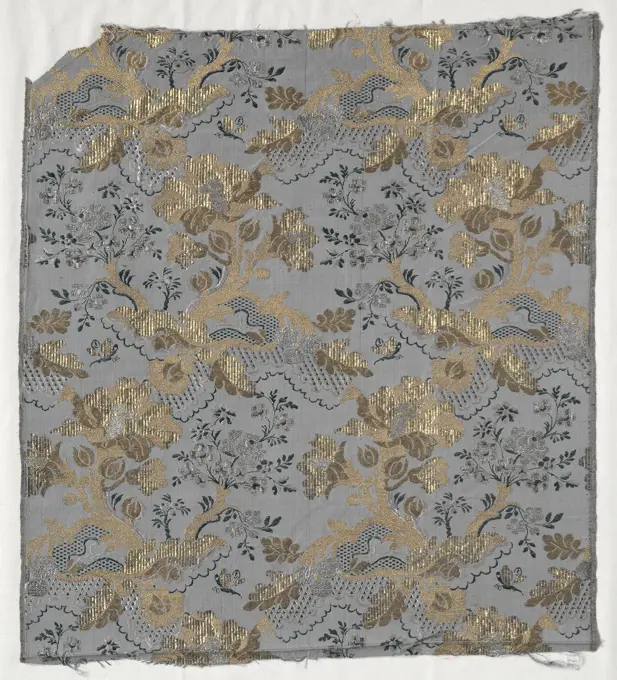
Fragment of a multi -colored seals, anonymous, 1770 - 1780 A silk tissue with blue and cream stripes. On the blue stripes is a pendulum, in which a continuous slender with black stems and white flowers. Loose branches of white and blue flowers are partly woven on the blue and white stripes. Note: Self -sides; 0.3 cm Effenbinding (multiple colors in one jump). France silk A silk tissue with blue and cream stripes. On the blue stripes is a pendulum, in which a continuous slender with black stems and white flowers. Loose branches of white and blue flowers are partly woven on the blue and white stripes. Note: Self -sides; 0.3 cm Effenbinding (multiple colors in one jump). France silk
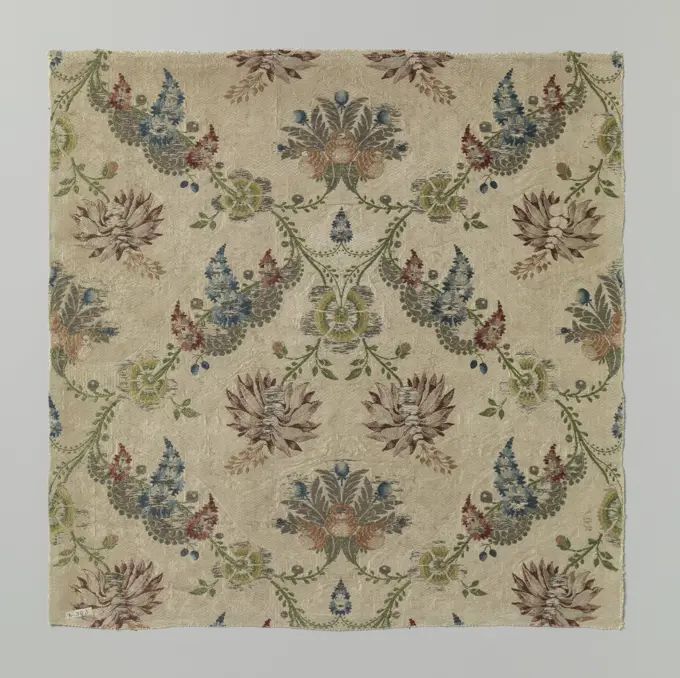
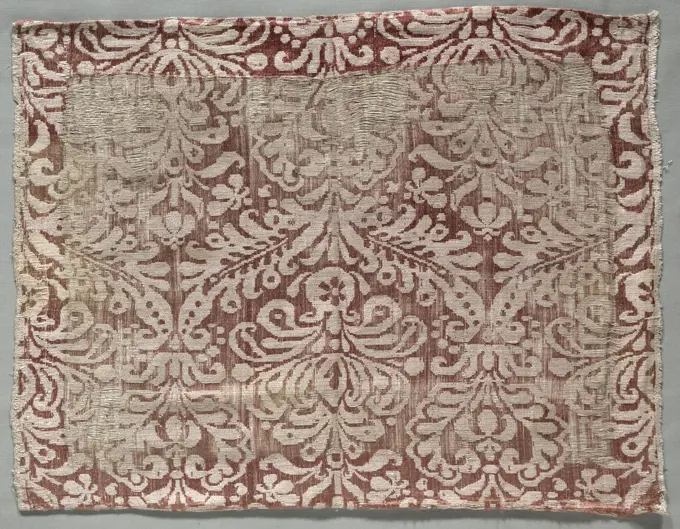
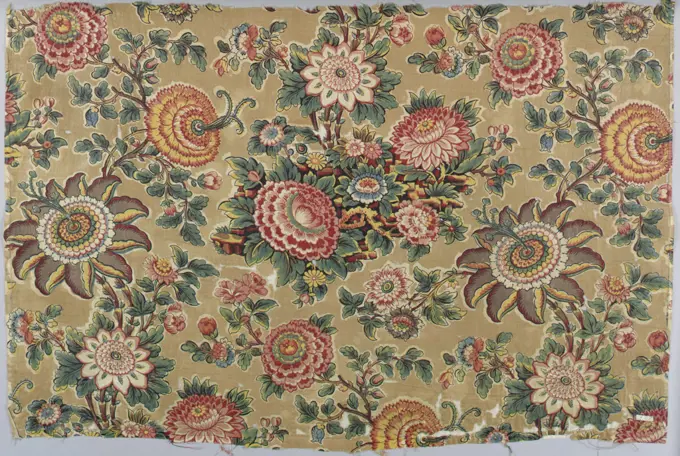
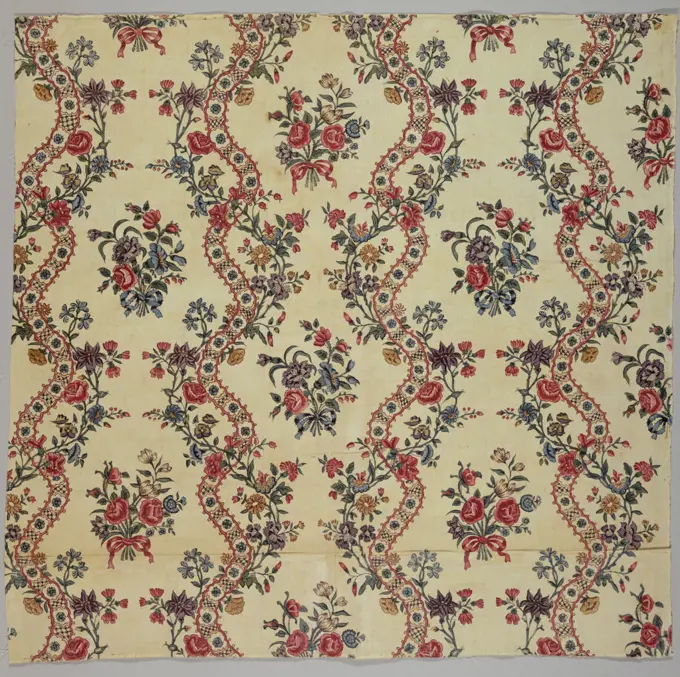
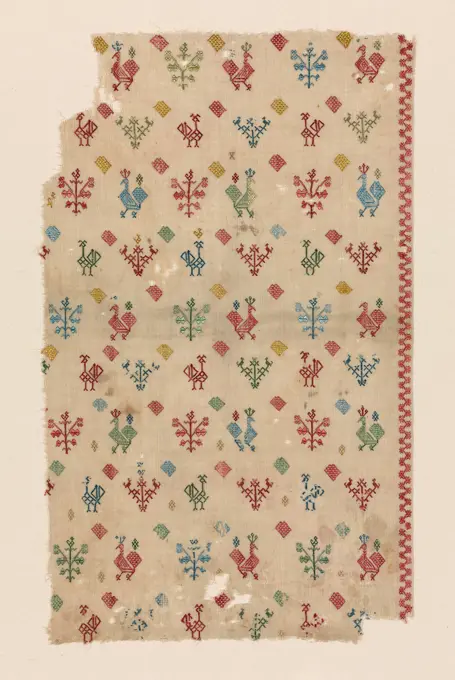
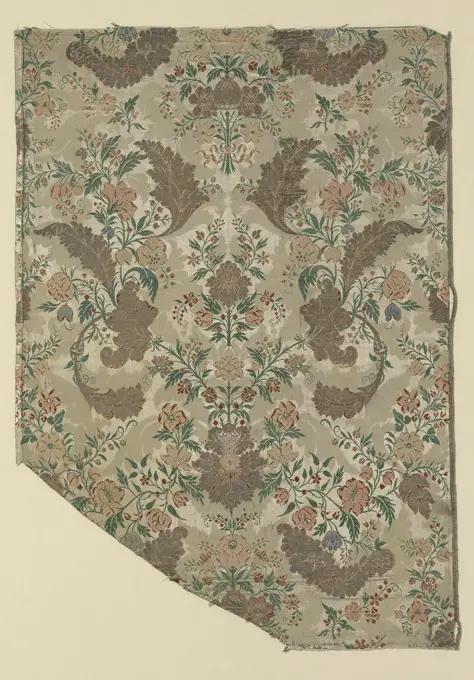
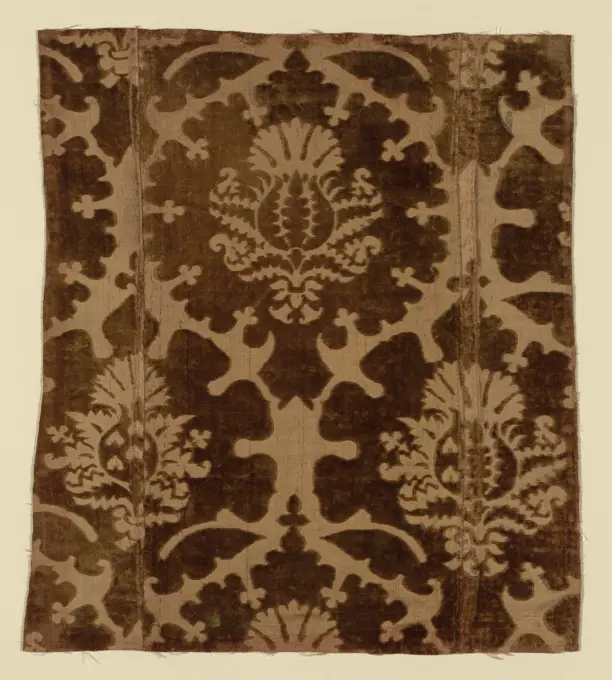
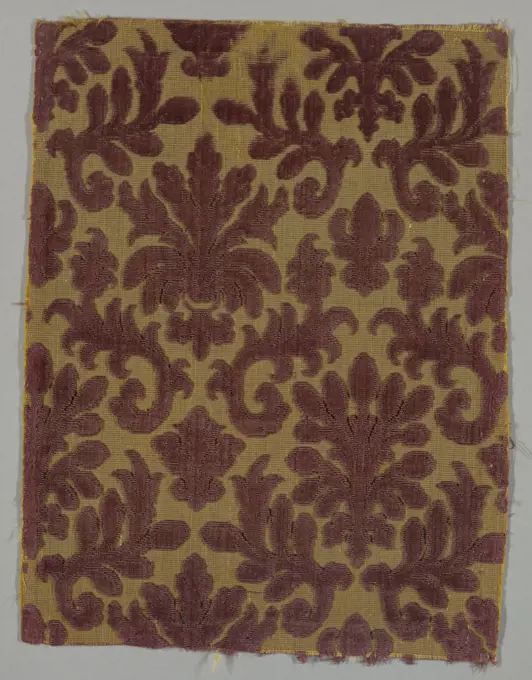
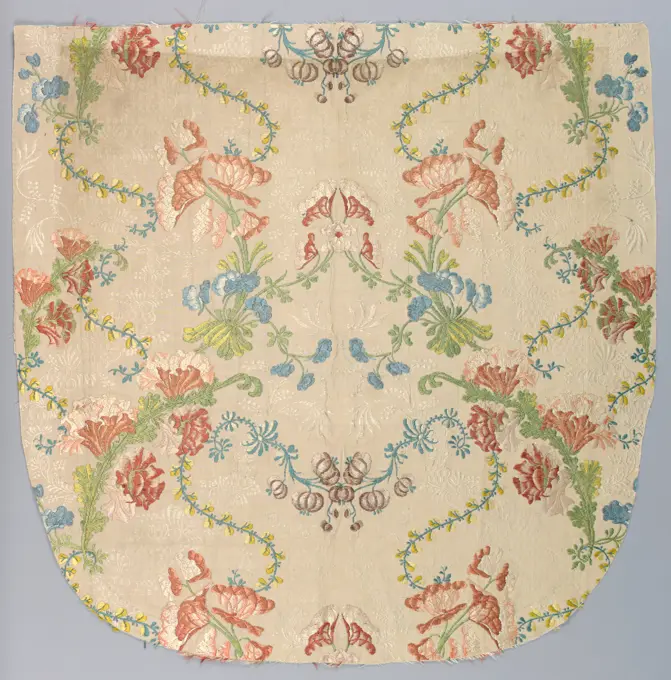
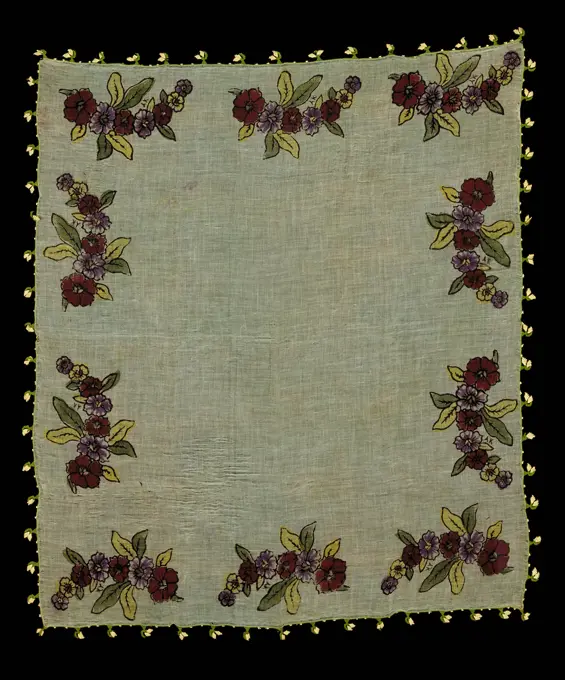
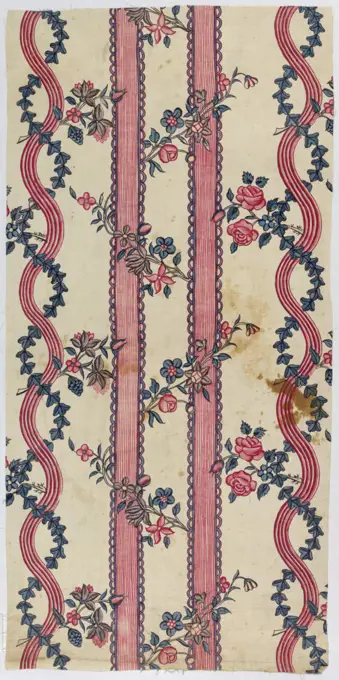
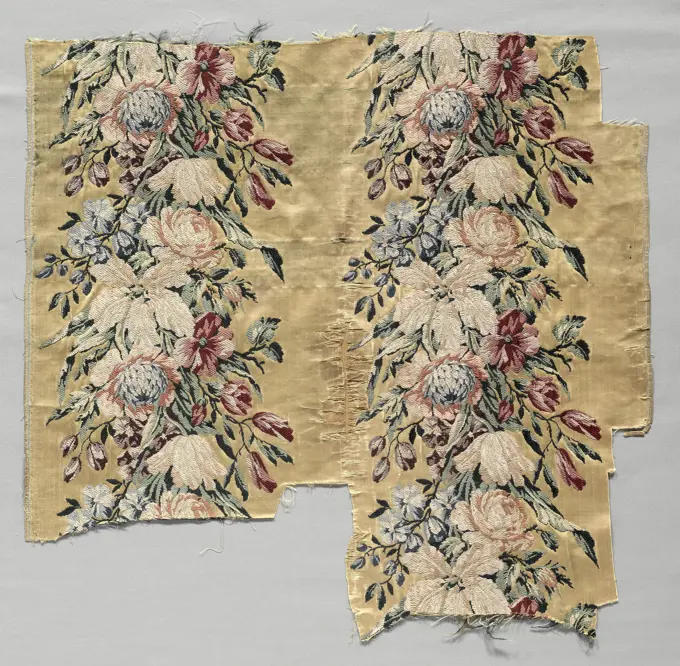
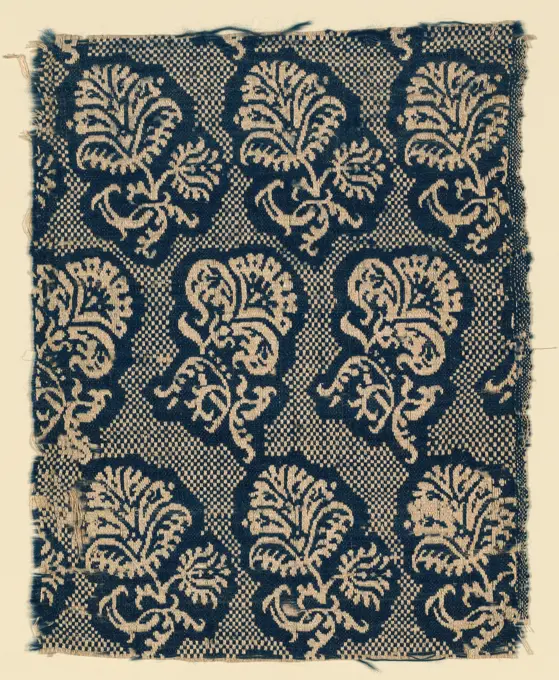
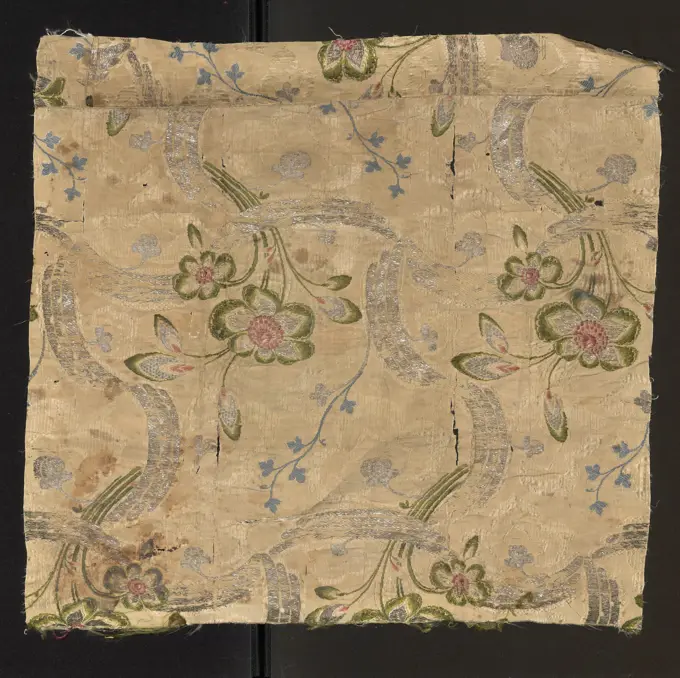
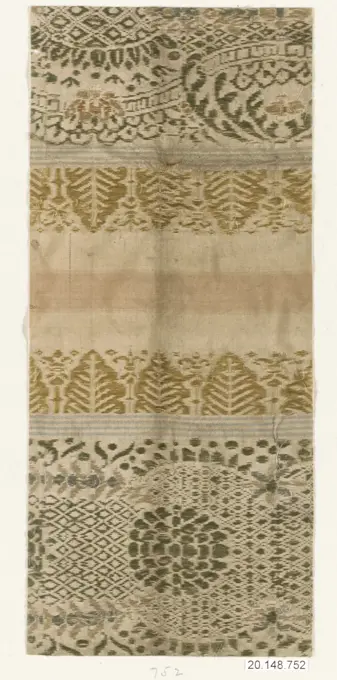
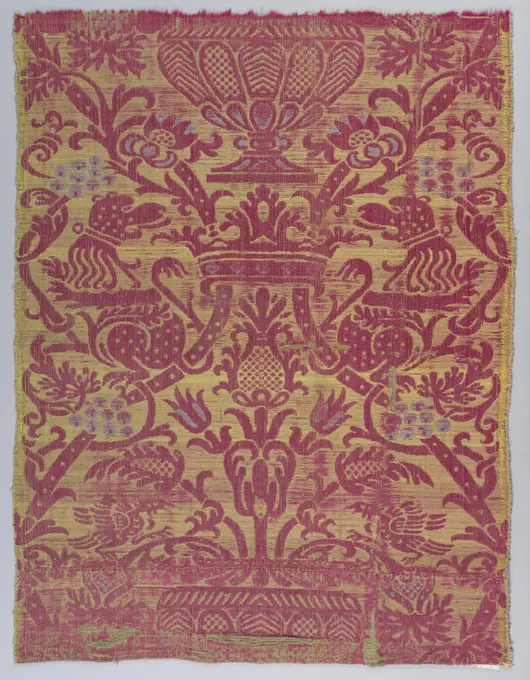
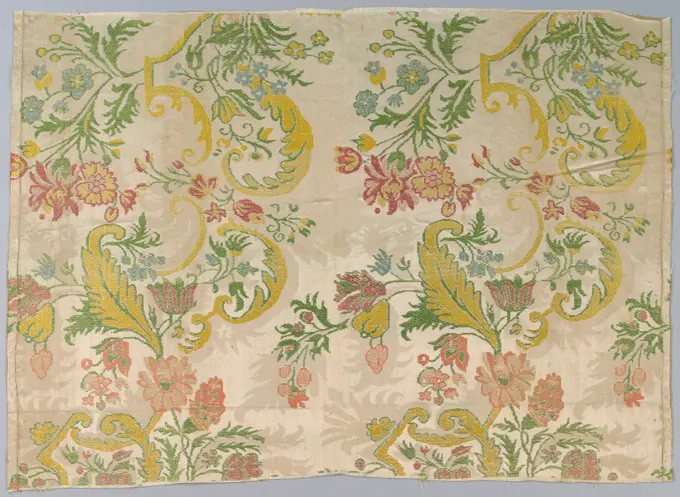
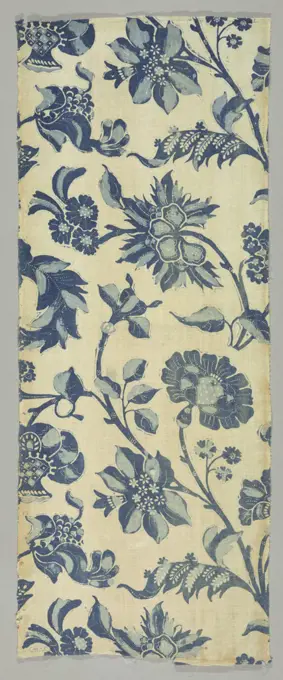
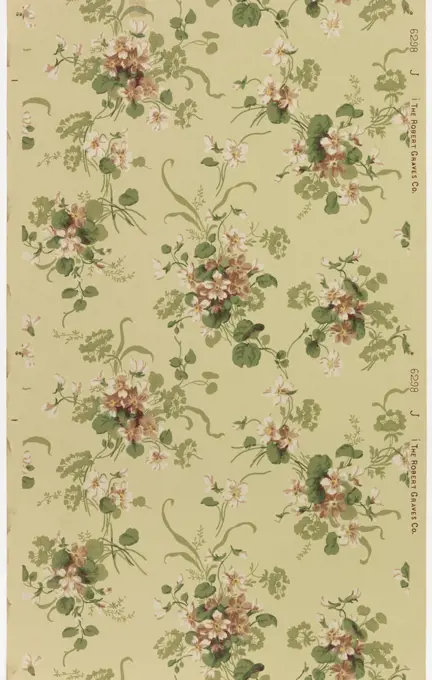
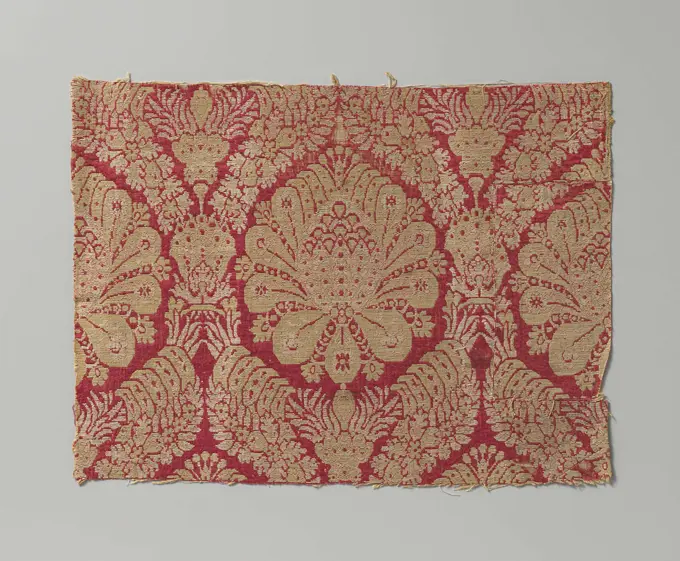
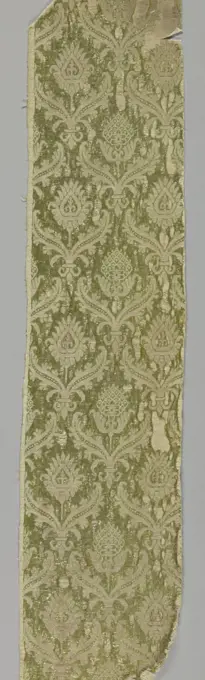
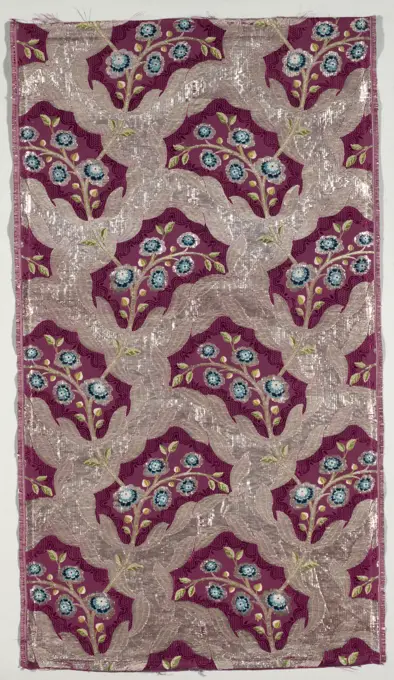
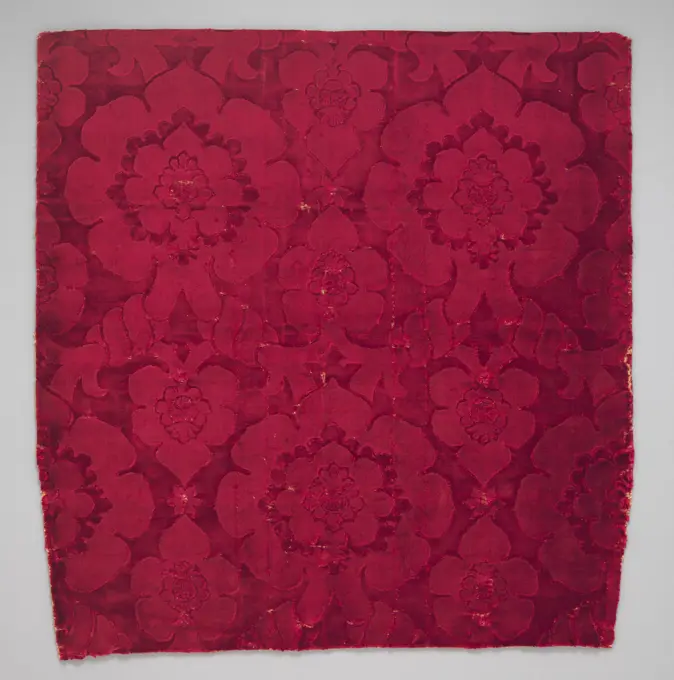
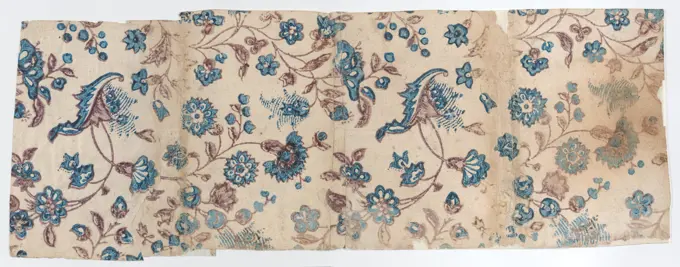
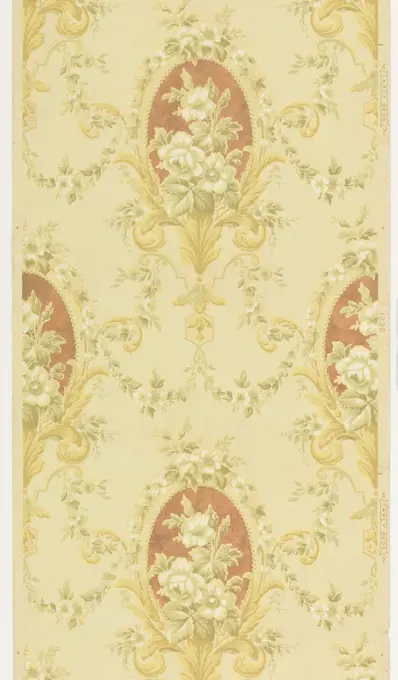
Panel 17th century French. Panel. French. 17th century. Textiles-WovenFragment of a multicolored brochure, anonymous, 1735 - 1760 A silk tissue with a cream -colored soil and a symmetrical drawing. On the cream-colored soil with zigzag reliefs a symmetrical drawing, from a yellow rosette stems with red nuanced flowers and diagonally placed branches with silver leaves and bunches of red and blue flowers, which unite both above and below in a palmet motif. France (possibly) silk. metal thread. A silk tissue with a cream -colored soil and a symmetrical drawing. On the cream-colored soil with zigzag reliefs a symmetrical drawing, from a yellow rosette stems with red nuanced flowers and diagonally placed branches with silver leaves and bunches of red and blue flowers, which unite both above and below in a palmet motif. France (possibly) silk. metal thread.Fragment, Medium: silk, metallic yarns Technique: compound weave with discontinuous supplementary weft patterning (brocade), Piece of woven silk with a symmetrical design of a bouquet of roses tied with a blue and gold ribbon; festoons of ribbon and tassels surround the bouquet in a diamond lattice. In blue, green, pinks, red, tan and gold metallic on an ivory ground. Secondary ribbed pattern in the ground., France, 18th century, woven textiles, FragmentTextile Fragment, 1500s. Italy, 16th century. Damask, silk; overall: 38.5 x 48.4 cm (15 3/16 x 19 1/16 in.).Chintz Fragment (India); cotton; Warp x Weft: 35.5 x 81 cm (14 x 31 7/8 in.)Fragment with pattern of branches attached to each other with leaves and fruits on fine ornamented fond. Fragment silk tissue in green, white and gray. Pattern in white. Branches blacked towards each other with leaves and fruits on fine ornamented fond.Fragment (France); silk, metallic threadFragment of a multi -colored seals, anonymous, 1770 - 1780 A silk tissue with blue and cream stripes. On the blue stripes is a pendulum, in which a continuous slender with black stems and white flowers. Loose branches of white and blue flowers are partly woven on the blue and white stripes. Note: Self -sides; 0.3 cm Effenbinding (multiple colors in one jump). France silk A silk tissue with blue and cream stripes. On the blue stripes is a pendulum, in which a continuous slender with black stems and white flowers. Loose branches of white and blue flowers are partly woven on the blue and white stripes. Note: Self -sides; 0.3 cm Effenbinding (multiple colors in one jump). France silkTextile, Bannister Hall Printworks, Medium: cotton Technique: block printed on plain weave, glazed, Flowers and leaves on undulating stems in multicolor on a tan background. Original glaze nearly worn off., England, 1816-1817, printed, dyed & painted textiles, TextileFragment 16th-17th century Spanish or Italian. Fragment 230417Textile (France); cottonTextile (England); Manufactured by Bannister Hall Printworks; cottonFragment of silk fabric  symmetrical bouquets in winged vases unknownChintz, Medium: cotton Technique: mordants for black, 2 reds and 2 purples applied by pen and brush: yellow and blue applied by brush, used together for green; chintz on plain weave, Lace-like curves with floral sprays and bouquets. Design is a response to European fabrics of about 1760., India, 1770s, printed, dyed & painted textiles, ChintzFragments, Medium: silk Technique: plain weave rose red patterned by floats of a supplementary warp striped white and shades of green., Small fragments: two stripes, the widest a white floral vine and the other a green floral patterned ribbon on a rose red background., France, 1750-99, woven textiles, FragmentsFragment (Border) Made 1700-1900 Greece. Linen, plain weave; embroidered with silk in running (pattern darning), satin, and stem stitches .Textile; cotton; Warp x Weft (a): 264.5 x 82 cm (8 ft. 8 1/8 in. x 32 5/16 in.) Warp x Weft (b): 261.5 x 82 cm (8 ft. 6 15/16 in. x 32 5/16 in.) Repeat H: 38.7 cm (15 1/4 in.)Fragment of a Brocaded Silk 17th century Brocaded silks were among the most abundant textiles favored by the Ottomans. This rectangular fragment has been woven in the kemha technique using metal wrapped thread. A yellowish brown floral design organized vertically is set against a blue background. Black contours highlight and accentuate the repeating pattern. Some flowers in the upper part show remnants of red (now pink). The repertoire of motifs combines Chinese-inspired lotus flowers with classical Ottoman motifs, such as carnations, rosebuds, and tulips.. Fragment of a Brocaded Silk. 17th century. Silk, metal wrapped thread, brocaded. Attributed to Turkey. Textiles-WovenLength of Textile, 1723-1774. France, 18th century, Period of Louis XV (1723-1774). Plain cloth, brocaded; silk; overall: 59.7 x 54 cm (23 1/2 x 21 1/4 in.).Fragment, Medium: cotton Technique: block printed on plain weave, Large flowers and diagonally moving stems. Pattern reserved (white) in printed red., France, late 18th century, printed, dyed & painted textiles, FragmentPiece second half 17th century Italian, possibly Genoa. Piece 216445Panel. England, Spitalfields. Date: 1720-1725. Dimensions: 180.6 × 44.5 cm (71 1/8 × 17 1/2 in.)Warp repeat: 39.4-44 cm (15 1/2-16 1/8 in.)Weft repeat: point repeat. Silk, warp-float faced 7:1 satin weave with supplementary binding warps tying supplementary brocading wefts and self-patterning ground wefts in weft-float faced 3:1 twill interlacing; two panels and one fragment pieced. Origin: England. Museum: The Chicago Art Institute, Chicago, USA.Fragment Made 1710-1723 France. Silk and gilt-metal-strip-wrapped silk, warp-float faced 7 1 satin weave with supplementary brocading wefts and self-patterned by three-color complementary ground wefts and areas of plain weave .Sheet with overall dot pattern with bouquets 19th century Anonymous. Sheet with overall dot pattern with bouquets. Anonymous , 19th century. 19th century. Relief print (wood or metal). PrintsSixteen Panels. France. Date: 1820-1840. Dimensions: a: 240.6 × 85.5 cm (94 5/8 × 33 3/4 in.)b: 147.4 × 87.9 cm (58 × 34 5/8 in.)c: 148.8 × 88.1 cm (58 1/2 × 34 5/8 in.)d: 147 × 87 cm (57 7/8 × 34 1/4 in.)e: 213.3 × 81.3 cm (84 3/8 × 32 in.)f: 231.5 × 171.1 cm (91 1/8 × 67 3/8 in.)g: 238.1 × 85.45 cm (93 3/4 × 33 5/8 in.)h: 40 × 274.3 cm (15 3/4 × 108 in.)i: 40.7 × 262.6 cm (16 × 103 3/4 in.)j: 40 × 253.7 cm (15 3/4 × 99 7/8 in.)k: 37.2 × 194 cm (14 5/8 × 76 3/8 in.)l: 36.9 × 195 cm (14 1/2 × 76 7/8 in.)m: 38.1 × 153 cm (15 × 60 1/4 in.)n: 58.15 × 85.45 cm (22 7/8 × 33 5/8 in.)o: 36.2 × 250.5 cm (14 1/4 × 98 5/8 in.)p: 116.6 × 43.8 cm (45 7/8 × 17 1/4 in.). Cotton, plain weave; block printed. Origin: France. Museum: The Chicago Art Institute, Chicago, USA.Fragment Made 1475-1525 Italy. Silk, cut, and voided velvet against satin weave foundation .Woven Woollen Fabric - Tulip and Rose, 1876. Arts and Crafts Tapestries Curtain. 2442 x 1200 mmPiece 18th century Japan. Piece 71579Piece ca. 1725 Italian or British. Piece. Italian or British. ca. 1725. Silk and metal thread. Textiles-WovenFragments, Medium: silk Technique: plain weave with discontinuous supplementary weft patterning (brocade), Woven textile fragments. Pattern showing tree stump with fruit and flowers brocaded in yellows, blue, red and browns on a tan ground with horizontal ribs formed by extra wefts., Italy, ca. 1730, woven textiles, FragmentsFragment Made 1601-1800 China. Brocaded plain simple twill, silk .Fragment, Medium: silk Technique: 4&1 satin damask, Confronted lions supporting shield shapes, kneeling grotesque figures and others, in red and white., 17th century, woven textiles, FragmentTextile, Medium: silk Technique: warp printed plain weave, Panels from a skirt made of lightweight taffeta with chiné warp producing Louis XV design of vertical bands, each containing large serpentining floral band with small floral form dropping from each outward curve below, and each set off by guard bands. Greens, yellows, corals, brown, mauve on an undyed ground., Spain, 18th century, printed, dyed & painted textiles, TextileFragment, Medium: silk, metallic thread Technique: cut and uncut supplementary warp pile (velvet) in a woven foundation, Fragment of cut and uncut reddish-brown velvet in a palmette and foliage pattern on a silver ground., Italy, 16th-17th century, woven textiles, FragmentIncomplete Cope Hood; silkHead scarf with Oya, 1940-1950, 24 1/4 x 27 1/4 in. (61.6 x 69.22 cm) (without trim), Silk; blockprint; dyed, Turkey, 20th centuryChintz fragment, Medium: cotton Technique: mordant for black, 2 reds and 2 purples applied by pen and brush; madder dyed; blue applied by immersion over resist; chintz on plain weave, Straight and wavy ribbon stripes with flowers., India, 18th century, printed, dyed & painted textiles, Chintz fragmentFragment, Medium: silk Technique: woven, Small floral sprays in red. Rose and green on a cream colored ground., early 19th century, woven textiles, FragmentFragment (Spain); silk, linenFragment, Medium: silk Technique: supplementary warps, Light green ground with supplementary silk warps in pink, rose, white and yellow forming pattern of vertical stripes and floral forms., late 18th century, woven textiles, FragmentFragment, Medium: silk Technique: plain compound cloth with supplementary weft, White silk with a horizontally ribbed ground. Multicolored design of deeply curving ribbon serpentines and large floral sprays that extend alternately from left and right., France, 1750-1800, woven textiles, FragmentPiece 18th century Japan. Piece. Japan. 18th century. Silk / Compound weave. Edo period (1615-1868). Textiles-WovenFragment, Medium: bast fiber Technique: resist patterning on plain weave, Textile with allover pattern of blue resist on ivory showing rows of curving floral branches in offset alignment. Selvage on one side., France, 18th century, printed, dyed & painted textiles, FragmentBrocaded Silk, 1774-93. Style of Philippe de Lasalle (French, 1723-1805). Silk: brocade; overall: 49.5 x 53.3 cm (19 1/2 x 21 in.).Fragment Made 1601-1700 Europe. Linen and wool, plain weave; tied and free double cloth .Textile (England); Made by Bannister Hall Printworks; cottonFragment of the fabric;  18th century (1701-00-00-1800-00-00);Górska, Jadwiga - collection, gift (provenance), fabricsFragment witte gebrocheerde zijde.Fragment silk tissue with a white ground on which multicolored flower branches that are surrounded by a white lace pattern and white flower branches.Piece 16th century China. Piece. China. 16th century. Silk / Compound weave. Ming dynasty (1368-1644). Textiles-WovenLength of Textile, 1723-1774. France, 18th century, Period of Louis XV (1723-1774). Brocade; silk and metal; overall: 108 x 54 cm (42 1/2 x 21 1/4 in.).Textile, Medium: silk, metal thread Technique: woven, Formal clusters of plants on a metallic ground., Indo-Persia, 17th century, woven textiles, TextileFragment (France); silk, silver threadGlazed Chintz Fragment, c. 1830. England, 19th century. Machine and block printed cotton; overall: 31.9 x 53.6 cm (12 9/16 x 21 1/8 in.).. Germain Frères (Designer)Piece 18th-19th century Japan. Piece 66361Textile, Medium: silk, linen Technique: plain compound satin, brocatelle, Urn, crown holding vines together, animals, birds in red and yellow with touches of blue., Italy or Spain, 17th century, woven textiles, TextileWelum;  beginning of the 18th century (1701-00-00-1710-00-00);Fragment; silkTextile, Medium: cotton Technique: resist printed on plain weave, Off-white cotton resist-printed in two shades of blue. Slender undulating branches with massive conventionalized blossoms and foliage, and much use of white dots to enhance the design., USA, 1700-1750, printed, dyed & painted textiles, TextileFragment, 1600s - 1700s. Iran, 17th-18th century. Brocade; overall: 29.3 x 13.4 cm (11 9/16 x 5 1/4 in.).Ceiling paper, Robert Graves Co., New York, New York, Machine-printed paper, liquid mica, Floral bouquets of mixed flowers and foliage. Bouquets are non-directional. Printed in colors on yellow/green ground., New York, New York, USA, 1905-1915, Wallcoverings, Ceiling paperPiece late 18th century French. Piece 222046Piece 18th-19th century Japan. Piece. Japan. 18th-19th century. Silk. Edo period (1615-1868). Textiles-WovenFragment lamp axle of gold and white on a red ground. Three fragments of tissue from red silk with linen gold and white palms surrounded by garlands.Ceiling Paper (USA); Manufactured by Maxwell & Co., S.A. (United States); machine-printed paper, liquid mica; 91 x 49 cm (35 13/16 x 19 5/16 in.)Piece 18th-19th century Japan. Piece 67586Handkerchief made of coniferous side with spring motif. Natural coniferous handkerchief: Venetian relief side. Sculpt bin of linen batist and a border of needle side. On the open bars land there are tendrils with large flowers, including flowers with a spring motif. The pattern repeats itself in the four corners.Sample Book (England); cardboard, paper, cottonCarpet (USA); wool, bast fiberTextile, Medium: silk, cotton, metallic thread Technique: two interconnected structures, Fragments of cream-colored cotton brocaded with green and gold metallic thread. Design shows pomegranate., Spain, 17th century, woven textiles, TextilePiece 19th century China or Japan. Piece 71680Pillow Sham Made 1710-1730 England. Cotton, plain weave; underlaid with linen, plain weave; embroidered with silk floss and silk yarns in back, herringbone, running, and satin stitches; laid work, couching, and French knots; .Sidewall Sample; machine-printed on paper; 22.5 x 22.5 cm (8 7/8 x 8 7/8 in.)Length of Textile, 1723-1774. France, 18th century, Period of Louis XV (1723-1774). Brocade; silk and metal; overall: 92.4 x 56.2 cm (36 3/8 x 22 1/8 in.).Fragment of fabric unknownPanel Made 1501-1600 Italy. Silk and linen, satin damask weave .Cushion cover, William Morris, (British, 1834-1896), Annie-May Hegeman, American, 1859 - 1948, Medium: mercerized cotton embroidery on cotton Technique: embroidered on plain weave foundation, Embroidered cotton square intended as a cushion cover, with a vertically and horizontally mirrored pattern of a rose-colored flower with grass-green leaves, surrounded by pale blue acanthus leaves, after a design by William Morris. It was purchased as a kit in the Morris shop in London, and worked by the donor., USA, ca. 1900, embroidery & stitching, Cushion coverFragment, anonymous, c. 1600 - c. 1800 Fragment sits, cotton, painted by means of beets and recess technology in two shades of red and two shades of blue, painted in yellow and green, contours with gold. Dessin: on a network of dots that make a diamond -shaped figure, in which a cross, and on the white stock a pattern of large bouquets, most anjelieren. Put in passe-partout.  cotton (textile) painting Fragment sits, cotton, painted by means of beets and recess technology in two shades of red and two shades of blue, painted in yellow and green, contours with gold. Dessin: on a network of dots that make a diamond -shaped figure, in which a cross, and on the white stock a pattern of large bouquets, most anjelieren. Put in passe-partout.  cotton (textile) paintingPiece 16th century Italian, probably Venice Velvet with the pattern delineated solely by the contrast between two heights of the dense silk velvet pile was particularly popular in the sixteenth century. This pattern of lobed palmettes, sometimes incorporating crowns, was made into robes or sashes worn by the senators of the Venetian Republic. It was also used to make ecclesiastical vestments. The crimson shade is associated with the Venetian senators, but the Museum also has an example woven in deep blue silk.. Piece 227220Textile (England); cottonChild's Quilt, 'Currants and Cockscomb'. United States, circa 1850-1860. Textiles; quilts. Pieced, quilted, and appliquéd cottonFour adjoined sheets with overall blue and purple floral pattern 19th century Anonymous. Four adjoined sheets with overall blue and purple floral pattern. Anonymous , 19th century. 19th century. Relief print (wood or metal). PrintsPiece 18th-19th century Japan. Piece. Japan. 18th-19th century. Silk. Textiles-WovenTextile, Medium: silk, Gold-colored border with Empire design in red., early 19th century, woven textiles, TextileTextile, Medium: silk, linen Technique: two integrated structures; 471 satin plus 3/1 twill, Scroll and pomegranate pattern in yellow and mauve., 17th century, woven textiles, TextileSidewall, Carey Bros. W.P. Mfg. Co., Philadelphia, Pennsylvania, founded 1882, Machine-printed paper, textured, liquid mica, Floral bouquet set within a metallic copper oval, like a cameo, with border of strund beads. A floral swag hangs down from top. The different ovals are connected by more floral swags. Printed on a tan or light yellow ground., Philadelphia, Pennsylvania, USA, 1905-1915, Wallcoverings, SidewallTextile; silk, metal foil wrapped silk; Warp x Weft: 63.5 x 65 cm (25 x 25 9/16 in.) Repeat H: 49 cm (19 5/16 in.)Textile, Medium: silk, metallic thread Technique: 5-harness damask with discontinuous supplementary weft bound in 4/1 twill weave, Two fragments of a pattern made up of two continuous curved vines side-by-side in a vaguely 'bizarre-type' style. Dark yellow ground is patterned with gold metallic thread and floral motifs of pink, white, blue-green and pale yellow., France, 18th century, woven textiles, TextileFragment brocheted yellow silk with multicolor pattern of bouquets from, among other things, poppies, hyacinthen, asters. Fragment yellow silk with multicolor pattern in silver, white, red, purple, brown and blue of bouquets of poppies, hyacinthen, asters etc., surrounded by leafwork. Object is composed of two fragments sewn together.Textile, Medium: cotton Technique: printed by engraved roller on plain weave (red and black), block printed on plain weave (yellow), painted (blue/green), Half-drop repeat of large blossoms in profile on a red background. Outlines of pattern are black. Yellow (and therefore green) very faded. The edges of fabric do not line up with a pattern axis., Europe, early 19th century, printed, dyed & painted textiles, TextileSidewall (USA); stamped gold; 75 x 50.5 cm (29 1/2 x 19 7/8 in.)Fragment, Medium: Technique: bobbin lace made in Lille style but without heavy outlining thread, Lille-style but no heavy outline. Birds on branches., 19th century, lace, FragmentLength of Floral Velvet, 1600s. Italy, Genoa, 17th century. Velvet (cut, uncut, voided); silk ; overall: 200.9 x 59.5 cm (79 1/8 x 23 7/16 in.).Textile; cottonTextile, Medium: silk Technique: compound weave with supplementary weft, Repeating pattern of a small landscape scene with a house and trees is surrounded by a garland flowers. These are surrounded by undulating bands of fur and feather crossed with ribbons., Lyon, France, ca. 1740, woven textiles, TextileFragment, Medium: silk, linen Technique: combination of two integrated structures, Fragment with an incomplete pattern of a large-scale symmetrical design. Broad scrolling bands meet in the center are joined by a palmette motif. From center bands curve outward to form ogives. Leaves and incomplete pomegranate buds between bands., Spain, 17th century, woven textiles, FragmentPiece 18th century China. Piece. China. 18th century. Silk / Compound weave. Qing dynasty (1644-1911). Textiles-WovenFragment, Medium: silk Technique: cut and uncut supplementary warp pile (velvet) in a satin foundation, Fragment of cut and uncut dark pink velvet in a design of a curving leafy vine with flowers on an off-white ground., France, 18th century, woven textiles, FragmentFragment, Medium: silk Technique: 5-harness satin damask, Fragment of a stylized pattern of large leaves enclosing a three-quarter profile blossom., Italy or Spain, 17th century, woven textiles, FragmentTextile, African Marigold; Manufactured by Morris & Co. (United Kingdom); England; cotton