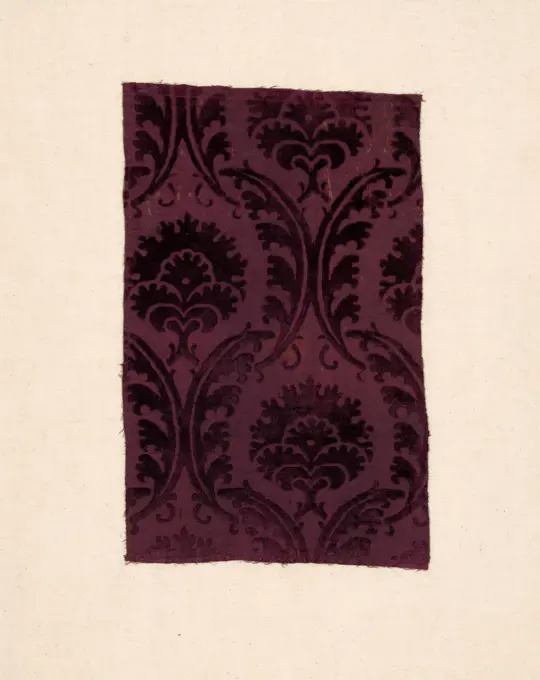
Colorful Textile Patterns

Vibrant and detailed fabric fragments featuring florals and intricate designs, highlighting texture and historical significance.
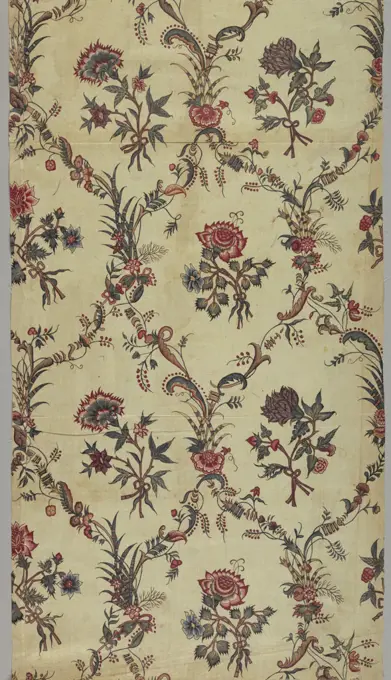
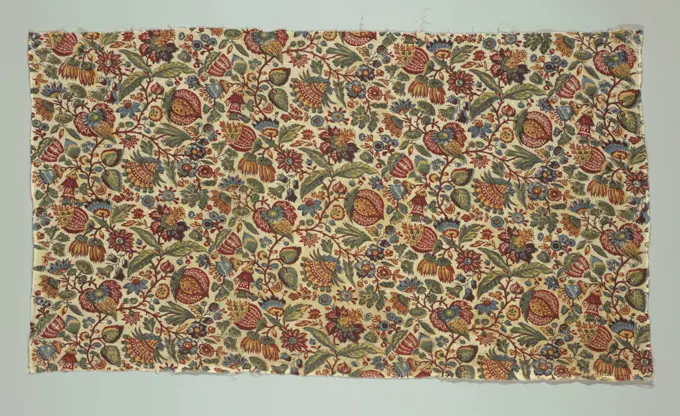
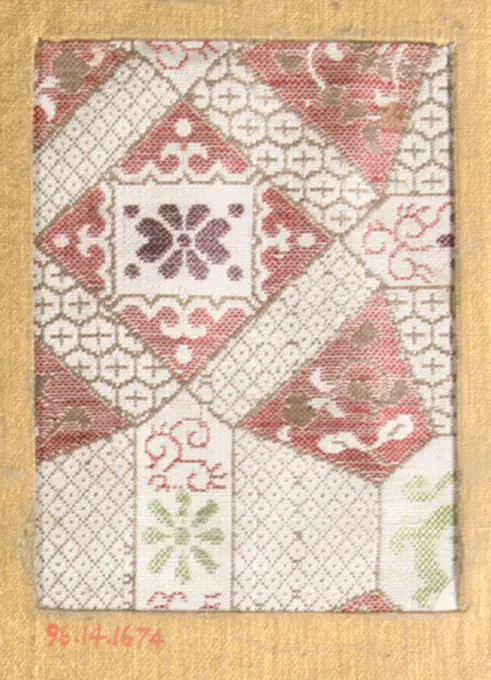
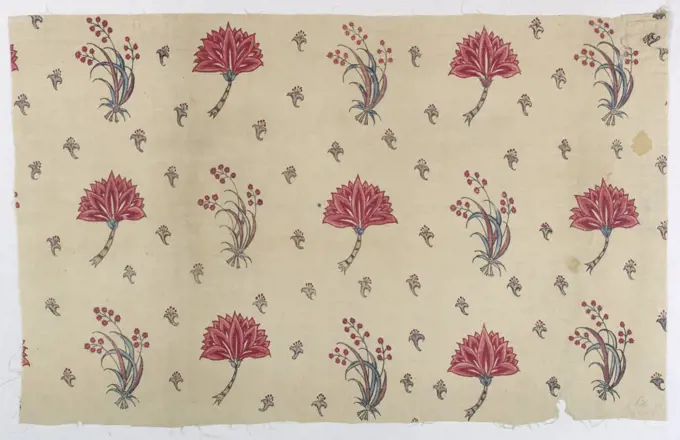
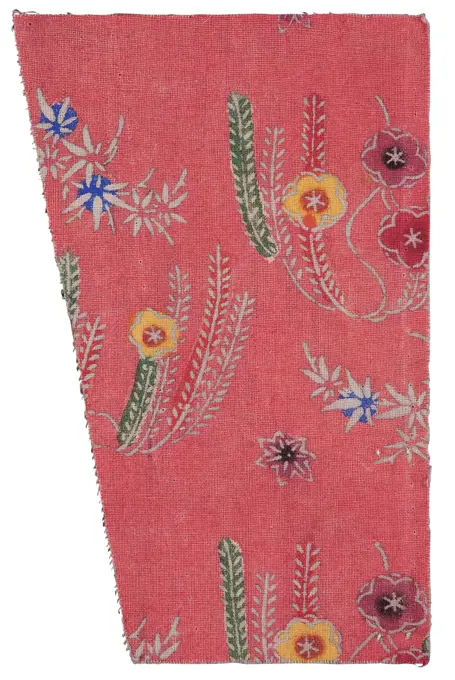
Chintz fragment, Medium: cotton Technique: mordants (2 reds, black, purple and brown) and dye (yellow) applied by brush or pen; blue brushed over resist; chintz on plain weave, Diamond lattice enclosing floral forms. Horizontal line at bottom. Faint pencil line at right where fabric was cut., India, 1750-1800, printed, dyed & painted textiles, Chintz fragment
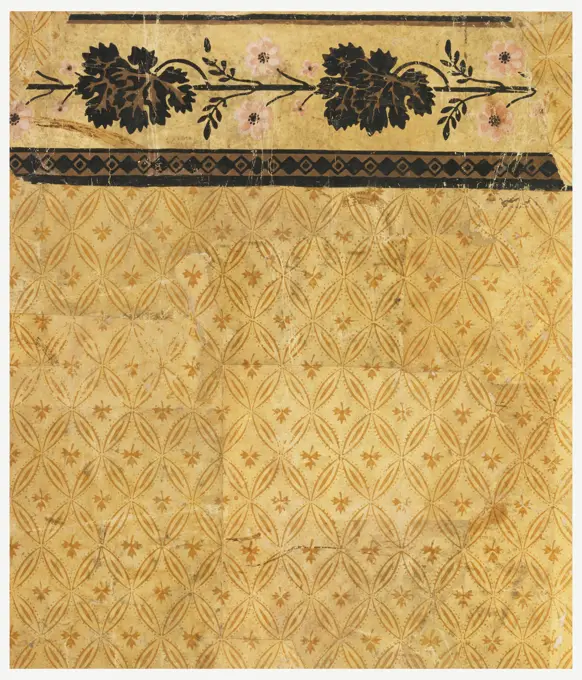
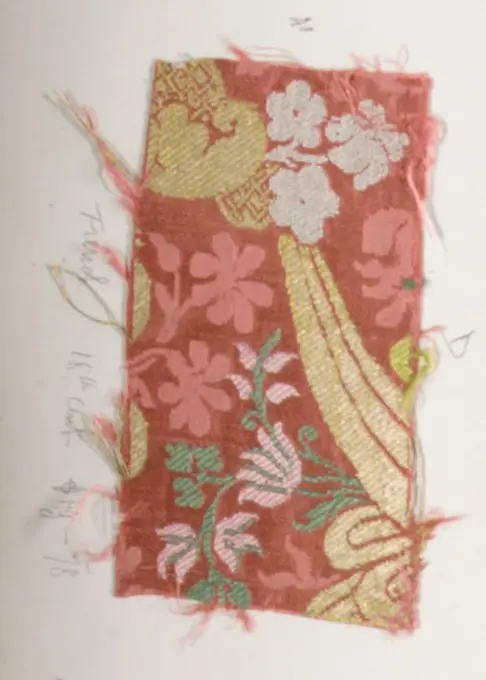
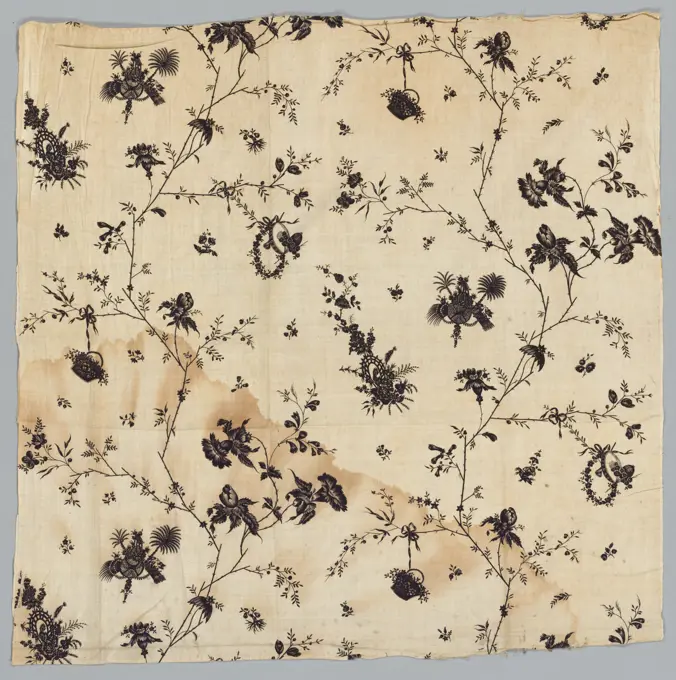
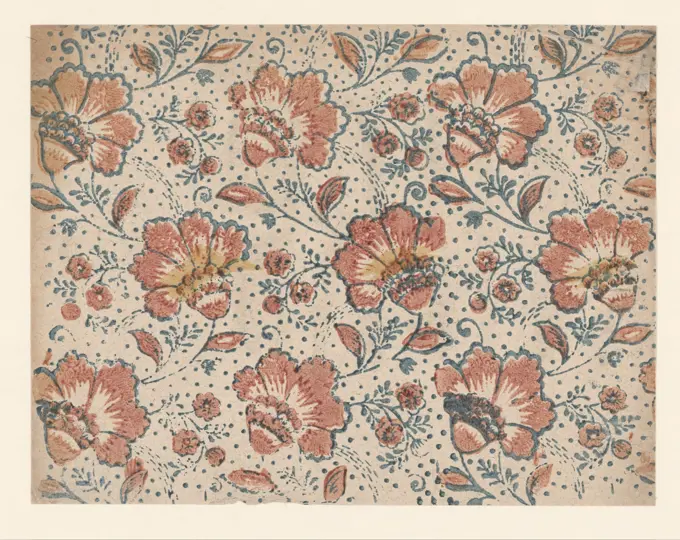
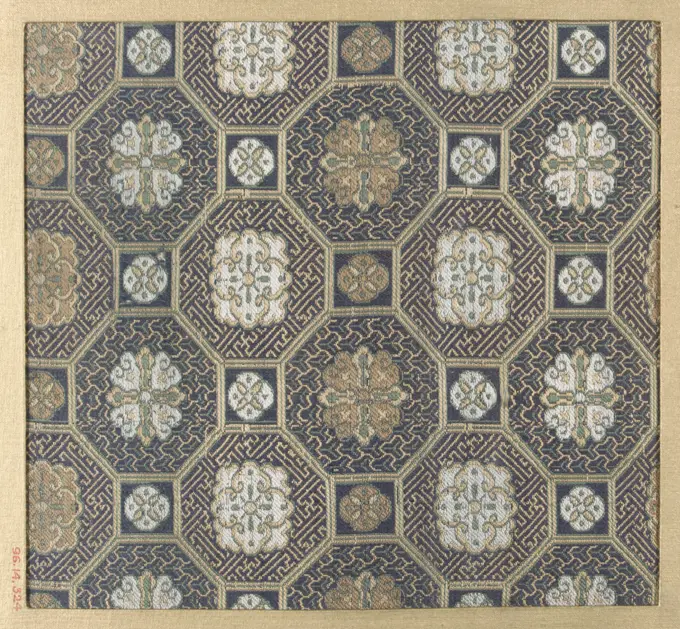
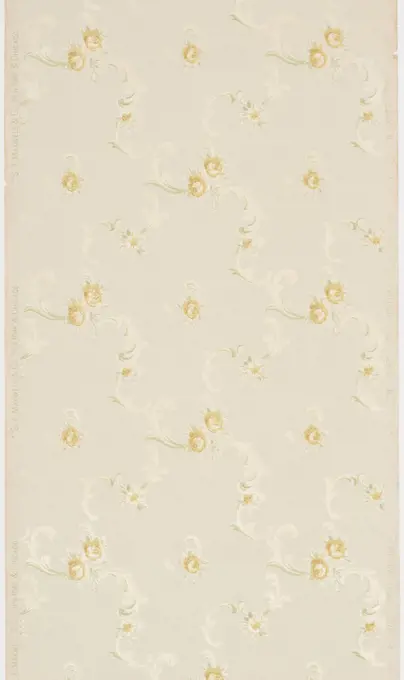
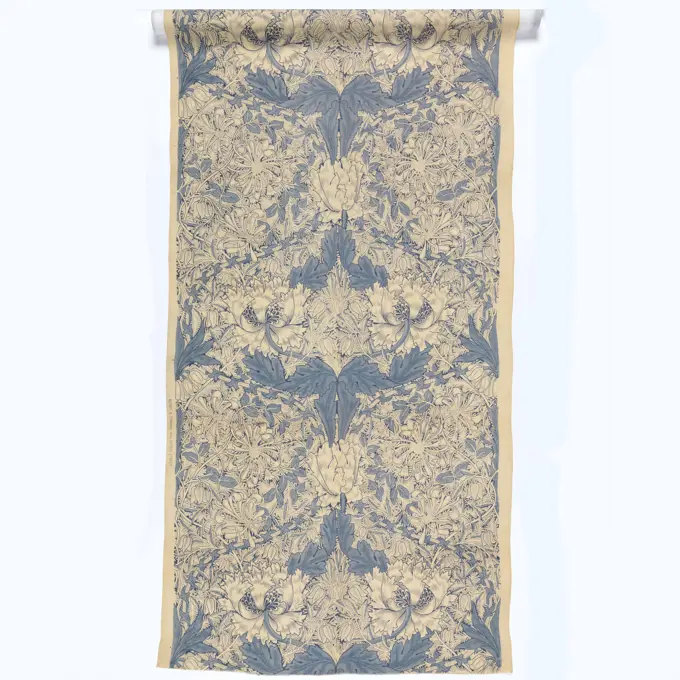
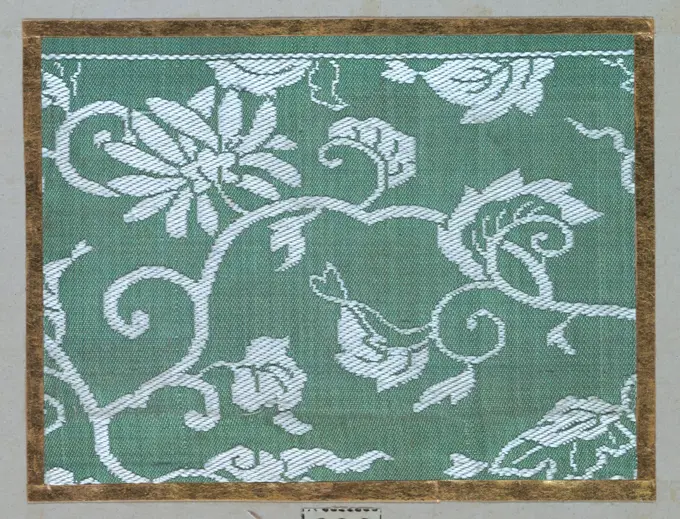
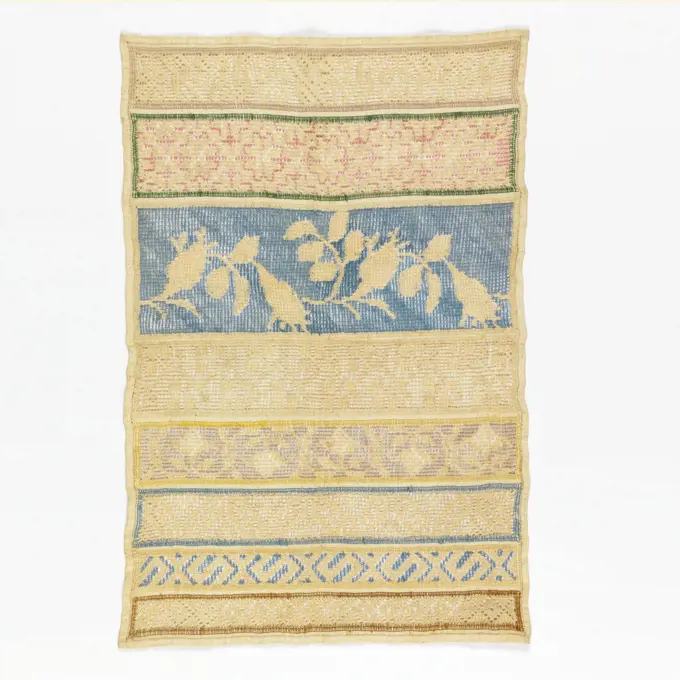
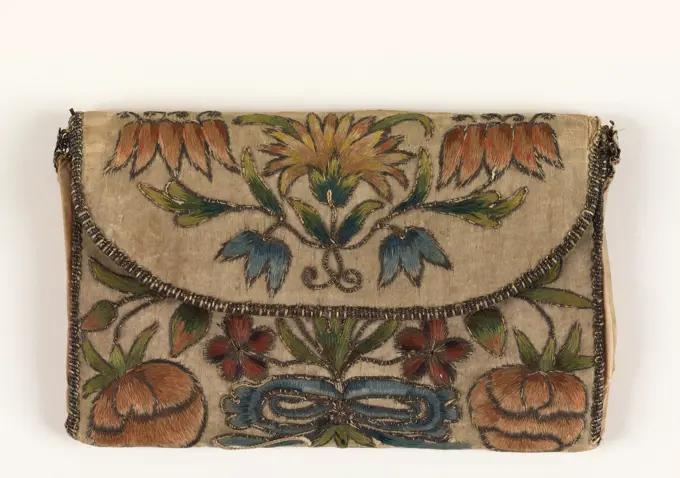
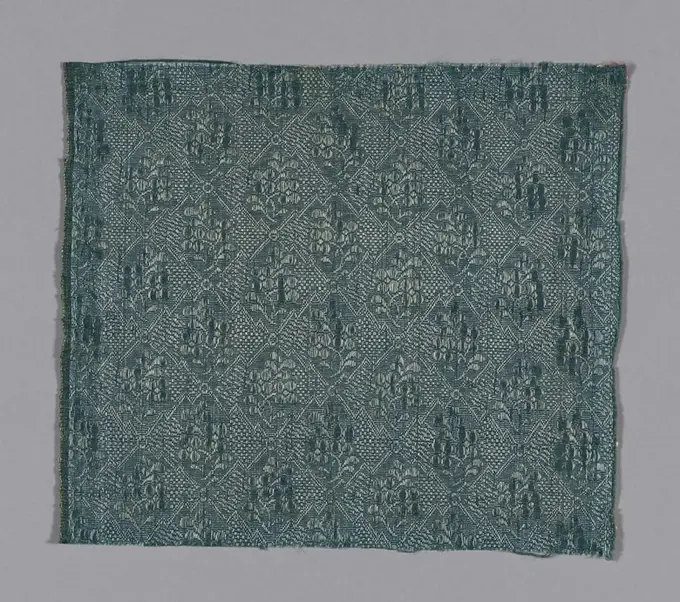
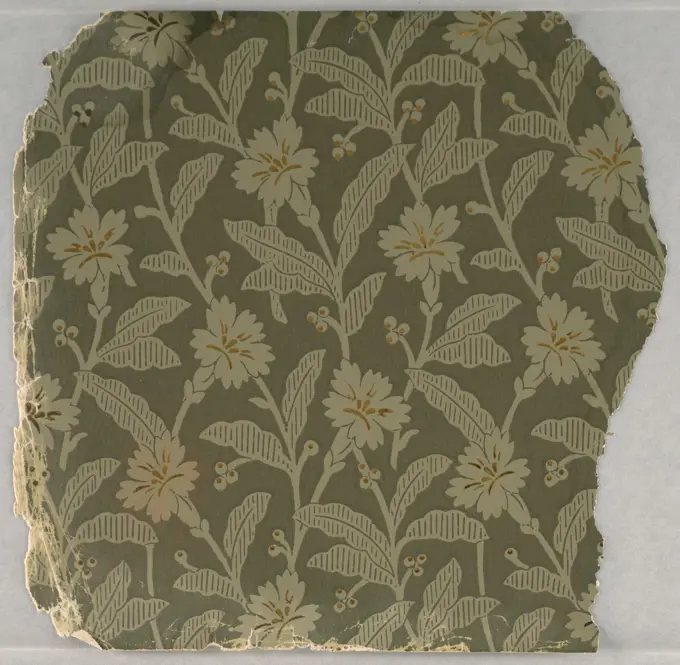
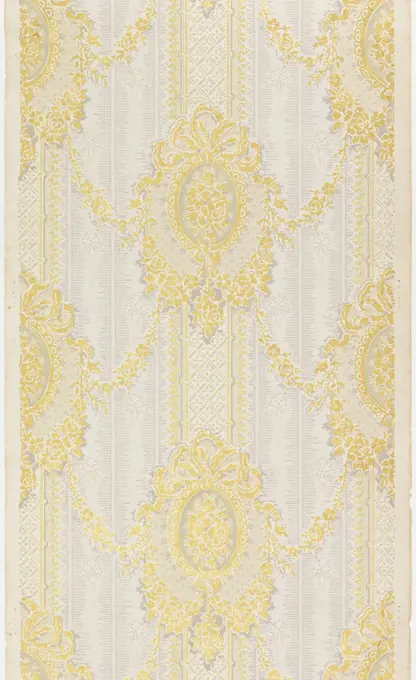
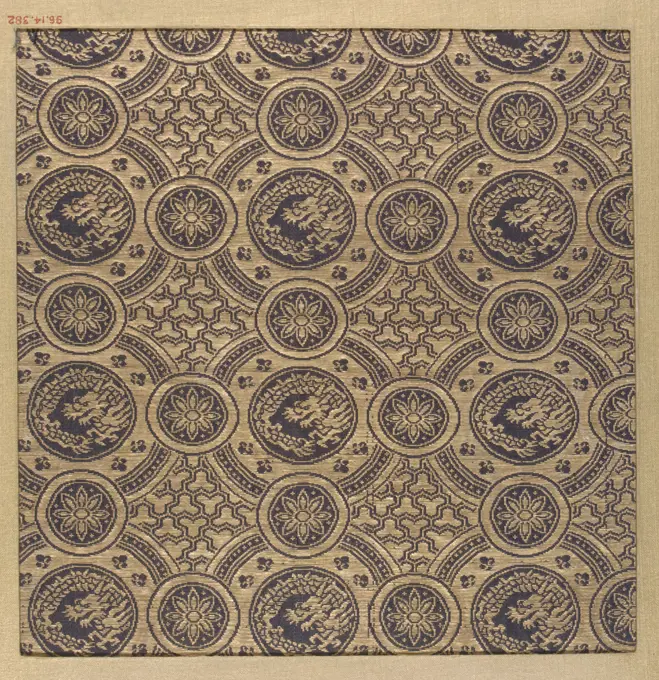
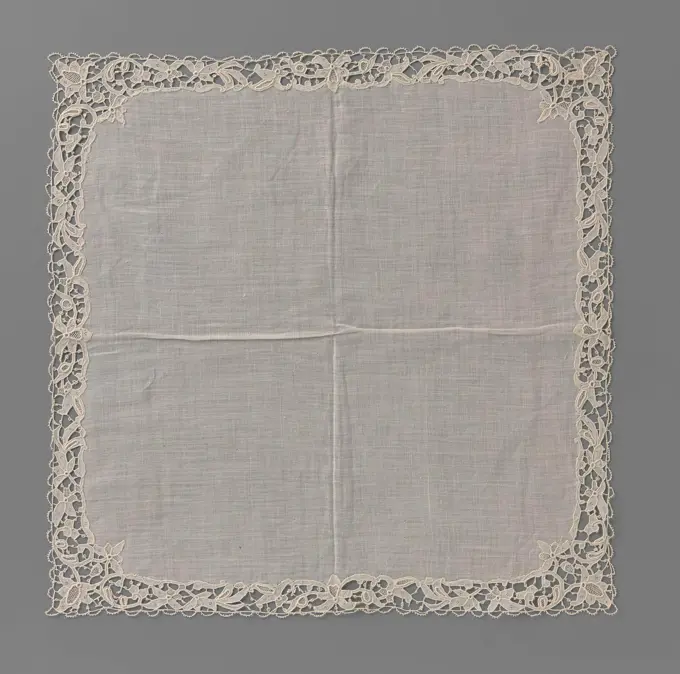
Length of Woven Silk Made 1700-1705 France (Object Probably made in), Italy (Object Probably made in). Attenuated and stylized floral and leaf forms characterized European dress-silk patterns from about 1695 to 1715. They have become known as ìbizarreî silks for their fantastical designs, an amalgamation of Indian, Turkish, and Japanese influences seen through European eyes.. Silk and gilt- and silvered-metal-strip-wrapped silk, satin weave with brocading wefts and self-patterning ground wefts .Fragment Made 1875-1900 Japan. Fancy compound satin, silk .Fragment; silk, metallic yarnsUchishiki (Altar Cloth) Made 1801-1825 Japan. Square piece of kinran, plain compound silk of orange-brown ground with pattern woven in gilded paper strips finely cut, representing chrysanthemum and peony scrolls, lined with white linen .Textile (France); printedSidewall And Border (France); block-printed on handmade paper; 45 x 39 cm (17 11/16 x 15 3/8 in.)Piece 18th century Japan. Piece 71264Fragment 18th century French. Fragment. French. 18th century. Silk, metal thread. Textiles-WovenPiece 18th-19th century Japan. Piece 65832Fragment of Printed Cotton, 1775. England, late 18th century. Copperplate printed cotton; overall: 86.4 x 86.4 cm (34 x 34 in.).Quilt, Medium: cotton Technique: roller printed on plain weave, Straight repeat of Chinese-style figures flanking a Chinese-style urn containing flowers. The quilted pattern is a 'fish scale' for field and borders. A cotton thread of various light tones used for quilting., England, 1840, printed, dyed & painted textiles, QuiltLeaf with pattern of flowers with dot stock, anonymous, c. 1700 - c. 1850  Leaf with pattern of flowers with dot stock.  paper. block printing (relief printing process) ornament derived from plant formsPiece 18th century Japan. Piece 71774Textile, Medium: silk Technique: brocaded damasse, Beige silk brocaded with gold and silver metallic thread and blue and orange/tan silk in a pattern of vines with flowers and animals., 1675-1700, woven textiles, TextileCover. Turkey. Date: 1601-1700. Dimensions: 222.2 x 134 cm (87 1/2 x 52 3/4 in.)Warp repeat: 49.5-51 cm (19 1/2-20 in.)Weft repeat: 29 cm (11 1/2 in.)Width is 3 panels pieced; panel width: 45 cm (17 5/8 in.). Linen, plain weave; embroidered with silk in running (twill darning) and stem stitches. Origin: Turkey. Museum: The Chicago Art Institute, Chicago, USA.Towel End late 18th century. Towel End 443084Piece ca. 1770 () French. Piece 223219Fragment multicolored lamp shaft. A fragment of blue silk tissue, with yellow red flowers and with silver wire.Fragments (Italy); silk; Bequest of Richard Cranch Greenleaf in memory of his mother, Adeline Emma Greenleaf; 1962-56-45-a/fLinnamast napkin with a flower pattern, anonymous, c. 1732 - c. 1735 Linnamast napkin with a branch with large flowers and fruits. The napkin belongs to a napkin (BK-1977-291-A). Flanders (Possible) linen (material) damask Linnamast napkin with a branch with large flowers and fruits. The napkin belongs to a napkin (BK-1977-291-A). Flanders (Possible) linen (material) damaskPiece 18th-19th century Japan. Piece 66049Textile (Italy); silk, metallic; Warp x Weft (a): 99 x 47 cm (39 in. x 18 1/2 in.) Warp x Weft (b): 100 x 47 cm (39 3/8 x 18 1/2 in.); Bequest of Richard Cranch Greenleaf in memory of his mother, Adeline Emma Greenleaf; 1962-56-60-a,bCeiling paper, Maxwell & Co., S.A., Chicago, Illinois, USA, Machine-printed paper, liquid mica, Stylized yellow flowers and scrolling acanthus foliage create a loose framework with a centered single yellow flower., USA, 1905-1915, Wallcoverings, Ceiling paperSidewall (USA); Manufactured by Robert Graves Co. (United States); machine-printedPiece 17th century Japan. Piece. Japan. 17th century. Silk / Compound weave. Textiles-WovenKosode (Kimono) Fragment with Chinese Character (Kanji), Cloud, Flowers, and Lozenge Pattern. Japan, 18th century. Textiles. Silk figured satin (rinzu), tie-dyed (kanoko shibori), stenciled imitation tie-dyeing (kata kanoko shibori) with silk and gilt paper wrapped silk thread embroideryBlue ribbon and Floral bouquet repeat pattern. Textile Fragment, 19th century. Turkey, Asia Minor , 19th century. Silk and linen; overall: 83 x 24.5 cm (32 11/16 x 9 5/8 in.).Textile, Medium: cotton Technique: block printed on plain weave Label: block printed cotton plain weave, Half drop repeat of massed flowers and leaves. Black, red, blue and yellow., France, late 18th century, printed, dyed & painted textiles, TextilePiece 1740-50 Italian or French. Piece 224454Piece 18th-19th century Japan. Piece 67387Panel. Turkey, Bursa. Date: 1601-1625. Dimensions: 89.9 x 64.4 cm (35 3/8 x 25 3/8 in.)Repeat: 37 x 21 cm (14 1/2 x 8 1/4 in.). Silk and cotton, satin weave with gilt-metal-strip-wrapped silk, discontinuous supplementary facing wefts and two-color supplementary pile warps forming cut voided velvet. Origin: Turkey. Museum: The Chicago Art Institute, Chicago, USA.Fragment, Medium: Technique: printed, USA, 19th century, printed, dyed & painted textiles, FragmentFragment, Medium: silk, metallic Technique: velvet, Small symmetrical figure with leaf curving from lower end closely set at right angles, in stie mauve and blue voided cut and uncut velvet on cream cloth ground originally run through with metal strips., Italy, late 16th-early 17th century, woven textiles, FragmentFragment 18th century Italian, Venice or French. Fragment 230055Fragment (Japan); silk, paper with applied gold foil; Warp x Weft: 49.8 x 34.3 cm (19 5/8 x 13 1/2 in.); 1937-34-5Lace pattern, Medium: cotton Technique: plain weave fabric printed with pattern for machine made tape lace, Square printed lace pattern for premade tape lace. Printed in black on fadded pink., USA, ca. 1905, lace, Lace patternSidewall - Sample, Mallow, 1887; Designed by Morris & Co. (United Kingdom); Manufactured by Jeffrey & Company (United Kingdom); block-printed paperSidewall (France); block-printed; 84.5 x 50 cm (33 1/4 x 19 11/16 in.)Piece 18th century French. Piece 220444Fragment; silk and metal thread and sequins on vegetable fiberFragment of a White-Ground Velvet Carpet 17th century Carpets composed of flowers and vines arranged on neutral backgrounds were produced in great numbers during the reign of Shah Jahan in the seventeenth century. This velvet fragment was originally part of such a composition. The large flower in the center relates to the technique of pietra dura in which precious stones, often depicting floral motifs, are inlaid into marble in architectural settings. The discrete shapes of solid, unshaded color that form the flower are reminiscent of one of the techniques seen in the inlaid stones of pietra dura, which was at its peak around the time this textile was produced.Coverlet 1828 Workshop of James Alexander This dark blue wool and undyed cotton double cloth coverlet is woven in two panels and seamed at the center. It has large floral medallions in the center and borders of eagles with outspread wings alternating with Masonic symbols. The eagles on the top and bottom edges are more clumsily designed than those along the right and left sides.. Coverlet 13641Textile Swatches Onondaga Silk Company, Inc. (1925-1981). , 1948-1959. Silk, 41 x 26 in. (104.1 x 66 cm).    1948-1959Fragment. Spain. Date: 1575-1600. Dimensions: 24.3 x 24.8 cm (9 9/16 x 9 3/4 in.). Silk. Origin: Spain. Museum: The Chicago Art Institute, Chicago, USA.Velvet Textile, 1600s. Italy, 17th century. Velvet; overall: 11.5 x 24 cm (4 1/2 x 9 7/16 in.).Square; cottonPiece 18th century Japan. Piece 71684Textile, Honeysuckle; Designed by William Morris (British, 1834-1896); Manufactured by Morris & Co. (United Kingdom); England; cotton warp, linen weftChintz fragment, Medium: cotton Technique: mordant painted and dyed and resist dyed (chintz) on plain weave, Fragment of cream-colored cotton, painted in design of detached flower sprays, alternating with flower head in profile; background sewn with very small design of flower head with stamens. Colors red, blue, violet, black for outlines. Glazed. No selvages., 18th century, printed, dyed & painted textiles, Chintz fragmentRibbon (France); silkCeiling Paper (USA); Manufactured by Robert Graves Co. (United States); machine-printed paper; 82.5 x 49 cm (32 1/2 x 19 5/16 in.)Fragment (Japan)Sampler, Medium: linen and silk embroidery, linen foundation Technique: overcast bars, loops and darning stitches on plain weave, Eight cross borders in floral and geometric designs., Mexico, early 19th century, embroidery & stitching, SamplerTextile Swatches Onondaga Silk Company, Inc. (1925-1981). , 1948-1959. Silk, a: 40 1/2 x 23 in. (102.9 x 58.4 cm).    1948-1959Textile Swatches Onondaga Silk Company, Inc. (1925-1981). Textile Swatches, 1948-1959. silk; metal, (a) - (e): 8 1/2 x 4 1/2 in. (21.6 x 11.4 cm).    1948-1959Servet puts Lys Flowers, c. 1700 - c. 1710 Linnamast napkin with Fleurs de Lys. Forming winding tires are stretched. The tires consist of straight and round parts, filled with small Fleurs de Lys; A winding branch with lilies on the points of contact. The edge, only outlined on the outside with fine zigzagzomes and rolling work with grid filling, shows densely continuous flower bouquets, in the corners to the center -oriented and arising from a putty on which a Fleur de Lys. Round: Blocking edge. Dresden linen (material) damask Linnamast napkin with Fleurs de Lys. Forming winding tires are stretched. The tires consist of straight and round parts, filled with small Fleurs de Lys; A winding branch with lilies on the points of contact. The edge, only outlined on the outside with fine zigzagzomes and rolling work with grid filling, shows densely continuous flower bouquets, in the corners to the center -oriented and arising from a putty on which a Fleur de Lys. Round: Blocking edge. DresdenFragment (Dress Fabric) Made 1750-1800 France. .Letter Case (France); silk and metal thread on silk foundationFragment. France. Date: 1775-1800. Dimensions: 24.9 × 28.2 cm (9 13/16 × 11 1/16 in.). Silk. Origin: France. Museum: The Chicago Art Institute, Chicago, USA.Fragment, Medium: silk Technique: 5-harness satin damask, Light orange damask in a continuous pattern of two connected bracketed leaf-like forms with stems that spring with floral vines and leaves. Leaf forms filled with intricate lattice patterns., France, late 17th-early 18th century, woven textiles, FragmentNapkin of white linen with pattern of stripped flowers with weapon and name inventions Zoete van Laeke and Hertaing.,, 1603 - 1627 Wit linen damask napkin with a pattern of stripped flowers with the arms and name inventions "Zoete van Lueke" and "Hertaign", marked GL 22. Northern Netherlands linen (material) damask Wit linen damask napkin with a pattern of stripped flowers with the arms and name inventions "Zoete van Lueke" and "Hertaign", marked GL 22. Northern Netherlands linen (material) damaskFragment (China); silk; Warp x Weft: 81 x 74 cm (31 7/8 x 29 1/8 in.)Textile fragment, 14th-15th century, 18 1/2 × 19 5/8 in. (46.99 × 49.85 cm)20 11/16 × 21 in. (52.55 × 53.34 cm) (mount), Cotton, India, 14th-15th centuryTable carpet. Culture: possibly Polish. Dimensions: H. 94 x W. 156 1/4 inches (238.8 x 396.9 cm) measured by Textile Conservation in 1984. Date: ca. 1760-75. Museum: Metropolitan Museum of Art, New York, USA.Fragments; silkTextile, Medium: silk Technique: plain compound satin, Two fragments of border pattern of baroque foliage forms with birds and insects perched on the branches or hovering about them. Pattern in extra wefts of white on green satin ground., France, late 18th-early 19th century, woven textiles, TextileTablecloth or spread of application side with stripes and flowering branch and with white lining, anonymous, c. 1850 - c. 1874 Tablecloth or spread of application side. Pattern with five standing stripes filled with a wavy flowering branch, which is cut by volutes with a grid filling. White lining. Belgium (possibly) cotton (textile) Tablecloth or spread of application side. Pattern with five standing stripes filled with a wavy flowering branch, which is cut by volutes with a grid filling. White lining. Belgium (possibly) cotton (textile)Fragments of silk fabric  scattered styIIsed flowers unknownFragment of light green sides damask with a pattern of flowers above leaves, anonymous, c. 1640 - c. 1660 Fragment of light green sides damask with a pattern of a large flower on a straight stalk above curly leaves.  silk damask Fragment of light green sides damask with a pattern of a large flower on a straight stalk above curly leaves.  silk damaskSidewall Sample; machine-printed on paper; 22.5 x 22.5 cm (8 7/8 x 8 7/8 in.)Sidewall, Machine-printed paper, textured, liquid mica, Floral bouquet enclosed within medallion. Bow knot at top. Medallions are connected by swags. Printed in metallic gold on blue stripe background., USA, 1905-1915, Wallcoverings, SidewallPiece 18th-19th century Japan. Piece 66107Fragment (USA)Coverlet, c. 1820. America, Ohio, Steubenville, 19th century. Tabby, double cloth weave, two lengths: wool; average: 208.9 x 196.2 cm (82 1/4 x 77 1/4 in.).Ceiling Paper (USA); Manufactured by Maxwell & Co., S.A. (United States); machine-printed paper, liquid mica; 92 x 49 cm (36 1/4 x 19 5/16 in.)Pink-ground fragment decorated with wisteria and cherries, 19th century, Unknown Ryukyuan, 7 1/4 × 4 3/4 in. (18.42 × 12.07 cm) (overall), Cloth: cotton; bingata (stencil resist with applied pigments), Japan, 19th centuryLampas with a pattern of lobed leaves, peonies and pomegranates, with fillings of fine grid work, in cream and white on céris-colored soil. Fragment silk with a pattern of a row of lobed leaves on Cérise soil with inner leaf that is repeated straight up and is interspersed with a staggered peonies. Wavy branches with smaller double top and a pomegranate escue on both main motifs. Fillings of fine grid work. Edges in white from wide Z-twil. A Lisière parlant, white with two blue stripes.Sidewall (USA); Manufactured by Frederick Beck & Co.; machine-printed paper; 105 x 50 cm (41 5/16 x 19 11/16 in.)Fragment of embroidery  rose twig motif unknownBranche de Corail Made 1770-1795 France. Silk and silk chenille yarns, plain weave with twill interlacings of secondary binding warp and facing wefts and with plain interlacings of secondary binding warps and brocading wefts . Philippe de La Salle (Designer)Fragment of a bedspread of Eastern textile with embroidery ,, c. 1690 - c. 1710 Fragment of a multi-colored tambourated Indo-Persian bedspread, decorated with volutes and flowers. Entertained into a trapezoidal chair cover. With a sewn linen strap in the middle of the four sides. India cotton (textile). silk embroidering Fragment of a multi-colored tambourated Indo-Persian bedspread, decorated with volutes and flowers. Entertained into a trapezoidal chair cover. With a sewn linen strap in the middle of the four sides. India cotton (textile). silk embroideringTextile; silk; Warp x Weft: 99.7 x 55.9 cm (39 1/4 in. x 22 in.); 1969-62-11Damask liturgical vestment, detail of flowers, Lombardy. Italy, 18th century.Piece 18th century Japan. Piece 71520Handkerchief made of needle side with flowers and an interior of Batist. Drawer from Batist with an edge natural-colored coniferous lace: Venetian relief side. The inner piece of linen batist is slightly scaled. There are tendrils with a bargain soil that are symmetrically grouped.Fragment. Date/Period: 18th century. Fragment. Medium: cotton. Technique: mordant dyed and painted (chintz) on plain weave foundation. Author: UNKNOWN.Sample book, Machine-printed paper, Approximately thirty different patterns all available as matched sets of sidewall, border, and ceiling paper. Each pattern is shown in multiple colorways. Predominant colors in this catalogue are red and green, with more limited blue and beige/tan. Patterns include florals, medallions, stripes, and some all-over designs., 1900, albums (bound) & books, Wallcoverings, Sample bookExcerpt multicolour, anonymous, c. 1750 - c. 1800 Two fragments of white silk tissue with blue tires, between which ranks of yellow silk. Netherlands silk Two fragments of white silk tissue with blue tires, between which ranks of yellow silk. Netherlands silkSquare, Medium: cotton Technique: printed on plain weave, Square or handkerchief in a floral design with a central floral cluster surrounded by navy blue border. Deep floral border in shades of blue and red with a meandering vine pattern along the inner and outer edges., USA, ca. 1870, printed, dyed & painted textiles, SquareFragment 17th century Italian. Fragment. Italian. 17th century. Silk. Textiles-VelvetsFragment of decorative embroidered fabric unknownVelvet Textile, second half of the 15th century. Turkey, Bursa , second half of the 15th century. Velvet (cut and voided): silk; average: 33.1 x 45.4 cm (13 1/16 x 17 7/8 in.).Fragment; silkPouch for the Chalice Cover, 1700s. Italy, 18th century or later. Embroidered satin and silk; overall: 26.1 x 26.1 cm (10 1/4 x 10 1/4 in.).Piece 18th century French. Piece 223282Textile (France); Manufactured by Schwartz-Huguenin; cottonSutra Cover with Floral Scroll 16th century China. Sutra Cover with Floral Scroll 53758Textile (USA); cottonFragment Made 1400-1420 Italy. Silk, warp-float faced 4 1 satin weave with supplementary pile warps forming cut voided velvet .