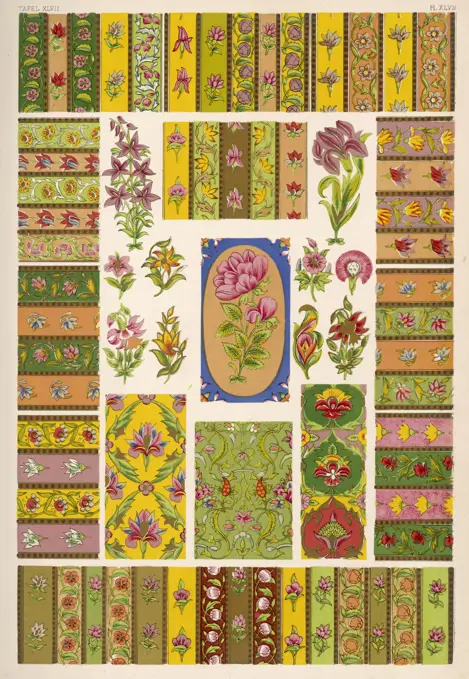
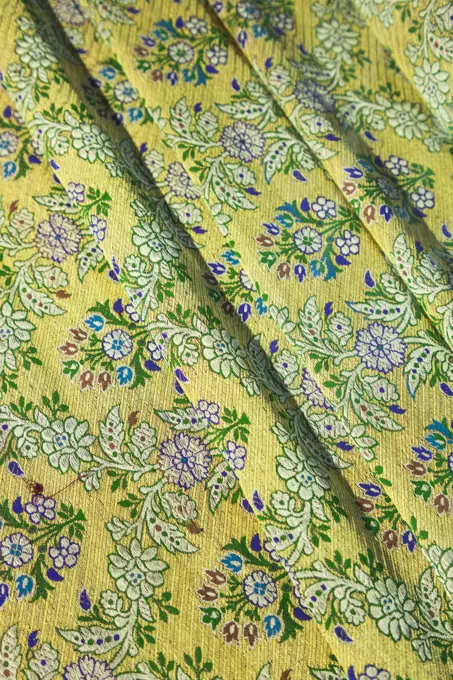
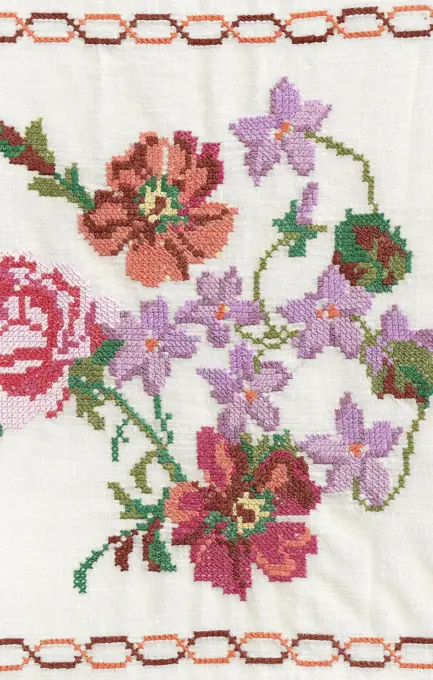
Colorful Textile Patterns

Vibrant and detailed fabric fragments featuring florals and intricate designs, highlighting texture and historical significance.
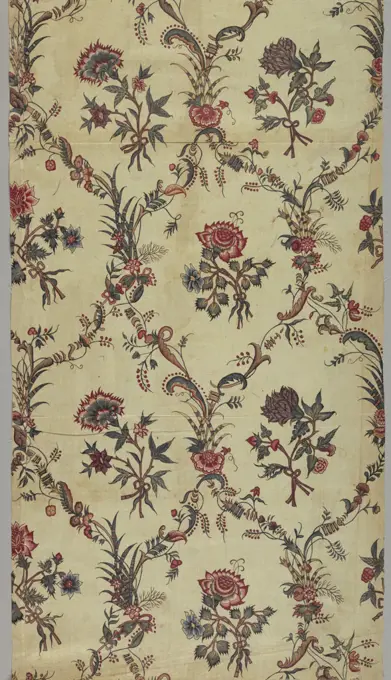
Chintz fragment, Medium: cotton Technique: mordants (2 reds, black, purple and brown) and dye (yellow) applied by brush or pen; blue brushed over resist; chintz on plain weave, Diamond lattice enclosing floral forms. Horizontal line at bottom. Faint pencil line at right where fabric was cut., India, 1750-1800, printed, dyed & painted textiles, Chintz fragment
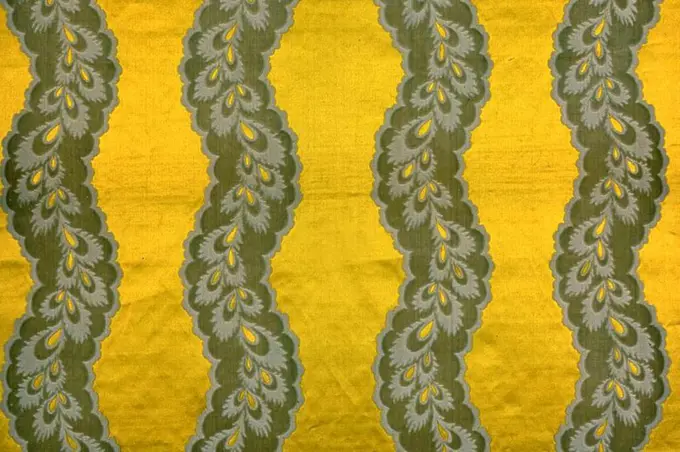
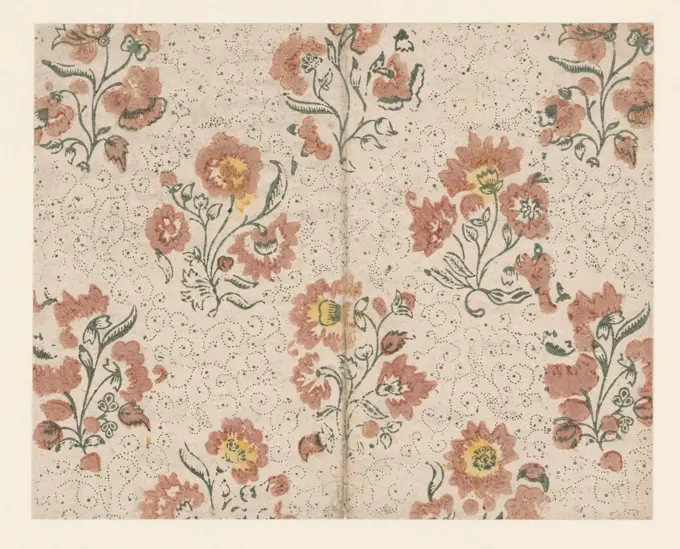
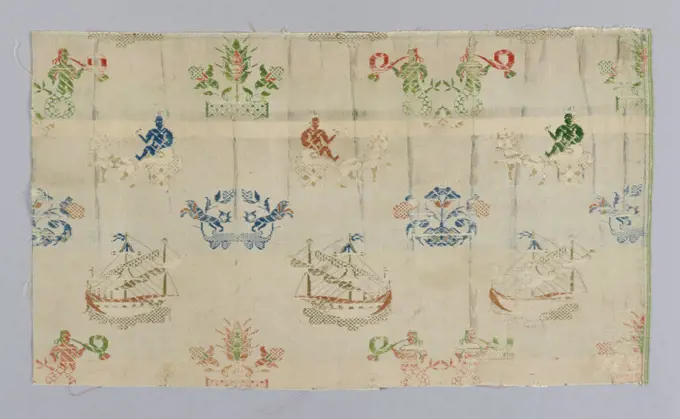
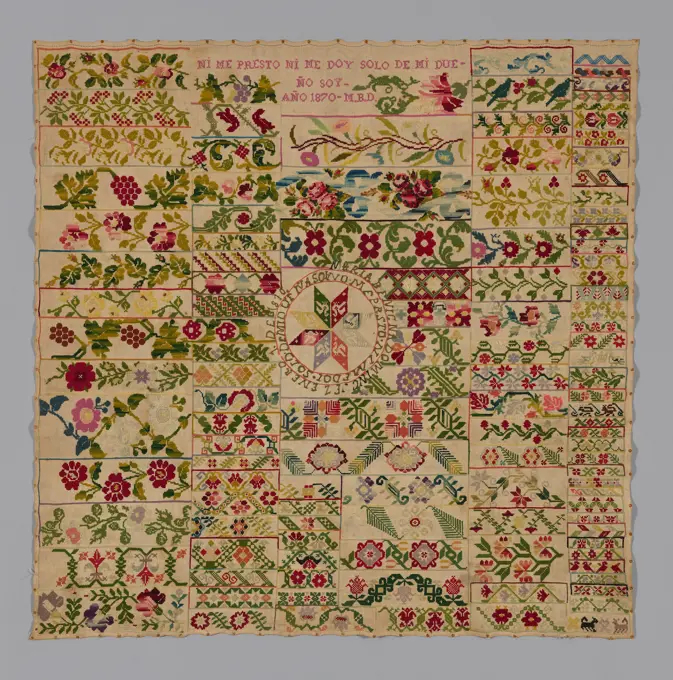
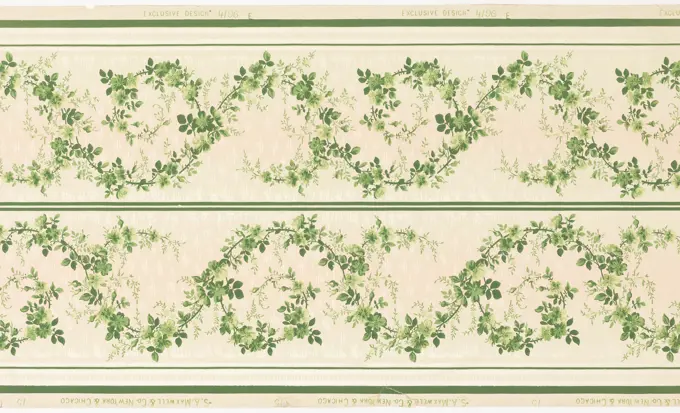
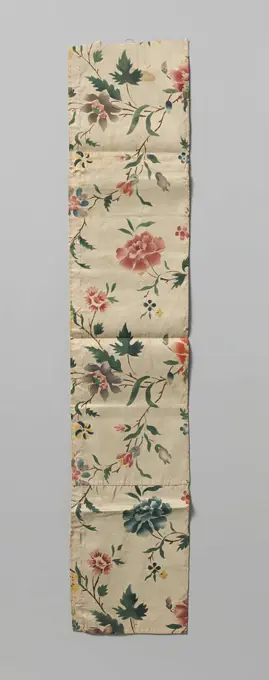
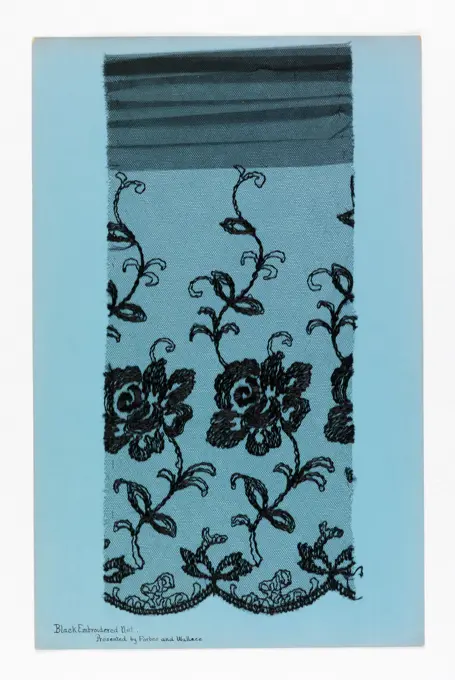
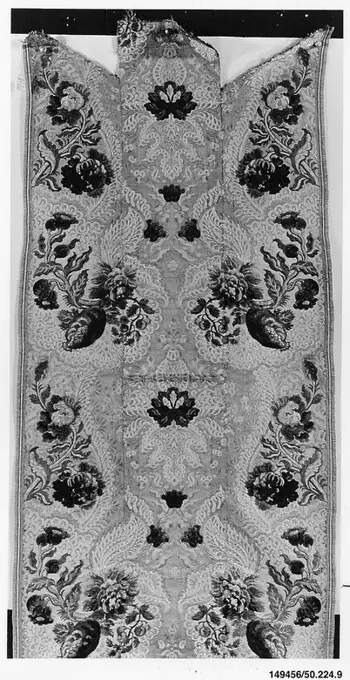
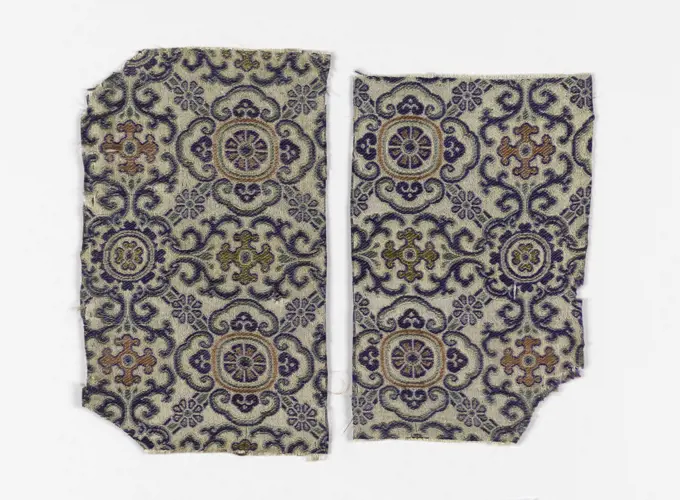
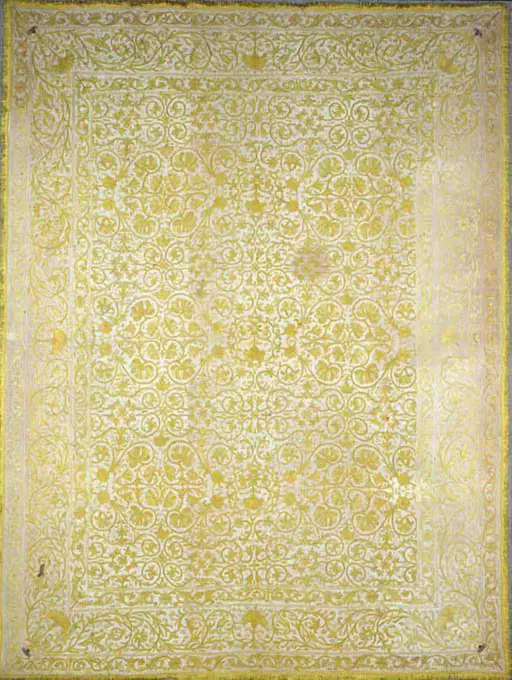
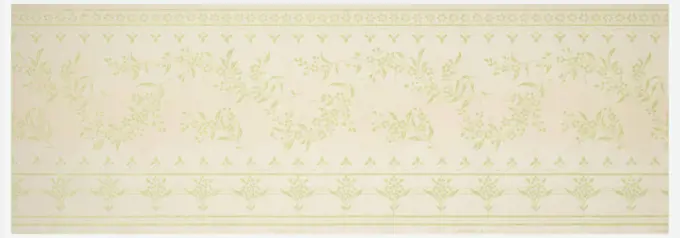
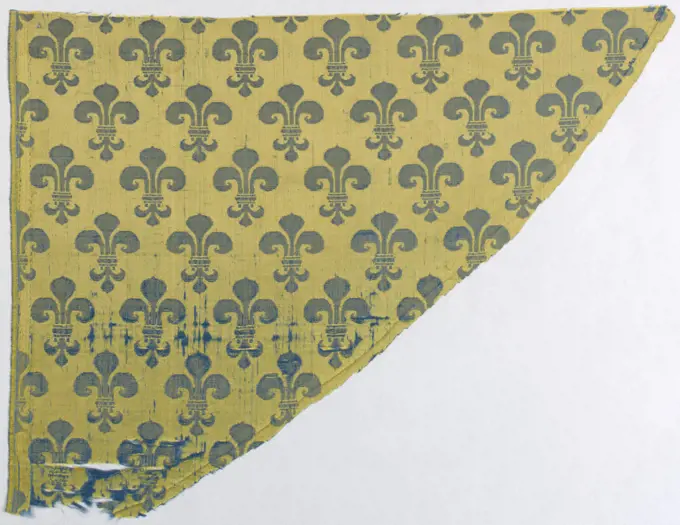
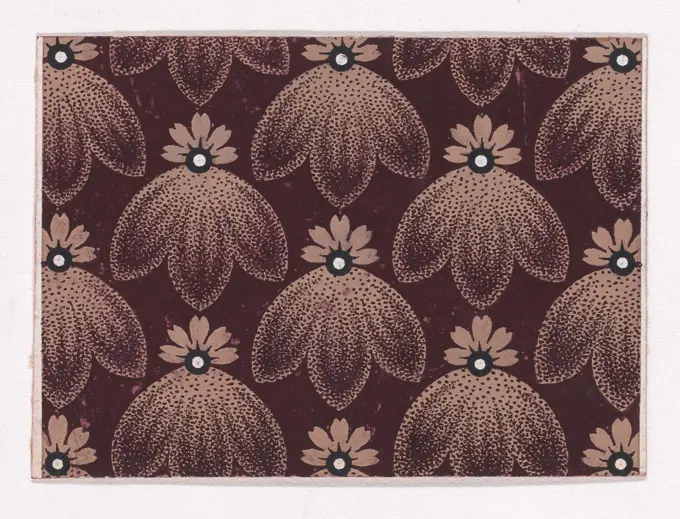
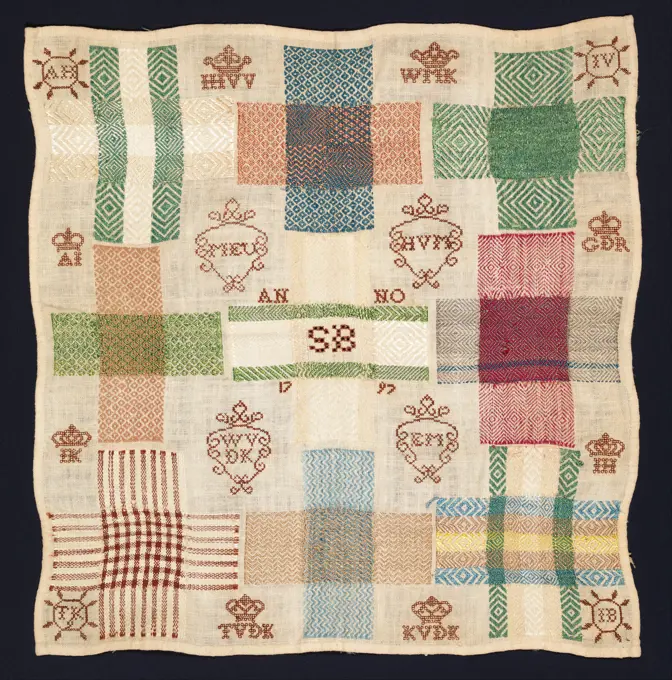
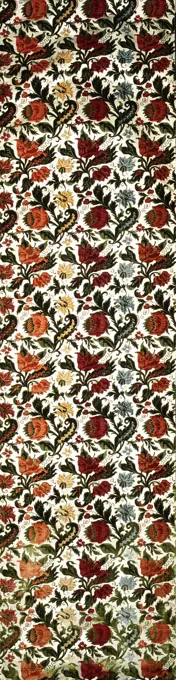
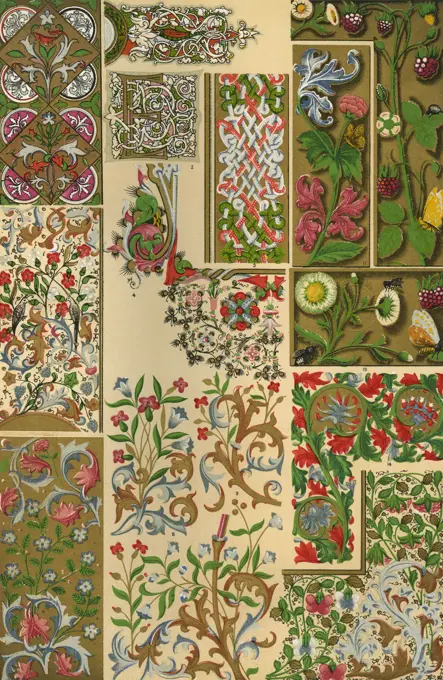
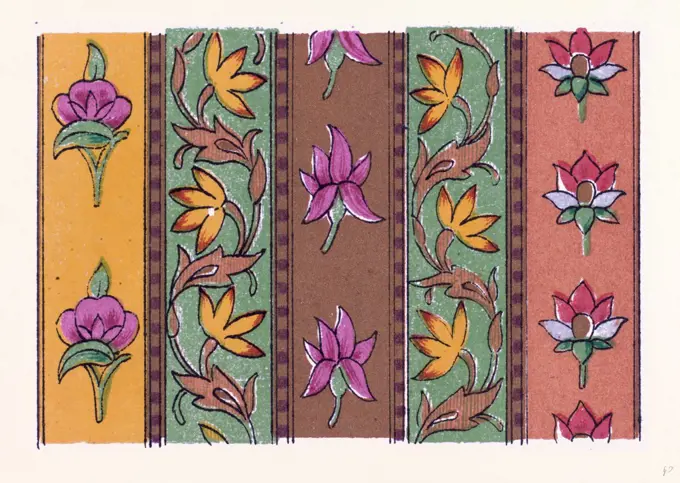
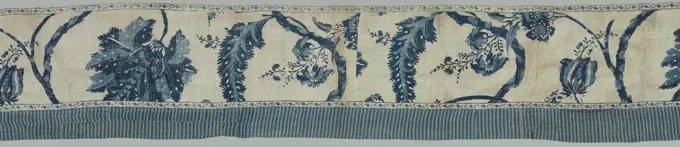
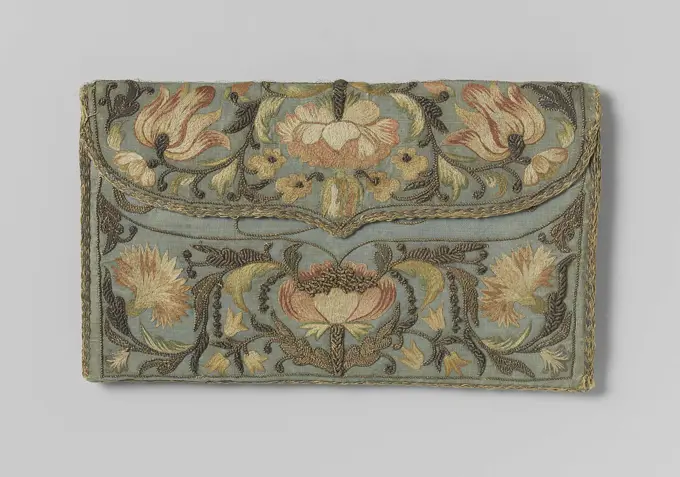
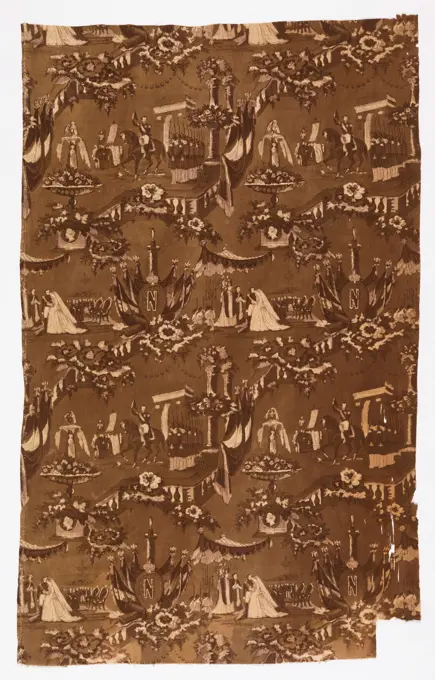
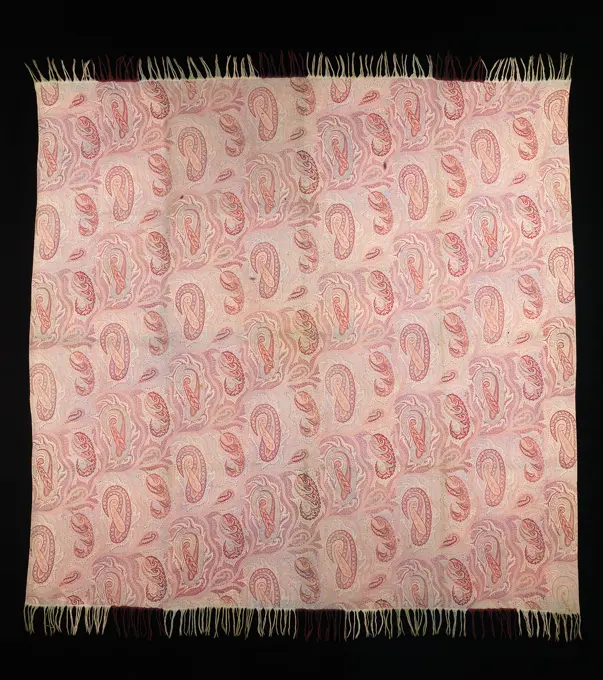
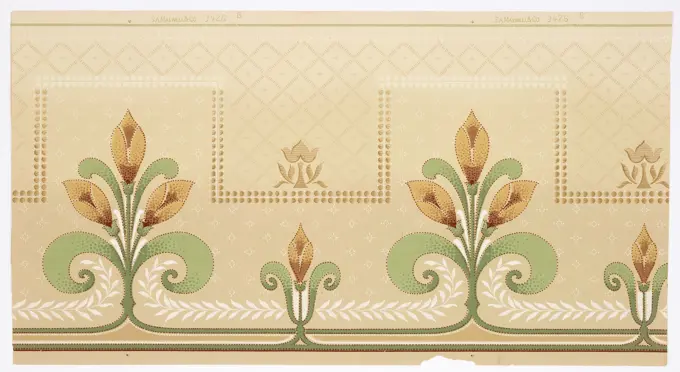
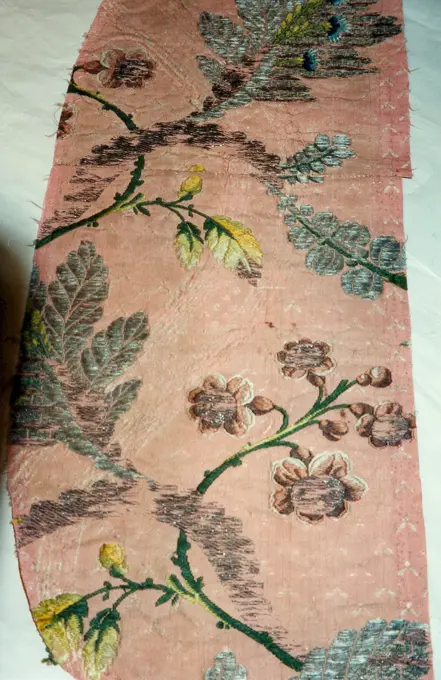
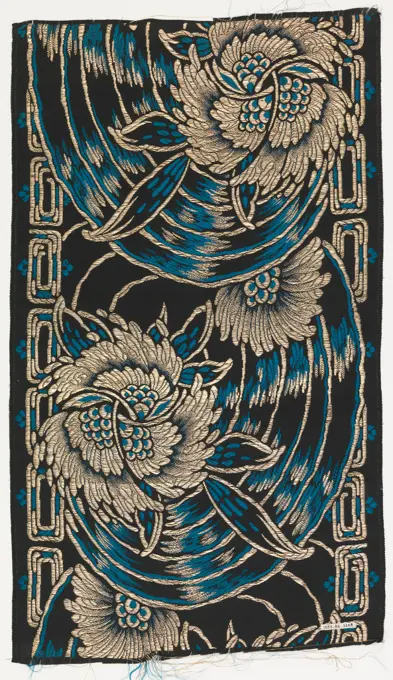
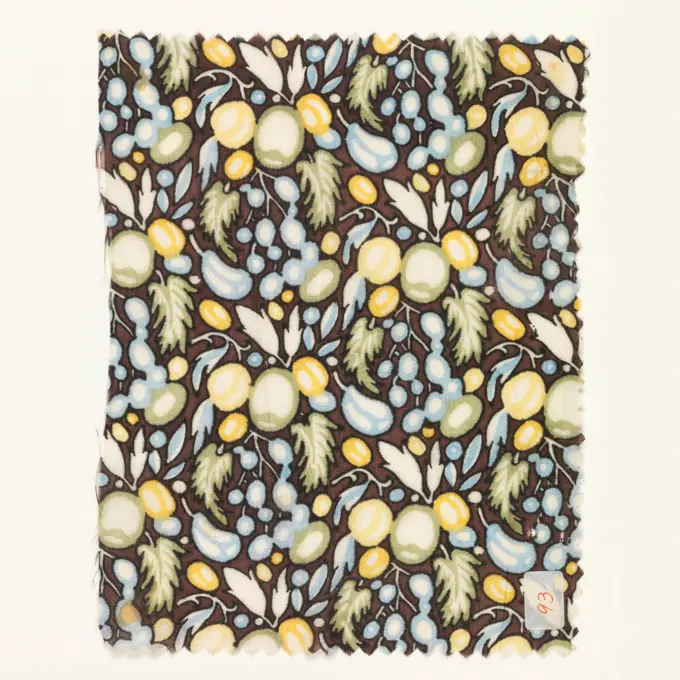
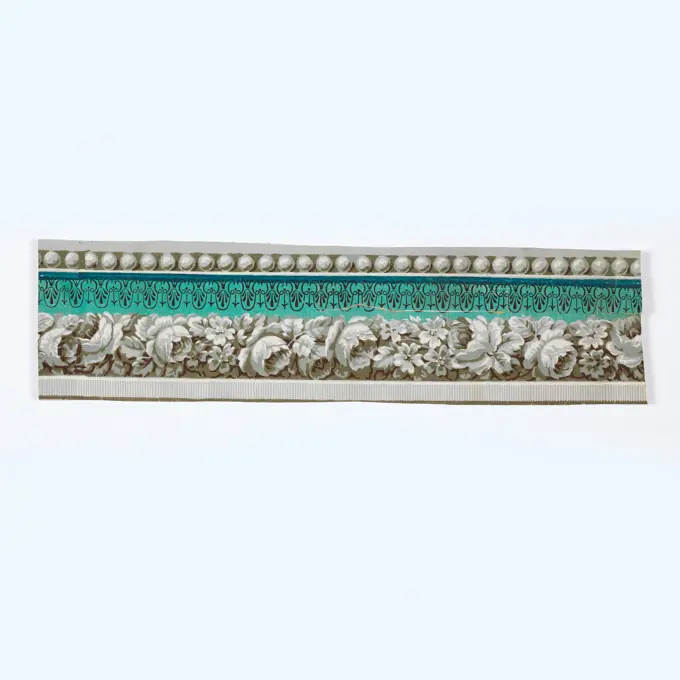
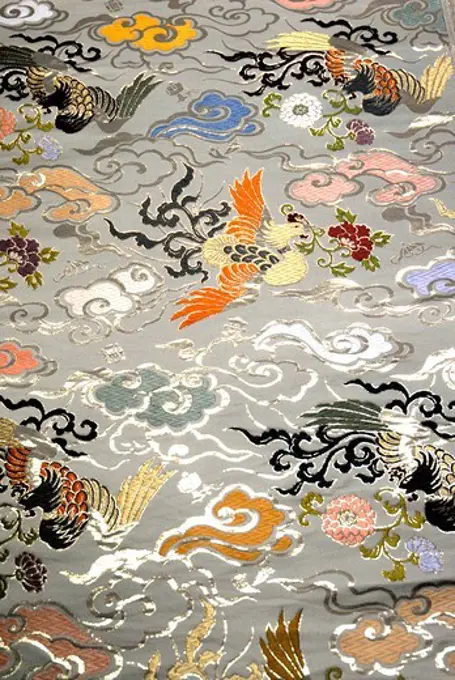
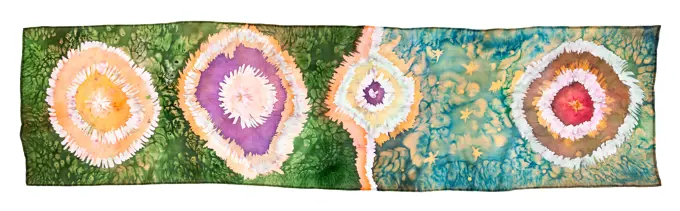
Steel Spanning material to the design of Theo Nieuwenhuis in Passe-Partout, Theo Nieuwenhuis, c. 1910 Steel Spanning fabric from jacquard -woven cotton designed by Theo Nieuwenhuis. In original passe-partout. The pattern consists of stylized leaf vines in Spitsovaal. Mustard yellow impact on light green chain. Netherlandsmaker: Helmond Staal: Cotton (Textile). PASE-PARTOUT: Cardboard jacquard Steel Spanning fabric from jacquard -woven cotton designed by Theo Nieuwenhuis. In original passe-partout. The pattern consists of stylized leaf vines in Spitsovaal. Mustard yellow impact on light green chain. Netherlandsmaker: Helmond Staal: Cotton (Textile). PASE-PARTOUT: Cardboard jacquardFragment (China); silkChalice cover, Medium: silk and silver thread on silk Technique: embroidery, Embroidery is in the design of an ornament formed by eight floral sprays placed around a cross with rays set between the arms., Italy, 17th century, embroidery & stitching, Chalice coverPanel. France. Date: 1804-1814. Dimensions: 86.1 × 54.9 cm (33 7/8 × 21 5/8 in.). Silk and cotton, warp-float faced satin weave with supplementary pile warps forming cut and uncut, voided velvet. Origin: France. Museum: The Chicago Art Institute, Chicago, USA.Piece 1725-30 French. Piece 217064Sidewall, Machine-printed, A formal design inspired from the French Louis XVI period in a striped effect. An urn is filled with roses. Dainty clusters of roses are festoonedat bottom of urn and at either side. Also a blue bow knot suspends a blue and pink parasol. Between these motifs are two vertical parallel lines withpicot edges with little urns with roses between them. On reverse side is printed: 'Side 2636C, Band 3636 C, Band 3636 CC, Ceil 2637 C'., USA, 1890-1900, Wallcoverings, SidewallTextile; silkHandkerchief (Switzerland); linen, cottonSamples, Orinoka Mills, (Philadelphia, Pennsylvania, USA), a. Red ground with red, yellow and green floral design., b. Green ground with green, yellow,and orange floral design., c. Pink ground with pink, yellow and green floral design., USA, ca. 1910, woven textiles, SamplesFragment, Medium: wool Technique: printed, Fragment with a square grid filled with multicolored flowers on a black ground. Grid is formed by bands brownish-red decorated with sawtooth stripes in white and yellow., England or USA, ca. 1850, printed, dyed & painted textiles, FragmentFragment of silk fabric  colourful twig motifs and wavy river” in the background unknownLeaf with spreading pattern of flowers on stock of dotted lines, anonymous, c. 1755 - c. 1795  Leaf with spreading pattern of flower vines in a stock of curly dotted lines. Used as a cover for a publication from 1777.  paper. block printing (relief printing process) ornament derived from plant formsPiece British 19th centuryTextile, Medium: silk Technique: woven, Off-white silk brocaded in multicolored silks in a fan-shaped pattern of detached elements in a horizontal arrangement. Threes rows in a staggered repeat have a tree and flower motif that alternates with paired mermen blowing horns. The next row has men in chariots. Below are addorsed leaping dogs that aternate with a floral spray. Row below has a square-rigged vessel., Portugal, Spain, 17th-18th century, woven textiles, TextileSampler Made 1800-1900 México. Cotton, plain weave; embroidered with wool in back, cross, long-armed cross, hem, and stem stitches .Fragments; silk, metallic yarnsTextile; Manufactured by Schwartz-Huguenin; cottonPiece 19th century Japan. Piece 72127Fragment of Groen Zijddamast, c. 1700 - c. 1800 Fragment green silk tissue, consisting of three sewing fragments. The pattern has curled, stylized leaves.  silk damask / twill Fragment green silk tissue, consisting of three sewing fragments. The pattern has curled, stylized leaves.  silk damask / twillFragment, Medium: silk, metallic Technique' 4&1 satin plus twill, Rectangle cut on the bias of diagonal leaf branches in green white and silver., 19th century, woven textiles, FragmentFrieze (USA); Manufactured by Maxwell & Co., S.A. (United States); machine-printed paper, liquid mica; 92 x 49 cm (36 1/4 x 19 5/16 in.)Fragment veelkleurige bedrukte zijde.Fragment multicolor silk tissue. A white ground has a printed pattern of multicolored flower branches in stencil technology.Textile (England); cottonHandkerchief Made 1860-1880 France. Silk, plain weave; embroidered with cotton .Ironed starch paper in red -brown with pressed star motif, anonymous, 1850 - 1950 paste paper   paper.  ornament ~ starformsMachine-made Openwork Samples (USA); cardboard, linen, silk, metallic; 1971-26-2-32Curtain or Hanging (Suzani)Length. Culture: British, probably. Dimensions: Overall: 103 x 49 in. (261.6 x 124.5 cm). Date: second quarter 19th century. Museum: Metropolitan Museum of Art, New York, USA.Piece. Culture: Italian or Spanish. Dimensions: L. 39 x W. 21 1/2 inches (loom width)99.1 x 54.6 cm. Date: ca. 1725. Museum: Metropolitan Museum of Art, New York, USA.Carpet Fragment; worsted wool, juteTextile (Italy); silk, gold-wrapped silk core threadFragments Of Chasuble (Spain); silkBox with Cover, 1573-1620. China, Jiangxi province, Jingdezhen kilns, Ming dynasty (1368-1644), Wanli reign (1572-1620). Porcelain with wucai (five color) overglaze enamel decoration; overall: 9 x 18.4 cm (3 9/16 x 7 1/4 in.).Fragments, Medium: silk Technique: plain compound satin, Decorated circles and crosses in blue and rose on a light tan ground., China, 19th century, woven textiles, FragmentsHalf of a pillow cover 18th century Greek Islands, Crete. Half of a pillow cover 222577Back of embroidered chasuble unknownBedcover Made 1675-1700 Portugal. Linen, plain weave embroidered in silk floss in chaing, short, long and brick stitches; original silk fringe . Indo-PortugueseFrieze, M.H. Birge & Sons Co., 1834, Machine-printed paper, On cream ground, light green pattern of flowers and leaves on stems. Below, standing plants; above, hanging plants made up of three leaves., Buffalo, New York, USA, 1905-1915, Wallcoverings, FriezeFrieze, Maxwell & Co., S.A., Chicago, Illinois, USA, Machine-printed paper, Borders printed two across the width. Alternating taller and shorter medallions. Taller medallion is topped by trefoil-like motif which is also the shorter medallion. Printed on tan ground that shades to blue at the bottom., USA, 1905-1915, Wallcoverings, FriezeFragment, Medium: silk Technique: 5-harness satin damask Label: silk satin damask, Fragment of woven silk with blue fleur de lys on a yellow ground., France, 17th century, woven textiles, FragmentTextile, Schwartz-Huguenin, Medium: cotton Technique: printed by engraved roller on plain weave; glazed, Three samples with same ground and same or siilar patternsin different colors. A) Ground eleaborately decorated, probably by 'molette,' in minute wavy lines and tan and dots and additional pattern in white of flowers and wheat; pattern printed over ground. C) Smaller scale flowers in violet on green ground. Glazed., 1851-63, printed, dyed & painted textiles, TextileCloth, 19th century, 55 1/2 x 28in. (141 x 71.1cm), Cotton, silk; embroidery, India, 19th centuryQuilt, Variation on 'New York Beauty'Textile Swatch , 1950s to 1960s. Silk, 9 3/4 x 13 1/2 in. (24.8 x 34.3 cm).    1950s to 1960sSquare scarf of salmon crepe chine with woven spreamotherapy, trimmed with machining. Scarf of salmon crepe. Chine with woven spreamotive of branch and leaf, deposited with a 2.5 wide edge of machining. Note: Instead of a scarf a dress for a dressing table.vintage greeting card vintage greeting card Copyright: xZoonar.com/ReshetnyovaxOxanax 1355737Border, Machine-printed paper, Printed two borders across the width, the top and bottom half are mirror images. A drapery swag is made of repeated thin blue lines, then repeated dentils, then small blue dots simulating fringe. Between the repeating curves with architectural motifs are delicate, continuous green foliate swags that follow the same curve. The peaks of each curve alternate between small and large bouquets of pink and blue flowers. At the center of the frieze are two parallel and horizontal green lines, with blue painterly brushstrokes above and below. Between the blue lines are small floral swags., USA, 1905-1915, Wallcoverings, BorderSpanning fabric with backdrop of branches, leaves, flowers and fruits, anonymous, c. 1750 - c. 1790 A lane multicolored painted cream spancing material from silk. Description See A. China silk printing / painting A lane multicolored painted cream spancing material from silk. Description See A. China silk printing / paintingBeautiful textileFrieze, Machine-printed paper, liquid mica, Very stylized pod flowers, alternating large and small. Background shades from pink at top to deep red at bottom., USA, 1905-1915, Wallcoverings, FriezeIndian ornamentTextile Design with Alternating Stylized Flowers and Leaves 1840 Anonymous, Alsatian, 19th century Rectangular sheet of paper with a textile design from a group, dated 1840, made in Mulhouse, Alsace, which was an important nineteenth-century center for textile production in the Haut-Rhin region of France. The design is made up out of alternating stylized half-flowers with five petals and three leaves of light tan color over a dark reddish-brown base. The pistils of the half-flowers are colored in black and have a white pearl in the center. The leaves have shades stippled in a dark reddish-brown color.. Textile Design with Alternating Stylized Flowers and Leaves. Anonymous, Alsatian, 19th century. 1840. GouacheTextile; Manufactured by Schwartz-Huguenin; cottonTwo blades with a flower branch of flower branch between dots, anonymous, 1750 - 1900  Two sheets with a flower branch of flower branch between dotted vines. Two separate halves of a cover.  paper. block printing (relief printing process) ornament derived from plant formsNapkin van Linnamast, Anonymous, 1850 - 1950 Linen Damas napkin with a deer in the middle and oak branches in the edges. Eindhoven linen (material) damask Linen Damas napkin with a deer in the middle and oak branches in the edges. Eindhoven linen (material) damaskFan case, Alouïse van de Voord, Printed paper on cardboard box, satin lining, metal catch, Fan case. Cardboard covered with paper printed with floral pattern. Lining of brown satin. Metal catch., France, ca. 1880, costume & accessories, Fan caseOrnaments from a Persian  manufacturer's pattern book in  the South Kensington Museum        Date: 1868Iran, Tehran, Niyavaran Palace Complex, palace of the last Shah, drape detailChasuble, embroidered unknownNational style of embroidery. National style of embroidery.Hand made work. Copyright: xZoonar.com/andriixsalivonx 1746462Chintz with Garlands and Bouquets, anonymous, c. 1775 Motive of winding flower vines between which staggered, stern bouquets in different shades of red, blue, yellow and green on white stock. Exceptional with this piece is the twill binding. At the end of the fabric is an unreadable stamp in blue/white on the blue edge. Coromandelkust cotton (textile) Motive of winding flower vines between which staggered, stern bouquets in different shades of red, blue, yellow and green on white stock. Exceptional with this piece is the twill binding. At the end of the fabric is an unreadable stamp in blue/white on the blue edge. Coromandelkust cotton (textile)Darning sampler 1797 Dutch The initials S.B. in the center of this elaborate collection of darning samples are most likely those of the instructor, as there are several surviving examples with the same initials. Its possible that these initials belonged to a teacher at an orphan school in Amsterdam, and the other initials in decorative cartouches surrounding the center, and surmounted by crowns on the edges, are likely to be those of other teachers, and administrators or supporters of the institution.. Darning sampler 228077Piece ca. 1770 British. Piece. British. ca. 1770. Cotton and linen. Textiles-PrintedLength of velvet late 17th-early 18th century Italian While Lyons was the undisputed center of the silk-weaving industry during the eighteenth century, Genoa provided much of the high-quality velvet for both furnishings and fashion. A specialty was polychrome-velvet weaving, as in this fabric, which possibly was intended to be used for an elegant wide-skirted mantua, or gown. Although the pattern repeat of stylized and seminaturalistic flowers is relatively small, it appears more complex, as it is rendered with seven different colors, a feat of technical virtuosity. The individual motifs are further modeled by juxtaposing cut and uncut ("ciselé") pile, which reflect light differently. This mutable effect is more dramatic when the fabric is in movement, as one's perception of the colors changes dramatically depending on whether the fabric is vertical or horizontal, flat or draped.. Length of velvet. Italian. late 17th-early 18th century. Silk. Textiles-VelvetsBodice Panel (India); cottonPiece mid-19th century French or British. Piece 229367Ornaments from illuminated  manuscripts of the 15th  century        Date: 1868Kerchief 1800-1850 French. Kerchief 119381Indian ornamentPersian ornamentValance (England); cotton, linen; 1962-25-1Fragment multicolor silk tissue. A fragment of brown Havana silk with colored silk flowers. Note: Self-side belongs to the fragment; 0.3 cm, solid binding, abnormal color.Handkerchief (France); silk. Letter bag (portfolio) with different types of embroidered colored flowers on a blue fond. At the rear is 'Constantinopoli 1728'.Textile (France); cottonHandkerchief border Swedish, Skane 19th centuryShawl ca. 1850 British This is an elegant example of a European adaptation of the boteh motif. The many forms it takes on this shawl are indicative of the flexibility of this ancient pattern. The shawl held a place as a high fashion accessory for a relatively large period between the end of the 18th century to the 1870s. These accessories were originally adopted by men with exposure to India and Persia through the Trading Companies. The changing fashions near the end of the 18th century brought a renewed interest in Indian and Persian shawls as a form of warmth over the thin muslins of fashionable Empire silhouette dresses. The shawls came in many designs which generally incorporated the boteh form. This form, which is mostly known as the paisley now, is an ancient Persian design based upon the tree of life and inspired by buds, cones and palm fronds. These objects were hand woven and extremely costly which inspired European manufacturers to attempt to produce cheaper copies for the maFragment, Medium: silk Technique: embossed pile on pile velvet, Red elaborate floral vine scrolls of cut-pile on background of red cut-pile in plain weave foundation, red on red., 17th or 18th century, FragmentSleeve Band 19th century China. Sleeve Band 70543Kesa Made 1875-1900 Japan. Scattered across the off-white expanse of silk in this kesa are multiple versions of colorful embroidered peacocks, peonies, and scepters, which once served as a symbol of authority in connection with Chinese Buddhism. Much of the embroidery and appliqued gold crosses seams, indicating that the panel was completely assembled before the embroidery work began.. Silk; plain weave, embroidered and appliqued with silk and gilt-paper-strip-wrapped silk; silk cord and tassels .Frieze (USA); Manufactured by Maxwell & Co., S.A. (United States); machine-printed paper, liquid mica; 92 x 49 cm (36 1/4 x 19 5/16 in.)Fragment of a chasuble 18th century French. Fragment of a chasuble 460328Ribbon Samples (France); silk, metallic threadTextile, Po-Ho; Designed by Carl Otto Czeschka (Austrian, 1878 - 1960); Made for Wiener Werkstätte (Austria); silkBorder (France); block-printed and flocked; 49 x 28 cm (19 5/16 x 11 in.)Bedcover (Rose Wreath) Made 1835-1860 United States. Cotton, plain weave, pieced; appliquÈd with cotton, plain weave; quilted; backed with cotton, plain weave .Sampler. Date/Period: 17th century. Sampler. Medium: silk embroidery on linen foundation. Technique: satin, cross, double running, eyelet and surface stitches on plain weave. Author: UNKNOWN.Embroidered Hanging, 18 x 33 5/8 in. (45.72 x 85.41 cm), Cotton, rayon; needlework, ChinaVintage roomPiece 18th-19th century Japan. Piece 67637Cartoon cute line art vector hand drawn doodles Autumn corporate identity. 4 vertical banners design. Templates set. Cartoon vector hand drawn doodles Autumn bannersBorder (France); block printed on paper; 48 x 13 cm (18 7/8 x 5 1/8 in.)Frieze (USA); Manufactured by Maxwell & Co., S.A. (United States); machine-printed paper; 91.5 x 49 cm (36 x 19 5/16 in.)Traditional Nishijin textile weaving in Kyoto Japanscarf handmade with tie-dye and hot batik isolated colored silk scarf with abstract pattern handmade in tie-dye and hot batik technique isolated on white background ,property released Copyright: xZoonar.com/ValeryxVoennyyx 15362640 ,model released, Symbolfoto ,property releasedSidewall, Block-printed on handmade paper, Paper shows design of flowering stems with flying and perching birds. Border in design of flowers arranged in panels with scrolls. Printed in color on blue ground., USA, 1825-35, Wallcoverings, SidewallPillow with indian pattern mockupEmbroidery, 19th century. Tea tablecloth, embroidered in cross-stitch on linen, depicting a bunch of poppies, approximately 1800.Textile (Japan); cottonClose-up of embroidery on fabric