Cultural Artifacts

Historical decorative objects from different cultures, including sculptures and containers, showcasing intricate designs and craftsmanship.
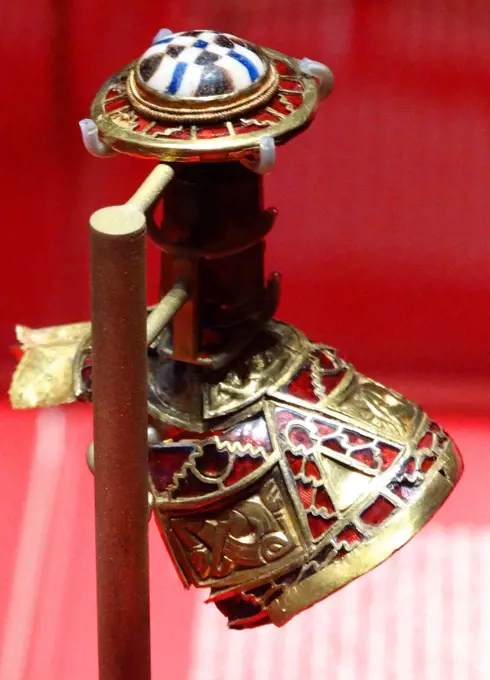
part of the boss from a shield, the lid to a Christian chalice, or the stopper to a drinking horn. from the Staffordshire Hoard. decorated with very fine cloisonnÈ garnet work, small gold panels with pairs of biting beasts and, at the top, a glass gemí. The Staffordshire Hoard is a collection of Anglo-Saxon. Discovered in a field near the village of Hammerwich, near Lichfield, in Staffordshire, England, in 2009. it consists of over 3, 500 items, dated to the 7th or 8th centuries, placing the ori
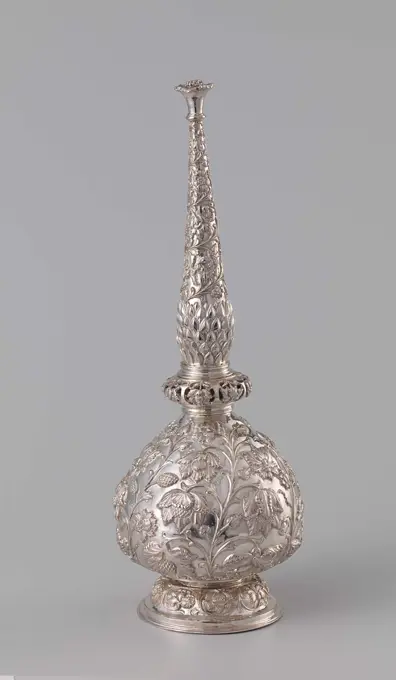
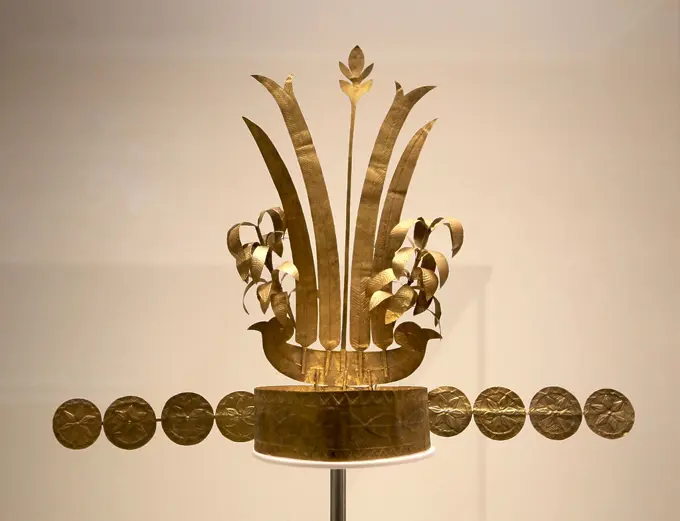
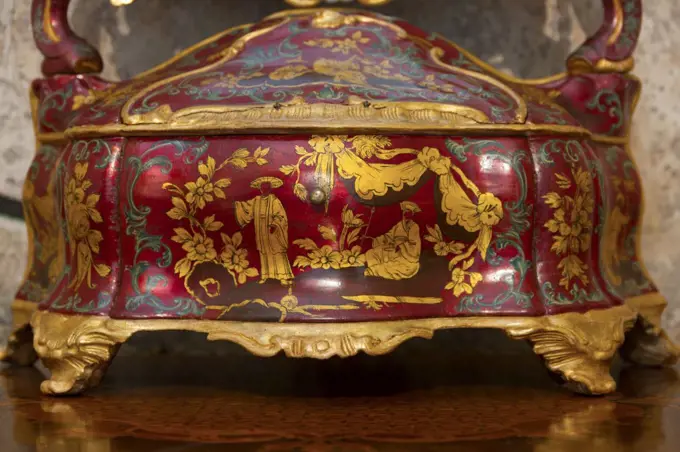
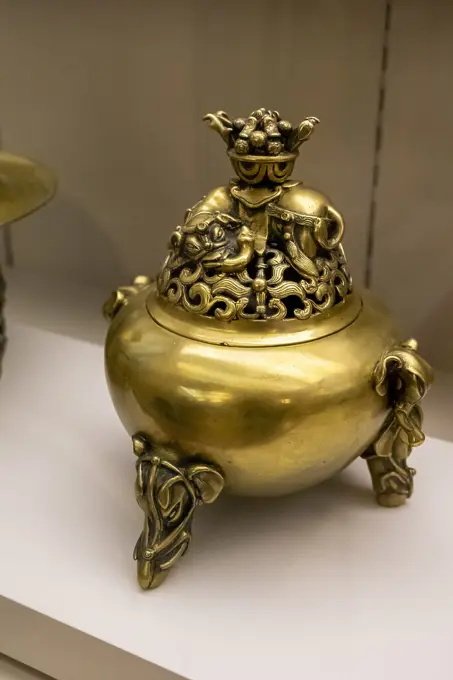
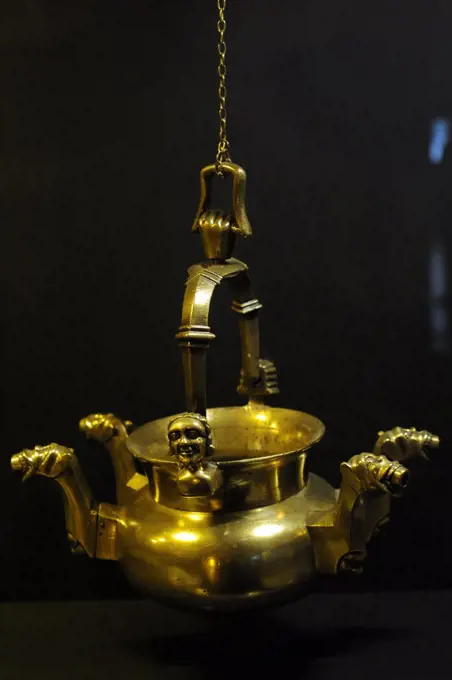
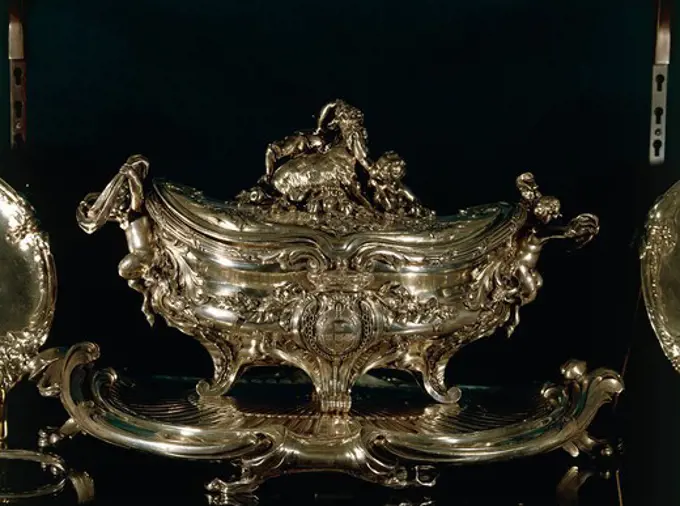
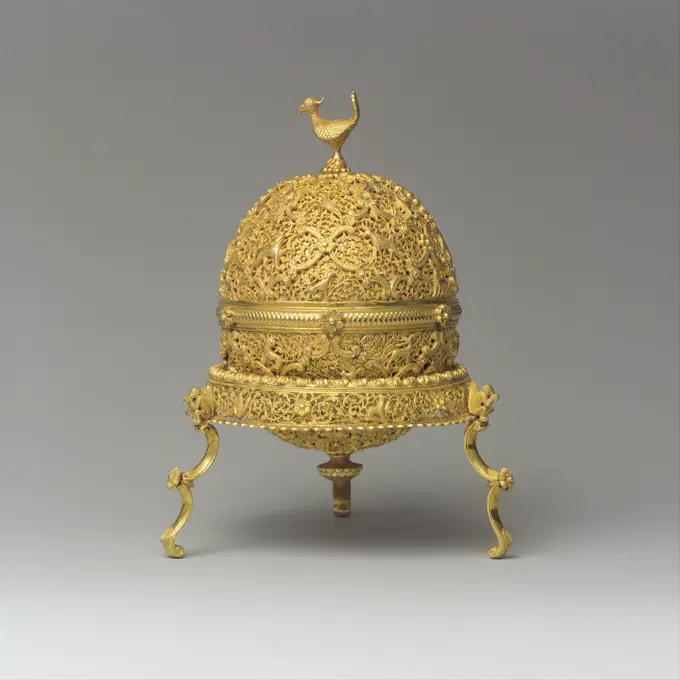
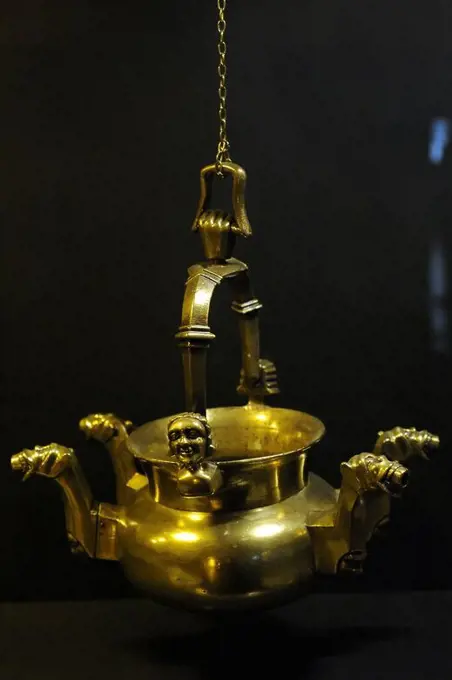
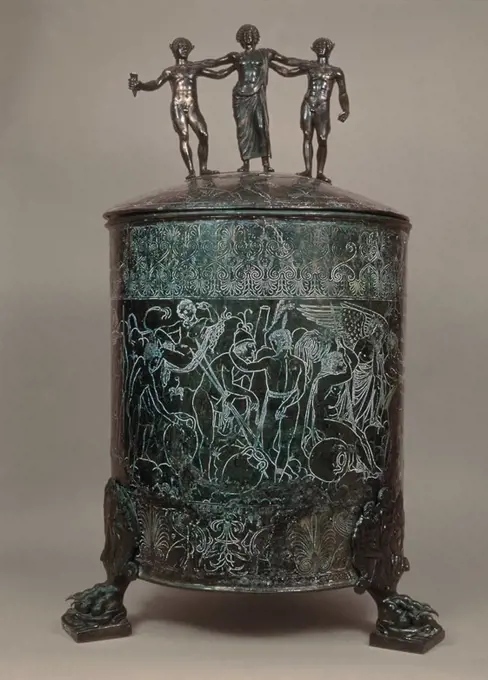
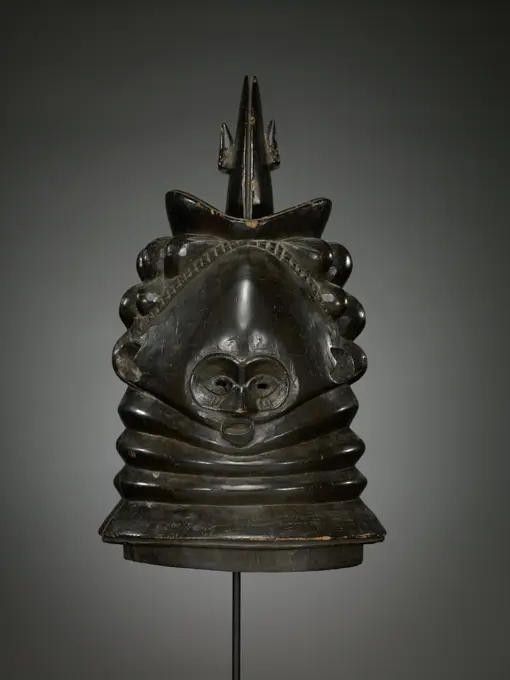
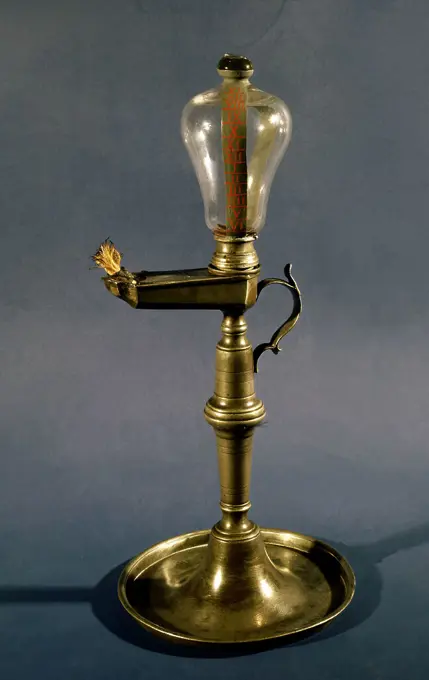
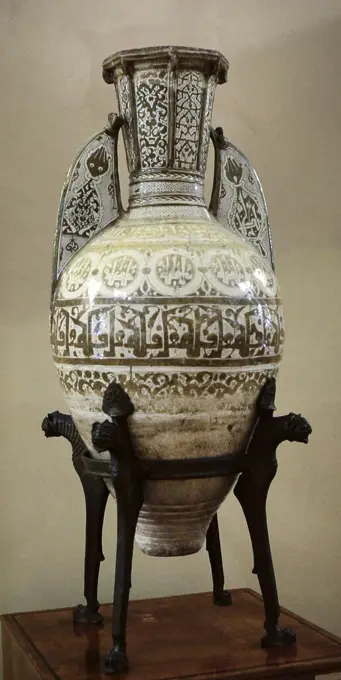
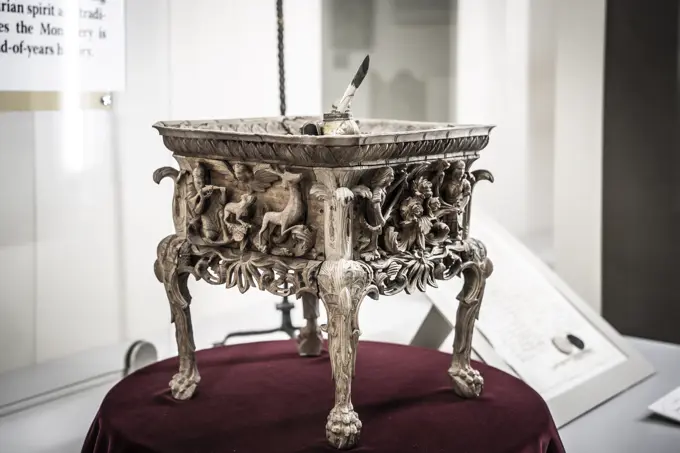
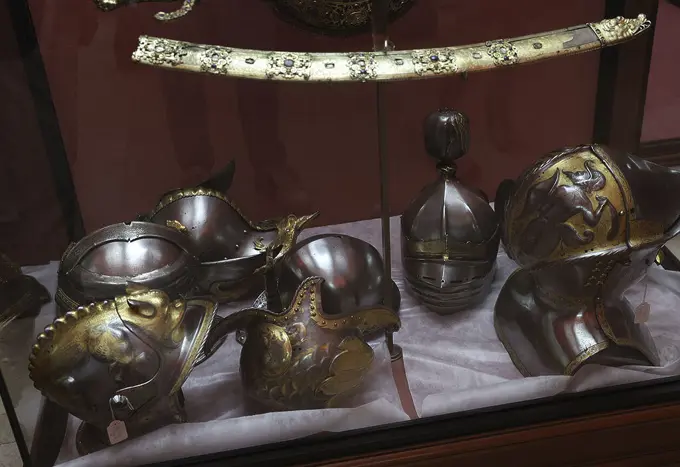
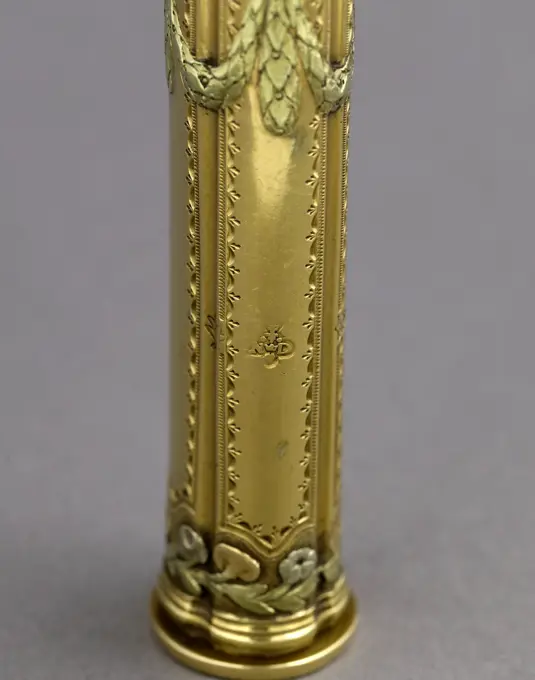
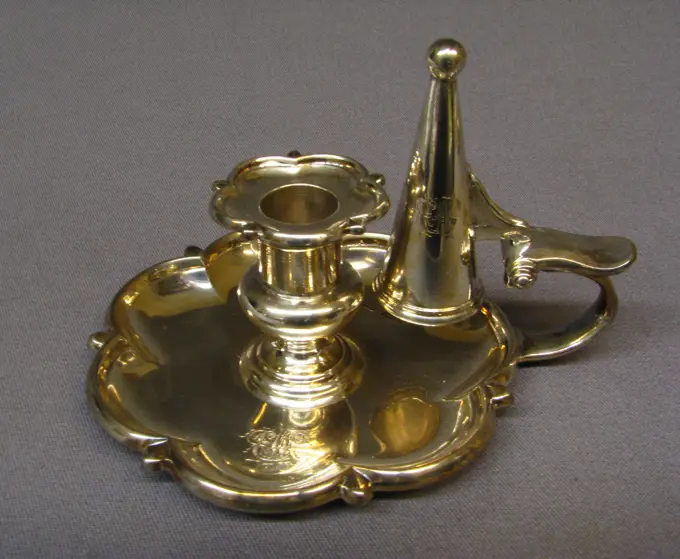
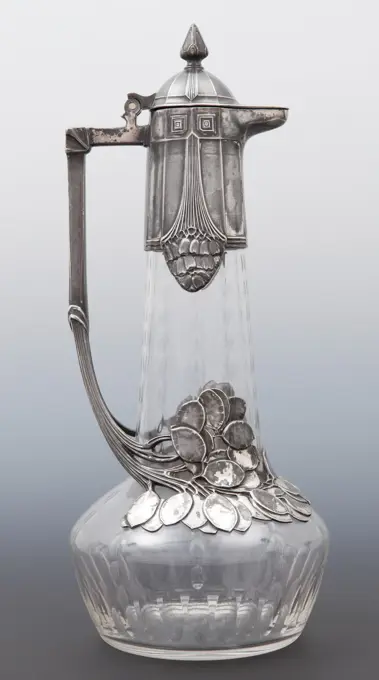
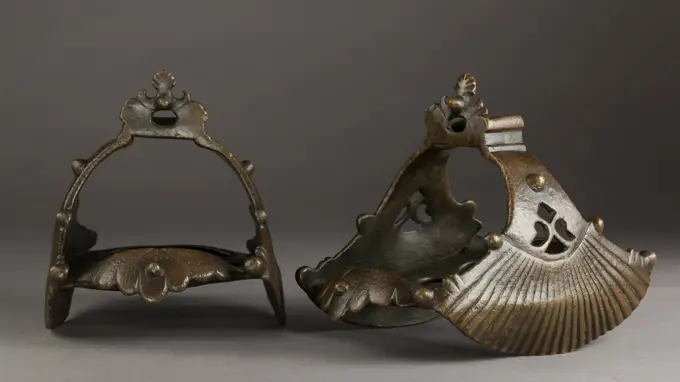
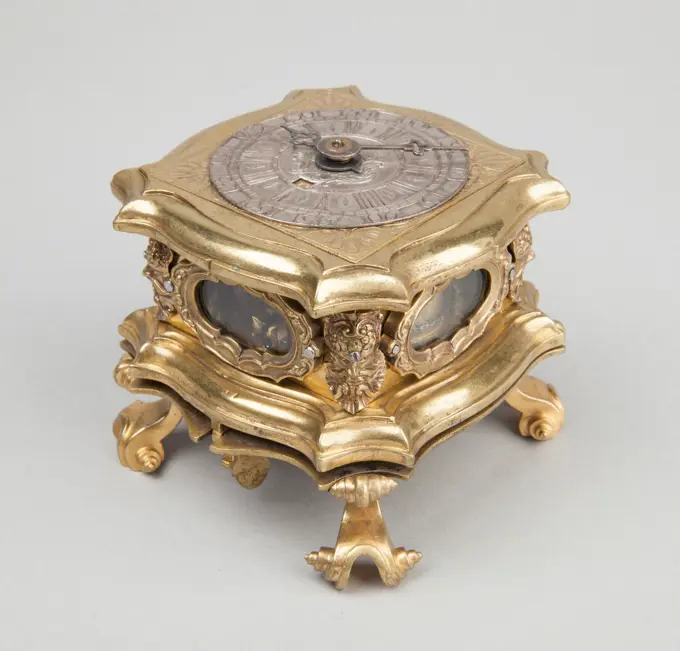
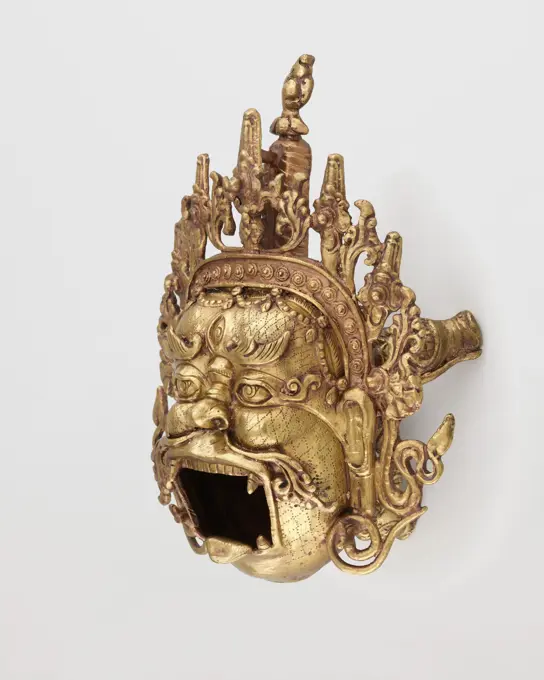
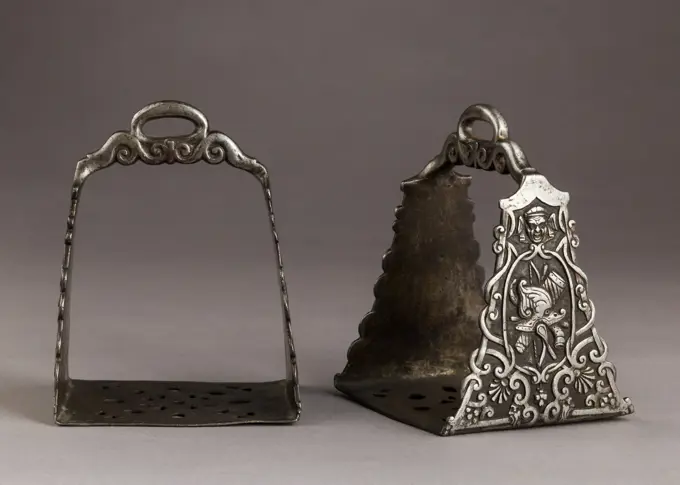
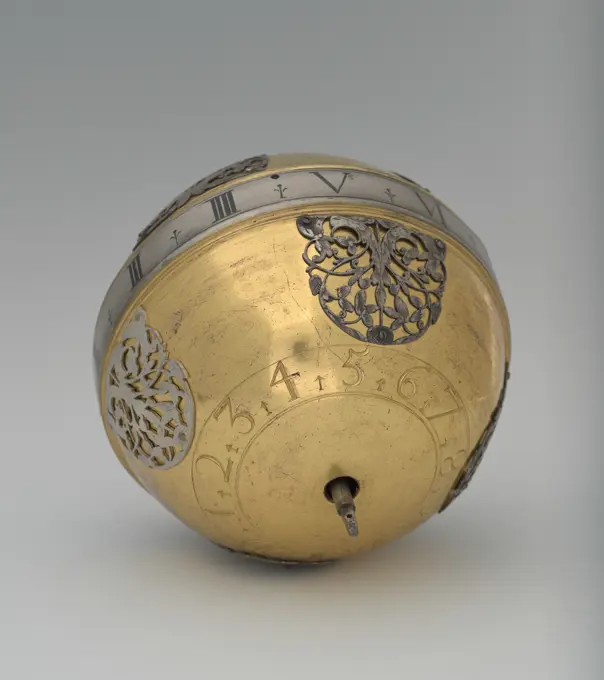
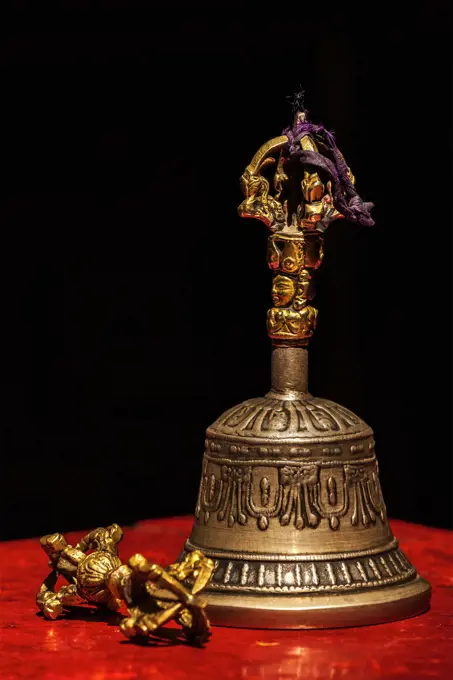
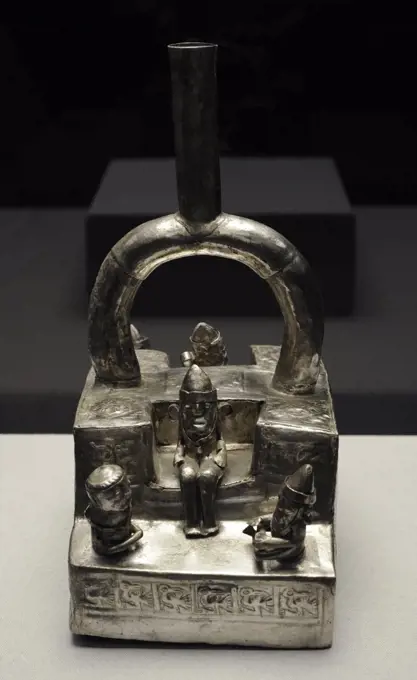
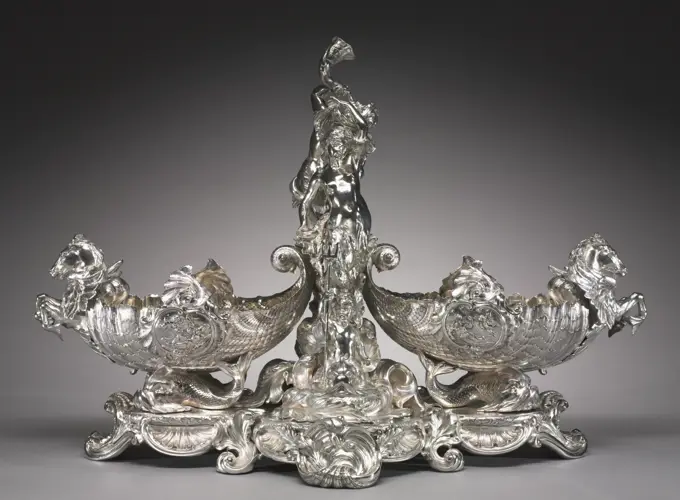
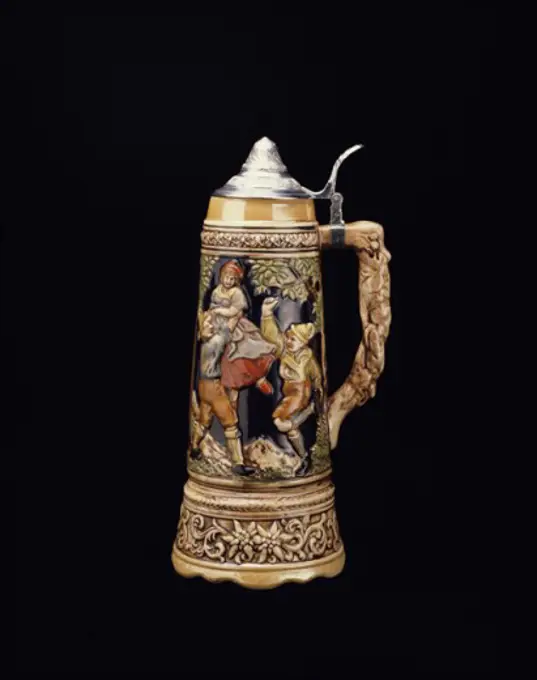
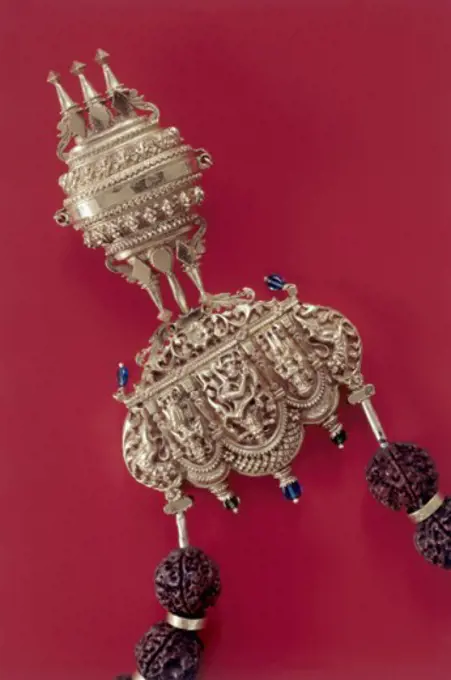
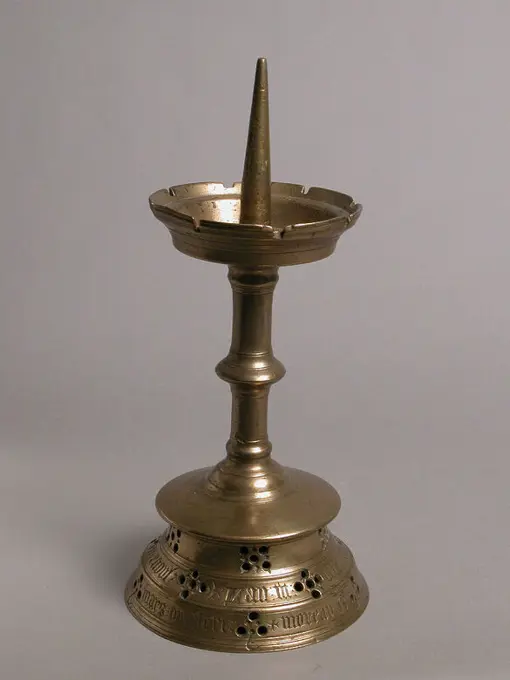
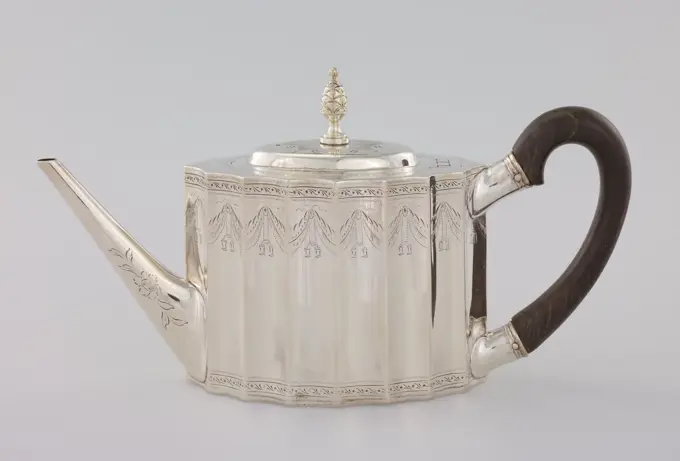
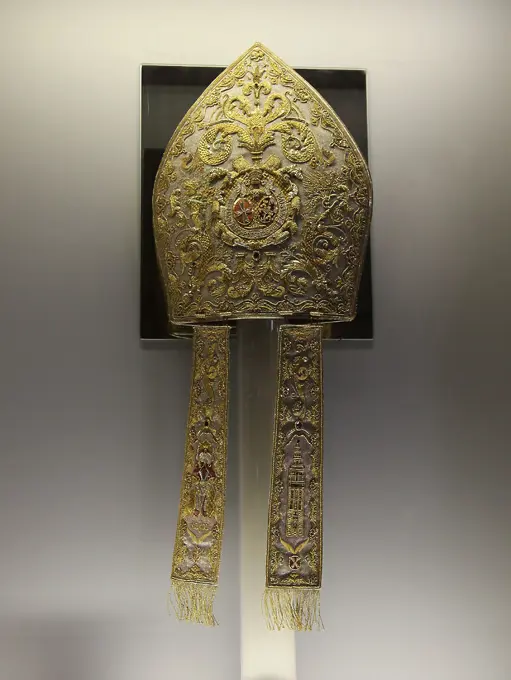
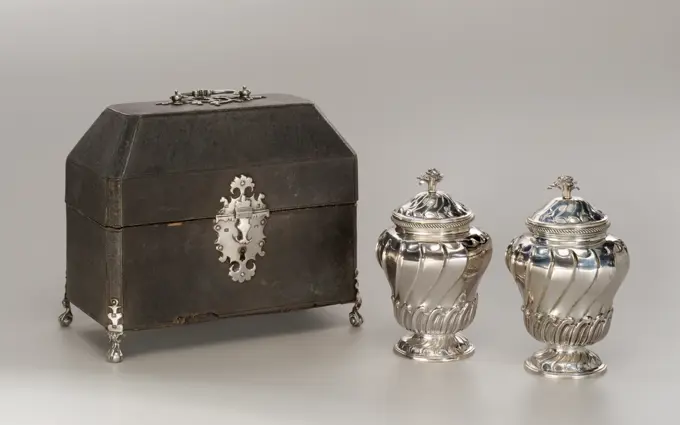
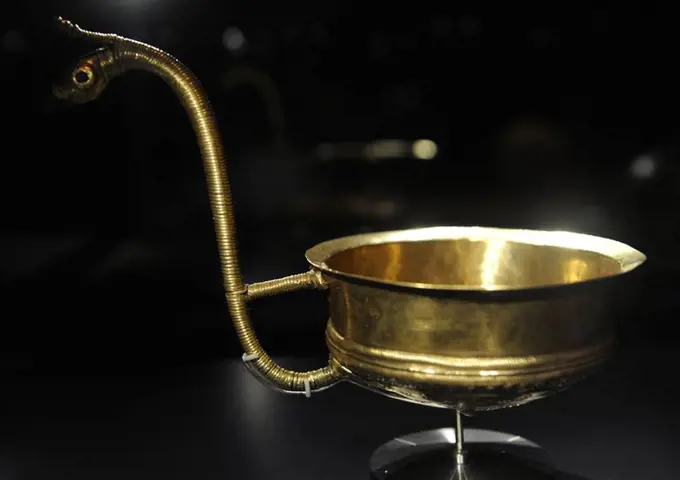
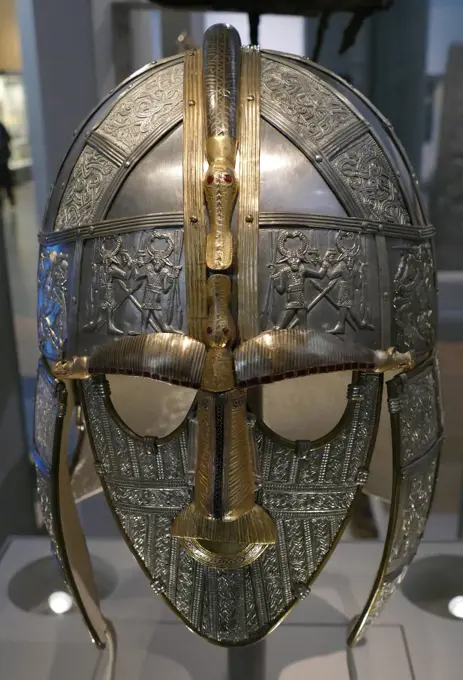
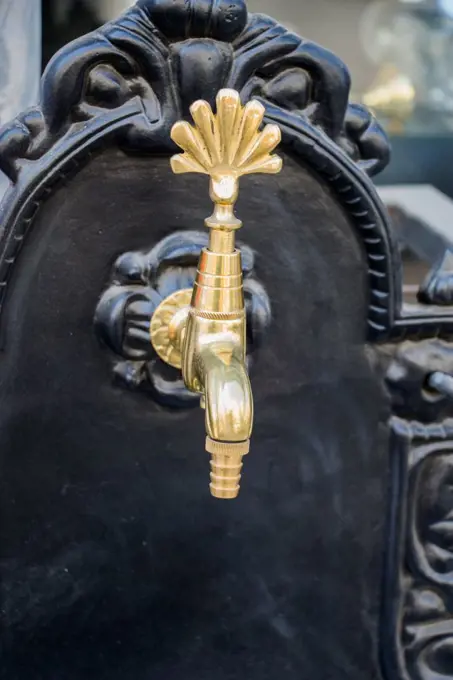
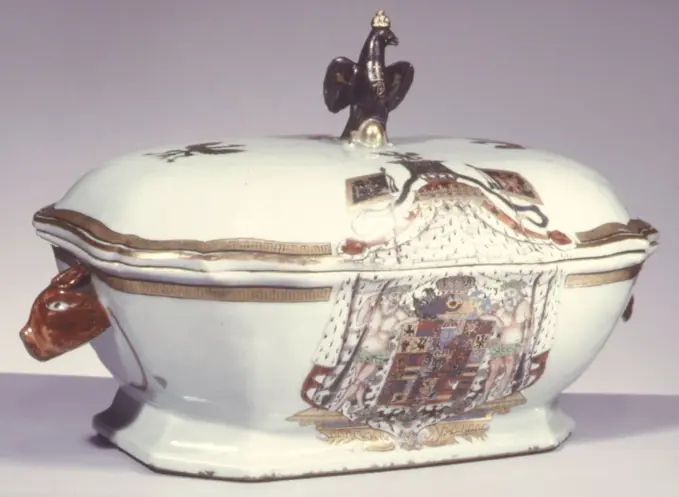
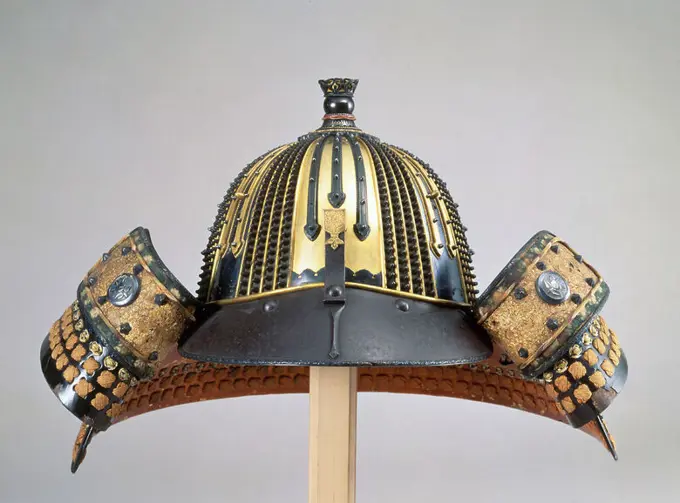
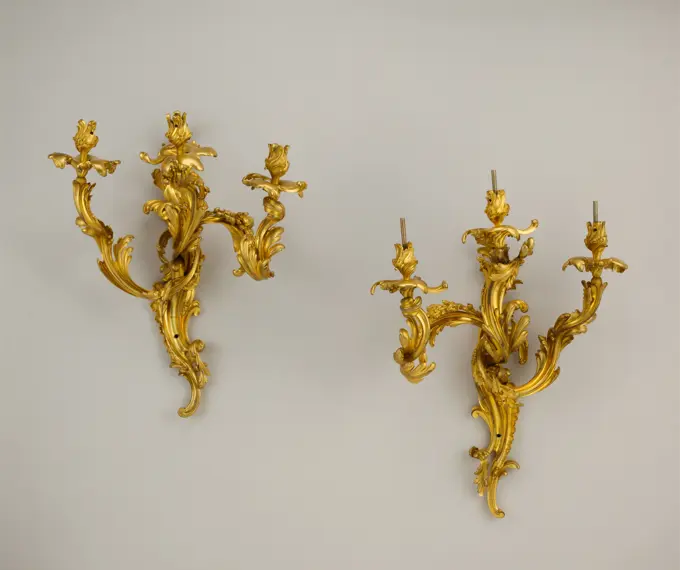
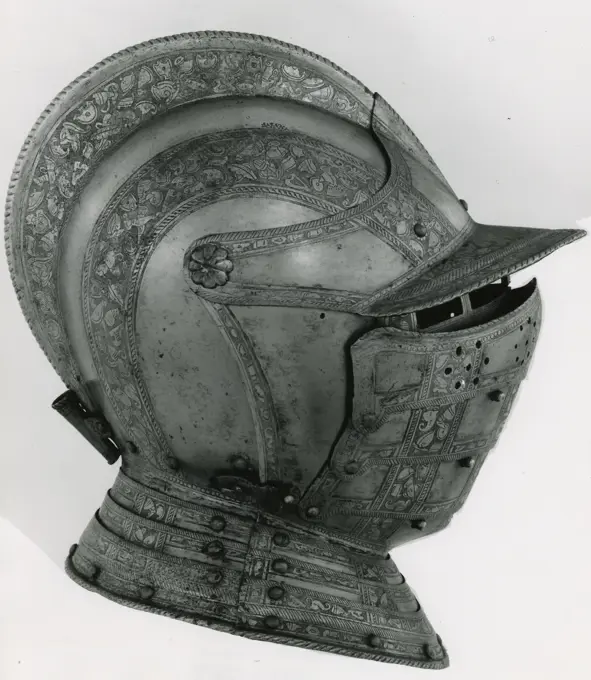
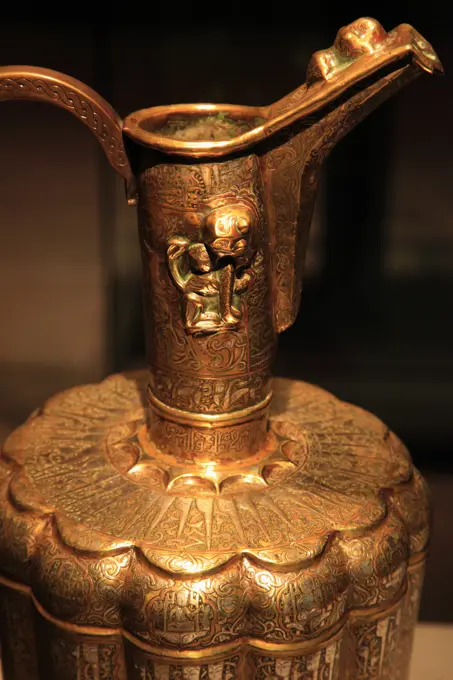
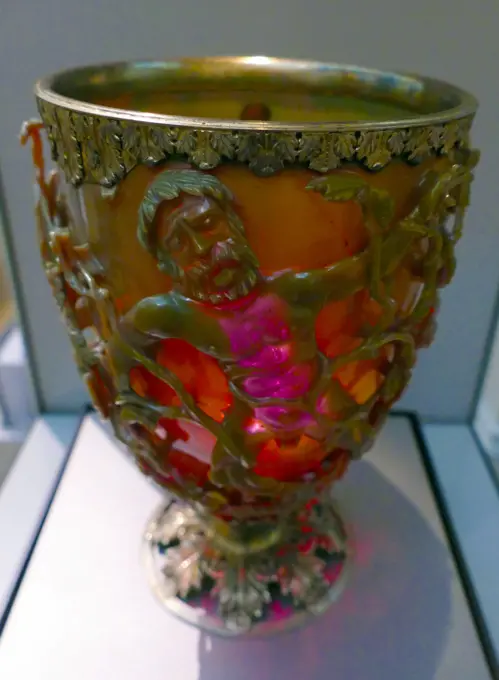
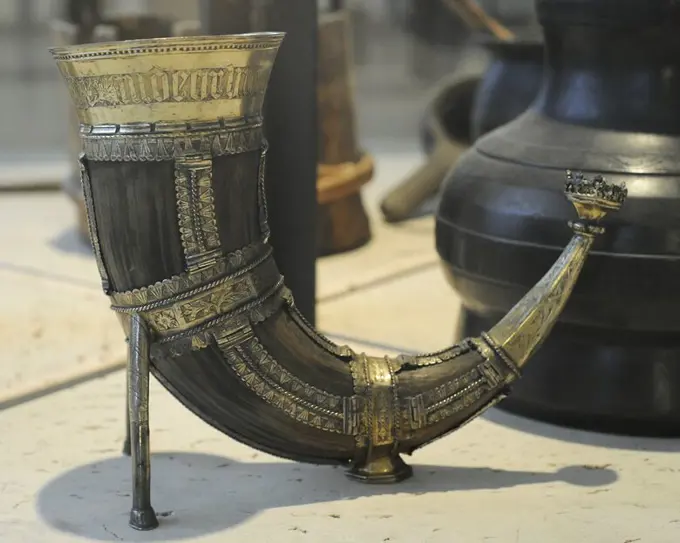
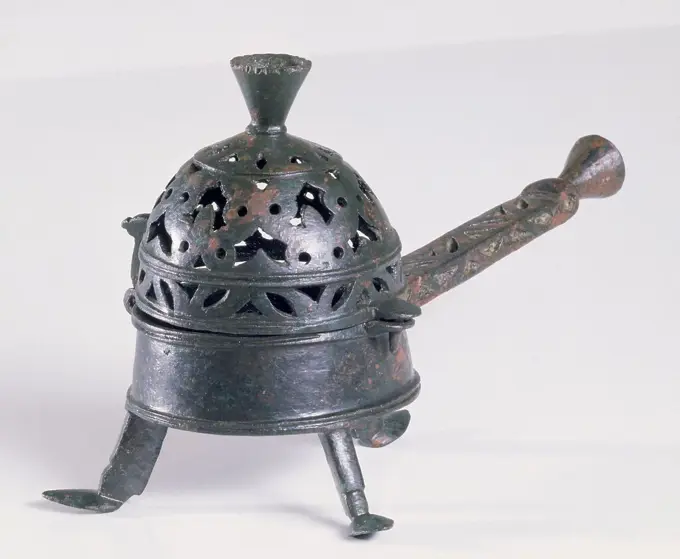
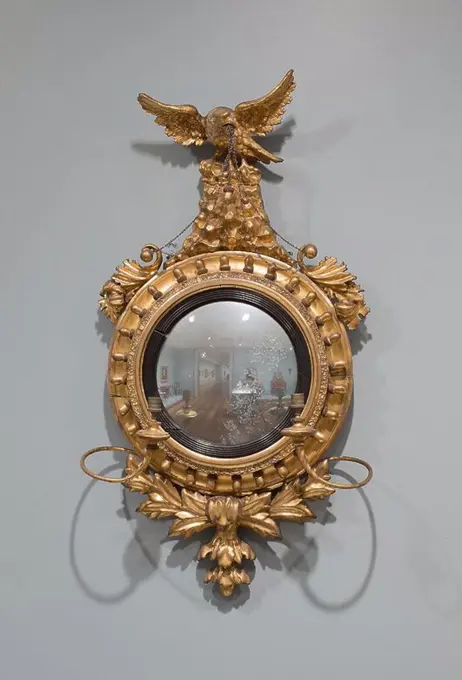
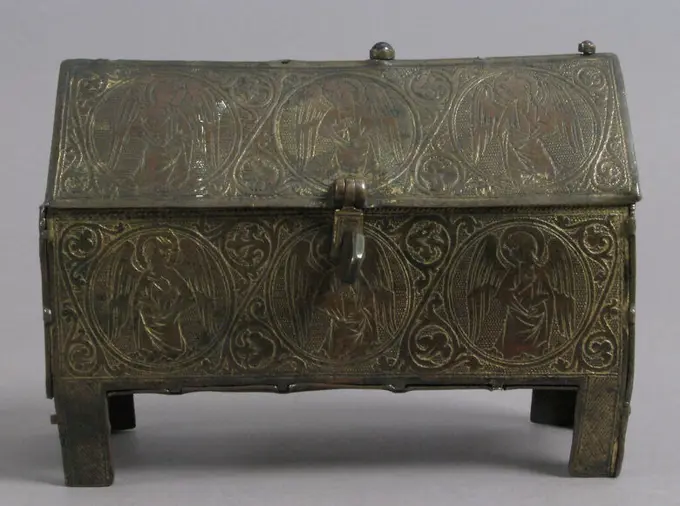
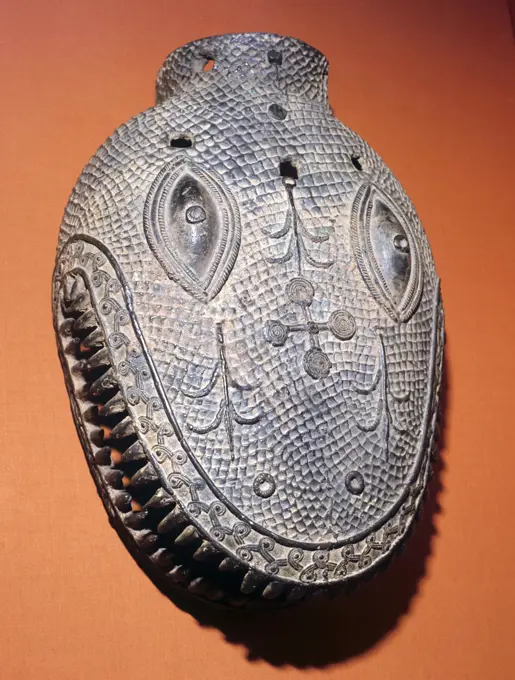
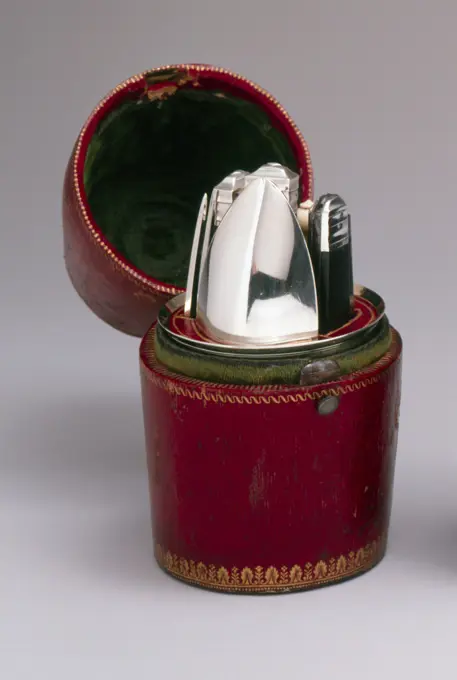
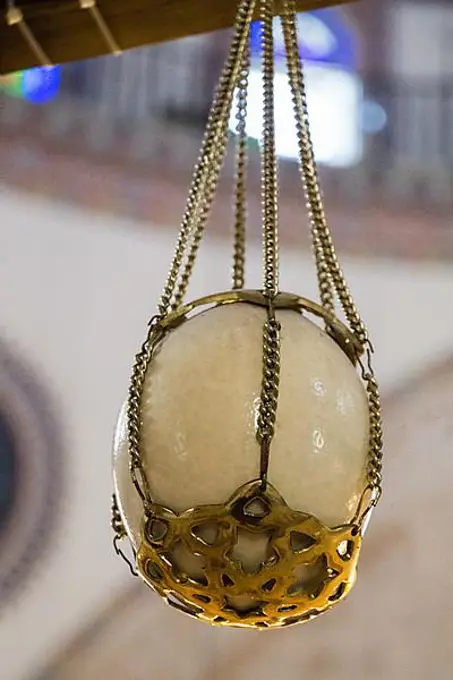
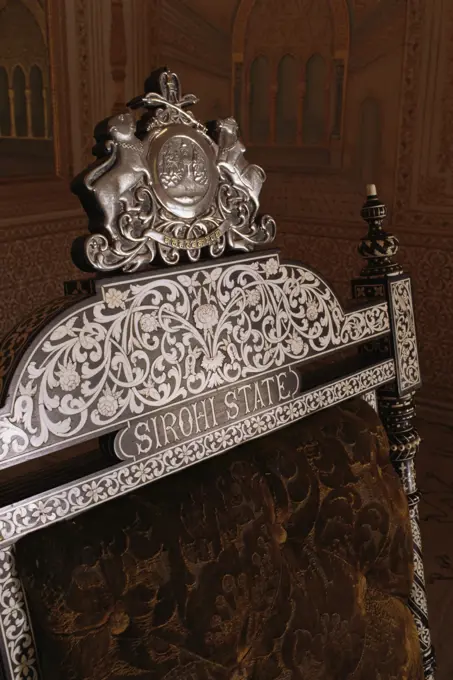
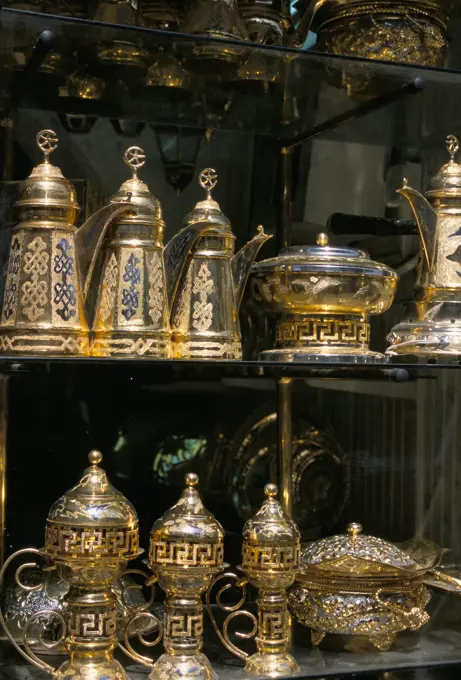
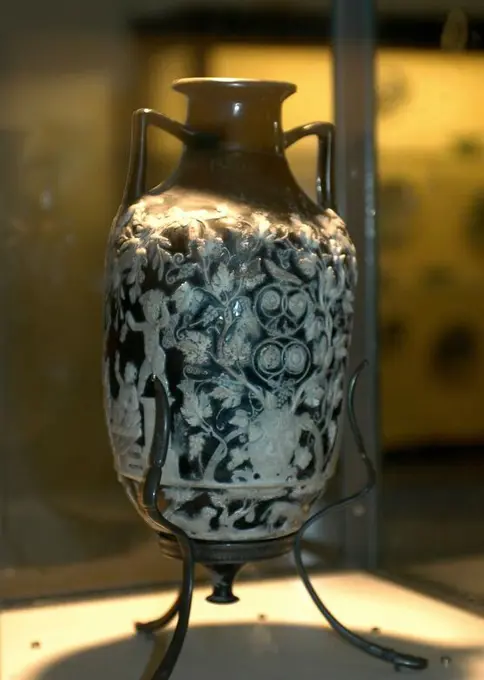
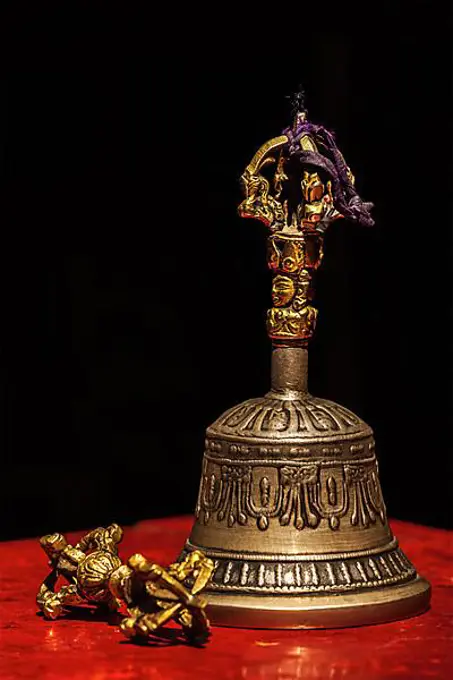
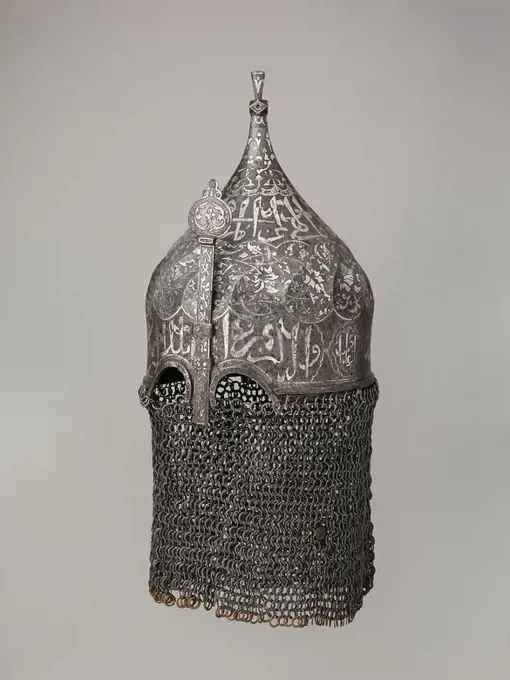
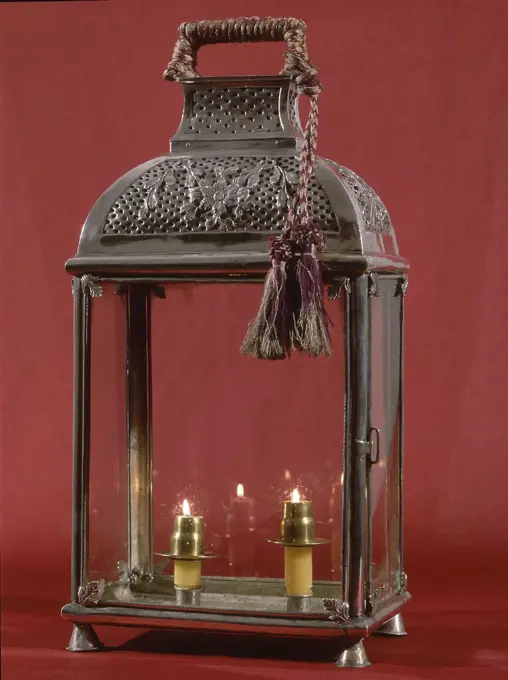
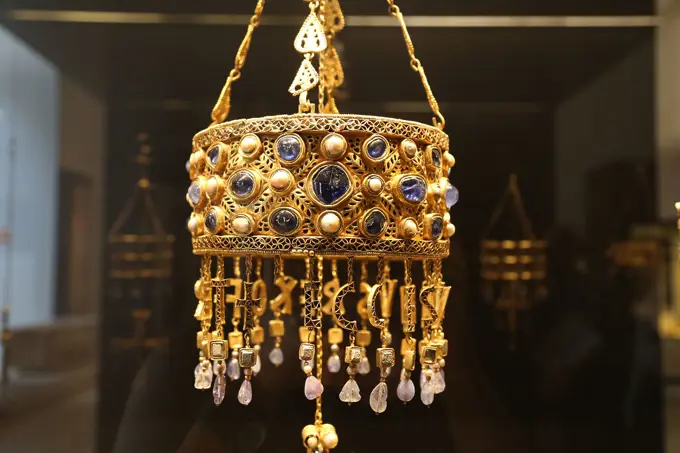
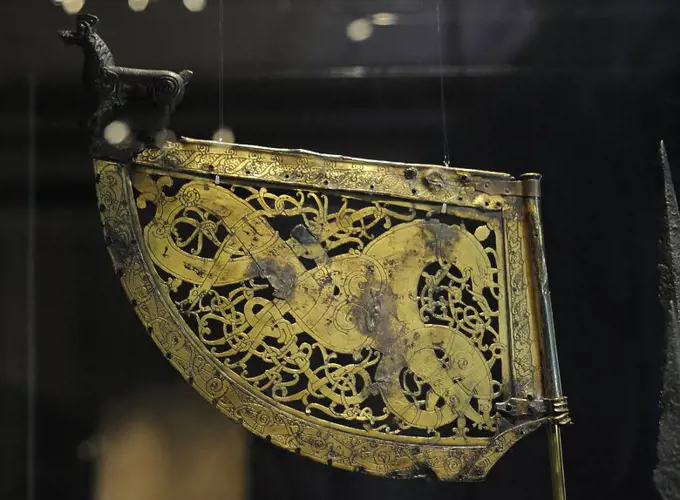
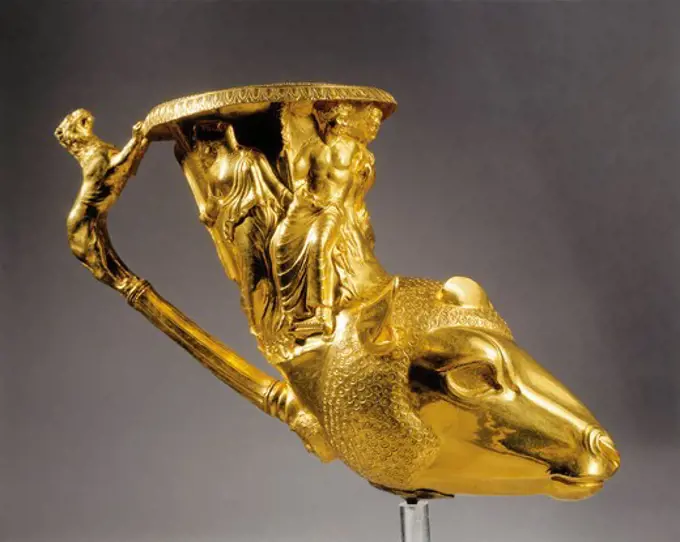
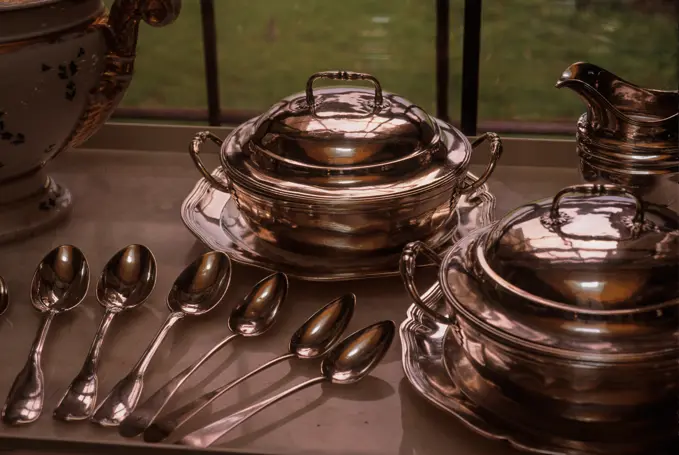
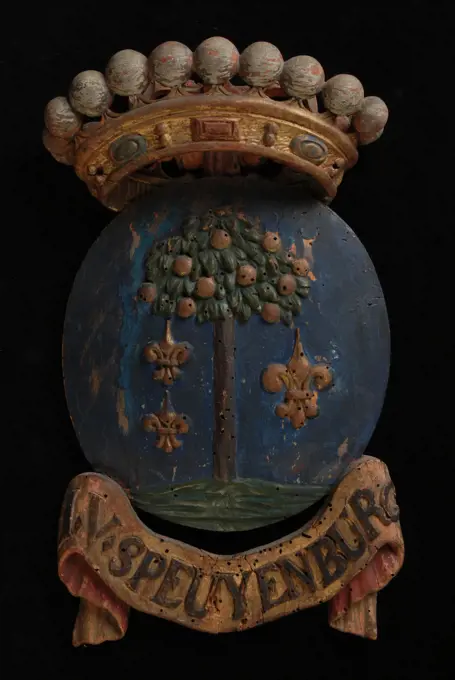
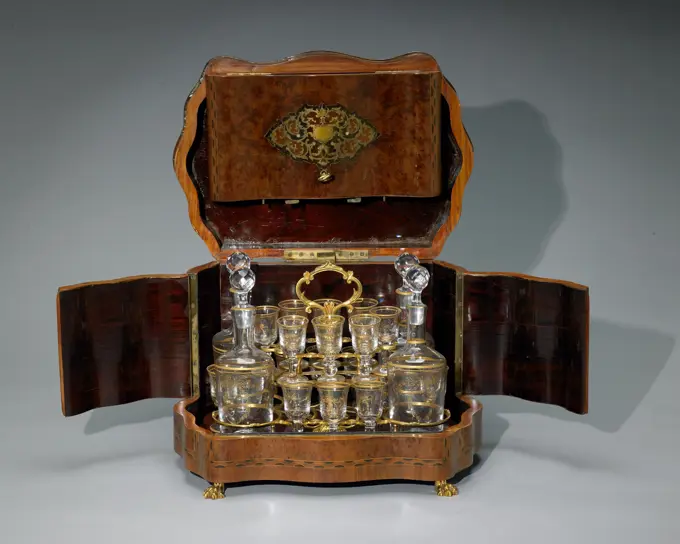
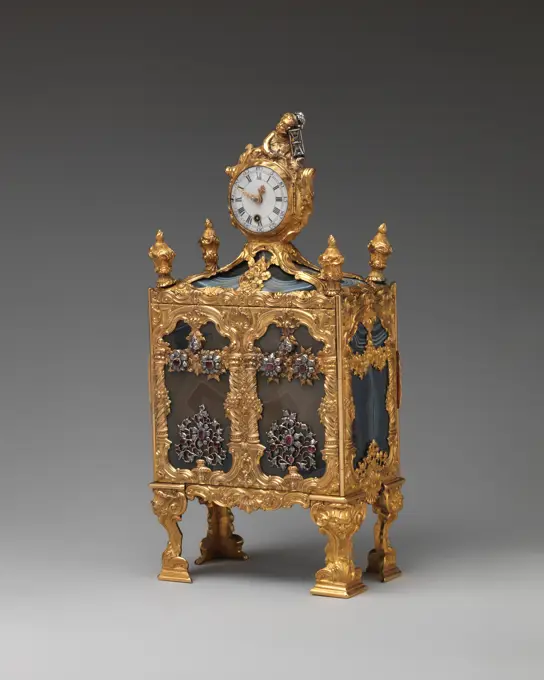
Enshrined Feet of the Hindu Saint Gorakhanatha. Nepal, 1656. Sculpture. Copper alloy with traces of gildingGoldsmith's art, India, 16th century. Rhinoceros horn cup with lid.Rozenwaterflacon van zilver gedreven met bloem- en bladranken.Rose water bottle on profiled foot with pear-shaped body and screw-on elongated neck ending in a flower-shaped peak. There are holes between the stamens of the flowers. The entire vial is decorated with flower and leaf refines. Above the nodus-shaped widening on the underside of the neck, we see a decoration of pointed shutsed leaves (pineapple). India or Sri Lanka, 18th century.Rai Ni woli-woli crown. Gold crown. Nias Island. Sumatra. The early 20th Century. South Asia. Museum of world cultures. Barcelona. Spain.Rococo style mirror with red and gold lacquer and Oriental decorative motifs, Hunting residence (UNESCO World Heritage Site, 1997), by Filippo Juvarra (1678-1736), Stupinigi, Piedmont, Italy, 18th century.Silver goblet, 16th century.part of the boss from a shield, the lid to a Christian chalice, or the stopper to a drinking horn. from the Staffordshire Hoard. decorated with very fine cloisonnÈ garnet work, small gold panels with pairs of biting beasts and, at the top, a glass gemí. The Staffordshire Hoard is a collection of Anglo-Saxon. Discovered in a field near the village of Hammerwich, near Lichfield, in Staffordshire, England, in 2009. it consists of over 3, 500 items, dated to the 7th or 8th centuries, placing the oriincense burner, China, 17th century, Bronze, Anthropology National Museum, Madrid, Spain.Water vessel. Bygland, Aust-Agder, 14th century. Brass. Probably Northern German. c. 1335. Historical Museum. Oslo. Norway.Silversmith's art, France, 18th century. Francois-Thomas Germain (1726-1791), tureen from the silver table set of the Royal House of Portugal commissioned by Don Jos I.Lantern of brass with green glass. Lantern of brass and green glass.Goa Stone and Gold Case late 17th-early 18th century Goa stones, named for the place where they were manufactured by Jesuits in the late seventeenth century, were manmade versions of bezoars (gallstones from ruminants). Both types were used for their medicinal and talismanic powers. These treasured objects were encased in elaborate containers made of gold and silver and often exported to Europe. Surviving examples are recorded in European treasuries, including one made for the duke of Alba in the late sixteenth century (Kunsthistorisches Museum, Vienna). The stone was usually a compound of organic and inorganic materials, including bezoar, shell, amber, musk, resin, and crushed precious gems, which would be scraped and ingested with tea or water.The egg-shaped gold container enclosing this stone consists of hemispherical halves, each covered with a layer of pierced, chased, and chiseled gold foliate openwork. An arabesque surface pattern is overlaid with an ogival trellis containing a Water vessel. Bygland, Aust-Agder, 14th century. Brass. Probably Northern German. c. 1335. Historical Museum. Oslo. Norway.Candlestick, Pricket. Culture: South Netherlandish. Dimensions: Overall: 15 5/8 x 6 3/4 in. (39.7 x 17.1 cm). Date: 15th century. Museum: Metropolitan Museum of Art, New York, USA.CISTA FICORONI - ESGRAFITO - COBRE - SIGLO IV AC. Author: NOVIOS PLAUTOS. Location: MUSEO DE ARTE ETRUSCO VILLA GIULIA. BACCHUS.Helmet mask, 15 1/8 x 8 5/16 x 8 3/4 in. (38.42 x 21.11 x 22.23 cm), Wood, LiberiaRELOJ DE CANDIL POR ACEITE - S XVII. Location: PRIVATE COLLECTION. MADRID. SPAIN.Glass of Fortuny. Hispano-Moorish pottery with metallic sheen from Malaga, Spain. 14th century. The iron bracket was designed by the Spanish painter Mariano Fortuny. The State Hermitage Museum. Saint Petersburg. Russia.Thunderbolt (Vajra; Tibetan: Dorje). Central Tibet, circa 18th century. Tools and Equipment. Gilt copper alloyA carved table of Debar masters A carved table by Debar-MeisterMadrid, 07/16/2024. Report from the Royal Collections museum. Royal armory of the Royal Palace. Photo: Ernesto Agudo. Archdc.Gold wax case of three chopped colors, garlands and bay leaf. Detail of punch. 1766-1767. Paris, Cognacq-Jay museum 35594-5 Wax, chisel, detail, case, garland, laurel, gold, stitch, torus, three colorsChamber candlestick 1825-26 T. and J. Creswick. Chamber candlestick 232365Jug Wurttemberg metal goods factory (WMF)Pair of Stirrups 19th century Chilean This type of impressive bronze Chilean stirrup is actually directly inspired from early 17th-century Spanish examples brought to the Americas. Their wide flaring sides, in addition to calling the attention to the rider, add protection to the foot. This feature is inspired from genette type stirrups, particularly popular in Spain. Genette, or jineta, stirrups are typical of the Islamic world, and were widely used in the Ottoman empire. They were introduced to Europe during the Arab presence in Spain, and then kept by the Spaniards for their light cavalry.. Pair of Stirrups. Chilean. 19th century. Copper alloy. Equestrian Equipment-StirrupsTable clock tiled Lichty, JakubPickle jar - Toronto Silver Plate Company Toronto Silver Plate CompanySilversmith's Art, England 19th century. Pair of silver cakestands, supported by female figures, Victorian style, Hancock and Co. London, 1886.Fili Anka with a view of Ponte Salario in Rome, a saucer with a trail of a floral flagella.; Baranówka (Porcelain Manufaktura; 1804-2012); 1830 (1830-00-00-1830-00-00);Head in the shape of a demon;  XVIII-XIX century (1790-00-00-1810-00-00);Pair of Stirrups ca. 1600 Italian These stirrups, decorated with trophies of arms, grotesque masks and arabesques, mimic the flaring sides of Islamic types. They were originally entirely gilded. This sort of wide stirrup, called genette style, was typical of the Islamic world, and widely used in the Ottoman empire at the same time. They were introduced to Europe during the Arab presence in Spain, and then kept by the Spaniards for their light cavalry. In the rest of Europe, they were mostly used during leisure riding or equestrian games, when princes and lords rode their Arabian horses imported from the Ottoman empire. It was common then to ride these horses using Ottoman style tack, imported or made and decorated in Europe.. Pair of Stirrups. Italian. ca. 1600. Iron alloy, gold. Equestrian Equipment-StirrupsTorah presented by the Jewish community of Den Bosch in Holland. This object would sit on the top of the torch covering before it was taken from the ark to be read in the synagogue. Dated 1867.Przeszo Przyszoci Pusch, BaltazarTibetan Buddhist ritual objects still life - vajra and bell. Hemis gompa, Ladakh, India.Bottle. Throne with figures. Chimu culture (Northern Peru). Pre-Inca. 1300-1500 AD. Embossed silver (23,5 x 11,1 x 16,5 cm).  The Michael C. Rockefeller Memorial Collection. Metropolitan Museum of Art. New York, United States. The Hockwold Treasure, a hoard of seven silver Roman cups and handles. From Hockwold cum Wilton, Norfolk. Dated 1st Century ADCenterpiece from the Nereid Service, c. 1900. Goldsmith's & Silversmith's Company (British). Silver; overall: 66.1 x 97.8 cm (26 x 38 1/2 in.); base: 79.5 x 97.8 cm (31 5/16 x 38 1/2 in.).Close-up of a beer steinClose-up of a gold pendant, Chettiar Jewelry, Chettinad, Tamil Nadu, IndiaPricket Candlestick. Culture: French. Dimensions: Overall: 12 7/8 x 5 15/16 in. (32.7 x 15.1 cm). Date: ca. 1445. Museum: Metropolitan Museum of Art, New York, USA.RELICARIO DE SAN GENARO REALIZADO EN CRISTAL DE ROCA - SIGLO XVII. Location: CONVENTO DE LAS CLARISAS / MUSEO DE ARTE SACRO. MONFORTE DE LEMOS. LUGO. SPANIEN.Mortar 12th-13th century. Mortar 452213Teapot, from a tea service, 1792, Paul Revere, Jr., American, 1734-1818, 6 1/8 x 3 9/16 x 5 3/4 in. (15.56 x 9.05 x 14.61 cm), Silver and wood, United States, Federal, The most complete Revere service known, this set of which this teapot is a part was made for a Boston merchant and his wife, John and Mehitable Templeman. It includes one of only two tea caddies made by Revere. The locked boxes held loose tea, an expensive and fashionable commodity. The shell-shaped spoon was used for measuring tea and the sieve was used for straining punch, a beverage often served along with tea. The second stand may have been used as a tray for spoons. The accompanying teaspoons have only recently been reunited with this service.Mitre, 20th century. Cathedral of Seville, Andalusia, Spain. Embroidered in silver and silk.Anglo saxon Ormside Bowl, silver-gilt, 8th cent. AD. ENGLAND.Lewis Herne and Francis Butty, Pair of Tea Canisters with Case, 1758/59, silver.TESORO -RELICARIO. Location: CATEDRAL-INTERIOR. Toledo. SPAIN.JARRA ACCITANA-DECORACION MUY BARROCA-SIN VIDRIAR-ARTE POPULAR S XX. Location: ALFARERIA. GRANADA. SPAIN.Pair of Firedogs. Attributed to the fondeur Jean-Noël Turpin (French, master 1773)Art. Prehistory. Bronze Age. Golden bowls, most with handle shaped like horses' heads. 10th-6th Centuries BC. National Museum of Denmark. Copenhagen.Eight-Plate Helmet 16th-17th century Tibetan. Eight-Plate Helmet. Tibetan. 16th-17th century. Iron, leather. Helmetsreconstruction of the Sutton Hoo helmet, a decorated Anglo-Saxon helmet discovered during the 1939 excavation of the Sutton Hoo ship-burial. Buried around 625 AD. it is believed to have been the helmet of King Raedwald; for whom its elaborate decoration may have given it a secondary function almost akin to a crown.Turkish Ottoman style water tap examplesOriental stylme bedroomTureen with cover ca. 1760-70 Chinese, for German market. Tureen with cover 203006Gilded silver salt cellar in the form of a ship with the fictional lovers Tristan and Isolde playing chess. Dated 16th CenturyMount (France), ca. 1825; bronzeHelmet (Hoshi-Kabuto). Armorer: Inscribed by Iyehisa of Nara (Japanese, Nara, active 17th century). Culture: Japanese. Dimensions: H. 11 in. (27.9 cm); L. 15 1/2 in. (39.4 cm). Date: 17th century.The orange blossom badge of the Iie family, daimyo (lords) of Hikone, is found on the turnbacks of the neck guard. Museum: Metropolitan Museum of Art, New York, USA.Pair of three-light wall brackets 1745-49 French The high rococo asymmetry of the swirling branches is datable by the presence of the crowned C stamp. The mark was affixed upon payment of a tax levied on gilt-bronze 1745-1749.. Pair of three-light wall brackets 205433silver chest, wood, turtle and silk, 1680-1720, Convent of Calvary, Evora Museum, Evora, Alentejo, Portugal, Europe.Caster.   Maker: Joseph Edwards, Jr., American, 1737-1783Close Helmet of Three-Quarter Armor Made 1570-1580 . Chivalryówith its connotation of the knightly idealówas intimately connected with the horse (cheval in French). A knight took care to protect his mount, on which he was dependent for the mobility and speed required in both attack and retreat. In Roman times, some heavy cavalry used armor made of iron or bronze scales to protect their horses. From the twelth century on, knights covered their steeds in bands of iron mail (a network of interlocking rings). By the fifteenth century, full-plate armors were not uncommon. This shaffron, or headpiece, is etched in gilt bands with decoration on a finely dotted ground. Riveted between the eyes is an elongated conical spike, perhaps inspired by the horn of the mythical unicorn. A manifestation of great power and wealth, the shaffron has been valued for centuries as an object of beauty, not just as a tool of warfare and sport.. Steel with gilding .Qatar, Doha, Museum of islamic Art, ewer from Herat, Afghanistan,Anonymous, applies to three arms of light, 1601. Golden brass, pearls and pendant in rock crystal. Carnavalet museum, history of Paris.The Lycurgus Cup; 4th-century, Roman glass cage cup. Made of a dichroic glass, which shows a different colour depending on whether or not light is passing through it; red when lit from behind and green when lit from in front. It is the only complete Roman glass object made from this type of glass. The cup is also a very rare example of a complete Roman cage-cup, or diatretum. It named after King LycurgusScandinavia. Drinking horn. 15th cent. Latin inscription: Jesus of Nazareth, king of the Jews, Horn, gilt silver. Eliganrd, Onsoy, Ostfold, Norway. Historical Museum. Oslo. Norway.Ruby Vase. Dated: c. 1936. Dimensions: overall: 28 x 22.9 cm (11 x 9 in.). Medium: watercolor, gouache, and graphite on paper. Museum: National Gallery of Art, Washington DC. Author: Robert Stewart.beautiful old censer close upPALMATORIA CON VELA ENCENDIDA.PEBETERO BRONCE DEL SIGLO X. Location: MUSEO ARQUEOLOGICO-COLECCION. CORDOBA. SPAIN.PERFUMADOR CON CAMAFEOS - TESORO DEL DELFIN - S XVIII. Author: JOSIAS BELLE. Location: MUSEO DEL PRADO-ARTES DECORATIVAS. MADRID. SPAIN.Pijpenkomfoor with open worked scalloped edge and with twisted stem van Ebony, Anonymous, After 1730 Blowjob bowl of silver with copper inner box. The grain rests on three curled legs. The outstanding, scalloped edge of the Komfoor is opened with pair-wise C-volutes and stylized shells (). Turned Steel van Ebony. Batavia silver (metal). copper (metal). ebony (wood) Blowjob bowl of silver with copper inner box. The grain rests on three curled legs. The outstanding, scalloped edge of the Komfoor is opened with pair-wise C-volutes and stylized shells (). Turned Steel van Ebony. Batavia silver (metal). copper (metal). ebony (wood)Convex Mirror (one of a pair). American or English. Date: 1810-1830. Dimensions: 105.4 × 58.4 cm (41 1/2 × 23 in.). Eastern white pine. Origin: United States. Museum: The Chicago Art Institute, Chicago, USA.Chasse. Culture: French or German. Dimensions: Overall: 4 9/16 x 6 1/8 x 3 3/16 in. (11.6 x 15.6 x 8.1 cm). Date: ca. 1300. Museum: Metropolitan Museum of Art, New York, USA.Mount, Gilt bronze, Architectural or funiture cornice with lapped tongue decoration of acanthus corners over frieze of pendant tongues over cut-out with laurel decoration, France, early 19th century, metalwork, Decorative Arts, MountAfrica, Nigeria. Head of python, messenger of watr god Olokun. Benin. 18th cent. Nigeria.Traveling Set (France), 1809-19Ostrich egg found in Ottoman made mosques in IstanbulClose-up of crown of Bavaria, Munich Residenz, Munich, Bavaria, GermanyEbony wood and ivory inlay detail on one of the pair of throne chairs, Sirohi Palace, Sirohi, Southern Rajasthan state, India, AsiaReliek-Oostensorium, Anonymous, c. 1500 - c. 1550 The foot has no flat edge, as the monstrances discussed here have. The upper part consists of a cupboard with glass on the front and back. The front is attached to a hinge and can be opened. The glass on the front is contained in a frame, consisting of a finely ribbed edge and an edge of acanthus leaves. The cabinet is surrounded by seven rolling work -like bulges in which six -leaf florets are caught, with silver -plated leaf wreath and gilded heart ball. In the cupboard a silver pendant of filigrein is placed on a standard with a crown at the top and an oval glass diamond in the middle. This part was added in the second half of the 17th century. Germany brass (alloy). glass gilding / filigree The foot has no flat edge, as the monstrances discussed here have. The upper part consists of a cupboard with glass on the front and back. The front is attached to a hinge and can be opened. The glass on the front is contained in a frame, consistCoffee pots for sale at Souq al_Hamidiyya, Old City´s main covered market, Damascus, Syria, Middle EastVASO AZUL - RECIPIENTE DE VINO ENCONTRADO EN UNA TUMBA POMPEYANA - CAPA DE PASTA BLANCA OPACA SOBRE CRISTAL COLOREADO. Location: NATIONAL MUSEUM OF ARCHAEOLOGY. NEAPEL. ITALIA.Tibetan Buddhist ritual objects still life, vajra and bell. Hemis gompa, Ladakh, India, AsiaFull view of globe with stand in color 1510. three dimensional object. Globes. Rare Book DivisionHelmet with Aventail. Culture: Turkish, in the style of Turkman armor. Dimensions: H. including mail 22 in. (55.9 cm); H. excluding mail 13 5/8 in. (34.6 cm); Diam. 10 in. (25.4 cm); Wt. including mail 7 lb. 6.2 oz. (3350.9 g); Wt. excluding mail 3 lb. 9 oz. (1616 g). Date: late 15th-16th century.This especially attractive and well preserved turban helmet retains the mail aventail that protected the lower half of the face and neck. The aventail is fixed with a lead seal stamped with the mark used in the Ottoman arsenals, an indication that this example, like the other turban helmets also in the Museum's collection (acc. nos. 04.3.209, .210, .214, .457, .462; 36.25.109), passed into Turkish possession as booty with the Ottoman conquest of Iran and the Caucasus.At least one turban helmet decorated in a style comparable to this example bears the name of Farruhk-Siar (reigned 1464-1501), ruler of Shirvan in the Caucasus. Such evidence suggests that this helmet is also of Shirvan manufactFAROL DE VIATICO S XVIII. Location: IGLESIA DE SANTA MARIA DEL CAMPO. Coruña. SPAIN.Treasure of Guarrazar. Votive crown of the visigoth king Reccesuinth. Gold and precious stones. 7th century. Guadamur, Toledo, Spain. National Archaeological Museum, Madrid. Spain.Mayan gold statuette portrait of a noble AD 400-800Gilt-bronze. Metal pennant Soderalaflojeln. It received the name from the church where it was found. It most likely adorned the mast or bows of a warship. Middle ages. Soderala, Halsingland, Sweden. 10th century. The Swedish History Museum. Stockholm. Sweden.Gold rhyton in the shape of a ram's head with Dionysus, the nymph Eriope and lion-shaped handle, Panagjuriste treasure from Bulgaria, Plovdiv, PanagjuristeThomas Jefferson, Silver, Monticello, Albemarle County, Hallowed Ground, VirginiaGuatemala, Highlands, Antigua, Casa Santo Domingo, Museums Promenade, Silver MuseumRenaissance Easter Egg, Shuvalovsky Palace, St. Petersburg, RussiaCarved wooden crowned coat of arms including the name I.V. Speuyenburg, coat of arms informative form carvings sculpture sculpture wood paint gold, Family coat of arms of I.V. Speuyenburg with the shield in blue stemmed planted green orange tree with golden tokens accompanied by two small lilies on the right and large lily on the left with crown with eleven pearls above name under escutcheon: I.V. Speuyenburg heraldry regent Rotterdam City Center Stadsdriehoek Hoogstraat Gasthuis Rotterdam.MUSEO PORTAPACES. Location: CATEDRAL DE SANTA MARIA. ASTORGA. LEON. SPAIN.Cordial glass, from a cordial set, c. 1870, 3 x 1 1/2 x 1 1/2 in. (7.62 x 3.81 x 3.81 cm), Glass, England, 19th century'Designs for Stoves ( )'. Great Britain, Early 1780s. Dimensions: 55,8x49,5 cm. Museum: State Hermitage, St. Petersburg. Author: CHARLES CAMERON.Bronze Dodecahedron, perhaps used for mathematics. Gallo-Roman Civilization, 4th-2nd Century BC.Nécessaire (one of a pair) ca. 1760 John Barbot British This richly decorated shagreen case protected an extravagant nécessaire in the shape of a miniature cabinet. Scent bottles, an ivory notebook, a patch box, and other toilet implements are stored inside. Listen to experts illuminate this artwork's story Listen Play or pause #413. Retail Value. High and Low Supported by Bloomberg Philanthropies We're sorry, the transcript for this audio track is not available at this time. We are working to make it available as soon as possible.. Nécessaire (one of a pair). Enamel miniature of King George IV painted by Charles Muss (1779-1824). British, London. ca. 1760. Gold, agate, rubies, diamonds, silver, wood carcass, silk velvet, miror glass; enamel miniature; glass, enamel, topaz; movement: gilded brass, steel, enamel face; shagreen on wood with gold piqué ornament and gilt-brass mounts. Metalwork-Gold and Platinum