Cultural Artifacts and Containers

Artistic and historical items such as baskets and decorated vessels, showcasing traditional craftsmanship and cultural significance.

Turtle-shaped Inro, anonymous, c. 1775 - c. 1800 Inro in the form of a turtle. Inlaying with mother -of -pearl. Japan wood (plant material). lacquer (coating). mother of pearl Inro in the form of a turtle. Inlaying with mother -of -pearl. Japan wood (plant material). lacquer (coating). mother of pearl
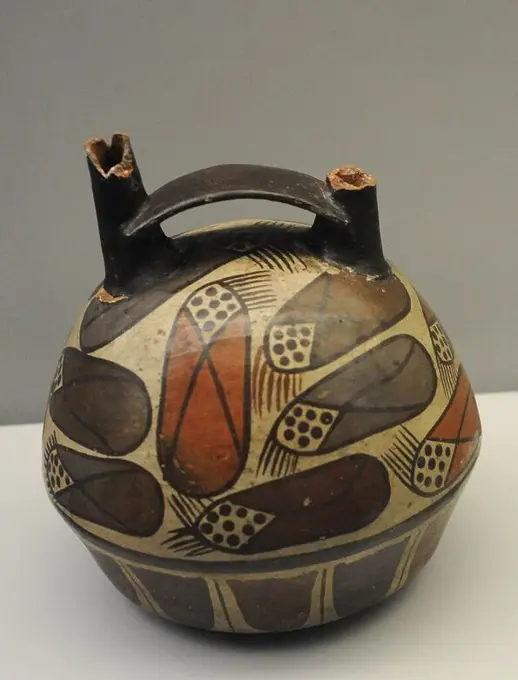
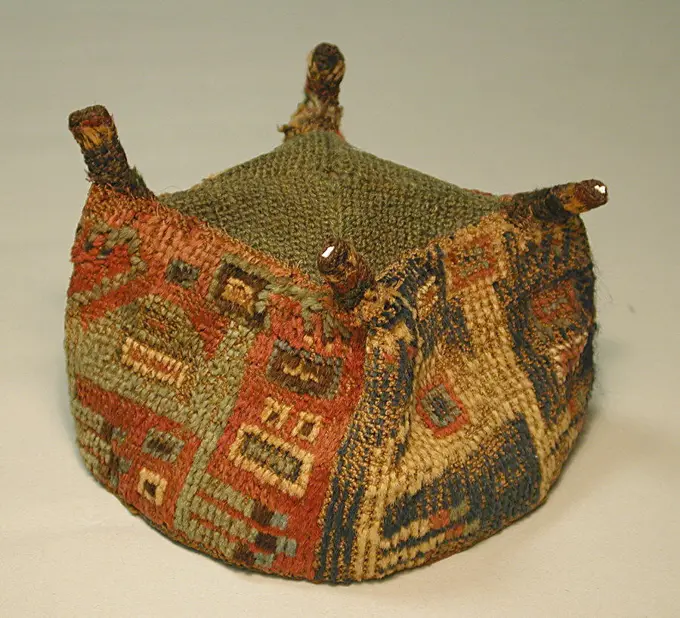
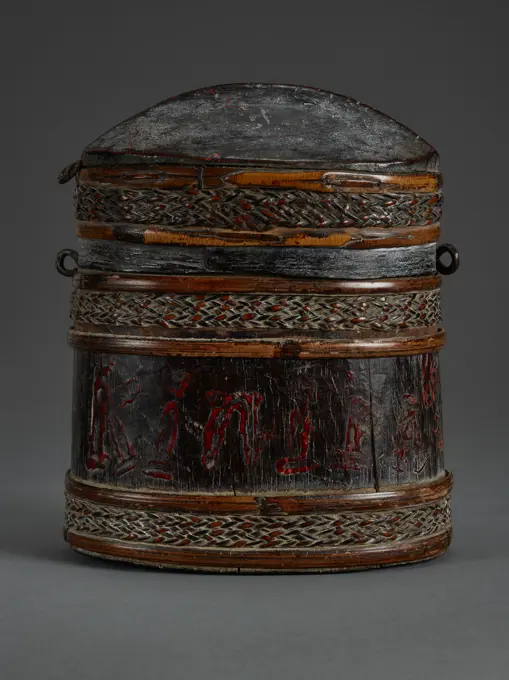
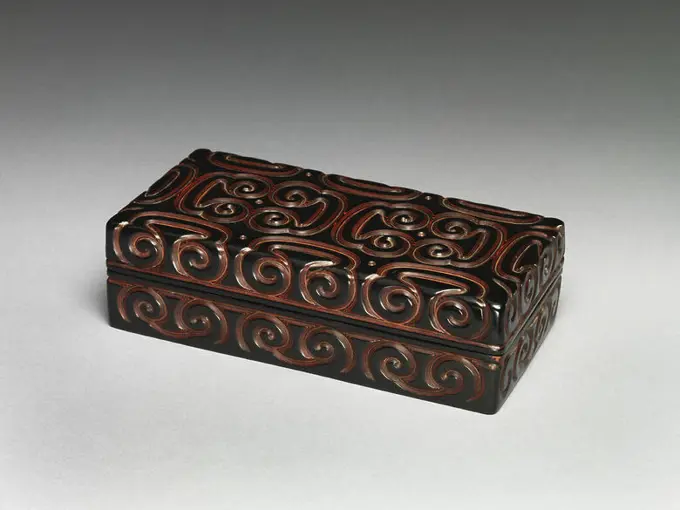
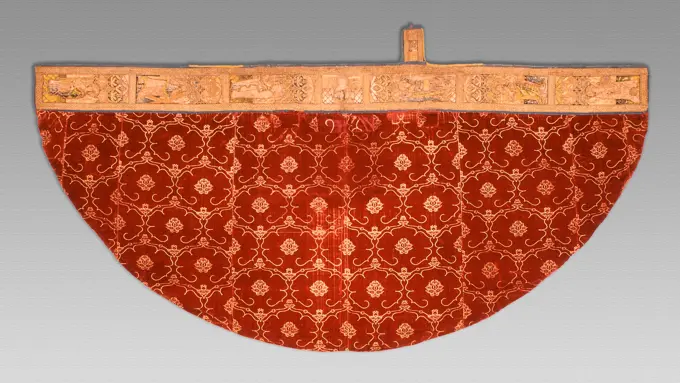
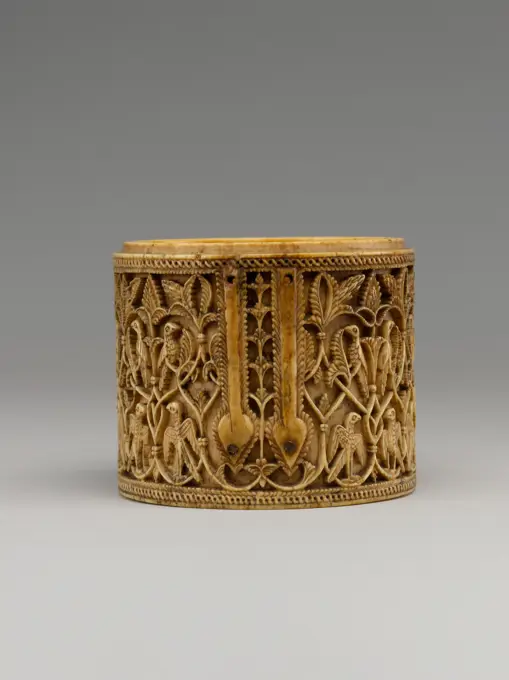
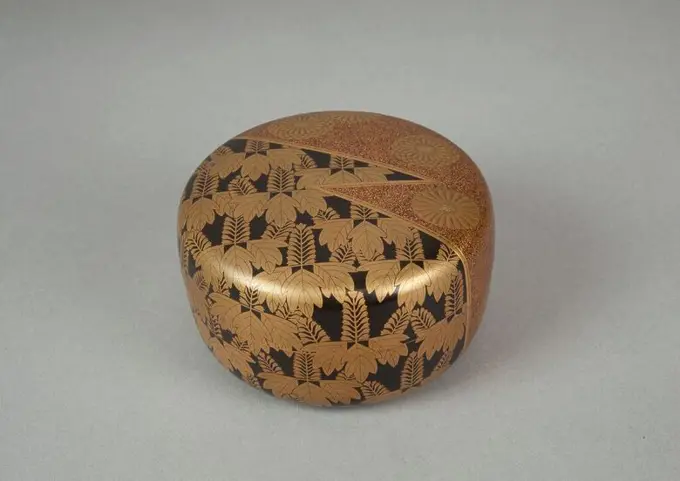
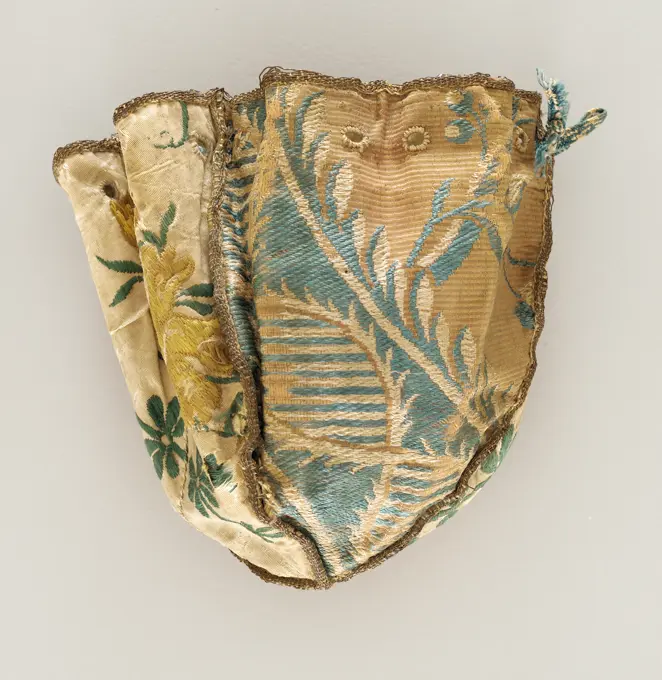
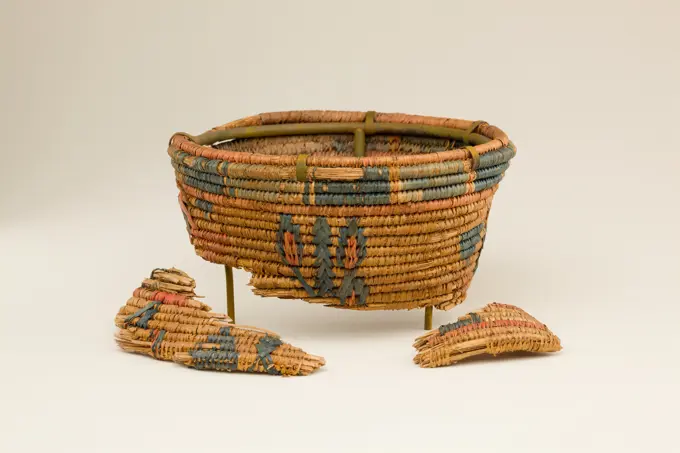
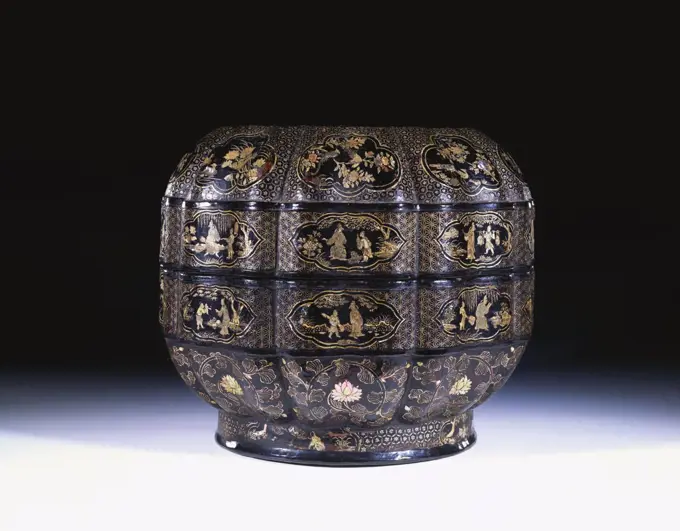
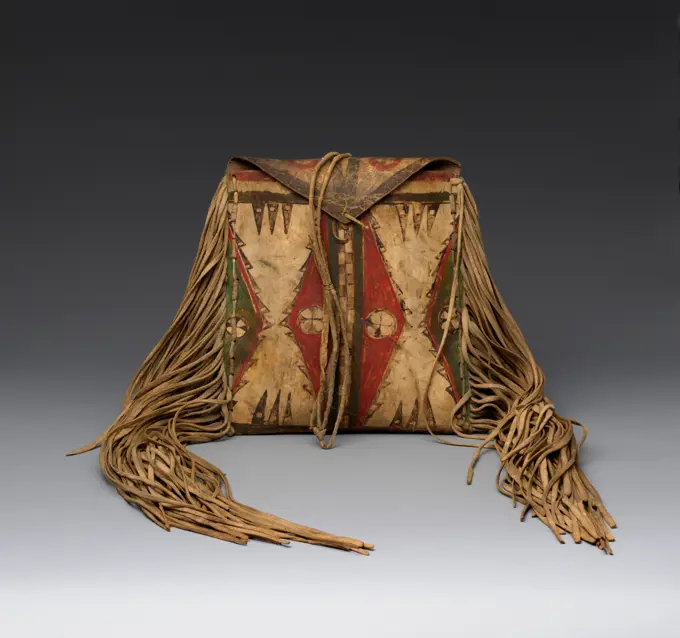
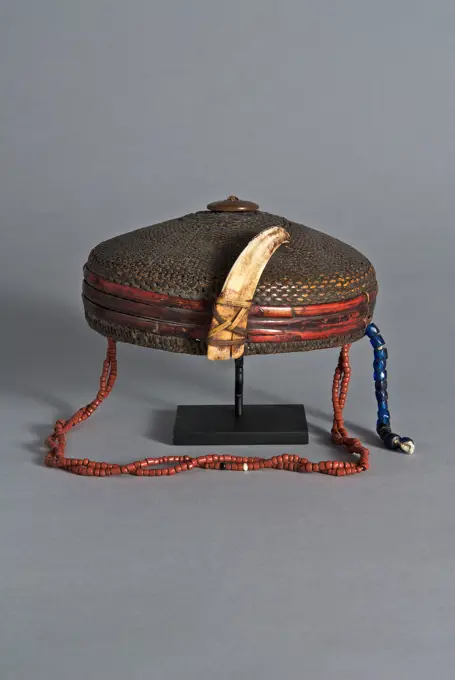
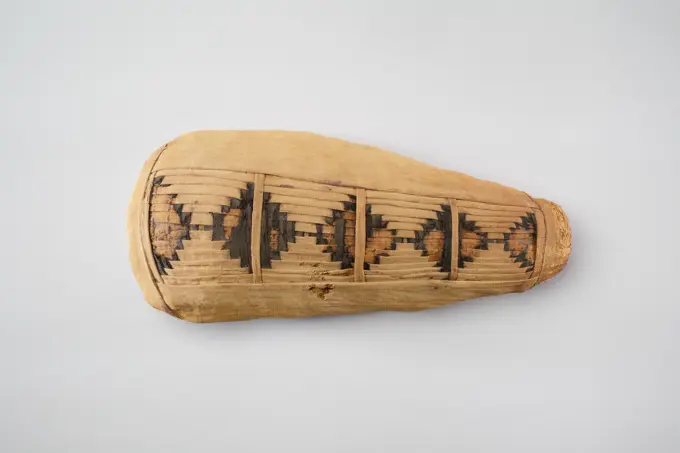
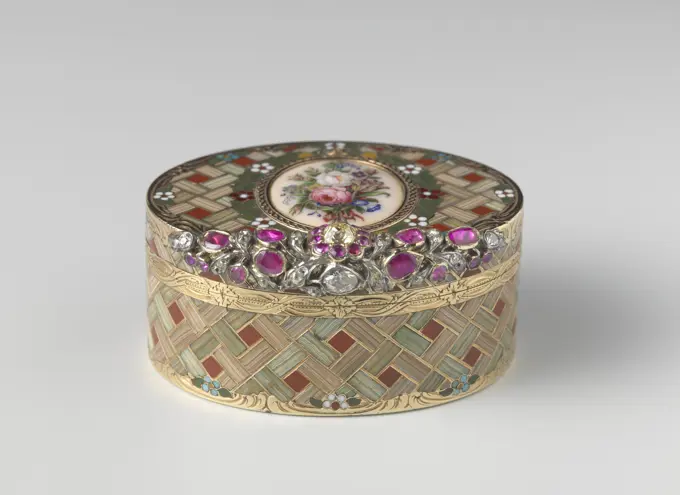
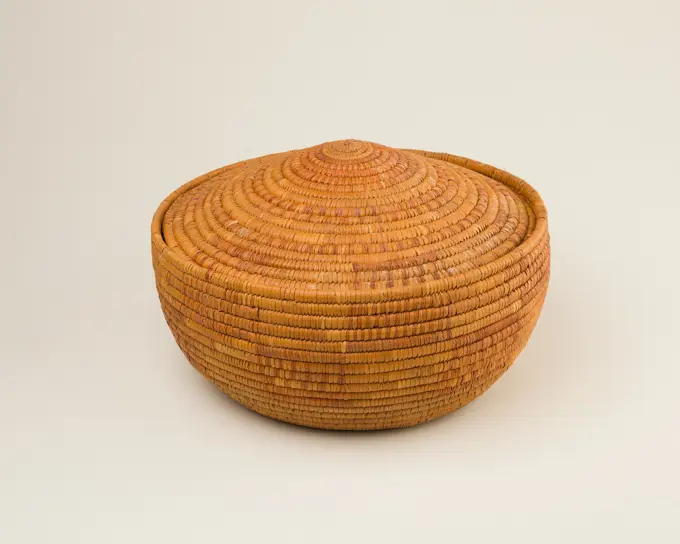
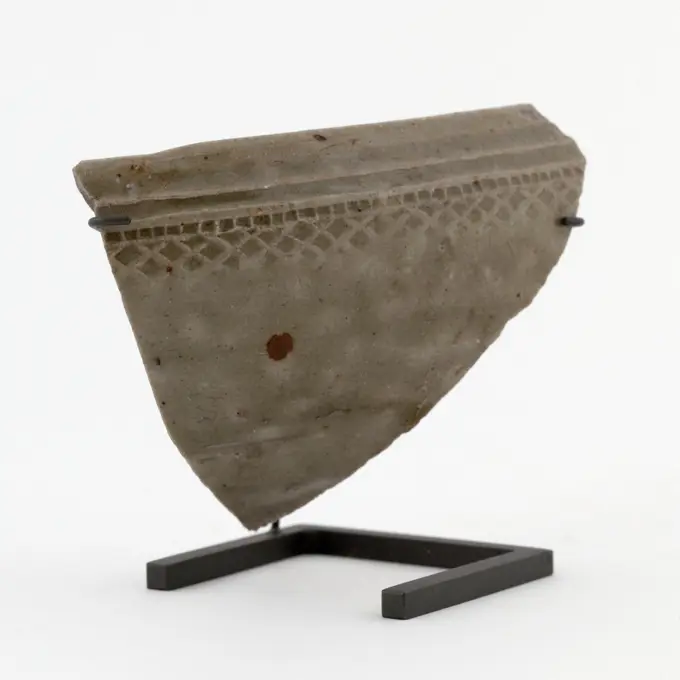
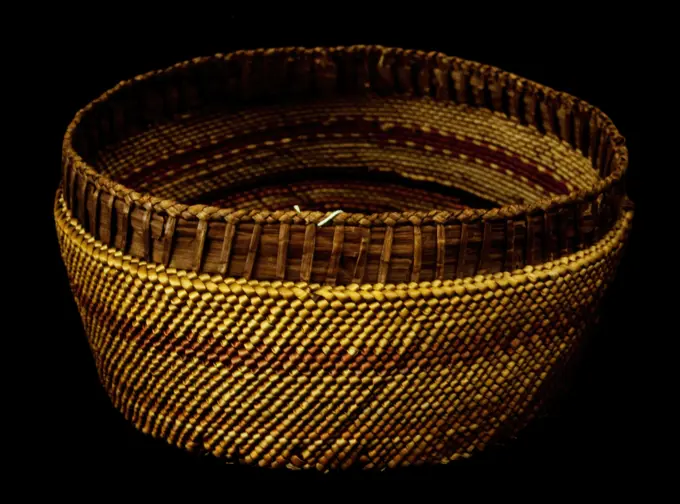
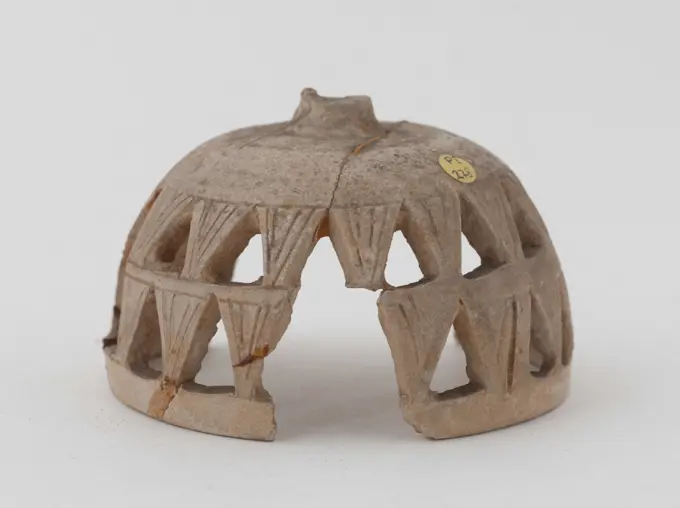
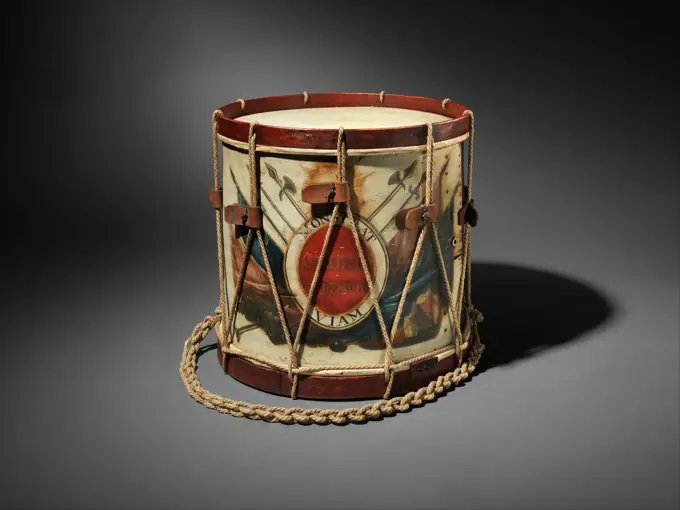
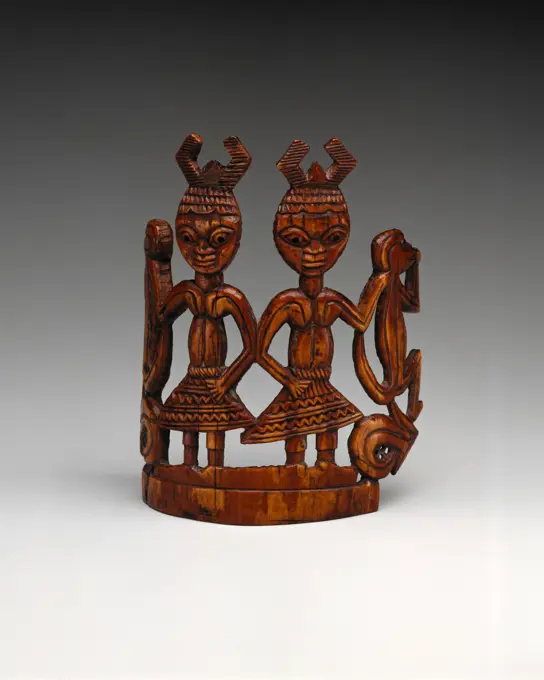
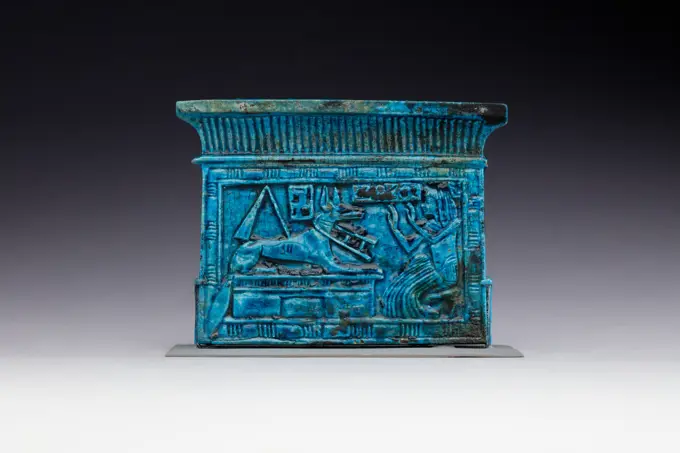
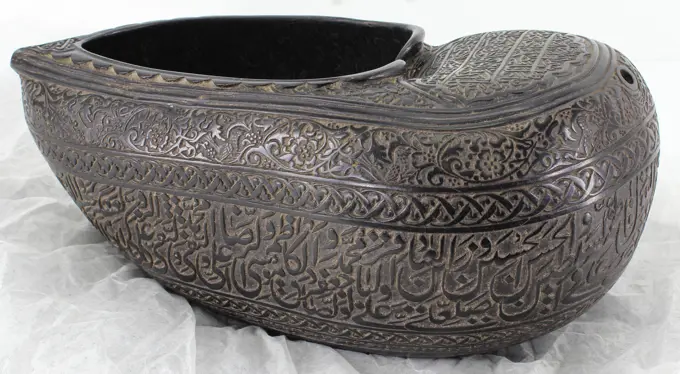
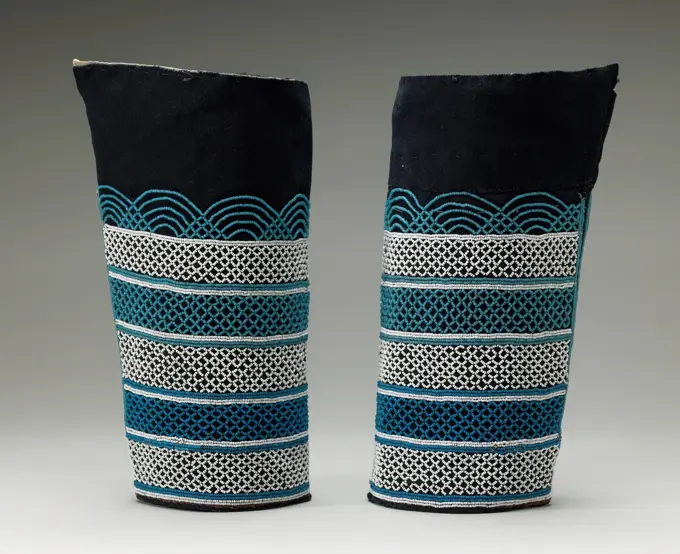
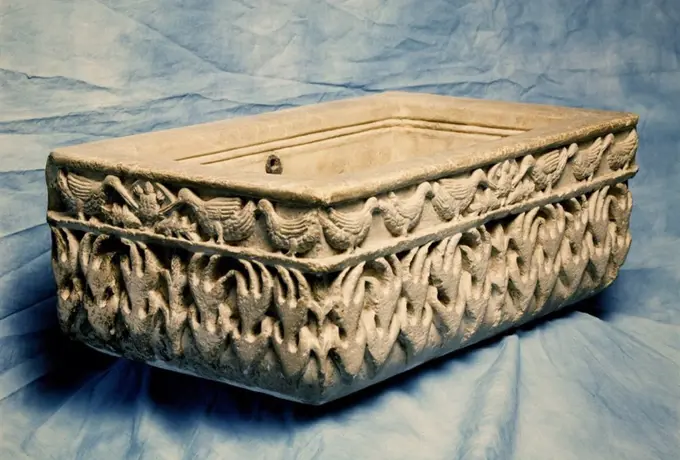
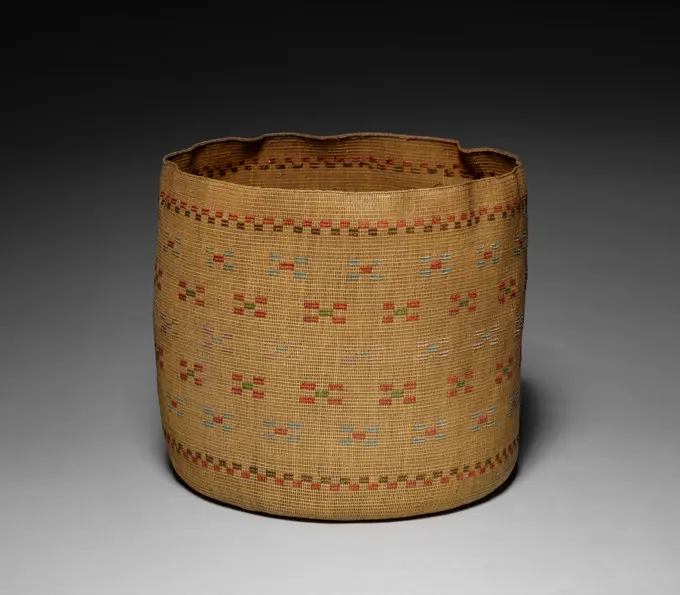
Twined Cylindrical Basket, 1890. Arctic. Aleut (Attu), late 19th-early 20th century. Twined; overall: 4 x 30 cm (1 9/16 x 11 13/16 in.).Anonymous / 'Case for egg-shaped agate vessel with cameos on the foot, stem and finial'. 1650 - 1711. Leather, Wood, Cloth. Museum: Museo del Prado, Madrid, España.Vase (France); Emile Gallé (French, 1846-1904); earthenwareBottle -Twined Bark Tray, late 1800's. Northwest Coast, Tlingit, late 19th century. Twined bark; overall: 5 x 23 cm (1 15/16 x 9 1/16 in.).Albarello, c. 1400-1420. Spain, Manises, 15th century. Tin-glazed earthenware, brown lustre; overall: 30.7 x 11.5 cm (12 1/16 x 4 1/2 in.).Turtle-shaped Inro, anonymous, c. 1775 - c. 1800 Inro in the form of a turtle. Inlaying with mother -of -pearl. Japan wood (plant material). lacquer (coating). mother of pearl Inro in the form of a turtle. Inlaying with mother -of -pearl. Japan wood (plant material). lacquer (coating). mother of pearlDrum, 1800 - before 1865 musical instrument. percussion instrument. drum Trom of the militia. The brass kettle is equipped with a veal sheet on both sides, held by a hoop and tense by means of a tension with tractors and screws. Both hoops are decorated with a motif of triangles in the colors red, white and blue. With engraved numbers: 1855-30. Netherlands Kettle: Brass (Alloy). Hoop: Wood (Plant Material). Team resort: RopeBoxCeremonial vessel. Decorated with naturalistic motifs in the form of maize ears. Nazca Culture. Early Intermediate Horizon (1-600 AD). Peru. Ceramics. Museum of the Americas. Madrid, Spain.Dish 1420-1450 Spanish. Dish. Spanish. 1420-1450. Tin-glazed earthenware. Made in probably Manises, Valencia, Spain. CeramicsTwo terracotta fragments of a large jar with reticulated pattern enclosing conventional flowers ca. 1450-1400 B.C. Minoan From Knossos, CreteLarge fragment with reticulated pattern enclosing conventional flowers; dark-on-light ware.. Two terracotta fragments of a large jar with reticulated pattern enclosing conventional flowers 248551Four-Cornered Hat 7th-10th century Wari Finely woven, brightly colored hats, customarily featuring a square crown, four sides, and four pointed tips, are most frequently associated with two ancient cultures of the Andes: the Wari and the Tiwanaku. The Wari Empire dominated the south-central highlands and the west coastal regions of what is now Peru from 500-1000 A.D. The Tiwanaku occupied the altiplano (high plain) directly south of Wari-populated areas around the same time, including territory now part of the modern country of Bolivia. The cultures not only developed and flourished as contemporaries, but also occupied adjacent lands for nearly four centuries. A Wari ceremonial center called Cerro Baúl was located a mere five miles from Tiwanaku-settled fields in the Moquegua Valley of Peru. The two cultures likely encountered each other at Cerro Baúl and elsewhere, but the nature of these interactions remains largely unknown. Four-cornered hats from both the Wari and the Tiwanaku wereBasket, c. 1910, 11 3/16 × 10 3/16 × 10 3/16 in. (28.42 × 25.88 × 25.88 cm), Plant fibers, United States, 20th centuryBasket, 20th century, 2 x 3 1/2 x 3 1/2 in. (5.08 x 8.89 x 8.89 cm), Woven grass, United States, 20th centuryBasket (Lower Part) 19th century Japan. Basket (Lower Part). Japan. 19th century. Rattan. Edo (1615-1868) or Meiji period (1868-1912). BasketryContainer withLidBasket jar Chumash, Native American ca. 1790 Tightly woven to hold water, this basket exemplifies the craftsmanship of Southern California weavers during the Spanish mission period in the late eighteenth and early nineteenth centuries. The more complex designs are seen only on the bottom of the vessel: concentric circles of crosses, triangles, and diamonds radiate outward from the coils center. The outside of the vessel features alternating bands of solid bars and checkerboard patterns on the body and a series of rhomboid shapes on the neck. View more. Basket jar. Chumash, Native American. ca. 1790. Sumac shoots and dyed and undyed juncus stems. Made in Santa Barbara County, California, United StatesPurse 1810-20 probably Dutch. Purse 116957Kettle (tetsubin) from the cover;  19th/20th century (1891-00-00-1910-00-00);bucket isolated on whiteBox with pommel scroll design. Culture: China. Dimensions: H. 2 3/4 in. (6.9cm); W. 4 5/8 in. (11.7cm); L. 9 1/8 in. (23.2 cm). Date: 16th century.A close examination of this box indicates that three layers of red lacquer were interspersed among the predominant black. The yellow background brings additional color to the vessel, which was used to hold documents. The object illustrates the taste for vibrant aesthetic combinations that characterizes the late Ming period. Museum: Metropolitan Museum of Art, New York, USA.Basket, c. 1910-1930, 3 5/16 × 9 5/8 × 10 7/16 in. (8.41 × 24.45 × 26.51 cm), Plant fibers, United StatesDish Angle of red -baking earthenware, with a leaf motif in SGRAFITTO Technology with white, yellow and green glaze, unggestive, anonymous, 1200 - 1899 at the rear  Italy earthenware  Italy earthenwareWoman's Handbag. England or United States, circa 1890. Costumes; Accessories. Sterling silver, kid leatherCope. Italy, circa 1500. Costumes; ecclesiastical. Voided silk velvet; orphrey embroidered with colored silk and metallic threadsHat with Pin, early 1900s. Africa, Central Africa, Democratic Republic of Congo, early 20th century. Raffia, metal, and dye; pin: 17.8 cm (7 in.); width at bottom: 12.1 x 12.7 cm (4 3/4 x 5 in.).Panel 14th-15th century. Panel 445075Cylindrical Box (Pyxis) 10th century Late Antique and Byzantine pyxides generally had flat lids, but the lids covering the cylindrical vessels of this Andalusian group are all domical. Thus, the missing lid of this example would probably have been domical as well. Made principally for the personal use of Umayyad nobility, these containers held precious aromatics and cosmetics.. Cylindrical Box (Pyxis). 10th century. Ivory; carved. From Spain. Ivories and BoneTea Caddy. Culture: Japan. Dimensions: H. 1 7/8 in. (4.8 cm); Diam. 3/14 in. (0.5 cm). Date: early 17th century.This type of decoration in contrasting fields of black and gold filled with floral motifs such as the chrysanthemum and paulownia is associated with the Kodai-ji temple, where a memorial shrine was dedicated to the shogun Toyotomi Hideyoshi by his widow in 1605 or 1606. Appreciated for its colorful effects and naturalistic drawing, the Kodai-ji style continued in use well into the Edo period. Museum: Metropolitan Museum of Art, New York, USA.Woman's Purse. France, circa 1770. Costumes; Accessories. Brocaded silk, metallic thread, silk taffetahand painted clay bowl from a cemetery at Susa; Iran (Persia) 4000-3300 B.C.Basket ca. 1295-1070 B.C. New Kingdom, Ramesside. Basket. ca. 1295-1070 B.C.. palm, grass. New Kingdom, Ramesside. From Egypt, Upper Egypt, Thebes, el-Khokha, Tomb MMA 832 (H 3), Forecourt, MMA excavations, 1911-12. Dynasty 19-20An Important Yuan Inlaid Lacquer Circular Foliate Box and Cover Depicting Dignataries at Leisure. 14th Century, 37cm diam.Gaming purse late 17th century French. Gaming purse 169681Fragment of a Dish 14th century. Fragment of a Dish 447375Basket Company: V.B.Parchment with unfinished needle lace, Medium: linen, parchment Technique: needle lace (loop and twist) in a variety of stitches and a variety of combinations of open and closed areas, Long strip of parchment with design drawn onto it in ink. The outline of the design has been sewn onto the parchment with linen thread and about half of the needlelace has been filled in.The design is of curving floral sprays. There is no repeat in the width but it appears as if the designer intended this to be one unit of the repeat as sketchy drawing at the far end repeats the shapes at the beginning., The parchment arrived in a small cloth handmade bag (recently made) of 17/18 century silk damask and metallic bobbin lace., England, 17th century, lace, Parchment with unfinished needle laceBasket Company: J.K.Box with Lid c 1759 United States. White pine and hickory or ash . Artist unknownrange, GAL1965.100.48 Gold lacquered wooden bladesBox with One Quadruped (TampaNyawan)Parfleche flat case ca. 1850 Comanche, Native American This flat rawhide case, called a parfleche, was used to transport important belongings from one camp to the next. Its surface provides a luminous ground for the painted bold, colorful geometric shapes and delicate, black and brown graphic elements. The case would be hung from the pommel of a saddle, with the long fringe registering the movements of both horse and wind. Plains women also made parfleche cylinders, envelopes, and boxes; the term originated with French fur traders.. Parfleche flat case. Comanche, Native American. ca. 1850. Bison rawhide, pigment, and tanned leather. Possibly made in Texas, United States; Possibly made in Oklahoma, United StatesBandbox And Lid, Deaf and Dumb Asylum; USA; block-printed on handmade paper, pasteboard support; 45 x 38 x 34 cm (17 11/16 x 14 15/16 x 13 3/8 in.)Plate ca. 1770-1800 American. Plate 6005Quilted cap with star-patterned silk, 1000s. Iran or Iraq, Buyid or Seljuq period. Lampas: silk; overall: 22 x 20 x 20 cm (8 11/16 x 7 7/8 x 7 7/8 in.).Evening pouch second quarter 19th century American. Evening pouch 156869Oval copper tobacco box with portrait of Prince Maurice, tobacco box holder metal copper, hinge) Copper oval box hinged lid inside small stamper Upper lid Mauritius Aur Princ Com Nass Et Mu Mar Ve Fleo Or Periscelidis (Maurits prince of Orange Count of Nassau and Meurs Margrave of Veere and Flushing Knight in the order of the garter) 1616- heraldry Oranje Prince Maurits Prince of Orange smoking store tobacco snuffbox Order of the Garter Collection AO van Kerkwijk.CDK Myochin MunehisaCovered Basket, late 1800s-early 1900s. Arctic, Aleut, late 19th-early 20th century. Wool embroidery; overall: 13.5 x 10.5 cm (5 5/16 x 4 1/8 in.).Drum, 1800 - before 1865 musical instrument. percussion instrument. drum Trom of the militia. The brass kettle is equipped with a veal sheet on both sides, held by a hoop and tense by means of a tension with tractors and screws. Both hoops are decorated with a motif of triangles in the colors red, white and blue. With engraved numbers: 1848-60. Netherlands Kettle: Brass (Alloy). Hoop: Wood (Plant Material). Team resort: RopeShoulder Defense (Sode). Culture: Japanese. Date: late 14th-early 16th century. Museum: Metropolitan Museum of Art, New York, USA.Sotck exchange. XIXth. GAL1958.68.14Smoking cap -IDOLO (REVERSO) NEOLITICO PROCEDE DEL DOLMEN DE VALENCINA DE LA CONCEPCION. Location: MUSEO ARQUEOLOGICO-COLECCION. Sevilla. Seville. SPAIN.Arqueta. 12,5x13,8x5,8 cm. Limoges, Francia.Mans Hat (Kattagang)Basket, 20th century, 3 11/16 x 13 3/16 in. (9.37 x 33.5 cm), Plant fibers, Ethiopia, 20th centurySacred animal mummy containing small ibises ca. 400 B.C.-100 A.D. Late Period-Roman Period Animal cults The Egyptians considered certain individual animals to be living manifestations of a god, such as, since earliest times, the Apis bull. Those individuals were duly mummifed when they died and buried for eternal life, then replaced by another single living manifestation. During the first millennium BC, many multiples of animals associated with certain gods were specially raised in temple precincts as simultaneous avatars of that god and then mummified in large contingents and deposited in catacombs for eternal life. The ancient perception of these multiples, the evolution of the practice in this direction, and variations within the practice are not easily accessible to us. But the hundreds of thousands of often elaborately prepared animal mummies found in catacombs and other locales testify to its ancient resonance. Animal mummies Research on animal mummies has shown that the majorityBasket, 1900-1942, 1 1/4 x 3 5/16 x 3 5/16 in. (3.2 x 8.4 x 8.4 cm), Plant fibers, United States, 20th century, In the early 1900s, many Euro-American women traveling through the Southwest region of the United States became infatuated with miniature Native American baskets, and some became avid collectors. Native women basket makers responded to this demand by creating ever-smaller baskets, utilizing the same harvesting, processing, and coiling techniques as those for personal use. Creating tightly woven, tiny baskets in an expanding range of designs and styles for their new clientele required the same levels of expertise and knowledgebut perhaps even more dexterity and skill.Bowl, Warrior Deity 2nd-4th century Nasca. Bowl, Warrior Deity 308575Shield(Utap)Foliated Box with Cartouches Showing Figures in Landscapes. Ryukyu Islands, about 1750-1850. Furnishings; Accessories. Red and black lacquer on wood core with painted and applied gold leaf decoration (hakue in Japanese)Box -Sword Guard (Tsuba) late 18th century Japanese A tsuba is a sword guard and part of a sword mounting. It is mounted between the swords blade and grip to protect the users hands.. Sword Guard (Tsuba) 30046Gold snuff box, oval, with a mosaic inlaid of bandagate and Kornalijn inlaid. On the lid a festoon of Robijn and Diamant, Johann Christian Neuber, 1770 Oval golden box with a mosaic inlaid of bandagate and kornalijn inlaid. On the lid a geemillated picture and a festoon from rubies and diamonds. Dresden gold (metal). silver (metal). carnelian. diamond (mineral). ruby (mineral) Oval golden box with a mosaic inlaid of bandagate and kornalijn inlaid. On the lid a geemillated picture and a festoon from rubies and diamonds. Dresden gold (metal). silver (metal). carnelian. diamond (mineral). ruby (mineral)medieval church flag tassel medieval church flag old tassel over white background Copyright: xZoonar.com/tudorxantonelxadrianx 6243592Pouch in a semicircular shape, from light yellow silk with woven flowers and branches, anonymous, c. 1700 - c. 1740 Pouch in a semicircular shape, of light yellow silk with woven flowers and branches in blue, red, green and white. The bag is composed of several pattes, with a pate of gold galon along a Patte. A red piping along the top edge. Inside the bag is divided into two compartments by a coarse linen intermediate piece. The lining is also made of coarse linen. West-Europa whole: Silk. Decoration:. Lining: Linen (Material) Pouch in a semicircular shape, of light yellow silk with woven flowers and branches in blue, red, green and white. The bag is composed of several pattes, with a pate of gold galon along a Patte. A red piping along the top edge. Inside the bag is divided into two compartments by a coarse linen intermediate piece. The lining is also made of coarse linen. West-Europa whole: Silk. Decoration:. Lining: Linen (Material)Armored Belt. Culture: probably Tibetan. Dimensions: L. 39 in. (99.1 cm). Date: 17th-19th century. Museum: Metropolitan Museum of Art, New York, USA.Circular Basket with Conical Lid ca. 1479-1458 B.C. New Kingdom Basket and toilet articles, New Kingdom, Dynasty 18, early co-reign of Thutmose III and Hatshepsut, ca. 1479-1473 B.C.Egyptian; From western Thebes (Sheikh Abd el-Qurna, below TT71)Halfa grass and linen cord; Egyptian alabaster, linen, linen cord, ebony; boxwood and cypress; H. of basket (without cover) 5 in. (12.8 cm)Rogers Fund, 1936 (36.3.189,.190,.199)The objects shown here were discovered with the burial of an unnamed woman who lived at about the same time as Hatnefer. The basket contains a mass of fine braids of dark brown human hair and three bundles of loose, wavy locks. These tresses would have been used to augment the owner's own hair in order to create the fashionable hairstyle of the period. The lid of the small alabaster jar has been covered with a scrap of cloth bound with linen cord to keep the contentsthe powdery eye makeup known as kohlfrom spilling out. When found inside the basket, the sticklike kohl aInk set. Ink tube of stoneware in gray with blue decoration.Hanging Flower Basket (Kake-hanakago) in the Shape of a Cicada mid-19th century Japan. Hanging Flower Basket (Kake-hanakago) in the Shape of a Cicada. Japan. mid-19th century. Rattan. Meiji period (1868-1912). BasketryBasket Bowl 7th-10th century Tiwanaku. Basket Bowl 318955Medallion, 1800s. Siam. Silver and cloisonné; overall: 6.4 x 7.7 cm (2 1/2 x 3 1/16 in.).Alfonso Moreno, Grain Basket, 1938 Grain BasketGoldsmith's art, 18th century. Petrified wood and gold snuffbox.HairOrnamentHat -Horse Muzzle. Culture: German. Dimensions: H. 8 1/4 in. (21 cm); W. 8 1/4 in. (21 cm); D. 10 1/4 in. (26 cm); Wt. 1 lb. 5.9 oz. (620.9 g). Date: dated 1552.This muzzle is composed of a basket made of several pierced iron panels riveted together, with two kidney-shaped openings at the front for the horse's nostrils. It hung on the horse's head by means of a leather headstall.It is decorated with rosettes in openwork, while the iron is shaped to ressemble ragged staves and bramble rods. The crown (the upper part of the basket) is inscribed with a motto in Latin, SI DEUS NOBISCUBM CANTRO, a misspelled and abbreviated version of the popular statement Si Deus Nobiscum Quis Contra Nos  (If God is with us who is against us). Below, a cartouche bears the date 1552.Horse muzzles were used to preventing stallions from biting. Such pieces, however, seem to have above all been used as lavish equestrian ornaments, particularly in fashion in eastern Germany in the second half of the 16thSand shaker with pierced top, anonymous, c. 1750 - c. 1799 Sand spreader of stoneware with a cylindrical body, flared edge to place in the holder and openwork top. The edge is with dots and tires in cobalt blue. Westerwald. Westerwald stoneware. glaze. cobalt (mineral) vitrification Sand spreader of stoneware with a cylindrical body, flared edge to place in the holder and openwork top. The edge is with dots and tires in cobalt blue. Westerwald. Westerwald stoneware. glaze. cobalt (mineral) vitrificationModel of a Buoy. Polychromed, close-up model of a buoy or ton boat that serves at the same time as beacon and as a shelter for shipwrecks. It is a very sloped boat with a keel; The fore ship is distinguished from the stern, a bump surrounds the whole. A convex roof has been placed over the deck, which is omitted on one side; In the deck is a manhole, access to the spacious, applied. In the middle is a mast, stiffened with chain stages and equipped with a triangular screen of trellis on both sides. On top of a round ball of braid. Scale 1:10.Box in the shape of an archaic jade she mid-18th century China The shape of this box is derived from a type of jade pendant (she) with an oval interior and pointed end that was produced during the Han dynasty (206 B.C.-A.D. 220). The six dragons prowling across the surface of this box are more stylized than Han-era examples, however. Their tails are depicted as ribbons, which is typical for designs from the eighteenth century.. Box in the shape of an archaic jade she 40246Defense for the Left Forearm 14th-16th century possibly Tibetan. Defense for the Left Forearm 24980Shard. Sandstone. China, period of the three kingdoms. Paris, Cernuschi museum. 72687-5 Asian art, ancient ceramic, covered, email, glacure, gres, iIieme IIIe III 3rd 3rd century, Chinese object, Chinese pottery, terracotta, terracotta emaillee, tesson, three kingdomsBasket, 19th-20th century, 2 1/2 x 5 1/8 x 5 1/8 in. (6.4 x 13.0 x 13.0 cm), Natural plant fibers, United States, 19th-20th centuryCrown. Africa, Nigeria, Yoruba peoples, early to mid-19th century. Jewelry and Adornments; crowns. Textile, paper, glass beadsBowl with Abstract Birds Ancestral Puebloan (Jeddito ) 14th century Diverse civilizations known collectively as Ancestral Puebloan flourished in the southwest of what is now the United States before the arrival of Europeans. This bowl was created in a style known as Jeddito Black-on-Yellow, and it features a geometric design with stylized birds, painted in a black iron-manganese pigment. View more. Bowl with Abstract Birds. Ancestral Puebloan (Jeddito ). 14th century. Black on yellow. United States, Arizona. Ceramics-VesselsSurmont of a bird with a bird ". GRS white covered transparent. Paris, Muse Cernuschi. Surmont adjournment cover of a bird Opening, Vietnamese art, Vietnamese collection, cover, transparent coverage, ebrecher, white gres, archeological vestigeSide drum ca. 1840 Henry H. Prentiss American The side drum was associated with the military, especially as a signal instrument for infantry troops, from at least the sixteenth century through the end of the nineteenth century. This large drum is eighteen inches in height with a seventeen inch diameter. The shell is made of a thin sheet of wood bent into a cylinder and then glued together and reinforced with brass tacks that are visible from the exterior of the drum. This example utilizes the traditional rope tensioning system, with a single length of rope running between the wood counter hoops and leather tugs used to tighten or loosen the tension on the heads. A set of gut cords are stretched across the bottom head and create a buzzing sound when the top (batter) head is hit. The drum bears a large painted decoration on a white field. The composition has at its center a large red oval with the words: CADET / 1786. Around the central oval is a white ring with the Latin motto: MonstratOrufanran Costume Attachment: Humans and Monkeys 17th-19th century Yoruba peoples, Owo group. Orufanran Costume Attachment: Humans and Monkeys. Yoruba peoples, Owo group. 17th-19th century. Ivory. Nigeria. Bone/Ivory-OrnamentsPectoral of Panekhu 664-332 B.C. Late Period On the front of this shrine-shaped pectoral, Panekhu kneels with his hands raised in adoration before Anubis. The jackal-god, whose name is written in hieroglyphis behind his head, reclines atop a low shrine.On the reverse of the pectoral is a djed pillar, symbol of the god Osiris, flanked by tit amulets, thought to represent girdle knots and associated with Osiris's sister-wife, Isis.. Pectoral of Panekhu. 664-332 B.C.. Glazed steatite. Late Period. From EgyptWine Container (Fangyi) 12th century B.C. China The form of this vessel recalls the architecture of Shang palace halls: rectangular structures with peaked roofs set on low earthen platforms.. Wine Container (Fangyi). China. 12th century B.C.. Bronze. Shang dynasty (ca. 1600-1046 B.C.). MetalworkDrum, 1847 musical instrument. percussion instrument. drum Trom of the militia. The brass kettle is equipped with a veal sheet on both sides, held by a hoop and tense by means of a tension with tractors and screws. Both hoops are decorated with a motif of triangles in the colors red, white and blue. With engraved numbers: 1847-4. Netherlands Kettle: Brass (Alloy). Hoop: Wood (Plant Material). Team resorts: RopeTabletop. unknown, creatorEpaulettes from Jhr. Hoeufft, captain in 1830/32 at the Schutterij department, c. 1830 - c. 1832  Pair of epaulettes consisting of a tongue of silver spacon. A sliding passant is mounted over one of the tongues, consisting of an embroidery of silver thread and pailets. With a lining of dark blue sheet. Silver fringe hanging on the leaf. Onderijden fed with red sheet, on which four remnants of labels with partly readable text: in the ... Street ... Heiligenweg ... Van den Broecke ... makes and sells all types of military ornaments etc. etc. in Amsterdam. Netherlands silver thread. cloth. paper   NetherlandsBeggar's Bowl (Kashkul) dated A.H. 1210/A.D.1795-96 Kashkuls (begging bowls) are the most emblematic accoutrement of the wandering dervish. They are typically boat-shaped and made in a variety of media such as coco-de-mer shell, metal, ceramic and wood. This example in coco-de-mer shell is distinguished for the biblical-inspired subject matter featuring a Muslim adaptation of the story of Abraham's Sacrifice of Isaac (here Isma'il) that is seen at the bottom. This story gained popularity in Iran in the second half of the nineteenth century and is found in paintings and lacquerware. The kashkul also bears an inscription in fine nasta'liq script which contains the Nad-i 'Ali (Prayer to Ali), excerpts from the Qur'anic throne verse (Ayat al-Kursi) and invocations to Shi'i Imams.. Beggar's Bowl (Kashkul). dated A.H. 1210/A.D.1795-96. Coco-de-mer, carved. Made in Iran. WoodButter dish - Daisy & Button pattern Burlington Glass Works Burlington Glass WorksTAMBOR USADO POR SANTA TERESA - SIGLO XVI. Location: CONVENTO DE SAN JOSE. Toledo. SPAIN.Pair of Woman's Leggings, c. 1870, 12 1/2 x 8 1/4 in. (31.75 x 20.96 cm) (a)13 x 8 1/4 in. (33.02 x 20.96 cm) (b), Wool, canvas, beads, United States, 19th centuryPILA DE MARMOL CON PATOS DE ABLUCIAES. Nº INV. MAS RE 6572. (55 X 32,5 X 19 X 5 CM) MUSULMAN. CALIFAL X. (EXPOSICION :ARTE ISLAMICO ESPAÑOL)(DEPOSITO: MUSEO ARQUEOLOGICO DE SEVILLA).