Cultural Textile Art

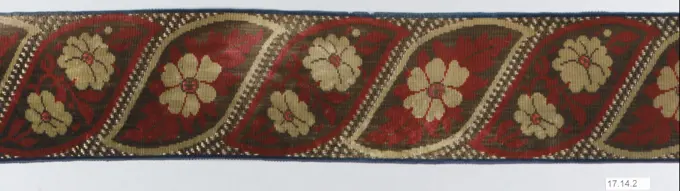
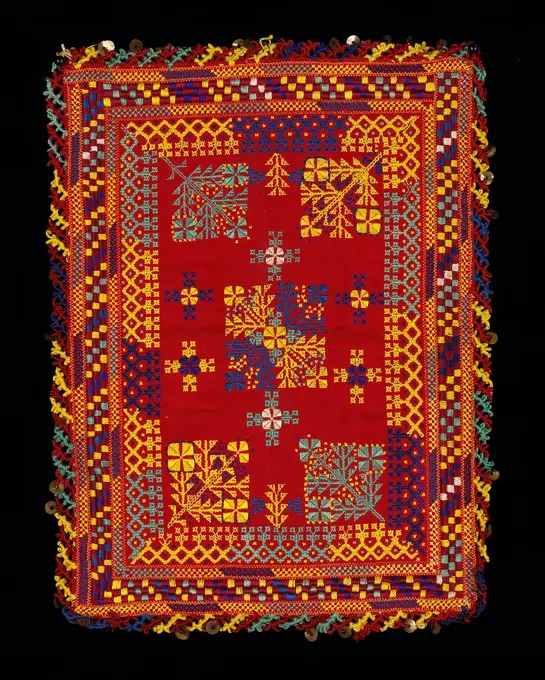
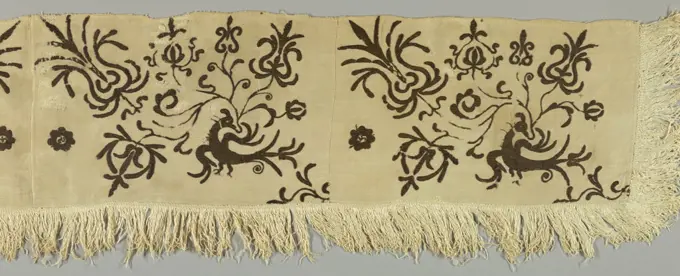
An array of textile samples and ceremonial skirts featuring intricate patterns and designs, showcasing traditional craftsmanship from various cultures.
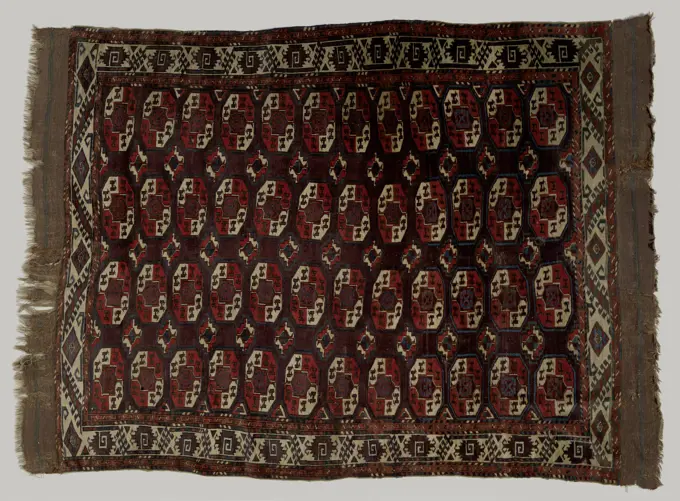
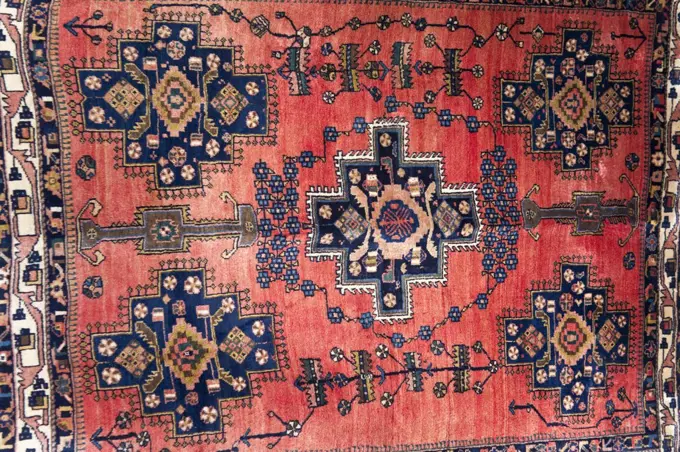
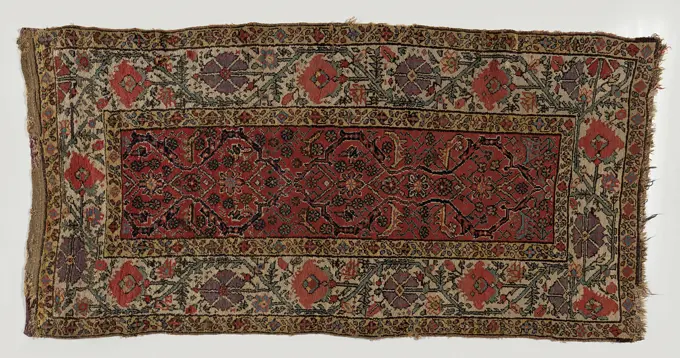
Eastern carpet, Kizil -Ayak Volk, 1800 - 1850 Eastern carpet, huge dressing. Against a deep purple fond are octagonal "tauk nuska" generous, interspersed by Chuval Gul. The widest edge is decorated with a stylized leaf vank. Central Asia Necklace and impact: Wool Eastern carpet, huge dressing. Against a deep purple fond are octagonal "tauk nuska" generous, interspersed by Chuval Gul. The widest edge is decorated with a stylized leaf vank. Central Asia Necklace and impact: Wool
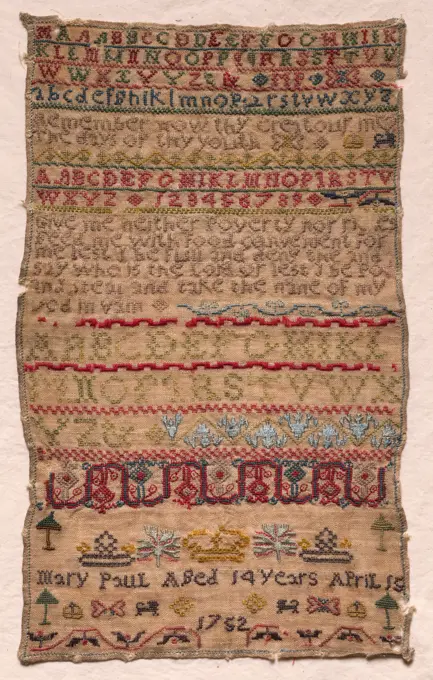
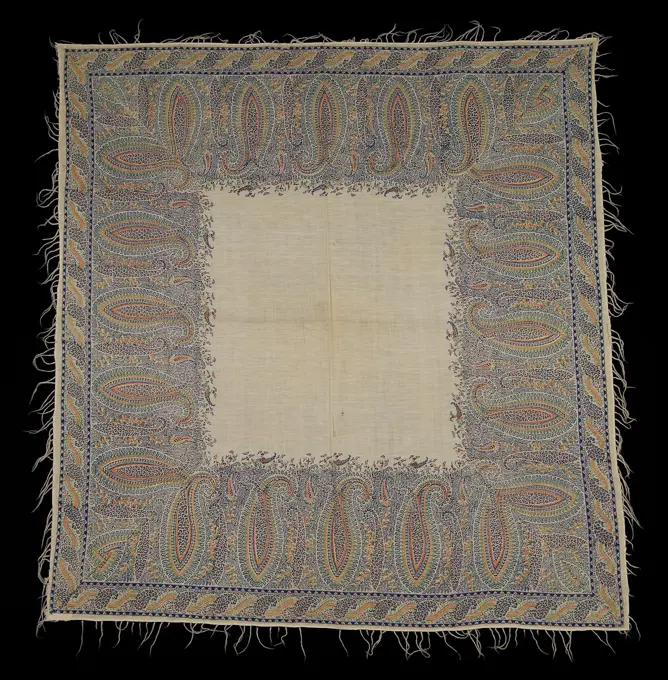
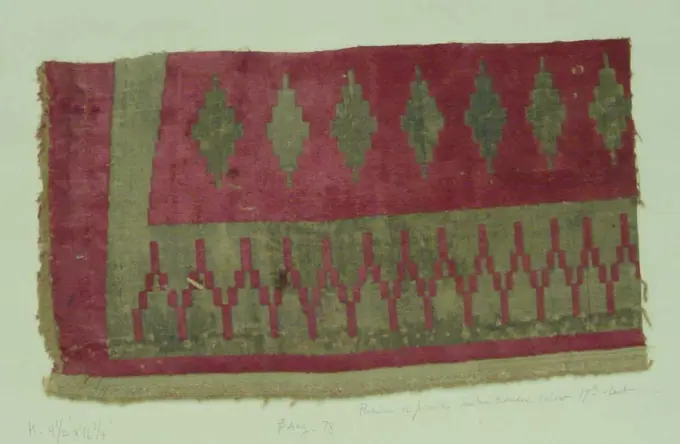
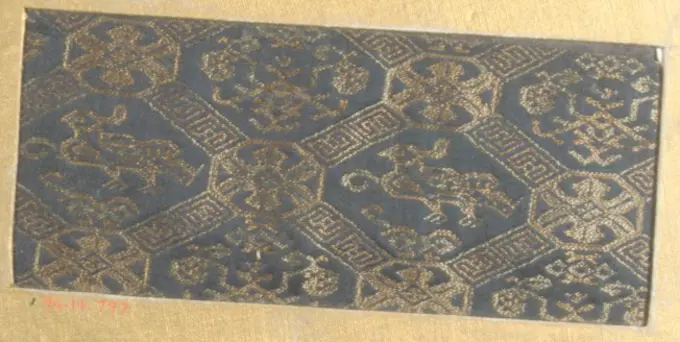
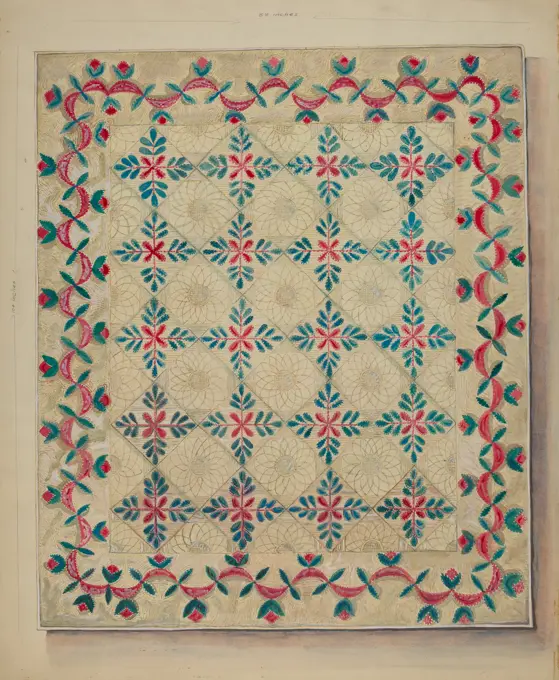
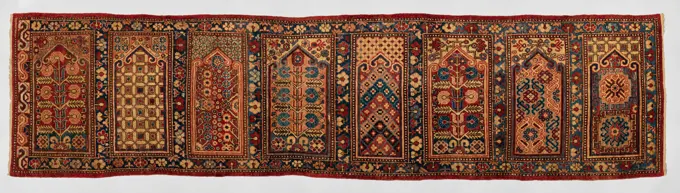
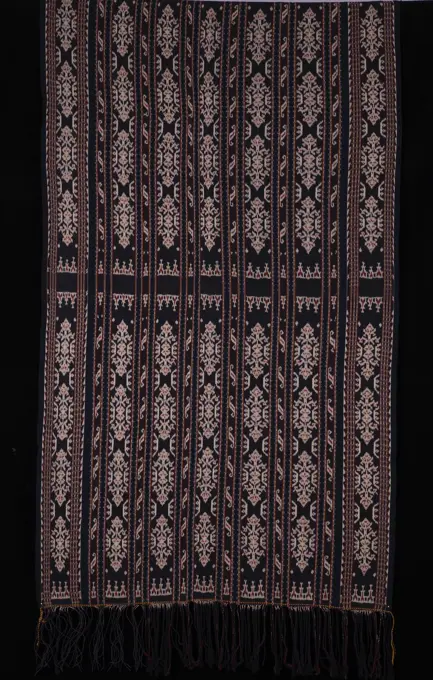
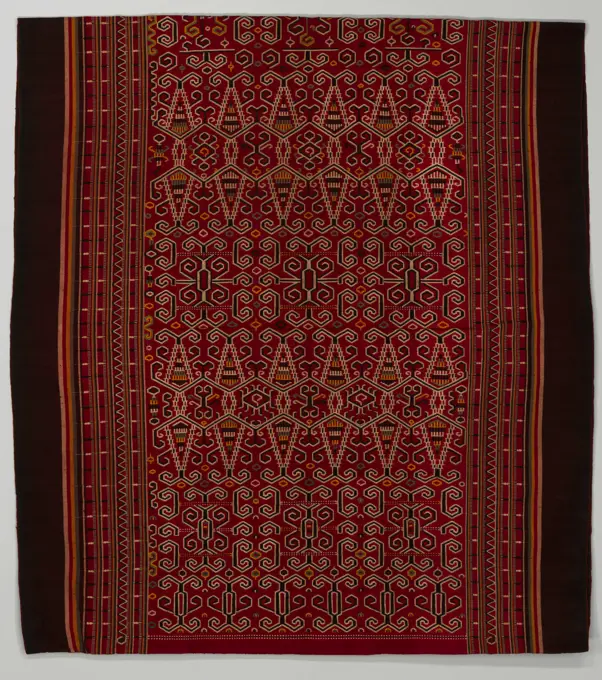
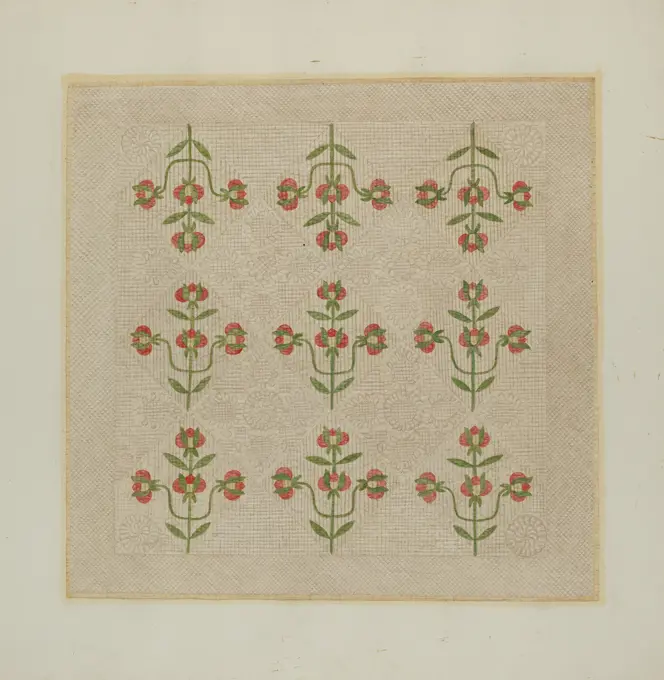
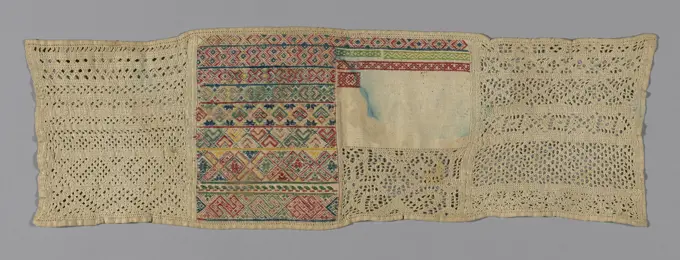
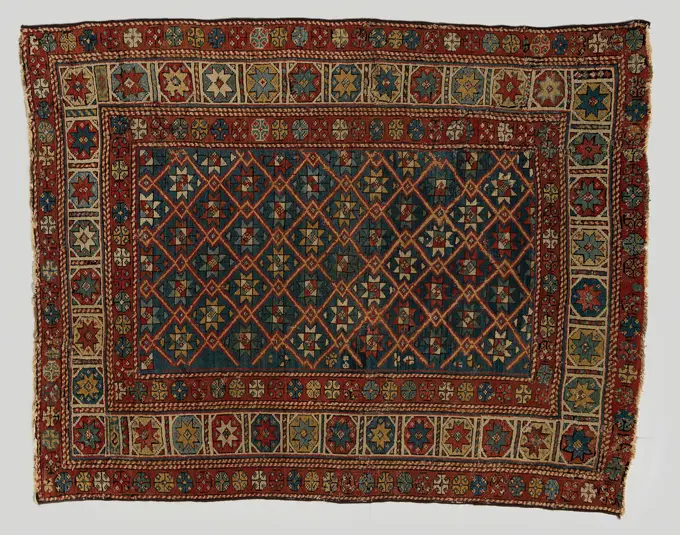
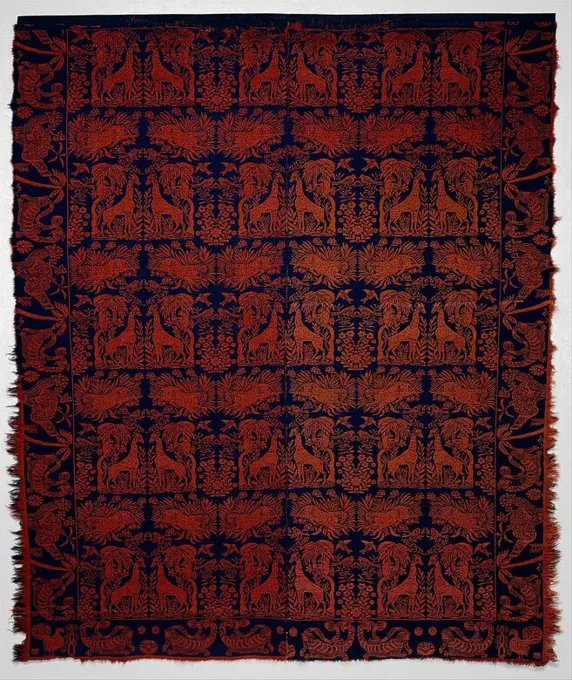
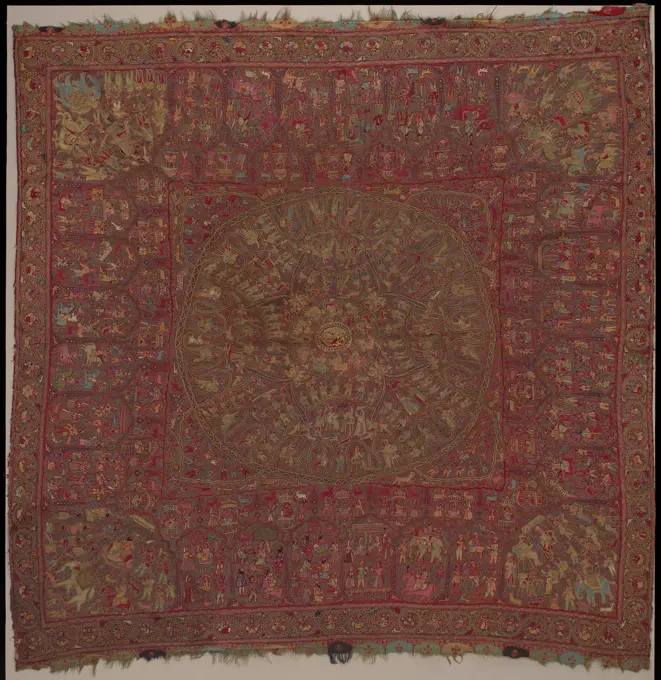
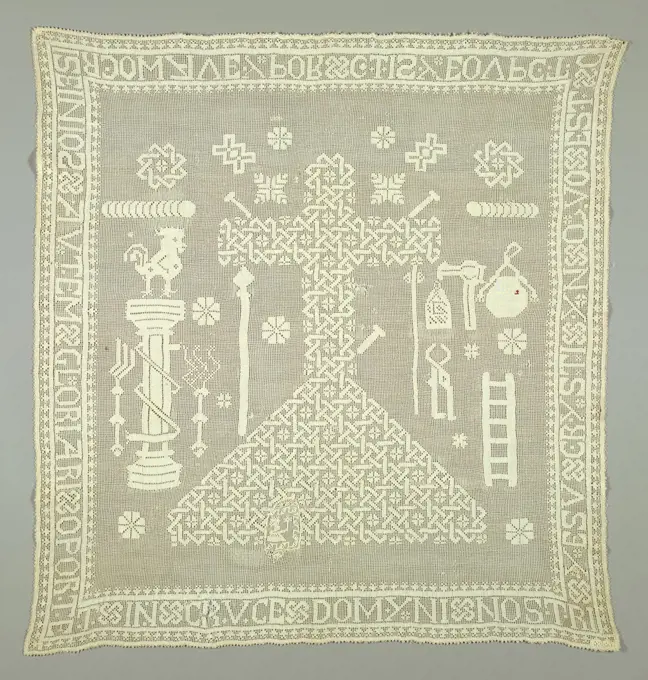
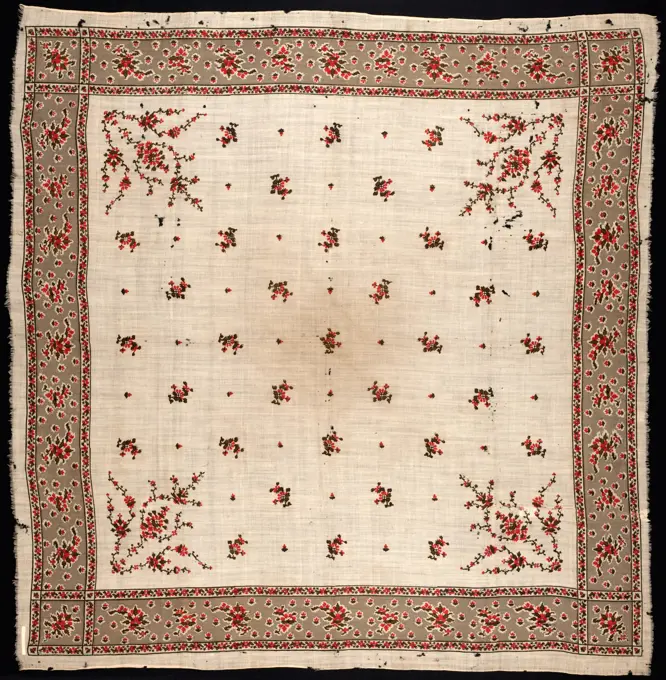
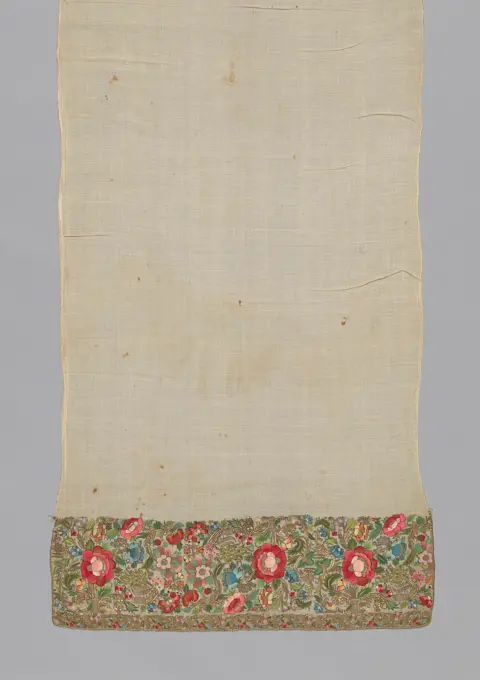
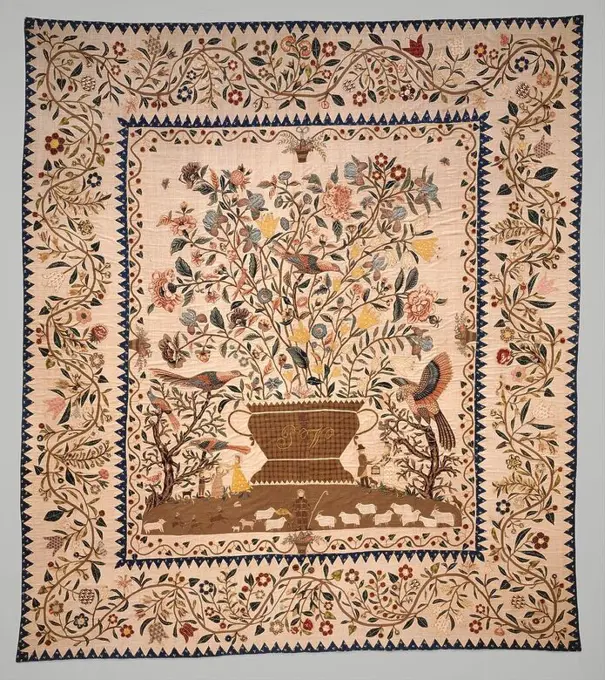
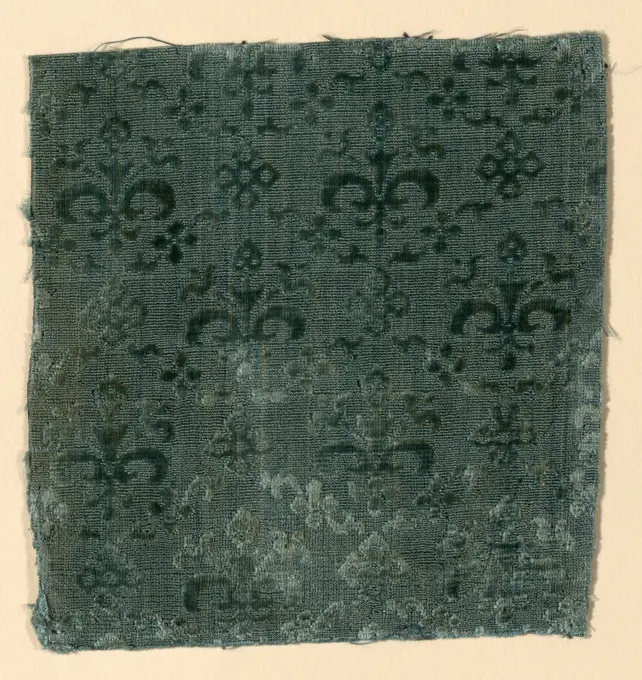
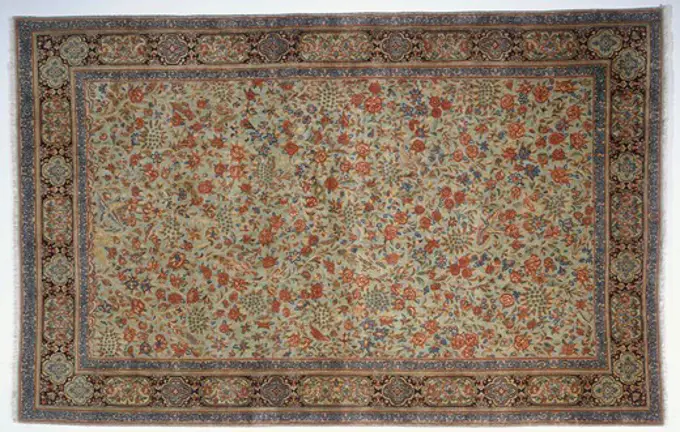
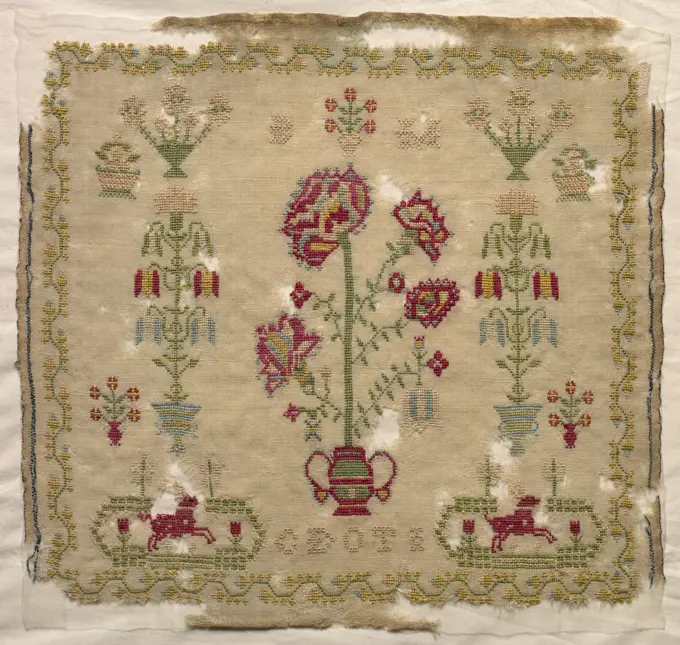
Tapestry. unknown, authorFragment 17th century Italian. Fragment 230445Sampler, 1752. England, 18th century. Embroidery; silk and wool on linen; overall: 33 x 20.4 cm (13 x 8 1/16 in.).Sash ca. 1787-1830 Francis Maslowski. Sash. Polish, Cracow. ca. 1787-1830. Silk and metal thread. Textiles-WovenShawl 1850-59 possibly Swiss. Shawl 169883Rugs and Carpets: Caucasus region - Georgia - 19th century. Kazak carpet, called also carpet with a swastikaStrip 17th century Italian. Strip 219384Textile Fragment 17th century. Textile Fragment 454590Piece 18th-19th century Japan. Piece 66521Square Shawl Made 1850-1875 France. Silk and wool, warp threads dyed in multiple colors prior to weaving; center of weft-float faced 1 2 'Z' twill weave; patterned areas of two layers of complementary weft plain weave; main warp fringe; woven on loom with Jacquard attachment .Sampler (England); Embroidered by Elizabeth Cartwright; silk embroidery on linen foundationElla Josephine Sterling, Patchwork Quilt, c 1936 Patchwork QuiltKilim with Bands of "Star" Motifs. Turkey, central Anatolia. Date: 1701-1725. Dimensions: 335.3 x 127 cm (132 x 50 in.). Wool, slit-tapestry weave. Origin: Turkey. Museum: The Chicago Art Institute, Chicago, USA.Prayer Rug 19th century East Turkestan. Prayer Rug. East Turkestan. 19th century. Foundation: cotton warp and weft; wool knotting. Textiles-RugsLetter case, Medium: straw, paper, linen Technique: embroidered in couching stitches, Letter case of braids, coils and strips of natural colored straw couched to a surface of flat strips of red dyed straw which have been sewn to paper and backed with plain weave linen. One one side, a design of a crown over scrolls that resemble a monogram with birds and flowers on curving stems. On the other side, a crown over two hearts with curving stems and flowers., Italy, 18th century, costume & accessories, Letter caseSkoutari carpet unknownIkat from Timor, Indonesia, Southeast Asia, AsiaCollar of Batist with white work semicircular model that needs to be cut from the rectangular piece of batist. Collar of Batist with embroidery: white work. Semi-circular model on rectangular piece of batist. The collar has already been completed, but not yet cut out of the fabric. The embroidery has a pattern of flower bouquets in the middle and loose berry roses. The outer edge with cross-placed peakoval is caught between corrugated edges.Sleeve cloth; Kain Kebat; Bidang. Cached cloth for a woman with stylized birds and simple C-shaped motifs representing the Mayan tindok (sleeping cat).Suzani, second half of the 19th century, 83 1/2 x 63 1/2 in. (212.09 x 161.29 cm), Silk, cotton; hook chain stitch, checkered chain stitch, Uzbekistan, 19th centuryFred Hassebrock, Quilt  Tulip Pattern, c 1939 Quilt - Tulip PatternSampler Made 1801-1900 Spain. Linen, plain weave; cut and drawn work and pulled threadwork; embroidered with linen yarn in buttonhole, hem, interlocking, loop, overcast, and Russian overcast stitches, overcasr bars; embroidered with silk floss and cotton floss in crested chain variations, running and satin stitches .Kussaba, 19th century, 76 3/4 x 80in. (194.9 x 203.2cm), Wool; needlework, India, 19th centuryBlanket, 57 x 38 1/2 in. (144.78 x 97.79 cm), Cotton (); needlework, ChinaTextile (Indonesia); cottonTextile Fragment 16th century Ottoman lampas and velvet textiles often feature large-scale designs displayed within the ogival framework. This example incorporates an elongated tulip flanked by two wavy lines and divided by saz style serrated leaves centering tiny blossoms. Delicate carnations and tulips wind their way along vines inside the ogival lattice. Though slightly worn, the gold surface features metal-wrapped thread emphasized by the bright red background, a color combination popular at the Ottoman court. Based on the shape of the fragment, this lampas-woven silk (kemha) was probably once used as part of a garment.. Textile Fragment 451099Floral rug, Dagheestan, Karabagh or South Shirwan. Floral rug, Dagheestan, Karabagh or South Shirwan. Midfield: The field is divided into blue diamonds through a grid work in light yellow in blue windows where brown ran states standing that S-diagonally per color are arranged in white, turquoise green, red and ocher yellow. The yellow grid has red outlines and checks on the nodes. Edges: Triple. The middle and widest is divided into white squares with stated stars within octagon. The inside and outside are equal, with dark red fond with loose rosette flowers.Chalice veil late 16th century Italian. Chalice veil 236140Textile Fragment with Poetic Scenes andVersesTowel Made 1801-1900 Turkey. embroidered .Coverlet. Culture: American. Dimensions: 85 x 73 in. (215.9 x 185.4 cm). Date: ca. 1840-50.This coverlet is woven with red and blue wool warps and red and blue wool wefts in two panels and seamed at the center. The field shows a menagerie of animals, including giraffes, leopards, monkeys, and birds. The borders have images of an alligator eating a snake alternating with a pouncing leopard. In contrast to the predominant jungle motifs, domesticated fowl are depicted on the corner blocks. Museum: Metropolitan Museum of Art, New York, USA.Fragment red damask broker with pomegranate motifs. Fragment of red silk damask broker with pomegranate motifs.Headscarf; Setangan Lepus Limar. Headscarf with floral and geometric motifs.Sampler (Netherlands); silk on cottonEmbroidered Fragment of a Mattress or Curtain Trimming, 19th century. Morocco, Azemmur, 19th century. Embroidery: silk on linen tabby ground; average: 20.3 x 41.3 cm (8 x 16 1/4 in.).Ribbon 18th century French. Ribbon 219866Embroidered Tablecover, 19th century, 68 x 72 in. (172.72 x 182.88 cm), Wool, silk and gold threads; needlework, India, 19th century, In a sea of tightly embroidered figures, many scenes unfold at once. Women socialize in beautiful gardens and are surrounded by attendants, noblemen hunt and slay foxes, tigers, and mythical creatures, British soldiers are fanned by servants, and Indian elites are fanned by servants in British soldier costume. A regal man astride an elephant takes a leisurely drag from a hookah.Textile Fragments, 13th century. Spain, Mudejar, 13th century. Compound twill, silk and gold; average: 22.9 x 23.5 cm (9 x 9 1/4 in.).Textile (Portugal); cotton; 1932-3-4Sidewall (Japan); fiber composition, tung oil, embossed; 49.5 x 35 cm (19 1/2 x 13 3/4 in.)Ecclesiastical cover, Medium: linen, silk Technique: withdrawn element work, Italy, late 16th-early 17th century, lace, Ecclesiastical coverBag, c. 1910, 9 x 6 1/2 in. (22.86 x 16.51 cm), Cotton, silk, metal; needlework, Syria, 20th centuryPiece 18th century Japan. Piece 71592Coverlet Fragment (USA); wool, cottonBorder 1612 Italian. Border 227269Sampler (Mexico); silk embroidery on linen foundationPiece 18th-19th century Japan. Piece. Japan. 18th-19th century. Silk. Textiles-WovenSmall square shawl printed with floral patterns in supervision, in the corners and sowing in the center. Printed wool canvas (brown, beige, black and red). Around 1830. Galliera, fashion museum of the city of Paris. Angle, floral motif strip, beige, framing, flower, print, print wool, brown, vegetal pattern, red black, small crossroads, edge, sowing, canvasFragment, Medium: Warp; S-spun linen. Wefts; S-spun linen, S-spun wool Technique: slit tapestry with supplementary weft wrapping., Geometric band in black., Egypt, 3rd-4th century, woven textiles, FragmentFragment (Spain); silk, metallicTurkish carpet for sale in the Grand Bazaar, Istanbul, TurkeyPiece 18th-19th century Japan. Piece 67790Oriental carpet. Oriental carpet, the midfield of which is decorated with arabesque against a background of stiff tendrils with flowers and leaves. Widest edge decorated with angular running edge with rosette flowers.Suzani, 19th century, 61 1/2 x 45 in. (156.21 x 114.3 cm), Silk, cotton; hook chain stitch, Uzbekistan, 19th centuryFragment, Medium: silk Technique: plain compound satin, Horizontal rows of white botehs on blue ground., Iran, 18th century, woven textiles, FragmentFragment (France); silkBand (Italy); linen, silkLarge Hanging with Crown and Escutcheon. Peru, Southern Andes. Date: 1680-1720. Dimensions: 347.55 x 352.43 cm (136 3/4 x 138 3/4 in.). Cotton and wool (presumably camelid hair), single interlocking tapestry weave with eccentric wefts. Origin: Peru. Museum: The Chicago Art Institute, Chicago, USA.Arthur G Merkley, Table Napkin, c 1940 Table NapkinTextile Fragment 5th-6th century. Textile Fragment 443691Flower rug. Flower rug. Midfield: On a small dark red field, star flowers are in a double orbit. To every star flower a octagon in white, red, light green and blue. Edges: wide and triple. The main beach is in orange with such star flowers in eight farms. The inside and out-of-life are the same, with brown-black fond on which diaphraggled diamonds in blue, red and green, interrupted by sloping back to back white blocks. Beard: a wide beard resp. Both under and at the top. from 8 and 7 cm, in blue with a few stripes in red.Textile Fragment 3rd-4th century. Textile Fragment. 3rd-4th century. Wool, linen; plain weave, tapestry weave. Made in Egypt. TextilesFragment of silk fabric - stripes filled with floral ornamentation with sprays of fowers unknownTiraz fragment, Medium: linen, silk Technique: tapestry weave, Fragment of a polychrome tapestry weave band incorporating Arabic script, medallion with birds and flowers. Eccentric wefts, slits and double sided. Many wefts are missing., Egypt, 10th-11th century, woven textiles, Tiraz fragmentTextile Fragment early 19th century. Textile Fragment 447416Carpet dated A.H. 1280/ A.D. 1863. Carpet 451375Sari, 1950-1975, 178 x 47 1/4 in. (452.12 x 120.02 cm), Silk, rayon; weft ikat, India, 20th centuryCoverlet Fragment (USA); wool, cottonTowel Made 1800-1850 Turkey. The lustrous silk threads in this embroidered towel evoke the light and color of a garden in summer. The Ottomans were known for their love of flowers. Roses, carnations , hyacinths, irises, and tulips bloomed in magnificant gardens along the Bosporus. Flowers adorned luxury objects and were a popular subject for embroidery. Embroiderersóboth men and womenóworked from designs drawn onto the ground (or base) fabrics, creating endless variety in the patterns by carefully choosing different threads and stitches.. Cotton, plain weave; embroidered with silk, metal strip, and metal-strip-wrapped silk .Tvaevae tarei (patch work quilt), circa 1900, Cook Islands, maker unknown.Rugs and Carpets: Iran - Zanjan carpetALFOMBRA PERSA SAFAVIDA-MEDIADOS SIGLO XVI. Location: INSTITUTO VALENCIA DE DON JUAN-COLECCION. MADRID. SPAIN.Fragment Made 1601-1700 Spain. Silk and silvered- and gilt-metal-strip-wrapped silk (frisÈ), warp-float faced satin weave with supplementary patterning wefts and supplementary brocading wefts .Hanging, 19th century, L.48-½ x W.52-½ in., satin, silk, cotton, China, 19th centuryKontusz sash/belt. Manufaktura Szczepana Filsjeana (Kobyłka ; wytwórnia pasów ; 1787-1794), manufactureShawl, 19th century, 60-1/4 x 60-1/2 in. (153.0 x 153.7 cm), Silk; jacquard, 19th centuryCover Made 1801-1900 Uzbekistan. Cover with floral design embroidered in colors. .Strip 16th century Italian. Strip 215421Heirloom Textile (sarasa) Made 1701-1800 India. Cotton, plain weave; block-printed mordant and resist-dyed; painted .Band (Egypt); warp; s-spun linenPhebe Warner Coverlet. Culture: American. Dimensions: 103 1/4 x 90 1/2 in. (262.3 x 229.9 cm). Maker: Probably Sarah Furman Warner Williams (born 1764). Date: ca. 1803.Made in about 1803 for Phebe Warner of New York, this bedcover's design relates more closely to eighteenth-century sources than to those of the nineteenth century. The maker was influenced by the central flowering-tree motif common to popular imported Indian bed hangings, called "palampores," as well as by the pastoral landscape needlework pictures often worked by young women. The coverlet's linen ground is appliquéd with large-patterned cotton chintzes and printed linens, as well as smaller-patterned cotton calicos and plaids, most of which were made in England. Museum: Metropolitan Museum of Art, New York, USA.Fragment Made 1575-1600 Italy. silk, velvet; cut and uncut twill weave foundation .Fragment. Italy. Date: 1575-1600. Dimensions: 16.5 × 11.1 cm (6 1/2 × 4 3/8 in.)Repeat: 2.7 × 2.9 cm (1 × 1 1/8 in.). Silk, plain weave with supplementary pile warps forming cut voided velvet. Origin: Italy. Museum: The Chicago Art Institute, Chicago, USA.Rugs and Carpets: Iran - 19th century. Kashan Kurk carpet with a garden motif, 2,60 x 1,60 metresTextile, Medium: silk and metal embroidery on linen foundation Technique: embroidered in cross stitch on plain weave, Three pieces of embroidered linen, with design arranged in narrow panels. Stylized flower heads on either side of straight vine, worked in red outlined in pink; in gold thread outlined in brown; and in green for stems. Panels separated by bands of white drawn work. Probably taken from trouser legs., Dodecanese, Greece, 19th century, embroidery & stitching, TextileTowel/Napkin Made 1850-1900 Turkey. Cotton, plain weave, embroidered at both ends with elaborate border design of bright colored silks and metal thread .Cover (Spain); linen, silk, leather, metallic threadFragment. Spain. Date: 1301-1400. Dimensions: 15.2 x 12.1 cm (6 x 4 3/4 in.)Repeat: 5 x 5.1 cm (2 x 2 in.). Silk and gilt-animal-substrate-wrapped linen, warp-float face of weft chevron twill weave of two color complementary wefts and inner warps. Origin: Italy. Museum: The Chicago Art Institute, Chicago, USA.Sampler, early 1800s. England, early 19th century. Embroidery on wool ground; overall: 32.4 x 34.3 cm (12 3/4 x 13 1/2 in.).Face from Half of Double Saddle Bag (Khorjin) 19th century. Face from Half of Double Saddle Bag (Khorjin). 19th century. Wool (warp, weft, and pile); symmetrically knotted pile, tapestry weave. From probably Western Iran. Textiles-WovenFragment; silk, metallic threadCard case, Medium: leather, glass beads Technique: embroidered beadwork, Italy, 19th century, costume & accessories, Card caseFragment, Medium: wool on linen Technique: embroidered, Four natural linen rectangular fragments sewn together, each embroidered in brown wool showing a bird in a scrolling branch with exotic blossoms. Two panels the mirror image of the other. Length of weft-loop fringe of about 3' sewn to three sides., Spain, 17th-18th century, embroidery & stitching, FragmentTable carpet with unicorns. Culture: Dutch. Dimensions: H. 60 x W. 92in. (152.4 x 233.7cm). Date: ca. 1600.The little unicorns in roundels in the border show that this was made to be placed on a table, with the border hanging down all around. Museum: Metropolitan Museum of Art, New York, USA.Curtain with floral design on yellow fond. Curtain with floral design on a yellow fond, from the small dance hall of Palace Noordeinde.Fragment 16th century Italian. Fragment 217705Mantle Nasca. Mantle, 0-100 C.E. Camelid fiber, 108 11/16 x 50 13/16 in. (276.1 x 129.1 cm).   Arts of the Americas 0-100 C.E.Embroidered Table Cover, 18th-19th century. Turkey, 18th-19th century. Embroidery, silk and metallic threads, on silk tabby ground; average: 102.2 x 97.2 cm (40 1/4 x 38 1/4 in.).Embroidered kerchief trimming unknownFragment; silk on linen