Cultural Textile Art

An array of textile samples and ceremonial skirts featuring intricate patterns and designs, showcasing traditional craftsmanship from various cultures.
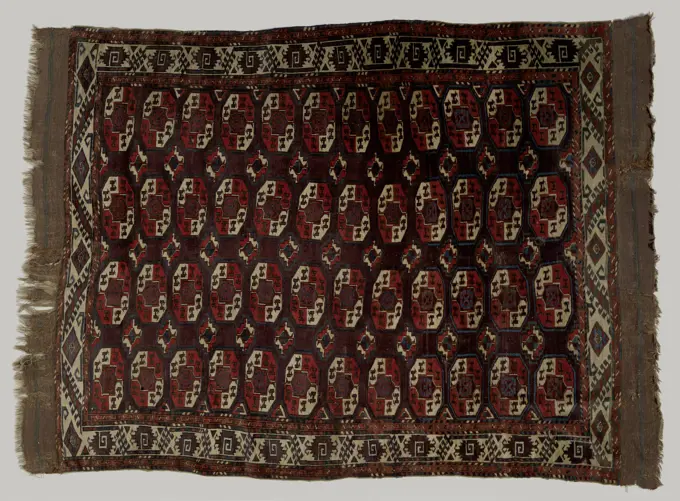
Eastern carpet, Kizil -Ayak Volk, 1800 - 1850 Eastern carpet, huge dressing. Against a deep purple fond are octagonal "tauk nuska" generous, interspersed by Chuval Gul. The widest edge is decorated with a stylized leaf vank. Central Asia Necklace and impact: Wool Eastern carpet, huge dressing. Against a deep purple fond are octagonal "tauk nuska" generous, interspersed by Chuval Gul. The widest edge is decorated with a stylized leaf vank. Central Asia Necklace and impact: Wool
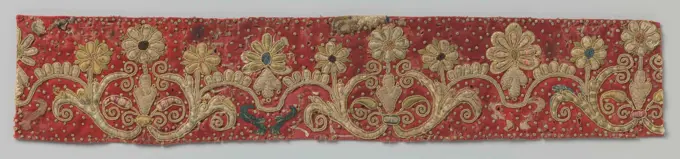
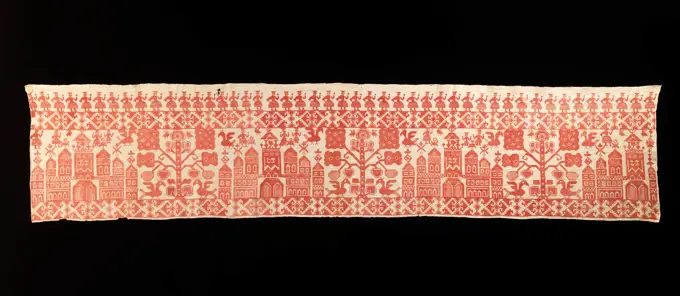
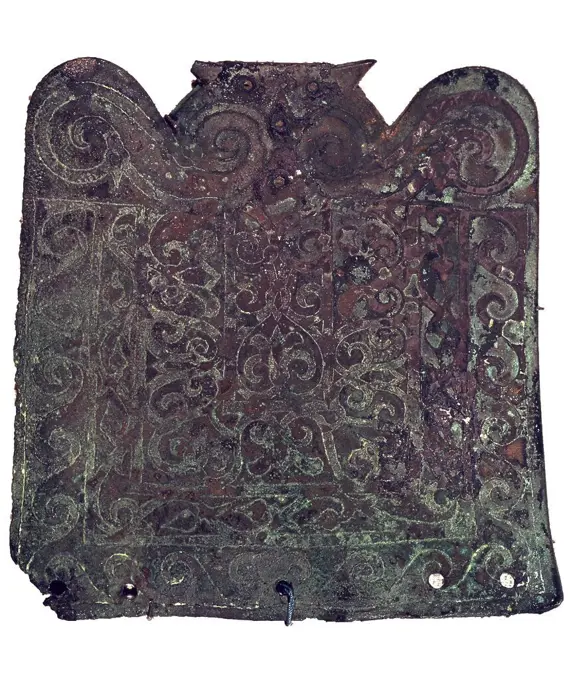
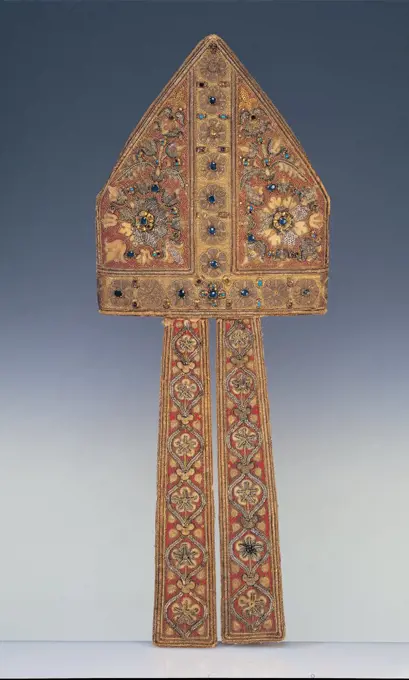
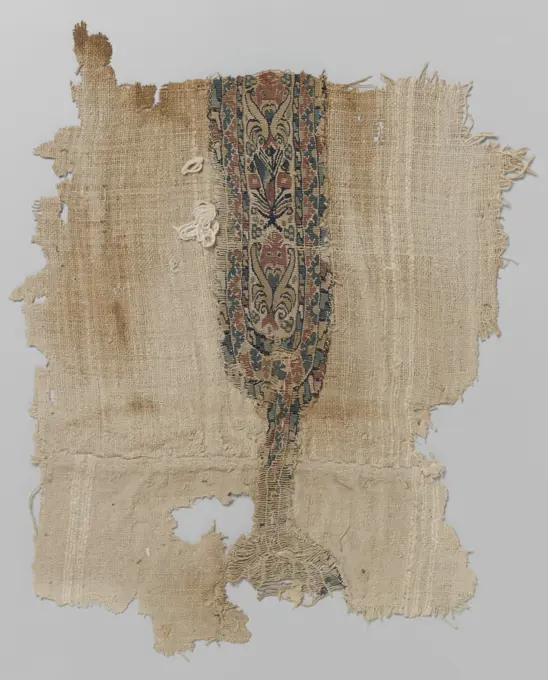
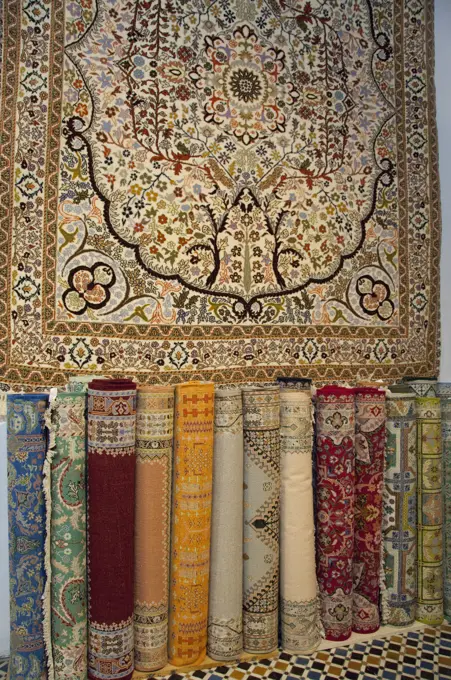
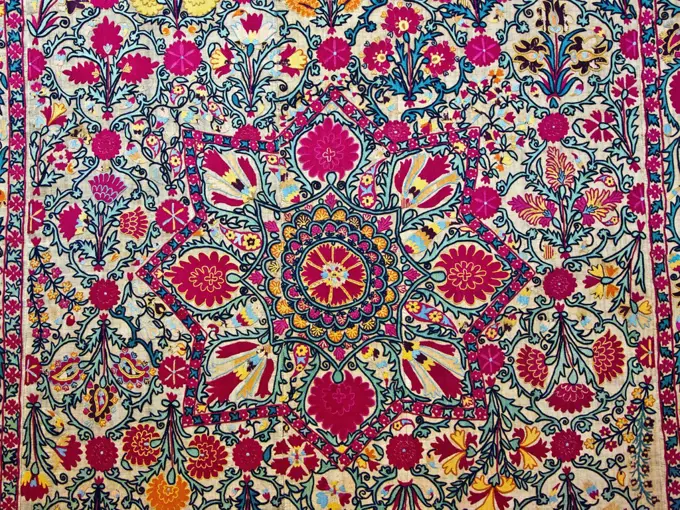
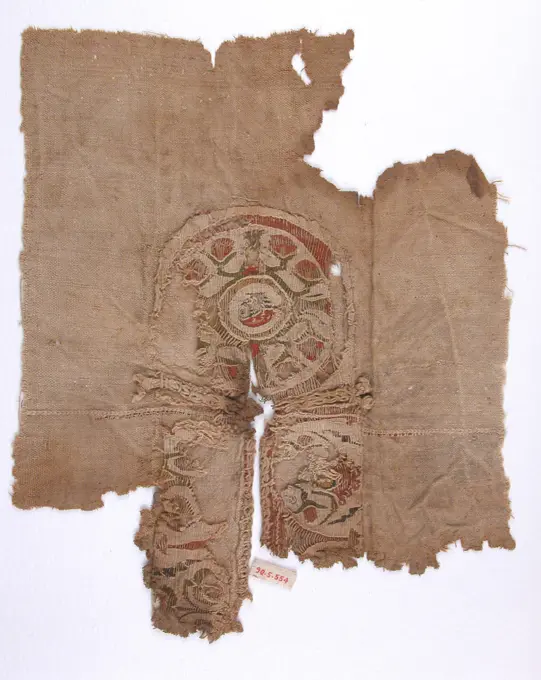
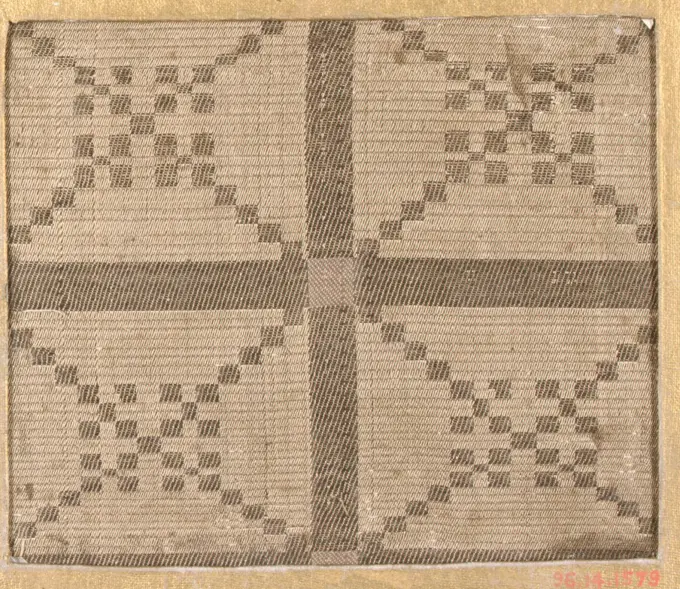
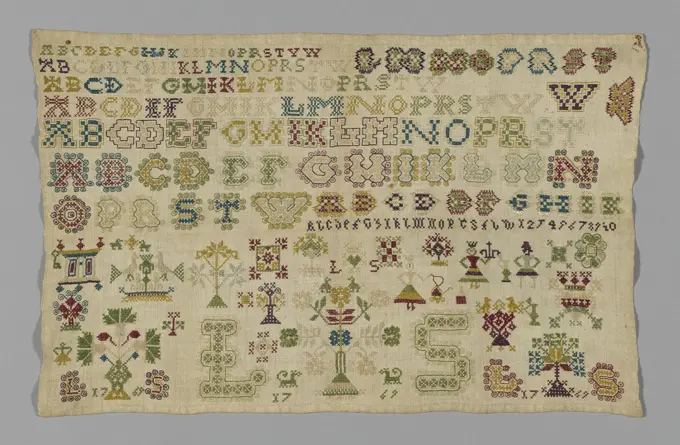
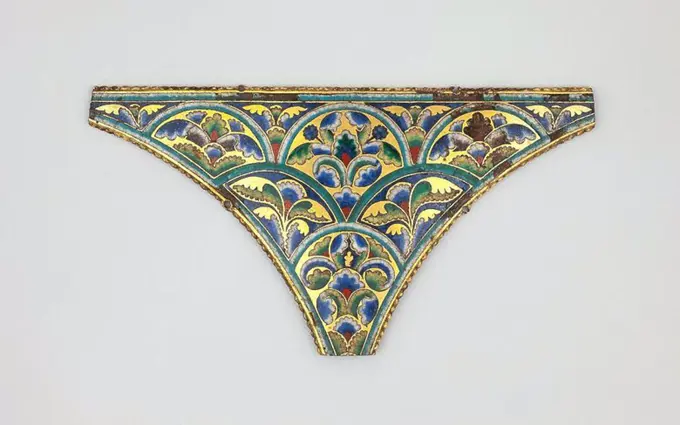
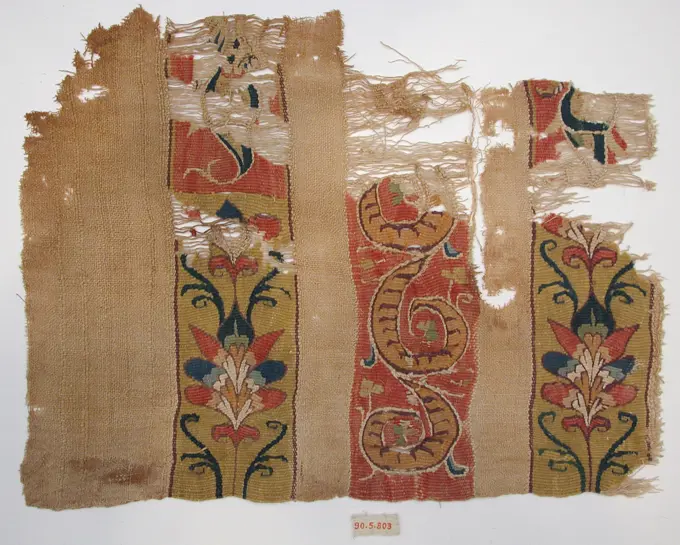
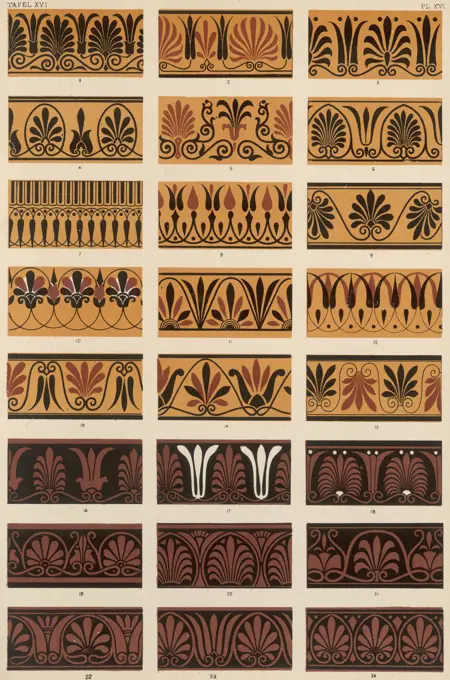
Fragment; silk; Bequest of Richard Cranch Greenleaf in memory of his mother, Adeline Emma Greenleaf; 1962-56-176Sampler (Mexico); linen; Bequest of Marian Hague; 1971-50-184Fragment borduurwerk op een rood weefsel.Red fabric of wool and linen with multicolored embroidery. The pattern has an ornament edge of curls and flowers on a ground of mates.Parallel of historical ornament, Gothic II , Architectural decorations & ornaments, Capitals Columns. Louis Prang & Company CollectionTextilefragmentBed curtain border late 18th century Russian This object is from the collection of Natalia de Shabelsky (1841-1905), a Russian noblewoman compelled to preserve what she perceived as the vanishing folk art traditions of her native country. Traveling extensively throughout Great Russia, she collected many fine examples of textile art of the wealthy peasant class. From the 1870s until moving to France in 1902, Shabelsky amassed a large collection of intricately embroidered hand-woven household textiles and opulent festival garments with rich decoration and elaborate motifs. The Brooklyn Museum holdings include many fine examples including the majority of the garments. Portions of Shabelsky's collection are also housed at the Museum of Fine Arts, Boston, the Cleveland Art Museum, and the Russian Museum of Ethnography in St. Petersburg.Due to the size of this bed curtain border, it likely belonged to a wealthier family of the peasant class. The level of detail is remarkable, representing whCoverlet. Dated: c. 1937. Dimensions: overall: 54.9 x 71.4 cm (21 5/8 x 28 1/8 in.) Original IAD Object: 90" square. Medium: watercolor and graphite on paper. Museum: National Gallery of Art, Washington DC. Author: Eva Wilson.Merklap from cotton on which with red silk Ih.scholtz.als.das, various other initials, jumping deer, flower pots and rabbits, anno 1874. symmetrical, but initials don't mirror. Ih.scholtz, the craftsmen; And DLS (in a wreath), the parents; MG, MS, MN, MB, the regions ('mothers'). The meaning of the other initials is unknown. Rabbits, whether or not in a closed garden, formed a loved pattern on the brand steaks of the handicraft schools in Amsterdam. These wipes embroidered in one color distinguish themselves from others through the careful way of working: the front and back are identical, but in mirror image.BROCHE DAMASQUINADO-VISIGODO-PROC NECROPOLIS DE TUGIA(PEAL BECERRO-JAEN)BRONCE. Location: MUSEO ARQUEOLOGICO NACIONAL-COLECCION. MADRID. SPANIEN.Textile Fragment, 1800s. Japan, 19th century. Compound weave: silk and metal thread weft; average: 28 x 21 cm (11 x 8 1/4 in.).Fragment; linenFragment (Japan)Mitre, by Tuscany workmanship, 16th Century, silk, gems, pearls, small silver rings. Italy: Umbria: Perugia: Assisi: Treasury Museum of San Francesco Basilica. Whole artwork. Miter gold sapphires fabric/tissue gems ribbonsFragment (From a Hanging) Made 1701-1800 Náxos. Linen, plain weave; embroidered with silk in running stitches (pattern darning) .Fragment 17th century Italian, Abruzzi and Calabria. Fragment 217149Reticle. XVIII. Gal1937.66.18Pair of chair covers, 19th century, L.73-½ x W.22-¼ in., Satin, silk, gold threads, cotton, pigments, China, 19th centurykanchipuram silk sari with zari work, tamil nadu, india Copyright: xMxAmirtham/DinodiaxPhotoxAnonymous, kazak carpet. Wool. Carnavalet museum, history of Paris.Table Frontal. China. Date: 1804. Dimensions: 94.1 × 105.2 cm (37 × 41 3/8 in.). Silk, warp-float faced 3:1 'Z' twill weave with gold-leaf-over-lacquered-paper strips supplementary facing wefts and supplementary pile warps forming cut voided velvet; top border: cotton, plain weave; painted inscription; lined with cotton, plain weave; painted inscription. Origin: China. Museum: The Chicago Art Institute, Chicago, USA.Textile 19th century Japan. Textile. Japan. 19th century. TextilesSampler (Italy); silk embroidery on linen foundationSampler 19th century British. Sampler. British. 19th century. Silk and wool on linen canvas. Textiles-EmbroideredLetter case, Medium: paper, silk, gold-wrapped silk, gold wire, foil, and spangles on silk foundation Technique: embroidered on paper faced with silk plain weave in surface satin and couching stitches with attached coils of gold wire and foil, flat strips of gold foil, flattened loops of silver and gold spangles on plain weave foundation, Letter case with embroidery in colored silks and metallic thread in design of flowers and a coat of arms., France or Spain, 17th century, costume & accessories, Letter caseWeefselfragment met nail Anonymous c. 600 - c. 799 Coarse natural linen tissue fragment consisting of two pieces sewn together, on which a multicolored (yellow, red, dark blue, light blue, black) clavus is sewn. In the middle of the clavus there is a stylized flower owl and fanning blak vendors. Around three edges with geometric motifs. In the substrate tissue in three places stripes due to thickened impact wires and left next to the clavus two tufts of loops and a few raised wires. Egypt Drawar en clavus: linen (material). Inslag Clavus: Wool tapestry Coarse natural linen tissue fragment consisting of two pieces sewn together, on which a multicolored (yellow, red, dark blue, light blue, black) clavus is sewn. In the middle of the clavus there is a stylized flower owl and fanning blak vendors. Around three edges with geometric motifs. In the substrate tissue in three places stripes due to thickened impact wires and left next to the clavus two tufts of loops and a few raised wires. EgypCarpet Manufacture, Cappadocia, Turkey, Cappadocia, Turkey, AsiaSquare (Egypt); warp; s-spun linen. weft; s-spun linen, s-spun woolCarpet. Dimensions: H. 64 in. (162.56 cm)W. 41 in. (104.14 cm). Date: probably 17th century. Museum: Metropolitan Museum of Art, New York, USA.Fragment silk tissue. Fragment silk tissue. The tissue has a striped pattern. Jobs with sloping stripes alternate with webs in which circular forms.Square 19th century. Square 445866blur in iran antique carpet textile  handmade beautiful arabic ornamentLetter bag in an envelope model of green velvet, embroidered with a mask-like face on front and a fantasy animal on the back. Letter bag in a flat envelope model of green velvet, on which a mask-like face on front and a fantasy animal on the back in relief with silver thread, both embroidered on the back, both surrounded by a list of flowers and small birds. The edge of the bag is trimmed with a board of brown silk thread with ecru-colored ornaments. The two lower angles are reinforced with embroidery stitches. The lining is made of unbuffed red cotton. On the inside two equal compartments, reinforced with paper. The valve closes through a loop of multiple colors of silk thread and a copper sphere.Fragment Made 1601-1635 Italy. Silk, plain weave with supplementary pile warps forming cut, uncut, and voided velvet .Morocco, Tetouan. Historic medina bazaar. Traditional Moroccan carpet showroom.Fragment, A .G. Jennings & Sons, American, Medium: cotton Technique: machine made lace, Alençon-type with a net ground, scattered leaves and floral border., USA, ca. 1884, lace, FragmentSquare 4th century. Square 447840South Persian Prayer Rug, 18th century. Artist: Unknown.Man and Woman ,. Messenger CollectionHood from a church cap;  18th century (1701-00-00-1800-00-00);Textile Fragment 4th-5th century. Textile Fragment 443975Sampler 19th century German. Sampler. German. 19th century. Linen, needle lace. Textiles-LacesUzbekistan, Tashkent, Central Asian Carpet at State Museum of Applied Arts, Colorful CarpetTextile Fragment 5th century. Textile Fragment 444040Piece 18th-19th century Japan. Piece. Japan. 18th-19th century. Silk. Textiles-WovenAlbum Quilt. Elsie Ann Burr (United States, Illinois, born 1824). United States, Illinois, 1849. Textiles; quilts. Pieced, quilted, and embroidered cottonOld hand made carpet and rugs of  traditional typesKunaa weaving is an exclusively female occupation. The women of Gadu cross regularly to the neighbouring island of Gan where they harvest an especially resilient grass known as hau. This is then coloured with a variety of natural dyes before being woven into traditional designs on a simple loom. The designs are traditional, handed down from mother to daughter from generation to generation. By the mid-17th century so prized had Gadu kunaa become in the neighbouring Indian Ocean region that they were sent as part of the annual tribute from the Maldivian Sultan to the Kingdom of Sri Lanka.Square 16th century French. Square 212323Sleeping hat of knitted silk, with the text: whoever is wise finds his joy, in freezing, art and virtue, Anonymous, Before 1886 Sleeping cap of knitted silk, in jersey stitch with ajour pattern. With the text: 'Whoever is wise finds his joy, in Vrierschap, Art and Virtue'. Netherlands silk knitting Sleeping cap of knitted silk, in jersey stitch with ajour pattern. With the text: 'Whoever is wise finds his joy, in Vrierschap, Art and Virtue'. Netherlands silk knittingPiece 19th century Japan. Piece 71669Long Shawl. India. Date: 1855-1865. Dimensions: 333.4 x 144.4 cm (131 1/4 x 56 3/4 in.). Wool, patchwork of double interlocking 2:2 'S' twill tapestry weaves; center of 2:2 'S' twill weave; embroidered in satin, surface satin, and stem stitches; "Harlequin" tabs of pieced 2:2 twill weaves; embroidered in flat, satin, surface satin, and stem stitches; laid work and couching; warp fringe. Origin: India. Museum: The Chicago Art Institute, Chicago, USA.Quilt, 'Bars'. United States, Pennsylvania, Lancaster County, 1886. Textiles; quilts. Wool; quiltedFloral art pattern example of the Ottoman timeDoily (USA); linen, silkTable. unknown, authorTrimming Fragment (France); silkTextile Sample from Sample Book 19th century Japan. Textile Sample from Sample Book 68258Sampler Made 1769 Netherlands. Linen, plain weave; embroidered with silk in cross, back, Algerian eye, long and short stitches .Trimming, USA, ca. 1880, trimmings, TrimmingGalloon 17th-18th century Italian. Galloon 213966Close-up of embroidery on fabricSpandrel for a Reliquary Shrine. German; Cologne. Date: 1170-1180. Dimensions: 17.1 × 9.2 cm (6 3/4 × 3 5/8 in.). Gilt copper, champlevé enamel. Origin: Cologne. Museum: The Chicago Art Institute, Chicago, USA.Darning sampler. Date/Period: Late 19th century. Darning sampler. Medium: silk and cotton embroidery on linen foundation. Technique: embroidered in counted running (pattern darning) stitches on plain weave foundation. Height: 350 mm (13.77 in); Width: 325 mm (12.79 in). Author: UNKNOWN.Textile Fragment 5th-6th century. Textile Fragment 444282Textile; cottonOrnaments from Greek and  Etruscan vases in the British  Museum and the Louvre        Date: 1868Archaeological excavation site, mosaic in the Villa of Eustolios, symbolic flowers with a cross, Kourion, Episkopi, Republik Zypern, Cyprus, EuropeTomb cover, Medium: silk Technique: lampas, 4&1 satin patterned by plain weave, Zigzag bands with Kufic writing in green and white. Both selvages present., 18th century, woven textiles, Tomb coverHandkerchief, Chicago World's Fair, 1893; USA; Warp x Weft: 43 x 47 cm (16 15/16 x 18 1/2 in.)Sampler, 1868, maker unknown. Gift of Geraldine Sanger, 1989.