Cultural Textiles and Patterns

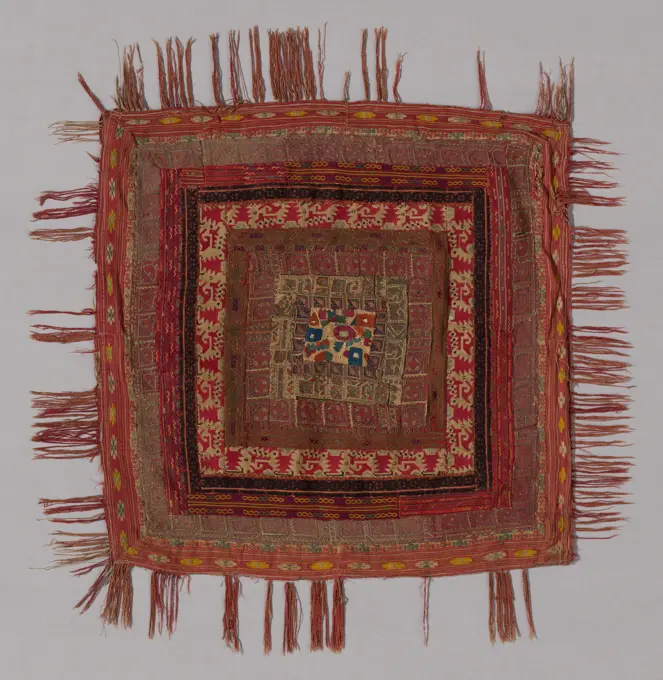
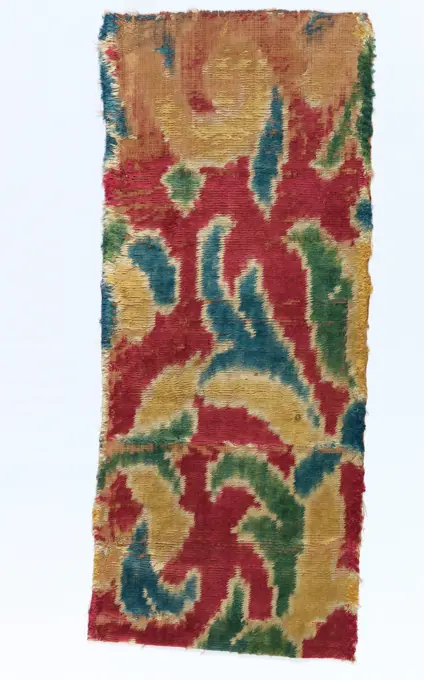
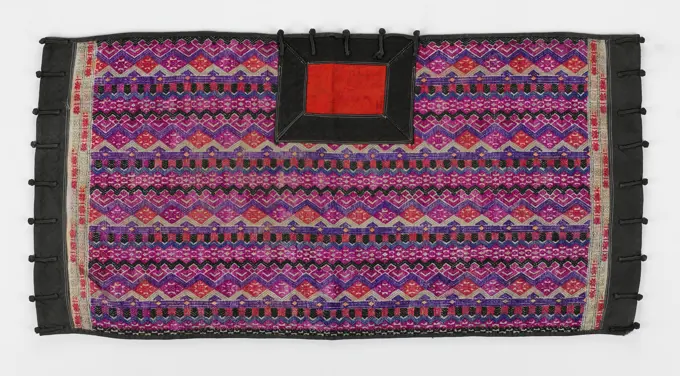
Diverse range of textiles featuring intricate designs, including carpets and skirts, highlighting traditional craftsmanship and vibrant colors.

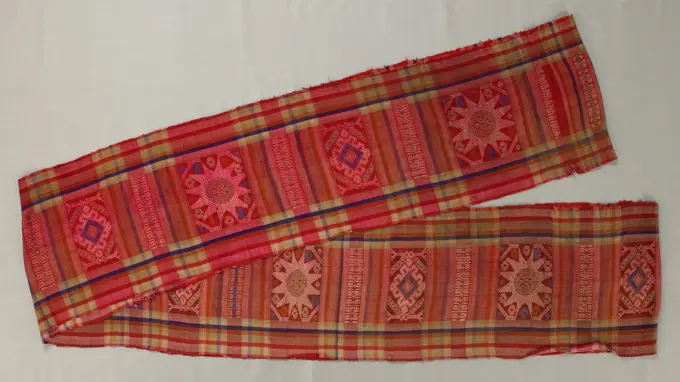
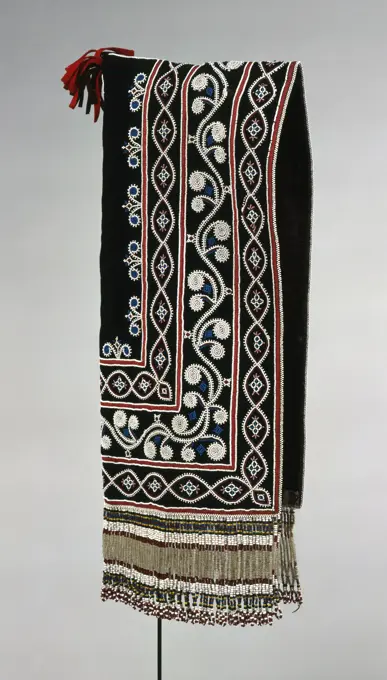
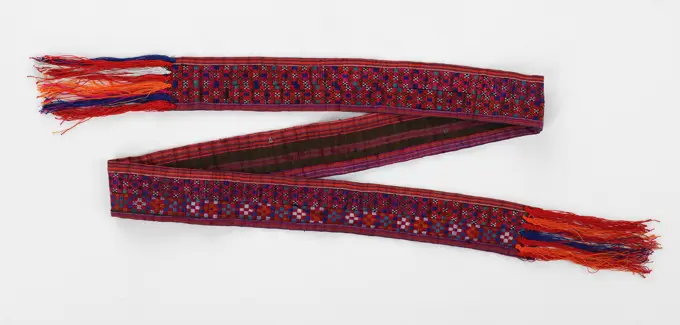
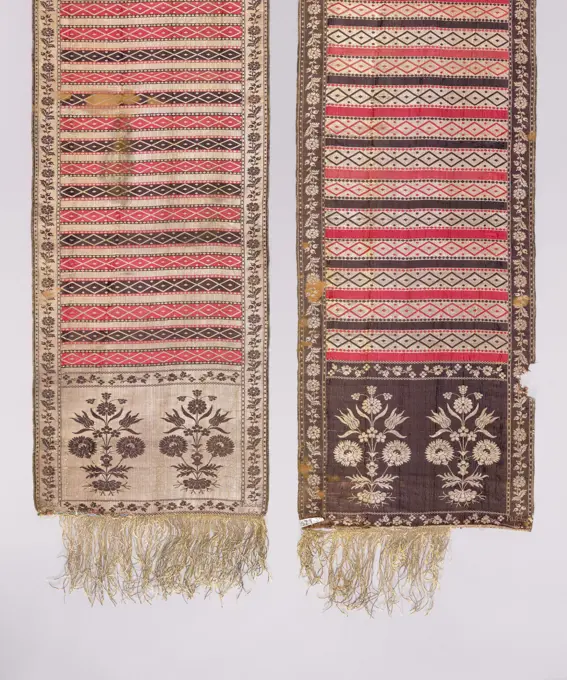
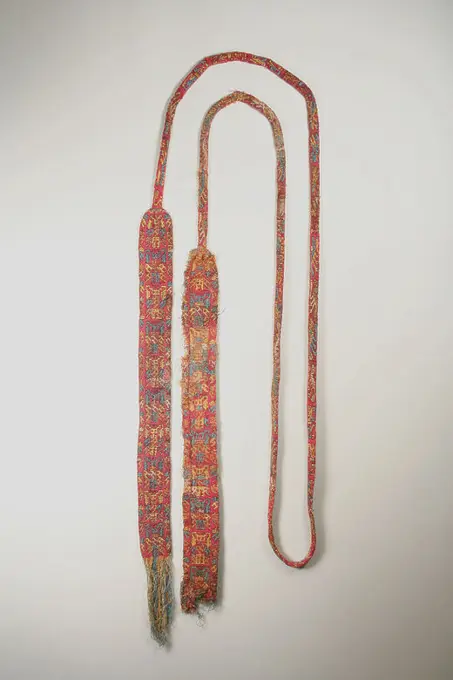
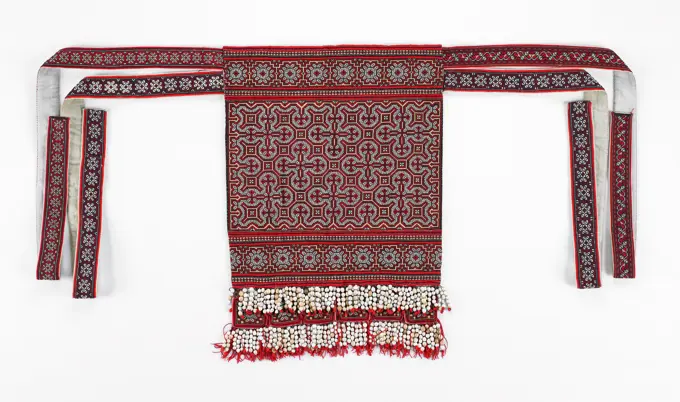
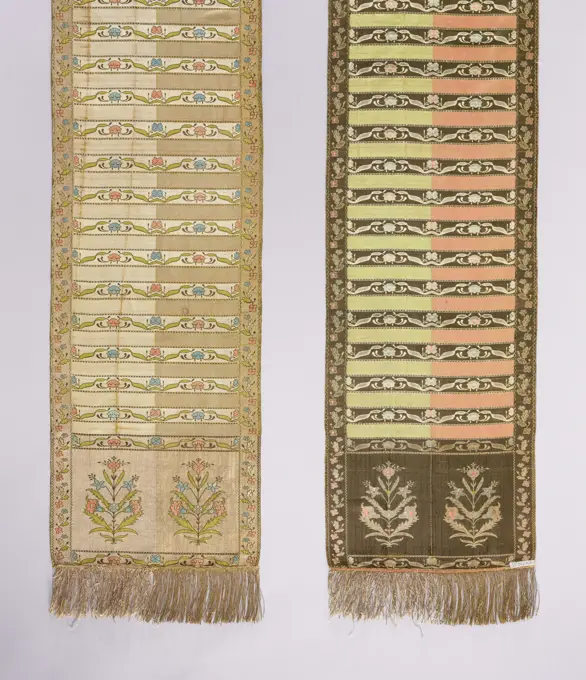
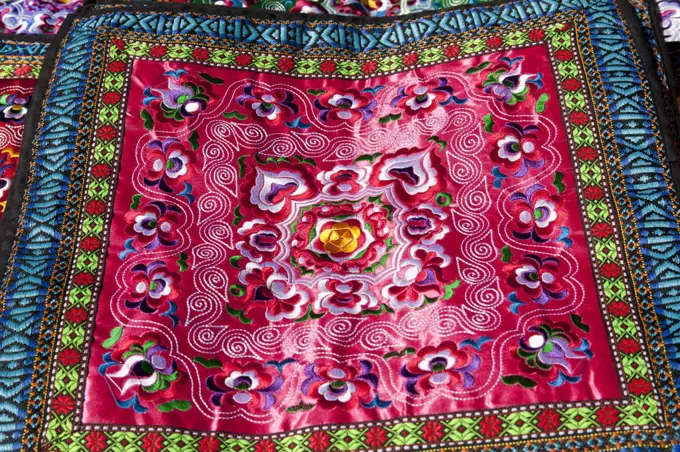
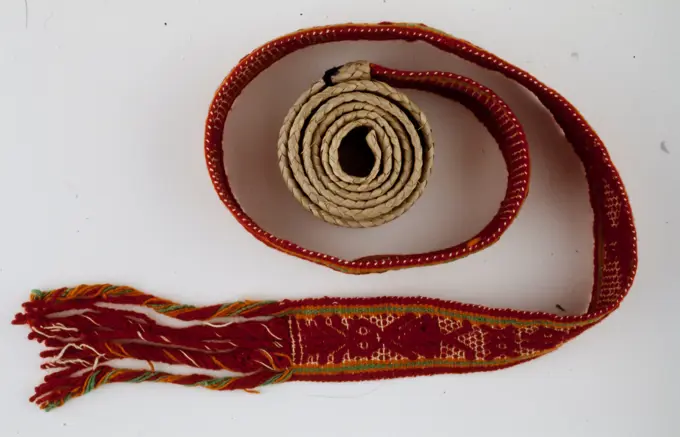
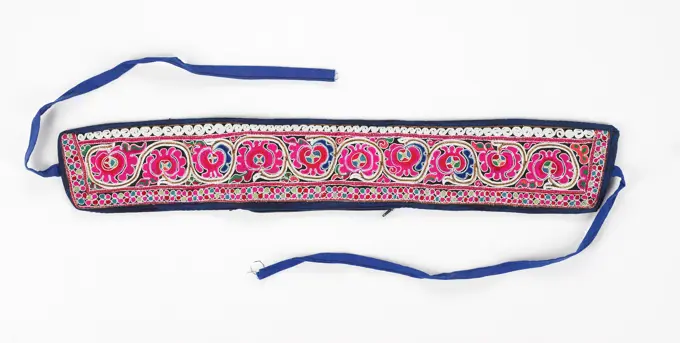
Sash, China
Sash, China
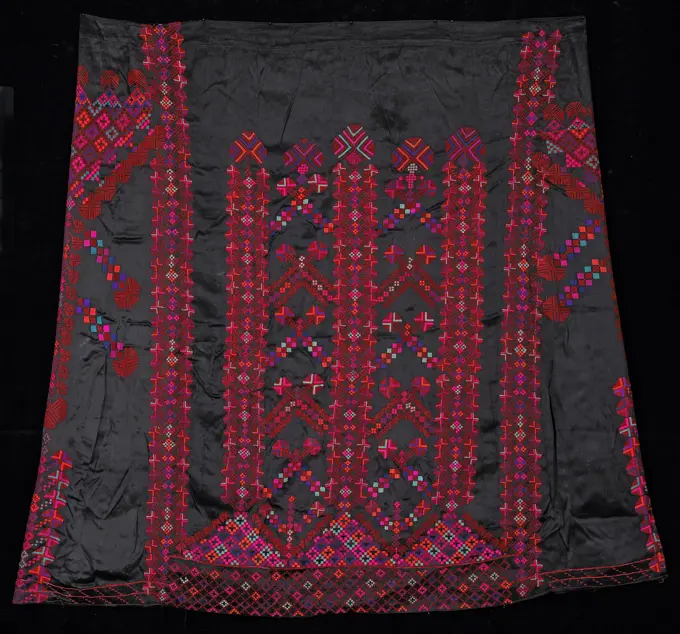
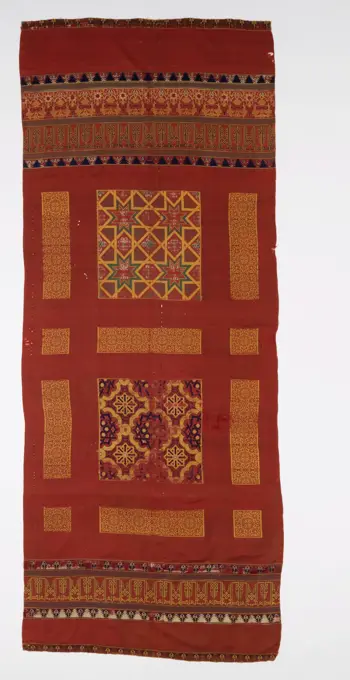
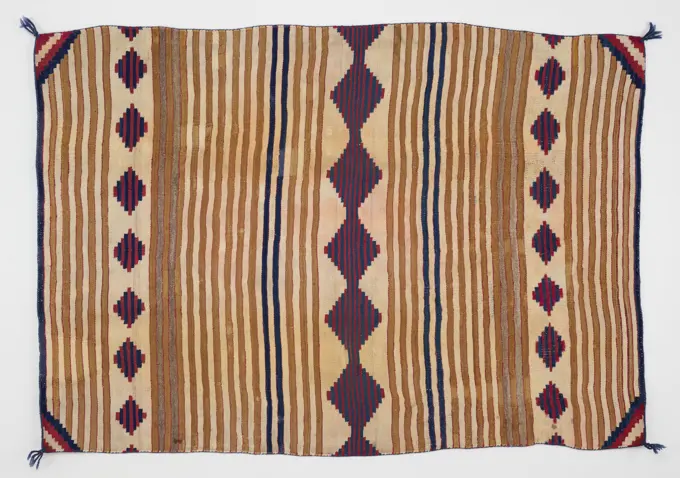
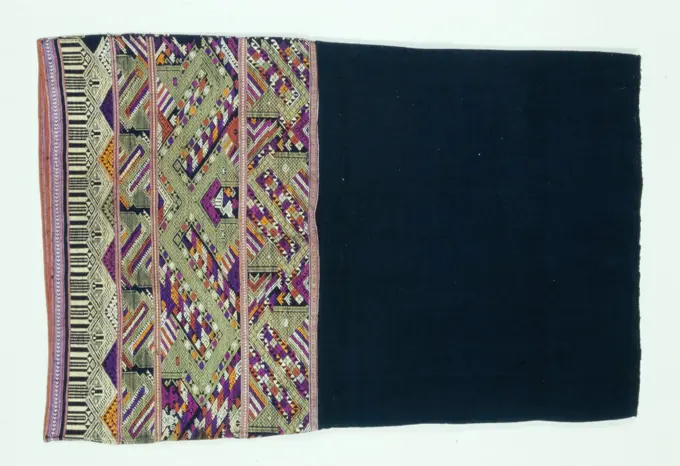
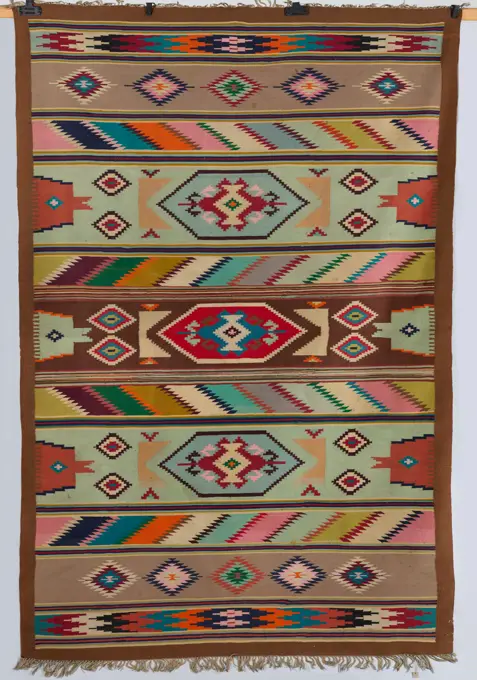
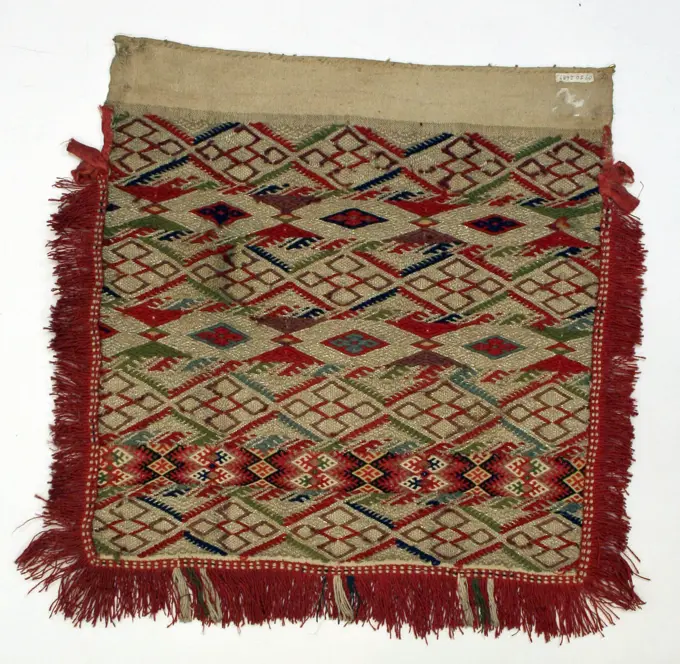
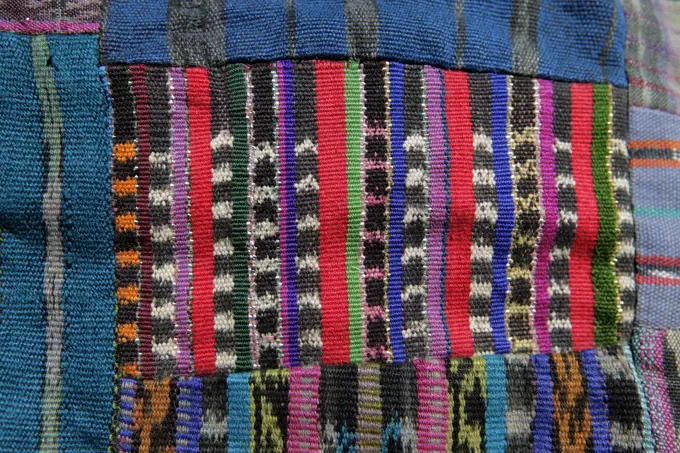
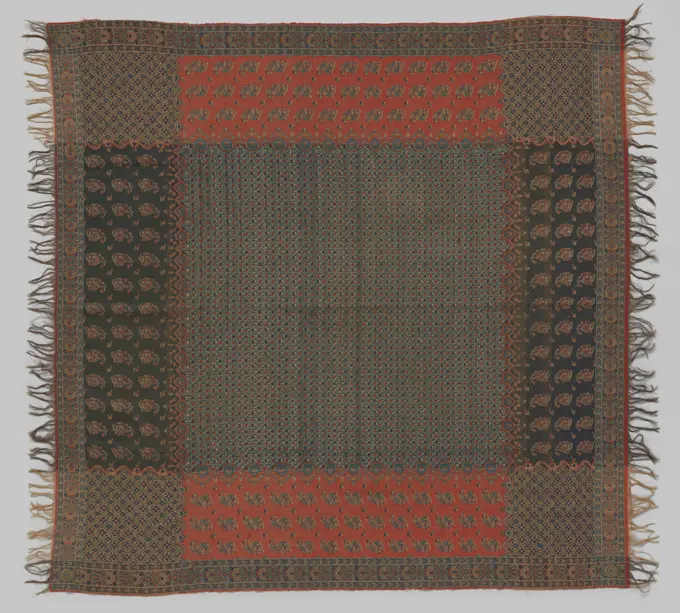
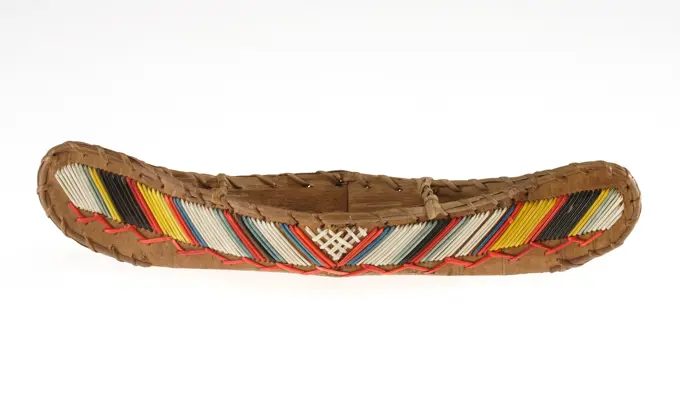
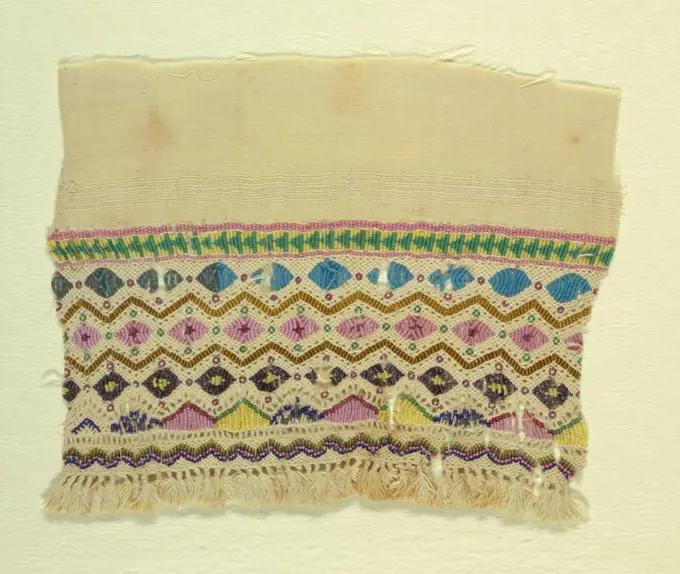
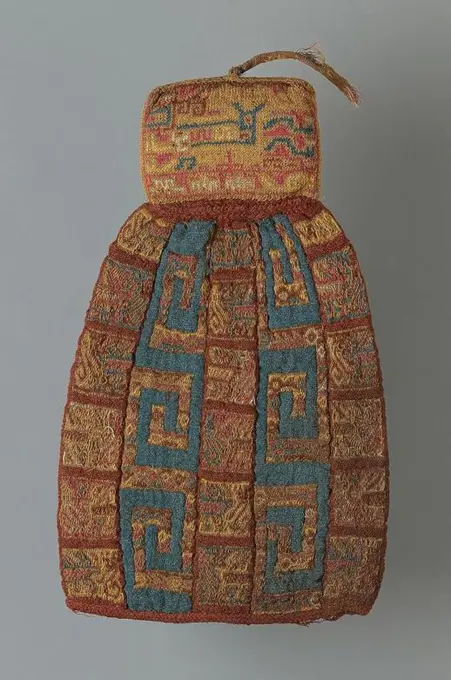
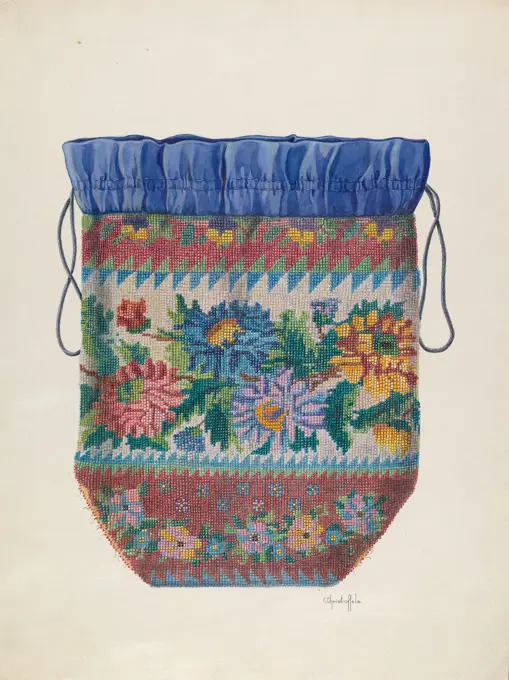
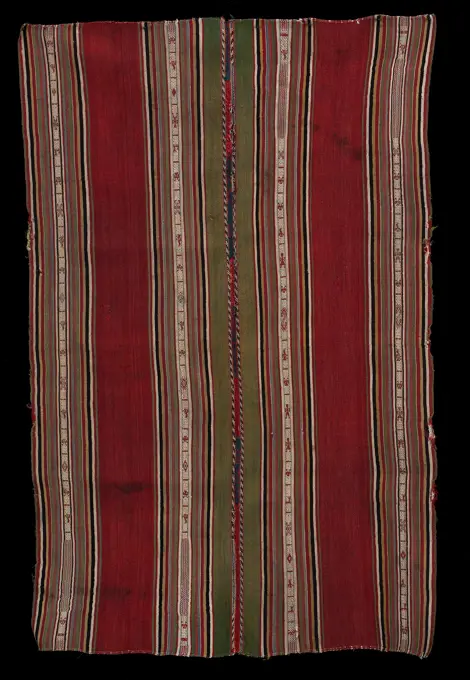
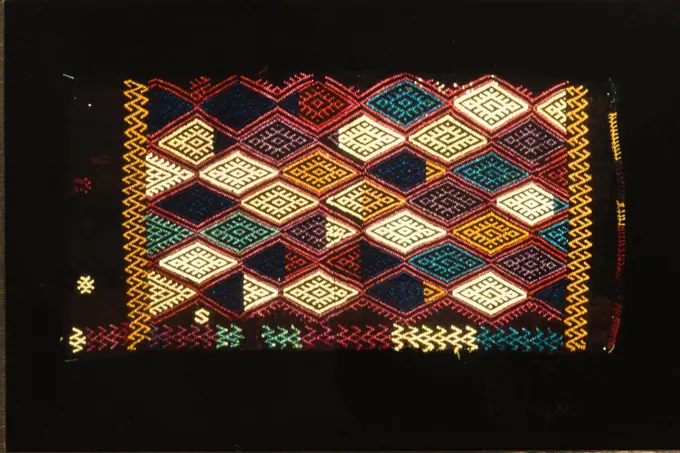
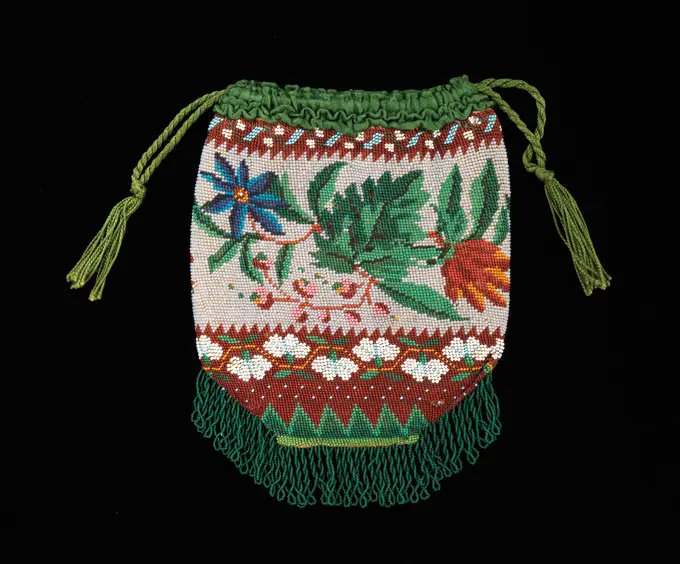
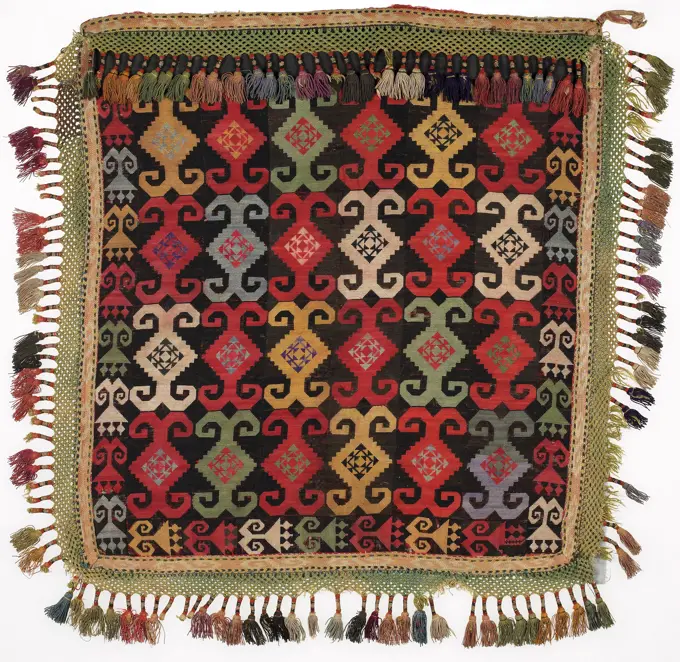
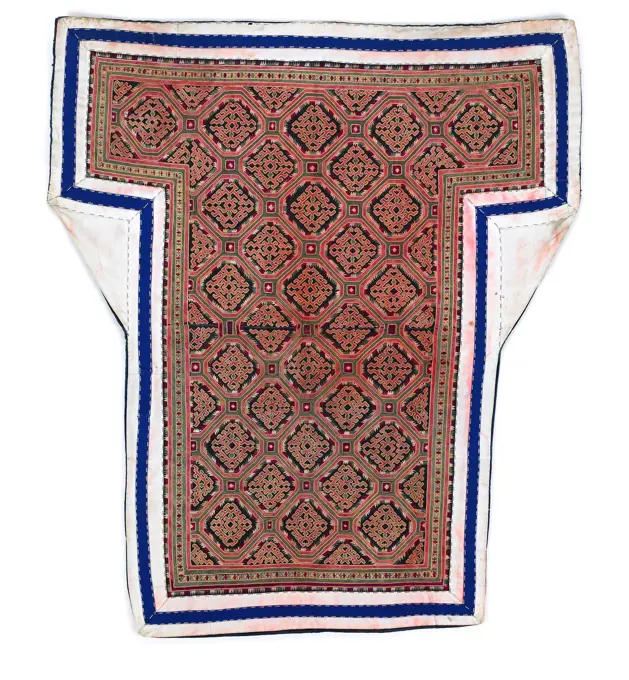
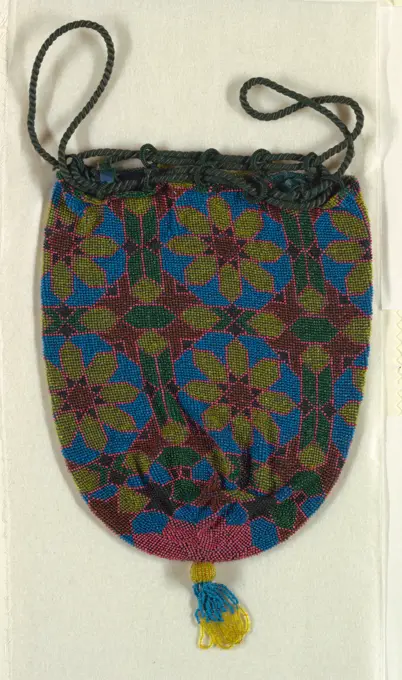
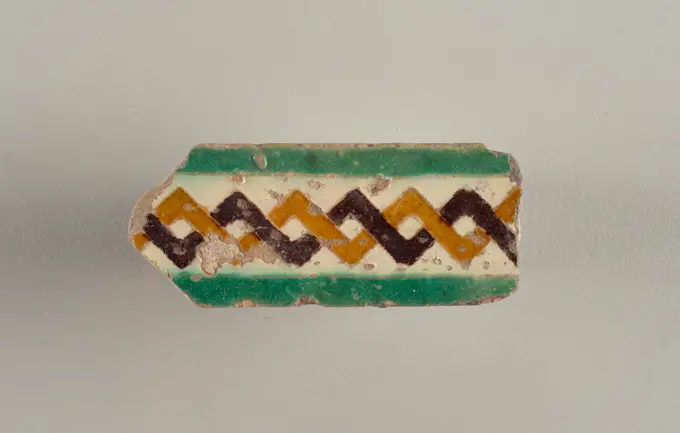
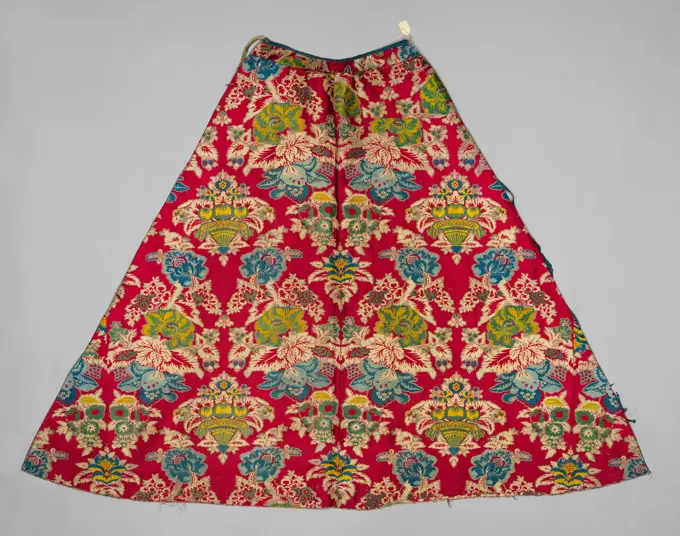
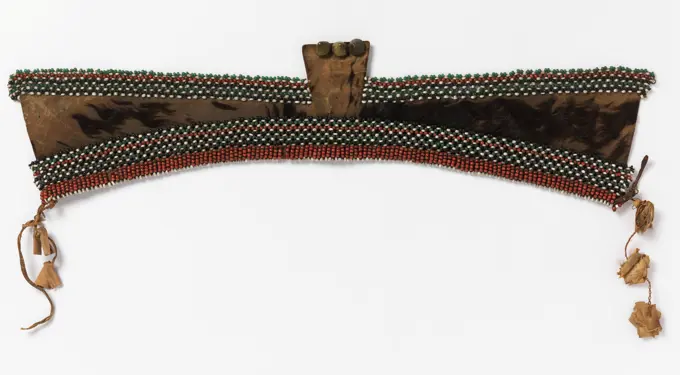
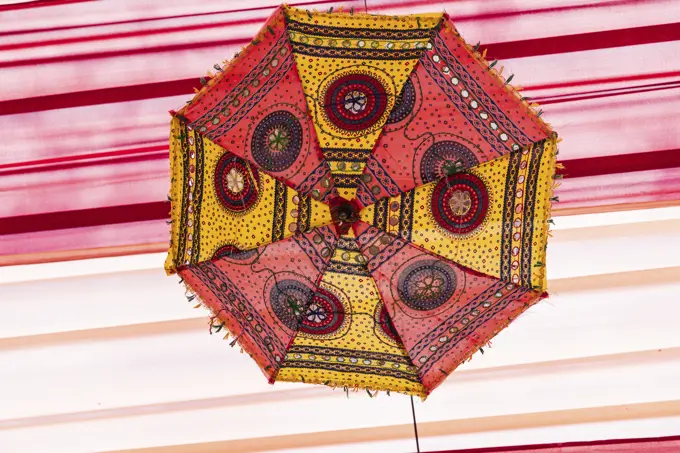
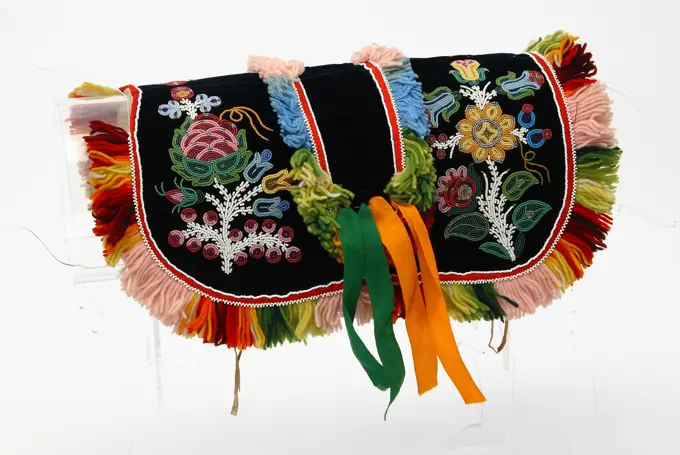
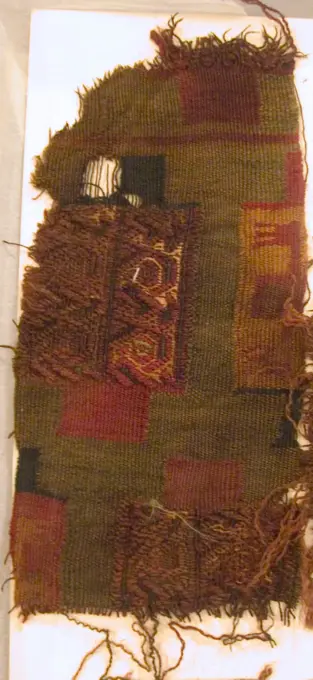
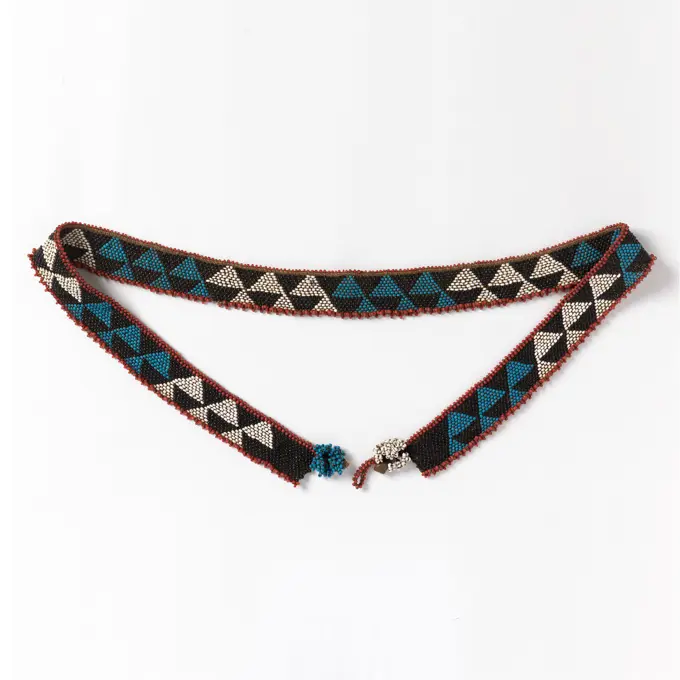
Carpet Made 1775-1900 Spain. Linen, plain weave with supplementary weft loop uncut pile; edged with wool, warp-faced plain weave with extended weft cut fringe .Sarape with Terraced Zigzag Design 1865-1885 New Mexico. Wool, plain weave and dovetail tapestry weave; twined warp ends and selvages; looped and knotted corner tassels . Navajo (Diné)Skirt, c. 1940, 41 x 46 in. (104.14 x 116.84 cm), Cotton, synthetic satin; needlework, Syria, 20th centuryGobelin cover;  1. PO. 20th century (1901-00-00-1950-00-00);Curtain Panel; silkApron, 15 3/4 x 25 1/2 in. (40.01 x 64.77 cm), Cotton, ChinaWoman's Ceremonial Skirt (Tapis) Made 1801-1900 Indonesia. Two panels joined cotton and silk, warp-faced, weft ribbed plain weave; embroidered with silk, gold-leaf-over-lacquered-paper strip wrapped cotton, cotton, gilt-metal coils, gilt-metal wire wrapped cotton ,gilt-metal-strip wrapped cotton and gilt-metal spangles in running stitches; laidwork, couching, and padded couching . AbungNavajo Classic Serape, c. 1860, 53 × 37 in. (134.62 × 93.98 cm), Wool, pigments, United States, 19th centurySash, ChinaCloth; Not until. Cloth with animal figures.Baby carrier panel, ChinaLength of batik fabric, ChinaWomans Ceremonial Over Skirt (Ceremonial Aksu), early 20th century, 33 1/2 x 47 3/4 in. (85.1 x 121.3 cm) (irregular), Wool; complimentary warp patterning, Bolivia, 20th centuryBottom trim for mosquito net, 20th century, 110 x 13 1/2 in. (279.4 x 34.29 cm) (irregular, length folded in half), Cotton or linen (); needlework, Laos, 20th centuryAnklet -Coverlet fragment, Medium: wool, cotton Technique: double cloth, Fragment of a traditional geometric coverlet showing part of the field with repeat of squares and geometrical rosettes. Deep border shows the pine-tree motif. In bright rust red and dark blue wool and bleached white cotton. In border area, rust red and white are woven together, forming a tannish color., USA, early 19th century, woven textiles, Coverlet fragmentTush kyiz (hanging), mid 20th century, 68 1/4 x 133 1/16 in. (173.36 x 337.98 cm) (without hanging loops), Cotton, silk synthetic; embroidery, ikat, Kyrgyzstan, 20th centuryBaby Carrier, 34 x 27 3/8 in. (86.36 x 69.53 cm), Cotton; needlework, ChinaConciliate belt; Manufaktura Karol Stanis Awa Radziwi A (s UCK; Pasów Factory; Ca 1767-1790), Manufacture of the Treasury of Radziwi Owski (S UCK; Pas Pasów Factory; 1790-1846), Mad Anski, Leon (Ca 1740 -1811); 1780-1807 (1780-00-00-1807-00-00);Radziwiłł, Karol Stanisław (Vilnius Voivodeship - 1734-1790), Society of Friends of Sciences in Vilnius (Vilnius - 1906-1940) - collection, Tschi clouds (ornament), bipartite heads, floral bushes (ornament), plant ornaments, four -way belts, Polish belts, Poland (culture), Polish clothingApron, 20th century, 24 7/8 x 31 13/16 in. (63.18 x 80.8 cm), Cotton, beads; needlework, Vietnam, 20th centuryStrip -Hood -Skirt, 20th century, Unknown Thai, 35 1/8 x 24 1/4 in. (89.22 x 61.6 cm), Cotton, Laos, 20th centuryRug;  20th century (1901-00-00-1939-00-00);KilimyApron 19th century Romanian. Apron 98428Belt, 53 1/4 x 2 3/16 in. (135.26 x 5.56 cm) (without fringe), Cotton, silk (), ChinaFourth-Phase Chief Blanket Style Rug, c. 1900. America, Native North American, Southwest, Navajo, Post-Contact, Early Period. Tapestry weave: wool (handspun, Germantown, and bayeta); overall: 178.4 x 151.1 cm (70 1/4 x 59 1/2 in.).Pillow Cover Made 1850-1899 Greece. Wool, cotton, and linen, various plain weaves, some balanced, some weft-faced, some fulled, some with discontinuous wefts; pieced; embroidered in chain, buttonhole, tent, long and short, cross, and back and double running stitches .Fragment; silkApron 19th century Hungarian. Apron 98349Embroidery Sample, 31 1/2 x 9 3/4 in. (80.01 x 24.77 cm), Cotton; needlework, ChinaKontusz sash/belt. Manufaktura Paschalisa Jakubowicza (Warszawa ; wytwórnia pasów ; 1788-1794), manufacturePanel (Yattha), 20th century, 142 x 16 1/2 in. (360.68 x 41.9 cm), Wool, Bhutan, 20th centuryFragment; silk, metallicTextile (Bolivia); wool; Warp x Weft: 45 x 80 cm (17 11/16 x 31 1/2 in.); 1955-157-8Jordan, Petra, A woven Bedouin rug for sale in the ruins of the Nabataean city. Petra Archeological Park is a Jordanian National Park and a UNESCO World Heritage Site.Headband. Culture: Peruvian. Dimensions: Length 179 in.. Date: 7th-10th century. Museum: Metropolitan Museum of Art, New York, USA.Fringe (Spain); silkShawl (kussaba), 18th century, 82 1/2 x 82 in. (209.55 x 208.28 cm), Wool, India, 18th centuryBaby Carrier, 15 1/2 x 31 3/8 in. (39.37 x 79.69 cm), Cotton; needlework, ChinaFrank C Barks, Bag, c 1938 BagBaby Carrier, 21 1/2 x 94 1/2 in. (54.61 x 240.03 cm) (including ties), Cotton, seeds; needlework, ChinaGuatemala. Typical Guatemalan textile; fabric scraps of various colors and textures forming a quilt.Square cashmere scarf with midpierkant with miniscule flower pattern, around which edges in red and dark blue with botamotive, anonymous, c. 1830 Square palms scarf, woven of wool and silk, with a large white midpierkant and square corner motifs. Turkish -red standing edge and navy blue cross edge. On with a miniscule flower pattern, small botas in the red and blue edges. In the midpier side there are up -oriented stems in blue -landed green, blue leaves and alternately red and blue flowers. In the corner four -edges there is a grid pattern of green leaves and red cross lines with small four -leaf blue flowers and large botas in the heart. Due to the whimsical angular edges, standing botas, still of an open stem with a flower left and right. Cross edges of navy blue show standing and hanging at the top. In the edge pattern, green carnations on the cross edges and standing in the standing edges - to the upper blue inner edge, where they hang aside. The technology consists of a silk chaiMiniature canoe -Baby Carrier (), 38 x 96 in. (96.52 x 243.84 cm), Cotton; needlework, ChinaBorder, Medium: cotton, glass beads Technique: knotting (macramé), Geometric pattern of colored diamonds made by stringing glass beads onto warp ends and interknotting., Mexico, 19th century, knotted, knitted and crocheted textiles, BorderPulkari, 79 x 67 in. (200.66 x 170.18 cm), Silk, cotton, glass mirror; needlework, IndiaLoin cloth, mid 20th century, 202 7/8 x 17 in. (515.3 x 43.18 cm) (including beads and fringe), Cotton, metal beads; woven, Laos or Vietnam, 20th centuryTassels. Nazca; Peru, south coast, Probably Nazca Valley. Date: 500 AD-900 AD. Dimensions: 5.2.7 x 19.4 cm (20 3/4 x 7 5/8 in.). Wool (camelid); strap: tubular plain weave with stripes of four-color complementary warp-float weave; top: cross-knit looping; top and bottom bands: oblique twill interlacing; center: stripes of tubular plain weave double cloth and five-color complementary warp weave and stripes of plain weave with five-color complementary warp weave; double cloth; bottom band: oblique twill interlacing. Origin: Peru. Museum: The Chicago Art Institute, Chicago, USA.Textile Design of Alternating Vertical Rows of Stylized Flowers on Stems with Two Leaves Decorated with Pearls over a Stippled Background with Star-Like Shapes and Egg-Shapes 1840 Anonymous, Alsatian, 19th century Rectangular sheet of paper with a textile design from a group, dated 1840, made in Mulhouse, Alsace which was an important nineteenth-century center for textile production in the Haut-Rhin region of France. The design is made up of alternating vertical rows of stylized flowers on stems with two leaves over a backround with star-like shapes and groups of three egg shapes that stand out over a light tan base with stipples of dark reddish-brown stipples. The flowers are colored in yellow and purple and have red outlines and pistils, which are also decorated with a white pearl. The stems and leaves are also decorated with small white pearls.. Textile Design of Alternating Vertical Rows of Stylized Flowers on Stems with Two Leaves Decorated with Pearls over a Stippled Background wMan's Shawl, 15 1/2 x 29 3/4 in. (39.37 x 75.57 cm), Cotton, synthetic fibers (), ChinaPouch 1830-60 American. Pouch 168402Cornelius Christoffels, Bag, c 1940 BagWoman's shoulder mantle (mantita ), late 19th century, 34 7/8 x 22 5/16 in. (88.58 x 56.67 cm), Alpaca, Bolivia, 19th centuryBag (Mexico); woolKontusz sash/belt. unknown, authorCamel Bag, 19th century, L.28 X W.15-1/2 in., wool; needlework, Turkey, 19th centuryPouch fourth quarter 19th century American The vibrant colors on this knitted pouch bag, particularly the white of the flowers against the red ground, are notable for their freshness. Beaded bags first gained popularity in the 18th century, when they were knitted by hand. By the 19th century machines were invented to knit the beads into the ground and could therefore be disseminated much more widely. The design and imagery here is evocative of late Victorian Berlin work patterns.Margaret S. Bedell (1861-1932) donated, by gift or bequest, over 500 objects to the Brooklyn Museum, including furniture, quilts, samplers, costume and Native American beadwork. Her collection of American and European beaded bags includes examples from Philadelphia and the Catskill Mountain region of New York State, as well as Italy, Austria, Germany, and Holland.. Pouch 156441Ilgich, 19th century, 29 x 27 in. (73.66 x 68.58 cm), Silk, cotton; cross-stitch, hook chain stitch, Uzbekistan, 19th centuryFringe, Medium: silk Technique: woven, Fringe in pink and white with a plain-woven heading. Pink and white skirt threads are arranged in stripes., Spain, 17th century, trimmings, FringeColourful embroidered cushion cover for sale, Baisha, Yunnan Province, ChinaEleanor Rogers, Printed Textile, c 1938 Printed TextileSampler (Mexico); silk embroidery, linen foundation; Warp x Weft: 35 x 34.5 cm (13 3/4 x 13 9/16 in.); Bequest of Mrs. Henry E. Coe; 1941-69-189Baby's Hat, c. 1890-1930, 3 3/16 x 5 x 5 in. (8.1 x 12.7 x 12.7 cm), Cotton; needlework, 19th-20th centuryBag 10th-15th century Peruvian. Bag 307842Tube skirt, 20th century, 27 11/16 x 22 in. (70.33 x 55.88 cm), Cotton, China, 20th centuryBedspread, late 1800s. Hungary, Kalotaszeg. Linen, embroidery, crochet; overall: 180.3 x 213.3 cm (71 x 84 in.).Apron, 20th century, 43 x 7 1/8 in. (109.2 x 18.1 cm), Cotton, China, 20th centuryBorder 17th century Greek. Border 213083Tie for a Baby Carrier, 208 1/2 x 3 5/8 in. (529.59 x 9.21 cm) (including fringe), Silk; needlework, ChinaBelt, 20th century, 80 x 2 in. (203.2 x 5.1 cm), Wool, cotton, Mexico, 20th centuryPurse (or Sash), 63 1/2 x 4 1/4 in. (161.29 x 10.8 cm) (including ties), Cotton, zipper, gold colored wrapped cord, ChinaBag, 19th century, 5 1/2 x 4 3/4 in. (13.97 x 12.07 cm) (without fringe), Cotton, glass beads; needlework, Pakistan, 19th centuryBaby carrier, c. 1970s-1980s, 32 3/8 x 27 5/8 in. (82.23 x 70.17 cm), Cotton; needlework, China, 20th centuryShawl, 13-3/4 x 14-1/2 in. (34.9 x 36.8 cm), Cotton, ChinaWoman's purse, 20th century, 7 1/4 x 9 in. (18.42 x 22.86 cm), Cotton, wool, metal; needlework, Thailand, 20th centuryTunic Fragment. Chimú; Peru, south coast, Possibly Nazca Valley. Date: 1470-1532. Dimensions: 88.9 x 70.2 cm (35 x 27 5/8 in.). Cotton, plain weave; embellished with feathers knotted and attached with cotton in back stitches. Origin: Peru. Museum: The Chicago Art Institute, Chicago, USA.Textile Fragment 4th-5th century. Textile Fragment. 4th-5th century. Wool, linen; tapestry weave. Attributed to Egypt. TextilesPurse; silk, glass beadsMasi (Tapa Cloth), Fiji, maker unknown. Gift of Ebenezer Vickery, 1880.Tile/tile Fragment; glazed earthenwareBag, 20th century, 8 1/4 x 10 in. (21 x 25.4 cm) (bag only, with tassels), Alpaca, Bolivia, 20th centuryCape of a bordered silk with pattern of a bowl with fruits and flowers. Cape of a bordered silk. Dessin: Scale Fruits and flowers in yellow, green, red and blue, faced in a pattern of leaves in white and red, framed by mirror-symmetrically displayed arrangements of naturalistic flowers in two shades of blue, red, yellow and green and ditto leaves In white and red on a cerose-colored fond. The tissue consists of two jobs over the full width and two narrow jobs and may be entertained to cape for a Mariabeeld (). Lining: éprukleur linen and remains of blue silk. On the right corner with pen on the lining: 6295. Label with: French and CO. Inc. 6295. Pinned note (ca. 1978-1998) with the letter N.Chasuble;  XVII century (1601-00-00-1700-00-00);Headpiece (South Africa); beads, fur, leather, brassPushkar, Rajasthan, India. Umbrella hanging at an outdoor market.Textile Fragment 4th-5th century. Textile Fragment. 4th-5th century. Wool, linen; plain weave, tapestry weave. Attributed to Egypt. TextilesDog blanket -Strip -Textile Swatches Onondaga Silk Company, Inc. (1925-1981). , 1948-1959. Silk and metal yarns, a: 22 x 9 in. (55.9 x 22.9 cm).    1948-1959Dog blanket -Ribbon French 19th century View more. Ribbon. French. 19th century. Textiles-TrimmingsFragment Made 1476-1532 Peru. Brocaded interlocking tapestry weave (old card) . ChuquibambaFringe (Italy); silk, gilt foil on a silk coreDance Apron Photographed with Dance Skirt 1850-1860 Northern California. Deer hide, plant fibers, olivella shell, abalone shell, clamshell, glass beads, and brass . YurokApron, 20th century, 31 1/4 x 11 9/16 in. (79.4 x 29.4 cm), Cotton, China, 20th centuryNetwork by beads Network by beads isolated on the white background Copyright: xZoonar.com/OlgaxPopovax 1564512Chair Seat 1725-50 American. Chair Seat 13586Belt (South Africa); glass beads, metal fasteners