Decorative Ancient Jugs

Historical ceramic jugs from various cultures, showcasing intricate designs and craftsmanship reflective of their respective eras.
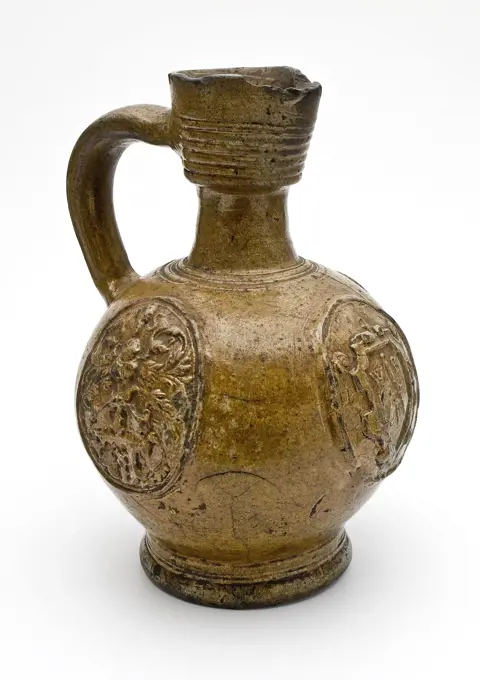
Stoneware jug be decorated with cartouches, slender neck and broadened neck edge, dated, jug crockery holder soil find ceramic stoneware glaze salt glaze h 16.2 neck 4.2 belly 11.3 standing surface 7.1 hand-turned baked glazed Stoneware jug gray shard with salt glaze mocha brown wide flared cuff-shaped mouth rim with pouring lip bandor with pointed tail. Mondrand shoulder and foot profiled. Cartouche at the front has coat of arms with tool in the shield under the year as an image. The right cartouche shows under two letters right clawing lion on coat of arms the left under two letters coat of arms in four quarters divided by serrated cross 1n middle weapon medallion the year 1587 underneath the letters WS archeology Rotterdam heraldry handicraft import serving serve drinking table Soil discovery: found during digging in Rotterdam.
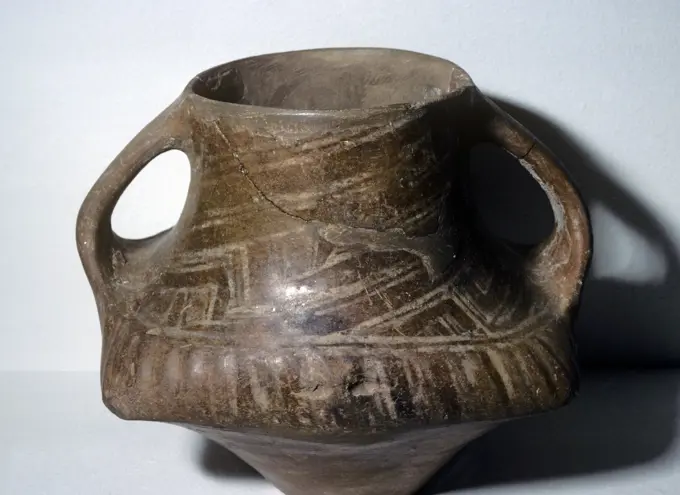
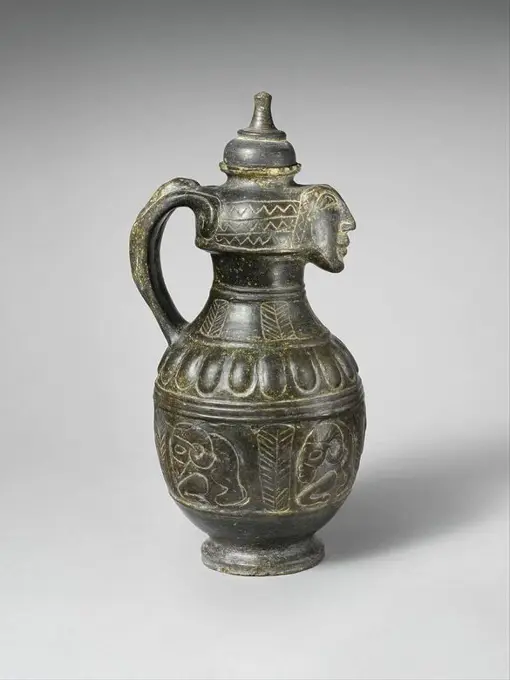
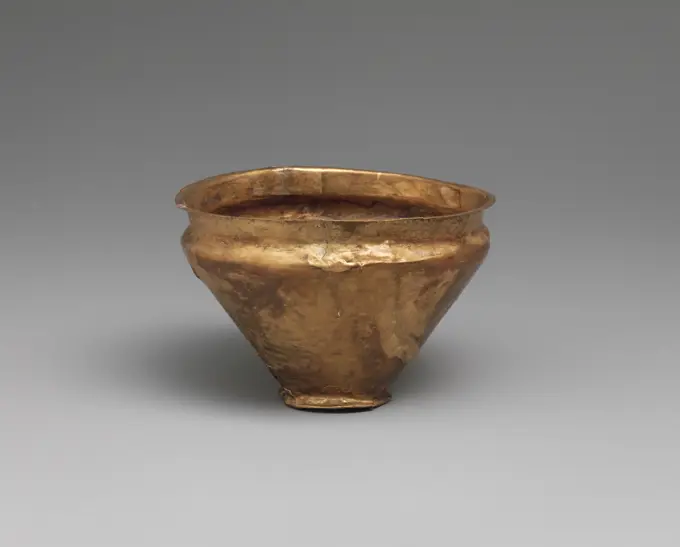
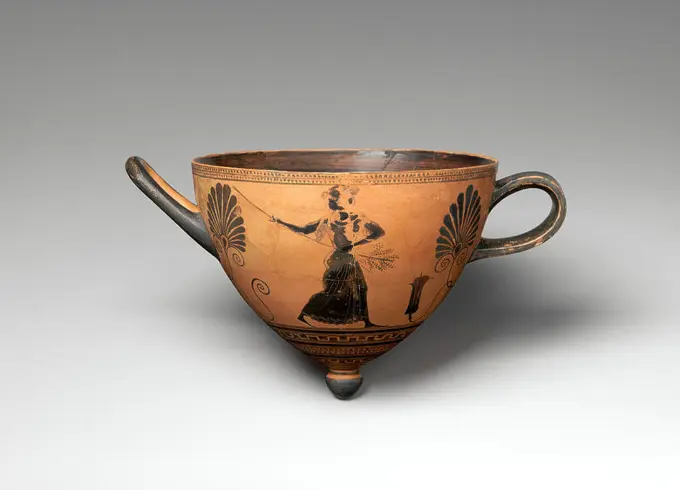
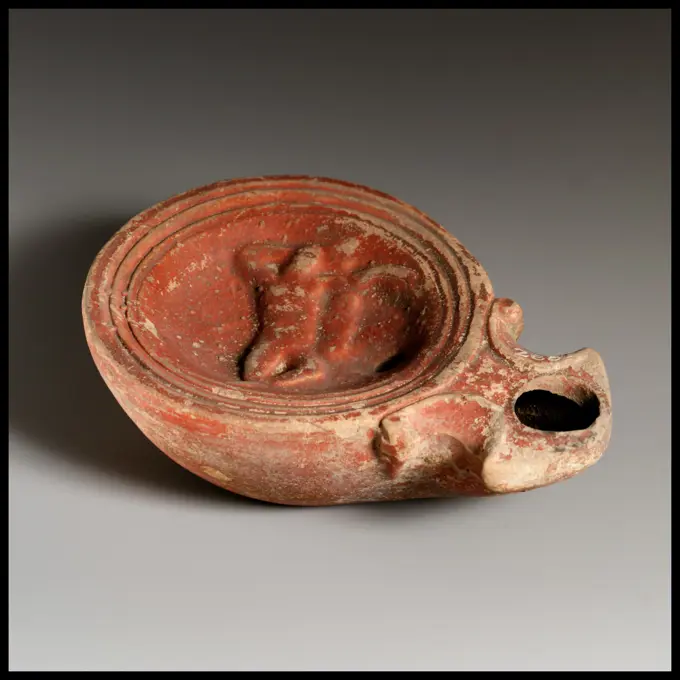
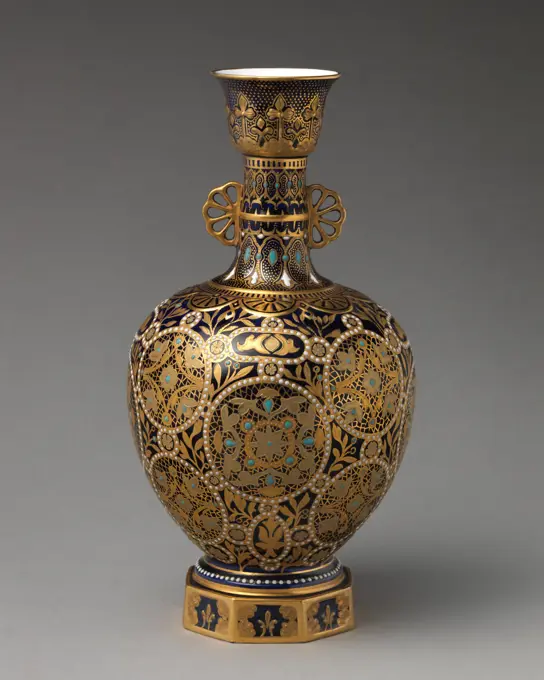
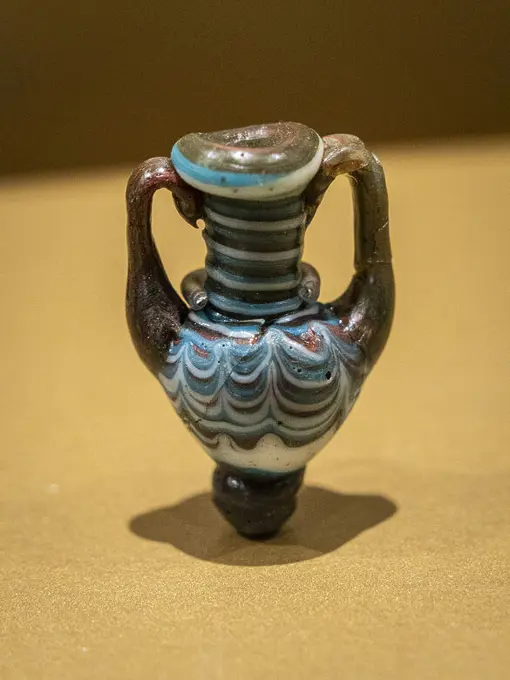
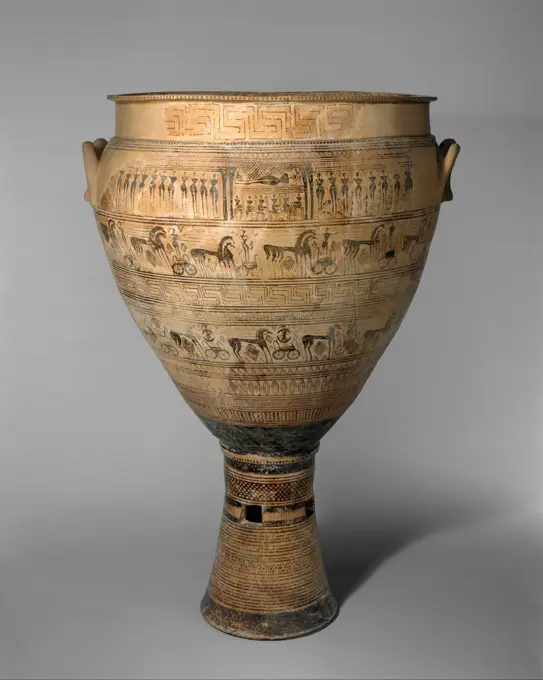
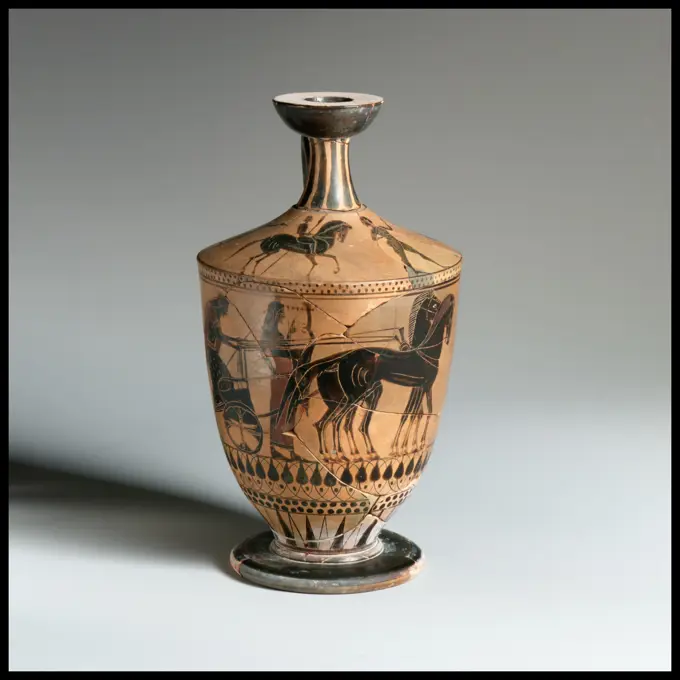
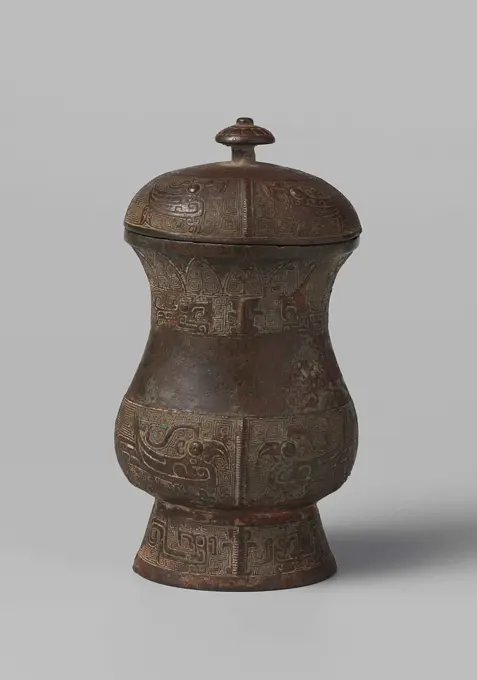
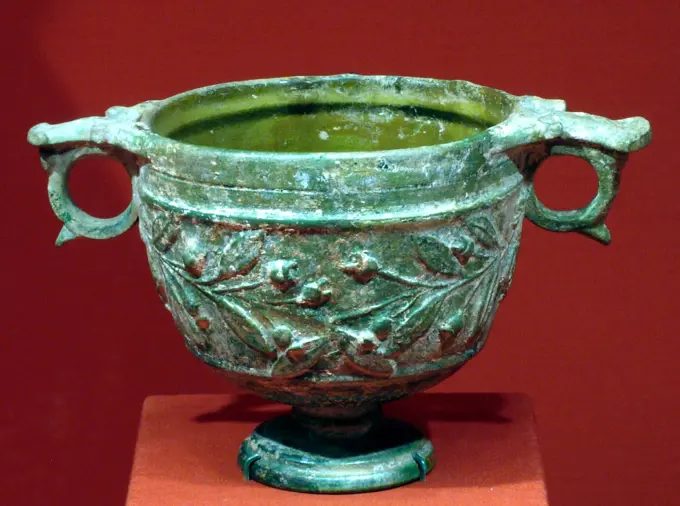
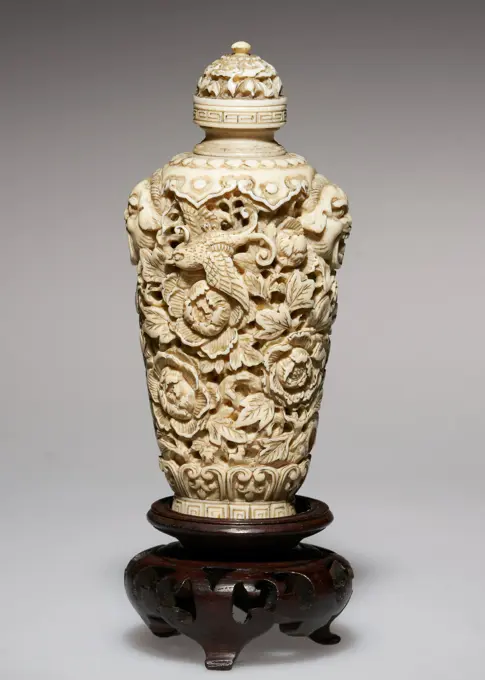
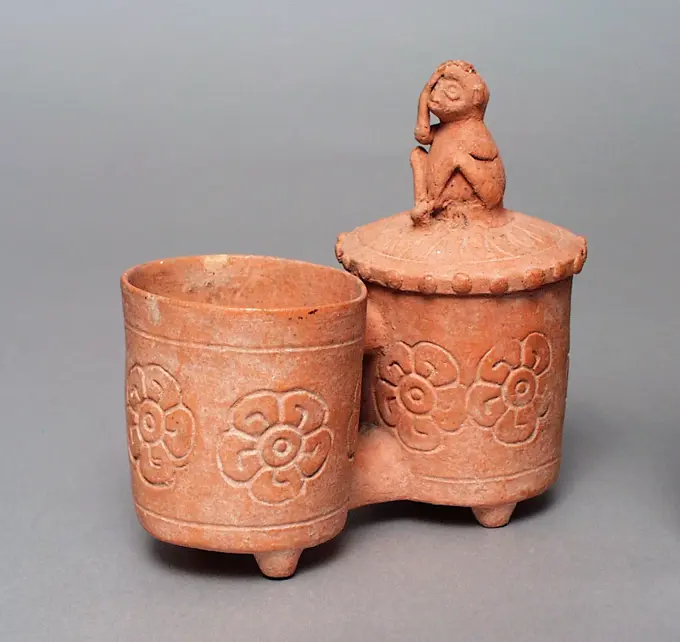
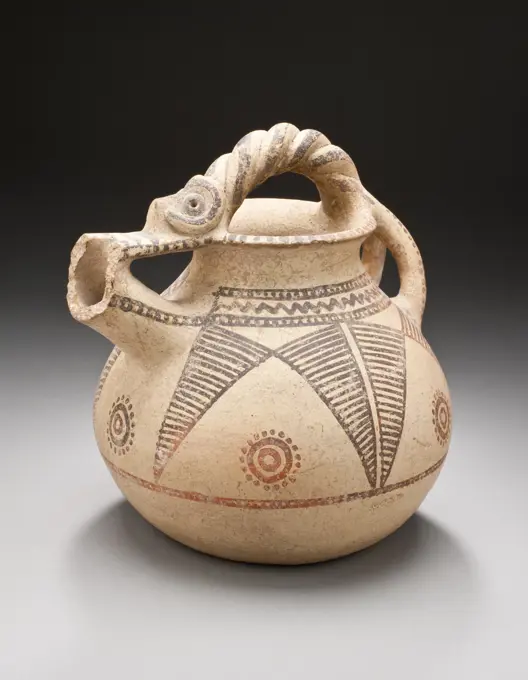
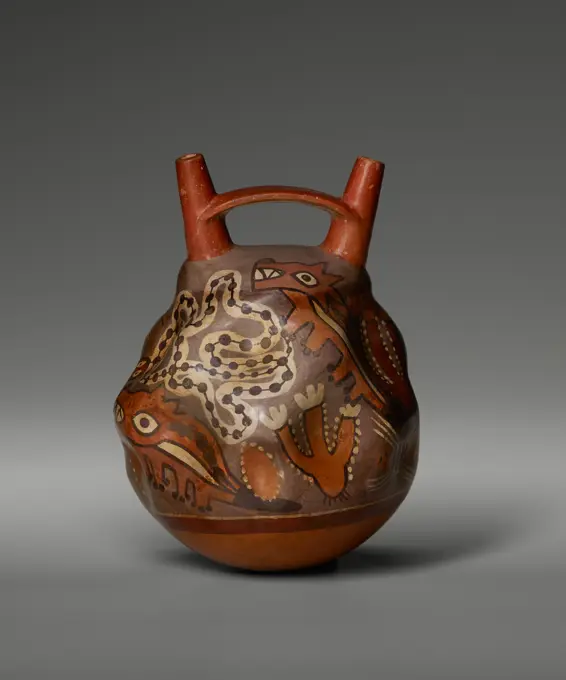
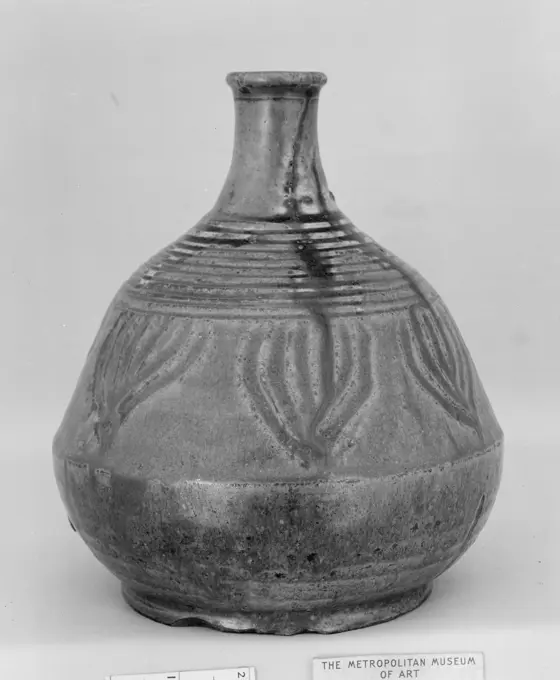
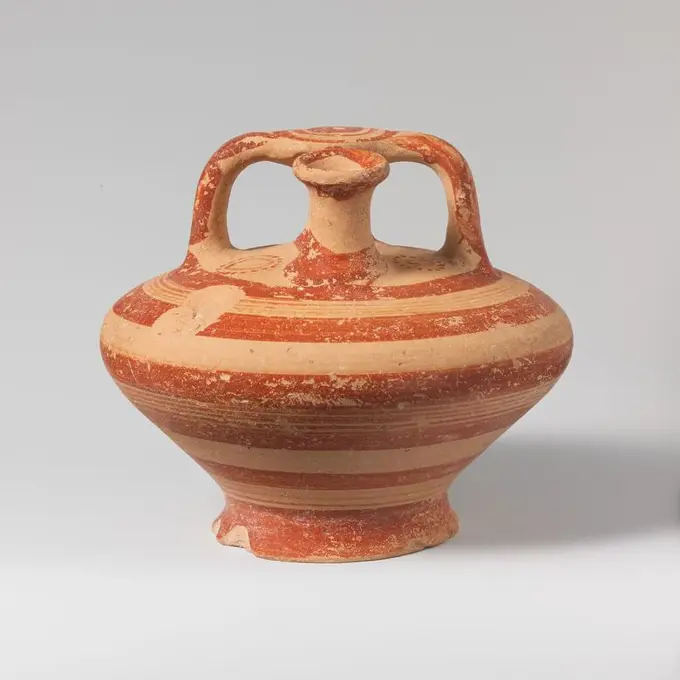
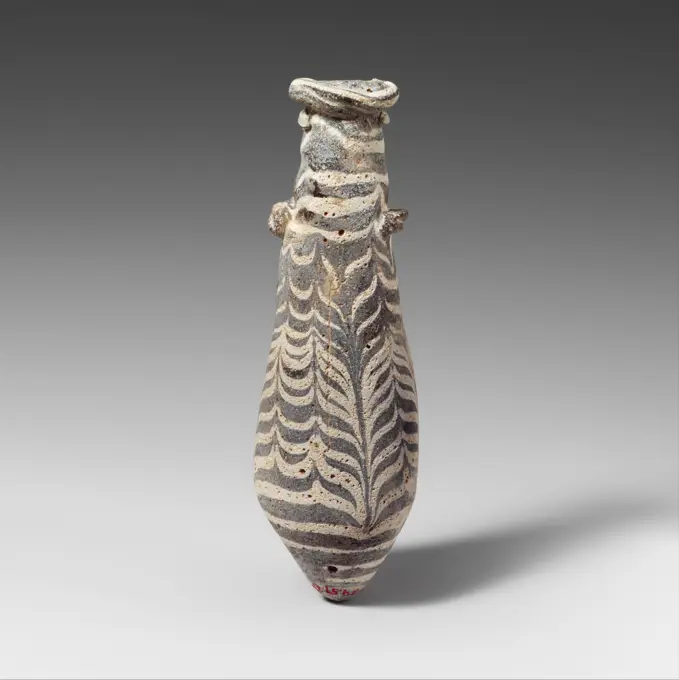
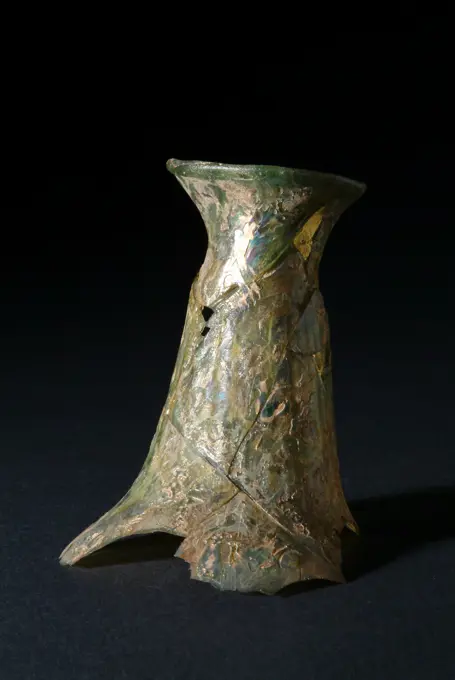
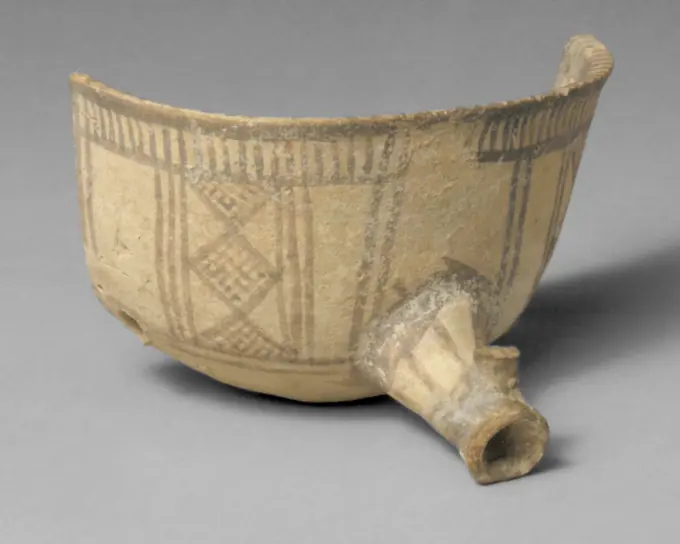
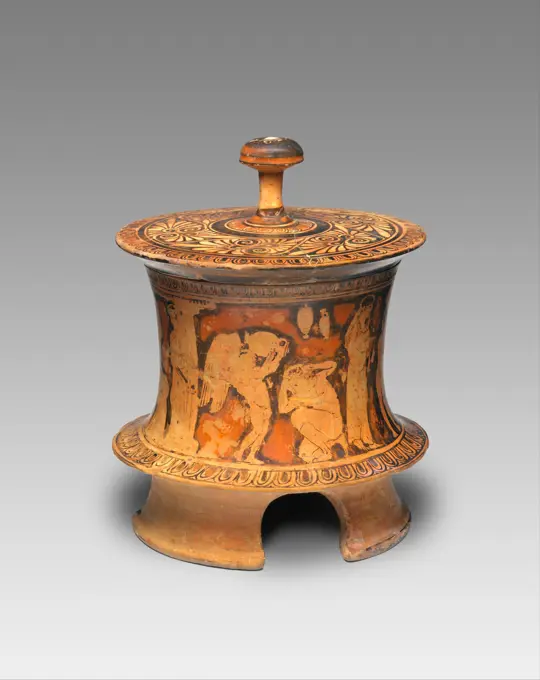
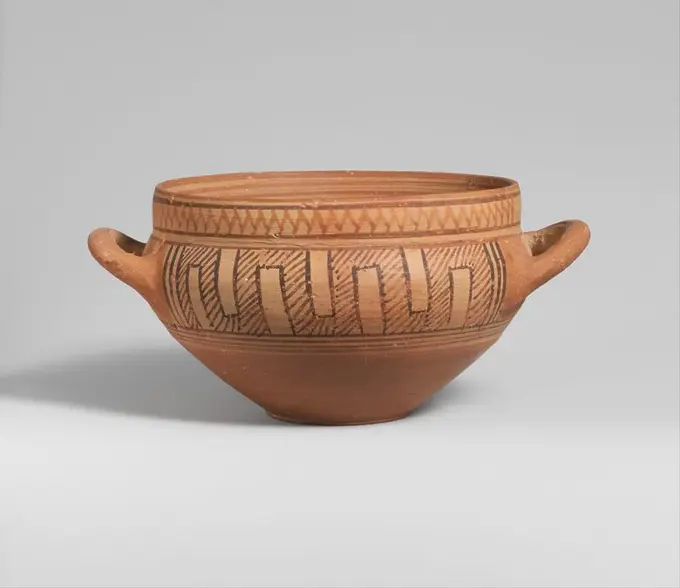
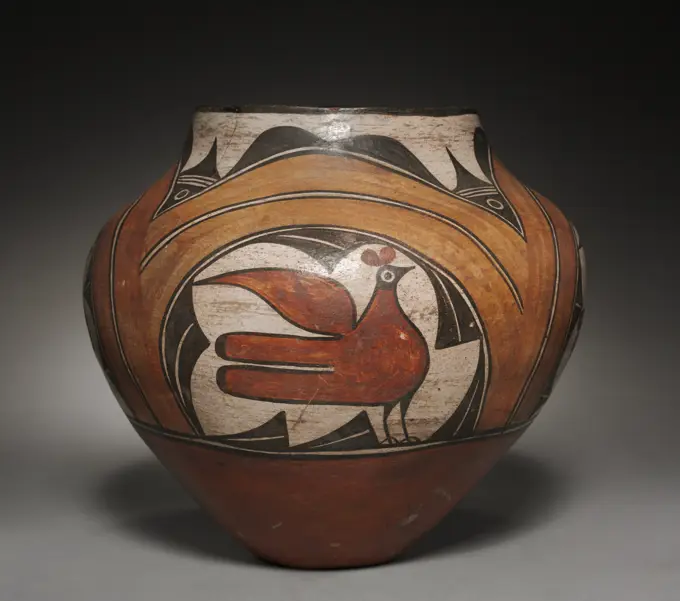
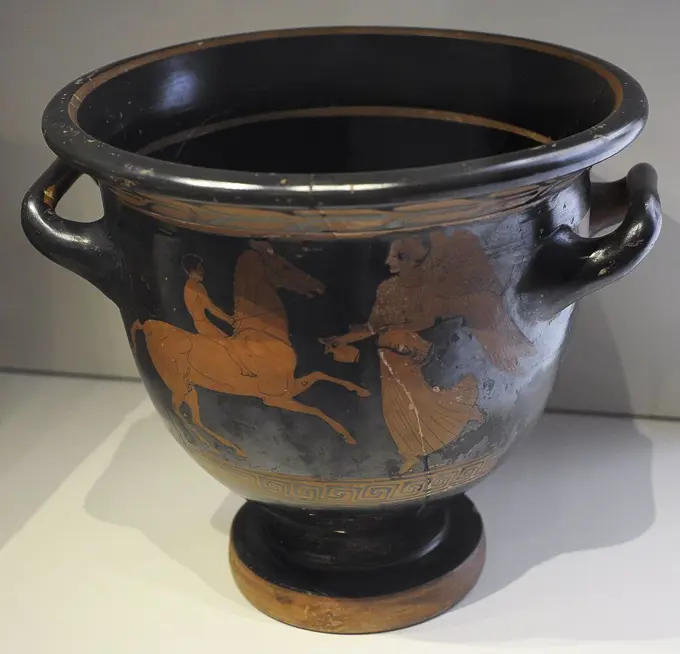
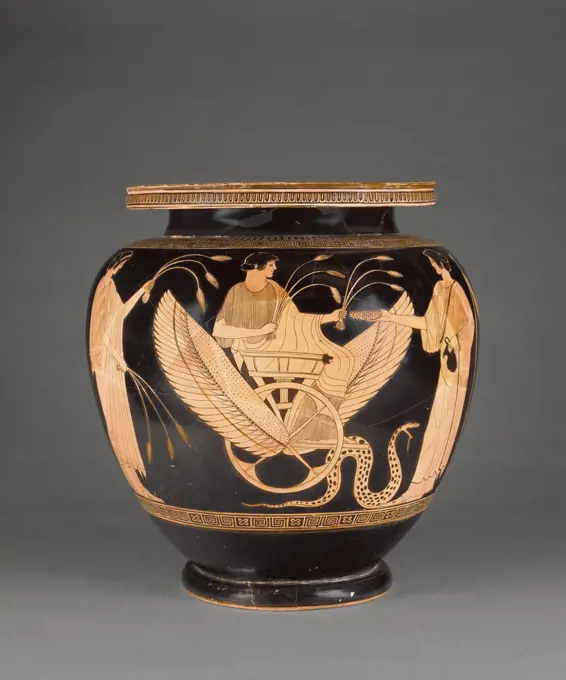
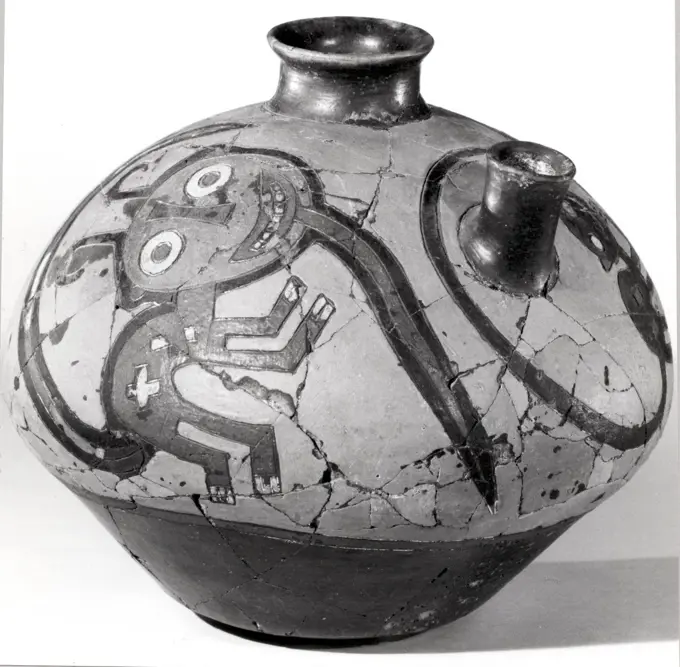
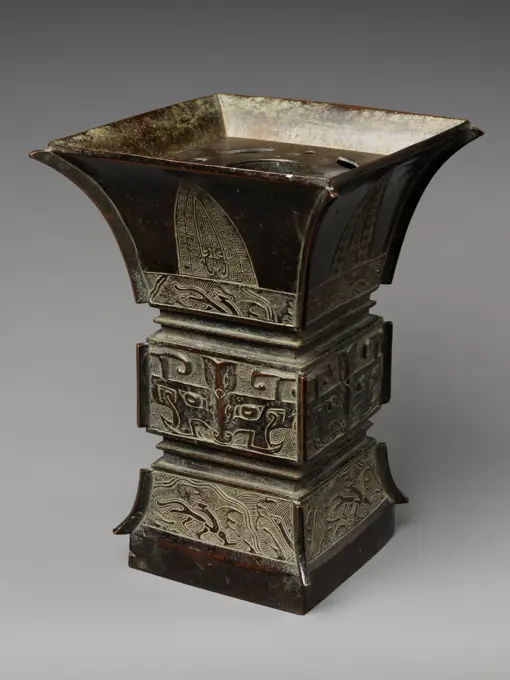
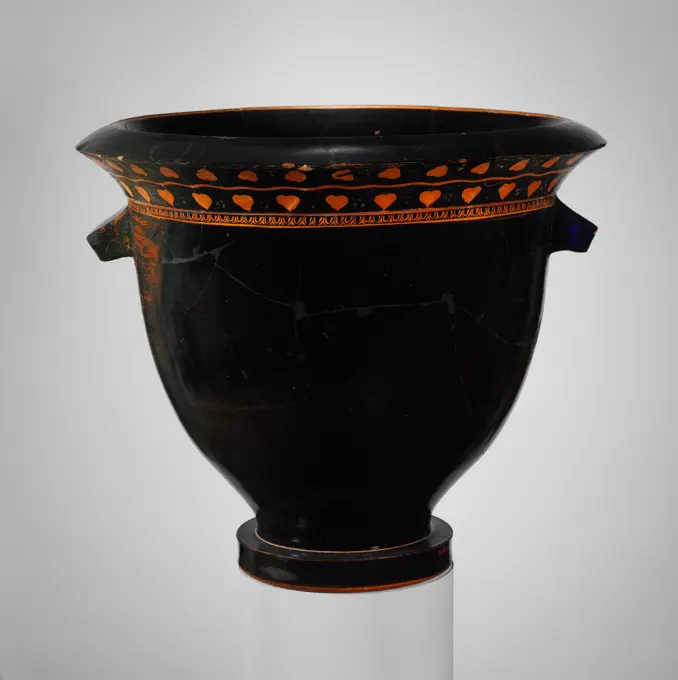
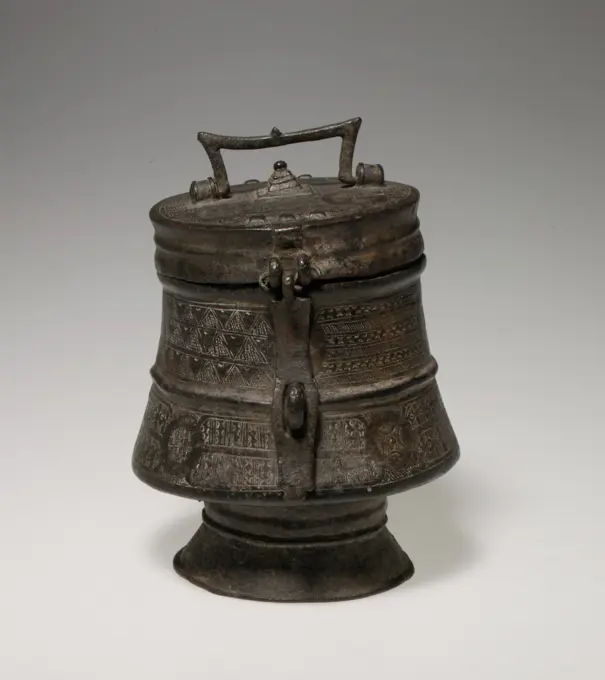
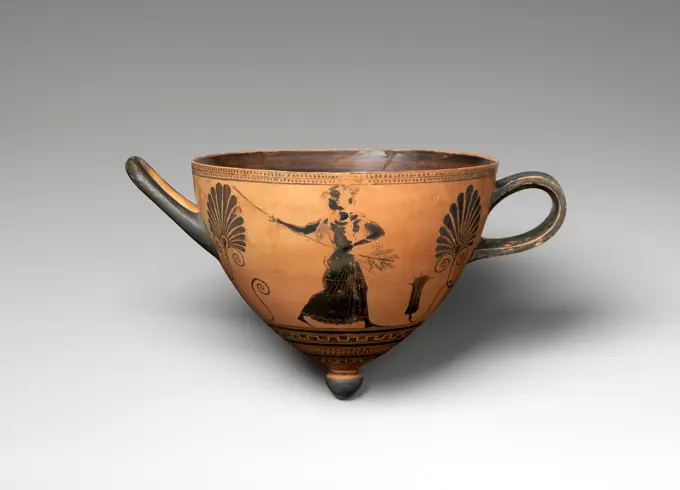
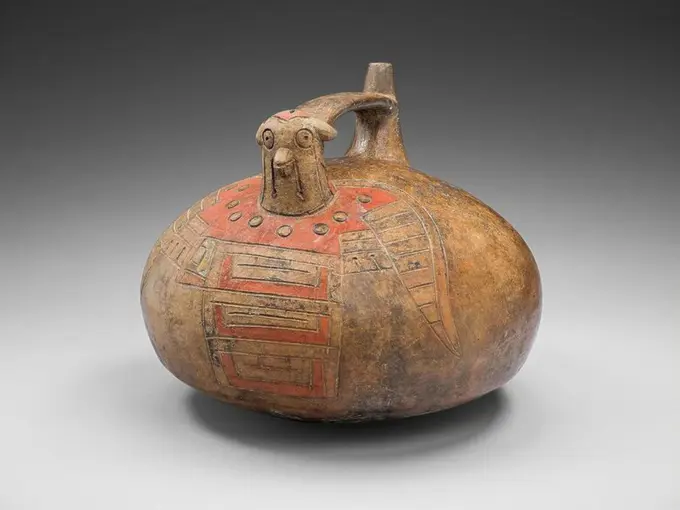
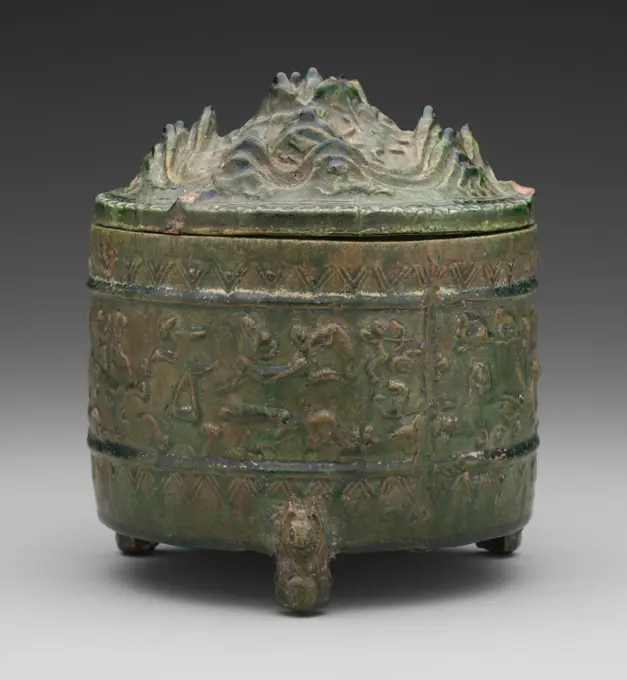
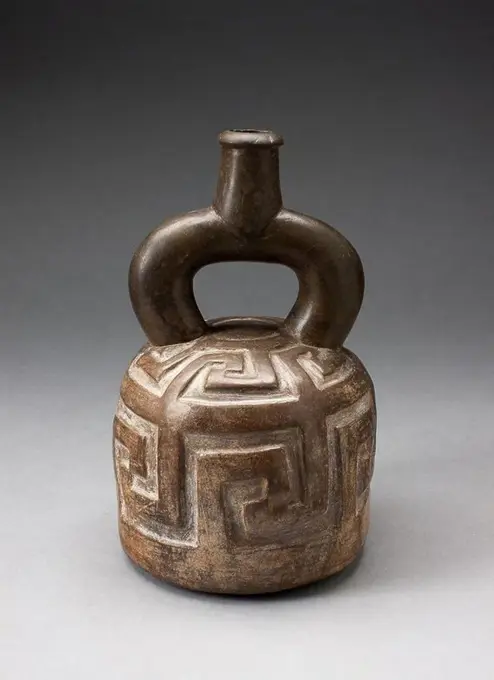
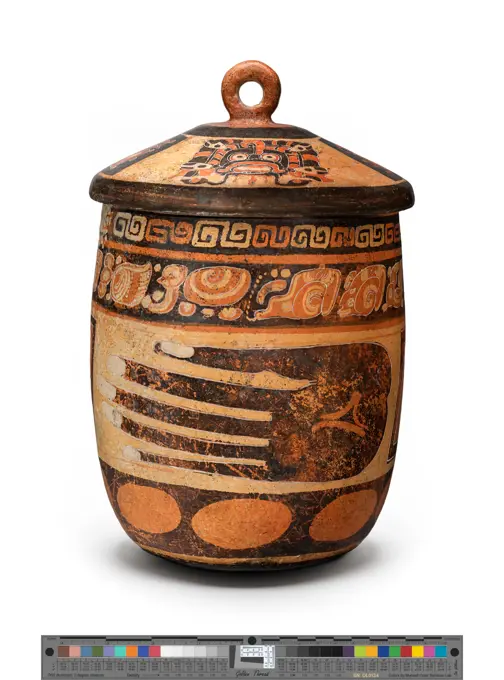
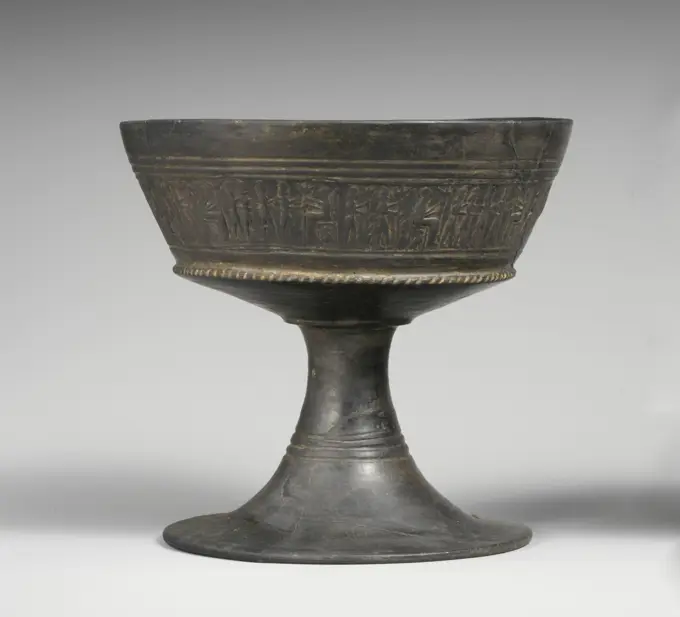
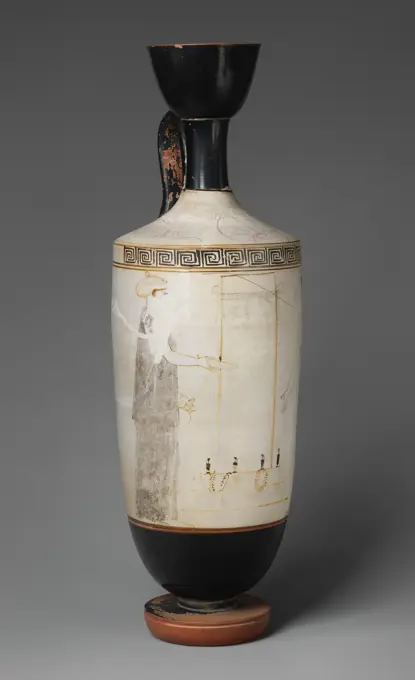
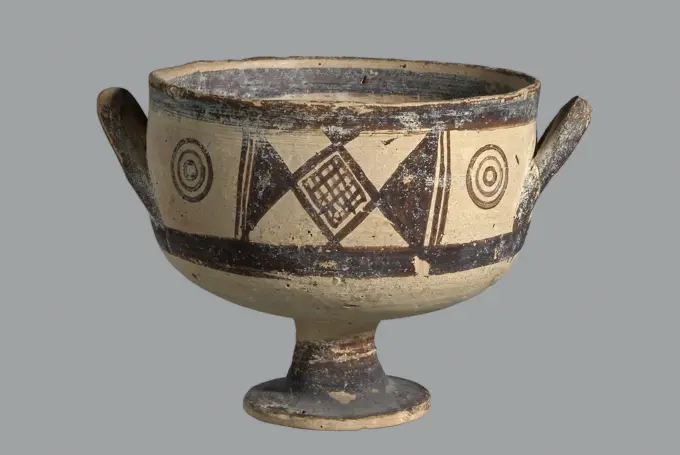
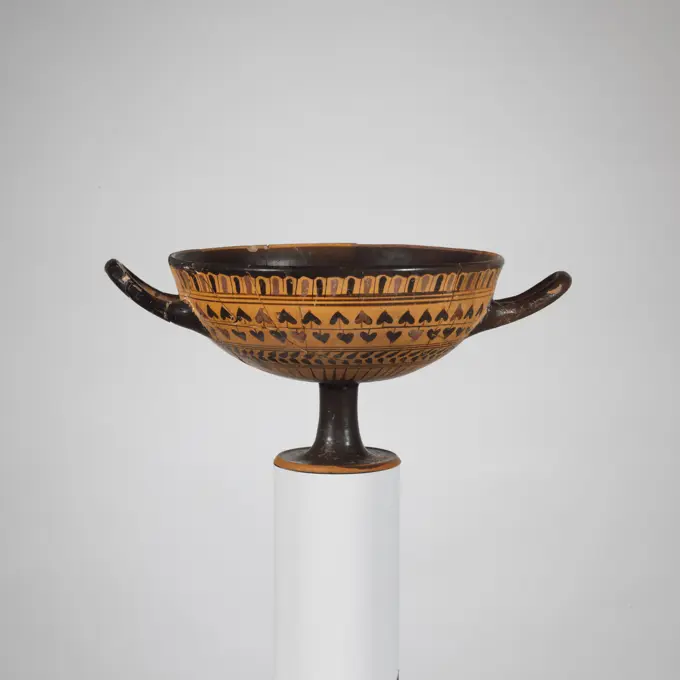
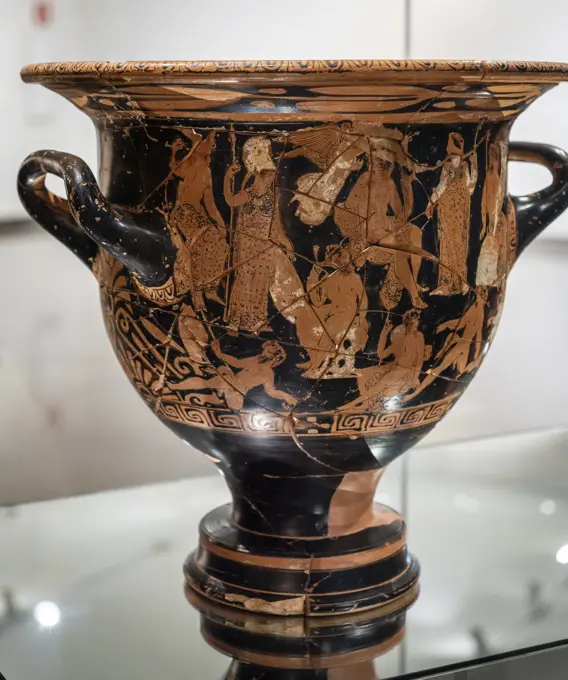
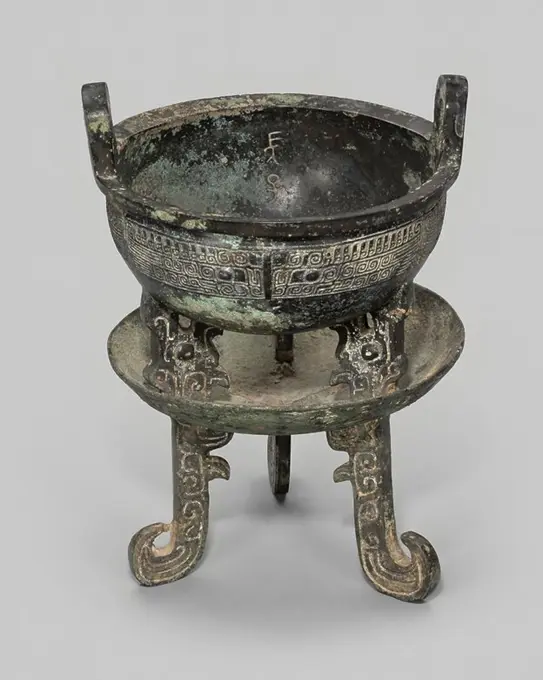
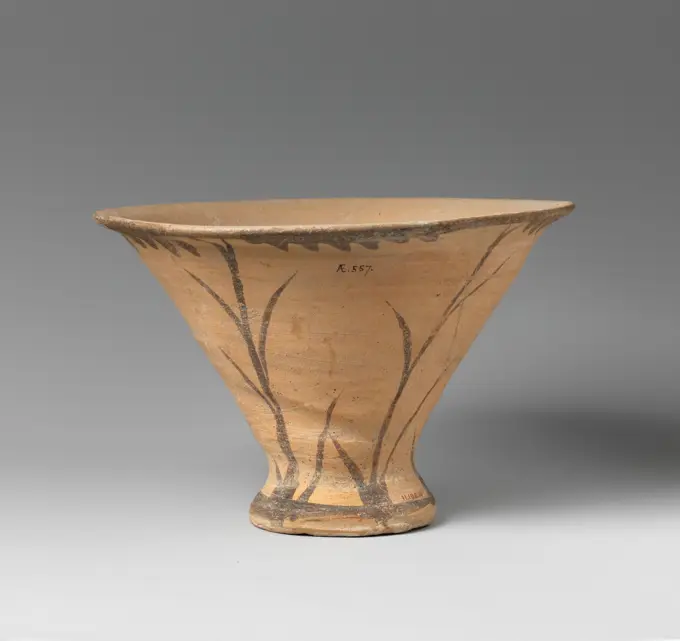
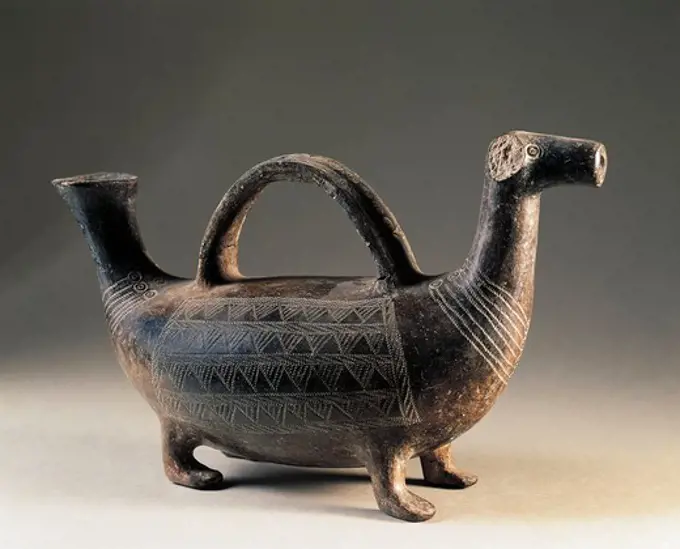
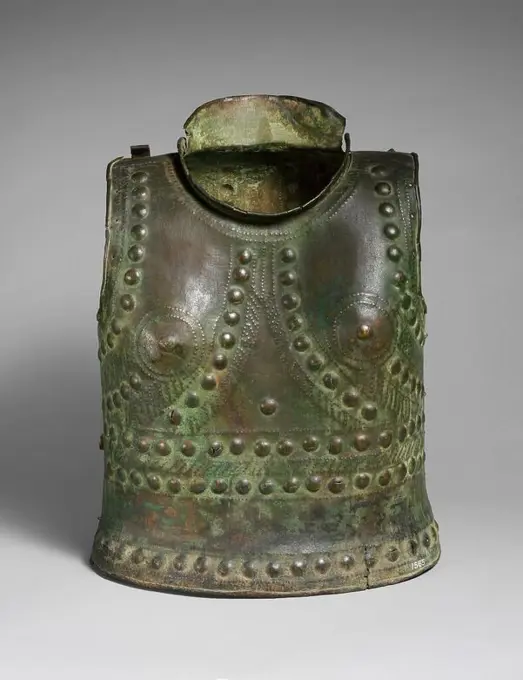
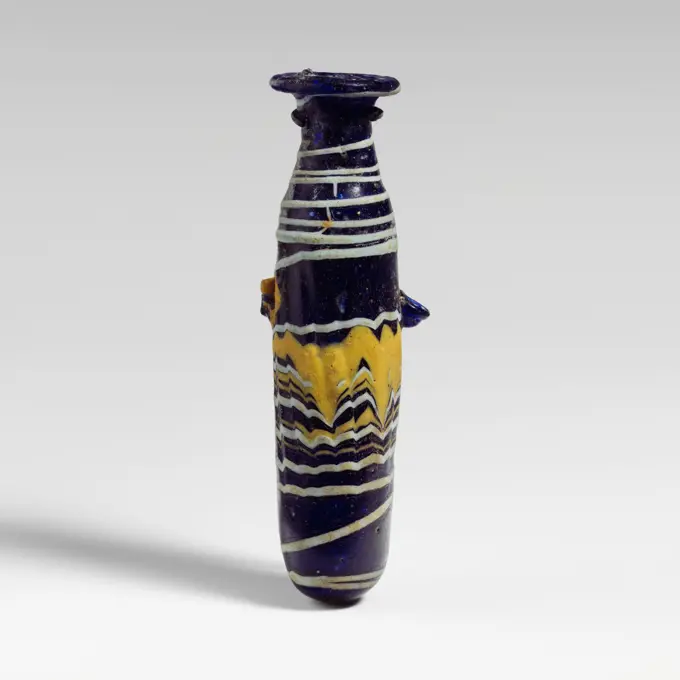
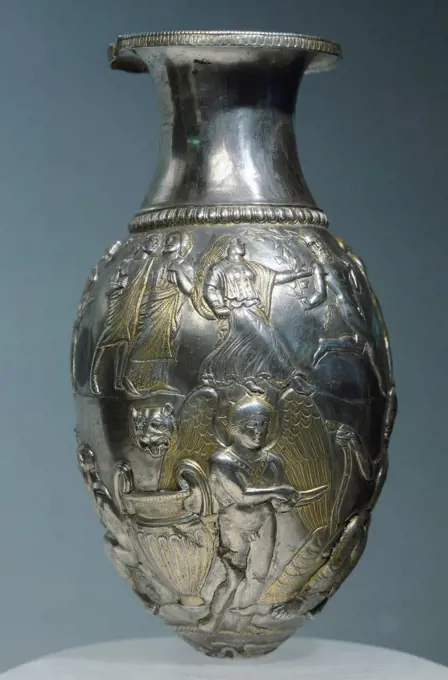
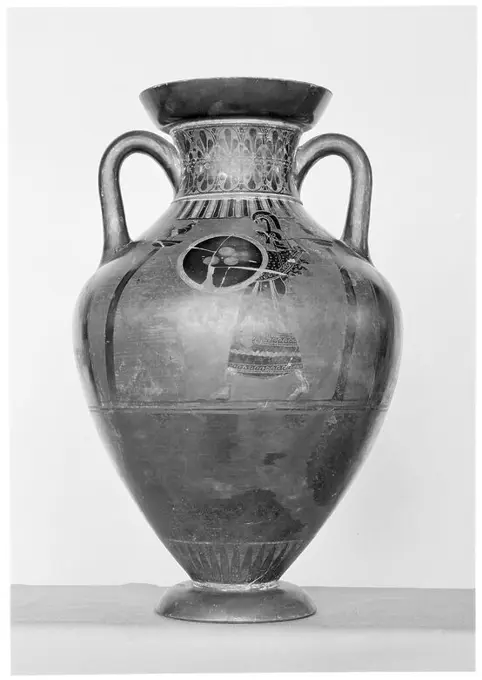
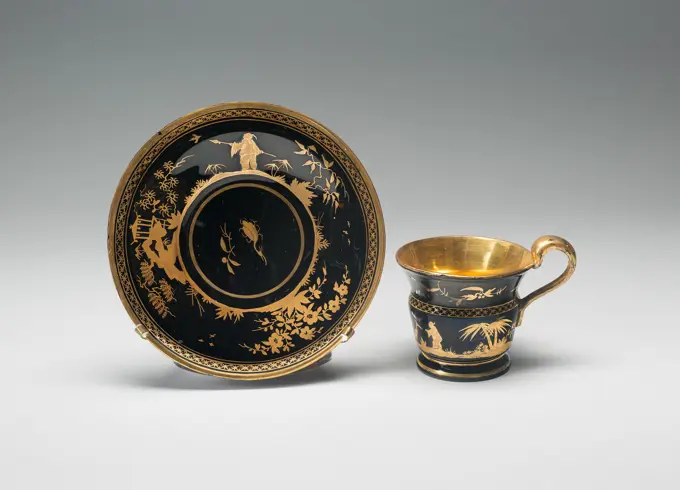
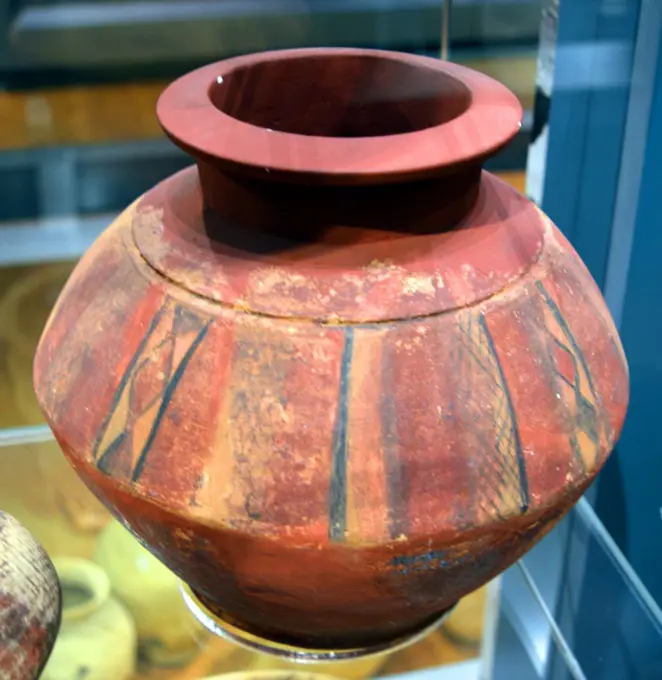
Painted jars, 3100-2900 BC, Jemdet Nasr.Europe, Bulgaria. Neolithic pot with handles. Bulgaria.Gorget possibly from an Armor of Philip II, King of Spain. Culture: German. Dimensions: H. 6 1/4 in. (15.9 cm); W. 13 in. (33 cm); D. 9 1/2 in. (24.1 cm); Wt. 2 lb. 6.5 oz. (1091.5 g). Date: ca. 1550. Museum: Metropolitan Museum of Art, New York, USA.Amphora (Storage Jar) 530 BCE-520 BCE Athens. This large vessel was used for storing and mixing wine, and was likely used as part of the Greek symposium. Much like modern academic symposiums, in which people discuss a topic of common interest, debunking old theories and putting forth new hypotheses; the men of ancient Athens regularly got together in private homes to exchange ideas. Afterward the participants might continue the conversation, discussing their impressions in greater detail or simply socializing over a drink. As the evening progressed, participants engaged in other pleasures, including games, performances, and sex. Wine played a major role in fueling these evenings, and as such the myriad vessels used in the symposium often paid homage to drink. Here, the face or mask of a satyr, one of the followers of the wine god Dionysos, is depicted with grapevines seemingly growing from his head.. terracotta, black-figure technique on white-ground . Ancient GreekTerracotta jug with lid. Culture: Etruscan. Dimensions: H. with cover 11 7/16 in. (29.1 cm); H. without cover 9 13/16 in. (24.9 cm). Date: ca. 575-550 B.C..A moulded human face below lip; a frieze of monsters about body. Museum: Metropolitan Museum of Art, New York, USA.Fragmentary Chalice. UnknownPOT O BOTE DE BOTICA DECORADO DE MUEL - SIGLO XVII. Location: INSTITUTO VALENCIA DE DON JUAN-COLECCION. MADRID. SPAIN.Gold cup ca. 1550-1500 B.C. Helladic, Mycenaean Gold cup with narrow foot and flared rim.. Gold cup. Helladic, Mycenaean. ca. 1550-1500 B.C.. Gold. Late Helladic I. Gold and SilverMosque Lamp of Amir Sayf al-Din Shaykhu ca. 1349-55 For his architectural complex in Cairo, built between 1349 and 1355, Amir Shaykhu commissioned numerous lamps, several of which are now in museum collections. This lamp is a composite of two fragments of Shayku's lamps, probably combined historically and once joined by large metal brackets (note the holes on the neck).. Mosque Lamp of Amir Sayf al-Din Shaykhu 444716Terracotta mastos (drinking cup in the form of a breast). Culture: Greek, Attic. Dimensions: Overall: 5 1/4 x 8 1/8in. (13.4 x 20.6cm)diameter 5 9/16in. (14.1cm). Date: ca. 520 B.C..Obverse, DionysosReverse, maenad. Museum: Metropolitan Museum of Art, New York, USA.Pot. Sri Lanka, 18th century. Furnishings; Cookware. Earthenware with paintZun Vase, Wine holding vessel ( Mid 11th - mid 10th Centuries BC) The Capital Museum, Beijing, ChinaTerracotta oil lamp 1st half of 1st century A.D. Roman Loeschcke Type 1A. Mold-made. Discus: reclining naked male figure, resting on three round cushions, with his left leg bent forward, his right arm bent upward behind his head and his extended left arm drooping downward. Single filling hole at bottom near nozzle, with a band of lines and grooves around edge. Volutes flanking angular nozzle. Raised base ring, and flat base.Intact.. Terracotta oil lamp. Roman. 1st half of 1st century A.D.. Terracotta. Early Imperial. TerracottasSmall flower vase. Bielino (manufaktura fajansu ; 1779-1800), Wolff, Karol (fl. ca 1800), company ownerVase. unknown, craftsmanVase with hexagonal foot (one of a pair) 1885 Crown Derby The history of the Derby porcelain manufactory can generally be divided into two periods. The old Derby porcelain was produced from 1750 to 1848, and was foremost distinguished by the ownership of William Duesbury I and II. When the original factory closed in 1848, a number of former workers established a separate smaller factory at King Street, Derby, using Crown Derbys original molds and patterns and oftentimes incorporating the factory marks on its wares. Around 1876, a separate company established a factory at Osmaston Road under the name Derby Crown Porcelain Company (and eventually bought the King Street factory in 1935), although the firm did not being producing commercial pieces until two years later. In 1890, the factory was granted the privilege of using the title "Royal Crown Derby Porcelain Company." Although the new Crown Derby continued to produce the firms old eighteenth-century Japan patterns, it became known fglass unguentary, 5th to 3rd century BC, Santaella, Iberian Museum of Jaén, Andalusia, Spain.Lamp. Culture: Roman. Dimensions: Overall: 7/8 x 3 5/8 in. (2.2 x 9.2 cm).Plain discus with central filling hole, surrounded by a narrow band of lines and grooves. Broad, sloping shoulder: two rows of small circles and dots. Volutes flanking nozzle, with plain channel between them. Base ring and concave base inscribed: SI. Museum: Metropolitan Museum of Art, New York, USA.Wine Vessel (Zun) 13th-10th century B.C. China. Wine Vessel (Zun) 61323Terracotta krater ca. 725 B.C. Attributed to the Trachones Workshop Like its counterpart, 14.130.14, this krater served as a funerary monument and shows the same primary subjects, the prothesisor laying out of the deceased surrounded by mournersand chariots in procession. In this work, however, the deceased is shown with a long braid or pigtail issuing from his head; the same detail appears on the warriors standing to the right, suggesting that it is either his braided hair or the crest of his helmet. Also noteworthy is the little, almost simian creature that seems to be attending to the warrior's head. Below the dead man sits a row of female mourners. Of the two subordinate zones, the upper one shows chariots drawn by two horses; the lower one shows a single horse per chariot. Foot soldiers are at a minimum. The bowl of the krater rests on a support that is taller and slimmer than that of 14.130.14 and is pierced at the top with square openings; their primary purpose was to prevent Terracotta lekythos (oil flask) ca. 520 B.C. Attributed to the Painter of New York 07 On the body, goddess mounting chariotOn the shoulder, horseman and athletes approaching seated manThe grayish color of the clay indicates that the vase was in a fire, possibly a funeral pyre. The palmette ornament under the handle is adopted from neck-amphorae.. Terracotta lekythos (oil flask). Greek, Attic. ca. 520 B.C.. Terracotta; black-figure. Archaic. VasesFlask 1852-58 Manufactured by United States Pottery Company. Flask 3746Italy, Lazio, Civita Castellana, Falerii, Volute krater (vase used to mix wine and water)Ritual wine cups. Rituals were exceptionally important during the Shang Dynasty, when it was believed that the world would suffer if these were not correctly performed. During these rituals, gifts of food and drink were presented in bronze vessels to please the ancestors, who represented the living in the world of the gods. There are dragons on the base of the trumpet-shaped cup and bird-like creatureson the body of the lidded cup.Covered Tripod Caldron (Ding) with Geometric Designs. China. Date: 25 AD-220 AD. Dimensions: H. 19.1 cm (7 1/2 in).; diam. 21.0 cm (8 1/4 in.). Earthenware with lead green glaze. Origin: China. Museum: The Chicago Art Institute, Chicago, USA.Skyphos (footed wine-cup) with laurel sprays on the body ca. A.D. 50 Roman Period Many artworks of the Roman Period in Egypt represent the taste of wealthy urban merchant and rich farming classes of Roman Egypt. Wide trade of luxury works is evident, and Greco-Roman style dominates. Since Egyptian pharaohs had first authorized Greek trading colonies and employed Greek mercenaries in the seventh century BC., there was a considerable Greek presence in Egypt. With Alexander's conquest, Macedonian Greek Ptolemies ruled as successors to the pharaohs, and Ptolemaic Greek and eastern Mediterranean soldiery was heavily settled in parts of Egypt. Although the Ptolemaic kings maintained traditional Egyptian religious and political forms, elite society, of mixed Greek and Egyptian descent, aspired to Greek culture in many respects. With the replacement of a Ptolemaic pharaoh in Memphis and Alexandria by a Roman emperor in Rome, the status of Greek culture and art, if anything, increased. However,Snuff Bottle, 19th century, 3 5/8 x 1 5/8in. (9.2 x 4.1cm), Ivory, China, 19th centuryDouble-Chambered Vessel with MonkeyLoutrophoros (Container for Bath Water) 350 BCE-340 BCE Puglia. The type of tall, cylindrical vessel with spiraling handles shown here was made only in Apulia. Lavishly decorated, its purpose was to hold water for ritual bathing before marriage. Its body is divided into two zones, each featuring four beautifully clothed, coiffed and bejeweled women, alternately standing and sitting as they chat with a companion. Such vases were also placed in the tombs of unmarried girls to mark their union with Hades, god of the underworld. This vase might have served that such a purpose, since the reverse depicts a woman within a funerary naiskos, or temple-like structure. Seated and standing females bear gifts and offerings.. Terracotta, decorated in the red-figure technique . Ancient GreekAttic Red-Figure Hydria. Attributed to Painter of London E543 (Greek (Attic), active 420 B.C. - 400 B.C.)Spouted Jar with Painted Decoration. Western Iran, circa 1000-650 B.C.. Furnishings; Serviceware. Buff ware, creamslip, reddish-orange painted decorationPotato-shaped Vessel with Plants andAnimals.  Artist: UnknownBottle 18th century Japan. Bottle. Japan. 18th century. Clay with glaze and incised ornament with rings around the neck (Satsuma ware). Edo period (1615-1868). CeramicsTerracotta stirrup jar. Culture: Mycenaean. Dimensions: H. 4 7/32 in. (10.7 cm.)Diam. 4 13/16 in. (12.2 cm.). Date: ca. 1300-1200 B.C..The stirrup jar is one of the most common Mycenaean shapes used to contain liquids such as oil or wine. Museum: Metropolitan Museum of Art, New York, USA.Bowl with Cross Design, 17th century, Unknown Japanese, 3 9/16 × 5 7/8 × 5 1/4 in. (9.05 × 14.92 × 13.34 cm), Hagi ware; glazed stoneware, Japan, 17th century, The first Christian missionaries, namely Portuguese Catholics, arrived in Japan in the late 1540s and achieved success converting Christians in some areas of the country. Christians were persecuted by authority of Japans military leaders on and off through the 1630s, by which time all adherents of Christianity had renounced their faith or moved underground. Stoneware bowls bearing Christian crosses began to be made in the early seventeenth century, but it remains unclear who might have used such bowls.Glass alabastron (perfume bottle) 2nd-1st century B.C. Greek, Eastern Mediterranean Translucent light blue with greenish tinge; opaque white trails; handles of indeterminate color (blue).Uneven, coiled rim-disk with rounded outer lip; fusiform body, with uneven, misshapen sides, expanding downward, then tapering in to pointed bottom; two uneven lug handles applied at top of body over trail with horizontal tooling indents above and below.Trail applied unevenly around rim and trailed off below; another trail attached near bottom, drawn up in a spiral to point of carination, tooled into an irregular feather pattern around side with six upward and five downward strokes, and wound round again in spiral ending below rim.Intact; many bubbles; dulling, pitting, and faint iridescence.. Glass alabastron (perfume bottle) 239904Vase. Bronze. Chine. Par musée musée malée. Anse, Chinese art, bronze, relief, vaseNeck Fragment of Glass Urinal. Found at Weoley Castle, Birmingham, a Birmingham Museums Trust heritage siteTerracotta model of a chariot box ca. 850-750 B.C. Cypriot During the Bronze Age in Cyprus and the Greek world, chariots were used for warfare and transport. During the first millennium and perhaps as late as the fifth century B.C. in Cyprus, chariots continued to serve both purposes, while in Greece they had long since lost any military function. This pieces, which is wheel made, was probably offered as a dedication.. Terracotta model of a chariot box. Cypriot. ca. 850-750 B.C.. Terracotta; wheel-made. Cypro-Geometric III. VasesTerracotta pyxis (box) ca. 420-400 B.C. Greek, Attic Preparations for weddingThe frieze presents a rather full picture of a bride's preparations. At the beginning, she bathes with the help of Eros, who empties an amphora over her. Other women are dressing themselves or adorning a loutrophoros (ceremonial vase for water). Inside the house, a woman with Eros on her lap sits with Aphrodite and a matronly attendant.. Terracotta pyxis (box). Greek, Attic. ca. 420-400 B.C.. Terracotta; red-figure. Classical. VasesI Domskoy Kallman, Crock, 1935 1942 CrockTerracotta skyphos (deep drinking cup). Culture: Cypriot. Dimensions: H. 3 1/2 in. (8.9 cm); diameter 5 11/16 in. (14.5 cm). Date: 1st half of 8th century B.C..This skyphos is probably a Cypriot imitation of an Attic prototype. Museum: Metropolitan Museum of Art, New York, USA.Water Jar/ Olla, 1900. Southwest, Pueblo, Zia, Post- Contact Period, 20th century. Ceramic; overall: 27 x 30.5 cm (10 5/8 x 12 in.).Bell krater depicting a winged Nike offering a libation to a young nude rider. Interpreted as a equestrian heroization of the deceased received by the winged Victory on his journey to the afterlife. 2nd half of the 5th century BC. Clay. Iberian culture. Necropolis of Tutugi, Zone I, Grave 11. Greek production. From Galera (Granada province, Andalusia, Spain). National Archaeological Museum. Madrid. Spain.Bartmann jug, also called Bellarmine jug frieze around belly, above and below portrait medallions and acanthus leaves, bearded jug tableware holder soil find ceramic stoneware clay engobe glaze salt glaze, hand turned stamped molded glazed baked stoneware jug gray shard brown engobe speckled salt glaze bandoor notched ring and protruding ridge under the mouth rim. Small model with large neck opening archeology import pottery drink serve serve wine beerCampania Caserta Capua Museo Campano033. Hutzel, Max 1960-1990 Medieval: Byzantine architectural fragments; parchment fragments with miniatures (12th century) from Montecassino; painted wooden crucifix (13th century); Carolingian crucifixes; Bishop's miter (11th century) of gold and silver damask; fresco (13th century). Post-medieval: Architecture (15th century). Formerly the Palazzo Antignano. Unusual Catalan/Moorish-style portal; Paintings on panel and canvas (15th-18th centuries); marble intarsia (16th century); marble sculpture: busts of Christ and Mary (17th century); sculpture of saints in marble and in wood (15th century); painted and gilded sculpture in wood; marble grave sculpture (16th century); sarcophagus with allegorical carvings; gold reliquary "Rosa d'Oro"; crucifix made of elephant tusk Specific Location: Pianterreno Antiquities: Italic sculpture (seated women holding babies); inscription. Photo campaign #1: 533 photos. Roman relief and sculpture; cinerary urns; Greek aEwer 4th century Roman. Ewer. Roman. 4th century. Transparent pale green glass, the handle perhaps somewhat darker. Blown, rim finished at the furnace, trails and handle applied.. GlassRitual Vessels, anonymous, c. -1200 - c. -1100  China bronze (metal)  China bronze (metal)Jar. United States, New Mexico, Acoma Pueblo, McCarty's Village, Acoma Pueblo, circa 1870-1880. Furnishings; Serviceware. Earthenware and pigmentsTerracotta bell-krater (bowl for mixing wine and water). Culture: Greek, Attic. Dimensions: Other: 14 3/4 x 15 5/8 in. (37.5 x 39.7 cm). Date: late 5th century B.C..Obverse, Nike (the personification of victory), driving a quadriga (four-horse chariot) toward a column surmounted by a tripod. The name of Nike is inscribedReverse, three draped youthsThe vase may have been bespoken or such objects may have been available to commemorate a victory. Museum: Metropolitan Museum of Art, New York, USA.Attic Red-Figure Footed Dinos; Attributed to the Syleus Painter, Greek (Attic), active 490 - 470 B.C.; Athens, Greece, Europe; about 470 B.C.; Terracotta; Object: H: 36.8 x Diam. (body): 35.7 cm (14 1/2 x 14 1/16 in.), Object (mouth): Diam.: 28.6 cm (11 1/4 in.)Roman Lead-Glazed Cup with High Foot; Asia Minor (); 1st century; Terracotta; 13.7 × 17.8 cm (5 3,8 × 7 in.)Czerpak (kyathos). unknown, authorAttic Black-Figure Eye Cup. UnknownBottle, Trophy-Head Deity 2nd-1st century B.C. Paracas. Bottle, Trophy-Head Deity 309468Terracotta skyphos (deep drinking cup) late 8th century B.C. Greek, Attic From the Hymettos deposit (see 30.118.1). Terracotta skyphos (deep drinking cup). Greek, Attic. late 8th century B.C.. Terracotta. Geometric. Vases. Rinkelbel, the lower part of the bell is spherical and tranquility on a tripod, the ends of which are up. The profiled top piece is decorated with a double lottery of a floral border.Black -gear amphora; Nikosthenes (Fl. 545-510 BC), BMN (fl. 550-525 BC); 540-530 BC (-540-00-00--530-00-00);BMN (Fl. 570-530 A.C.), Nikosthenes (fl. 545-510 A.C.), Sport in ancientSquare vase with archaic-style motifs (fangzun) China 13th-14th century This imposing vase exhibits a monumentality that belies its small size. Its square shapemost such vessels are roundfurther adds to its assertive presence, as does its crisply cast bold décor. The vase is a miniature-sized interpretation of an ancient wine container (fangzun). Its pattern features designs from different periods of antiquity. The combination of Shang, Zhou and Han designs on the same vessel creates a hybrid style that distinguishes this piece as a new antique rather than either a faithful copy or a fake, which reflects the innovative taste of antiquity in the thirteenth and the fourteenth century. View more. Square vase with archaic-style motifs (fangzun). China. 13th-14th century. Cast bronze. Yuan dynasty (1271-1368). MetalworkKuei, 1045-771 BC. China, Western Zhou dynasty (c. 1046-771 BC). Bronze; overall: 13 x 24 x 11 cm (5 1/8 x 9 7/16 x 4 5/16 in.).Terracotta Nolan amphora (jar). Culture: Greek, Attic. Dimensions: H. 30.30 cm.. Date: ca. 460-450 B.C..Obverse, hoplite (foot soldier)Reverse, youth holding sword sheath. Museum: Metropolitan Museum of Art, New York, USA.Terracotta bell-krater (bowl for mixing wine and water) ca. 470-450 B.C. Greek, Attic In this magnificent vase, the shape and the gloss of its surface are paramount. The lack of figural decoration suggests that, rather than hold wine, it may have contained cold water or snow to chill a wine-filled psykter (vase for cooling wine).. Terracotta bell-krater (bowl for mixing wine and water). Greek, Attic. ca. 470-450 B.C.. Terracotta; red-figure. Classical. VasesContainer (Kuduo) 18th-19th century Akan peoples, Asante Ornate, cast brass vessels known as kuduo were the possessions of kings and courtiers in the Akan kingdoms. Gold dust and nuggets were kept in kuduo, as were other items of personal value and significance. As receptacles for their owners' kra, or life force, they were prominent features of ceremonies designed to honor and protect that individual. At the time of his death, a person's kuduo was filled with gold and other offerings and included in an assembly of items left at the burial site.The elaborate form and complex iconography of this kuduo reveal the broad range of aesthetic traditions from which the Akan peoples have drawn to create their courtly arts. Goods from Europe and North Africa, received in exchange for Akan gold, textiles, and slaves, included vessels that may have partly inspired the design of this and other kuduo. The repeating bands of geometric patterns incised into the surface, as well as the elegantly flarinTerracotta mastos (drinking cup in the form of a breast) ca. 520 B.C. Attributed to Psiax Obverse, DionysosReverse, maenad. Terracotta mastos (drinking cup in the form of a breast). Greek, Attic. ca. 520 B.C.. Terracotta; black-figure. Archaic. VasesStrap-Handled Vessel in the Form of a Bird with Abstract Pattern on Body. Paracas; Ica Valley, south coast, Peru. Date: 650 BC-150 BC. Dimensions: 15.2 x 18.4 cm (6 x 7 1/4 in.). Ceramic with resinous postfire painting. Origin: Peru. Museum: The Chicago Art Institute, Chicago, USA. Author: NAZCA.Hill Jar (BoshangaiZun)Stirrup Spout Vessel with Raised Geometric Scroll Motif. Cupisnique; North coast, Peru. Date: 1000 BC-200 BC. Dimensions: H. 19.1 cm (7 1/2 in.). Ceramic. Origin: North Coast. Museum: The Chicago Art Institute, Chicago, USA.Lampka dekorowana przedstawieniem Wiktorii w bidze. unknown, authorMarble Urn. Culture: Byzantine. Dimensions: 21 3/4 × 20 5/8 in. (55.2 × 52.4 cm)Other (diameter at base): 6 in. (15.2 cm). Date: ca. 400.An openwork grapevine decorates this massive urn. Such vases are often depicted in both secular and religious works of art of the period, including mosaics, textiles, gold jewelry, and silver book covers. Museum: Metropolitan Museum of Art, New York, USA.Lidded Vessel with Images of an Open Hand. Maya, 580-700 CE. Ceramics. Slip-painted ceramicTerracotta chalice ca. 575-550 B.C. Etruscan The simple elegance of this shape ensured its popularity throughout much of Etruria from about 625 to 500 B.C. The figural friezes were made by pressing a carved cylinder seal into the leather-hard clay before firing. In this case, both are identical and depict seated figures, perhaps members of the nobility, in the company of standing attendants. The subject, its specific meaning unknown, is associated with chalices made at Chiusi.. Terracotta chalice. Etruscan. ca. 575-550 B.C.. Terracotta; bucchero pesante. Archaic. VasesRitual Wine Container (Pou) with Dragons, Lozenges, and TrianglesCup with DionysiacRevelGlass alabastron (perfume bottle). Culture: Greek, Eastern Mediterranean. Dimensions: H.: 4 1/4 in. (10.8 cm). Date: late 6th-5th century B.C..Translucent cobalt blue, with handles in same color; trails in opaque yellow and opaque turquoise blue.Broad, inward sloping rim-disk, with radiating tool marks on upper surface and uneven edge around mouth; short cylindrical neck with downward taper; narrow rounded shoulder; straight-sided cylindrical body, tapering upwards; convex bottom; two vertical ring handles with knobbed tails, applied over trail decoration.Turquoise blue trail attached at edge of rim-disk; a yellow trail applied on underside of rim-disk and wound down in a spiral to middle of body, then tooled into a close-set zigzag pattern; a turquoise blue trail is added, mingling with yellow; immediately below zigzag, another yellow trail and another turquoise blue trail are wound horizontally once around body.Intact; dulling and milky iridescent weathering. Museum: MetropolitanTerracotta lekythos (oil flask) ca. 440-430 B.C. Attributed to the Bosanquet Painter Woman and youth at tombThanks to his distinctively clean and careful style, the Bosanquet Painter's tomb scenes appear objective and without sentiment. The offerings on the monument include a fillet (band), wreaths, and lekythoi. The woman at left holds an oinochoe (jug) and a phiale (libation bowl) to pour an offering.. Terracotta lekythos (oil flask). Greek, Attic. ca. 440-430 B.C.. Terracotta; white-ground. Classical. VasesJug with twisted borders with scale and fishbone motif, anonymous, c. 1670 Jug of stoneware on high foot with a pear -shaped body and wide neck. The C-shaped ear is attached to the neck and belly. Profiles on the neck and foot. Covered with a brown Engobe and painted with email colors in blue, red, yellow and white. Tires twisted on the abdomen with a scaly or bone motif, separated by a printed and imposed band in relief with circles. Above the foot and on the neck a bond with pomegranate potatoes. The foot is caught in a silver frame; Lid is missing. Annaberg/ Dippoldiswalde. Annaberg (possibly) Stoneware. Glaze. Engobe. frame: Silver (Metal) vitrification Jug of stoneware on high foot with a pear -shaped body and wide neck. The C-shaped ear is attached to the neck and belly. Profiles on the neck and foot. Covered with a brown Engobe and painted with email colors in blue, red, yellow and white. Tires twisted on the abdomen with a scaly or bone motif, separated by a printed and imposedGoblet "White Painted";  1050-750 BC (-1050-00-00--750-00-00);CyprusTerracotta kylix: Cassel cup (drinking cup) 3rd quarter of 6th century B.C. Greek, Attic Exterior, four bands of ornamentThe Cassel cup is one of the secondary types of drinking cup developed in Athens just after the middle of the sixth century B.C. It is characterized by its small size and exterior decoration consisting entirely of friezes of ornamentin this case, tongues, ivy, laurel, and rays.. Terracotta kylix: Cassel cup (drinking cup) 256780Bowl with Hunters Using BlowgunsMixing Vessel with Adonis, Aphrodite, and Persephone; Attributed to the Meleager Painter (Greek (Attic), active 420 - 380 B.C.); Athens, Greece; 390 - 380 B.C; Terracotta; 78.7 × 40.6 cm (31 × 16 in.)the hero and the goddess the hero and the goddess, bell crater from the funerary chamber of Prince Iltirtiiltir, 4th century BC, necropolis of Piquia, Arjona, Iberian culture, Iberian Museum of Jaén, Andalusia, Spain Copyright: xZoonar.com/BartomeuxBalaguerxRotgerx 21714831Small Tripod Cauldron of Chang Zi (Chang Zi ding). China. Date: 1046 BC-771 BC. Dimensions: H. 7.4 × diam. 12.6 cm (7 × 5 in.). Bronze. Origin: China. Museum: The Chicago Art Institute, Chicago, USA.Terracotta kalathos (vase with flaring lip) ca. 1550-1425 B.C. Cycladic The vase painting of Crete and the Cyclades often shows great sensitivity to natural subjects. As simple as the decoration here is, the transparent pigment effectively conveys the impression of grasses.. Terracotta kalathos (vase with flaring lip) 248515Zoomorphic terracotta vase, from the necropolis of Banditaccia, Cerveteri (Latium region, Italy)Decorated ware jar with vertical bands of wavy lines. Date: ca. 3850-2960 B.C.. Museum: Metropolitan Museum of Art, New York, USA.Cup and Saucer Made 1815-1825 Paris. Hard-paste porcelain, polychrome enamels, and gilding . Denuelle Porcelain Manufactory (Manufacturer)Bronze cuirass (breastplate). Culture: Etruscan. Dimensions: Overall: 20 1/16 x 15 1/2in. (51 x 39.4cm). Date: 7th or 6th century B.C..Front and back piece, hinged together. The surface of both pieces are elaborately embossed with circular knobs and rows of dots, imitating the male anatomy in a stylized manner. Museum: Metropolitan Museum of Art, New York, USA.Limestone funerary cippus (tomb marker) of Artemidoros 2nd-3rd century A.D. Roman, Cypriot Pillar-like tomb markers were very popular on Cyprus during the Roman period. They usually bear very simple, formulaic inscriptions that address the deceased directly. Here the Greek reads: "Good Artemidoros Kynegos, farewell." The addition of a decorative wreath such as the one seen here is rare; another example is displayed in the Cypriot Galleries on the second floor of the Museum. This cippus is recorded by L. di Cesnola as having been found in a tomb at Idalion with other inscribed markers and numerous glass objects.. Limestone funerary cippus (tomb marker) of Artemidoros 241820Glass alabastron (perfume bottle) late 4th-early 3rd century B.C. Greek, Eastern Mediterranean Translucent cobalt blue, with handles in same color; trails in opaque yellow and opaque pale turquoise blue.Uneven horizontal rim-disk, with radiating tooling marks on upper surface and rough inner edge to mouth; cylindrical, slanting neck; steeply sloping shoulder; slightly bulbous cylindrical body; convex bottom; on body, two lug handles, applied over trail pattern; one with a tooled indent on top, the other flattened into side.A turquoise blue trail attached at edge of rim-disk, wound round and down in a spiral, forming a band of almost horizontal lines around upper body; a thicker yellow trail added under one handle and wound round middle of body in a spiral over turquoise blue trail; both tooled into an irregular close-set zigzag pattern with upward and downward strokes, forming vertical ribs around body; turquoise trail continueing in a spiral and ending in an almost horizontal line aroGold and silver rhyton decorated with figures of Dionysus, Ariadne, Hercules, satyrs and maenads, from the Borovo Treasure, Ruse Region, Bulgaria. Goldsmith art. Thracian Civilization, 4th Century BC.Kubek. unknown, authorVessel with Butterfly Headdress, 1-550. Central Mexico, Teotihuacán, 1-550. Ceramic, stucco, pigment; diameter: 15.6 x 15.8 cm (6 1/8 x 6 1/4 in.); overall: 15.5 cm (6 1/8 in.).Terracotta neck-amphora (jar) of Panathenaic shape. Culture: Greek, Attic. Dimensions: H. 18 5/8 in. (47.3 cm). Date: ca. 520 B.C..Obverse, AthenaReverse, boxersAlthough this vase resembles Panathenaic prize amphorae in shape and decoration, the absence of the inscription from the games at Athens and the smaller size suggest that it was not a prize. The Antimenes Painter is most familiar from standard neck-amphorae showing mythological scenes that have the same sureness as the boxing match here. Museum: Metropolitan Museum of Art, New York, USA.Alvin Shiren, Pitcher, c 1938 PitcherCzarka;  19th century (1801-00-00-1900-00-00);Lekythos (Oil Jar). Greek; Athens; Attributed to the Achilles Painter. Date: 445 BC-440 BC. Dimensions: H. 30.8 cm (12 1/8 in.); diam. 9.8 cm (3 7/8 in.). Terra-cotta, decorated in the white-ground technique. Origin: Athens. Museum: The Chicago Art Institute, Chicago, USA.Cup and Saucer 1820-1830 Bohemia. Glass; black, blown and gilded .Vase;  2. PO. 19th century (1868-00-00-1900-00-00);Bowl, 1200-1300. Fritware, Ilkhanid Dynasty (1256-1353), Persia/Iran, Rhages .BOTIJO PARA AGUA CON DECORACION EN ROJO-S XX CERAMICA POPULAR. Location: ALFARERIA. SPAIN.