Decorative and Functional Boxes

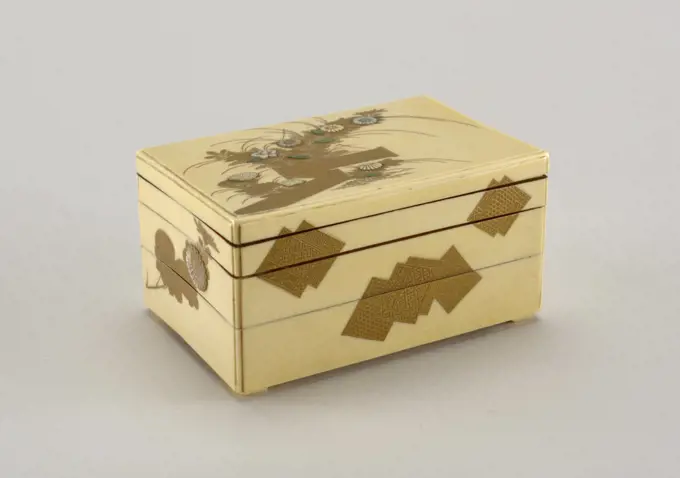
A variety of ornate boxes, including Japanese incense boxes and toilet boxes, showcasing different materials and decorative styles across centuries.

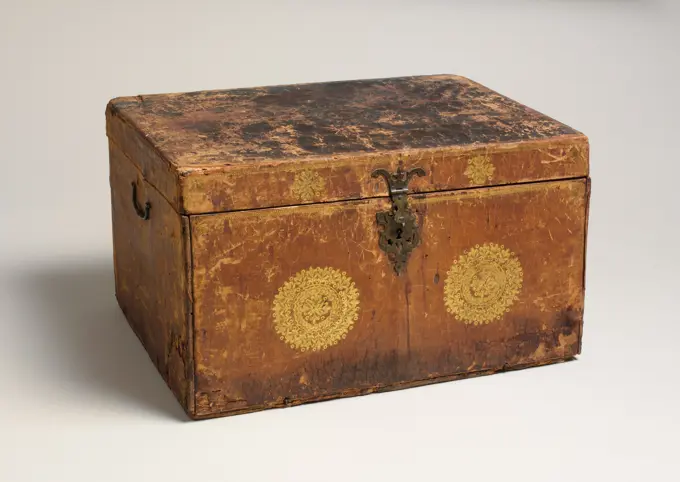
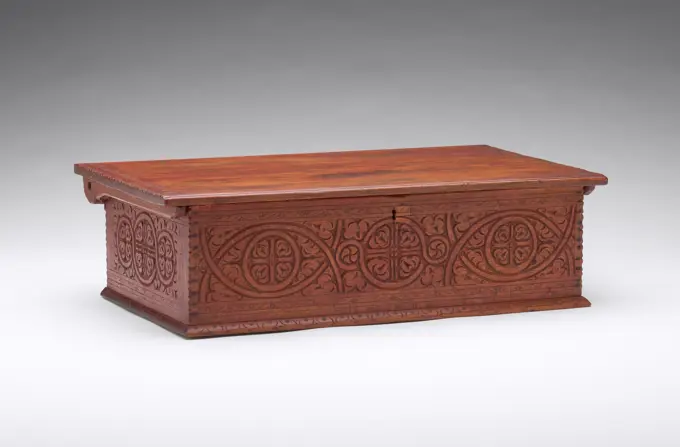
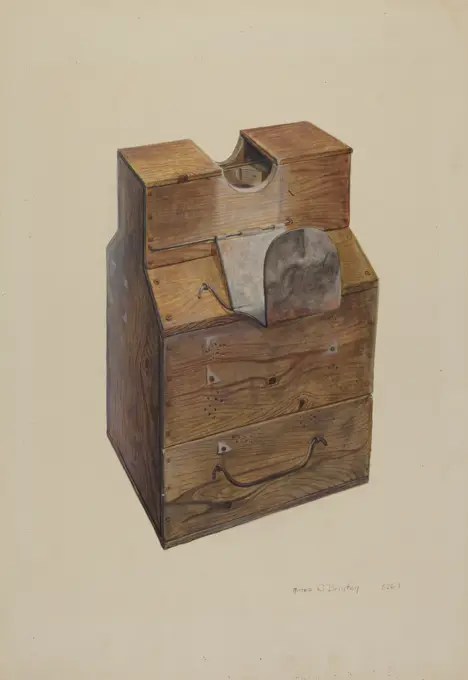
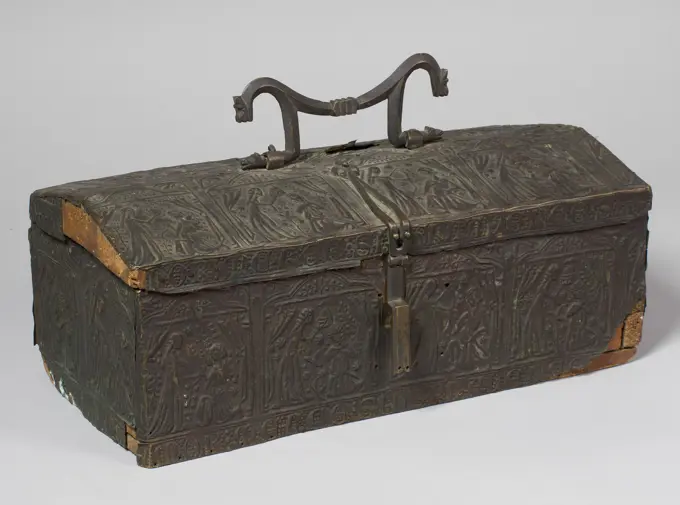
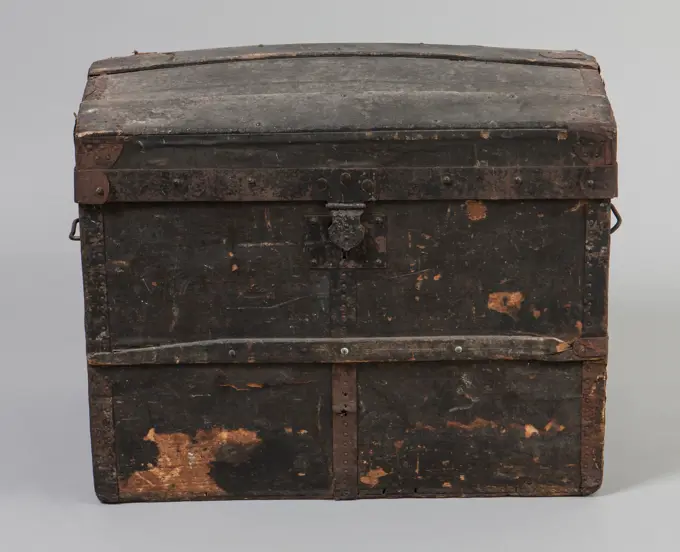
Chest (USA); Stephen Rockwell; leather, wood, brass, paper; 14.0 x 31.0 x 17.5 cm (5 1/2 x 12 3/16 x 6 7/8 in. )
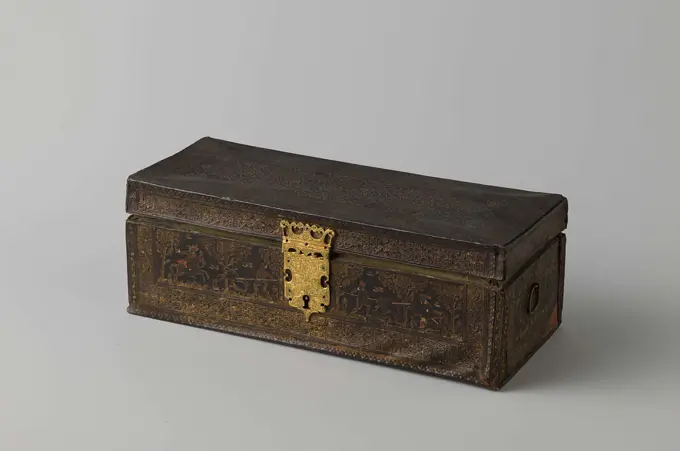
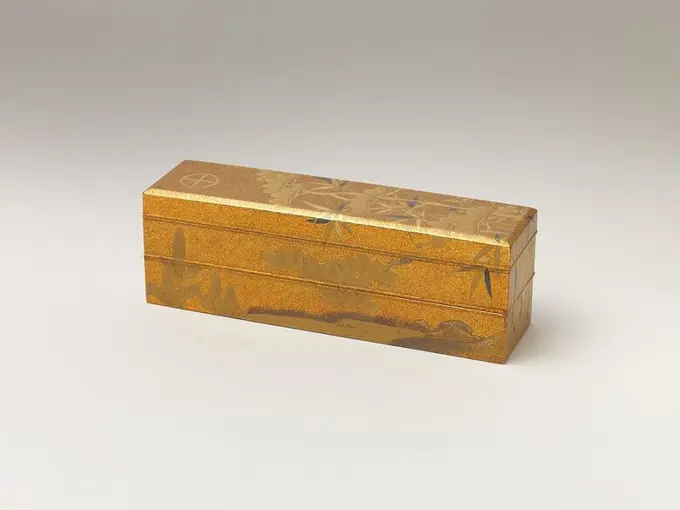
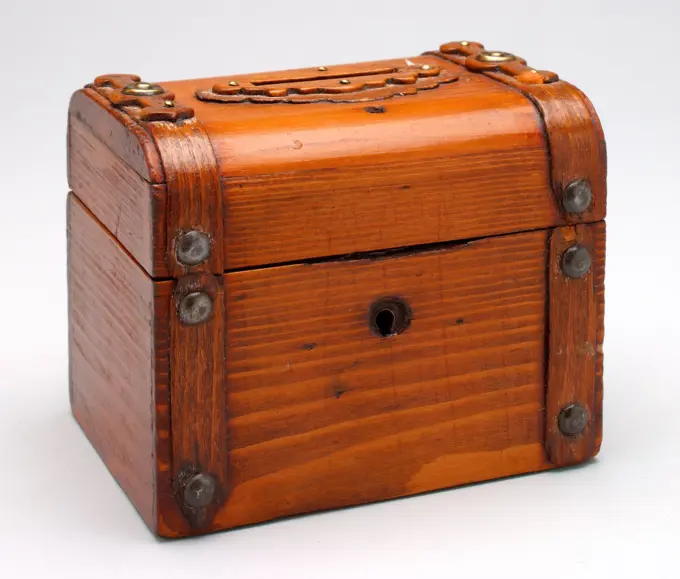
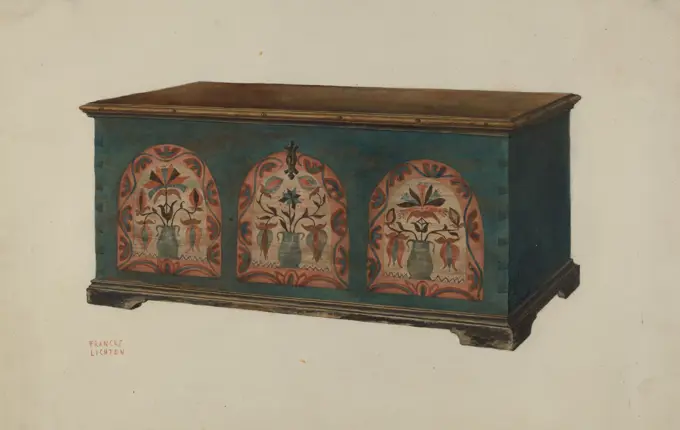
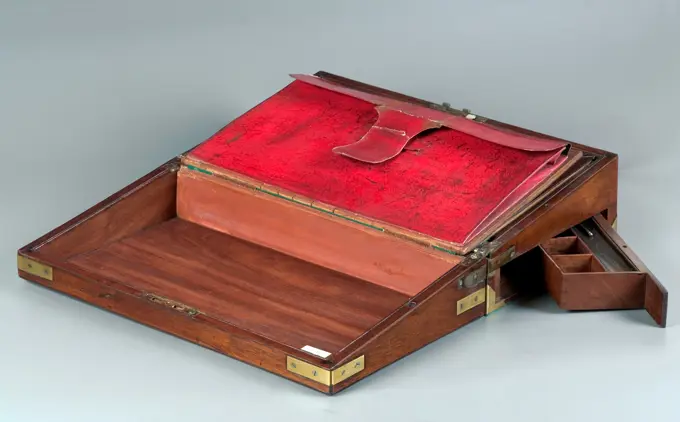
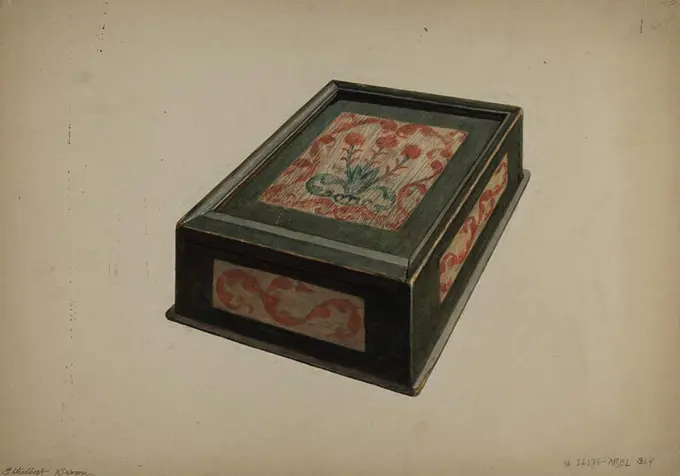
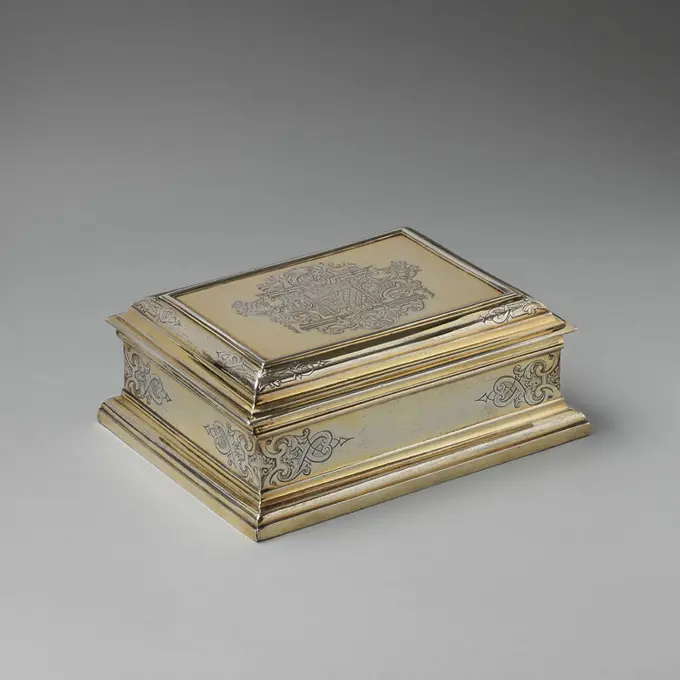
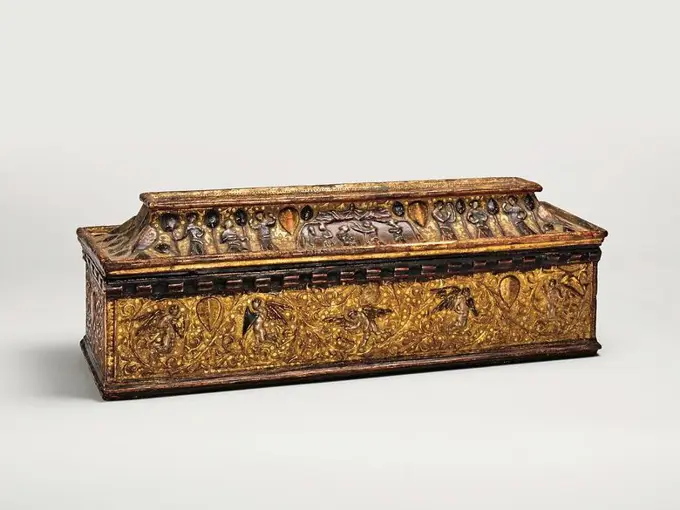
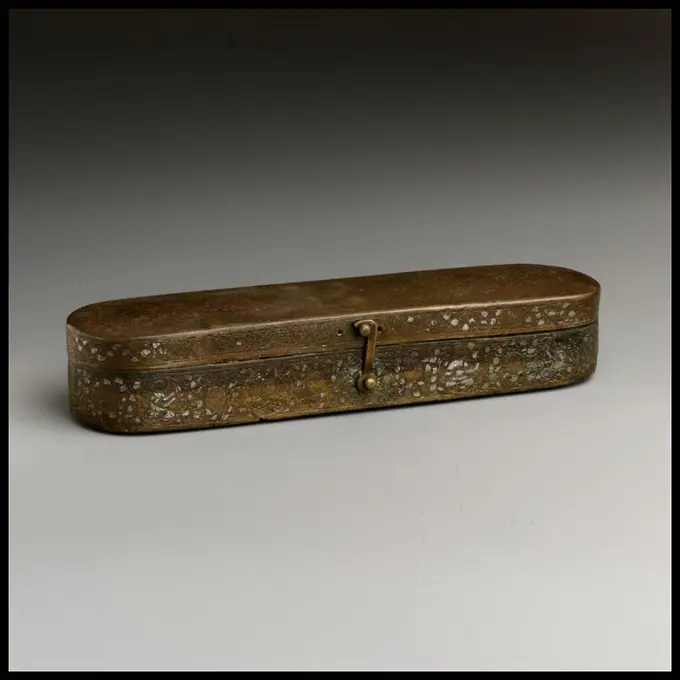
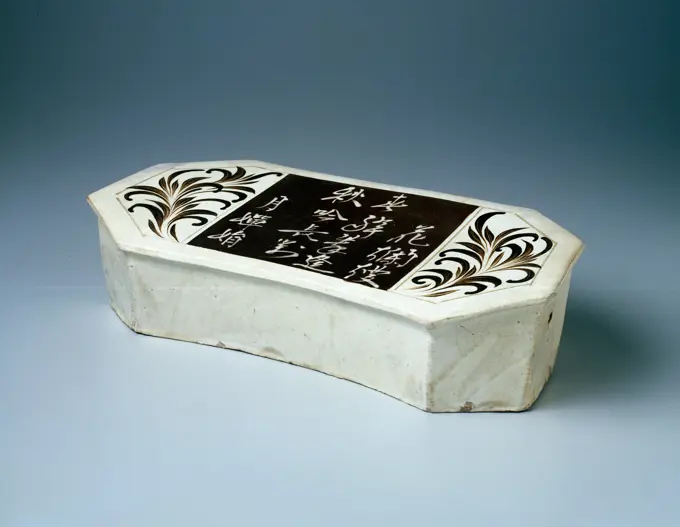
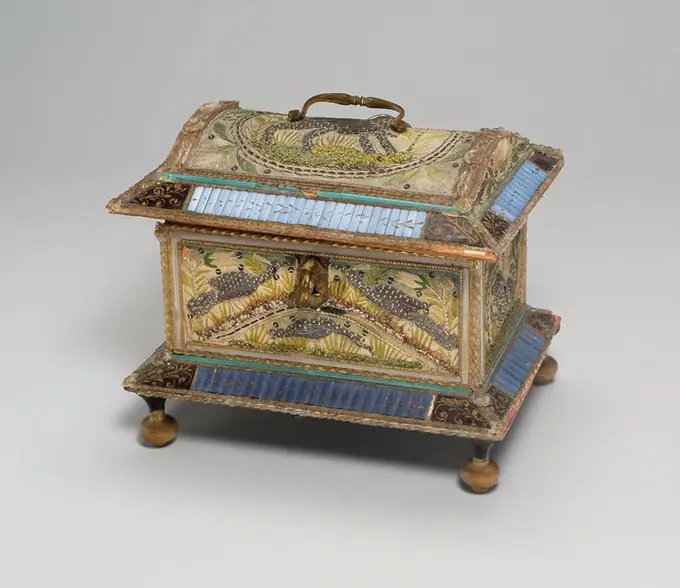
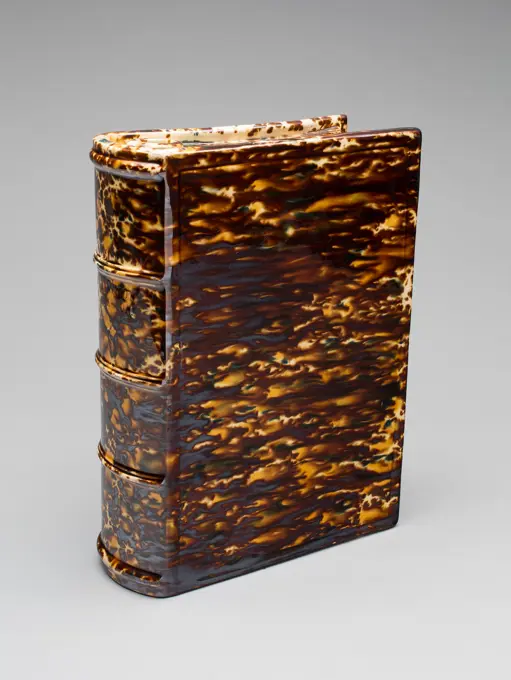
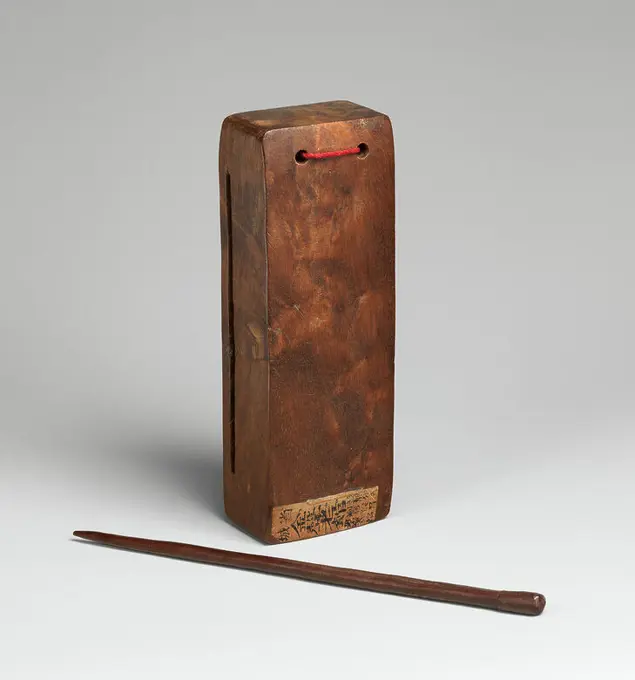
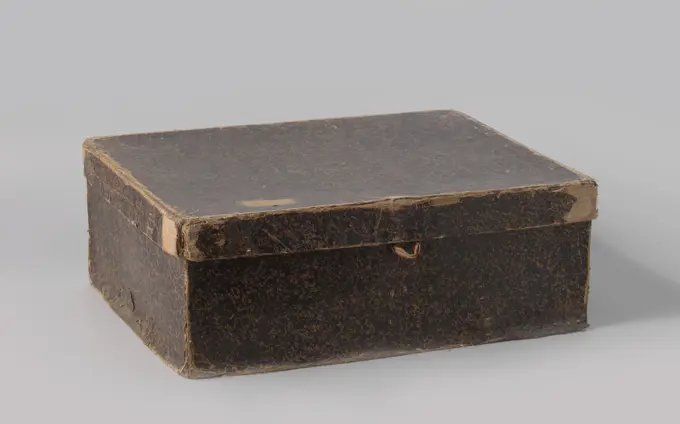
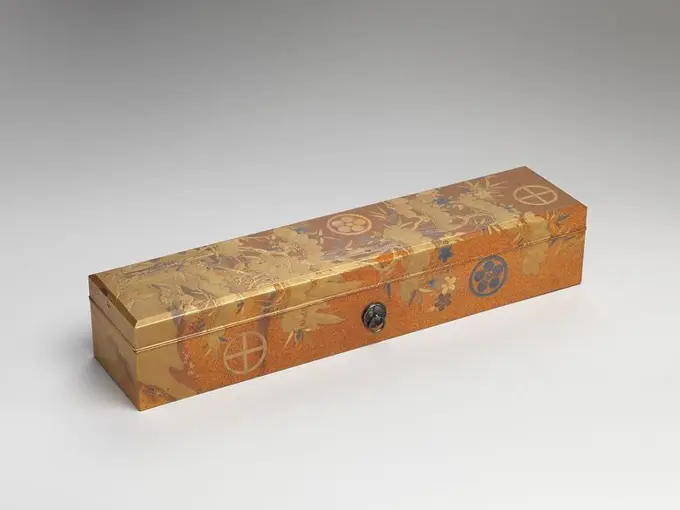
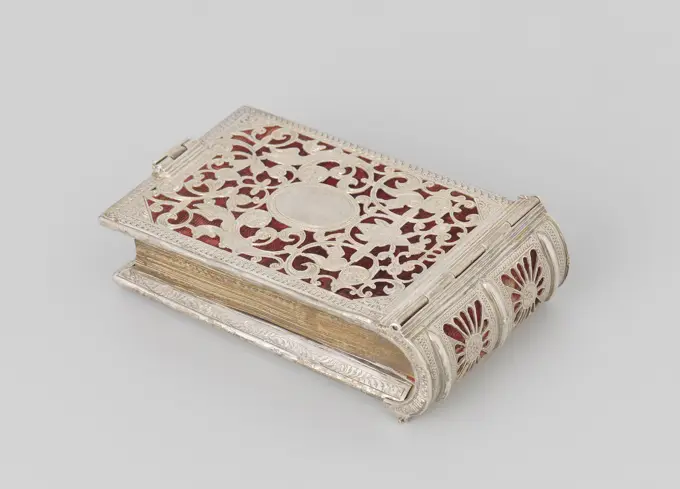
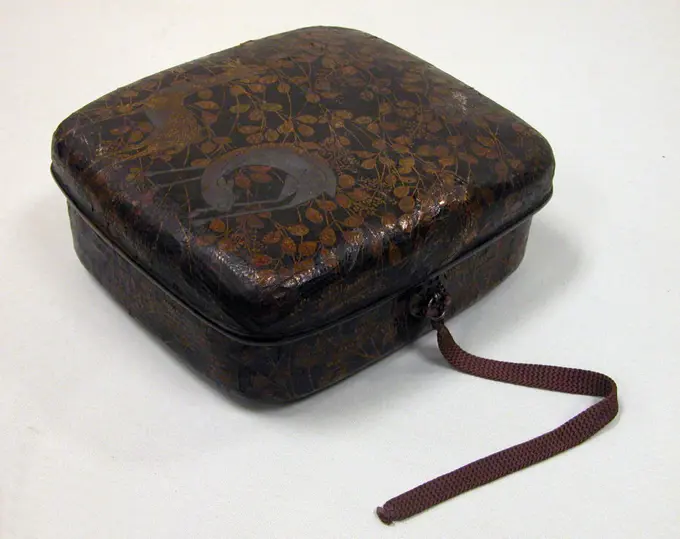
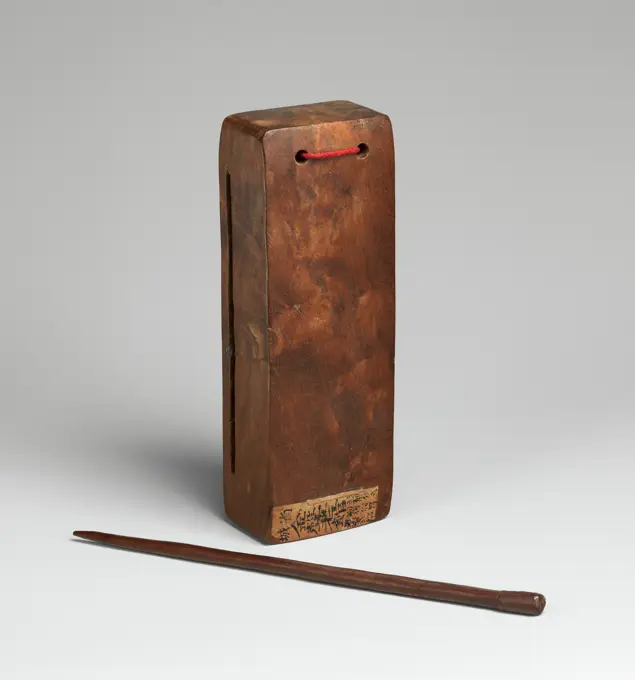
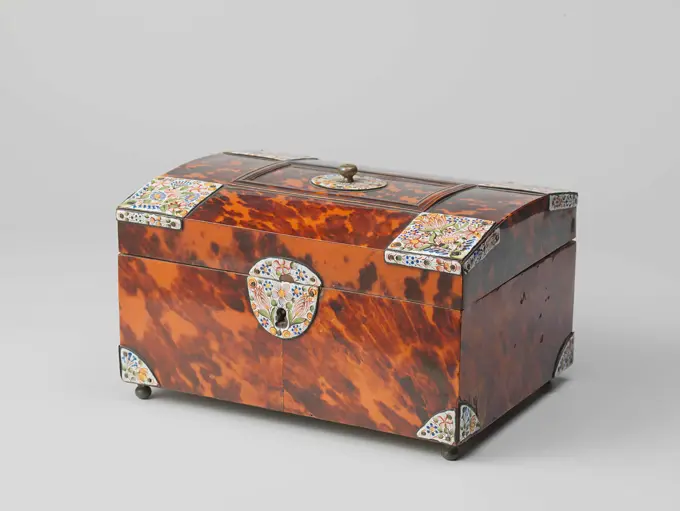
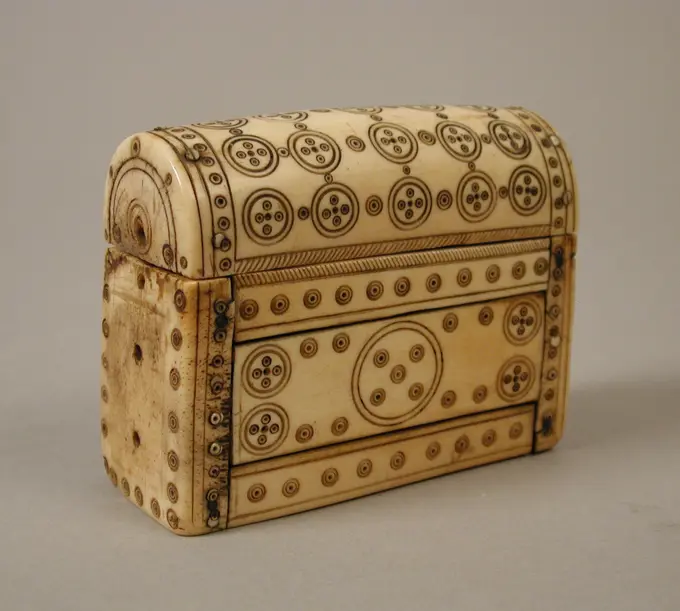
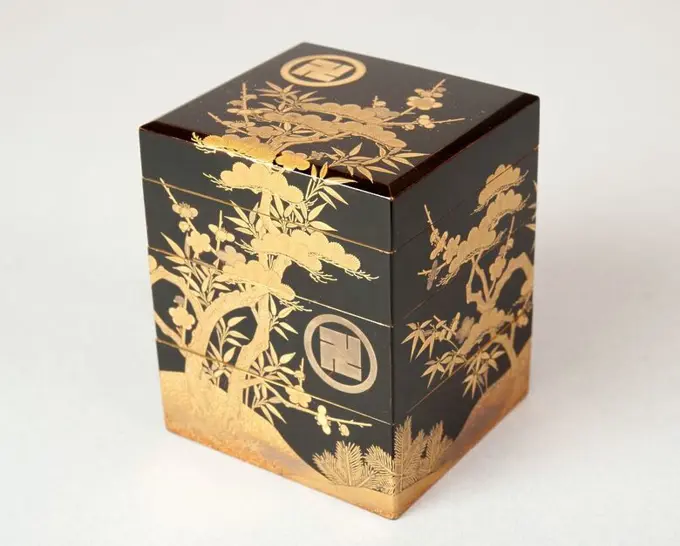
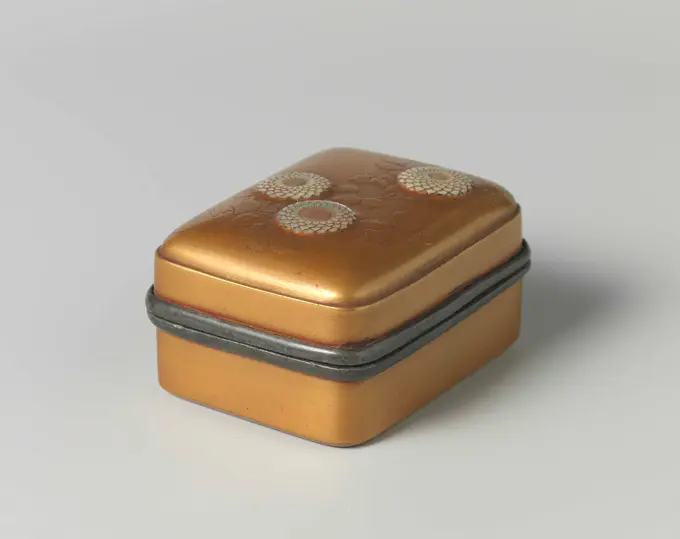
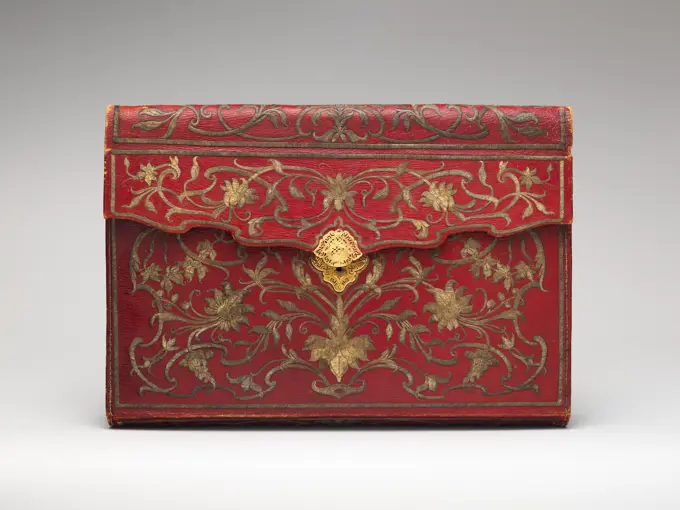
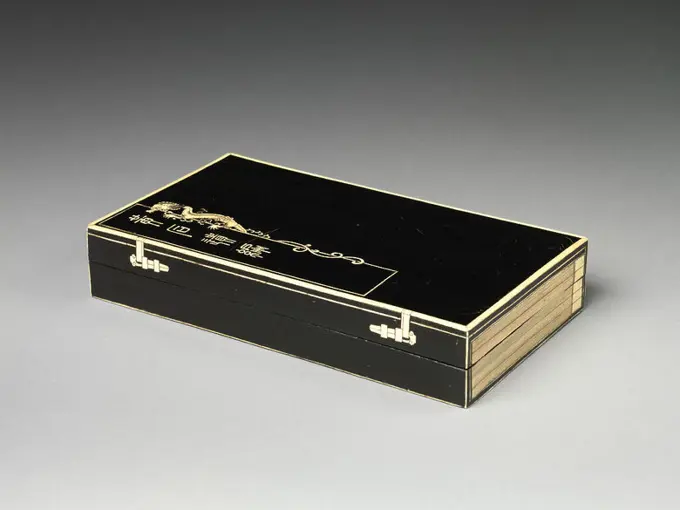
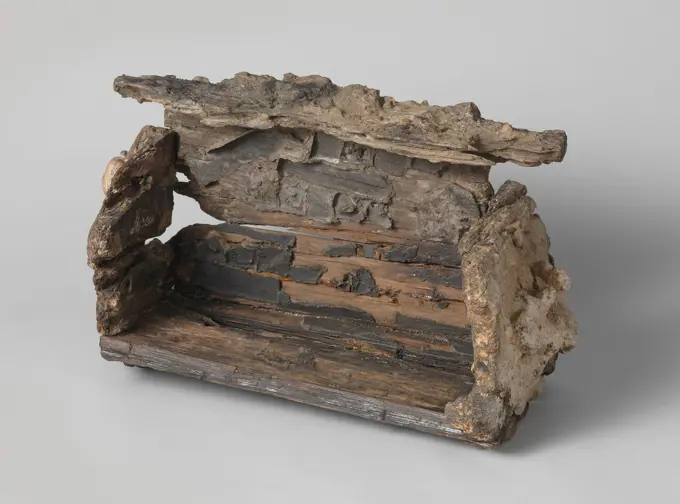
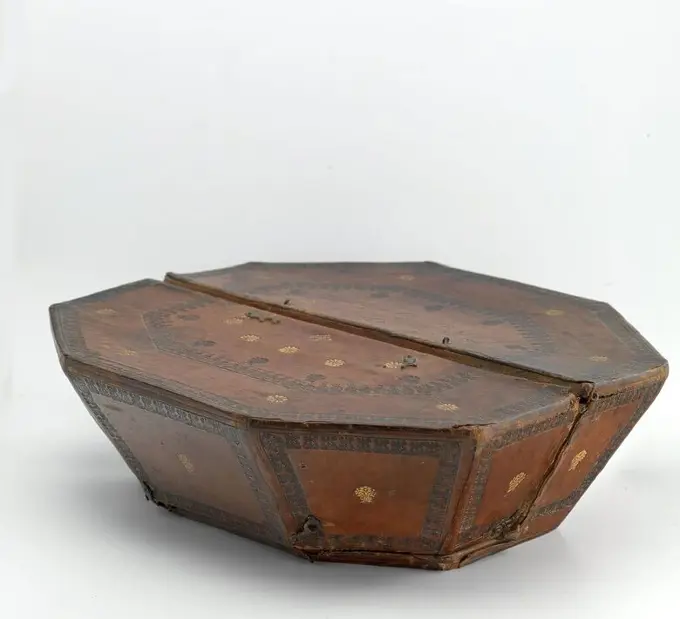
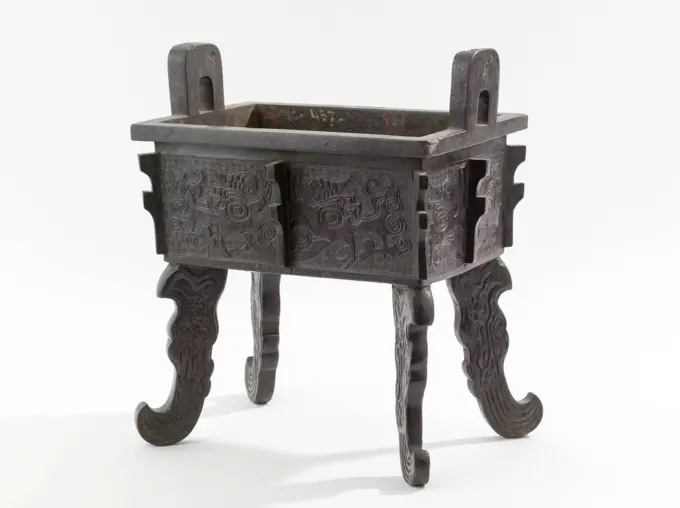
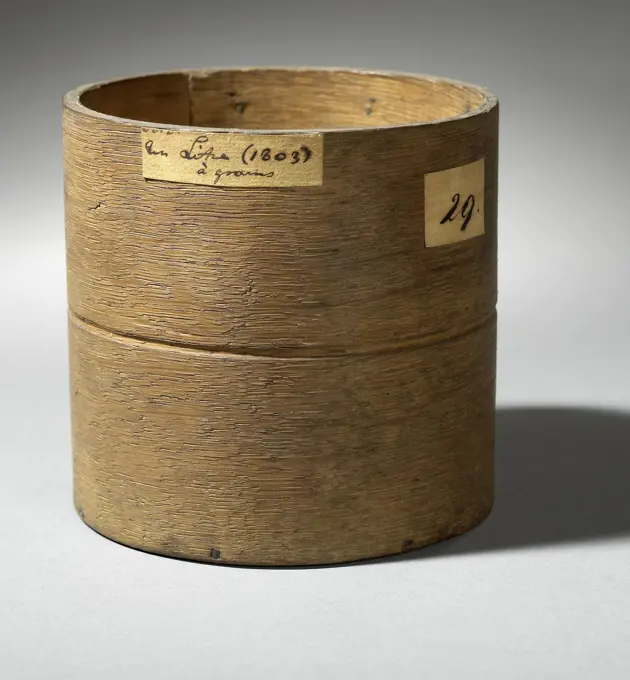
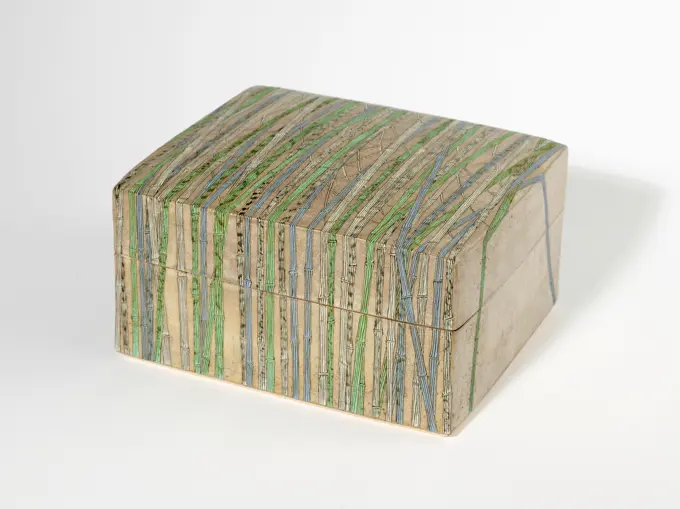
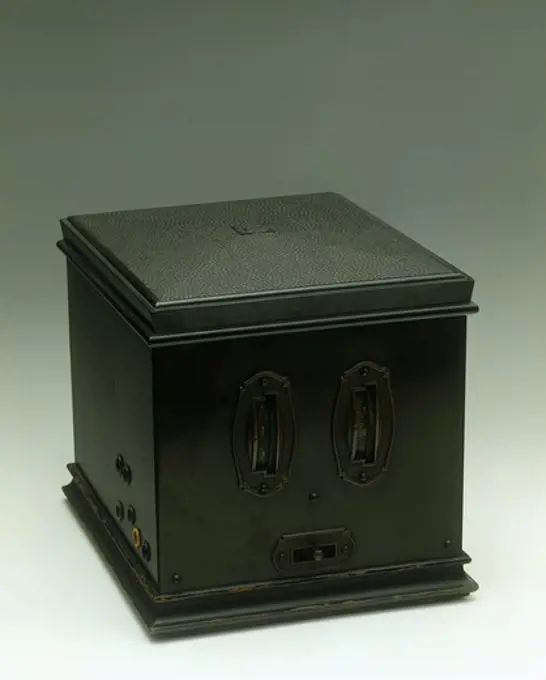
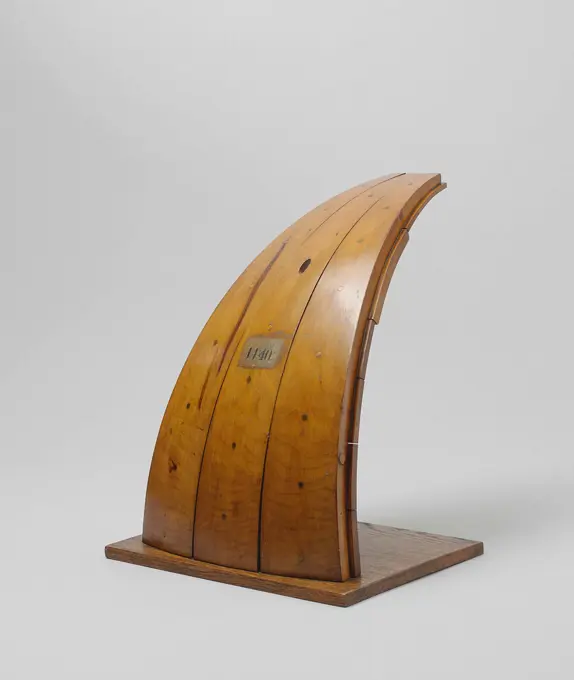
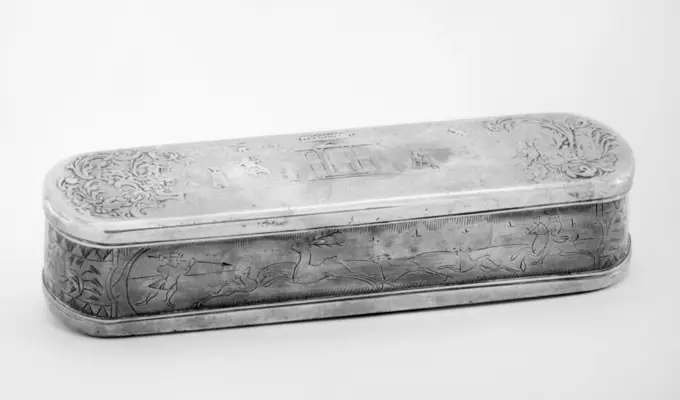
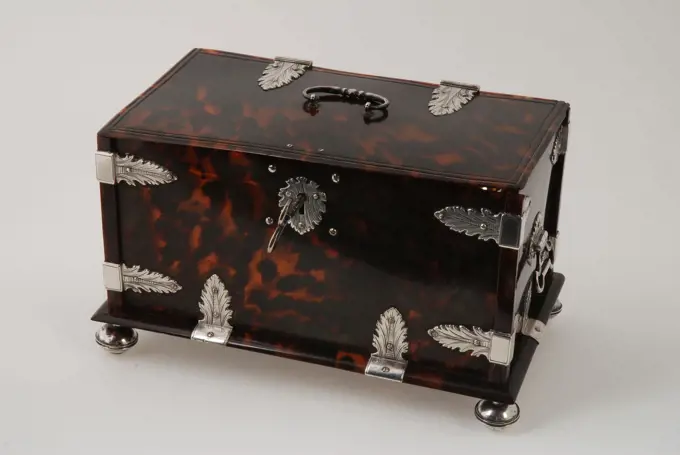
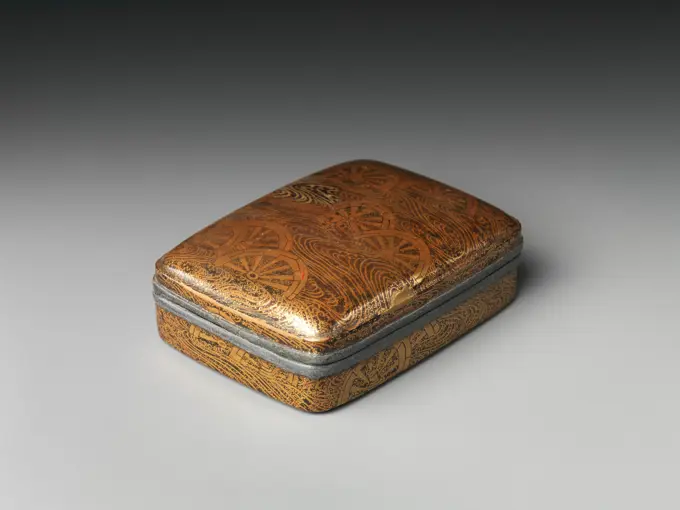
Incense Box (Kg) with Cartwheels Submerged in Water 15th century Japan The theme of this small incense box’s design, cartwheels in a stream, reflects the Heian-period (794-1185) practice of soaking the wheels of ox carts in water to prevent them from drying out and cracking. Popular during the Heian period, this pattern is also seen on both mirrors and decorated calligraphy papers used for sutra scrolls. This box was perhaps originally part of a cosmetic set and would have been a container for tooth-blackening material.. Incense Box (Kg) with Cartwheels Submerged in Water. Japan. 15th century. Lacquered wood with gold togidashimaki-e and hiramaki-e on nashiji (“pear-skin” ground). Muromachi period (1392-1573). Lacquer. Toilet box with silver fittings on the top in Louis XV style. On the inside of the lid a mirror. On the lock plate there is a button with which the charging is pulled open. The 4 corners of the box are decorated with open-worked silver fittings with an engraved decoration.Foot Warmer, Brass, wood, Rectangular, with indented quadrant corners. Hinged cover with three circular pierced designs. Elaborately shaped hinge riveted on back; shaped plate with engraved scrolls and armorial bearings riveted to front face. Four cast feet in shell form, one at each corner. At either end, repoussé plate in form of mascaron, to which handle is attached., Venice, Italy, ca. 1700, metalwork, Decorative Arts, foot warmer, foot warmerChest (USA); Stephen Rockwell; leather, wood, brass, paper; 14.0 x 31.0 x 17.5 cm (5 1/2 x 12 3/16 x 6 7/8 in. )Small chest made of wood from Jan van Speyk's gunboat, J. H. Cuperus, c. 1831 - c. 1832Fedral for a copper plate with the symbol of the evangelist Johannes, Anonymous, c. 1800 - c. 1900 Square brown flat box made of wood. The inside is covered with chamois leather. It is made a parting for a copper plate with the symbol of the evangelist Johannes. Netherlands wood (plant material). leather Square brown flat box made of wood. The inside is covered with chamois leather. It is made a parting for a copper plate with the symbol of the evangelist Johannes. Netherlands wood (plant material). leatherBasketJewelry box, covered with leather with stamped decorations. Jewelry box, covered with leather with gold-plated and polychormed stamped decorations: a deer and a boar hunt on the front; a farmer's hunt on the back; On the sides resp. Paris and Venus and Juno and Minerva, in Nissen. Hinges and slot of gracefully engraved golden copper. The right side surface can be opened and then shows the front surfaces of two drawers that are still properly stored in the colors. Two handles (one false) on the side faces. The box is labeled at the rear with a column. Note: The polychrome work is very damaged on the outside and disappeared here and there.Covered Box with Design of Pine, Bamboo, and Cherry Blossom. Culture: Japan. Dimensions: H. 2 3/8 in. (6 cm); W. 6 13/16 in. (17.3 cm); D. 1 3/4 in. (4.4 cm). Date: 19th century.This covered box, part of a wedding trousseau, comprised of thirty-one pieces, represents late Edo-period maki-e (decoration in gold and/or silver sprinkled powder) art at its finest. The Shimazu family, lords of Satsuma in Kyushu, ordered this traditional trousseau most likely for Taka-hime, who was married to Matsudaira Sadakazu, lord of Kuwana (Ise Province), around 1830.The items of the wedding set are decorated with various auspicious motifs. The evergreen pine represents longevity and also symbolizes renewal. The fast-growing, springy, but at the same time very strong and enduring bamboo also stands for longevity and represents endurance and strength. The plum blossoms are the first flowers of spring, representing the renewal of nature. The combination of the "Three Friends of Winter"--originating from . Octagonal box on four claw feet and with a boulders lid. The box is decorated with golden lacquer on a black surface. On the wall and the lid decorative tires with low-relief valuables and (lotus) tendrils against a background of fine golden lines and geometric patterns. In the center of the lid and on the four long walls cartouches with figures at pavilions on the water. The inside and bottom of the box is black. In the middle of the lid an inscription is applied: 'ANT: Luden J. HZN'; On the inside of the lid: 'Souvenir de R. LAER '. The box is filled with seven inner boxes and two stacks of a total of twelve chips. The lids of the inner boxes and four of the bins are decorated with figures in a water landscape with pavilions surrounded by decorative tires; Seven of the choppies are decorated with playing card figures against a background of tendrils and one bin has the word 'game' against the same background. The inner boxes contain a total of one hundred and twenty-seven chips of Box for a casket third quarter 17th century British. Box for a casket 229033Liqueur cellar of Mahoniehout, c. 1750 - c. 1800 Liqueur cellar of mahogany for 4 bottles and a glass. The glass and two bottles are missing.  mahogany (wood). oak (wood). pine (wood). glass Liqueur cellar of mahogany for 4 bottles and a glass. The glass and two bottles are missing.  mahogany (wood). oak (wood). pine (wood). glassKasetkaBox c 1800-1820 New England. White pine . Artist unknownTrunk still bank, 20th century, 3 7/16 x 4 1/8 x 3 3/16 in. (8.73 x 10.48 x 8.1 cm), Wood, metal, 20th centuryBasketEmbroidery, England 19th century. Children's footrest, embroidered in woollen small stitch, with a flower basket and a geometric motif.Brass design fitting on antique wooden carving pen box, Jodhpur, Rajasthan, India Copyright: xSafatxAli/DinodiaxPhotoxFrances Lichten, Chest, c 1938 ChestBrass design fitting on antique wooden box, Jodhpur, Rajasthan, India Copyright: xSafatxAli/DinodiaxPhotoxPortable writing desk. unknown, authorPa. German Box. Dated: 1935/1942. Dimensions: overall: 35.8 x 51.2 cm (14 1/8 x 20 3/16 in.). Medium: watercolor, graphite, and colored pencil on paper. Museum: National Gallery of Art, Washington DC. Author: Ethelbert Brown.Box -Brass iron design fitting on antique wooden box, Jodhpur, Rajasthan, India Copyright: xSafatxAli/DinodiaxPhotoxAccessory caseCasket. Culture: British, London. Dimensions: Width: 8 3/4 in. (22.2 cm). Maker: James Fraillon (active 1706-1727/28). Date: 1716-17. Museum: Metropolitan Museum of Art, New York, USA.Three-tiered box with stripes and Nanban patterns, early 17th century, Unknown Japanese, 8 9/16 × 9 5/16 × 8 3/8 in. (21.75 × 23.65 × 21.27 cm), Black lacquer with gold maki-e and mother-of-pearl and lead inlay, Japan, 17th century, Stacked trays were commonly used to store delicacies for celebrations or outings like cherry-blossom viewing. This example has three tiers of trays decorated with an allover pattern of stripes that displays an aura of modernity. Thanks to European traders who brought cloth with similar designs from Southeast Asia to Japan, stripes and checks became popular again in the late 16th and early 17th century after already being popular during the 11th century.Brass design fitting on antique wooden box, Jodhpur, Rajasthan, India Copyright: xSafatxAli/DinodiaxPhotoxCasket of pine, covered with turtle on silver foil (). .Coffret. Culture: Italian. Dimensions: Overall: 8 1/8 x 24 13/16 x 7 15/16 in. (20.6 x 63 x 20.2 cm). Date: early 1400s.The inscription along the top, "onessta fa belladonna," can be translated as, "Virtue makes a woman beautiful.". Museum: Metropolitan Museum of Art, New York, USA.Box. Culture: American. Dimensions: 6 3/4 x 22 7/8 x 16 in. (17.1 x 58.1 x 40.6 cm). Date: 1705-15.This box has an elaborate cast escutcheon of the type found on high-style case furniture, yet its painted ornament--consisting of various spray and vine designs--appears to have been the work of an amateur. Inscriptions on the interior suggest that the original owner was Rebecca Lynde (d. 1716) of Saybrook. She may also have been responsible for the decorative painting. Museum: Metropolitan Museum of Art, New York, USA.Open Wooden chest, isolated on a white background.Cupboard on bolpoten, covered with ivory that is decorated with flower and leaf vessels that swing up from vases, anonymous, c. 1650 - c. 1700 Cabinet of ivory on four Bolpoten and at the front with two doors that close an interior that is subdivided into small drawers. The cupboard is inside and external whole with thin ivory plates covered, which are attached to ivory pins on a wooden surface. The cutting work that is applied to these plates consists of flower and leaf vines, which overgrow all sides with their tropical vegetation from small vases. The batter of silver is also equipped with flower motifs. Sri Lanka wood (plant material). ivory. silver (metal)   Sri Lanka Cabinet of ivory on four Bolpoten and at the front with two doors that close an interior that is subdivided into small drawers. The cupboard is inside and external whole with thin ivory plates covered, which are attached to ivory pins on a wooden surface. The cutting work that is applied to these plates consists of fWriting or money box with image son Peter the Great, Anonymous, 1685 - 1700  Writing or money box of oak, exaggerated with a red substance and completely attached with subsequent iron tires that show an ajour processed moresk ornament. The folding lid consists of two parts; The front half runs slanted forward. Inside a closed compartment with trays and drawers. The inside of the lid is painted with a man's portrait and the words: Aelecksi Carecsewes (son of Peter the Great). A deer show is painted on the slider. Iron handles on the sides. Zaanstreek wood (plant material). oak (wood). linen (material). copper (metal). iron (metal)  historical persons. stag-huntingPen Box. Dimensions: Box closed:  H. 2 1/2 in. (6.4 cm) W. 8 7/8 in. (22.5 cm) D. 1 11/16 in. (4.3 cm) Wt, 13.3 oz. (377.1 g)Box opened:  H. 4 7/8 in. (12.4 cm) W. 8 7/8 in. (22.5 cm) D. 1 3/16 in. (3 cm). Date: 13th century.Muslim metalworkers produced large numbers of pen boxes, many of which were richly decorated with inlays of gold, silver, and copper. A typical medieval Islamic calligrapher's pen box is an elongated rectangular object with rounded corners, about ten inches long, three inches wide, and two inches tall. In its simple construction, it is composed of a main body and a lid with two hinges along one of the long sides and a clasp on the opposite side. The interior includes a receptacle to hold the inkwell in one corner while the remaining space is reserved for a variety of reed pens and penknives. The present pen box shows a typical overall silver-inlaid decoration combining calligraphic, vegetal, and figural designs both on the exterior and the interior surfaceOctagonal Pillow, late 12th-early 13th century, 4 5/16 x 17 3/16 x 7 7/8 in. (10.95 x 43.66 x 20 cm), Cizhou ware Stoneware with brown and white slip decor, China, 12th-13th century, While octagonal head-rests were common during the Song and Jin dynasties, this example is distinguished by the calligraphy, written with white slip, which is a relatively rare technique. The fronds forming the fourteen character poem are executed in brown slip with particularly elegant brushstrokes. The poetic inscription readsTable-top chest, 17th century, 13 13/16 x 13 3/8 x 10 1/8 in. (35.08 x 33.97 x 25.72 cm), Huang-hua-li hardwood, silver, China, 17th century, Chests made for the storage of small objects are known in a variety of forms. This type of box has traditionally been called a seal chest, suggesting its suitability as a storage cabinet for brushes, ink, seals and other scholar's objects. Excavated examples however, demonstrate that similar drawered cabinets were used for cosmetics, clothing and Buddhist relics. As such, they would have been useful in both the study and the bedroom.Brass design fitting on antique wooden box, Jodhpur, Rajasthan, India Copyright: xSafatxAli/DinodiaxPhotoxCasket. Nevers, France. Date: 1675-1699. Dimensions: 18.1 x 13.3 x 15.2 cm (7 1/8 x 5 1/4 x 6 in.). Wood, silk, embroidery, verre de Nevers, metal, and gilding. Origin: Nevers. Museum: The Chicago Art Institute, Chicago, USA.Brass design fitting on wooden book holder, Jodhpur, Rajasthan, India Copyright: xSafatxAli/DinodiaxPhotoxPlejerko with a cover;  End of the 19th century (1801-00-00-1900-00-00);Flask c 1840-1860 Bennington. Earthenware . Lyman, Fenton & Co.Chris Makrenos, Music Box, 1935 1942 Music BoxNanbanzi. Culture: Chinese. Dimensions: 6 7/8 × 2 7/16 × 1 9/16 in. (17.5 × 6.2 × 4 cm). Maker: Golden Tone (or Voice) Workshop, Canton. Date: 19th century.This wooden block hangs from the man tougu or the bangu and in a opera ensemble is played by the leader. Museum: Metropolitan Museum of Art, New York, USA.Box with lid of cardboard with label on which is written, among other things, `Gebhard-Crone ', c. 1840 - c. 1925 Box with lid of cardboard with label on which is written, among other things, `Gebhard-Crone '. Two ribbons are tied on the box. West-Europa cardboard. rope Box with lid of cardboard with label on which is written, among other things, `Gebhard-Crone '. Two ribbons are tied on the box. West-Europa cardboard. ropeBox with Design of Pine, Bamboo, and Cherry Blossom. Culture: Japan. Dimensions: Depth: 17 3/4in. (45.1cm). Date: 19th century.This covered box, part of a wedding trousseau, comprised of thirty-one pieces, represents late Edo-period maki-e (decoration in gold and/or silver sprinkled powder) art at its finest. The Shimazu family, lords of Satsuma in Kyushu, ordered this traditional trousseau most likely for Taka-hime, who was married to Matsudaira Sadakazu, lord of Kuwana (Ise Province), around 1830.The items of the wedding set are decorated with various auspicious motifs. The evergreen pine represents longevity and also symbolizes renewal. The fast-growing, springy, but at the same time very strong and enduring bamboo also stands for longevity and represents endurance and strength. The plum blossoms are the first flowers of spring, representing the renewal of nature. The combination of the "Three Friends of Winter"--originating from China--is associated with celebration, and considerBox. Maker, attributed to: William Buel, American, born England, 1605-1681Box, 1749-1750. France, 18th century. Silver gilt and enamel; overall: 6.4 x 8.6 cm (2 1/2 x 3 3/8 in.).Snuffbox (can). Koenigliche Porcellain Fabrique, Meissen (1710-1763), factoryBoekband, anonymous, c. 1600 - c. 1625 Silver book binding in which notebook. The plates are decorated with sawing and engravings. The inside is a sundial, a compass and a mirror attached. Content: paper and silver plates with the engraved portraits of the Prinsen Maurits and Frederik Hendrik. Netherlands silver (metal) Silver book binding in which notebook. The plates are decorated with sawing and engravings. The inside is a sundial, a compass and a mirror attached. Content: paper and silver plates with the engraved portraits of the Prinsen Maurits and Frederik Hendrik. Netherlands silver (metal)Covered Basket with Design of Bush Clover and Deer late 17th century Style of Hon'ami Ketsu Japanese. Covered Basket with Design of Bush Clover and Deer. Style of Hon'ami Ketsu (Japanese, 1558-1637). Japan. late 17th century. Rattan body, gold, silver hiramaki-e. Edo period (1615-1868). LacquerNanbanzi () 19th century Golden Tone Workshop This wooden block hangs from the man tougu or the bangu and in a opera ensemble is played by the leader.. Nanbanzi (). Chinese. 19th century. Wood. China. Idiophone-Struck-slit drumAmos C Brinton, Liquor Carrier, c 1939 Liquor CarrierBox 1600-1650 Florence. Leather, tooled and gilded; silk, velvet, and metal mounts .Cong. China. Date: 3000 BC-2000 BC. Dimensions: H. 8.3 cm (3 1/4 in.); diam. 13.9 cm (5 1/2 in.). Jade. Origin: China. Museum: The Chicago Art Institute, USA.Chest of beech wood glued with turtle decorated with floral motifs. Chest of beech wood glued with turtle; The lid is arched in length and has a centerfield irrased with profiled turtles; All angles are covered by ejilled copper cover plates, which are, as well as the lock plate and the oval protective sheet of the polychrow lid knob, has been painted with floral motifs. The box is on four copper legs; From the inside the upright walls with mirrors are coated, in which a garden scene-painted on paper is reflected on the bottom.Container for Holy Oils 500-700 Frankish This portable container for holy oils is decorated with incised circular patterns, some of which may have a cosmological meaning. Used for both baptisms and confirmations, the container could also be suspended from a chain or strap worn around the neck.. Container for Holy Oils 468706Casket 14th century Catalan. Casket. Catalan. 14th century. Copper alloy, limewood. Made in Catalonia, Spain. Metalwork-Copper alloyPole top 3rd century B.C. China. Pole top 49496Snuffbox 1753-54 Jean Ducrollay In eighteenth-century Europe, Paris led the production of high-quality luxury goods. Parisian goldsmiths made a wide range of small, personal articles such as snuffboxes; étuis to hold sealing wax, tweezers, or utensils for sewing; souvenirs, which contained thin ivory tablets for note taking; and shuttles for knotting lace. Gold snuffboxes and boxes decorated with portrait miniatures were prized and frequently given as royal gifts, often to ambassadors or members of the court in lieu of cash payments for their services. Coveted and admired, these boxes were produced from a variety of materials. The best were skillfully made of gold and embellished with diamonds, enameled decoration, lacquer, and other luxurious materials. By the middle of the century, the taking of snuff had become an entrenched social ritual, and the snuffbox, too, had become an important social prop. Snuffboxes were considered highly fashionable accessories, with some merchants advertOld closed locked retro vintage leather suitcase closeup isolated on white backgroundSnuff Box. South Staffordshire, England. Date: 1765-1775. Dimensions: 7.3 x 5.7 x 3.8 cm (2 7/8 x 2 1/4 x 1 1/2 in.). Enamel on meta;. Origin: South Staffordshire. Museum: The Chicago Art Institute, Chicago, USA.Tiered Incense Box (Jukogo) with Family Crest, Pine, Bamboo, and Plum. Culture: Japan. Dimensions: H. 3 in. (8.6 cm); W. 2 3/8 in. (6 cm). Date: 18th century. Museum: Metropolitan Museum of Art, New York, USA.Shrine for Anubis fetish (Imiut) ca. 1919-1885 B.C. Middle Kingdom Two male figures, shrine, and fetishlike object were discovered by Metropolitan Museum excavators in a chamber in the enclosure wall of an elite tomb at Lisht South. The object of veneration found inside the shrine was called an imiut, "the one in the wrappings.". Shrine for Anubis fetish (Imiut). ca. 1919-1885 B.C.. Wood, paint. Middle Kingdom. From Egypt, Memphite Region, Lisht South, tomb of Imhotep, chamber inside the south enclosure wall, MMA excavations, 1913-14. Dynasty 12Clock, Silver-gilt, shaped tortoiseshell, cut diamonds and rubies, lapis (base); leather with silk and velvet lining (case), Architectural structure holding circular clock, its border encrusted with diamonds, ribbon motifs surrounding the top and bottom; clock hung from tortoiseshell arch with gold floral vines creeping up the two columns and three gold ornaments positioned on top of each column and arch, all on vase of thick lapis., Europe, late 19th century, timepieces & measuring devices, Decorative Arts, ClockFive-tiered box decorated with the Thirty-Six Immortal Poets, 19th century, Unknown Japanese, 17 3/4 x 10 1/4 x 9 5/8 in. (45.09 x 26.04 x 24.45 cm), Black lacquer and gold, Japan, 19th century, Stacked food boxes (jūbako) stored delicacies prepared for celebratory occasions, picnics, and outings. This example has been meticulously engraved with images of Japan's Thirty-six Immortal Poets (Sanjurokkasen) and then inlayed with gold. The technique, known as kinma, was introduced by the lacquer artist Tamakiji Zokoku (1805-1869), a lacquer artist in the service of Lord Matsudaira on the island of Shikoku. Tamakiji adopted the technique from lacquer containers imported from Thailand and Burma. In examples from Southeast Asia, the engraved lines were typically inlaid with red, yellow, or blue colored lacquer, but in this variation the Japanese artist has used gold.wooden chest isolated on whiteIron box with wooden upholstery, c. 1400 - c. 1950 Square iron box with slightly curved lid and ogival locking. Internal with wooden upholstery. The key is missing.  iron (metal). wood (plant material) Square iron box with slightly curved lid and ogival locking. Internal with wooden upholstery. The key is missing.  iron (metal). wood (plant material). Paint box with a decoration on the lid with chrysanthemums in mother-of-pearl. Equipped with tin edges.Indian style wooden jewellery box isolated on whiteWriting box. .Round hat box of cardboard, covered with paper on which pumpkin-shaped roses, Gabrielle Stas, c. 1919 Round hat box of cardboard, covered with paper on which pumpkin-shaped roses. The box can be closed with two narrow ribbons. France (possibly) cardboard. paper. lint: silk Round hat box of cardboard, covered with paper on which pumpkin-shaped roses. The box can be closed with two narrow ribbons. France (possibly) cardboard. paper. lint: silkBoxBriefcase (portefuille) 1763-64 Probably by Jacques Lourdière Made in Turkey for the western market, morocco leather briefcases were fashionable in both England and France during the last quarter of the seventeenth and throughout the eighteenth century. This sumptuous example embellished with embroidery in silk and metal thread can be dated to 1763-64 by one of the marks on the gold lock: the crowned letter Z, the assay mark warranting the standard of the metal.The embroidery on the back displays both a banderole with the words Ministère des Affaires Étrangères” (Ministry of Foreign Affairs) and the coat of arms of César-Gabriel, comte de Choiseul-Chevigny and later duc de Praslin (1712-1785). This nobleman enjoyed a successful military career before undertaking a political one. He served as foreign minister of France from 1761 to 1766 and in that capacity signed the Treaty of Paris, ending the Seven Years’ War, which for France entailed the loss of much of her North American territorRectangular box with lid. Culture: China. Dimensions: H. 2 5/16 in. (5.8 cm); W. 7 in. (17.8 cm); L. 12 5/8 in. (32 cm). Date: 19th century.The corner of this lid is inlaid with four characters: huang shi yi bian, meaning "inherited book from Yellowstone." This inscription refers to a legend that Zhang Liang (ca. 250-186 B.C.), a founding strategist of the Han dynasty, had been given a secret book of strategy from the hermit Mr. Yellowstone. Its inclusion indicates that this box was probably used by the literati to present books or stationery. The chi dragon glaring at and grabbing the title appears to be a loyal guardian of the box's content. Museum: Metropolitan Museum of Art, New York, USA.Przeszo Przyszoci unknownSquare hat box of cardboard, covered with art deco paper with an orange stock on which a whimsical pattern in blue and flowers in black, yellow and red, Maison Marcel, c. 1917 - c. 1919 Square hat box of cardboard, covered with art deco paper with an orange stock on which a whimsical pattern in blue and flowers in black, yellow and red. Amsterdam Cardboard. upholstery: paper Square hat box of cardboard, covered with art deco paper with an orange stock on which a whimsical pattern in blue and flowers in black, yellow and red. Amsterdam Cardboard. upholstery: paperWooden box for silver bars from 'Slot Ter Hooghe'.wooden Coffin for Silver Bars from the voc Ship' Slot Ter Hooghe 'Old objects bucketAnonymous / 'Case for octagonal rock crystal tray with four engraved dolphins'. 1600 - 1630. Leather, Wood, Metal, Cloth. Museum: Museo del Prado, Madrid, España.Ting vase. Bronze. China. Paris, Cernuschi museum. Chinese art, bronze, decorative motif, rectangular, relief, ting vaseBox Containing Twenty-Three Samples of Wood from Surinam, P.F. Jansen, 1839  Rectangular box with three and twenty wood samples: 1. Bradilief (Genus Coccoloba, fam. Polygonoceae) 2. Hienge Nikoe (not identified) 3. Siepo (Protium Spec.) 4. Troeta (not identified) 5. Djond Joroba (not identified) 6. Arratte (Minquartia Guyanensis) 7. White sugar wood (Sugar Pine or White Maple) 8. Pieterhout (not identified) 9. Tatai (not memorized) 10. Bosch papaya (not identified) 11. Aretano (not identified) 12. Pondo (not identified) 13. Drevie TREKIE (not identified) 14. Lowland bebe (Pterocarpus draco) 15. Praprahout (not identified) 16. Swietie Bontje (Inga Rubiginosa) 17. Anaura (Ienn-Barki, Licansisisisisisisisisisisisisisisisisisisisie ) 18. Mirahout (Surinamensis triplary) 19. Bastaard Cinnamon Heart (ACRODICLIDIUM CANELLA) 20. Bierwood (not identified) 21. Manpa (not identified) 22. Tienge monie (see above: Siepo) 23. Pritijari (Rutaceae Spec.). Suriname iron (metal). wood (plant material). Concealed Drawer for a Globe Work Table (Globustisch), c. 1810-15. Austria, Vienna, early 1800s. Burl walnut veneer, mahogany, ebony, satinwood, gilt wood, painted wood; overall: 5.3 x 5.3 x 5.5 cm (2 1/16 x 2 1/16 x 2 3/16 in.). Work tables resembling globes were the usual form for a lady's sewing or writing table around 1800 in Austria. Combining moving parts, secret compartments, and highly finished decoration, these tables were also a way for the cabinetmaker to show off his skill. The tripod supports and temple-like architectural quality of both the exterior and interior decoration reflect the fashionable taste for neoclassical style, or Biedermeier as it was called in Austria, where Vienna was the center of such elaborate furniture production.Trunk Moynat. Waongoos of varnished wood lined with painted fabric and red paper (belonging to BK-1995-20-a). Model: Elongated with hinged lid. Closure through hook and eye. Decoration: in the middle on the lid a scene with two figures, flanked on either side by a butterfly and flowers. On the front on the box two bushes of berries. Central to the lid a multicolored butterfly in the middle of roses, on a blue fond. In the box a recess for the impeller coated with red paper. On the left of the inside of the lid an oval pocket label with the signature of Jin Zemao; Probably the fan painter. Canton, ca. 1840-1860.Grain size of 1 liter, anonymous, 1803  Wooden grain size of 1 liter with label. Netherlands wood (plant material)   NetherlandsAgustí Roqué / "Ratexma", 2005, Sculpture.Badge or Harness Pendant 14th century Spanish Heraldry, or coat-of-arms, were vitally important in Europe throughout the Middle Ages and the Renaissance. Heraldic emblems were used to identify noble families, cities, regions, and even countries. In addition to being displayed on shields and flags, heraldry was incorporated into architectural decoration on the interior and the exterior of buildings, on furniture, works of art, clothing, and horse equipment. Harness pendants, like this example, would have been attached to a headstall, bridle, or other straps making up the tack of a horse ridden by a nobleman or noblewoman, or a member of their household. Many harness pendants also have decoration that is simply ornamental, or have symbols that are not specifically heraldic in nature.. Badge or Harness Pendant. Spanish. 14th century. Copper, gold. Miscellaneous-BadgesModel or a wind-driven pump. Model of a pump powered by Molenwieken, in two-storey frames, almost identical to NG-MC-648-2. The lower floor is a bin in which the pump tube stands, which has a drain pipe at the top floor. The pump inhibitors are simple metal valves, as well as the pump pistons connected to a stool with a pump rod; With one model, the top of the pump tube closed with a wooden plug that ensures the vertical movement of the pump rod. The crankshaft is driven by a four mill vessel; Crankshaft and blades are mounted with a metal ring on a wooden cylinder, so that the whole can be turned into the wind direction.Oval chips box with lid, red stained, anonymous, c. 1800 - c. 1900 Oval chips box with lid, red stained. Friesland whole: Wood (plant material) Oval chips box with lid, red stained. Friesland whole: Wood (plant material)Oda Ado (1947-). "Box". Ceramic. Japan. Paris, Cernuschi museum. 72455-3 Japanese art, box, Japanese ceramic, close, bamboo pattern, potteryModern antiques, Germany, 20th century - Telefunken metal and bakelite radio, model Arcoletto, 1927.Model of a Section of an Armored Turret. Model of a part of a semi-ball-shaped gun dome, on a base plank. The outer shell consists of three of the a total of six and twenty segments, the inner shell is made up of horizontal plates. A shooting hole is applied to three quarters height and the inner shore is thickened on site. The outside segments do not close above, but release a circular opening. Scale 1: 5 (derived).Tobacco box 18th century Dutch. Tobacco box 206887Jacobus Schalkwijk, Colonial tortoiseshell containing three silver tea cans, tea chest coffin holder silver turtle, key) Turtles casket with silver fittings on ball key; here mixing can with hinged lid and two tea canisters with loose round lid. Buses are made of smooth silver batter in palmetcontourmaster's mark: ISW in square tea tea colonial chestOld chest isolated on the white backgroundSnuffbox with views at the château of Chanteloup. Artist: Miniatures by Louis Nicolas van Blarenberghe (French, Lille 1716-1794 Fontainebleau). Culture: French, Paris. Dimensions: Overall: 1 3/4 × 3 1/8 × 2 1/4 in. (4.4 × 7.9 × 5.7 cm);Miniatures: top: 2 1/4 x 3 1/8 in. (57 x 80 mm); bottom: 2 1/4 x 3 1/8 in. (57 x 80 mm); front: 1 3/4 x 3 1/8 in. (45 x 80 mm); back: 1 3/4 x 3 1/8 in. (45 x 80 mm); left side: 1 3/4 x 2 1/4 in. (45 x 57 mm); right side: 1 3/4 x 2 1/4 in. (47 x 57 mm). Maker: Possibly by Pierre-François Delafons (master 1732, died 1787). Date: 1748/49, miniatures 1767.The miniatures that decorate this box lend it unusual importance and interest. The six scenes, which are painted in gouache on vellum, depict views of the Château de Chanteloup and of the gardens that surrounded it. The miniature on the lid, which provides the primary view of the château, is signed "Van Blarenberghe 1767." Three members of the Van Blarenberghe family painted miniatures, but these views of CWood cutting board isolated on white background. Wooden pizza boardTravel bag.Box and cover, Carved ivory inlaid with carved mother-of-pearl and carved and stained ivory, gilded overlay, Japan, ca. 1830, containers, Decorative Arts, Box and cover