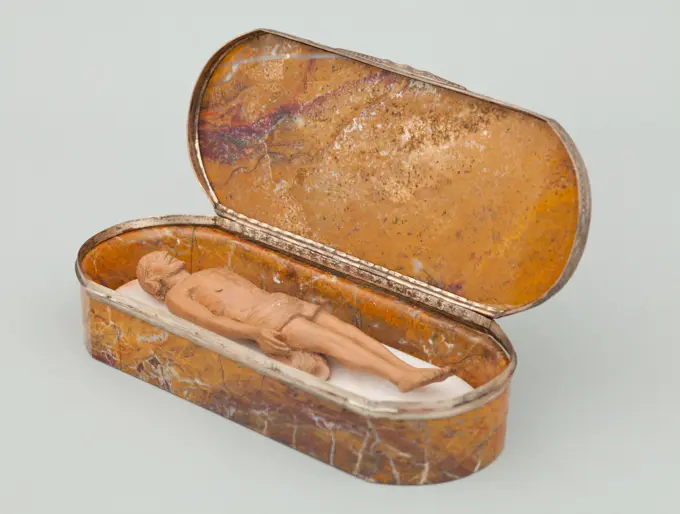
Decorative and Functional Boxes

A variety of ornate boxes, including Japanese incense boxes and toilet boxes, showcasing different materials and decorative styles across centuries.

Chest (USA); Stephen Rockwell; leather, wood, brass, paper; 14.0 x 31.0 x 17.5 cm (5 1/2 x 12 3/16 x 6 7/8 in. )
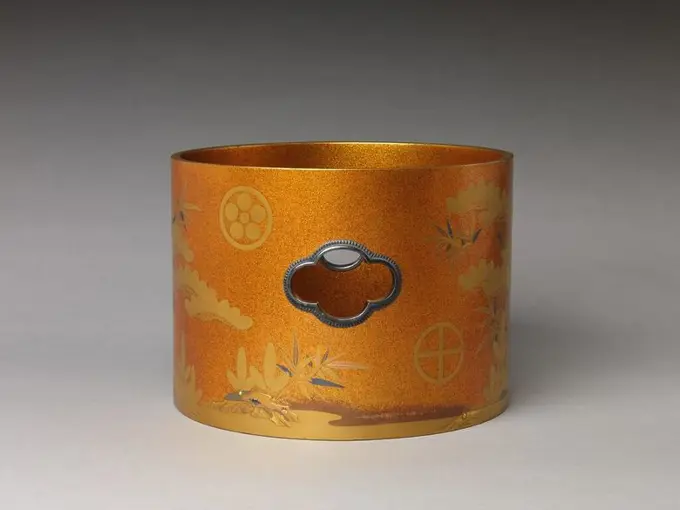
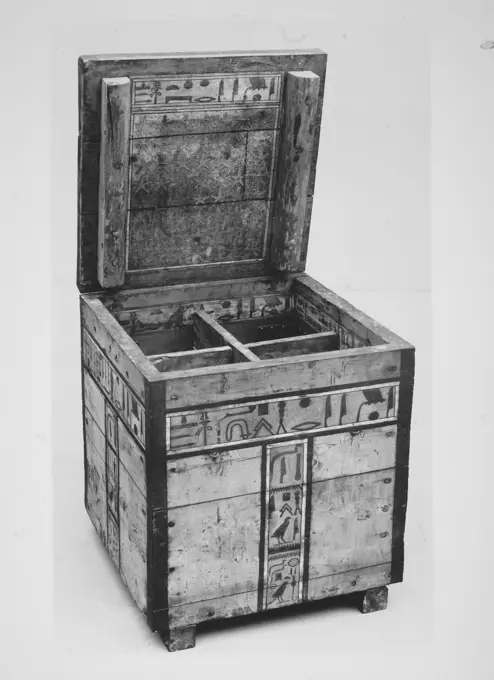
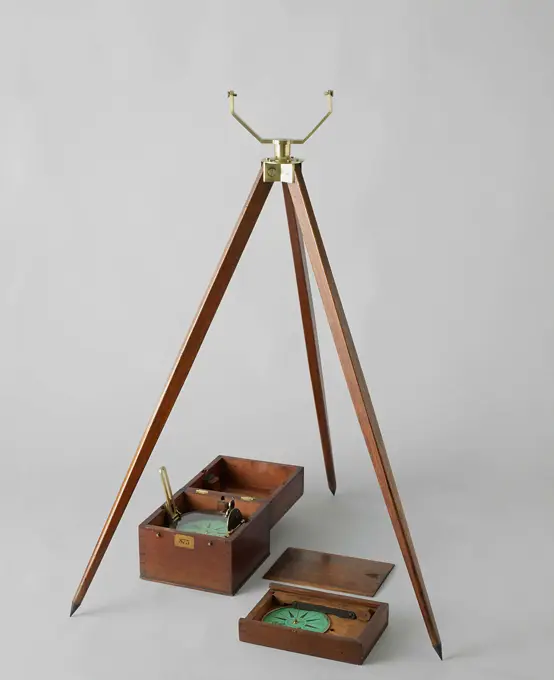
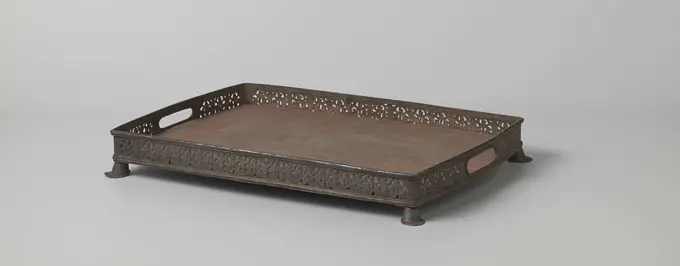
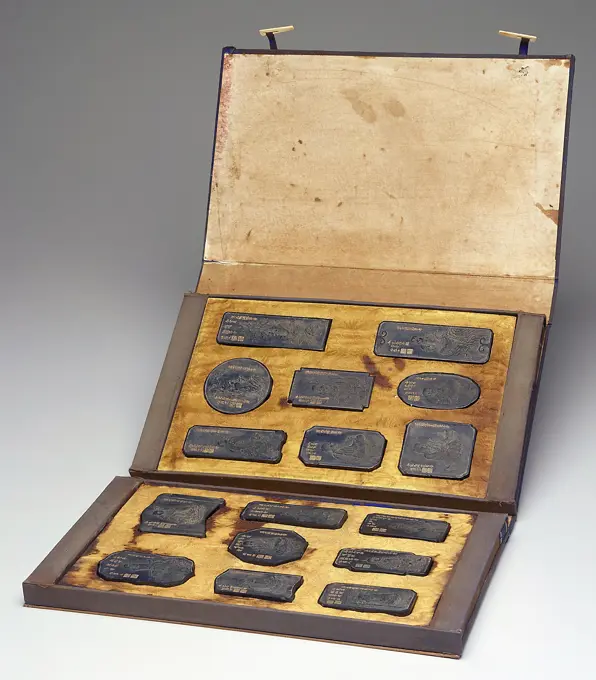
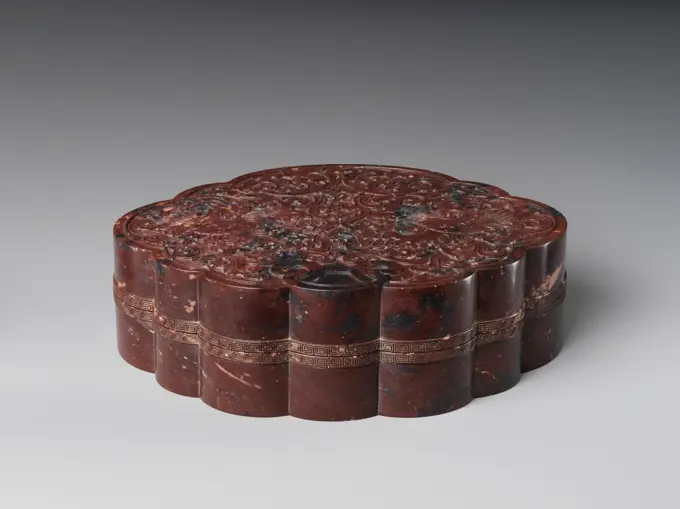
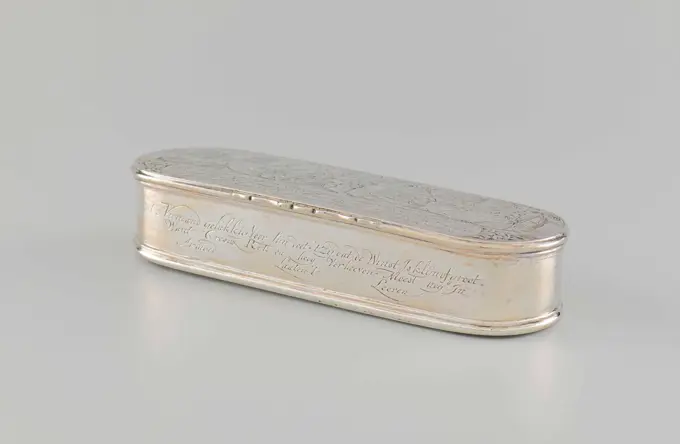
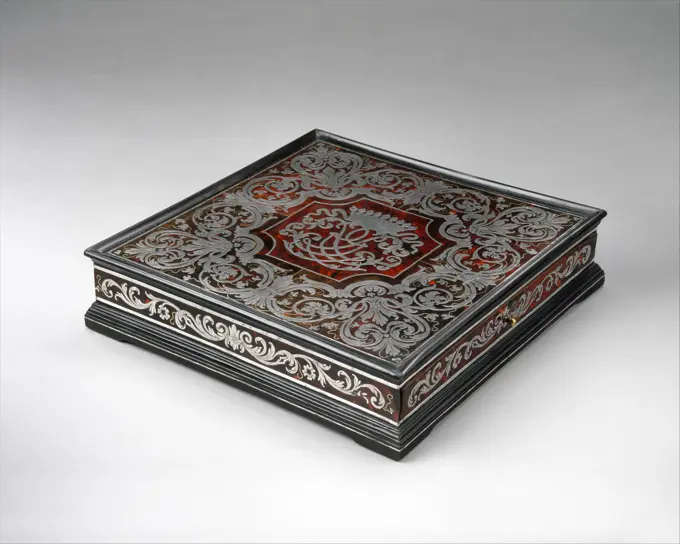
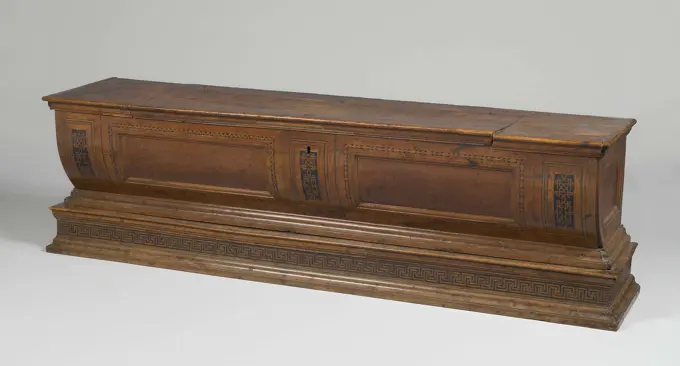
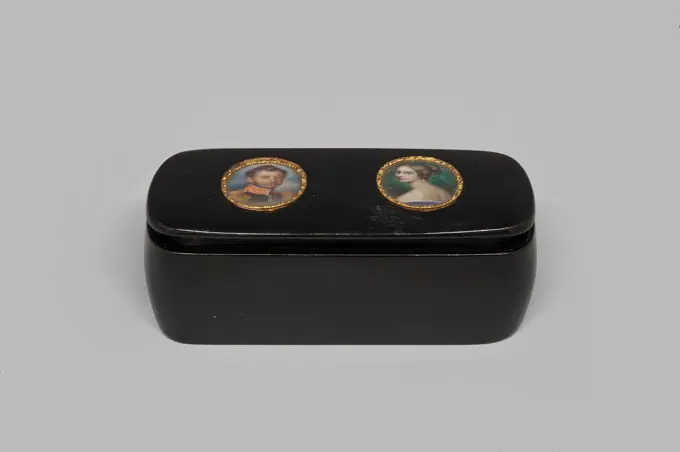
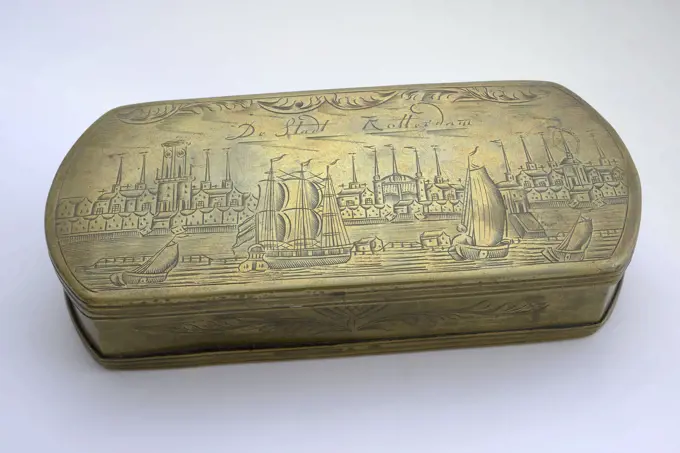
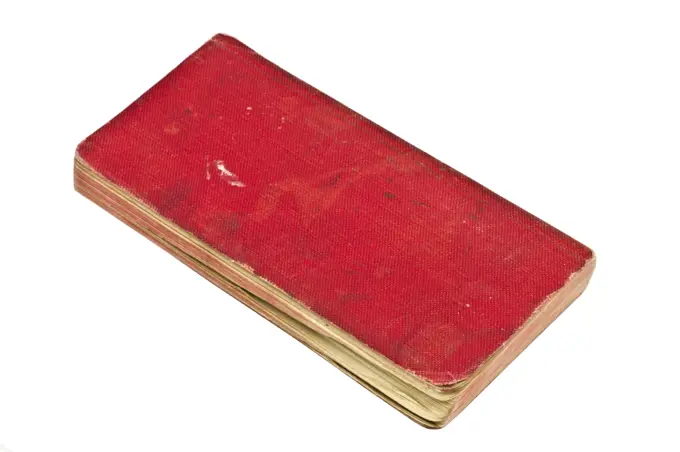
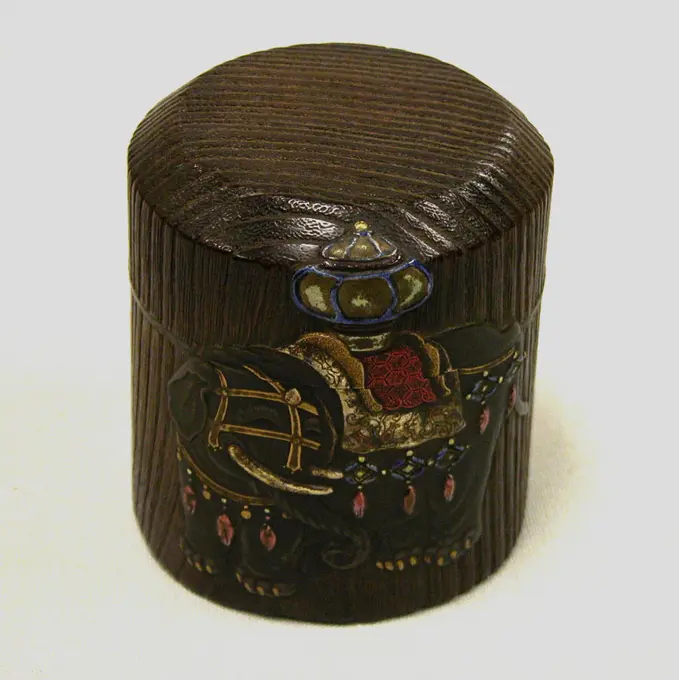
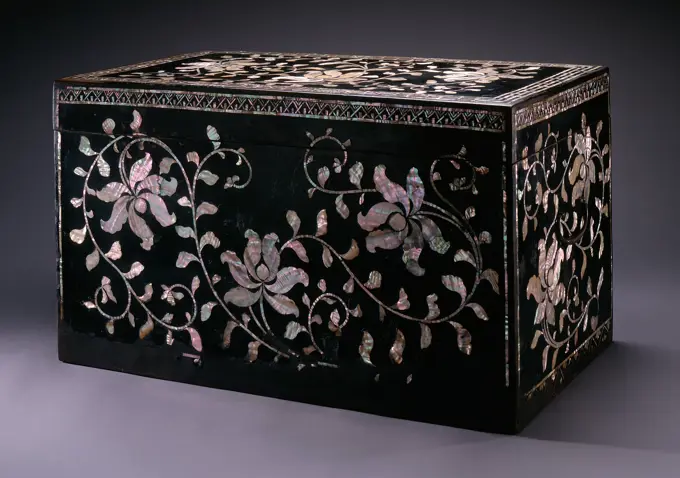
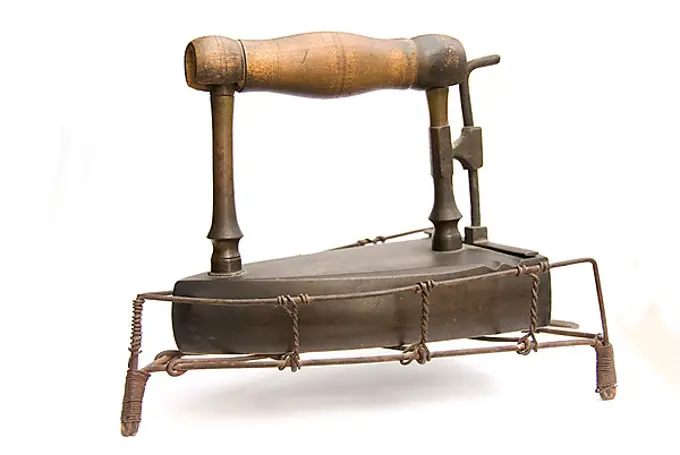
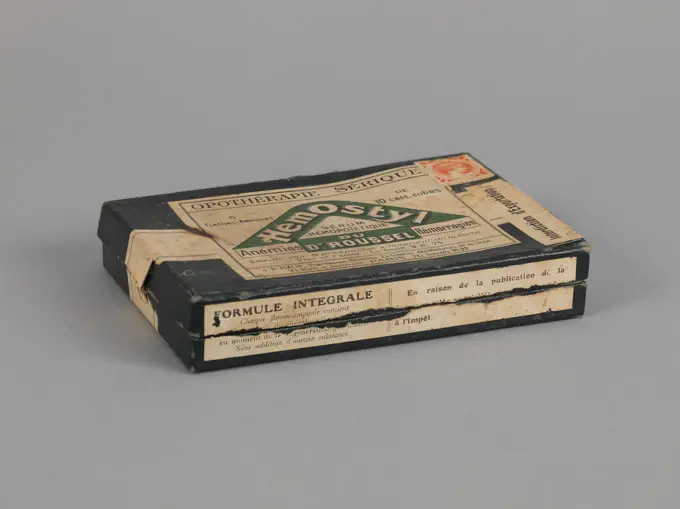
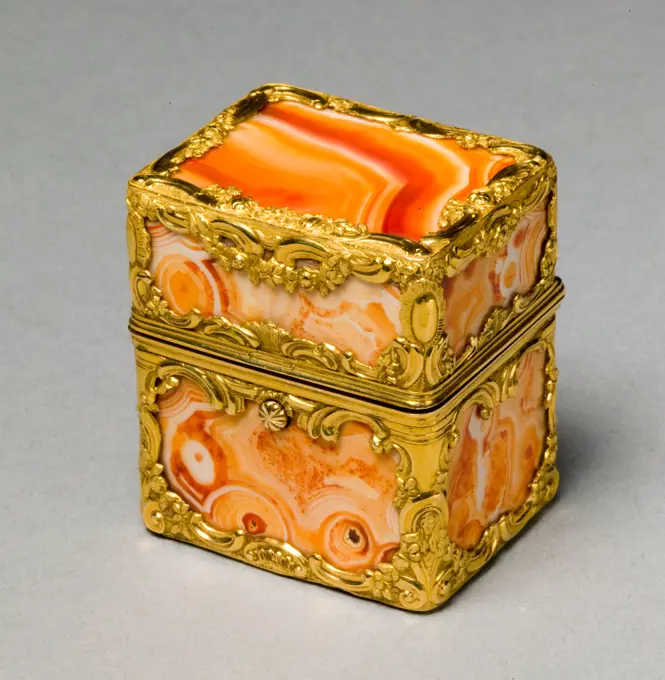
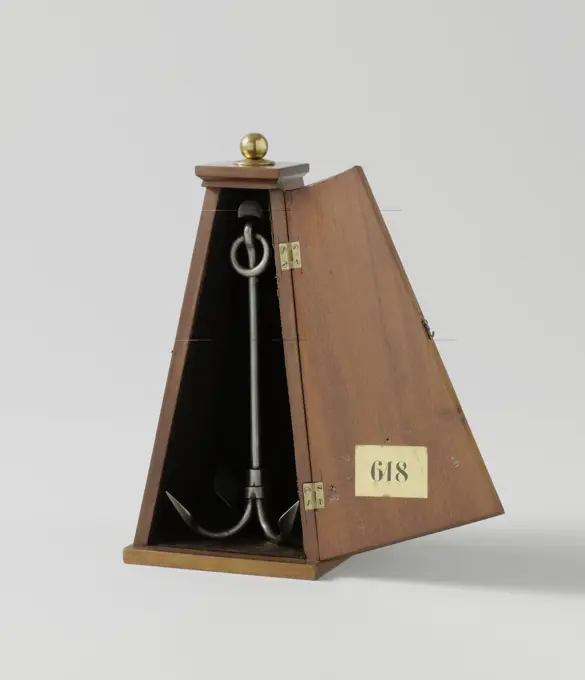
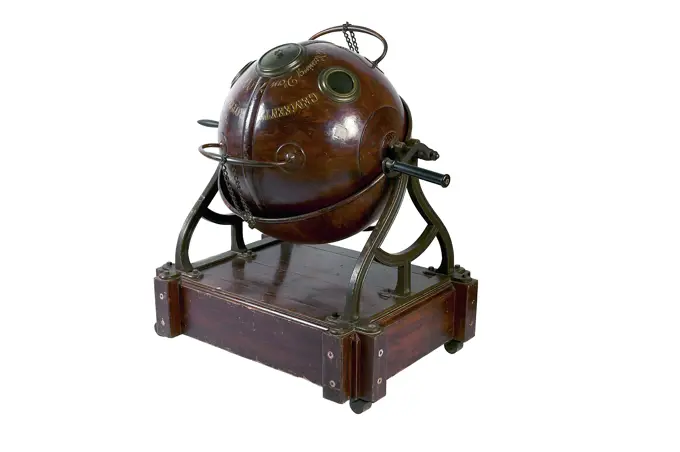
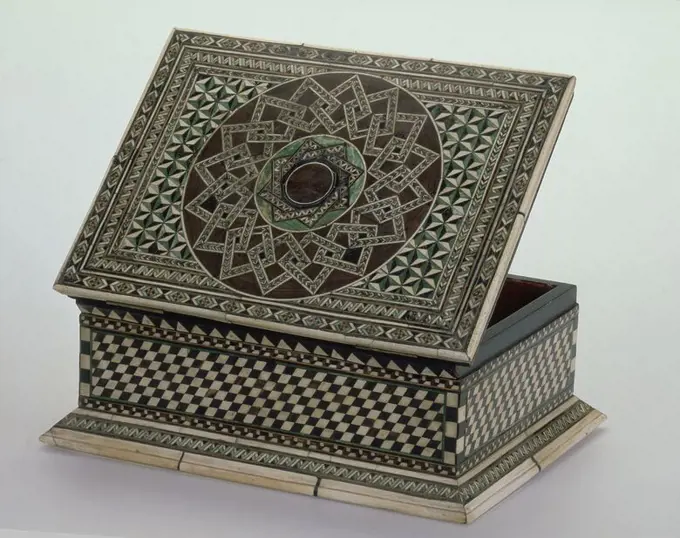
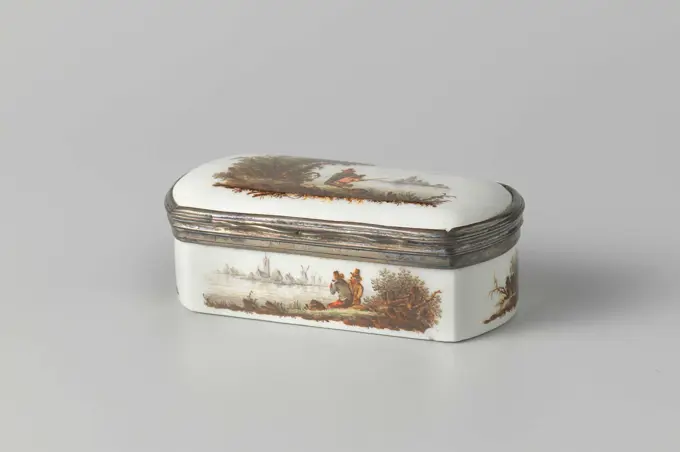
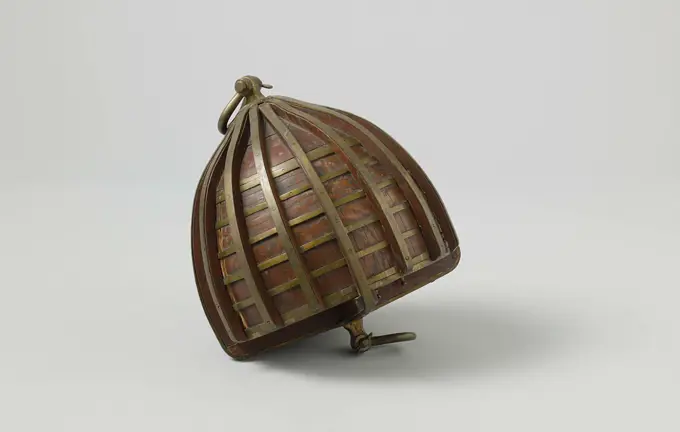
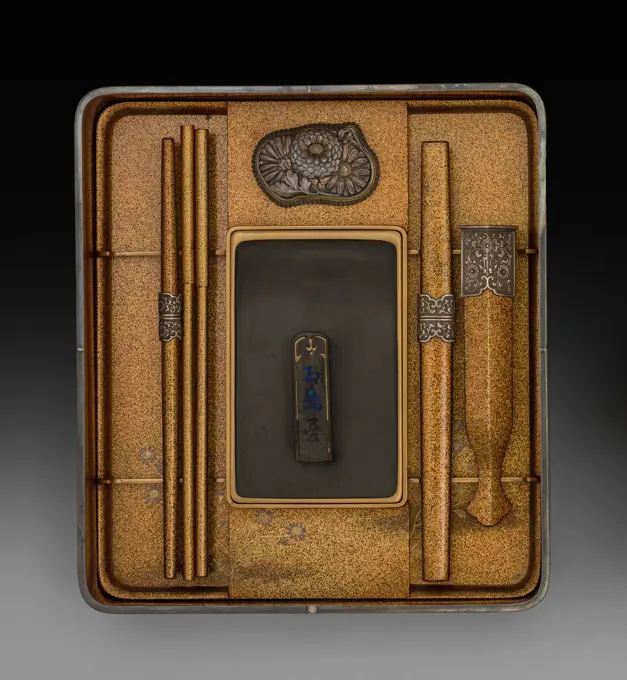
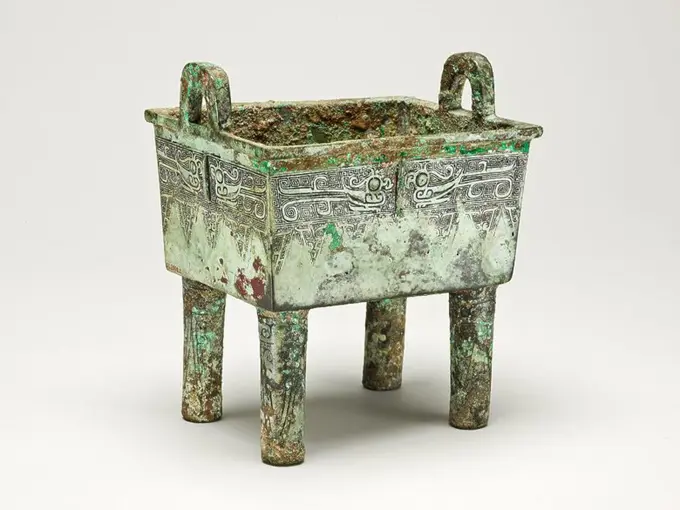
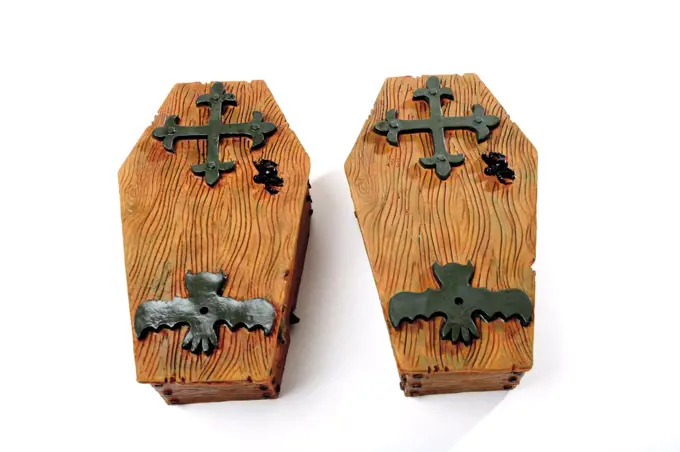
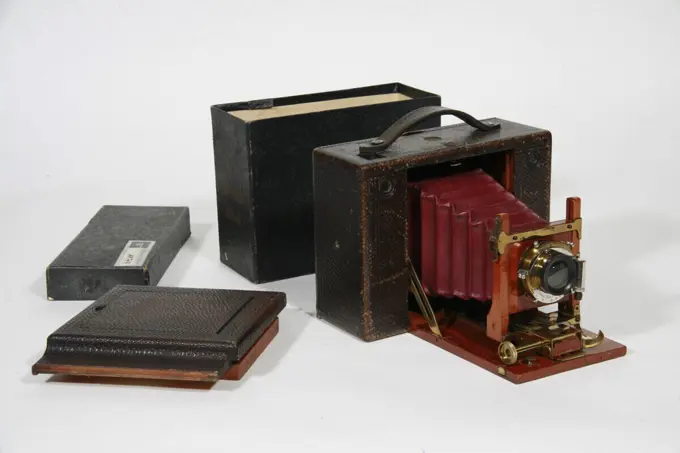
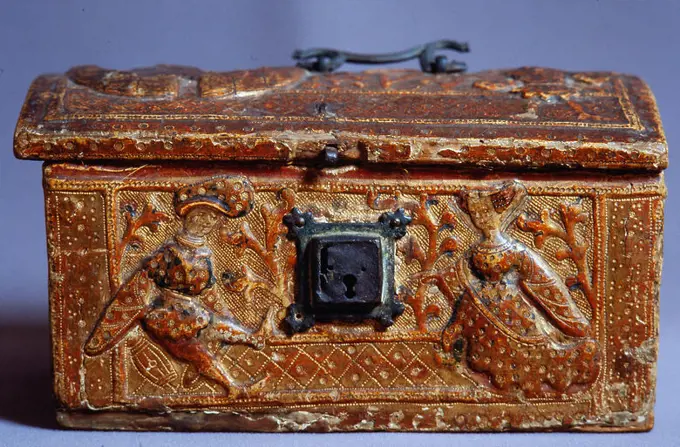
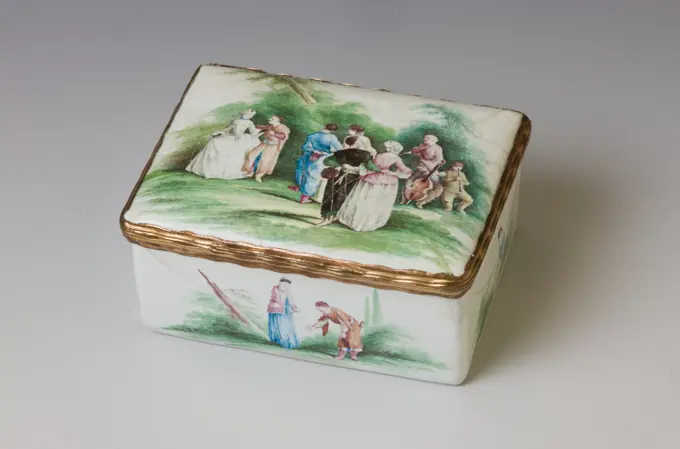
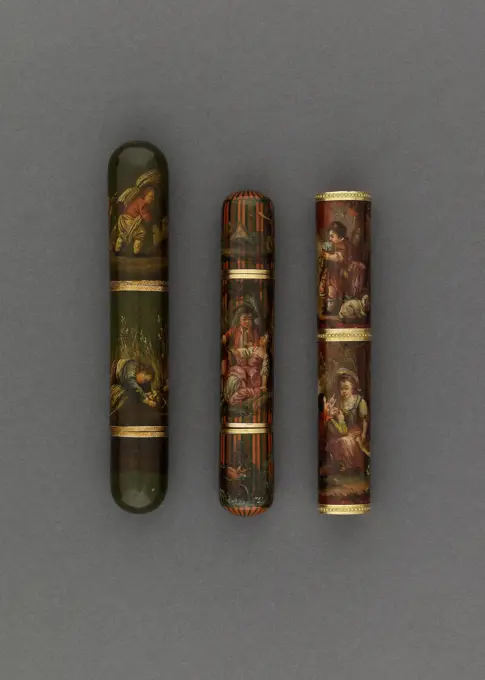
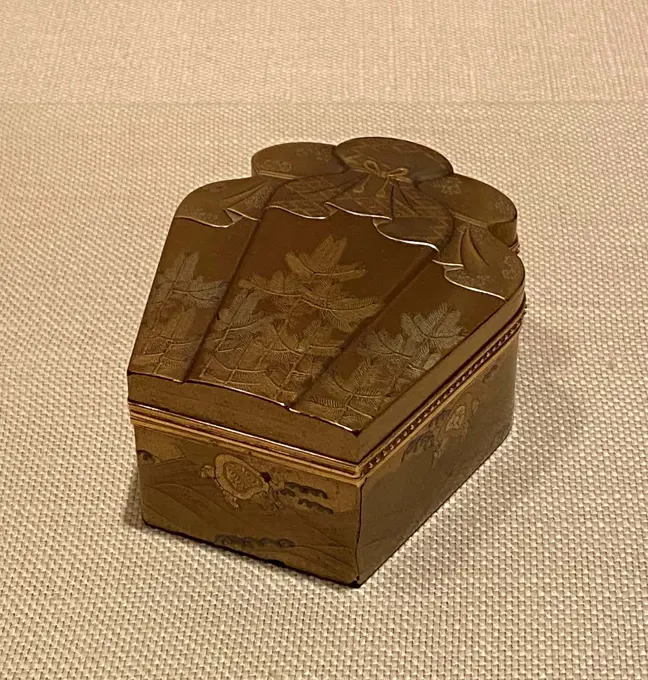
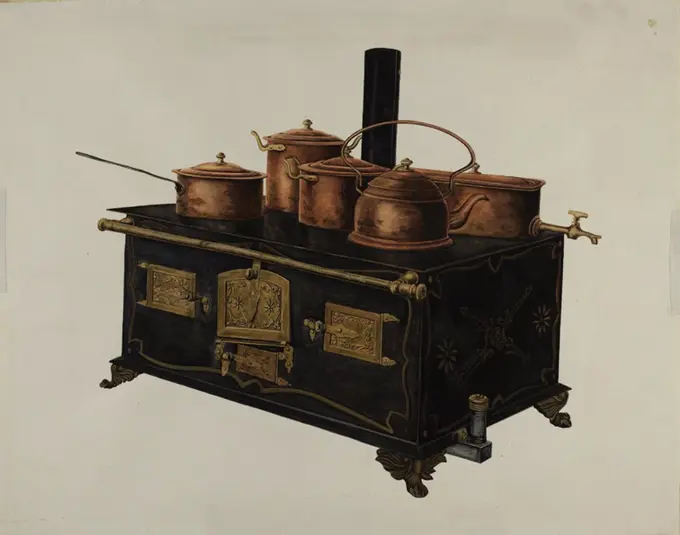
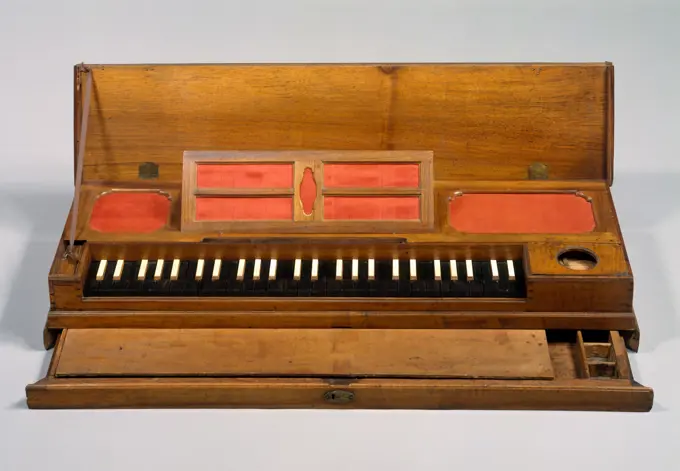
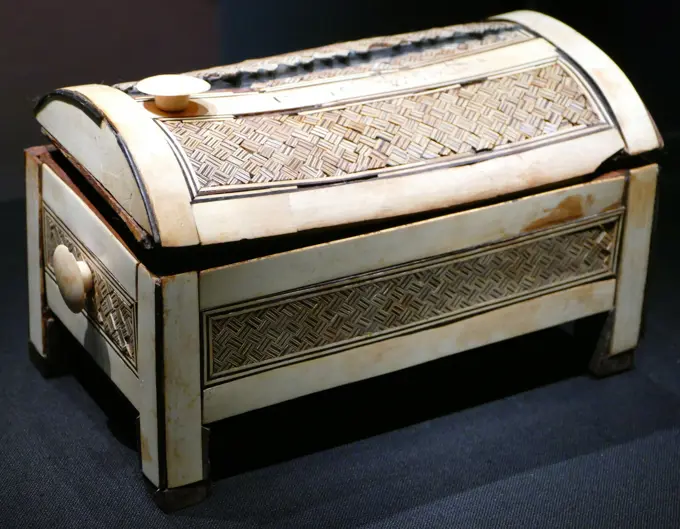
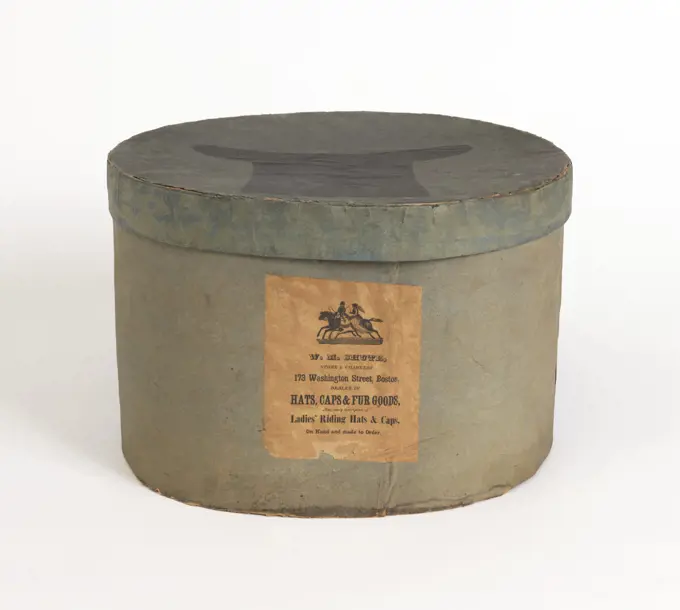
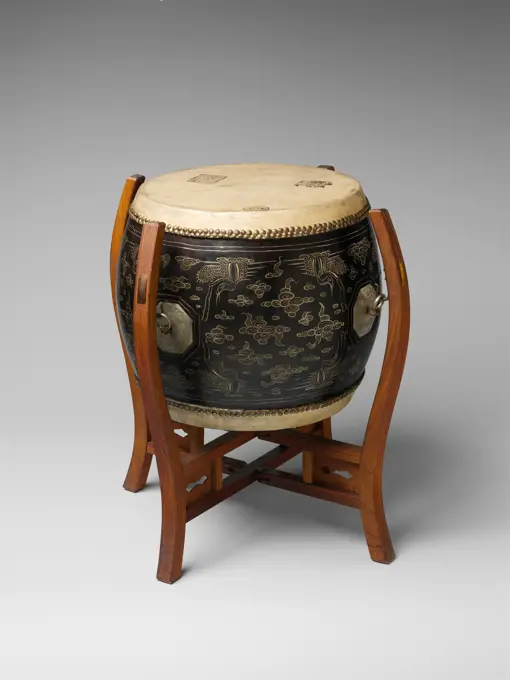
Money box of iron, painted, 1700 - 1800 An iron money box, painted. On pedestal.  iron (metal) An iron money box, painted. On pedestal.  iron (metal)Writing cassette with presentation of ships on the Redeem of Batavia. Black lacquer writing cassette with performances in golden lacquer and mother-of-pearl. A representation has been placed on the lid in a black background in gold lacquer and mother-of-pearl within a landscape oval. This is a representation of ships on the Redeem of Batavia; Below the inscription: "The Reed of Batavia" and a trophy with warrior with flags and the weapon of Batavia. The corners of the lid and the sides exhibit flower branches; Along the lid edge a pickled pearl is running.Satsuma-Ware Water Jar (Mizusashi) Made 1701-1800 Japan. Glazed stoneware with lacquer lid .Shield () with Design of Pine, Bamboo, and Cherry Blossom. Culture: Japan. Dimensions: H. 7 5/8 in. (19.4 cm); W. 10 1/2 in. (26.7 cm). Date: 19th century.This piece, part of a wedding trousseau, comprised of thirty-one pieces, represents late Edo-period maki-e (decoration in gold and/or silver sprinkled powder) art at its finest. The Shimazu family, lords of Satsuma in Kyushu, ordered this traditional trousseau most likely for Taka-hime, who was married to Matsudaira Sadakazu, lord of Kuwana (Ise Province), around 1830.The items of the wedding set are decorated with various auspicious motifs. The evergreen pine represents longevity and also symbolizes renewal. The fast-growing, springy, but at the same time very strong and enduring bamboo also stands for longevity and represents endurance and strength. The plum blossoms are the first flowers of spring, representing the renewal of nature. The combination of the "Three Friends of Winter"--originating from China--is associated with ceCoffer 15th century French. Coffer 470126Canopic chest of Ukhhotep ca. 1981-1802 B.C. Middle Kingdom This canopic chest belonged the chief treasurer Ukhhopte, son of Hedjpu. Its exterior decoration matches that of his coffin (12.182.132a, b) and contains inscriptions stating that the deceased is honored by the four sons of Horus.. Canopic chest of Ukhhotep 546312Tripod for a Azimuth Compass. The tripod has a mik to hang up the compass.Theeblad.Tea leaf made of teak with silver edges. From Sulawesi (Bone and Goa).Kobako 18th century Japan. Kobako 57943"J. Hynam's Royal Patent Congreves & Safety Fire Boxes" Matchsafe; England; plated tin; 4.6 x 7.2 x 1.2 cm (1 13/16 x 2 13/16 x 1/2 in. )Box, Painted tôle, Circular; hinged top, slightly rounded. Green field; bands of gilt ornament on black; and on cover, landscape in brown monochrome, England, 1830, containers, Decorative Arts, BoxJewelery box, decorated with cubes of ivory and balein. Jewelry box, wood, covered with cubes of ivory and balein and fully equipped with iron fittings. At the top a handle, a lock on the front with robbery.South African War Through the Stereoscope (part 1) stereoscopic photographs, black-and-white printsInk, one of a set of 16, c. 1757, 2 1/4 x 2 1/8 x 7/16 in. (5.72 x 5.4 x 1.11 cm), Pine soot and animal adhesive, China, 18th centuryBox with cover china. Box with cover. china. Red lacquer. Qing dynasty (1644-1911), Qianlong period (1736-95). LacquerGrenadier cap of the 1st Infantry Regiment of the Duchy of Warsaw unknown"Double phoenix" lobed box and cover 18th century China This elaborate box was produced in the Qing imperial workshops at the height of their extraordinary creativity. Its cover, meticulously carved with a pair of phoenixes among stylized clouds, exemplifies the highest standard of craftsmanship from the mid-eighteenth centurya golden age of Chinese lapidary work. Its pattern and form represent an archaistic reinterpretation of gold and silver designs of the Tang dynasty (618-907). The “double phoenix” design also became a very popular motif on imperial Qing artworks in porcelain, jade, glass, metalwork, and many other media.. "Double phoenix" lobed box and cover. China. 18th century. Soapstone. Qing dynasty (1644-1911), Qianlong mark and period (1736-95). SoapstoneRawhide Chest. Dated: c. 1937. Dimensions: overall: 28 x 35.5 cm (11 x 14 in.) Original IAD Object: 11" high; 6 1/2" deep; 6" wide. Medium: watercolor, graphite, and pen and ink on paper. Museum: National Gallery of Art, Washington DC. Author: Gerald Transpota.Turnover box with engraved shows derived from the sea shipping. Turnover box of silver, oval-shaped with engraved figurial scenes provided with captions. On the lid the departure of a sailor; On the left the grieving women, the maid and a boy with a dog; The sailor with a hat is in the hand next to a symbolic women's figure with anchor and falcon; Right a seascape with sailing ships and a rowing boat. Caption: When I assemble from 't Land, my goes on the bars. I hope for God, etc. On the soil is the engraved representation of the return with the caption: no sea or ambavators is welcome again in Huys, if that he brings his wife with lots of Seshalventhuijs. On the upright wall: Niard happily for his dot, it's that the profit is Klijn or Groot. Because Cresus rich and highly elegant should be in poverty .............. late .......... 't ......... life. Furthermore, a rebus: Saelden time (an hourglass) without power. Brands in on soil: Crowned weapon Amsterdam; JRL. G = 1769; Mt. Man withWriting box ca. 1715-20 Ferdinand Plitzner German During the seventeenth and eighteenth centuries luxurious boxes, similar to this one, that held writing and sealing implements had an obligatory place in the ceremonial setting of every Central European court. The elaborate decoration and preciousness of the materials reflected the owner's aristocratic status. Although frequently mentioned in contemporary inventories, such stately boxes have rarely survived the changing writing habits of later generations. This refined box shows a hitherto-unidentified monogram, incorporating the letters LG beneath a count's coronet; it is the only box of this type currently known of German origin. Plitzner was the most important German cabinetmaker of the early eighteenth century. His works reveal perfect mastery of contemporary French design and cabinetmaking especially evident in the box's complicated marquetry, which is influencedb y Louis XIV's great furniture designer, Andre-Charles Boulle (1642-1Ink stand with a relief decoration, anonymous, c. 1750 - c. 1799 Ink set of stoneware with a pen box and two holders for the ink jar and the sand spreader. Partly covered with cobalt blue. The couple is decorated with a printed and imposed relief decoration. A modeled 'Klinknagel' on every corner at the top. Westerwald. Westerwald stoneware. glaze. cobalt (mineral) vitrification Ink set of stoneware with a pen box and two holders for the ink jar and the sand spreader. Partly covered with cobalt blue. The couple is decorated with a printed and imposed relief decoration. A modeled 'Klinknagel' on every corner at the top. Westerwald. Westerwald stoneware. glaze. cobalt (mineral) vitrification. Bank of walnut with interior of poplar wood and decorated with intarsia. In the pedestal a frieze with meander edge in Intarsia. The front is slightly bent bowed and shows a slightly protruding field on the corners and in the middle, between which two smooth panels; All this within profile lists and surrounded by Intarsia edges. The middle part forms the crate lid. The side walls have smooth panels. See also BK-16632 and BK-NM-12354.Snuffbox with two miniatures. Łukutin (Fiedoskino ; wytwórnia ; fl. 1824-1904), manufacturer, Fabrika Pietra Łukutina ( fl. 1825-1828), factoryModel of the Roofing for a Covered Slip, anonymous, 1822 demonstration model Detail model of the roof covering of a ship's hood. The model shows the wooden construction and is partially covered with zinc plates. Netherlands (possibly) wood (plant material). zincCopper tobacco box with engraved representation: city profile of Rotterdam seen from the Maas, tobacco box holder metal copper, cast engraved Flat box ends rounded. With on top: cityscape Rotterdam from the Maas foliar ships building; on the bottom: coat of arms of Rotterdam top: De Stadt Rotterdam heraldry topography Rotterdam cityscape tobacco smoking store man snuff box MaasKist, anonymous, c. 1800 - c. 1850 Wooden box for 100 Japanese textile fragments (AK-MAK-392 TM 491). Japan . Wooden box for 100 Japanese textile fragments (AK-MAK-392 TM 491). Japan .ESTIGMATIZACION DE SAN FRANCISCO - 1570 - PARTE POSTERIOR MADERA FORRADA EN CUERO. Author: EL GRECO. Location: PRIVATE COLLECTION. MADRID. SPAIN.Wooden box with iron upholstery, anonymous, c. 1500 - c. 1600 Quadranted wooden box, covered with open -up fittings from separate parts of wrought iron, which is decorated with a topping dot pattern and which is attached to the wooden box with small nails. Two C-shaped handles on the sides. West-Europa iron (metal). wood (plant material) forging Quadranted wooden box, covered with open -up fittings from separate parts of wrought iron, which is decorated with a topping dot pattern and which is attached to the wooden box with small nails. Two C-shaped handles on the sides. West-Europa iron (metal). wood (plant material) forgingGrain size of 2 deciliters. Wooden grain size of ½ deciliters with label.The Tea Horse Road (Cha Ma Dao) was a network of mule caravan paths winding through the mountains of Yunnan, Sichuan and Tibet in Southwest China. It is also sometimes referred to as the Southern Silk Road and Ancient Tea and Horse Road. From around a thousand years ago, the Ancient Tea Route was a trade link from Yunnan, one of the first tea-producing regions, to India via Burma, to Tibet, and to central China via Sichuan Province. In addition to tea, the mule caravans carried salt. It is believed that it was through this trading network that tea (typically tea bricks) first spread across China and Asia from its presumed origins in Pu'er county, near Simao Prefecture in Yunnan.Old book isolated on white Trinket Box. Dated: 1939. Dimensions: overall: 29.3 x 23.1 cm (11 9/16 x 9 1/8 in.) Original IAD Object: 2 1/2" high; 4 5/16" long. Medium: watercolor and graphite on paperboard. Museum: National Gallery of Art, Washington DC. Author: Marie Famularo.isolated wood boxOld bookBrown Lacquer Three-Tiered Box with Inlaid Japanese Weaponry Meiji period (1868-1912) This three-tiered six-sided box is covered in a light brown lacquer and features elements from Japanese armour and weaponry, including a sword, mask, arrows and quiver. The box is similar to the exquisitely decorated small tiered boxes known as inro, which were hung from the obi, a sash used to tie around the kimono, which was secured with a netsuke (toggle). The purpose of the inro was to carry personal items as the traditional kimono had no pockets. Lacquerware originated in China at the beginning of the 4th century B.C. It is made from the sap of the native tree Rhus Vernicifera, which produces a varnish that is used either on its own or applied to a number of media including wood, fabric, bronze, and porcelain. In addition to carving, lacquer was also inlaid and painted. Black or deep rich brown lacquer, which imitated tortoiseshell, was a popular background for mother of pearl, hardstone and metaTea caddy Attributed to Ogawa Haritsu (Ritsu) Japanese. Tea caddy. Attributed to Ogawa Haritsu (Ritsu) (Japanese, 1663-1747). Japan. Lacquer. Edo period (1615-1868). LacquerBlack-lacquered Clothing Chest with Peony and Arabesque Design. Korea, Early 20th century. Furnishings; Accessories. Black lacquer on wood core with gold painted decoration, mother-of-pearl inlay, and metal fittingsAntique leather bag isolated over white backgroundTe Poel, Miniature oak frame with slate to write on, slate miniature kitchenware toy relaxation tool model wood oak slate, sawn glued Oblong rectangular wide frame Rope with prong 1868 Sibilla van Embden play writing kitchenARQUETA DE SAN GENADIO - RELICARIO DE ALFONSO III EL MAGNO- AÑO 866-910-TALLER DE GAUZON-PLATA DORADA-30,3 CM LARGO. Location: CATEDRAL DE SANTA MARIA-MUSEO. ASTORGA. LEON. SPAIN.Historic iron on base, used with hot iron bolts, over 100 years old, Austria, EuropeBox of hemostyl containing crimping equipment that belonged to Jean Moulin (attributed title), 1919. Metal. Cardboard. Paper. Museum of the Liberation of Paris - General Leclerc Museum - Jean Moulin Museum.Vanity Set (Nécessaire), c. 1760. Manner of James Barbot (British). Gold, agate, interior fitted with implements, mirror; overall: 5.5 x 4.5 x 3.9 cm (2 3/16 x 1 3/4 x 1 9/16 in.).Shabti Box of Henettawy (C), Daughter of Isetemkheb. Dimensions: H. 52.5 x L. 51 cmH. 53 cm x L. 53 cm. Dynasty: Dynasty 21. Date: ca. 990-970 B.C.. Museum: Metropolitan Museum of Art, New York, USA.RVD / Royal House photo collection. Tray. Receive a gift from the state visit to the Antilles. zd}Model of a Grapnel, anonymous, 1800 - 1850 presentation model Model of a four -armed Drreg in a wooden box, lined with black sheet and decorated with a brass ball on top. The Dreg has a ring at the top of the shaft; The shaft is reinforced at the crown. Netherlands iron (metal). wood (plant material). brass (alloy). clothDrum for lending bonds, lottery drum bonding drum metal iron cast iron glass wood, Metal wooded ball on stand; can be rotated with pendulum Bol itself with three openings: two peepholes with glass and an opening with lid on which roses. Spheres and trough rotate on two cast iron trestles mounted on rectangular wooden base and four iron wheels. The bond loan was the first to be issued by the municipality for the financing of the major expansion investments on Feijenoord, the Eerste Kop van Zuid. The holder of bond loan received their money back after the bond was withdrawn. The bonds could also be traded on the stock exchange Municipality of Rotterdam lending of 72,000 bonds 1868 Rotterdam City Hall City Triangle lottery bond municipality finance loan loan loan Rotterdam South Feijenoord Originating from attic town hall.ARQUETA HISPANO-MUSULMANA EN HUESO DEL S XII-GRANADINA.Snuffbox with Pastoral Scenes. Culture: North German. Dimensions: H. 4.4 cm, L. 8.3 cm, D. 6.4 cm. Date: ca. 1765. Museum: Metropolitan Museum of Art, New York, USA.Purlet box painted with water landscapes and figures. Porcelain snuff box. Elongated and painted with water landscapes and figures.Model of An Anchor Buoy.Addered block model of an anchor buoy for katankers. It has an onion-shaped body with the tip down and a flat top; It is held together by hoops, over which the trusses run on the outside. Two main tubs run over the flat top, where they form a cross. A harp closure is applied both above and below. By a manhole one can view the inside in which two decks are arranged. Scale 1:10 (derived).Base of Writing Box (Suzuribako) with Chrysanthemum and Plum Containing Inkstone, Water-dropper, Brushes, Ink-stick Holder, and Paper Knife, late 1800s-early 1900s. Japan, Meiji period (1868-1912). Lacquer over wood with gold and silver sprinkled powder (maki-e); Both functional and elegant, this is a container for an ink stone, brushes, and ink from a set of writing tools that included a larger box for paper. Against a sleek gold lacquered ground, its artist has used restraint in sprinkled powder decoration (maki-e) to produce the design of cockscomb and harvested rice on the interior of the lid.Coffee Grinder. Dated: c. 1940. Dimensions: overall: 35.7 x 24.5 cm (14 1/16 x 9 5/8 in.) Original IAD Object: base: 6 3/8" high; 6 3/8; overall: 9" high. Medium: watercolor, graphite, and pen and ink on paperboard. Museum: National Gallery of Art, Washington DC. Author: Archie Thompson.Anonymous, toilet mirror (dummy title), 1701. painted wood and varnish, ice. Carnavalet museum, history of Paris.Roll with light blue ribbon with one frayed silk and three black horizontal stripes, c. 1935 Roll with light blue ribbon with one frayed silk and three black horizontal stripes. Nijmegenfrance textile materials. paper. cardboard Roll with light blue ribbon with one frayed silk and three black horizontal stripes. Nijmegenfrance textile materials. paper. cardboardBox belonging to tokens of the opening of the canal from Terneuzen to Ghent 1827, Joseph Pierre Braemt, 1827 box Elongated, red box, in which originally the silver and bronze medal of the opening of the Canal from Terneuzen to Ghent 1827 were stored in. On top lid: gold -colored inscription and decorative edge; inside lid and box with velvet covered, in which two cavities have been saved in the bottom; On the side of box: metal closure. Brussels metal. cardboard.   Canal from Terneuzen to Ghent. Terneuzen. GhentRectangular Cauldron. China. Date: 1600 BC-1050 BC. Dimensions: 17.0 × 14.2 cm (6 5/8 × 5 5/8 in.). Bronze. Origin: China. Museum: The Chicago Art Institute, Chicago, USA.Box for Snuifdoos van Gold, 1750 Box of rye façade.  velvet (fabric weave) Box of rye façade.  velvet (fabric weave)Holder. Holder, incomplete, consisting of two wooden boards that are attached to each other at an angle of 90 degrees. One shelf is rectangular and contains a hole in the middle and two metal clamps on both sides, the other shelf runs wide. The function of this object is unknown.Two coffins, elevated viewPainted box with x and o- patternRibbon on roll, striped, green with magenta, black, gray and orange, in or before 1926 Ribbon on roll, striped, green with magenta, black, gray and orange. NijmegenFrance (possibly) textile materials. cardboard. paper Ribbon on roll, striped, green with magenta, black, gray and orange. NijmegenFrance (possibly) textile materials. cardboard. paperModel of a Chain Stopper, anonymous, c. 1400 - c. 1950 scale model Model of a cable clamp of oak wood with palmwood screw. unknown oak (wood). boxwoodA roll-film plate folding camera produced by Eastman Kodak Co. around 1900, wooden body, 4 x 5 inch (10.2 x 12.7 cm) plate format for roll-film photography.Arqueta, siglo XV. Fundación Juan March.Trekmadel with four Mangel rollers. Trekmangel of beech and mahogany with loose tuff with extendable lid rolling between wheels; on six legs, mutually connected to rules; Copper nails in the top edge. Four loose mangel rollers rotated from maple wood.Snuff box, rectangular, bandagate. On the lid a miniature portrait of Madame de Pompadour under glass, surrounded by a narrow edge of gold. Rectangular box with walls of bandagate. On the lid under glass a painted miniature portrait of Madame de Pompadour, surrounded by a narrow golden edge.. Chest of turtle with batter of gold and with cleats and key from gold plated silver. On four balpotes of gold-plated copper.Alphabet blocks - Safety Blocks Halsam Products Company (1917-1970) Halsam Products Company (1917-1970)Tabakierka Chodowiecki, Daniel Nikolaus (1726 1801)Box -Coffer 15th century with modern restorations Spanish. Coffer. Spanish. 15th century with modern restorations. Wood, leather, iron. Woodwork-FurnitureAnonymous French. Studies. Martin varnish. 18th century. Paris, Cognacq-Jay museum. 56641-9 Etui, Martin, varnishIncense Box (Kbako) in the Shape of Three Overlapping Jars mid-18th century Barthélémy Paviet This exquisite box was originally made in Japan in the mid-eighteenth century as an incense container. The lacquer surface is embellished with refined maki-e details, including young pine trees on the exterior of the lid and a continuous seashore on the sides with auspicious motifs. The incense box was exported to Europe either by the Dutch or through the China trade, a route similar to that taken by the Japanese lacquer boxes owned by Queen Marie Antoinette (1755-1793). In Paris, the small box was turned into a jewel-like object by Barthélémy Paviet, who applied gilded mounts over the rims and lined the inside with a gold-like metal sheet.. Incense Box (Kbako) in the Shape of Three Overlapping Jars. Barthélémy Paviet (French, master 1781-after 1793). Japan and France. mid-18th century. Lacquered wood with gold and silver takamakie, hiramakie, and togidashimakie on gold ground, with gildeBrass design fitting on gauze wooden basket, Jodhpur, Rajasthan, India Copyright: xSafatxAli/DinodiaxPhotoxToy Stove. Dated: 1935/1942. Dimensions: overall: 39.7 x 47.7 cm (15 5/8 x 18 3/4 in.) Original IAD Object: 13 1/2" wide; 9 1/2" deep; 5 1/2" high; largest pan: 3 1/4" in diameter. Medium: watercolor, pen and ink, and gold ink on paper. Museum: National Gallery of Art, Washington DC. Author: Einar Heiberg.Fork, from a Child's Lilliput Knife and Fork Set, c. 1866, Paine & Simmson, England, L.3-1/8 x W.3/8 in., steel, bone, England, 19th centuryVariety of coffee grindersBox for snuff or tobacco in the shape of a shoe. Shoe of dark brown leather in box shape. Gildeproef. Snuff or tobacco box (). Cutting point nose, slightly ascending, very flat heel. On the lid engraved A and G, between which a round grisail drawing behind glass: Mandolin playing woman sitting in Bergère in landscape. Around sequined.Clavichord 18th century School of Johann Heinrich Gräbner Clavichords were built as far back as the early fifteenth century, and perhaps earlier. This most personal, simplest, and quietest of European keyboard instruments was the perfect vehicle for music pedagogy, keyboard practice, and composition throughout its 400-year history. The action of the clavichord is relatively simple: the finger depresses a key which, working as a lever, causes its opposite end to rise so that a metal tongue (or tangent) hits a metal string, causing it to resonate. When the key is released, the string is damped. The clavichord is very quiet compared to the harpsichord or piano because of the inefficiency of its sound production, with the tangent hitting the string at the end of its resonating length, rather than in the middle. The tangent mechanism, however, allows a player to achieve a range, albeit narrow, of louder and softer tones as well as special effects like bebung, a form of vibrato, so that the SteamRadiator. Designer possibly: Charles S. Smith, American, born ca. 1843Manufacturer probably: H. B. Smith & Company, Westfield, Mass., founded 1853Size of 1/32 BOISSEAUT from Delft.spanen Size with block of 1/32 BOISSEAU, equipped with calibration brand and label with number.PP1-305-1 (case) Royal Albert Hall Description: From Royal Albert Hall Corporation: address to Queen Victoria on her Diamond Jubilee. Illuminated; in leather case. Date: 1897 jubilee, queenvictoria, pp1, loyaladdressWooden box inlaid with ivory and ebony. Possibly used for holding jewellery. from the tomb of King Tutankhamun. 1326 BCBox 19th century Japan. Box 57608Papier Mché Snuff Box, 1800-1850. Maker: Unknown, made in Birmingham .Security Safe Deposit' still bank, c. 1881, Kyser & Rex Company, Philadelphia, c. 1879-1898, 3 7/8 x 2 13/16 x 2 3/4 in. (9.84 x 7.14 x 6.99 cm), Iron, pigment, 19th centuryPlay box with four small boxes; Exhibition asset: Barn stones play box.Bandbox, Block-printed paper on pasteboard support, Illustration of man's top hat, printed in black on green on box lid and one side of box. The other box side contains a manufacturer's label., Boston, Massachusetts, USA, ca. 1850, Wallcoverings, BandboxClose up of present box on white backgroundTánggǔ (鼓) 19th century Elevated Tone Workshop, Guangzhou (Canton) The tone and volume of this double-headed barrel drum can be varied by striking the oxhide nearer or farther from the center or rim. Used in theatrical performances or Buddhist rituals, drums similar to this one, suspended in a frame or on poles, have held a place in Chinese music since the Shang dynasty. Newer adaptations of the tanggu are now used in the modern Chinese orchestra.. Tánggǔ (鼓) 500605Housing funeral model. Terracotta. Cernuschi Museum, Asia Museum of Asia in the city of Paris.A box with a figure of ChristBox (USA); tôle (painted tin)BOELMAT MATTH WITH ACCESSORIES, Anonymous, 1700 - 1800 CRIGHTMENT WITH ACCESSORIES: Pillowcone, stitched blanket and a diaper.  . CRIGHTMENT WITH ACCESSORIES: Pillowcone, stitched blanket and a diaper.  .Stew of nuthout, with door and brass handle, anonymous, c. 1676 Stew of nuthout, square, with a door with a button and a brass handle. Amsterdam (possibly) walnut (hardwood). brass (alloy) Stew of nuthout, square, with a door with a button and a brass handle. Amsterdam (possibly) walnut (hardwood). brass (alloy)Old rusty red metallic jerry canChicago World's Fair Agricultural Building Matchsafe; Manufactured by Huntley, Boorne, & Stevens; England; plated tin, printed, gilded; 3.7 x 5.7 x 1.2 cm (1 7/16 x 2 1/4 x 1/2 in. )Game StockCAJA DE USHEBTIS CON FIGURAS. EGIPCIO. (DEPOSITO: MUSEO ARQUEOLOGICO NACIONAL).