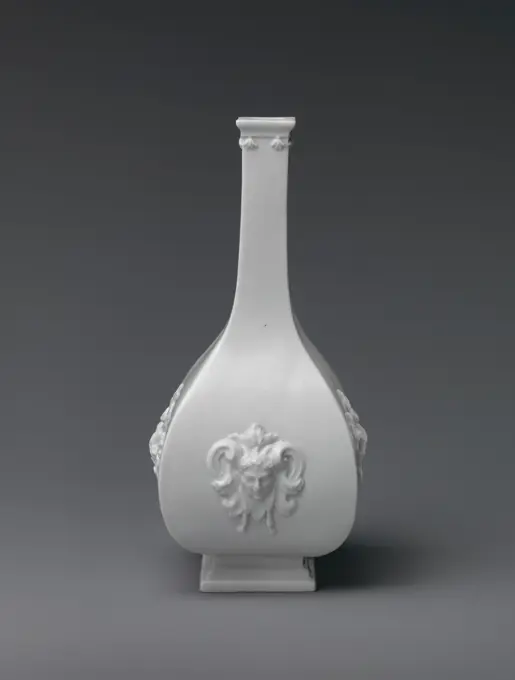
Decorative Asian Pottery

A collection of intricately designed Asian pottery featuring colorful motifs, floral patterns, and historical influences from China and Delft.
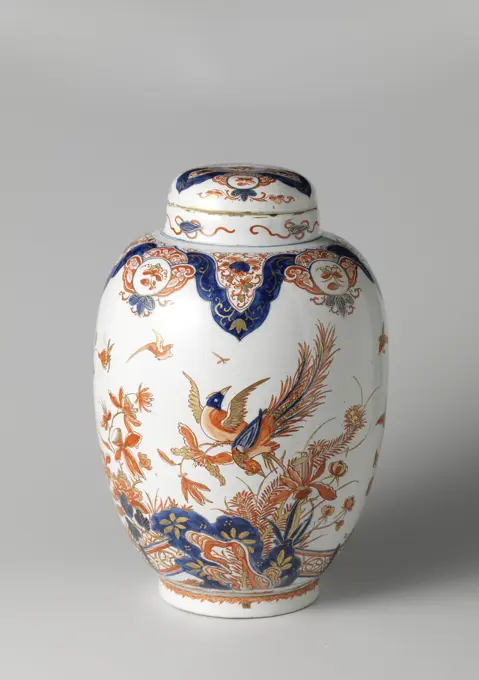
Pot with lid of multicolored painted Faïence, the Greek A, After Pieter Adriaensz. Kocx, after widow Pieter Adriaensz. Kocx-van der Heul, c. 1700 - c. 1725 Pot of Faïence with a flat lid. Multicolored painted with flower branches and birds. Delft . Pot of Faïence with a flat lid. Multicolored painted with flower branches and birds. Delft .
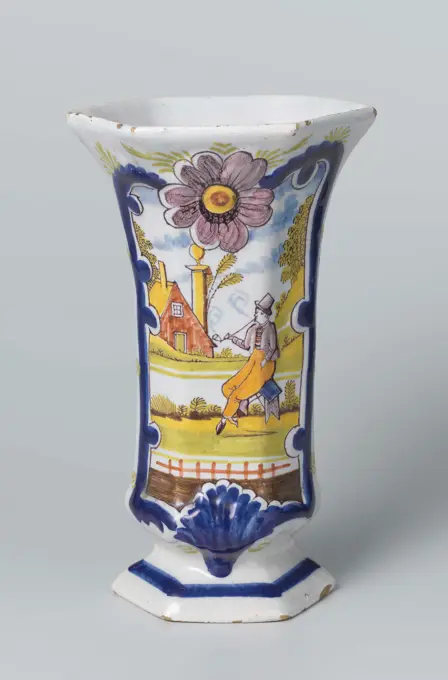
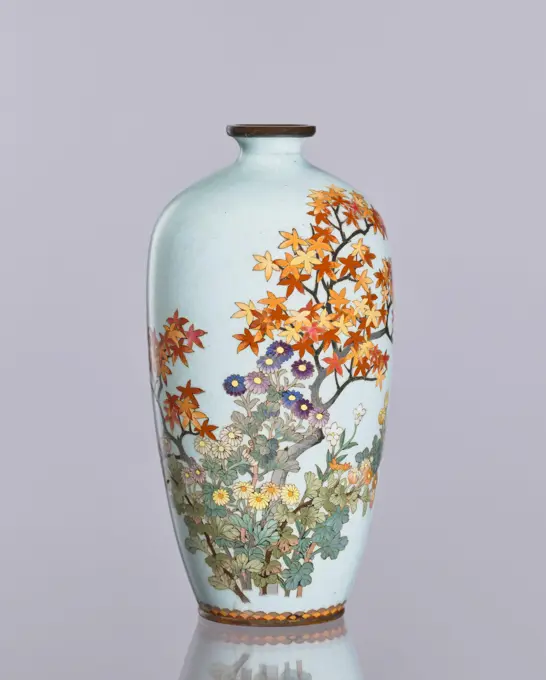
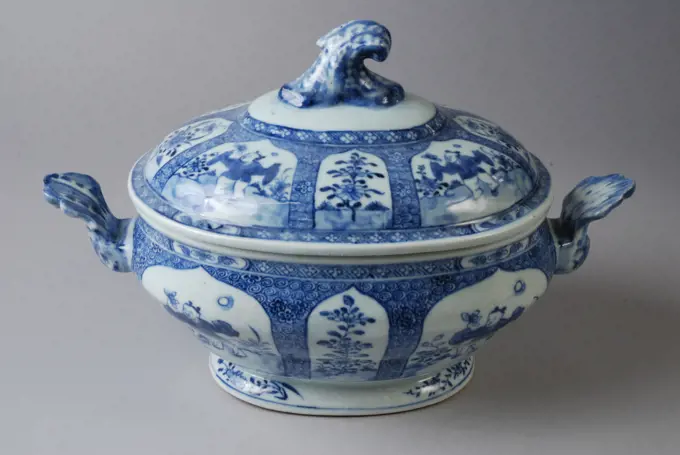
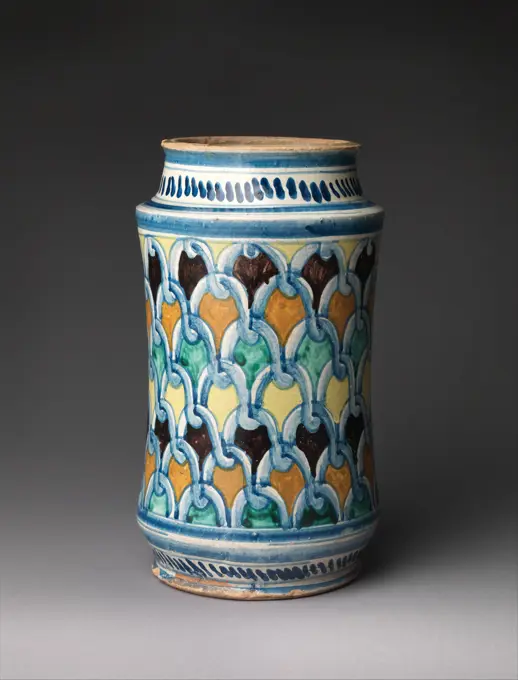
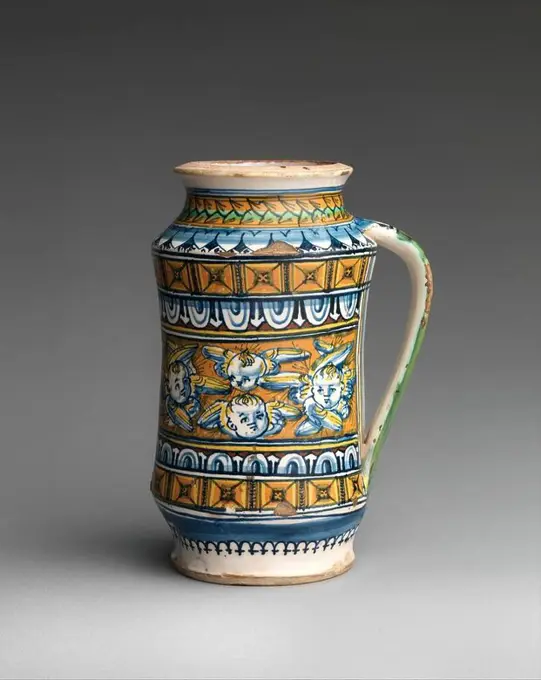
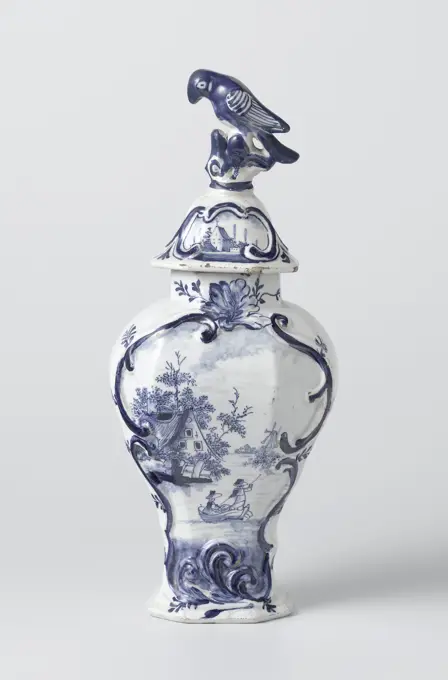
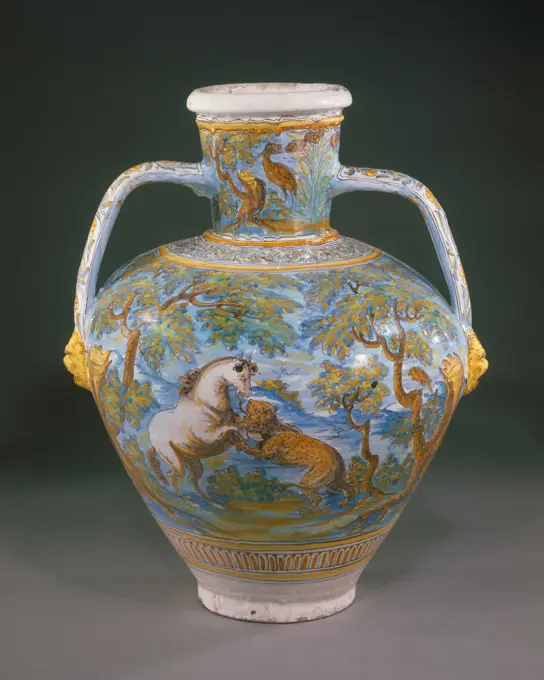
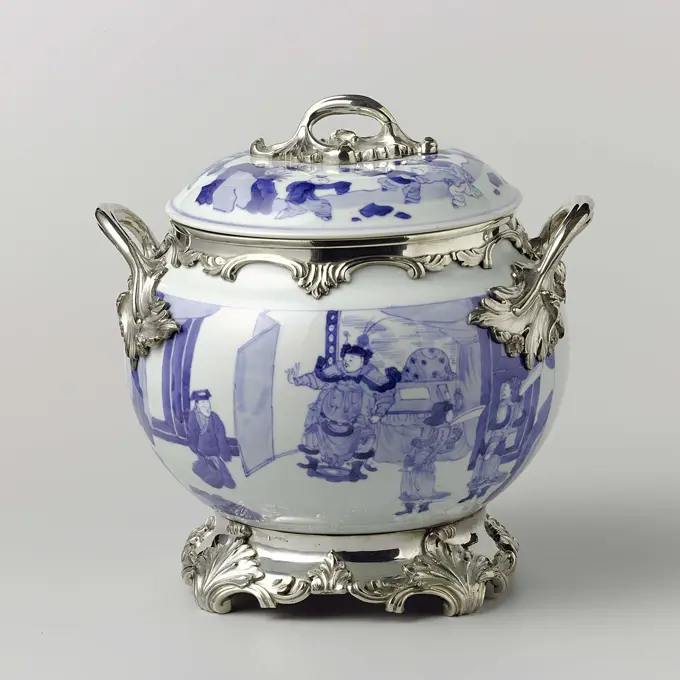
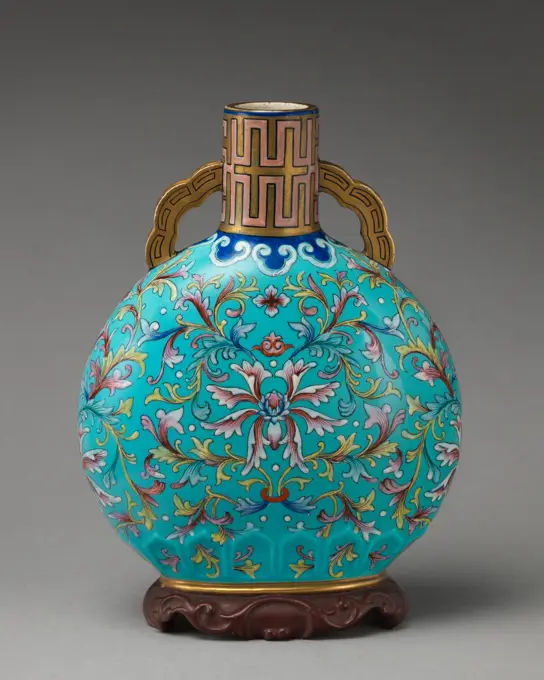
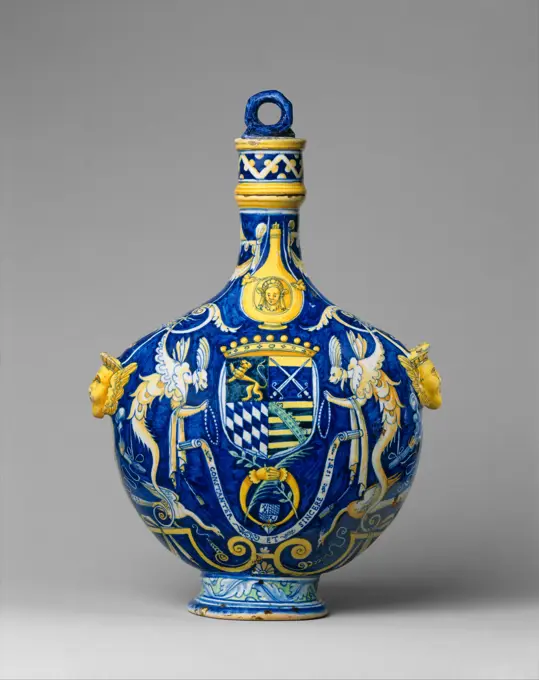
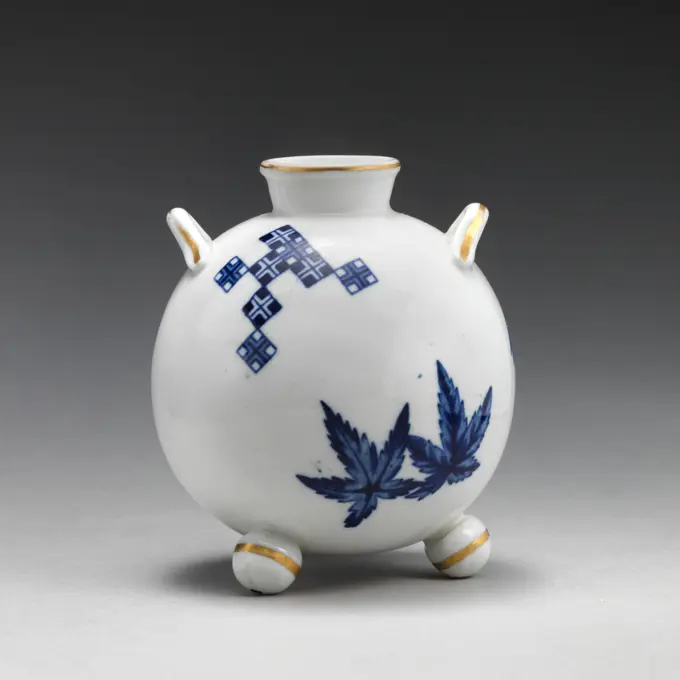
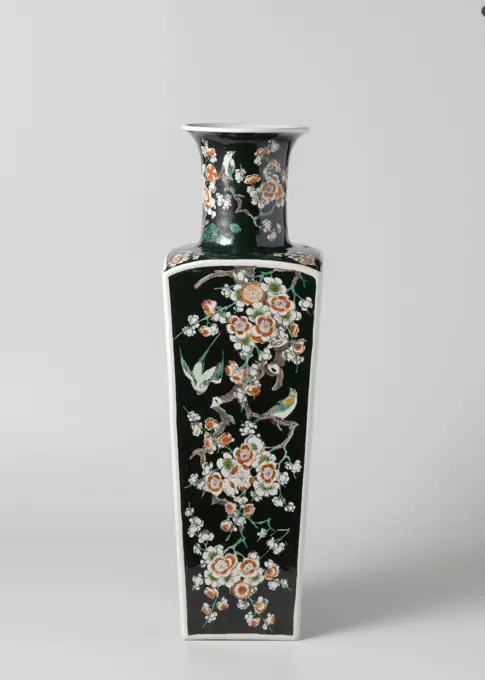
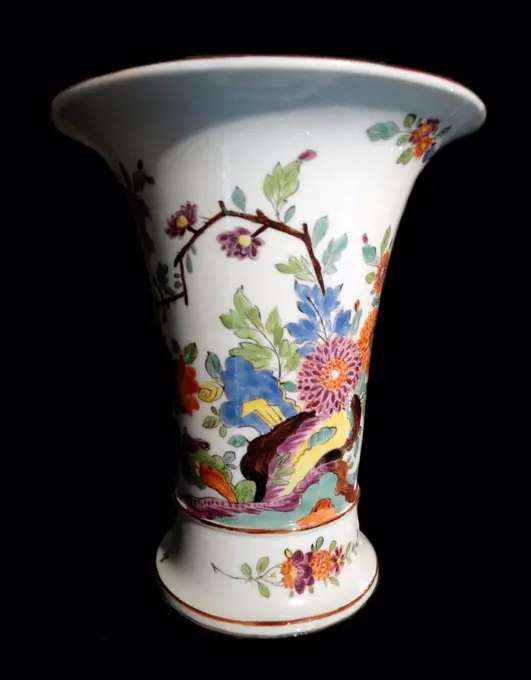
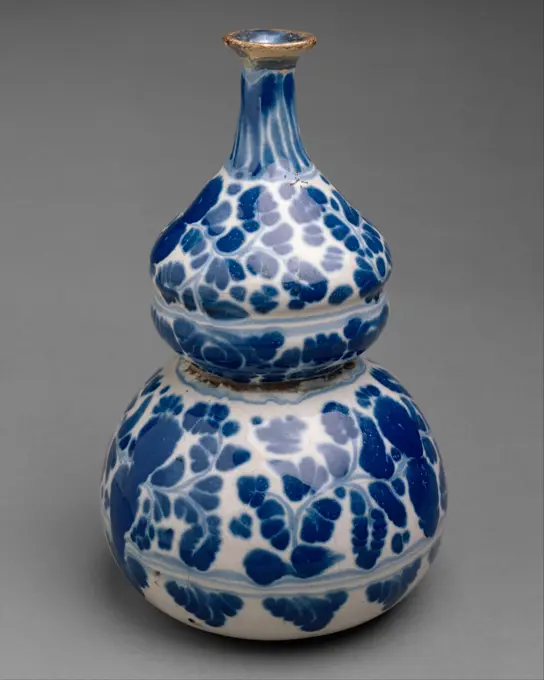
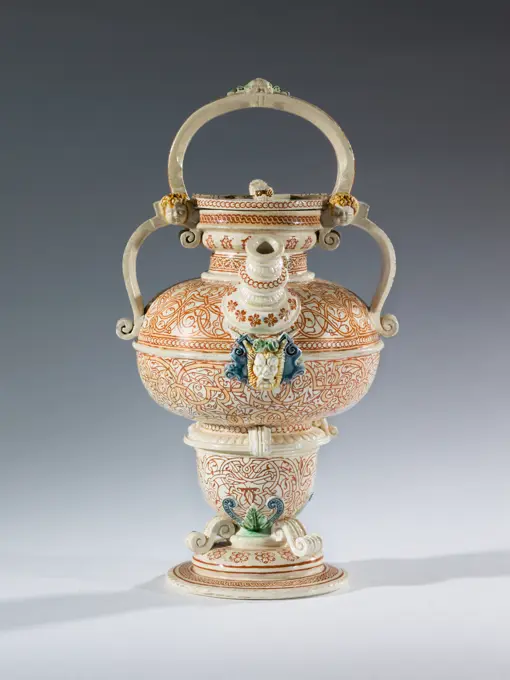
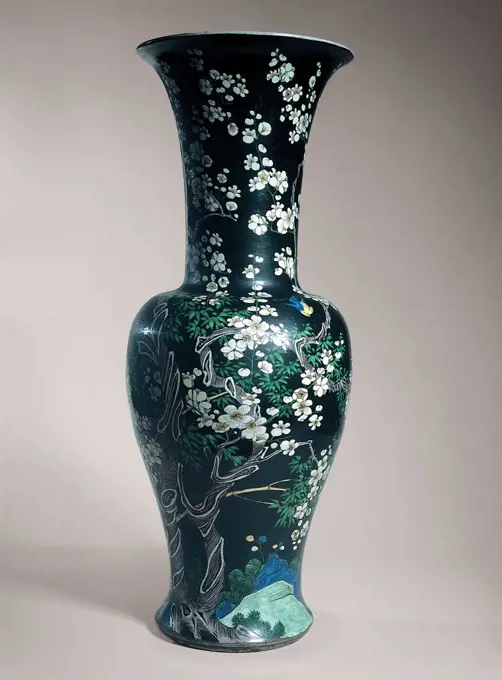
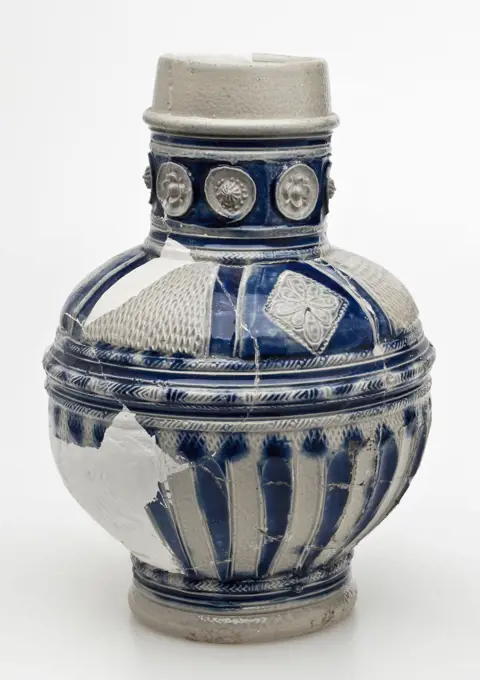
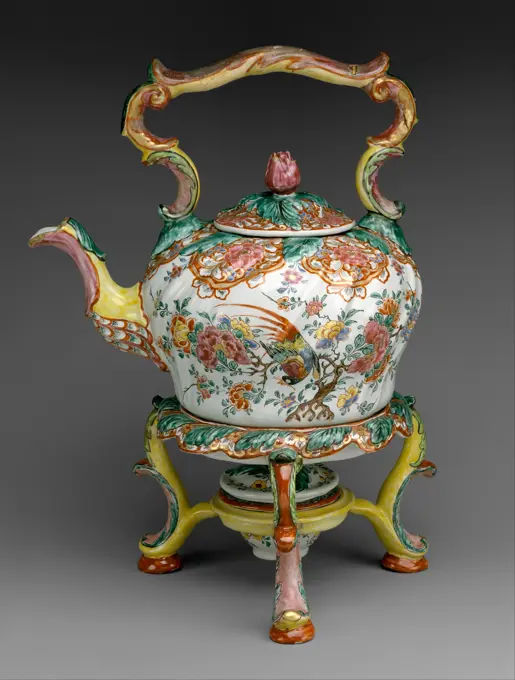
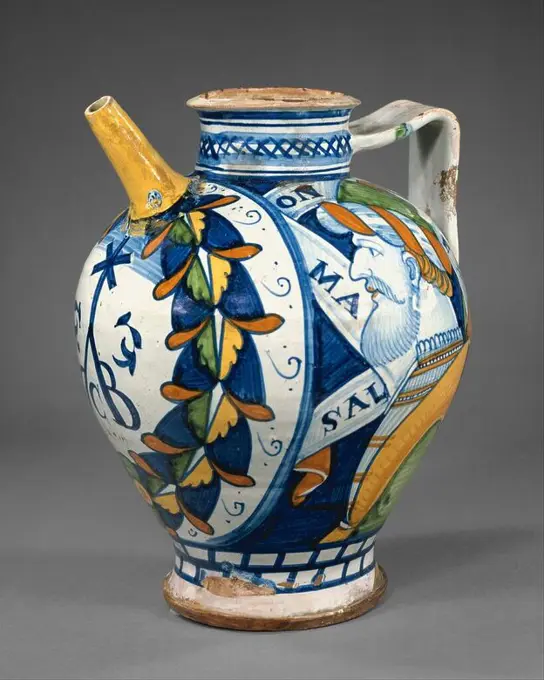
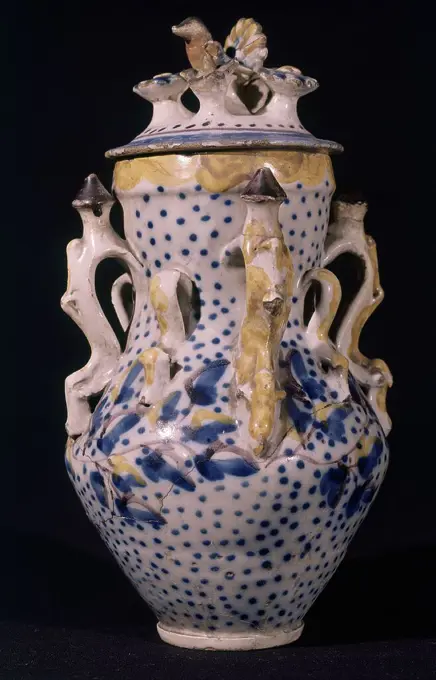
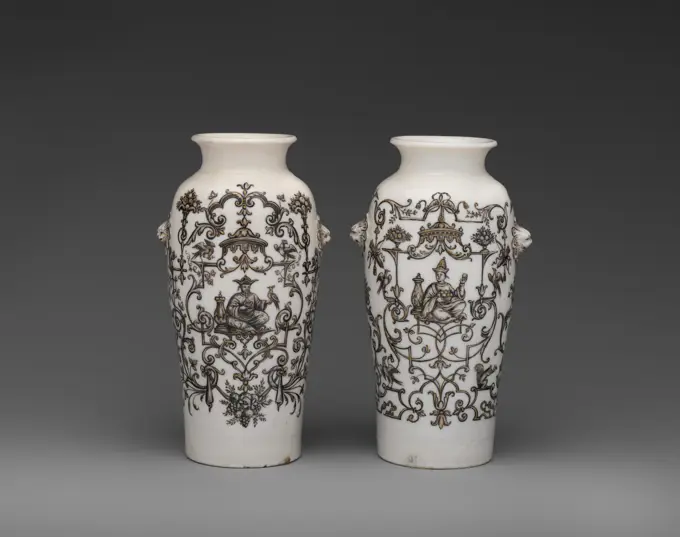
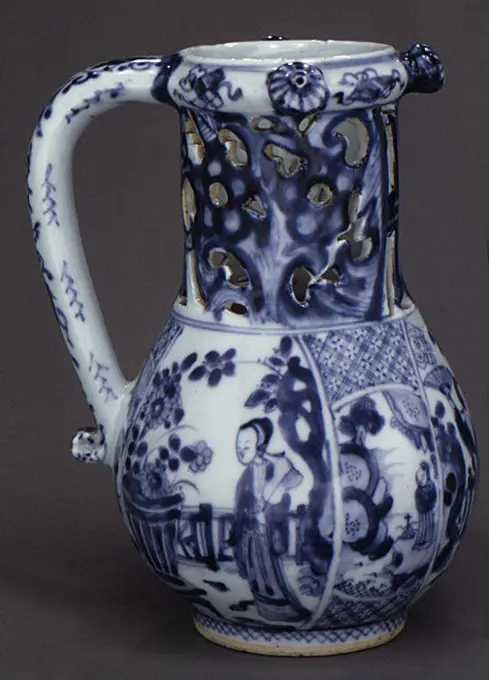
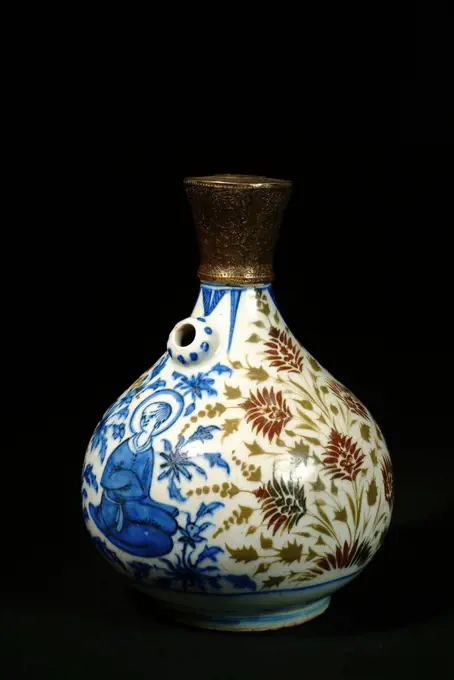
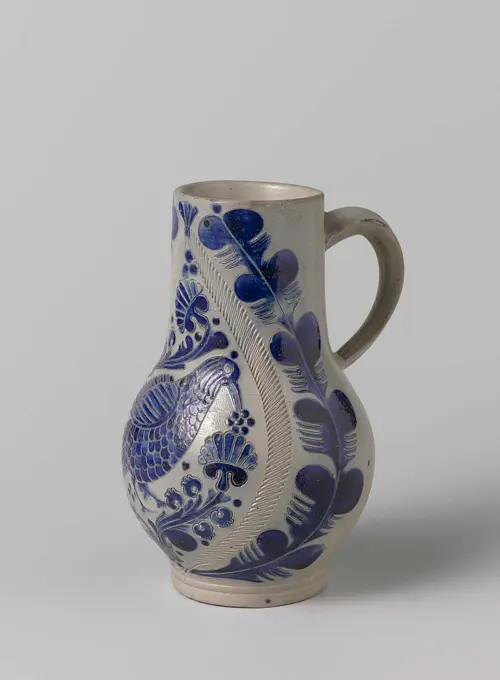
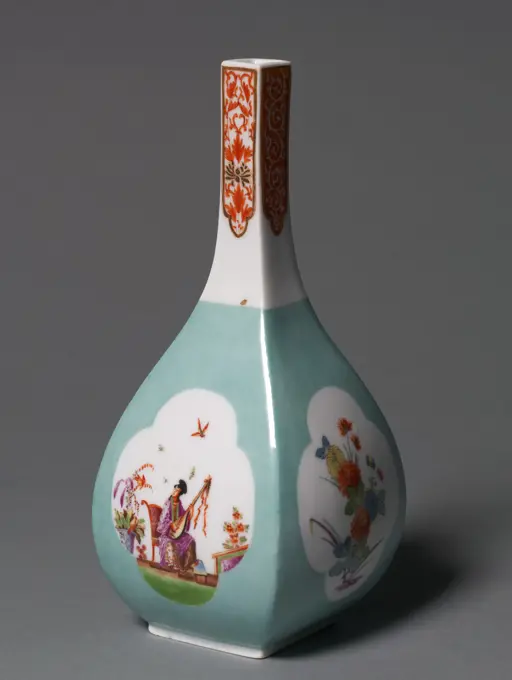
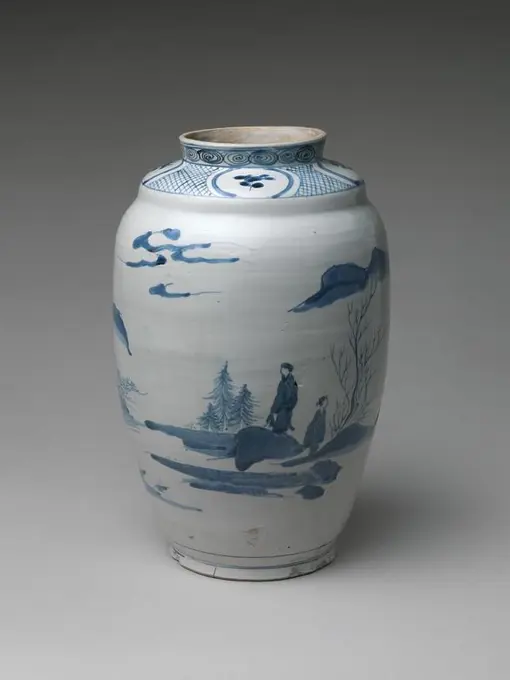
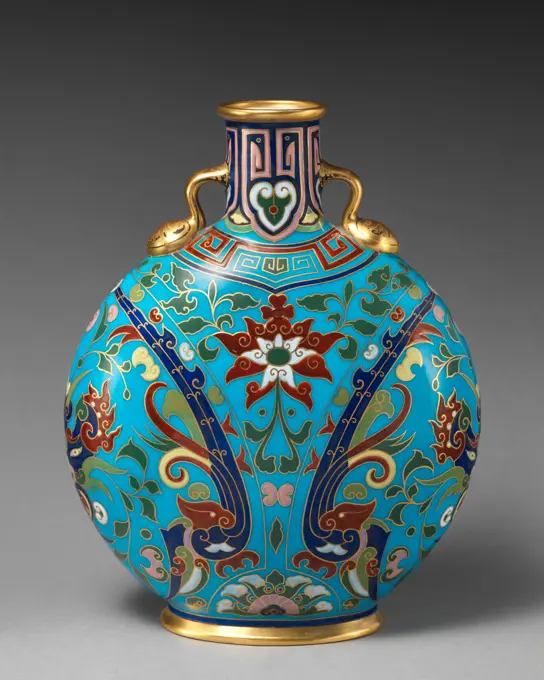
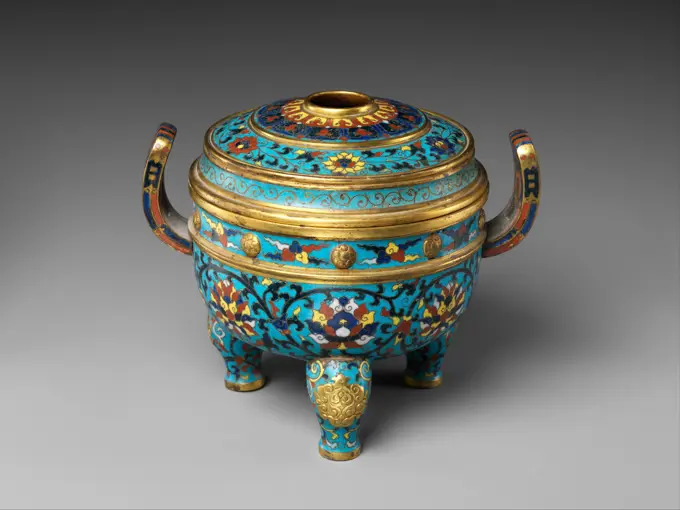
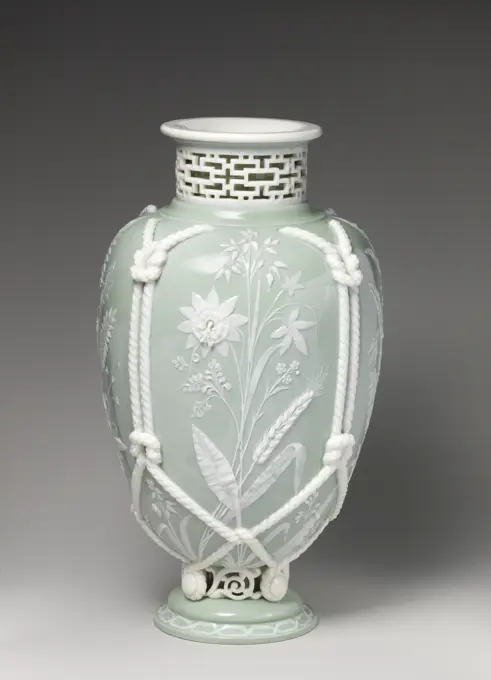
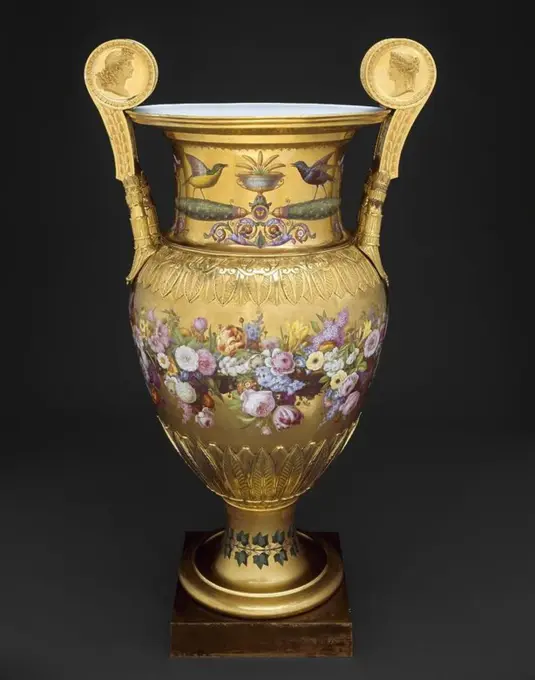
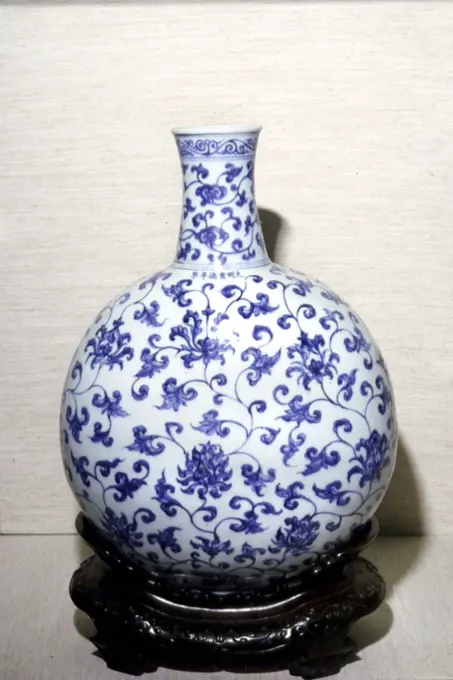
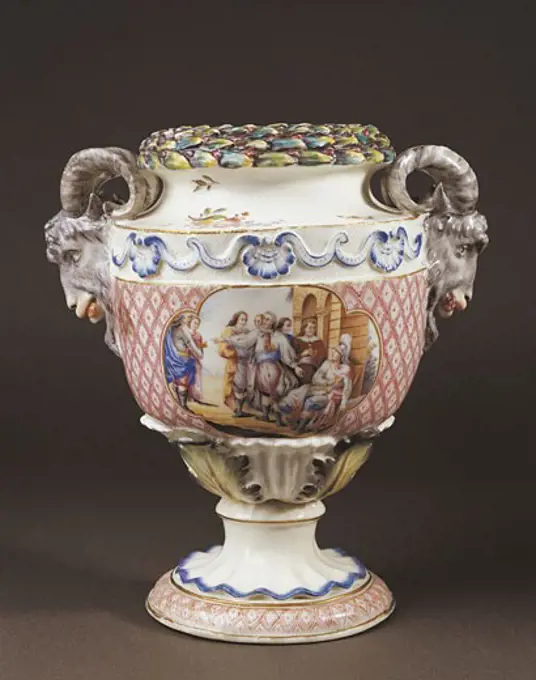
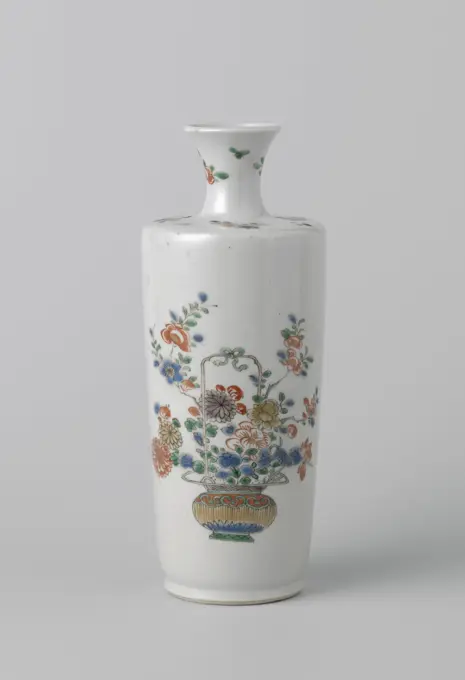
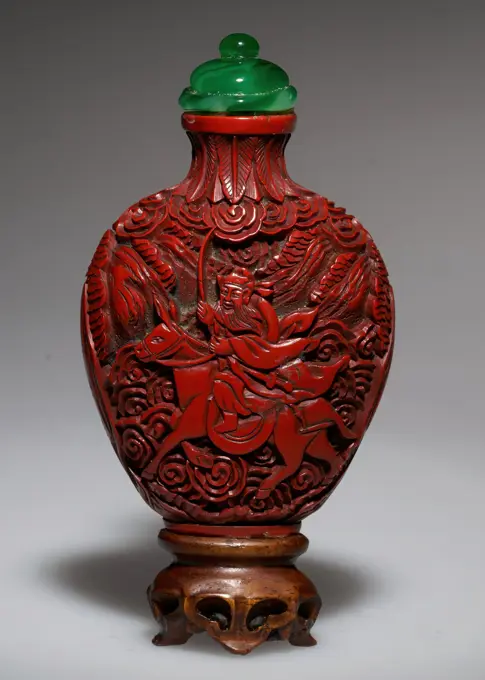
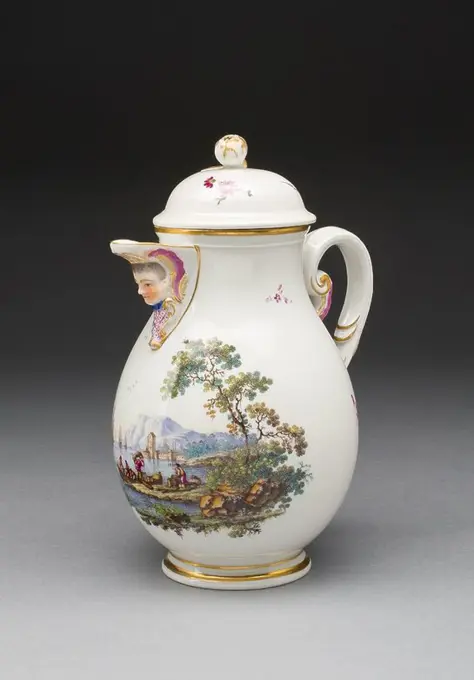
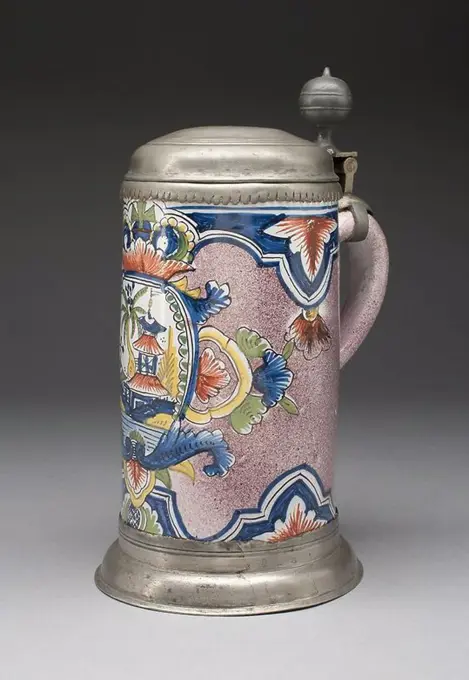
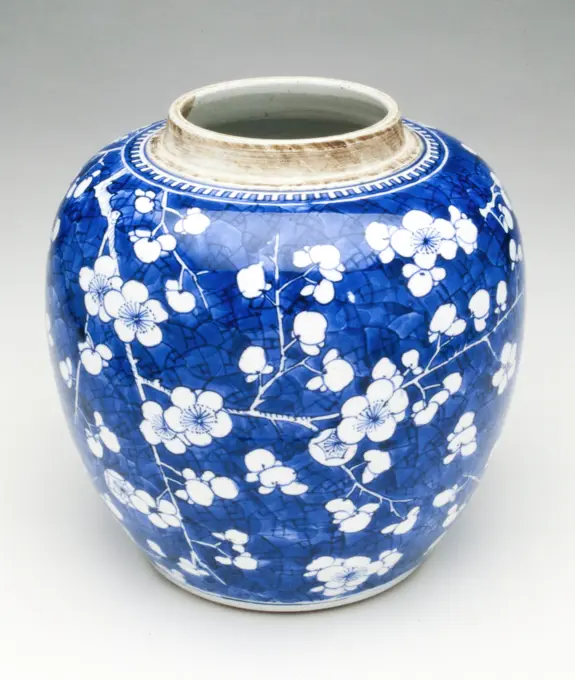
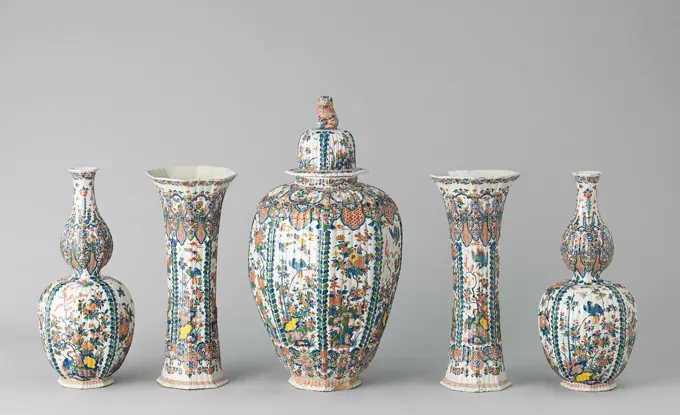
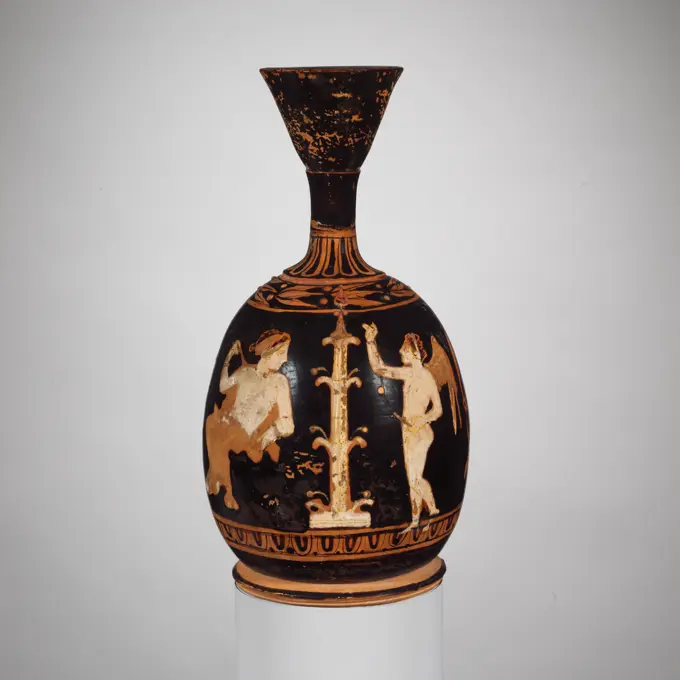
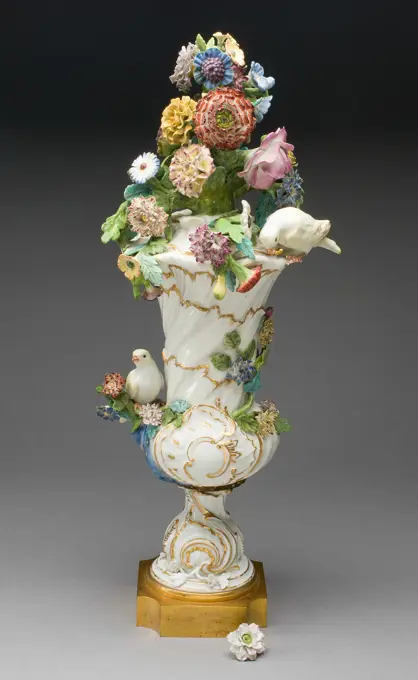
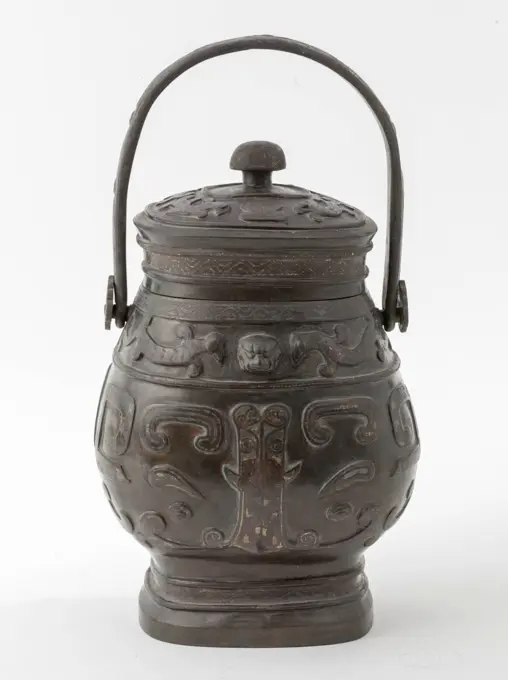
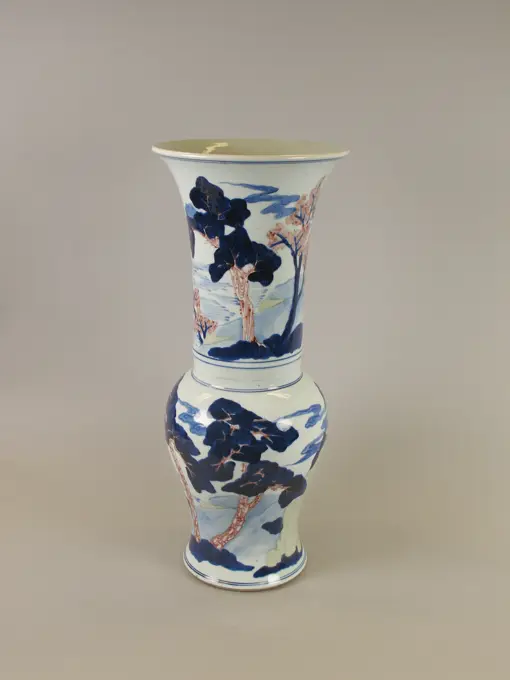
Flagon, anonymous, c. 1700 - c. 1724 Pass jug with lid of porcelain with elongated body, wide neck, ear and s-shaped bent spout, covered with underly glaze bleu pouddré (powder blue) and painted in the fields and on the glaze in red, green, yellow, aubergine, black and gold. On the wall two scalloped cartouches in spare filled with prunus branch, plants and birds or water with flowering lotus plants and two birds; On the powder blue soil a decoration in gold with magnolia and prunus branch, around the shoulder a band with Ruyi motif and one with a geometric pattern, the spout and the ear with decorative band; The lid with four decorative tires in gold. Bleu Poudré with Famle Verte. China porcelain. glaze. cobalt (mineral). gold (metal) painting / gilding / vitrification Pass jug with lid of porcelain with elongated body, wide neck, ear and s-shaped bent spout, covered with underly glaze bleu pouddré (powder blue) and painted in the fields and on the glaze in red, green, yellow, aubergiVase of faience. Painted multi-colored.Vase, from a five-piece garniture set, c. 1710, 14 11/16 x 6 15/16 x 6 5/8 in. (37.3 x 17.6 x 16.8 cm), delftware with polychrome glazing, Netherlands, 18th centuryVase;  around 1910-1920 (1910-00-00-1920-00-00);Block, Julius Henry (1858-1934) - collection, chrysanthemums, cloisonné, gift (provenance), Japanese (culture), clones, Japanese art, vasesLid of tea bus, hexagonal, painted multi-colored with courses with Indian Blumen and Chinese. Lid of hexagonal tea bus from painted porcelain.Porcelain tureen with lid, in blue Oriental figure with flowers, terrine crockery holder ceramic porcelain glaze, baked painted glazed, oval shaped short foot slightly double conical body two handles in the form of palmetal sheet., vaulted lid elevation on which strong curled bud bottom underside blue underglaze: unidentified seal mark within double circle serve serve garnish Kangxi Kang ShiStorage jar (albarello) ca. 1500 Italian, perhaps Naples or environs Storage vessels were among the most frequently produced maiolica wares in late medieval and Renaissance Italy. Made in fairly standard shapes, they were designed to fit with dozens of others on a shelf, often in a pharmacy or shop. Their handles therefore tend to fit within the vessels profile, and the cylindrical albarello type is generally narrower at the middle than at the top or bottom, making it easy to grip. Other common features include inscriptions indicating contents and flanged lips to help secure cloth or paper seals. The decoration, usually more elaborate on one side than the other, can sometimes link pieces to a known dispensary or specific workshop or artist.. Storage jar (albarello) 194608One-handled storage jar (albarello). Culture: Italian, Siena. Dimensions: Overall (confirmed): 8 9/16 × 6 × 4 11/16 in. (21.7 × 15.2 × 11.9 cm). Date: ca. 1510-30.The single-handled form is uncommon, and each of the dozen known examples is decorated with the same palette and winged cherub design. This suggests that they were commissioned together as a single pharmacy series. Museum: Metropolitan Museum of Art, New York, USA.Potiche flower vase. unknown, manufacturerCovered baluster jar with figures in an interior behind framework, prunus trees and floral scrolls, anonymous, c. 1650 - c. 1699 Balus -shaped porcelain lid jar with a spreading base, painted in underly glaze blue and on the glaze red, black and gold. On the wall twice two people sitting in an interior behind modeled and painted grille work. This grille is decorated with modeled and decorated prunus trees and tires with flower vines. Under the grille work a band with flower vines. Around the foot a bond with lotus drinks. On the neck three cartouches with lotus vines. The lid with the same decoration; Lid button in the shape of a bird on a stump. Imari. Japan porcelain. glaze. cobalt (mineral). gold (metal) painting / gilding / vitrification Balus -shaped porcelain lid jar with a spreading base, painted in underly glaze blue and on the glaze red, black and gold. On the wall twice two people sitting in an interior behind modeled and painted grille work. This grille is decorated with modDouble gourd-shaped bottle vase with light brown and flower sprays, anonymous, c. 1700 - c. 1724 Calebas-shaped bottle of porcelain with a round body and pear-shaped neck, painted in underly glaze blue and with cafe-au-lait glaze. The body is partially covered with a light brown café-au-lait-colored glaze above which a band with a thick cream-colored glaze; on the shoulder servetwork interspersed with cartouches with flour; On the neck a band with flower vines, above it flower branches with butterflies. Monochrome brown with blue and white. China porcelain. glaze. cobalt (mineral) painting / vitrification Calebas-shaped bottle of porcelain with a round body and pear-shaped neck, painted in underly glaze blue and with cafe-au-lait glaze. The body is partially covered with a light brown café-au-lait-colored glaze above which a band with a thick cream-colored glaze; on the shoulder servetwork interspersed with cartouches with flour; On the neck a band with flower vines, above it flower brAntique Greek vase Antique Greek vase isolated over white Copyright: xZoonar.com/IvonnexWierinkx 9896102Pot with lid, part of a cupboard set, anonymous, c. 1770 - c. 1810 Powence pot. Blue painted with a Dutch water landscape. Delft . Powence pot. Blue painted with a Dutch water landscape. Delft .Vase with Cover, 1661-1722. China, Jiangxi province, Jingdezhen kilns, Qing dynasty (1644-1911), Kangxi reign (1661-1722). Porcelain with underglaze blue decoration; overall: 46.6 cm (18 3/8 in.).Jar ca. 1625-50 Spanish, Talavera de la Reina During the course of the sixteenth century a number of potteries making tin-enameled earthenware came into existence in Talavera de la Reina, a small town some sixty miles southwest of Madrid. The town supplied plain wares that were greatly admired for the beauty of their white surfacethe "bianco"and others that were decorated in a subdued palette of high-temperature greens, yellows, browns, blues, and purples. This jar and bowl (1983.469.1, .2) come from a pottery, so far unidentified by name, that seems to have obtained important orders over a fairly long period in the late sixteenth and the seventeenth centuries. The characteristics of the factory are well exemplified in these objects: a fine bianco; a very beautiful blueskillfully modulated from light to deep shadesthat predominated in the early and mid-16oos; and an energetic freedom in the use of the brush point to draw in figures and background vegetation. In the latter part of tBottle - pitcher. unknown, craftsmanVase with Cover (one of a pair). Worcester Porcelain Factory; Worcester, England, founded 1751. Date: 1755-1765. Dimensions: 38.1 × 17.5 cm (15 × 6 7/8 in.). Soft-paste porcelain with underglaze blue decoration. Origin: Worcester. Museum: The Chicago Art Institute, Chicago, USA. Author: Worcester Royal Porcelain Company.Small vase. unknown, craftsman. .Covered jar with figures, flower sprays and auspicious symbols in shaped panels on a multi-colored ground, anonymous, c. 1725 - c. 1740 Porcelain lid jar with baluster -shaped body and ribbed wall, painted on the glaze in blue, red, pink, green, yellow, purple, black and gold. On the wall cartouches against a frequently colored background of vertical tires (Harlequin pattern); Two cartouches in the form of open rolls with a woman (long lijs) with young (fool) in a fenced garden with flowering plants, underneath two leaf-shaped cartouches with peony branch and butterfly, a smaller pomegranate and fingercitren-shaped compartment on either side of the large courses with lucky symbols; On the neck a band with flower vines. The lid with the same decoration. On the bottom an old label with 'S.K. 21 'and one with' 17100/91 ... 003/5 '. Belonging to a five -part cupboard. Famle Rose. China porcelain. glaze. gold (metal) painting / gilding / vitrification Porcelain lid jar with baluster -shapedMoon flask (one of a pair) 1871 Worcester factory After the end of the Flight, Barr & Barr ownership of the Worcester factory in 1840, the firm went through a succession of owners and mergers before falling under the ownership of Kerr & Binns in 1852. During the partnership, the factory sought to rebuild its former eighteenth-century reputation in porcelain and known for Renaissance-inspired designs. With the establishment of the Royal Worcester Porcelain Company in 1862, the company gradually gained recognition for its Japanese-inspired designs, which formed part of Japonisme, a collective fascination with Japan that took place in Europe and the United States following the opening of Japanese markets to the West by Commodore Perry in 1853.. Moon flask (one of a pair). British, Worcester. 1871. Bone china. Ceramics-Porcelain. The Rozenburg porcelain works presented porcelain of this type at the Exposition Universelle in Paris in 1900. The material it was made of was unusual and pioneering - the thinnest of eggshell porcelain. The vases have flowing shapes, with harmonious swirling ornamentation, such as colourful plants, an oriental dragon and birds.Pilgrim bottle with screw top Workshop of Antoine Syjalon 1581 Satirical references to Catholic practice in the form of fantastic, dog-faced creatures holding rosaries and other accessories appear on this flask. It was probably made as a diplomatic gift for a foreign Protestant prince, Johann Casimir of Bavaria (1543-1592), whose arms appear on it. The decorative scheme of fabulous beings, fruits, birds, and masks is derived from the work of the engraver and architect Jacques Androuet du Cerceau (1510/12-1585).Miniature orb vase in blue and white 1870s Worcester factory After the end of the Flight, Barr & Barr ownership of the Worcester factory in 1840, the firm went through a succession of owners and mergers before falling under the ownership of Kerr & Binns in 1852. During the partnership, the factory sought to rebuild its former eighteenth-century reputation in porcelain and known for Renaissance-inspired designs. With the establishment of the Royal Worcester Porcelain Company in 1862, the company gradually gained recognition for its Japanese-inspired designs, which formed part of Japonisme, a collective fascination with Japan that took place in Europe and the United States following the opening of Japanese markets to the West by Commodore Perry in 1853. Listen to experts illuminate this artwork's story Listen Play or pause #418. Christopher Dresser and the Birth of Industrial Design Supported by Bloomberg Philanthropies We're sorry, the transcript for this audio track is not available atDrucker Vase, anonymous, c. 1700 Square vase of porcelain with a wide, spreading neck, covered with a black glaze and painted in red, green, yellow, eggplant and black. On each wall a hanging flower branch (prunus) with one or more birds on it. Prunus branches on the shoulders. The neck with prunus branches and birds at a rock. Belongs to BK-NM-14284. Famle Noire. China porcelain. glaze. painting / vitrification Square vase of porcelain with a wide, spreading neck, covered with a black glaze and painted in red, green, yellow, eggplant and black. On each wall a hanging flower branch (prunus) with one or more birds on it. Prunus branches on the shoulders. The neck with prunus branches and birds at a rock. Belongs to BK-NM-14284. Famle Noire. China porcelain. glaze. painting / vitrificationBaluster-Shaped Vase with Peony Flowers 1700-1899 China. Celadon-glazed porcelain with underglaze molded decoration .Covered Baluster Jar With Figures in An Interior Behind Framework, Prunus Trees and Floral scrolls. Baluster-shaped lid pot of porcelain with a spreading foot, painted in underglaze blue and on the glaze red, black and gold. On the wall twice two people sitting in an interior behind landscaped and painted railing. This railing is decorated with landscaped and decorated prunus trees and tires with floral drinks. Among the railing a bond with flower drinks. A relationship with lotus drinks around the foot. Three cartouches with lotus drinks on the neck. The lid with the same decoration; Cover knob in the shape of a bird on a stump. Imari.Vase. unknown, craftsmanLid jar with dish, painted with flowers in pink and gold, anonymous, c. 1775 - c. 1800 Round pot on a spreading foot and immediately high, slightly spreading neck; A subpotel and a convex lid with a round lid button. Painted with flower branches in pink and gold and with tires with geometric patterns. India glass. gilding (material) glassblowing / gilding Round pot on a spreading foot and immediately high, slightly spreading neck; A subpotel and a convex lid with a round lid button. Painted with flower branches in pink and gold and with tires with geometric patterns. India glass. gilding (material) glassblowing / gildingGerman vase made by the Meissen porcelain factory, Germany. Hard-paste porcelain, about,1745Bottle ca. 1800 Mexican. Bottle 585Vase with two handles, Italian majolica of Montelupo, between the end of the 16th century and early 17th centuryCovered soup tureen with stand, c. 1825, Spode, Stoke-on-Trent, England, est. 1776, 11 x 15 x 10 15/16 in. (27.94 x 38.1 x 27.78 cm), Porcelain, England, 19th centuryCovered jar ca. late 7th-first half of the 8th century China. Covered jar. China. ca. late 7th-first half of the 8th century. Earthenware with three-color (sancai) glaze. Tang dynasty (618-907). CeramicsTwo lidded vases.Meissener Porzellan Manufaktur, after prints by Charles François Silvestre (1667-1738), Meissen, c. 1730-1735, hard-paste porcelainLidded Jar. Joseph Olerys Manufactory (Moustiers) (French, active about 1650 - present). Manufacturing former loose ruderecht, c. 1778-1782Hard-Paste PorcelainAnonymous and workshop known as "Saint-Porchaire". Aiguière, called "bottle". Ceramics, Kaolinic clay. Between 1540 and 1560. Museum of Fine Arts of the City of Paris, Petit Palais. 112503-10 Acute, decorative art, French, ceramic art, earthenware, container, French rebirth, dishes, 16th 16th 16th 16th 16th 16Vase van Faience, De Klaauw, 1810 - 1840 vase Multicolored painted. Delft .Terrine, painted multi-colored with chinoiseries. Terrine of painted porcelain. The terrine has two volute-shaped ears awarded by a woman's head, with embossed a plated acanthus sheet at the bottom. The lid ends in an artichoke. The terrine is decorated with two. The terrine has been marked.Stop from carafe with a medallion with a women's portrait, anonymous, c. 1850 - c. 1900 Mushroom -shaped stop ending in a point. France (possibly) glass glassblowing / gilding Mushroom -shaped stop ending in a point. France (possibly) glass glassblowing / gildingChina vase, by Unknown, 17th Century, porcelain. Italy, Campania, Naples, Duca di Martina National Museum. Whole artwork. China vase floral decorations rinceaux.Westerwald pitcher with plaster filling, decors in blue and gray, jug crockery holder soil find ceramic stoneware glaze salt glaze, neck 5.3 hand-turned trellis grooved cobalt oxide glazed Stoneware jug gray glaze blue stripes surfaces and bands rosettes kerbschnitt Lower half vertical lobes middle over the belly frieze with ridge and herringbone pattern On the shoulder fields with kerfsnee and diamond shapes in which floral pattern. Cylindrical neck with appliqué rosettes. Profile rings. Ball-bearing model Restoration not updated archeology Valckensteyn Poortugaal Albrandswaard indigenous pottery serve serve drink beverage kitchen import Soil discovery: castle Valckensteyn in Poortugaal now Albrandswaard 1961-1962.Chocolate pot with cover 1761-69 The Young Moor's Head Factory (Het Oude Moriaenshooft) Gertruij Verstelle owned the Old Moor's Head factory from 1761 to 1769 and was responsible for outstanding, colorful works produced in the Rococo style.. Chocolate pot with cover 236803Maiolica: Apothecary jug (brocca). Culture: Italian (supposedly Faenza or Florence). Dimensions: Height: 13 1/8 in. (33.3 cm). Date: early 16th century (). Museum: Metropolitan Museum of Art, New York, USA.Vase painted with portrait of DS. Mol for feet. Vase with porcelain lid. On the square pedestal rests the high, round foot that the vase bears. On the vase, lion masks such as ears. completely open. Painted with the portrait of DS. Mole in a garden next to an amphor.JARRA DEL ESTUDIANTE VIDRIADA EN AZUL Y AMARILLO-CERAMICA DE ANDUJAR-S XIX.Pair of vases decorated ca. 1725-30 Decorated by the Hausmaler Ignaz Preissler. Pair of vases. Chinese and European. decorated ca. 1725-30. Hard-paste porcelain (Dehua, so-called blanc de chine). Ceramics-Porcelain-ExportCovered Jar With Ruyi-Heads And Flowers. Egg-shaped pot with porcelain lid, painted on the glaze in blue, red, green, yellow, eggplant and black with flowers and styled tendrils. The pot is decorated with three compartments in the form of a lobed window with a peony surrounded by styled tendrils; between the three courses a ruyi motif and flower branches. Around the foot an ornamental band; Around the shoulder a bond with Ruyi motifs. On the lid a stylized peony with branches and spreader flowers. The lid is unforded. Famille Verte.Jug with Portuguese arms. Culture: Chinese, for Portuguese market. Dimensions: Height: 7 3/8 in. (18.7 cm). Date: ca. 1520-40.This ewer with the Portuguese royal arms is witness to the first East-West trade in Chinese porcelain carried on by the Portuguese in the mid-sixteenth century. The form is neither Chinese nor European; rather, it is based on an Islamic metalwork vessel made for the Near Eastern market that was appropriated for the new European trade. The Chinese painters have misunderstood the Portuguese coat of arms, which appears upside down. Museum: Metropolitan Museum of Art, New York, USA.Ewer 1883-93 Pauline Pottery. Ewer. American. 1883-93. Earthenware. Made in Chicago, Illinois, United StatesSugar Bowl 1775-1800 Burslem. Stoneware (jasperware) . Wedgwood Manufactory (Manufacturer)Sugar Bowl 1795-1805 Burslem. Stoneware (jasperware) . Wedgwood Manufactory (Manufacturer)Jar with Scholars in Garden 1500-1599 China. Fahua ware; stoneware with biscuit outlines and underglaze molded decoration .Vase;  18th century (1701-00-00-1800-00-00);Puzzle jug ca. 1710-20 Chinese, for Dutch or British market The model is derived from one originating in English pottery by 1653 and copied at the Dutch Delft factories by the early 18th century.. Puzzle jug 185900Vase of porcelain decorated with dragon, N.V. Haagsche Plateel Factory Rozenburg, 1900 Vase of porcelain, multicolored decorated with two dragons within an ornamental backdrop of flowers. The Hague porcelain Vase of porcelain, multicolored decorated with two dragons within an ornamental backdrop of flowers. The Hague porcelainHookah Base, 1600-1700 Safavid Dynasty (1500-1722) Two seated single figures on either side, wearing loose belted robes with halos in blue and white, Applied Arts, Blue, Asia, Ceramics, Middle East, Iran, PersiaMeiping vase with birds and flowers late 18th century China. Meiping vase with birds and flowers. China. late 18th century. Porcelain painted with overglaze polychrome enamels, with engraved decoration (Jingdezhen ware). Qing dynasty (1644-1911), Qianlong mark and period (1736-95). CeramicsVase;  19th century (1801-00-00-1900-00-00);Vase China. Vase 44752Plaque. Netherlands, Delft. Date: 1725-1735. Dimensions: 22 × 24.5 cm (8 5/8 × 9 5/8 in.). Tin-glazed earthenware (Delftware). Origin: Delft. Museum: The Chicago Art Institute, Chicago, USA.Jug, decorated with bird in pear-shaped frame. Jug of stoneware. Gray with a blue bird in a pear shaped picture frame.Saki Bottle, c. 1730. Meissen Porcelain Factory (German), probably by Johann Gregor Herold (German, 1696-1775). Porcelain; overall: 21.5 x 9.7 cm (8 7/16 x 3 13/16 in.).. Egg-shaped tea bus from painted porcelain, with a hexagonal wall with gold-plated ribs. The bus has a lid. The six compartments are painted with Höroltt-chinoiseries. The tea bus is part of a tea service (BK-17420-A to BK-17420-O) and has been noticed. The crockery stands on a shelter or base (BK-17017).Jar with Landscape. Culture: Japan. Dimensions: H. 12 3/8 in. (31.4 cm); Diam. 7 7/8 in. (20 cm). Date: ca. 1620-40. Museum: Metropolitan Museum of Art, New York, USA.Flower vase with a lid, with geometrical decoration. Wąsowicz, Wacław (1891-1942), painterPair of vases ca. 1750 British, Staffordshire. Pair of vases 199471Vase 15th-16th century Vietnam. Vase 37547Bouquet ca. 1760 Chelsea Porcelain Manufactory. Bouquet. British, Chelsea. ca. 1760. Soft-paste porcelain. Chelsea Porcelain Manufactory (British, 1745-1784, Transitional (Brown Anchor) Period, ca. 1758-1759). Ceramics-PorcelainBOTELLA DE VIDRIO LECHOSO S XIX. Location: MUSEE D'ARTS DECORATIFS. MADRID. SPANIEN.Moon flask with Islamicizing floral motifs 1872 Minton(s) Minton was the most important ceramics factory during the Victorian period and began exhibiting products at the first Great Exhibition of 1851. Founded in 1793 by Thomas Minton at Stoke-on-Trent, the firm initially specialized in transferware pottery before expanding under the ownership of Thomass son Herbert Minton, beginning in 1836. Under the ownership of Colin Minton Campbell, who succeeded his uncle in 1858, the factory became recognized as a specialist producer of Aesthetics movement porcelain, which were inspired by a rich array of exotic and eclectic decorative motifs. Listen to experts illuminate this artwork's story Listen Play or pause #418. Christopher Dresser and the Birth of Industrial Design Supported by Bloomberg Philanthropies We're sorry, the transcript for this audio track is not available at this time. We are working to make it available as soon as possible.. Moon flask with Islamicizing floral motifs. BritiTripod incense burner with lid early 15th century China Cloisonné enamel was introduced into China from the West during the fourteenth century. The technique was used in China to create designs on metal vessels, usually copper alloy, by placing colored-glass paste in enclosures formed by copper wire. Since the fifteenth century, cloisonné was greatly appreciated by the imperial Ming court for its vivid colors and intricate design. Chinese artists employed it for traditional forms and patterns, such as this incense burner in the shape of an ancient bronze tripod form decorated with lotus scrolls.. Tripod incense burner with lid. China. early 15th century. Cloisonné enamel. Ming dynasty (1368-1644). CloisonnéVase with rope and wheat decoration 1864 Minton(s) Minton was the most important ceramics factory during the Victorian period and began exhibiting products at the first Great Exhibition of 1851. Founded in 1793 by Thomas Minton at Stoke-on-Trent, the firm initially specialized in transferware pottery before expanding under the ownership of Thomass son Herbert Minton, beginning in 1836. Under the ownership of Colin Minton Campbell, who succeeded his uncle in 1858, the factory became recognized as a specialist producer of Aesthetics movement porcelain, which were inspired by a rich array of exotic and eclectic decorative motifs.. Vase with rope and wheat decoration. British, Stoke-on-Trent, Staffordshire. 1864. Bone china. Ceramics-PorcelainLondonderry Vase. Sèvres Porcelain Manufactory (Sèvres, France, founded 1740); Designed by Charles Percier (French, 1764-1838); Decoration designed by Alexandre-Theodore Brogniart (French, 1739-1813); Flowers and ornament painted by Gilbert Drouet (French, 1785-1825); Birds painted by Christophe-Ferdinand Caron (French, active 1792-1815). Date: 1813. Dimensions: 137.2 cm (54 in.). Hard-paste porcelain, polychrome enamels, gilding, and gilt bronze mounts. Origin: Sèvres. Museum: The Chicago Art Institute, Chicago, USA. Author: Manufacture nationale de Sevres.Ming Dynasty Vase CHINA.Close-up of a vase, Paris, FranceCylindrical vase with flower baskets, anonymous, c. 1700 - c. 1724 Cylindrical vase of porcelain, upwards slightly and with a short spreading neck; Painted on the glaze in blue, red, green, yellow, eggplant, black and gold. On the belly twice a flower basket with peony, chrysanthemum, Lotus and Camelia. On the shoulder and neck loose flower branches. Famle Verte. China porcelain. glaze. gold (metal) painting / gilding / vitrification Cylindrical vase of porcelain, upwards slightly and with a short spreading neck; Painted on the glaze in blue, red, green, yellow, eggplant, black and gold. On the belly twice a flower basket with peony, chrysanthemum, Lotus and Camelia. On the shoulder and neck loose flower branches. Famle Verte. China porcelain. glaze. gold (metal) painting / gilding / vitrificationCan, spherical with clover leaf-shaped mouth. Spherical can of lead glaze pottery, on a foot and with a clover leaf-shaped mouth. The can have a wide, flat ear. In the can engraved a flower around concentric circles. Two striped tires are swinging around the circles.Flower vase (Hana-ike). Japan. White sandstone, decor painted in blue under the cover. Between 1830 and 1850. Paris, Cernuschi museum. Anse, Japanese art, boat, blue, Japanese ceramic, decor, flower vaseSnuff Bottle, 1800-1880, 3 x 1 7/8in. (7.6 x 4.8cm), Cinnabar lacquer, glass, ChinaCoffee Pot. Ansbach Pottery and Porcelain Factory, decorated in the Hague; German, c. 1708-1839. Date: 1765-1775. Dimensions: 17.5 × 13.0 cm (6 7/8 × 5 1/8 in.). Hard-paste porcelain, polychrome enamels, and gilding. Origin: Ansbach. Museum: The Chicago Art Institute, Chicago, USA.Tankard. Germany, Erfurt. Date: 1730-1750. Dimensions: 25.3 × 17.8 × 15.2 cm (10 × 7 × 6 in.). Tin-glazed earthenware (faience) and pewter. Origin: Erfurt. Museum: The Chicago Art Institute, Chicago, USA.William L Antrim, Pa German Jar, c 1938 Pa. German JarVase, Handblown and tooled glass, Light blue glass with cobalt blue glass decoration., Switzerland, 18th century, glasswares, Decorative Arts, VaseUnknown, bouquetières pot on fire with cover (title of the whole). Great fire earthenware, polychrome enamels. Petit Palais, Museum of Fine Arts of the City of Paris.Jug with Cover. probably Germany, 18th century. Furnishings; Serviceware. Glass, enamelGoblet. UnknownGinger jar, 17th-18th century, 8 1/4in. (21cm), Ceramic, glaze, wooden cover and stand, China, 17th-18th centuryGarniture. These five vases, in both form and decoration, clearly belong together. They were specially made as a set for display on a cupboard or a table. The ribbed form of the vases is typically European, while the painted decoration is inspired by Chinese and Japanese porcelain.Terracotta squat lekythos (oil jar) late 5th century B.C. Greek, Attic Aphrodite and Eros flanking an incense burner.. Terracotta squat lekythos (oil jar). Greek, Attic. late 5th century B.C.. Terracotta; red-figure. Classical. VasesBottle with flowers of the four seasons. Culture: Japanese, for European (probably Dutch) market. Dimensions: Height: 8 5/8 in. (21.9 cm). Date: ca. 1710.Although the square shape of the bottle replicates a Dutch glass vessel used for holding wine or spirits, the decoration of the flowers of the four seasons--including chrysanthemums symbolic of spring, and peonies for summer--is based on Chinese and Japanese traditions. Museum: Metropolitan Museum of Art, New York, USA.Vase 1745-1755 Meissen. Hard-paste porcelain, polychrome enamels, gilding, and gilt bronze mounts . Meissen Porcelain Manufactory (Manufacturer). Vase, konically shaped, with decor in black, yellow, green and light brown. Mounted with factory stamp from RAM, Arnhem in circle shape, 29 / D, painter of Willem Elstrodt, everything in black, and rebel 29.Scent bottle 1760-65 British, South Staffordshire. Scent bottle. British, South Staffordshire. 1760-65. Enamel on copper. Enamels-PaintedVase. Bronze. Chine. Par musée musée malée. Handle, Chinese art, bronze, cover, decorative motif, vaseVase, bottle -shaped, multi -colored painted with landscape with naked woman (ariadne) and with on Banderolle the inscription: A Rosata, Anonymous, c. 1530 - c. 1560 Bottle -shaped vase of multicolored painted majolica. On the vase a banderolle is painted with the inscription: A Rosata, above that a standing, naked woman is painted (Ariadne) with spider skirts and wire. Castelli earthenware. tin glaze. lead glaze majolica Bottle -shaped vase of multicolored painted majolica. On the vase a banderolle is painted with the inscription: A Rosata, above that a standing, naked woman is painted (Ariadne) with spider skirts and wire. Castelli earthenware. tin glaze. lead glaze majolicaVase with landscape late 17th-early 18th century China. Vase with landscape 50506Four-sided bottle ca. 1713-20 Meissen Manufactory German The bottle dates from the earliest production of porcelain at Meissen, and is known as Böttger porcelain after its inventor, Johann Friedrich Böttger (1682-1719). Here, a Japanese sake bottle has been transformed by the incorporation of Baroque motifs and a more prominent, stepped foot. It was probably modeled by the Saxon court goldsmith, Johann Jacob Irminger (1635-1724).. Four-sided bottle. German, Meissen. ca. 1713-20. Hard-paste porcelain with molded decoration. Ceramics-PorcelainVase;  19th/20th century (1891-00-00-1910-00-00);