Decorative Blades and Daggers

A variety of decorative daggers and blades, showcasing intricate designs, historical craftsmanship, and cultural significance.

Dessert fork; Würtembergische metallwarefabrik - WMF (Germany; Wytwónia Z Otnarz; 1880-1914); after 1880 (1890-00-00-1914-00-00);
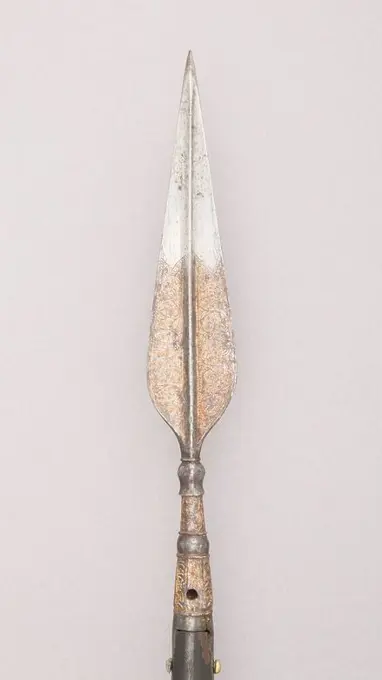
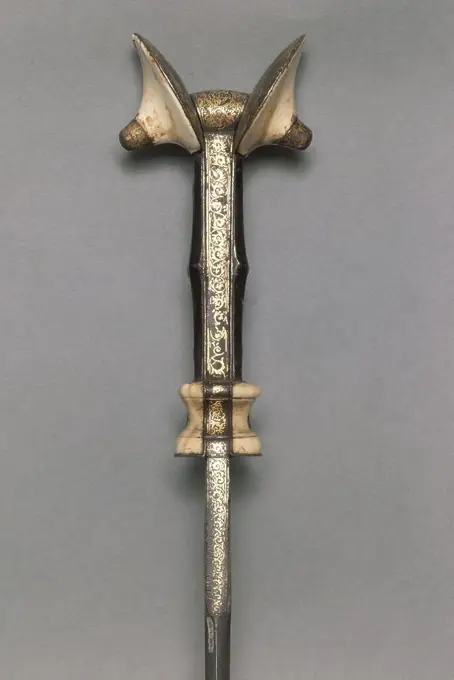
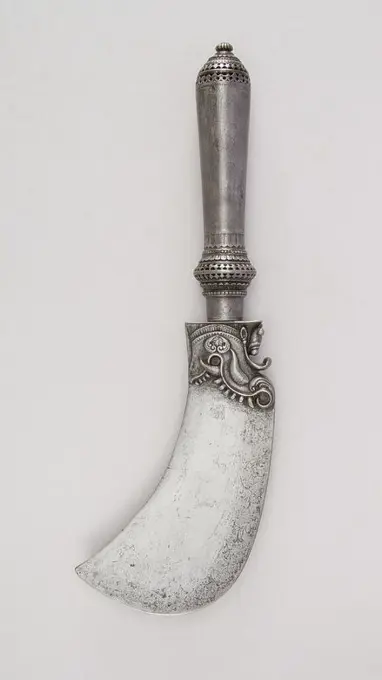
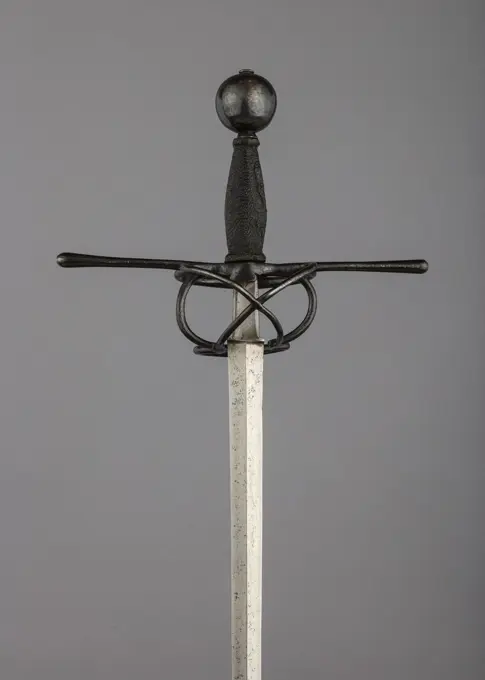
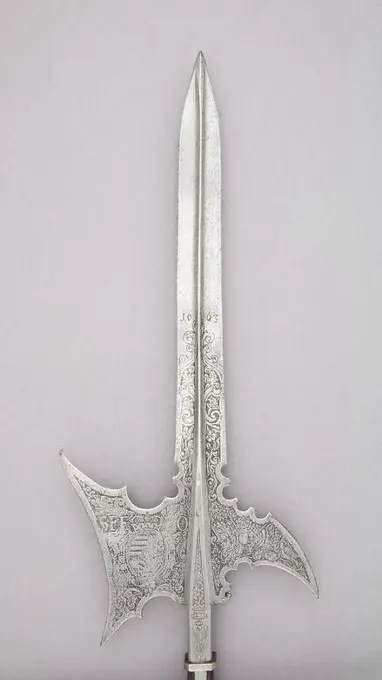
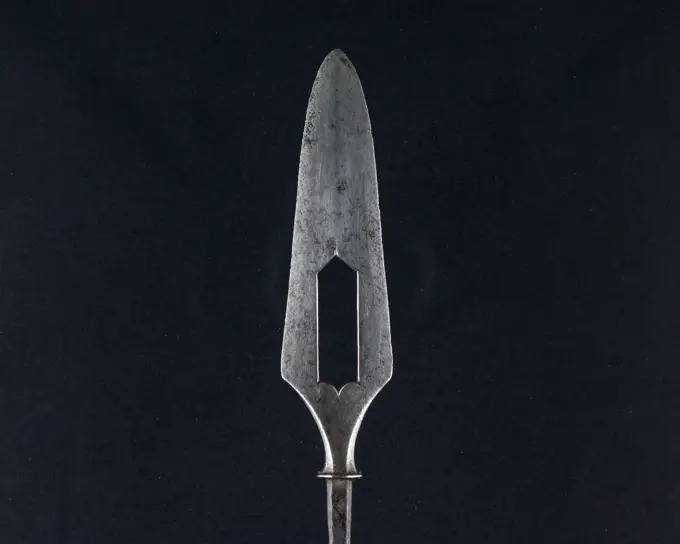
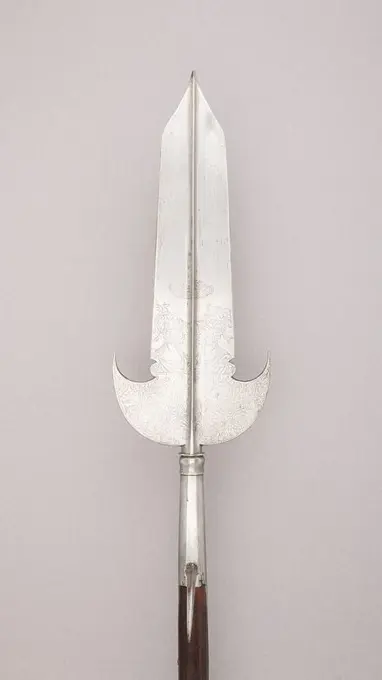
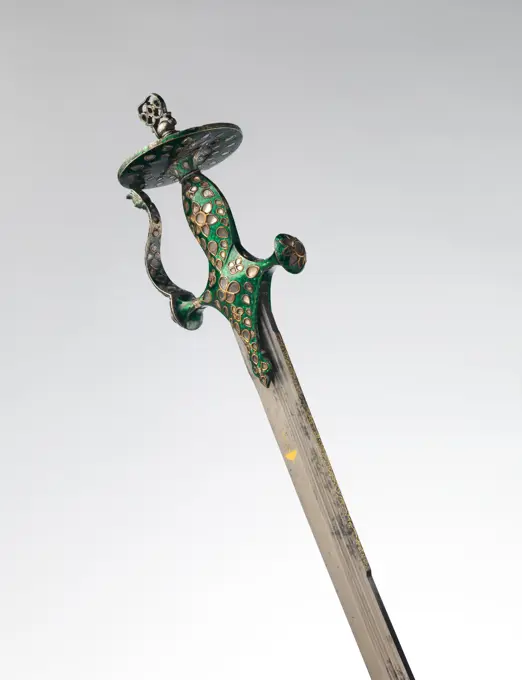
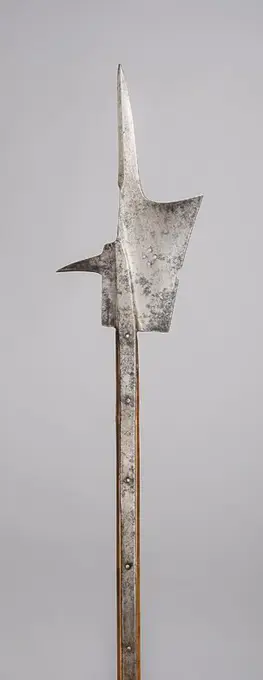
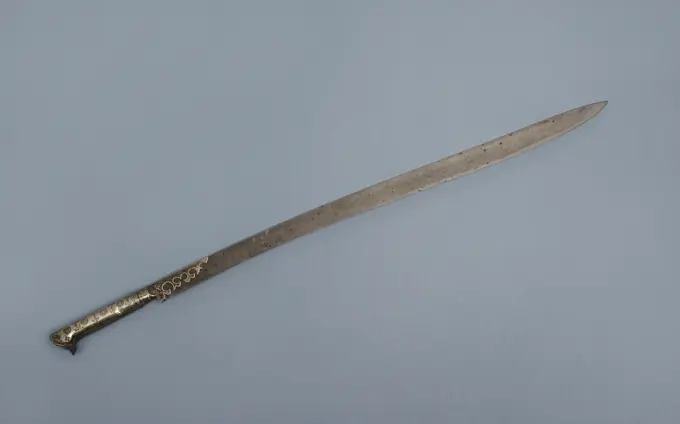
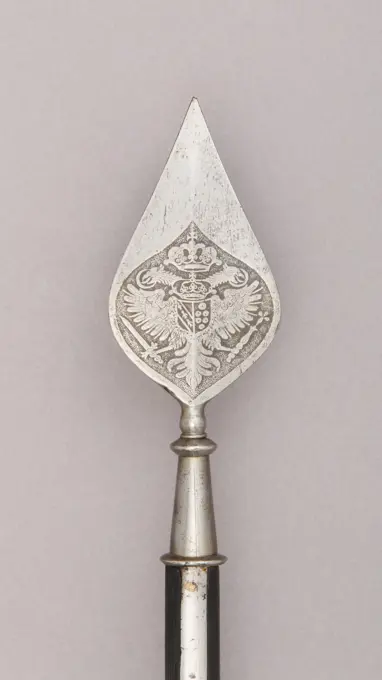
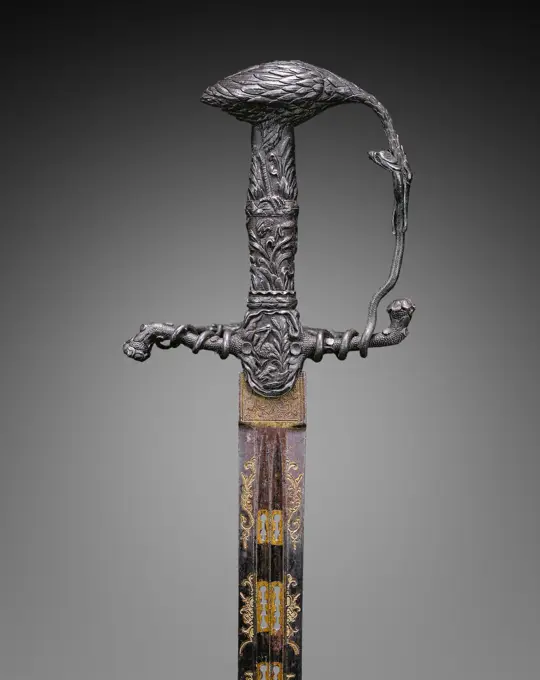
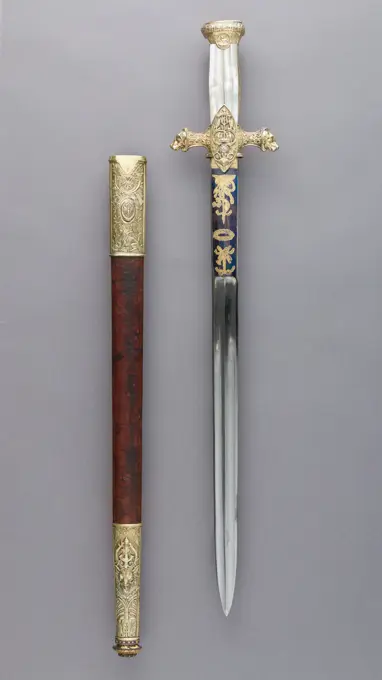
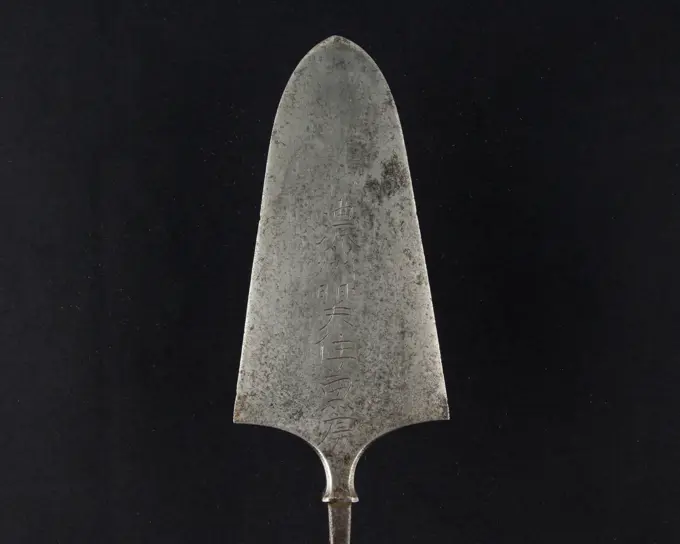
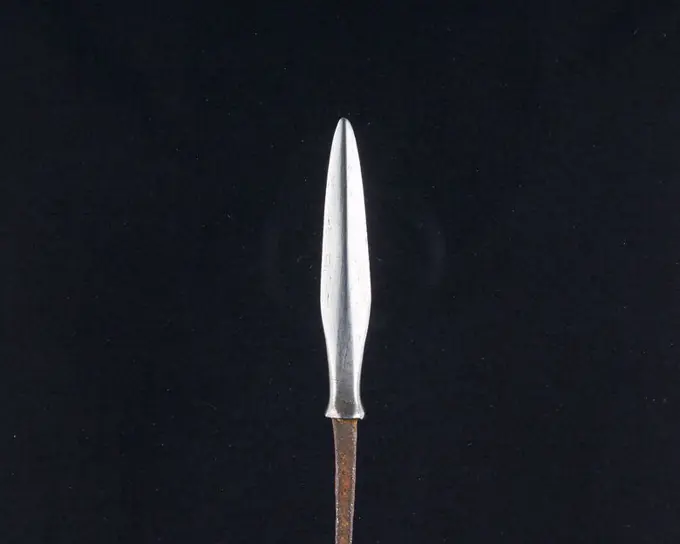
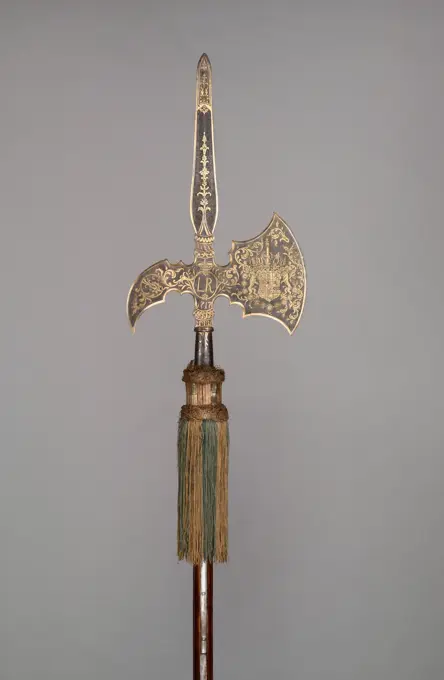
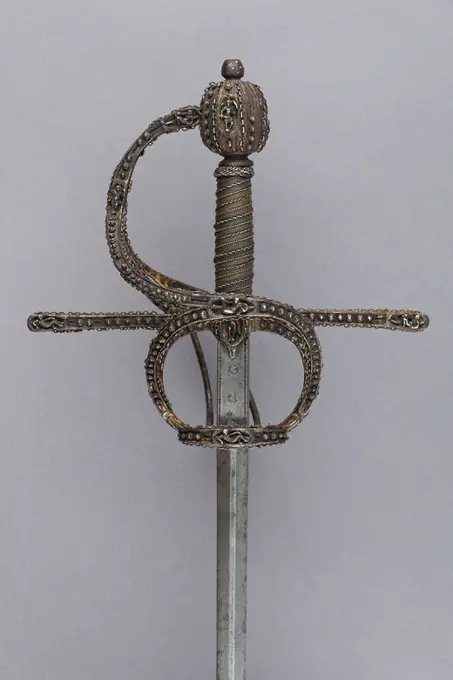
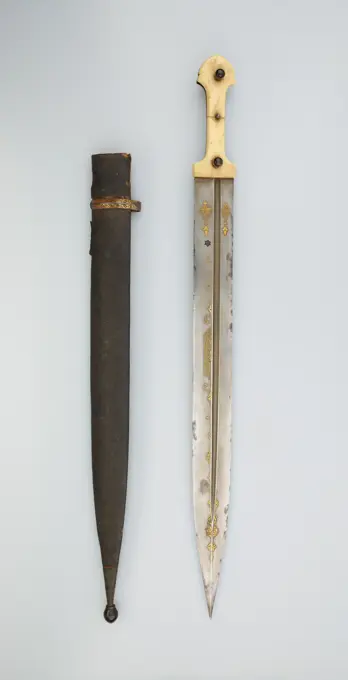
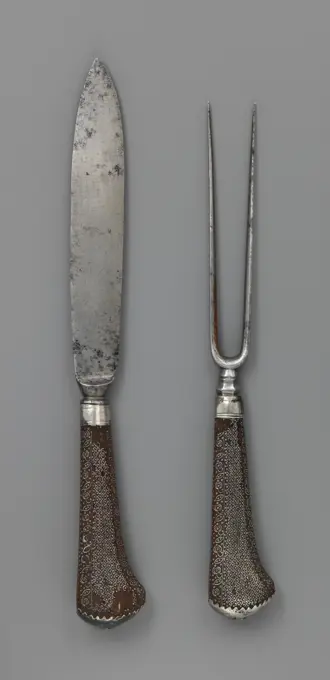
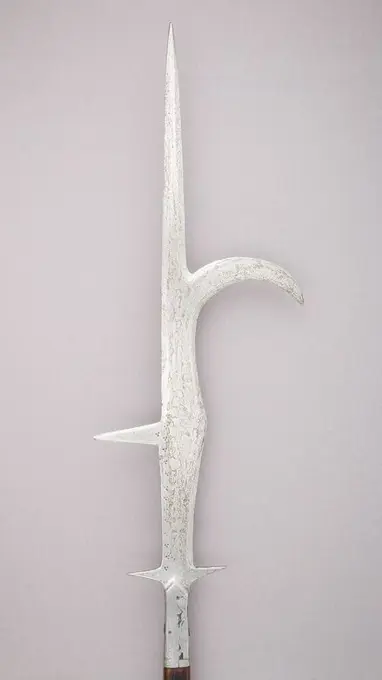
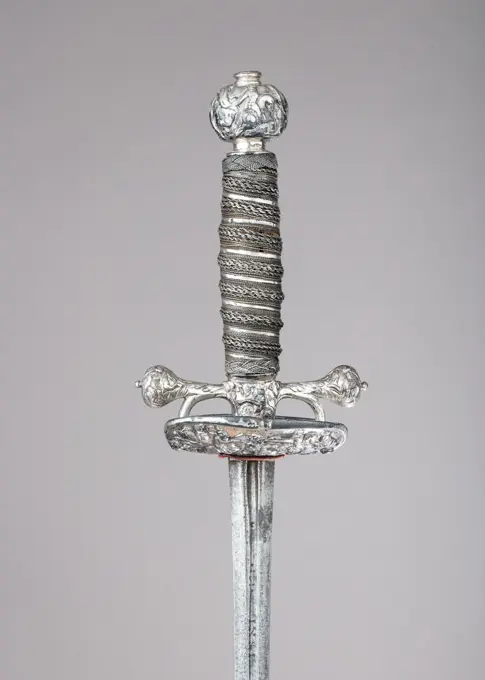
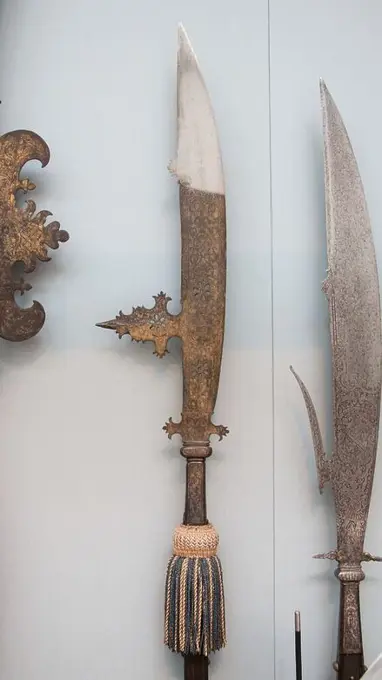
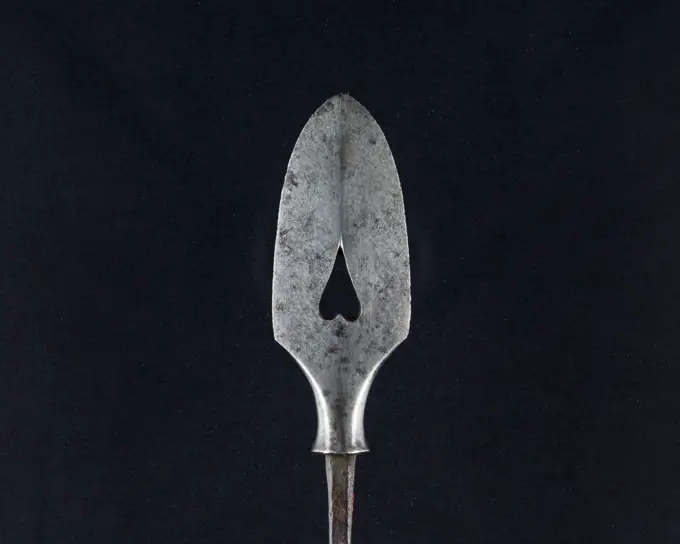
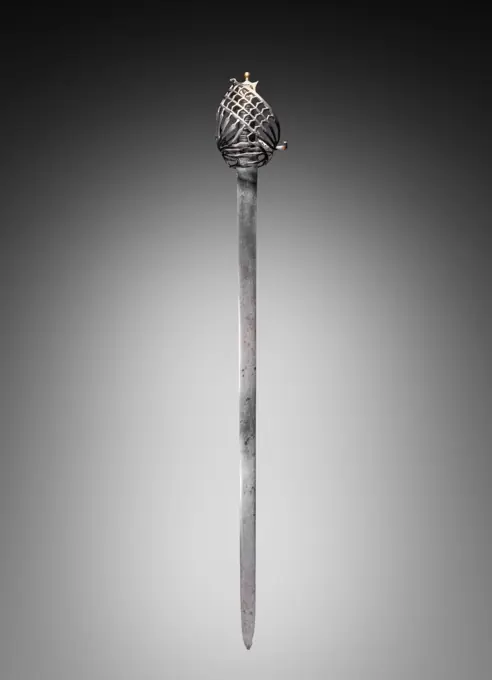
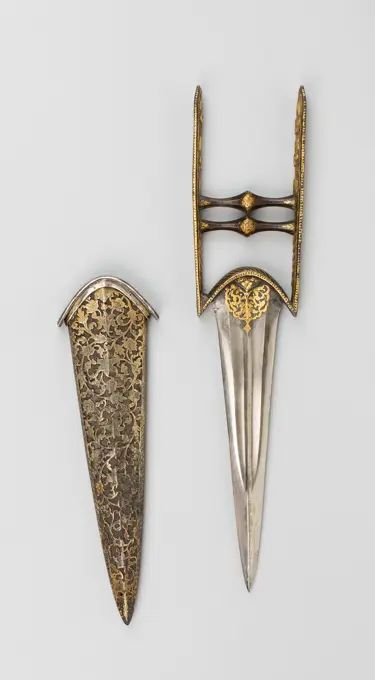
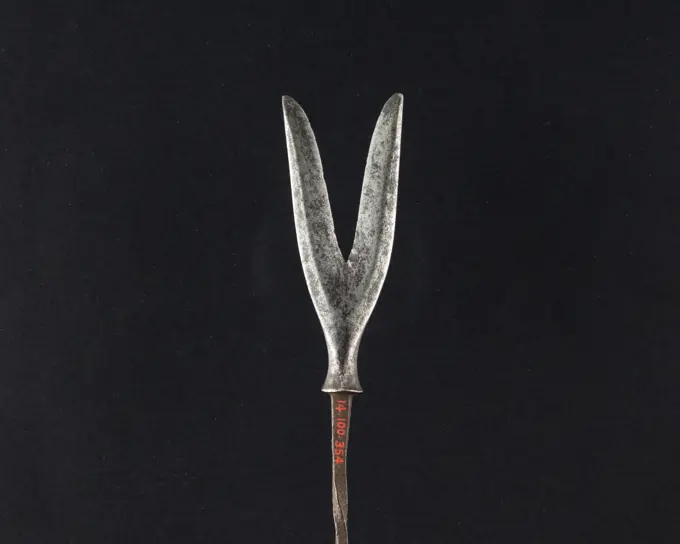
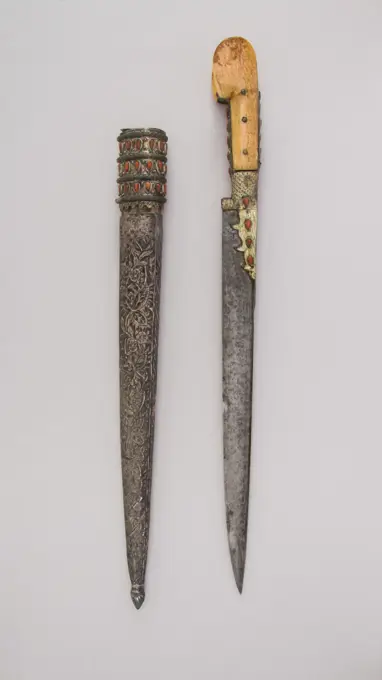
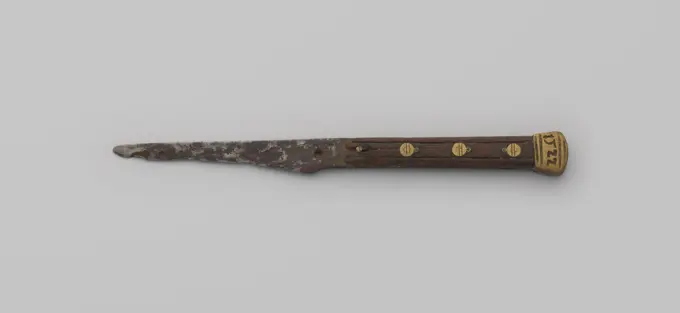
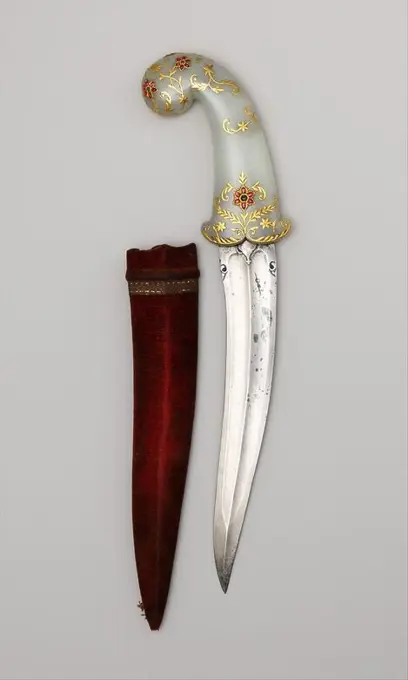
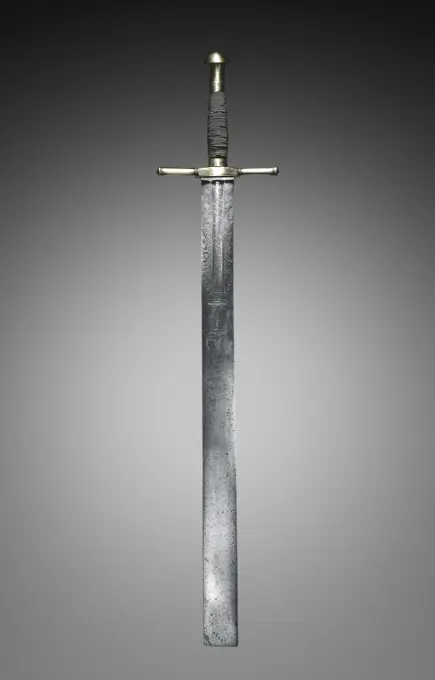
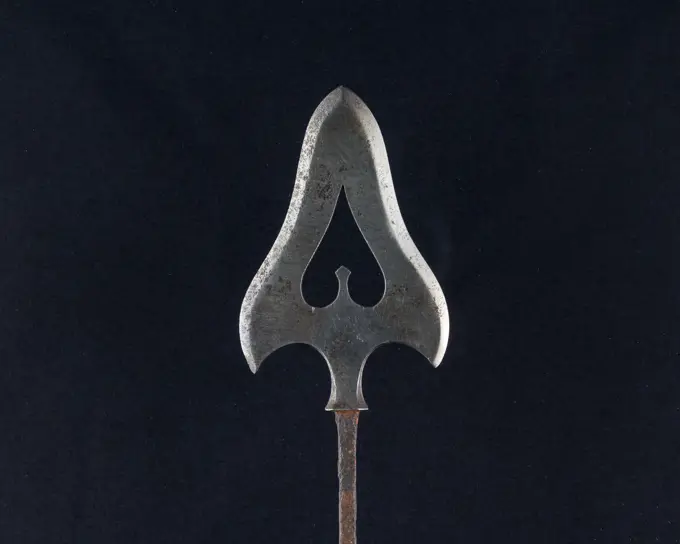
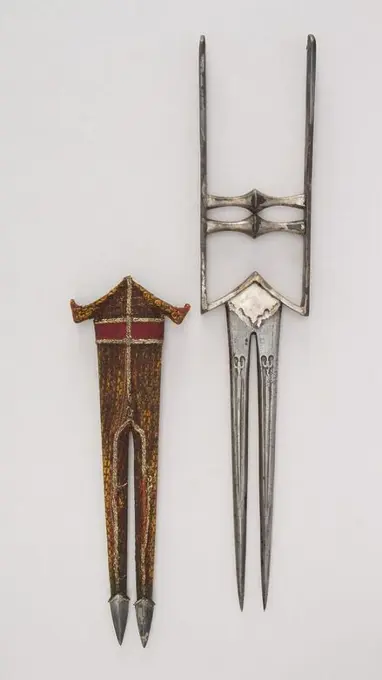
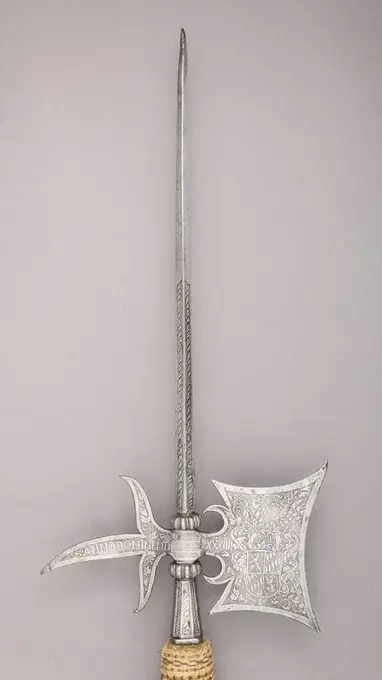
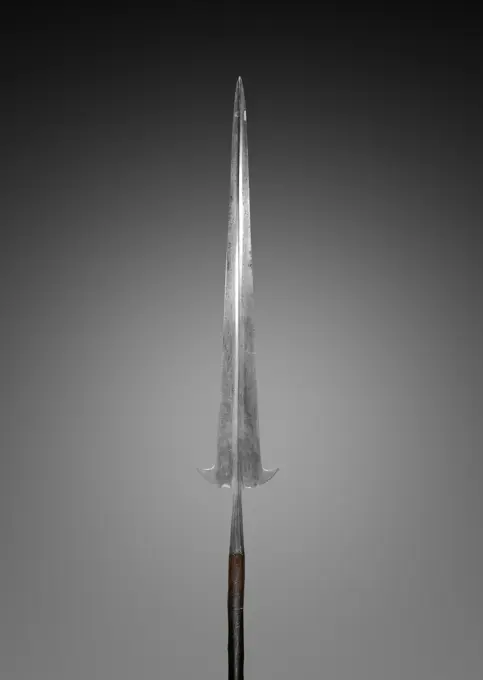
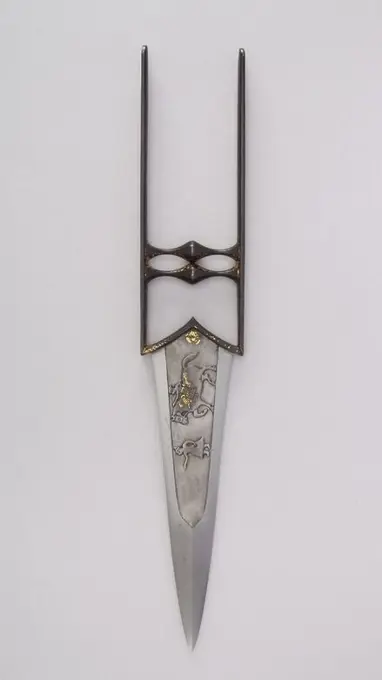
Dagger (Katar). Culture: Indian. Dimensions: L. 19 1/2 in. (49.5 cm); W. 3 5/16 in. (8.4 cm); Wt. 1 lb. 6.7 oz. (643.5 g). Date: 18th century. Museum: Metropolitan Museum of Art, New York, USA.Dagger (Katar). Culture: Indian; blade, European. Dimensions: L. 17 1/2 in. (44.5 cm); L. of blade 9 3/4 in. (24.8 cm); W. 4 15/16 in. (12.5 cm); D. 15/16 in. (2.4 cm); Wt. 18.3 oz. (518.8 g). Date: 19th century. Museum: Metropolitan Museum of Art, New York, USA.Dagger (Jambiya). Culture: Indian. Dimensions: H. 12 7/8 in. (32.7 cm); W. 1 15/16 in. (4.9 cm); Wt. 12.6 oz. (357.2 g). Date: 18th-19th century. Museum: Metropolitan Museum of Art, New York, USA.Partisan 1600-1633 France. Steel, wood (oak), and iron .Dirk 1600-1700 Spain. Horn grip and silver nails .Spontoon 17th century French. Spontoon. French. 17th century. Steel, wood (ash), gold. Shafted WeaponsFriuli Spear. Italian. Date: 1540-1560. Dimensions: L. 263.5 cm (103 3/4 in.) Blade and socket L. 75.2 cm (29 5/8 in.)Wt. 4 lb. 5 oz. Steel, wood (pine), velvet, brass nails, tassels, and gilded rosaces. Origin: Italy. Museum: The Chicago Art Institute, Chicago, USA.Dessert fork; Würtembergische metallwarefabrik - WMF (Germany; Wytwónia Z Otnarz; 1880-1914); after 1880 (1890-00-00-1914-00-00);Rondel Dagger Made 1800-1900 Germany. Steel .Knife (USA); Made by Gorham Manufacturing Company (United States); silver; L x W x D: 19.8 x 2.1 x 0.7 cm (7 13/16 x 13/16 x 1/4 in.)Balic Kris. Kris, blade in Pamor technique, accusation with gold, adhered to the characters: Mang, Hoeng, ANG, (: wind, water and fire).Knife, silver, steel, Lower edge of blade straight, the upper edge tapering towards the point. Tapered handles with flat sides, open scrolls at the top. Engraved figural designs: on one side 'TOBIEAS' and 'AQUA', on the other side 'IONES' and 'TERRA'. Engraved on handle: 'Maria Brainne 1621.', Netherlands or Flanders, ca. 1621, cutlery, Decorative Arts, KnifeRoundel Dagger and Scabbard 1500-1525 Saxony. Steel, leather, and iron .Table knife 16th century Italian, Milan or French. Table knife. Italian, Milan or French. 16th century. Steel, mother-of-pearl, silver. Metalwork-SteelPartisan 1600-1650 Italy. Steel, wood, cloth, brass, and cotton tassels .Officer label with Schede for Marine, Solingen (workshop of), 1800 - 1825 sabre MarineAper from officer. De Kling has a wide channel and is decorated with ornaments anchors and navy emblems, with inscription: P. Knecht Solingen. The handle is made of cast copper and leg with copper wire. Bracket decorated with trophy. Shield plates on which anchor and laurel wreath. Button in the form of a lion's head. With saber brush and black leather sheath with decorated copper frame with image of anchor and rings. Coming from J.C. Merchant.  iron (metal). copper (metal). ivory. leatherSpontoon. Culture: French. Dimensions: L. 76 in. (193.1 cm); L. of head 12 in. (30.5 cm); W. 1 7/8 in. (4.8 cm); Wt. 2 lbs. 4 oz. (1020.6 g). Date: 17th century. Museum: Metropolitan Museum of Art, New York, USA.Knife (Bade-bade) with Sheath. Culture: Minangkabau. Dimensions: H. with sheath 12 13/16 in. (32.5 cm); H. without sheath 12 1/4 in. (31.1 cm); H. of blade 8 7/8 in. (22.5 cm); W. 2 1/16 in. (5.2 cm); Wt. 7.7 oz. (218.3 g); Wt. of sheath 4.7 oz. (133.2 g). Date: 18th-19th century. Museum: Metropolitan Museum of Art, New York, USA.DAGA DE OREJAS - PERIODO NAZARI - SIGLO XV - MARFIL Y BRONCE - DETALLE DE LA EMPUÑADURA. Location: PALACIO REAL-REAL ARMERIA DE MADRID. MADRID. SPAIN.Iron Persian crossbow headsPartisan ca. 1750 Austrian. Partisan 27040Spear 18th-19th century Bornean. Spear 30695Dagger (Katar). Culture: hilt, South Indian; blade, European. Dimensions: L. 19 1/2 in. (49.5 cm); L. of blade 13 in. (33 cm); W. 3 5/8 in. (9.2 cm); D. 2 1/4 in. (5.7 cm); Wt. 17.5 oz. (496.1 g). Date: 18th-19th century. Museum: Metropolitan Museum of Art, New York, USA.Dagger (Katar). Culture: Indian, Mughal. Dimensions: L. 14 3/8 in. (36.5 cm); W. 3 1/8 in. (7.9 cm); Wt. 13.3 oz. (377 g). Date: 18th-19th century. Museum: Metropolitan Museum of Art, New York, USA.Sacrifical Axe (Matchu). Culture: Indian, Thanjavur. Dimensions: H. 15 11/16 in. (39.8 cm); H. of blade 8 in. (20.3 cm); W. 2 3/16 in. (5.6 cm); Wt. 3 lbs. 9.1 oz. (1618.8 g). Date: 17th-18th century. Museum: Metropolitan Museum of Art, New York, USA.Rapier probably German 1575-1600 The rapier was the principal civilian sidearm throughout the sixteenth and seventeenth centuries. Designed for cut-and-thrust fencing of progressively complex techniques, the rapier is characterized by a double-edged blade with an acute point and an elaborate guard for the hand. The guards, usually of iron or steel, were subject to a variety of embellishment. They were engraved, chiseled, gilded, damascened, and encrusted in gold and silver in keeping with fashionable styles. Unless otherwise noted, the materials, attributions, and dating given here refer to the hilts. Rapier blades, invariably of steel, bear a variety of makers marks denoting their origin in the two principal centers of blademaking, Toledo in Spain and Solingen in Germany. View more. Rapier. probably German. 1575-1600. Steel, wood, shagreen. SwordsHalberd of the Bodyguard of Sigismund Francis Erzherzog zu Oesterreich (1630-1665). Culture: Austrian. Dimensions: L. 88 3/8 in. (224.4 cm); L. of head 22 5/8 in. (57.5 cm); W. 8 3/8 in. (21.3 cm); Wt. 5 lb. 8 oz. (2490 g). Date: dated 1663. Museum: Metropolitan Museum of Art, New York, USA.Halberd ca. 1375-1400 Swiss, Fribourg. Halberd 25854Knife, steel, silver, wood, mother-of-pearl, brass, Straight lower edge, upper edge tapering towards the point. Wooden handle, octagonal in section, inlaid with mother-of-pearl and brass thread. Silver ferrule and mount engraved on top., 18th century, cutlery, Decorative Arts, KnifeArrowhead (Yanone) 18th century Japanese Although today Japanese warriors are renowned most for their swordsmanship, archery, especially from horseback, has been an essential part of samurai warfare and culture for centuries. Arrows were fitted with heads of varying shape according to their intended use in war, the hunt, or target practice. Arrowheads made for use on the battlefield incorporated different designs intended for specialized purposes such as the piercing of armor or to cause maximum damage to horses and unarmored personnel.Large arrowheads, pierced and elaborately chiseled with landscapes, birds, flowers, dragons, and Buddhist divinities, were created to be admired for the beauty of their metalwork and design rather than for use in archery. Such highly elaborate examples may have been made for presentation or as a votive offerings to a shrine.. Arrowhead (Yanone). Japanese. 18th century. Steel. Archery Equipment-ArrowheadsDagger (Jambiya) with Sheath. Culture: Indian, Mughal. Dimensions: H. with sheath 16 5/8 in. (42.2 cm); H. without sheath 16 1/8 in. (41 cm); H. of blade 11 in. (27.9 cm); W. 3 in. (7.6 cm); Wt. 1 lb. 4.8 oz. (589.7 g); Wt. of sheath 0.9 oz. (25.5 g). Date: 19th century. Museum: Metropolitan Museum of Art, New York, USA.Partisan ca. 1600 French. Partisan 26770Dagger with Sheath. Culture: Hilt, Indian, Mughal; Indian. Dimensions: H. with sheath 14 7/16 in. (36.7 cm); H. without sheath 14 3/8 in. (36.5 cm); H. of blade 9 1/4 in. (23.5 cm); W. 2 1/2 in. (6.4 cm); Wt. 8.1 oz. (229.6 g); Wt. of sheath 0.9 oz. (25.5 g). Date: 18th-19th century. Museum: Metropolitan Museum of Art, New York, USA.Partisan. Culture: possibly French. Dimensions: L. 8 ft 6 1/2 in. (260.4 cm); L. of head 19 1/8 in. (48.6 cm); W. 6 1/2 in. (16.5 cm); Wt. 5 lbs. 8 oz. (2494.8 g). Date: ca. 1680. Museum: Metropolitan Museum of Art, New York, USA.Saber (Talwar) with Scabbard blade, dated A.H. 835/ A.D. 1673; hilt, 19th century Indian The blade, of European manufacture around 1600, was inlaid later in gold. Along the back edge, there is an inscription in Arabic and Persian, and on the outer side, there is a parasol. The inscription mentions the name of the Mughal emperor Aurangzeb (reigned 1658-1717) and the sixteenth year of his reign, corresponding to 1673.The parasol is an ancient symbol of the dome of heaven and was long used in the Middle East and India as a symbol of royal authority. A parasol mark on a blade thus signifies royal provenance and implies that the weapon belonged to a divinely appointed and protected monarch, in this case Emperor Aurangzeb.. Saber (Talwar) with Scabbard. Indian. blade, dated A.H. 835/ A.D. 1673; hilt, 19th century. Steel, silver, diamonds enamel, leather. SwordsDagger, 1880-1910. Africa, Sudan. overall: 31.2 cm (12 5/16 in.); blade: 19.9 cm (7 13/16 in.).Fork and Knife with Porcelain Handles Fork And Knife; Manufactured by Meissen Porcelain Manufactory (Germany); Germany; porcelain, vitreous enamel, gold, nickel, steel; L x W x D (a: knife): 19.7 × 1.9 × 1.9 cm (7 3/4 × 3/4 × 3/4 in.) L x W x D (b: fork): 17.7 × 1.9 × 1.9 cm (6 15/16 × 3/4 × 3/4 in.)Dagger with Sheath 18th-19th century Turkish, Ottoman. Dagger with Sheath. Turkish, Ottoman. 18th-19th century. Steel, ivory, silver, wood, possibly coral. DaggersHalberd. German. Date: 1480-1520. Dimensions: L. 221 cm (87 in.)Blade L. 43.8 cm (17 1/4 in.)Wt. 5 lb. 15 oz. Steel and wood (ash). Origin: Germany. Museum: The Chicago Art Institute, Chicago, USA.Dagger with Sheath. Culture: hilt, Indian, Mughal; sheath, Indian. Dimensions: H. with sheath 14 3/4 in. (37.5 cm); H. without sheath 13 7/16 in. (34.1 cm); H. of blade 8 1/2 in. (21.6 cm); W. 3 3/8 in. (8.6 cm); D. 13/16 in. (2.1 cm); Wt. 10.7 oz. (303.3 g); Wt. of sheath 3.2 oz. (90.7 g). Date: 17th-19th century. Museum: Metropolitan Museum of Art, New York, USA.Rapier late 16th century Blade by Pietro Caino This rapier is typical of the weapons that Valentin de Boulogne, the seventeenth-century painter, would have seen around him as a youth in France and during his maturity in Rome. Since rapiers were worn regularly by nobles, gentlemen, and professional soldiers as part of their daily dress and not only in battle, the swirling bars that make up the guard of a rapier hilt are designed to protect a gloved or bare hand.. Rapier. hilt, probably German; blade, Italian, Milan. late 16th century. Steel, wood, iron. Milan. SwordsKnife (Dha) with sheath 19th century Burmese. Knife (Dha) with sheath. Burmese. 19th century. Wood, ivory, silver, steel. KnivesCatacute in JataganLance 18th century Austrian. Lance 27041Partisan ca. 1600 possibly French. Partisan 26726Rapier, c. 1630-50. Germany, 17th century. Steel; blued, gilded, and perforated blade; overall: 100.3 cm (39 1/2 in.); blade: 86.5 cm (34 1/16 in.); quillions: 13 cm (5 1/8 in.); grip: 12.3 cm (4 13/16 in.). The rapier was a sword worn with civilian dress and used in duels. The term rapier derives from a 16th-century French word rapière, which in turn derived from the Spanish espada ropera, or dress sword.” The rapier was a light weapon with a straight double-edged and pointed blade that, with the development of the art of fencing in the 1500s and 1600s, gradually became narrower and lighter, and thus suitable for thrusts only. With the new technique of swordplay emphasizing the point of the blade, sword guards became more complex to protect the duelist’s unarmored hand. These elaborate guards were frequently decorated by various techniques—chiseling, bluing, russeting, and damascening.Landsknecht Dagger with Scabbard 1545-1565 Germany. Steel, wood, and iron .Knife, steel, Integral. Tapered, curved, pointed blade, notched and engraved swaged upper edge. Rectangular handle cut in geometric facets. Oval terminal with button., ca. 1865, cutlery, Decorative Arts, knife, knifeKris with Sheath 16th-19th century Javanese. Kris with Sheath 31308Bijl with the presentation of Mijnbezeken, A. Muhlhausen, 1837 - 1839 Silver Bijl decorated with engraved performance of the mine -reading with shift: 'Solang der Bergmann sich mit Seinem Schägel Nährt, ist auch dem hüttenmann Dabei Sein Brot wraps. Different ores on the handle. Around the handle a pendulum of Lauwerbladen and a parade from miners. By the maker A. Muhlhausen given to King William I in gift. Freiberg silver (metal) Silver Bijl decorated with engraved performance of the mine -reading with shift: 'Solang der Bergmann sich mit Seinem Schägel Nährt, ist auch dem hüttenmann Dabei Sein Brot wraps. Different ores on the handle. Around the handle a pendulum of Lauwerbladen and a parade from miners. By the maker A. Muhlhausen given to King William I in gift. Freiberg silver (metal)Hunting Sword of Prince Camillo Borghese (1775-1832) 1809-13 François Pirmet French In addition to the traditional hunting motifs, the decoration includes (on the back of the guard) the monogram of Camillo Borghese (1775-1832), Napoléon's brother-in-law, who served the French cause in Italy. The scabbard is engraved with Pirmet's name and his title, "gunmaker to His Majesty, the King of Westphalia," in reference to Napoleon's brother Jérôme Bonaparte.. Hunting Sword of Prince Camillo Borghese (1775-1832). French, Paris. 1809-13. Silver-gilt, steel, leather, mother-of-pearl. Paris. Swords-HuntingKnife with Porcelain Handle Knife; Manufactured by Meissen Porcelain Manufactory (Germany); Germany; porcelain, vitreous enamel, steel; L x W x D: 19.7 × 2 × 2 cm (7 3/4 × 13/16 × 13/16 in.)Arrowhead (Yanone) 18th century Japanese Although today Japanese warriors are renowned most for their swordsmanship, archery, especially from horseback, has been an essential part of samurai warfare and culture for centuries. Arrows were fitted with heads of varying shape according to their intended use in war, the hunt, or target practice. Arrowheads made for use on the battlefield incorporated different designs intended for specialized purposes such as the piercing of armor or to cause maximum damage to horses and unarmored personnel.Large arrowheads, pierced and elaborately chiseled with landscapes, birds, flowers, dragons, and Buddhist divinities, were created to be admired for the beauty of their metalwork and design rather than for use in archery. Such highly elaborate examples may have been made for presentation or as a votive offerings to a shrine.. Arrowhead (Yanone). Japanese. 18th century. Steel. Archery Equipment-ArrowheadsCaucasian dagger of kama type with a scabbardKris with Sheath 18th-19th century Philippine, Moro. Kris with Sheath 31271Sword with Scabbard. Culture: Indonesian, Wetar, Pulau. Dimensions: L. with scabbard 27 1/2 in. (69.9 cm); L. without scabbard 25 3/4 in. (65.4 cm); W. 4 1/2 in. (11.4 cm); Wt. 1 lb. 2.8 oz. (533 g); Wt. of scabbard 4.4 oz. (124.7 g). Date: 18th-19th century. Museum: Metropolitan Museum of Art, New York, USA.Arrowhead (Yanone). Culture: Japanese. Dimensions: L. 6 1/2 in. (16.5 cm); L. of head 2 3/4 in. (7 cm); W. 1/2 in. (1.3 cm); Wt. 0.8 oz. (22.7 g). Date: 18th century. Museum: Metropolitan Museum of Art, New York, USA.Halberd of the Bodyguard of Philip II, Margrave of Baden-Baden (1559-1588) ca. 1580 German. Halberd of the Bodyguard of Philip II, Margrave of Baden-Baden (1559-1588) 26789Sword (Yatagan) with Scabbard 18th-19th century Turkish. Sword (Yatagan) with Scabbard. Turkish. 18th-19th century. Steel, ivory, copper, gold, coral, emeralds. SwordsMes Margartha de Raet, Anno 1601. den 7 octobers., Theodr de bry (Chchool of), Knife with silver handle and openwork top. Engraved on both sides. In the top: i h s and a burning heart. Along the sides: Margaretha de Raet, anno 1601. den 7 Octobris. Northern Netherlands silver (metal) Knife with silver handle and openwork top. Engraved on both sides. In the top: i h s and a burning heart. Along the sides: Margaretha de Raet, anno 1601. den 7 Octobris. Northern Netherlands silver (metal)Parade Halberd (from the bodyguard of Ludwig Rudolf, Duke of Brunswick- Wolfenbüttel 1671-1735), 1717. Germany, 18th century. Blued, etched and gilded steel, wooden haft with orginal steel base spike, silk tassel with alternating blue and gold bands; overall: 276.9 cm (109 in.).Halberd 17th century French. Halberd 25852Rapier. Culture: probably Italian. Dimensions: L. 49 in. (124.5 cm); L. of blade 40 1/2 in. (102.2 cm); W. 9 1/4 in. (23.5 cm); D. 5 1/4 in. (13.3 cm); Wt. 2 lb. 12 oz. (1247 g). Date: ca. 1600-10.From the early sixteenth century the rapier was the standard side-arm of the Renaissance courtier, its design and decoration complimenting his fashionable dress, its rich embellishment a reflection of his wealth and status. A work of virtuoso design and unique technical complexity, this rapier characterizes the imagination and flair exercised by swordsmiths of the late Renaissance. The application of silver chains, faceted studs imitating precious stones, and classical figures to the gilt-iron hilt is unique among surviving rapiers. Museum: Metropolitan Museum of Art, New York, USA.Yataghan with a scabbardDoes not SquadDagger with Sheath 19th century Persian. Dagger with Sheath 32254Knife and fork 17th century Spanish. Knife and fork. Spanish. 17th century. Steel. Metalwork-SteelGuisarme. Culture: Italian. Dimensions: L. 9 ft. 7 1/2 in. (255.3 cm); L. of head 30 5/8 in. (77.8 cm); W. 10 in. (25.4 cm); Wt. 4 lbs. 10 oz. (2097.9 g). Date: ca. 1490. Museum: Metropolitan Museum of Art, New York, USA.Knife (Piha Kaetta) with Sheath 18th-19th century Sri Lankan. Knife (Piha Kaetta) with Sheath 31554Knife (Bank) 19th century Indian. Knife (Bank) 31536Balian Kris with Schede, c. 1850 - c. 1950 kris Balian Kris with a corrugated blade (Dapur Luk) and beautiful pamor. The crap is made of silver and inlaid with half precious stones and cut glass. The figure probably introduces the god Bayu on the grip. He holds a vase with Amrita fluid against his chest that brings people prosperity and happiness. The wooden sheath consists of a narrow tube -shaped cover, the Gandar, and a wide top, the Wrangka. The two parts are made separately from the so -called 'stains' or Kayu Pelet. Bali silver (metal). precious stone (material). glass. wood (plant material)   BaliSmallsword with Scabbard ca. 1650-60 probably Dutch By the early seventeenth century, the rapier, a long slender thrusting sword, began to dominate as the gentlemans weapon of choice. During the course of the century, however, as civilian fencing techniques became more specialized and refined, the rapier developed into a lighter, trimmed-down weapon known by about 1700 as the smallsword. Smallswords, often richly decorated, remained an integral part of a gentlemans wardrobe until the wearing of swords in civilian settings went out of fashion at the end of the eighteenth century, at which time pistols were replacing swords as arms most frequently used in personal duels. The majority of smallsword hilts are made of silver or steel, but many also employ a wide variety of luxurious materials, such as gold, porcelain, and enamel. At their best, smallswords combine the crafts of swordsmith, cutler, and jeweler to create an elegant weapon that was also a wearable work of art.. Smallsword wiGlaive of the Rota Family. Culture: Italian, Venice. Dimensions: L. of head 30 11/16 in. (78 cm); W. of head 8 1/4 in. (21 cm). Date: ca. 1600. Museum: Metropolitan Museum of Art, New York, USA.ESPADA CORTA S XVI LLAMADA CINQUEDEA. Location: MUSEO LAZARO GALDIANO-COLECCION. MADRID. SPANIEN.Dirk late 17th century possibly Portuguese. Dirk. possibly Portuguese. late 17th century. Steel, horn. KnivesArrowhead (Yanone) probably 16th century Japanese Although today Japanese warriors are renowned most for their swordsmanship, archery, especially from horseback, has been an essential part of samurai warfare and culture for centuries. Arrows were fitted with heads of varying shape according to their intended use in war, the hunt, or target practice. Arrowheads made for use on the battlefield incorporated different designs intended for specialized purposes such as the piercing of armor or to cause maximum damage to horses and unarmored personnel.Large arrowheads, pierced and elaborately chiseled with landscapes, birds, flowers, dragons, and Buddhist divinities, were created to be admired for the beauty of their metalwork and design rather than for use in archery. Such highly elaborate examples may have been made for presentation or as a votive offerings to a shrine.. Arrowhead (Yanone). Japanese. probably 16th century. Steel. Archery Equipment-ArrowheadsAncient weapons. 1600-1700 years. It is isolated on a white backgroundKnife (Bade-bade) with Sheath. Culture: Sumatran, possibly Acheen. Dimensions: H. with sheath 17 in. (43.2 cm); H. without sheath 11 5/8 in. (29.5 cm); H. of blade 7 1/4 in. (18.4 cm); W. 2 3/16 in. (5.6 cm); Wt. 4.3 oz. (121.9 g); Wt. of sheath 1.8 oz. (51 g). Date: 16th-19th century. Museum: Metropolitan Museum of Art, New York, USA.Rapier German 16th century The rapier was the principal civilian sidearm throughout the sixteenth and seventeenth centuries. Designed for cut-and-thrust fencing of progressively complex techniques, the rapier is characterized by a double-edged blade with an acute point and an elaborate guard for the hand. The guards, usually of iron or steel, were subject to a variety of embellishment. They were engraved, chiseled, gilded, damascened, and encrusted in gold and silver in keeping with fashionable styles. Unless otherwise noted, the materials, attributions, and dating given here refer to the hilts. Rapier blades, invariably of steel, bear a variety of makers marks denoting their origin in the two principal centers of blademaking, Toledo in Spain and Solingen in Germany. View more. Rapier. German. 16th century. Steel, silver, iron wire. SwordsDagger with Sheath. Culture: Turkish. Dimensions: L. with sheath 17 9/16 in. (44.6 cm); L. without sheath 15 15/16in. (40.5 cm); L. of blade 11 3/16 in. (28.4 cm); W. 2 5/16 in. (5.9 cm); D. 3/4 in. (1.9 cm); Wt. 9.7 oz. (275 g); Wt. of sheath 5.3 oz (150.3 g). Date: 19th century.This dagger belongs to a large group of flamboyant gem-studded weapons that were probably made in Istanbul in the waning years of the Ottoman Empire. Their traditional shapes and luxurious materials were intended to evoke romantic notions of the exotic orient, Arabian Nights, or perhaps the sultan's treasury. As most of these weapons are found today in American and European collections rather than in Turkish museums, they may have been made exclusively for Western tourists. Museum: Metropolitan Museum of Art, New York, USA.Sword, 1800s. India, Bhutan. Iron with gilt and leather; overall: 52.1 cm (20 1/2 in.); blade: 42.6 cm (16 3/4 in.).Schiavona Broadsword, early 1700s. Italy, Venice, early 18th Century. Steel, leather, wood, brass; overall: 109.9 cm (43 1/4 in.); blade: 94 cm (37 in.); grip: 9.2 cm (3 5/8 in.); guard: 13.3 cm (5 1/4 in.). The schiavona-type broadsword features a complex barred guard that slopes forward. Its name derives from the Italian word for "Slavonic" and refers to the Slavonian corps who served as bodyguards to the Doge of Venice until the end of the Venetian Republic in 1797. Such swords were popular mainly with Venetians.Katar with Scabbard 1600-1800 Turkey. Steel, gold, leather, and iron .Ceremonial Partisan of the Swiss Guard of the Prince Electors of Saxony 1725-1814 German, Saxony. Ceremonial Partisan of the Swiss Guard of the Prince Electors of Saxony 24890Ceremonial Glaive 1575 Italy. Steel, wood, velvet, cotton, brass, and iron .Arrowhead (Yanone) 13th-18th century Japanese Although today Japanese warriors are renowned most for their swordsmanship, archery, especially from horseback, has been an essential part of samurai warfare and culture for centuries. Arrows were fitted with heads of varying shape according to their intended use in war, the hunt, or target practice. Arrowheads made for use on the battlefield incorporated different designs intended for specialized purposes such as the piercing of armor or to cause maximum damage to horses and unarmored personnel.Large arrowheads, pierced and elaborately chiseled with landscapes, birds, flowers, dragons, and Buddhist divinities, were created to be admired for the beauty of their metalwork and design rather than for use in archery. Such highly elaborate examples may have been made for presentation or as a votive offerings to a shrine.. Arrowhead (Yanone). Japanese. 13th-18th century. Steel. Archery Equipment-ArrowheadsDagger with Sheath 19th century Turkish, Ottoman The stones adorning the hilt and sheath of the dagger have talismanic significance. According to scholar Al-Birunis eleventh-century manuscript Kitab al- Jamahir (Book of Precious Stones), coral was believed to prevent misfortune and turquoise to avert the evil eye.. Dagger with Sheath 31740Knife with wooden handle and copper frame with year 1522, anonymous, 1522 Knife with iron blade. The wooden handles has a copper frame, consisting of four round plates and at the end a crown with the year 1522 on either side. Southern Netherlands heft: copper (metal). heft: wood (plant material). lemmet: iron (metal) engraving Knife with iron blade. The wooden handles has a copper frame, consisting of four round plates and at the end a crown with the year 1522 on either side. Southern Netherlands heft: copper (metal). heft: wood (plant material). lemmet: iron (metal) engravingDagger (Khanjar) with Sheath. Culture: Indian, possibly Lucknow. Dimensions: H. with sheath 14 1/2 in. (36.8 cm); H. without sheath 13 5/8 in. (34.6 cm); W. 3 5/8 in. (9.2 cm); Wt. 12.3 oz. (348.7 g); Wt. of sheath 0.9 oz. (25.5 g). Date: late 18th century.The hilt of this dagger has been attributed to the court workshops patronized by the nawab of Oudh at Lucknow, in northern India, in about 1785. Its form and decoration, however, were traditional in many courts in Mughal and Deccani states in the eighteenth century. The pale green nephrite jade hilt inlaid with rubies and emeralds is noteworthy for its delicacy and restraint. Museum: Metropolitan Museum of Art, New York, USA.Executioner's Sword, late 1600s. Germany, late 17th Century. Steel, wood, brass and copper wire; overall: 108.9 cm (42 7/8 in.); blade: 85.7 cm (33 3/4 in.); quillions: 22.5 cm (8 7/8 in.); grip: 15 cm (5 7/8 in.). Execution by decapitation was generally reserved for the nobility during the Middle Ages and Renaissance. Although the axe was favored in England, for centuries swords were used throughout Central Europe for beheadings. The blades were often etched with moralizing inscriptions and designs representing Justice (as here), the gallows, the rack, or the Crucifixion. By the early 1700s swords were no longer used in Europe for executions, but they still functioned as symbols of power. This sword was probably ceremonial for a formal procedure or procession.Arrowhead (Yanone) 18th century Japanese Although today Japanese warriors are renowned most for their swordsmanship, archery, especially from horseback, has been an essential part of samurai warfare and culture for centuries. Arrows were fitted with heads of varying shape according to their intended use in war, the hunt, or target practice. Arrowheads made for use on the battlefield incorporated different designs intended for specialized purposes such as the piercing of armor or to cause maximum damage to horses and unarmored personnel.Large arrowheads, pierced and elaborately chiseled with landscapes, birds, flowers, dragons, and Buddhist divinities, were created to be admired for the beauty of their metalwork and design rather than for use in archery. Such highly elaborate examples may have been made for presentation or as a votive offerings to a shrine.. Arrowhead (Yanone). Japanese. 18th century. Steel. Archery Equipment-ArrowheadsCrozier Head 13th century French. Crozier Head 464686Sword with Scabbard 18th-19th century Chinese. Sword with Scabbard. Chinese. 18th-19th century. Steel, iron, leather. SwordsDagger (Katar) with Sheath. Culture: Indian. Dimensions: L. with sheath 17 3/4 in. (45.1 cm); L. without sheath 16 11/16 in. (42.4 cm); W. 3 5/16 in. (8.4 cm); Wt. 1 lb. 1.4 oz. (493.3 g); Wt. of sheath 1.6 oz. (45.4 g). Date: 18th century. Museum: Metropolitan Museum of Art, New York, USA.Knife with Sheath 18th-19th century Philippine, Moro. Knife with Sheath 31776Knife (England), ca. 1720-40; brass, steel; L x W: 18.1 x 1.9 cm (7 1/8 x 3/4 in.); The Robert L. Metzenberg Collection, gift of Eleanor L. Metzenberg; 1985-103-279-dKnife with Porcelain Handle, steel, silver, porcelain, vitreous enamel, Large sabre-shaped blade with plain bolster. Silver ferrule with scalloped edge and horizontal bands. Pistol-shaped porcelain handle, blue floral decoration on a white background., England, ca. 1765, cutlery, Decorative Arts, knife, knifeHalberd of Ferdinand IX, Count Palatine of the Rhine and Duke of Bavaria. Culture: German, Bavaria. Dimensions: L. 8 ft. 5 1/8 in. (256.9 cm); L. of head 27 1/2 in. (69.9 cm); W. 12 3/4 in. (32.4 cm); Wt. 7 lbs. 6.3 oz. (3353.7 g). Date: dated 1584. Museum: Metropolitan Museum of Art, New York, USA.Partisan, c. 1550-1600. Italy, 16th century. Steel, etched; oval wood haft; overall: 236.2 cm (93 in.); blade: 17.1 cm (6 3/4 in.).Dagger (Kard). Culture: Persian. Dimensions: L. 13 13/16 in. (35.1 cm); W. 1 1/4 in. (3.2 cm); Wt. 10.9 oz. (309 g). Date: 18th-19th century. Museum: Metropolitan Museum of Art, New York, USA.