Decorative Blades and Daggers

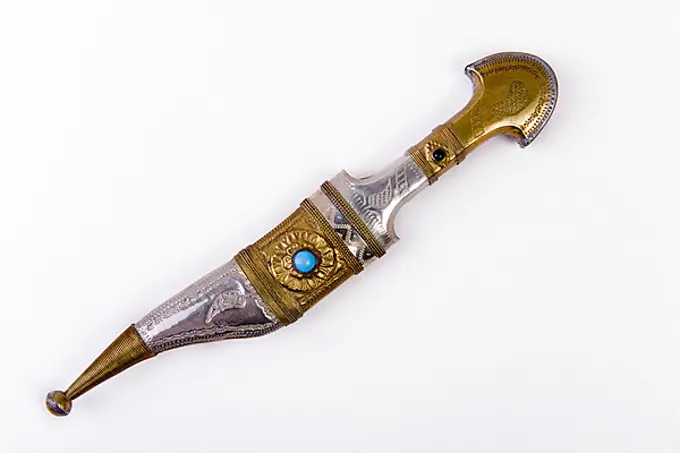
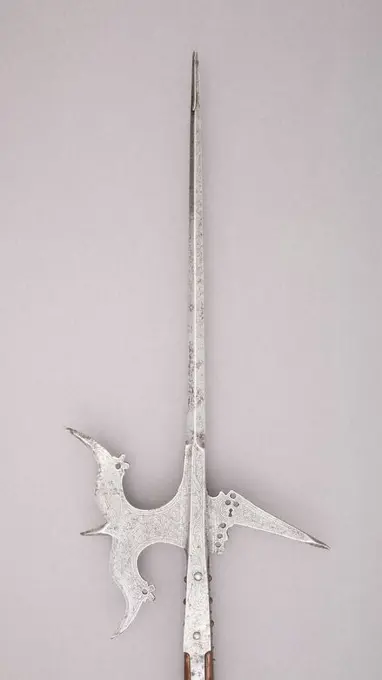
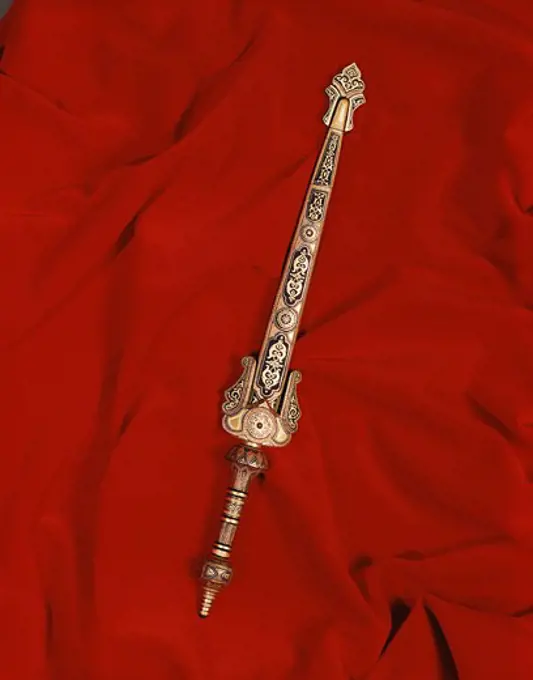
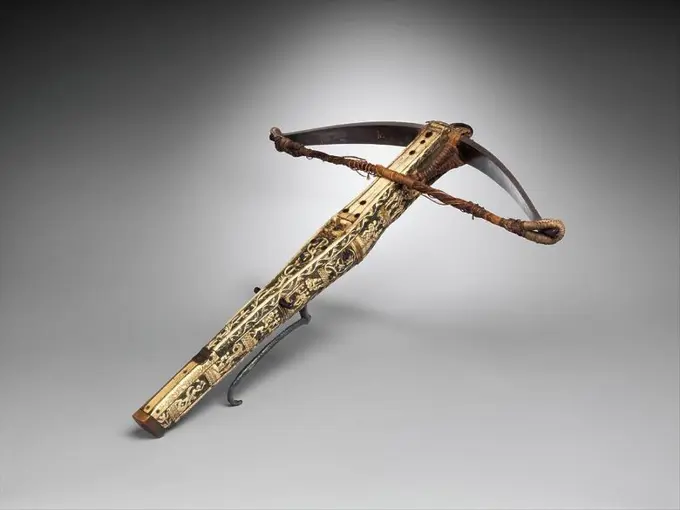
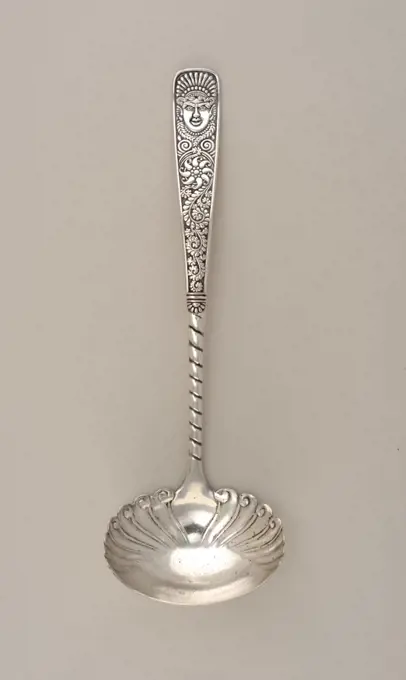
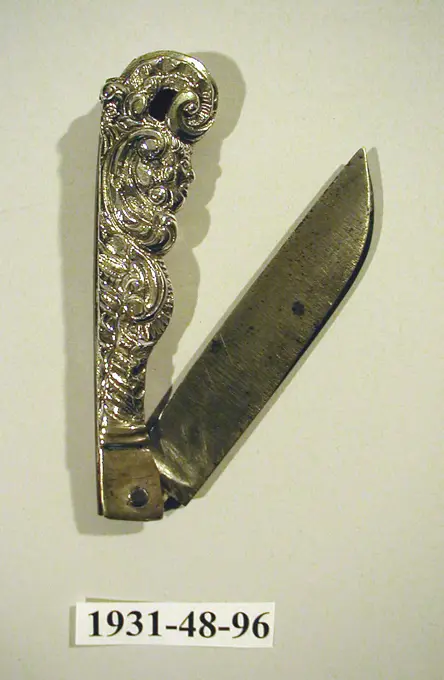
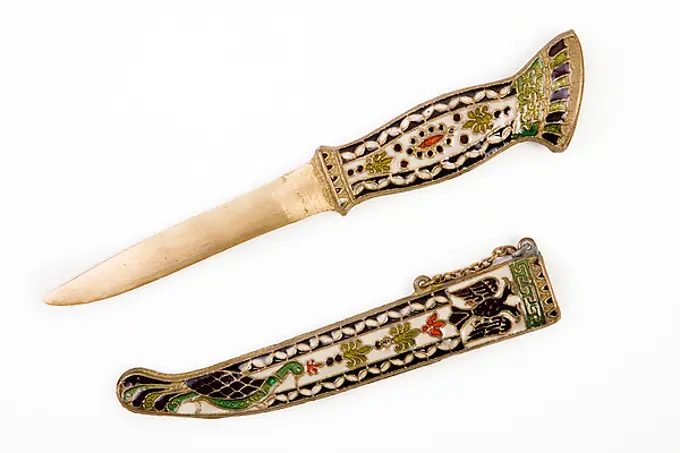
Variety of ornate knives and daggers from Sri Lanka, featuring intricate handles made of silver and other materials. Displaying craftsmanship from different centuries.

Houwer or Kastane, Anonymous, c. 1700 - c. 1799 cutlass Kleine Houwer from Chestnut Model. Kling European or to European model. Iron racing brackets in Signalese style; Handle from cut ivory with brass ring. Sri Lanka iron (metal). ivory. copper (metal) cutting  Sri Lanka
Houwer or Kastane, Anonymous, c. 1700 - c. 1799 cutlass Kleine Houwer from Chestnut Model. Kling European or to European model. Iron racing brackets in Signalese style; Handle from cut ivory with brass ring. Sri Lanka iron (metal). ivory. copper (metal) cutting Sri Lanka
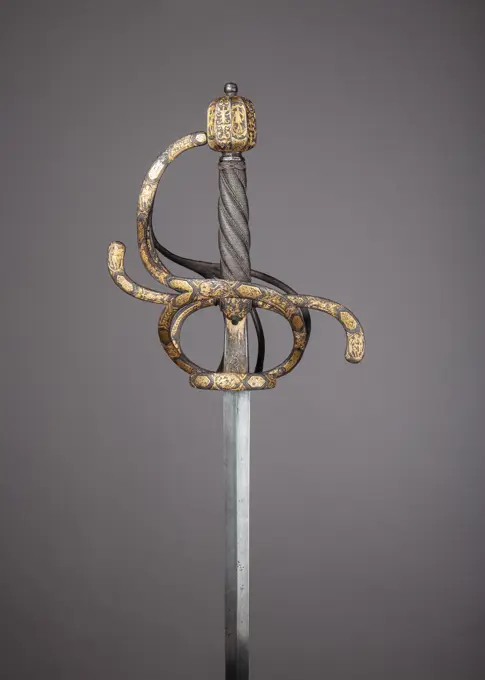
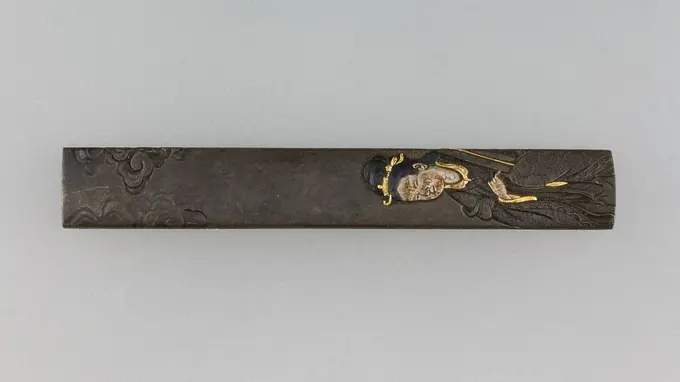
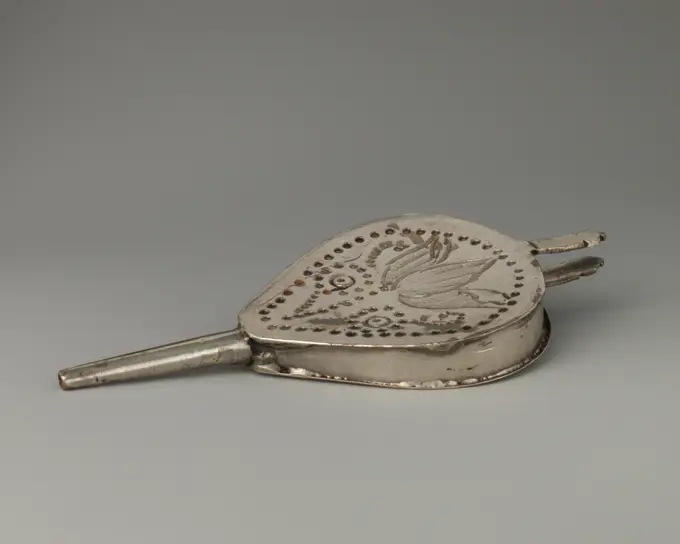
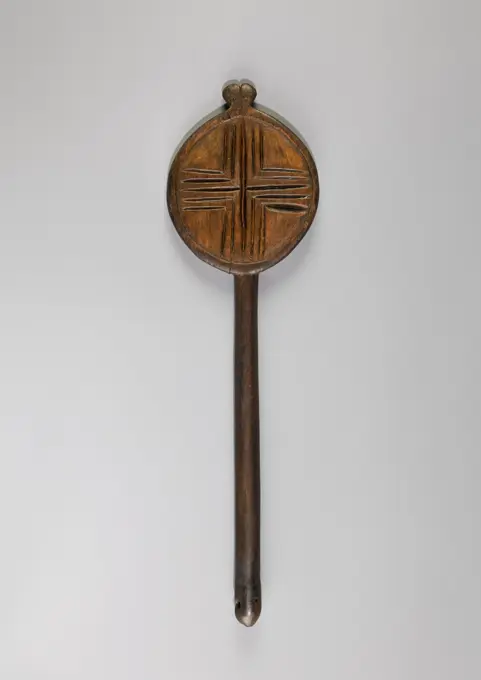
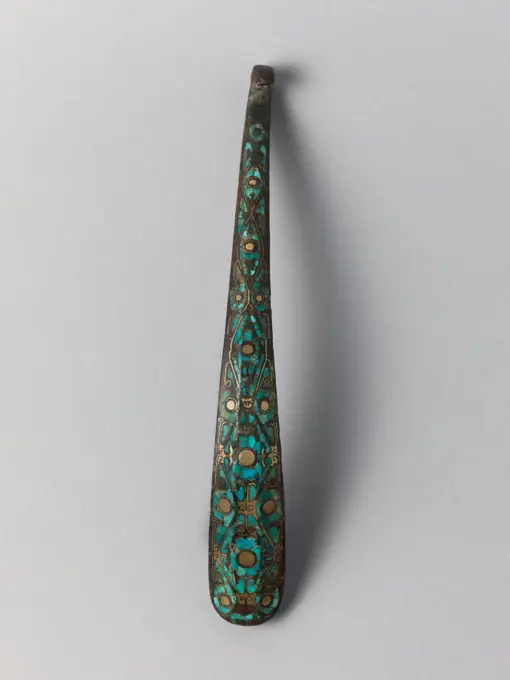
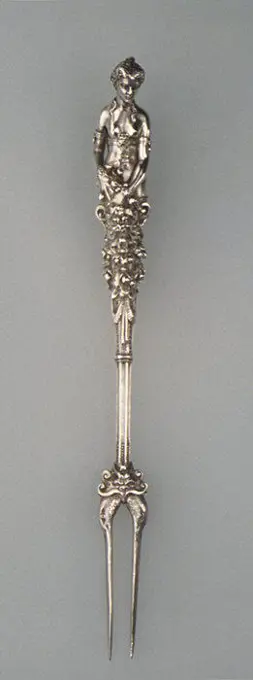
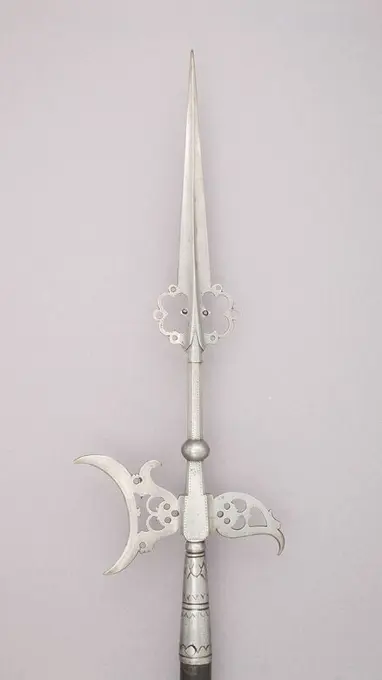
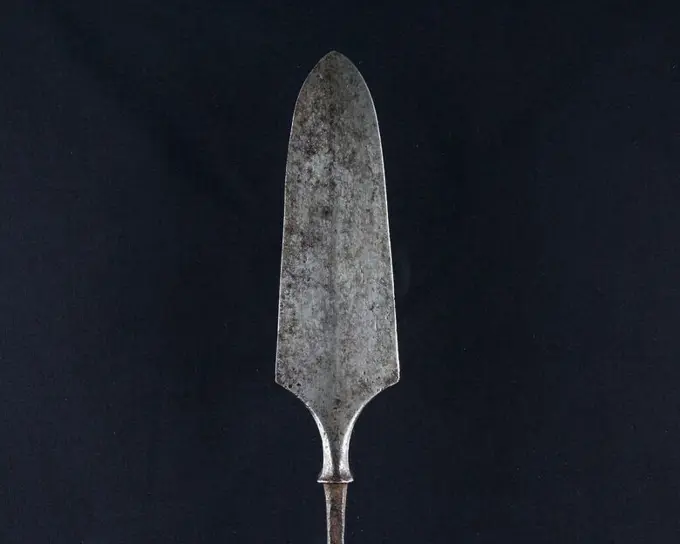
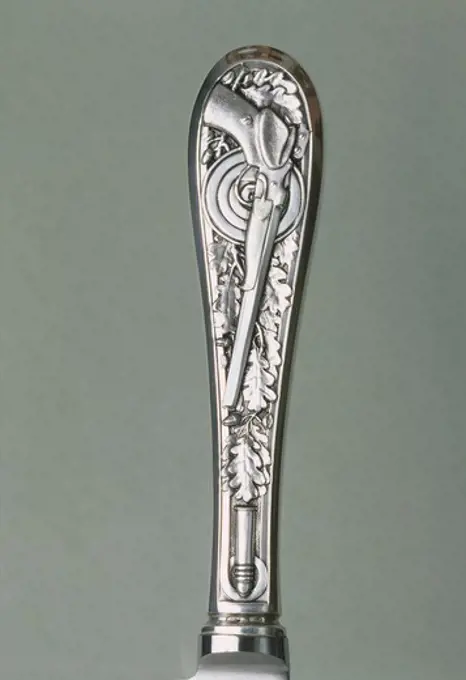
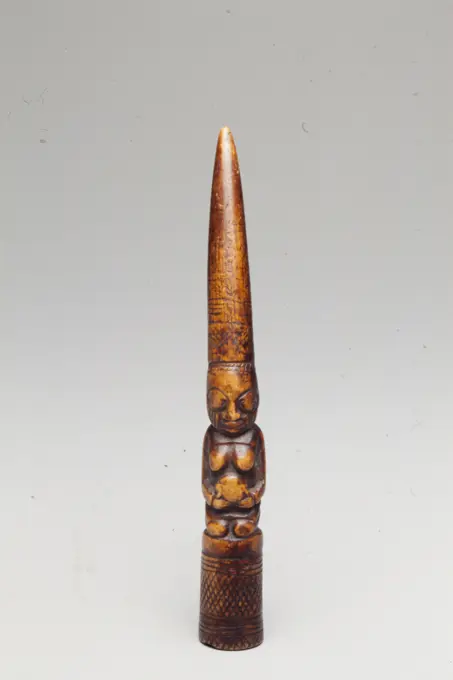
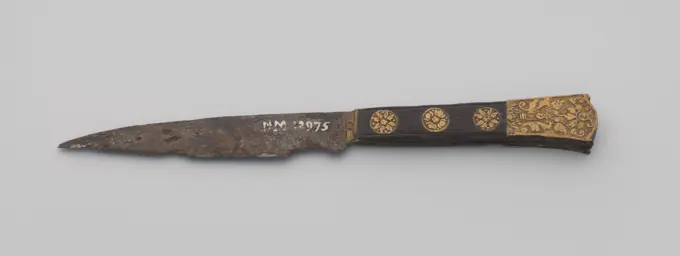
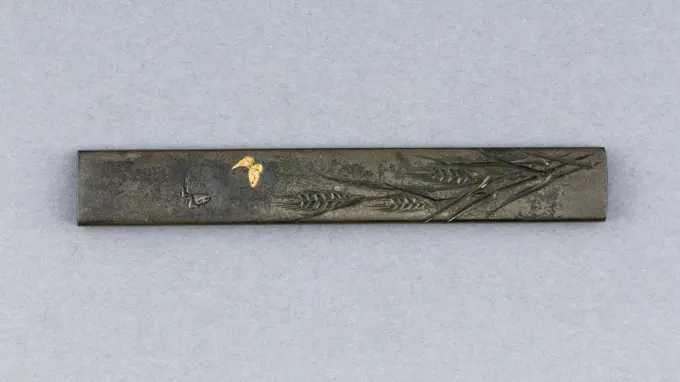
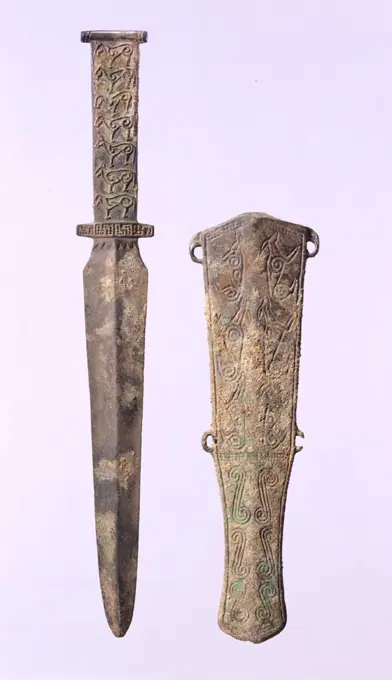
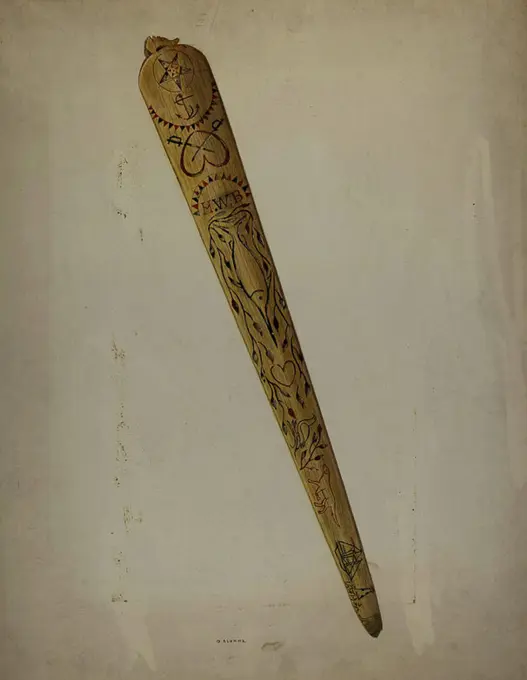
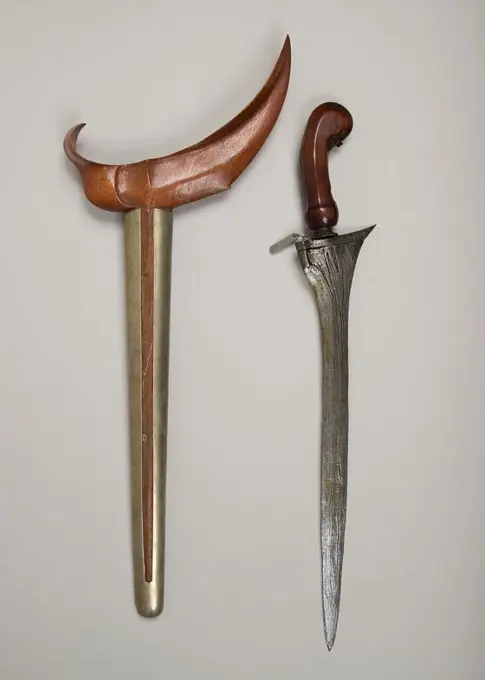
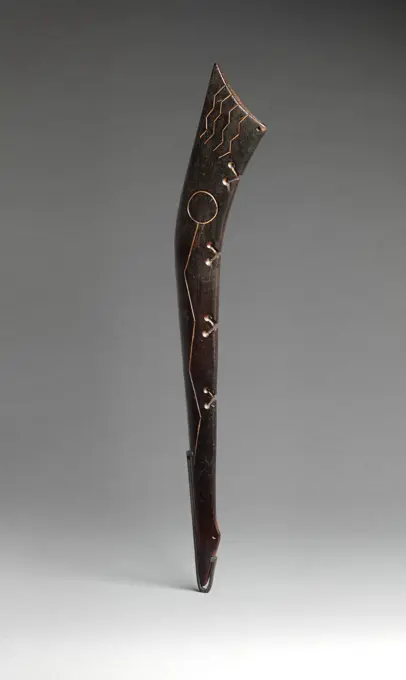
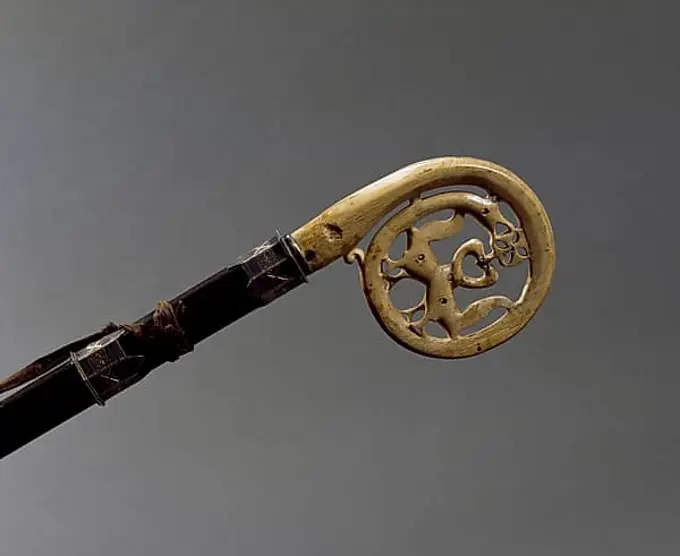
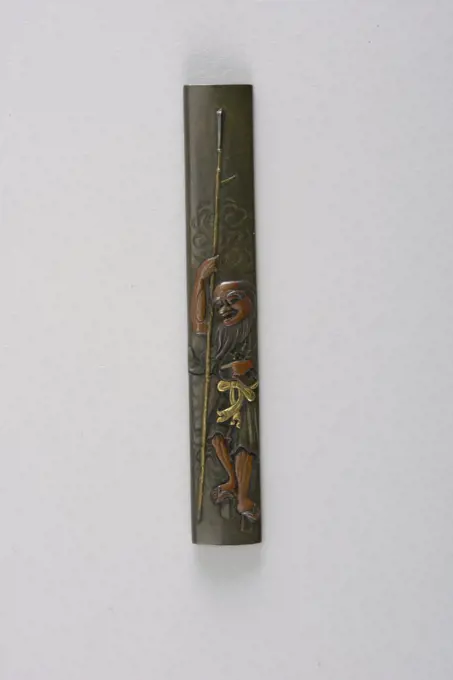
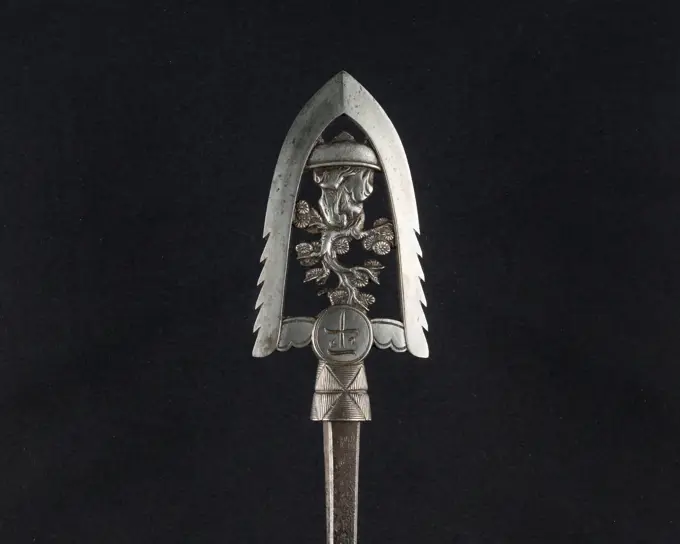
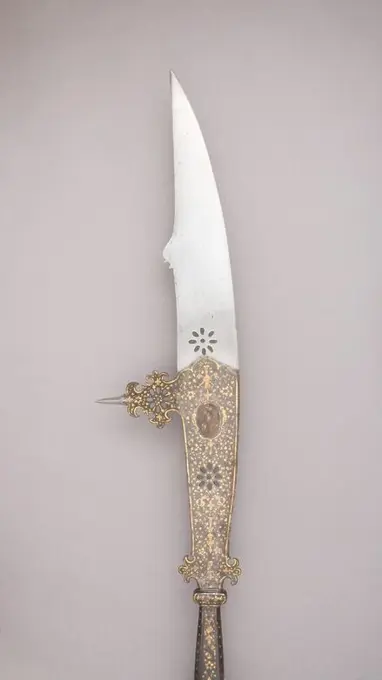
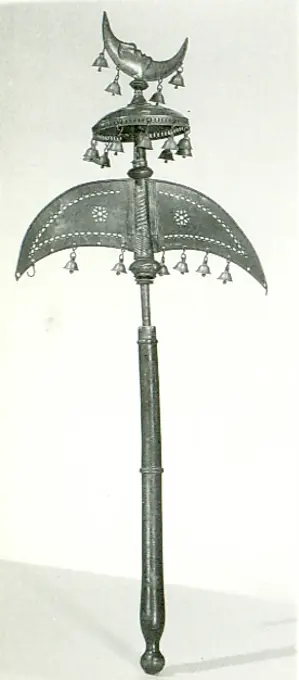
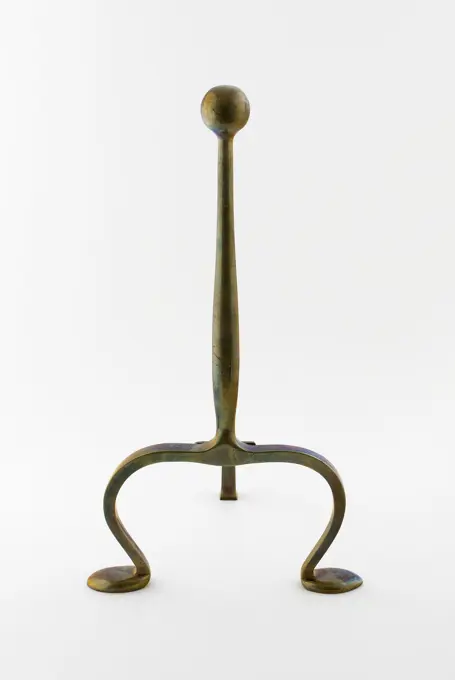
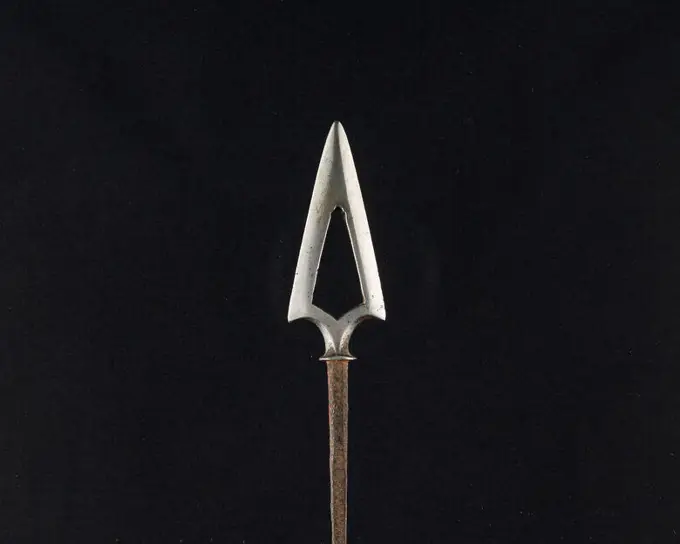
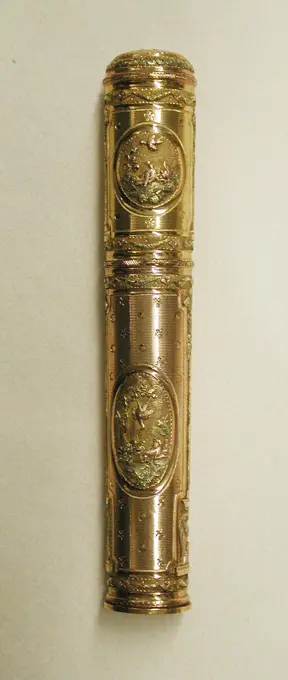
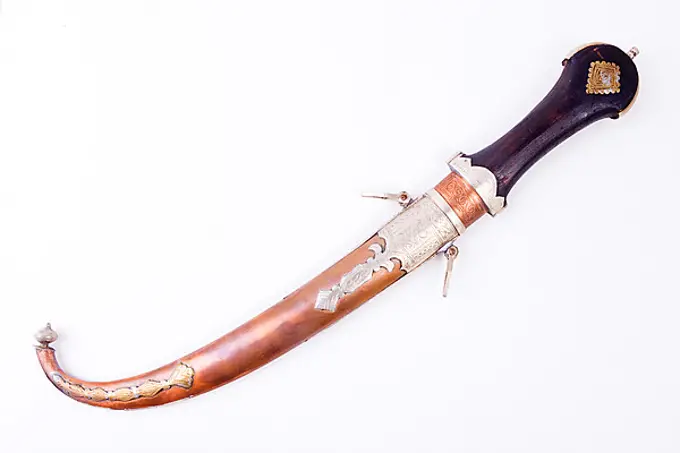
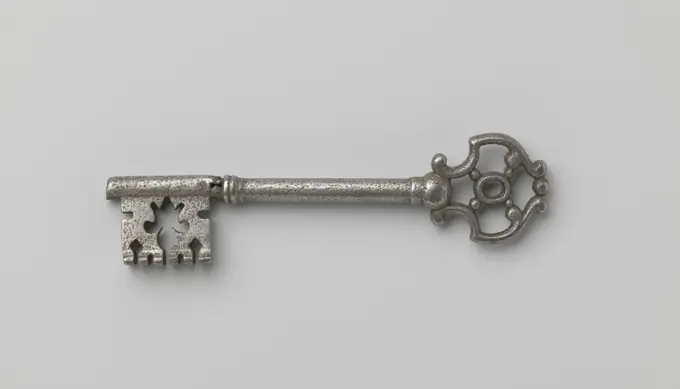
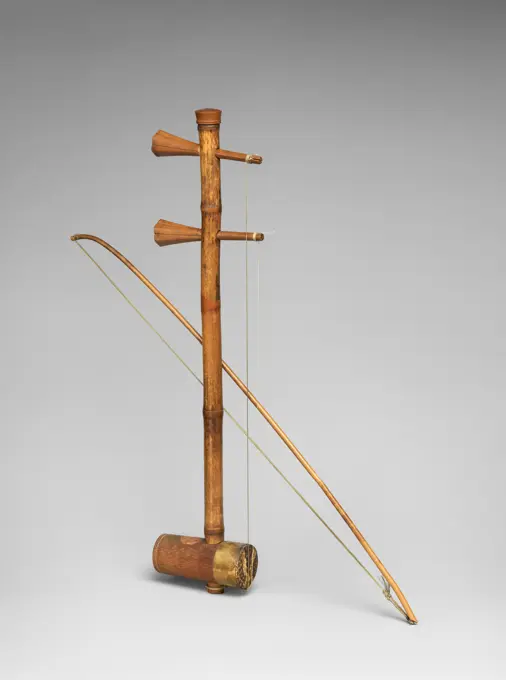
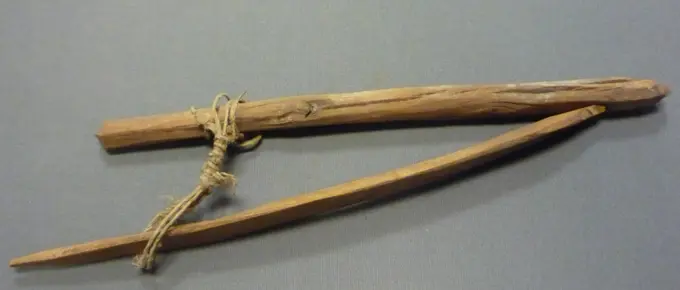
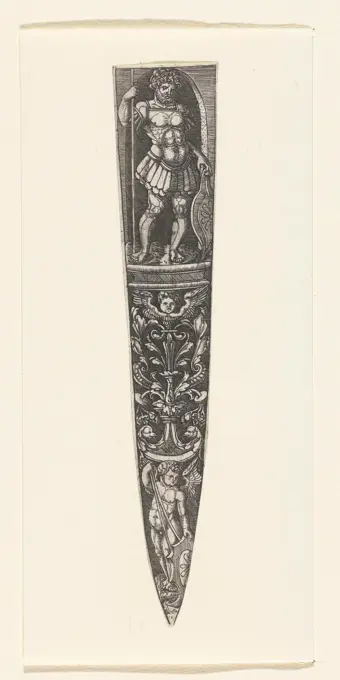
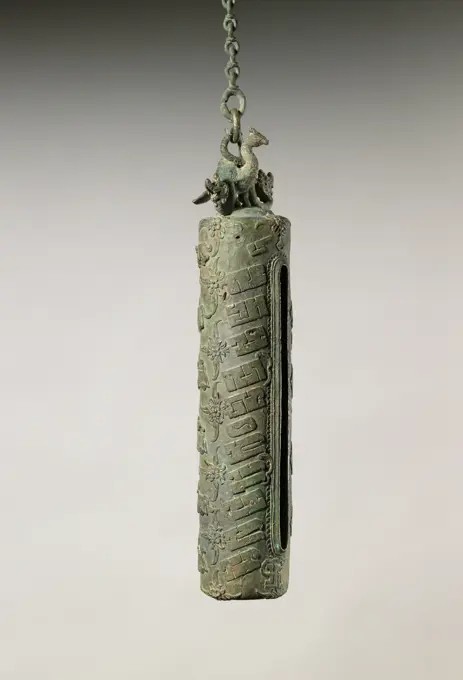
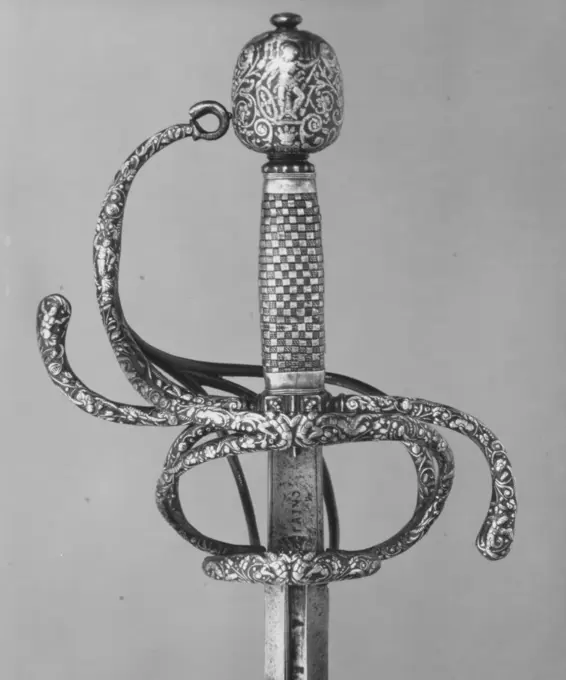
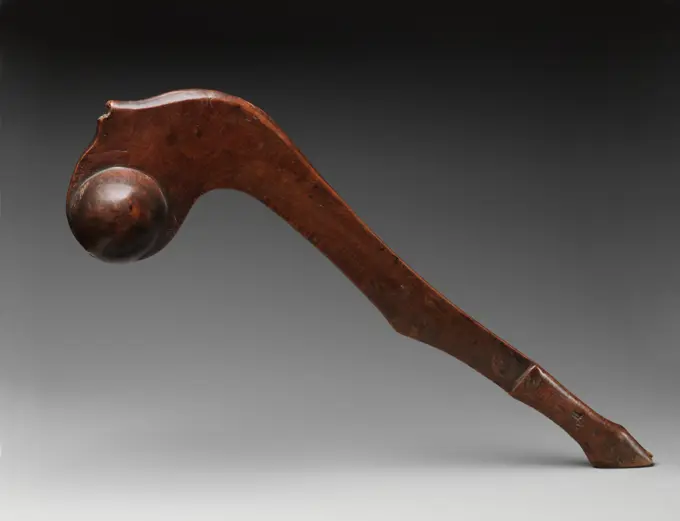
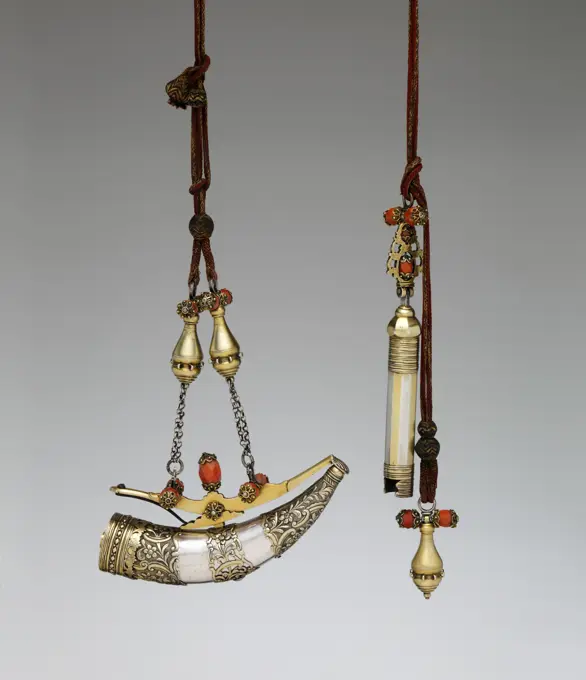
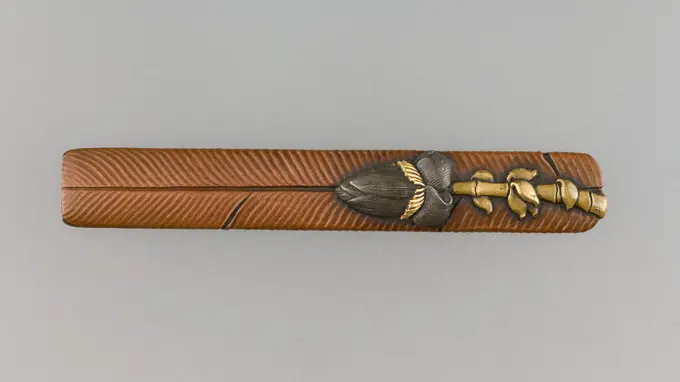
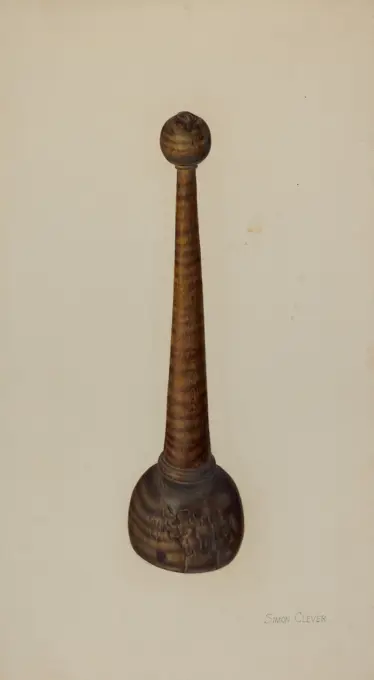
Simon Clever, Masher, c 1941 MasherRapier ca. 1610 hilt, Italian; blade, Spanish, Toledo The rapier was the principal civilian sidearm throughout the sixteenth and seventeenth centuries. Designed for cut-and-thrust fencing of progressively complex techniques, the rapier is characterized by a double-edged blade with an acute point and an elaborate guard for the hand. The guards, usually of iron or steel, were subject to a variety of embellishment. They were engraved, chiseled, gilded, damascened, and encrusted in gold and silver in keeping with fashionable styles. Unless otherwise noted, the materials, attributions, and dating given here refer to the hilts. Rapier blades, invariably of steel, bear a variety of makers marks denoting their origin in the two principal centers of blademaking, Toledo in Spain and Solingen in Germany.. Rapier. hilt, Italian; blade, Spanish, Toledo. ca. 1610. Steel, gold. Toledo. SwordsSpoon. Culture: Hungarian. Dimensions: Length: 7 7/8 in. (20 cm). Date: 1599 or earlier.The birth of a child was a great event, especially during times with high infant mortality rates, and special gifts were associated with the occasion. A silver spoon was a common offering, because it was the first utensil that an infant would use on their own. Such spoons were often embellished with coats of arms, initials, and dates to record family history. Here, the year 1599 could be a later addition, as the style of the spoon suggests it was made at an earlier date.Wolfram Koeppe 2015. Museum: Metropolitan Museum of Art, New York, USA.Pull; 1904-21-43Spoon; wood, carved, painted, gilded; L x W x D: 18.4 x 4.1 x 2 cm (7 1/4 x 1 5/8 x 13/16 in.)Knife -Knife Handle (Kozuka). Culture: Japanese. Dimensions: L. 3 13/16 in. (9.7 cm); W. 9/16 in. (1.4 cm); thickness 3/16 in. (0.5 cm); Wt. 1.2 oz. (34 g). Date: 1770-1852. Museum: Metropolitan Museum of Art, New York, USA.Miniature bellows ca. 1690 Probably George Manjoy British. Miniature bellows. British, London. ca. 1690. Silver. Metalwork-Silver-MiniatureCross thorough;  XIX-XX century (1801-00-00-1960-00-00);Deposit of Wacław Korabiewicz, Ethiopian crosses, hand crossesClip. Bronze with inlays. China, Han dynasty. Paris, Cernuschi museum. 75290-5 Staple, bronze, Han dynasty, inlaidTwo daggers.Soldiers used daggers mainly in hand-to-hand combat, but these thrusting weapons were also a status symbol for the nobility. Various types were in use, often with an embellished hilt. A dagger with two lobes at the guard was called a bollock dagger’ or a kidney dagger’. These two daggers were found buried, which is why the blades are damaged.Fork (one of a set) probably 19th or early 20th century Style of Antonio Gentili (Antonio da Faenza) Italian Designed to sit comfortably in the hand, the handles consist of ornamented bases supporting half figures of satyrs. Crisp details, such as the snakes that frame the spoons shell-shaped bowl, contribute to the utensils sculptural quality. The sets precious material and sophisticated decoration indicate that it was made for an affluent household. (See also companion fork and spoon, 47.52.2 and .3.). Fork (one of a set) 199798Halberd. Culture: French. Dimensions: L. 90 in. (228.6 cm); L. of head 23 1/4 in. (59 cm); W. 8 11/16 in. (22 cm); Wt. 3 lbs. 15.8 oz. (1808.7 g). Date: ca. 1600. Museum: Metropolitan Museum of Art, New York, USA.Arrowhead (Yanone). Culture: Japanese. Dimensions: L. 17 7/8 in. (45.4 cm); L. of head 6 in. (15.2 cm); W. 1 3/4 in. (4.5 cm); Wt. 4.1 oz. (116.2 g). Date: 18th century. Museum: Metropolitan Museum of Art, New York, USA.Wooden bellows with brass spouts, tacks and decoration, bellows equipment wood leather brass, Wood decorated with brass tacks and spiked plaque decorated with star.suikerlepel van tin met vogel.Sauce spoon of tin. The handle is curled at the end and decorated with a raised bird. The broad, oval bin is opened with an ornamental motif.Dagger (Katar) with Sheath 18th century Indian. Dagger (Katar) with Sheath 31468Model of an Anchor, anonymous, 1819 demonstration model Wooden model of a composite anchor that can be taken out. The shaft and arms consist of six layers, which are held together by brass brackets. The model has no anchor. Scale 1:10 (estimate). model maker: Netherlandsafter design by: United Kingdom (possibly) wood (plant material). brass (alloy)Tools used in bullet extractions from the human body. Used by medical professionals in England and other European locations between the 16th and 19th centuries.Mace 18th-19th century Chinese. Mace. Chinese. 18th-19th century. Steel. Shafted WeaponsNail. Culture: European. Dimensions: Overall: 1 3/4 x 9 1/2 in. (4.4 x 24.1 cm). Date: 15th-16th century. Museum: Metropolitan Museum of Art, New York, USA.smart dagger smart dagger of the medieval soldier. It was used for hunting Copyright: xZoonar.com/VALERY-SIBRIKOVx 14134265Fish knife. Korzec (manufaktura porcelany ; 1790-1832), factorySilversmith's Art, Italy 20th century. Silver Clementi set of cutlery, model target-shooting, given as prize in the ballistic competitions. Detail: knife handle. 1930's.Ifa Divination Tapper, 19th century, 10 1/4 x 1 5/16 x 1 5/16 in. (26.0 x 3.3 x 3.3 cm), Ivory, Nigeria, 19th centuryKnife with wooden handle, crowned with two elongated plates with engraved flower and leaf ornament, anonymous, 1500 - 1600 Blade of iron. The wooden handle is decorated with three round copper plates with a rosette on either side. The copper crowning shows a Kandelaber motif on either side. Southern Netherlands heft: wood (plant material). heft: copper (metal). lemmet: iron (metal) engraving Blade of iron. The wooden handle is decorated with three round copper plates with a rosette on either side. The copper crowning shows a Kandelaber motif on either side. Southern Netherlands heft: wood (plant material). heft: copper (metal). lemmet: iron (metal) engravingTurkish dagger, 19. centurySleutel.Venetian key "With rose into the round handle, awarded by an eye. The key must later be arranged and the beard is a new shape.Halberd. Culture: Italian, Venice. Dimensions: L. 8 ft. 10 1/2 in. (270.5 cm); L. of head 24 in. (61 cm); W. 11 1/4 in. (28.6 cm); Wt. 4 lbs. 8.2 oz. (2046.8 g). Date: ca. 1520. Museum: Metropolitan Museum of Art, New York, USA.Kanjar with a scabbardSouvenir spoon with depiction of St. Peter's Basilica possibly Irish late 19th centuryDagger from Toledo, Spain Antiques-Misc.  GoldKey of iron with monogram mc.key or Iron with monogram mc.Crossbow (Halbe Rüstung) with Cranequin (Winder). Culture: crossbow, possibly Bavarian; cranequin, probably southern German. Dimensions: crossbow, L. 27 3/4 in. (70.5 cm); W. 24 in. (60.9 cm); Wt. 8 lb. 14 oz. (4,016 g); cranequin, L. 14 1/8 in. (35.9 cm); W. 3 1/2 in. (8.8 cm); Wt. 5 lb. 3 oz. (2,343 g). Date: crossbow, ca. 1560-80; cranequin, first half of the 16th century. Museum: Metropolitan Museum of Art, New York, USA.'Assyrian Head', Meriden Silver Plate Company, 1869-1898, Silver-plated metal, Handle with scrolled foliate ornament and antique style crowned male mask at tip; circular bowl, partially fluted., 1885-86, cutlery, Decorative Arts, Ladle, LadleObject ID #18319989; Made by "AP", possibly for Abraham Pootholt; silverKnife Handle (Kozuka) early 19th century Japanese A kozuka is a handle of a by-knife that is part of a sword mounting. It is kept in a slot on the reverse of a katana scabbard, often with a matching kōgai (hairdressing tool).. Knife Handle (Kozuka) 29772Table fork and knife 18th century Spanish, Valencia. Table fork and knife. Spanish, Valencia. 18th century. Steel, silver. Metalwork-SteelShort Sword and Sheath with Animal Motifs 7th-6th century B.C. Northeast China. Short Sword and Sheath with Animal Motifs. Northeast China. 7th-6th century B.C.. Bronze. MetalworkDetector lock with key, John Wilkes (slotenmaker), c. 1675 - c. 1700 The iron pin or continuous keys (BK-NM-678/79) are cast from the same form. NM-679 is gold-plated and has a beard, which is partially demolished. The beautifully elaborated key beard fits on the cross and strip of the lock, the steel is open, the key eye has the shape of a double monogram JM surrounded by ranking work with a marquis crown (five fleurons). Birmingham iron (metal) The iron pin or continuous keys (BK-NM-678/79) are cast from the same form. NM-679 is gold-plated and has a beard, which is partially demolished. The beautifully elaborated key beard fits on the cross and strip of the lock, the steel is open, the key eye has the shape of a double monogram JM surrounded by ranking work with a marquis crown (five fleurons). Birmingham iron (metal)Dagger (Katar) 17th century Indian, Thanjavur; blade, European. Dagger (Katar) 31417GUARNICION DE LAZO DE UNA ESPADA ROPERA S XVI. Location: MUSEO LAZARO GALDIANO-COLECCION. MADRID. SPAIN.Wedding knife and fork, anonymous, 1597 Bridal breach of gold with Niëlllo in Schede van Leer and Gold with Niëlllo. Consisting of a fork, knife and sheath. Northern Netherlands gold (metal). leather. iron (metal) Niello (technique) Bridal breach of gold with Niëlllo in Schede van Leer and Gold with Niëlllo. Consisting of a fork, knife and sheath. Northern Netherlands gold (metal). leather. iron (metal) Niello (technique)Combination Hunting Dagger and Double-Barrel Percussion Pistol, Sheath, and Belt of Emperor Maximilian of Mexico Made 1854-1877 Paris. In 1840 the Parisian gunsmith Dumonthier patented his popular hunting knife with double pistols. This weapon artfully combines two percussion pistols with a knife. The hunter used it to deal the final coup de grace, or mercy blow, to the wounded game.The crowned monogram engraved over the silver-gilt belt buckle has been identified as belonging to Maximilian, the short-lived Habsburg Emperor of Mexico. The monarch apparently practiced the European court tradition of hunting in Central America.. Steel, brass, silver, gilding, leather, silk velvet, and silver-gilt thread . Joseph-Célestin DumonthierKnife handle, brass, Tapering brass handle, round in section, engraved decoration of vertical bands with v-shaped pattern. Handle is hollow (does not fit on knife blade), Germany, ca. 1700-1800, cutlery, Decorative Arts, Knife handleTe Poel, Mahogany room broom, broom miniature kitchen utensils toy relaxant model mahogany wood brush, Mahogany room broom perpendicular to twisted short handle brush with seven tufts of light hair. Steel in the middle of brush with hanging cord 1868 Sibilla van Embden playing cleaning kitchenArrowhead (Yanone). Culture: Japanese. Dimensions: L. 20 in. (50.8 cm); L. of head 5 7/8 in. (14.9 cm); W. 2 1/2 in. (6.4 cm); Wt. 5.9 oz. (167.3 g). Date: 16th century. Museum: Metropolitan Museum of Art, New York, USA.Scrimshaw: Swordfish Bill. Dated: c. 1941. Dimensions: overall: 58.1 x 45.7 cm (22 7/8 x 18 in.) Original IAD Object: 21 1/2" long; 2 1/2" wide; 7/8" deep. Medium: watercolor and graphite on paper. Museum: National Gallery of Art, Washington DC. Author: Oscar Bluhme.Traveling Eating Set (Scandanavia or Germany); mother-of-pearl, brass, steel ; L x W: 21.9 x 4.5 cm (8 5/8 x 1 3/4 in.); The Robert L. Metzenberg Collection, gift of Eleanor L. Metzenberg; 1985-103-135Kris with Sheath. Culture: Javanese. Dimensions: L. with sheath 19 1/2 in. (49.5 cm); L. without sheath 18 in. (45.7 cm); L. of blade 14 1/8 in. (35.9 cm); W. 2 3/4 in. (7 cm); Wt. 10.1 oz. (286.3 g); Wt. of sheath 8.1 oz. (229.6 g). Date: 16th-19th century. Museum: Metropolitan Museum of Art, New York, USA.Leer case ,, 1800 - 1900 Leather case with two courses. Completely decorated with stamped, gilded ornaments and Fleurs-de-Lis. Northern Netherlands (possibly)Noord-Duitsland (possibly) leather. brass (alloy). gilding (material) gilding Leather case with two courses. Completely decorated with stamped, gilded ornaments and Fleurs-de-Lis. Northern Netherlands (possibly)Noord-Duitsland (possibly) leather. brass (alloy). gilding (material) gildingWar club ca. 1800 Pawnee, Native American This ceremonial club, popularly referred to as a gunstock club, takes the form of a deer leg and is inscribed with cosmological imagery: one side has thirty-seven four-pointed stars, and the other has the graceful image of a comet complemented by four zigzag lines. Holes and channels that span the trailing edge of the club may have held feathers or other adornments.. War club. Pawnee, Native American. ca. 1800. Wood and pigment. Made in Nebraska, United StatesTreasury, so-called Almanni crutch, made of ivory, 2nd half of the 12th century, Siculo-Arabic work, St., Sankt, SaintScabbard, Before 1916. Sumatra. overall: 19.1 cm (7 1/2 in.); blade: 12.5 cm (4 15/16 in.).Balance of iron. A forged iron balance. The arms of the balance reduce themselves to the ends of rectangular to eight-cut diameter and end in an AJOUR worked button, the equator is rose-shaped at the beginning and has three ajour worked buttons. The house, with two eyes connected to the knife, consists of two eight-pivotal bars, which pass in rings, on which an oval table rests with opening for the hook. A graceful forged hanger, attached to the house, accentuates the center of the balance.Pipe key, c. 1700 - c. 1900 Pipe key with silver handle and key breast; Shaft and beard of iron. Set of 4: BK-KOG-2314-A to -D. The shafts were drilled to the four figures of the card game.  iron (metal). silver (metal) Pipe key with silver handle and key breast; Shaft and beard of iron. Set of 4: BK-KOG-2314-A to -D. The shafts were drilled to the four figures of the card game.  iron (metal). silver (metal)Hacksaw with Blade, 1700s. Europe, 18th century. overall: 8 x 53.4 cm (3 1/8 x 21 in.).Key;  early 19th century (1800-00-00-1810-00-00);Dagger (Kindjal) with Sheath 19th century Caucasian. Dagger (Kindjal) with Sheath 31515Ancient sabre. A smart variant of the fighting weaponPOCHETE VIOLIN ALEMAN.Moplah Knife 18th-19th century Indian, Malabar. Moplah Knife. Indian, Malabar. 18th-19th century. Steel, brass, silver, wood. KnivesHorn 19th century. Horn 443159Halberd for the Bodyguard of Wolf Dietrich von Raitenau, Prince-Archbishop of Salzburg. Austrian. Date: 1580-1600. Dimensions: L. 222.9 cm (87 3/4 in.)Blade with socket L. 61.2 cm (24 1/8 in.)Wt. 6 lb. 3 oz. Steel and oak. Origin: Salzburg. Museum: The Chicago Art Institute, Chicago, USA.Kozuka, Shibuichi, Period: Anyei. School: Somin. Surface: Migaki. Shape: Kaku-jiri. Workmanship: Omote: Iroye chu-niku-bori taka-bori zogan; Ura: Katakiri. Egashira: Migaki. Design: Tachi-ichi: Ippon geta sennin (Sennin with single-support clogs); Ura: Otafuku., 1772-80, metalwork, Decorative Arts, KozukaArrowhead (Yanone) dated 1645 Japanese Although today Japanese warriors are renowned most for their swordsmanship, archery, especially from horseback, has been an essential part of samurai warfare and culture for centuries. Arrows were fitted with heads of varying shape according to their intended use in war, the hunt, or target practice. Arrowheads made for use on the battlefield incorporated different designs intended for specialized purposes such as the piercing of armor or to cause maximum damage to horses and unarmored personnel.Large arrowheads, pierced and elaborately chiseled with landscapes, birds, flowers, dragons, and Buddhist divinities, were created to be admired for the beauty of their metalwork and design rather than for use in archery. Such highly elaborate examples may have been made for presentation or as a votive offerings to a shrine.. Arrowhead (Yanone). Japanese. dated 1645. Steel. Archery Equipment-ArrowheadsFauchard. Culture: Italian, Venice. Dimensions: L. 8 ft. 10 in. (269.2 cm); L. of head 33 3/4 in. (85.7 cm); W. 8 in. (20.3 cm); Wt. 7 lb. 13.7 oz. (3563.5 g). Date: ca. 1550. Museum: Metropolitan Museum of Art, New York, USA.Schellenbaum second half 18th century Russian The Turkish crescent was adopted from Turkish bands in the eighteenth century. Also used in large military bands, it gradually went out of style in the mid-1800s. Equipped with bells, the instrument was shaken up and down and twisted to produce jingling sounds. The Muslim crescent and horsetail plumes typically seen on Turkish crescents are emblems of the battlefield. The horsetail plumes are missing from this example.. Schellenbaum 504843Splendor dagger, 18. centuryRapier, c. 1600. Germany, Solingen, early 17th Century. Russeted and gilded steel with inlaid silver, pommel and quillons termini chiseled in form of warrior heads; overall: 125.4 cm (49 3/8 in.); blade: 111 cm (43 11/16 in.); quillions: 15 cm (5 7/8 in.); grip: 12.7 cm (5 in.).One of a Pair of Andirons Made 1895-1905 England. Brass . Charles Francis Annesley Voysey (Designer)Shokudai); Takhoto, Iwam; 2 after. 19th century (1851-00-00-1900-00-00);Khyber Knife. Culture: Afghan, Khyber. Dimensions: L. 24 1/2 in. (62.2 cm); L. of blade 19 1/4 in. (48.9 cm); W. 3 1/4 in. (8.3 cm); D. 1 in. (2.5 cm); Wt. 25.8 oz. (g). Date: 18th-19th century. Museum: Metropolitan Museum of Art, New York, USA.Caucasian kanjar with a sheathVase with stylized flower and leaf decorations, the porcelaine bottle, c. 1880 - c. 1920 Vase of earthenware, square foot and rejuvenating trunk with square nodus. Top part of the trunk becomes even narrower and is crowned on either side by two openwork ornaments. Painted with stylized flower and leaf work in the colors blue, green and red. Delft earthenware. glaze Vase of earthenware, square foot and rejuvenating trunk with square nodus. Top part of the trunk becomes even narrower and is crowned on either side by two openwork ornaments. Painted with stylized flower and leaf work in the colors blue, green and red. Delft earthenware. glazeSmallsword Hilt ca. 1790 Matthew Boulton British This hilt combines two of the most popular elements of English jewelry during the last quarter of the eighteenth century: highly polished cut-steel beads and blue-and-white cameos of Wedgwood jasperware. The industrialist Matthew Boulton (1728-1809) of Birmingham, who specialized in cut-steel articles, is known to have collaborated with Josiah Wedgwood (1730-1795) in combining jasperware cameos and steel settings to make buttons, watch fobs, and chatelaines. It is likely that this hilt originated in Boulton's factory.. Smallsword Hilt. British, possibly Birmingham. ca. 1790. Steel, Wedgwood jasperware. possibly Birmingham. SwordsTreeft, anonymous, c. 1400 - c. 1950 Rooster, rounded around, decorated with a beating rod.  iron (metal) Rooster, rounded around, decorated with a beating rod.  iron (metal)Katar (Stabbing Dagger): Sheath, 1700s. India, Mughal. Velvet; overall: 8.2 cm (3 1/4 in.). Stabbing daggers called katar were distinctive to India and often worn by soldiers and courtiers, tucked into their belts. Covering the entire handle are tiny scenes of lions and cheetahs hunting deer and buffalo in rocky wooded settings.Mace 18th-19th century Chinese. Mace. Chinese. 18th-19th century. Steel. Shafted WeaponsKnife and fork with case 17th century German, Hamburg. Knife and fork with case. German, Hamburg. 17th century. Steel. Metalwork-SteelArrowhead (Yanone). Culture: Japanese. Dimensions: L. 9 in. (22.9 cm); L. of head 2 5/16 in. (5.9 cm); W. 1 in. (2.5 cm); Wt. 0.8 oz. (22.7 g). Date: 18th century. Museum: Metropolitan Museum of Art, New York, USA.Étui for sealing wax and case 1785-86 Antoine-Louis Anthiaume In eighteenth-century Europe, Paris led the production of high-quality luxury goods. Parisian goldsmiths made a wide range of small, personal articles such as snuffboxes; étuis to hold sealing wax, tweezers, or utensils for sewing; souvenirs, which contained thin ivory tablets for note taking; and shuttles for knotting lace. Gold snuffboxes and boxes decorated with portrait miniatures were prized and frequently given as royal gifts, often to ambassadors or members of the court in lieu of cash payments for their services. Coveted and admired, these boxes were produced from a variety of materials. The best were skillfully made of gold and embellished with diamonds, enameled decoration, lacquer, and other luxurious materials. By the middle of the century, the taking of snuff had become an entrenched social ritual, and the snuffbox, too, had become an important social prop. Snuffboxes were considered highly fashionable accessoriAncient sabre. A smart variant of the fighting weaponMorocco dagger, 19. centuryKey, c. 1600 - c. 1699 Key whose handle consists of two opposite and broken volutes, an oval between four balls. The beard has a lily -shaped incision, the shaft is partially drilled.  iron (metal) Key whose handle consists of two opposite and broken volutes, an oval between four balls. The beard has a lily -shaped incision, the shaft is partially drilled.  iron (metal)Key Wrench, 1700s. Europe, 18th century. overall: 11.2 x 7.7 cm (4 7/16 x 3 1/16 in.).Jinghu () 19th century Shinsai, "Katsu" Tajima Synonymous with the Chinese term huqin until the 19th century, this instrument, used to accompany male roles, is the main melodic instrument of the opera.. Jinghu (). Japanese/Chinese. 19th century. Bamboo, snakeskin, parchment, silk, horsehair. Japan; China. Chordophone-Lute-bowed-unfrettedold key isolated on white backgroundModel pick ca. 1479-1458 B.C. New Kingdom. Model pick. ca. 1479-1458 B.C.. Wood, linen string. New Kingdom. From Egypt, Upper Egypt, Thebes, Deir el-Bahri, Temple of Hatshepsut, Foundation Deposit 3, 6 (D, F), MMA excavations, 1923-24. Dynasty 18Process cross, Anonymous, c. 1600 - c. 1699 The radically repaired object has been built up from a large number of parts, including the part produced from copper plate to be able to place the whole on a staff, the nodus decorated from two halves of two halves and the soldered cross, which on the Back also has been repaired many times. The ends are decorated with French lilies in a vase -shaped base, filled with engraved ornament. The halo, which was applied to the intersection, has a punched ornament. At the front the crucified Christ. The abbreviation I.N.R.I. has partly broken down. Southern Netherlands brass (alloy) engraving The radically repaired object has been built up from a large number of parts, including the part produced from copper plate to be able to place the whole on a staff, the nodus decorated from two halves of two halves and the soldered cross, which on the Back also has been repaired many times. The ends are decorated with French lilies in a vase -shaped base, fillKanjar with a scabbardSmallsword. Culture: British, London. Dimensions: L. 35 1/2 in. (90.2 cm); Wt. 15 oz. (425.2 g). Date: hallmarked 1747-48.The silver hilt is decorated with an imaginative array of Rococo masks and shells. It is a fine example of the application of contemporary decorative styles to the design of sword hilts. Museum: Metropolitan Museum of Art, New York, USA.Decoration of the sheath of a dagger with warrior. At the top is a warrior with a shield and a spear. Shaded background.Slit Gong (Kentongan) ca. 13th century Indonesia (Java). Slit Gong (Kentongan) 37727A shashlSword. Culture: Indian. Dimensions: H. 28 15/16 in. (73.5 cm); W. 4 1/16 in. (10.3 cm); D. 3/4 in. (1.9 cm); Wt. 1 lb. 2 oz. (510.3 g). Date: 18th-19th century. Museum: Metropolitan Museum of Art, New York, USA.Rapier ca. 1580 Italian The rapier was the principal civilian sidearm throughout the sixteenth and seventeenth centuries. Designed for cut-and-thrust fencing of progressively complex techniques, the rapier is characterized by a double-edged blade with an acute point and an elaborate guard for the hand. The guards, usually of iron or steel, were subject to a variety of embellishment. They were engraved, chiseled, gilded, damascened, and encrusted in gold and silver in keeping with fashionable styles. Unless otherwise noted, the materials, attributions, and dating given here refer to the hilts. Rapier blades, invariably of steel, bear a variety of makers marks denoting their origin in the two principal centers of blademaking, Toledo in Spain and Solingen in Germany.. Rapier 25063War club ca. 1750 Anishinaabe, probably Ojibwa, Native American This weapon was carved as an effigy of a deers leg. The sculptor carefully chose the hardwood so that the burled portion, where a branch was once attached, would strengthen the angled head. The heavy spherical element seems to have contained a projecting spike designed to split skulls in intertribal warfare or conflicts with Europeans in the Midwest. Highly polished and decorated with red pigment, this club would have been a warriors prized possession.. War club. Anishinaabe, probably Ojibwa, Native American. ca. 1750. Wood, pigment and nail. Possibly made in Minnesota, United States; Possibly made in Wisconsin, United States; Possibly made in Ontario, CanadaPriming Flask, Powder Measure, and Suspension Cords late 18th-early 19th century Algerian The tools and accessories necessary for firing and maintaining a firearm were often made of the same materials. These luxuriously decorated accessories originally accompanied coral-inlaid firearms of the type exhibited nearby. One of the silver-gilt mounts bears an Algerian hallmark, confirming its place of manufacture.. Priming Flask, Powder Measure, and Suspension Cords 27310Knife Handle (Kozuka). Culture: Japanese. Dimensions: L. 3 13/16 in. (9.7 cm); W. 9/16 in. (1.4 cm); thickness 5/16 in. (0.8 cm); Wt. 1.3 oz. (36.9 g). Maker: Hamano Masayuki (Japanese, 1696-1769). Date: early-mid-18th century. Museum: Metropolitan Museum of Art, New York, USA.