Decorative Bowls and Cups

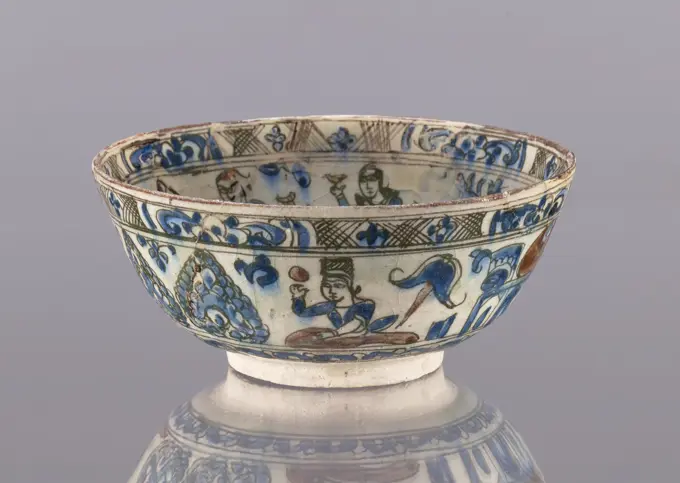
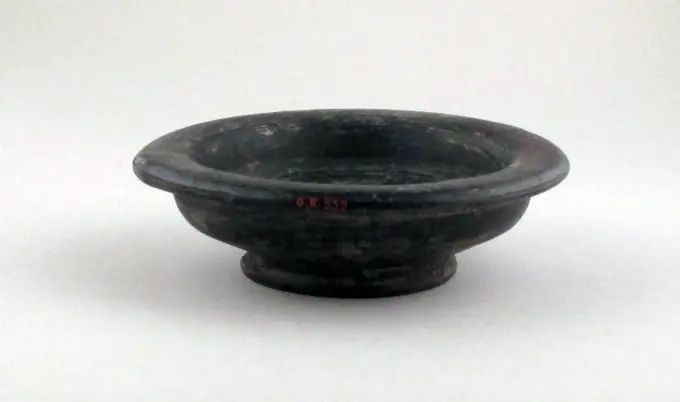
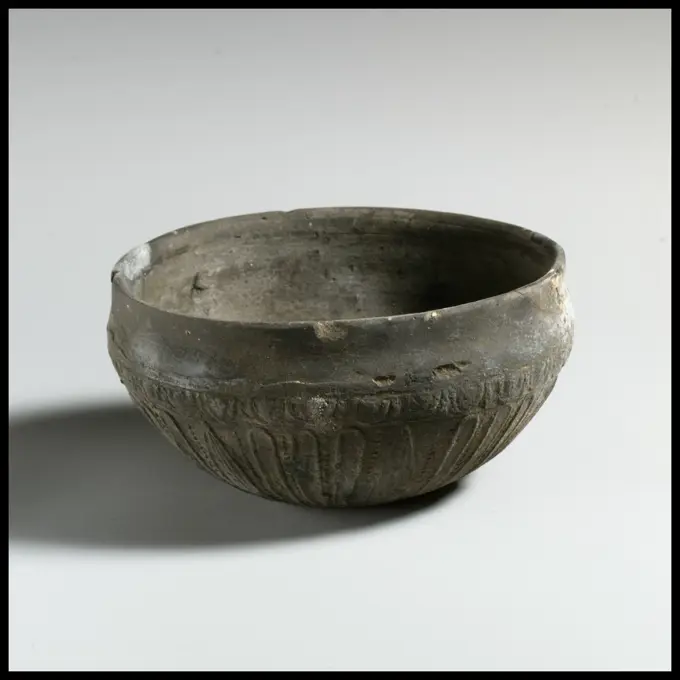
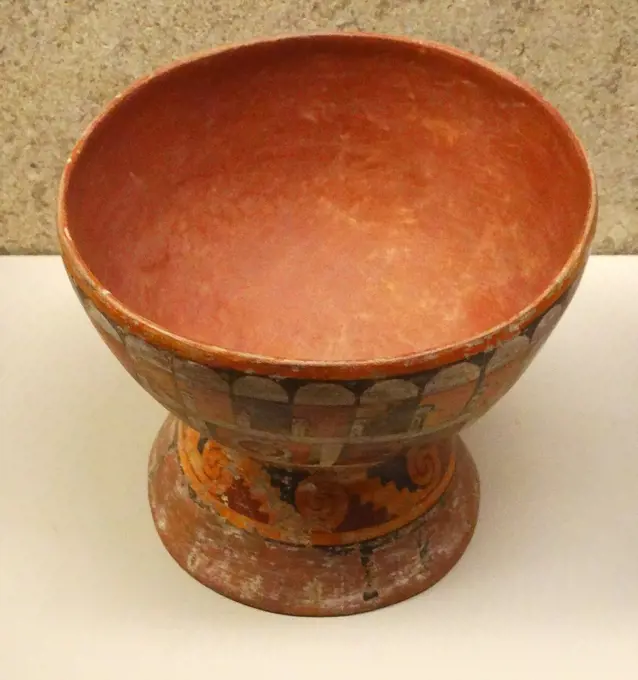
An array of beautifully crafted bowls and cups, featuring varying textures, glazes, and decorative patterns from different cultures.
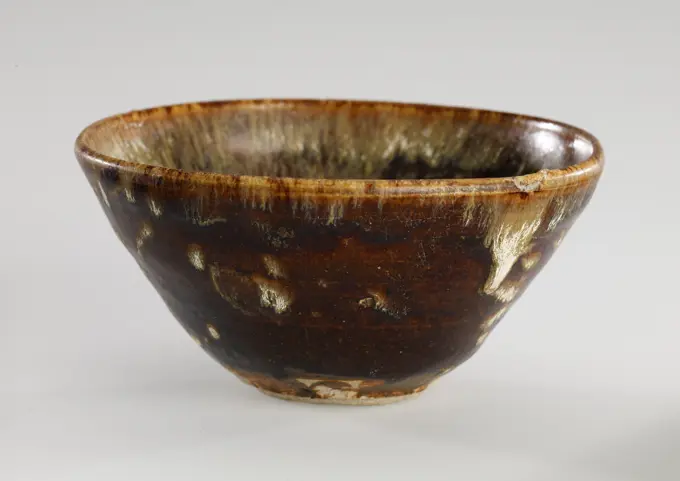
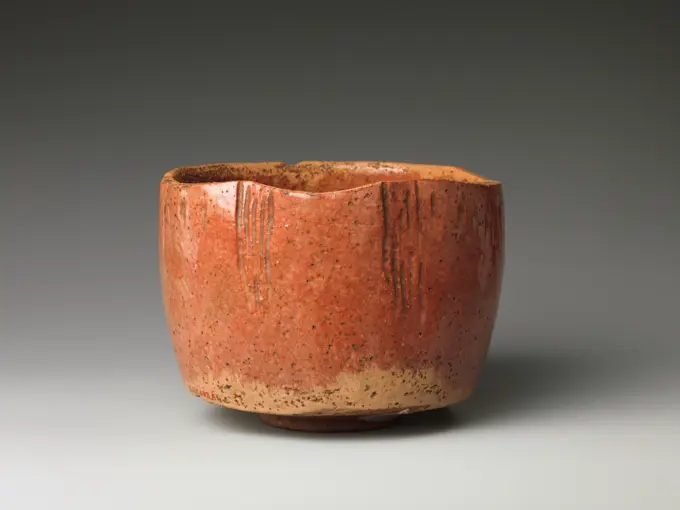
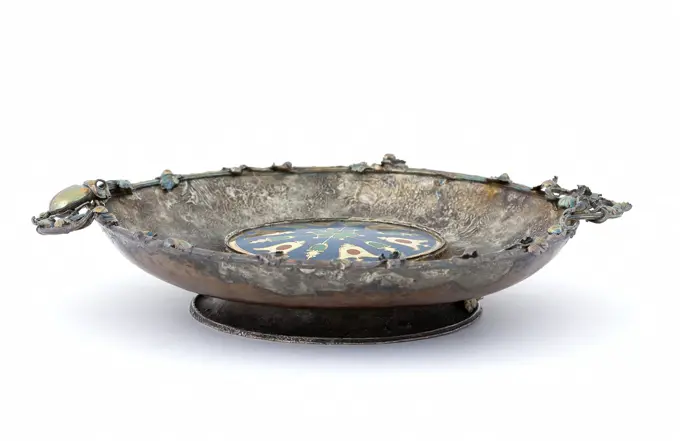
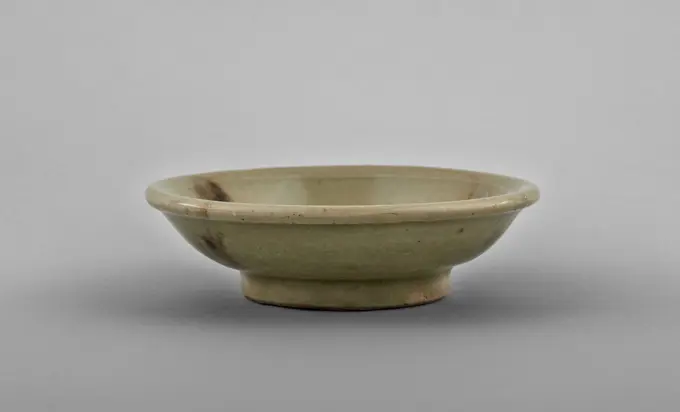
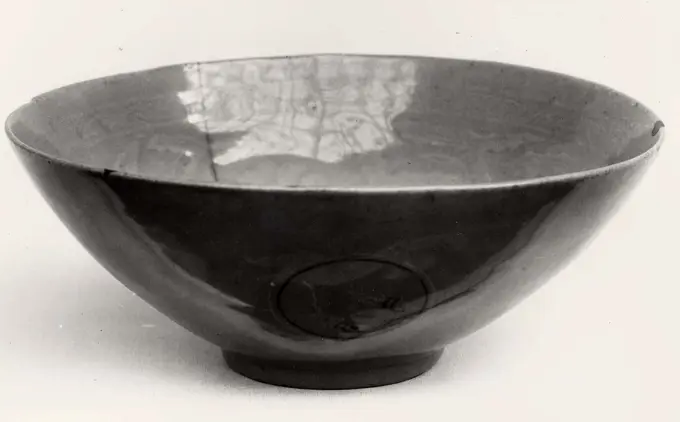
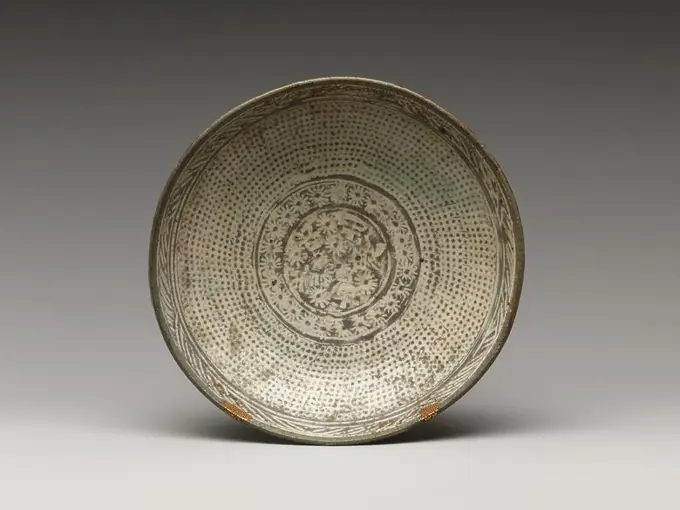
Tea Bowl, 12th-13th century, 2-7/16 x 4-7/16 x 4-7/16 in. (6.2 x 11.3 x 11.3 cm), Chi-chou ware Stoneware with brown glaze to the exterior with papercut decoration reserved in dark brown against a variegated buff ground on the interior, China, 12th-13th century, A dark-brown glaze with buff-colored tortoiseshell markings covers the exterior of this small tea bowl. Reserved on the interior in reddish-brown glaze are three openwork panels of quatrefoil shapes, perhaps representing peony blossoms, set against a richly variegated buff glaze. The golden buff glaze crawled downward from the lip during firing creating a streaked and mottled effect on the interior. Archaelogical evidence shows similar bowls to have been made at the Chi-chou kilns at Yung-ho in central Kiangsi province.
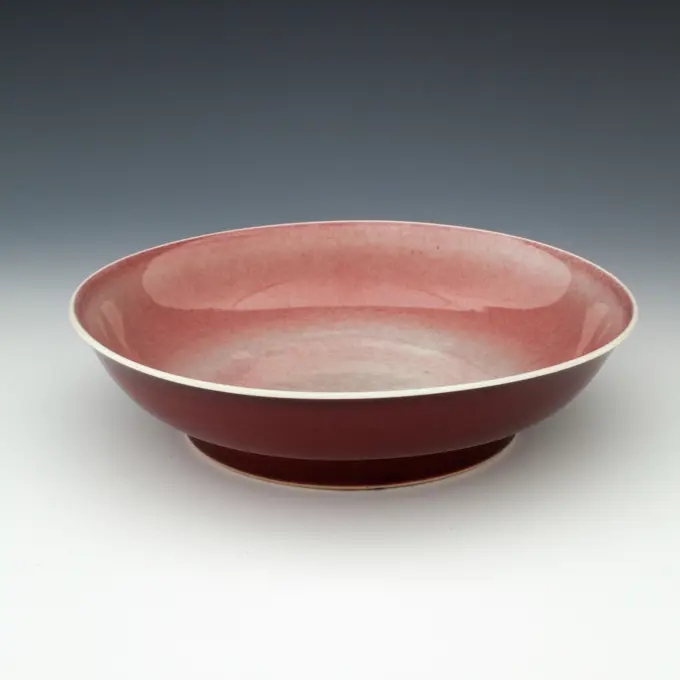
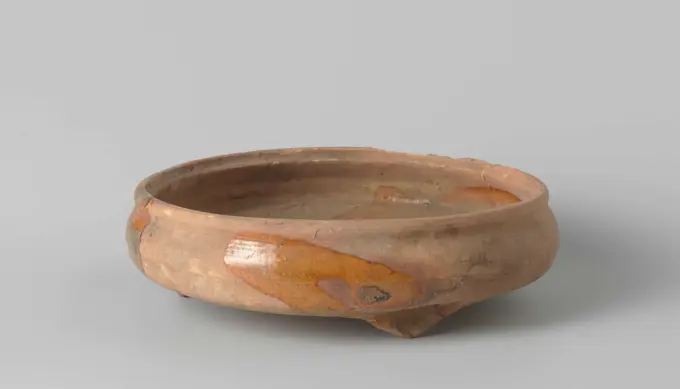
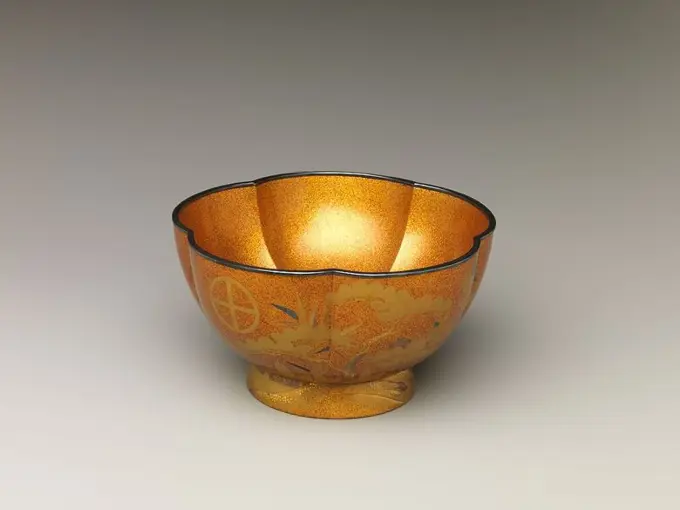
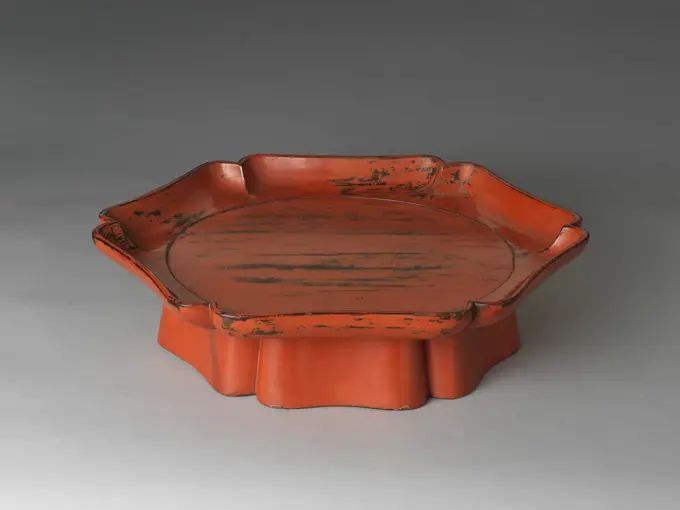
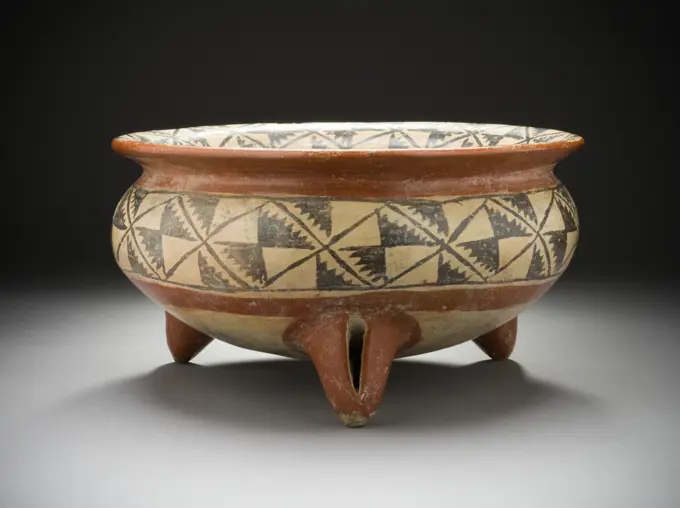
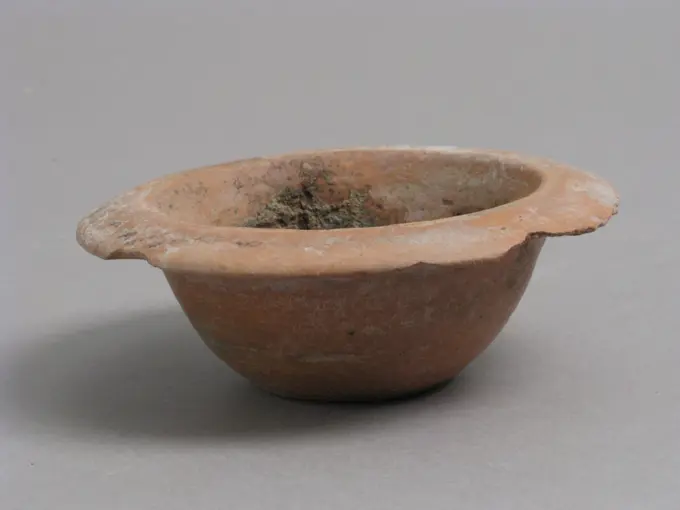
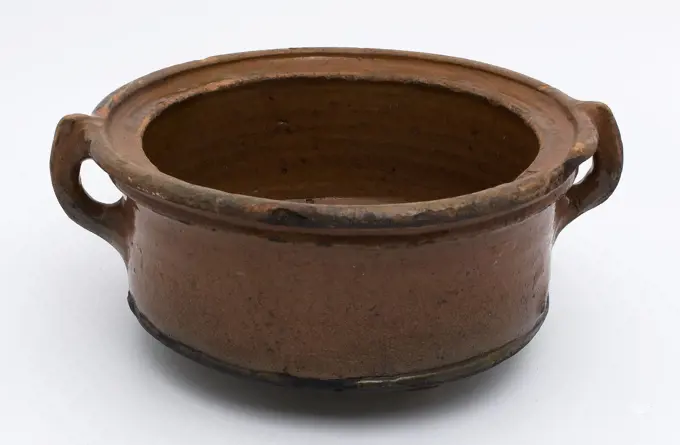
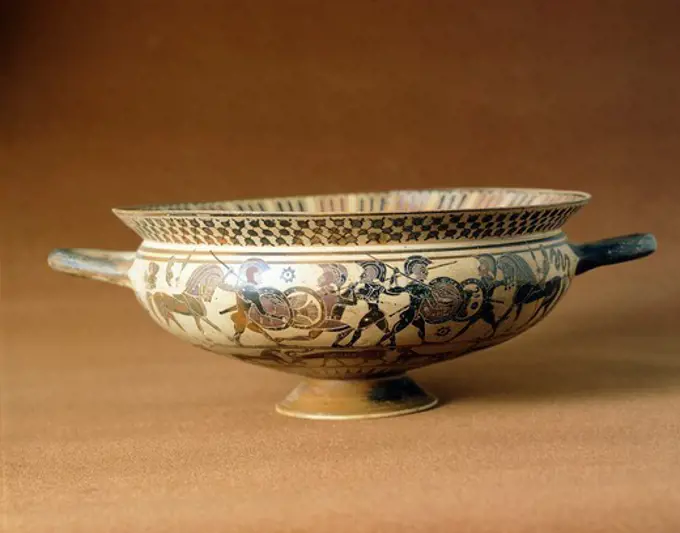
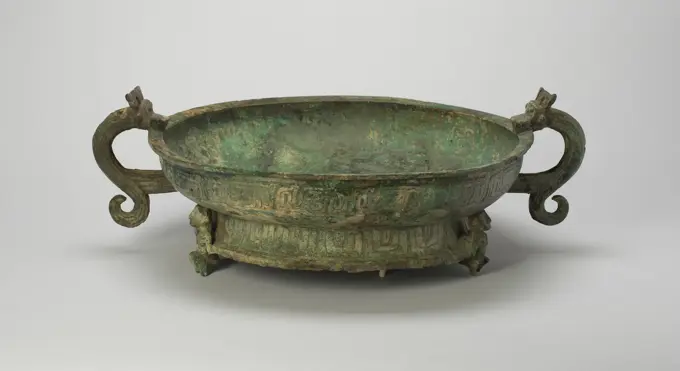
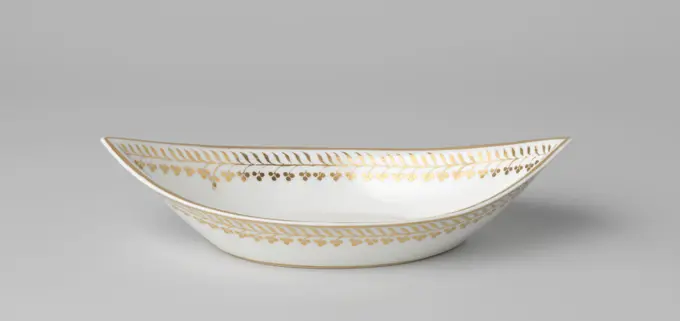
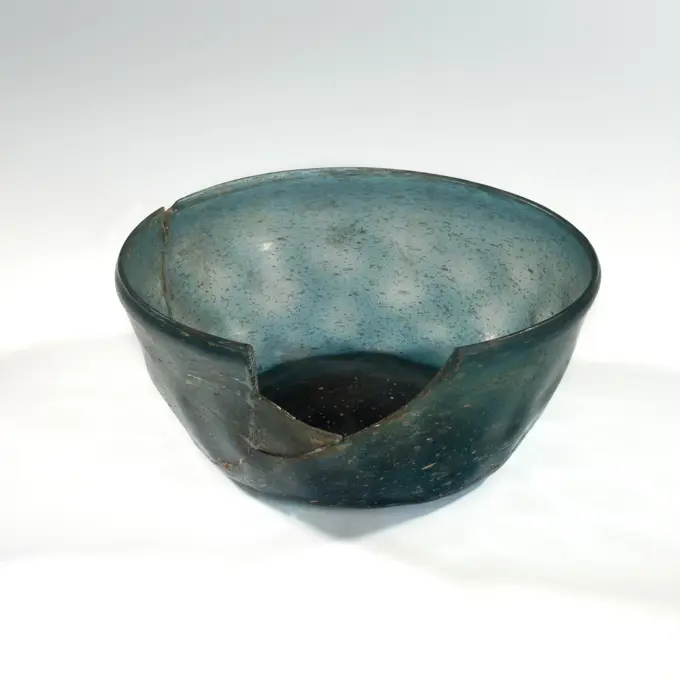
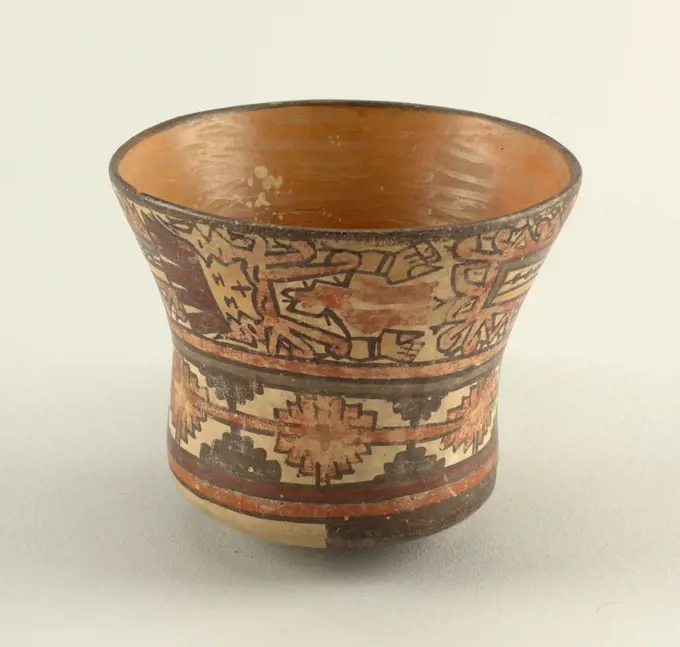
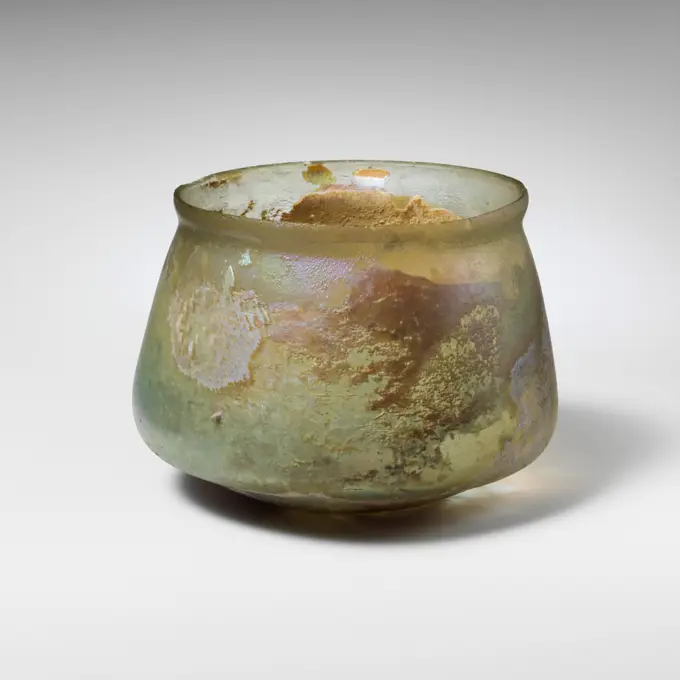
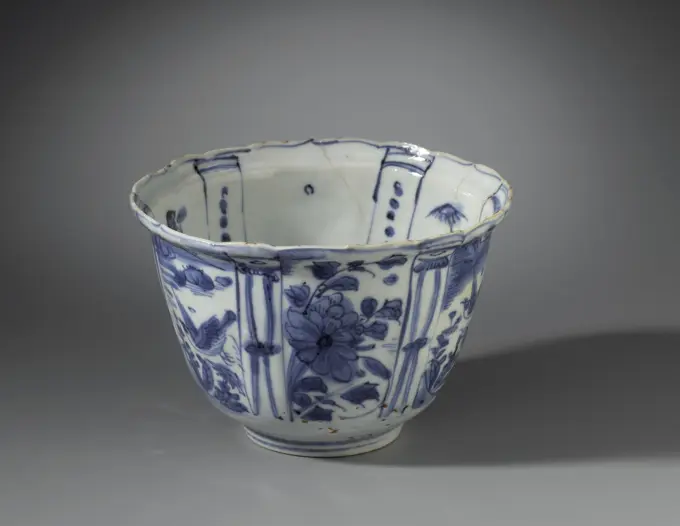
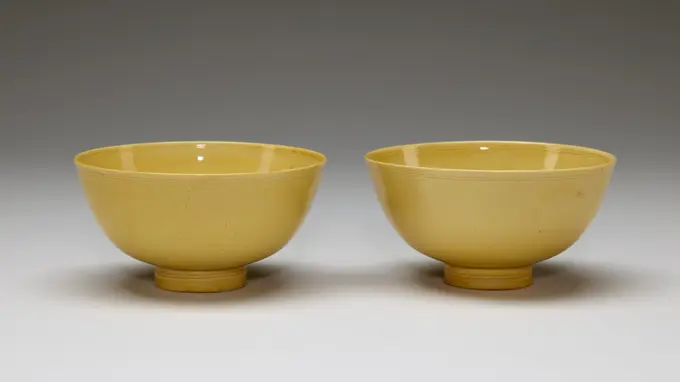
Bowl with a woman with a reel, flowering plants and figures in landscapes in a panel decoration, anonymous, c. 1635 - c. 1650 Come from porcelain with a accolade -shaped edge, painted in undermglaze blue. The outside wall is divided into wide and narrow courses. In the broad courses Chinese people in landscapes with houses and trees that visit European. Around the compartments a strap with curl and a flower livel at the top. The narrow compartments with a stylized flower; Above the foot a tire with flower vines. On the bottom a Chinese woman who is spinning in an interior. The inner wall with a similar decoration such as the outer wall alone the wide courses are alternately filled with the landscape or a flower drink. Crack porcelain in blue and white. China porcelain. glaze. cobalt (mineral) painting / vitrification Come from porcelain with a accolade -shaped edge, painted in undermglaze blue. The outside wall is divided into wide and narrow courses. In the broad courses Chinese peoplBowl of peach enamel unknownLampThree Bowls with Dutchmen, anonymous, c. 1800 - c. 1899 Come from porcelain, painted in underly glaze blue and on the glaze red, green, black and gold. On the bottom medallion with a four -clawy dragon between clouds and flames. On one half of the inner wall a Dutch ship on swirling waves, the other half with twelve Dutch men in different poses. The edge with servetwork interrupted by a leaf vank and three cartouches with the head of a shishi (lion dog). The outside with two cartouches formed by a leaf vank containing a stylized eagle, two cartouches with a flower vank against a red background. Between the Cartouches Chrysanthen drinks. The lower half of the bowl with servetwork and around the foot a decorative band in undermglaze blue. Marked on the bottom with the six-character brand of Keizer Wanli. European performance in Imari. Japan porcelain. glaze. cobalt (mineral). gold (metal) painting / gilding / vitrification  Japan Come from porcelain, painted in underly glaze blue and on Cup in the Shape of a Plum Flower with Branch-Shaped Handle 1368-1644 China. Yixing stoneware with underglaze molded decoration .Pot of white -baking clay, with yellow glaze on the inside and on the outside of green glaze, damaged, anonymous, 1500 - 1799   earthenware. glaze   earthenware. glazeHead of hard baked pottery with a brown transfer as decoration, Southwick Pottery, c. 1831 - c. 1840 Head of hard baked pottery. The head is half -ball. The head has a performance of a sinking ship and weapons with the names of the provinces as the caption. The bottom of the head has an image of a portrait bust. Sunderland earthenware Head of hard baked pottery. The head is half -ball. The head has a performance of a sinking ship and weapons with the names of the provinces as the caption. The bottom of the head has an image of a portrait bust. Sunderland earthenwareBak van rood-bruin aardewerk.Bake of red-brown pottery. The container stands on three hand and spatula shaped feet. On the outside of the convex wall and on the inside of the dish there are some yellow-brown glaze spots. The bin is broken and glued in two.Bowl with with Design of Pine, Bamboo, and Cherry Blossom. Culture: Japan. Dimensions: H. 3 3/8 in. (8.6 cm); W. 6 1/4 in. (15.9 cm). Date: 19th century.This bowl, part of a wedding trousseau, comprised of thirty-one pieces, represents late Edo-period maki-e (decoration in gold and/or silver sprinkled powder) art at its finest. The Shimazu family, lords of Satsuma in Kyushu, ordered this traditional trousseau most likely for Taka-hime, who was married to Matsudaira Sadakazu, lord of Kuwana (Ise Province), around 1830.The items of the wedding set are decorated with various auspicious motifs. The evergreen pine represents longevity and also symbolizes renewal. The fast-growing, springy, but at the same time very strong and enduring bamboo also stands for longevity and represents endurance and strength. The plum blossoms are the first flowers of spring, representing the renewal of nature. The combination of the "Three Friends of Winter"--originating from China--is associated with celebrDish. China, Ming Dynasty, 1368-1644. Furnishings; Serviceware. Porcelain with white glazeFlower-Shaped Tray (Rinka-bon) 15th century Japan With a lobed silhouette inspired by Chinese flower-shaped ceramics and lacquers, this tray represents the high esteem in which medieval Japan held imported Chinese art works (karamono). Such precious objects came to Japan with the introduction of new schools and teachings of Buddhism, especially that of Zen. Chrysanthemum-shaped trays were made by Japanese craftsmen from around the mid-thirteenth century. Most of these trays were used with tenmoku tea bowls to serve tea.. Flower-Shaped Tray (Rinka-bon). Japan. 15th century. Wood with black and red lacquer layers (Negoro ware). Muromachi period (1392-1573). LacquerTripod Bowl with Geometric Design. Mexico, Guanajuato, Chupícuaro, 400-100 BCE. Ceramics. Slip-painted ceramicBowl 4th-7th century Coptic. Bowl 478822Pottery cooking pot on three legs, cylindrical in shape with two band ears, cooking pot crockery holder kitchen utensils earthenware ceramics earthenware glaze lead glaze, hand-turned glazed baked Pottery cooking pot pan-model red shard both inside and outside glazed lid slot two vertical set of bandors. Cylindrical in shape with outstanding top edge Blurred turning legs underside unglazed traces of three legs archeology indigenous pottery food preparation cooking kitchenBowl 2nd millennium B.C.. Bowl 324313Kylix showing a battle scene, Corinthian pottery, Greece. Greek Civilization, 7th Century BC.Basin 800 BCE-600 BCE China. Squatting male and female figures support this basin; dragon-shaped handles bite at its rim. Such sculptural features enliven the silhouettes of late Western Zhou vessels, although their surface decor often reflects less vitality. The simple, ribbonlike bands encircling the basin have been dramatically abstracted from components of earlier monster masks.. Bronze .Dish with stylized floral scrolls, anonymous, c. 1800 - c. 1810 Oval scale of porcelain, the short sides rushing. Painted on the glaze in gold. The flat with a single flower branch. On the inner wall a tire of stylized flower vines. Marked on the underside with N . France porcelain. glaze. gold (metal) painting / gilding / vitrification Oval scale of porcelain, the short sides rushing. Painted on the glaze in gold. The flat with a single flower branch. On the inner wall a tire of stylized flower vines. Marked on the underside with N . France porcelain. glaze. gold (metal) painting / gilding / vitrificationCzarka;  IX-XI century (801-00-00-1100-00-00);Semerau-Siemianowski, Władysław (1849-1938), Semerau-Siemianowski, Władysław (1849-1938)-collection, gift (provenance), Islam (culture), art of IslamTerracotta one-handled cup. Culture: Minoan. Dimensions: H. 3 1/2 in. (8.9 cm.)Diameter 6 in. (15.2 cm.). Date: ca. 1600-1450 B.C..Decorated with bands and waves on the interior. Museum: Metropolitan Museum of Art, New York, USA.Vase, Slip-decorated earthenware, Concave, flaring sides, and rounded bottom, all coated with white slip. On body, two bands, the lower with graded, connected rosettes and pyramids; the upper with two snakes displayed horizontally., Peru, 400-600, ceramics, Decorative Arts, VaseBowl ca. 1635-1458 B.C. Second Intermediate Period-Early New Kingdom. Bowl 552433Red Raku Tea Bowl (copy of the Kaga Kōetsu Tea Bowl) 18th century Style of Hon'ami Kōetsu Japanese. Red Raku Tea Bowl (copy of the Kaga Kōetsu Tea Bowl) 63148Lazio Viterbo Viterbo Museo Civico41. Hutzel, Max 1960-1990 Views of paintings (Middle Ages through 18th c.), frescoes, a tabernacle, coffin, sculpture reliefs, portal fragments, busts, sculpture, tapestry found in the Pinacoteca, Second floor gallery and Second floor cloister sequences. Antiquities: Many views of Etruscan and Roman fragments, sculpture, sarcophagi, pottery, masks, jewelry and other objects found in the Storeroom sequence (inventory numbers on back of prints), and the Cloister, Second floor Cloister, Valle Giulia, Sala Romana and Sala Etrusca sequences. General Notes: There are eight separate numerical sequences for this location. The cloister as an architectural structure, rather than museum site, is documented in the record and file for S. Maria della Verita, Cloister, all views of which are stored in Medieval core collection. Five views from the Museo Civico Second floor cloister sequence are stored in Medieval. German-born photographer and scholar Max Hutzel (1911-Two Cups, Meissener porcelain manufactory, c. 1715 Head without ear, from Böttger-porcelain. The head has a low foot ring and a slightly outstanding mouth edge. The wall is decorated with three identical branches with acanthus leaves in relief. Float porcelain Head without ear, from Böttger-porcelain. The head has a low foot ring and a slightly outstanding mouth edge. The wall is decorated with three identical branches with acanthus leaves in relief. Float porcelainBowlBell-Shaped Cup With Powder Blue and Flower Heads in reserve. Bell-shaped head of porcelain with flared wall, painted in underglaze blue. The head is covered with bleu poudré (powder blue) with a flour six times in this; A flower in a double circle on the bottom. Marked on the underside with a seal mark in a double circle. Bleu poudré with underglaze blue.Bowl with Chrysanthemums late 14th century China. Bowl with Chrysanthemums 42496Slop Bowl, Royal Worcester, English, established 1751, soft paste porcelain, vitreous enamel, Outcurving side with cylindrical foot, with curved side. Decoration of floral sprays and butterflies., England, ca. 1770, ceramics, Decorative Arts, bowl, bowlJar with Dragon and Phoenix Design, 1522-66. China, Jiangxi province, Jingdezhen, Ming dynasty (1368-1644), Jiajing mark and reign (1522-66). Carved lacquer in cinnabar and other colors; overall: 11.8 cm (4 5/8 in.).Henri Husson / Adrien-Aurélien Hébrard. Cut. Silver repelled and chiseled, brass or gold, Champlevé enamel. 1909-1914. Museum of Fine Arts of the City of Paris, Petit Palais. 75295-8 Silver pushing, chisel, cut, champleve email, brass, goldCup (usual name), 1279. Céladon covered sandstone punctuated by iron brown tasks under the covered. Cernuschi Museum, Asia Museum of Asia in the city of Paris.Mosaic Bowl; Eastern Mediterranean; end of 1st century B.C. - 1st century A.D; Glass; 4 x 9.4 cm (1 9,16 x 3 11,16 in.)Incised bowl with geometric pattern 5th-3rd century B.C. Paracas. Incised bowl with geometric pattern 308335Canoe Bowl, 1250-1499, 3 1/2 x 7 1/2 x 4 3/4in. (8.9 x 19 x 12.1cm), Ceramic, United States, 13th-15th centuryBowl. Porcelain cookie with "three-colored" glazes decor, Ming Dynasty (1368-1644) or Qing Dynasty (1644-1912). Provenance: China. Paris, Cernuschi museum. 78846-21 Asian art, Chinese art, living art, tableware, bowl, fine ceramic, ming dynasty, porcelainGong-shaped Brush Washer, 1662-1722. China, Qing dynasty (1644-1911), Kangxi reign (1662-1722). Porcelain; diameter of mouth: 8.6 cm (3 3/8 in.); overall: 3.9 cm (1 9/16 in.).Cup mid-12th century Korea. Cup 57413Come from tin with ring -shaped ears, anonymous, 1400 - 1600 Come from Tin. On a low position ring is the inverted bell -shaped bowl, which is halfway decorated with two profiled tires. The lip edge runs a little further out. Two ring -shaped ears, a horizontal, are placed on the sides of the bowl, the other vertical. Leiden tin (metal) casting Come from Tin. On a low position ring is the inverted bell -shaped bowl, which is halfway decorated with two profiled tires. The lip edge runs a little further out. Two ring -shaped ears, a horizontal, are placed on the sides of the bowl, the other vertical. Leiden tin (metal) castingGlass cup 2nd-3rd century A.D. Roman Translucent pale blue green.Knocked-off, uneven rim; slightly bulging collar below rim; sides expanding downward, then angled in to join convex bottom, flattened at center.Intact, except for chips in rim; a few pinprick bubbles; dulling, pitting, and patches of brilliant iridescence on exterior; soil encrustation and creamy weathering on interior.. Glass cup 239830Bowl mid-12th century Korea. Bowl 57410Bowl - Portneuf pottery. Lid of lid cup of stoneware, painted on the glaze in black and a white sludge. A prunus branch on the lid.Flaring Bowl Depicting Repeated Motif Resembling Darts Made 180 BCE-500 CE Peruvian South Coast. Ceramic and pigment . NazcaGlass trulla (pan). Culture: Roman. Dimensions: H.: 2 3/8 in. (6 cm). Date: 1st-4th century A.D..Translucent light green; base and handle in same color.Everted rim with rounded outer lip; tubular flange formed by folding at top of side; hemispherical body; applied, outsplayed, low oval base with rounded outer edge; slightly raised edge to concave bottom; handle applied as a broad flat strap to edge of rim, with small pinched projection on either side, drawn out horizontally with concave side edges, then pinched off with rough surface marks from pincers on top and bottom at end.Intact, but one internal crack in lower part of side; many pinprick and a few larger bubbles, and glassy inclusions; slight dulling, faint iridescence, and small patches of creamy weathering.Greenish, with handle. Museum: Metropolitan Museum of Art, New York, USA.Bowl with a seated woman in a panel decoration, anonymous, c. 1170 - c. 1199 Come from quartz-fritgoed decorated with polychrome luster on a Opaak white tin-lood-alkalaplaze. The outer wall is bored in scalloped courses with a sitting woman in each. Between the courses flower vines. The inside with a stylized flower. is the earthenware. glaze. luster (textile) painting / vitrification Come from quartz-fritgoed decorated with polychrome luster on a Opaak white tin-lood-alkalaplaze. The outer wall is bored in scalloped courses with a sitting woman in each. Between the courses flower vines. The inside with a stylized flower. is the earthenware. glaze. luster (textile) painting / vitrificationBowl;  2. PO. 19th century (1851-00-00-1900-00-00);Drinking Cup (Maigelein). German. Date: 1301-1500. Dimensions: 5.2 × 8.6 cm (2 1/16 × 3 3/8 in.). Green glass. Origin: Germany. Museum: The Chicago Art Institute, Chicago, USA.Broad Pear-Shaped Jar with Concave Lid. China. Date: 700 AD-799 AD. Dimensions: H. 15.0 cm (5 15/16 in.); diam. 15.0 cm (5 15/16 in.). Slip-coated and glazed stoneware. Origin: China. Museum: The Chicago Art Institute, Chicago, USA.Shallow dish with foot ca. 550-500 B.C. Etruscan. Shallow dish with foot. Etruscan. ca. 550-500 B.C.. Terracotta; bucchero. Archaic. VasesTerracotta kylix (drinking cup) ca. 330-300 B.C. Greek, South Italian, Campanian, Teano Decorated with ivy vine and stamped pattern.. Terracotta kylix (drinking cup) 248195Incised bowl with geometric pattern. Culture: Paracas. Dimensions: Overall: 2 3/4 in. (6.99 cm)Other: 7 1/2 in. (19.05 cm). Date: 5th-3rd century B.C.. Museum: Metropolitan Museum of Art, New York, USA.Terracotta Megarian bowl ca. 165-150 B.C. Greek, Argive inscribed "of Demetrios"The inscription on the foot of this bowl associates it with the potter's workshop of Demetrios-Iason. Many bowls carrying the signature of this atelier have been found during excavations of Argos, an important Peloponnesian city-state in antiquity.. Terracotta Megarian bowl 246738Pottery vessel Cholula, Mexico AD 1300-1521. Cholula was the capital of an independent Post classic state. Mixtec stylistic influences, especially polychrome geometric patterns, and step and wave motifs like the ones on this vessel are apparent in Cholula designs.Bowl (crow cup) with flowering plants, flying birds and a bird on a rock, anonymous, c. 1600 - c. 1624 Come or crow head of porcelain with scalloped edge, painted in underlaze blue. The outer wall is divided into wide and narrow compartments with plants flowering in the wide courses (bamboo, chrysanthemum) and flying birds; The narrow compartments with bows. A bird on a rock on the bottom. The inner wall also with a professional decoration with flower courses in the wide courses and dots in the narrow compartments. The wall has been broken. Crack porcelain in blue and white. China porcelain. glaze. cobalt (mineral) painting / vitrification Come or crow head of porcelain with scalloped edge, painted in underlaze blue. The outer wall is divided into wide and narrow compartments with plants flowering in the wide courses (bamboo, chrysanthemum) and flying birds; The narrow compartments with bows. A bird on a rock on the bottom. The inner wall also with a professional decoration with flowerOil Bottle with Chrysanthemum Flower Heads 1165-1299 Korea. Celadon-glazed stoneware with underglaze inlaid decoration of black and white clays .Bowl. China. Date: 960 AD-1279. Dimensions: H. 6.4 cm (2 1/2 in.); diam. 11.5 cm (4 1/2 in.). Stoneware with black glaze and iron-brown splashes. Origin: China. Museum: The Chicago Art Institute, Chicago, USA.. Come from pottery decorated in black sludge with curl work in three times two boxes on Engobe of white sludge, with locally yellow linging lead glaze.Cup. UnknownBeakerTea bowl -Bowl - washer. Korzec (manufaktura porcelany ; 1790-1832), factoryThis bowl shows an environment painted in the round. A blossoming clematis vine wraps over the rounded rim of the dining bowl to dangle above moving water; something left unseen may be swimming beneath the surface. Dining Bowl with Clematis, 1893-97. Seifū Yohei III (Japanese, 1851-1914). Porcelain with underglaze and overglaze colors, molded and incised designs; height: 6.9 cm (2 11/16 in.); diameter: 19 cm (7 1/2 in.).Slop bowl ca. 1735 Vienna The tour-de-force painting of a continuous landscape on this bowl shows the level of quality that Schwarzlot porcelain was capable of reaching at Du Paquier. The name of the artist is unknown, but his hand is evident on other pieces painted with similar Dutch or Italian views. Monochrome landscapes, whether painted in black, purple, or red, appear to have been popular at the manufactory in the 1730s.. Slop bowl 200991Bowl. Cypriot. Date: 1450 BC-1200 BC. Dimensions: 11 × 24.3 × 18 cm (4 1/4 × 9 5/8 × 7 1/2 in.). Terra-cotta. Origin: Cyprus. Museum: The Chicago Art Institute, Chicago, USA. Author: Ancient Cypriote.Bowl, anonymous, c. 1775 - c. 1800 Come painted in email colors and gold with temples, flower branches and birds; Tires stylized above and below the show. Northern India glass. gilding (material) glassblowing / gilding Come painted in email colors and gold with temples, flower branches and birds; Tires stylized above and below the show. Northern India glass. gilding (material) glassblowing / gildingSilver bowl ca. A.D. 200-250 Roman The foliate decoration on the exterior of this shallow bowl is similar to that on a number of vessels belonging to silver hoards found in Gaul and Germany, buried as a result of the threat of barbarian raids from across the Rhine in the mid-third century A.D. This bowl, however, has no recorded provenance and for a long time was considered to be of Parthian (Iranian) origin. It thus demonstrates the universal nature of luxury art, which in later Roman times spread eastward through Iran to Central Asia and China.. Silver bowl. Roman. ca. A.D. 200-250. Silver. Late Imperial. Gold and SilverEarthenware pap bowl with lying ear, internal yellow lacquered, papkom bowl crockery holder earth discovery ceramic earthenware glaze lead glaze, hand-turned glazed baked porridge red chard external brown glaze internal yellow one ear restoration in plaster stand ring rotations archeology Valckensteyn Poortugaal Albrandswaard indigenous pottery porridge porridge food kitchen serving food nutrition Soil discovery: canal at kitchen castle Valckensteyn at Poortugaal now Albrandswaard 1961.Dish, 1736-95. China, Qing Dynasty (1644-1911), Qianlong reign (1736-95). Porcelain with famille rose overglaze enamel decoration; diameter: 16 cm (6 5/16 in.); overall: 3.2 cm (1 1/4 in.).ARTE IRANI-VASO DE COBRE BATIDO-DECORACION CINCELADA-DINASTIA SASANIDA. Location: MUSEO ARQUEOLOGICO NACIONAL-COLECCION. MADRID. SPAIN.Small bowl ca. 1st century A.D. Nabataean. Small bowl 325882Large swollen coat pot without collar ". Terracotta. Vietnam-Xe-Xive s. Paris, Cernuschi museum. 72185-2 Large pot with paunch, Vietnamese object, swollen, without collar, terracottaMedium-sized Dish from Dining Set with Plum Blossoms and Cracked-Ice, c. 1875-78. Seifū Yohei II (Japanese, 1844-1878). Porcelain with molded designs; overall: 3.2 x 16.4 cm (1 1/4 x 6 7/16 in.).Glass dish. Culture: Roman, Cypriot. Dimensions: 1 3/4 x 8 3/16in. (4.5 x 20.9cm). Date: 1st century A.D..Translucent pale blue green.Rounded, flaring rim, with horizontal outward rib below; slightly convex side of uneven height, tapering downwards to broad, intregral tubular base ring; flat bottom but with kick at center, forming thickened dome, and traces of pontil scar.Intact; pinprick bubbles and blowing striations; some dulling and faint iridescence, with small patches of creamy brown weathering. Museum: Metropolitan Museum of Art, New York, USA.Bowl China. Bowl 52612Bowl in the shape of a lotus leaf. Culture: China. Dimensions: H. 2 3/4 in. (7 cm); Diam. 6 in. (15.2 cm); Diam. of rim 6 1/2 in. (16.5 cm). Date: late 18th-early 19th century.Known as "chicken fat," the translucent yellow color of this bowl is rare. It is shaped like a lotus and embellished with carved decoration that provides a continuous scene of lotus blossoms, pods, and leaves. A lotus is another example of the word play common in Chinese art: a bunch of lotuses is a rebus for firm roots and luxuriant branches (bengu zhirong), an allusion to good wishes for a flourishing business. Museum: Metropolitan Museum of Art, New York, USA.Terracotta stemmed dish. Culture: Lydian. Dimensions: H. 5 3/8 in. (13.7 cm)diameter 6 7/8 in. (17.5 cm). Date: 6th century B.C..The surface of the stem and bowl is enhanced with a white slip, perhaps to simulate the effect of marble or alabaster. Museum: Metropolitan Museum of Art, New York, USA.Glass beaker or lamp 4th century A.D. Roman Translucent pale blue green, with deep turquoise green blobs.Unworked, knocked-off rim, with bulging collar beneath; somewhat misshapen and uneven sides to body, tapering downwards; pushed-in bottom.Four blobs applied irregularly to exterior of lower body.Intact, except for minor chip in rim; pinprick bubbles; slight dulling, pitting, and iridescent weathering on exterior, patches of creamy brown weathering on interior.Vessels with decorated with colored blobs were very popular in late Roman times; examples have been found both in the East and along the Rhine frontier in Germany.. Glass beaker or lamp. Roman. 4th century A.D.. Glass; blown and blobbed. Late Imperial. GlassSmall Wide-Mouthed Jar 1100-1199 China. Northern blackware, Cizhou type; stoneware with russet-streaked dark brown glaze .Soba cup Japan. Soba cup. Japan. Porcelain with underglaze blue (Hizen ware). early Edo period (1615-1868). CeramicsBowl, early 20th century, 2 7/16 × 4 11/16 × 4 11/16 in. (6.19 × 11.91 × 11.91 cm), Glazed ceramic, China, 20th centurySaucer. Culture: China. Dimensions: Diam. 5 1/8 in. (13 cm). Date: 19th century. Museum: Metropolitan Museum of Art, New York, USA.Standing Shokannon (lotus base), 900s. Japan, Heian period (794-1185). Carved wood with polychromy; overall: 101.6 cm (40 in.).Jar ca. 1000-750 B.C. This small jar has a bulbous body, a pronounced shoulder decorated with horizontal incised lines, a high, slightly flaring neck, and an everted rim.Three nearly identical jars were excavated at Sangtarashan, south of modern Khorramabad in Luristan in western Iran, which archaeologists have identified as a riutal site of some kind where offerings, includings these jars, were made. Two more jars were excavated at Khatunban, als in Luristan (approximately 34 miles 55 km west of Nihavend, where Ernst Herzfeld acquired this jar). Both were found in graves along with vessels with long spouts. This pairing suggests a set of drinking vessels: a liquid would be poured from the spouted vessel into the jar, which was used as a cup -- it is about the size of a modern tumbler. It is not known what this liquid was, but wine is a good possibility. Winemaking is attested at Godin Tepe (28 miles 45 km northeast of Khatunban) as early as ca. 3000 B.C., and the deep bodies and lCome from porcelain with decoration of dragonfly and flowers, Theo Schmuz-Baudiss, c. 1900 Come from porcelain; The mouth edge has been squeezed four times, creating a four -pass form. During the inkings, a green dragonfly between yellow flowers in relief has been applied to a triangular field of ocher on the wall. Marked: Ingrift 6679., Seeger M. and stamped 1 h; On the wall grit Stb. To design by Theo Schmuz-Baudiß. Hüttensteinach porcelain Come from porcelain; The mouth edge has been squeezed four times, creating a four -pass form. During the inkings, a green dragonfly between yellow flowers in relief has been applied to a triangular field of ocher on the wall. Marked: Ingrift 6679., Seeger M. and stamped 1 h; On the wall grit Stb. To design by Theo Schmuz-Baudiß. Hüttensteinach porcelainKylix, miniature Roman Enamelled dark green inside.. Kylix, miniature. Roman. Terracotta. VasesDish with inscription and decorated with chrysanthemums and rows of dots. Culture: Korea. Dimensions: H. 2 1/4 in. (5.7 cm); Diam. 7 1/4 in. (18.4 cm). Date: mid-15th century.The deep dish is ornamented with repeating stylized chrysanthemum flowers, alongside other designs. The object is typical of buncheong ware-- characterized by white-slip decoration and produced on the peninsula from the late fourteenth through the midsixteenth century--with stamp-impressed designs. Inscriptions indicate the court offices that commissioned the vessels. The dish was made in Gyeongju to be sent to the office of Jangheunggo, which supplied items like paper and mats to the court. Museum: Metropolitan Museum of Art, New York, USA.Bell-shaped cup with a crowned, illegible monogram surrounded by two flower sprays, anonymous, c. 1750 - c. 1774 Bell -shaped head of porcelain, painted on the glaze in blue, red, pink, green, yellow, black and gold. On the outside wall a crowned, unreadable monogram surrounded by two flower branches; In between flower ranks with two cartouches with a landscape and four medallions with plants. European performance in email colors. China porcelain. glaze. gold (metal) painting / gilding / vitrification Bell -shaped head of porcelain, painted on the glaze in blue, red, pink, green, yellow, black and gold. On the outside wall a crowned, unreadable monogram surrounded by two flower branches; In between flower ranks with two cartouches with a landscape and four medallions with plants. European performance in email colors. China porcelain. glaze. gold (metal) painting / gilding / vitrificationMill Grinder Made 25 CE-220 CE China. Earthenware with green lead galze .Bowl. Western Iran, 1350-800 B.C.. Furnishings; Serviceware. Bronze, hammeredAnonymous. "Round dish with duck decorations". Porcelain. Paris, house of Victor Hugo. 122634-11 Blue color, porcelain, round, slice, dishes, dishBowl - Portneuf potteryBowl China. Bowl 52651Pre-Columbian art. Pre-Incan. Cuasmal Culture (500-1500 AD). From Ecuador. Ceramic vessel. 10x 18,5 cm (diameter). Private collection.Bowl ca. 2750-2649 B.C. Early Dynastic Period. Bowl. ca. 2750-2649 B.C.. Dioritic gneiss. Early Dynastic Period. From Egypt, Memphite Region, Saqqara, Tomb 2322 (), Egyptian Antiquities Service/Quibell excavations, 1910-11. Dynasty 2, second halfPlate early 19th century British. Plate. British. early 19th century. Pewter. Metalwork-PewterSkyphos (Drinking Cup) 410 BCE-400 BCE Cales. During the course of the 5th and 4th centuries BCE, black vessels (commonly called black-glaze vessels) were made with increasing frequency in both Greece and South Italy. Many of them replicate the shape of metal vessels. Others have detailing that is molded or incised. While the quality of these vessels varies greatly, all would have been less expensive than vessels decorated in other contemporary techniques, for example, in red-figure.. terracotta, decorated in the black-glaze technique with impressed decoration . Ancient GreekIncised bowl with geometric pattern 5th-3rd century B.C. Paracas. Incised bowl with geometric pattern 308323Bowl (one of a pair) 1916 China. Bowl (one of a pair) 50546Lobed Bowl 1890-1900 Japan. Porcelain with incised floral design . Seifu Yohei III