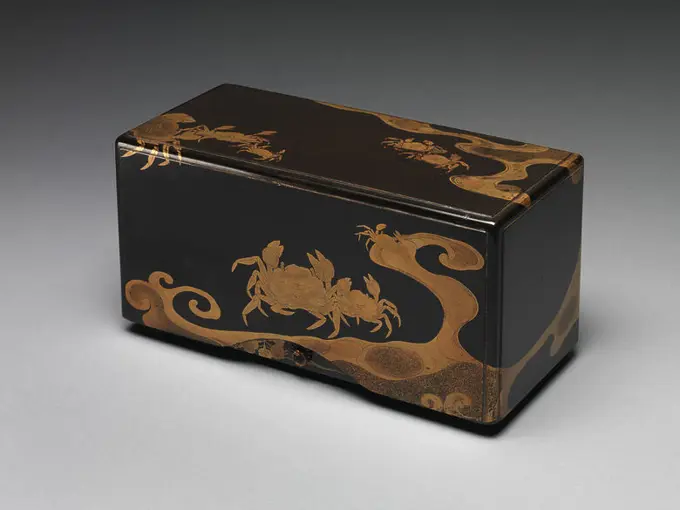
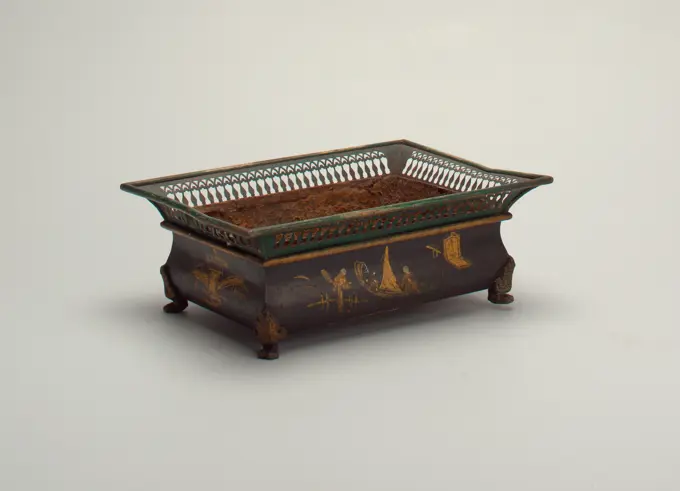
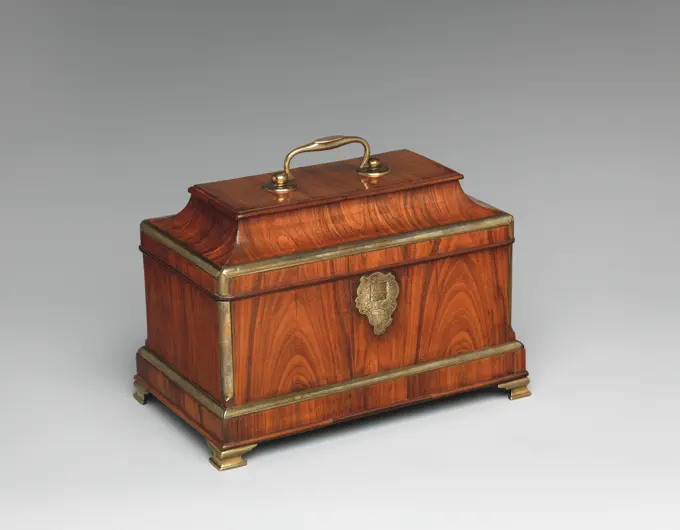
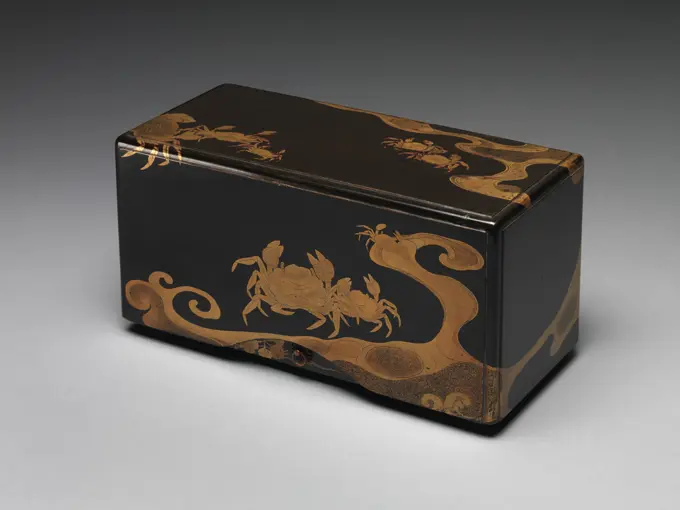
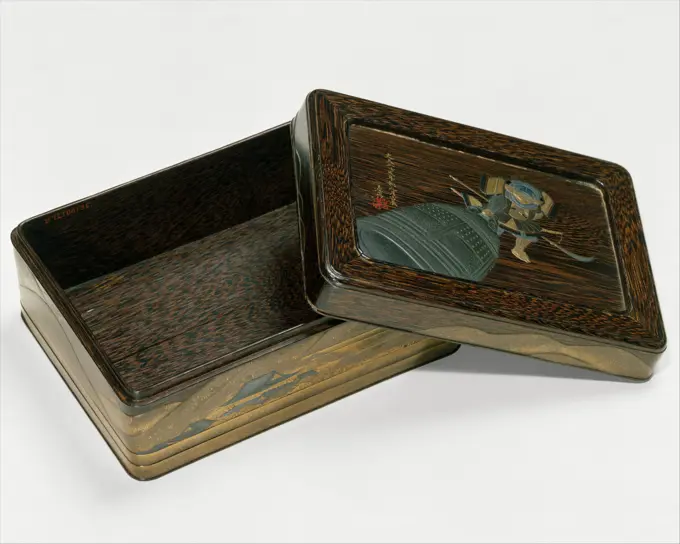
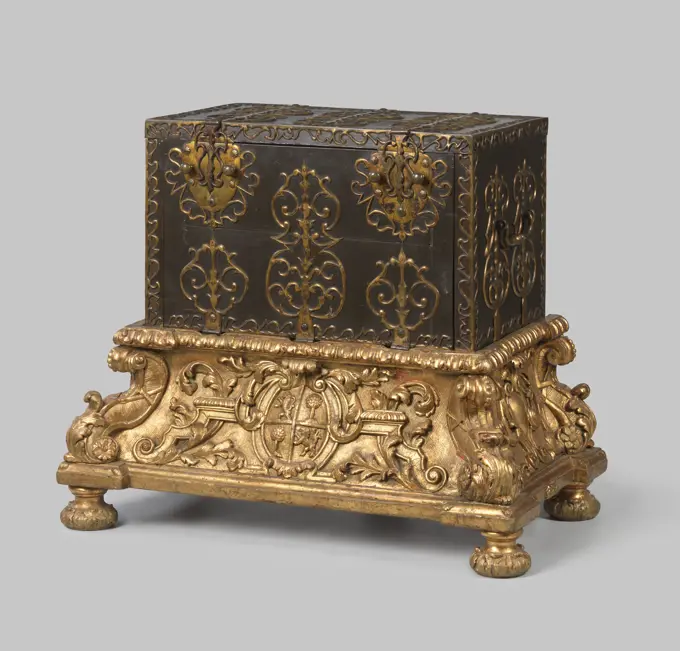
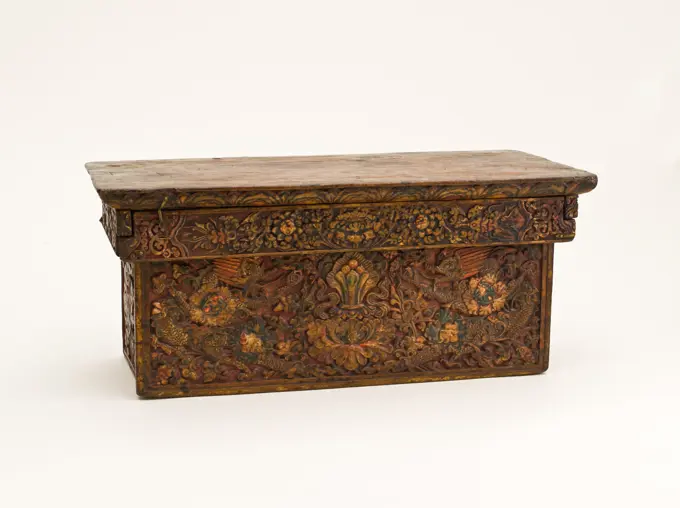
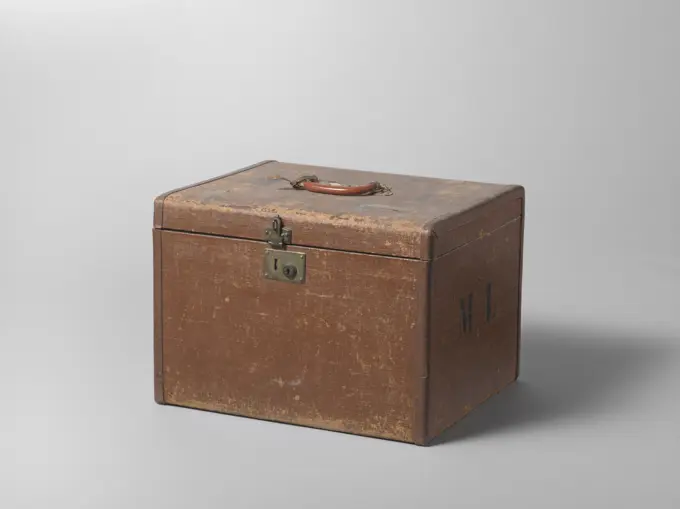
Decorative Boxes and Chests

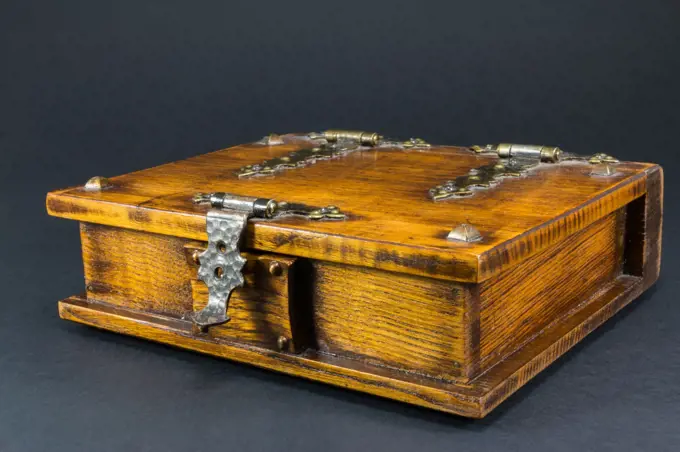
Collection of ornate wooden boxes and caskets from different eras, highlighting craftsmanship and intricate detailing.

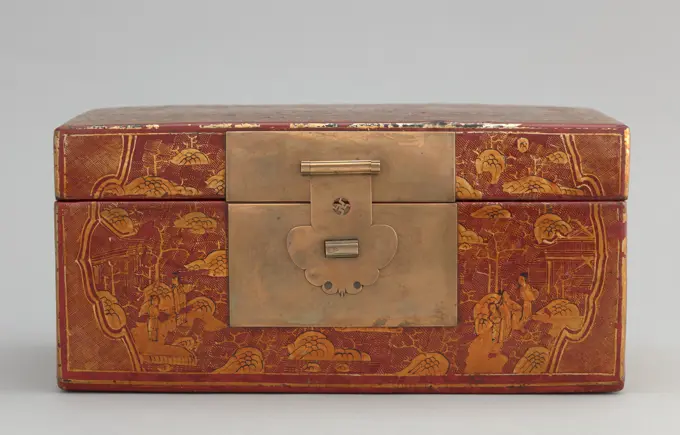
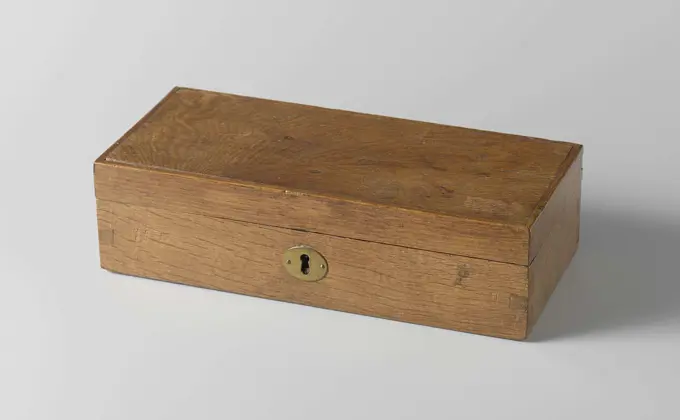
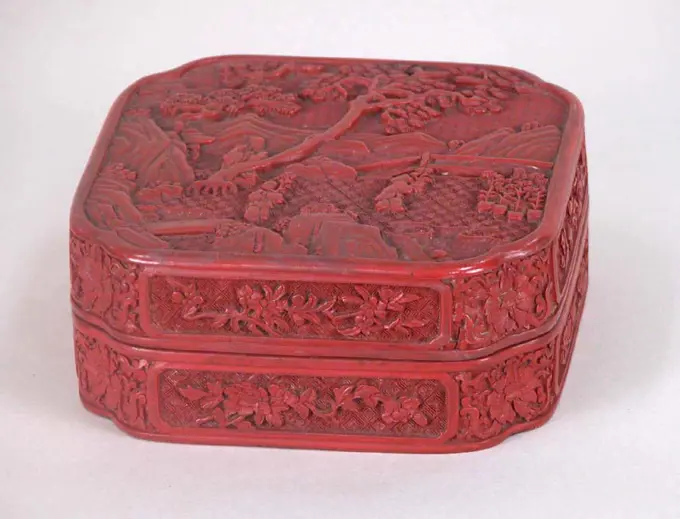
Box, 18th century, 3 5/8 × 12 9/16 × 6 1/4 in. (9.21 × 31.91 × 15.88 cm) (closed), Huanghuali hardwood, metal, China, 18th century
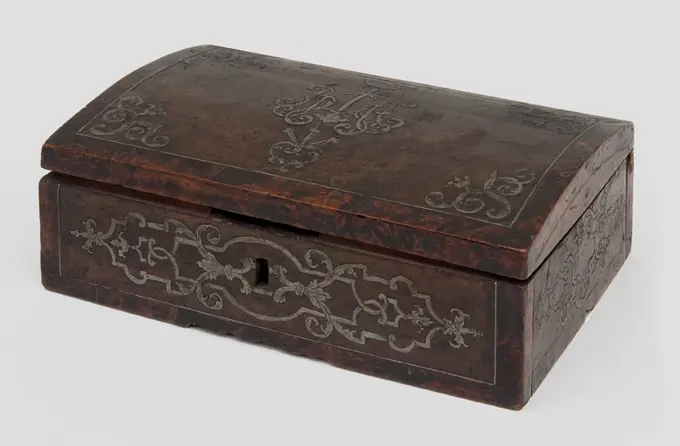
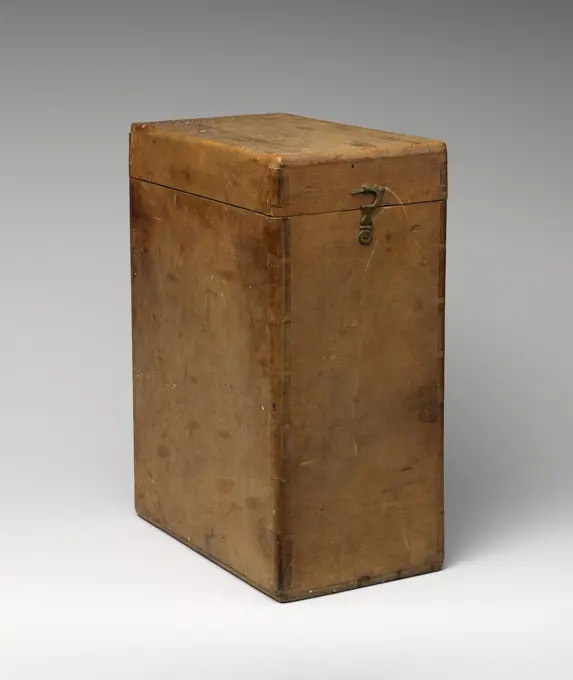
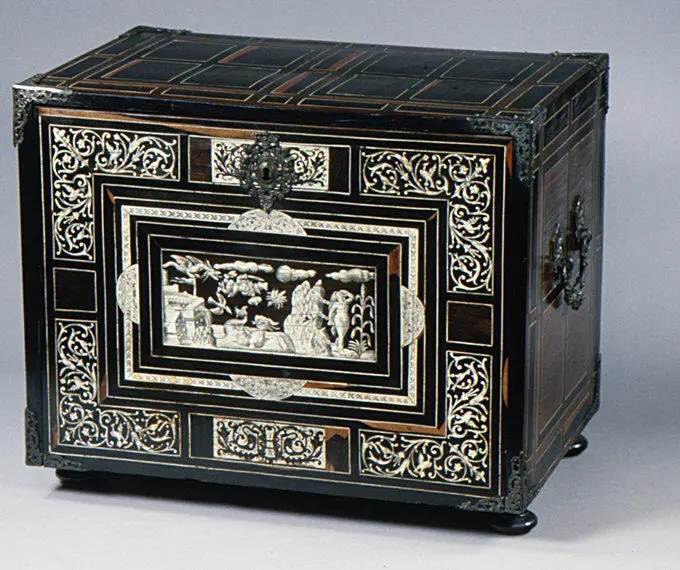
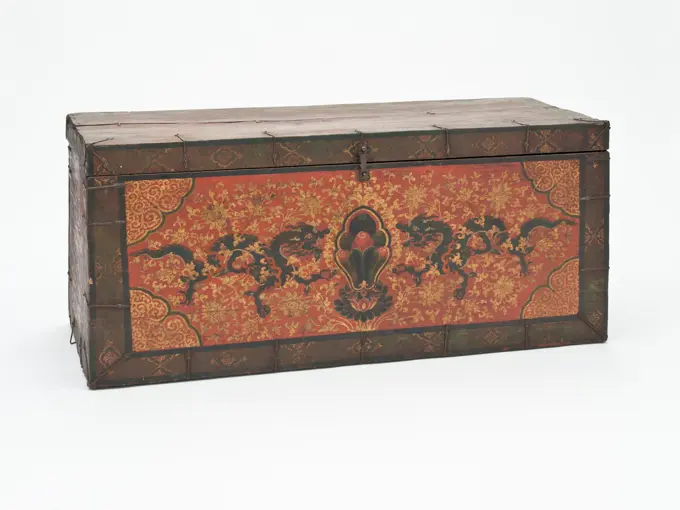
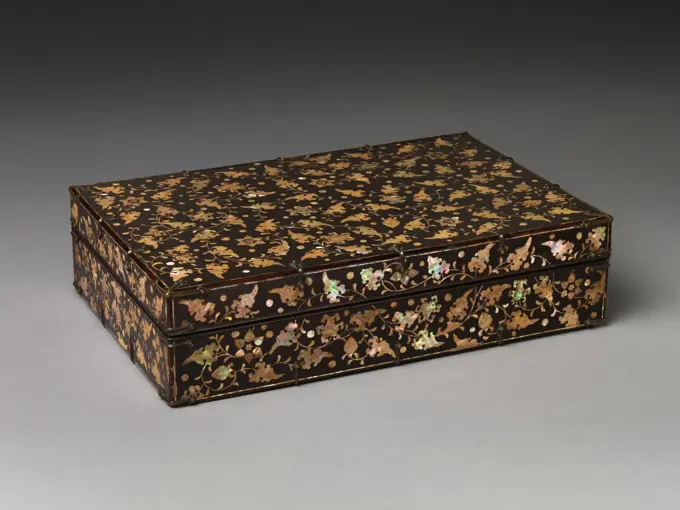
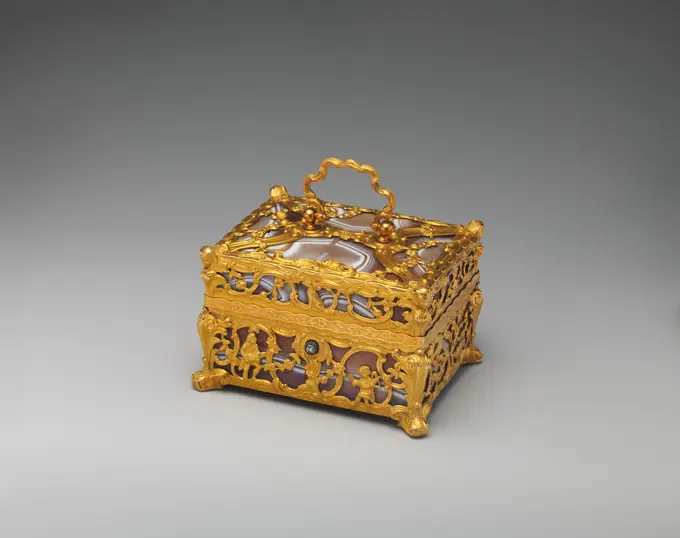
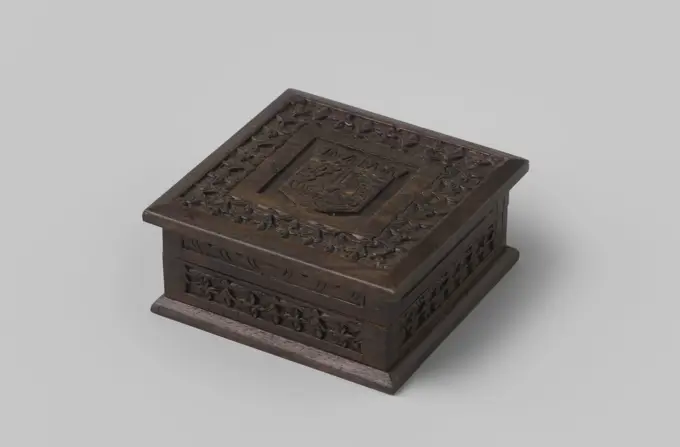
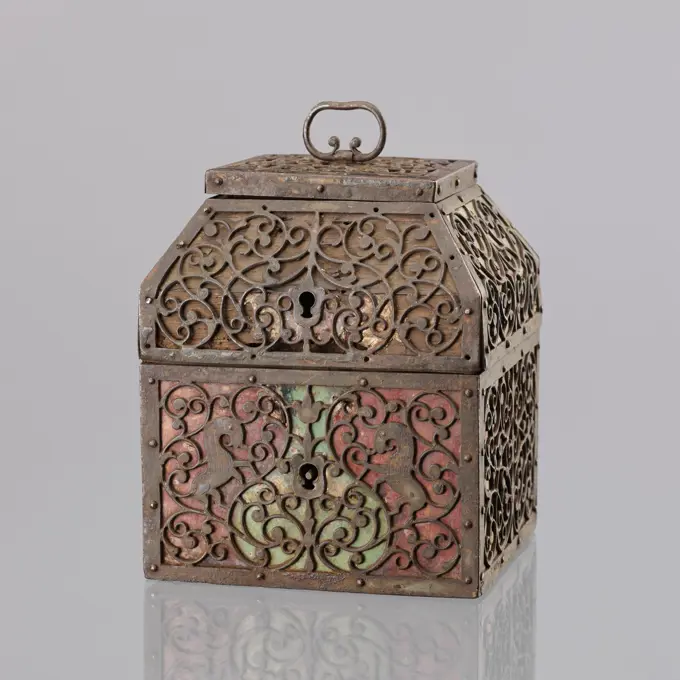
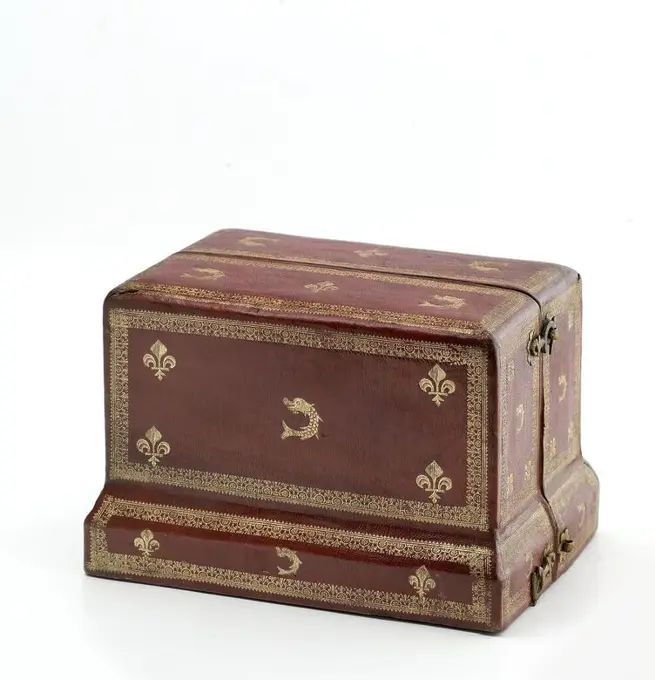
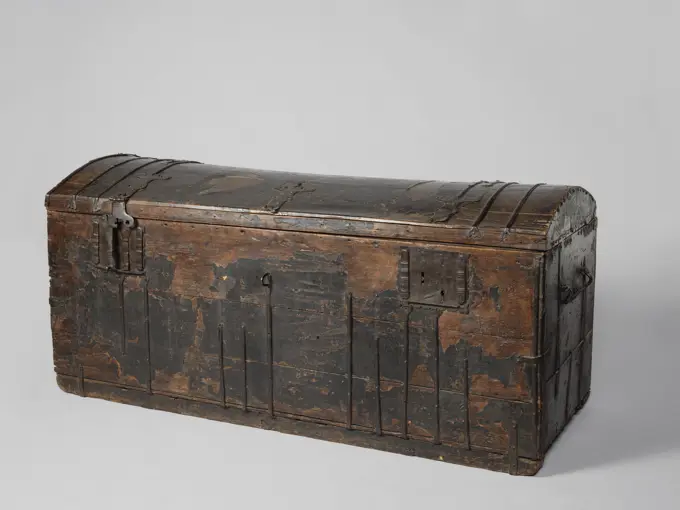
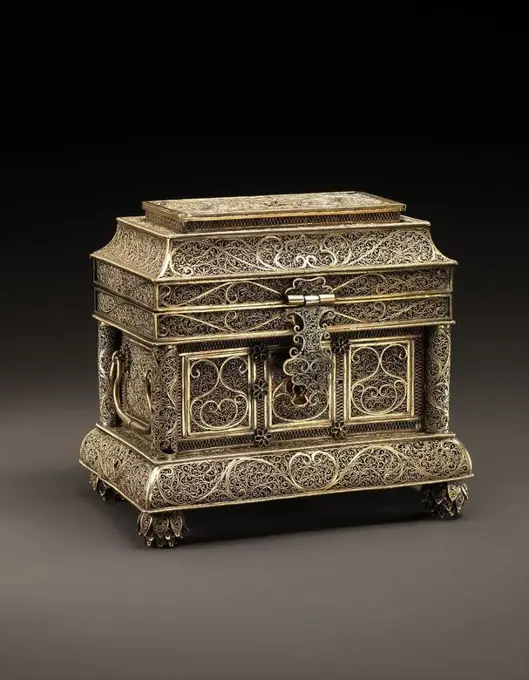
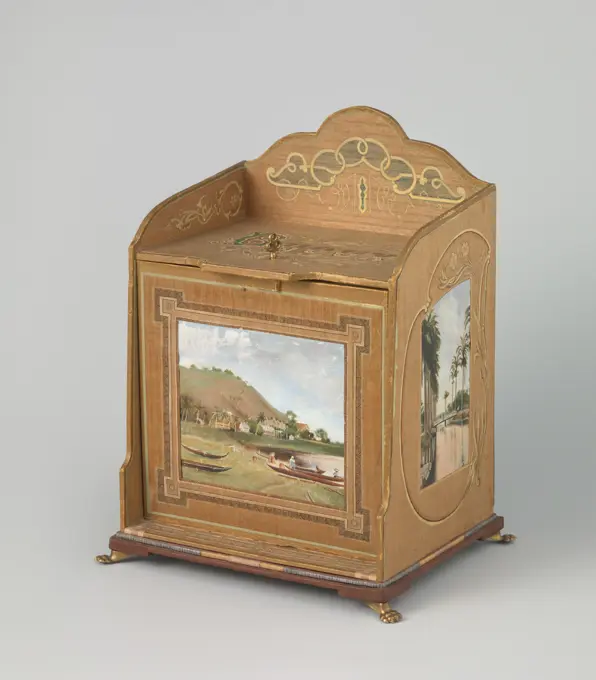
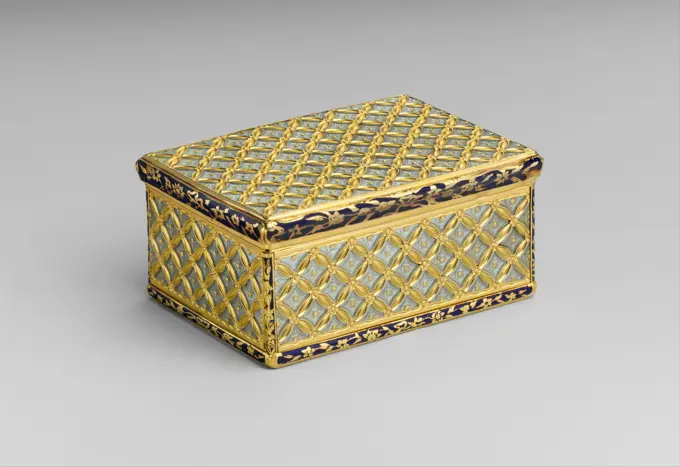
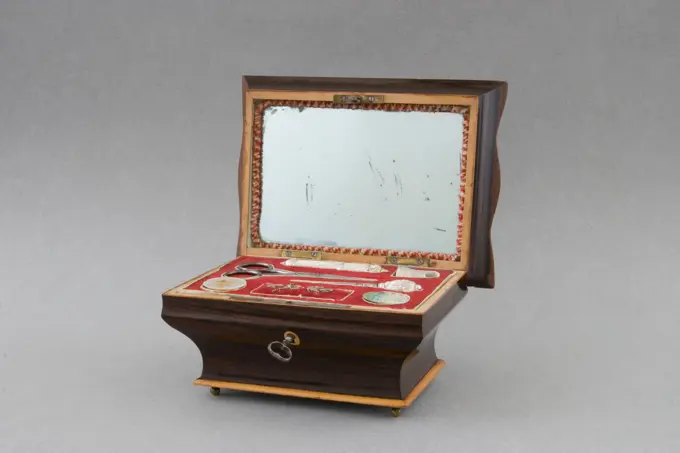
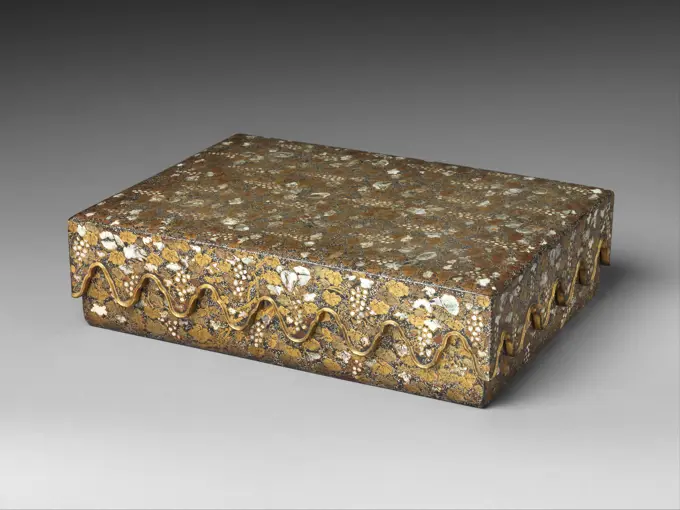
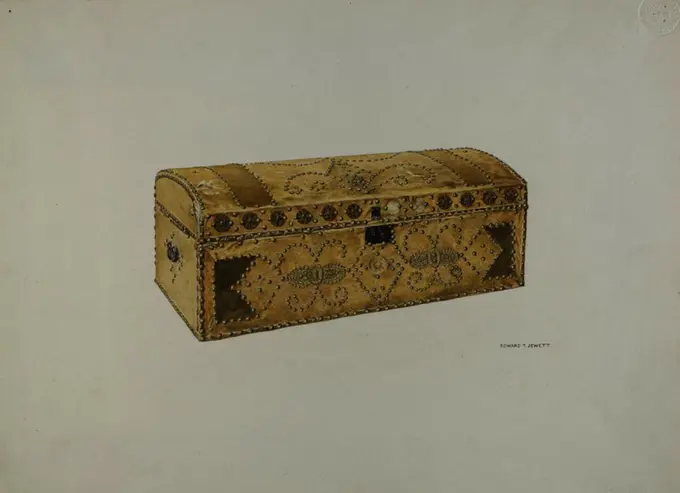
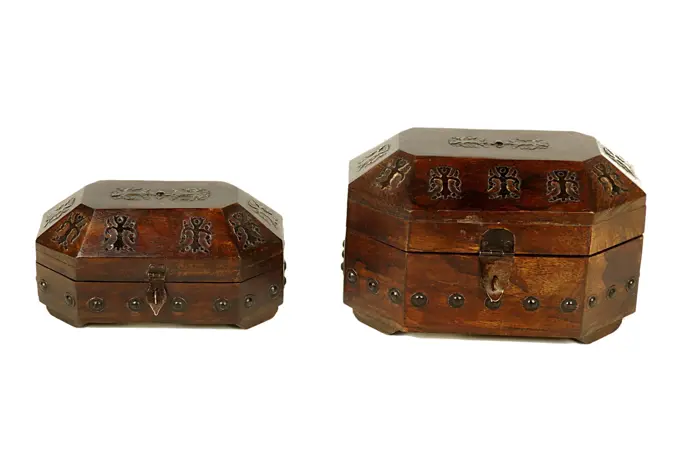
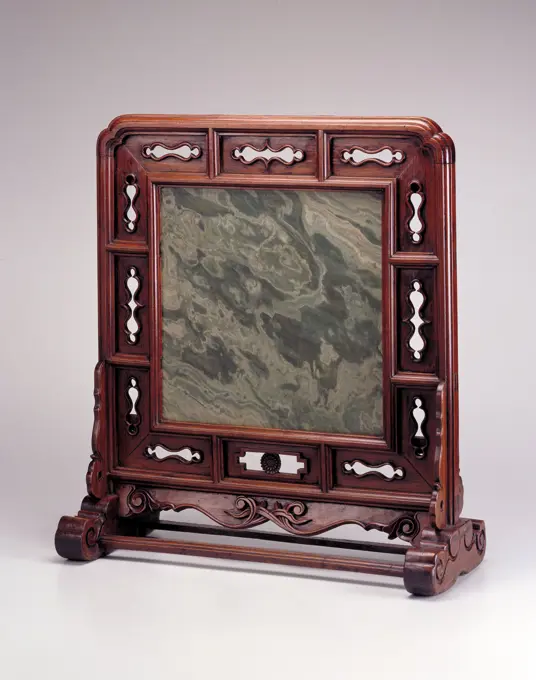
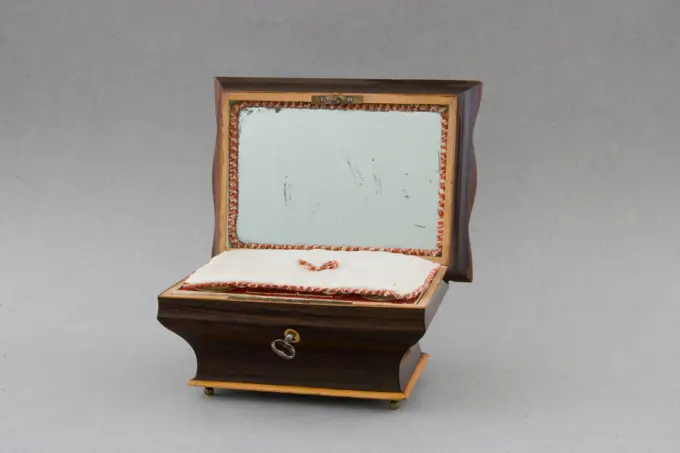
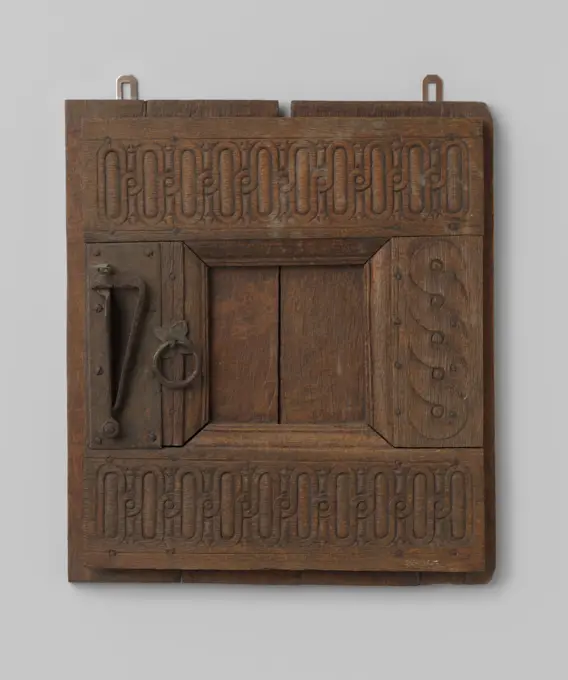
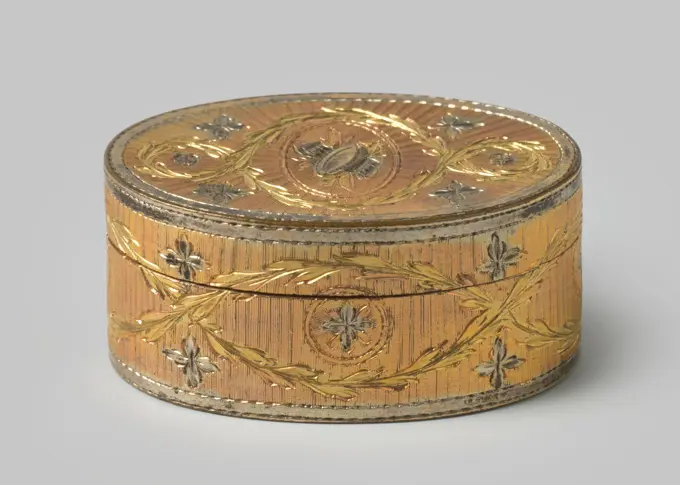
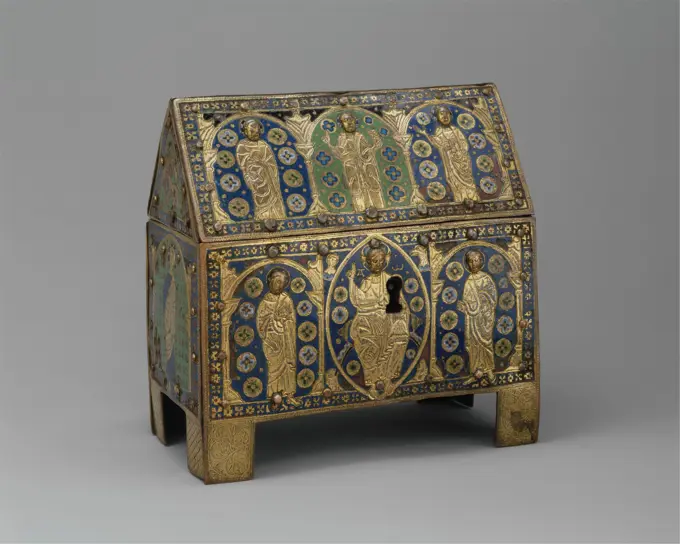
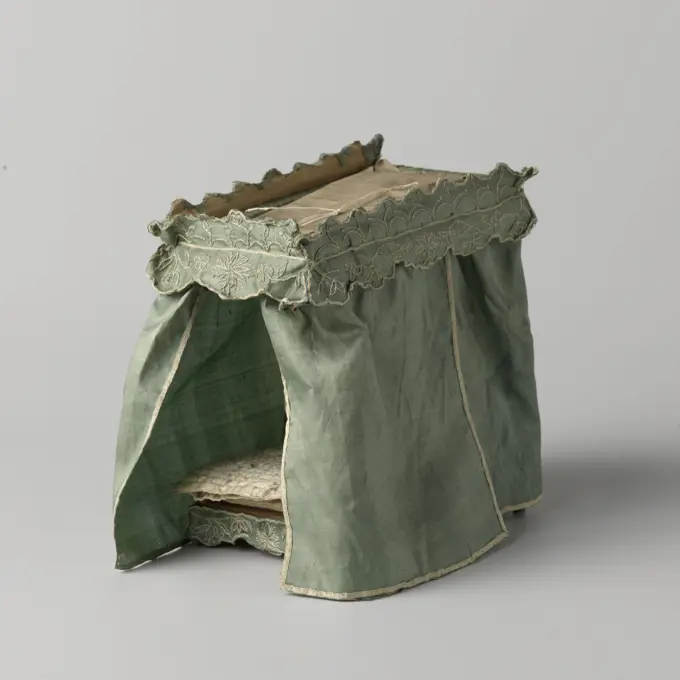
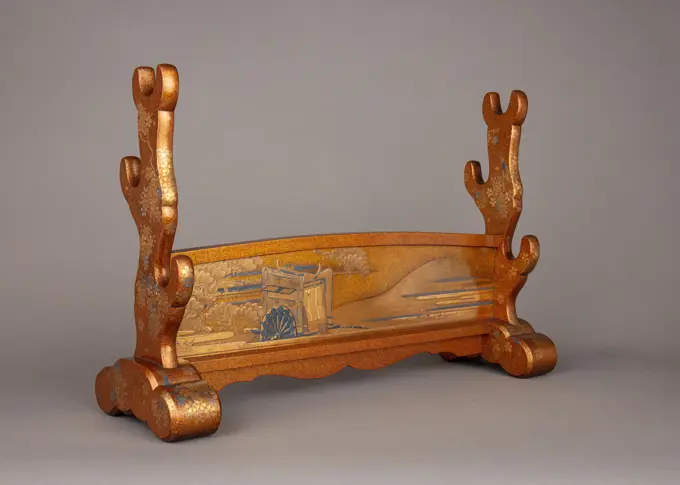
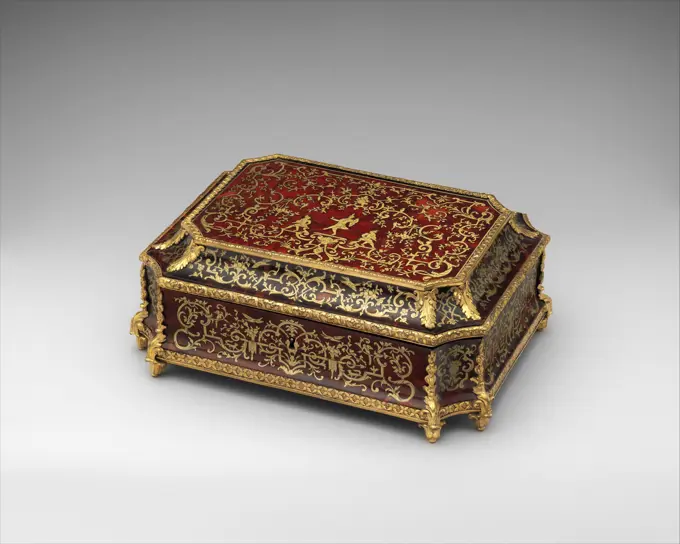
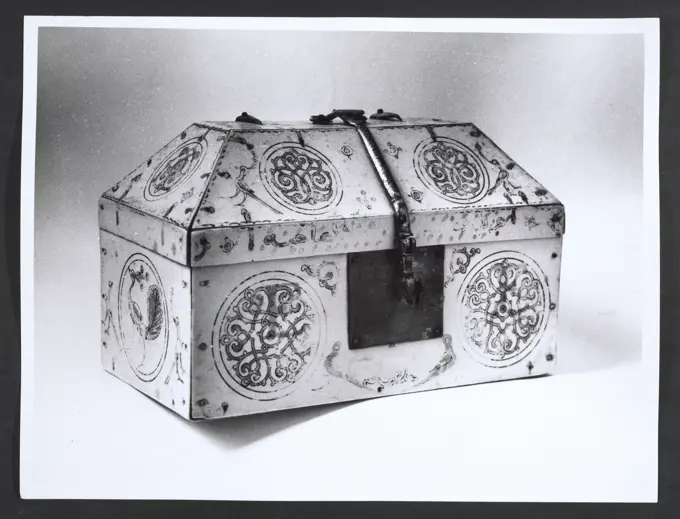
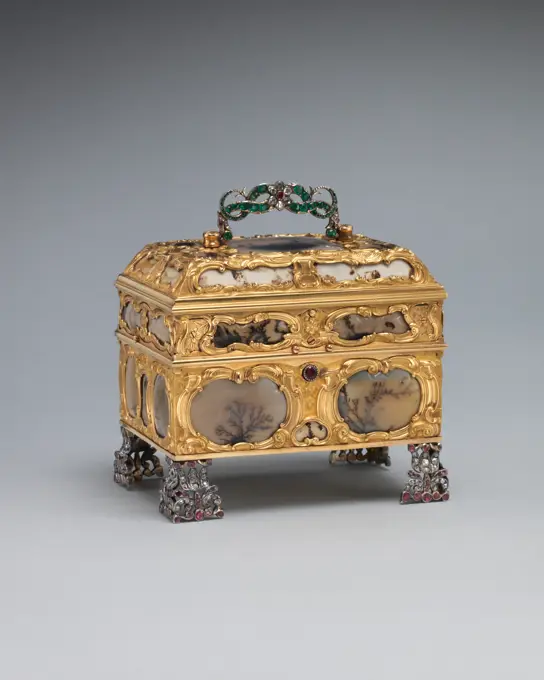
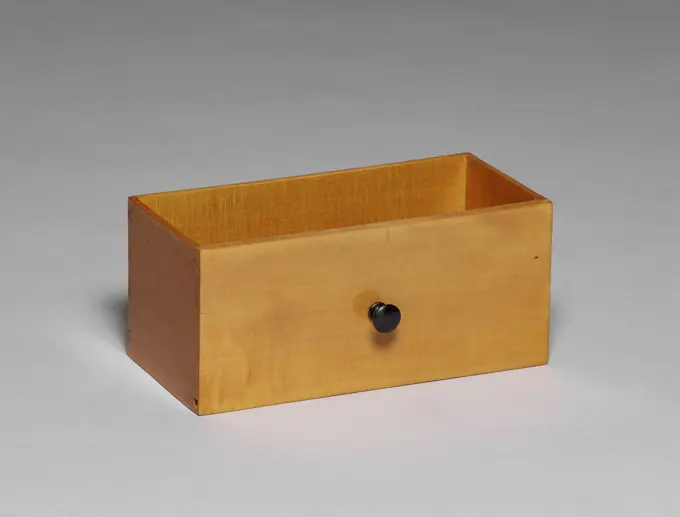
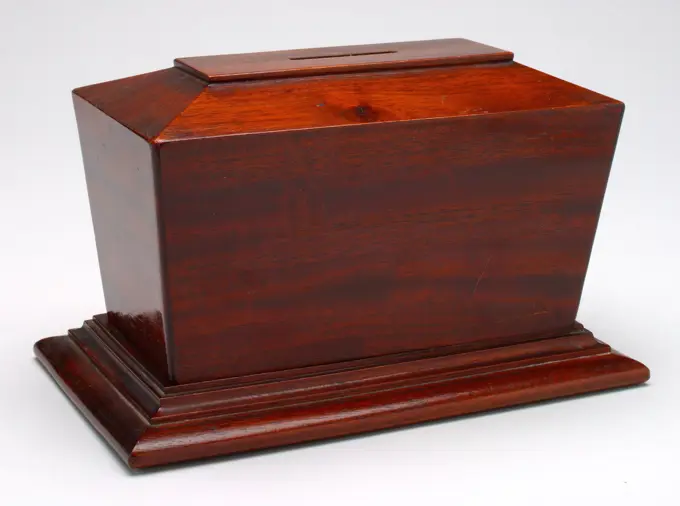
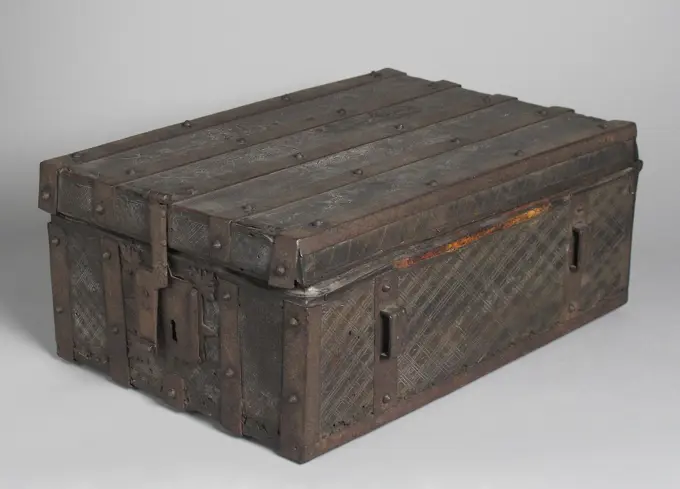
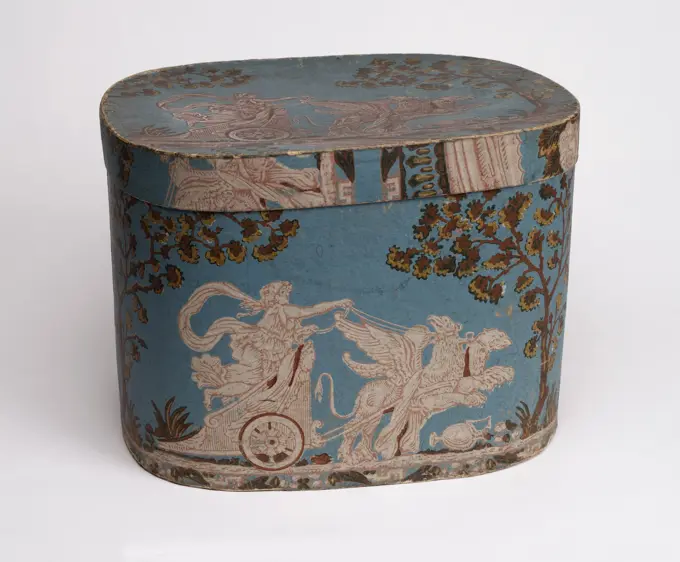
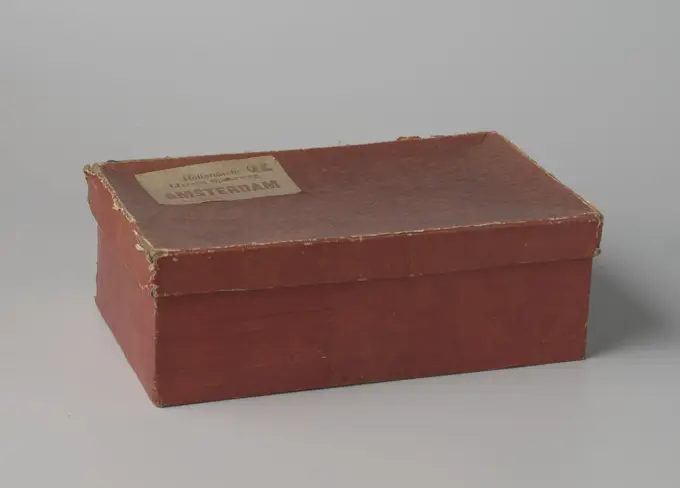
Chest with silver battle with removable compartment, anonymous, c. 1775 - c. 1799 Writing box of satinwood with ciseled, cast, silver batter with rocaillemoteven. The internal is divided into a hollow space, closed at the top by a removable inner box. The latter is subdivided into a large middle section and two narrow small compartments. These three spaces are covered with three incident lids that are also provided with processed silver batter. Indonesia satinwood (wood). silver (metal) Writing box of satinwood with ciseled, cast, silver batter with rocaillemoteven. The internal is divided into a hollow space, closed at the top by a removable inner box. The latter is subdivided into a large middle section and two narrow small compartments. These three spaces are covered with three incident lids that are also provided with processed silver batter. Indonesia satinwood (wood). silver (metal)Coffin coated with label label with gold-plated ornaments. Coffin of oak coated with stamped leather whose ornaments are gilt. The front shows in a hands in windows. On the basic lid this same motif with dishes dolphins also in windows. Horse winged in the swing. On the back and sides a window layout within which stylized sheet motif. At the bottom of the coffin also a rollereling with in it in 1604 and the letters k.v.p. The coffin rests on four copper feet and has a copper lock plate with key and a copper handle on the lid. Inner coffin shows a few remains.Casket. unknown, authorBox, 18th century, 3 5/8 × 12 9/16 × 6 1/4 in. (9.21 × 31.91 × 15.88 cm) (closed), Huanghuali hardwood, metal, China, 18th centuryDaguerreotype Plate Box 1840s Unknown In 1920 a wealthy landowner in southeastern France purchased the derelict estate of a distant relative, Joseph-Philibert Girault de Prangey. He found in the attic a collection of wood boxes containing a vast visual trove—hundreds of daguerreotypes by an unknown artist of monumental ambition. One of the most significant discoveries in the history of photography, this treasure remained mostly hidden for eighty years, until 2003, when the owner’s descendants held the first of several sales. Girault worked with unusually large plates, innovating a process to expose more than one image on each plate and then cut them apart. A fastidious archivist, he carefully labeled the resulting photographs and stored them according to size in custom-built boxes. He inventoried his collection several times, as evidenced by inscriptions on the box lids. Girault’s unique and arresting works—more than one thousand survive, many of which are on view in the current exhiCabinet 1600-1625 Italian, Lombardy Enclosing ten small drawers and a central compartment behind its fall front, this collectors cabinet was used to store precious objects and personal documents. Its exterior and interior surfaces are richly decorated. The central scene on the front represents the dramatic rescue of Andromeda. Chained to a rock, King Cepheus daughter was freed by Perseus, who, wearing flying sandals, wielded his sword to slay the sea monster.. Cabinet. Italian, Lombardy. 1600-1625. Pine and walnut veneered with rosewood, ebony, macassar ebony, and ivory; brass mounts. Woodwork-FurnitureBox with chrysanthemums and flowing water, 17th century, Unknown Japanese, 4 13/16 × 12 × 7 5/8 in. (12.22 × 30.48 × 19.37 cm), Black lacquer with gold maki-e; metal fittings, Japan, 17th century, The motif of chrysanthemums floating in water, here executed in gold on a black lacquer ground, appears in a variety of Japanese artistic media, including bronzes, painting, lacquerware, and textiles. Introduced to Japan from China as early as the twelfth century, the motif is associated with longevity.Jewelry shop, anonymous, 1580 - 1600 Bijouteriekist, covered with red velvet and mounted with copper frame. Round curved lid. With copper key.  wood (plant material). textile materials. copper (metal) Bijouteriekist, covered with red velvet and mounted with copper frame. Round curved lid. With copper key.  wood (plant material). textile materials. copper (metal)Casket Made 1580-1620 Augsburg. By the end of the sixteenth century, the arms trade in Nuremberg had reduced considerably. Armorers and etchers adapted by applying their skills to broader markets by producing all-steel pistols and all-steel caskets such as this. The etched figures, birds, and hunting scenes on this casket derive from printed pattern books by Nuremberg artists Virgil Solis and Jost Amman. Caskets like this one were highly popular; made in a variety of sizes and used for safekeeping valuables, they were often given as betrothal gifts to brides.. Steel, iron, brass, and silk textile .Trunk with Flaming Jewel Flanked by Dragons. Tibet, 17th-18th century. Furnishings; Furniture. Wood with cloth, mineral pigments, and gilding; metal fittingsPrzeszo Przyszo unknownStationery box decorated with peony scrolls 15th-16th century Korea A rare example of early Joseon lacquer, this box is inlaid with a sophisticated mother-of-pearl design. Peony blossoms of similar form can be found on inlaid buncheong ware; the stylized acanthus-like leaves are distinctive to this example and to the few other extant boxes of its type, which are nearly identical. Listen to experts illuminate this artwork's story Listen Play or pause #8507. Stationery Box with Decoration of Peony Scrolls Supported by Bloomberg Philanthropies We're sorry, the transcript for this audio track is not available at this time. We are working to make it available as soon as possible.. Stationery box decorated with peony scrolls. Korea. 15th-16th century. Lacquer inlaid with mother-of-pearl. Joseon dynasty (1392-1910). LacquerJewelry box, exaggerated with leather with stamped decorations, anonymous, c. 1599 - c. 1624 Jewelry box, exaggerated with leather with gilded and polychormed stamped decorations: on the front a deer and a pig hunt; A farmer's hunt on the back; on the sides resp. Paris and Venus and Juno and Minerva, in niches. Hinges and slot of gracefully engraved gilded copper. The right side can be opened and then show the front surfaces of two drawers that are still well stored in the colors. Two handles (one false) on the side surfaces. The box is marked at the rear with a column. Note: The polychrome work is very damaged on the outside and completely disappeared here and there.  wood (plant material). leather. gilding (material). oak (wood). copper (metal) gilding Jewelry box, exaggerated with leather with gilded and polychormed stamped decorations: on the front a deer and a pig hunt; A farmer's hunt on the back; on the sides resp. Paris and Venus and Juno and Minerva, in niches. Hinges and slotSecurity Safe Deposit' still bank, c. 1881, Kyser & Rex Company, Philadelphia, c. 1879-1898, 3 1/8 x 2 3/8 x 2 3/8 in. (7.94 x 6.03 x 6.03 cm), Iron, pigment, 19th centuryBernard Gussow, Bible Box, c 1936 Bible BoxBox with Design of a Plum Tree and Pine 18th century Japan. Box with Design of a Plum Tree and Pine 57962Anonymous / 'Snuffbox'. Ca. 1760. Metal, Silver. Museum: Museo del Prado, Madrid, España.Jewel casket mid-18th century British Elegant nécessaires de poche filled with minute utensils for grooming, writing, or sewing were fashionable during the eighteenth century. Made of gold with hard stones, mother-of-pearl, or tortoiseshell, they were the work of a goldsmith and often served as New Years presents. Here, an openwork pattern of scrolls, floral garlands, small animals, birds, and dancing musicians in gold is placed on panels of striated agate. The original contents of the nécessaire are missing. Listen to experts illuminate this artwork's story Listen Play or pause #413. Retail Value. High and Low Supported by Bloomberg Philanthropies We're sorry, the transcript for this audio track is not available at this time. We are working to make it available as soon as possible.. Jewel casket 199769Wooden box belonging to an honorary of the Jakarta region, Anonymous, 1975 box Wooden square box belonging to an honorary medal. Jaya Raya is stated in the midst of cut lilies on the box. Inside of the lid and the box consists of red velvet with a recess for the medal. Indonesia wood (plant material) cutting  JakartaBox; wood, paperWriting Box with Lattice and Flower Design. Dimensions: H. 5 3/8 in. (13.6 cm) W. 16 3/8 in. (41.5 cm)Depth 12 5/8 in. (32 cm). Date: mid-17th century.The gilded copper sheets and silver plaques covering the exterior of this box are fashioned in a classic "lattice and flower" variant of the flower style. Because of the technique of fastening the metal over the wood, the box has been attributed to Burhanpur, a city in the northern Deccan, where similar work is found in architecture. Museum: Metropolitan Museum of Art, New York, USA.Box with Design of Pine, Bamboo, and Cherry Blossom. Culture: Japan. Dimensions: Overall: 17 3/8in. (44.1cm)Storage Box (foamcore box): 5 1/2 x 15 3/4 x 20 in. (14 x 40 x 50.8 cm). Date: 19th century.This covered box, part of a wedding trousseau, comprised of thirty-one pieces, represents late Edo-period maki-e (decoration in gold and/or silver sprinkled powder) art at its finest. The Shimazu family, lords of Satsuma in Kyushu, ordered this traditional trousseau most likely for Taka-hime, who was married to Matsudaira Sadakazu, lord of Kuwana (Ise Province), around 1830.The items of the wedding set are decorated with various auspicious motifs. The evergreen pine represents longevity and also symbolizes renewal. The fast-growing, springy, but at the same time very strong and enduring bamboo also stands for longevity and represents endurance and strength. The plum blossoms are the first flowers of spring, representing the renewal of nature. The combination of the "Three Friends of WinM Rosenshield von Paulin, Dough Trough, c 1940 Dough TroughBid chair of nuthout, anonymous, c. 1499 - c. 1599 Bid chair of walnut in the form of a Credinzino, decorated with stabbed flower vessels, rosettes and leaf consoles. Italy wood (plant material). spruce (wood). walnut (hardwood) Bid chair of walnut in the form of a Credinzino, decorated with stabbed flower vessels, rosettes and leaf consoles. Italy wood (plant material). spruce (wood). walnut (hardwood)Fines Box' still bank, c. 1904, 6 1/2 x 4 1/2 x 4 in. (16.51 x 11.43 x 10.16 cm), Wood, metal, United States, 19th centurymatchsafe, wood, 19th century, containers, Decorative Arts, matchsafeJewelry box 1627 P. Ben Typologically, this miniature casket derives from the boxes produced in the Nuremberg workshop of brothers Michael and Conrad Mann. Where most caskets of this type are fashioned in brass or bronze, however, this example was constructed primarily from silver. The etching and engraving is also of superior quality as that found on most boxes of this type. The shape is more complex: where traditionally these boxes are topped with a small handle, this casket is surmounted by a small coffer lid topped by a reclining putto its head resting on a cushion. Its decorative program combines identifiable scenes from Ovids Metamorphoses with love emblems likely drawn from Otto van Veens Amorum Emblemata, This combination of material and artisanal quality, themes relating to love, and intricate design suggests that the box was meant for a wealthy and educated patron and used in a ritual of courtship or marriage.. Jewelry box. German, Nuremberg. 1627. Silver, engraved; brass, Casket;  18th century (1701-00-00-1800-00-00);Box with Crabs and Waves. Culture: Japan. Dimensions: H. 6 3/4 in. (17.1 cm); W .6 in. (15.2 cm); L.12 1/2 in. (31.8 cm). Date: 17th century.The somewhat unusual shape of this box suggests that it might have been used to hold implements for painting, such as ink stones, brushes, and pigments. Variations in texture on the crab shells and in the rendering of the dramatic waves are a result of the different sizes and densities of the sprinkled gold, and of the various methods used to apply the gold powder. This box, with its bold and decorative design, could have been used by a well-to-do individual living in a cultural center such as Edo (present-day Tokyo)or Kyoto. Museum: Metropolitan Museum of Art, New York, USA.Planter; painted tôleTea chest ca. 1750-55 Abraham Roentgen German Beginning in 1742, when he started to work, Abraham Roentgen impressed the small princely courts and the landed gentry around Herrnhaag, as well as the rich patricians in nearby Frankfurt, with his brass-inlaid tea tables, gueridons, chairs, and tea chests in the "English Manner" (see fig. 3, p. 5).1 Furniture of such high quality and so inventive in its design and execution was a novelty, and the demand for such objects increased rapidly.2 One of Abrahams’ first tea chests was made in Herrnhaag for the princely house of Isenburg-Birstein. The appearance of that luxurious object in the prince’s drawing room would have informed his guests that he and his family were familiar with the latest fashions and social pastimes.3The interior of the present example is partitioned to hold a pair of caddies for black and green tea. Between those spaces was a lidded box where sugar (or candies) could be stored or where tea leaves could be mixed. ThBox with Crabs and Waves 17th century Japan The somewhat unusual shape of this box suggests that it might have been used to hold implements for painting, such as ink stones, brushes, and pigments. Variations in texture on the crab shells and in the rendering of the dramatic waves are a result of the different sizes and densities of the sprinkled gold, and of the various methods used to apply the gold powder. This box, with its bold and decorative design, could have been used by a well-to-do individual living in a cultural center such as Edo (present-day Tokyo)or Kyoto.. Box with Crabs and Waves. Japan. 17th century. Lacquered wood with gold hiramaki-e and e-nashiji on black lacquer ground. Edo period (1615-1868). LacquerCasket 18th century British. Casket. British. 18th century. Straw on wood, silk. Natural SubstancesTobacco Box with Scenes Related to the Crucifixion 1700-1799 Amsterdam. Brass and copper .. .Anonymous / 'Case for missing vessel with various figures.'. 1675 - 1711. Leather, Wood, Cloth. Museum: Museo del Prado, Madrid, España.Sundial Compass (China); wood, brass, steel, glass; 2.1 x 7.6 x 6.5 cm (13/16 x 3 x 2 9/16 in. ); 1957-165-12wooden brown casket with nail over black background. Lid of round box of stoneware, painted on the glaze in blue, red, green, purple, brown, black and gold. The lid with a modeled, lobd cartouche with a gentlemen's procession with a caretaker, walking for a pavilion. To the cartouche and on the edge napkin work. Satsuma.Anonymous / 'Case for casket covered with cameos'. 1650 - 1711. Leather, Wood, Metal, Cloth. Museum: Museo del Prado, Madrid, España.Book chest of Hugo de Groot, c. 1600 - c. 1615  Suitcase of Vurenhout, covered with cattle leather with traces of trapped ornament and equipped with forged iron band batter, two integrating boxes of crushes with robbery and a robbery for a padlock in the middle. Handles on the sides. The lid is convex. The suitcase is lined on the inside with linen and crossed with lace tire. According to tradition, this is the coffin, in which Hugo de Groot escaped from Loevestijn on March 22, 1621. Northern Netherlands wood (plant material). spruce (wood). leather. iron (metal) sawing / die cutting / forging  Loevestein lock. GorinchemFiligree Casket with Sliding Top. Dimensions: H. 5. 1/8 in. (13 cm)W. 5 1/8 in. (13 cm)D. 3 9/16 in. (9 cm). Date: 17th century.While filigree was an established tradition in the Deccan in the middle ages, with the cultural presence of the Portuguese in the 16th century, Deccani craftsmen were exposed to a new wave of objects, which were imported from Europe. Finely drawn wires of gold and silver filigree were shaped into a variety of scrolling forms, including the buta, or flame motif, which even is present on the ornamented interior of this object. The lid of this box contains a secret compartment which slides open to hide a prized object, possibly the key. Museum: Metropolitan Museum of Art, New York, USA.Powder Chest, anonymous, 1835 chest Rectangular wooden powder box, inside with copper covered and reinforced outside with copper batter and with bronze rings, hinges and screw closures. It has a double lid, consisting of a square wooden outdoor cover with hinges and a round wooden inner lid covered with brass, on which four anchors engraved and with a ring in the middle. Russia wood (plant material). copper (metal). brass (alloy). tin (metal). felt (textile)Portfolio, Leather, paper, gold, silk, brass, A leather portfolio with a red, gold and green zigzag interior. The portfolio has a brass closure., France, 18th century, containers, Decorative Arts, PortfolioWooden jewelry box with representations relating to the Gonini expedition; Bijoux. Wooden jewelry box covered with paper with wood grain imitation and partly painted in Jugendstil style. The inscription <Bijoux> is painted on the lid. The box has three drawers, on the inside covered with velvet, to store jewelry (Bijoux). The front of the box can be folded down and is covered with a piece of side on the inside on which the letter C and some flowers and twigs are embroidered. In the folded state, the jewelry can be placed on this before they are stored or done. The box is covered on three sides with watercolors that depict landscapes in Suriname. The watercolors have a jugendstil style frame. The back of the box is a small book attached that can be opened with two brackets. The booklet consists of six pages with watercolors and (reproductions of) photos. Both the drawings and photos in the booklet in the back, as the watercolors on the outside of the box, refer to the Gonini expedition Cabinet. unknown, contractorBox 1739-40 Jean Ducrollay. Box 198049According to an accompanying certificate, this chest originally contained remains of Van Speijk’. Like the adjacent snuffbox, it is reputedly made of fragments of wood from the gunboat, while the rings and the nutcracker are of iron recovered from the vessel. Many objects of this kind were awarded as prizes in a national lottery whose proceeds financed the construction of the Van Speijk lighthouse at Egmond aan Zee.Box with genre scenes, 19th-20th century, Unknown Japanese, 2 1/2 × 7 1/2 × 2 9/16 in. (6.35 × 19.05 × 6.51 cm), Satsuma ware; porcelain with overglaze enamels and gold, Japan, 19th-20th centuryCasket for sewing accessoriesStationery Box with Decoration of Grapes and Squirrels 17th century Japan (Ryūkyū Islands). Stationery Box with Decoration of Grapes and Squirrels 40529. Coffin painted poplar wood. The coffin rests on the sides, which are painted with heraldic figures and carry iron handles. The front is hemisphere and painted in grisille with corinthian columns separated, sitting woman figures, which symbolize Fortitudo, Justitia, Temperantia and Prudentia from left to right. The sump stamp is sloped out, scaling out and on the corners in grisille painted with two in sailing blowing cobblestones, prosperous wind symbolizing.Old chest isolated on the white backgroundTrunk. Dated: c. 1938. Dimensions: overall: 26.6 x 35.7 cm (10 1/2 x 14 1/16 in.) Original IAD Object: 32 3/4" long; 12" high; 15 3/4" wide. Medium: watercolor and graphite on paper. Museum: National Gallery of Art, Washington DC. Author: Edward Jewett.Vessel for betel. unknown, craftsmanBox late 15th century Italian. Box 463642Metal design fitting on antique wooden box, Jodhpur, Rajasthan, India Copyright: xSafatxAli/DinodiaxPhotoxTable Screen, 17th century, 25 1/2 x 22 3/4 x 10 1/4 in. (64.77 x 57.79 x 26.04 cm), Huang-hua-li hardwood and green marble, China, 17th centuryCasket for sewing accessoriesLiège, decorated with flat cut Guilloches, Anonymous, c. 1575 - c. 1600 Oak hatch on the inside decorated with flat cut Guilloches. Northern Netherlands wood (plant material). oak (wood). iron (metal) Oak hatch on the inside decorated with flat cut Guilloches. Northern Netherlands wood (plant material). oak (wood). iron (metal)Oval snuff box in three colors of gold with engraved decoration in Louis XVI style, Anonymous, 1750 - 1800 box Oval snuff box with double lid in three colors of gold with engraved decoration in Louis XVI style. France (possibly) gold (metal)Domino game with allegorical figures, anonymous, 1600 - 1625 chest 28 dominoes, with the image of a figure on each stone. The four temperaments, male, female figures, fools and other allegorical figures are depicted. A sorting of the stones in numeric order does not provide the order of the aforementioned groups of figures. The stones are in a wooden box with stinging cover. The box is on four round legs buttons. The inside of the box is covered with marble paper. Netherlands Flanders Domineses and legs of Kist: Bone (Material). Kist: Mahogany (Wood) cuttingChasse with Christ in Majesty and Apostles ca. 1190-1200 French. Chasse with Christ in Majesty and Apostles 464482Raymond McGough, Bible Box, c 1940 Bible BoxBox with Design of Benkei and a Bell 1862 Shibata Zeshin Japanese Musashibō Benkei (d. 1189), a historical figure known for phenomenal strength, can be identified here by the temple bell in his right hand and the Japanese halberdone of the seven weapons with which he is associatedin his left. In his youth as a monk soldier at Enryakuji Temple on Mount Hiei, Benkei took the gigantic temple bell from Onjōji Temple, also known as Miidera, at the foot of Mount Hiei, dragging it with one arm up to the mountaintop compound. On the side of this box, Onjōji Temple appears in the foreground and Mount Hiei in the distance. Zeshin's pupil Ikeda Taishin (1825-1903) decorated the inside of the lid with a rosary design and a priest's Buddhist fringe used for preaching.. Box with Design of Benkei and a Bell 58349Tabakierka. Rectangular golden snuff box, with mother-of-pearl, email and diamonds. All sides covered with plates of mother-of-pearl with a white enameled oval in the middle with birds. Decorated with volutes occupied with diamonds.Cushion, white. Pillow with a cover of fine white linen or cotton with an unclear hard filling.Box, early 1800s. Switzerland, early 19th century. Gold and enamel; overall: 1.8 x 10.5 x 7.4 cm (11/16 x 4 1/8 x 2 15/16 in.).Kast, anonymous, c. 1670 Chest of wood for storing money and papers. Taken to Holland by the Teixeira family. Painted green with gold ornamented on a pedestal made in Hamburg in the 17th century. PortugalHamburg wood (plant material). gilding (material) gilding Chest of wood for storing money and papers. Taken to Holland by the Teixeira family. Painted green with gold ornamented on a pedestal made in Hamburg in the 17th century. PortugalHamburg wood (plant material). gilding (material) gildingFolding Table with Dragons and Auspicious Symbolscolorful wooden jewel box ethnic styleCover with brown linen covered. A haze case with brown linen lined. A large cube with copper locks and hinges. A leather handle on the lid. Interior with yellow paper. Storage space for six (or four) Hats. Inscription: M. L.Mattress, red-white striped, capitated with pink buttons, anonymous, c. 1750 Mattress made of red-white striped silk, filled with down fluff. The mattress has been capitoned with buttons of pink silk. The side cover consists of three jobs of equal width. Amsterdam (possibly) silk. down (feathers material) Mattress made of red-white striped silk, filled with down fluff. The mattress has been capitoned with buttons of pink silk. The side cover consists of three jobs of equal width. Amsterdam (possibly) silk. down (feathers material)Nutcracker, 1600-1800. Pinto Collection - Purchased from Edward H Pinto, 1965.. This English, carved boxwood nutcracker probably dates from the late 17th century or beginning of the 18th century. Screw thread nutcrackers were a novelty at that time, and as the process of cutting the screw thread was a difficult and precise operation, such novelties were no doubt regarded as luxury items. Nutcrackers came in a variety of shapes and sizes. They were used for cracking wild hazelnuts and walnuts which were much smaller than the cultivated varieties we usually eat today.Trunk with PhoenixCrystal staircase. Chimney screen. Rosewood, gilded bronze and lacquer. Around 1885. Museum of Fine Arts of the City of Paris, Petit Palais.Flower stand ca. 1750-70 British, Staffordshire. Flower stand. British, Staffordshire. ca. 1750-70. Salt-glazed stoneware. Ceramics-PotterySword Stand (Katana Kake) 18th century Japanese A katana is a sword with a curved blade longer than 60 cm fitted with an uchigatana-style mounting and worn in a waist sash with the cutting edge facing up.. Sword Stand (Katana Kake). Japanese. 18th century. Wood, lacquer. Swords-AccessoriesToilet casket 1700-1715 French Known in French as a carré de toilette, this casket has canted corners and is richly decorated with boulle marquetry of tortoiseshell and brass (première partie). Named for André-Charles Boulle (1642-1732), cabinetmaker to Louis XIV, who excelled in this technique, the marquetry features strap- and scrollwork interspersed with animals, birds, and a few human figures reminiscent of designs by Jean Bérain (1640-1711). Similar caskets are depicted in Jean-Marc Nattiers portrait Madame Marsollier and Her Daughter (1749).. Toilet casket 238447Lazio Frosinone Veroli S. Andrea Apostolo, Cathedral9. Hutzel, Max 1960-1990 Views of metalwork objects housed in Treasury of S. Andrea Apostolo, including busts, reliquaries, crosses, polittico, boxes. Antiquities: relief sculpture; busts General Notes: Museum, which contains Treasury, is located in the last chapel of the right nave. Thirteen views of (non-metalwork) sculpture from Museum have been assigned numbers at end of Treasury sequence, but there are no negatives corresponding to these prints, nor is there authoritative evidence that these objects are housed in the Cathedral Museum. German-born photographer and scholar Max Hutzel (1911-1988) photographed in Italy from the early 1960s until his death. The result of this project, referred to by Hutzel as Foto Arte Minore, is thorough documentation of art historical development in Italy up to the 18th century, including objects of the Etruscans and the Romans, as well as early Medieval, Romanesque, Gothic, Renaissance and Baroque Small furniture. Terracotta with glaze. Paris, Cernuschi museum.Box with a scholar and chrysanthemums 19th century China Diminutive figures set in a towering landscape became a traditional motif in Chinese art. Here, a scholar-gentleman supervises two attendants carrying chrysanthemums, a plant whose late autumn bloom was thought to symbolize a gentlemans lofty character.. Box with a scholar and chrysanthemums 60922Miniature cabinet British with Japanese decoration 18th-19th century View more. Miniature cabinet. British with Japanese decoration. 18th-19th century. Gold, agate, lacquer. Metalwork-Gold and Platinum. Bank of walnut with interior of poplar wood and decorated with intarsia. In the pedestal a frieze with meander edge in Intarsia. The front is slightly bent bowed and shows a slightly protruding field on the corners and in the middle, between which two smooth panels; All this within profile lists and surrounded by Intarsia edges. The middle part forms the crate lid. The side walls have smooth panels. See also BK-16633 and BK-NM-12354.Storage Chest, 17th-18th century, 12 1/2 x 9 1/4 x 16 1/2 in. (31.75 x 23.5 x 41.91 cm) (closed), Wood with mother-of-pearl, tortoiseshell and ivory veneer with silver inlay, Turkey, Ottoman period (1299-1923), Carved and inlaid woodwork was produced throughout Ottoman history. Fifteenth and sixteenth century examples were made of walnut or ebony inlaid with ivory, but mother-of-pearl was added to the repertoire during the 1550's and tortoiseshell began to be widely used at the end of that century. After 1600, mother-of-pearl and tortoiseshell used in combination became extremely popular in luxury furniture, storage chests, writing boxes, and bookstands. Similar materials and techniques were used in decorating doors, window shutters, and cupboards in secular and religious buildings.Anonymous / 'Case for footed heliotrope cup in the form of a duck'. 1590 - 1620. Leather, Wood, Metal, Terrycloth. Museum: Museo del Prado, Madrid, España.Birdhouse still bank, 20th century, 1 3/8 x 1 7/16 x 1 5/8 in. (3.49 x 3.65 x 4.13 cm), Metal, glass, pigment, United States, 20th centuryChestLetter box with amulets and charms late 18th century Japan. Letter box with amulets and charms 57931Box 1675-1700 American. Box 911Lock, cast and gilt bronze, Keyhole in center of long side. Above the keyhole, on a cushion, a rod with the Hand of Justice, and a rod with the fleur-de-Lis, crossed through a Crown of Thorns. Winged heads of cherubin to right and left of keyhole, terminating in foliage scrolls., France, ca. 1725, metalwork, Decorative Arts, LockAltar desperator. The driven reader has a high rear and a low front with a raised edge, on which an oak, on the beaving side supports a red velvet-covered plate. He rests on four screw-on, molded paws in the form a hairy bird claw that comprises a half sphere, with a hair-decorated, printed, printed, printed with hair. The walls are made up of large-scale, openwork rocaille ornaments and foam heads. Central to the front wall is a slightly broke, through two two standing c-volutes surround shield, with the imposed, poured, volutes compiled letters IHS (the abbreviation of the name Jesus in Greek) under a cross, with three nails below (Arma Christi). Central to the rear wall is a similar, wider shield, in which the H. Catharina is driven by Halvenve. Two fruit garlands depend on the back wall. The corner brackets above the legs are formed in high relief as an angel and an eagle on the front, and a lion and an ox at the rear, the symbols of the four evangelists. Above the lion and the OS Nécessaire ca. 1770-72 Watchmaker: James Cox Containing dark inclusions that resemble moss or ferns, the milky white mineral decorating this sumptuous nécessaire is known as moss agate. It is found in multiple areas around the world, including Central Europe. In addition to various toilet implements, the case contains a watch and an automaton and is an excellent example of the complex and ambitious objects made in the workshop of James Cox. Listen to experts illuminate this artwork's story Listen Play or pause #413. Retail Value. High and Low Supported by Bloomberg Philanthropies We're sorry, the transcript for this audio track is not available at this time. We are working to make it available as soon as possible.. Nécessaire. British, London. ca. 1770-72. Case: moss agate, mounted in gold and set with diamonds, rubies, and emeralds; silver; Dial: white enamel, with frame pavé-set with paste jewels. Metalwork-Gold and PlatinumDrawer for a Globe Work Table (Globustisch), c. 1810-15. Austria, Vienna, early 1800s. Burl walnut veneer, mahogany, ebony, satinwood, gilt wood, painted wood; overall: 6.9 x 15.4 x 8.3 cm (2 11/16 x 6 1/16 x 3 1/4 in.). Work tables resembling globes were the usual form for a lady's sewing or writing table around 1800 in Austria. Combining moving parts, secret compartments, and highly finished decoration, these tables were also a way for the cabinetmaker to show off his skill. The tripod supports and temple-like architectural quality of both the exterior and interior decoration reflect the fashionable taste for neoclassical style, or Biedermeier as it was called in Austria, where Vienna was the center of such elaborate furniture production.Money Box still bank, mid to late 19th century, 3 3/4 x 6 7/16 x 3 3/4 in. (9.53 x 16.35 x 9.53 cm), Wood, metal, United States (probably), 19th-20th centuryEmpty wooden cutting board on gray textured concrete background Empty wooden cutting board on gray textured concrete background. Cutlery, preparation for dinner Copyright: xZoonar.com/TetianaxChernykovax 21909412Coffret 15th-16th century French or Spanish. Coffret. French or Spanish. 15th-16th century. wood, covered with leather, bound with iron. LeatherworkBandbox (USA); block-printed on handmade paper, pasteboard supportRectangular cardboard box, covered with red paper; On the loose lid a label on which Hollandsche // Iron Railway, // Amsterdam, in or after 1839 - in or before 1938 Rectangular cardboard box, covered with red paper. On the inside the box is covered with blue marbled paper. A label is stuck on the loose lid that says Hollandsche // Iron Railway, // Amsterdam. On the side of the box a label with the name 'Six van Winter'. Netherlands Box: Cardboard. upholstery: paper Rectangular cardboard box, covered with red paper. On the inside the box is covered with blue marbled paper. A label is stuck on the loose lid that says Hollandsche // Iron Railway, // Amsterdam. On the side of the box a label with the name 'Six van Winter'. Netherlands Box: Cardboard. upholstery: paper