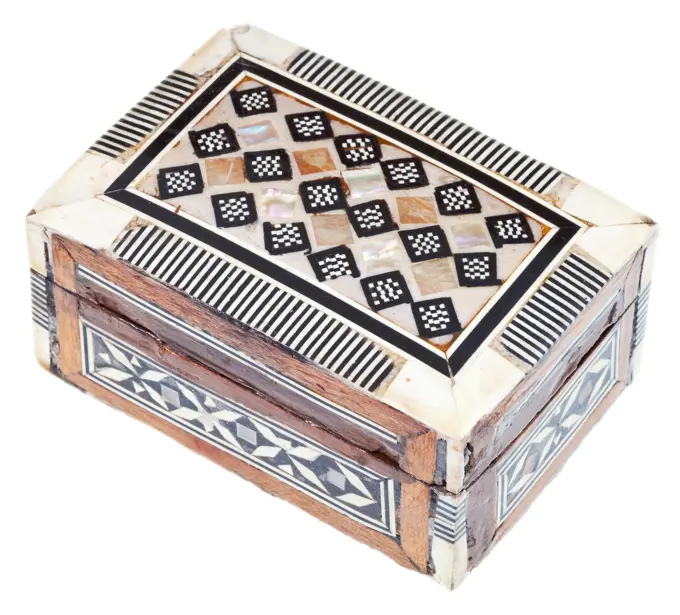
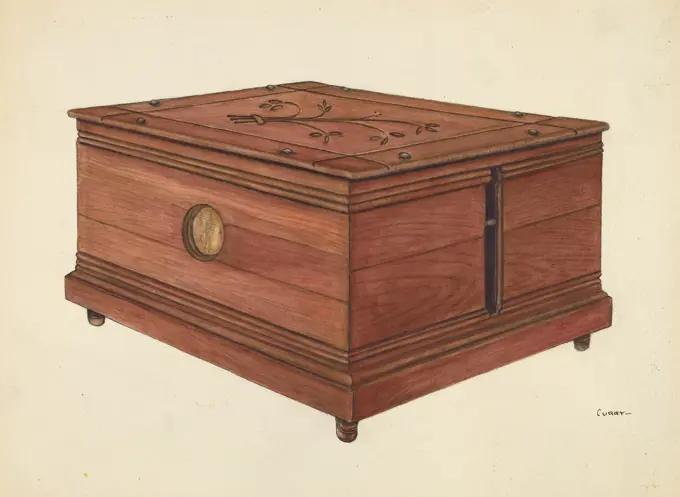
Decorative Boxes and Chests

A collection of ornate boxes and chests, featuring intricate designs, materials like lacquer and leather, and themes of nature, showcasing craftsmanship from various centuries.
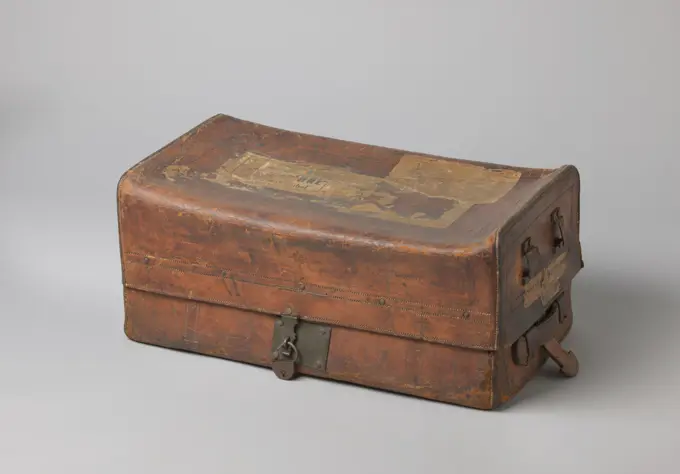
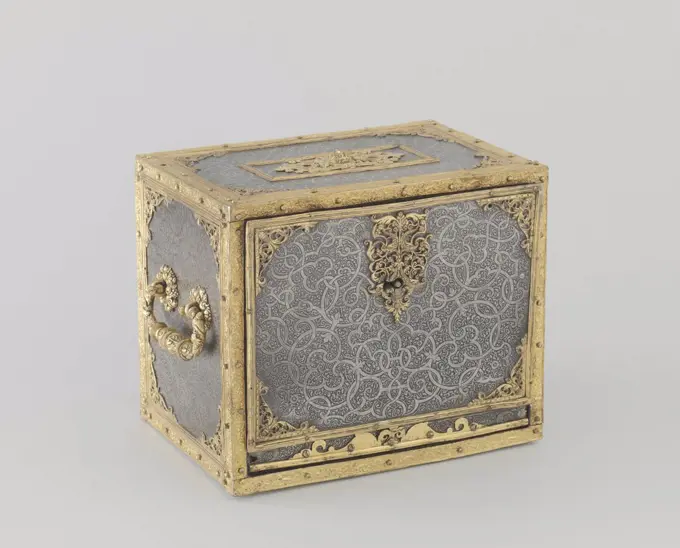
Leather travel suitcase from Johan Rudolf Thorbecke ,, 1810 - 1850  High square leather with wooden frame and fabrics and paper interior. The leather is sober edited. The lid is hinged and lockable with a lock. There are two leather handles on both sides of which the upper has always been worn away. Everywhere, especially on the lid, there are remains of address and shipping stickers. In the middle is somewhere 'minister Thorbecke' in handwriting. Probably used by him on his travels through Germany in the period 1822-1833 and on later travels. Netherlands leather. wood (plant material). textile materials. paper   Germany. Netherlands
Leather travel suitcase from Johan Rudolf Thorbecke ,, 1810 - 1850 High square leather with wooden frame and fabrics and paper interior. The leather is sober edited. The lid is hinged and lockable with a lock. There are two leather handles on both sides of which the upper has always been worn away. Everywhere, especially on the lid, there are remains of address and shipping stickers. In the middle is somewhere 'minister Thorbecke' in handwriting. Probably used by him on his travels through Germany in the period 1822-1833 and on later travels. Netherlands leather. wood (plant material). textile materials. paper Germany. Netherlands
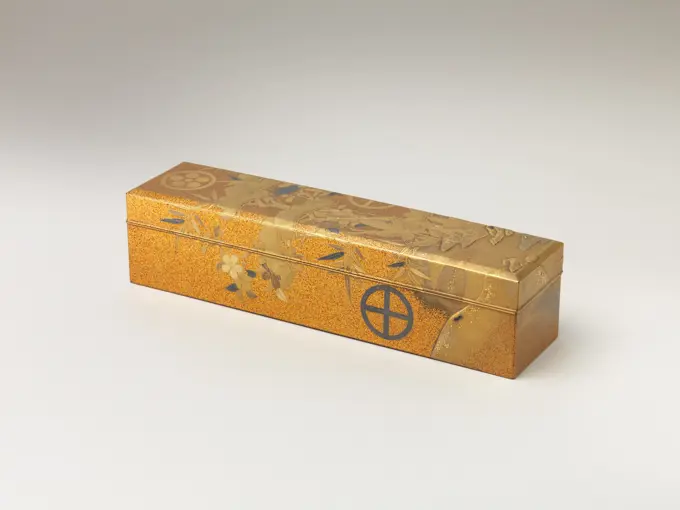
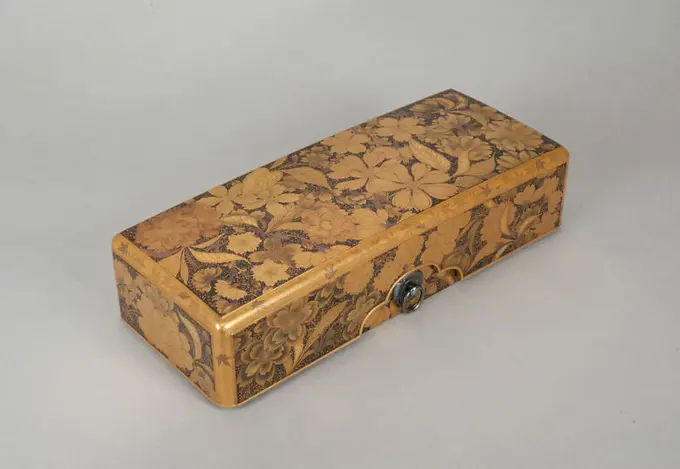
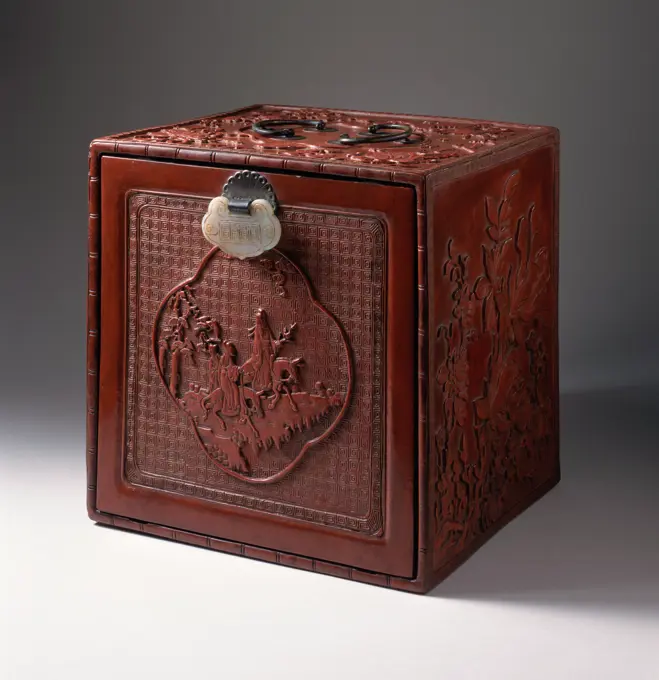
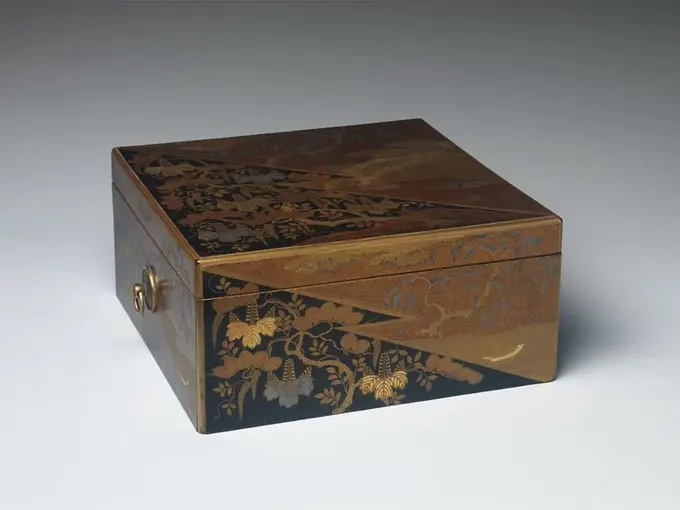
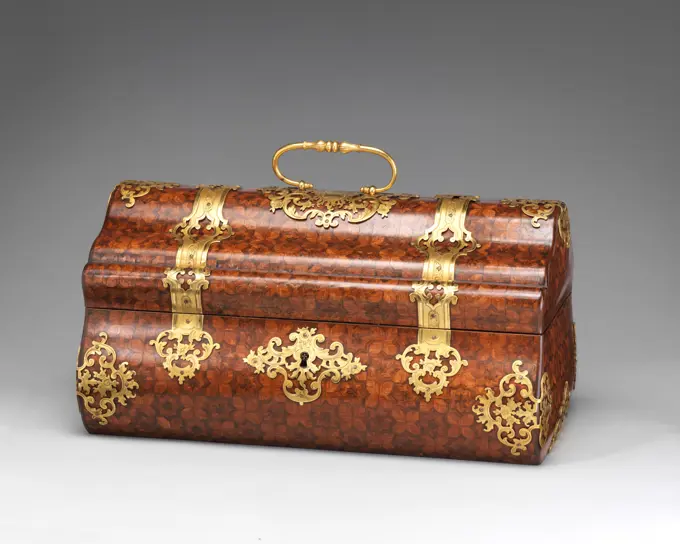
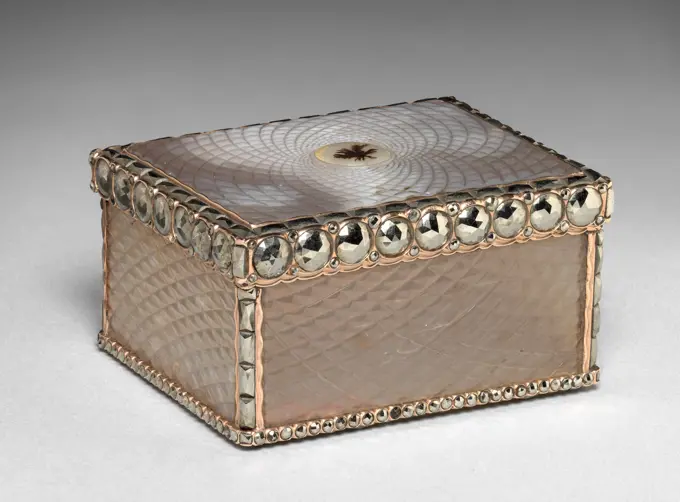
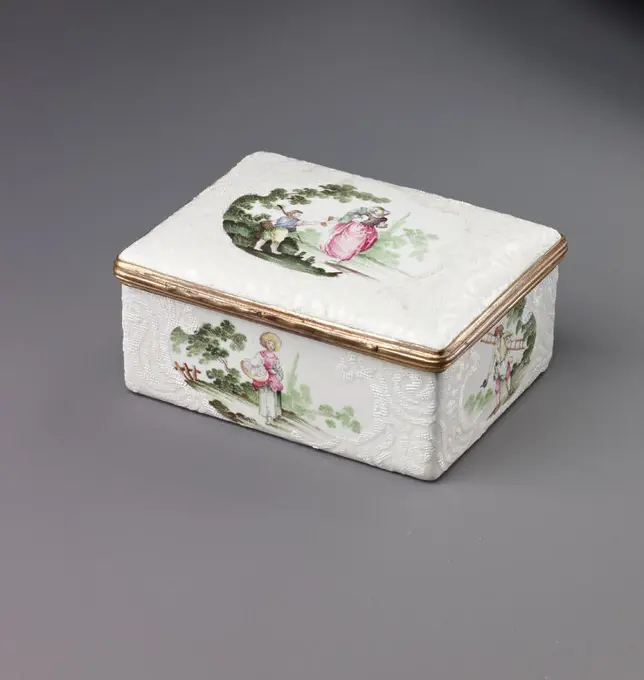
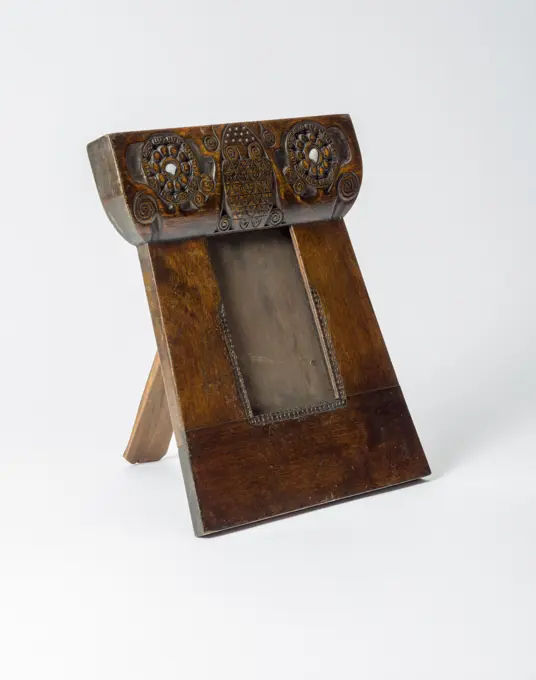
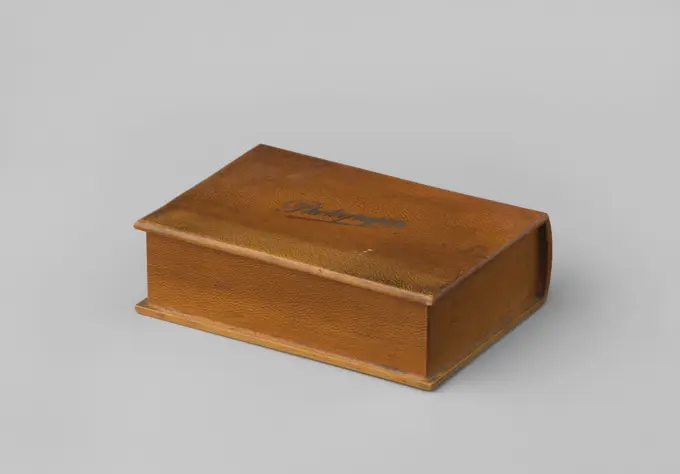
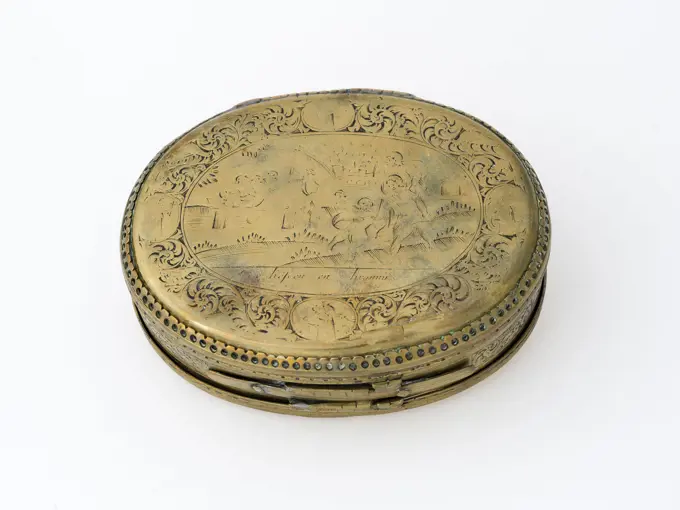
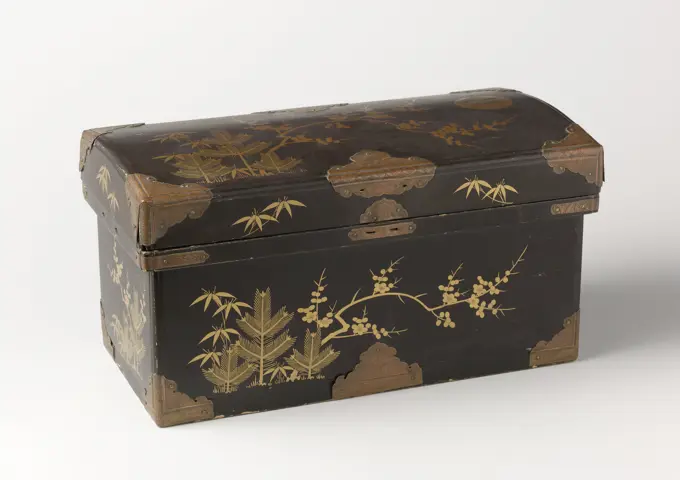
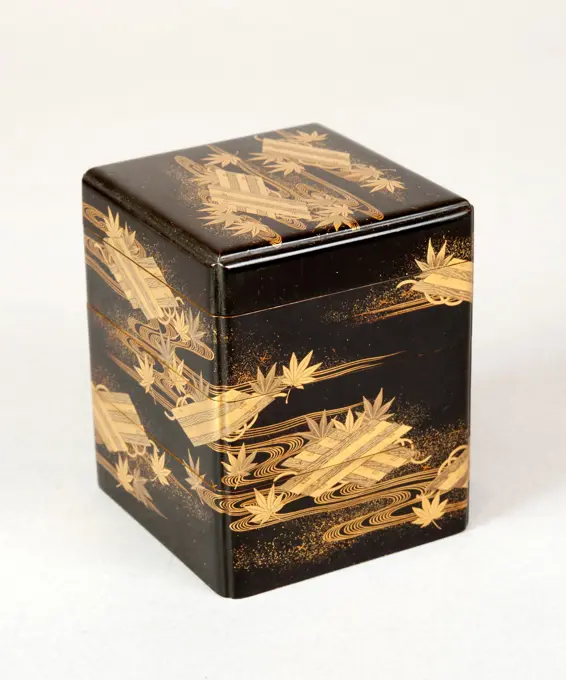
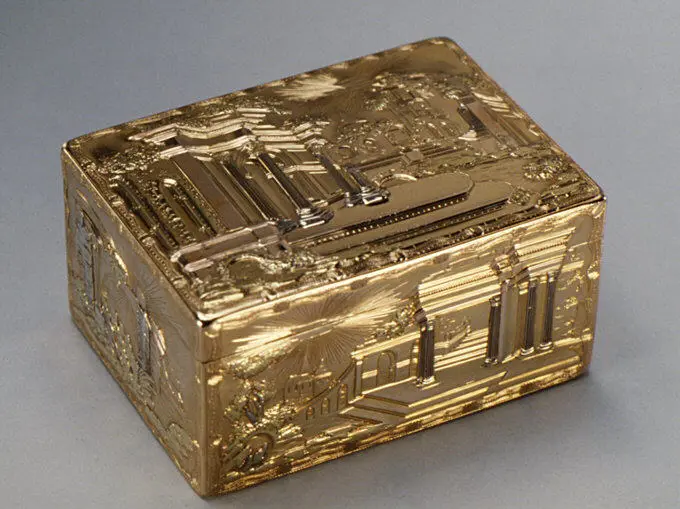
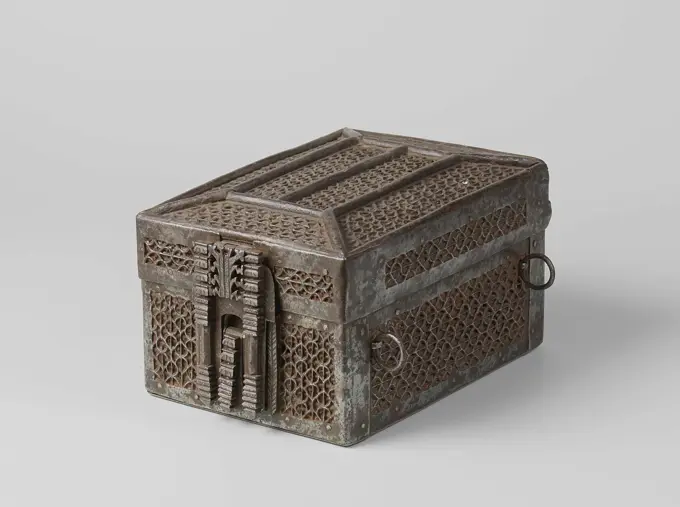
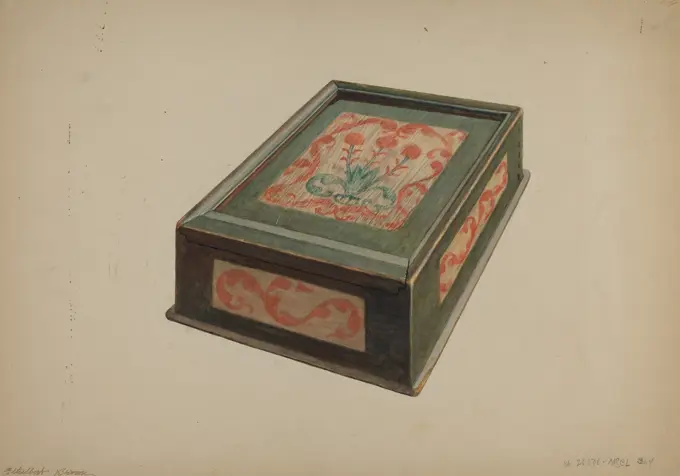
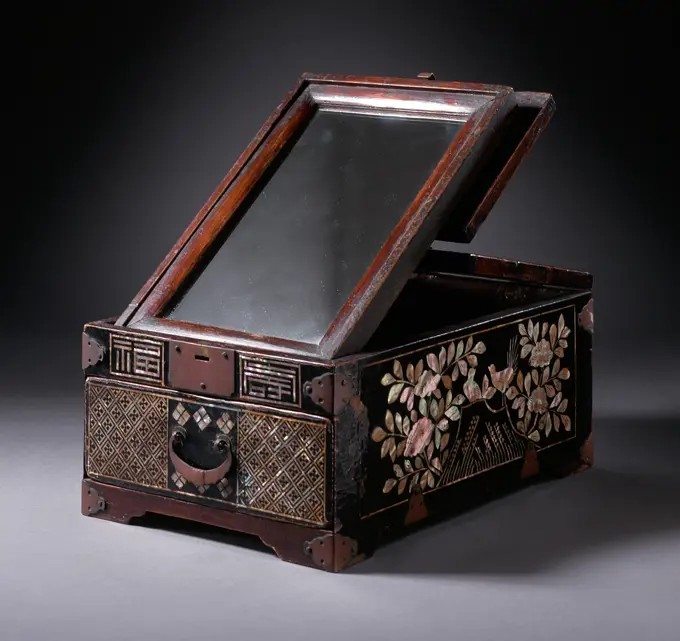
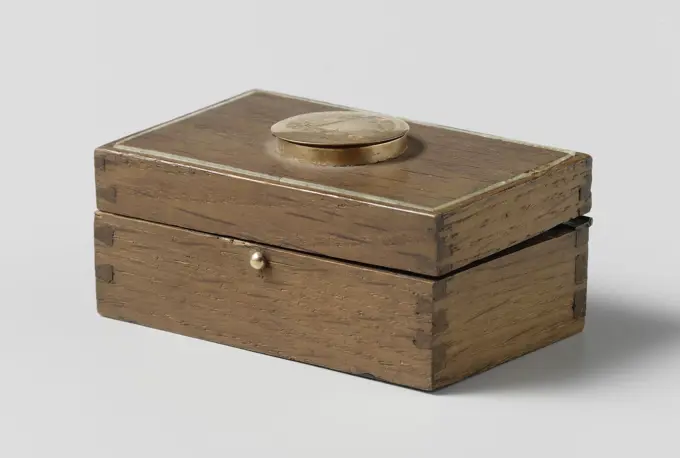
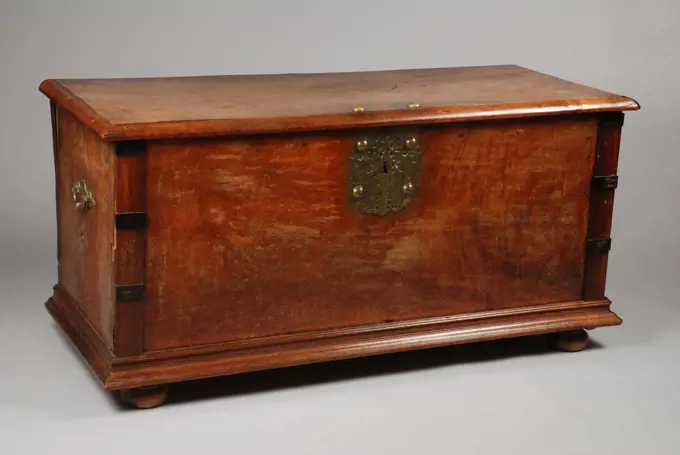
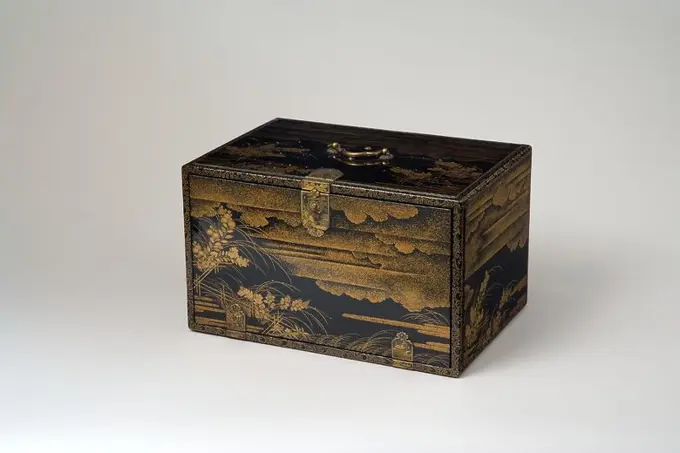
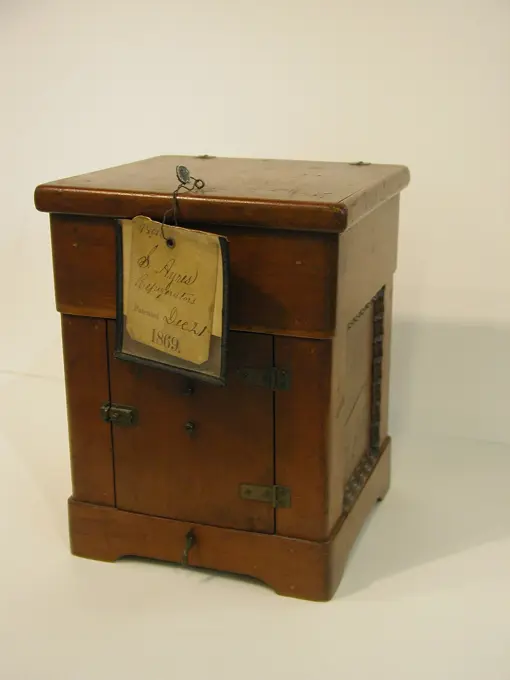
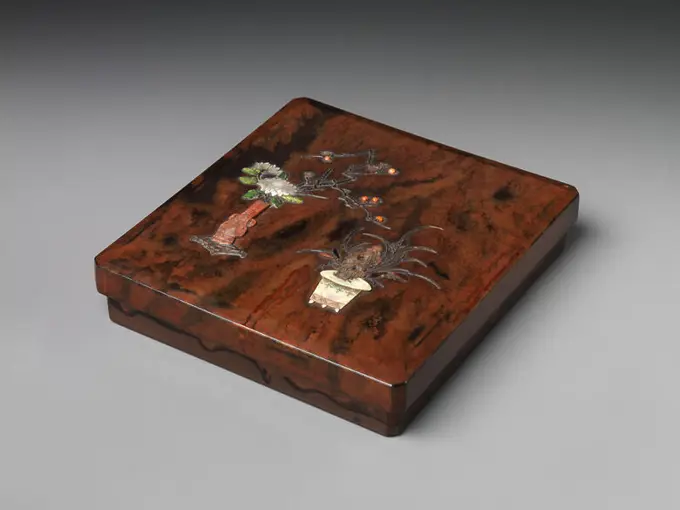
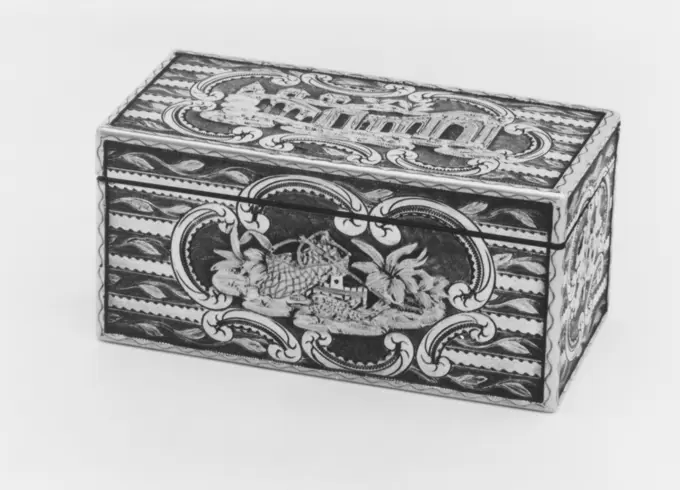
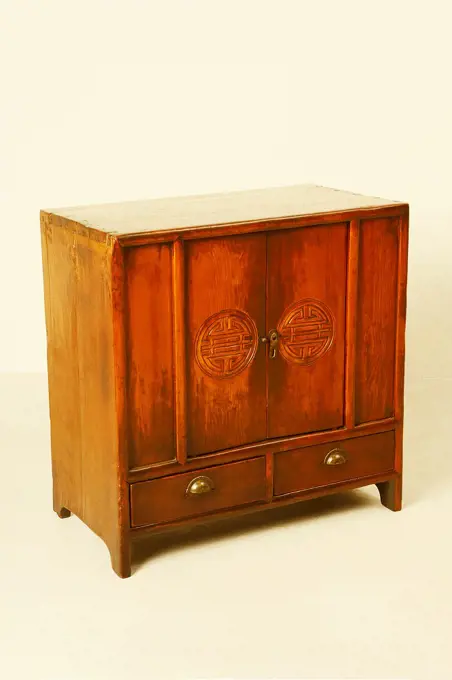
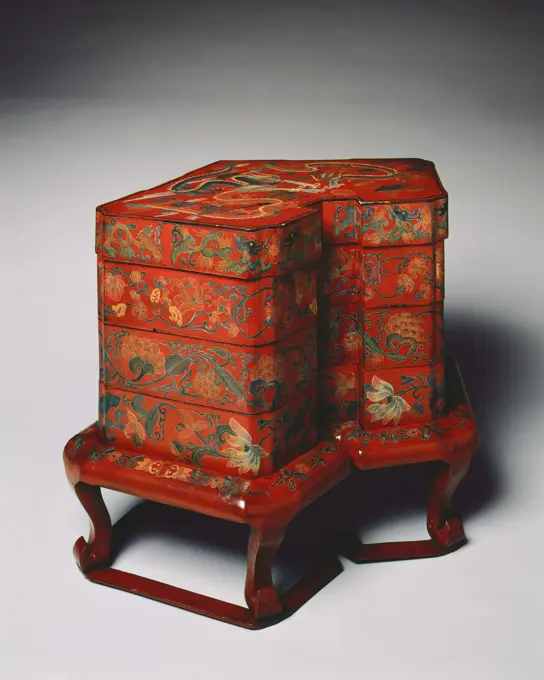
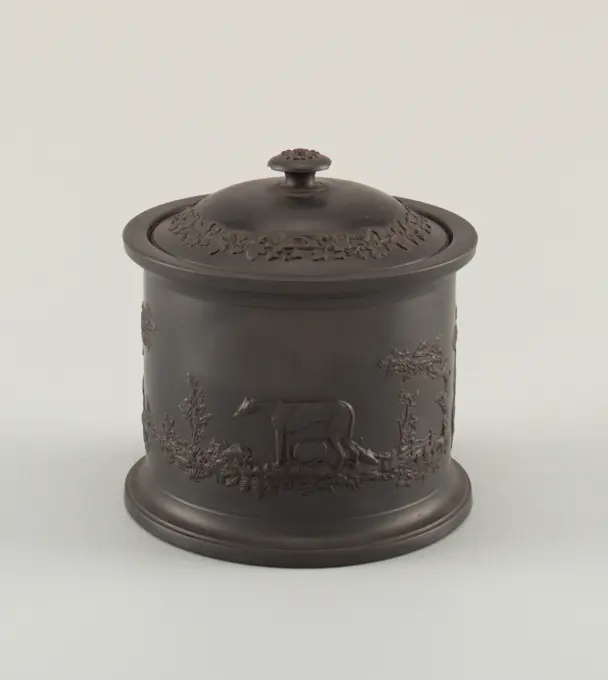
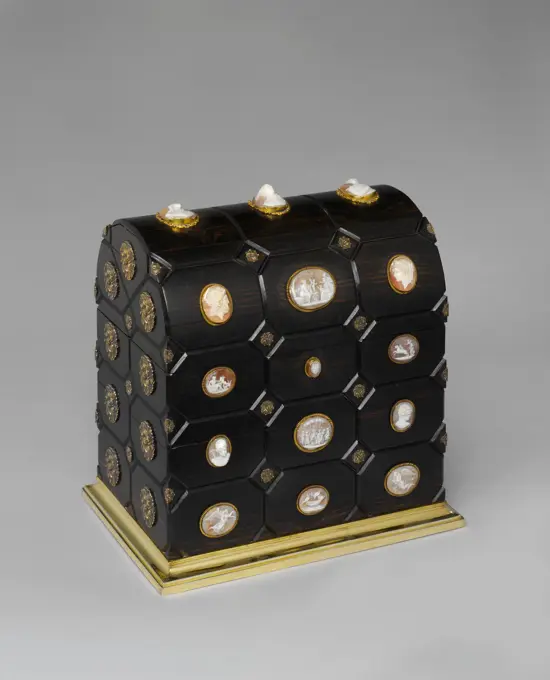
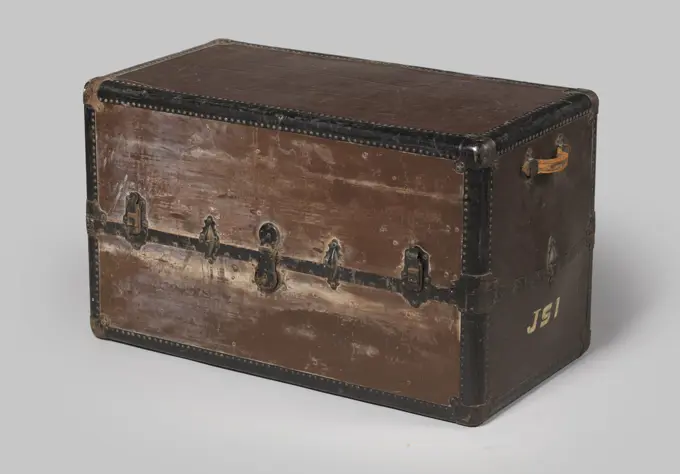
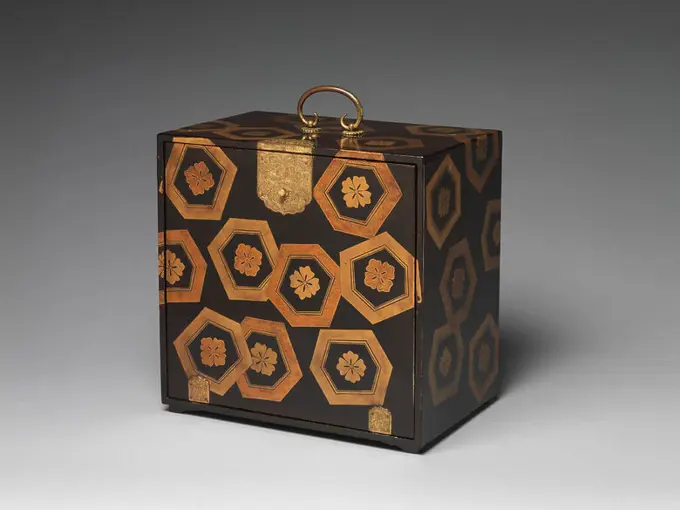
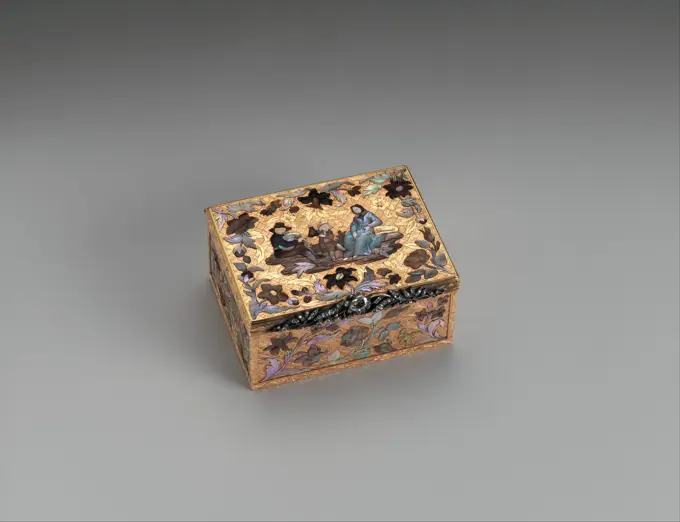
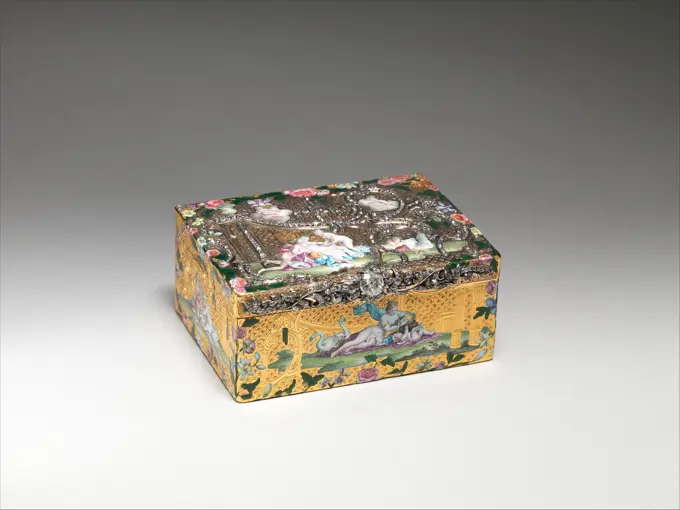
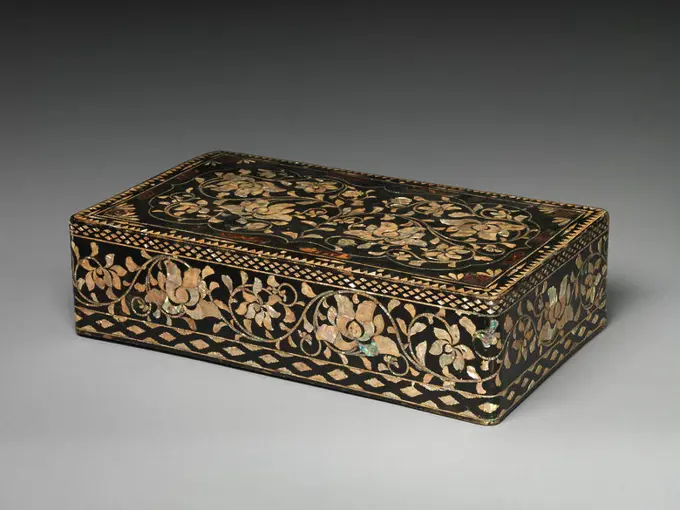
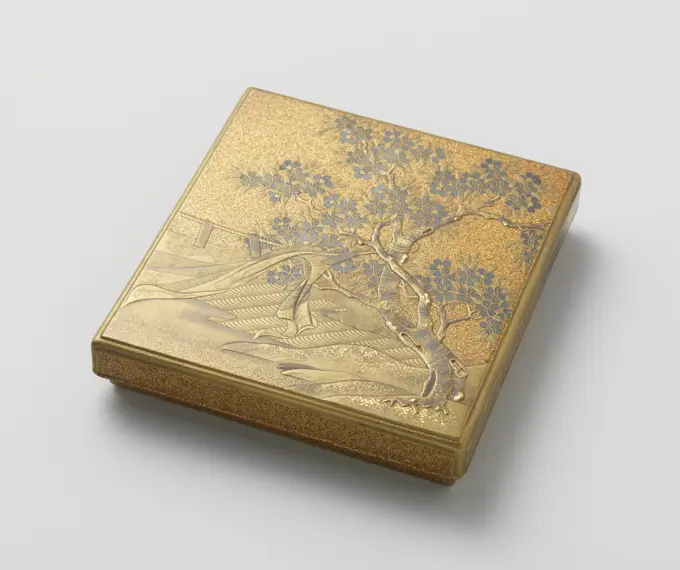
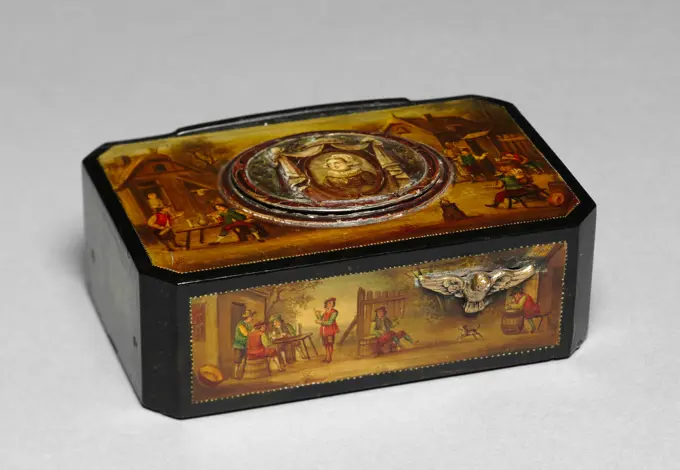
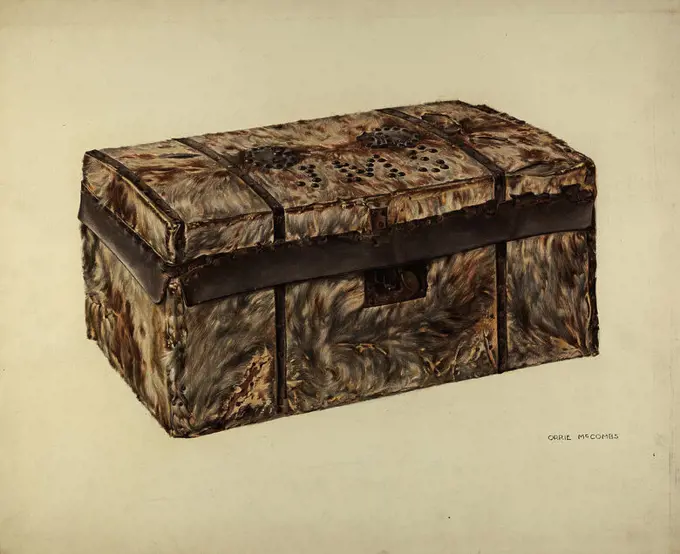
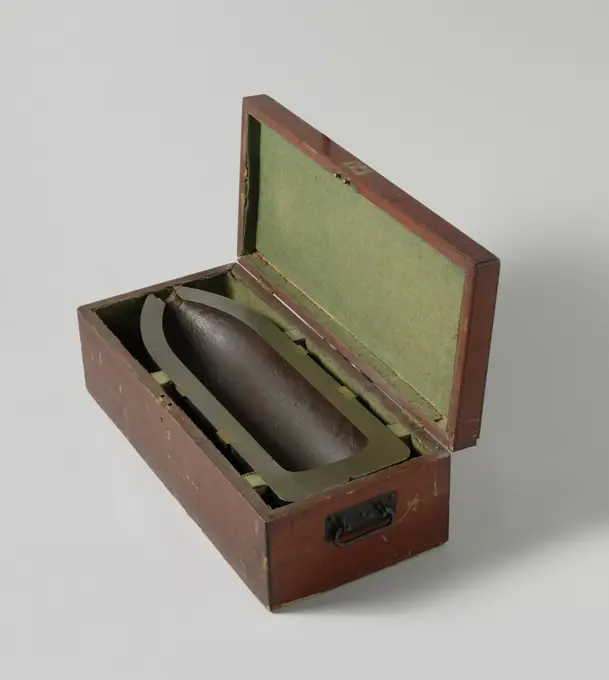
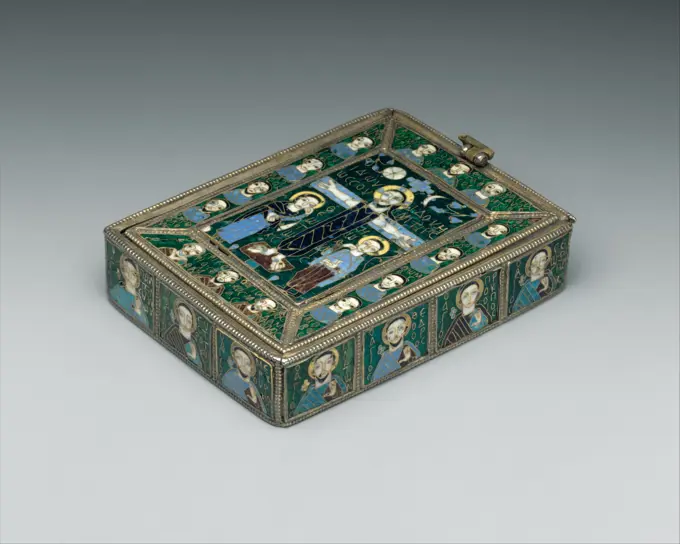
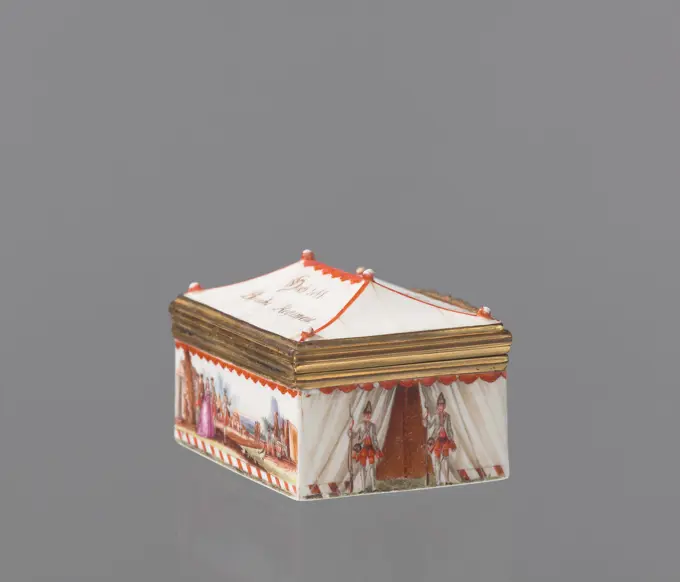
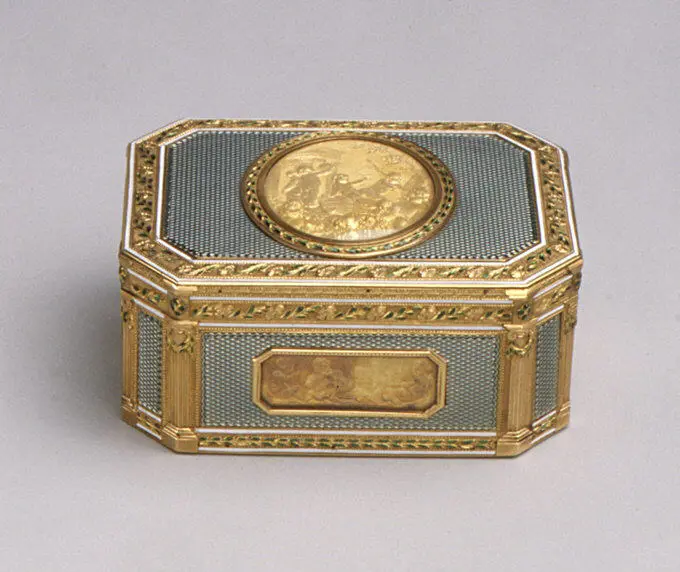
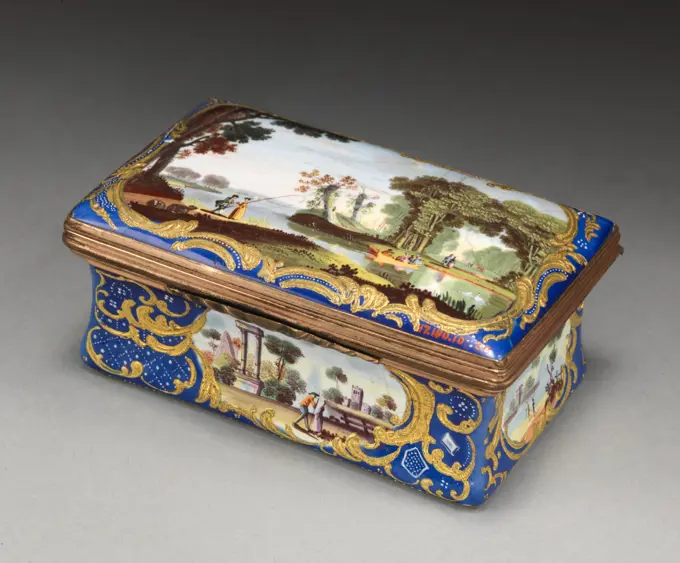
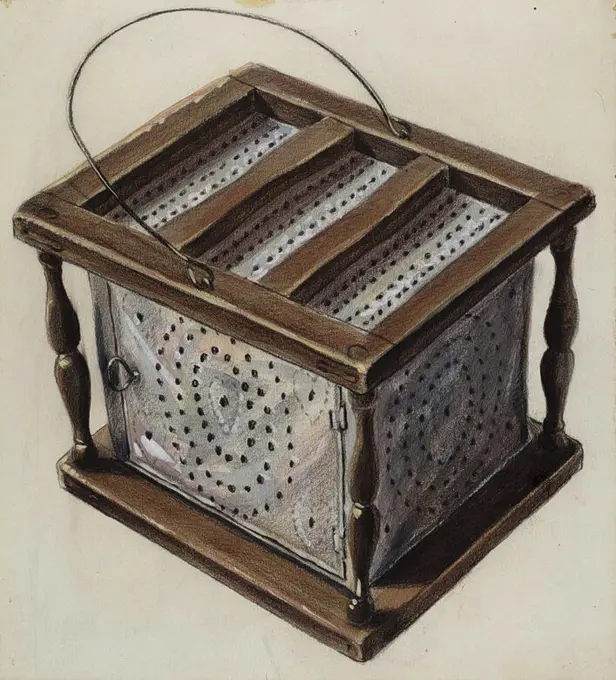
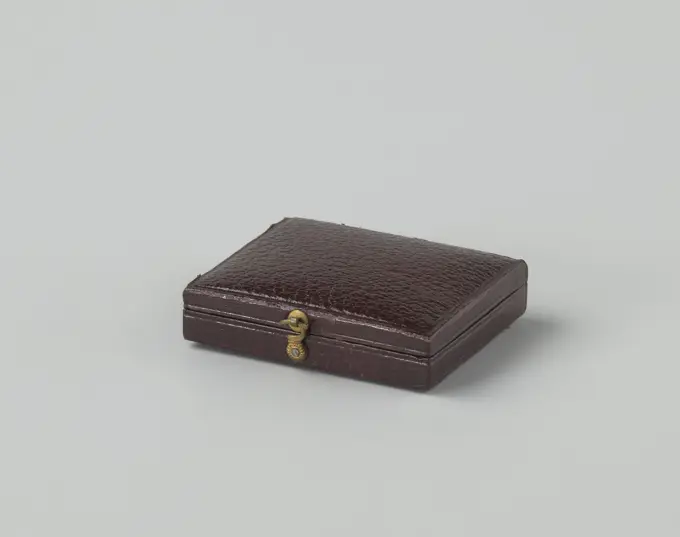
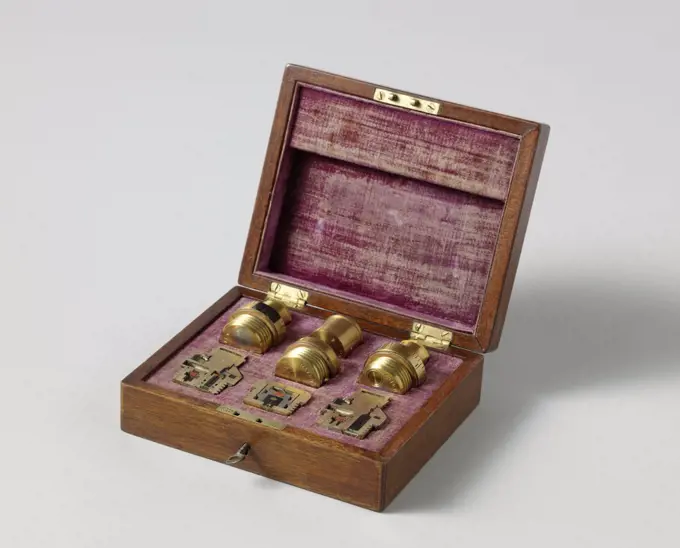
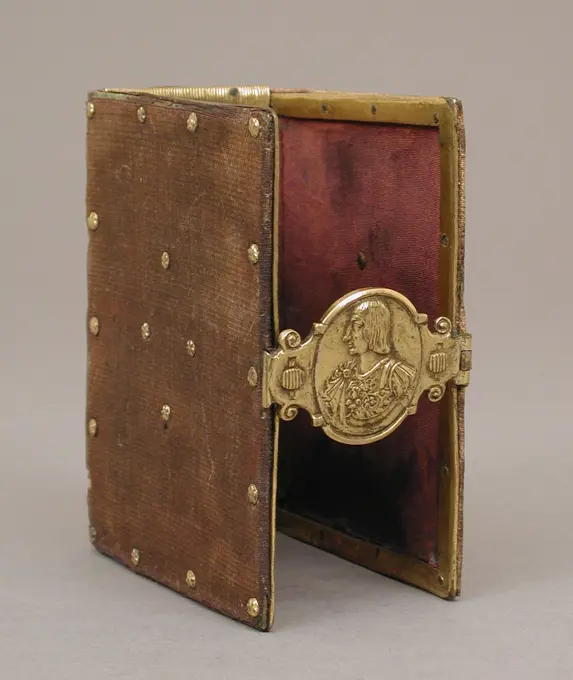
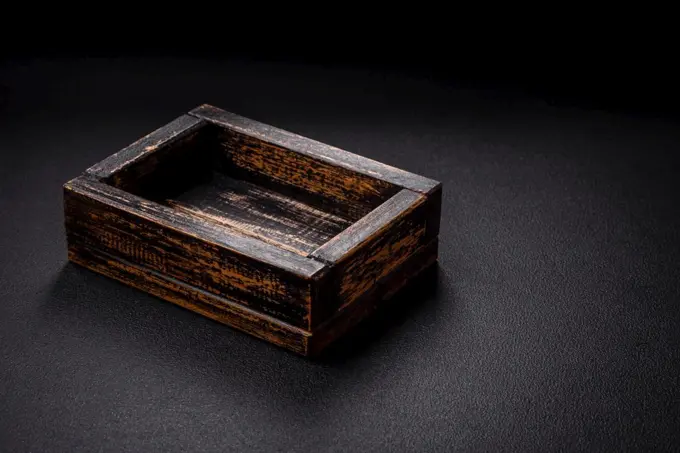
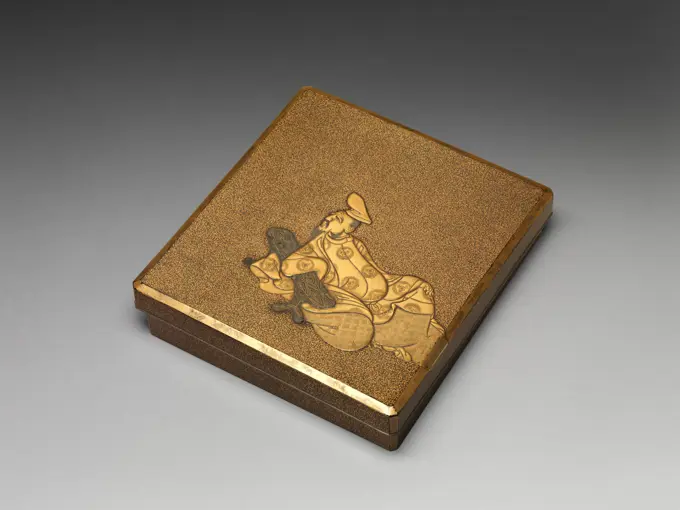
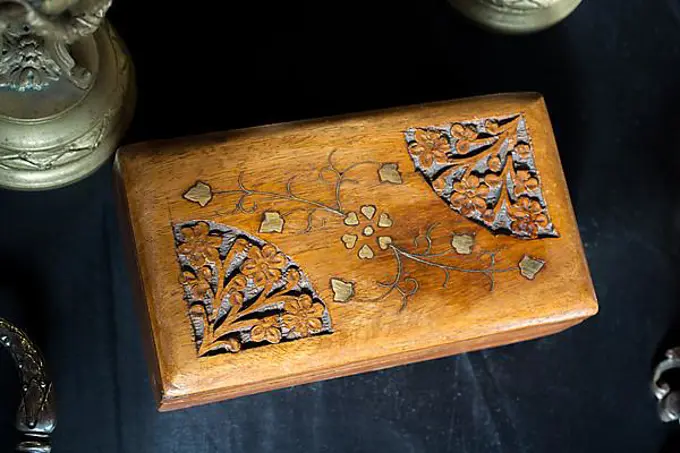
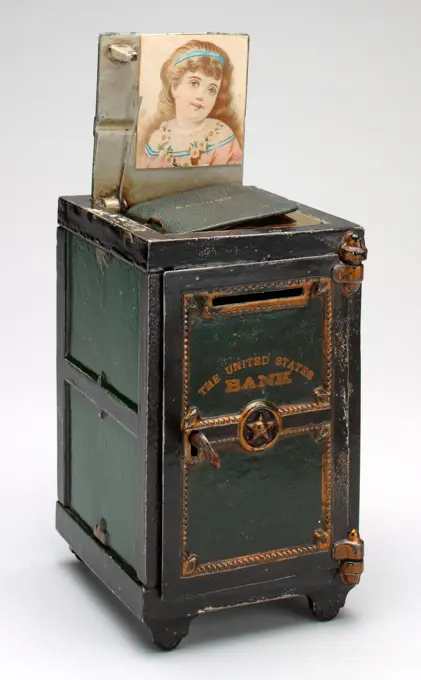
Casket, Anonymous, c. 1560 - c. 1600Covered Box with Design of Pine, Bamboo, and Cherry Blossom 19th century Japan. Covered Box with Design of Pine, Bamboo, and Cherry Blossom 57880Document Box (Ryōshibako) with Chrysanthemum and Plum, late 1800s-early 1900s. Sasaki Takayasu (Japanese, 1845-1929). Lacquer over wood with gold and silver sprinkled powder (maki-e);Chest of leather with gold-plated pressed ornaments. Chest of brown leather with gold-plated pressed ornaments. Copper corners, handle, lock and hinges.Letter Box (Fumibako) with Design of Cherry Blossom and Maple Leaf. Culture: Japan. Dimensions: 2 1/2 x 10 3/8 x 4 1/4 in. (6.4 x 26.4 x 10.8 cm). Date: 18th century. Museum: Metropolitan Museum of Art, New York, USA.Chest with Cartouche Showing Figures on Donkeys in a Landscape, Magnolias, Plum Blossoms, Peonies, Birds, and Butterflies. Ryukyu Islands, about 1750-1800. Furnishings; Furniture. Carved red lacquer on wood core (kamakurabori in Japanese) with metal fittings and jade lockSutra box, anonymous, c. 1200 - c. 1400 Kist for storing Sutra's. Paintwork inlaid with mother -of -pearl. Korea wood (plant material). lacquer (coating). mother of pearl. silver (metal) Kist for storing Sutra's. Paintwork inlaid with mother -of -pearl. Korea wood (plant material). lacquer (coating). mother of pearl. silver (metal)Trunk; wood, wool, metalStationery Box in Kodaiji style. Culture: Japan. Dimensions: H. 8 1/4 in. (21 cm); W. 17 15/16 in. (45.6 cm). Date: early 17th century.The bold combination of naturalistic landscape designs and scattered paulownia crests on contrasting diagonal fields divided by a zigzag border is characteristic of a distinctive style of Momoyama-period lacquer decoration known as Kodaiji, which was current from the 1580s through the early seventeenth century. The style is associated with the military potentate Toyotomi Hideyoshi (1536-1598) and named for the Kodaiji temple, where his memorial shrine was built in 1616. The shrine's lacquered interior, along with some thirty lacquer objects of personal use that are preserved there, are similarly decorated with naturalistic designs, mainly of autumn grasses, which are often combined with scattered paulownia crests, the personal emblem of the Toyotomi family. On this box the landscape motifs of a snow-covered willow by a bridge and a wisteria-wrapped pinLeather travel suitcase from Johan Rudolf Thorbecke ,, 1810 - 1850  High square leather with wooden frame and fabrics and paper interior. The leather is sober edited. The lid is hinged and lockable with a lock. There are two leather handles on both sides of which the upper has always been worn away. Everywhere, especially on the lid, there are remains of address and shipping stickers. In the middle is somewhere 'minister Thorbecke' in handwriting. Probably used by him on his travels through Germany in the period 1822-1833 and on later travels. Netherlands leather. wood (plant material). textile materials. paper   Germany. NetherlandsCasket with the Triumph of Venus. Culture: French. Dimensions: Overall (confirmed): 5 1/8 × 11 7/8 × 9 1/4 in. (13 × 30.2 × 23.5 cm). Date: early 18th century.Since the Triumph of Venus, the goddess associated with love and beauty, is depicted on the lid, dressing paraphernalia was probably stored inside this casket. Particularly vivid are the interior and the underside, where the straw, protected from dust and light, has retained its original color and lustrous quality. Museum: Metropolitan Museum of Art, New York, USA.Curvisor with marble top and open door. An oak counter case without bottom and back, with outstanding door with palm wood round button. A piece of marble is stuck on the top.Box 1705-15 American This box has an elaborate cast escutcheon of the type found on high-style case furniture, yet its painted ornamentconsisting of various spray and vine designsappears to have been the work of an amateur. Inscriptions on the interior suggest that the original owner was Rebecca Lynde (d. 1716) of Saybrook. She may also have been responsible for the decorative painting.. Box 922Box ca. 1860 Alphonse Giroux & Cie., Paris Displaying star-shaped parquetry and gilt-bronze mounts, this elegant coffer harks back to eighteenth-century traditions. The firm established by Alphonse Giroux (1775/76-1848)a tabletier, or dealer in luxury goodswas known for its high-quality objects such as glove boxes, caskets for weddings and baptisms, gifts for the New Year, and small pieces of furniture in a variety of styles. In the tradition of eighteenth-century marchands merciers, Giroux and his sons probably did not make any of the offered wares themselves but commissioned them from a variety of artists.. Box. French. ca. 1860. Wood veneered with parquetry of tulipwood and kingwood, gilt bronze, modern silk lining trimmed with metal thread. Woodwork-FurnitureARQUETA DE LAS LIEBRES - PROCEDE DE SAN ISIDORO DE LEON - ARTES SUNTUARIAS HISPANOMUSULMANAS - SIGLO XIII - 18x14x13 cm. Location: MUSEO ARQUEOLOGICO NACIONAL-COLECCION. MADRID. SPAIN.Snuff Box, c. 1750-60. England, London. Gold-mounted agate, engine-turned panels, hematites; Luxurious personal objects, like this snuff box, were an essential part of a privileged wardrobe during the 1700s and early 1800s, emphasizing their owners refinement and wealth. Their glittering surfaces, however, disguised a system based on the labor and suffering of enslaved or indentured people, whether in gold or gemstone mines, tobacco farms, or shops where these goods were made. Like cotton, sugar, and tea, snuff came from British colonies in America, India, and the Caribbean, where enslaved people were exploited to grow these crops under extremely harsh conditions.Kobako 18th century Japan. Kobako. Japan. 18th century. Gold maki-e on black lacquer. Edo period (1615-1868). LacquerSnuffbox. Culture: German (Dresden). Dimensions: H. 3.8 cm, L. 8.3 cm, D. 6.5 cm. Date: ca.1750-60.A similarly informal, sketchy technique occurs on other enamel boxes also painted inside the cover with a halflength female figure in dress of about 1750 or earlier.(1) Such miniatures, all undoubtedly after engravings, are common both to enamel boxes and to boxes of Meissen porcelain.(2) Another characteristic feature is the dramatically shaped stippled background in dark tones. On these grounds it is suggested that these enamel boxes also originated in Dresden. The painting inside the cover is not by the same hand as the exterior decoration. Museum: Metropolitan Museum of Art, New York, USA.Frame. Alexei Zinoviev (Russia, Moscow, 1880-1942)Sergiev Posad Workshops (Russia, Sergiev Posad, 1891-circa 1913). 1906-1910. Furnishings; Accessories. Birch, stone, metalWooden box with inscription 'Photographs', Anonymous, c. 1870 - c. 1885 photograph. box Wooden box with inscription 'Photographs', used to store photos. unknown cardboard. paper. photographic support albumen printCoffer late 16th century Attributed to Michael Mann. Coffer. German, Nuremberg. late 16th century. Steel. Metalwork-SteelBrass design fitting on antique wooden box, Jodhpur, Rajasthan, India Copyright: xSafatxAli/DinodiaxPhotoxTobacco box with engraving 'unequal love', tobacco box holder copper brass, cast engraved Shape: lying oval. Construction: hinge covered with lid and inner lid and slide with hinge to which lid the love and tyranny (engraved outer top cover) marriage sexuality birth smoking tobacco snuff box save Troy Aeneas Alexander DiogenesBox, anonymous, 1600 - 1699 Black lacquer with bombarded lid. Japan lacquer (coating). gold (metal) Black lacquer with bombarded lid. Japan lacquer (coating). gold (metal)Tiered Box with Design of Maple and Raft 18th century Japan. Tiered Box with Design of Maple and Raft. Japan. 18th century. Gold and silver maki-e on black lacquer. Edo period (1615-1868). LacquerSnuffbox 1758-59 Louis Charonnat French In eighteenth-century Europe, Paris led the production of high-quality luxury goods. Parisian goldsmiths made a wide range of small, personal articles such as snuffboxes; étuis to hold sealing wax, tweezers, or utensils for sewing; souvenirs, which contained thin ivory tablets for note taking; and shuttles for knotting lace. Gold snuffboxes and boxes decorated with portrait miniatures were prized and frequently given as royal gifts, often to ambassadors or members of the court in lieu of cash payments for their services. Coveted and admired, these boxes were produced from a variety of materials. The best were skillfully made of gold and embellished with diamonds, enameled decoration, lacquer, and other luxurious materials. By the middle of the century, the taking of snuff had become an entrenched social ritual, and the snuffbox, too, had become an important social prop. Snuffboxes were considered highly fashionable accessories, with some merchantCoffin. A rectangular wear box whose iron openworked walls are mounted on a wooden core has a lid that is no longer increased in the middle. The long side walls each have two rings. The lock is bent behind pilasters. Signature.Ethelbert Brown, Pa German Box, 1935 1942 Pa. German BoxChest, covered with turtle, with batter of silver, Hendrik Rennenbaum, c. 1740 - c. 1760 Case of turtle, rich with silver batter. Marked: Batavia; tree; MOTOR CLASS HR. Indonesia silver (metal) Case of turtle, rich with silver batter. Marked: Batavia; tree; MOTOR CLASS HR. Indonesia silver (metal)Black-lacquered Mirror Stand with Tortoise Shell Design. Korea, Joseon (1392-1910), 19th century. Furnishings; Accessories. Brown lacquer on wood core with mother-of-pearl inlay, brass fittings, and silvered glassSquare with black leather covered jewelery box., Anonymous, 1902 - 1903 Black jewelry box with a golden edge on the lid.  leather. velvet (fabric weave) Black jewelry box with a golden edge on the lid.  leather. velvet (fabric weave)Oak box with mementos of Jan van Speijk, Lelue, after 1831 - after 1832 box Wooden box with hinged lid, on the lid is a round gold box in which the tuft of hair (NG-NM-1090-C) and on which the exploding ship is engraved. The inside of the lid is made of ivory, painted in black with a snake that bites in its tail and plant motifs such as wreath around the second change: 'Van Speijk'. The rings (NG-NM-1090-A and B) are in a block in the box, in the block two round holes are saved in front of the ring. Below: piece of paper stuck with inscription. Antwerp wood (plant material). gold (metal). iron (metal). paper. felt (textile). ivory. ink engravingColonial hardwood case, coffin cabinet furniture furniture interior design wood rosewood ebony camphor wood brass, brass fitting key plate decorated with flower and plant ornaments.Book Cabinet (Shodansu) for a set of "The Chronicle of Great Peace" (Taiheiki). Culture: Japan. Dimensions: H. 9 1/2 in. (24.1 cm); W. 10 3/4 in. (27.3 cm); L. 15 1/2 in. (39.4 cm). Date: 18th century.This drop-front cabinet was designed to store the forty-two volumes of the Taiheki, a Japanese historical epic written in the late fourteenth century. It tells the story of Emperor Go-Daigo's accession in 1318, moves through Ashikaga Takauji's betrayal of the Hojo clan and Go-Daigo's fall and expulsion by Takauji in 1333, and culminates with Go-Daigo's return to Kyoto in 1338. The cabinet has six drawers, with inscriptions indicating which volume belongs to which drawer. The exterior of the cabinet is decorated with autumn grasses and flowers, further embellished with inlaid silver dewdrops. The upper part of the composition depicts clouds and mist (similar to Japanese painting) executed in very fine togidashimaki-e (burnished "sprinkled picture") with delicate gradations. The edge of thSnuff box of gold, rectangular, decorated with flower bouquets in Émail. Rectangular golden snuff box. Flower bouquets in email on all silk. Along the Edge Louis XVI Leaf RINKS.1 Schepel from Culemborg. Chips and iron content sizes for dry goods (corn, salt, lime) with bridge and style of 1 Schepel, v.z.v. Stamps and labels.Brass design fitting on red wooden almira, Jodhpur, Rajasthan, India Copyright: xSafatxAli/DinodiaxPhotoxCasket;  around 1750 (1730-00-00-1770-00-00);Patent model of arefrigerator. Inventor: Samuel Ayres, American, born ca. 1810Writing Box with Design of Chinese-Style Flower Arrangement (Inside: Design of Geese). Artist: Style of Ogawa Haritsu (Ritsuo) (Japanese, 1663-1747). Culture: Japan. Dimensions: L. 8 3/4 in. (22.2 cm); W. 9 in. (22.9 cm); H. 2 in. (5.1 cm). Date: 19th century. Museum: Metropolitan Museum of Art, New York, USA.Snuffbox 1760-61 Charles Le Bastier French In eighteenth-century Europe, Paris led the production of high-quality luxury goods. Parisian goldsmiths made a wide range of small, personal articles such as snuffboxes; étuis to hold sealing wax, tweezers, or utensils for sewing; souvenirs, which contained thin ivory tablets for note taking; and shuttles for knotting lace. Gold snuffboxes and boxes decorated with portrait miniatures were prized and frequently given as royal gifts, often to ambassadors or members of the court in lieu of cash payments for their services. Coveted and admired, these boxes were produced from a variety of materials. The best were skillfully made of gold and embellished with diamonds, enameled decoration, lacquer, and other luxurious materials. By the middle of the century, the taking of snuff had become an entrenched social ritual, and the snuffbox, too, had become an important social prop. Snuffboxes were considered highly fashionable accessories, with some merchBandbox, Block-printed paper, pasteboard, wood, wool, Workbox for seamstress, covered with simple geometric small-scale floral pattern, cloth pocket inside., Lancaster, Pennsylvania, USA, 1825-28, Wallcoverings, BandboxClose-up of a wooden cabinetTiered Food Box with Stand, late 1700s. Japan, Edo period (1615-1868). Red lacquer over a wood core, with litharge painting and engraved gold designs (Ryukyuan); overall: 53 x 68 cm (20 7/8 x 26 3/4 in.).Jar And Cover (England); unglazed stoneware (black basalt”); 15.3 x 14.4 cm (6 x 5 11/16 in.); Bequest of Erskine Hewitt; 1938-57-303-a,bLodderin box. Silver's lodder butter, with openwork inside cover. In a coat of arms: Remember and Dr.Handwarmer with decoration of plum blossoms 18th century Japan. Handwarmer with decoration of plum blossoms 40486Chest (cassone) late 15th century Northern Italian. Chest (cassone) 189228 Northern Italian, Chest (cassone), late 15th century, Pine (or spruce) inlaid with various woods, bone and ivory, 48  22 in. (121.9  55.9 cm). The Metropolitan Museum of Art, New York. Rogers Fund, 1907 (07.97)A parade backpack of the Swiss armyCasket 1875 or 1876 Unknown maker for R. & S. Garrard & Co. British The cameos, probably carved in a Neapolitan workshop, are based on ancient models as well as on work of the nineteenth-century sculptors Antonio Canova (1757-1822) and Bertel Thorvaldsen (1770-1844). This unique casket may have been commissioned from the London firm Garrard & Co., Crown Jewelers from 1843 until 2007, by a client who purchased the cameos during a visit to Italy.. Casket 231639Coffret. unknown, contractorTravel Zonnewijzer/ Kompas -Zonnewijzer in Turthoornen Box, Charles Bloud, 1600 - 1699 instrument. measuring instrument Horizontal sundial for traveling in a square box with lid. In the lid there is a rotating plate that indicates the rise and fall of the moon and the months, days and night length. On the outer side you can take a engraved hand on the month of the year. Almost square, consisting of two parts, sundial. The bottom contains a compass with an eightfold compass rose, division into 0-90-0-90 degrees and an Elips-formge silver ring with distribution in VII-i, XII-v hours. The names of a number of French places with the accompanying polar heights have also been written on the compass rose. At the rear of the bottom a rotating, silver disc with a square centrally, subdivided into 49 smaller squares with a number (from 0 to 31). A monthly and daily schedule on the edge. The correct date can be set by turning the disk. A engraved hand serves as a target. With the turning of the dHat case, anonymous, c. 1910 A flat cylindrical case of brown imitation bibble leather, with an inner bottom. The inside is covered with paper, printed with a pattern of flowers in black, yellow, white and blue. The lid is attached to the box with a hinge. The box can be closed by means of a belt with buckle. There is also a lock on the box. On the lid the family initials of Van der Does. West-Europa cardboard. paper. leather A flat cylindrical case of brown imitation bibble leather, with an inner bottom. The inside is covered with paper, printed with a pattern of flowers in black, yellow, white and blue. The lid is attached to the box with a hinge. The box can be closed by means of a belt with buckle. There is also a lock on the box. On the lid the family initials of Van der Does. West-Europa cardboard. paper. leatherConfectioner; Götz, Józef (Fl. 1760-179.); The eighties of the 18th century (1780-00-00-1789-00-00);Desk Box. Dated: c. 1937. Dimensions: overall: 22.8 x 29.2 cm (9 x 11 1/2 in.) Original IAD Object: 9 1/2" high; 29 1/2" long; 16" wide. Medium: watercolor and graphite on paperboard. Museum: National Gallery of Art, Washington DC. Author: Joseph Rothenberg.Shipping case of wood covered with rubber, anonymous, c. 1900 - c. 1925 Shipping case of wood covered with rubber () And finished with fabric on which a blue rose pattern is printed in Ikat style. The suitcase consists of two equal parts that close with two locks with clamps and a pressure lock, leather handle on top. Layout with rail with clothes hangers, shoe bags and drawers. The monogram JSI on the right half. Netherlands wood (plant material). rubber (material) Shipping case of wood covered with rubber () And finished with fabric on which a blue rose pattern is printed in Ikat style. The suitcase consists of two equal parts that close with two locks with clamps and a pressure lock, leather handle on top. Layout with rail with clothes hangers, shoe bags and drawers. The monogram JSI on the right half. Netherlands wood (plant material). rubber (material)the casket as present to the Valentine s day Beautiful gold casket for gift for a holiday Copyright: xZoonar.com/alexmakx 3540975Close-up of an ornate wooden boxCabinet with Design of Stylized Tortoiseshell Patterns. Culture: Japan. Dimensions: L.14 1/8 in. (35.9 cm); W. 9 1/2 in. (24.1 cm); H.14 1/4 in. (36.2 cm). Date: late 16th-early 17th century.Often referred to as medicine chests, boxes such as this one, with a front cover and interior drawers, were also designed for traveling. The dramatic rendering of stylized tortoiseshells on the exterior is matched by the three wonderful cranes found on the front of the drawers. In both China and Japan, these motifs are often associated with a mythical mountain inhabited by immortals. Museum: Metropolitan Museum of Art, New York, USA.Snuffbox ca. 1755 Attributed to Daniel Baudesson Embellished with a group of itinerant musicians and floral ornament of mother-of-pearl and ivory in low relief, this gold box has a thumb piece set with diamonds, which added greatly to its value. Born in Metz, Daniel Baudesson is known to have worked in Berlin, where he made high-quality snuffboxes for Frederick the Great of Prussia (1712-1786).. Snuffbox 193909Snuffbox with portrait of Frederick the Great (1712-1786), King of Prussia 1745-55 Daniel Baudesson. Snuffbox with portrait of Frederick the Great (1712-1786), King of Prussia. Miniature attributed to Daniel Nikolaus Chodowiecki (German, Danzig 1726-1801 Berlin). German, Berlin. 1745-55. Gold, enamel, diamonds; ivoryClothing box decorated with peony scrolls. Culture: Korea. Dimensions: H. 8 3/8 in. (21.3 cm); W. 18 1/8 in. (46 cm); L. 31 1/8 in. (79.1 cm). Date: 17th century.This box demonstrates stylistic variations on the peony scroll, a favorite design on Korean lacquer ware ornamented with shimmering abalone shells, or mother-of-pearl. Here, the large luscious blooms are accentuated. Museum: Metropolitan Museum of Art, New York, USA.Drum' still bank, c. 1870, 3 1/8 x 2 15/16 x 2 15/16 in. (7.94 x 7.46 x 7.46 cm), Tin, pigment, United States, 19th centurySquare brushpot with fish, flower sprays and landscapes in panel decoration, anonymous, c. 1800 - c. 1899 Square porcelain brush pot on plinth, painted on the glaze in blue, red, green, yellow, eggplant and black. The pot is covered with flowering plants against a black speckled green soil with two cartouches with a bird on a prunus branch and a lotus plant in reserve; Bamboo with a rock and fishermen; a Qilin in a landscape and three squirrels on an oak branch; A figure on a boat in a river landscape and a fish; The plinth with meander pattern. Famle Verte. China porcelain. glaze. cobalt (mineral) painting / vitrification Square porcelain brush pot on plinth, painted on the glaze in blue, red, green, yellow, eggplant and black. The pot is covered with flowering plants against a black speckled green soil with two cartouches with a bird on a prunus branch and a lotus plant in reserve; Bamboo with a rock and fishermen; a Qilin in a landscape and three squirrels on an oak branch; A figureWriting Box Depicting King Solomon and the Queen of Sheba Made 1601-1700 England. Wooden box; beaded with silk and glass beads; appliquÈd with beaded figures worked over cotton padding and silk, satin weave; embroidered with silk in satin and single satin stitches; couching and seed pearls; metal hinges .Suzuribako with ink stone and water dropper, Suisen, 1700 - 1799 Suzuribako (writing box), the surface is executed in Nashiji (speckled gold lacquer). The decoration is applied in Takamakia (gold lacquer and relief) and consists of flowering cherry trees, to which a large cloth is attached as a windshield with cords. In the box there is an ink stone contained in gold lacquer and a metal water dripper. The whole is stored in a cloth in a black -lacquer box without decoration. Box is held together by a ribbon. Japan lacquer (coating) Suzuribako (writing box), the surface is executed in Nashiji (speckled gold lacquer). The decoration is applied in Takamakia (gold lacquer and relief) and consists of flowering cherry trees, to which a large cloth is attached as a windshield with cords. In the box there is an ink stone contained in gold lacquer and a metal water dripper. The whole is stored in a cloth in a black -lacquer box without decoration. Box is held together by a ribbon. Japan lacquerMusic Box, 1800s. Switzerland, 19th century. Painted and gilded metal; overall: 3.5 x 10.2 x 6.7 cm (1 3/8 x 4 x 2 5/8 in.).Gold snuff box, in the form of a ton, Jean-Joseph Barrière, c. 1768 - c. 1769 Golden box in the form of a ton. Ten round and ovale in Grisaille enamelled fields with amorettes. In between green vines. Paris gold (metal). Golden box in the form of a ton. Ten round and ovale in Grisaille enamelled fields with amorettes. In between green vines. Paris gold (metal).Wooden casket isolated on a white backgroundTrunk. Dated: 1940. Dimensions: overall: 43.2 x 52.6 cm (17 x 20 11/16 in.) Original IAD Object: 20" long; 11" wide; 9" high. Medium: watercolor and graphite on paper. Museum: National Gallery of Art, Washington DC. Author: Orrie McCombs.Two tea caddies and a mixing caddy. During the 18th century tea caddy sets consisted of three elements: two caddies for different kinds of tea and one for the owners personal blend. The Leiden silversmith who created this miniature set specialized in large silver items. He constructed the miniature caddies, using rectangular pieces of silver plate, in the same way he did those of larger format.23-cm Shell in a Wooden Box, W.G. Armstrong & Co, 1868 grenade (ammunition). chest Half a longitudinal sawn -shaped 23 cm grenade, in a wooden box. The grenade is 67.3 cm long and has a caliber of 227 mm. He has two rings of troubled cams for a drawn run with six pulling fields and is hollow; A tube hole in the nose. At the top are shallow holes for the ammunition tap. Newcastle upon Tyne iron (metal). bronze (metal). brass (alloy). lead (metal). wood (plant material)The Fieschi Morgan Staurotheke early 9th century Byzantine Elaborately worked in cloisonné enamel, the lid of this box displays Christ on the cross wearing the colobium (sleeveless or short-sleeve tunic) associated with early images of the Crucifixion. Christ stands erect, his eyes wide open. His posture, the sun and the moon on either side of his head, and the flowers growing at the base of the cross express Christs triumph over death. Beside him the Virgin and John the Theologian raise their hands to their faces in a gesture of mourning. Twenty-seven busts of saints appear on the lid and sides of the box. Worked in niello on the undersurface of the lid are four scenes from the life of Christ—the Annunciation, the Nativity, the Crucifixion, and the Anastasis (Descent into Hell). The interior of the box houses a cross-shaped container for the relic, with the remaining spaces possibly meant to contain other relics associated with the Holy Land. The patterns on the base resemble a book Snuffbox. Koenigliche Porcellain Fabrique, Meissen (1710-1763), factorySnuffbox 1776-77 Pierre-François-Mathis de Beaulieu In eighteenth-century Europe, Paris led the production of high-quality luxury goods. Parisian goldsmiths made a wide range of small, personal articles such as snuffboxes; étuis to hold sealing wax, tweezers, or utensils for sewing; souvenirs, which contained thin ivory tablets for note taking; and shuttles for knotting lace. Gold snuffboxes and boxes decorated with portrait miniatures were prized and frequently given as royal gifts, often to ambassadors or members of the court in lieu of cash payments for their services. Coveted and admired, these boxes were produced from a variety of materials. The best were skillfully made of gold and embellished with diamonds, enameled decoration, lacquer, and other luxurious materials. By the middle of the century, the taking of snuff had become an entrenched social ritual, and the snuffbox, too, had become an important social prop. Snuffboxes were considered highly fashionable accessories, with sSnuffbox ca. 1760-1800 British, Staffordshire. Snuffbox. British, Staffordshire. ca. 1760-1800. Enameled copper. Enamels-PaintedBox and utensils for incense ceremony set 19th century Japan. Box and utensils for incense ceremony set. Japan. 19th century. Black lacquer decorated with sprinkled lacquer; clematis and butterfly folded incense paper design. Edo period (1615-1868). LacquerFoot Warmer. Dated: c. 1936. Dimensions: overall: 24 x 21.7 cm (9 7/16 x 8 9/16 in.) Original IAD Object: 8" high; 9" wide; 5 1/2" deep. Medium: watercolor, graphite, and colored pencil on paper. Museum: National Gallery of Art, Washington DC. Author: Richard Taylor.Housing with portrait of Giuseppe Garibaldi, Anonymous, c. 1860 - 1882 photograph   wood (plant material). leather. glass. velvet (fabric weave). brass (alloy). gilding (material). gold leaf. paper albumen print adult man. historical personsCasket with seven grenade tubes, William Armstrong & Co., Royal Laboratory, 1867 - 1872Bracelet 1550-1680 () Edo peoples At palace festivals, the king and chiefs of Benin wear pairs of long, cylindrical bracelets made of ivory or brass decorated with images that symbolize royal power. On this example, images of mudfish and Portuguese heads--both referring to the king's divine nature and his association with Olokun--alternate checkerboard style around the bracelet. Bracelets were among the few ivory objects available to chiefs and not strictly monopolized by the king.. Bracelet. Edo peoples. 1550-1680 (). Ivory, copper (). Nigeria, Court of Benin. Bone/Ivory-OrnamentsCasket 1100-1199 Sicily. This type of ornately painted ivory casket survived in relatively large numbers in church treasuries. Judging from their Arabic inscriptions, which contain wishes for happiness, blessings, or glory, it is likely that many of them were originally intended for secular use as wedding gifts or jewelry boxes. However, they were often later used as reliquaries. Here traces of an inscription on the front rim and cover read, ìMay glory endureî. This box was probably made on the island of Sicily, an important crossroads of Mediterranean trade.. Ivory, brass, tempera, and gold leaf .Frame in the form of a book French, probably Paris second half 19th centuryAl Curry, Early American Chest, c 1939 Early American ChestEmpty rectangular wooden cutlery box on textured concrete background. Kitchen utensil itemBox, Anonymous, 1800 - 1900 Lacquer box with a decoration on the lid with chrysanthemums in mother -of -pearl. Equipped with pewter edges. Japan wood (plant material). lacquer (coating). mother of pearl. tin (metal) Lacquer box with a decoration on the lid with chrysanthemums in mother -of -pearl. Equipped with pewter edges. Japan wood (plant material). lacquer (coating). mother of pearl. tin (metal)Writing Box 1650-1700 Unknown. Writing Box. Unknown. Mexican (Campeche). 1650-1700. Wood with bone, tortoise shell, and ebony inlay; iron hardware. Made in Campeche, MexicoBrass design fitting on antique wooden box, Jodhpur, Rajasthan, India Copyright: xSafatxAli/DinodiaxPhotoxWriting Box (Suzuribako) with the Poet Kakinomoto no Hitomaro 18th century Japan Imaginary portraits of Genji author Murasaki Shikibu had a precedent in images of Kakinomoto no Hitomaro (died ca. 715), one of Japans greatest poets, shown on this writing box. Hitomaro leans on an armrest, immersed in thought, a pose first used in portraits of the author from the Kamakura period (1185-1333). His most famous waka (thirty-one-syllable poem), anthologized in the Kokinsh? (compiled in 905), was prominently referenced in Genji:In dawns first dim light,my thoughts follow a small boat,going island-hid throughthe morning fog and mistat Akashi-no-ura. —Translation by H. C. McCulloughThe interior is decorated with a scene of distant sails and the coastal pines of Akashi Bay.. Writing Box (Suzuribako) with the Poet Kakinomoto no Hitomaro. Japan. 18th century. Lacquered wood with gold and silver takamaki-e, hiramaki-e, cutout gold- and silver-foil application; lead rim. Edo period (1615-1868). LacOld rusty lantern. Isolated objects: very old shabby and rusty lantern, with red glass, on white backgroundTrunk with PhoenixGoldsmith's art, Portugal, 18th century. Silver and tortoise shell gloves box.Bamboo Pillow. Korea, Joseon dynasty (1392-1910), 19th century. Furnishings; Furniture. Carved wood with lacquerBandbox, Block-printed paper, pasteboard support, On box, large-scale floral sprig set within a vining foliate framework. On lid, sailing vessel on ocean, with legend: Prosperity to our Commerce and Manufacturers. Printed in pink, white and olive on a yellow ground., USA, ca. 1830, Wallcoverings, BandboxFloral art pattern example of the Ottoman timeTerracotta onos (leg guard used in carding wool). Culture: Greek, Attic. Dimensions: length 11 9/16in. (29.4cm). Date: last quarter of 6th century B.C..On each side, two quadrigae (four-horse chariots)On the end, two draped figuresThis implement connected with wool-working is also known as an epinetron. Although most of the preserved examples date to the late sixth and early fifth centuries B.C., their popularity returned during the last quarter of the fifth century B.C. The decoration usually refers to the activities of women. Museum: Metropolitan Museum of Art, New York, USA.Japanese box. Black rectangular box with rounded corners. On the lid in oval frame a landscape in mother-of-pearl: rocks on water with two Japanese buildings. On the edge of the lid and the flour branches box of inlaid mother-of-pearl. Inscription; Inside lid: C.e. The Tuyll.United States Bank' mechanical bank, c. 1880, Attributed to J. & E. Stevens Company, Cromwell, Connecticut, 1843-1950s, 6 1/4 x 4 3/16 x 3 5/8 in. (15.88 x 10.64 x 9.21 cm) (top closed)9 x 4 3/16 x 3 5/8 in. (22.86 x 10.64 x 9.21 cm) (top open), Metal, pigment, leather, paper, 19th centurysmall indian incrusted wooden chest small indian incrusted wooden chest isolated on white background Copyright: xZoonar.com/VVxVoennyyx 5039031Al Curry, Desk Bell from Fire Department, c 1939 Desk Bell from Fire Department