Decorative Candle Holders Collection

An array of ornate candlesticks and candelabra, featuring intricate designs and historical craftsmanship from various periods.

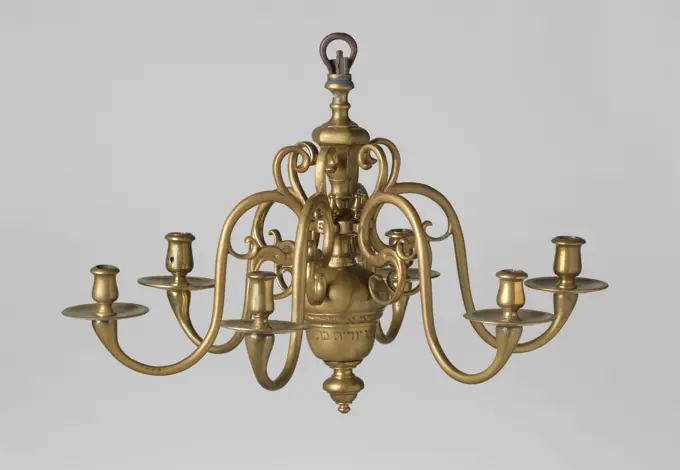
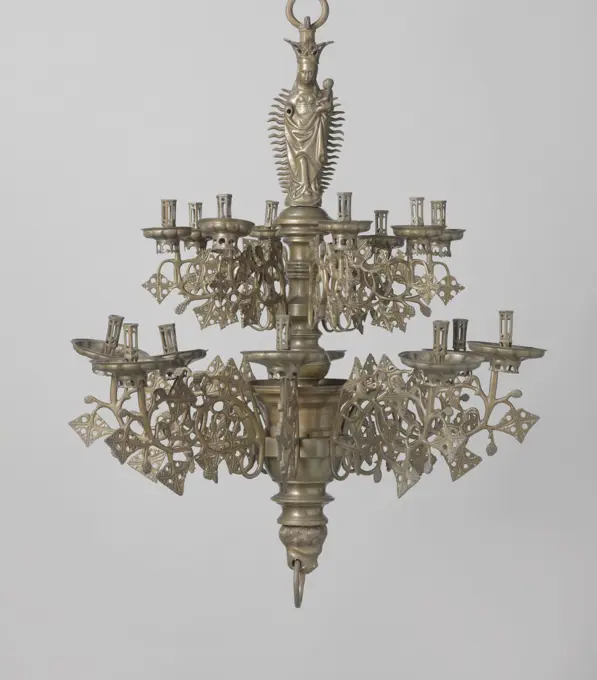
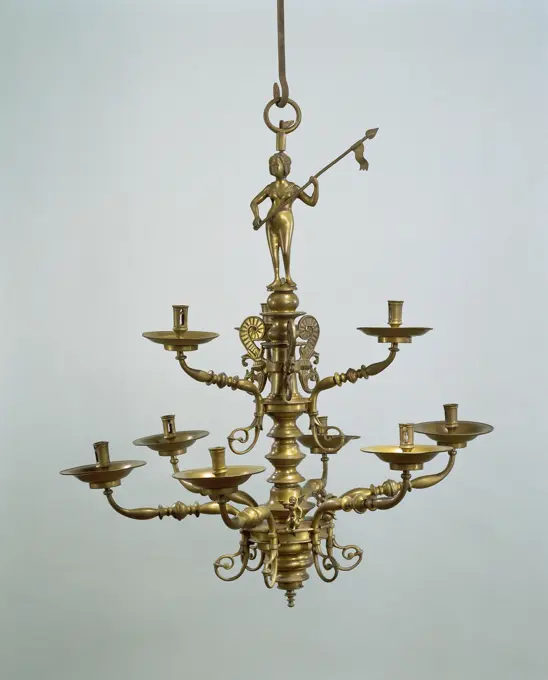
Arm with candle holder of candle crown of two heights, each with eight arms, 1525 - 1550 Candle arm belonging to a candle crown of two heights with maria figure at the top. The arm is bent twice and is decorated with four grapes bunches and five vine leaves. The round fat catcher is decorated at the bottom with six round lobes. The candle holder is six -flared, open, on a single hollow -rounded pedestal, transferring to a protruding with thread. This is the sixth arm of the upper ring, numbered with 6 round points. The candle holder is unnumbered. Southern Netherlands brass (alloy) casting Candle arm belonging to a candle crown of two heights with maria figure at the top. The arm is bent twice and is decorated with four grapes bunches and five vine leaves. The round fat catcher is decorated at the bottom with six round lobes. The candle holder is six -flared, open, on a single hollow -rounded pedestal, transferring to a protruding with thread. This is the sixth arm of the upper ring, n
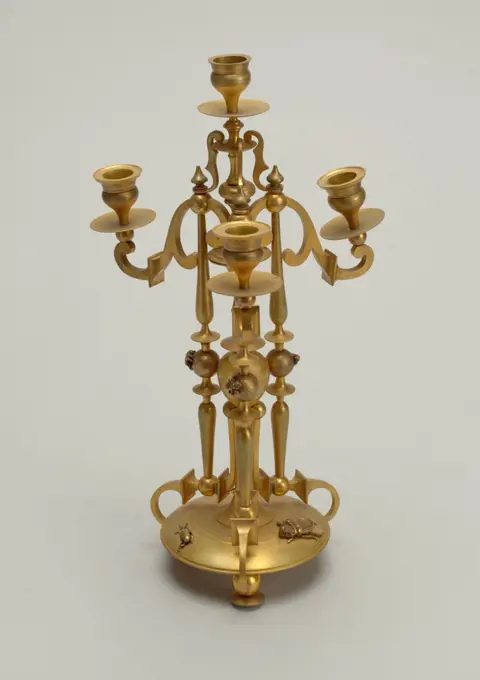
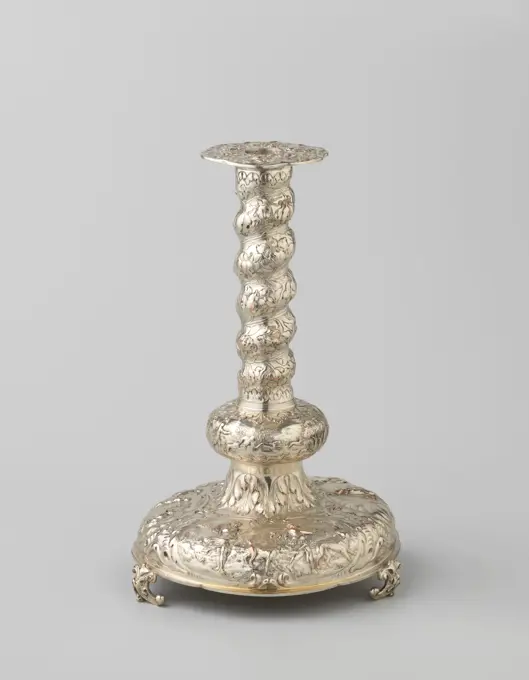
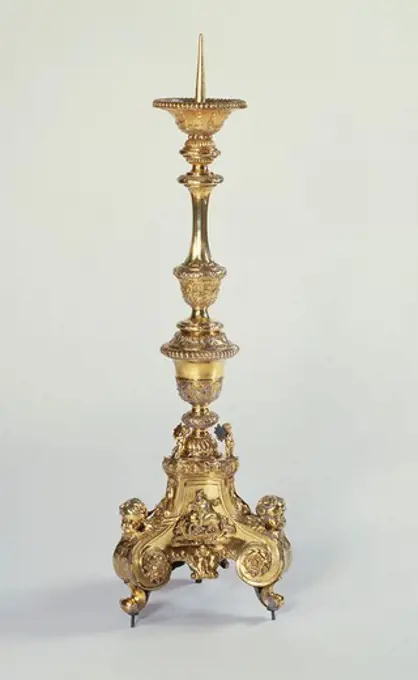
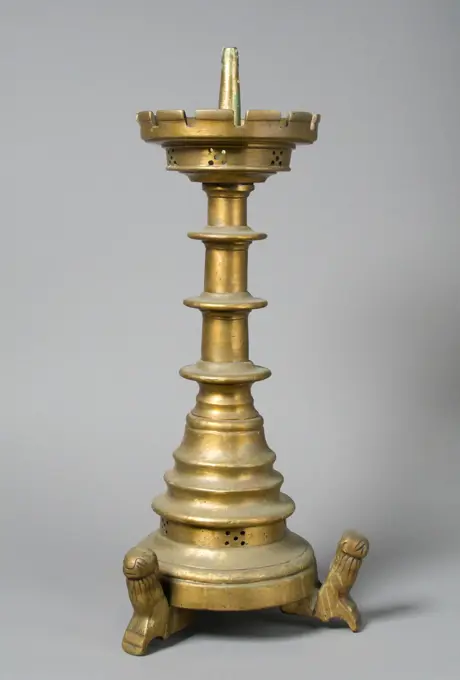
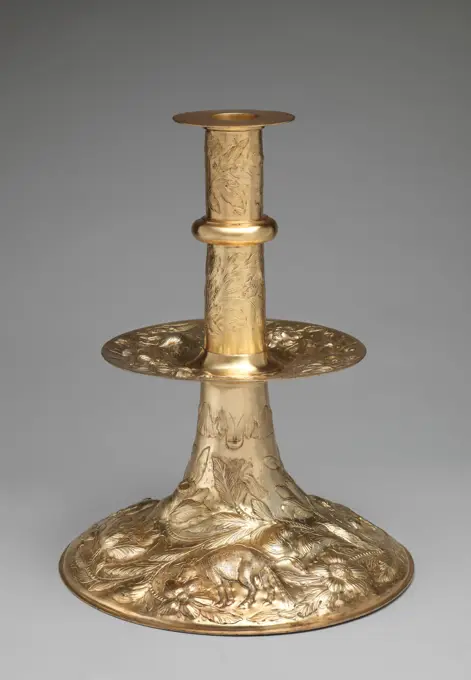
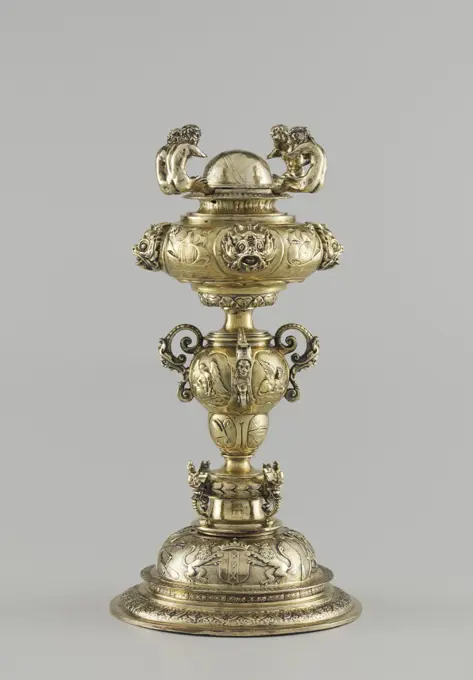
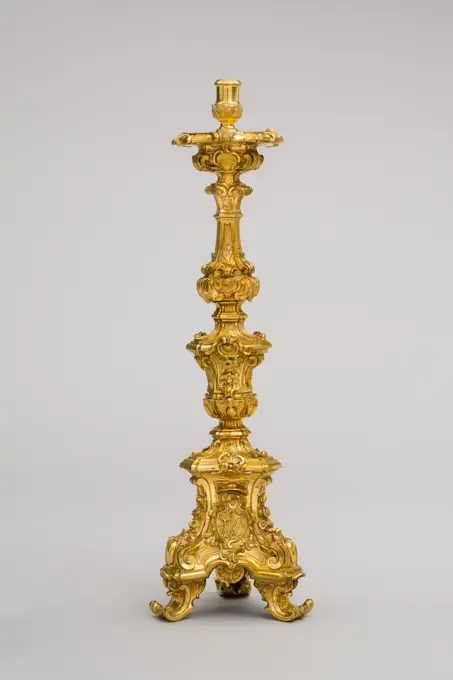
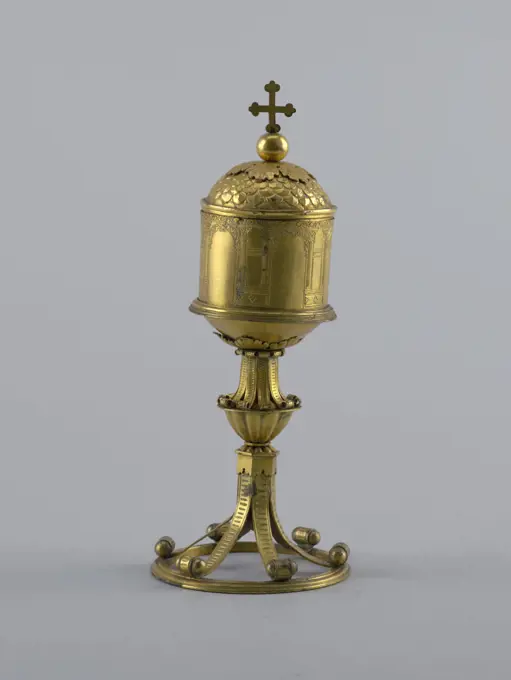
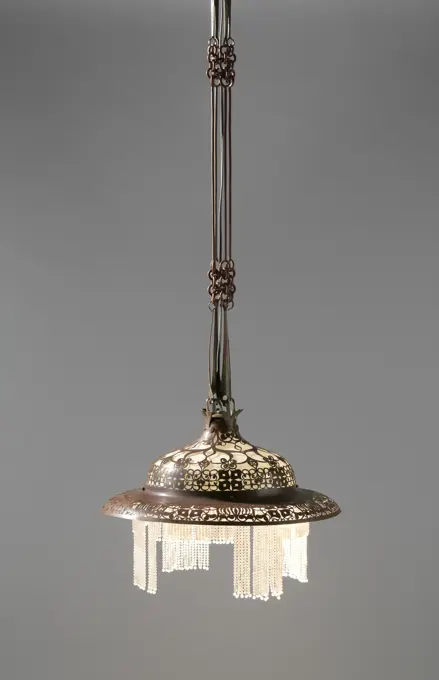
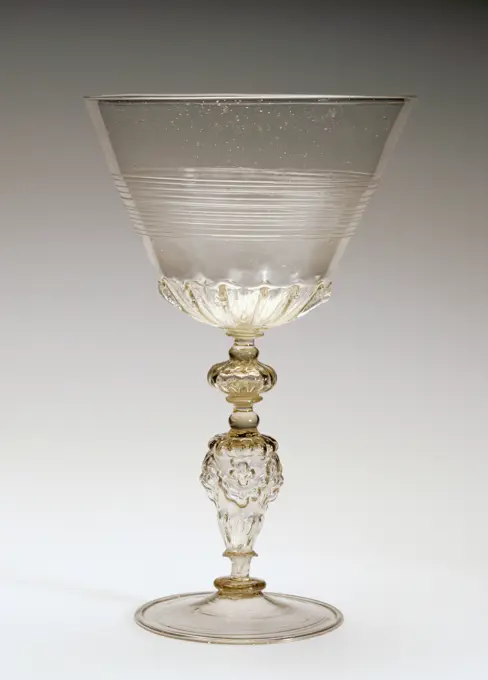
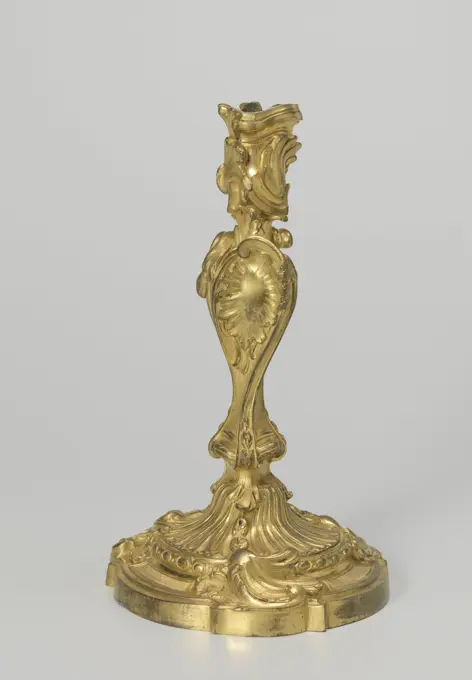
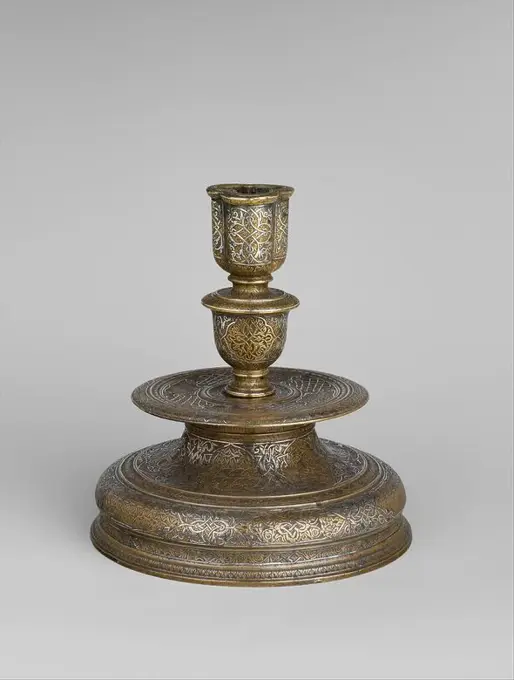
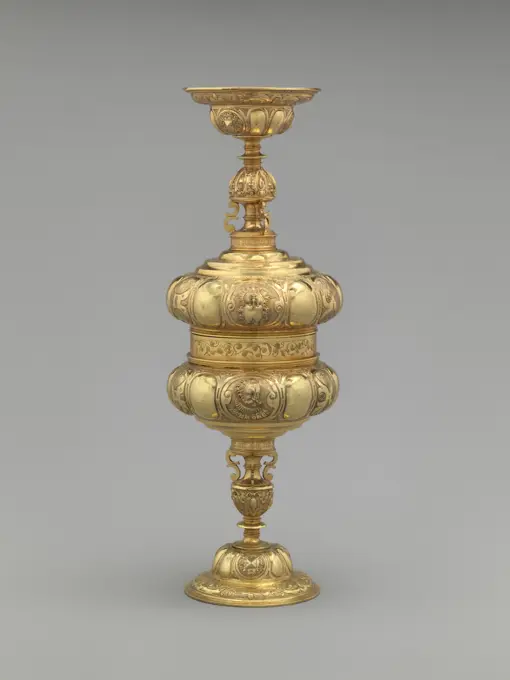
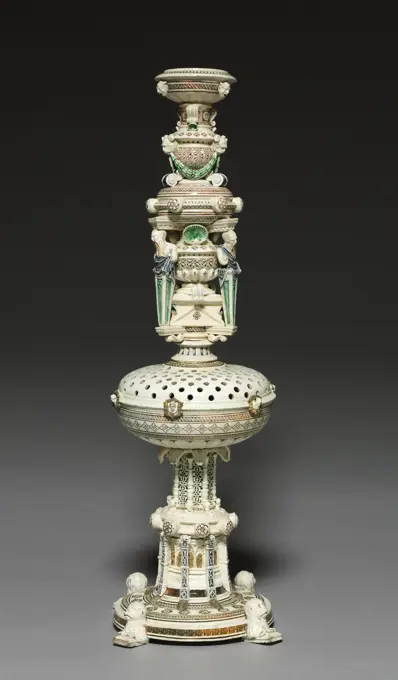
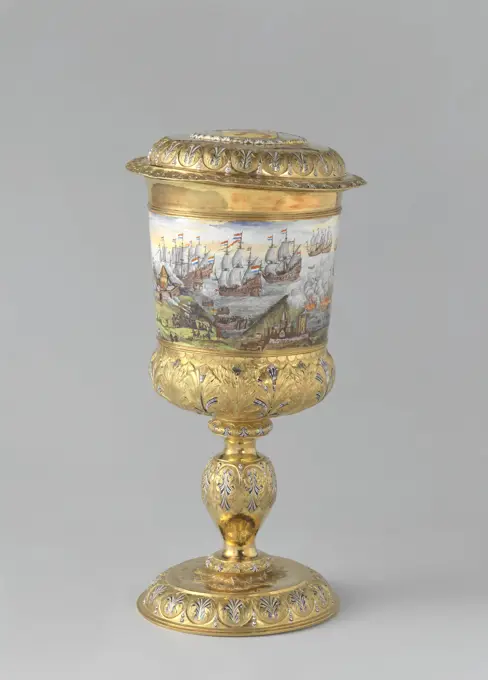
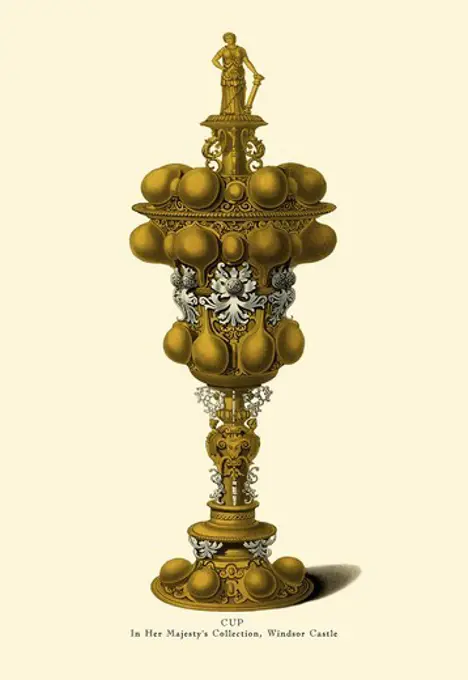
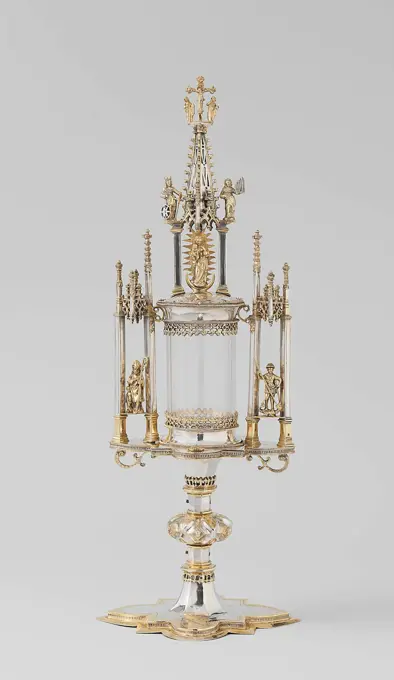
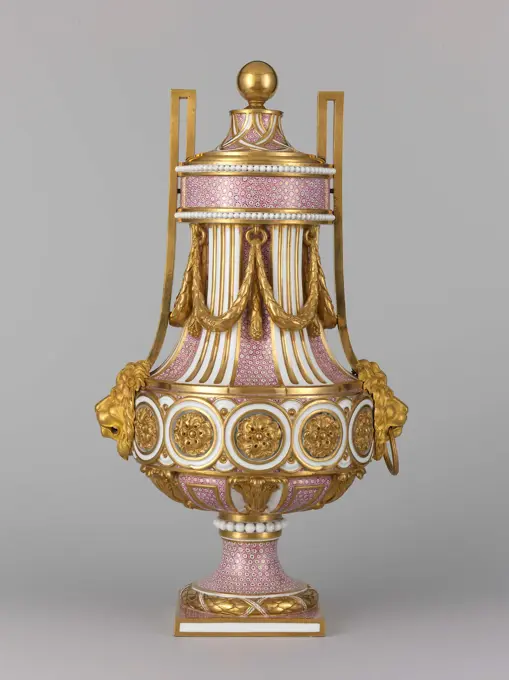
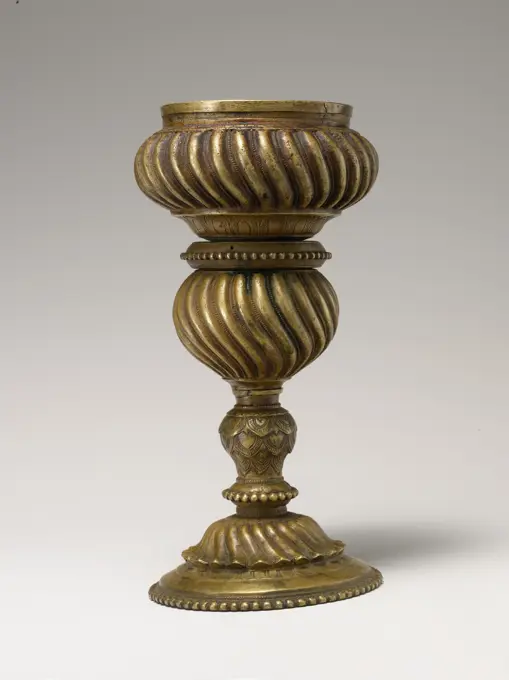
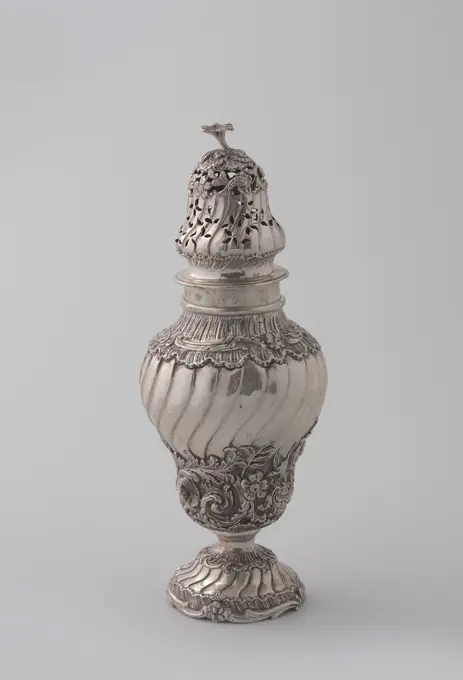
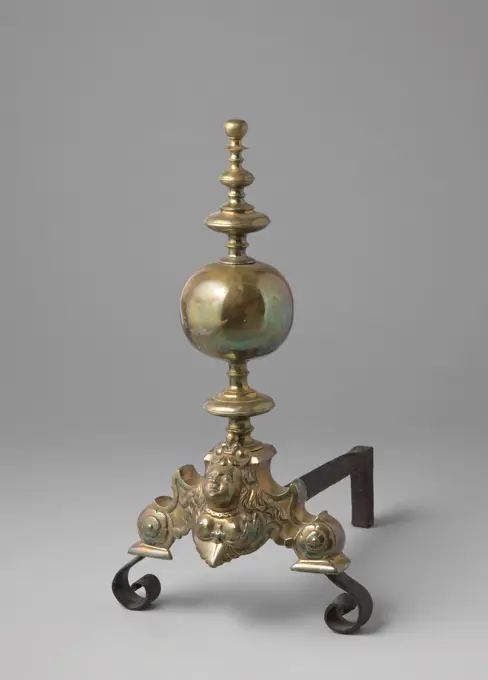
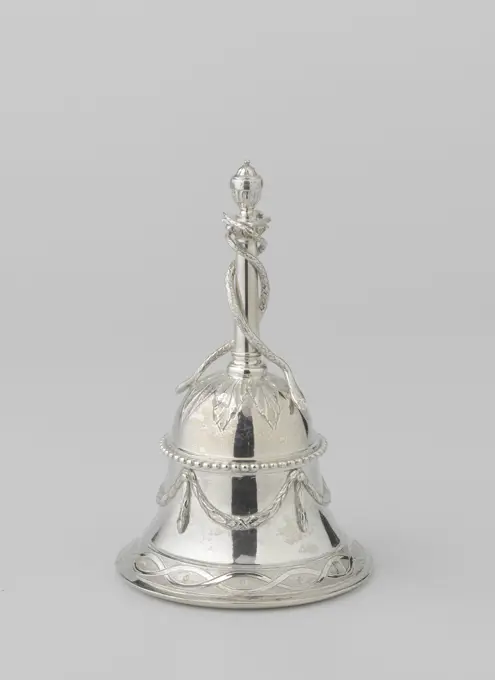
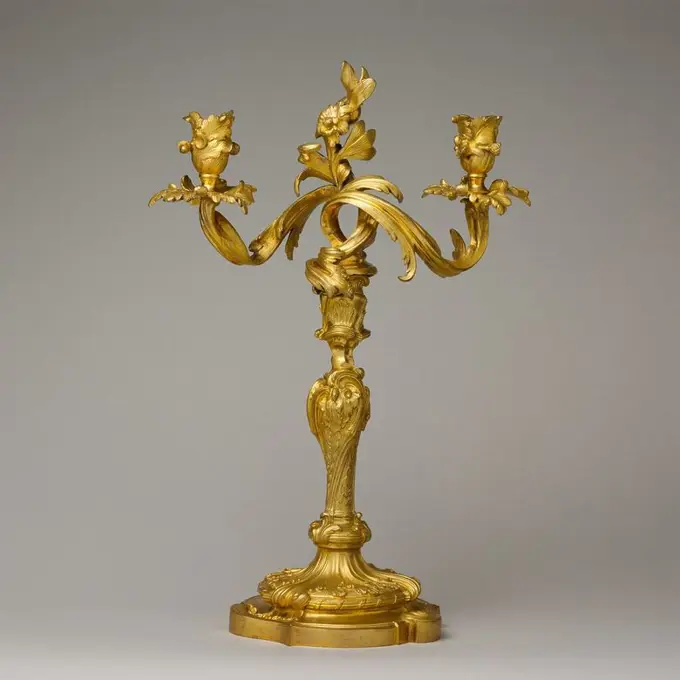
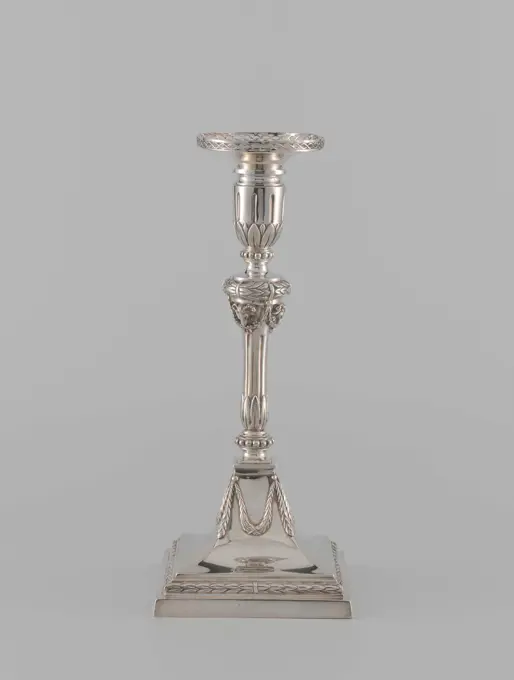
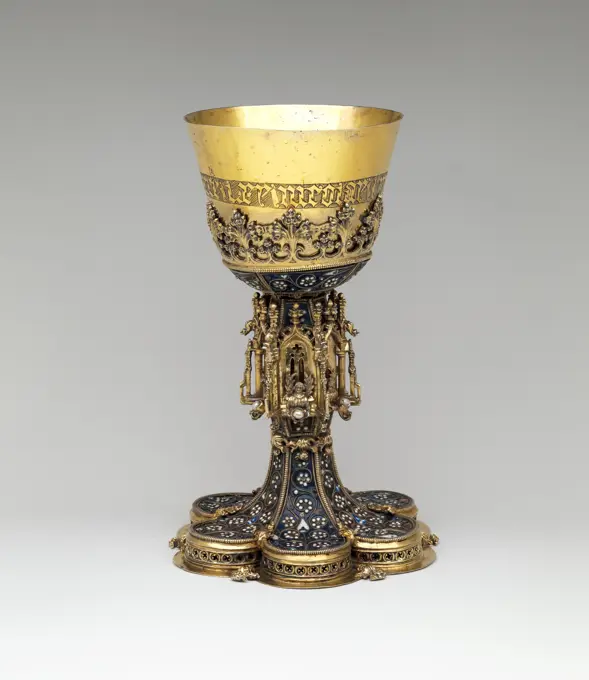
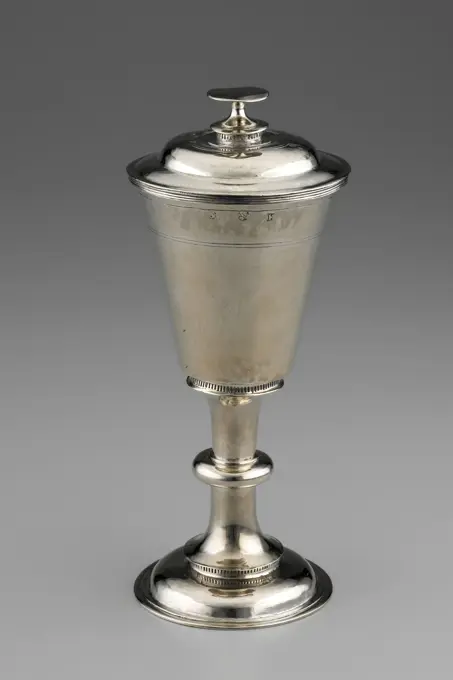
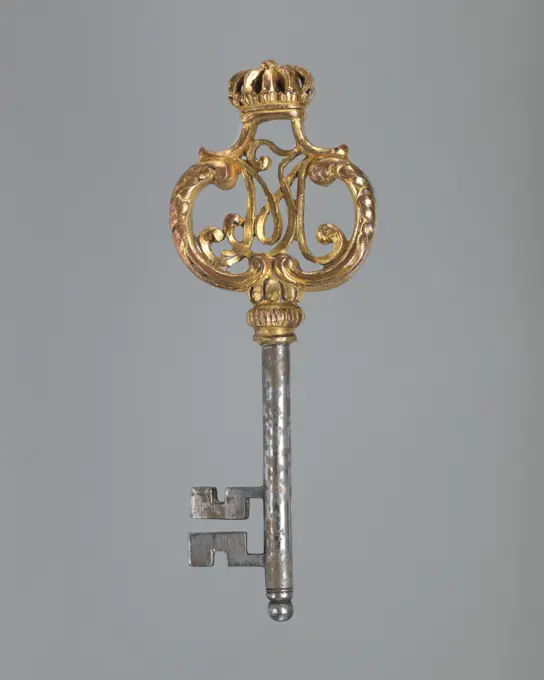
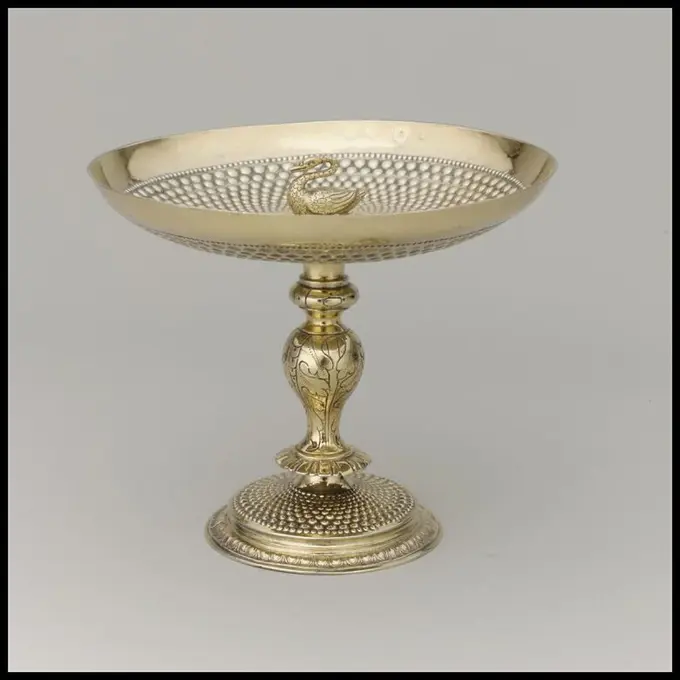
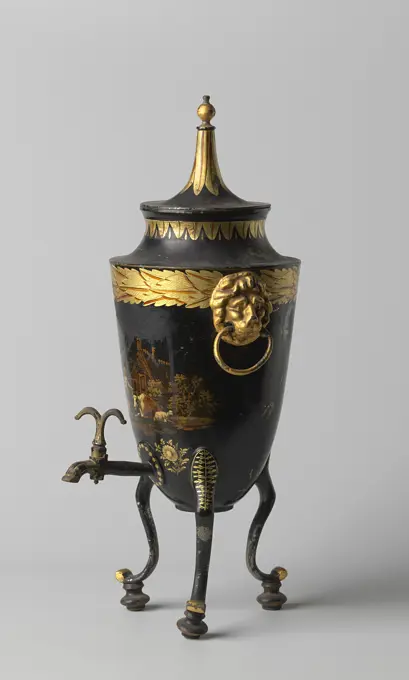
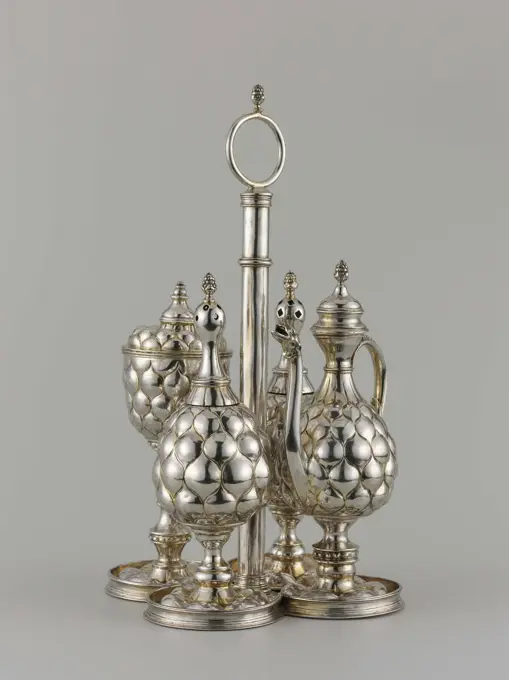
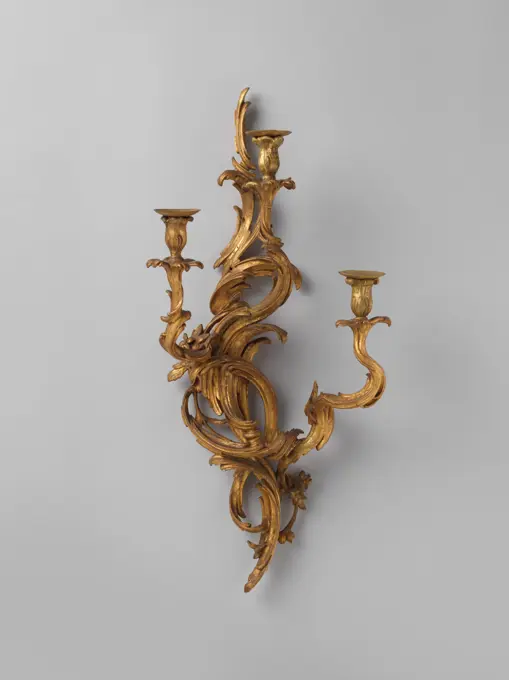
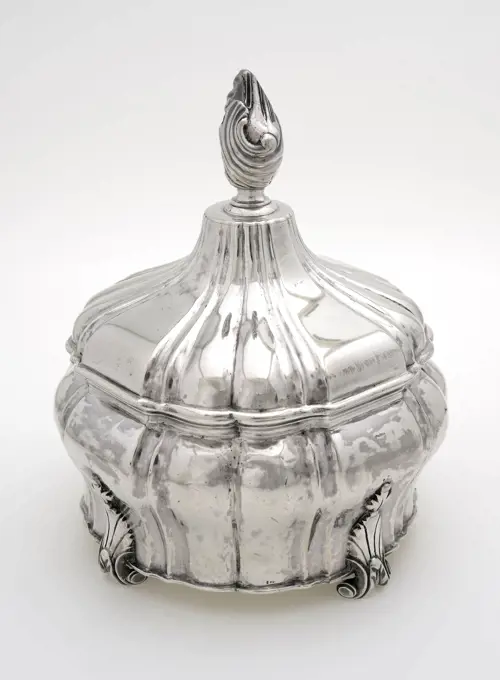
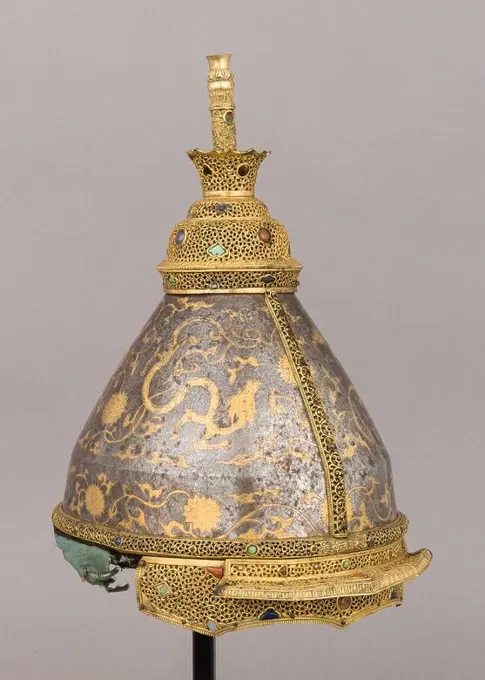
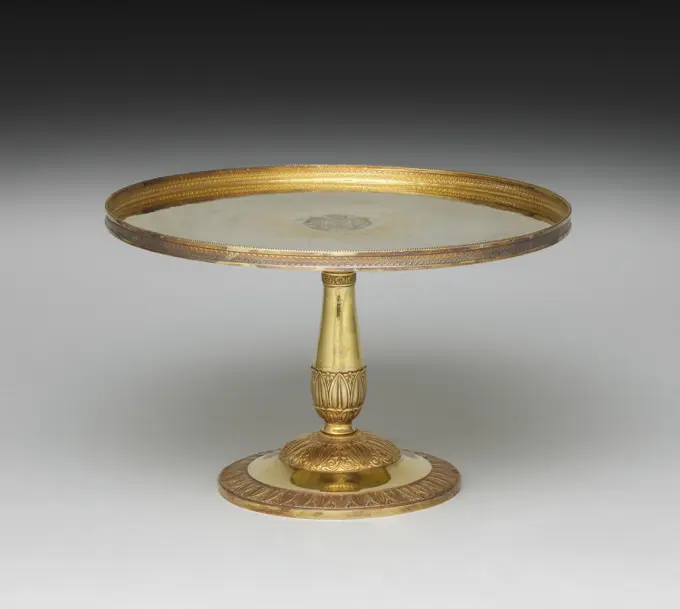
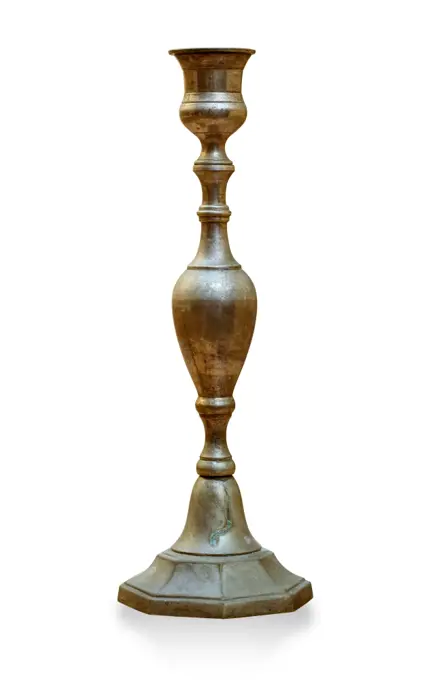
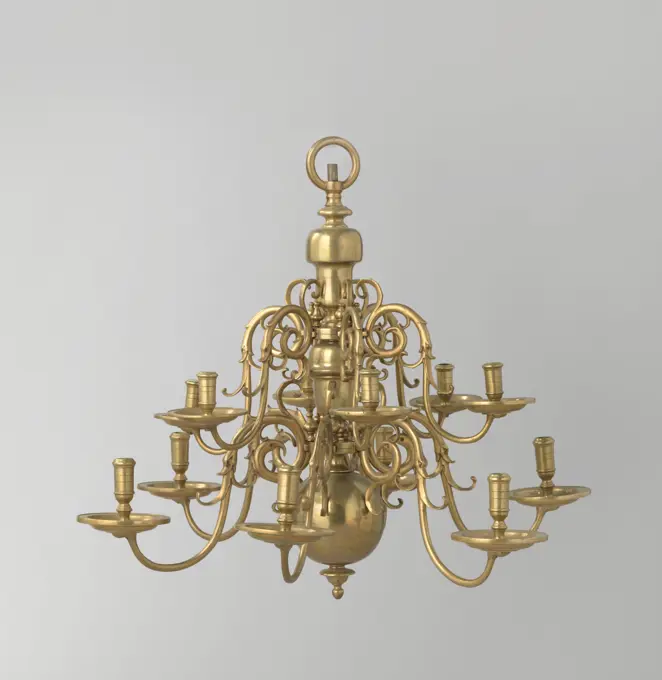
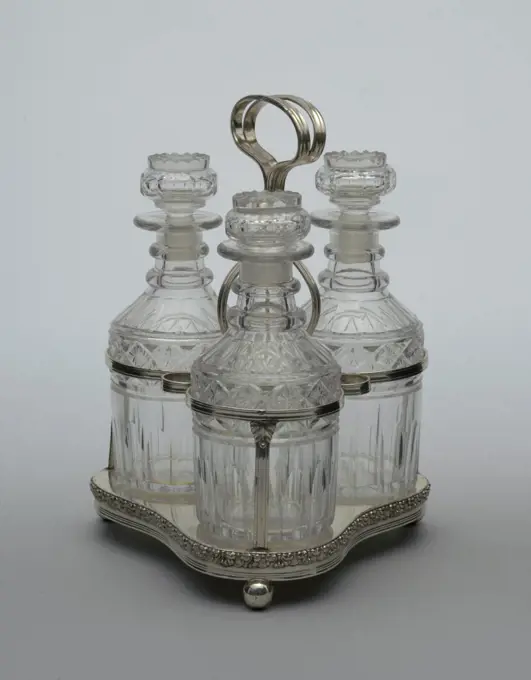
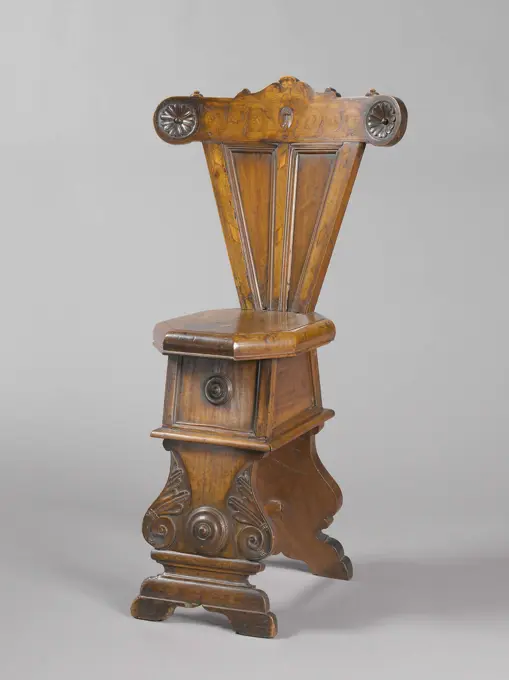
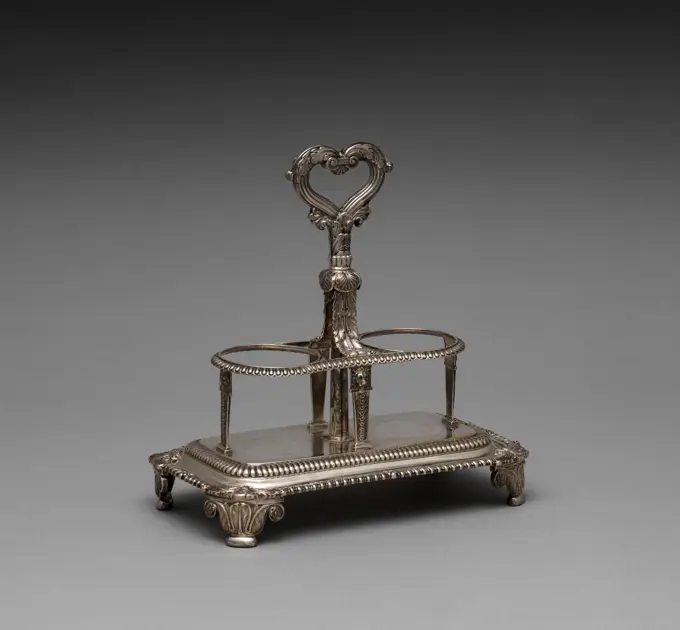
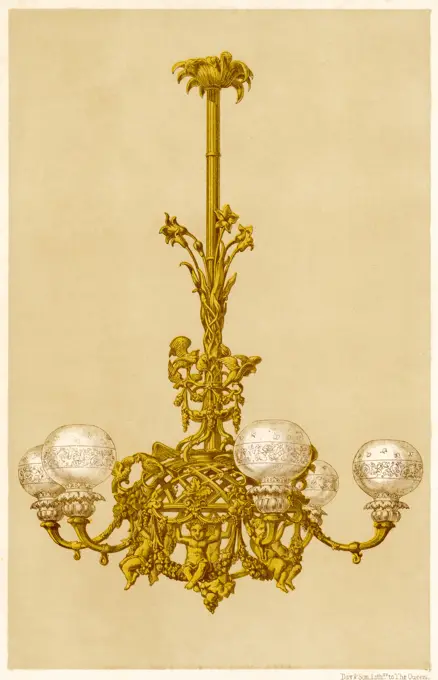
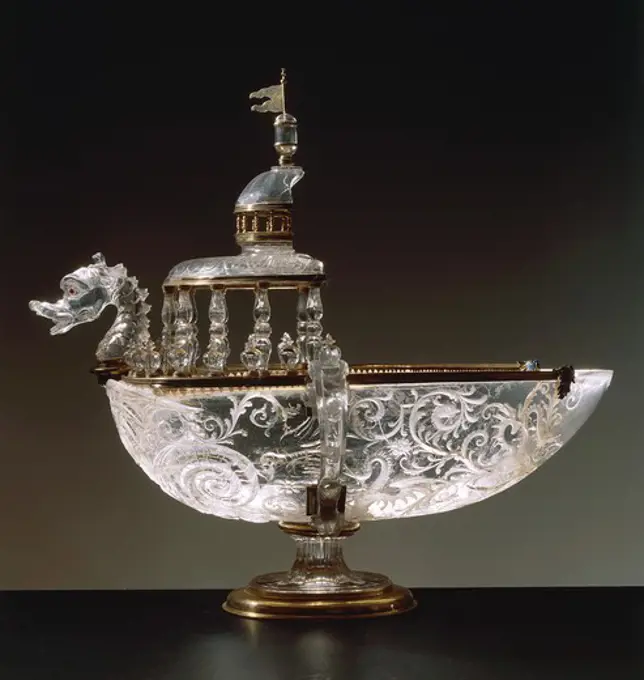
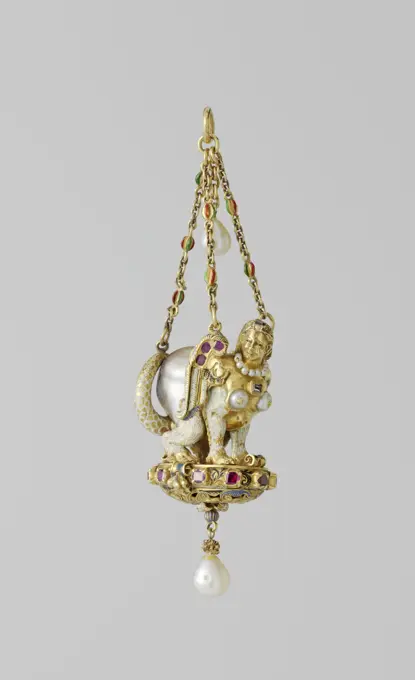
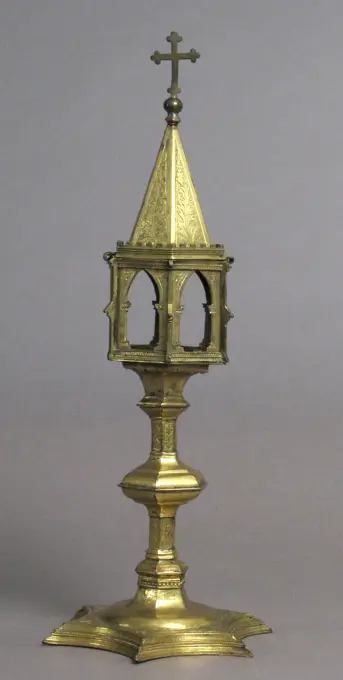
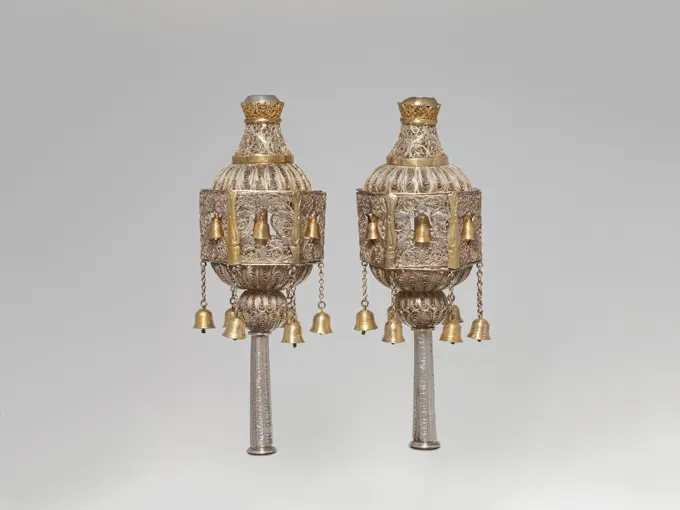
Arm with candle holder of candle crown of two heights, each with eight arms, 1525 - 1550 Candle arm belonging to a candle crown of two heights with maria figure at the top. The arm is bent twice and is decorated with four grapes bunches and five vine leaves. The round fat catcher is decorated at the bottom with six round lobes. The candle holder is six -flared, open, on a single hollow -rounded pedestal, transferring to a protruding with thread. This is the sixth arm of the upper ring, numbered with 6 round points. The candle holder is unnumbered. Southern Netherlands brass (alloy) casting Candle arm belonging to a candle crown of two heights with maria figure at the top. The arm is bent twice and is decorated with four grapes bunches and five vine leaves. The round fat catcher is decorated at the bottom with six round lobes. The candle holder is six -flared, open, on a single hollow -rounded pedestal, transferring to a protruding with thread. This is the sixth arm of the upper ring, nCandlestickCandelabrum, Alphonse Giroux & Cie, 1799-1867, Gilt bronze, Three-legged gold decorative clock with three lower arms and one raised center arm for candlesticks. Insects are scattered among the candelabrum., Paris, France, ca. 1870, metalwork, Decorative Arts, CandelabrumCandlestick (one of a set of eight). Culture: British, London. Dimensions: Overall (confirmed): 11 5/8 x 6 1/8 x 6 1/8 in., 38.025oz. (29.5 x 15.6 x 15.6 cm, 1078g). Maker: Andrew Fogelberg (British, active by 1767-d. before 1815). Date: 1774/75. Museum: Metropolitan Museum of Art, New York, USA.Candleholder (one of a pair)Galvanoplastic reproduction of a candlestick with twisted trunk with mythological representations from the popta treasure, Fa. Elkington & Co., 1881 Galvanoplastic reproduction of a candlestick with a round foot and a twisted trunk with mythological representations. London copper (metal). silver (metal) Galvanoplastic reproduction of a candlestick with a round foot and a twisted trunk with mythological representations. London copper (metal). silver (metal)Silversmith's art, England, 17th century. Anthony Nelme (active 1681-1722), silver-gilt candlestick, 1694.Lidded dish, anonymous, c. 1600 Coupe with lid on foot, from rock crystal in a golden frame with translucid enamel. The foot and barrel are lobed. Vertical gold tires connect the lip and bottom edge. On the bottom of the barrel in translucid email a pelican with young. Freiburg frame: Gold (Metal). frame: Coupe with lid on foot, from rock crystal in a golden frame with translucid enamel. The foot and barrel are lobed. Vertical gold tires connect the lip and bottom edge. On the bottom of the barrel in translucid email a pelican with young. Freiburg frame: Gold (Metal). frame:Candlestick, Pricket 15th century South Netherlandish. Candlestick, Pricket. South Netherlandish. 15th century. Brass. Metalwork-BrassGalvanoplastic reproduction of a candlestick with twisted trunk with mythological representations from the popta treasure, Fa. Elkington & Co., 1881 Galvanoplastic reproduction of a candlestick with a round foot and a twisted trunk with mythological representations. London copper (metal). silver (metal) Galvanoplastic reproduction of a candlestick with a round foot and a twisted trunk with mythological representations. London copper (metal). silver (metal)Candlestick 19th century, after 1663-64 original Elkington & Co. British This electrotype is after a seventeenth-century original (1663-64) in the Treasury of the Kremlin, Moscow. It was a gift to Tsar Alexei by the ambassador Charles Howard from King Charles II in 1664.. Candlestick 186500Two glass holders, Leendert Claesz (attributed to), 1609 Cup screw of gilded silver. On the high, vaulted foot the cogs and the coat of arms of the city of Amsterdam. The vase -shaped baluster tribe is decorated with a ecclesiastical symbols. The upper part consists of a half -sphere to give by 4 tritons and mermaids, which can grab the foot of a glass. Amsterdam silver (metal). gilding (material) gilding  Amsterdam Cup screw of gilded silver. On the high, vaulted foot the cogs and the coat of arms of the city of Amsterdam. The vase -shaped baluster tribe is decorated with a ecclesiastical symbols. The upper part consists of a half -sphere to give by 4 tritons and mermaids, which can grab the foot of a glass. Amsterdam silver (metal). gilding (material) gilding  AmsterdamCandlestick 1765-1766 Italy. This magnificent altar set, made by the Roman Rococo goldsmith Leandro Gagliardi, is comprised of statuettes of four apostlesóSaints Andrew, John, Peter, and Paul; four candlesticks; a crucifix; and three frames to hold cards indicating the part of the Mass being performed. The altar set was made for Flavio Chigi (1711ñ1771) and bears the Chigi and Albani coats of arms. It might have been intended for use in the family chapel of the Palazzo Chigi in the Piazza Colonna, Rome.. Gilt bronze . Leandro GagliardiCiborium with lid, Gilt copper, Cylindrical cup engraved with architectural arcades, on half-knopped stem, gadrooned, ornamented with applied volute straps; junction of stem with bowl ornamented with applied radial leaf ornament. High foot composed of radiating volute straps applied to molded foot rim. Lid is domed, decorated with repoussé and engraved imbrications, surmounted by applied radial leaf ornament and cross botonée on orb., France, 16th century, metalwork, Decorative Arts, Ciborium with lidCopper hanging lamp with beads, Theo Nieuwenhuis, c. 1916 The hanging lamp consists of a hood hung on four chains. This has a sawn -out decoration, in which tibaries and birds are included. A ball of frosted glass is mounted on the inside. The chains consist of links and three rods, the lower and upper ones of which are etched and strictered tivulus. A volant of frosted glass beads has been applied to the hood and a natural cloth with beige battery ornament motifs to shield the lighting. Amsterdam copper (metal). glass. textile materials sawing / etching The hanging lamp consists of a hood hung on four chains. This has a sawn -out decoration, in which tibaries and birds are included. A ball of frosted glass is mounted on the inside. The chains consist of links and three rods, the lower and upper ones of which are etched and strictered tivulus. A volant of frosted glass beads has been applied to the hood and a natural cloth with beige battery ornament motifs to shield the lighting. AmstGoblet. UnknownKandelaar, made up of ranks, Koninklijke Utrechtsche Fabriek van Zilverwerken by C.J. Desire, 1904 Two candlesticks (see also BK-1990-6-A), almost identical. Stam made up of four series of three tendrics that, at the bottom, gracefully curls the open foot ring and act as feet. Just above the foot ring, the tenders flow together to split into groups of two in a nodus at half height of the trunk. This schedule repeats itself in a second larger Nodus, which is located below the top of the trunk. From this the tiflines open as curling petals, from which the candle holder rises like a tulip -like chalice. Utrecht silver (metal) Two candlesticks (see also BK-1990-6-A), almost identical. Stam made up of four series of three tendrics that, at the bottom, gracefully curls the open foot ring and act as feet. Just above the foot ring, the tenders flow together to split into groups of two in a nodus at half height of the trunk. This schedule repeats itself in a second larger Nodus, which is locateCandlestick of gilded bronze in the form of a twisted trunk and candle holder, decorated with volute and leaf-shaped rocaille ornaments., Anonymous, c. 1735 - c. 1745 Candlestick of gilded bronze. The base, the twisted trunk and the candle holder are decorated with volute and leaf-shaped rocaille ornaments. See also: BK-NM-122286-B. Paris bronze (metal) gilding Candlestick of gilded bronze. The base, the twisted trunk and the candle holder are decorated with volute and leaf-shaped rocaille ornaments. See also: BK-NM-122286-B. Paris bronze (metal) gildingCandlestick. Culture: Italian, probably Venice. Dimensions: 7 1/2 x 7 in. (19.1 x 17.8 cm). Date: 16th century.Both the bulbous profile and assembly of its parts distinguish this European candlestick from its smaller Islamic models. Its surface ornamentation--the scrolling stems, rhomboid knots, quatrefoils, and strapwork panels--however, is similar to Islamic metalwork, especially the work of Mahmud al-Kurdi. Museum: Metropolitan Museum of Art, New York, USA.. Four mythological gods recline on the rim of this dish: Venus, the goddess of love, with her son Cupid; Bacchus, the god of wine; and Ceres, the goddess of agriculture. Together they personify the maxim: Without food and drink, love is cold’. This object was masterfully fashioned from a single sheet of silver. The proud silversmith signed it on the front.Candle crown with six arms, Anonymous, 1795 - 1800 The object consists of a round wrought iron rod, a hanging ring with wrought iron eye, a split pin of copper plate, and the next cast and parts of yellow copper on the lathe: the strain with the stand ring, the bulb, the button, six arms with the associated fat catchers (two missing), candle holders and pins (four lack). The strain is the shape of a six -square baluster or vase with the stand ring below, the openings of which are marked by one to six points. The glans -shaped ball has an engraved Hebrew inscription. The profiled button ends in a small button and is attached to the rod with the eye for the split pin. The arms, which are marked on the turns with one point or three to six points, are S-shaped, have curls at the end at the tribe side and turn outside into a thickening hole. In it, candle holders with the fat catchers are secured. The round holders have a hol round pedestal, narrow upwards and then have an excellent edge. SArm with candle holder of candle crown of two heights, c. 1525 - c. 1575 Candle arm belonging to a candle crown of two heights with naked woman at the top. The arm has a sphere and hollow-rounded nodus in the middle and thickens a little on both sides. At the trunk she ends in a spiral curl. She flows out in the screw end of iron. On it is the round fat catcher with a rim at the bottom. The round in each other's extended openwork candle holder has a holy -round base that is screwed onto the arm. This is the first arm of the upper ring, numbered with cross. The candle holder is unnumbered. Northern Germany (Possible) brass (alloy) casting Candle arm belonging to a candle crown of two heights with naked woman at the top. The arm has a sphere and hollow-rounded nodus in the middle and thickens a little on both sides. At the trunk she ends in a spiral curl. She flows out in the screw end of iron. On it is the round fat catcher with a rim at the bottom. The round in each other's extended opTwo double standing cups (trussing cups) ca. 1600 Probably Simon Pissinger Like the Augsburg tankard (11.93.16), this pair of cups was part of a cache of silver discovered in 1869 in the false wall of a Regensburg home. The silver had been hidden there centuries earlier, in the 1630s, by one Georg Hoffman, who feared looting during the Thirty Years War. Simon Pissinger, the silversmith who probably made this cup, was successful enough to buy a large house in Regensburg in 1599; his work (including a pair like this one) was acquired by the city council for their stock of gifts for visiting dignitaries. Sometimes called "trussing cups" in Elizabethan English inventories, double cups were used to celebrate unions, both political and matrimonial.Elizabeth Cleland, 2017. Two double standing cups (trussing cups). German, Regensburg. ca. 1600. Gilded silver. Metalwork-SilverAnonymous. Triangular chandelier with three lights belonging to a pair. Chiseled and gilded bronze. Between 1774 and 1791. Paris, Cognacq-Jay museum. 101701-21Arm with candle holder of candle crown of two heights with eight arms each, c. 1525 - c. 1550 Candle arm belonging to a candle crown of two heights with maria figure at the top. The arm is bent twice and is decorated with four grapes bunches and five vine leaves. The round fat catcher is decorated with fish bladder motifs at the bottom and has an excellent edge of cross flowers towards the middle, which masks the placement on the arm. The candle holder is six -flat, opened, placed on three vertical styles, transferring to a threaded protrusion. This is the fourth arm of the upper ring, numbered with 4 round points. The candle holder is unnumbered. Southern Netherlands brass (alloy) casting  Barneveld Candle arm belonging to a candle crown of two heights with maria figure at the top. The arm is bent twice and is decorated with four grapes bunches and five vine leaves. The round fat catcher is decorated with fish bladder motifs at the bottom and has an excellent edge of cross flowers towArm with candle holder of candle crown of two heights with eight arms each, c. 1525 - c. 1550 Candle arm belonging to a candle crown of two heights with maria figure at the top. The arm is bent twice and is decorated with four grapes bunches and five vine leaves. The round fat catcher is decorated with fish bladder motifs at the bottom and has an excellent edge of cross flowers towards the middle, which masks the placement on the arm. The candle holder is six -flat, opened, placed on three vertical styles, transferring to a threaded protrusion. This is the sixth arm of the upper ring, numbered with 6 round points. The candle holder is numbered with 6 diagonal notches. Southern Netherlands brass (alloy) casting  Barneveld Candle arm belonging to a candle crown of two heights with maria figure at the top. The arm is bent twice and is decorated with four grapes bunches and five vine leaves. The round fat catcher is decorated with fish bladder motifs at the bottom and has an excellent edgeSalt. Innsbruck, Germany. Date: 1500-1599. Dimensions: 8.3 x 12.7 cm (3 1/4 x 5 in.). Glass with gilding. Origin: Innsbruck. Museum: The Chicago Art Institute, Chicago, USA.Flower Vase, c. 1520-1540. Saint-Porchaire (French). Lead-glazed white-paste earthenware, molded and inlaid slip decoration; diameter of top: 14.5 cm (5 11/16 in.); diameter of base: 45.7 x 17.2 cm (18 x 6 3/4 in.).Chalice, anonymous, c. 1200 - c. 1299 Mandkelk of gilded silver, unadorned, funnel -shaped cuppa. On the round foot in Stampwerk: Christ on the cross between Mary and John and five sitting figures of saints. The Nodus is decorated with ajour flower and leaf rank ornament; The trunk has a round arch frieze in filigtrain work both above and below the Nodus. Eastern Netherlands silver (metal) filigree / gilding Mandkelk of gilded silver, unadorned, funnel -shaped cuppa. On the round foot in Stampwerk: Christ on the cross between Mary and John and five sitting figures of saints. The Nodus is decorated with ajour flower and leaf rank ornament; The trunk has a round arch frieze in filigtrain work both above and below the Nodus. Eastern Netherlands silver (metal) filigree / gildingLiqueur cabaret;  20th century (1901-00-00-2000-00-00);Michiel de Ruyters Goblet, Nicolaes Loockemans, 1667 cup Golden cup with loose, wide clock -shaped lid (without a button). The lid, the underside of the head, the shaft and the foot richly engraved with leaf motifs and decorated with white and black enamel. On the top of the lid is in email showing a lion climbing to the left (Wapen van Holland). The head is equipped with an ongoing Frisian in colored email on which the events during the trip to Chatham, from 20-23 June 1667 are displayed. The performance starts with the attack on the Fort of Sheerness ('Shirnasse'). Signed, marked, inscription. Cup donated to Lieutenant Admiraal de Ruyter on November 7, 1667.  gold (metal). striking (metalworking) / engraving battle (+ sailing-ships). Raid on the Medway ChathamCup, In Her Majesty's Collection,  Windsor Castle, Costume & Decorations of the Middle AgesMonstrans uit een klooster te Sinnich.Cylinder monstrance of silver, partially plated. The foot in the shape of a stretched four pass. Ter either side of the glass cylinder St. Augustine and St. Joris. On both sides of the Top St. Caecilia and St. Catharina. A crucifixion group forms the crowning. Master's sign: a boat.. In 1782 the Russian crown prince -later Tsar Paul I -and his consort sojourned in Paris. They visited the porcelain factory in Sèvres, where King Louis XVI made them a generous gift of numerous pieces of porcelain. They themselves bough many items, including these two vases. The couple displayed them in their palace in Pavlovsk.. Large arm with the accompanying fat catcher and holder. The labeled arm has a bol and hollow-profiled nodus in the middle and thickened a little on either side. At the trunk she walks out in spiral curls. It goes outwards in the screw ends of iron, on which the candle holder can be attached. The round fat catcher has lowered edges. The round in each other's extended openwork holders have holronde feet, which are screwed on the arms.. Large arm with the accompanying fat catcher and holder. The labeled arm has a bol and hollow-profiled nodus in the middle and thickened a little on either side. At the trunk she walks out in spiral curls. It goes outwards in the screw ends of iron, on which the candle holder can be attached. The round fat catcher has lowered edges. The round in each other's extended openwork holders have holronde feet, which are screwed on the arms.Drinking bowl on the foot of Bergen op Zoom. Drinking bowl on foot of driven silver. In the middle the gold-plated coat of arms of Bergen op Zoom, held by two Wildemannen. Above the weapon a banderle with inscription. At the foot of fruit and cartouches.Spittoon or Incense Burner late 16th-early 17th century Such baluster-shaped vessels are seen in paintings from the Deccan and Mughal periods, most often on the ground at a royal gathering or held by an attendant. One is included in the nearby painting Sultan Ibrahim Adil Shah II Venerates a Sufi Saint. The spiral fluting is fairly typical of Deccani metalwork, though surviving examples in this shape are exceedingly rare.. Spittoon or Incense Burner. late 16th-early 17th century. Brass; cast in sections, joined, engraved. Attributed to India, Deccan, Bijapur or Golconda. MetalSilver sugar spreader, reversed pear -shaped on vaulted foot and with twisted openwork cap, decorated with rocailles, tibaries, flowers and birds., Jan Verdoes (attributed to), 1746 Silver sugar spreader. The reverse pear -shaped barrel, the vaulted foot and the openwork cap are twisted and decorated with driven rocailles, tiflens, flowers and birds. Haarlem silver (metal) Silver sugar spreader. The reverse pear -shaped barrel, the vaulted foot and the openwork cap are twisted and decorated with driven rocailles, tiflens, flowers and birds. Haarlem silver (metal)FIRST FIRTY WITH A BESTING OF THE BEAST OF A WOMAN AND A BOL, Anonymous, 1625 - 1650 The object consists of three parts -screwed plea -iron parts: the rod, where the wood can be laid, the rods of screw wires, the vertical on the ends of screw wires, to attach the decoration. This consists of four cast, consented and engraved yellow -cutting parts: the base, the trunk, the ball, the button. The base, whose profile is sharply sweating up and out, has two feet decorated with rosettes and in the middle with the bust of a woman. The profiled tribe has a nodus. The ball is smooth. The richly profiled button has three buttons. The button is on the inside with iron. One of a threaded hole has been applied in it so that it can be tightened on the rod. Northern Netherlands brass (alloy). iron (metal) forging / casting / engraving The object consists of three parts -screwed plea -iron parts: the rod, where the wood can be laid, the rods of screw wires, the vertical on the ends of screw wires, to Handbell, Leendert Jacobus Leendertsen, 1791 Table bell made of silver. A pearl edge with hanging giurlandes. Along the lower edge an engraved pendulum edge. A snake winds around the columnar stem. Middelburg silver (metal) Table bell made of silver. A pearl edge with hanging giurlandes. Along the lower edge an engraved pendulum edge. A snake winds around the columnar stem. Middelburg silver (metal)Candlestick from the Parish Church in Biecz unknownPair of two-light candelabra. Culture: French. Dimensions: Each: H. 15 7/8 x W. 11 in. (40.3 x 27.9 cm). Date: ca. 1745-55. Museum: Metropolitan Museum of Art, New York, USA.. Candlestick consisting of a square foot and a round trunk, candle holder and separate fat catcher. Signature and dated.. Large arm of candle wreath.Tea tray, cake stands, jam dish, sugar bowls, coffee pot and milk jug, Martin Guillaume Biennais, c. 1817 Cake scale of gilded silver. A flat plateau with vertically raised, narrow edge. Foot and shaft with acanthus leaves decorated. On the leaf engraved the crowned imperial monogram. Paris silver (metal). gilding (material). ebony (wood) gilding Cake scale of gilded silver. A flat plateau with vertically raised, narrow edge. Foot and shaft with acanthus leaves decorated. On the leaf engraved the crowned imperial monogram. Paris silver (metal). gilding (material). ebony (wood) gildingChalice 1462 Southeastern European High-ranking church officials would have used this flamboyant Gothic chalice on special occasions, and the objects colorful and glittering appearance would have been in divine harmony with the multicolored sunlight coming through the stained glass windows. The grandeur of the delicate filigree enameling became associated with the term modo transilvano, or, “in the Transylvanian fashion.” Along with bejeweled examples, ostentatiously colorful, enameled chalices, such as this one, were the pride of church treasuries in Central and Southeastern Europe and Northern Italy, including Venice, which had a common border with the fifteenth-century Hungarian Kingdom. The majority of ecclesiastical silver was destroyed during the Reformation in the sixteenth- century. The chalice bears the date 1462 and names the otherwise unknown donor Nicolas Cynowec. The object itself is equally illustrious as its distinguished provenance, from the collection of Baron NathaniPerfume bottle foot 1577/78, body ca. 1585 Possibly by Jasper Fysher This may originally have served as a powder horn, which could have been suspended from a cord passed through the holes formed by the tail of the dragon at each side of the neck. The pierced cover and foot were added later to adapt it to the function of a perfume sprinkler.. Perfume bottle 204953Pair of six-branch chandeliers. Culture: British. Dimensions: Overall: 37 × 39 in. (94 × 99.1 cm). Date: ca. 1725. Museum: Metropolitan Museum of Art, New York, USA.. Linen press of oak. The sleeves show acanthus drinks and lying lions; On the sloping fields between the feet of leaf motifs. The scaffolding styles have the form of ionic columns with a vase-shaped fluted shaft and rest on rectangular basements with children's heads. The scaffold beam shows a stained base fresh with a child's head in the middle. The spindle ends in a support piece with acanthus sheet, connected to the upper press sheet. On top of three vases.Arm of a candle crown in three heights, Anonymous, 1625 - 1650 The arm is provided with a ridge on the tribe side, in which a hole is applied to secure them with a pin in the stand rings. The S-shaped arm has the shape of a hose with a tail-wrinkled tail and outside a lifted head with a round button on it, in which the hole provided with a thread is applied to confirm the candle holders with the fat catchers. The arm is cast using the same model as the other arms of the wreath. The round candle holder is vase -shaped with a profiled rib. At the top she has two holid profile, and a protruding edge and at the bottom of a foot consisting of two holy -round profiles. The foot runs out in a rejuvenating screw end with a center hole. The convex fat catcher is smooth at the top and has fish bladder -like godrons and a rib at the bottom. The fat catcher is cast using the same model as the other fat catchers of the wreath. The pins are decorated with convex buttons. This is the third arm of theArm of a candle crown in three heights, Anonymous, 1717 chandelier The S-shaped arm is equipped with a ridge on the tribe side to secure it with a pin in the stand ring. At the trunk, the arm is decorated at the end and to the center with two stylized dolphin heads and with curls, the shape of which is derived from the lobe ornament. To the outside, the arm ends in a thickening, in which a hole provided with a thread is applied to attach the candle holder to the fat catcher. The arm is cast using the same model as the other arms of the wreath. The candle holder is cylinder -shaped with profiled excellent edge and with a baluster foot, which turns into a threaded end, in which the center hole at the bottom. The fat catcher is deepened once at the top to the middle. At the bottom it is profiled around the hole in the somewhat spherical center and the edge is ribbed. The fat catcher has been cast using the same model as the other fat catchers of this wreath. The pin is equipped with a vasCommunion cup with paten cover, c. 1568-1569, George Kitchen, English (York), English, active 1561-1597, 10 x 4 in. (25.4 x 10.16 cm), Silver, England, Elizabeth IChamberlain's key with the monogram of Maximilian I Joseph, King of Bavaria 1806-1826 German Functional and highly decorative, gilt bronze was used throughout the eighteenth-century interior. Ranging from hearth fittings and lighting to furniture mounts and hardware for door and windows. This key has a gilt-bronze bow with an openwork monogram formed by the letters M and J; it was a chambelains key with the monogram of Maximilian I Joseph, King of Bavaria (r. 1806-1826).. Chamberlain's key with the monogram of Maximilian I Joseph, King of Bavaria. German. 1806-1826. Steel, gilded bronze. Metalwork-Gilt BronzeGasolier c 1880 Philadelphia (Object made in), United States (Artist's nationality). This gasolier is a light fixture named for its original light source, gas, which had a flickering affect that would have been amplified by the hundreds of glass pendants and the twelve etched glass shades affixed to the intricate brass frame. Decorative metalwork flourished in the late 19th century with the rise of Aestheticism, a cultural movement that prized beauty in every aspect of life, including oneís furnishings. Here sprays of flattened flowers and stylized branches and leaves form the structural elements of the gasolier including the circular tiers and angular brackets that support the glass elements.. Brass and glass . Thackara, Buck & Co. , Thackara, Sons & Co.Wine cup on high foot (Tazza). Culture: British, London. Dimensions: Height: 7 1/4 in. (18.4 cm). Date: 1599.The broad, shallow bowl of this wine cup is a borrowing into silver design of a Venetian glass form popular in the second half of the sixteenth century. Although few glass examples survive, we know of their use from Italian paintings, in which typically a dimpled ground in the bowl served to enhance the sparkling, light-filled character of the wine.Cruising serenely through little wavelets, the swan at the center of this bowl is an emblem of the Vintners' Corporation, the guild for men active in the wine trade whose responsibilities included monitoring conditions on the docks and securing honest trading. The Vintners' Corporation, one of the earliest guilds, received a charter in 1364. The four marks which seem to disfigure the side of the cup are in fact hallmarks, struck at the Hall of the Goldsmiths' Company, which regulated gold- and silversmiths and guaranteed the qualityLamp - vase;  2nd half 19th century (1868-00-00-1900-00-00);Tin crane jug with paint christian part. Chruiser kan from tin. The three legs with wooden, baluster-shaped feet wear a canow with an inverted conic body. At the bottom of the can stand a copper tap. There are two gold-plated lion heads on the sides with a ring in their mouths. The high, peak tapered lid has a glans-shaped button. The tap jug is painted black and decorated with golden decorations of leaves and flowers. Above the tap stands a painting of a landscape with a farmhouse, a farmer, a farmer's and cattle.Goblet and Cover, anonymous, c. 1600 - c. 1620 Bokaal with lid from Onyx, mounted with enamelled gold and precious stones. As a crowning, a shooting, blindfolded amorur of white enamel. Around foot and lid wide golden edges with fine flower and leaf vines of sunken enamel with imposed gems. The foot is connected by three narrow straps to the vase -shaped trunk, around the height of the neck, three snakes wriggle. Germany onyx (mineral). gold (metal). emerald (mineral) Bokaal with lid from Onyx, mounted with enamelled gold and precious stones. As a crowning, a shooting, blindfolded amorur of white enamel. Around foot and lid wide golden edges with fine flower and leaf vines of sunken enamel with imposed gems. The foot is connected by three narrow straps to the vase -shaped trunk, around the height of the neck, three snakes wriggle. Germany onyx (mineral). gold (metal). emerald (mineral). The crockery consists of a leaf with screw-on handle, with an oil pan on it, a spreader with round holes, a spreader with diamond-shaped holes and a salt barrel with lid. The blade has a four-pass shape as a base shape with a slight curvature within each circle that suits one of the barrels or spreaders. It is enclosed by a raised profiled edge. The handle has the shape of a high sleeve that is equipped with profiled tires on the top and bottom and 4/5 of the height. The sleeve is crowned by a standing ring on which a button in the shape of a pine cone. The oil pan rests on a six-spectable base, a diabolo-shaped intermediate piece is placed above a narrow knerr edge. The body has the shape of a pine cone, decorated with drip-shaped bulges. On the neck widening up to the top, a multi-profiled, hinged, rejuvenating clapper cover is attached to a round-ended profile, awarded a knob in the shape of a pine cone. The can have a standing S-shaped ear, which is decorated at the top with knerCandlestick, 19th century, 9 3/4 x 5 1/8in. (24.8 x 13cm), Pewter, United States, 19th centuryTwo candle stands guéridons. These tall candle stands closely resemble designs by Daniël Marot and drew inspiration from the French court style of the late 17th century. They were probably commissioned by someone in the circle of the stadtholders court in The Hague. Such stately, gilt showpieces would have found an appropriate place there.Kadzielnica (kôro);  2. PO. 19th century (1868-00-00-1900-00-00);Wall arm of gold-plated lining wood with three candle holders and decoration of asymmetrical sculpted acanthus leaf work with flowers. Wall arm of gold-plated lion wood with three candle holders and decorated with asymmetrical sculpted acanthus leaf work with flowers.Candelabrum. Dated: c. 1937. Dimensions: overall: 35.6 x 25.4 cm (14 x 10 in.) Original IAD Object: 3'high; 11"wide, approximately. Medium: watercolor, colored pencil, and graphite on paper. Museum: National Gallery of Art, Washington DC. Author: Robert W. R. Taylor.Bell with Vajra Handle, 900s. Indonesia, Java, 10th century. Bronze; diameter: 5.7 cm (2 1/4 in.); overall: 15.1 cm (5 15/16 in.).Silversmith: Herman Vortius, Silver tobacco pot with engraved on the bottom * Arnold Carel Leonard Bruins, gebn. The 21 septb. 1769., tobacco jar pot holder metal silver, cast engraved Baluster-shaped pot with profiled top edge, vaulted lid to the middle high upset and crowned with asymmetrical flame-shaped knob (). Body and lid lobed in narrow and wide buildings. Four molded curling feet placed underneath raised palm-pattern (bottom underside) Arnold Carel Leonard Bruins baptism baptisms birth smoking storing tobacco tobacco boxDecanter - Inconnu / UnknownTwo-armed candlestick with a figure of a national servant, anonymous, c. 1500 - c. 1550 The candlestick consists of four parts: the foot, the men's figure, two fat catchers, two candle holders. The foot and the fat catchers are turned, the men's figure and the candle holders are cast. The low round profiled base is decorated with grooved rings, and has a flat edge. The horizontal part of the foot is equipped with a raised edge, and can thus serve as a fat catcher. The foot turns to the center into a bell -shaped elevation with an opening, in which the trunk is screwed. This has the shape of a standing man's feature according to the split mode of the German nationals, with mustache and sideburns, which has lifted his arms. The man stands on a pedestal that has a short thread at the bottom and is flat and more or less oval of circumference. The brand t is applied there between the man's feet. His hands include two elements, in which the profiled candle holders are screwed to the fat catcLand;  the beginning of the 20th century (1900-00-00-1910-00-00);Pomander 16th century German. Pomander. German. 16th century. Silver gilt. Metalwork-Silver. The design of this ensemble is sober and rational, the distinctive style of the influential Dutch architect Berlage.Connecting elements, such as rivets, are clearly visible and accentuate both the construction and the form. The broad, splayed feet resemble the base of the Eiffel Tower, completed in 1889, which was the shining example of engineering of its time.Ceremonies brewation with Maria on the globe. The richly decorated object from many parts consists of an Ajour machined pedestal, in which lobe ornament motifs can be recognized and four out of ornament of ornament of angels, which carry the AJOUR processed in part in lobe ornaments. The object has been radically restored. The figure Maria on the globe with the hose, which is placed in the middle, is an addition from later time.Terracotta holmos (stand) 7th century B.C. Etruscan With a large conical base decorated with rows of bosses and triangular perforations, two smaller elements with similar decoration, and a wide flaring top with large bosses to hold a dinos, a large cauldron-like vessel.. Terracotta holmos (stand). Etruscan. 7th century B.C.. Terracotta. Archaic. VasesArmor. Culture: Chinese. Dimensions: Helmet (a): H. 12 1/4 in. (31.1 cm); W. 7 1/2 in. (19.1 cm); D. 9 1/2 in. (24.1 cm); Wt. 3 lb. 4.2 oz. (1479.8 g). Date: 18th century. Museum: Metropolitan Museum of Art, New York, USA.Tazza, c. 1815. Pietro Paolo Spagna (Italian, 1793-1861). Silver; diameter: 32.1 cm (12 5/8 in.); overall: 20.6 cm (8 1/8 in.).Antique bronze candlestick isolated on white with clipping pathBowl with lid, with a forest face with three deer. Flat, eight, faceted foot undervantage in a faceted trunk and knot. Convex choke with funnel-shaped underside. A forest faceges with three deer is engraved on the chalice. On the underside of the chalice cut ovals and circles.Candlestick; Koenigliche Porcellain Fabrique, Meissen (1710-1763); approx. 1750 (1745-00-00-1750-00-00);Arm with candle holder of candle crown of two heights, c. 1800 - c. 1875 Candle belonging to a brass candle crown of two heights. The S-shaped arm has a curl at the start, halfway through a dolphin head and turns outside into the flat thickening with a screw hole. The candle holder is secured with the fat catcher. The fat catcher is ribbed at the bottom of the opening and has a slightly excellent edge and is decorated with grooved hefty rings. The Cylindrian candle holder has a profiled and a little excellent edge, two grooved rings, a rib and a profiled hollow bottom, which turns into a protrusion with a thread with a center hole. This is the fifth arm of the upper position ring, numbered with 5 round points. Netherlands brass (alloy) casting Candle belonging to a brass candle crown of two heights. The S-shaped arm has a curl at the start, halfway through a dolphin head and turns outside into the flat thickening with a screw hole. The candle holder is secured with the fat catcher. TheArm with candle holder of candle crown of two heights, c. 1800 - c. 1875 Candle belonging to a brass candle crown of two heights. The S-shaped arm has a curl at the start, halfway through a dolphin head and turns outside into the flat thickening with a screw hole. The candle holder is secured with the fat catcher. The fat catcher is ribbed at the bottom of the opening and has a slightly excellent edge and is decorated with grooved hefty rings. The Cylindrian candle holder has a profiled and a little excellent edge, two grooved rings, a rib and a profiled hollow bottom, which turns into a protrusion with a thread with a center hole. This is the second arm of the lower position ring, numbered with 2 round points. Netherlands brass (alloy) casting Candle belonging to a brass candle crown of two heights. The S-shaped arm has a curl at the start, halfway through a dolphin head and turns outside into the flat thickening with a screw hole. The candle holder is secured with the fat catcher. ThMass amphu to water;  approx. 1500 (1496-00-00-1505-00-00);Angels, Gothic (style), plant (ornament), purchase (provenance)Tureen with Cover 1745-1746 London. Silver . Peter Archambo, IFour candlesticks, Cornelis Hendrik Bömcke (attributed to), 1783 - 1784 The candlesticks are round in diameter. The profiled foot, which is decorated with phases and a pearl edge, rests on the right -wing base. Above it, a vaulted, scanned section rises, which gradually turns into the trunk and which is crowned by a series of profiles, the most important of which is decorated with phases. This rests the cube -shaped nodus that shows a rosette on each side and that carries the top of the scanned trunk, crowned by a smooth band with four round heads. The two scanned parts of the trunk are decorated with bay heads hanging on two nail heads. The loose fat catcher is surrounded by a pearl edge. Amsterdam silver (metal) The candlesticks are round in diameter. The profiled foot, which is decorated with phases and a pearl edge, rests on the right -wing base. Above it, a vaulted, scanned section rises, which gradually turns into the trunk and which is crowned by a series of profiles, the most iStand, copper, silver, Trefoil-shaped base with applied molded rim, three ball feet; reeded frame for holding 3 decanters and stoppers, tall central circular handle., Sheffield, England, ca. 1830, metalwork, Decorative Arts, StandTripot covered bowl shaped like an ancient ritual vessel, anonymous, c. 1800 - c. 1899 Porcelain lid of lid bowl, covered with a monochrome green, gray glaze. Covered with geometric motifs and 'taotie' masks in relief; Three open work. Monochrome. China porcelain. glaze vitrification Porcelain lid of lid bowl, covered with a monochrome green, gray glaze. Covered with geometric motifs and 'taotie' masks in relief; Three open work. Monochrome. China porcelain. glaze vitrification. Chair of walnut, resting on a, in spread position, front and rear plate, connected by a sport. The front and rear plate wears a twisted button, flanked by acanthus volutes on the front. The wide seat rules are smooth, the rule has a button. The seat is octagonal. The back has the shape of a reverse-like triangle with two flat panels. The upper shell ends in circular rosettes and has a shield with tree and decorations in Intarsia in the middle.Megillah (scroll) with case, c. 1902, 10-1/8 x 2-3/8 x 1-7/16 in. (25.7 x 6.0 x 3.7 cm), Copper alloy, silver plate, wood, paper, 19th-20th centuryCenter Table (China); Manufactured by F. Barbedienne Foundry (France); bronze, enamel, goldGarden Vase. This vase, one of a set of two, is from Enghuizen Estate near Lochem. During the Second World War this 19th-century country house was used as a military hospital, and torn down shortly thereafter. The vases will have originally come from an older country manor. They are made of marble from the famous Carrara quarries in Italy and have two handles in the shape of female busts.Goldsmith's art, 19th century. Diamond brooch in the form of a branch in blossom, around 1890Rimmonim (Torah finial) (one of a pair), early 20th century, 13 3/4 x 4 3/4 in. (34.93 x 12.07 cm), Silver, Morocco, 20th centuryCruet Stand, 1817-1818. Paul Storr (British, 1771-1844). Silver; overall: 24.8 x 24.2 x 14 cm (9 3/4 x 9 1/2 x 5 1/2 in.).This ornate chandelier, by R  Winfield of the Cambridge  Street Works, Birmingham, is  exhibited at the Crystal  Palace, the Great Exhibition.      Date: 1851Goldsmith's art, Italy, 16th century. Galley-shaped rock crystal table fountain with gold bands set with garnets. Height cm. 12.4. Saracchi Workshop manufacture.Lidded Goblet and Jewel Casket, Johannes Mattheus van Kempen, 1851 Jewelry box in Renaissance style. The lid is crowned by a dog on a pillow. Utrecht silver (metal). elm (wood). copper (metal). velvet (fabric weave) casting Jewelry box in Renaissance style. The lid is crowned by a dog on a pillow. Utrecht silver (metal). elm (wood). copper (metal). velvet (fabric weave) castingPendant in the form of a sphinx, anonymous, c. 1600 Maaden of enamelled gold and a baroque pearl. Representing a sphinx on a postament with rubies and a pearl. Italy gold (metal). pearl. ruby (mineral) Maaden of enamelled gold and a baroque pearl. Representing a sphinx on a postament with rubies and a pearl. Italy gold (metal). pearl. ruby (mineral)Reliquary 16th century Italian. Reliquary 464177Rimmonim (Torah finial) (one of a pair), early 20th century, 9 1/2 x 3 3/8 x 3 3/8 in. (24.1 x 8.6 x 8.6 cm), Silver, gilt silver, Morocco, 20th century, Rimon is Hebrew for pomegranate, a fruit that grows in Israel and other parts of the Middle East and is often eaten on the Jewish New Year. The pomegranate is said to have 613 seeds, the number of commandments found in the Torah. This pair of rimmonim (plural) echo the rounded pomegranate shape while the complex filligree wire provide an organic motif. The staves on which the Torah is rolled are often referred to as Etz Hayim or the 'Tree of Life,' so the rimmonim are thought to represent the fruit of that tree.Salt barrel with driven flowers, Claes Claesz Schoon (attributed to), 1668 The two round, diabolov -shaped salt vessels with flat bottom edge have three cast legs that are composed of two roses and a garden anemone. The body rejuvenates for a high, narrow middle section that widens to the convex top edge, which encloses the smooth bowl -shaped barrel. The salt vessels are completely driven with a continuous decoration of flowers, between which standing on the lower part and a lying putti and a pelican, a stork and a heron on the neck. The top edge shows, clockwise from the point above the pelican, a sunflower, a rose, a tulip, a carnation, a tulip, a carnation and an indefinable flower. The narrow central part of the body shows a trumpetnarcis, a tulip, a Turkish lily, a rose, a poetry narcis, a tulip and again a poet's narcis. The sub -part shows a garden anemone, a tulip, a lily, tulips, a trumpetnarcis, roses and a garden sanjer. Amsterdam silver (metal) The two round, diabolov -sha