Decorative Candle Holders Collection

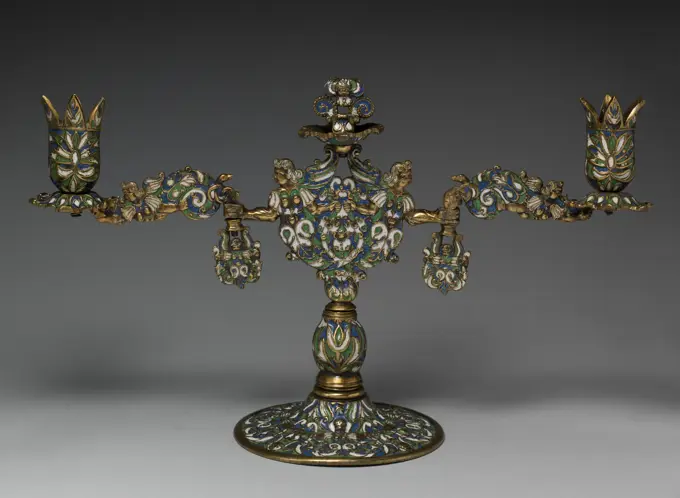
An array of ornate candlesticks and candelabra, featuring intricate designs and historical craftsmanship from various periods.

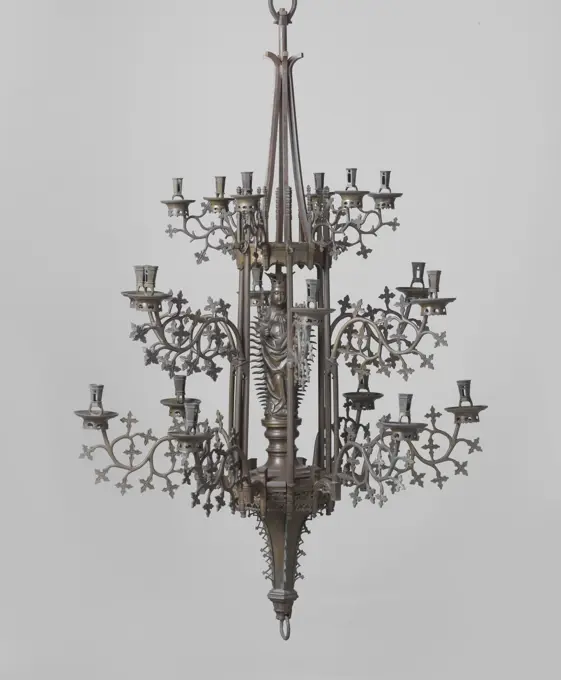
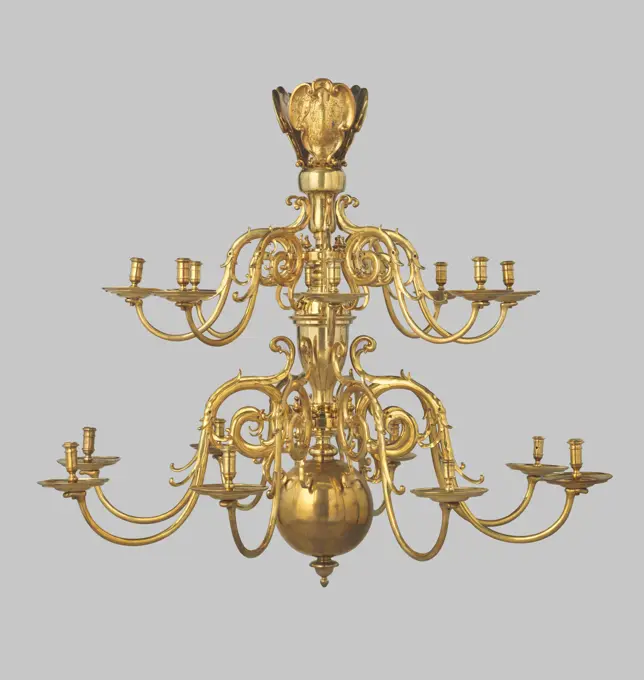
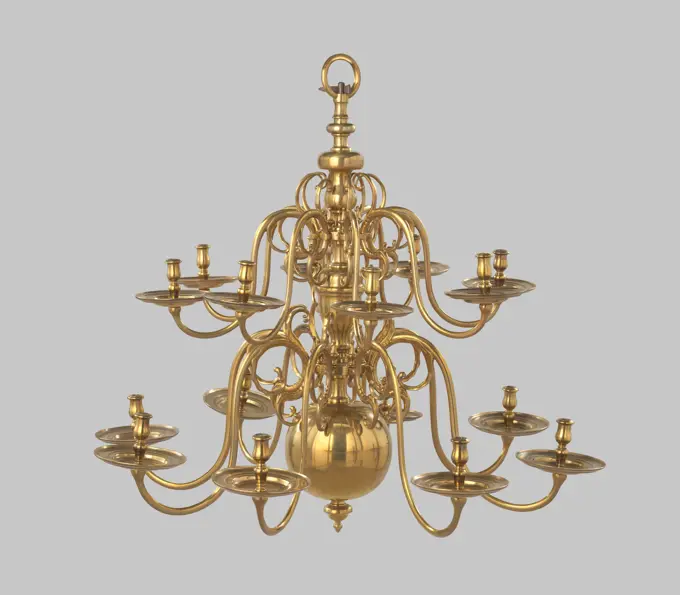
Arm with candle holder of candle crown of two heights, each with eight arms, 1525 - 1550 Candle arm belonging to a candle crown of two heights with maria figure at the top. The arm is bent twice and is decorated with four grapes bunches and five vine leaves. The round fat catcher is decorated at the bottom with six round lobes. The candle holder is six -flared, open, on a single hollow -rounded pedestal, transferring to a protruding with thread. This is the sixth arm of the upper ring, numbered with 6 round points. The candle holder is unnumbered. Southern Netherlands brass (alloy) casting Candle arm belonging to a candle crown of two heights with maria figure at the top. The arm is bent twice and is decorated with four grapes bunches and five vine leaves. The round fat catcher is decorated at the bottom with six round lobes. The candle holder is six -flared, open, on a single hollow -rounded pedestal, transferring to a protruding with thread. This is the sixth arm of the upper ring, n
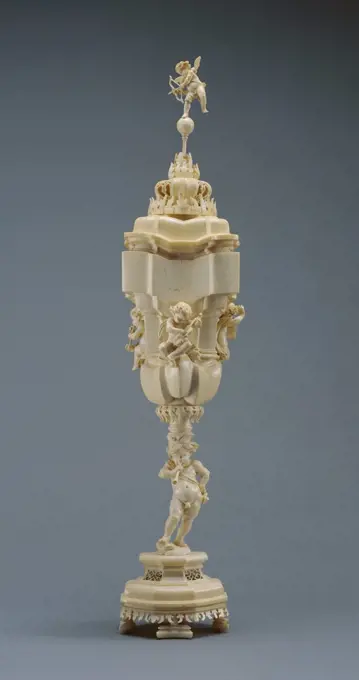
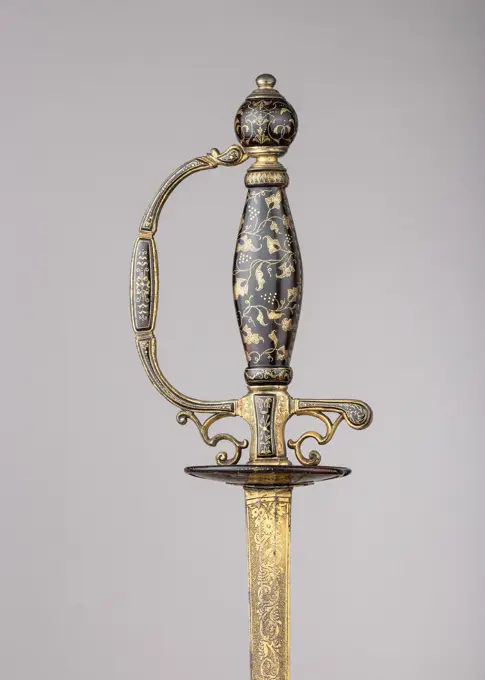
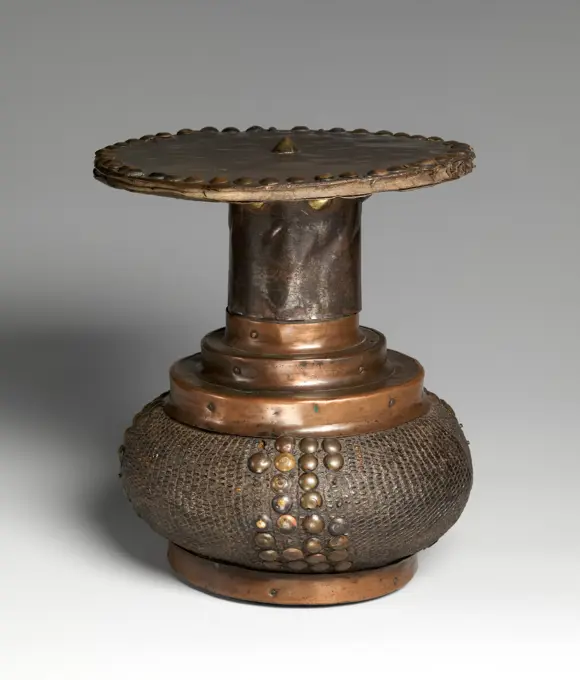
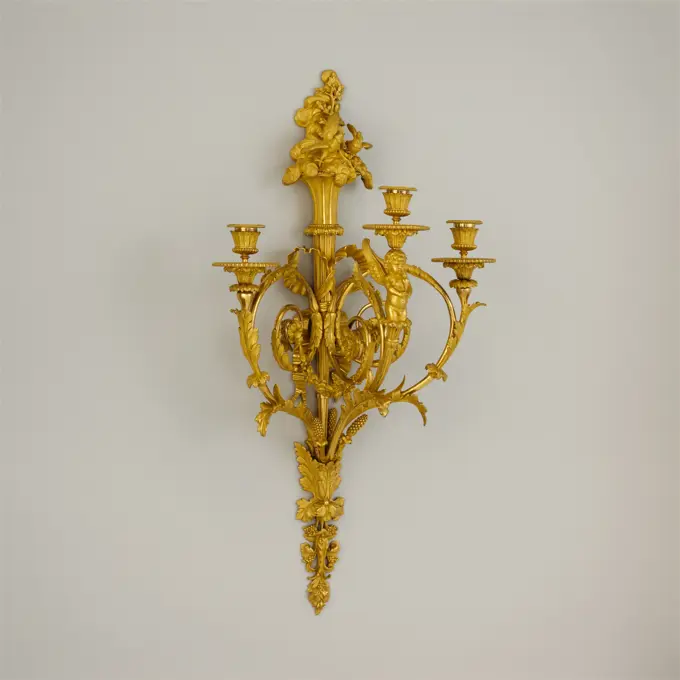
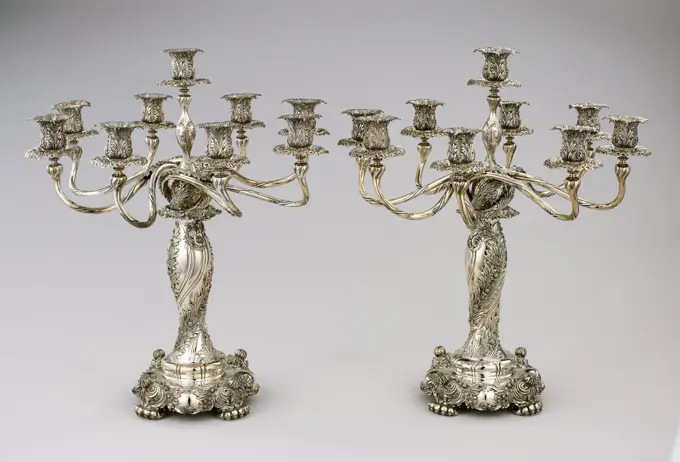
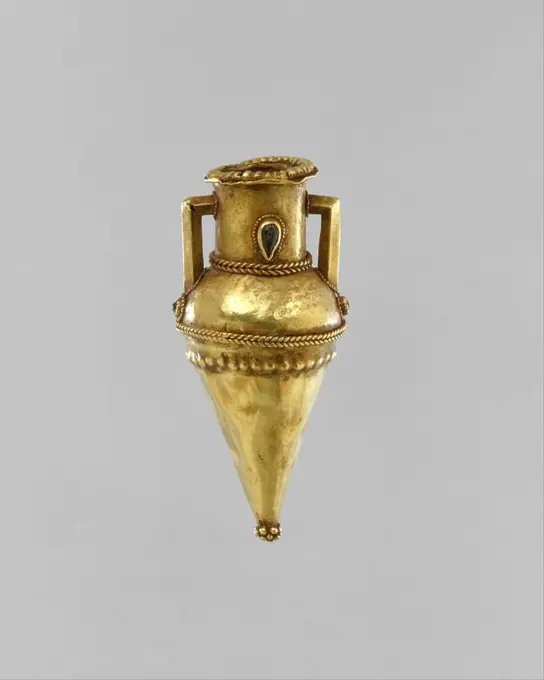
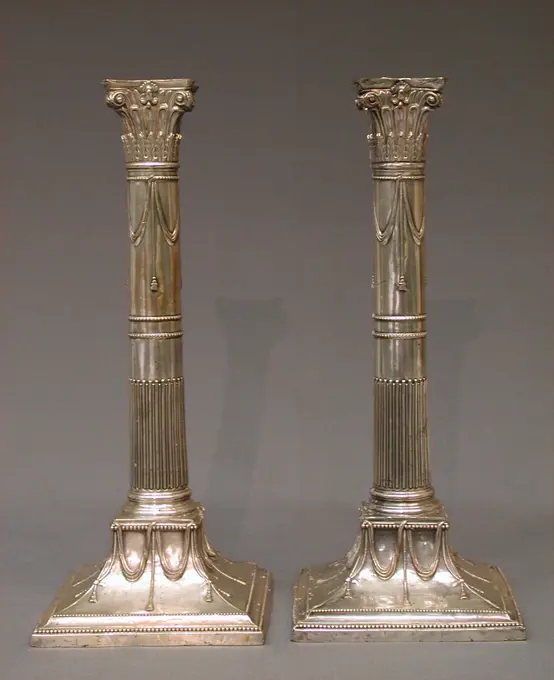
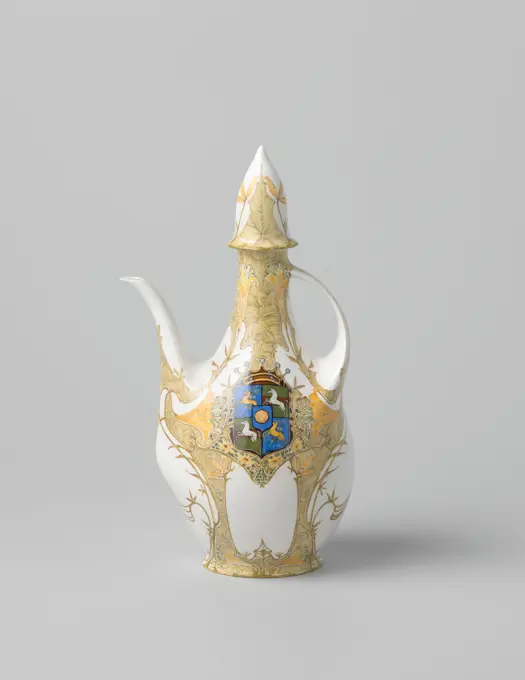
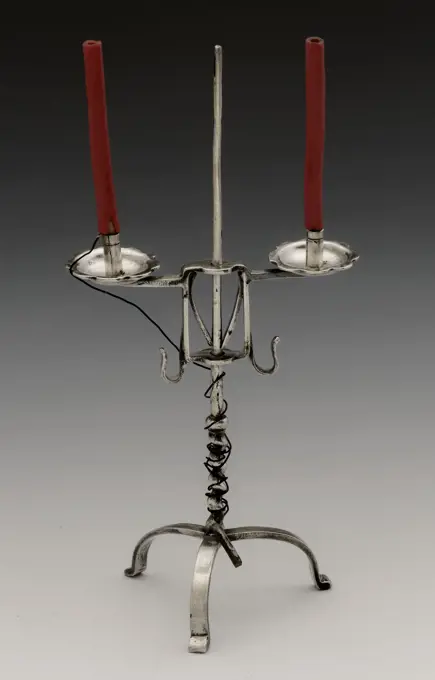
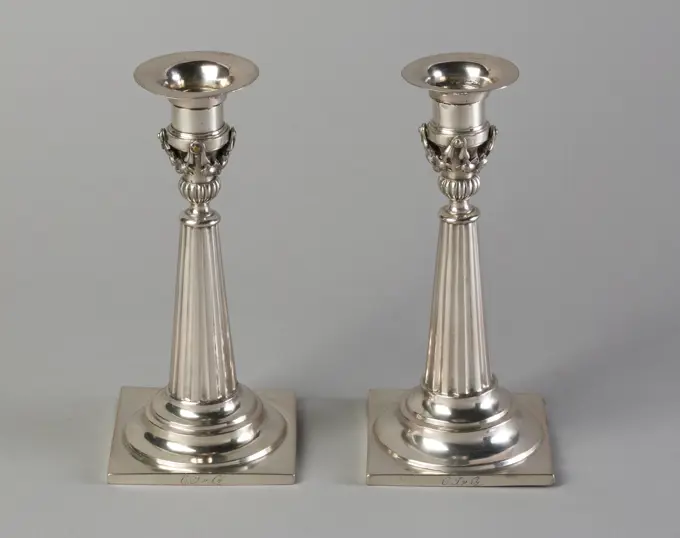
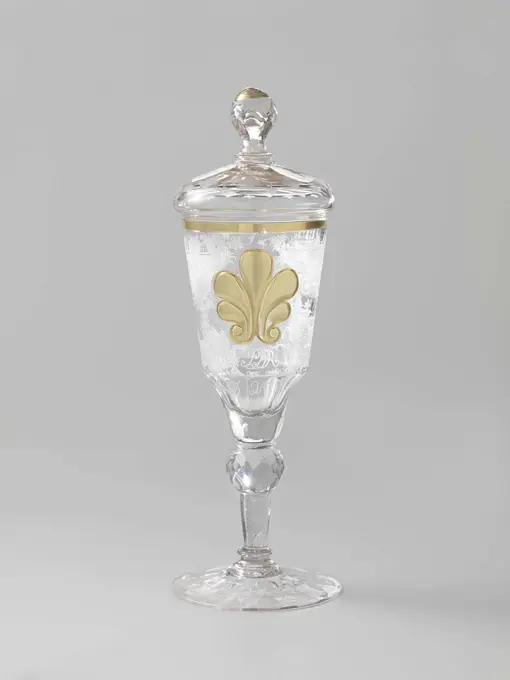
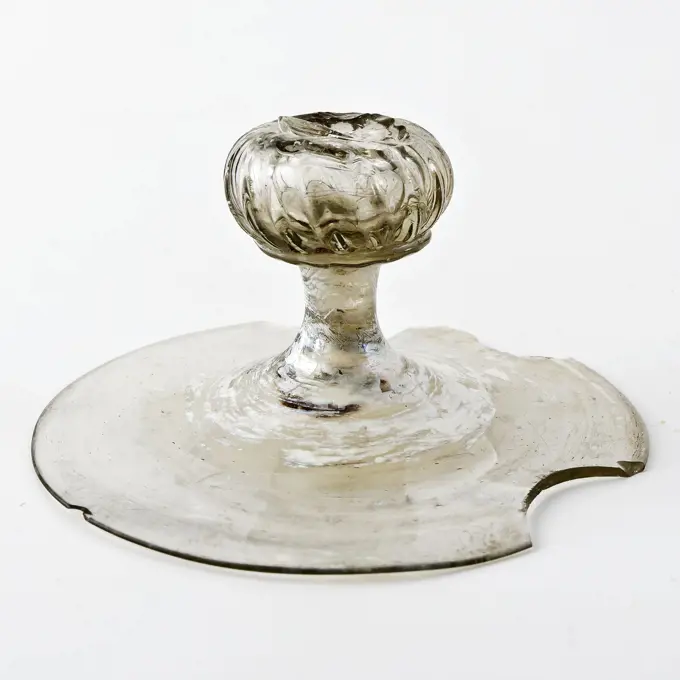
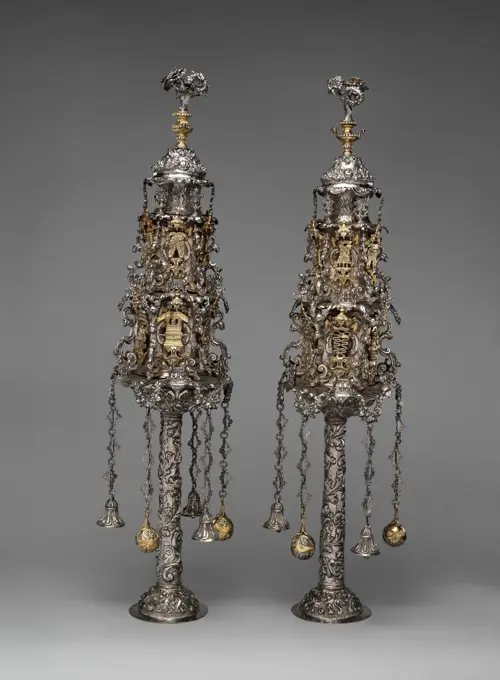
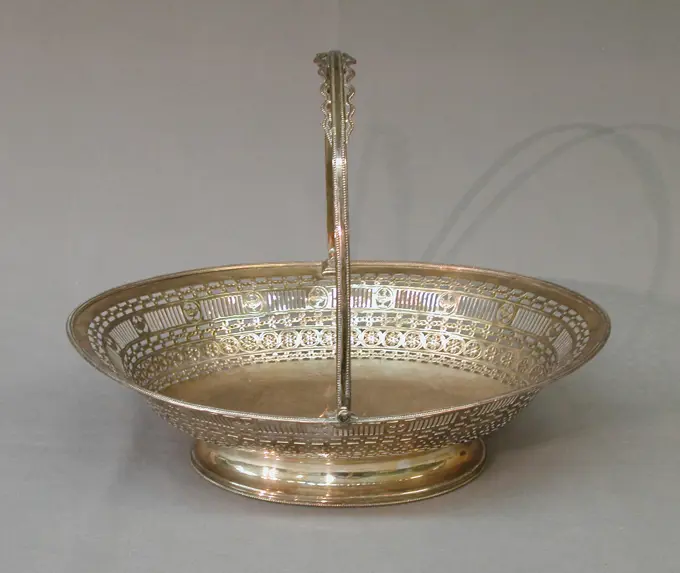
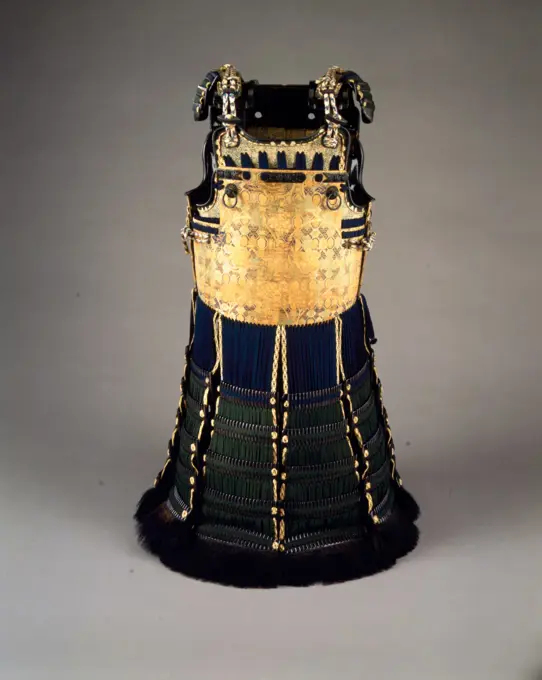
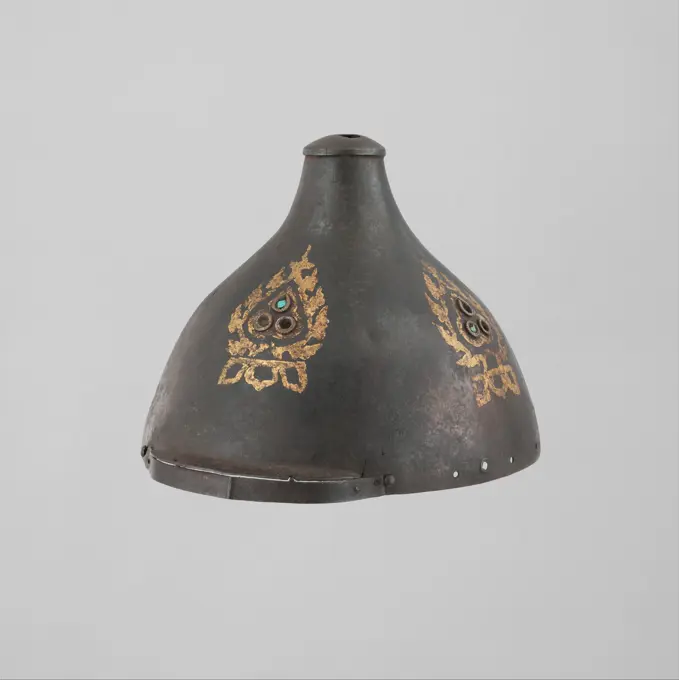
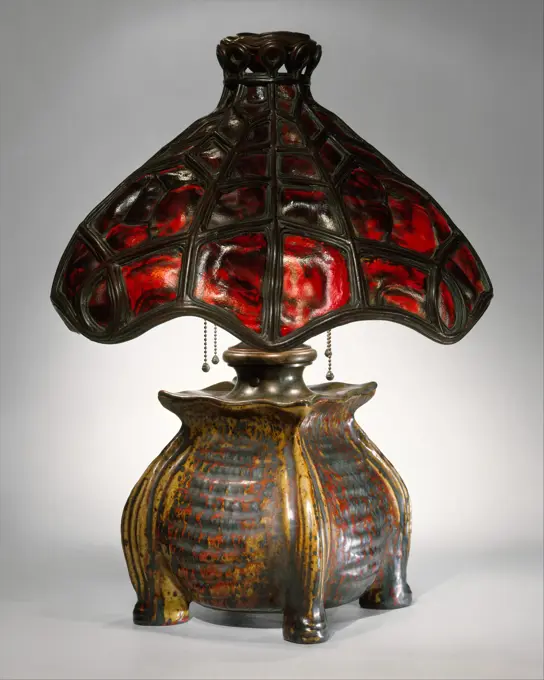
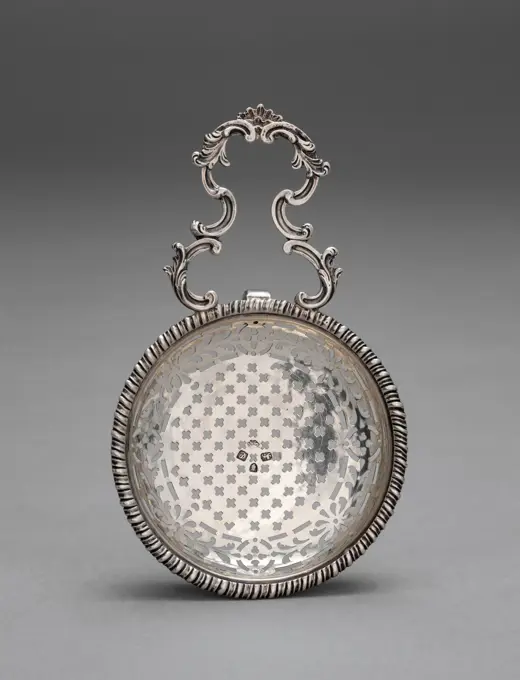
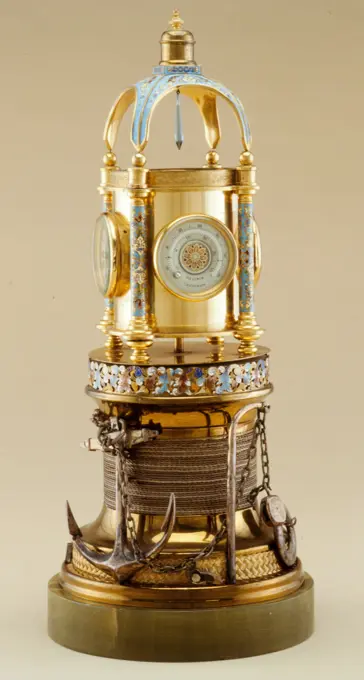
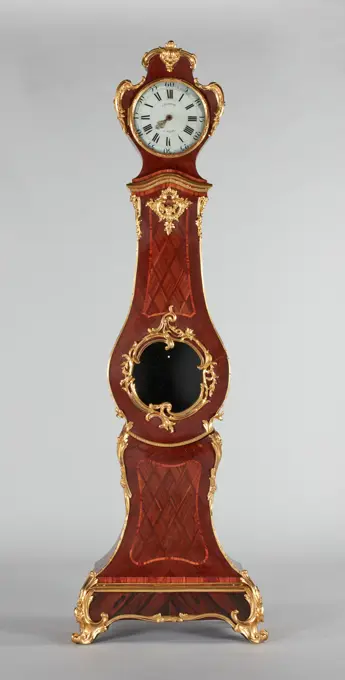
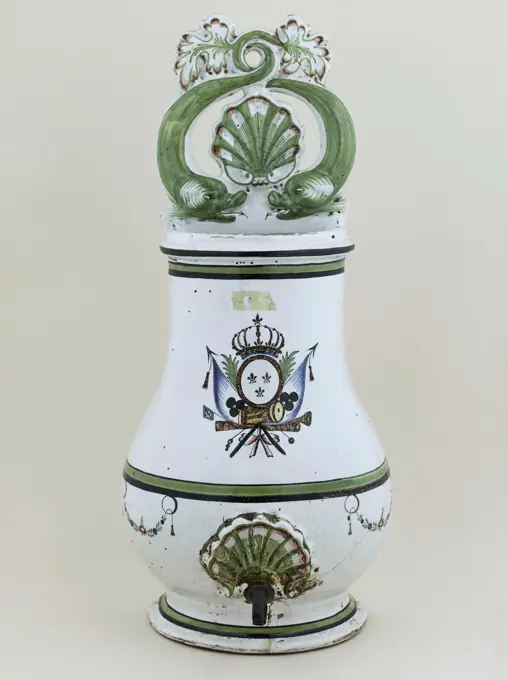
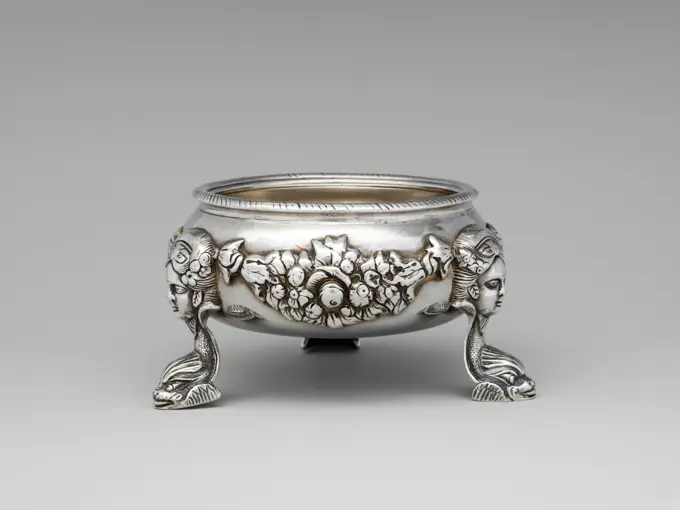
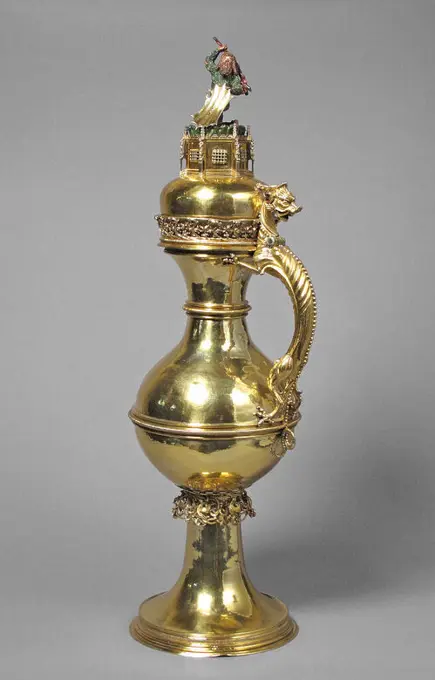
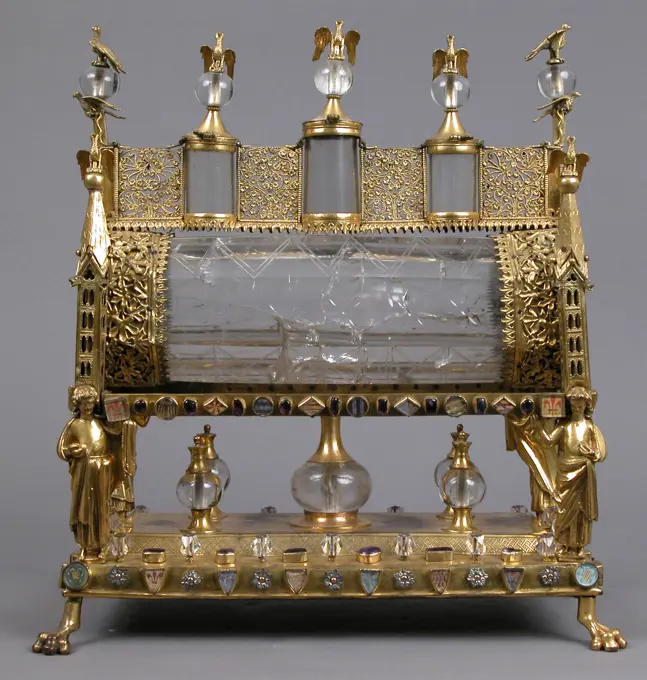
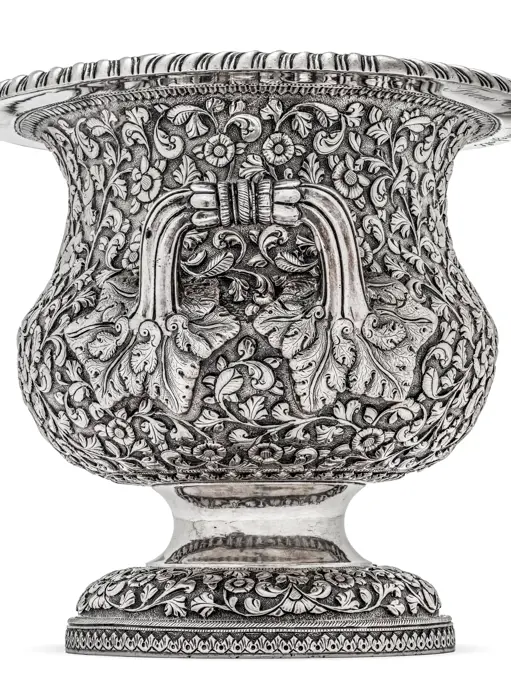
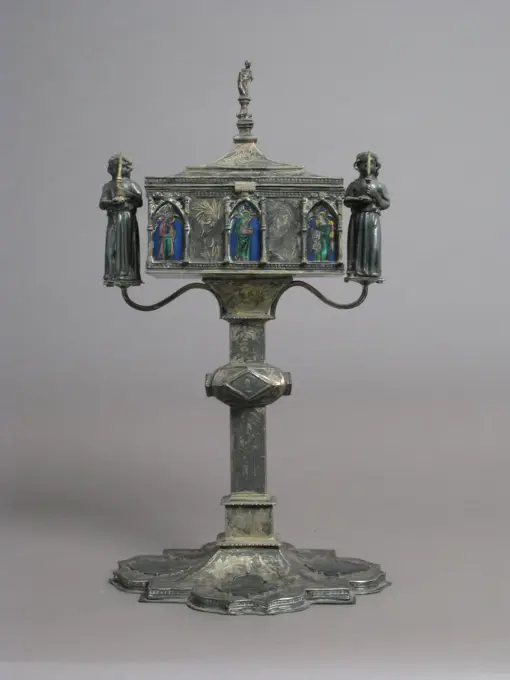
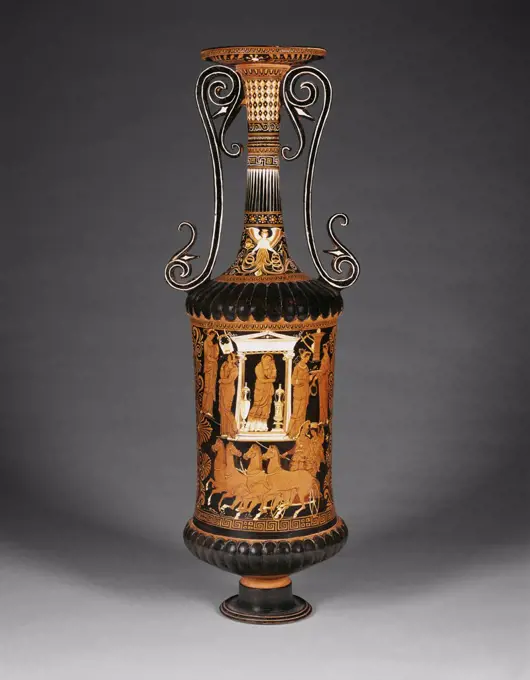
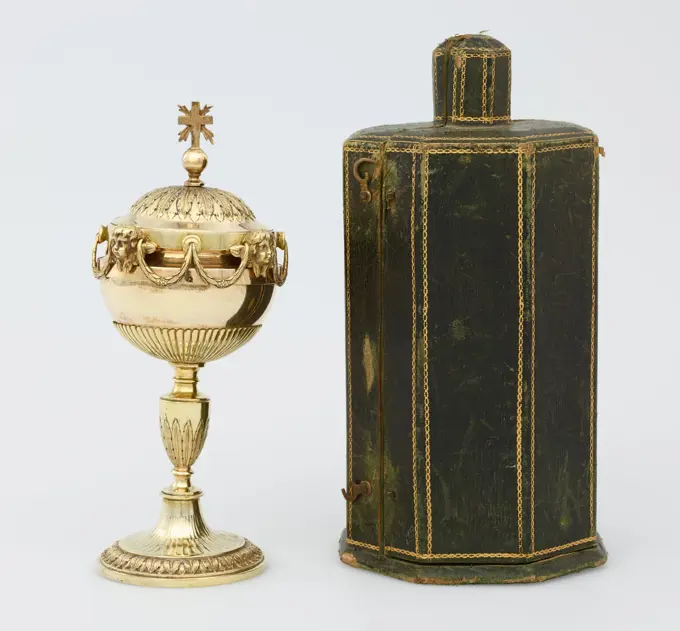
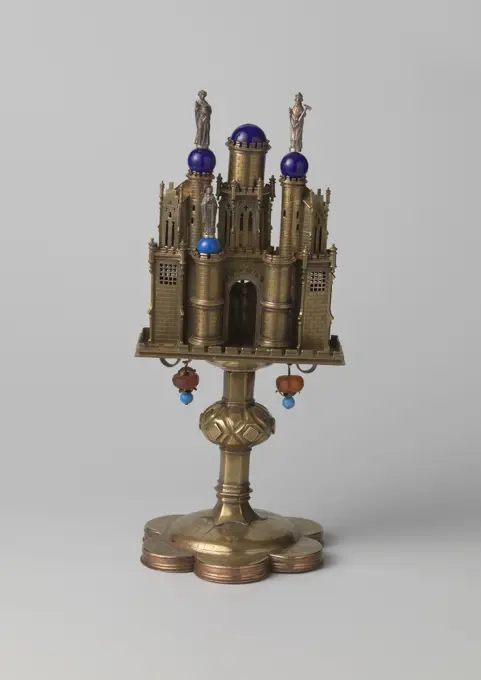
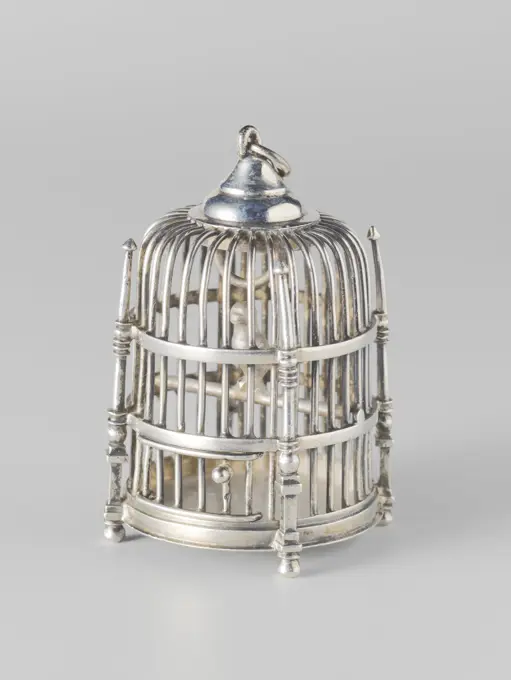
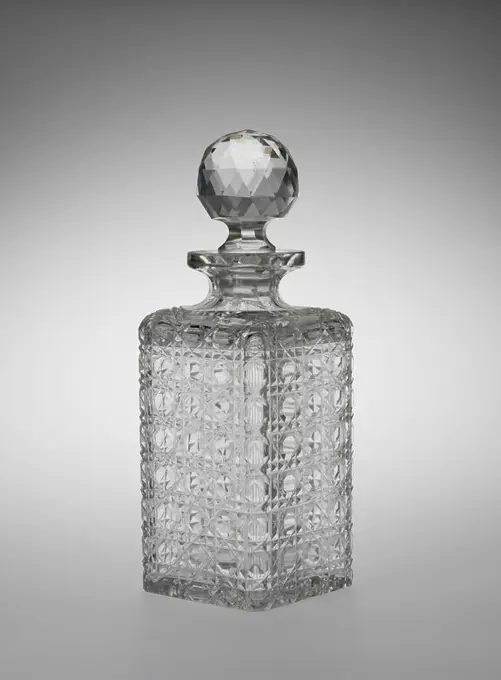
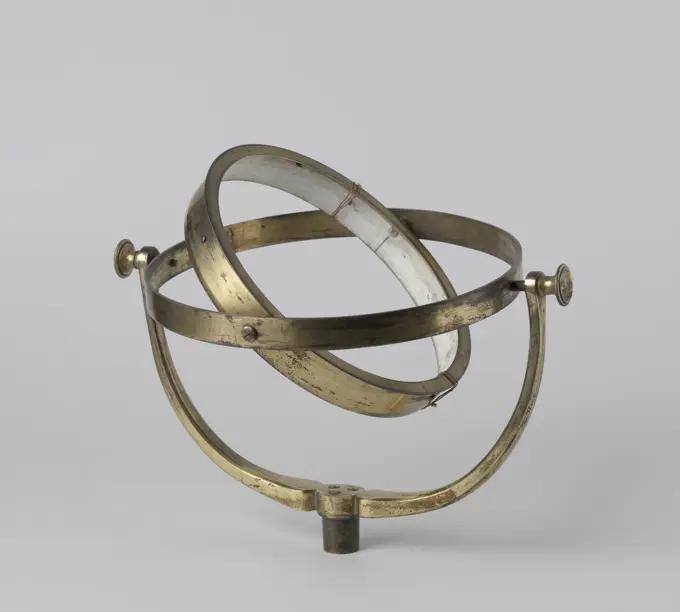
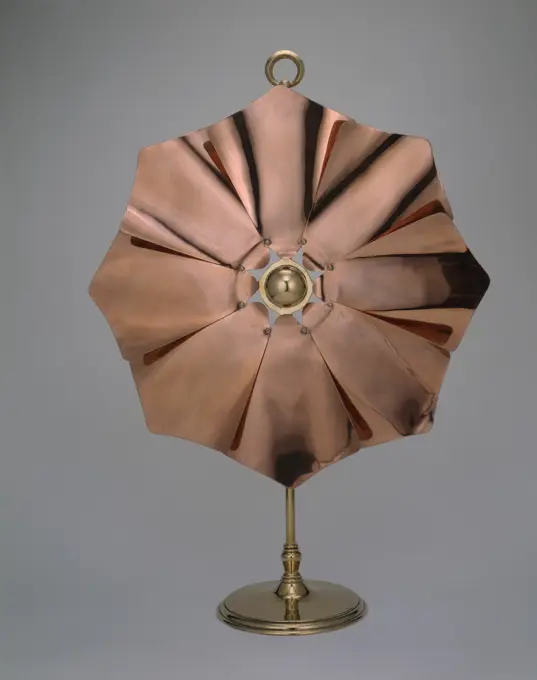
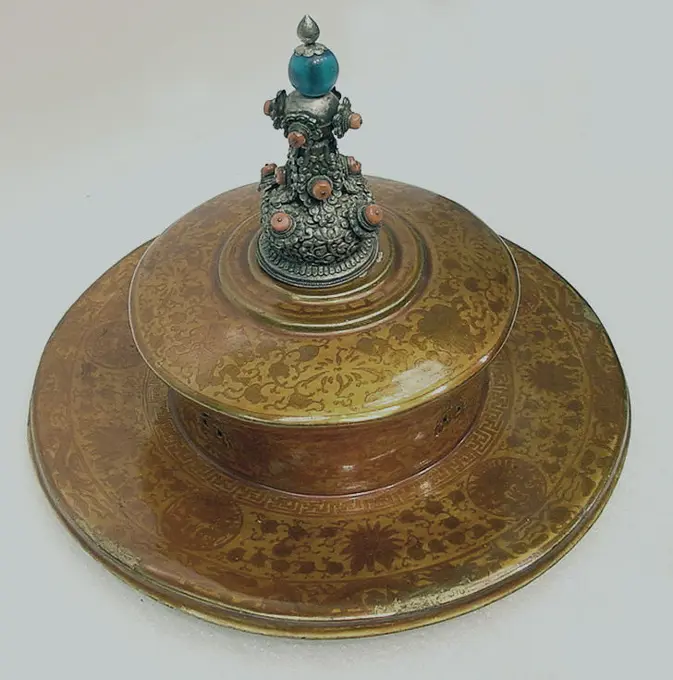
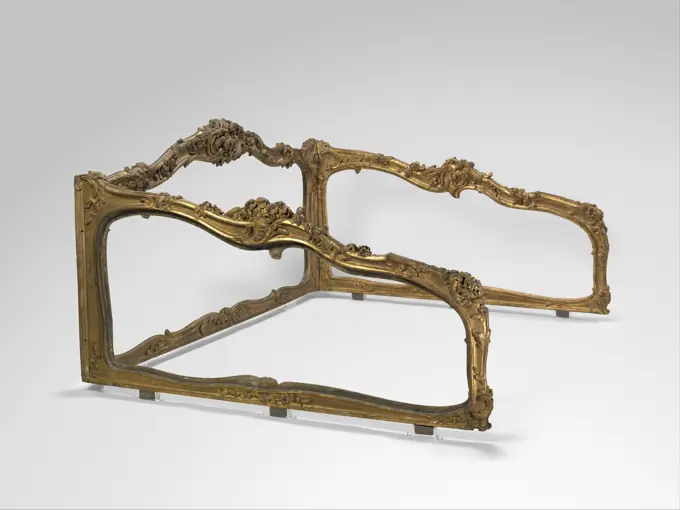
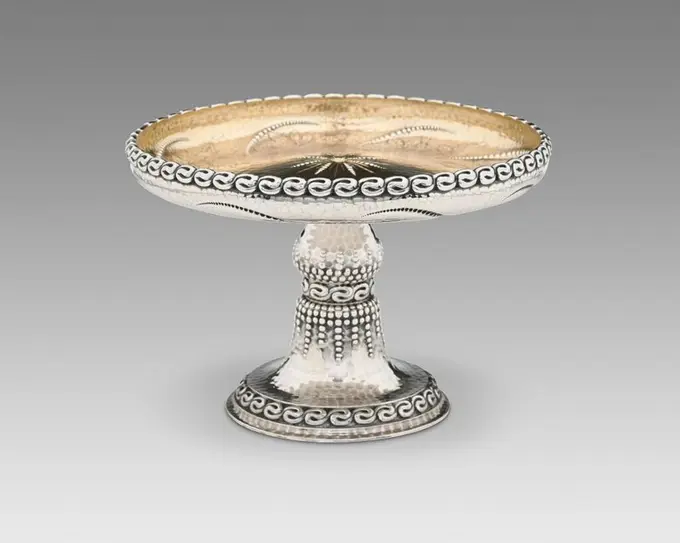
Compotier. Design attributed to Charles Osborne; American, 1847-1920; Tiffany and Company; American, founded 1837; New York, New York. Date: 1877-1887. Dimensions: 12.7 × 20.32 × 20.32 cm (5 3/4 × 8 5/8 × 8 5/8 in.); 610.9 grams. Silver and silver gilt. Origin: New York City. Museum: The Chicago Art Institute, Chicago, USA. Author: Charles Osborne.A sketch of luster furnishings at the Hofburg, Vienna I, showing details of design and layout, executed in graphite, black ink, with gold-colored and gray washes, early 19th century.Covered Standing Cup; Marcus Heiden, German, active by 1618 until at least 1664; Coburg, Germany, Europe; 1631; probably with later 17th century figural elements; Ivory; Object: H:  63.5 x Diam.:  11.8 cm (2 ft. 1 in. x 4 5/8 in.)Smallsword ca. 1720 Western European, probably Naples By the early seventeenth century, the rapier, a long slender thrusting sword, began to dominate as the gentlemans weapon of choice. During the course of the century, however, as civilian fencing techniques became more specialized and refined, the rapier developed into a lighter, trimmed-down weapon known by about 1700 as the smallsword. Smallswords, often richly decorated, remained an integral part of a gentlemans wardrobe until the wearing of swords in civilian settings went out of fashion at the end of the eighteenth century, at which time pistols were replacing swords as arms most frequently used in personal duels. The majority of smallsword hilts are made of silver or steel, but many also employ a wide variety of luxurious materials, such as gold, porcelain, and enamel. At their best, smallswords combine the crafts of swordsmith, cutler, and jeweler to create an elegant weapon that was also a wearable work of art.. Smallsword.Lidded Gunpowder Container Before 1878 Fang A lidded container for gun powder with a bulbous body topped by a cylindrical neck. At the summit, a thin disk-shaped lid keeps the content enclosed. A leather string passes through metal loops and keeps the lid joined to the body. The work's wooden surface is covered by either reptile (varan) skin affixed to the wooden core with adorning rows of tapestry nails, or hammered brass. This distinctive gun power container is a rare example of a genre of personal object owned by prominent individuals in a Fang community. Its use of hammered brass and reptile skin (varan) is characteristic of the region's craftsmanship, displayed on a range of objects, from knifes' sheath to the surfaces of certain reliquary elements.. Lidded Gunpowder Container. Fang. Before 1878. Wood, copper, reptile skin, nails, leather. Gabon. Candlestick of silver, part of an ensembleCandle of candle crown, c. 1475 - c. 1485 Candle arm belonging to a candle crown of three heights with Maria Chapel in the middle. The arm is bent twice and has five leaves. The fat catcher rests at the end, which has a vertical serrated edge with cruciferous motifs on the underside. The candle holder is six-flagged with a perforated side on the front and back and has a vertical ring-shaped lower piece. This is the third arm of the upper ring (the hood), numbered with 3 dots. Southern Netherlands brass (alloy) casting Candle arm belonging to a candle crown of three heights with Maria Chapel in the middle. The arm is bent twice and has five leaves. The fat catcher rests at the end, which has a vertical serrated edge with cruciferous motifs on the underside. The candle holder is six-flagged with a perforated side on the front and back and has a vertical ring-shaped lower piece. This is the third arm of the upper ring (the hood), numbered with 3 dots. Southern Netherlands brass (alloy) caCovered Vase Vase; Designed by Theodorus Adriaan Christiaan Colenbrander (Dutch, 1841 - 1930); Manufactured by Rozenburg Pottery and Porcelain Factory (Netherlands); Netherlands; earthenwareThree-light wall brackets (set of four) late 18th or early 19th century After a model by F. L. Feuchère père French These four gilt-bronze wall lights are decorated with allegories of love. The stem is fluted in the form of a torch flaring at the top and surmounted by a group of clouds on which two kissing doves and a laurel spray are poised. From the stem emerge two arabesque-shaped branches, linked by a ribbon knot and ornamented with grape bunches and acanthus leaves. In the center, a third arm, higher than the two others, terminates in a small naked cupid holding a flaming heart.The original model of these so-called « lovebirds » wall lights, was made in 1787 by the bronzier Pierre-François Feuchère for the bedchamber of Marc-Antoine Thierry de Ville d'Avray, Intendant Général du Garde-Meuble. The workshop of Pierre-François Feuchère, who worked with his son Lucien-François, was one of the most important for the production of luxurious gilt bronze at the end of the eighteenth centuWall Bracket with Griffin c 1800-1825 United States. Mahogany, white pine, and basswood with paint and gilding . Artist unknownChrysanthemum' candelabrum, one of a pair, 1891-1902, Tiffany & Co.; Designer: Charles T. Grosjean, American, New York City, est. 1853, 22 3/4 in. (57.8cm), Silver, United States, 19th-20th centuryGold amphoriskos (oil flask) with inlaid garnets. Culture: Greek. Dimensions: H. 2 5/16 in. (5.9 cm); diameter 1 in. (2.5 cm). Date: 3rd century B.C..Circle of twisted wire soldered onto top of mouth above everted rim; cylindrical neck; sloping rounded shoulder; conical body with pointed bottom. Two handles, made from two separate sheets of folded metal, square in section, joined at a right angle; lower section attached to shoulder and rising vertically; upper section attached horizontally to neck; ends of handles encircled by beaded wire; on neck two inverted tear-shaped red garnet stones set in plain bezels encircled with beaded wire; at base of neck, two rows of twisted wire; on shoulder below handles, to small round garnet stones, also in a plain setting encircled with beaded wire; below these settings at the top of the conical body are two more rows of twisted wire but smaller than those at the base of the neck; near top of body is a row of beaten out bosses in an irregular line;Pair of candlesticks ca. 1775-80 British, Sheffield. Pair of candlesticks. British, Sheffield. ca. 1775-80. Sheffield plate. Metalwork-SilverplateButton, 1800s. Balkans, 19th century. Silver; average: 8.3 cm (3 1/4 in.).Cover of teapot, part of a tête-à-tête, painted with Lelies, N.V. Haagsche Plateel Factory Rozenburg, 1900 Cover of teapot from a tête-à-tête of porcelain. Painted in yellow, reddish -brown and different shades of green with an ornamental decor, in which lilies. On all parts the monogram MVV (= Michiels van Verduynen) and the weapon of this family, in which the color blue also occurs. The Hague porcelain Cover of teapot from a tête-à-tête of porcelain. Painted in yellow, reddish -brown and different shades of green with an ornamental decor, in which lilies. On all parts the monogram MVV (= Michiels van Verduynen) and the weapon of this family, in which the color blue also occurs. The Hague porcelain. Candle arm belonging to a candle wreath of two heights with maria figure at the top. The arm is bent twice and is decorated with nine grape vegetables and five winger leaves. The round fat catcher is decorated at the bottom with fishing blozen motifs and has a downward edge of cross flowers in the middle, which masks the placement on the arm. The candle holder is sixted, opened, placed on three vertical styles, overtreen in a thread protrusion. This is the second arm of the lower ring, numbered with 3 round points. The candle holder is unnumbered.Caviar containerSilver miniature candlestick with two red (fake) candles, candlestick candlestick dolls toy relaxant miniature model silver plastic, Long trunk on three legs becoming twisted handle with slidable part consisting of two arms with two flower-shaped candleholders Red plastic sleeve over each of the long pin that stands on the candleholder play illuminate interior interior dollhouse Bishop RotterdamSteam of candlesticks Jancke, Johann Christoph (young). Faceted, vaulted foot. Faceted baluster trunk with a knot and two discs. Conical chalice with facet cut swamed bottom and gold-plated edge. On the chalice floral ornaments, seed beads and leaf volutes between which five performances of the flax industry. On the one hand a large golden palm with. Under the Palmet, surgery the Monogram PDR and the monograms (): NK, GT, Yes, HD, NB, NTS. Lid faceted and vaulted with a gold-plated button. On the lid leaves and triangles.Fragment of foot and stem of goblet, drinking glass drinking utensils tableware holder soil find glass, free blown and shaped into blown shape Fragment of foot and trunk of chalice in clear colorless glass in façon de Venise style. Pontil mark under slightly ascending hollow base towards the onset of solid trunk to flat disc Hollow convex (dm 2.2 cm) 16-fold ribbed knot archeology Rotterdam IJsselmonde drinking wine serve beer Soil discovery: IJsselmonde Castle Rotterdam 1972.Pair of Torah finials (rimonim) ca. 1740-50 Andrea Zambelli "L'Honnesta" Exceptional for their size and precious material, these Torah finials are rare survivors of eighteenth-century Italian silver and a testimony to the artistic virtuosity of goldsmithing in Venice. In synagogues, the scroll of the Torah, the first five books of the Hebrew Bible, is often decorated with a set of silver ornaments including a crown, a shield, and finials mounted on the staves. Symbolizing the bond between community and faith, these are decorated with religious emblems like priestly garments, a miniature temple, a menorah, and the Tablets of the Law surrounded by lush floral ornamentation. Such rich embellishment is indicative of the wealth and influential status of the Jewish congregation in the Venetian city-state. Though they were acquired separately, the finials belong to the same ensemble as the Mets Torah Crown (2013.443), reunited here for the first time since the 1960s. The maker, Andrea ZambelTABLE WITH ROUND BLOW OF MAACRIET, calibrated on three winged with the upper-free women's figures that the lower lift is surrounded by palm-shaped leafwork and passes into boxing pads. Table with a round magazine resting on three winged, with the upper-free women's figures, the lower lift of which is surrounded by palm-shaped leafwork and turns into a boxing pad. The legs are placed on a triangular blade with concave sides, on which ornaments of palmets and leafwork. This base leaf rests on three feet, formed by volutes and leafwork. The round leaf is surrounded by a decorative edge of acanthus leaf and executed in malachite. Plated bronze, "or bruni" and "or matte".Longcase clock.Because of its long pendulum, the movement of a longcase clock can be extremely precise. Longcase clocks were thus used to regulate’ other clocks and timepieces. The French word for a longcase clock is régulateur (regulator). The gilt-bronze figure of a man with a scythe and an hourglass surmounting this clock represents Father Time.Pair of Vases (vases bouc du Barry B).Birdcage. Cylindrical bird cage with carrying ring. Two smooth horizontal tires are attached to the cage, to which four vertical, profiled rods are attached. These rods form the legs of the cage at the bottom and run to the top edge of the cage. In the cage is a bird on a stick. The cage has noticed a small door enis: STK. = Amsterdam, JRL. = W (1731), Mt. = Pieter van Somerwil I. See also Invnr. BK-1977-54.Cover of a sugar bowl with gold borders on a red ground, anonymous, c. 1800 - c. 1824 Cover of a porcelain sugar bowl, covered on the glaze with red and gold. The lid is covered with red and the edge and button with gold. On the edge a flower vank in one of the golden tires. Pointed lid button. Empire. France (possibly) porcelain. glaze. gold (metal) painting / gilding / vitrification Cover of a porcelain sugar bowl, covered on the glaze with red and gold. The lid is covered with red and the edge and button with gold. On the edge a flower vank in one of the golden tires. Pointed lid button. Empire. France (possibly) porcelain. glaze. gold (metal) painting / gilding / vitrificationDoor lock and key. Culture: probably Austrian, Vienna. Dimensions: 13 1/4 x 9 1/2 in. (33.7 x 24.1 cm). Date: ca. 1770. Museum: Metropolitan Museum of Art, New York, USA.Octagonal tea leopard, Arnoldus van Essen, 1752 Octagonal tea leopard. Along the top edge a Louis XIV-Applique of gridwork and brushes. An engraved monogram on one of the sides.  silver (metal) Octagonal tea leopard. Along the top edge a Louis XIV-Applique of gridwork and brushes. An engraved monogram on one of the sides.  silver (metal)Cake basket ca. 1785 Probably by Tudor and Leader. Cake basket. British. ca. 1785. Sheffield plate. Metalwork-SilverplateCruet frame (one of a pair) ca. 1817 Jean-Baptiste-Claude Odiot French. Cruet frame (one of a pair). French, Paris. ca. 1817. Silver gilt, glass. Metalwork-SilverWaza from the cover; Korzec (Porcelain Manufaktura; 1790-1832); 1815 (1815-00-00-1815-00-00);monogramyToilet box with key ca. 1743-45 Friedrich Schwestermuller II German. Toilet box with key 231569Anonymous (n. - d.), Octogonal watch made for the Turkish market (main title), 1600. Now, cut rock crystal, brass, champlevé and painted enamel. Petit Palais, Museum of Fine Arts of the City of Paris.Stamp seal with the Sapieha family coat of armsInro, anonymous, 1700 - 1800 Decoration of bamboo and peonies in gold against black stock, fine and coarse speckled in gold. Six boxes held together by a cord. Japan wood (plant material). lacquer (coating) Decoration of bamboo and peonies in gold against black stock, fine and coarse speckled in gold. Six boxes held together by a cord. Japan wood (plant material). lacquer (coating)Card Stand. Culture: American. Dimensions: 34 x 18 x 13 in. (86.4 x 45.7 x 33 cm). Manufacturer: Manufactured by Bradley & Hubbard (American, 1852-1940). Date: 1880-85. Museum: Metropolitan Museum of Art, New York, USA.Ornament, , c. 1800 - c. 1850 Ornament, consisting of four matching parts. Stone goods with different colors of glaze. Canton stoneware. glaze. wood (plant material) Ornament, consisting of four matching parts. Stone goods with different colors of glaze. Canton stoneware. glaze. wood (plant material)Monstrance, 1854-1874. Designer: John Francis Bentley. Manufacturer: Hart & SonCandlestick with baluster -shaped trunk and square base with beveled corners, Pieter de Keen (attributed to), 1718 Silver candlestick. The square, profiled, rejuvenating base has beveled corners and tranquility on a right -wing base. In the flat top there is a round floor from which the also round, incorporated, rises through a ring rises from the foot. The baluster -shaped trunk and the vase -shaped candle holder rest, both again square with beveled corners and both richly profiled. Amsterdam silver (metal) Silver candlestick. The square, profiled, rejuvenating base has beveled corners and tranquility on a right -wing base. In the flat top there is a round floor from which the also round, incorporated, rises through a ring rises from the foot. The baluster -shaped trunk and the vase -shaped candle holder rest, both again square with beveled corners and both richly profiled. Amsterdam silver (metal)Candelabrum 1666-99 British, Surrey. Candelabrum. British, Surrey. 1666-99. Enamel on brass. Metalwork-BrassHelmet with Feather Crest ( ) 17th-18th century Chinese The quality of the pierced and gilt ironwork of the helmet, the four-claw dragons embroidered on its cheek and neck guards, and the exotic materials of the crest indicate that these items were intended for a military officer of very high rank.. Helmet with Feather Crest ( ). Chinese. 17th-18th century. Steel, gold, silk, feathers (eagle, kingfisher), paper, turquoise, coral, pearls, fur (marten), silk, copper alloy, silver. Armor for ManTorso Defense (D) in the Nishiki Zutsumi Nimaid Style 18th century Japanese The Japanese name for this type of armor, nishiki zutsumi nimaid, refers to the materials with which it is decorated and to the form of its construction. The exterior of the breast and back are wrapped with an elaborate silk brocade (nishiki zutsumi). Its basic construction is made in two halves, which are joined by a hinge on the left side (nimaid). In addition, it is highlighted by somegawa (ornately stenciled doeskin).The breastplate and backplate of this remarkably well preserved d are made of large iron plates, rather than the kozane (small overlapping scales) frequently found on Japanese armor. The interior, an area usually covered only with lacquer or plain leather, also has stenciled doeskin, an indication of its high quality. The fittings are made of shakud, an alloy of copper and gold in which the finished surface is patinated a bluish black. They are finely chiseled with Paulownia blossoms and Lower piece of a salt barrel from tin, anonymous, c. 1590 - c. 1596 salt (condiment vessel) Lower piece of a salt barrel from tin. At the top a cavity for salt or herbs. There are traces of cash in. Together with a central and a top, forms a salt barrel. England tin (metal) casting / soldering  Nova Zembla. Saving HuysCandlestick (one of a pair) 1686-87 Probably by T. D., London. Candlestick (one of a pair). British, London. 1686-87. Silver. Metalwork-SilverPair of Candelabra 1875-1885 France. Bronze . Auguste CainHelmet 14th-17th century probably Mongolian This extremely rare type of helmet is damascened in gold with a design known as the Three Jewels, a popular Buddhist motif representing Buddha, Dharma (Buddha's teachings), and Sangha (the community of believers). The solid construction of the helmet combined with the gold decoration indicate that this was a practical battle helmet, but made for someone of relatively high rank, who was probably a Mongolian follower of Tibetan Buddhism.. Helmet 26531. Crater jug of silver with (originally three) cranes in the form of spuger with rotatable buttons; Pear-shaped vase decorated with graces and leaf lists, with two S-shaped handles and standing on three legs in the form of lions claws; (loose lid) with graces.Table lamp ca. 1900-1902 Pierre-Adrien Dalpayrat French. Table lamp 482371Close-up of a six piece cruet set in a basket, EnglandTerracotta oinochoe (jug). Culture: Greek, South Italian, Apulian. Dimensions: H. with handle 16 3/4 in. (42.6 cm). Date: ca. 325-300 B.C..Nike driving a chariot preceded by Eros with a situla (bucket)The oinochoai are open at the bottom, indicating that they were made for funerary use. Museum: Metropolitan Museum of Art, New York, USA.Hanging Incense Burner 1801-1900 Japan. Silver, gold, silk cords .Earflare. Culture: Chimú. Dimensions: H. 2 1/2 x Diam. 4 3/4 in. (6.4 x 12.2 cm). Date: 14th-15th century. Museum: Metropolitan Museum of Art, New York, USA.Strainer, 1760. Samuel Herbert (British). Silver; overall: 17.9 cm (7 1/16 in.).Combination Clock-Compass-Thermometer-Barometer, 19th century, 20 3/4in. (52.7cm), Metals, onyx, enamels, France, 19th centuryLamp early 18th century Italian, Venice (Murano). Lamp. Italian, Venice (Murano). early 18th century. Glass. GlassJustice. Culture: Northern European. Dimensions: Overall: 4 5/16 × 3 in. (11 × 7.6 cm). Date: 16th century.The size of this jewel and related ones (see also 17.190.892; 17.190.893; 32.100.306; and 41.100.26) is such that only the closest viewer could appreciate their full beauty and dexterous execution; they represent the finest craftsmanship for the wealthiest patrons. Each combines gold with natural treasures, such as pearls and gemstones. Bulbous baroque pearls cleverly suggest the fluffy down of a swan's underbelly or a cloudy mass supporting the Crucifixion. Tiny figures are enameled in the round. Melding the secular and the sacred, these jewels were made to be worn: pinned to garments or hanging close to their owners' skin. The animals might be heraldic devices; the swan, for example, could symbolize the Society of the Virgin Mary, called the Order of the Swan, which was founded in mid-fifteenth-century Brandenburg in Germany.Elizabeth Cleland, 2017. Museum: Metropolitan MusGallonde, Louis -Charles (1715 - 1771), regulator (username), 1745. Building: oak and walnut; Placing of rosewood, rosewood, amaranth, Padouk d'Asie and Poirier; gilded bronze; glass. Carnavalet museum, history of Paris. The veneer of the lower body and the median part has a diamond pattern. The lower feet and walls in gilded bronze offer a decorative vocabulary made up of scrolls and scrolls in opposite curves. While the body of the regulator and its summit part are decorated with bronze with falls of falls, staples, clogs, foliage and cartridges, a vase enriched with bronzes was originally to crown the head of the case.Anonymous. Fountain with flags. Earthenware. 1789-1792. Paris, Carnavalet museum. 72437-50 Crown, runner -up, painted decor, flag, revolutionary faience, flower lily, fountain, music instrument, knot, object, revolution 1789, French revolution, drum, 18th 18th 18th 18th 18th centuryVASO DEL AMOR CON INSCRIPCIONES GOTICAS S XVI. Location: CATEDRAL-INTERIOR. Toledo. SPAIN.Pair of Stirrups 19th century Portuguese This pair of gilded bronze stirrups is decorated all over in rococo revival style, featuring scrolls and flowers, and a medallion bearing a crescent on each side of the branches. This type of stirrup, produced in several examples, was used during galas and other noble equestrian shows, possibly at the Royal Court itself. Traditional Portuguese classical dressage is still today using 17th and 18th-century style horse tack, including simplified forms of this very type of stirrup.. Pair of Stirrups. Portuguese. 19th century. Copper alloy, gold. Equestrian Equipment-StirrupsStand; pewterSalt 1740-45 Charles Le Roux American. Salt 7089Table automaton in the form of Diana on a stag, Jacob Miller (edelsmid), c. 1613 - c. 1615 Diana, seated on a deer. Silver automatic, partially gilded. The deer, which has a removable head and carries a crown, is surrounded by open -up band ornament. Similar decorations around the eight -sided pedestal, on which all kinds of insects and animals are placed on a natural soil, including two hunting dogs, a rider and a hunter. A few holes indicate other, lost additions. Diana looks back. She wears an arc and a arrow sleeve on the back and holds the end of the chain in her raised left hand, with which the dogs were connected. Augsburg silver (metal). iron (metal). gilding Diana, seated on a deer. Silver automatic, partially gilded. The deer, which has a removable head and carries a crown, is surrounded by open -up band ornament. Similar decorations around the eight -sided pedestal, on which all kinds of insects and animals are placed on a natural soil, including two hunting dogs, a rider anNight Clock.Ewer. Culture: German. Dimensions: Overall: 25 x 8 1/4 in. (63.5 x 21 cm). Date: late 15th century.These ewers have long been thought to be the pair mentioned in the 1526 and 1585 inventories of the Teutonic Knights. Both are unmarked, and the attribution to Nuremberg is based on stylistic comparisons, such as that of the small cast figures against the buttresses to similar examples by the Nuremberg goldsmith Sebastian Lindenast the Elder. The enameled and painted wild men, reminiscent of those in Albrecht Dürer's compositions, are heraldic supporters but may also be understood as symbols of virility and procreation. Museum: Metropolitan Museum of Art, New York, USA.Reliquary ca. 1175-1200 (rock crystal); early 19th century (setting) French () The core of this opulent reliquary contains a large late twelfth-century rock crystal with engraved vine scroll patterns from the Meuse Valley (present-day Belgium). It was said to have once held relics of Saints Margaret, Philip the Apostle, and Catherine as well as of Bishop Valerius. The present neo-Gothic setting may reflect the original reliquary form.. Reliquary 464678 French (), Reliquary, ca. 11751200 (rock crystal); early 19th century (setting), Gilded copper, rock crystal, glass, and parchment, Overall: 13 7/8 x 12 5/8 x 6 1/4 in. (35.2 x 32.1 x 15.8 cm) Rock Crystal: 3 1/16 x 8 11/16 x 3 1/16 in. (7.8 x 22 x 7.8 cm). The Metropolitan Museum of Art, New York. Gift of J. Pierpont Morgan, 1917 (17.190.813)Candlestick - Mintons MintonsArm of a candle crown in two heights, Anonymous, 1630 The S-shaped arm is provided with a ridge on the trunk side with an opening to secure it with a pin in the stand rings. At the trunk the arm is decorated on the end and to the center with two stylized dolphin heads and with three pairs of curls or leaves executed in lobe style. To the outside, the arm ends in a lip, in which a hole provided with a thread is applied, to confirm the candle holder and the fat catcher. The arm is cast using the same model as the other arms of the wreath. The cylindrical candle holder has two profiled ribs, two grooved rings and profiled excellent edge. The fat catcher is deepened twice at the top towards the center. At the bottom it is profiled around the hole on the somewhat spherical middle and ribbed on the edge and with two grooved rings. The fat catcher is much smaller than the other fat catchers of this wreath. The pin is equipped with a vase -shaped button. This is the seventh arm of the lower poCandlestick (one of a pair) China. Candlestick (one of a pair) 40749. Necessaire of gold, with a standing watch on the lid. The box is rectangular and rest on 4 voluntary feet. It is entirely embossed with theater figures, trees and animals. Content: scissors, mirror, 2 bottles, knife, needles, writing booklet, tweezers.Ice Pail and Cover. Oomersi Mawji (Workshop of) (India, active circa 1860-1890). India, Gujarat, Kachchh (Kutch), circa 1880. Furnishings; Accessories. Silver, repousséReliquary 15th century, with modern additions Italian. Reliquary 467511Entree Dish with Cover from the Hood Service 1806-1807 London. Sterling silver . Paul StorrApulian Red-Figure Loutrophoros; Attributed to the Painter of Louvre MNB 1148, Greek (Apulian), active 350 - 330 B.C.; South Italy, Apulia, Europe; about 330 B.C.; Terracotta; Object: H: 98 x Diam. (rim): 21.9 cm (38 9/16 x 8 5/8 in.), Object (neck): Diam.: 37 cm (14 9/16 in.), Object (foot): Diam.: 16.5 cm (6 1/2 in.)Balance standard with a counterweight, Wenzel Jamnitzer (attributed to workshop of), c. 1560 - c. 1570 The foot of the balance is three -pass -shaped in diameter. It is made up of a vaulted, part -decorated part -decorated part and a low platform with a straight wall with a block list. There are three intertwined lizards that wear the multiple profiled shaft. The base of the shaft decorated with masks is octagonal in diameter on two points. There is a female figure on it, which is naked at the front and at the rear with a skin or cloak. She carries a trunk, which is decorated with leaves, which is interrupted by a four -sided part with a schematic engraved decoration (this last part probably a later addition or replacement). This contains a male Herme who carries the engraved holder of the hinged dolphin -shaped crossbar. On the curling of the dolphin, with a ring and a rectangular hook, the hinged support beam of the dishes is hung up. The hook has a engraved decoration and a loose, lCover for travel pyxis, 1811-1814, 7 1/4 × 3 9/16 × 3 11/16 in. (18.42 × 9.05 × 9.37 cm) (closed), Leather, silk, metal, Italy, 19th centuryCover of Hofkellereiglas, Anonymous, c. 1704 - c. 1709 Vaulted lid with overhanging edge and composite button. On the lid a narrow yellow piping wounded with climbing profits. Dresden glass glassblowing Vaulted lid with overhanging edge and composite button. On the lid a narrow yellow piping wounded with climbing profits. Dresden glass glassblowingReliek-Oostensorium in the form of Heavenly Jerusalem, Anonymous, c. 1500 - c. 1550 The suffering of Christ of Christ are engraved on the heavy sea -lobby base. Stam and nodus are roughly executed. On the tilted base, against which two hangers have been applied to the bottom on each side of the trunk, in which a transparent orange glass bead and a light blue opaque bead are caught, a castle -like structure is attached with two round defense towers on either side of a gate entrance, with, with Then in the middle a tower consisting of a hexagonal lantern and a rounded upper, flanked by two structures with roofs and breathed towers. Blue glass beads have been installed on the round defense towers on either side of the gate and on the three other towers with an opening, so that the pins can be placed on which saints are placed: a saint with a hammer (H. Eligius), a saint with a Chalice (the apostle John) and a praying saint. The praying saint is an addition from the 19th century. Germany bHexagonal dish (part of a set). Culture: Hungarian, Brass. Dimensions: Overall: 10 1/2 x 9 5/16 in. (26.6 x 23.6 cm). Maker: Paulus Roth (active 1646-89). Date: second half 17th century.These five dishes (2010.110.13-17) would appear most spectacular when seen in flickering candlelight or radiant sunlight. The masterful balance between the foliage and fruit ornamentation on the rim is exquisite. These dishes originally belonged to members of the Hungarian dynasty of the Barons Bornemisza.LiteratureTihamr Gyrfs. A brassai tvssg trtnete. Brass, 1912, pp. 110-11, no. 206.European Silver, Objects of Vertu and Miniatures / Orfvrerie europene, objets de vitrine et miniatures. Sale cat., Christie's, Geneva, May 9, 1989, p. 58, no. 109.Judit H. Kolba. Hungarian Silver: The Nicolas M. Salgo Collection. London, 1996, p. 45, no. 23.ExhibitedErdly rgi muvszeti emlkeinek killtsa az Iparmuvszeti mzeumban / Ausstellung alten Kunstgewerbes aus SiebenReliquary, Monstrance. Culture: German. Dimensions: Overall: 17 13/16 x 7 3/16 x 5 1/8 in. (45.3 x 18.3 x 13 cm). Date: 15th century. Museum: Metropolitan Museum of Art, New York, USA.Vogelkooi, Willem van Strant, After 1727 - Before 1742 Cylindrian bird cage with a carrying ring. Two smooth horizontal tires run around the cage, to which four vertical, profiled rods are attached. These rods form the legs of the cage at the bottom and continue to the top edge of the cage. In the cage there is a bird on a stick. The cage has a small door and is marked: stk. = Amsterdam and Mt. = Willem van Strant. See also invnr. BK-14913-C. Amsterdam silver (metal) Cylindrian bird cage with a carrying ring. Two smooth horizontal tires run around the cage, to which four vertical, profiled rods are attached. These rods form the legs of the cage at the bottom and continue to the top edge of the cage. In the cage there is a bird on a stick. The cage has a small door and is marked: stk. = Amsterdam and Mt. = Willem van Strant. See also invnr. BK-14913-C. Amsterdam silver (metal)Decanter with stopper. Artist: Possibly Baccarat (French, founded 1764). Culture: American. Dimensions: 8 7/8 × 3 3/8 × 3 3/8 in. (22.5 × 8.6 × 8.6 cm). Date: 1890-1900. Museum: Metropolitan Museum of Art, New York, USA.Plate. Round eating sign with scalloped edge. Guirlandes are engraved on the edge. A flower is engraved in the middle of the board. The plate has been marked: stk. = Amsterdam, jrl. = X (1782) and mt. = Foot 430. The plate is a copy of a set consisting of 36 identical plates (BK-NM-11177-189 up to / m. NM-11177-224).Pair of Candlesticks, Meissen Porcelain Manufactory, German, active from 1710 to the present, hard paste porcelain, vitreous enamel, gold, Each candlestick is composed of a round white column on a square plinth, and with a capital of four female heads with draped head-dresses in nature colors, under white and gold Ionic scrolls. Wreath of light green oak leaves bound with lavender-pink ribbons forms the base of column, and plinth has a border on its vertical face of flutings of the same color and gold band. Scrolls contain light green rosettes, with the same fluting motif in place of dentils. Gold edges and lines throughout. Separate candle insert., Germany, 1800-1825, ceramics, Decorative Arts, candlesticks, candlesticksCardanusring, anonymous, 1850 - 1899  Brass holder with two concentric rings. A compass could be hung in the inner ring that is always horizontal because the cardanus ring compensates the rolling movement of the ship. Netherlands (possibly) brass (alloy)ESCRIBANIAS DE PLATA. Location: CONGRESO DE LOS DIPUTADOS-OBJETOS. MADRID. SPAIN.Arm of a candle crown in two heights, Anonymous, 1650 - 1675 chandelier The S-shaped arm is equipped with a ridge on the trunk side with an opening to secure it with a pin in the stand ring. At the trunk, the arm is decorated at the end with a stylized dolphin head and with two curls, the design of which is derived from the lobe ornament. To the outside, the arm ends in a thickening, in which a hole provided with a thread is applied to attach the candle holder with the fat catcher. The arm is cast using the same model as the other arms of the wreath and has the same size. The candle holder has a round narrowing upwards and in an excellent edge -transmitting vase shape on the baluster foot with a threaded end, in which the center hole at the bottom. The fat catcher is deepened once at the top to the middle. At the bottom she is profiled on the edge and around the hole on the somewhat spherical center. The fat catcher always has its own size and is cast with the help of the same model asMast root of an inland navigation vessel ,, 1700 - 1800  Gilded mast root with 27 sections. Each section consists of four curly feathers. Lower part on which four putti with the arms up. At the bottom around hole; Upstairs crown broken down, making iron pin visible. Netherlands wood (plant material). gilding (material). iron (metal) cutting / gildingFire Screen 1895-1905 England. Copper and brass . William Arthur Smith Benson (Designer)Beautiful and dear chandelier on a white backgroundThree sided stamp seal with the coat of arms of LeliwaThis is a vintage candlestick. And this object used. On the white backgroundFragment of a Monstrans. The fragment consists of two cylinder frames, caught between four vertical connectors (support bears), placed on a convex lid, which is embedded in a tampered edge, which has been attached to the front and back two-eye, whereby a pin can be inserted. The fragment distinguishes itself through this attachment and by the four instead of two vertical connecting pieces of comparable parts of the other monstrans discussed here.Polyptych 19th century Franco-Netherlandish. Polyptych 464467 Franco-Netherlandish, Polyptych, 19th century, Silver-gilt, gold, niello, ivory head, hands & feet of V&C, Overall (closed): 5 13/16 x 2 15/16 in. (14.8 x 7.5 cm) Overall (opened): 5 13/16 x 5 3/4 x 2 15/16 in. (14.8 x 14.6 x 7.5 cm). The Metropolitan Museum of Art, New York. Gift of J. Pierpont Morgan, 1917 (17.190.502a, b)Bell;  XVIII-1. after. 20th century (1701-00-00-1950-00-00);The art of Tibetan Buddhism, purchase (provenance)Container for Spools of Thread (AbalAbal)Monk's Hat 18th century Tibet. Monk's Hat. Tibet. 18th century. Lacquer with finial of silver, coral and blue glass. LacquerCurved Staircase Model In The French Style; carved, planed, turned, and veneered walnutFrame for a daybed (Lit de repos) ca. 1740-45 French This elaborately carved three-part frame was originally part of a daybed or a sofa. Although not signed, the curving outline of the frame is enriched with heart-shaped cartouches, rocaille motifs and floral ornament that bear resemblance to the work of the menuisiers or joiners Jean-Baptiste Tilliard and Nicolas-Quinibert Foliot. Normally invisible, the rectangular blocks underneath the frame are the tenons which would have fitted in similar size openings, the mortises, to join the frame to the lower part of the bed or sofa. Although incomplete, this frame was part of the model collection of woodwork, paneling and seat furniture of Maison Leys, a successful decorating business, located at the Place de la Madeleine in Paris. Since 1885 the business was directed by Georges Hoentschel who installed the collection in 1903 in a museum-like display at Boulevard Flandrin, Paris. Three years later, Hoentschel sold the collection to J. Pierpo