Decorative Candle Holders Collection

An array of ornate candlesticks and candelabra, featuring intricate designs and historical craftsmanship from various periods.

Arm with candle holder of candle crown of two heights, each with eight arms, 1525 - 1550 Candle arm belonging to a candle crown of two heights with maria figure at the top. The arm is bent twice and is decorated with four grapes bunches and five vine leaves. The round fat catcher is decorated at the bottom with six round lobes. The candle holder is six -flared, open, on a single hollow -rounded pedestal, transferring to a protruding with thread. This is the sixth arm of the upper ring, numbered with 6 round points. The candle holder is unnumbered. Southern Netherlands brass (alloy) casting Candle arm belonging to a candle crown of two heights with maria figure at the top. The arm is bent twice and is decorated with four grapes bunches and five vine leaves. The round fat catcher is decorated at the bottom with six round lobes. The candle holder is six -flared, open, on a single hollow -rounded pedestal, transferring to a protruding with thread. This is the sixth arm of the upper ring, n
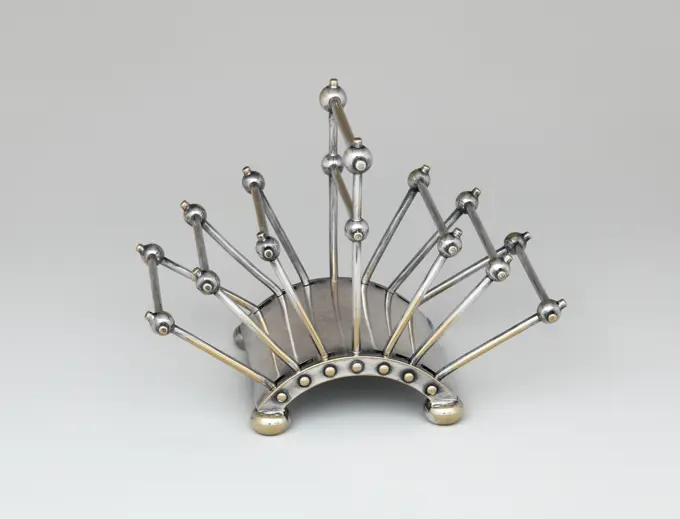
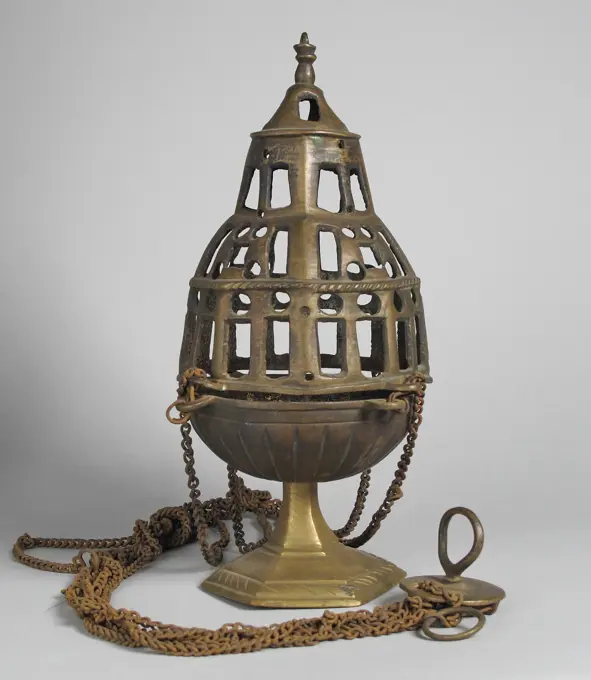
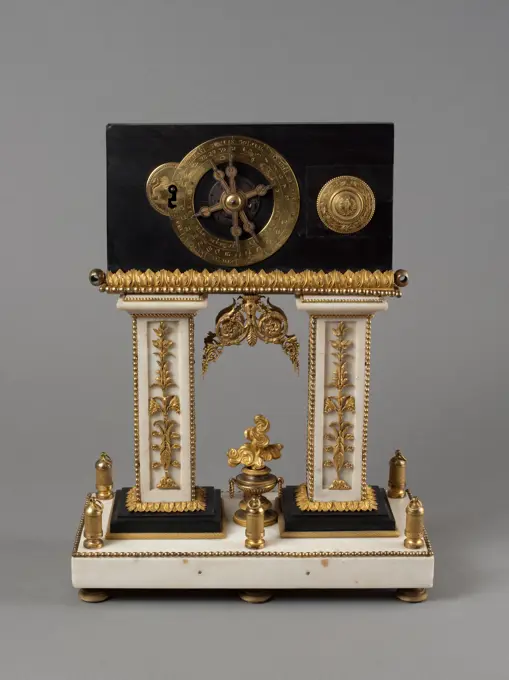
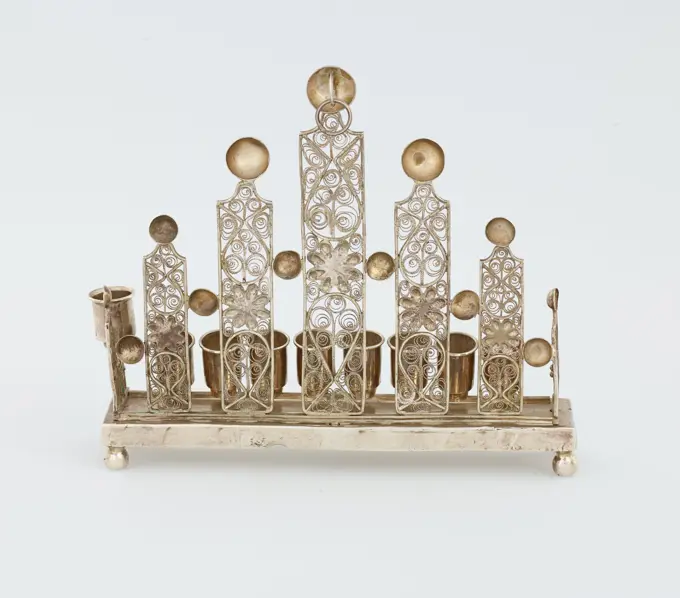
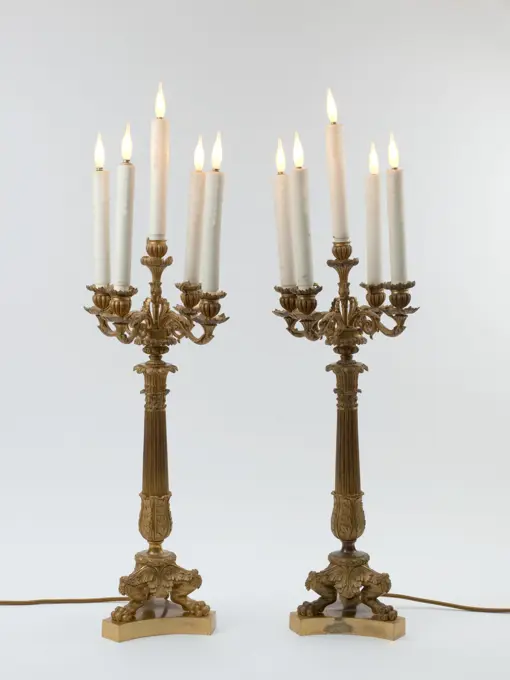
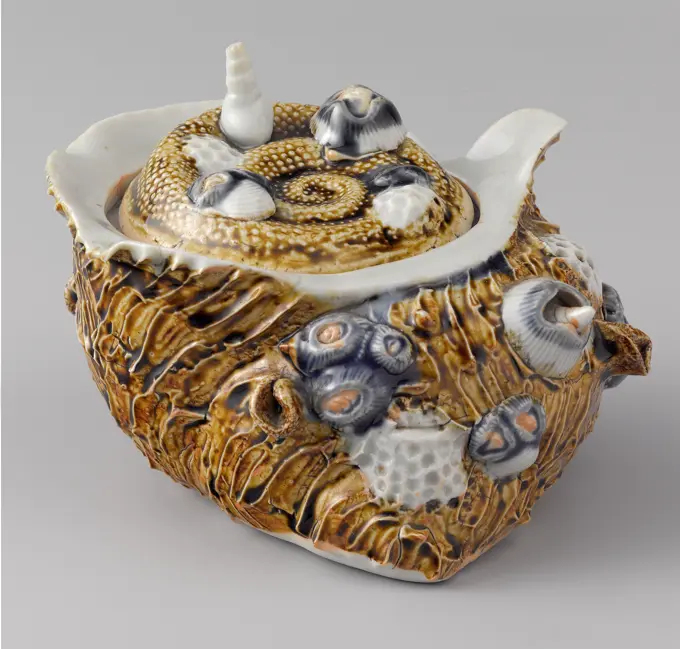
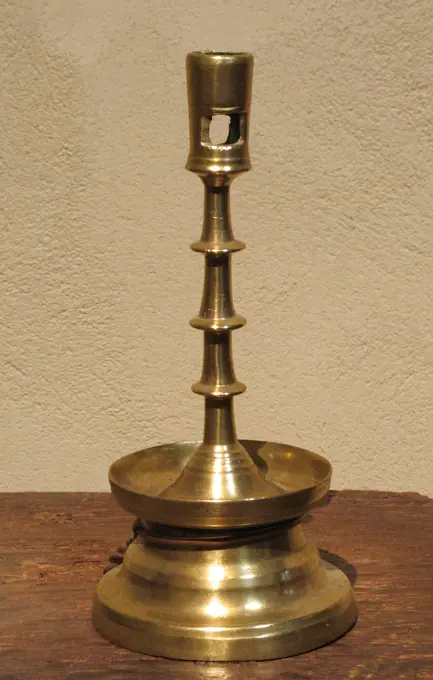
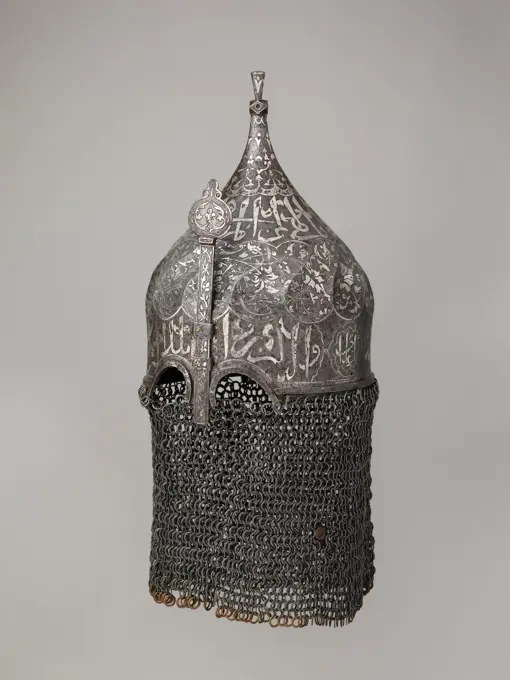
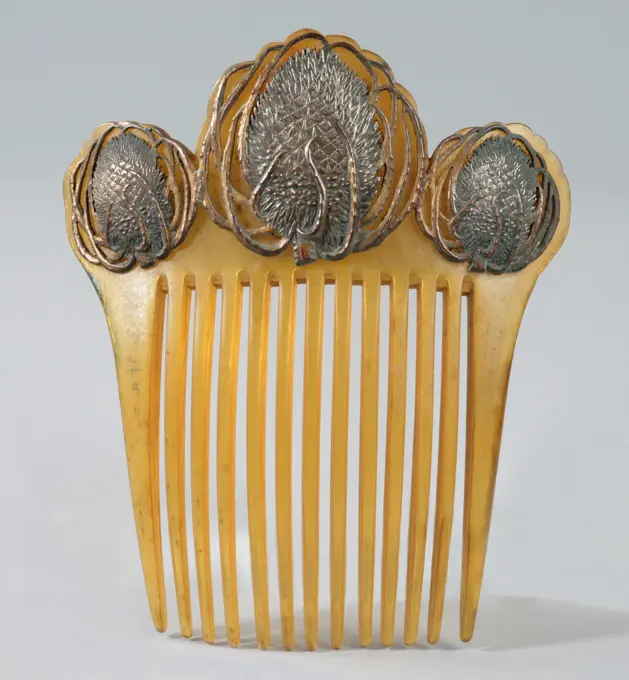
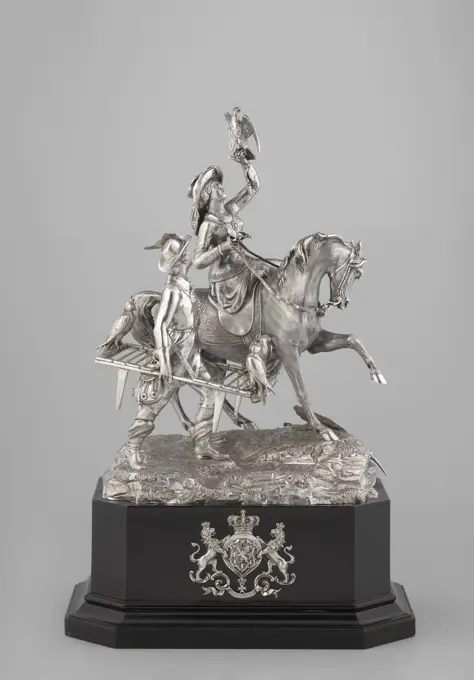
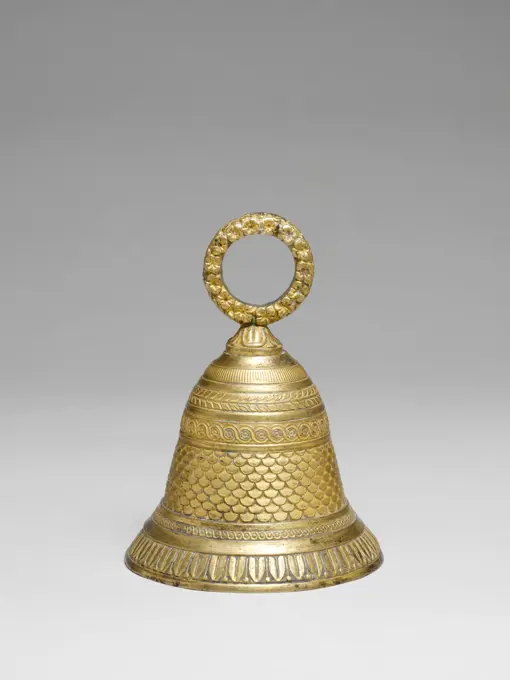
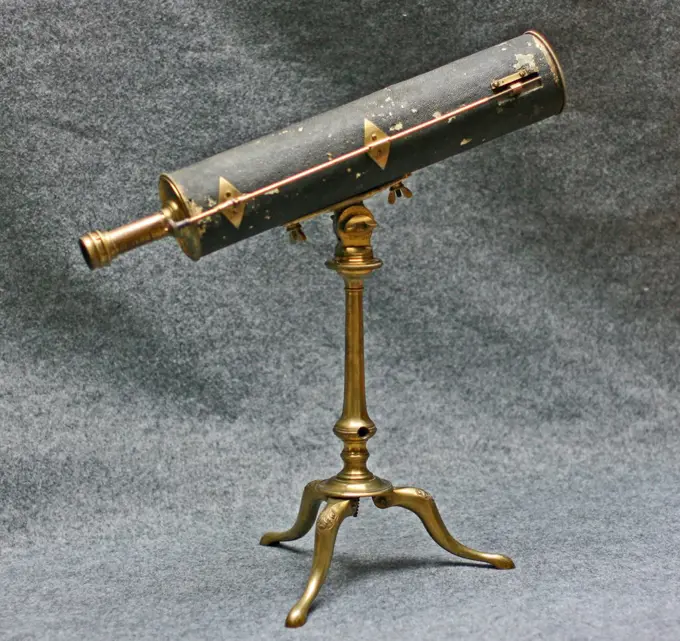
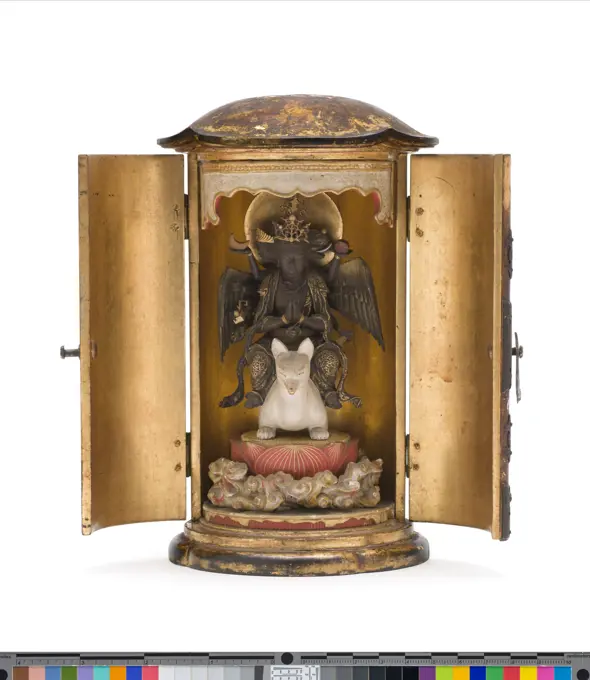
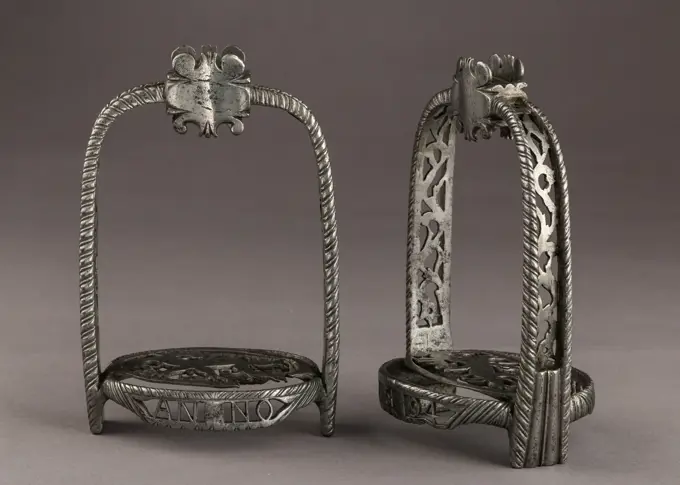
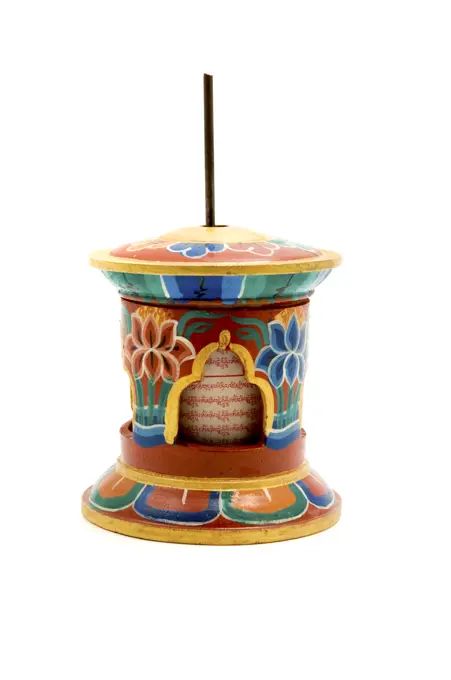
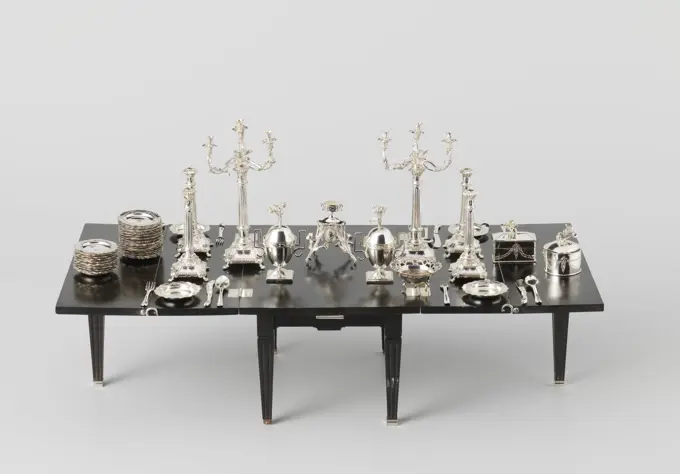
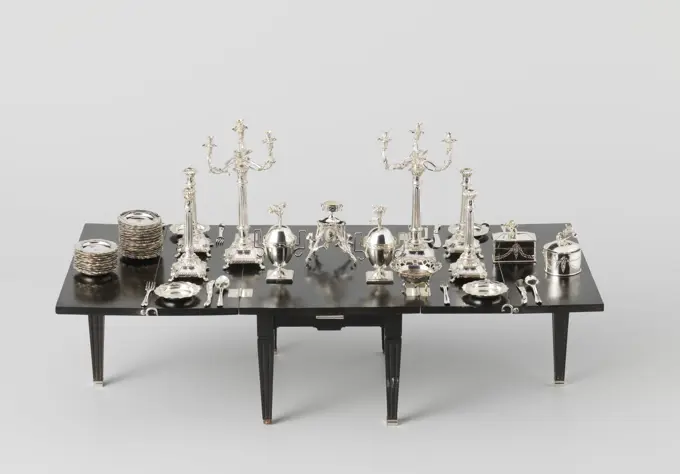
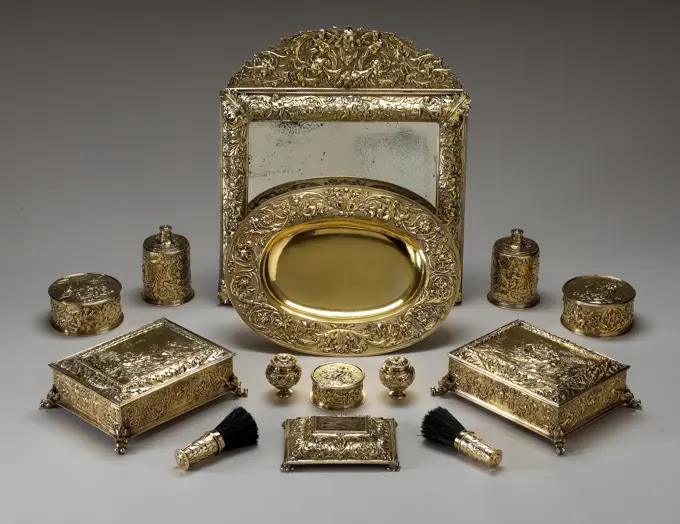
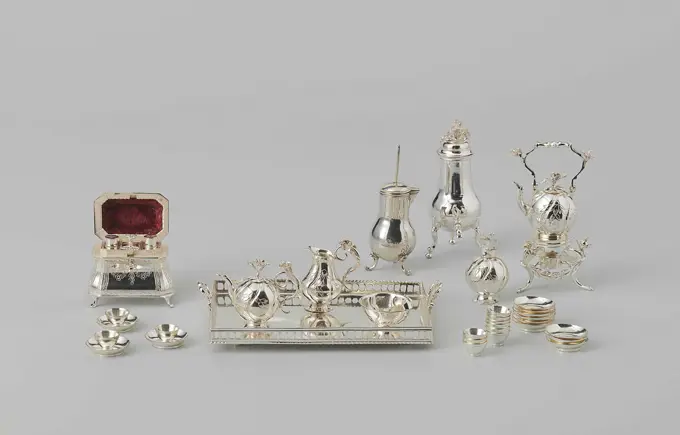
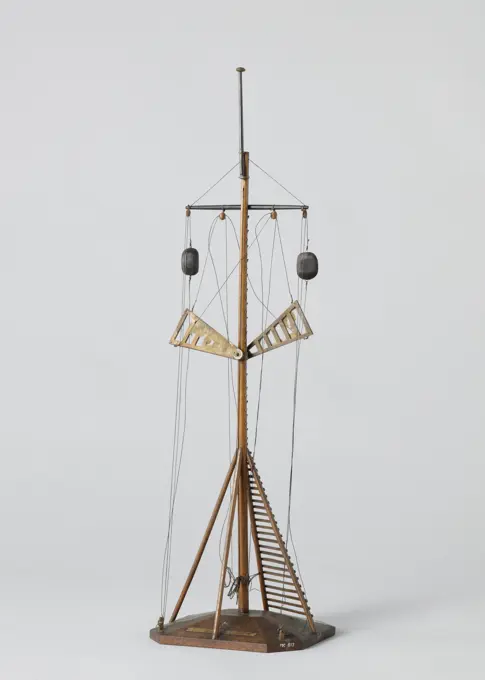
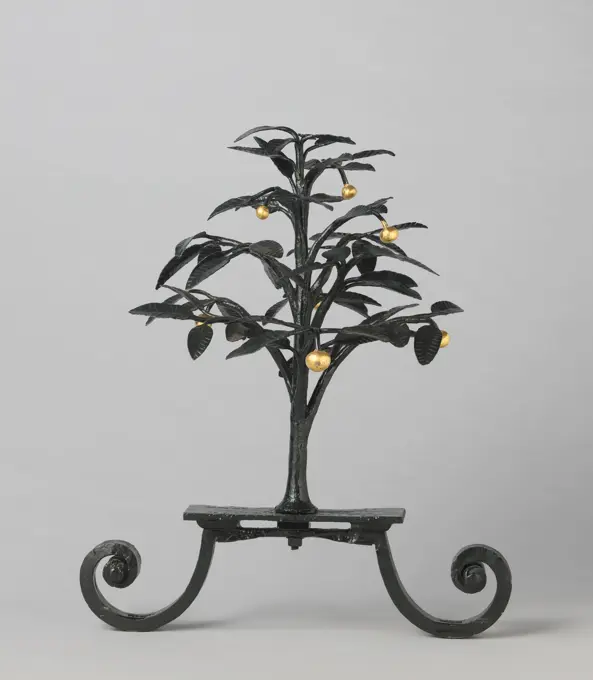
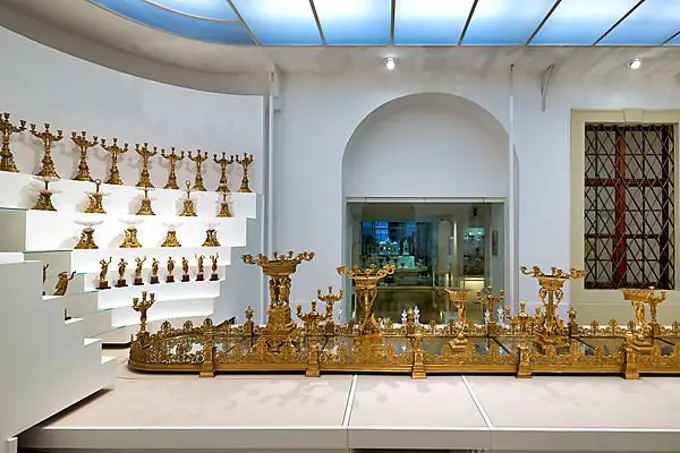
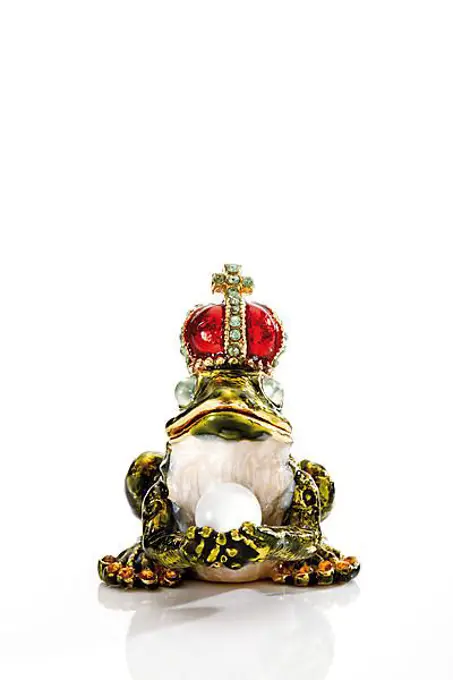
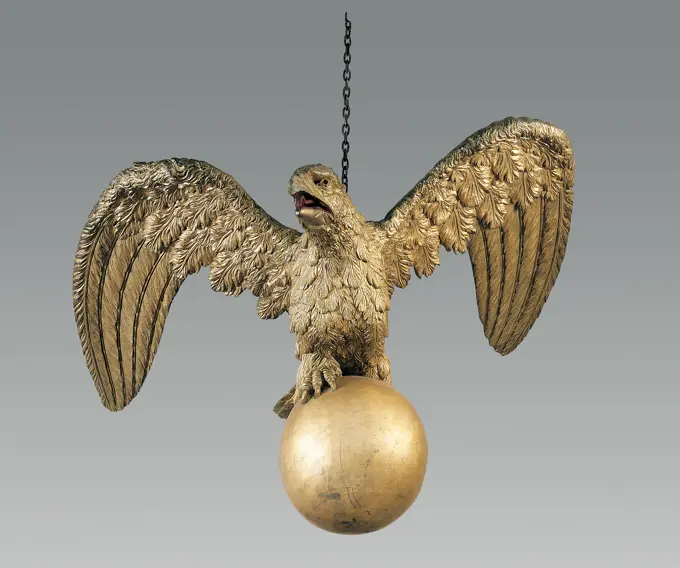
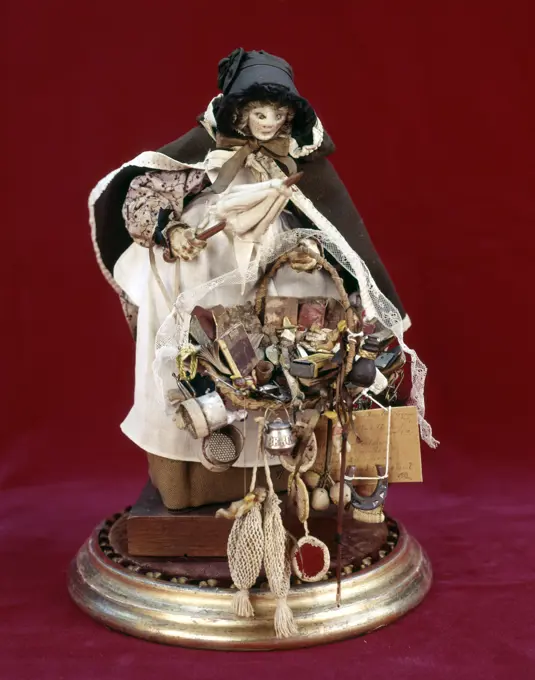
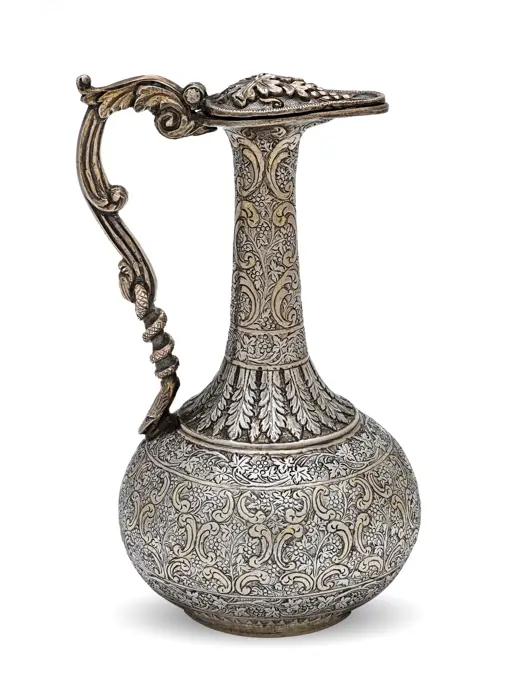
Claret Jug. India, Uttar Pradesh, Awadh, Lucknow, circa 1870-1890. Furnishings; Accessories. Partially gilded silver, chased and engravedCandlestick with baluster tribe and round, bowl -shaped foot, Jacob Feetererse (attributed to), c. 1900 - c. 1923 The round candlesticks have a vaulted foot with a deepened top, in which a square nut is sunk. The trunk is screwed in here. The trunk is made up of a baluster contained between diabolo and printed spherical elements. The candle holder is diabolo-shaped. Amsterdam silver (metal) The round candlesticks have a vaulted foot with a deepened top, in which a square nut is sunk. The trunk is screwed in here. The trunk is made up of a baluster contained between diabolo and printed spherical elements. The candle holder is diabolo-shaped. Amsterdam silver (metal)Terrine. Straight, oval terrine on a foot. The lid is half spherical. The two handles of the terrine and the knob of the lid are each formed by a floral rank. The edge of the lid is lowered. Garlandes are engraved in the wall of the terrine. The terrine is labeled: STK. = Amsterdam, JRL. = B (1809), Mt. = H. Duller, the sign & and the number 10 (Reterper). The terrine is on an oval dish (BK-NM-11177-151-B).Toast rack 1881 Christopher Dresser British, Scottish This toast rack, or letter rack, implicitly demonstrates Dresser's mission to create easily manufactured, functional, and novel designs. He was also interested in making affordable yet well-designed products for the growing consumer market. Constructed from a series of simply produced elements with exposed rivets, the toast/letter rack could be easily manufactured and its electroplated silver surface appealed to the middle-class pocketbook.Founded in 1855, the silversmith and electroplating firm of Hukin & Heath in Birmingham sought to improve business by hiring Christopher Dresser as art advisor around 1878. While the company's records were destroyed in the 1950s, Dresser's designs for Hukin & Heath survive as they were registered with the Patent Office. The company continued to manufacture Dresser's designs through the end of the century. Listen to experts illuminate this artwork's story Listen Play or pause #418. Christopher DresIron candlestick on three legs, Anonymous, 1500 - 1600 Iron candlestick. On three long, flat legs, the round fat catcher with cartel edge is sounding. Above it a long, round rod with a nodus in the middle, ending in the candle holder, which is open on two sides. West-Europa iron (metal) forging Iron candlestick. On three long, flat legs, the round fat catcher with cartel edge is sounding. Above it a long, round rod with a nodus in the middle, ending in the candle holder, which is open on two sides. West-Europa iron (metal) forgingCenser 16th century () South Netherlandish. Censer. South Netherlandish. 16th century (). Copper alloy. Metalwork-Copper alloyAmbroise. "Safety lock model forming pendulum". Gold and chiseled bronze, white and black marbles, 1789. Paris, Carnavalet museum. 72593-35 Dore bronze, chisel, form, white marble, model, black, pendulum, safety locksChanukah lamp, c. 1920, 6 7/8 × 8 × 1 3/4 in. (17.46 × 20.32 × 4.45 cm), Silver, Poland, 20th centuryAnonymous. "Candelabrian with five branches (of a pair)". Golden bronze. 1801-1900. Paris, Museum of Romantic Life. Candelabre, lighting, electric, light, lighting, 19th XIX XIX 19EM E19E 19 CENTURYRattle, anonymous, c. 1685 - c. 1700 Gold rattle with flute and at the top an oval cut piece of rock crystal. Netherlands (possibly) gold (metal). Gold rattle with flute and at the top an oval cut piece of rock crystal. Netherlands (possibly) gold (metal).Shell-shaped Box, anonymous, c. 1800 - c. 1825 Box of porcelain, covered with underlaze brown and blue. The box is irregularly formed to a shell with smaller shells on it. Japan porcelain. glaze. cobalt (mineral) painting / vitrification Box of porcelain, covered with underlaze brown and blue. The box is irregularly formed to a shell with smaller shells on it. Japan porcelain. glaze. cobalt (mineral) painting / vitrificationCandlestick, Anonymous, 1782 Kandelaber with three arms. The three arms in the form of a loose attachment. The foot is square and has beveled corners. The foot is on four claw legs. The trunk has the shape of a scanning column with a capital. From the capital, the three arms spring that are each with leaves. The Kandelaber is marked: stk. = Amsterdam, Jrl. = X (1782) and an unknown Mastert sign. Amsterdam silver (metal) Kandelaber with three arms. The three arms in the form of a loose attachment. The foot is square and has beveled corners. The foot is on four claw legs. The trunk has the shape of a scanning column with a capital. From the capital, the three arms spring that are each with leaves. The Kandelaber is marked: stk. = Amsterdam, Jrl. = X (1782) and an unknown Mastert sign. Amsterdam silver (metal)Cista Ficoroni, cylindrical bronze jewel casket with lid found at Palestrina (ancient Praeneste), Rome province) by Francesco de' Ficoroni, antiquary, in 1738Table orrery. The instrument-maker Hartog van Laun designed a table orrery -a mechanical device to show the relative positions and movements of the sun, earth, moon and planets. He used the instrument for his own lectures, but he achieved true success with it only when the Amsterdam professor Jan Hendrik van Swinden fully explained it at the Felix Meritis Society in 1802 and published articles about it.Candlestick 15th century German Although common in Roman times, candlesticks of the socket variety were not seen again in Europe until the fourteenth century. The revival of this type might well have been due to the return of merchants of the wax trade from the East, where socket candlesticks are known to have existed as early as the thirteenth century. The sockets were usually left open as the sides to facilitate the removal of the candle ends in order to reuse the wax, an expensive commodity. The drip pan, which in pricket candlesticks was placed directly below the candle, has here been lowered and incorporated into the high circular base. The fifteenth-century tendency to embellish the stem in manifested here with the skill that so distinguished the metalworkers of the Lowlands.. Candlestick. German. 15th century. Copper alloy. Metalwork-BronzeHanger with amor in a niche. Hanger of gold. Ajour edited, enamelled and decorated with pearls and precious stones. In the middle an enamelled amorphiguurtje.Golden figurine, Treasury of the Residenz, Munich, Bavaria, Germany, EuropeHelmet with Aventail late 15th-16th century Turkish, in the style of Turkman armor This especially attractive and well preserved turban helmet retains the mail aventail that protected the lower half of the face and neck. The aventail is fixed with a lead seal stamped with the mark used in the Ottoman arsenals, an indication that this example, like the other turban helmets also in the Museum's collection (acc. nos. 04.3.209, .210, .214, .457, .462; 36.25.109), passed into Turkish possession as booty with the Ottoman conquest of Iran and the Caucasus.At least one turban helmet decorated in a style comparable to this example bears the name of Farruhk-Siar (reigned 1464-1501), ruler of Shirvan in the Caucasus. Such evidence suggests that this helmet is also of Shirvan manufacture. Listen to experts illuminate this artwork's story Listen Play or pause #6701. Overview: Turkman Helmets Supported by Bloomberg Philanthropies We're sorry, the transcript for this audio track is not available at tBlonde, metal chick comb.Royal Loo Remembrance Challenge Cup, Hunt & Roskell, 1851 A table piece in the form of a female falconer on horseback, with a falcon in her left hand and the blindfold of the falcon in her right hand. Next to her a falconers' servant with a window on which three blindfolded falcons are seated. At the foot of the horse is a dead heron. The whole placed on a rocky ground, and caught in a black painted wooden plinth. On both the front and the back the crowned weapon of King William III, on the front also 'Loo Challenge Cup 1851', on the reverse 'Challenge Cup Given by HM the King of the Netherlands to Be Won Two Years in Succession by the Same Person won in 1851 and 1852, by Mr Stirling Crawfurd's Darkie ' London silver (metal). wood (plant material) lacquering A table piece in the form of a female falconer on horseback, with a falcon in her left hand and the blindfold of the falcon in her right hand. Next to her a falconers' servant with a window on which three blindfolded falcons are seConvex Mirror (one of a pair). American or English. Date: 1810-1830. Dimensions: 105.4 × 58.4 cm (41 1/2 × 23 in.). Eastern white pine. Origin: United States. Museum: The Chicago Art Institute, Chicago, USA.Sellette. Acquired by the artist at the World's Fair 1900 in ParisSaucer with the monogram of Philips of Belgium, c. 1867 Porcelain dish, painted on the glaze in gold. The front is covered with gold with a saved medallion on the flat with the crowned monogram of Philip from Belgium. On the wall a decoration in the gold and the edge with a tire leaf vines in relief. Marked on the underside with the scepter including a medallion with the eagle, a scepter and a globe in his claws. The edge script reads' Koenigl. Porzellan Manufaktur '. In addition, the letter M. Berlin porcelain. glaze. gold (metal) painting / gilding / vitrification Porcelain dish, painted on the glaze in gold. The front is covered with gold with a saved medallion on the flat with the crowned monogram of Philip from Belgium. On the wall a decoration in the gold and the edge with a tire leaf vines in relief. Marked on the underside with the scepter including a medallion with the eagle, a scepter and a globe in his claws. The edge script reads' Koenigl. Porzellan Manufaktur '. In additioHandbell 19th century () European. Handbell. European. 19th century (). Brass. Idiophone-Struck-bell-clapperCover for an Ice Pail (2 of 2), c. 1792-1804. Flight & Barr (British). Porcelain; diameter of mouth: 16.1 cm (6 5/16 in.); overall: 28.6 cm (11 1/4 in.).Standing Cup (Germany); silverThe Gregorian telescope by Paris, Claude (1703-1763) / Academie des sciences / 1736-1748 / France / Objects / History of scienceCandelabrum (one of a pair) ca. 1765 Chelsea Porcelain Manufactory. Candelabrum (one of a pair). British, Chelsea. ca. 1765. Soft-paste porcelain. Chelsea Porcelain Manufactory (British, 1745-1784, Gold Anchor Period, 1759-69). Ceramics-PorcelainDakiniten. Japan, circa 1300. Sculpture. Wood, pigments, gold, metalPair of Stirrups dated 1694 German, possibly Saxony When hanged together, these stirrups display on one side of their footplate rims, in Latin, the name of their original owner, Jacob Helt, as well as their manufacture year 1694. Heraldic griffins, a common decorative motif on German equestrian material since the 16th century, adorn the top of the footplates.Its pierced decoration is typical of the production of southeast Germany and Saxony in the 16th and 17th centuries. Two holes drilled on each side of the branches indicate that they were originally very likely enriched with pierced decorated plaques, probably made of another metal, screwed over the rather rough vegetal scrolls, creating a double-layer effect.. Pair of Stirrups. German, possibly Saxony. dated 1694. Iron alloy. Equestrian Equipment-StirrupsTea can; Nash, Bowles (Fl. 1720-Ca 1725); 1723/24 (cans); Ok. PO. 19th century (decoration) (1723-00-00-1723-00-00);Prayer wheel on a white backgroundLantern Oriental red lantern isolated with clipping path included Copyright: xZoonar.com/Baloncicix 14710459Mathematical-Physical Salon in the ZwingerTo the renamed of good herbal tea To the reputation of the good herbal tea ". Sheetland and ice. Epoque Louis-Philippe.Bord, anonymous, 1782 Round eating plate with scalloped edge. Shiringes are engraved on the edge. A flower is engraved in the middle of the plate. The board is marked: stk. = Amsterdam, JRL. = X (1782) and Mt. = Foot 430. The board is a copy from a set consisting of 36 identical plates (BK-NM-111177-189 to BK- NM-11177-224). Amsterdam silver (metal) Round eating plate with scalloped edge. Shiringes are engraved on the edge. A flower is engraved in the middle of the plate. The board is marked: stk. = Amsterdam, JRL. = X (1782) and Mt. = Foot 430. The board is a copy from a set consisting of 36 identical plates (BK-NM-111177-189 to BK- NM-11177-224). Amsterdam silver (metal)Bord, anonymous, 1782 Round eating plate with scalloped edge. Shiringes are engraved on the edge. A flower is engraved in the middle of the plate. The board is marked: stk. = Amsterdam, JRL. = X (1782) and Mt. = Foot 430. The board is a copy from a set consisting of 36 identical plates (BK-NM-111177-189 to BK- NM-11177-224). Amsterdam silver (metal) Round eating plate with scalloped edge. Shiringes are engraved on the edge. A flower is engraved in the middle of the plate. The board is marked: stk. = Amsterdam, JRL. = X (1782) and Mt. = Foot 430. The board is a copy from a set consisting of 36 identical plates (BK-NM-111177-189 to BK- NM-11177-224). Amsterdam silver (metal)Bord, anonymous, 1782 Round eating plate with scalloped edge. Shiringes are engraved on the edge. A flower is engraved in the middle of the plate. The board is marked: stk. = Amsterdam, JRL. = X (1782) and Mt. = Foot 430. The board is a copy from a set consisting of 36 identical plates (BK-NM-111177-189 to BK- NM-11177-224). Amsterdam silver (metal) Round eating plate with scalloped edge. Shiringes are engraved on the edge. A flower is engraved in the middle of the plate. The board is marked: stk. = Amsterdam, JRL. = X (1782) and Mt. = Foot 430. The board is a copy from a set consisting of 36 identical plates (BK-NM-111177-189 to BK- NM-11177-224). Amsterdam silver (metal)Bord, anonymous, 1782 Round eating plate with scalloped edge. Shiringes are engraved on the edge. A flower is engraved in the middle of the plate. The board is marked: stk. = Amsterdam, JRL. = X (1782) and Mt. = Foot 430. The board is a copy from a set consisting of 36 identical plates (BK-NM-111177-189 to BK- NM-11177-224). Amsterdam silver (metal) Round eating plate with scalloped edge. Shiringes are engraved on the edge. A flower is engraved in the middle of the plate. The board is marked: stk. = Amsterdam, JRL. = X (1782) and Mt. = Foot 430. The board is a copy from a set consisting of 36 identical plates (BK-NM-111177-189 to BK- NM-11177-224). Amsterdam silver (metal)Bord, anonymous, 1782 Round eating plate with scalloped edge. Shiringes are engraved on the edge. A flower is engraved in the middle of the plate. The board is marked: stk. = Amsterdam, JRL. = X (1782) and Mt. = Foot 430. The board is a copy from a set consisting of 36 identical plates (BK-NM-111177-189 to BK- NM-11177-224). Amsterdam silver (metal) Round eating plate with scalloped edge. Shiringes are engraved on the edge. A flower is engraved in the middle of the plate. The board is marked: stk. = Amsterdam, JRL. = X (1782) and Mt. = Foot 430. The board is a copy from a set consisting of 36 identical plates (BK-NM-111177-189 to BK- NM-11177-224). Amsterdam silver (metal)Mirror on a stand, from a toilette service, 1683, William Fowle; Retailer: Fowle & Wotton, English, 1658-1684, 20 x 17 1/2 x 1 5/16 in. (50.8 x 44.45 x 3.33 cm), Silver, gilt, mirror glass, silk, horsehair, wood, England, 17th century, During the Baroque era, a lady and her lady-in-waiting could spend hours at the dressing table with soaps, creams, perfumes, brushes, pins, etc. This manner of ceremonial grooming originated in the French court, where the word 'toilette' developed from 'toile,' or cloth, which covered the table. As the ceremony grew more elaborate, so too did the dressing table service that housed these beauty secrets.Playing card holder consisting of Acanthus leaves on a voluntary frame. A map holder from iron (Fer de Berlin). The holders consist of eight above each other, increasingly smaller acanthus leaves on a voluntary frame, standing on a rectangular base decorated with acanthus sheet. On the Acanthus leaves, the initial letters of the days of the week (S M D M F S). At the back the inscriptions: 'Kratzenberg / Acad. Kunsth. In Berlin '' Deponirt B.D. Königl. Acad. d. Künste '. Note: Kratzenberg or Knabenberg.Fire Commander's helmet from 1881, "Fire and Flame - the fire department from 1850 to today" exhibition, industrial museum, Lauf an der Pegnitz, Middle Franconia, Bavaria, Germany, EuropeCup and saucer. Funnel shaped tea cup on a dish. The dish has an upright edge, is unfamiled and marked: mt. = Foot 430. The tea cup has been engraved along the top edge and has not been marked. The head and saucer are stored as part of a tea set (BK-NM-11177-142). The tea service has a total of twelve head and saucers that are equal to this instance.Equinoctial dial 1740 Thomas Wright. Equinoctial dial. British. 1740. Gilded brass. HorologyModel of a Batavian Coastal Telegraph, anonymous, c. 1798 - c. 1800 demonstration model Model of an optical telegraph on ground board. It consists of a studited mast with a ra and a flag sting. Sports were installed between two of the four braces to climb the mast. With hoists over blocks on the RA, two flexes or wings are moved halfway through the mast, and two balls at the ends of the RA are hoisted up and down; The balls are missing. Scale 1:45 (scale on model). Netherlands wood (plant material). brass (alloy). textile materials. ropeOld retro style lantern made of metalFlower cloth of cut white paper in a vase under bell jar. By Hendrik van Irkoven .. Bloemuger of cut white paper in a vase under bell jar. By Hendrik van Irkoven. The Netherlands.Oranjeboom from the Inrijhek Huize De Voorst, Daniël Marot (I), c. 1675 - c. 1700 Wrought iron orange tree from the entrance fence of Huize De Voorst, partly gilded. Warnsveld iron (metal) forging / gilding  House De Voorst Wrought iron orange tree from the entrance fence of Huize De Voorst, partly gilded. Warnsveld iron (metal) forging / gilding  House De VoorstChristmas decorations plastic musical instrument isolated on white background.FireplaceFenderWhite stone formal columns for supporting the roof - path includedMounted brush ca. 1743-45 Johann Pepfenhauser II German. Mounted brush 231583Silversmith's Art, England 19th century. Corinthian column shaped, silverc andlesticks, Victorian style, signed by the goldsmith J.K.B. Sheffield, 1863.Spoon (USA), 1880; Manufactured by Gorham Manufacturing Company (United States); silver, gold (gilt); L x W: 12 x 2.5 cm (4 3/4 x 1 in.)Vintage fountain pen and inkwell isolated on a white background with clipping pathClose-up of Chinese-style wicker birdcageHofburg Palace Silver Collection Museumof Vienna AustriaModel of a 74 to 80-Gun Ship of the Line, anonymous, 1830 - 1840 ship model. fully rigged model. instruction model Polychromed truss model of the hull, painted black and white and with copperf under the waterline, with loose round wood. Two and eighty gun gates spread over three decks; Five levels: Koebrug, lower deck, intermediate deck, baking deck and semi -deck with covered pit with passages and grilles, upper campain with roef. The Galjoen does not have a shit. Gewlen mirror, flat wulf with two gates, two -storey fence with cutting work of weapon trophies and oval weapon with anchor; Two -storey side galleries with cutting work from pilasters and diamond motifs. Stir with Round Roer King (Soetermeers version), steering wheel on the half -deck in front of the paving mast. The model is equipped with a double anchoret and two double spindles. The Zeeg is almost flat, two barkhouts and one reehout; Peaked around. Round wood with marches and saltings of a three -mastry added: Both the lFrog figurine, frog wearing crown holding a pearlWeihnachtspyramide - Chrismas Pyramid Weihnachtspyramide auf weissem Hintergrund Chrismas Pyramid isolated on white Background Copyright: xZoonar.com/Teamarbeitx 283894Aerophone in the frame (cage with a bird)Eagle 1809-11 William Rush American This monumental eagle, of fluid and energetic form, was commissioned in 1809 by Saint Johns Evangelical Lutheran Church in Philadelphia for its new building. The birds open beak contains a red-painted iron tongue, from which a long chain was suspended to support the sounding board above the pulpit. In 1847 the sculpture was removed from Saint Johns and installed in the Assembly Room of Independence Hall, where it remained until 1914. In that location, near the Liberty Bell and Rushs 1815 carved wood statue of George Washington, its symbolism changed; once an attribute of the churchs patron saint, it metamorphosed into an emblem of national pride. Listen to experts illuminate this artwork's story Listen Play or pause #3802. Eagle Supported by Bloomberg Philanthropies We're sorry, the transcript for this audio track is not available at this time. We are working to make it available as soon as possible.. Eagle. William Rush (1756-1833). American. 1'St. Edward's Crown with which the Sovereign is crowned', 1953. Artist: Unknown.DOLL STATUE 19TH CENTURY WOMAN HOLDING UMBRELLA & BASKET FULL OF JUNK ITEMS COLLECTOR PEDDLER RECYCLER WARESModel of a War Galley, anonymous, c. 1795 - c. 1813 ship model. fully rigged model Timing model of a gunner galei with forty rowing stirs, on standard, incomplete. The ship has a deck with raised part in the middle; The dids are on this raised piece and the railing. The Galjoen is very low and has a crocodile head as a figurehead; In the bow, slides were applied for two pieces, a sled in the stern. Flat mirror with a gate and doors for the guns; Wide rudder with steering quadrant and steering talies through the mirror. The Zeeg rises slightly back, two barkhouts. Stretch around. A skin walk has been omitted on starboard. The rowing germs are in brackets outside the railing. The rig is a two -mast shoe tuition without sails; The bowsprit is equipped with a bone wood, the stenges are attached with brass brackets instead of donkey heads. Scale approx. 1:36 (derived). Amsterdam (possibly) wood (plant material). brass (alloy). ropeBox (England); Manufactured by Frederick Elkington; Retailed by Elkington & Co.; leather, silk, metal; L x W x D (Closed): 14 x 19 x 3 cm (5 1/2 x 7 1/2 x 1 3/16 in.)