Decorative Carpets and Textiles

Various ornate carpets and silk fragments featuring intricate floral and geometric designs from different centuries.
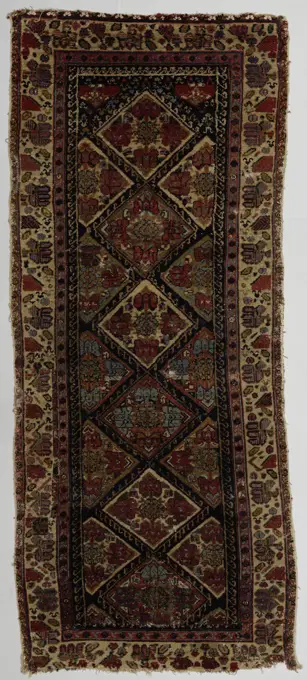
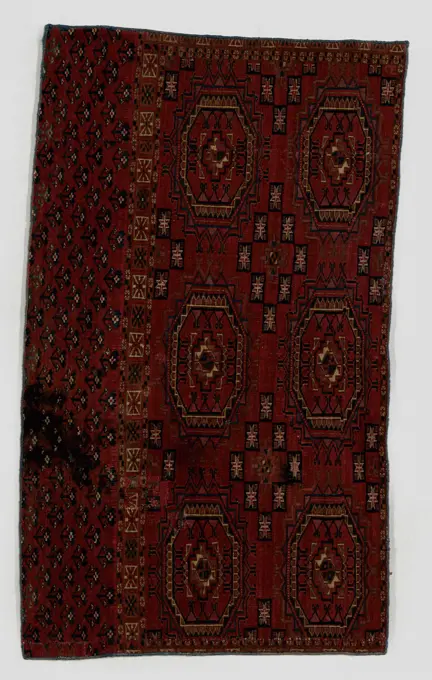
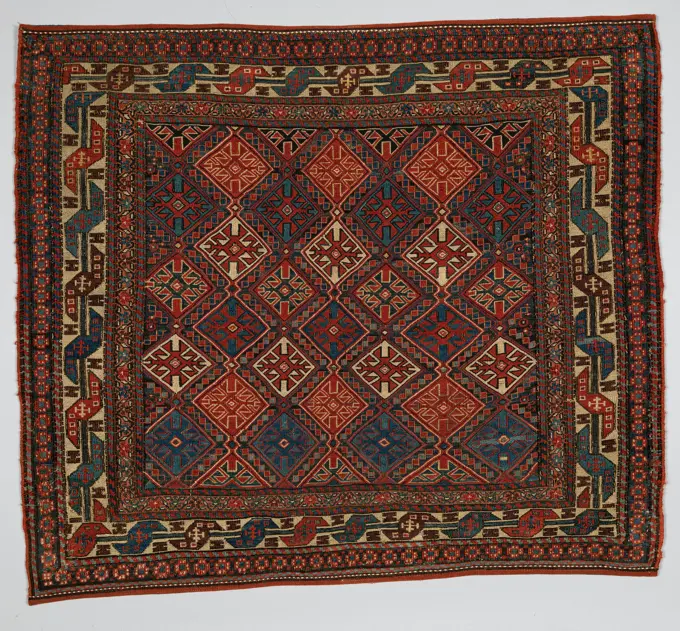
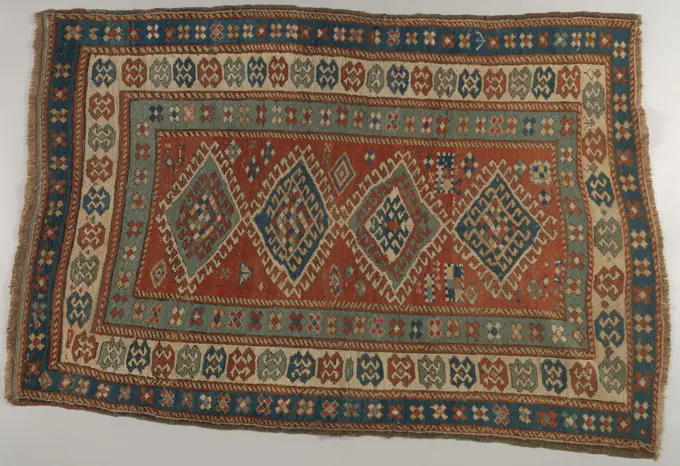
Eastern carpet, anonymous, c. 1850 - c. 1900 Eastern carpet, windscreen rug, in runner format. In midfield repetitive diamond -shaped medallions, filled with four -rate motifs against a dark blue stock. This runner was once shortened. Northwest perzia (Possible) ketting: wool. inslag: cotton (textile) Eastern carpet, windscreen rug, in runner format. In midfield repetitive diamond -shaped medallions, filled with four -rate motifs against a dark blue stock. This runner was once shortened. Northwest perzia (Possible) ketting: wool. inslag: cotton (textile)
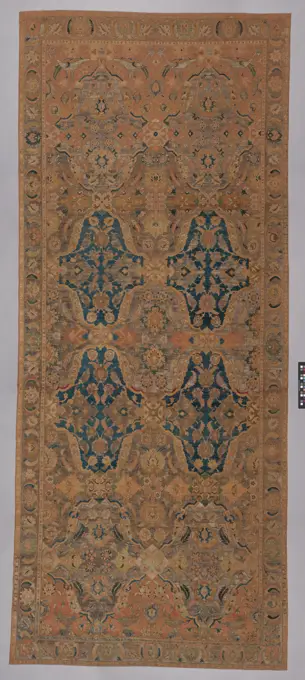
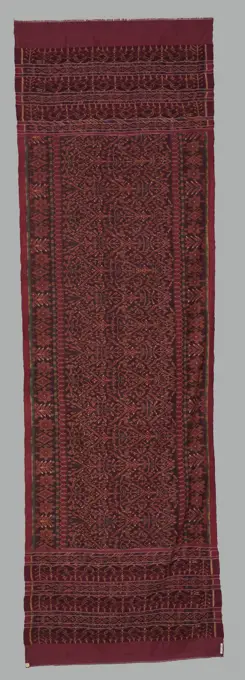
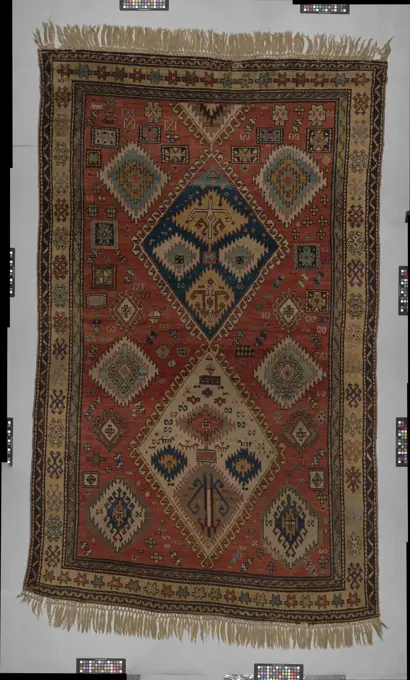
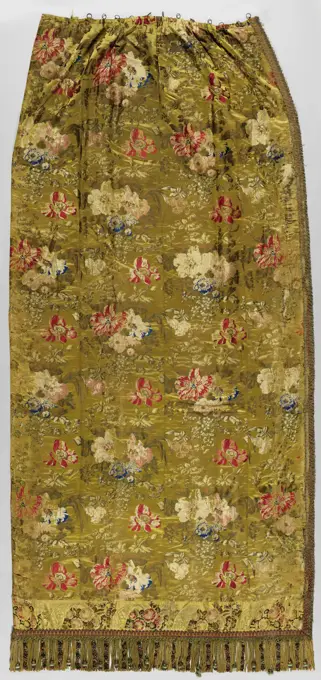
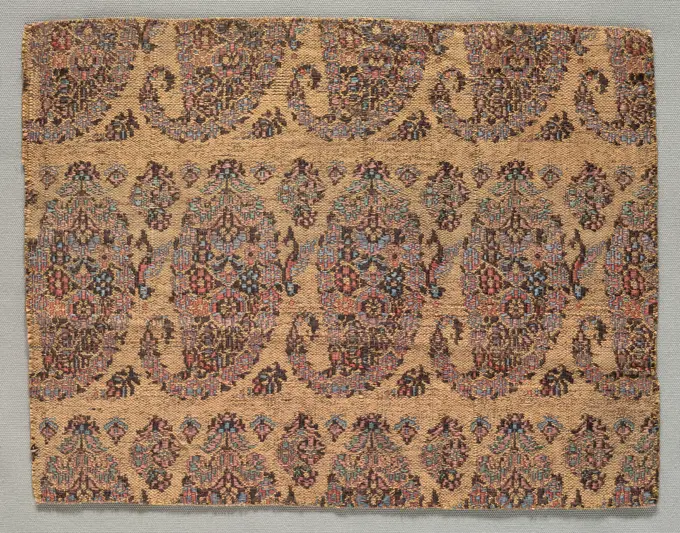
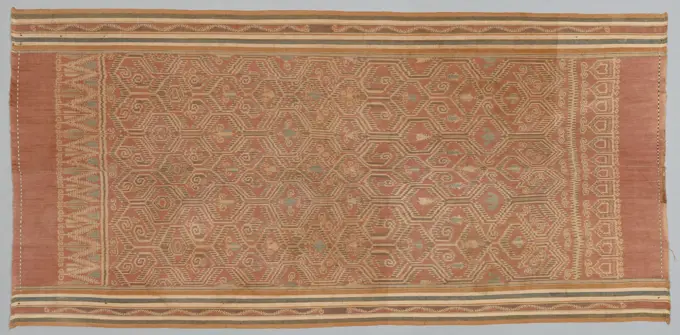
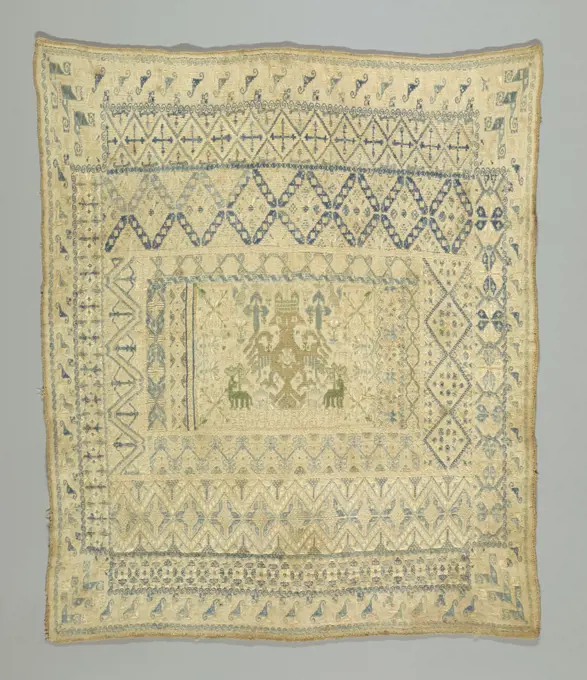
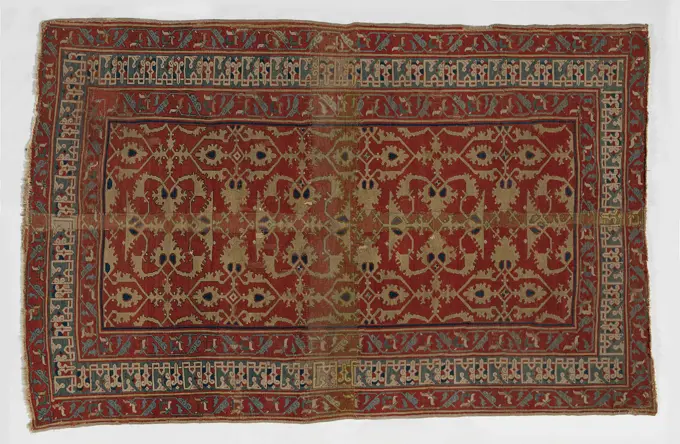
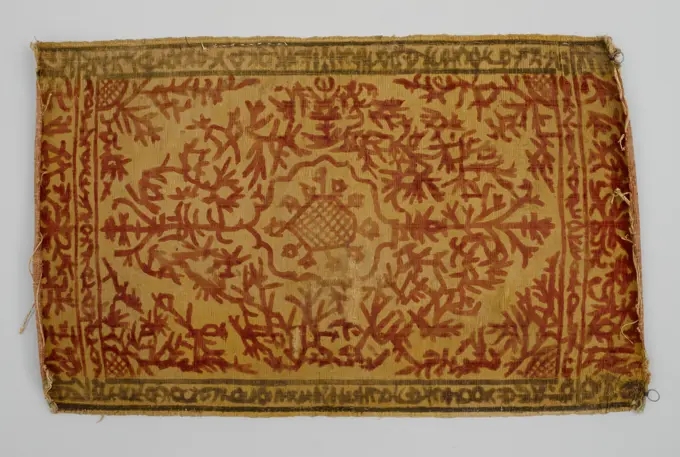
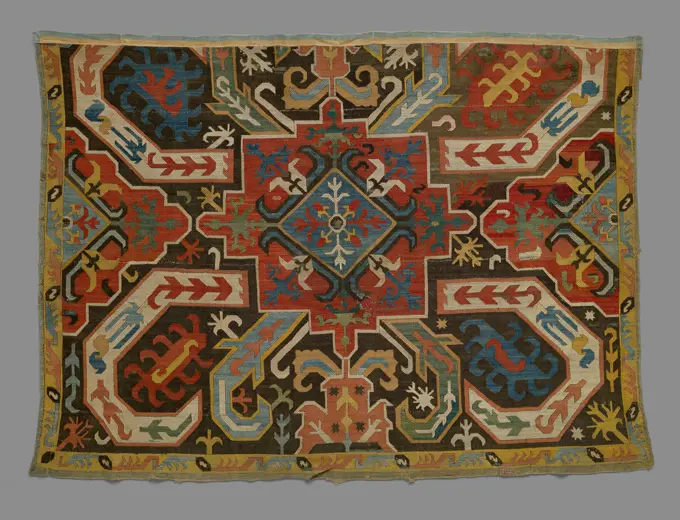
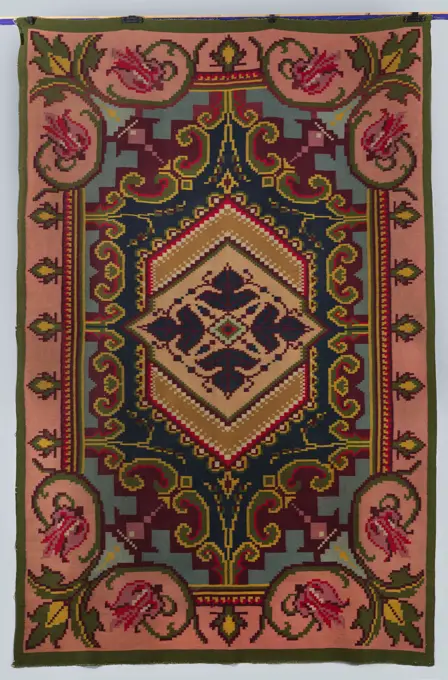
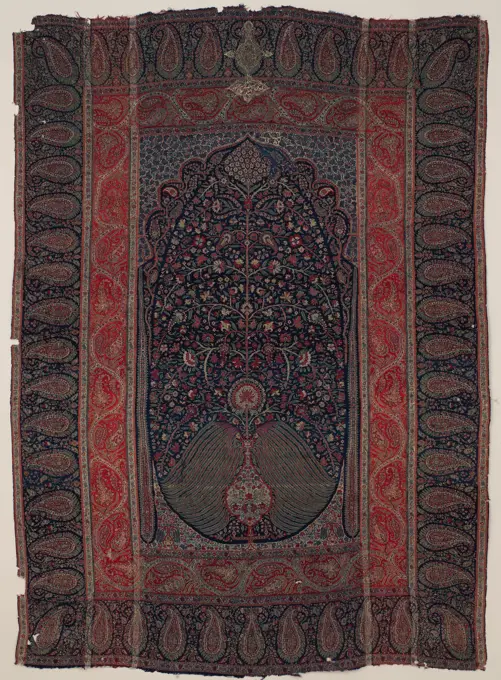
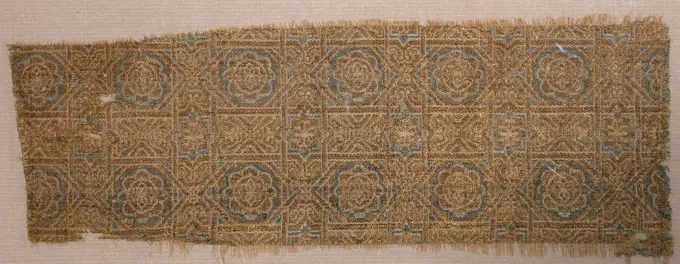
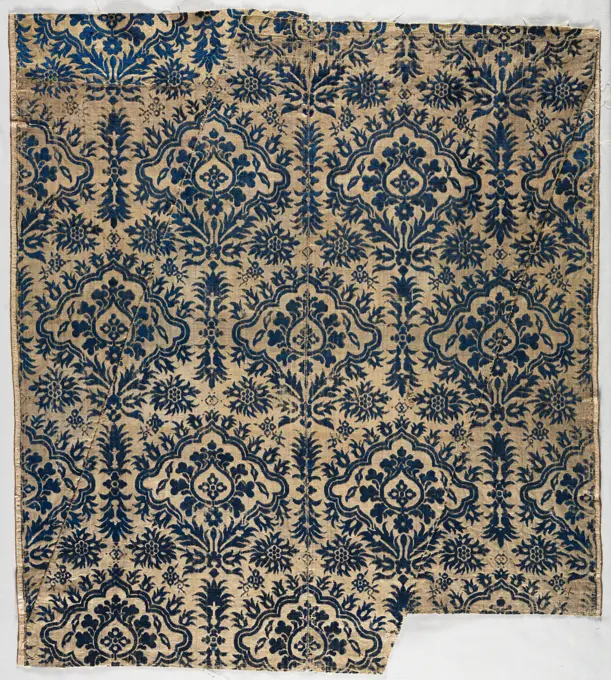
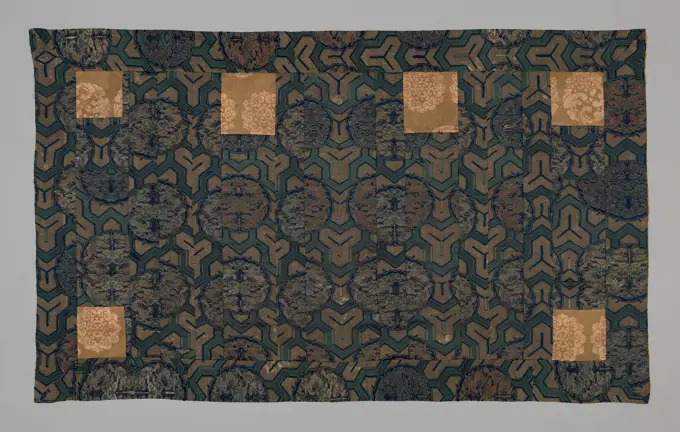
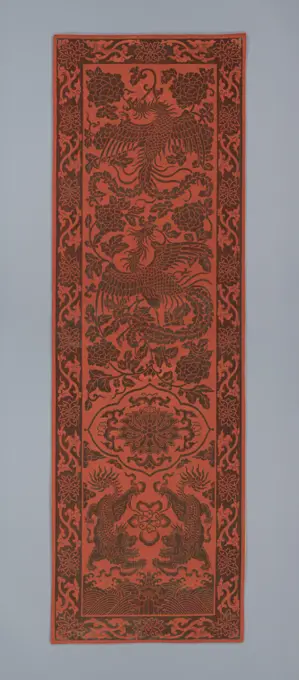
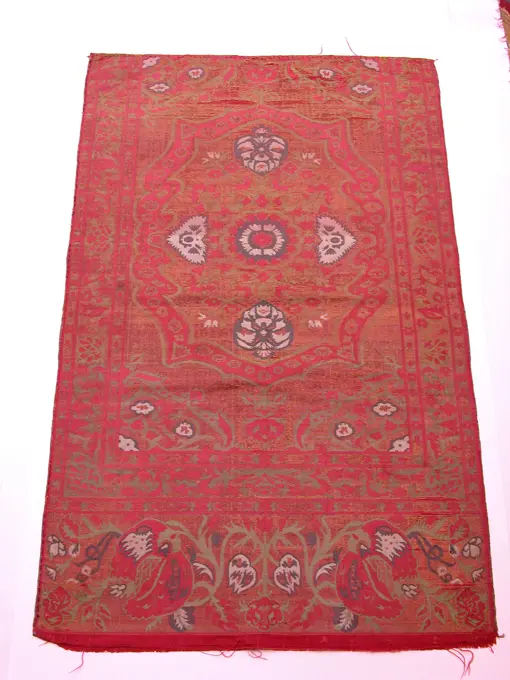
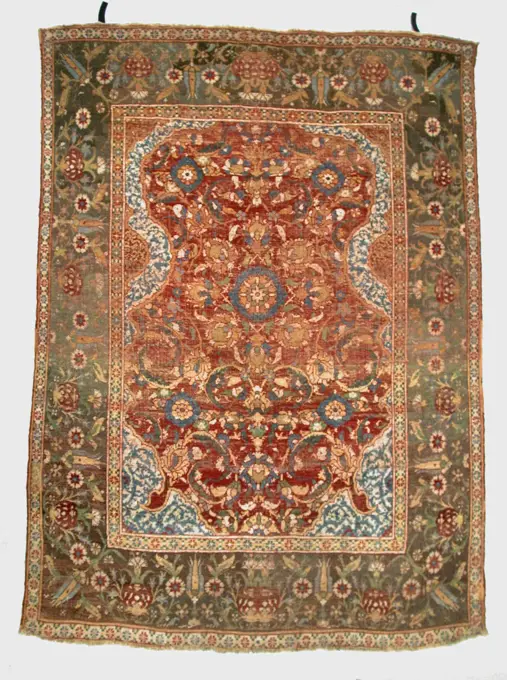
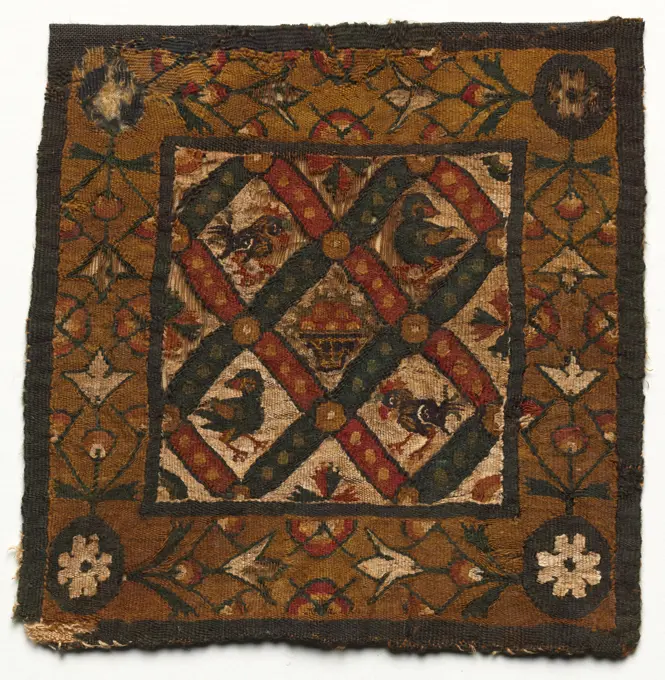
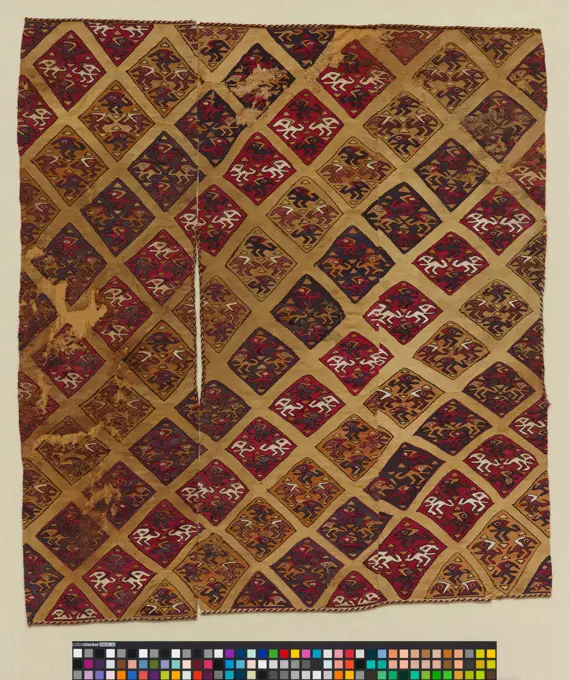
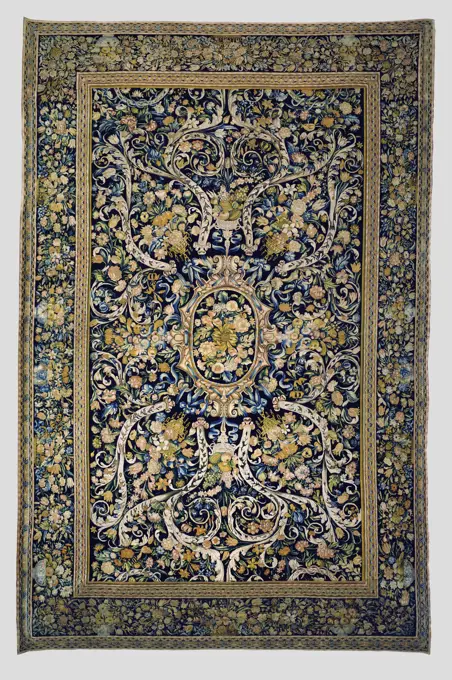
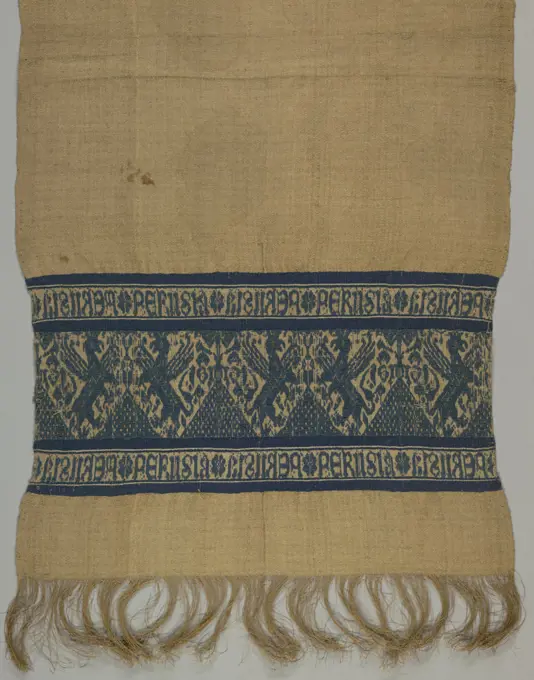
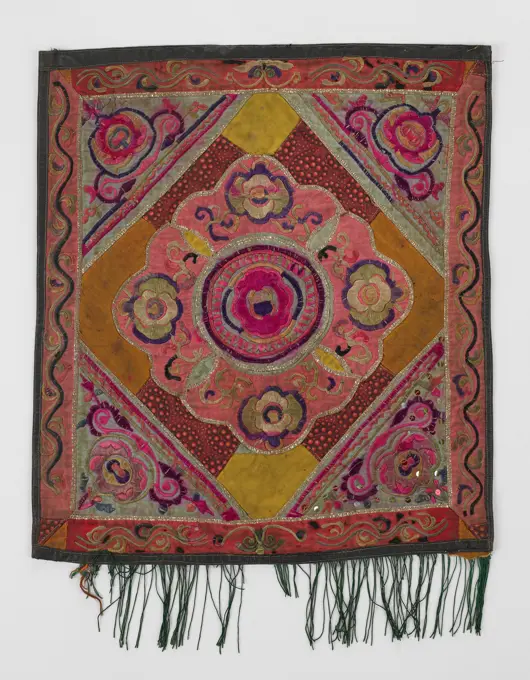
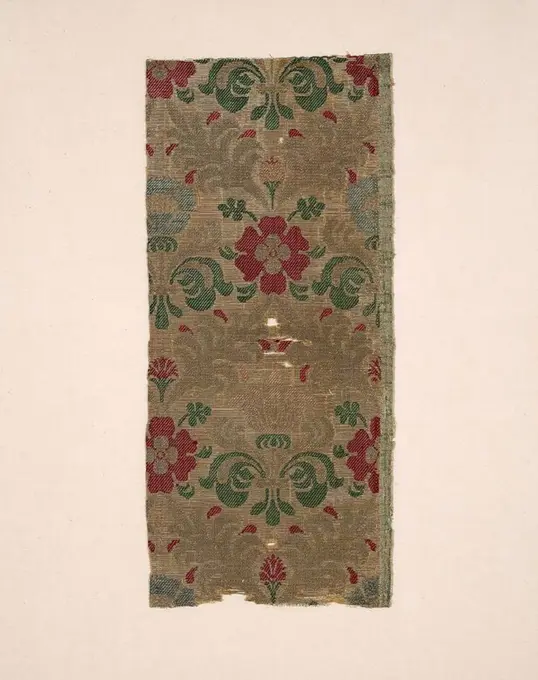
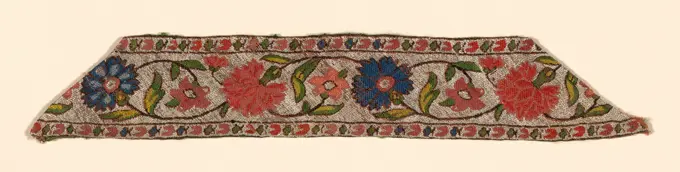
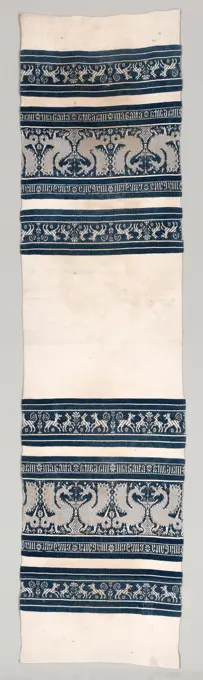
Carpet with Tree and Cartouche Design 18th century. Carpet with Tree and Cartouche Design 451608'Polonaise' Carpet first half 17th century The field of this silk carpet is filled with flowers, leaves, and scrolling vinesall typical of Persian carpet design of this period, when the hunting and animal scenes popular the previous century fell out of favor. Polonaise carpets like this one are noted for their extensive use of silk and metal-wrapped silk thread. The somewhat muted colors are due to the silk pile; though valued for its strength and softness, silk does not hold dye as well as wool and its color quickly fades. Polonaise carpets, which were often produced in matching pairs, were created both for the local Iranian market and for presentation and sale to Europeansincluding the Polish nobility, a fact which accounts for this type’s name.. 'Polonaise' Carpet 451026Sarong, c. 1900s. Indonesia, Sumatra, 20th century. Silk and cotton plain weave: ikat; overall: 294.6 x 89.5 cm (116 x 35 1/4 in.).Carpet 19th century. Carpet 447473Fragments; silk, woolEastern carpet, anonymous, c. 1850 - c. 1900 Eastern carpet, windscreen rug, in runner format. In midfield repetitive diamond -shaped medallions, filled with four -rate motifs against a dark blue stock. This runner was once shortened. Northwest perzia (Possible) ketting: wool. inslag: cotton (textile) Eastern carpet, windscreen rug, in runner format. In midfield repetitive diamond -shaped medallions, filled with four -rate motifs against a dark blue stock. This runner was once shortened. Northwest perzia (Possible) ketting: wool. inslag: cotton (textile)ALFOMBRA DE CAMPO-TIPO LOTTO O DE IMITACION A LAS DE ASIA- 1ª MITAD DEL S XVII. Location: MUSEE D'ARTS DECORATIFS. MADRID. SPAIN.Cushion Cover Made 1801-1900 Turkey. Velvet, cut voided .Eastern carpet ,, 1800 - 1900 Oriental carpet, prayer rug, knotted wool, decorated with a blue mihrab, stepped gable top. The niche is filled with rosettes and reverse flower vases. Three edges and four intermediate hemes around midfield. Ghiordes wool Oriental carpet, prayer rug, knotted wool, decorated with a blue mihrab, stepped gable top. The niche is filled with rosettes and reverse flower vases. Three edges and four intermediate hemes around midfield. Ghiordes woolSampler Made 1825-1875 México. Linen, plain weave; embroidered with silk floss in back, button-hole, cross, long-armed cross, fern, flame, hem, herringbone, double knot, overcast, Roumanian, running, double running, shead and stem stitches; drawnwork embroidered with silk floss in Aztec stitches; eyelet holes; glass beads .Oriental carpet. Oriental carpet of knotted wool, of which the dark blue midfield is decorated with six staggered rows of Botehs. Around five edges with plain intermediate.Band, Medium: silk, linen Technique: embroidered, Red silk on linen in a pattern of diamond-shaped fields and foliated star motifs., Spain, 16th century, embroidery & stitching, BandFragment (Spain); silk, metallic yarns (gilded parchment wound around linen core)Border; silkCurtain, with flower design on yellow distance, le mirepère et fils, 1850 - 1860 Silk curtain with flower design on yellow stock from the small dance hall of Noordeinde Palace. manufacturer: LyonThe Hague silk. lampas (textile material) Silk curtain with flower design on yellow stock from the small dance hall of Noordeinde Palace. manufacturer: LyonThe Hague silk. lampas (textile material)Fragment, Medium: silk Technique: plain compound weave, Subtle striped effect in gold, green, pink and orange. Pattern structured around a grid with bars interrupted with dots and flowers. Within each area of grid is a stylized floral shape with flowers and interlacing scrollwork., China, 17th-18th century, woven textiles, FragmentCushion Cover (Yastik) 17th century Yastiks are cushion covers used by the Ottoman elite to decorate the interiors of their palaces. They are distinguished by their rectangular shape, a dominant red velvet background, and a composition framed on both sides with a band formed of a linear repeating motif. These cushion covers were produced in quantity; the same pattern type was woven one after the other in a continuous length on the loom and later cut to size.. Cushion Cover (Yastik) 452089Fragment, 1700s. Iran, 18th century. Lampas weave; overall: 17.8 x 22.3 cm (7 x 8 3/4 in.).Band 17th century Italian. Band 212343Fragment; silk, metallic; Warp x Weft (including fringe): 31.1 x 28.3 cm (12 1/4 x 11 1/8 in.)Fragment 18th century Italian. Fragment. Italian. 18th century. Silk. Textiles-WovenPua (Ceremonial Blanket or Hanging), 1900-1970. Borneo, Kalimantan, Iban Tribe, 20th century. Tabby weave, warp ikat; cotton; overall: 217.1 x 105.1 cm (85 1/2 x 41 3/8 in.).Sampler, Ramona Benyto, Medium: silk embroidery on linen foundation Technique: embroidered in satin, cross, wrapped cross, chain, stem, chevron, threaded back, back, four-sided, eyelet, coral, and threaded chevron stitches on plain weave foundation, Central square combining crowned double-headed eagle within receding frame of borders in blue and white., Spain, 1797, embroidery & stitching, SamplerBedcover Made 1701-1800 Greece. Linen, plain weave; embroidered with silk yarns in chain, closed herringbone, and stem stitches; couching; three loom widths joined .Sampler 1817 Dutch. Sampler 227976Fragment of Samiet with star patterns and bumps. Fragment of a silk tissue with black chain wires and with black, green and yellow weft threads forming a ridge ornament of side by side on yellow soil placed black, with green-defined 16 corners. Herein a star-shaped ornament of crossing cuffs and a yellow star as heart trim. Along the sides of the 16 corners are small light green boxes in which black characters. Edge decorations in black, green and yellow.Four-set fragments of an oriental carpet. Oriental carpet, arabic rug, lottery carpet. Four fragments of what has originally been a larger carpet. In midfield a pattern of flowing lines and flexible leaf motifs. The middle edge is decorated with kufi oraments.Piece 18th-19th century Japan. Piece. Japan. 18th-19th century. Silk. Textiles-WovenMedallion and animal carpet. Animal bars between plants are moving symmetrically on a green ground. In the middle a cherry red medallion with light blue and yellow arabesque. The edge is strewn with small birds and flower ornaments.Piece 18th century China. Piece 71405Carpet 16th century. Carpet 456975Large model tent bag card. Tent bag card in large model, Tekke Chuval. In midfield there are three courses of two general against a burgundy background. The edge is only present at the top and decorated with geometric rectangular ornaments, the elem is decorated with plants.Fragment 18th century Italian. Fragment 230421Perkenkleed, KARABAGH of SHIRWAN, anonymous, 1800 - 1900 Bed dress, Karabagh or Shirwan. Midfield: Dark blue fond with four standing on top of each other and the full width covering obskvers. The colors are white, roasted Sienna, sea green and roasted Sienna. In each stands a stepped gable block in blue, red and white with outward hooks. Strooigoed in the swing. Rand: triple. Three equally narrow edges are resp. Red, yellow and blue and filled with zigzag lines, rosettes and crab motifs. Shirvan (possibly) wool Bed dress, Karabagh or Shirwan. Midfield: Dark blue fond with four standing on top of each other and the full width covering obskvers. The colors are white, roasted Sienna, sea green and roasted Sienna. In each stands a stepped gable block in blue, red and white with outward hooks. Strooigoed in the swing. Rand: triple. Three equally narrow edges are resp. Red, yellow and blue and filled with zigzag lines, rosettes and crab motifs. Shirvan (possibly) woolLampas with floral medallions in ogival lattice, 1550-75. Turkey, Istanbul or Bursa. Lampas: silk and gilt-metal thread; overall: 109.2 x 66.8 cm (43 x 26 5/16 in.); mounted: 116.2 x 74.9 cm (45 3/4 x 29 1/2 in.).Wool carpet decorated with stylized branches and flowers. Wool carpet. In the middle a diamond with red ground, on which a diamond shape in the width and stylized branches and flowers. Under and upstairs in the middle section closed with a border of stylized birds with Lanhe snaps. An edge of elegant interlocking triangles separated by a red zigzag band.Textile, Medium: silk on linen Technique: embroidered, Horizontal rectangle of linen with solidly massed embroidered round blossoms in red silk, outlined in black, against a ground of green. Yellow centers in flowers. Bordering floral rinceau at top., India, 19th century, embroidery & stitching, TextileFragment, Medium: silk, metal wrapped linen Technique: 2/1 twill patterned by plain weave, Horizontal bands of pattern; metallic band with a repeat of kneeling gazelles, phoenix flanked by pomegranate buds, then bands of gold metallic ornament, Italy, 14th century, woven textiles, FragmentWoman's skirt, 1985, 58 1/2 x 39 in. (148.59 x 99.06 cm), Cotton; painted and dyed (bogolanfini), Mali, 20th centuryEastern carpet ,, c. 1600 Fragment of an oriental carpet, Herrati flower rug. In midfield a tiflin and flower pattern against a cerisher-red stock. The edge is decorated with spiral vines with palmets and flowers. Herat wool. cotton (textile) Fragment of an oriental carpet, Herrati flower rug. In midfield a tiflin and flower pattern against a cerisher-red stock. The edge is decorated with spiral vines with palmets and flowers. Herat wool. cotton (textile)Carpet Made 1887 Wimbledon. This carpet was among the original furnishings of the John J. Glessner House on Prairie Avenue in Chicago, which was designed by the architect Henry Hobson Richardson (1838ñ1886) and completed in 1887. The carpet was located in the hall of the house and was one of the many furnishing textiles designed by Morris and other eminent Arts and Crafts textile designers and manufacturers of the period.The design and craftsmanship of decorative objects were of the utmost importance to Morris. His dedicated interest in understanding, practicing, and mastering textile-manufacturing techniques, coupled with his belief in the benefits of beauty in everyday life, made him and his firm among the most celebrated in British history. In the 1870s Morris began designing hand-knotted and machine-made carpets. He had long been interested in historical carpets, and many could be found in his personal collection. Here Morris looked to Turkish and Persian rugs for inspiration, utilWall hanging, mid 20th century, 64 1/16 x 41 in. (162.72 x 104.14 cm), Cotton, rogan; painted, India, 20th centurySarong, 19th century, L.70-1/2 x W.49-1/2 in., Silk, metallic thread, Indonesia, 19th centurySkoutari carpet unknownCoverRug;  19th/20th century (1891-00-00-1910-00-00);Kilimy, purchase (provenance)Fragment, Medium: silk on linen Technique: embroidered, Fragment with wide borders showing a mirror image design of symmetrical flowering trees with birds in multicolored silk on linen., Patmos, Greece, 19th century, embroidery & stitching, FragmentFace of Half a Double Saddlebag (Khorjin) ca. 1825-75 The central diamond design on this double saddlebag is common in sumak weavings from the Shahsevan tribe, and the border motif, an ancient tribal symbol, is characteristic of weavings by tribal members in the Khamseh region (south of the Caspian Sea). Sometimes referenced as the "two-headed bird," because of the suggestion of heads with eyes facing opposite directions, the border pattern was reproduced with many variations. Here, the repeating motif features mini crosses for the eyes. A more elaborate cross motif decorates the central lozenge.. Face of Half a Double Saddlebag (Khorjin). ca. 1825-75. Wool (warp, ground weft, and sumak weft); sumak extra-weft wrapping with two-color chaining. From Northwestern Iran, Shahsevan tribe, Khamseh Region. Textiles-Woven-BrocadeSampler, Medium: wool, linen Technique: counted thread embroidery, Geometric bands and borders in red and blue counted thread embroidery on natural linen., Spain, 19th century, embroidery & stitching, SamplerTenzaVoorblad, Ersari Volk, c. 1875 - c. 1900 Tent pocket front leaf, large model Chuval, with stripe decor. The field is divided into nine cross bars with all with a crash -red foundation, but with different motifs. Turkestan Necklace and impact: Wool Tent pocket front leaf, large model Chuval, with stripe decor. The field is divided into nine cross bars with all with a crash -red foundation, but with different motifs. Turkestan Necklace and impact: WoolWoven Wall Hanging ca. 1820-30 Kashmir was famous for its beautiful woven shawls made of the fine goats wool called pashmina, woven in the distinctive double-interlocking tapestry weave style. Hangings, cushion covers, and some articles of clothing were also made in this technique, in which the piece was woven with bobbins or spools, with the weft colors inserted as required by the pattern, interlocking where two adjoining colors meet. Floral motifs were the most common decoration on the Kashmiri woven textiles, the most distinctive being the bota, a conelike design of a flower or shrub with a curving tip.. Woven Wall Hanging 453417Textile Fragment, 1800s. Japan, 19th century. Silk; average: 19 x 12.7 cm (7 1/2 x 5 in.).Fragment (Spain); silk, metallic, linenChalice Veil (France); metallic embroidery on silk foundationFragment (Japan)Fragment of the chasuble column;  18th century (1701-00-00-1800-00-00);Fragment (Border) Middle East. Silk and gilt strip wound around a silk fiber core, plain weave with complementary wefts .Textile Fragment 13th century Part of a corpus of identical fragments, this Andalusian textile belonged to the mantle that was interred with Don Felipe Infante (d. 1274), son of Ferdinand II and brother of Alfonso X, thirteenth-century kings of Castile. The composition consists of registers containing repeating rosettes with geometric interlace against a gold background. Opulent textiles, probably manufactured in a Muslim production center, were regularly used for garments or furnishings and placed in Christian royal burials, reflecting the esteem with which Andalusian fabrics were regarded. See also 46.156.8 and L.2011.46.21, other fragments from this textile.. Textile Fragment. 13th century. Silk, gold wrapped silk, and undyed linen; compound weave. From Spain, Palencia. Textiles-WovenKazak rug mid-19th century Russian This rug is a handsome and wholly appropriate example of the type of scatter rug used in late-nineteenth century American homes. It is in use as a hearth rug in the 1884 stairhall by McKim, Mead, and White in the American Wing.. Kazak rug 14213Wool Carpet. Date/Period: 1500 - 1550. Carpet. Author: MAMLUK CARPET.Portion of a Carpet Made 1575-1625 Turkey. Silk, wool, and cotton, plain weave with supplementary wrapping wefts forming cut pile through a technique known as Persian (Sehna) knots .Fragment 15th-early 16th century Italian, Venice or Turkish. Fragment 230179Panel (Iran); silk, metallic yarnsTwo Border Fragments Made 1575-1625 Spain. Linen, plain weave; pulled thread work embroidered with silk back, running and two-sided Italian cross stitches; edged with darning stitch .Velvet, 1600s. China, 17th century. Velvet (cut and voided); overall: 87.6 x 78.4 cm (34 1/2 x 30 7/8 in.).Fragment, 1100s - 1300s. India, 12th-14th century. Plain cloth, resist dyed; cotton; overall: 29.3 x 17.2 cm (11 9/16 x 6 3/4 in.).Textile (China); silkKesa Made 1781-1801 Japan. Hiri, yÙ, jÙ silk and gold-leaf-over-lacquered-paper strip, satin weave with twill interlacings of secondary binding warps and patterning wefts; shiten silk and gold-leaf-over-lacquered-paper-strip, twill weave with plain interlacing of secondary binding warps and patterning wefts; lining silk, satin damask weave .Chair strip with phoenixes 18th century China In a traditional Chinese reception hall, chairs for the hosts are set in pairs on either side of a central table and are covered with textiles that are not adhered directly onto the furniture. Made with velvet, the textiles provide not only comfort but also a pleasing aesthetic due to their shine and elegance. Here, the motif of phoenixes among peonies symbolizes noble women, making these pieces suitable for use in a ladys quarters.. Chair strip with phoenixes. China. 18th century. Cut and voided silk velvet. Qing dynasty (1644-1911). Textiles-VelvetsCurtain in Chinese trant. Curtain in Chinese trant. Dark blue fond with floral figures in metal wire spits. With brass rings on top. One loose ring.Table Cover (Spain); linenEmbroidered Border Fragment 5th-2nd century B.C. Paracas. Embroidered Border Fragment 308043Piece 16th century Japan. Piece 71753Textile Fragment 18th century. Textile Fragment 452097Anonymous, Shirvan carpet (dummy title). Wool. Carnavalet museum, history of Paris.Carpet 17th century The scalloped horseshoe arch and overall floral field are characteristic of a small group of Ottoman rugs. Some, with all-wool construction, are thought to come from Cairo, a well-established rug-weaving center when it was conquered by the Ottomans in 1517. While continuing the use of the Senneh or Persian knot and limited palette of colors of the geometric patterned carpets made under Mamluk rule, the Cairo weavers employed totally Ottoman elements in their designs. In the center of the field is a configuration of a rosette type blossom surrounded by palmettes, a device which appears on many non-prayer rugs of the period and may have been adapted from them. The border is unusual for this type of rug and contains the Ottoman favored flowers-tulips, hyacinths, and carnations. The double flowers appearing at the top and bottom center of the border may be the result of a not well-planned design. The guard stripe pattern is a popular one appearing on many rugs of this gSquare Segmentum from a Tunic, 600s - 700s. Egypt, 7th - 8th century. Tapestry; linen and wool; overall: 21 x 20.8 cm (8 1/4 x 8 3/16 in.).Textile panel. Culture: Russian. Dimensions: 33 x 15 in. (83.8 x 38.1 cm). Date: 1675-1720. Museum: Metropolitan Museum of Art, New York, USA.Oriental carpet ,, 1875 - 1900 Eastern carpet, medailla rug. In midfield three contiguous medallions and blocks with a star. The widest edge is decorated with stars. KEMERİHİSAR wool Eastern carpet, medailla rug. In midfield three contiguous medallions and blocks with a star. The widest edge is decorated with stars. KEMERİHİSAR woolTunic (Incomplete). Peru, North or North Central Coast, 1000-1470. Costumes; ensembles. Camelid fiber and cotton, slit tapestry and eccentric weave, loop stitch embroideryTowel or Napkin Made 1801-1900 Turkey. embroidered . AnonymousCarpet; Made in the Chaillot Workshops of Philippe Lourdet (French), and Simon Lourdet, Savonnerie Manufactory (French, active 1627 - present); Paris, France; about 1665 - 1666; Wool and linen; modern cotton lining; 642.1 x 428.8 cm (252 13,16 x 168 13,16 in.)Towel, Medium: bast fiber, cotton Technique: plain weave with supplementary weft, At each end of the rectangular bast fiber diamond-twill towel, a blue cotton band with griffons alternating with a symmetrical geometric tree. The band is bordered at top and bottom by the repeated words 'Perugia' alternately in mirror image. Warp fringe at end about 10.2cm or 4' long., Italy, 19th century, woven textiles, TowelBaby Carrier, 18 x 16 in. (45.72 x 40.64 cm), Cotton, metallic tape, sequins; needlework, ChinaCurtain galon of woven imitation Berlin's embroidery, which shows standing cartouches with green frame and dark red rosette flower on a gray stock. 1880 Curtain galon of woven imitation Berlin's embroidery, which shows standing cartouches with green frame and dark red rosette flower on a gray stock.  galloon. textile materials Curtain galon of woven imitation Berlin's embroidery, which shows standing cartouches with green frame and dark red rosette flower on a gray stock.  galloon. textile materialsFragment; linen, silkFragment. Italy. Date: 1625-1675. Dimensions: 44.8 x 19.7 cm (17 5/8 x 7 3/4 in.). Silk and gilt-metal-strip-wrapped silk, plain weave with supplementary facing wefts and supplementary brocading wefts. Origin: Italy. Museum: The Chicago Art Institute, Chicago, USA.Piece 18th-19th century Japan. Piece 67341Textile Fragment 16th-17th century. Textile Fragment 454451Kontusz sash/belt. unknown, authorTapa Cloth (Samoa); barkCarpet Made 1875-1900 Iran. Cotton and wool, plain weave with supplementary wrapping wefts forming cut pile through a technique known as Sehna knots .Fragment, Medium: silk, metallic Technique: 3/1 twill with complementary weft floats., 17th century, woven textiles, FragmentFragment (Border) Made 1701-1800 Iran. Plain compund cloth, silk and silver wound on white silk core .Fragment Eastern textile with a multi -colored striped pattern, c. 1800 - c. 1850 Fragment Eastern textile with a multi -colored striped pattern. Jobs run on a white soil in which blocks with stylized leaves interspersed by a flower. In the cotton (textile). silk Fragment Eastern textile with a multi -colored striped pattern. Jobs run on a white soil in which blocks with stylized leaves interspersed by a flower. In the cotton (textile). silkPiece 18th-19th century Japan. Piece 66655CarpetWoven Towel, 1400s (or later). Italy, Perugia, 19th century. Cotton; supplementary weft; overall: 220.9 x 54 cm (86 15/16 x 21 1/4 in.).Band (Morocco); linen and silkChasuble (Spain); linen, wool