Decorative Carpets and Textiles

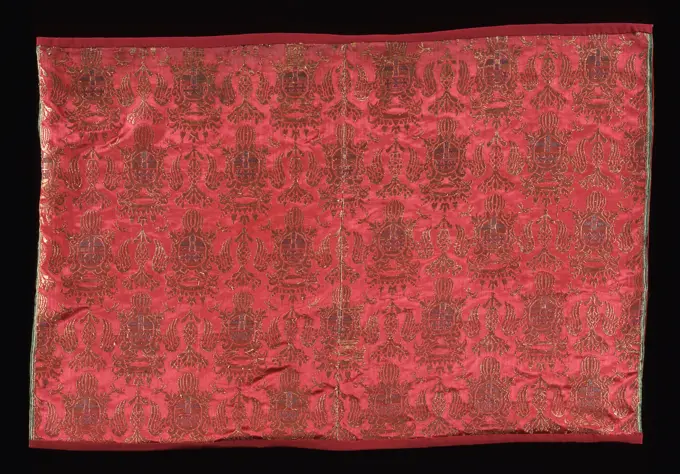
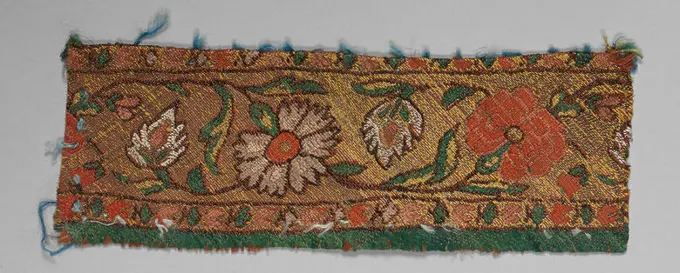
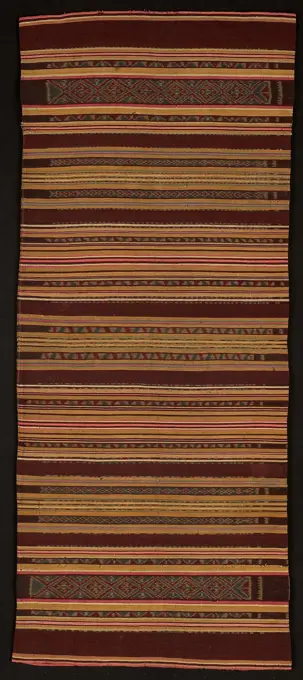
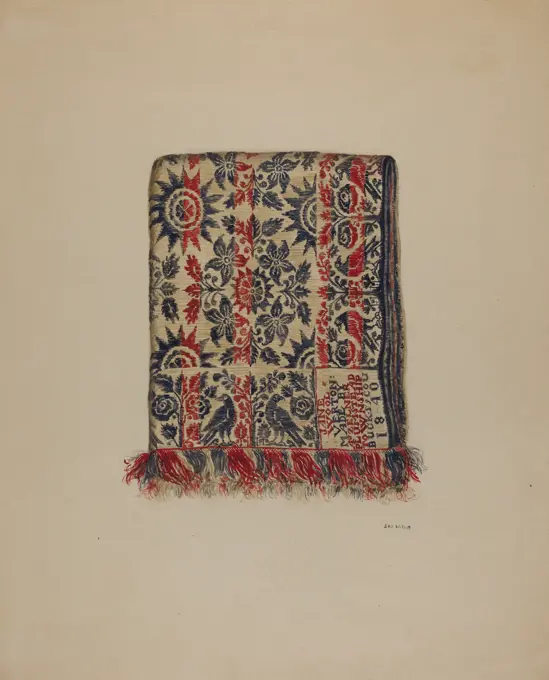
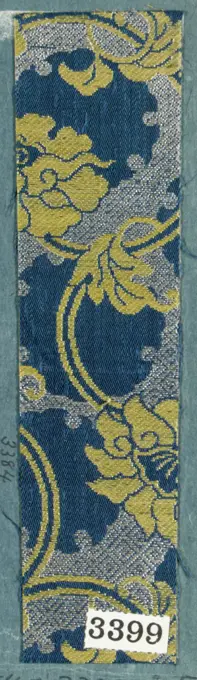
Various ornate carpets and silk fragments featuring intricate floral and geometric designs from different centuries.
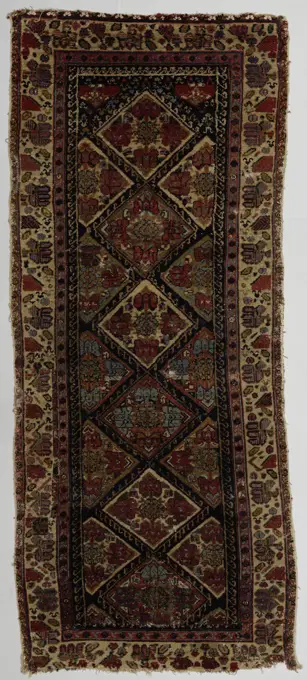
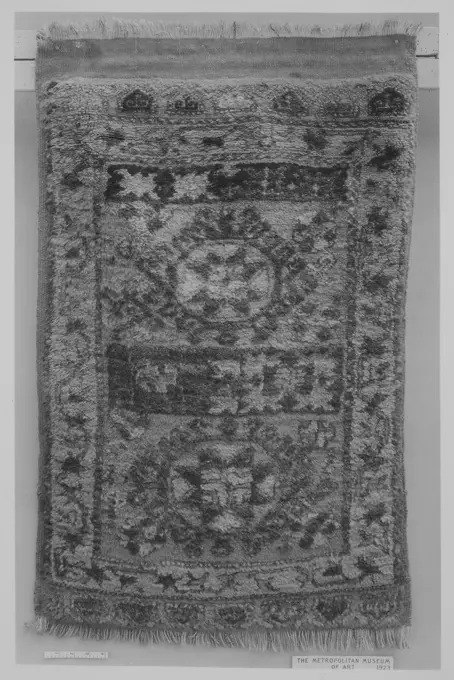
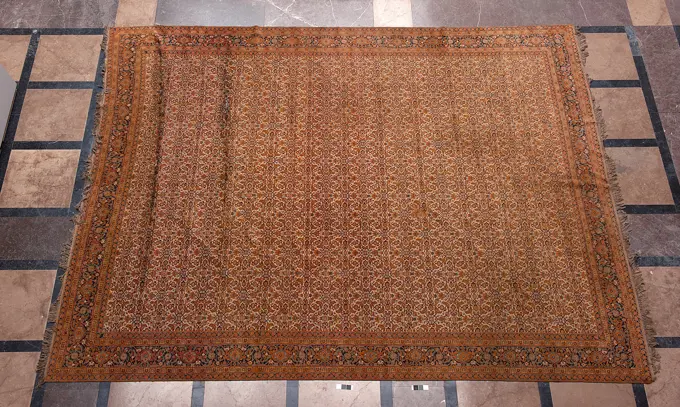
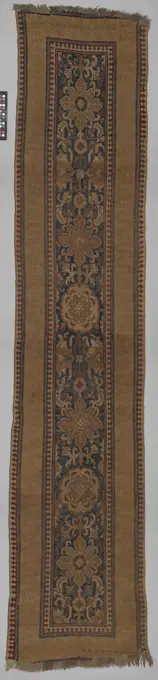
Eastern carpet, anonymous, c. 1850 - c. 1900 Eastern carpet, windscreen rug, in runner format. In midfield repetitive diamond -shaped medallions, filled with four -rate motifs against a dark blue stock. This runner was once shortened. Northwest perzia (Possible) ketting: wool. inslag: cotton (textile) Eastern carpet, windscreen rug, in runner format. In midfield repetitive diamond -shaped medallions, filled with four -rate motifs against a dark blue stock. This runner was once shortened. Northwest perzia (Possible) ketting: wool. inslag: cotton (textile)
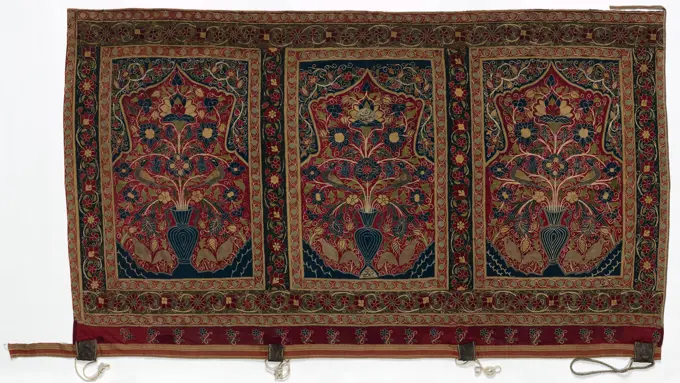
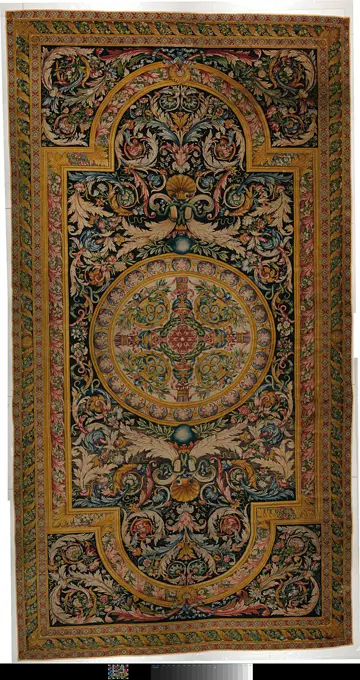
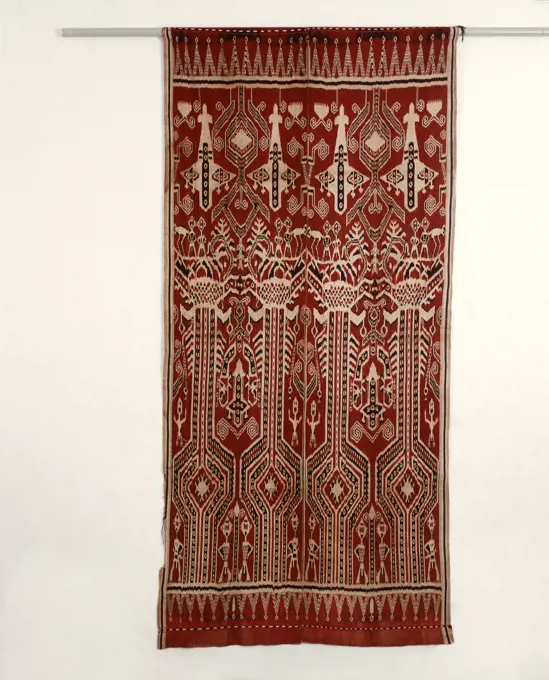
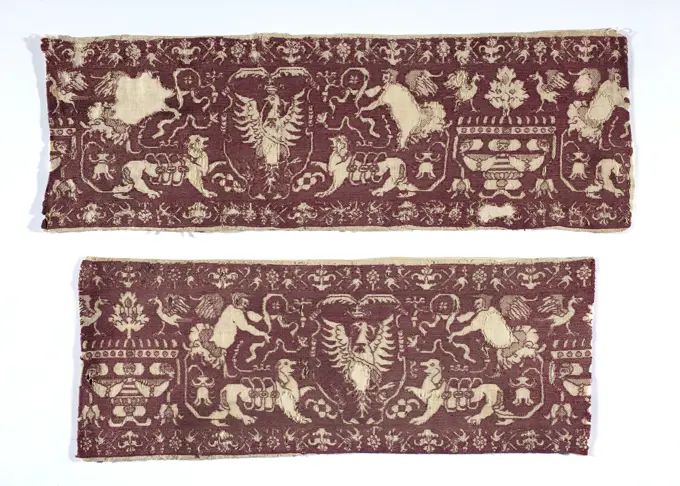
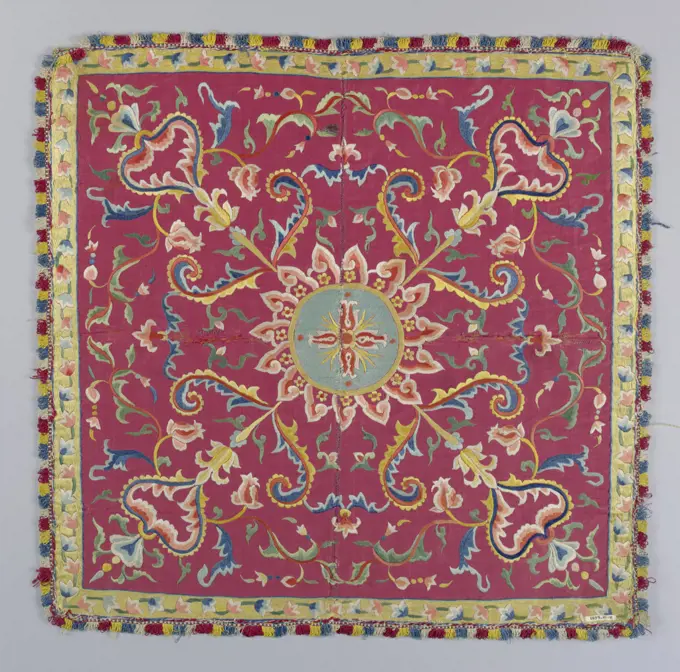
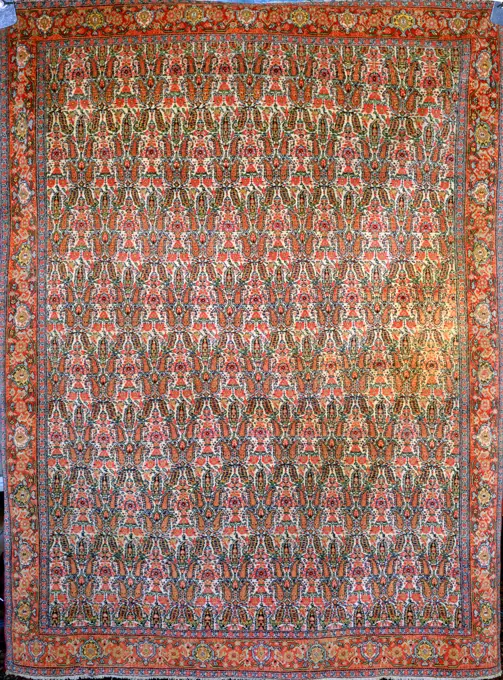
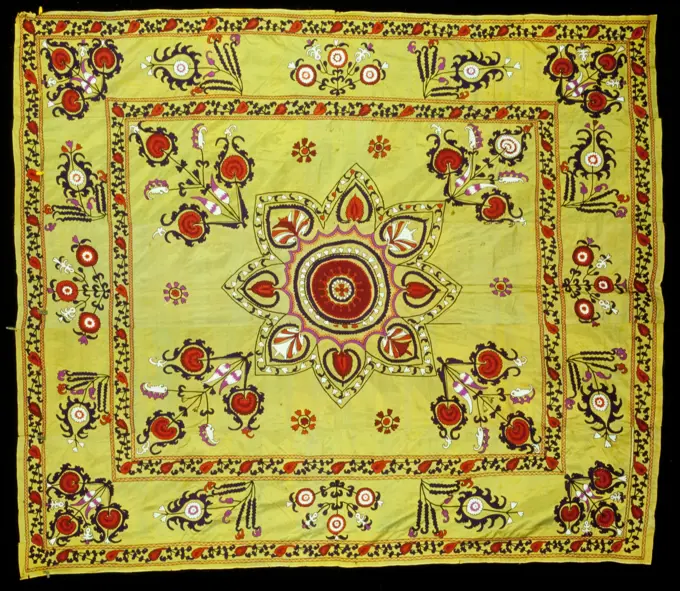
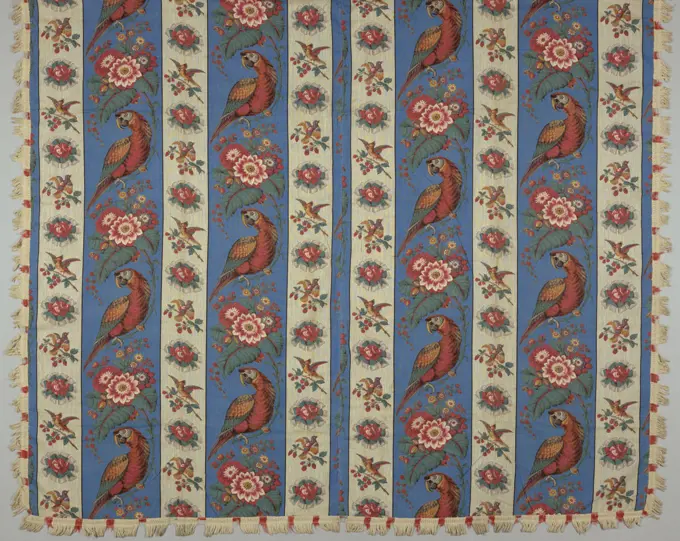
Excerpt from a kelim, c. 1875 - c. 1900 Fragment of a strip dress in Kelim technology. The midfield is decorated with wide and narrow stripes. On the wide hexagons, on the narrow tenders. Little Asia Necklace and impact: Wool Fragment of a strip dress in Kelim technology. The midfield is decorated with wide and narrow stripes. On the wide hexagons, on the narrow tenders. Little Asia Necklace and impact: WoolIket (Headcloth) Made 1801-1900 Java. Cotton, batik dyed .Rugs and Carpets: Caucasus region - Azerbaijan - 19th century. Shirvan carpetWaistWrapperDodendoek, anonymous, 1900 - 1949  Acquit cotton (textile)  Acquit cotton (textile)Cushion cover Made 1601-1625 Turkey. Silk, velvet .Ribbon mid-18th century French. Ribbon 213106Cushion Cover Made 1601-1700 Turkey. Linen, plain weave; backed with cotton, plain weave; embroidered with silk floss and silk yarns in laid work and couching .Carpet 17th century. Carpet 445994Medieval ornamentTextile with Fleur-De-Lis Motif 13th century Italian. Textile with Fleur-De-Lis Motif 468147Fragment (Iran); silk on cottonSutra Cover Made 1590-1599 China. Silk and gold-leaf-over-lacquered-paper strip, plain weave with supplementary patterning wefts bound in weft-float faced 1 3 'Z' twill interlacings .Two Textile Panels with Heraldic Symbols. Spain, 17th century. Textiles; panels. Metallic thread brocaded on silk satinCeremonial Weaving(Paporitonoling)Long sarong (kain panjang), Medium: cotton Technique: wax resist dyeing (batik) on plain weave, Long cotton sarong (kain panjang) featuring diagonal repeat of medium-sized decorated blade-like motifs with stylized leaves and flowers attached to curving stems alternating with small four-lobed rosettes in dark blue, white, and cocoa brown. Design on a ground of cocoa crackle and five dark wavy parallel comb marks. Two plain selvedges, narrow hem at one end. Reversible., Indonesia, 19th century, printed, dyed & painted textiles, Long sarong (kain panjang)Ribbon Fragment. Dimensions: L: 5 in (12.7 cm) x W: 1.5 in (3.8 cm). Date: 18th century. Museum: Metropolitan Museum of Art, New York, USA.Woman's Skirt (Sarong) Indonesia. Two panels joined stripes of cotton and silk, warp resist dyed (warp ikat) plain weave .Shawl Made 1860-1869 Norwich. Silk, twill weave . Clabburn, Sons and Crisp (Producer)Eva Wilson, Coverlet, c 1938 CoverletRoyal Round Tent made for Muhammad Shah (wall panel with three design units), 1834-48. Iran, Rasht, Qajar period (1779-1925). Rasht work; wool with silk embroidery (chain stitch), rope, cotton, leather, tape; overall: 167.6 x 286.4 cm (66 x 112 3/4 in.). Royal tents were potent symbols of authority, wealth, and power throughout the greater Middle East. Rulers owned thousands of tents. They were used for shelter, shade, and innumerable functions in tent compounds that were essential for imperial ceremonies, travel, and military campaigns. Distinguished by size with elaborately decorated interior walls and ceilings, tents could be as large as castles. Opulent tents were also presented as imperial gifts. Tents are only known through documents before 1600. For example, in Baghdad in 809, Caliph Harun al-Rashid owned 4,000 ceremonial tents and 150,000 camping tents that were stored in the imperial Abbasid treasury. An astonishing variety and quantity of tents were housed in the royal FatimPiece 18th-19th century Japan. Piece 66676Conciliate belt; Manufaktura Paschalis Jakubowicz (Warsaw; label Pasów; 1788-1794); 1788-1790 (1788-00-00-1790-00-00);Cushion Cover (Yastik) 19th century. Cushion Cover (Yastik) 447476Tapestry. unknown, authorSavonnerietapijt met medaillon.Savonnerie carpet with medallion. Midfield: On a black fond stands in the middle a round medallion of white with four times a shielded half-circular shield of blue with a hose of yellow (jacket), Interrupted by crosswise arranged arrows and helmet; in the heart of a green laurel wreath and blade of terra; Rim of terra red with double pendulum tape from yellow with acanthus leaf of white and blue. The remaining field is once again divided by a yellow-tied list of beige-brown, which is shifted to the short sides half circular, which is filled with roserode acanthus spiral and various flowers. The black fond is covered by double-sided symmetrical acanthus drinks, which go out of a pair of snakes wound white-yellow acanthus volutes, of which a yellow shell depends ribbon, while on the inside a blue sphere with laurel branches overcasts the medallion. On the middle of the long sides a star-shaped sun with face (Louis XIV).Piece 17th century Japan. Piece 71852Shawl, Anonymous, 1900 - 1949 Shawl with geometric motifs. India silk Shawl with geometric motifs. India silkWoman's Hip Wrapper (Sarung Kepala Pasung, Sarung Tiga Negeri)Fragment first half 16th century Spanish. Fragment 222634Fragment; silkSewing case, Medium: cotton, wool, silk Technique: embroidered, Long narrow wall pocket with five pockets at equal intervals with rounded ends. Each pocket is embroidered. From top to bottom: girl holding a flower and umbrella; two arrows piercing a heart between two plants; crown between two plants; two plants with birds perched on branches; urn of flowers; and a shield with the date 1827 between two plants., USA, 1827, embroidery & stitching, Sewing caseDayak Iban ikat cloth,Sarawak, Malaysia.Fragment. Spain. Date: 1601-1700. Dimensions: 45.1 x 24.4 cm (17 3/4 x 9 5/8 in.)Repeat: 4.1 x 3.5 cm (1 5/8 x 1 3/8 in.). Silk and silvered- and gilt-metal-strip-wrapped silk (frisé), warp-float faced satin weave with supplementary patterning wefts and supplementary brocading wefts. Origin: Spain. Museum: The Chicago Art Institute, Chicago, USA.Tent hanging, early 20th century, 26 3/4 x 27 1/4 in. (67.95 x 69.22 cm), Wool, silk; needle chain stitch, double chain stitch, detached chain stitch, cretan stitch, Uzbekistan, 20th centuryOriental carpet. Oriental carpet of knotted wool whose midfield is decorated with rows of Botehs. Five edges with a simple geometric pattern. Probably woven by Afshar nomads.Seam, Anonymous, 1800 - 1900 Stripe rug in Kelim technology. The midfield is completely filled with cross jobs with geometric patterns. Asia Minor (Possible) Necklace and impact: Wool Stripe rug in Kelim technology. The midfield is completely filled with cross jobs with geometric patterns. Asia Minor (Possible) Necklace and impact: WoolThrone Seat Cover, Qianlong period, 1736-1795, L.62 x W.42-3/4 in, silk, embroidery, China, 18th centuryFragment of a shirt fourth quarter 18th century Ukrainian This object is from the collection of Natalia de Shabelsky (1841-1905), a Russian noblewoman compelled to preserve what she perceived as the vanishing folk art traditions of her native country. Traveling extensively throughout Great Russia, she collected many fine examples of textile art of the wealthy peasant class. From the 1870s until moving to France in 1902, Shabelsky amassed a large collection of intricately embroidered hand-woven household textiles and opulent festival garments with rich decoration and elaborate motifs. The Brooklyn Museum holdings include many fine examples including the majority of the garments. Portions of Shabelsky's collection are also housed at the Museum of Fine Arts, Boston, the Cleveland Art Museum, and the Russian Museum of Ethnography in St. Petersburg.. Fragment of a shirt. Ukrainian. fourth quarter 18th century. Linen, metal, silk. Textiles-EmbroideredCurtain of velvet from blue, wine red, salmon color and fletschel on a white satin fond. Curtain (left) of velvet velvet, wine red, salmon color and fletschel on a white satin fond. The pattern has large symmetrical acanthus leaves, ending in volutes, and with dotted contours and small carried fields. The lining is not original. This curtain belongs to the so-called Rosendaelbed.ALFOMBRA TIPO POPULAR-SERIE BROCADO-ESCUDO DE SANTIAGO-ALCARAZ S XVI. Location: MUSEE D'ARTS DECORATIFS. MADRID. SPAIN.Textile Fragment. Spain, 17th century. Textiles; fragments. Silk satin with silk supplementary wedt patterning and silk passementerieSaddlebag or pillow blade with a main motif: rectangle within which three botas. Saddlebag or cushion leaf with a rectangle as a main motif within which three botas. Edge with tulip-like motifs. Three edges finished with brushes or residues thereof. Three white shells sewn to the short sides.. Square wool scarf, with a multicolor, woven pattern from Bota'sSampler 1824 Spanish. Sampler 228197Fragment zijde weefsel.Fragment silk tissue with a striped pattern of light green, dark green, pink and white stripes that flowers and tendrils in green and white.Fragment early 19th century British. Fragment 222096Panel. France. Date: 1770-1780. Dimensions: 84.2 × 54.7 cm (33 1/2 × 21 1/2 in.). Silk and silk chenille, plain weave with supplementary patterning warps tied in plain and satin interlacings, supplementary pattening wefts, and supplementary brocading wefts. Origin: France. Museum: The Chicago Art Institute, Chicago, USA.Sampler, Medium: cotton on linen Technique: running, stem and looping plain weave foundation with counted stitches, Bands of geometric pattern in red, blue and natural color., Spain, ca. 1800, embroidery & stitching, SamplerTwo fragments of the Obrus trail of the Anna Jagiellonka Foundation;  before 1576 (1500-00-00-1576-00-00);Anna Jagiellonka (Queen of Poland - 1523-1596), Jagiellonians (coat of arms), Jagiellonians (family), White Eagle (coat of arms), Studziński, Franciszek (1895-1967) - collection, grotesque (ornament), embroidery, coats of arms, churches and chapels (equipment), monograms, fabrics, purchase (provenance)Chasuble Front, 16th century. Turkey, 16th century. Velvet; silk and metallic thread; average: 104.8 x 64.8 cm (41 1/4 x 25 1/2 in.).Fragment painted silk, c. 1790 - c. 1800 Fragment painted silk. Pattern: On cream -colored rips side, two bouquets with a bow and palm leaves are painted in red, blue, orange, purple and green between two edges with floral ornaments.  silk. Fragment painted silk. Pattern: On cream -colored rips side, two bouquets with a bow and palm leaves are painted in red, blue, orange, purple and green between two edges with floral ornaments.  silk.Five Embroidered Fragments, 18th-19th century. Morocco, Azemmur, 18th-19th century. Embroidery: silk on linen tabby ground; overall: 10.8 x 23.5 cm (4 1/4 x 9 1/4 in.).Piece 18th-19th century Japan. Piece 67807Band 17th-18th century German or Central European. Band 217786Brocaded velvet with medallions in ogival lattice, late 1500s. Turkey, Istanbul or Bursa. Velvet, brocaded: silk, gilt- and silver-metal thread; overall: 162.2 x 64.8 cm (63 7/8 x 25 1/2 in.).Table mat, Medium: silk Technique: embroidered on plain weave, Square panel of horizontally ribbed red silk with multicolored silk embroidery. Central circular floral medallion, surrounded by flames. From medallion, diagonal branches, very conventionalized, with flowers and leaves, run to each corner of panel. Narrow floral border solidly embroidered. Edged with fringe of red, yellow, blue and white loops. Backed with yellow silk., China, 19th century, embroidery & stitching, Table matFragment (Near East); silk, metallic, cottonCarpet Made 1625-1675 India. Cotton and wool, pain weave variation (supplementary wrapping wefts are enclosed between elements of paired ground wefts; intervening ground wefts are single) with supplementary wrapping wefts forming cut pile through a technique known as Ghiordes knots ; main warp fringe .Sampler (Spain); Designed by Maria Manula Lobe y Cantabrana; silk on linenCarpet;  19th century (1801-00-00-1900-00-00);carpentryTextile Fragment 19th century. Textile Fragment. 19th century. Silk and metal wrapped thread; satin weave, brocaded (kincob). Attributed to India. Textiles-WovenPanel. Turkey, Bursa. Date: 1601-1625. Dimensions: 204 x 63.5 cm (80 1/4 x 25 in.). Silk, cotton, gilt-metal-strip-wrapped silk, satin weave with brocading wefts; cut voided velvet. Origin: Turkey. Museum: The Chicago Art Institute, Chicago, USA.Fragment; silk, linenPiece 17th century Japan. Piece 72238Cossack rug, Fachralo district, Caucasus. Artist: UnknownFragment, Medium: cotton, wool Technique: plain weave, predominantly warp-face foundation; pattern is discontinuous supplementary wefts interlacing weft-faced plain weave on grouped warps; sides both intact, ends cut; 'reinforced tapestry', Part of a human figure holding a stick in his hand. Yellow, blue, green, pink and black on red ground., Peru, 700-900, woven textiles, FragmentAubusson carpetShawl first quarter 19th century French. Shawl 123115Phulkari, c. 1925-1950, 95 3/4 x 54 in. (243.21 x 137.16 cm), Cotton, silk; embroidery, India, 20th centuryCushion Cover. Turkey, Bursa. Date: 1601-1650. Dimensions: 100.7 x 62.6 cm (39 5/8 x 24 5/8 in.). Velvet. Origin: Turkey. Museum: The Chicago Art Institute, Chicago, USA.Piece 18th-19th century Japan. Piece 67443Piece 18th-19th century Japan. Piece 66160Conciliate belt; Studio of Franciszek Masłowski (Kraków; Pasów Factory; 1781-1806); 1781-1806 (1781-00-00-1806-00-00);Textile (Italy); silk, metallic yarns; Warp x Weft: 116.8 x 22.9 cm (46 x 9 in.)Headhunters Turban (Siga)Streamers 19th century China. Streamers 70460Huaxi Stitching Design, 20th century, 18 1/4 x 21 1/8in. (46.4 x 53.7cm), Cotton, embroidery, China, 20th centuryFragment (Towel/Napkin End) Made 1850-1900 Turkey. Embroidered .Sampler (England); silk embroidery, linen foundation; Warp x Weft: 44 x 18 cm (17 5/16 x 7 1/16 in.); Bequest of Mrs. Henry E. Coe; 1941-69-221Rug, c. 1920, 127 1/2 x 64 1/2 in. (323.85 x 163.83 cm), Wool, 20th centuryPanel from an Altar Frontal. Italy. Date: 1450-1500. Dimensions: 101.5 x 52.4 cm (40 x 20 5/8 in.). Silk, warp-float faced 3:1 broken twill weave with weft-float faced 1:3 'Z' twill interlacings of secondary binding warps and gilt-metal-strip-wrapped silk supplementary facing wefts forming weft loop pile in areas and with supplementary pile warps forming cut, pile-on-pile, voided velvet; band of silk and gilt-metal-strip-wrapped silk; plain weave with supplementary patterning wefts and extended ground and supplementary patterning weft wrapped cut and uncut fringe; lined with cotton, plain weave. Origin: Italy. Museum: The Chicago Art Institute, Chicago, USA.Piece 18th-19th century Japan. Piece 67747Fragment, Medium: silk Technique: supplementary warp forming cut and uncut pile ina 4&1 satin foundation (velvet), Diagonally curving 'S' forms in dark green on red satin ground., 17th century, woven textiles, FragmentBorder, 1800s. China, 19th century. Silk; overall: 71.1 x 19 cm (28 x 7 1/2 in.).Carpet 18th century. Carpet 447578Fragment red velvet brocade with pomegranate moth in gold, anonymous, c. 1500 Fragment red silk velvet brokate with relief with pomegranate potato motif in gold. Italy silk. Fragment red silk velvet brokate with relief with pomegranate potato motif in gold. Italy silk.Kontusz sash/belt. unknown, authorTextile 19th century Japan. Textile 68033Kang Rug 17th century China. Kang Rug 67874ALFOMBRA PERSA. Location: PRIVATE COLLECTION. MADRID. SPAIN.Headband, late 20th century, 27 7/8 x 2 3/16 in. (70.8 x 5.56 cm) (without ties), Silk (), cotton, synthetic fibers (), China, 20th centuryFragment (From an Orphrey Band) Made 1401-1500 Italy. Silk and linen, compound weave .Islamic art: carpet from Persia (Iran), late 19th century, contains detailed fleurette patterns (Senneh work).Blanket, 55 x 43 in. (139.7 x 109.22 cm), Cotton, silk (or rayon); needlework, ChinaChasuble;  18th century (1701-00-00-1800-00-00);Suzani, 1930-1940, H.96 x W.82-1/2 in., Silk; needlework, Uzbekistan, 20th centuryWaist Wrapper(Sarung)Flounce 1750s French. Flounce 226273Textile, Medium: cotton Technique: printed by engraved roller on plain weave; woven cotton tape with cotton weft-loop fringe (2 cm sections of red wool at 6 cm intervals); attached to 4 sides; note crossed and re-crossed warps, Unlined bed cover made of two full widths of printed fabric with fringe on four sides. Pattern composed oftwo stripes: the wider a parrot holding a nut perched on a curved flowering branch on a blue background 18.5cm. wide and the other 11cm. wide a bird with outspread wings perched on a branch of red berries alternating with a ribbon bow. Two groups of stripes are half dropped with one extra marrow stripe plus an additional section of each stripe on left and right to fill full width of fabric., Portugal, England, 1850-1900, printed, dyed & painted textiles, Textile