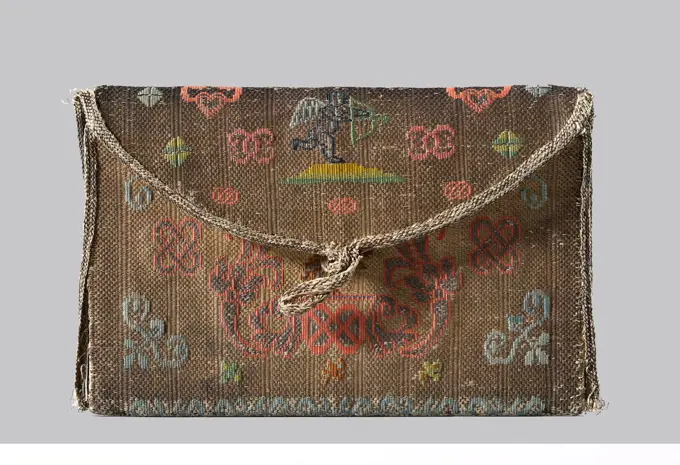
Decorative Carpets and Textiles

Various ornate carpets and silk fragments featuring intricate floral and geometric designs from different centuries.
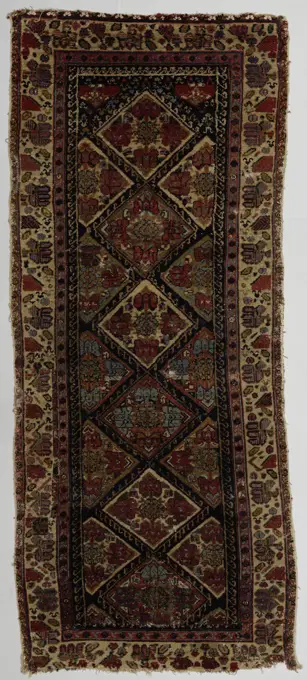
Eastern carpet, anonymous, c. 1850 - c. 1900 Eastern carpet, windscreen rug, in runner format. In midfield repetitive diamond -shaped medallions, filled with four -rate motifs against a dark blue stock. This runner was once shortened. Northwest perzia (Possible) ketting: wool. inslag: cotton (textile) Eastern carpet, windscreen rug, in runner format. In midfield repetitive diamond -shaped medallions, filled with four -rate motifs against a dark blue stock. This runner was once shortened. Northwest perzia (Possible) ketting: wool. inslag: cotton (textile)
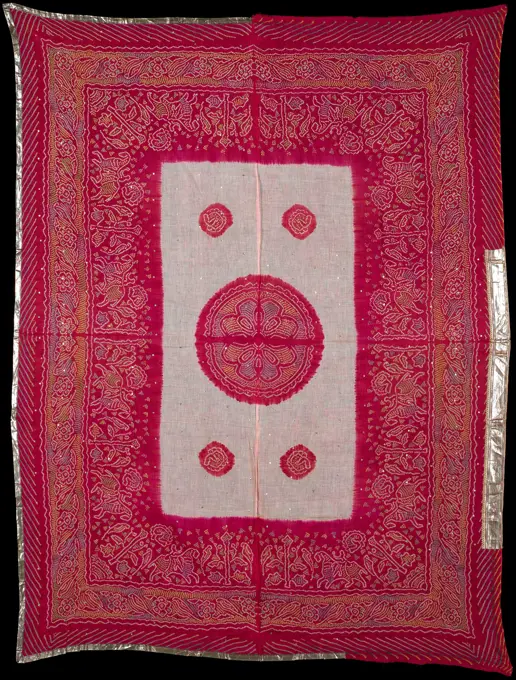
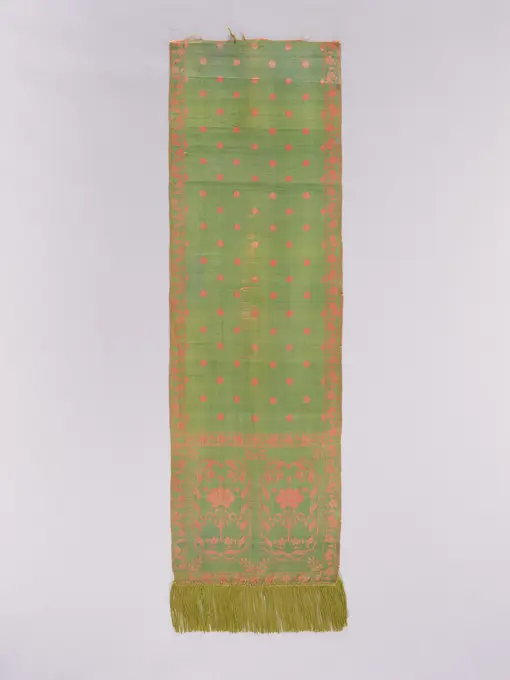
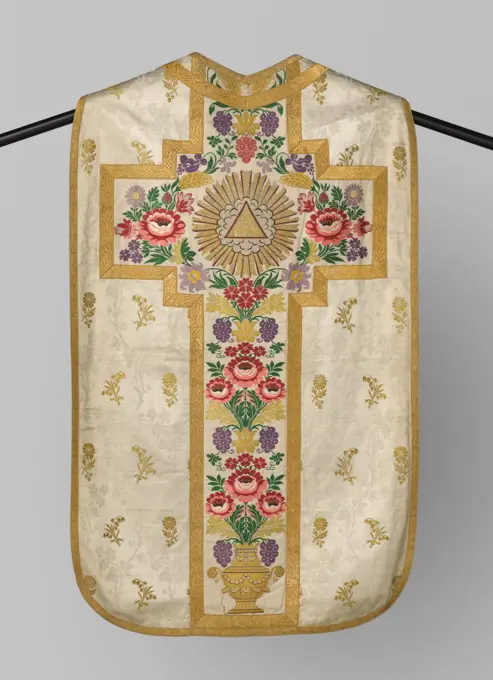
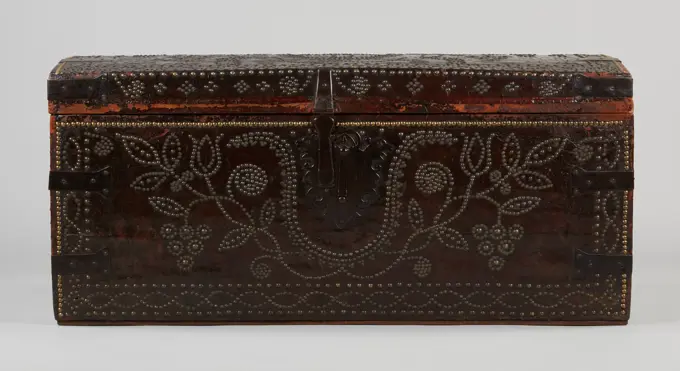
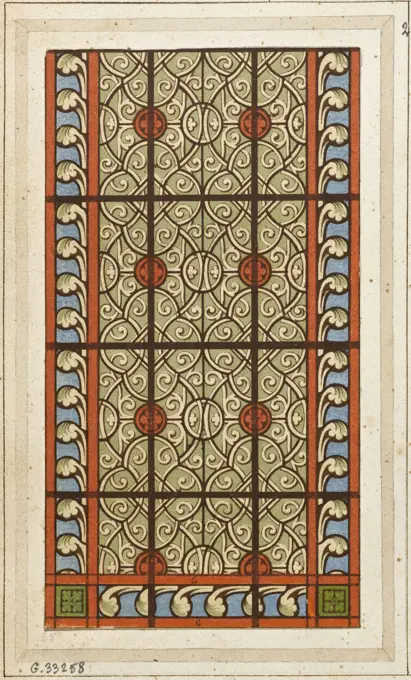
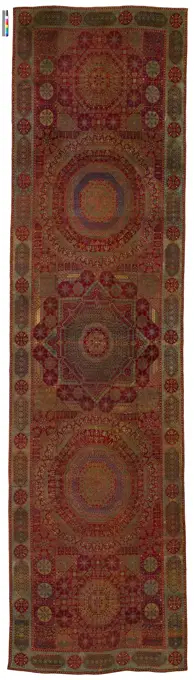
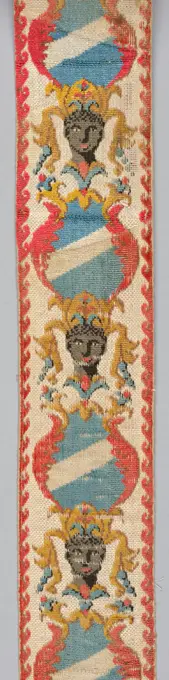
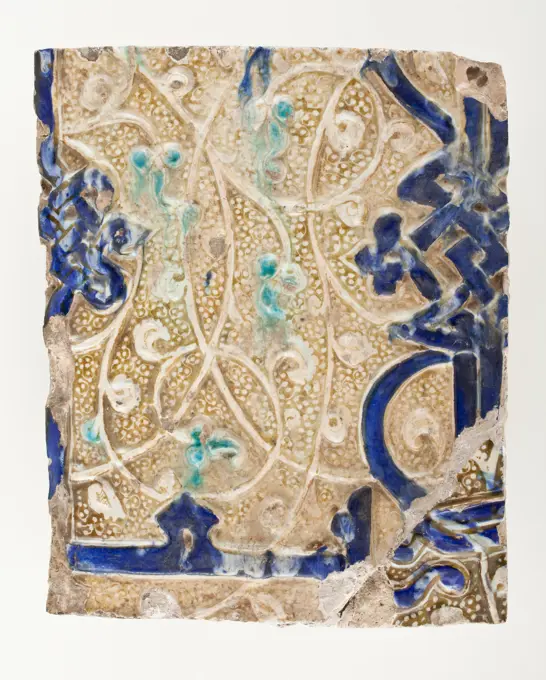
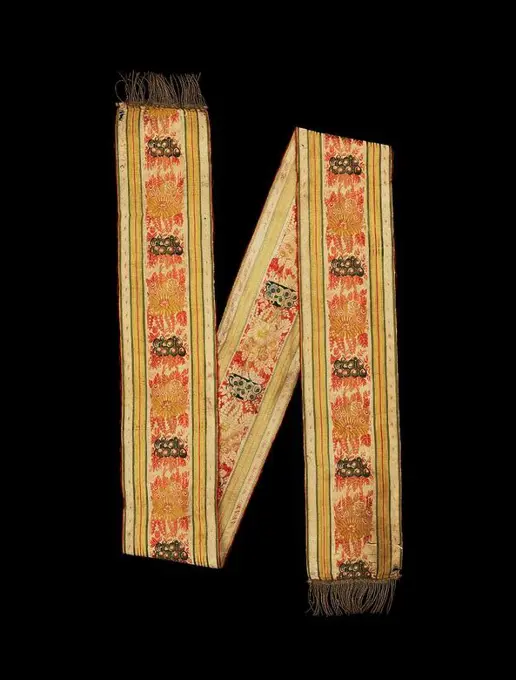
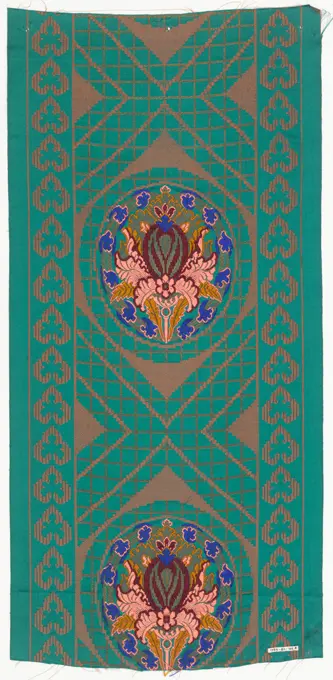
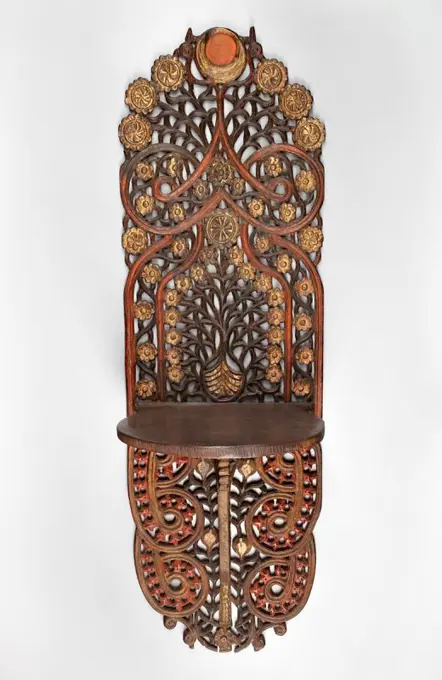
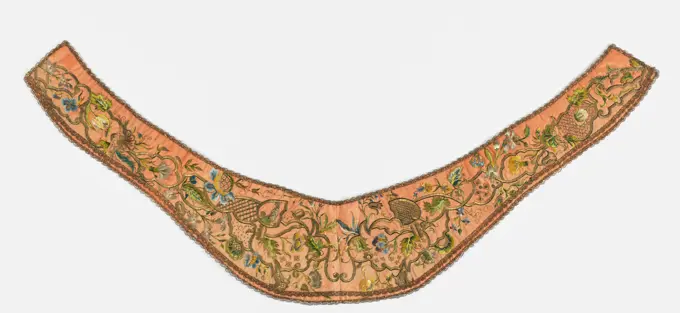
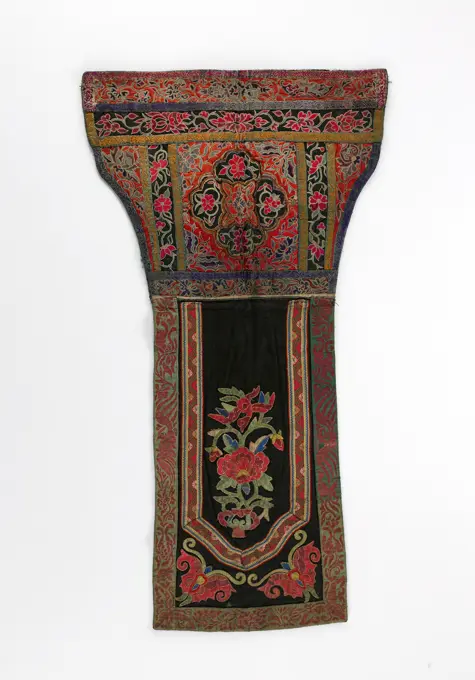
Baby Carrier, 14 1/4 x 22 1/2 in. (36.2 x 57.15 cm), Cotton, metal; needlework, ChinaTraditional carpet with pattern, exhibition in the State History Museum, interior view, Bishkek, Kyrgyzstan, AsiaVeil, early 20th century, 82 x 63 in. (208.28 x 160.02 cm) (approximate), Cotton, metallic threads, sequins; resist dyed (bandani), India, 20th centurySkirt (KainSungkit)Sampler (Mexico); silk on linenBorder (France); Warp x Weft: 60.5 x 15 cm (23 13/16 x 5 7/8 in.) Repeat H: 38.1 cm (15 in.)Fragment of a Kontusz sash/belt. Manufaktura Aleksandra Unruga (Kobyłka ; wytwórnia pasów ; 1781-1787), factoryKazuifel of white brokaat: a woven triangle in a jet of jet on the back and with natural colored grapes and roses in vase, L.H. Devisée, 1839 Kazuifel made of white brokaat: a woven triangle in a jet of jet on the back and with natural colored grapes and roses in vase. Signed: Fecit L.H. Deviséee (unclear), Namuri Hac 21 Martii 1839. Names (city) brocade (textile) Kazuifel made of white brokaat: a woven triangle in a jet of jet on the back and with natural colored grapes and roses in vase. Signed: Fecit L.H. Deviséee (unclear), Namuri Hac 21 Martii 1839. Names (city) brocade (textile)Anonymous, English leather chest decorated with copper nails (dummy title). 1684. Leather, copper and wood nails. House of Victor Hugo - Hauteville House.Piece Hungarian, Nytra 19th centuryAlbum # 2; Detail of stained glass, lower part of a window, Gray background with innar, red rounds Gsell-Laurent workshop. Album # 2; Detail of stained glass, lower part of a window, gray background with wares, red rounds. Chromolithography.The 'Simonetti' Carpet ca. 1500 Named the "Simonetti" carpet after a former owner, this majestic weaving is among the most famous of all Mamluk carpets. One of the larger floor coverings of its type, this example has five medallions instead of the more customary one or three, and it displays a slightly brighter and more varied palette. Likely produced in Egypt under the Mamluk dynasty, such carpets are surprisingly rich in appearance considering their relatively coarse weave and limited color range. The overall effect is that of a luminous mosaic. Listen to experts illuminate this artwork's story Listen Play or pause #6649. The 'Simonetti' Carpet Play or pause #909. Kids: The 'Simonetti' Carpet Supported by Bloomberg Philanthropies We're sorry, the transcript for this audio track is not available at this time. We are working to make it available as soon as possible.. The 'Simonetti' Carpet. ca. 1500. Wool (warp, weft, and pile); asymmetrically knotted pile. Attributed to Egypt, probablTrimming (Spain); silk; Overall: 53.3 x 6.4 cm (21 x 2 1/2 in.)Section of a Mihrab Border. Iran, Kashan, late 13th century. Ceramics. Fritware, overglaze luster-painted, with cobalt blueTowel Made 1850-1900 Turkey. Embroidered with floral border . AnonymousCurtain with pattern of roses, Theo Nieuwenhuis, 1900 - 1925 Curtain with pattern of roses. Blue necklace chain on yellow impact. Netherlands cotton (textile) Curtain with pattern of roses. Blue necklace chain on yellow impact. Netherlands cotton (textile)Ribbon. Culture: Czech. Date: early 19th century. Museum: Metropolitan Museum of Art, New York, USA.Piece 18th-19th century Japan. Piece 67337Waist Wrap, c. 1890, 32 1/2 x 40 in. (82.55 x 101.6 cm), Wool, Iran, 19th centuryTextile (USA); wool and silkCornelius Christoffels, Coverlet, c 1937 CoverletSampler 19th century probably Dutch. Sampler 228517Ribbons (France); silk, metallic threadblur in iran antique carpet textile  handmade beautiful arabic ornamentTurban shelf. unknown, craftsmanApron, 31-3/4 x 13 in. (80.6 x 33.0 cm), Cotton, silk, sequins, ChinaRug Made 1801-1900 United States. Variety of fibers, plain weave with variety of fibers, yarns, felted, knitted, oblique interlaced and/or woven strips, forming hooked pile .Collar (France); silk, metal threadSilk Dalmatics with a pattern of four passes within oval fields, with applications and embroidery ,, 1850 - 1900 Dalmatics of silk with a pattern of four passes within oval fields. Details of the Applied Aurifrisia have added embroidery of gilded metal wire, sewn -sewn decorative stones and pearls and show the Christ monogram IHS. Neo-gothic. Roermond (Possible) silk. metal thread. gilding (material). pearl embroidering / gilding Dalmatics of silk with a pattern of four passes within oval fields. Details of the Applied Aurifrisia have added embroidery of gilded metal wire, sewn -sewn decorative stones and pearls and show the Christ monogram IHS. Neo-gothic. Roermond (Possible) silk. metal thread. gilding (material). pearl embroidering / gilding18th grade cover, front GAL1920.1.1523_1Border, Block-printed paper, gilt, flocked, Green flock surmounted by dentil molding and quatrefoils in buff and gilt., France, 1830-60, Wallcoverings, BorderFront doubleur. 1907 - 1858. Chevigné, Louis Marie Joseph le Riche, comte de (1793-1876). bindings (gathered matter components), Book covers. Spencer Collection. BookbindingTextile Fragment 7th-8th century. Textile Fragment 443593Pennant from the Battle of Lepanto. Naval battle which took place on 7 October 1571 between the Holy League (coalition of Catholic countries) and the Ottoman Empire. Silk damask and painting, ca. 1571. Detail. Museum of Santa Cruz. Toledo. Spain. (On loan, Toledo Cathedral).Turkish Rugs on display, Cappadoccia TurkeyQueen of Diamonds, from the Playing Cards series (N84) to promote Turkish Cross-Cut Cigarettes for W. Duke, Sons and Co. 1888 Issued by W. Duke, Sons & Co. American Trade cards from the "Playing Cards" series (N84), issued in a set of 53 cards in 1888 to promote Turkish Cross-Cut Cigarettes produced by W. Duke Sons & Co. The versos across the set display a matching abstract floral pattern. The Joker advertises Duke brand cigarettes and the Ace of Spades displays an ad for Turkish Cross-Cut Cigarettes. Besides Turkish Cross-Cut, a version of the same set of playing cards was also released to promote the overall W. Duke Sons & Co. brand.. Queen of Diamonds, from the Playing Cards series (N84) to promote Turkish Cross-Cut Cigarettes for W. Duke, Sons and Co.. 1888. Commercial color lithograph. Issued by W. Duke, Sons & Co. (New York and Durham, N.C.)