Decorative Ceramic Dishes

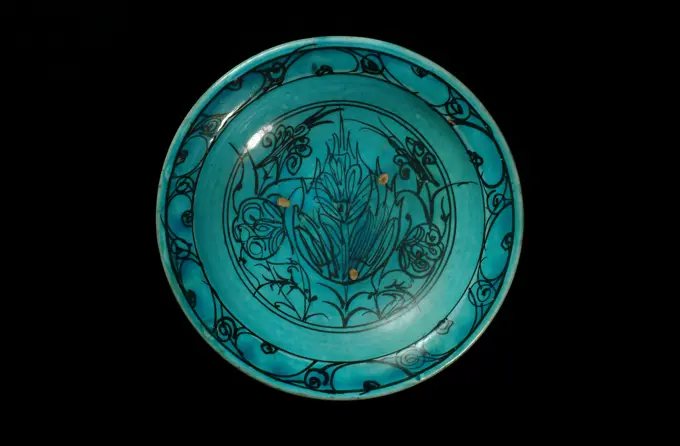
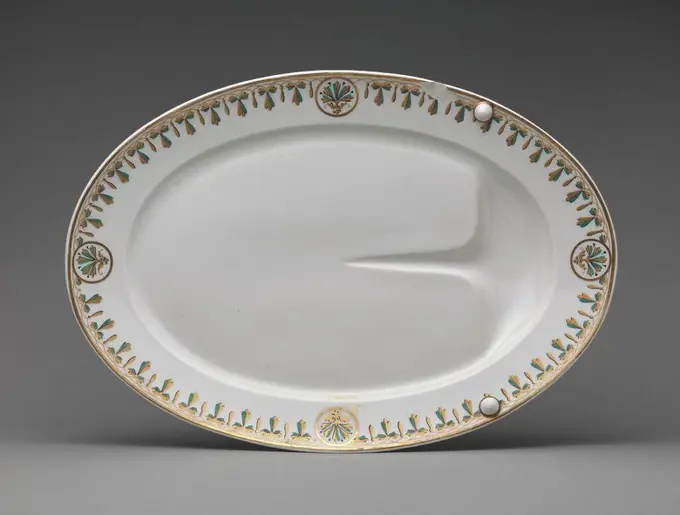
Collection of ornate ceramic dishes and bowls, featuring intricate designs and colorful patterns from different historical periods and regions.

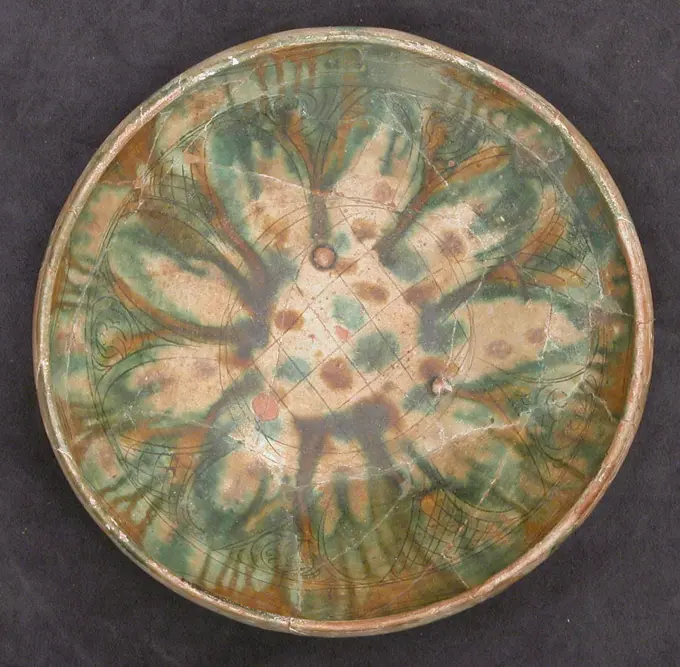
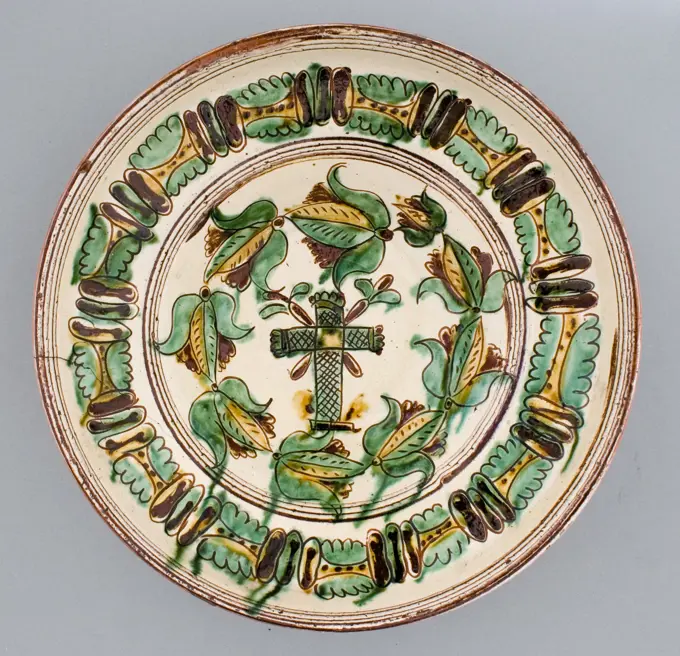
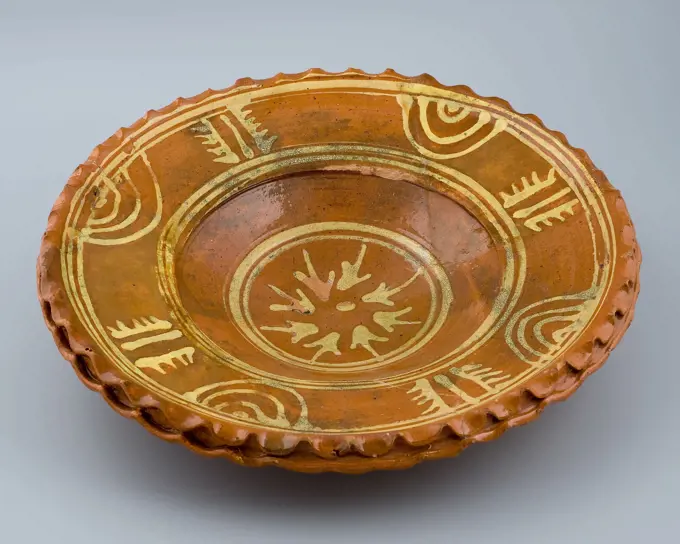
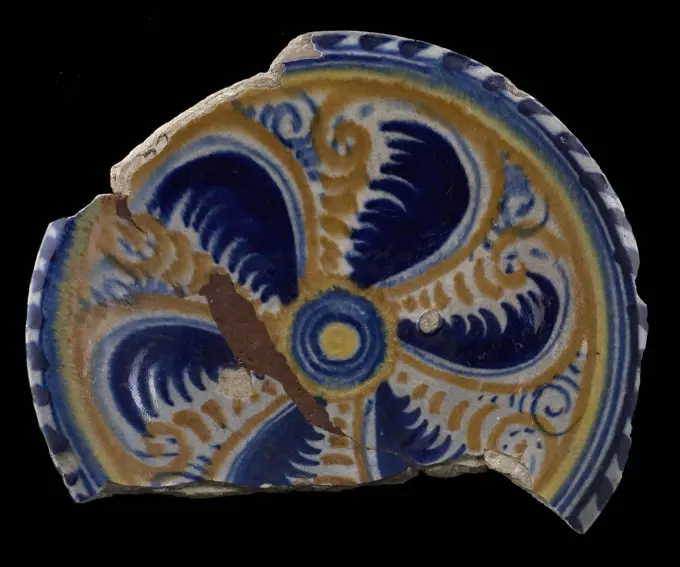
Earthenware dish, ringing-plate, red shard, decorated with stylized flower, on stand, dish crockery holder soil find ceramic earthenware glaze lead glaze clay, hand turned decorated glazed fried lemonade Pottery saucer ringelbord red shard internal glazed on stand Decorated with yellow bands circles and garlands in the middle stylized flower in yellow and green Materials used: white clay and copper oxide In restoration, the supplemented fragments are painted on the inside archeology Rotterdam Stadscentrum Stadsdriehoek Oudehaven indigenous pottery import food preparation cooking food kitchen serving room Soil discovery: Oude Haven Rotterdam.
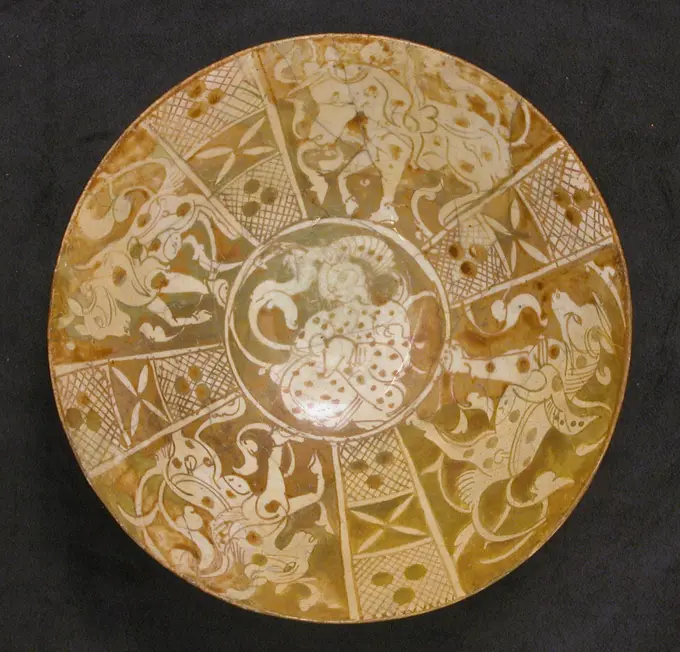
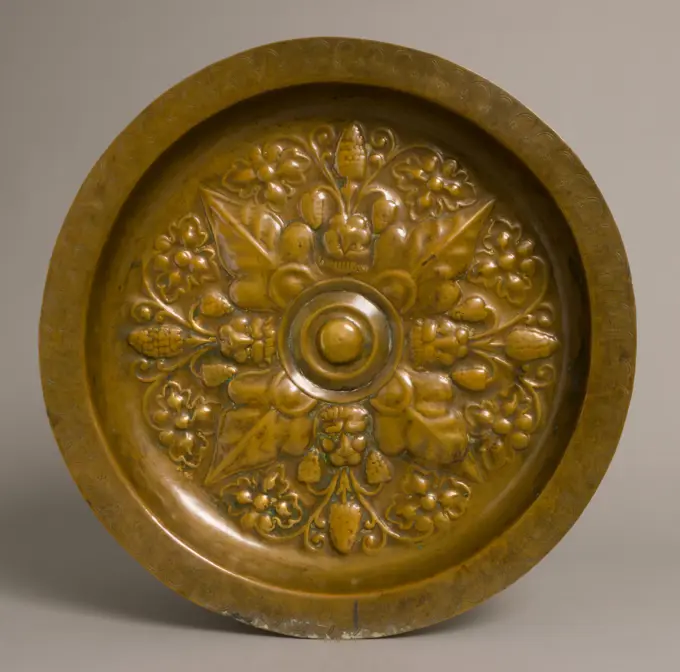
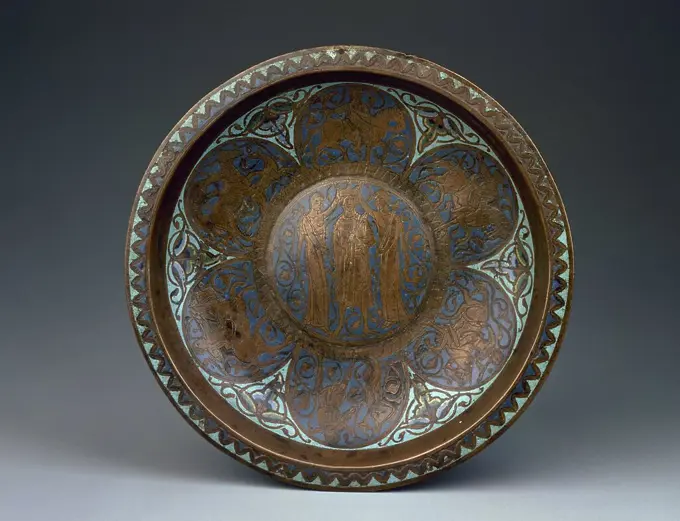
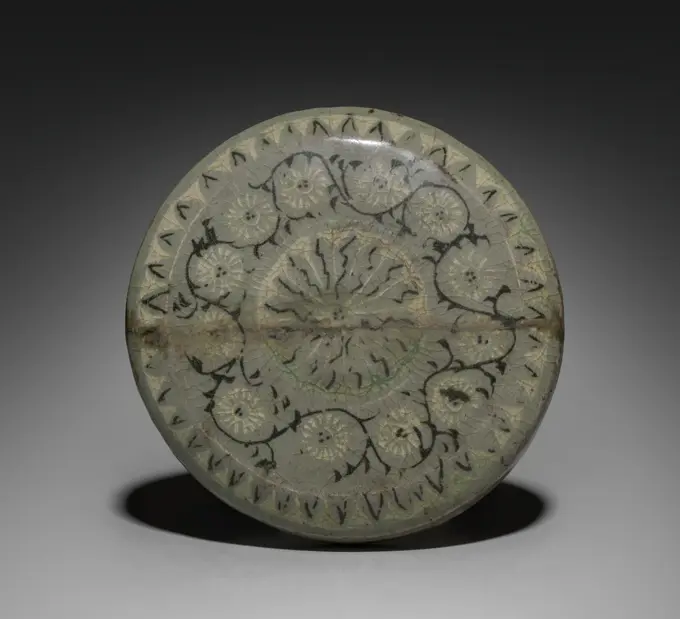
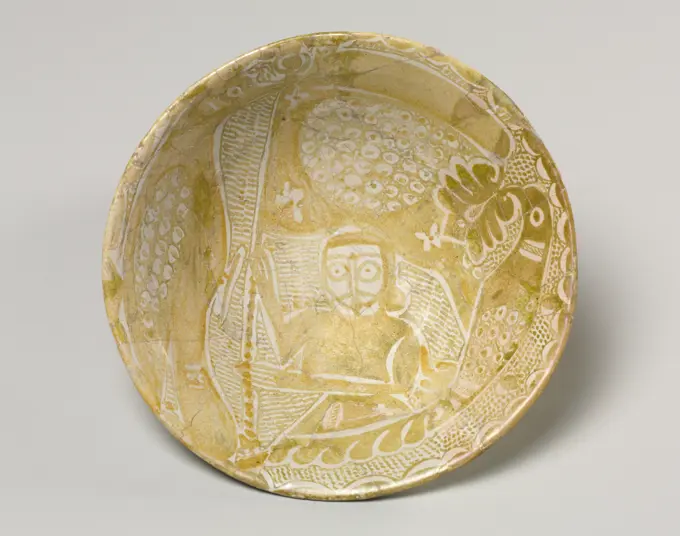
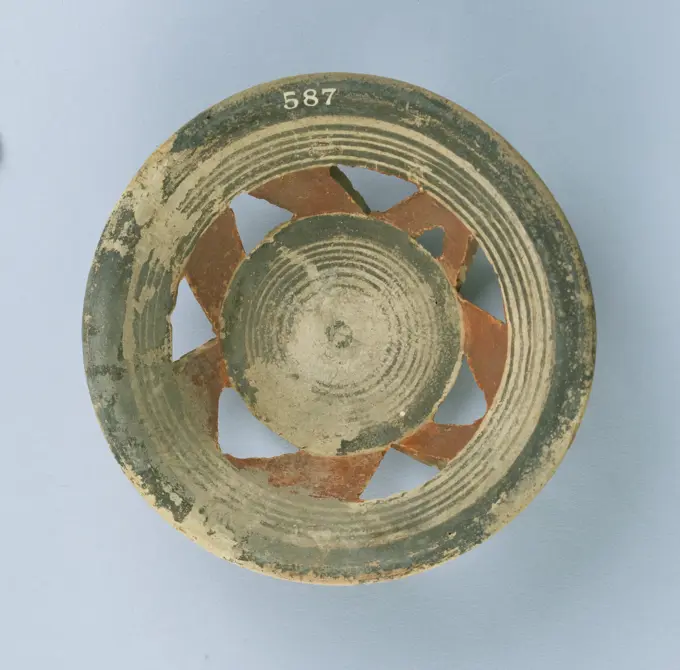
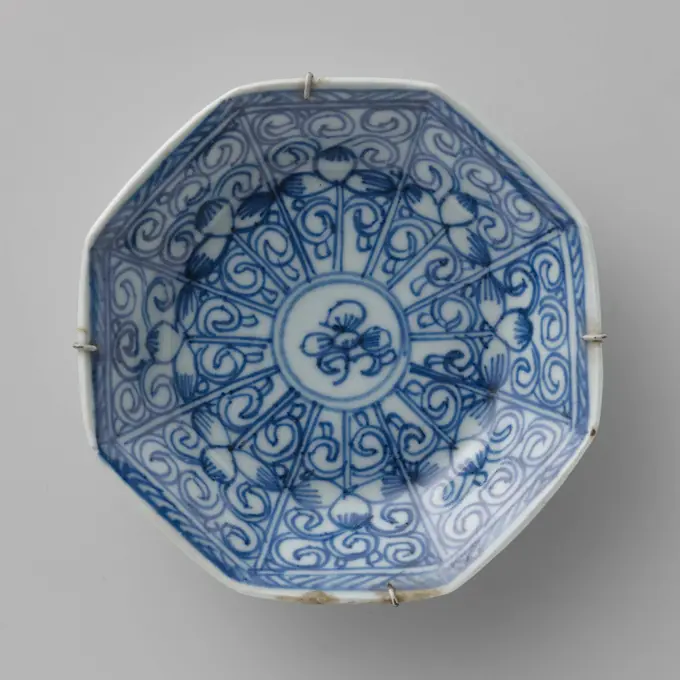
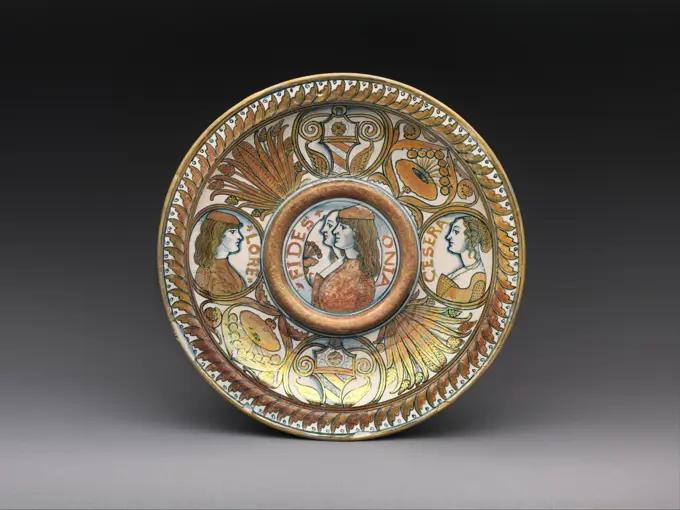
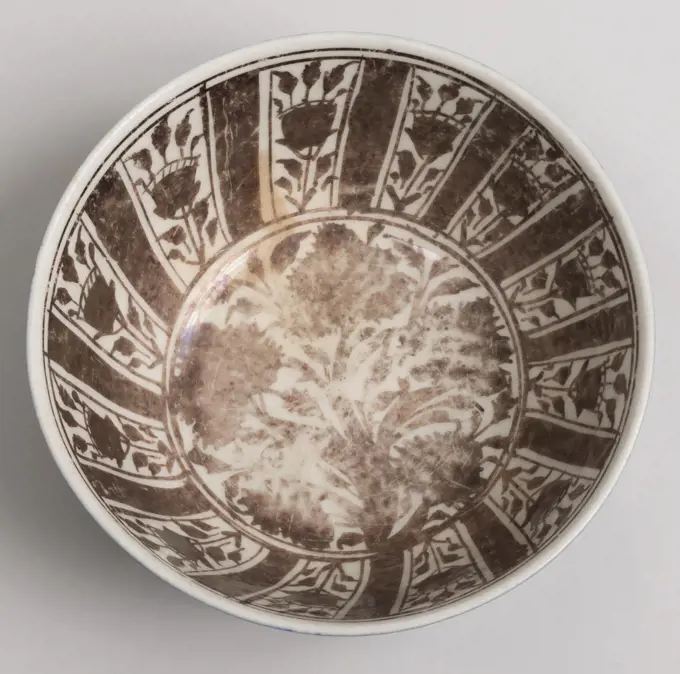
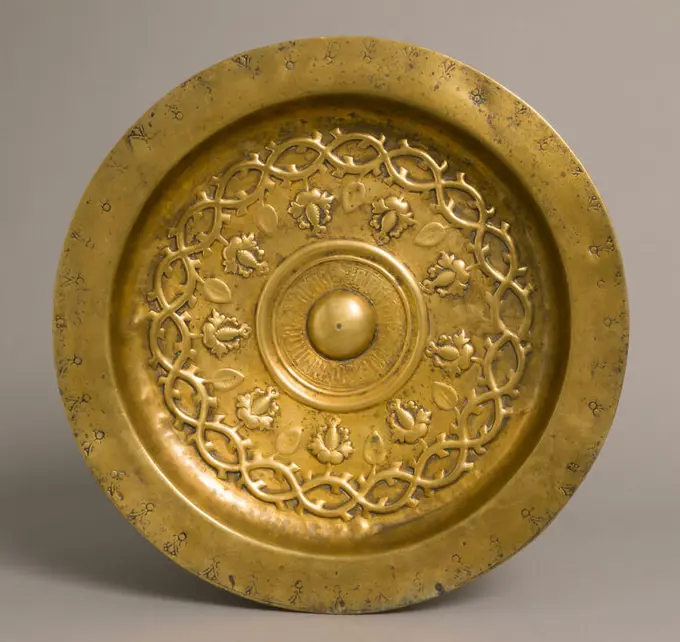
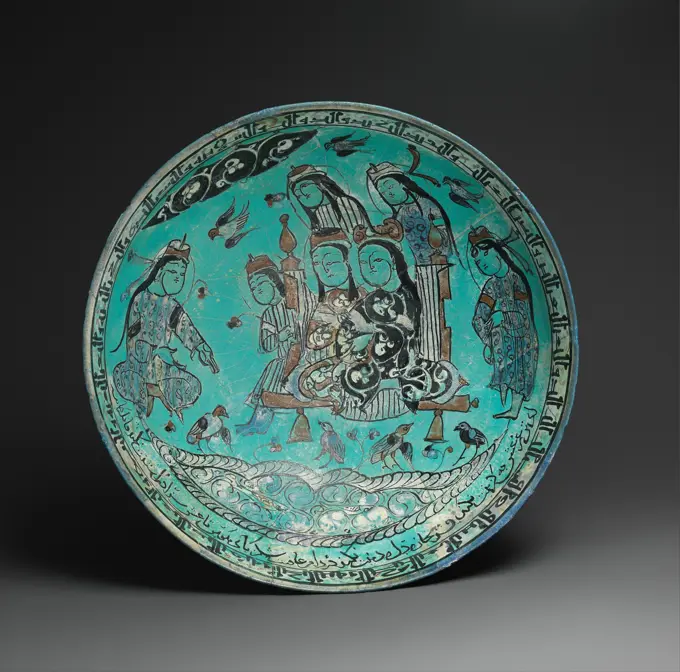
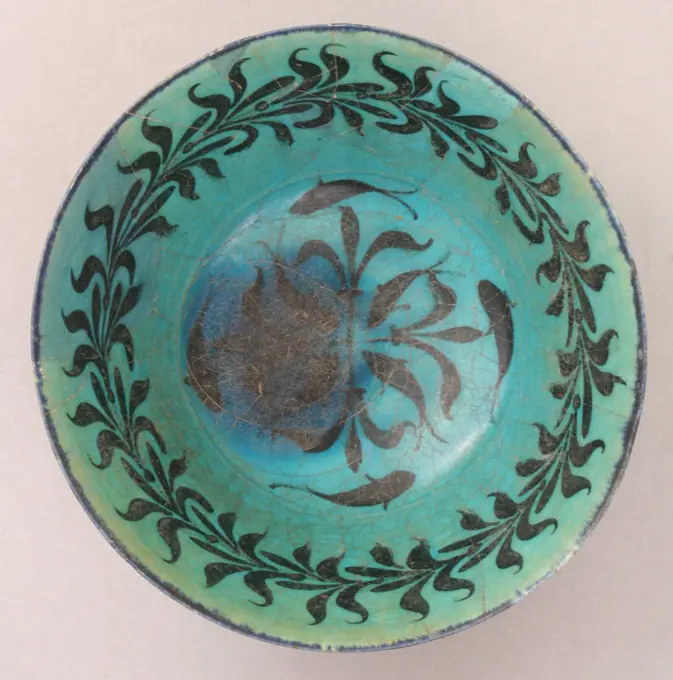
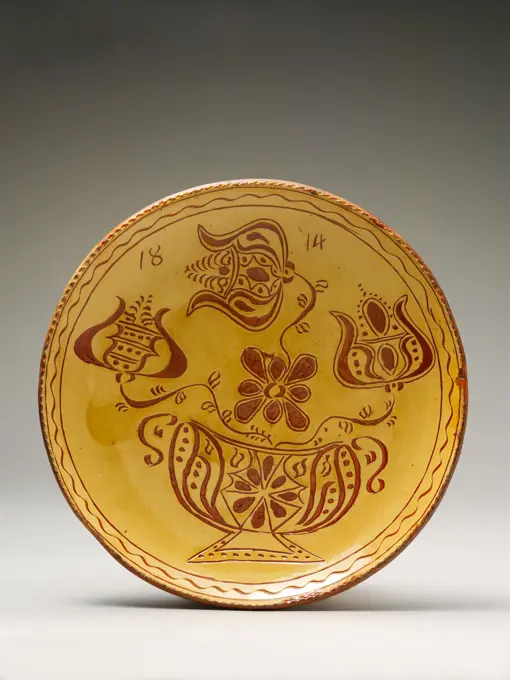
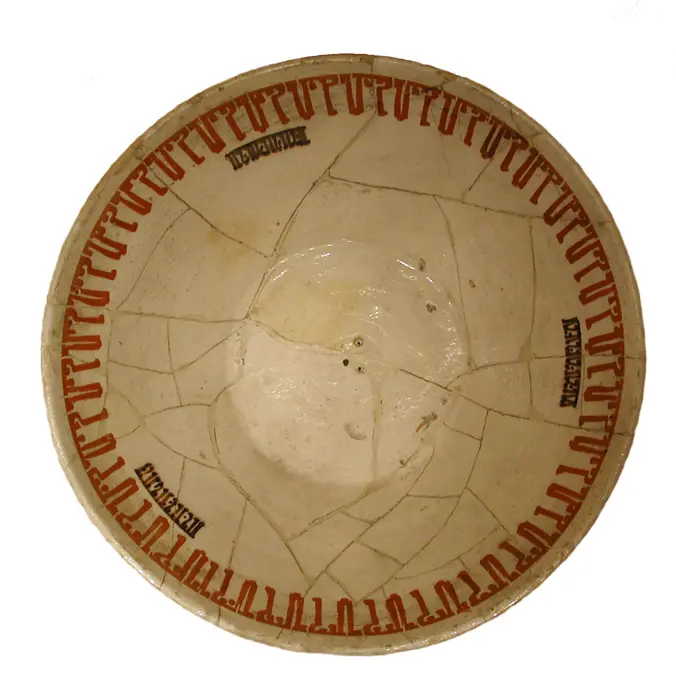
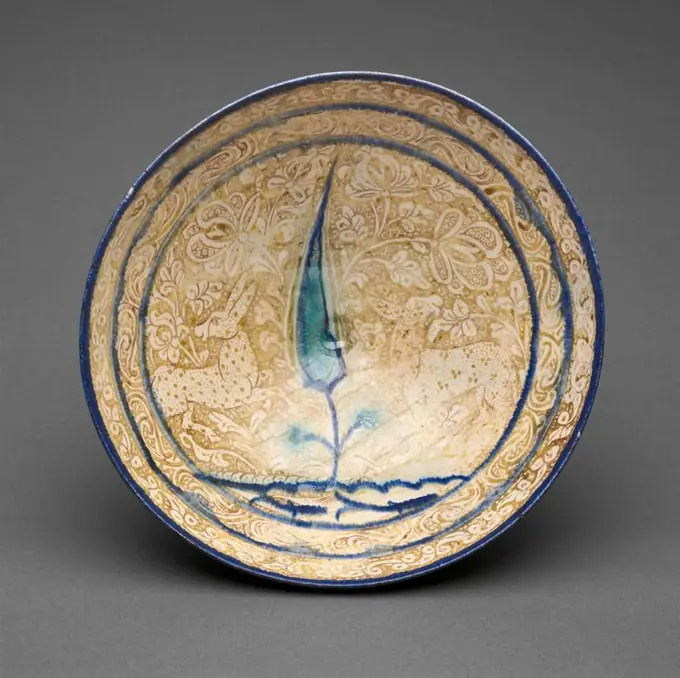
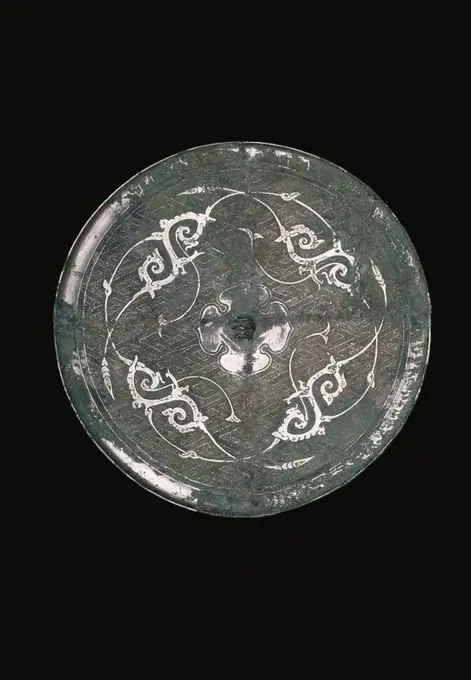
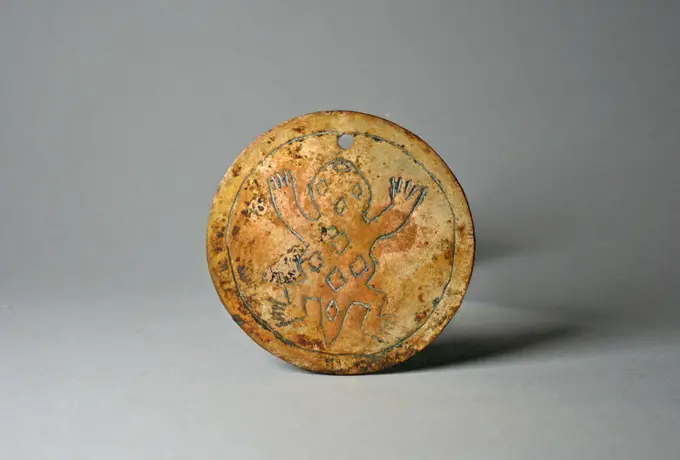
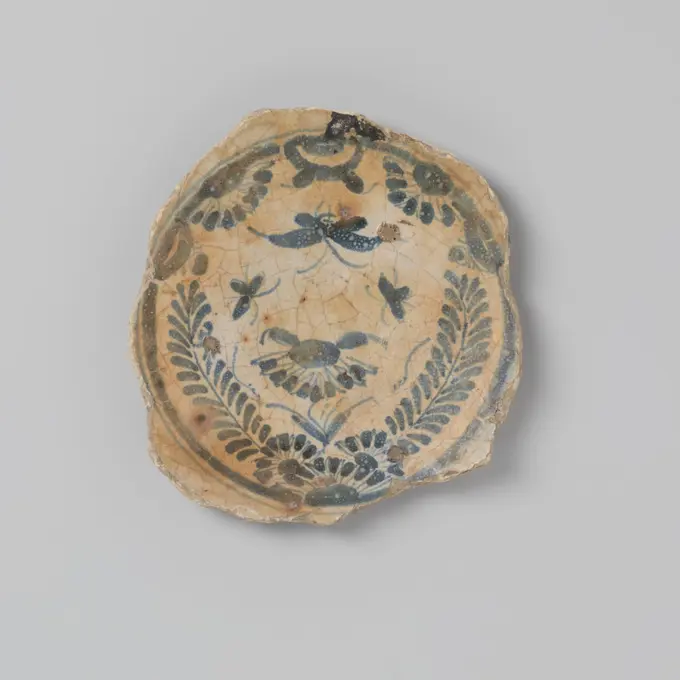
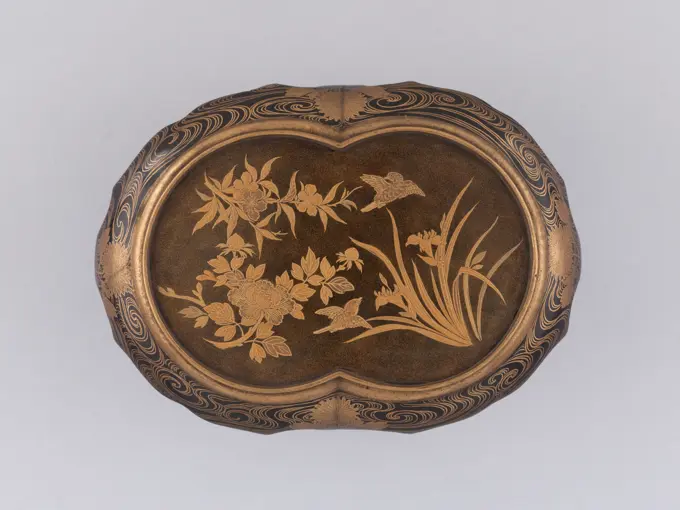
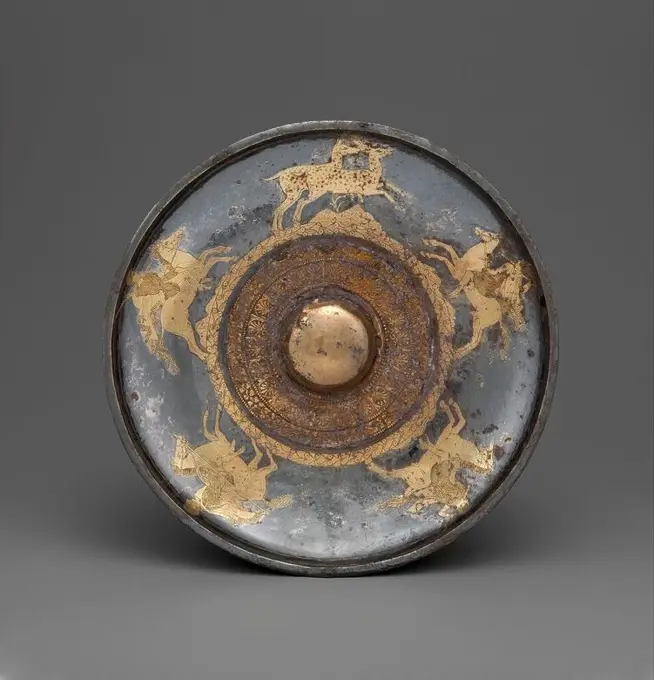
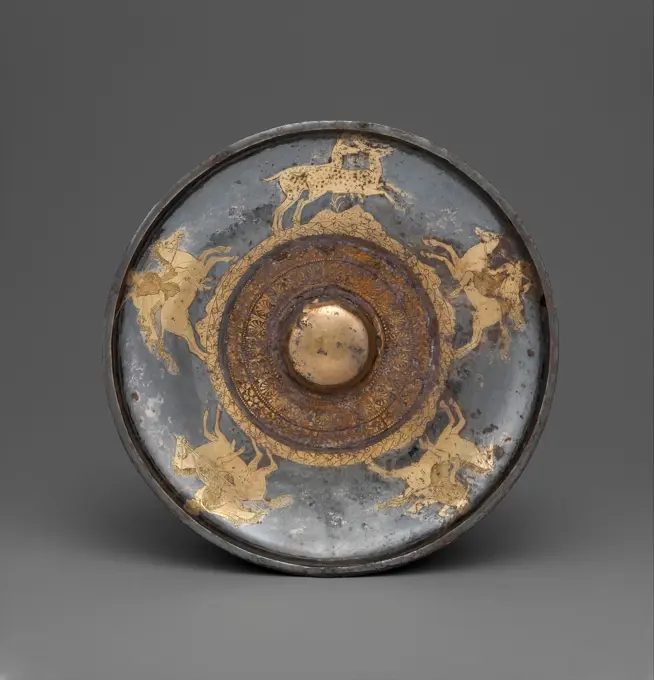
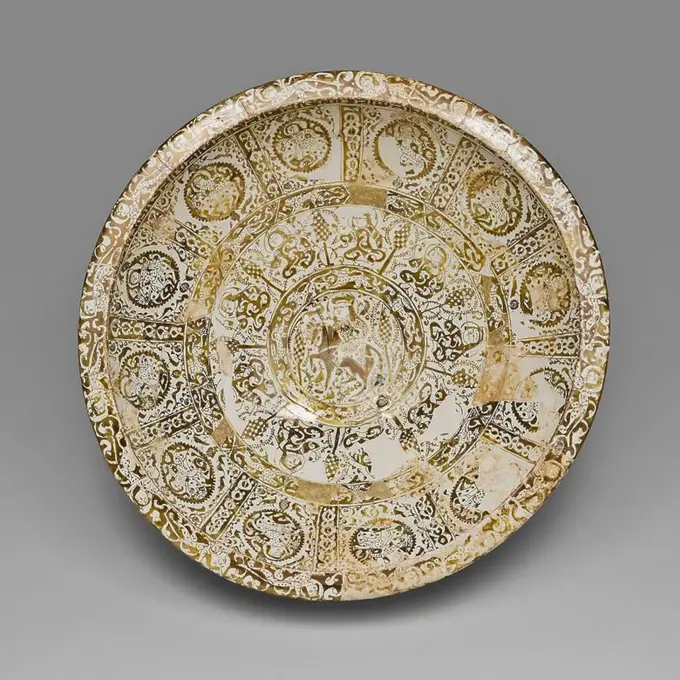
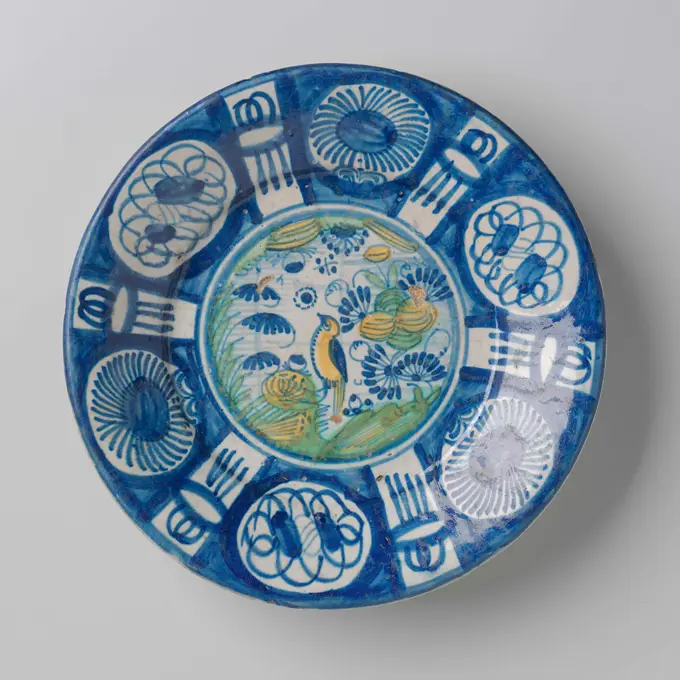
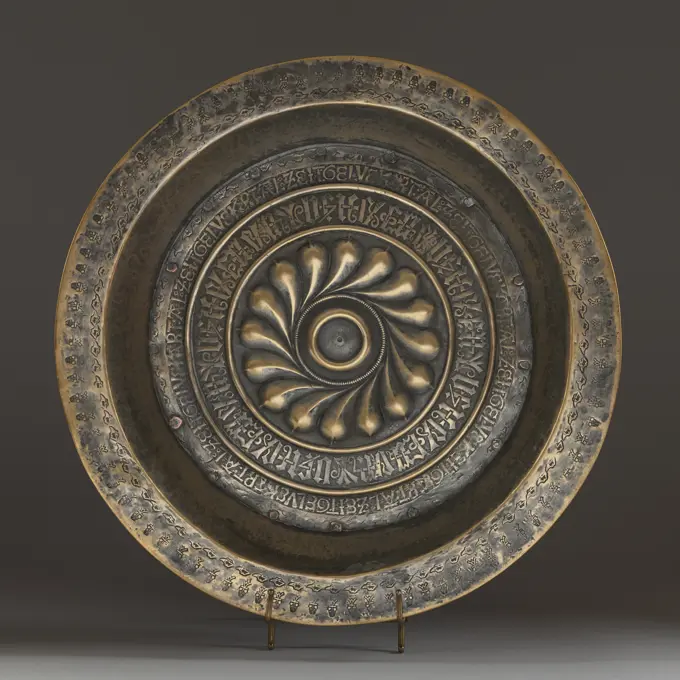
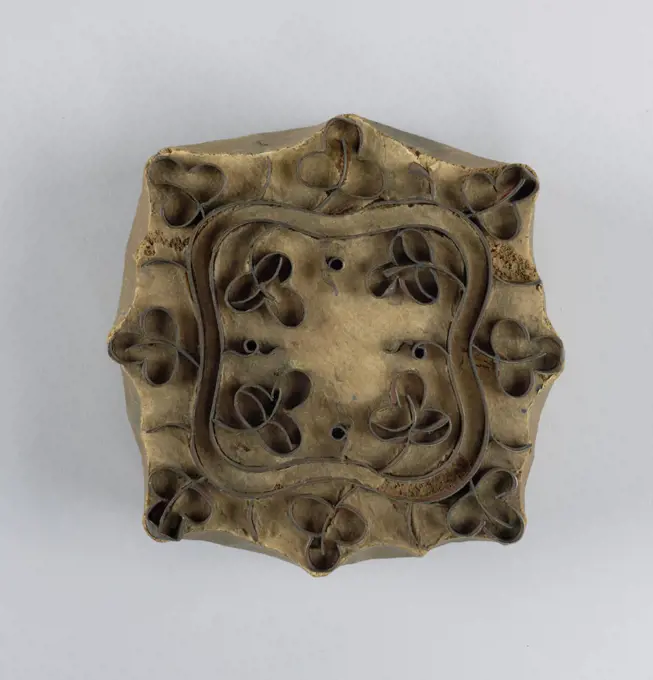
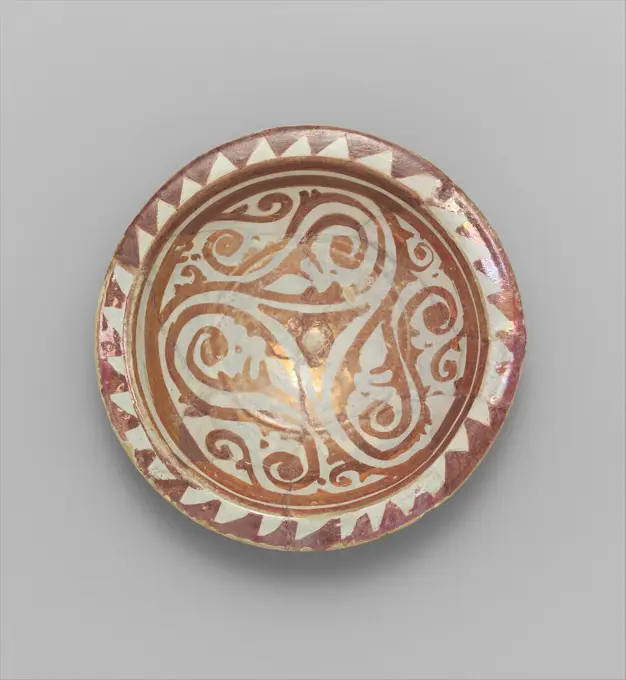
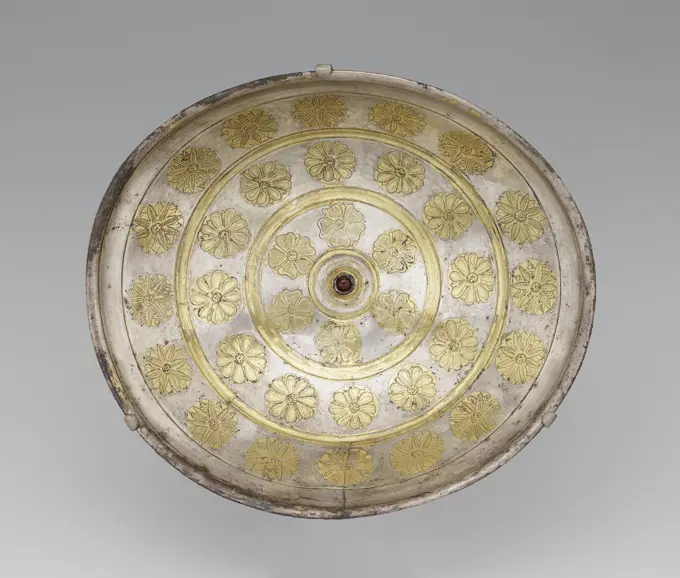
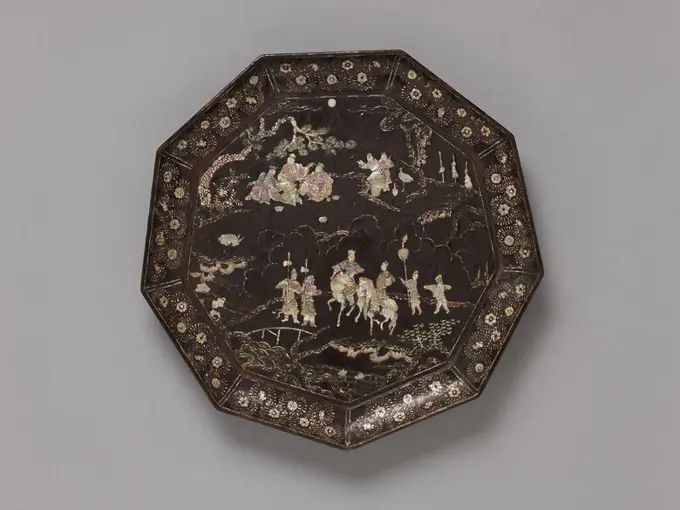
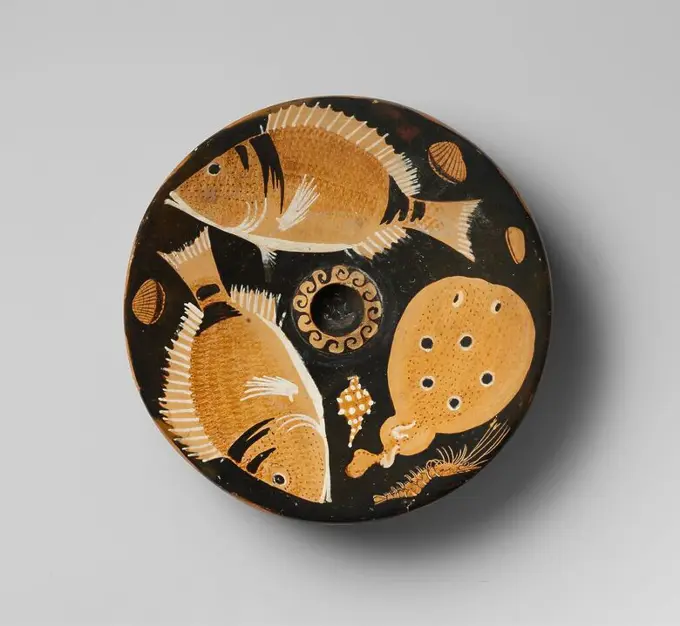
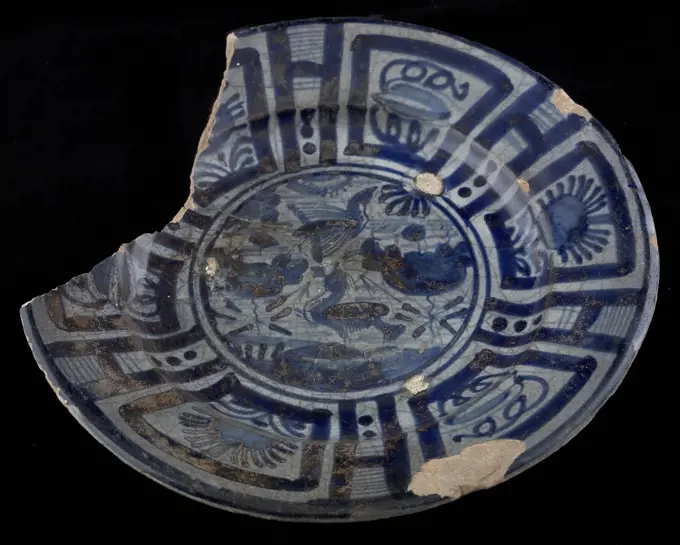
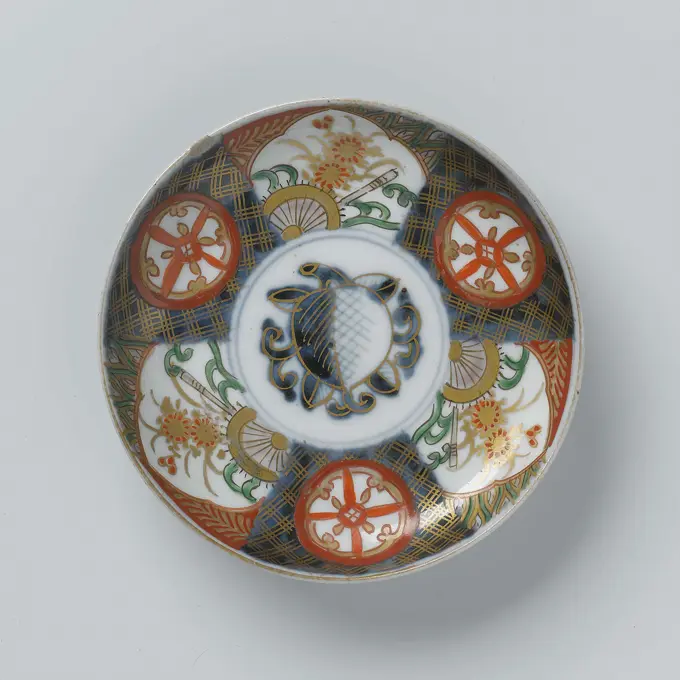
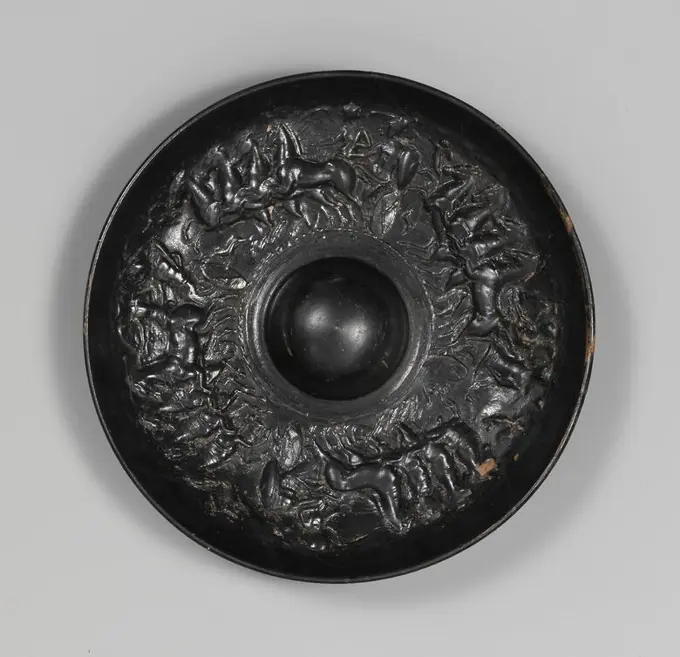
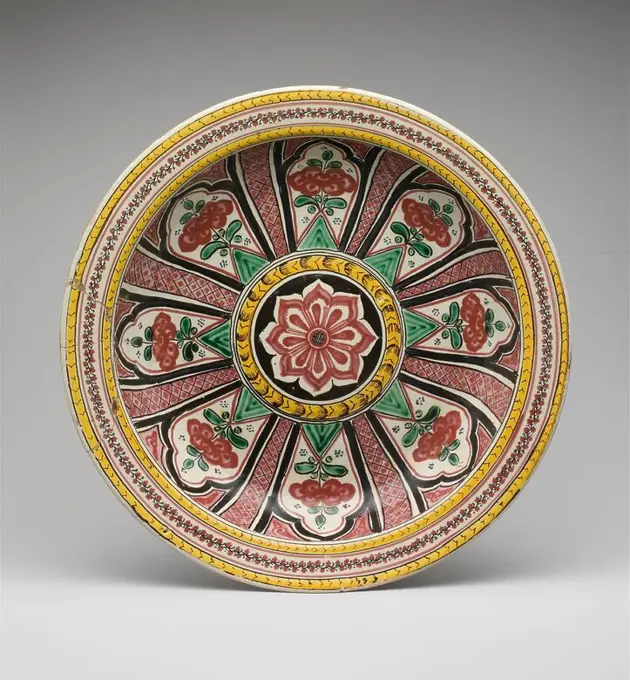
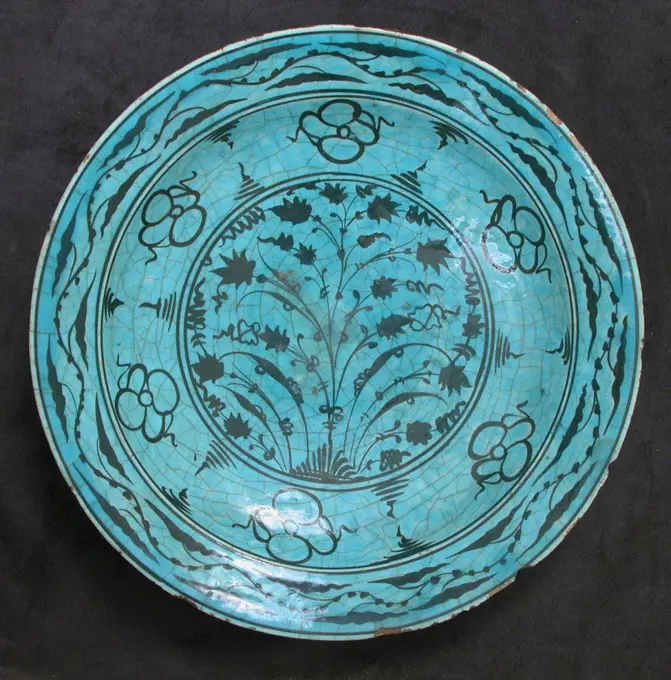
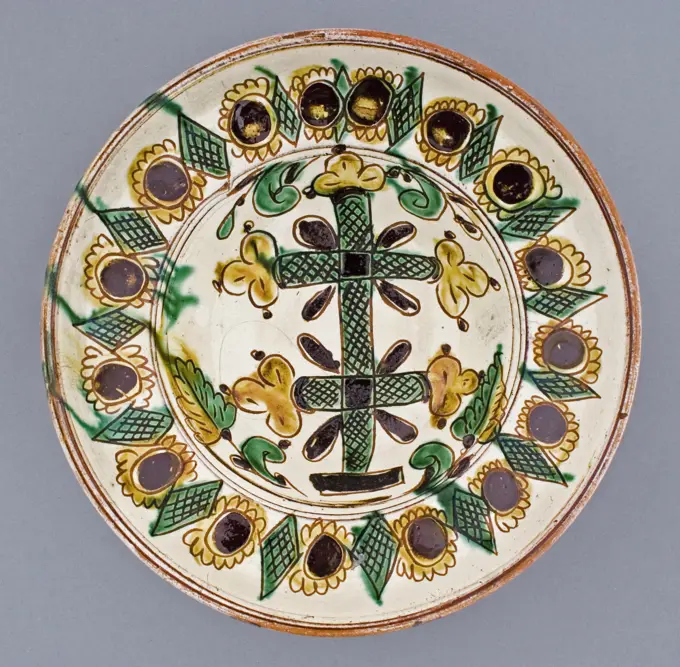
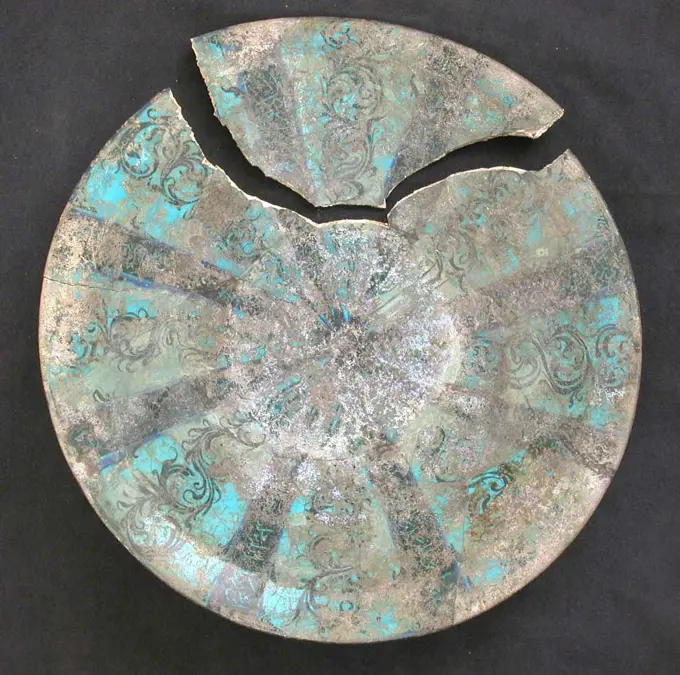
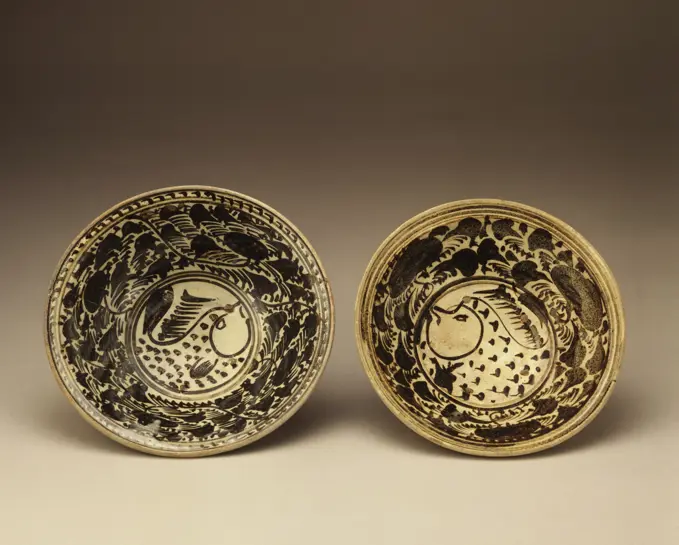
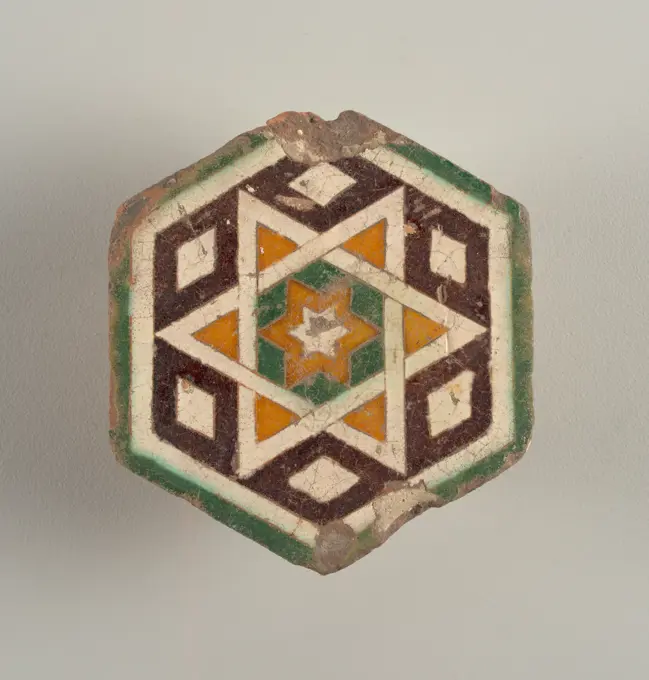
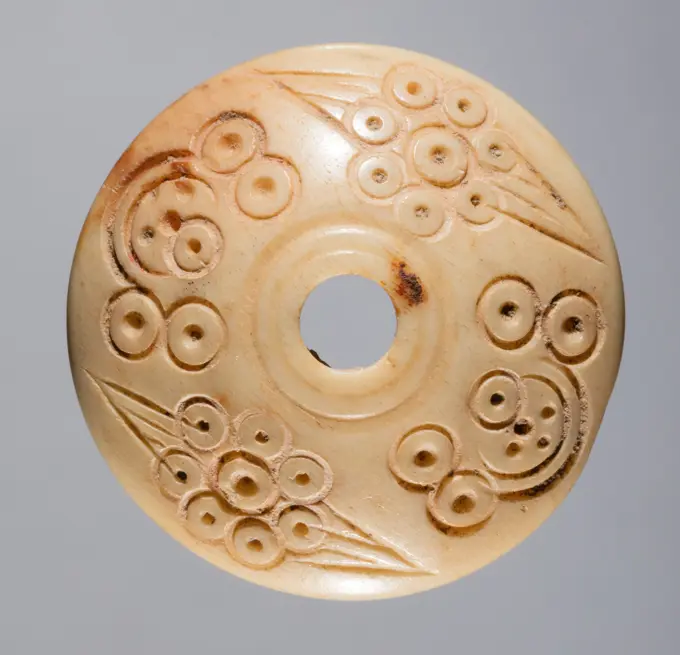
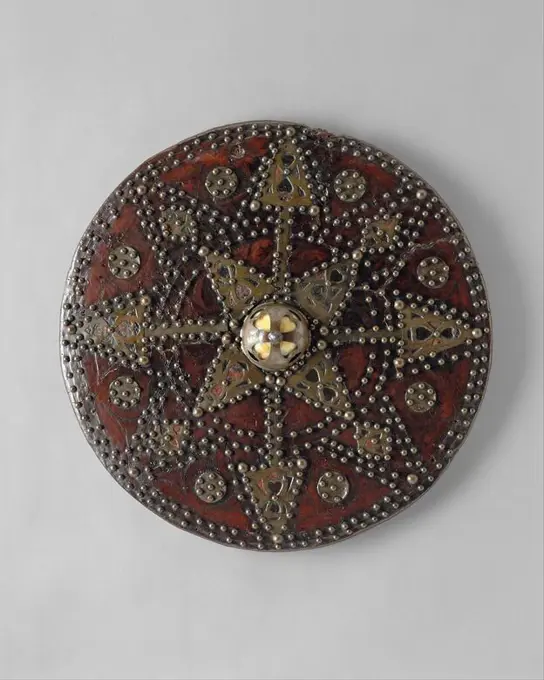
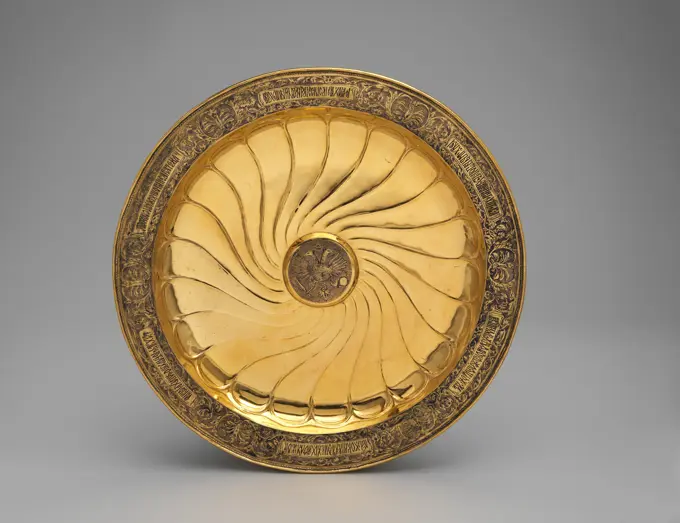
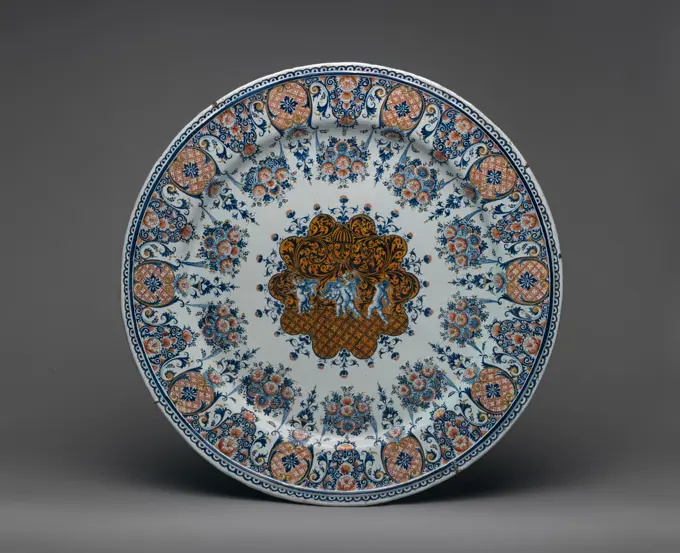
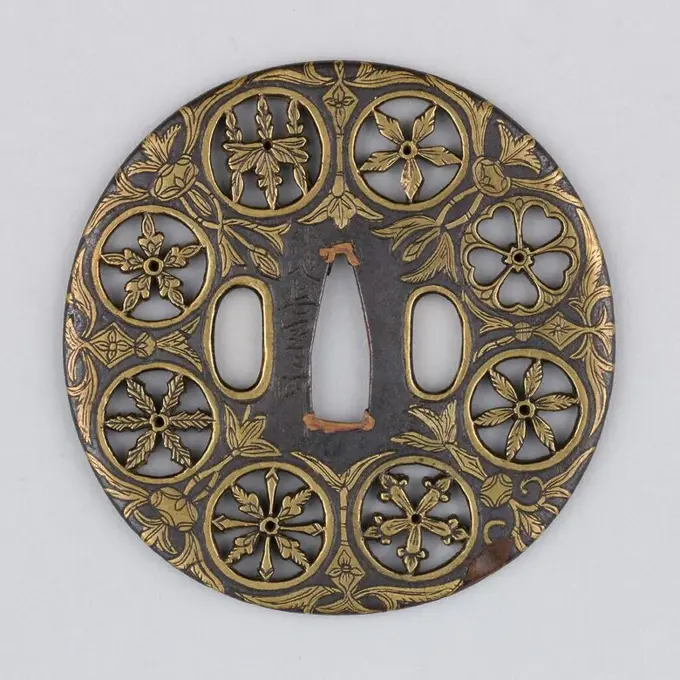
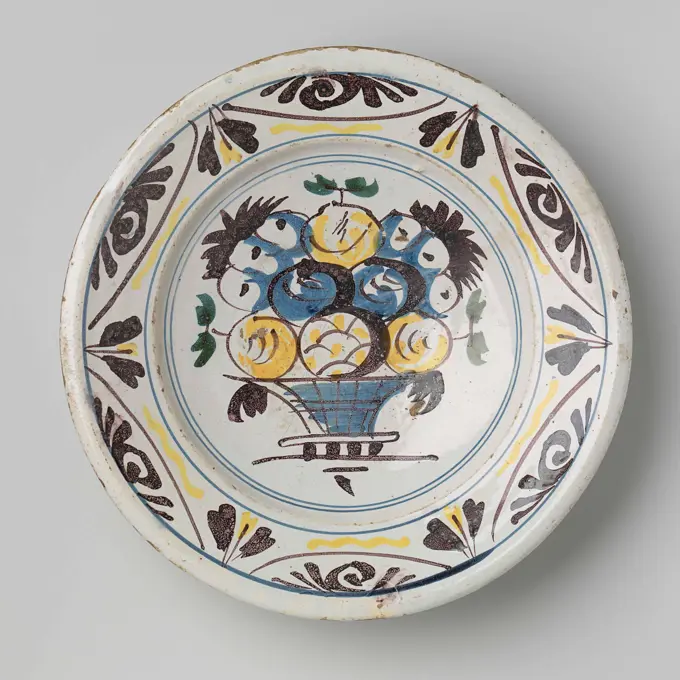
Dish of multicolored majolica. Round dish of multicolored painted majolica. On the flat is a basket with fruit painted whaling concentric circles. Six segment arcs are painted on the edge with palmets and stylized leaves.Bowl 12th-13th century. Bowl. 12th-13th century. Stonepaste; over-glaze luster-painted. Attributed to Iran, Rayy. CeramicsBowl 9th-10th century. Bowl 449316Plate late 15th century German. Plate. German. late 15th century. Brass. Metalwork-BrassSaucer with precious objects on a green ground with cloud motifs, c. 1675 - c. 1699 Porcelain dish, painted on biscuit in green, yellow, eggplant and black. The dish is covered with a cloud motif on a green soil at the front and back (except the bottom within the foot ring); On this motif valuables (pearl, window, music stone) and happiness symbols (shell). Wall restored. Email sur Biscuit. China porcelain. glaze. cobalt (mineral) painting / vitrification Porcelain dish, painted on biscuit in green, yellow, eggplant and black. The dish is covered with a cloud motif on a green soil at the front and back (except the bottom within the foot ring); On this motif valuables (pearl, window, music stone) and happiness symbols (shell). Wall restored. Email sur Biscuit. China porcelain. glaze. cobalt (mineral) painting / vitrificationEarthenware dish, ringing-plate, red shard, decorated with stylized flower, on stand, dish crockery holder soil find ceramic earthenware glaze lead glaze clay, hand turned decorated glazed fried lemonade Pottery saucer ringelbord red shard internal glazed on stand Decorated with yellow bands circles and garlands in the middle stylized flower in yellow and green Materials used: white clay and copper oxide In restoration, the supplemented fragments are painted on the inside archeology Rotterdam Stadscentrum Stadsdriehoek Oudehaven indigenous pottery import food preparation cooking food kitchen serving room Soil discovery: Oude Haven Rotterdam.Bowl. Iran; probably Kashan. Date: 1260-1400. Dimensions: . Fritware, underglaze-painted decoration. Origin: Sultanabad. Museum: The Chicago Art Institute, Chicago, USA. Author: Islamic.Gemellion depicting the Coronation of Erec, knight of the Round Table. Middle 13th century. Enamelled copper. Limoges. From San Isidoro of Leon, Spain. National Archaeological Museum. Madrid. Spain.Marsh-Bowl of Rennefer ca. 1504-1447 B.C. New Kingdom The interior of this bowl is decorated with a central pool of water from which lotus blossoms and buds extend. Just below the rim are six water birds and two tilapia fish. The bowl is one of three found in the coffin of Rennofer, wife of Neferkhawt, a royal scribe of the court of Hatshepsut (see also 35.3.77).. Marsh-Bowl of Rennefer 547680Dish 1435-1465 Spanish. Dish. Spanish. 1435-1465. Tin-glazed earthenware. Made in probably Manises, Valencia, Spain. CeramicsPlate of multi -colored hard baked pottery; Staffordshire, Anonymous, c. 1750 - c. 1780 Plate of multicolored hard baked pottery, with a scalloped edge. The edge is decorated in relief with six fields of Gololfd Spaliewerk. The board is covered with blue -gray lead glaze with stains in green, yellow and manganese. The back is dotted in manganese. The board includes four plates (BK-1987-41-A to BK-1987-41-E). England earthenware. lead glaze Plate of multicolored hard baked pottery, with a scalloped edge. The edge is decorated in relief with six fields of Gololfd Spaliewerk. The board is covered with blue -gray lead glaze with stains in green, yellow and manganese. The back is dotted in manganese. The board includes four plates (BK-1987-41-A to BK-1987-41-E). England earthenware. lead glaze. Come of pottery, decorated with the motif "loose", six flowers on the courtyard in brown / orange, yellow, red-brown, brown, violet and green. The bottom has a violet fond. The outer edge has motifs in brown / orange, green, yellow and blue. Brands: Circular stamp Colenbrander-Arnhem-Holland around Ramskop with RAM; combination of the letters WS (); C 36 and loose in black. Reimburse 34.Bowl;  19th century (1801-00-00-1900-00-00);Bowl 12th century. Bowl 452611Box (lid), 918-1392. Korea, Goryeo period (918-1392). Pottery; overall: 1.9 x 10.1 cm (3/4 x 4 in.). Celadons, spoons, seals, and bronze mirrors were the most common burial objects in tombs during the Goryeo period (918-1392). Once used to contain colored powder, rouge, and eyebrow gel for makeup, this small container was one of the standard goods that furnished elites' tombs. Both women and men used the grain powder of rice or millet for whitening their skin, safflower extract for rouge, and plant ash or soot for eyebrow gel. Yet, natural-looking make-up seems to have been the most favorable one in Korea according to the travelogue by Xu Jing (1091-1153), the Chinese diplomat who visited Korea in 1123.Luster Bowl with Man Holding a Banner, 900s. Iraq, probably Baghdad, Abbasid Period. Earthenware with luster-painted design; diameter: 24.2 cm (9 1/2 in.); overall: 7.4 cm (2 15/16 in.).Bowl with Geometric Design (Four- part Scroll-in-Box), 1000- 1150. Southwest, Mogollan, Mimbres (1000-1150), Pre-Contact Period, 10th-11th century. Ceramic; overall: 8 x 18.5 cm (3 1/8 x 7 5/16 in.).Bowl 750-600 B.C. Cypriot Decorated with triangular red openings and concentric circles in black.. Bowl. Cypriot. 750-600 B.C.. Terracotta. Cypro-Archaic I. VasesBowl Bachmiński, Aleksander (1820 1882)Octagonal Saucer With Flower Scrolls in Panel Decoration. Octagonal dish of porcelain, painted in underglaze blue. On the flat a flower branch in a double medallion; to them eight radiating compartments with stylized flower drinks; The edge with a band with zigzag work. Frame of iron wire. Blue White.Ewer stand with male and female profiles and arms of the Orsini family ca. 1500-1510 Italian, Deruta The motto FIDES OMNIA (Faith or Fidelity is all things) encircling the double portraits of a man and a woman suggests that the decoration of the plate refers to a marriage or betrothal. The inclusion of the Orsini coats of arms at top and bottom might indicate that both bride and groom were related to that powerful Roman family.. Ewer stand with male and female profiles and arms of the Orsini family. Italian, Deruta. ca. 1500-1510. Maiolica (tin-glazed earthenware), lustered. Ceramics-PotteryBowl, Glazed and lustered porcelain, Deep bowl on small foot. Inside, a plant with five flowers in center, and single flowers between vertical bars on sides; outside, on medium blue ground, all-over pattern of flowers. All painting in lustre., Iran, 18th century, ceramics, Decorative Arts, BowlPlate. Culture: German. Dimensions: Overall: 15 1/2 x 2 1/8 in. (39.4 x 5.4 cm). Date: late 15th century. Museum: Metropolitan Museum of Art, New York, USA.Bowl 10th century. Bowl. 10th century. Earthenware; glazed. Found/excavated Iran, Amul, Hamadan or Zenjan. CeramicsDish 19th century Japan. Dish. Japan. 19th century. White porcelain decorated with polychrome enamels (Arita ware). Edo (1615-1868) or Meiji period (1868-1912). CeramicsPlate with Willow Design, 18th century, Unknown Japanese, 2 3/8 × 10 3/8 × 10 1/2 in. (6.03 × 26.35 × 26.67 cm), Seto ware; stoneware with buff-colored glaze, Japan, 18th centuryFragment majolica plate, blue on white, simplified chessplate decor with crosses, plate crockery holder soil find ceramic earthenware enamel, baked underside covered with lead glaze. Grid with thick cross at the intersections archeology serve to serve foodCharger plate (ôzara). unknown, craftsmanNishapur Dish IRAN 9th cent. AD.Dish 1430-1460 Spanish. Dish 471772Plate of Euphorbia, rhodium ceramic depicting duel between Menelaus and HectorSmall plate with lizard, shells, and blue and purple background ca. 1865-1875 Georges Pull Based in Paris, Georges Pull sold off his taxidermy and curiosity shop in Paris in order to devote himself to rediscovering the ceramic techniques of Bernard Palissy (1510-ca.1590). Though this example featuring a lizard in the center surrounded by shells resembles Palissys work, Pull has signed the back with his own name.. Small plate with lizard, shells, and blue and purple background. French, Paris. ca. 1865-1875. Glazed earthenware. Ceramics-PotterySilversmith's art, Germany, 16th century. Wenzel Jamnitzer I (1507/1508 - 1585), embossed chased and cast gilt silver basin, 38x46x8 cm. From the church of Santa Maria near San Celso, Milan.Bowl with a Majlis Scene by a Pond dated A.H. 582/ A.D. 1186 Abu Zayd al-Kashani During the nearly forty years he was active as a master potter, Abu Zayd was also a proficient poet. He composed at least one of the love poems inscribed on this bowl. The scene depicted, probably a literary majlis, does not relate explicitly to any of these poems. However, the performer to the left may be interpreted as reciting them to the figures seated on and around the raised platform. Oh beloved, did you see what the snow (white hair) did to me / Oh snow (white hair), you told me, but tell my beloved // To the passion (fire) of lovers.. and cold() / And you are still flirting with me! // Oh body, the sorrow of love will not make you any better (than this) / Will not (help).. your soul and faith // At the end, the sweetness of lust will entrap you / So that love will not make a fool of you.. Bowl with a Majlis Scene by a Pond 451752Wall plate with stylized leaf motif, 1887 Wall plate with Blank Fond, on which a continuous stylized leaf motif has been applied in light green. The motif is black. The Hague earthenware. glaze vitrification Wall plate with Blank Fond, on which a continuous stylized leaf motif has been applied in light green. The motif is black. The Hague earthenware. glaze vitrificationBowl with Scrolls and Fishes 13th century This bowl is attributed to Kashan, Iran. The decoration, painted in black under a transparent turquoise glaze, depicts in the cavetto a large motif comprised of vegetal designs and fish, while similar vegetal elements form a band around the interior of the body. Although the underglaze technique was common on Iranian stonepaste vessels, it did not have the same wide-reaching popularity as Syrian underglaze-painted wares of the 12th and 13th centuries.The bowl came to the Museum in 1920, together with a large group of objects bequeathed from the collection of the antique dealer William Milne Grinnell. A modern label attached under the base reads, in Arabic, "2?5904".. Bowl with Scrolls and Fishes 447147Bowl 13th-14th century. Bowl 447141Plate 1814 Attributed to Heinrich Stofflet. Plate. Attributed to Heinrich Stofflet (active 1812-30). American. 1814. Earthenware; Redware with sgraffito decoration. Made in Northampton County, Pennsylvania, United StatesBowl with Pseudo-inscriptional Design 10th century. Bowl with Pseudo-inscriptional Design 451197Bowl with Tree and Fish-Pond Motif. Iran; probably Kashan. Date: 1201-1400. Dimensions: 22.2 x 9.5 cm (8 3/4 x 3 3/4 in.). Fritware with in-glaze painting in blue and turquoise and overglaze painting in luster. Origin: Iran. Museum: The Chicago Art Institute, Chicago, USA. Author: Islamic.Mirror with Dragon Arabesques. China. Date: 299 BC-100 BC. Dimensions: Diam. 20.8 cm (8 3/8 in.); Thickness: 0.2 cm (3/16 in.). Bronze. Origin: China. Museum: The Chicago Art Institute, Chicago, USA.Sudanese Slit drum made of wood. Al Mahdiva period, late 19th century. The drum was amongst many artefacts taken from the forces of the Khalifa by the British following the Battle of Omdurman in 1898 which signalled the end of the Mahdist State.Copper Disk Ornament. Culture: Vicús (). Dimensions: Diameter 3-5/16 in. (8.4 cm). Date: 3rd century B.C.-A.D. 2nd century. Museum: Metropolitan Museum of Art, New York, USA.Dish of marbled faience, anonymous, c. 1650 - c. 1680  Dish of marbled faience in the colors yellow, brown, gray, black and green. The edge of the dish is sculpted. Delft earthenware. tin glaze marbled paperTray;  the beginning of the 20th century (1900-00-00-1910-00-00);Dishwill of earthenware with drawing of birds, flowers and insects, in underly glaze blue, anonymous, 1500 - 1799   earthenware. glaze   earthenware. glazeAnonymous. Double box on a 4 -foot table; gold lacquer decorated with the fö bird, flowers and foliage; Interior containing gold lacquer tray. Plateau. Lacquer. Museum of Fine Arts of the City of Paris, Petit Palais. Decor, double box, foliage, flower, lacquer object, FO bird, gold, tray, tableGilt silver phiale mesomphalos. Culture: Greek. Dimensions: Diameter: 8 in. (20.3 cm)Height: 1 1/4 in. (3.2 cm)Other: 14.6oz. (413.95g). Date: late 5th century B.C..Very little Classical Greek silver plate survives today. The golden figural decoration on these examples calls to mind Athenian red-figure vases and scholars debate whether precious vessels like these were the inspiration for the painted vases. However, since most gold-figured silver vessels have been found in Macedonian and Thracian tombs on the northern fringes of the Hellenized world and are dated to the second half of fifth century B.C., much later than the advent of the red-figure style, it has also been suggested that the influence may go the other way. On this beautifully preserved libation vessel, four youths hunt deer on horseback with spears. The artist makes clever use of the circular shape to show the hunters encircling their quarry. Museum: Metropolitan Museum of Art, New York, USA.Gilt silver phiale mesomphalos late 5th century B.C. Greek Very little Classical Greek silver plate survives today. The golden figural decoration on these examples calls to mind Athenian red-figure vases and scholars debate whether precious vessels like these were the inspiration for the painted vases. However, since most gold-figured silver vessels have been found in Macedonian and Thracian tombs on the northern fringes of the Hellenized world and are dated to the second half of fifth century B.C., much later than the advent of the red-figure style, it has also been suggested that the influence may go the other way. On this beautifully preserved libation vessel, four youths hunt deer on horseback with spears. The artist makes clever use of the circular shape to show the hunters encircling their quarry.. Gilt silver phiale mesomphalos 646264Large Luster Bowl. Iran; probably Kashan. Date: 1186-1196. Dimensions: 14 × 38.5 cm (5 1/2 × 15 1/18 in.). Fritware painted in luster on an opaque white glaze. Origin: Iran. Museum: The Chicago Art Institute, Chicago, USA.Dish, multi-colored paint with a bird in a landscape with flowers and leaves. Edge with boxes in which stylized flowers .. round dish of multicolored painted majolica. On the flat is a bird in a landscape with flowers and leaves painted in the colors blue, green and yellow. The edge is painted in blue and is divided into courses to Chinese example in which stylized flowers.Bowl unknownPriting block for embroidery, Medium: wood, copper, brass, One of twenty-one wood blocks showing a different floral motif formed by metal strips set in wood., USA, 1825-50, appliances & tools, Priting block for embroideryMedallion from Adonis, Anonymous, c. 1675 - C. 1700 Buyer medallion with representation of Venus and Adonis in an edge of ornaments, amorts, animals, etc. The relief cigaries are gilded.  copper (metal) gilding Buyer medallion with representation of Venus and Adonis in an edge of ornaments, amorts, animals, etc. The relief cigaries are gilded.  copper (metal) gildingBowl late 11th-early 12th century Luster ceramics developed in the medieval period, as artists transformed plain ceramics with the application of metallic-colored paint that emulated precious metalwork. The technique was popular throughout the Islamic world, but it was developed with particular skill in centers in Iraq, Iran, Egypt and Syria. This example demonstrates the shimmering effect of the paint, here forming vinelike patterns around a central triangular design. The bold contrast between the brilliant copper red and the background, in addition to the vitality of the convoluted decoration, place this work among the best of its type.. Bowl 452725Octagonal Shaped Tile with a Woman Bust in "Kubachi" Style late 16th-early 17th century. Octagonal Shaped Tile with a Woman Bust in "Kubachi" Style 451650Shallow Bowl with Three Friezes of Rosettes. UnknownTray with Figures in a Landscape. Culture: China. Dimensions: H. 2 1/8 in. (5.4 cm); Diam. 19 1/4 in. (48.9 cm); Diam. of foot 17 in. (43.2 cm). Date: 14th century.The two gentlemen on horseback and their attendants are presumably traveling to join the four figures drinking beneath the pine tree at top. The crane standing near the attendants serving wine and the deer resting at right are symbols of immortality. They add an otherworldly element to the scene, which represents either a paradisiacal realm or the retirement villa of a senior official equipped with the trappings of such a magical environment. Museum: Metropolitan Museum of Art, New York, USA.Terracotta fish-plate. Culture: Greek, South Italian, Campanian. Dimensions: H. 2 1/4 in. (5.7 cm)Diameter 8 3/4 in. (22.2 cm). Date: ca. 350-325 B.C..Two bream and a torpedo fish are featured around the center of this fish-plate, with two scallops, a mussel, murex, and shrimp illustrated in the background. Museum: Metropolitan Museum of Art, New York, USA.Majolica plate, blue on white, bird in Chinese garden, Wanli style, plate dish crockery holder earth discovery ceramics earthenware glaze, baked underside covered with green tinted lead glaze irregularly applied archeology food decorate serving ChinaSaucer-dish with auspicious Symbols, Diaper Pattern and Scrolls. Scale of porcelain, painted in underglaze blue and on the glaze red, green, eggplant, black and gold. On the front in the center a medallion containing a peach surrounded by branches. To medallion six radiating compartments on the wall, three of which with a lucky symbol on napkin work and three with a scalloped cartouche with a lucky symbol and flower branches. The back with six lucky symbols. Marked on the underside with an unidentified seal brand. A chip in the edge. Imari.Bowl. Iran, Nishapur, 10th century. Ceramics. Earthenware, white slip, slip-painted in blackEarthenware dish with double corrugated outer edge and silt decoration on mirror and flag, dish crockery holder soil find ceramic earthenware glaze lead glaze clay, hand turned glazed decorated fried lemonade Pottery dish with silt decoration Deep mirror and wide flag. Outer border decorated with double wave of finger impressions. Stand with traces of relief Decoration consists of: in the mirror circle of arrowheads within double circle on the flag alternately series of arcs from large to small interspersed with stylized ear of corn Decoration on the band stands between two or three yellow circles archeology Rotterdam City Triangle Groenendaal underground pit pottery serve serve table eat archaeological find in the soil Rotterdam underground pit Groenendaal direction Oostplein 1976-09-23.Tray with Pommel Scroll. Culture: China. Dimensions: H. 1 3/8 in. (3.5 cm); Diam. 12 1/2 in. (31.7 cm). Date: 14th century. Museum: Metropolitan Museum of Art, New York, USA.Bowl (Wan) with Geese and PlantsTea Bowl with Crescent Moon, Clouds, and Blossoming Plum 13th-14th century China A common theme in the decorative arts, this imagery may have been inspired by contemporaneous poems invoking the beauty of blossoming flowers in the subtle light of a crescent moon.. Tea Bowl with Crescent Moon, Clouds, and Blossoming Plum. China. 13th-14th century. Stoneware with black and brown glaze and pigment (Jizhou ware). Southern Song (1127-1279)-Yuan (1271-1368) dynasty. CeramicsMirror with Lotus and Mantra, 1271-1368. China, Yuan dynasty (1271-1368). Bronze; diameter: 22.3 cm (8 3/4 in.); overall: 1.5 cm (9/16 in.); rim: 0.7 cm (1/4 in.).Fish Plate 350 BCE-325 BCE Canosa di Puglia. This footed plate was made to serve succulent morsels of grilled seafood, like the fish that are painted on its surface. Greece and Italy are peninsulas projecting into seas brimming with marine life. A primary source of protein, seafood was a basic staple of the ancient Mediterranean diet; it remains so today. Keen observers of their subjects, ancient vase painters so accurately captured the shapes and markings of the fish they depicted that it is possible to identify most of them by species. On this example, three slightly different, pleasingly plump bream with bright white details appear to swim after one another. A running wave pattern around the central concavity, with a gently sloped floor for collecting juices or serving sauces, recalls the sea, the source of the bounty.. terracotta, decorated in the red-figure technique . Ancient GreekPlate With Two Chinese figures in a Landscape, Floral Scrolls and a Panel Decoration. Porcelain plate with a scalloped edge, painted in underglaze blue. On the flat a medallion with two sitting Chinese people in a landscape; To make the medallion a bond with tendrils. The wall and edge are divided into wide and narrow courses. The wide subjects with persons in a landscape or flower raft, the narrow compartments with flower rans. The rear wall with two stylized tendrils. A crack in the wall. The decoration is based on Chinese squirrch porcelain. Bak sand at the foot ring. Arita, blue-white.Majolica dish, polychrome, revolving decor with six flared feathers, cable edge, plate crockery holder soil find ceramic earthenware glaze lead glaze tin glaze, stand ring, hand-turned baked 2x glazed painted majolica Fragment Mirror and rim on stand. en and open hole in stand Yellow-white shard Front white tin-glaze back transparent lead glaze with gray edges archeology food decorate serving Soil discovery: secondary oven wasteDish probably 19th century Manner of Bernard Palissy French. Dish. French. probably 19th century. Lead-glazed earthenware. Ceramics-PotteryDeep Dish ca. 1490 Spanish. Deep Dish. Spanish. ca. 1490. Tin-glazed earthenware. Made in probably Manises, Valencia, Spain. CeramicsBowl 12th century. Bowl 448271Terracotta phiale (libation bowl). Culture: Greek, South Italian, Campanian, Calenian. Dimensions: Other: 8in. (20.3cm). Date: late 3rd-early 2nd century B.C..Frieze of chariots with divinities. Museum: Metropolitan Museum of Art, New York, USA.Saucer. Nieokreślona manufaktura, factoryDish. Culture: Mexican. Dimensions: Diam. 14 5/8 in. (37.1 cm). Date: ca. 1825. Museum: Metropolitan Museum of Art, New York, USA.Dish 16th-17th century. Dish 448435Bowl with musicians. Dimensions: H. 4 3/8 in. (11.1 cm)Diam. 19 5/8 in. (49.8 cm). Date: mid-13th century.With the emergence of the so-called Kashan style, Iranian lusterware truly comes into its own. On this bowl, the richly patterned figures of two musicians at the center blend with their densely ornamented background. Four calligraphic bands, one of interlaced and foliated kufic and three in naskh script, contain benedictory phrases in Arabic, quatrains extracted from the works of four different Persian poets, and a poem attributed to the famous mystical poet 'Abd al- Majd Majdud Sana'i (d. 1130). Museum: Metropolitan Museum of Art, New York, USA.Insects amid Autumn Flowers and Grasses. Japan, mid- to late 19th century. Costumes; Accessories. Ivory with staining, sumi; ryūsa typeBowlPlate 1830-40 American. Plate. American. 1830-40. Lacy pressed blue glass. Made in New England, United StatesDish 13th century. Dish 447152Sukhothai Fish Plate from 14th century, Thailand, Southeast Asia, AsiaTile/tile Fragment; glazed earthenwareSpindle Whorl, 700s - 900s. Iran, early Islamic period, 8th - 10th century. Bone, incised; overall: 0.6 x 2.4 x 2.4 cm (1/4 x 15/16 x 15/16 in.).Dish With Medallion surrounded by Ornamental Borders. Dish of porcelain with scalloped edge, painted in underglaze blue. On the flat a small medallion with a flowering plant with different decorative tires with: flower drinks, ruyi motif, flower branch with rocks and napkin; the back with two flower branches; A double circle on the bottom. Three chips in the edge. Blue White.Dish with Winged Horse. Vietnam, 16th century. Furnishings; Serviceware. Stoneware with decorationHarrar Platter, 20th century, 6 x 23 3/4 x 23 3/4 in. (15.24 x 60.33 x 60.33 cm), Straw, leather, Ethiopia, 20th centuryMiddle tileMirror Case 17th century. Mirror Case 445008Excerpt (foot ring) of a dish with yellow -baking shard, with white glaze at the front and back, on which geometric shapes are painted at the front in blue, orange and yellow, anonymous, 1200 - 1899  Italy earthenware  Italy earthenwareHighland Targe. Culture: Scottish. Dimensions: Diam. 19 3/4 in. (50.2 cm); Wt. 6 lb. 5 oz. (2870 g). Date: 1700-1750.Highland targes were the last type of European shields to be used actively in battle, remaining a standard part of Highland equipment up to the battle of Culloden in 1746. Museum: Metropolitan Museum of Art, New York, USA.Plate 19th century, after 1561 original Elkington & Co. British This electrotype is after a seventeenth-century original a treasure of the Kremlin, Moscow, at the time of reproduction. The gold original from 1561 is at the Kremlin Museum; several replicas were made in the 17th century, our electrotype is from one of these copies.. Plate 186613Plate 1738-49 Olérys-Laugier Factory Faience, or tin-glazed and enameled earthenware, first emerged in France during the sixteenth century, reaching widespread usage among elite patrons during the seventeenth and early eighteenth centuries, prior to the establishment of soft-paste porcelain factories. Although characterized as more provincial in style than porcelain, French faience was used at the court of Louis XIV as part of elaborate meals and displays, with large-scale vessels incorporated into the Baroque garden designs of Versailles. Earlier examples of French faience attest to the strong influence of maiolica artists from Italy. Later works demonstrate the ways in which cities such as Nevers, Rouen, Lyon, Moustiers, and Marseille developed innovative vessel shapes and decorative motifs prized among collectors throughout Europe. While faience can be created from a wide mixture of clays, it is foremost distinguished by the milky opaque white color achieved by the addition of tin oSword Guard (Tsuba). Culture: Japanese. Dimensions: Diam. 3 5/8 in. (9.2 cm); thickness 3/16 in. (0.5 cm); Wt. 5.4 oz. (153.1 g). Date: 16th century. Museum: Metropolitan Museum of Art, New York, USA.Tripod plate. Painted ceramics. Maya Salua. Late Classic Period (600-900 AD). El Salvador. Museum of the Americas. Madrid, Spain. Plate, Ilkhanid Dynasty (1256-1353). Glazed Fritware. Designer unknown, made in Persia / Iran, KhorassanHenry Moran, Pa German Plate, c 1939 Pa. German PlateRoast Platter. Culture: American. Dimensions: 18 11/16 x 12 5/16 in. (47.5 x 31.3 cm). Maker: Union Porcelain Works (1863-ca. 1922). Date: 1885-86.Union Porcelain Works was one of the most important and inventive American porcelain manufacturers in the second-half of the nineteenth century. In addition to their imaginative works designed by the German-born artistic director, Karl H. L. Müller, the firm's mainstay was the production of heavy porcelain hotel dinnerware. This extensive service was made by Thomas Carll Smith, head of the Union Porcelain Works, as a gift to his daughter, Pastora Forest Smith Chace. The neoclassical decoration of the gilt bellflower and basket motif is complimented by turquoise enamel. Unlike the firm's more eccentric and lavish designs created for their display at the Philadelphia Centennial Exposition in 1876, the pottery favored a more restrained classical style for their dinner services. This service descended in the Chace family. Museum: Metropolitan MTerracotta kylix (drinking cup). Culture: Greek, South Italian, Campanian. Dimensions: diameter 5 3/4in. (14.6cm). Date: ca. 400-350 B.C..Interior, an ivy wreath in white; in the center, a stamped rosette. Museum: Metropolitan Museum of Art, New York, USA.