Decorative Ceramic Dishes

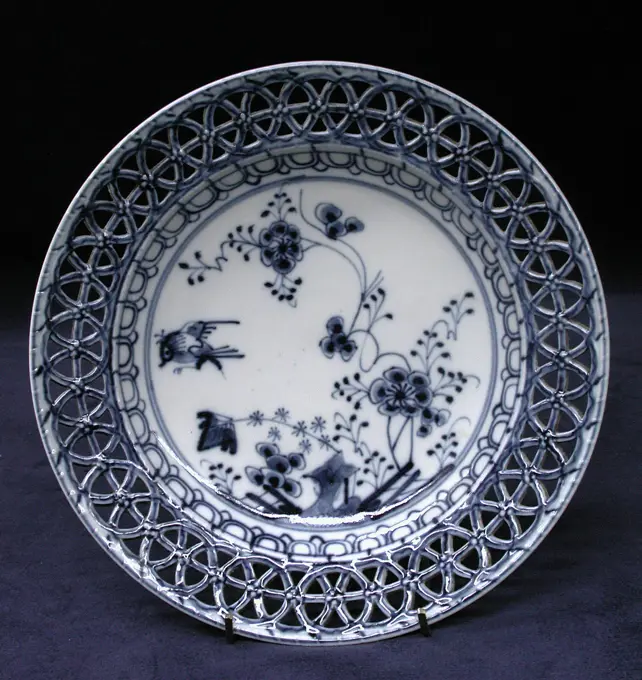
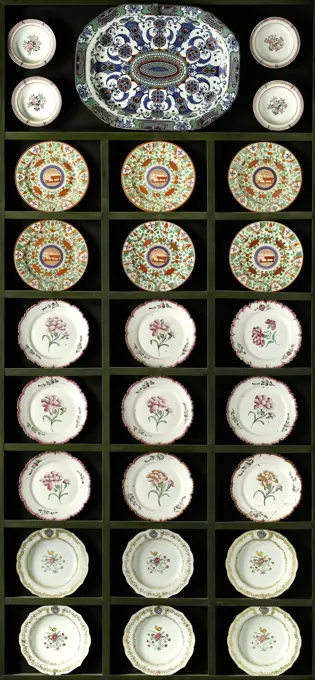
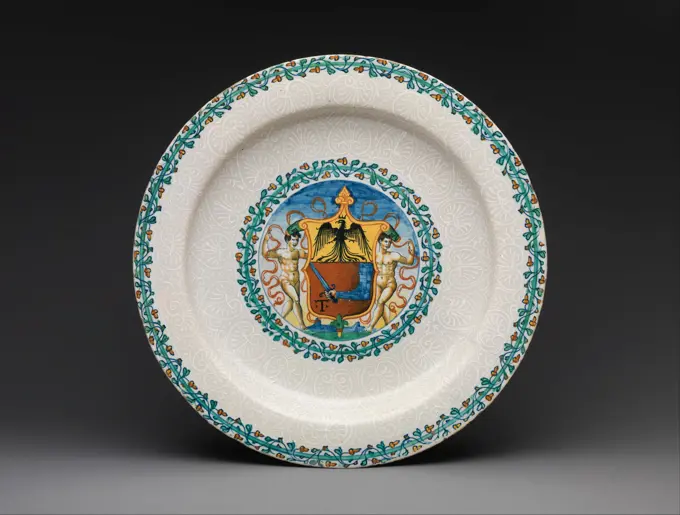
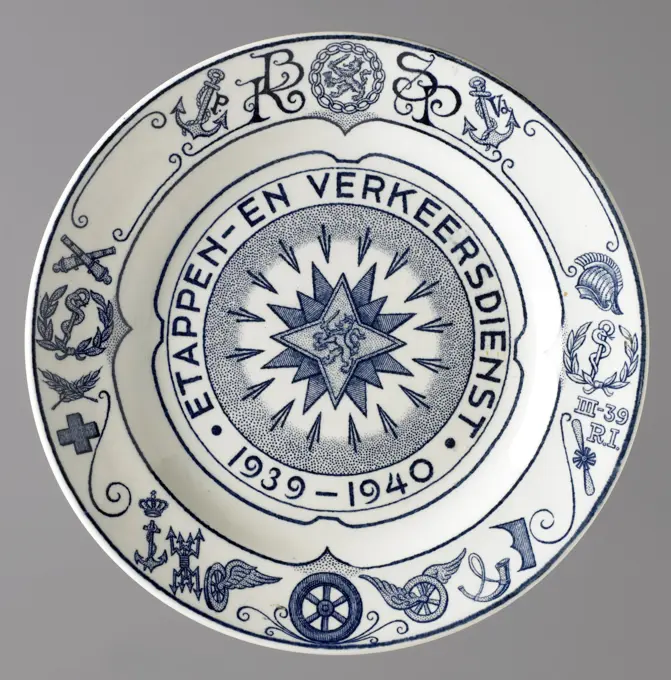
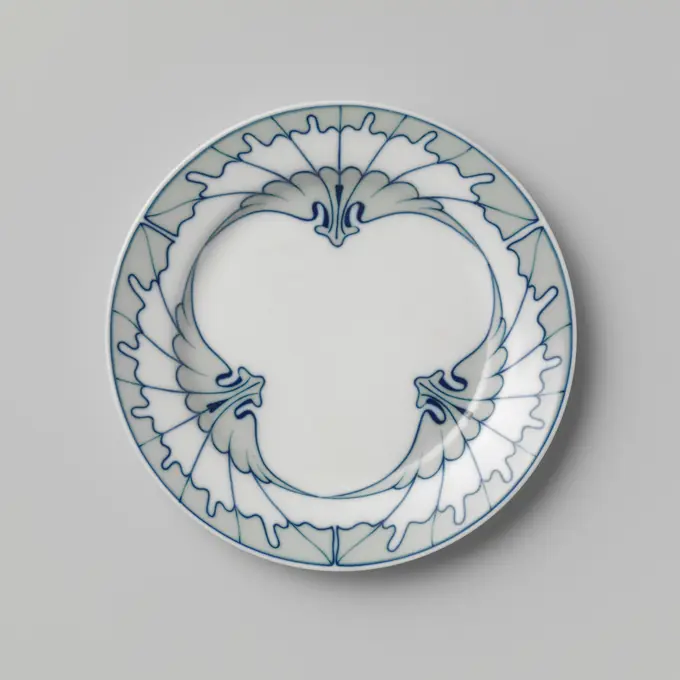
This collection features an array of decorative ceramic dishes with intricate floral designs, showcasing varying styles and glaze techniques in blue and white tones.
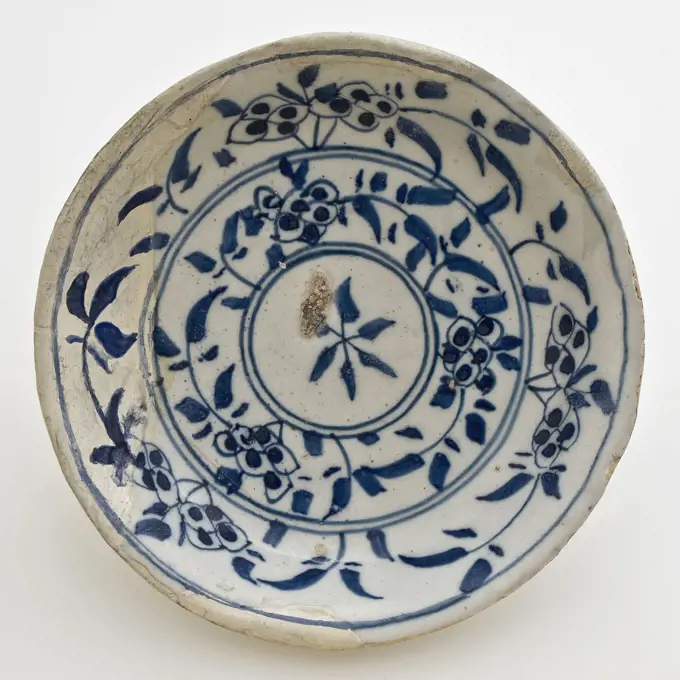
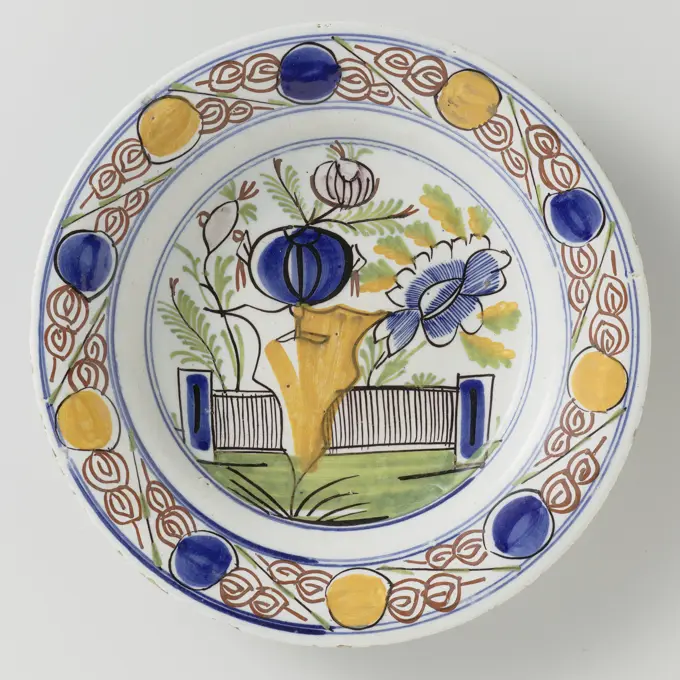
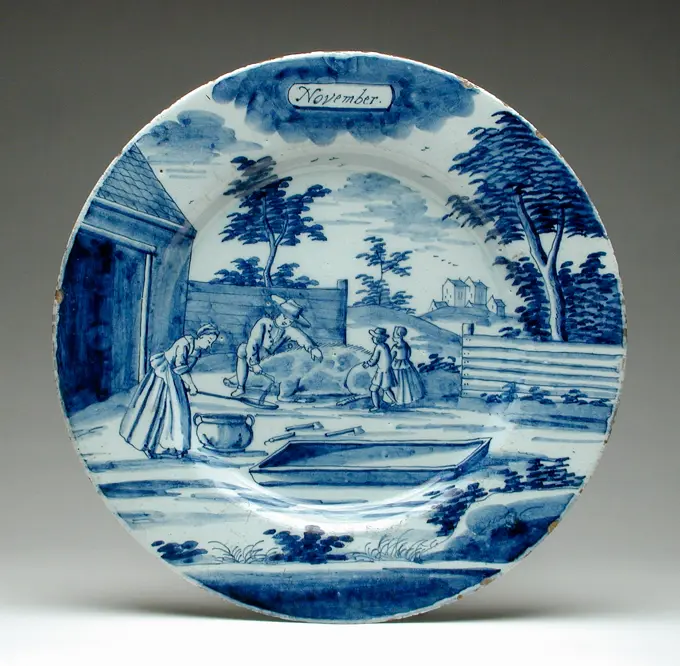
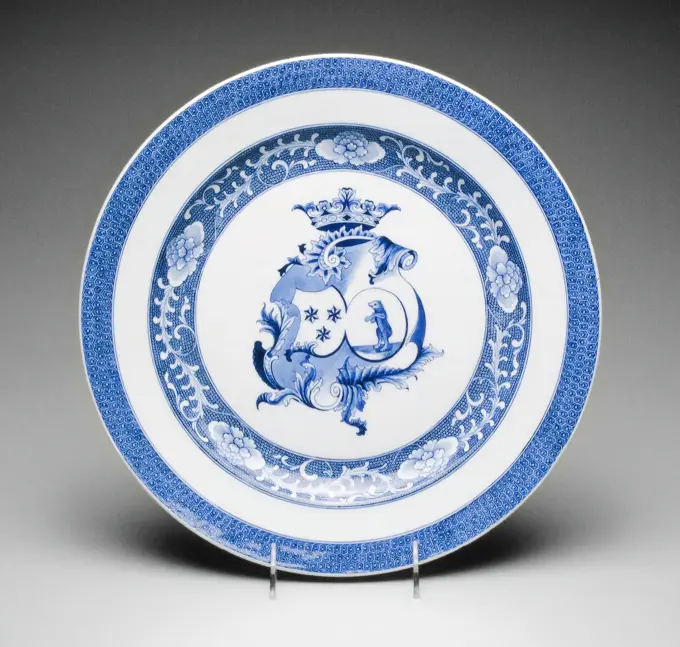
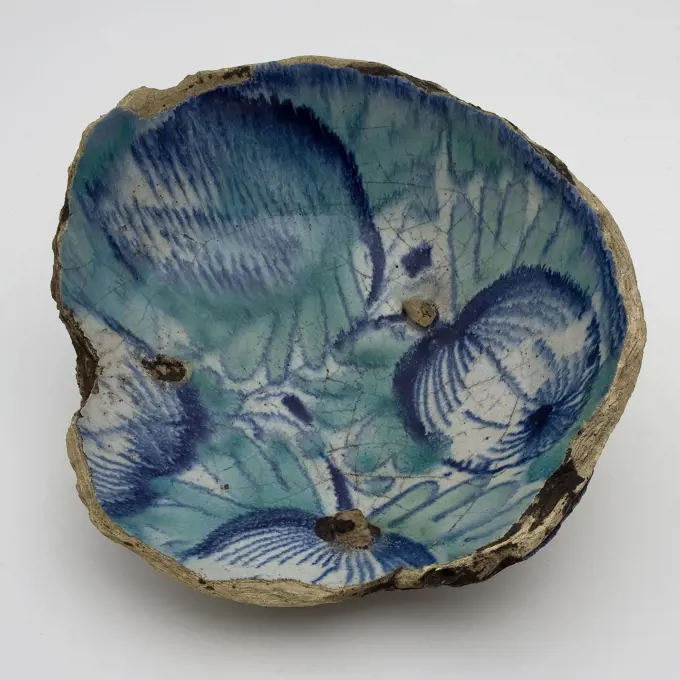
Small faience dish on stand, floral decor in blue on white ground, dish plate crockery holder soil find ceramic earthenware glaze tin glaze, hand turned baked decorated glazed fried Faience dish on stand with sharply raised edge Yellow shard entirely covered with lead glaze. Blue decor on white fond. Floral decor within blue lines circle in the middle with bakfout Unclear mark on the back. Cooked in the back: 2. archeology Valckensteyn Poortugaal Albrandswaard native earthenware served serve tea tea Soil discovery Valugaal Castle Valckensteyn.
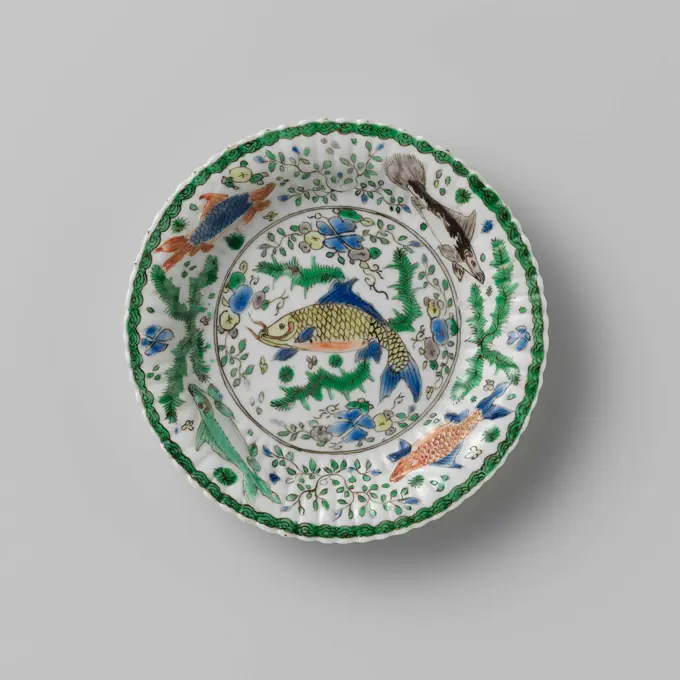
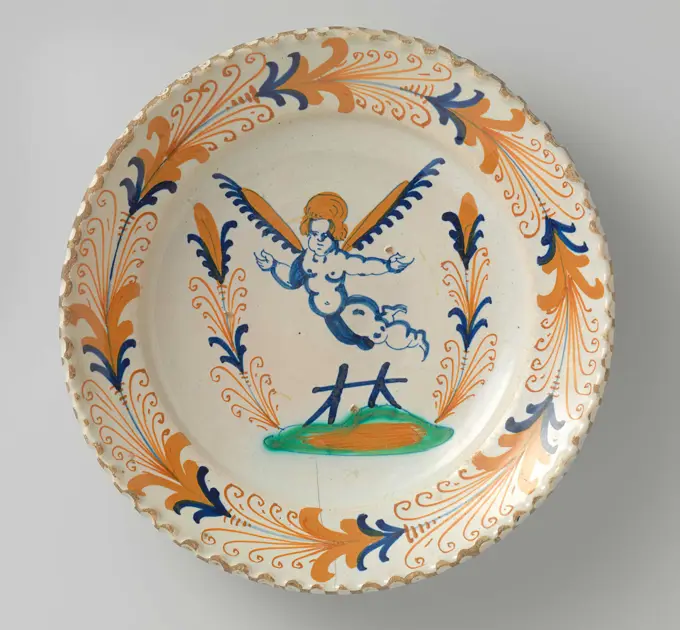
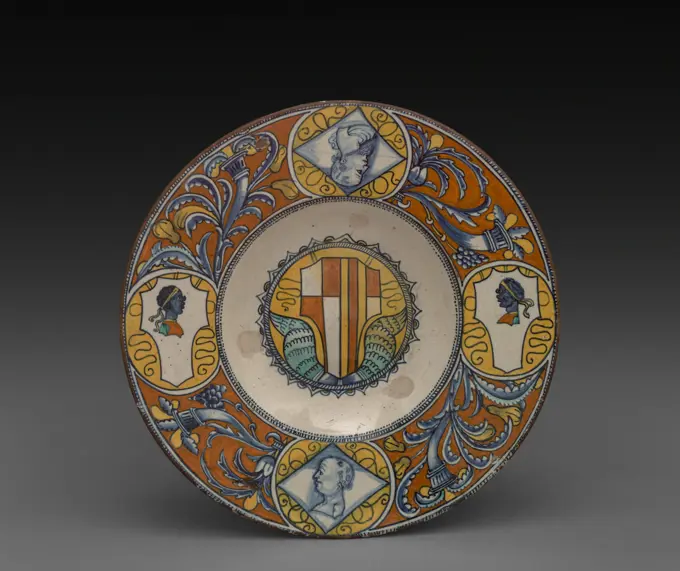
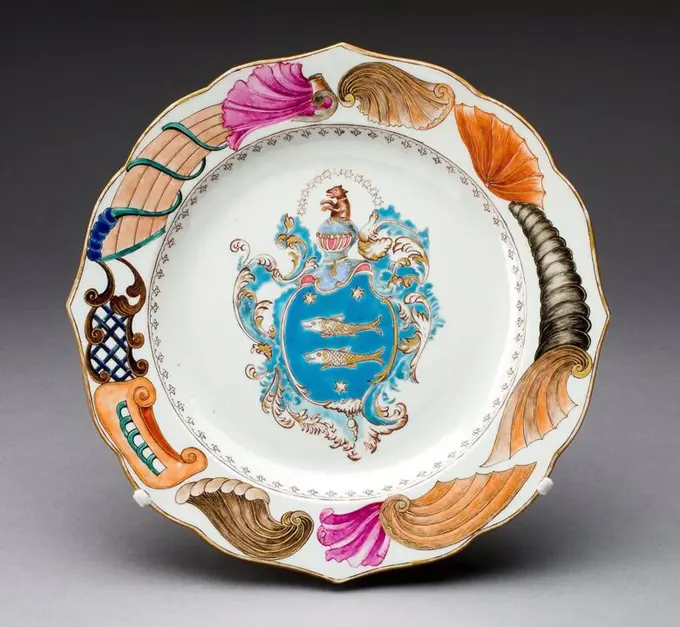
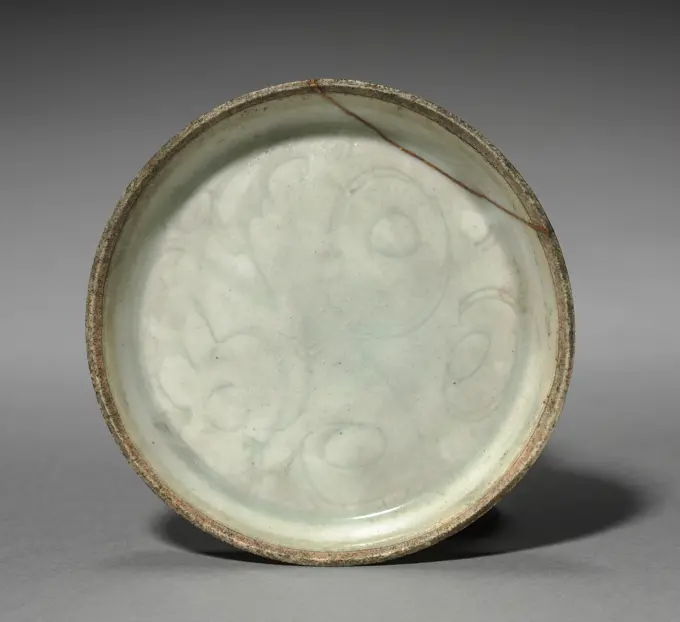
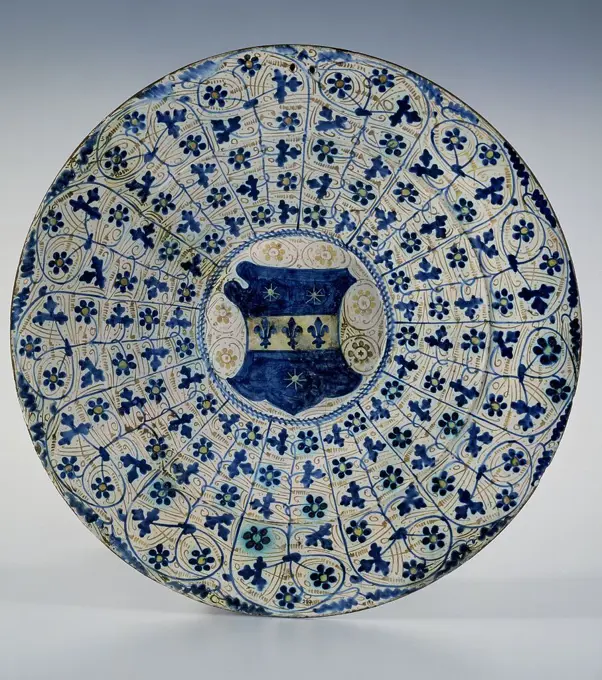
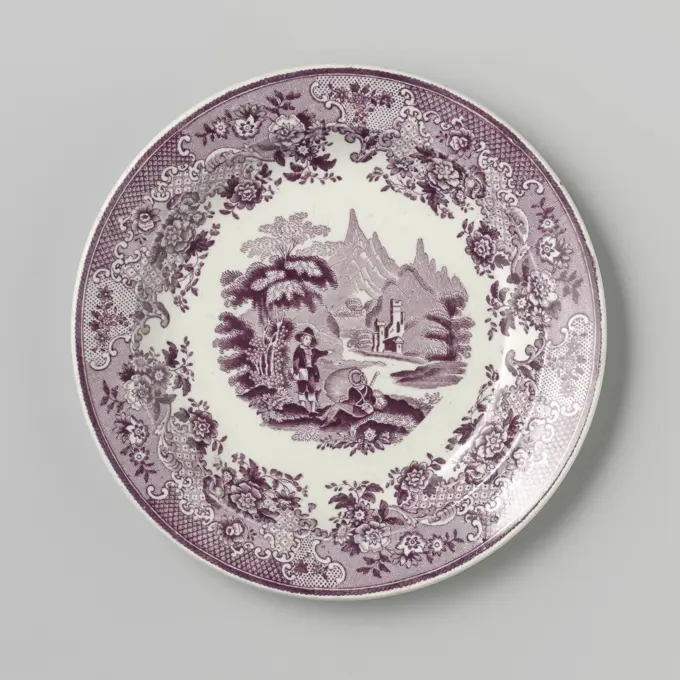
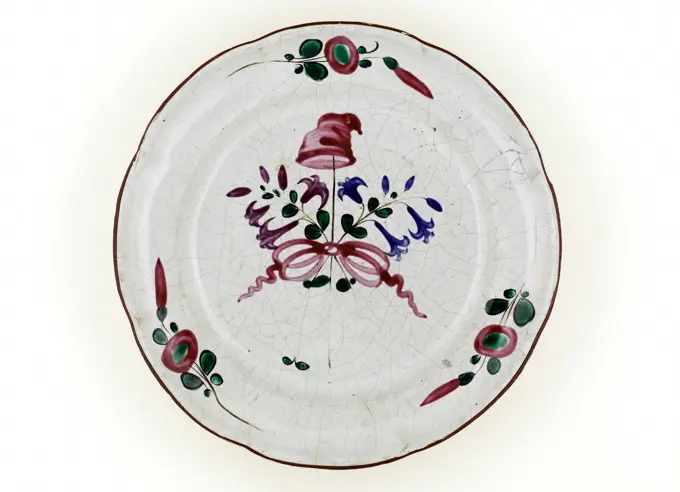
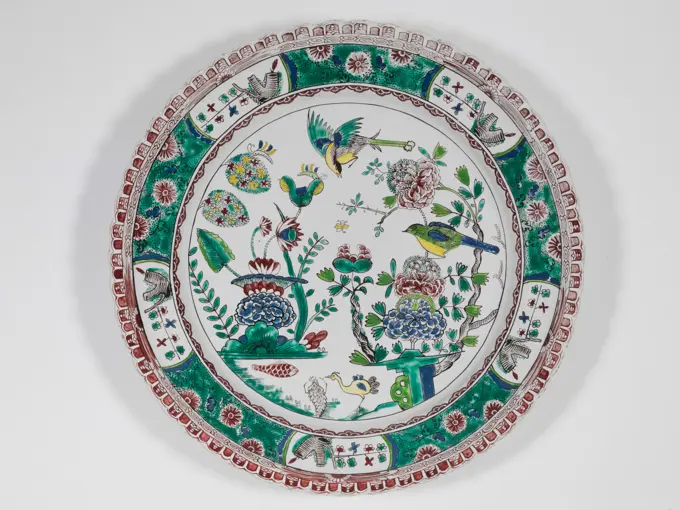
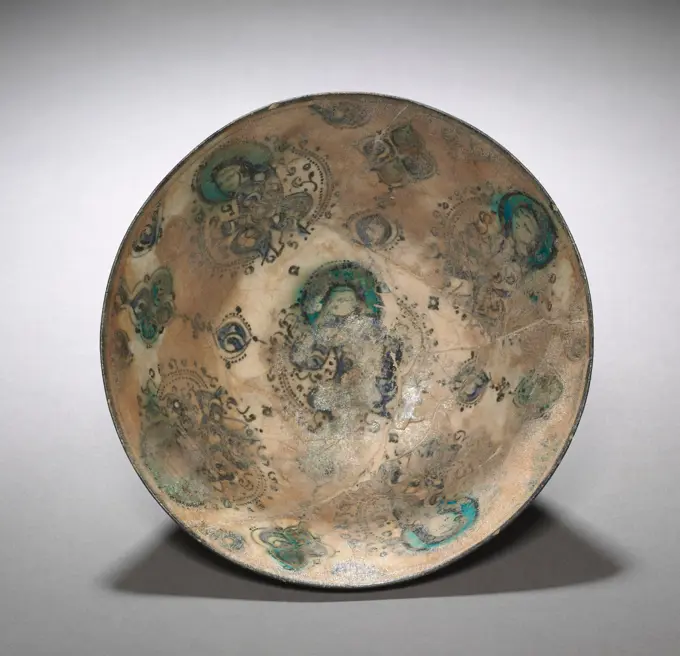
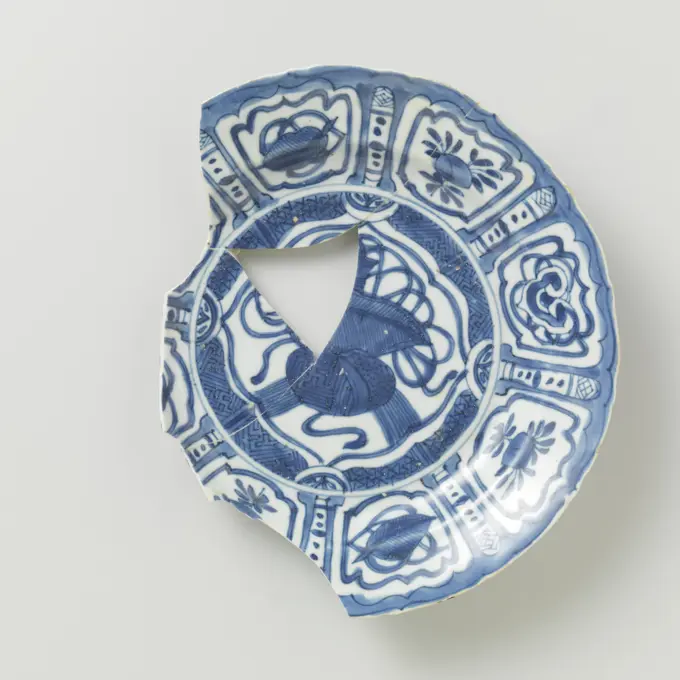
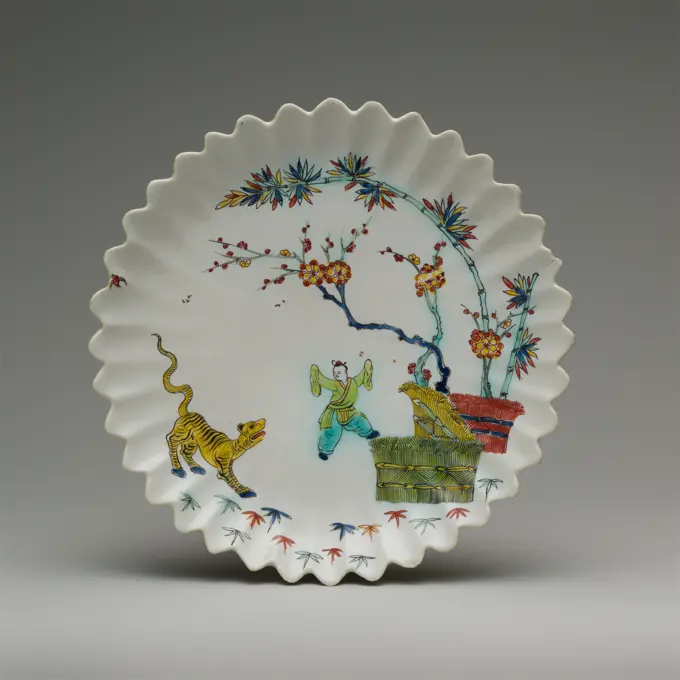
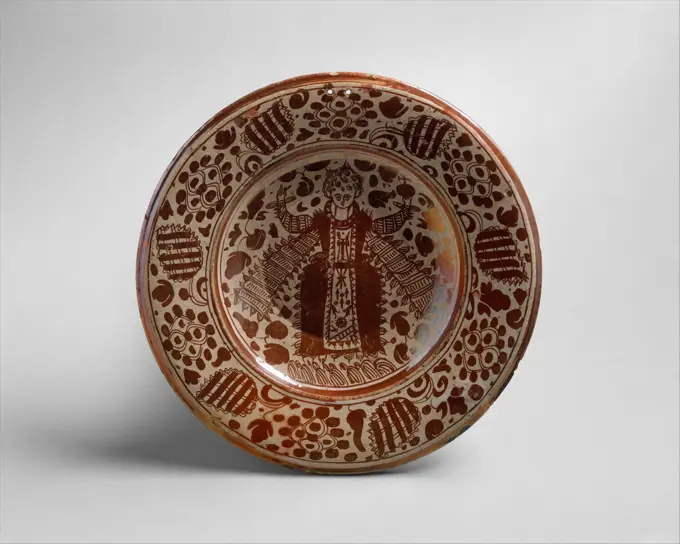
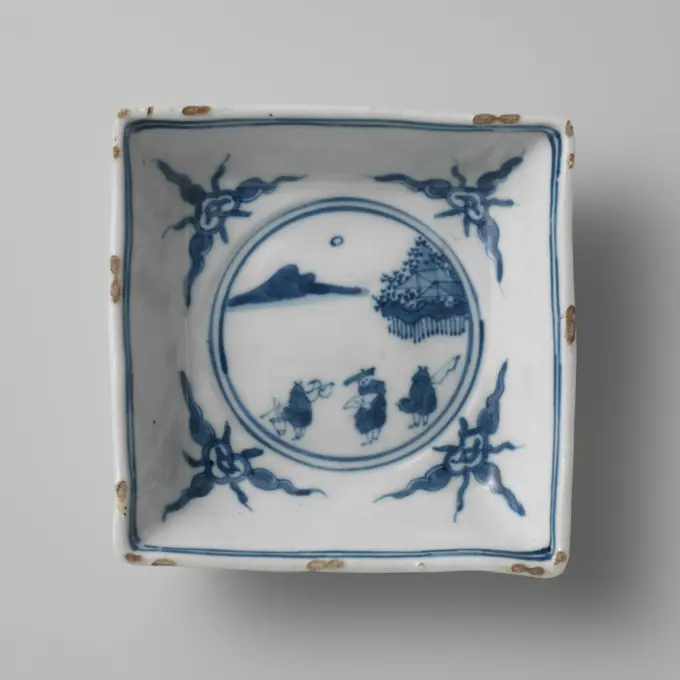
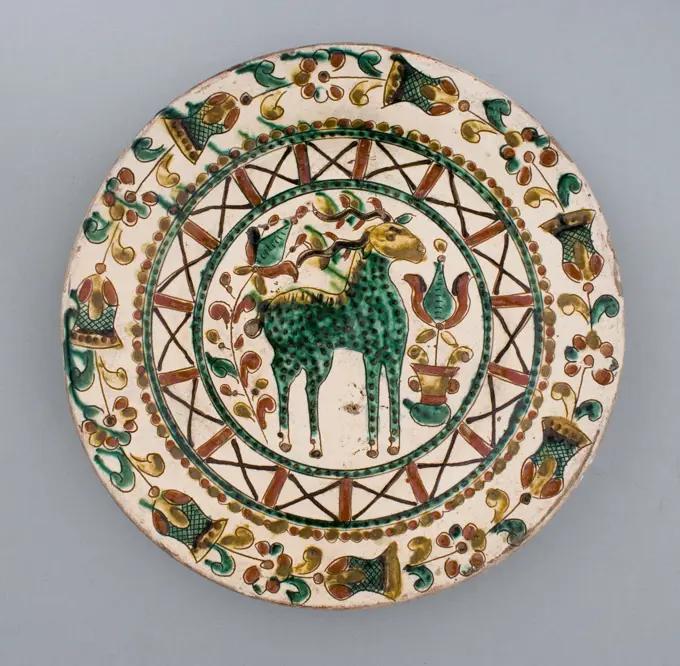
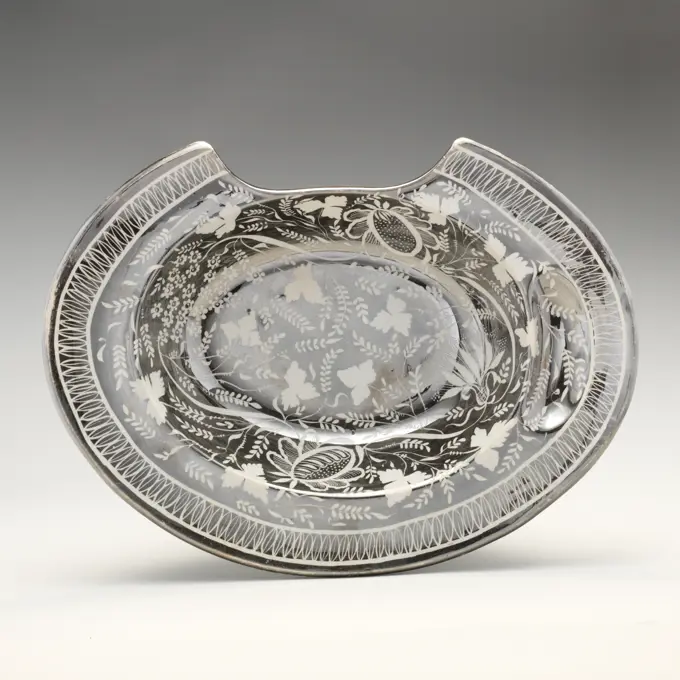
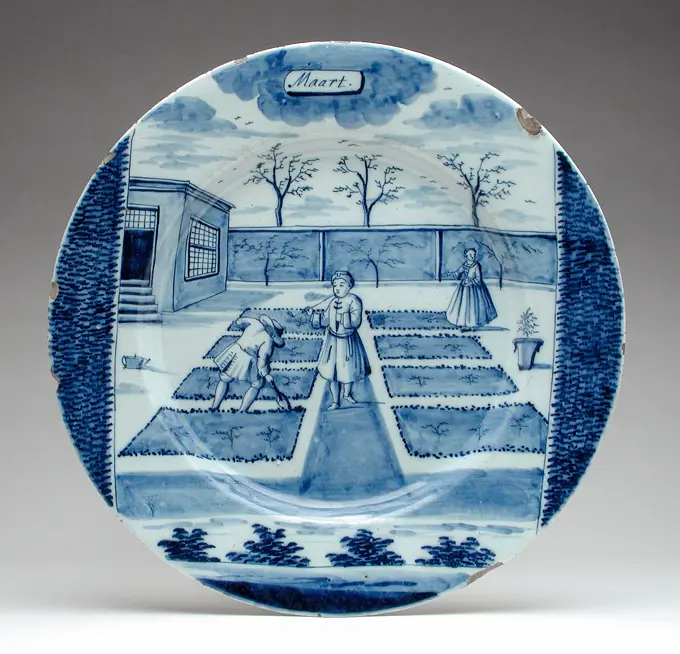
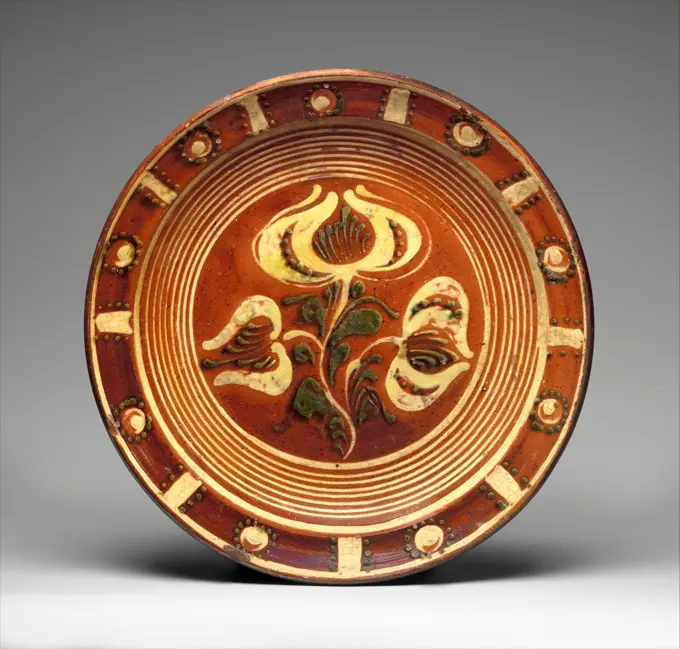
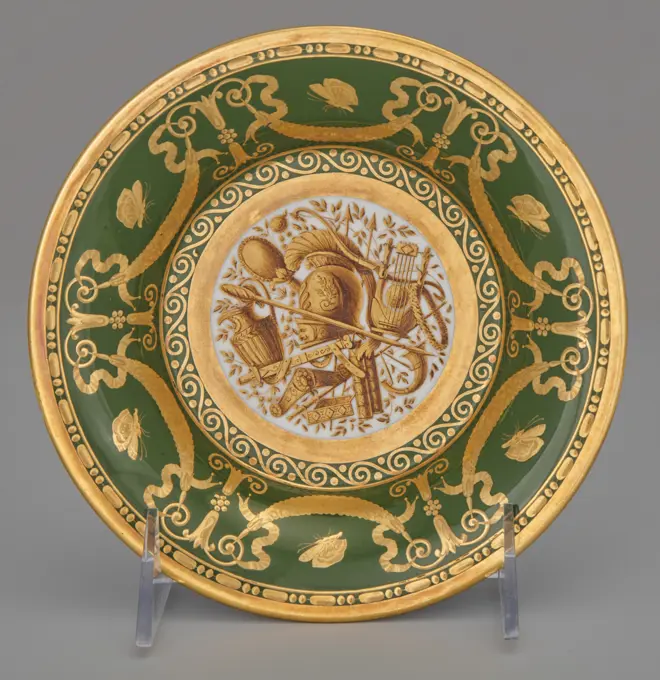
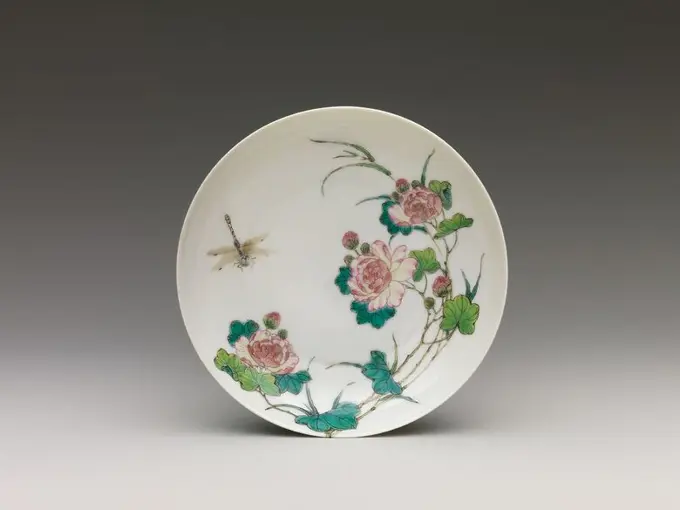
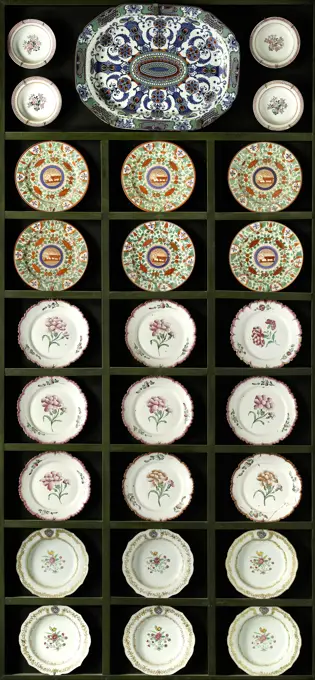
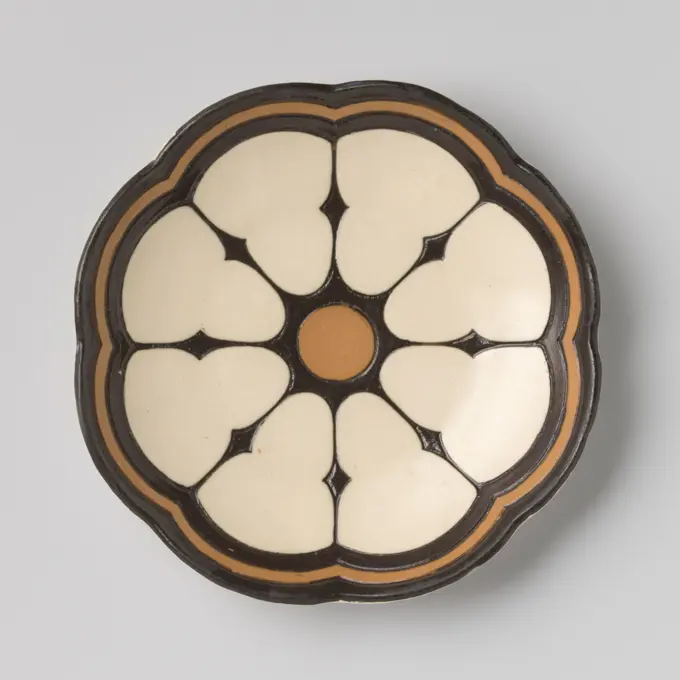
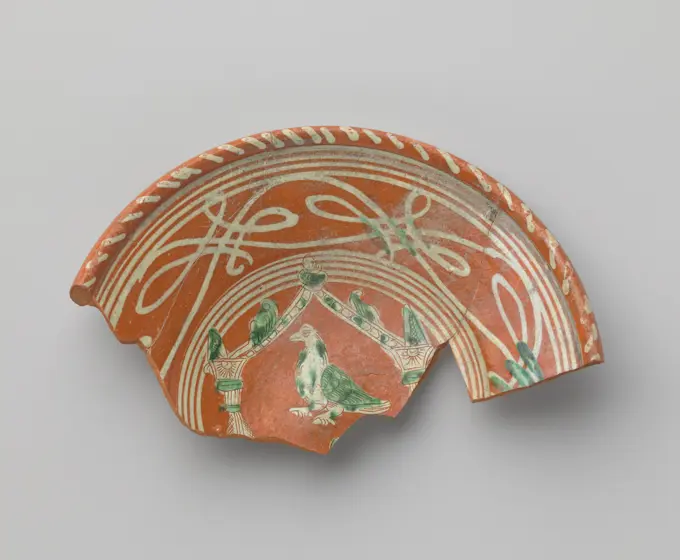
Fragment of a dish, anonymous, c. 1590 - c. 1620 Fragment of a dish of lead glaze pottery. On the flat, a gate is painted in white sludge within which a bird is painted. On the edge and along the flat, tires between which a braid is painted in white sludge. Wanfried earthenware. lead glaze Fragment of a dish of lead glaze pottery. On the flat, a gate is painted in white sludge within which a bird is painted. On the edge and along the flat, tires between which a braid is painted in white sludge. Wanfried earthenware. lead glazeCup And Saucer With Fish Between Water Plants. Cup and saucer of porcelain with ribbed wall and lobed edge, painted in underglaze blue and on the glaze blue, red, green, yellow, eggplant, black and gold. The outside of the cup with four fish between aquatic plants, the edge with a ruyi-motif belt; On the bottom a fish and the inside with four fish in iron red, the edge with a ruyi motif. The flat of the dish with a larger fish between aquatic plants, further the same decoration as on the head. Both marked on the bottom with 'yù', jade, in a double circle. Famille Verte.. Meissener Porzellan ManufakturMeissen, c. 1725-1730painted decoration: attributed to Abraham Seuter (1689-1747), Augsburg, c. 1725-1747hard-paste porcelainPlate with a Winged Putto on a Hobbyhorse. UnknownSmall plate. Ćmielów (fabryka fajansu i porcelany ; 1804-), factoryDish with "Magpie" 15th-16th century Vietnam. Dish with "Magpie" 37553Saucer with floral scrolls in a heavily outlined, shaped panel, anonymous, c. 1740 - c. 1760 Porcelain dish, painted on the glaze in blue, red, pink, green, yellow and black. On the flat a cartouche with five times curls in the shape of a Ruyi motif with a medallion with a flower with branches in the center, connected to it, connected Lotusranken; Outside the cartouche flower branches against a pink soil; The edge with servetwork interspersed with a flower. Famle Rose. China porcelain. glaze. painting / vitrification Porcelain dish, painted on the glaze in blue, red, pink, green, yellow and black. On the flat a cartouche with five times curls in the shape of a Ruyi motif with a medallion with a flower with branches in the center, connected to it, connected Lotusranken; Outside the cartouche flower branches against a pink soil; The edge with servetwork interspersed with a flower. Famle Rose. China porcelain. glaze. painting / vitrificationPlate, anonymous, c. 1600 - c. 1699 Sign of quadrous fritry, painted in undermglaze blue. On the flat a medallion with a river landscape with trees and boats. A decorative tire for the medallion. The edge is divided into alternately wide and narrow courses. In the wide courses one of the valuables (artemisia leaf) or a flower branch. The narrow compartments with bows. The decoration is an imitation of the Chinese squatter porcelain in blue and white. Marked on the back with 'manufactured by Kamâl al-Din Muhammad'. Kirman earthenware. glaze. cobalt (mineral) painting / vitrification Sign of quadrous fritry, painted in undermglaze blue. On the flat a medallion with a river landscape with trees and boats. A decorative tire for the medallion. The edge is divided into alternately wide and narrow courses. In the wide courses one of the valuables (artemisia leaf) or a flower branch. The narrow compartments with bows. The decoration is an imitation of the Chinese squatter porcelain in blue andMajolica dish, blue, orange on white, cherub with bow and arrow, rim in Wanli style, plate dish dishware holder soil find ceramic earthenware enamel, total, baked underside covered with bright lead glaze still black speckled by stay in the soil archeology serving serve adorn ChinaDish, painted multi-colored with a flying putto above a fence on the flat. Buttered edge decorated with aigrettes .. Dish of multi-colored painted majolica. A flying putto above fence is painted on the flat. The serrated edge is painted with aigrettes in blue and orange.Bowl with a hare in a Landscape. Low bowl of porcelain, painted in underglaze blue. On the front a landscape in a double circle with a hare in blooming plants. The inner edge with a band with a meander pattern. Three insects on the outside wall. Marked on the underside with the six character mark of Emperor Chenghua in a double circle. Bak sand at the foot ring. Blue White.Plate, 1500s. Italy, 16th century. Tin-glazed earthenware (maiolica); diameter: 24.8 x 3.5 cm (9 3/4 x 1 3/8 in.).Plate. China. Date: 1718-1745. Dimensions: H. 1.8 cm (7/8 in.); diam. 22.9 cm (9 in.). Hard-paste porcelain with polychrome enamels and gilding. Origin: Jingdezhen. Museum: The Chicago Art Institute, Chicago, USA.Plate of multicolored painted faience with flower decoration, anonymous, 1750 - 1790 plate (dishes) Plate of multi -colored painted faience, decorated with flowers in blue, orange, green, red and purple on white soil. Delft .Come from v.o.c.-ship the 'white lion'. Come from v.o.c.-ship the 'White Lion', complete. Folding bowl with a scalloped lip, decorated in underglaze blue. In the flat a grasshopper on a rock between flowering plants in a water landscape. Four lobed fields on the wall with a scroll or a flower branch; On the edge twice a taotie mask and two impeller-shaped fields with geometric motifs. Between these large elements narrow fields with dependent bows.Dish with Incised Scroll Design, 900s-1100s. Korea, Goryeo period (918-1392). Pottery; overall: 1.2 x 9.2 cm (1/2 x 3 5/8 in.); diameter of base: 7 cm (2 3/4 in.).Saucer. Culture: Japan. Dimensions: Diam. 4 5/8 in. (11.7 cm). Date: 18th century. Museum: Metropolitan Museum of Art, New York, USA.Dessert plate ca. 1770 Fürstenberg Porcelain Manufactory The gift of the Hans Syz Collection in 1995 endowed the Museum with nearly three hundred examples of European and Asian ceramics meticulously acquired by Swiss-born collector Dr. Syz (1894-1991) to chart the migration of models and patterns from East to West. Documenting a continuous process of influence and adaptation, these pieces provide a discriminating review of the nuances of stylistic change resulting from three centuries of trade.. Dessert plate 208424PLATO DE LA BRIONIA CON ESCUDO ITALIANO - SIGLO XV. Location: INSTITUTO VALENCIA DE DON JUAN-COLECCION. MADRID. SPAIN.Lustered Armorial Plate; Workshop of Giorgio di Pietro Andreoli, known as Maestro Giorgio (Italian, about 1465 - about 1555); Gubbio, Umbria, Italy; 1524; Tin-glazed earthenware with silver luster; 7.3 x 39.8 cm (2 7,8 x 15 11,16 in.)Plate. Dutch, Delft. Date: 1665-1675. Dimensions: Diam. 35 cm (13 3/4 in.). Tin-glazed earthenware (Delftware). Origin: Delft. Museum: The Chicago Art Institute, Chicago, USA.Plate. Staffordshire, England. Date: 1780-1789. Dimensions: H. 2.5 cm (1 in.); diam. 24.1 cm (9 1/2 in.). Earthenware (creamware). Origin: Staffordshire. Museum: The Chicago Art Institute, Chicago, USA.Plate, multicolored painted with a weapon on the flat with bird or duck as a helmet sign. Edge in eight compartments in which a stylized flower., Anonymous, c. 1625 - c. 1640 Round plate of multi -colored painted majolica. A weapon is painted on the flat with a bird (duck) With stretched wings. The weapon is shifted, on the left the solid colored and on the right are a straight, a curved and a angled line painted. The edge is divided into eight compartments in which a stylized flower. The outer edge is serrated. Holland earthenware. tin glaze. lead glaze majolica Round plate of multi -colored painted majolica. A weapon is painted on the flat with a bird (duck) With stretched wings. The weapon is shifted, on the left the solid colored and on the right are a straight, a curved and a angled line painted. The edge is divided into eight compartments in which a stylized flower. The outer edge is serrated. Holland earthenware. tin glaze. lead glaze majolicaBowl with bird 9th century China Made in large quantities in Hunan Province in southwest China, small bowls such as this were widely traded, particularly to centers in West Asia. More than 50,000 similar pieces were recently excavated from a shipwreck near Belitung in Indonesia, attesting to the scale of early trade in Chinese ceramics.. Bowl with bird. China. 9th century. Stoneware with painted decoration and yellow glaze (Changsha ware). Tang dynasty (618-907). CeramicsBuff earthenware with black decoration and transparent turquoise overglaze, Syria, Ragga, 13th Century. The famous Art Institute of Chicago.Plate from a Calendar Set. 'de Porceleijne Bijl' Shop (Holland, 1679-1803)Hugo or Justus Brouwer (Holland, 1739-1775). Holland, 1739-1775. Furnishings; Serviceware. Earthenware with tin glaze and enamel (Delft)Plaque (Netherlands); tin-glazed earthenware; 24.5 x 29 x 1.9 cm (9 5/8 x 11 7/16 x 3/4 in.); Bequest of Walter Phelps Warren; 1986-61-32Plate Made 1723-1740 Jingdezhen. Hard-paste porcelain with polychrome enamels and gilding . Cornelis PronckPlate with decor "Montagne", Petrus Regout, c. 1850 - c. 1875 Plate of earthenware, decorated with the "Montagne" decor. Rich rococorand with servetwork and flowers. Maastricht earthenware printing Plate of earthenware, decorated with the "Montagne" decor. Rich rococorand with servetwork and flowers. Maastricht earthenware printingSaucer-dish with pearl chasing dragons, anonymous, c. 1875 - c. 1908 Porcelain saucer with round wall, painted in underly glaze blue. A pearl pursuit on the flat, five -clawy dragon; Two five -clawy dragons with pearls on the outside wall. Marked on the underside with the six-character brand of Keizer Guangxu. Blue White. China porcelain. glaze. cobalt (mineral) painting / vitrification Porcelain saucer with round wall, painted in underly glaze blue. A pearl pursuit on the flat, five -clawy dragon; Two five -clawy dragons with pearls on the outside wall. Marked on the underside with the six-character brand of Keizer Guangxu. Blue White. China porcelain. glaze. cobalt (mineral) painting / vitrificationSaucer-Dish With Bamboo, Prunus, Tiger and a Chinese Boy. Scale of porcelain with a ribbed wall and lobed edge, painted on the glaze in blue, red, green, yellow, black and gold. On the front a dancing Chinese boy between three tigers on one side and bamboo and prunus branch behind tied up on the other side. Famille Verte in the Japanese Kakiemon style.Plate ca. 1844-ca. 1848 William Ridgway, Son & Co.. Plate 6177Anonymous. Plate with the Bonnet de la Liberté. Earthenware. Paris, Carnavalet museum. 71683-22 Phrygian cap, decoration, faience, freedom, revolutionary period, French revolution, plateA plate;  19th century (1801-00-00-1900-00-00);Plate ca. 1730 Ansbach Pottery and Porcelain Manufactory The design, unique to Ansbach, is known as the "carp pond" pattern.. Plate. Joachim Leonhard Wolff (1700-1800). German, Ansbach. ca. 1730. Faience (tin-glazed earthenware). Ceramics-PotterySet of three 'Bengal Tiger' pattern plates, c. 1810, 1 x 9 5/8 in. (2.54 x 24.45 cm), Porcelain with enamel and gilded decoration, China, 19th centuryDish. Culture: China. Dimensions: Diam. 15 3/4 in. (40 cm). Date: late 17th-early 18th century. Museum: Metropolitan Museum of Art, New York, USA.Saucer-dish with a couple in a cart with two servants, anonymous, c. 1700 - c. 1724 Porcelain saucer, with modeled tulip motif in the wall and scalloped edge, painted in underly glaze blue and on the glaze in red and gold. On the flat a medallion with a landscape in which a man and woman pulled into a car by two horses. On the back of the car a servant who holds a parasol over their heads; A second servant is sitting on a horse. On the wall tulip -shaped compartments with flower areas, between the courses flower vessels; A decorative band on the edge. Some chips in the edge. Milk and blood. China porcelain. glaze. cobalt (mineral). gold (metal) painting / gilding / vitrification Porcelain saucer, with modeled tulip motif in the wall and scalloped edge, painted in underly glaze blue and on the glaze in red and gold. On the flat a medallion with a landscape in which a man and woman pulled into a car by two horses. On the back of the car a servant who holds a parasol over their heads; A sPlate decorated with stylized flower and leaf work, N.V. Haagsche Plateel Factory Rozenburg, 1899 Porcelain plate. The edge is slightly deepened at regular distances. Painted in green, yellow, blue and wine red with stylized flowers and leaves. The Hague porcelain Porcelain plate. The edge is slightly deepened at regular distances. Painted in green, yellow, blue and wine red with stylized flowers and leaves. The Hague porcelainBowl. Western Iran, 550-330 B.C.. Furnishings; Serviceware. BronzeDessert plate with a pair of Hutsuls and initials: bk’. Wąsowicz, Wacław (1891-1942), painterBowl, mid-1200s. Iran, Kashan, Seljuq period of Iran (1037-1194). Fritware with overglaze-painted design (minai ware);. Round folded blue painted faience. The flat has a convex circle, which has a seated figure painted. The edge is ribbed and scalloped and painted with four seated figures.Sign from V.O.C.-ship De 'Witte Leeuw', Anonymous, Before 1613 plate (dishes) Sign from V.O.C. ship De 'Witte Leeuw', 95  present. Jingdezhen bone china (material)   Sint-HelenaPlate ca. 1740-45 Villeroy This dish is one of the relatively few surviving wares produced by the small ceramic factory established by a potter named François Barbin (French, ca. 1689-1765) in the hamlet of Villeroy, approximately twenty-five miles south of Paris, at some point in the years between 1734 and 1737. There is uncertainty as to the precise founding date of the factory, but contemporary documents indicate that in January 1737, Barbin was listed in the registers of the nearby parish of Mennecy as a maker of faience and porcelain.”[1 As the son of a furniture maker in Paris, it is not clear how Barbin learned to produce either faience or porcelain, but as early as 1733 he describes his profession in precisely the same terms.[2 Barbin’s new factory was sited near the Chteau de Villeroy, the seat of François-Louis-Anne de Neufville (1695-1766), who became the fourth duc de Villeroy in 1734, and whose protection Barbin was eventually able to secure. Though Barbin’s factory prDish with the Christ child early 17th century Spanish, Catalonia Tin-glazed earthenware, of which lusterware is one type, was developed in the Middle East in the ninth and tenth centuries to imitate the porcelains produced in China. The opaque white glaze concealed the clay body, which could range from pale buff to brick red, allowing for brilliant effects created by painting the white surface with metal oxides that fired to a range of colors. This technique, as well as the use of metallic lusteran iridescent, coppery painted glazespread throughout the Muslim world, arriving among the potters of Valencia in the thirteenth century. The so-called Hispano-Moresque lusterware, with its fusion of Islamic and Gothic styles and motifs, often in shaped imitating those of metal vessels, was treasured by the elite in Spain during the fifteenth century and exported to the courts of Europe. The Valencian industry declined in the late sixteenth century, as colorful Italian Renaissance maiolica gaPlate. unknown, craftsmanArmorial Plate, c. 1750, 1 1/2 x 13 3/4 in. (3.81 x 34.93 cm), Porcelain with underglaze blue decoration, China, 18th century, White bodied porcelain with underglaze blue decoration was the earliest type imported to the West, setting off the original craze for collecting porcelain in Europe. It has never truly gone out of favor, even today. This 18th century plate bears the combined coats of arms of the Peers of Baraud and Maraschal of Forez families of France.Saucer. Nieborów (manufaktura majoliki ; 1881-1899), factorySaucer with Floral Design and Basketry Exterior ca. 1840-60s Zshuntei Sanpo Japanese. Saucer with Floral Design and Basketry Exterior. Zshuntei Sanpo (brand name used 1841-78). Japan. ca. 1840-60s. Porcelain painted with polychrome enamels over a transparent glaze; basketry exterior (Arita ware, product of Hisatomi Yojibei). Edo period (1615-1868). CeramicsFragment majolica bowl, green and blue on white, decor with apples, bowl crockery holder soil find ceramic earthenware glaze, hand turned fried glazed decorated fried Deep bowl on stand. Majolica. Yellow shard glazed underside of lead glaze sparsely and top of tin glaze. Polychrome decor with apples and leaves in blue and green Cooked on prunes. Misbaksel; the glaze is flaked remnants of prunes stuck in the mirror strange earthenware on the stand ring and sidewall archeology City Triangle Rotterdam Town Hall indigenous earthenware serving serve serving craft stewardship Soil discovery Rotterdam Council House.Plate, painted with Moses that hits water from the rock, Anonymous, 1660 Fowence board, painted in blue with a representation of Moses that hits water from the rock. Dated: 1660. Delft . Fowence board, painted in blue with a representation of Moses that hits water from the rock. Dated: 1660. Delft .Saucer with a courting couple in a landscape, anonymous, c. 1765 - c. 1770 Porcelain saucer, painted on the glaze in pink (and camaic) and gold. On the front of the dish a representation of a affectionate couple in a landscape with trees and shrubs, above them a putto, hymen flies, with its torch and flower wreath. On the bottom two old labels with 'F. Bodenham/ Elmhurst, Hereford/ 69 'and '61 Saucer Dish/ Decorated in Monochrome with European Design - Hymen Hovering Above A Pair of Lovers'. A chip in the edge; Two cracks in the wall. European performance in email colors. China porcelain. glaze. gold (metal) painting / gilding / vitrification Porcelain saucer, painted on the glaze in pink (and camaic) and gold. On the front of the dish a representation of a affectionate couple in a landscape with trees and shrubs, above them a putto, hymen flies, with its torch and flower wreath. On the bottom two old labels with 'F. Bodenham/ Elmhurst, Hereford/ 69 'and '61 Saucer Dish/ Decorated in MSquare bowl with three figures in a landscape in a medallion. Square bowl of porcelain, painted in underglaze blue. On the bottom a double medallion containing a landscape with mountains, houses and three people in it: one water carrier, one with a range and one with a kind of fishing rod. A cloud with Ruyi motif in every corner. Glaze on the edge and the corners. Arita, blue-white.Saucer-Dish With Two Birds and a Bouquet of Flowers Above a House near Flowering Plants. Scale of porcelain with lobed edge, painted in underglaze blue and on the glaze red, green and gold. On the front in underglaze blue a cottage with a pyramid form on either side in flowering plants, above the house two flying birds and a bouquet. Added in Europe in email flower branches and gold outline. Marked on the bottom with a Ruyi motif in a double circle. Decorated in Europe.Sign from V.O.C.-ship De 'Witte Leeuw', Anonymous, Before 1613 plate (dishes) Sign from V.O.C. ship De 'Witte Leeuw', 95 present. Plate with a slightly lobed edge, decorated in under -glaze blue. In the flat a grasshopper on a rock in a water landscape, seen from above. On the wall and edge narrow and wide fields with flowering plants and dot work. Jingdezhen porcelain. bone china (material)   Sint-HelenaPlate Baranowski, Józef (1863 or 1868 1942)Paperweight 1840-1865 France. Technological improvements to optical scientific instruments in the mid-nineteenth century spurred a veritable obsession across Europe with identifying and classifying the natural world. Amateur botanists were eager to collect and preserve floral specimens, which they intently researched and catalogued. In response to this broad appeal, French glassmakers made paperweights that portrayed the very botanical subjects that were so enthusiastically sought. Many weights represented specimens with horticultural correctness, but others were entirely fanciful creations. Paperweights like this example speak to the periodís fascination with taxonomic systems.From the late 1840s to early 1860s, French manufacturers of fine glass and crystalósuch as Baccarat (Alsace), Clichy (Paris), and Saint-Louis (Lorraine)ócatered to the vast public enthusiasm for beautiful yet functional desk accessories. Paperweights, which were designed to secure loose papers against drafts, weDish with Five European Figures and Stylized Floral Scrolls and Five Bats on Reverse 1736-1795 China. Porcelain painted in overglaze enamels .Montagne. Pottery plate, decorated with the Montagne decor in black printed decor. Rand in rich rococo style with napkin and flowers.Barber's basin ca. 1815 British, Staffordshire. Barber's basin. British, Staffordshire. ca. 1815. Lustered earthenware. Ceramics-PotteryDishPlate from a Calendar Set. 'de Porceleijne Bijl' Shop (Holland, 1679-1803)Hugo or Justus Brouwer (Holland, 1739-1775). Holland, 1739-1775. Furnishings; Serviceware. Earthenware with tin glaze and enamel (Delft)Tile with a prunus on a rock and two birds, anonymous, c. 1700 - c. 1724 Porcelain tile, painted in under -glaze blue. In a medallion a flowering prunus on a rock with plants and two flying birds; One of the valuables (window) in each corner. A chip in the corner. Blue White. China porcelain. glaze. cobalt (mineral) painting / vitrification Porcelain tile, painted in under -glaze blue. In a medallion a flowering prunus on a rock with plants and two flying birds; One of the valuables (window) in each corner. A chip in the corner. Blue White. China porcelain. glaze. cobalt (mineral) painting / vitrificationBowl MieleówPiePlateDish. Culture: Spanish. Dimensions: Overall: 17 7/8 in. (45.4 cm). Date: ca. 1450. Museum: Metropolitan Museum of Art, New York, USA.Redware Slip-decorated dish ca. 1790-1810 Attributed to Dennis Family Potters. Redware Slip-decorated dish 21284Sèvres Porcelain Manufactory, Saucer, 1811, Hard-paste porcelain.Plate ca. 1881-91 Coalport. Plate. British, Coalport. ca. 1881-91. Porcelain. Ceramics-PorcelainTwo Dinner Plates, Two Bread and Butter Plates, One SaucerBowlPaperweight 1840-1865 France. Glass . Compagnie de Saint LouisBasin 1825-45 Chinese. Basin. Chinese. 1825-45. Porcelain. Made in ChinaDish with Peonies and Dragonfly. Culture: China. Dimensions: H. 1 in. (2.5 cm); Diam. 5 7/16 in. (13.8 cm). Date: 18th century.The creation in the late seventeenth century of a range of opaque overglaze enamel colors was one of the most important technological developments in the Chinese porcelain industry. The delicate pink enamel of the blossoms on this dish first appeared in the early eighteenth century during the reign of the Yongzheng Emperor (r. 1723-35) and continued to be used during that of the Qianlong Emperor. Museum: Metropolitan Museum of Art, New York, USA.Polychrome plate, 17th century.Paperweight 1840-1865 Czech Republic. Glass .Bowl. unknown, craftsmanDessert plate - View of Quebec from Point Levy James & Ralph Clews James & Ralph ClewsVictor Hugo (1802-1885). Chinese decor from Juliette Drouet's house in Guernsey, West Wall. Green wooden record containing plates and dishes, composed of twenty-seven compartments (right side of the west wall). Painted wood. 1857-1864. Paris, house of Victor Hugo. 78171-18 Asian art, decorative arts, painted wood, green wood, Chinese cabinet, locker, chinoiserie, compartment, decor, faience, storage, Chinese living room, dishes, 19th XIX 19th 19th 19th 19th century, plate, dishVictor Hugo (1802-1885). Chinese decor from Juliette Drouet's house in Guernsey, West Wall. Green wooden record containing plates and dishes, composed of twenty-seven compartments (right side of the west wall). Painted wood. 1857-1864. Paris, house of Victor Hugo. 78171-18 Asian art, decorative arts, painted wood, green wood, Chinese cabinet, locker, chinoiserie, compartment, decor, faience, storage, Chinese living room, dishes, 19th XIX 19th 19th 19th 19th century, plate, dishVictor Hugo (1802-1885). Chinese decor from Juliette Drouet's house in Guernsey, West Wall. Green wooden record containing plates and dishes, composed of twenty-seven compartments (right side of the west wall). Painted wood. 1857-1864. Paris, house of Victor Hugo. 78171-18 Asian art, decorative arts, painted wood, green wood, Chinese cabinet, locker, chinoiserie, compartment, decor, faience, storage, Chinese living room, dishes, 19th XIX 19th 19th 19th 19th century, plate, dish. Scale with round wall of porcelain, painted in underglaze blue and red. The front is covered with bleu poudré (powder blue) with a flower basket in this; Three floral drinks on the outside. Marked on the bottom with a shell in a double circle; Also a commission August the strong / Johanneum number: N = 484. A chip in the edge. Middle blue with copper red.Armorial dish with bianco sopra bianco ornament ca. 1545 Italian, Duchy of Urbino (probably Urbino). Armorial dish with bianco sopra bianco ornament. Italian, Duchy of Urbino (probably Urbino). ca. 1545. Maiolica (tin-glazed earthenware). Ceramics-PotteryEtappen and Traffic Service 1939-1940, De Sphinx, c. 1940 - c. 1982  Memorial board with oblique rising edge on which all kinds of symbols in dark blue. In the middle of the plane: the Netherlands Lion on four-pointed star. Part of the brand is behind sticker with: Bord No. 568 and the explanation of the distinction signs on the board. Maastricht earthenware. glaze vitrification  Fire. NetherlandsCache-Pot; Nieborów (Manufaktura Majoliki; 1881-1899); 1881-1886 (1881-00-00-1881-00-00);Saucer-dish with Four figures in a Rocky landscape. Scale of porcelain with round wall, painted in underglaze blue and on the glaze red, green, yellow, eggplant and black. On the front a continuous representation of four people, three in a group and one in the foreground, in a roty landscape with trees and clouds. Marked on the back with a shell in a double circle. With later iron suspension system. Six chips in the edge. Famille Verte.Plate, painted with the Flügelmuster decor. Painted porcelain plate. The plate is painted in green and blue with the flügelmuster. The sign belongs to a tableware (BK-1976-65-1 to BK-1976-65-34) and has been marked.Oval brush ridge from Faïence, Anonymous, c. 1400 - c. 1950 Oval brush ridge made of blue painted faïence, painted with leaves and flower vines and a floral pattern along the edge. The brush ridge has been on loan to J.H. since 1958. Loudon (Aerdenhout) and Iin March 1996 returned. Delft earthenware. tin glaze. Oval brush ridge made of blue painted faïence, painted with leaves and flower vines and a floral pattern along the edge. The brush ridge has been on loan to J.H. since 1958. Loudon (Aerdenhout) and Iin March 1996 returned. Delft earthenware. tin glaze.Plate, painted multily with a winter landscape. Round plate from painted porcelain. A four-pass is painted on the flat within which a winter landscape. The four-pass is surrounded by band and leafwork with a console on either side on which a höroldt chinoiserie consisting of figures. The edge is gold-plated and painted with a lace-like strip. Indian Blumen has been painted on the back. The plate has been marked.. Round bowl at low foot of pottery with white tining acid covered. Painted in blue with two Chinese and a deer in a garden with gates.Saucer-dish with pearl chasing dragons against a green ground, anonymous, c. 1875 - c. 1899 Porcelain saucer with round wall, painted in underly glaze blue and on biscuit green and eggplant. The dish is covered with a green enamel with pearl pearls after five -clawy dragons and flames. Marked on the underside with the six-character brand of Kangxi in a double circle. Email sur Biscuit. China porcelain. glaze. cobalt (mineral) painting / vitrification Porcelain saucer with round wall, painted in underly glaze blue and on biscuit green and eggplant. The dish is covered with a green enamel with pearl pearls after five -clawy dragons and flames. Marked on the underside with the six-character brand of Kangxi in a double circle. Email sur Biscuit. China porcelain. glaze. cobalt (mineral) painting / vitrificationDish with star-shaped edge decoration with a flower in every point. Dish of porcelain, decorated with a starry edge decoration with a flower in every point. Belongs to head with music and words from the beginning of the song: Viens Amore, your t'Implore.Plate from the Duke of Clarence Service 1787-1797 Worcester. Soft-paste porcelain with blue enamel, monochrome gray, and gilding . Worcester Royal Porcelain Company (Manufacturer)Dish. Culture: China. Dimensions: Diam. 9 in. (22.9 cm). Date: late 17th-early 18th century. Museum: Metropolitan Museum of Art, New York, USA.Deep Dish. Culture: Spanish. Dimensions: Overall: 18 5/8 x 5 1/4 in. (47.2 x 13.4 cm). Date: 1430-1440.Deep basins of this type were common in affluent houses of the late fifteenth century and probably can be identified with the term bacin which appears in a number of documents. One household is recorded owning 130 bowls and basins of various sorts, while another, in Barcelona, is described as having six lusterware bowls hanging on the wall. The depth of this basin and the wide brim designed for easy carrying would indicate that it was filled with water and was used for washing the hands and face. This may well be the type described in the inventories of King René, duke of Anjou, for the years 1471-1472, as "a large plate of Valencia, tin-enameled with golden foliage," which was kept in his private quarters. The crowns around the brim of the basin may reflect the owner's rank, while the I and M in the center are probably the initials of Jesus and Mary. The subtlety of the design is revTeacup and saucer. unknown, painter, Kaiserliche Porzellanmanufaktur in Wien (1744-1864), factoryPlate with a figure and lion in landscape, anonymous, c. 1640 - c. 1660 Round plate of blue painted faience. A figure and a lion (Holland) are painted on the flat. The board is a bottom find from Delft. Delft earthenware. tin glaze.   Delft Round plate of blue painted faience. A figure and a lion (Holland) are painted on the flat. The board is a bottom find from Delft. Delft earthenware. tin glaze.   DelftSubgeometric Plate. Attributed to the Heron Class (Etruscan, active 680 - 660 B.C.)Dish with plum blossoms late 17tth century China. Dish with plum blossoms. China. late 17tth century. Porcelain painted in underglaze cobalt blue (Jingdezhen ware). Qing dynasty (1644-1911), Kangxi mark and period (1662-1722). CeramicsDish decorated with decor in black and brown, Villeroy & Boch Ceramic Werke K.G., 1906 Dish of Chromolith-SteenGoed, decorated in black and brown with a decor that looks like a wheel with spokes (or a flower chalice in relief). Metling mastery stoneware Dish of Chromolith-SteenGoed, decorated in black and brown with a decor that looks like a wheel with spokes (or a flower chalice in relief). Metling mastery stoneware