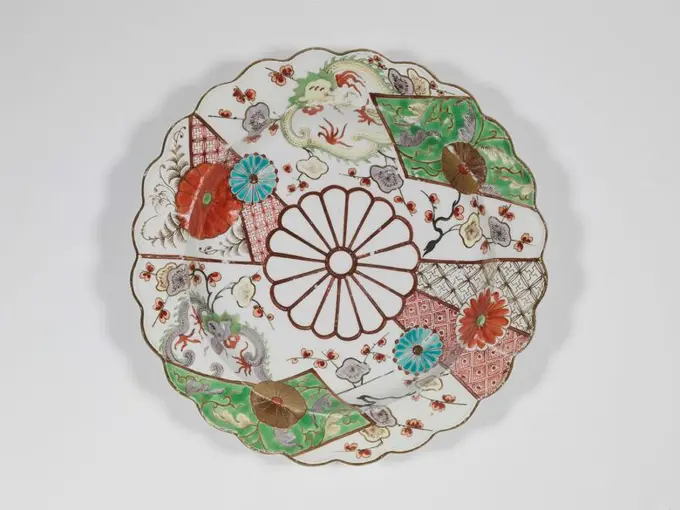
Decorative Ceramic Plates

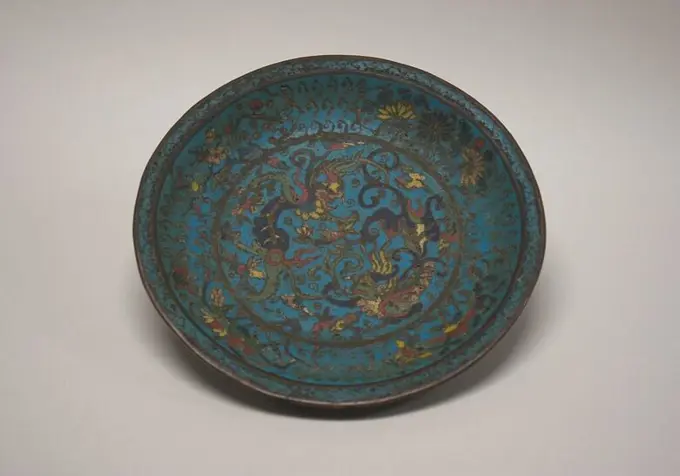
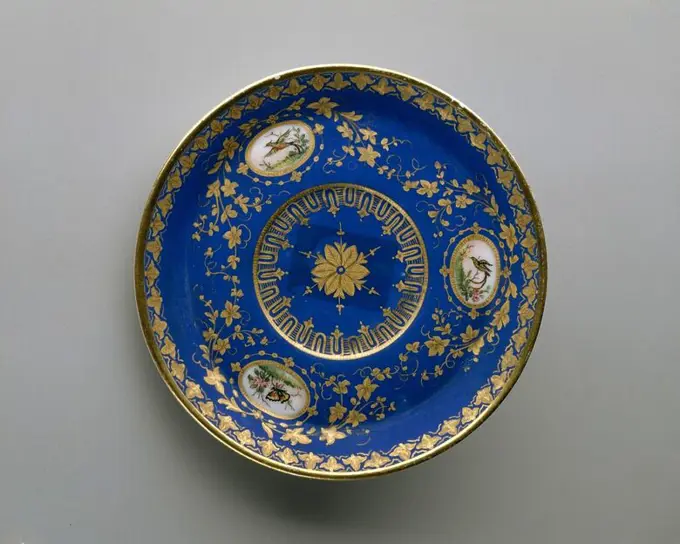
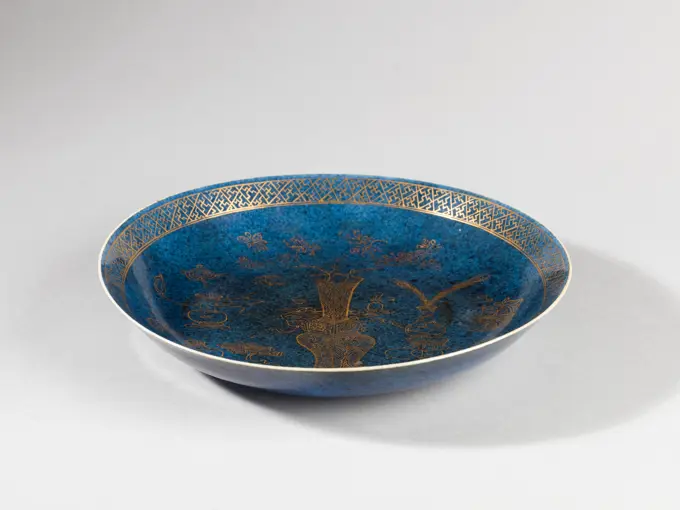
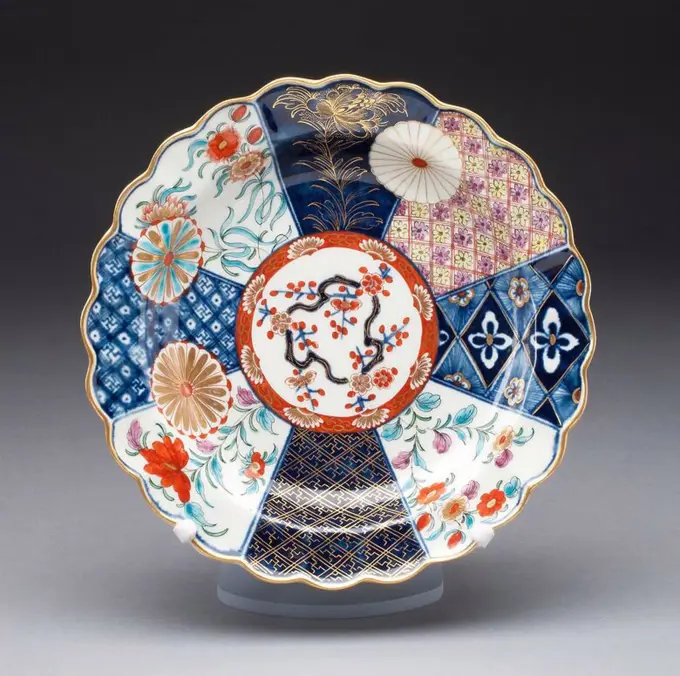
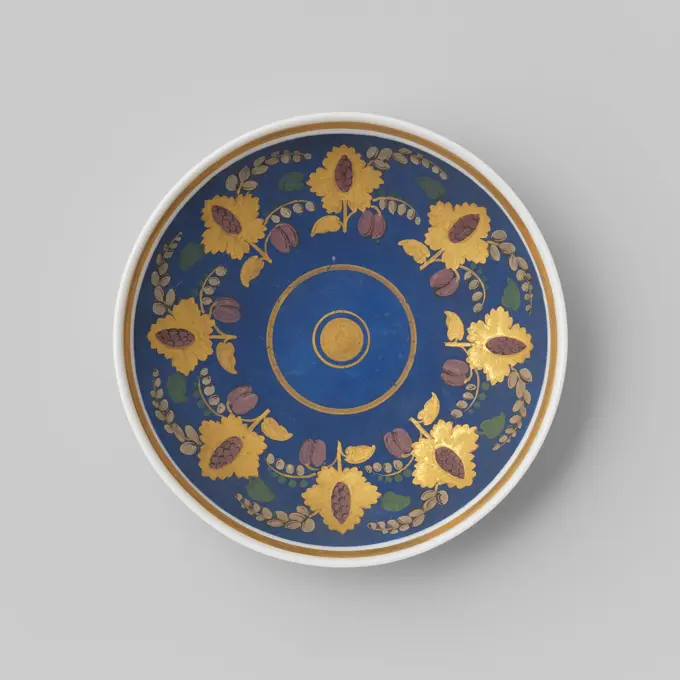
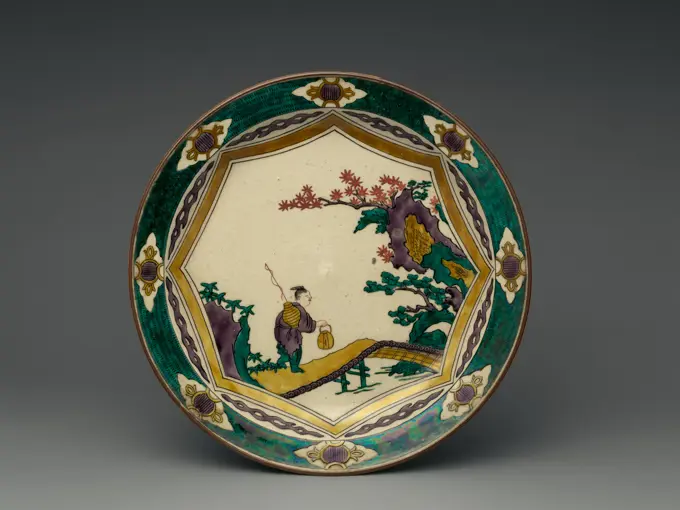
A selection of intricately designed decorative plates, featuring floral and geometric patterns, predominantly in blue and white hues.
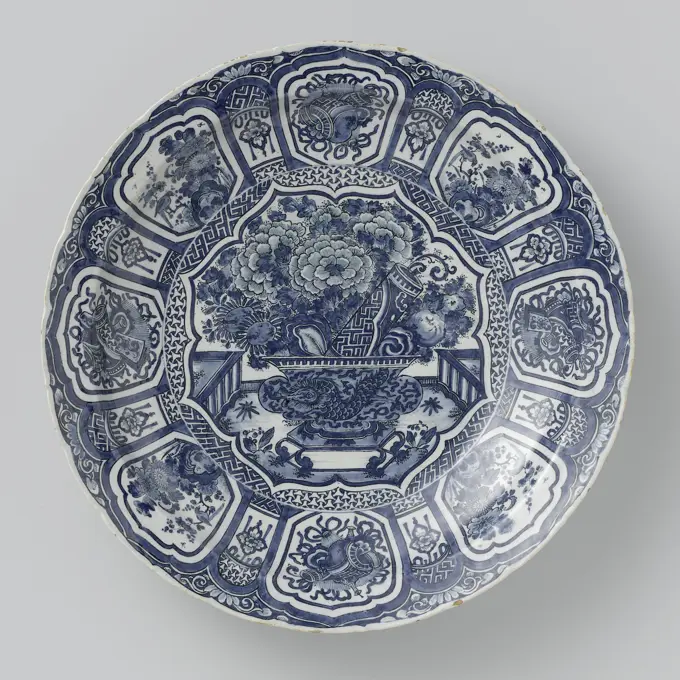
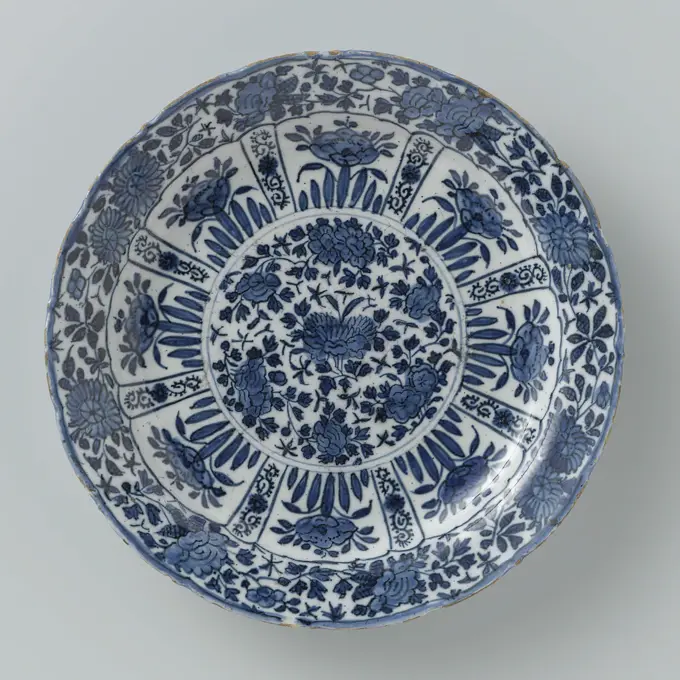
Charger, anonymous, 1718 Dishes of earthenware with blue painting on tinglaze in Chinese style. On the flat a vase largely filled with flowers. The edge is divided into eight large areas, four of which are decorated with Chinese emblems and four with flower branches and a bird. Delft . Dishes of earthenware with blue painting on tinglaze in Chinese style. On the flat a vase largely filled with flowers. The edge is divided into eight large areas, four of which are decorated with Chinese emblems and four with flower branches and a bird. Delft .
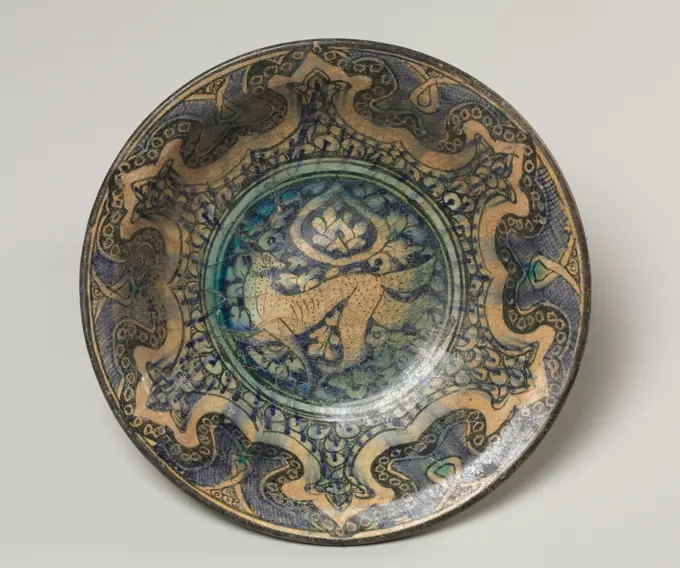
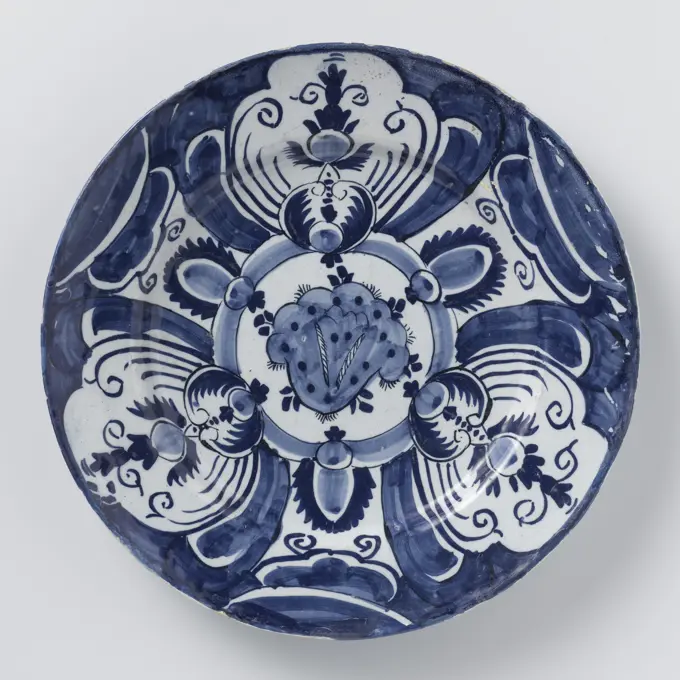
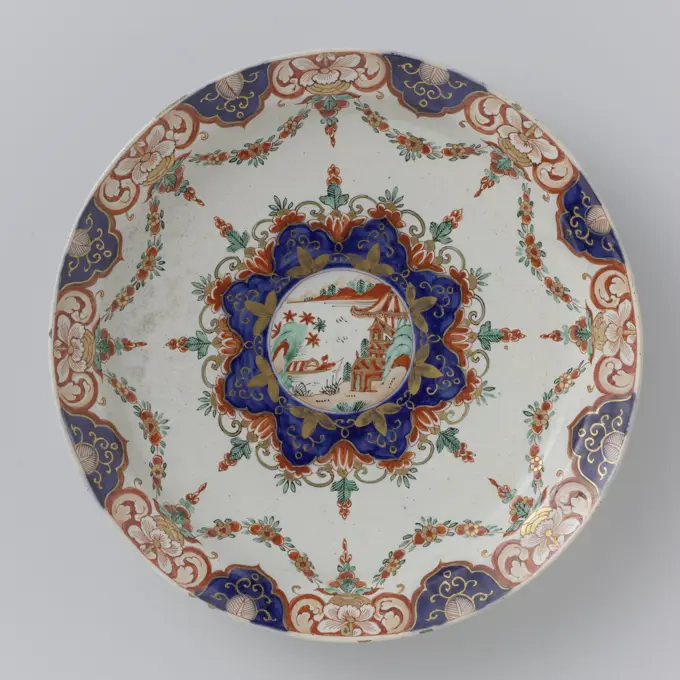
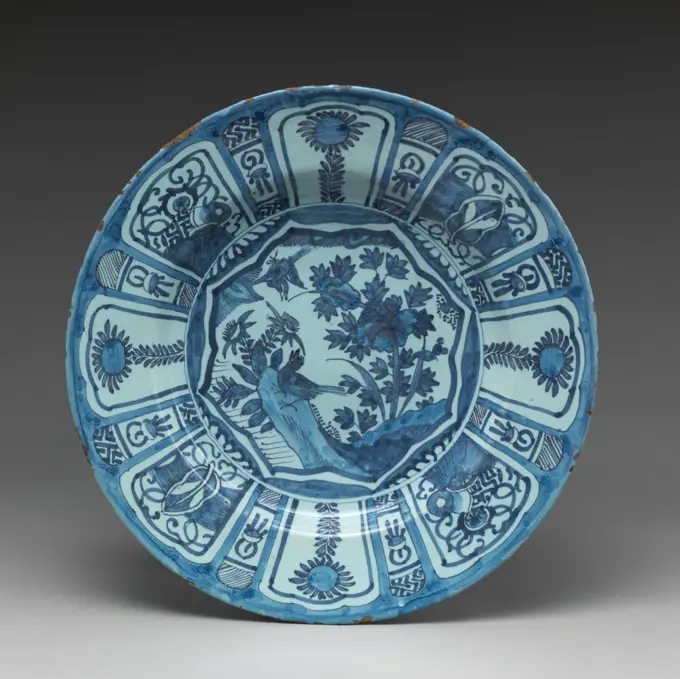
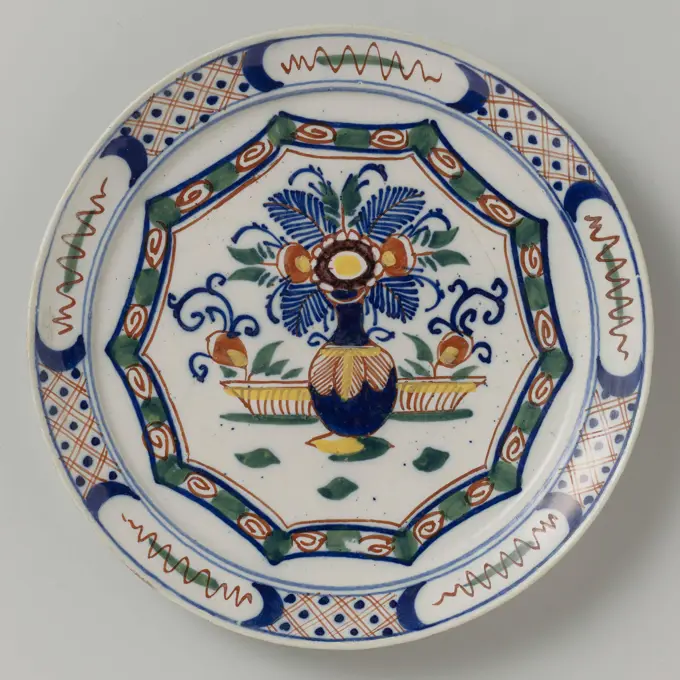
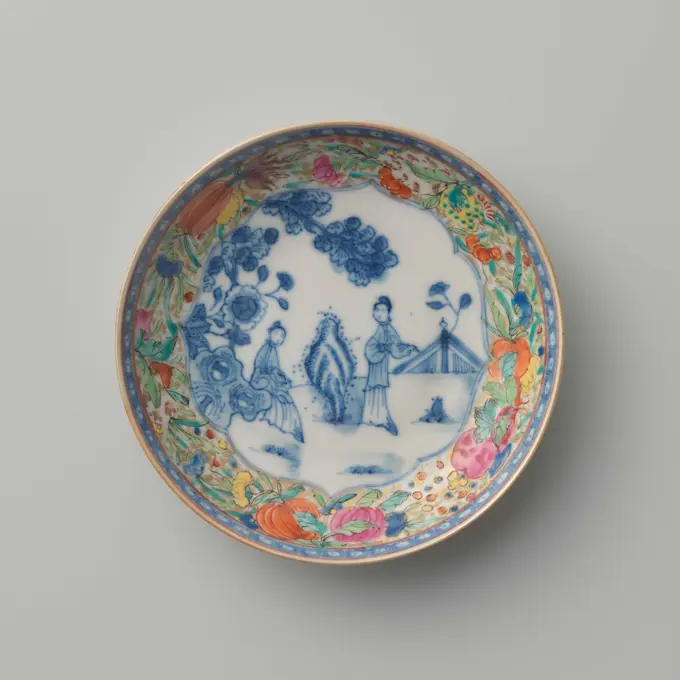
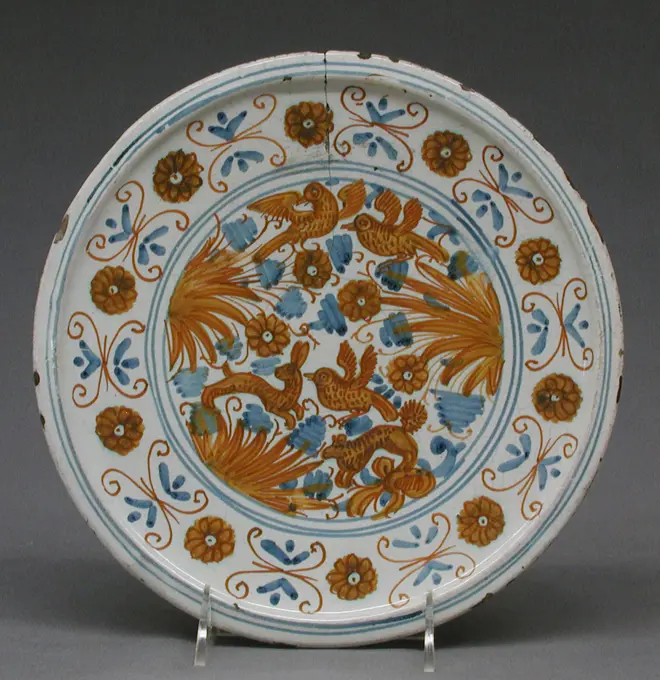
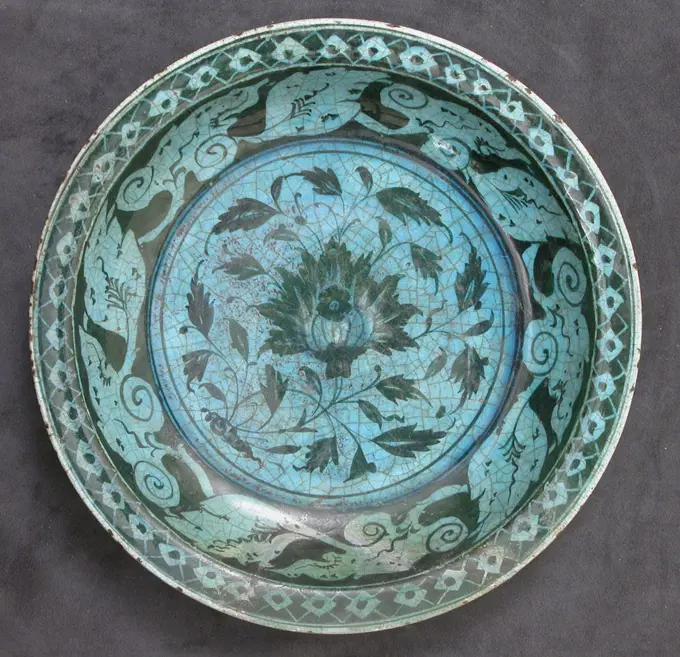
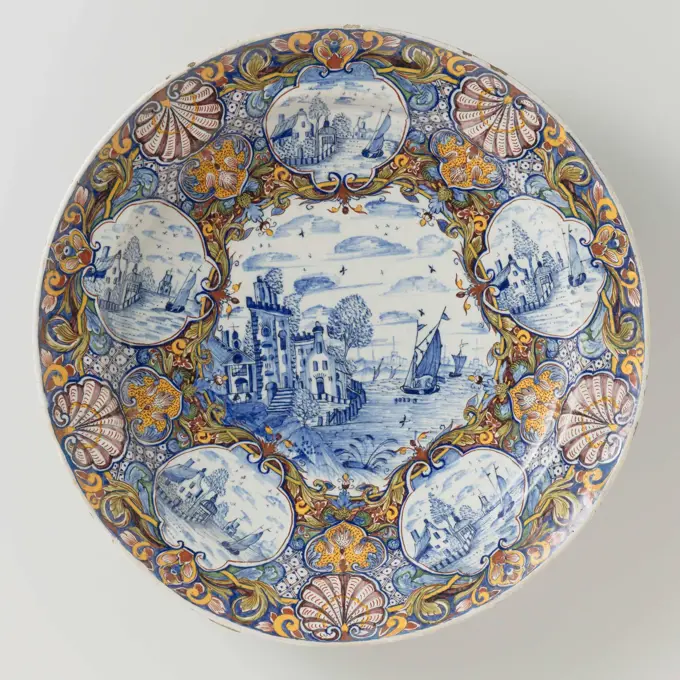
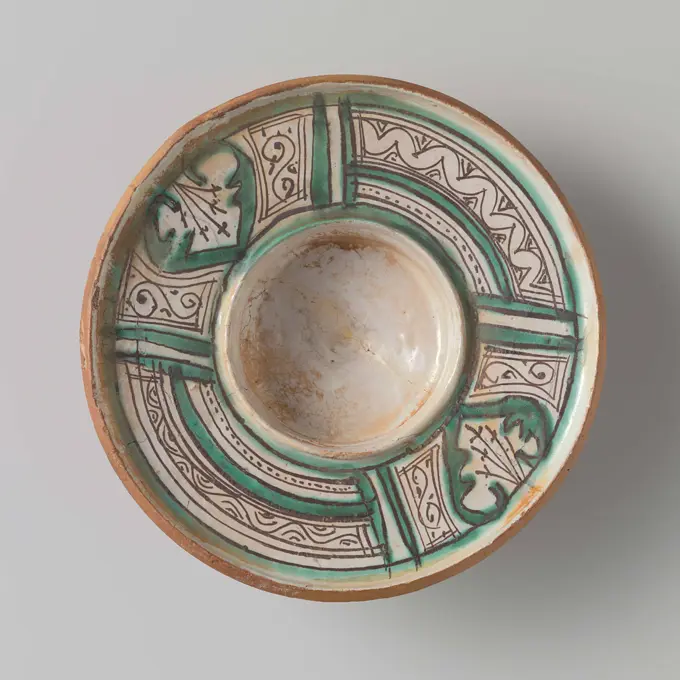
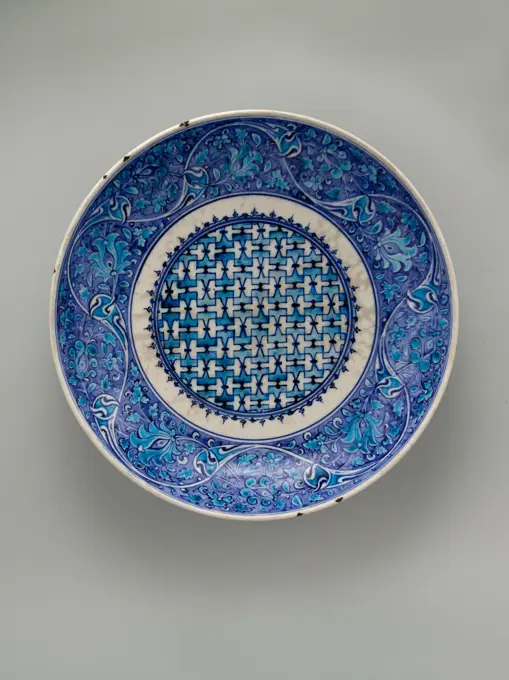
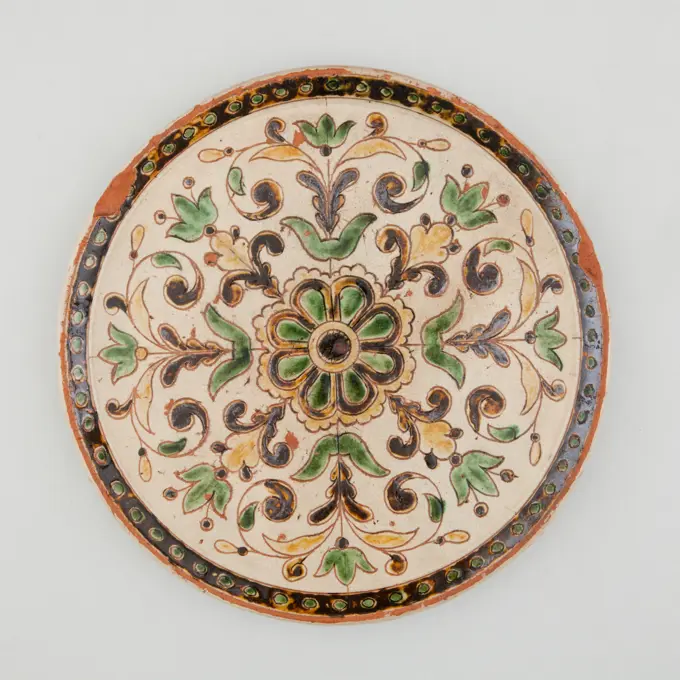
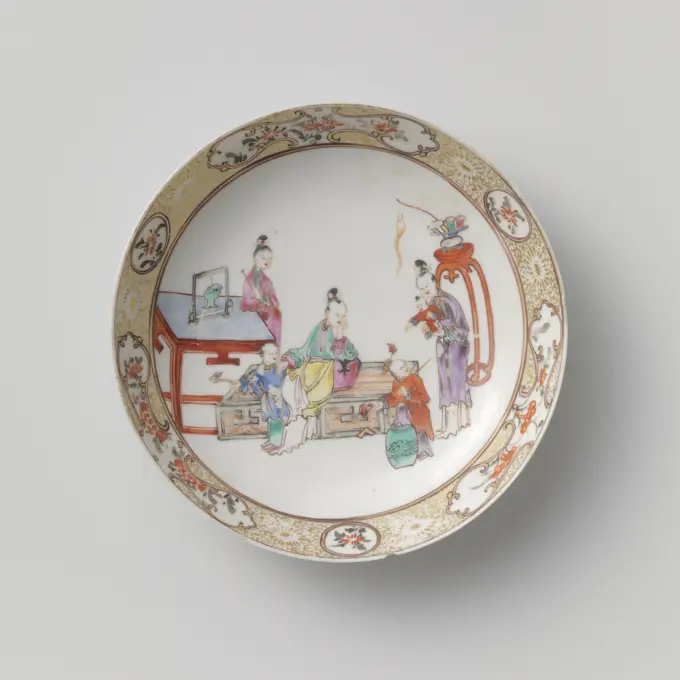
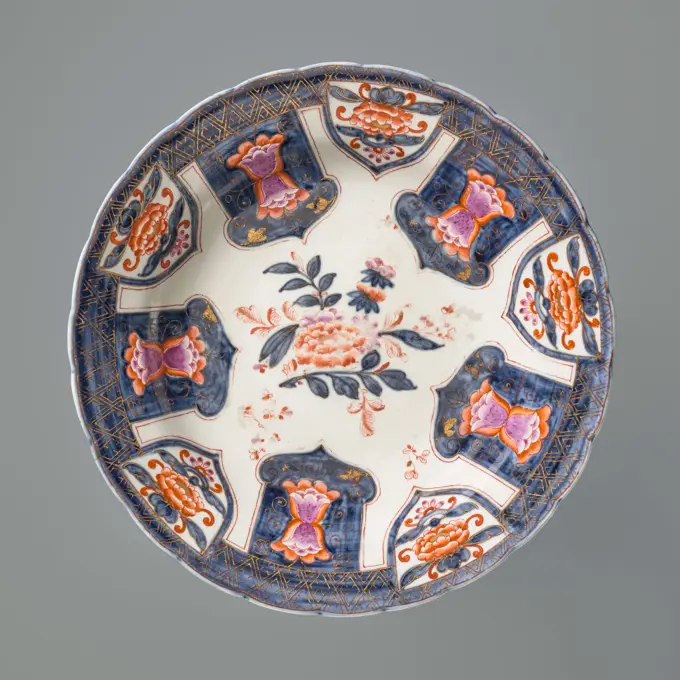
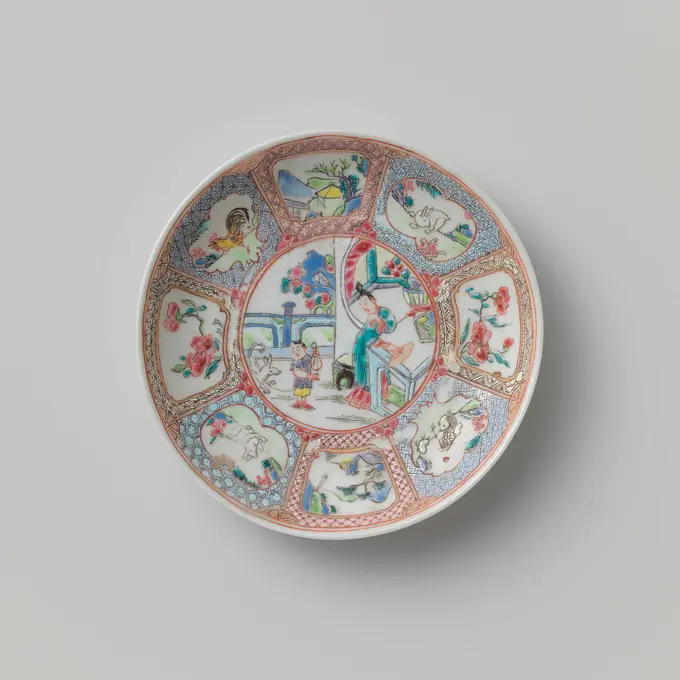
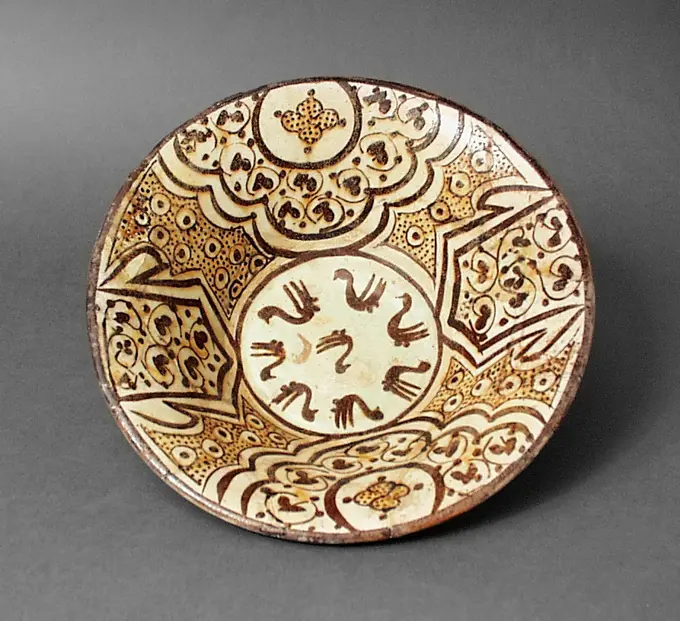
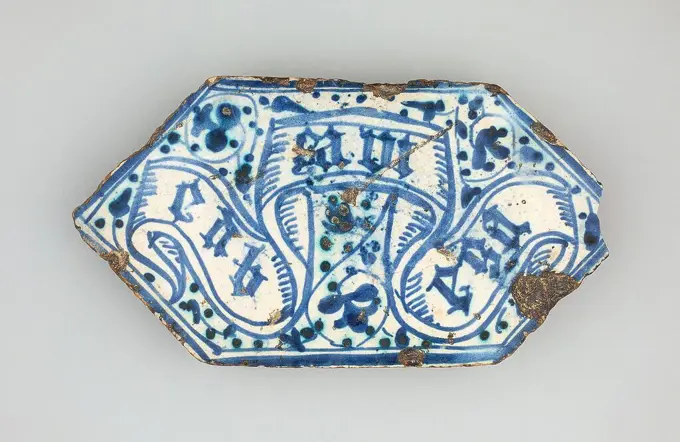
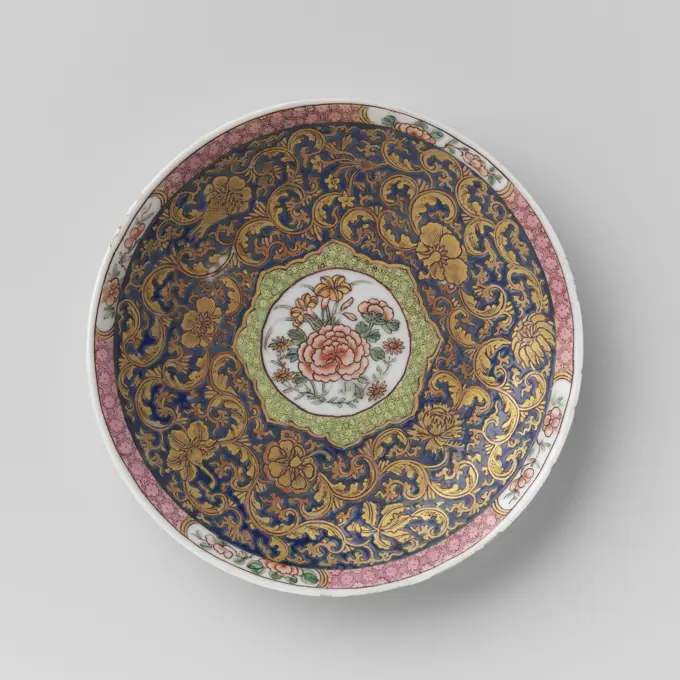
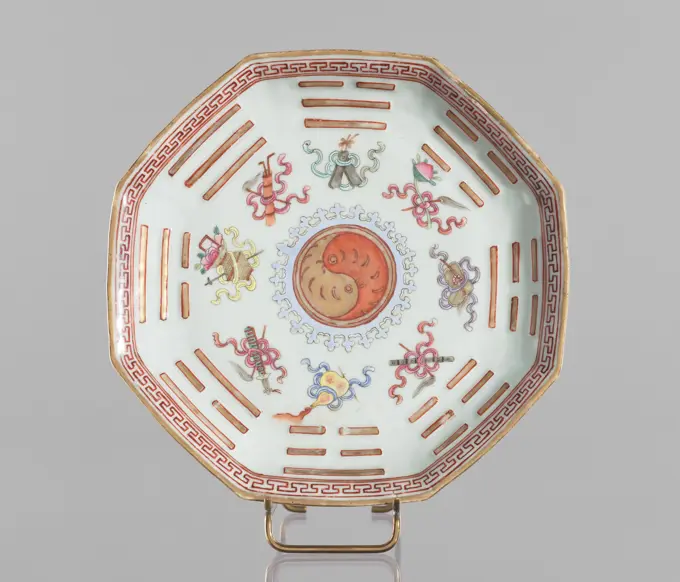
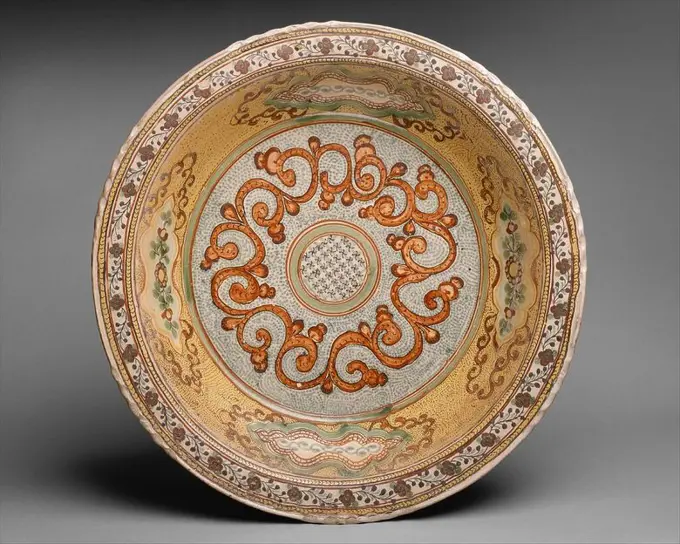
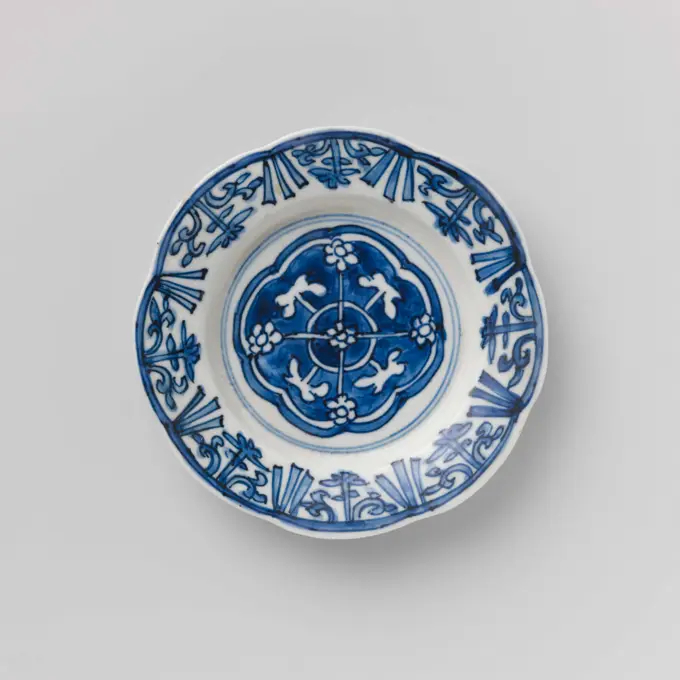
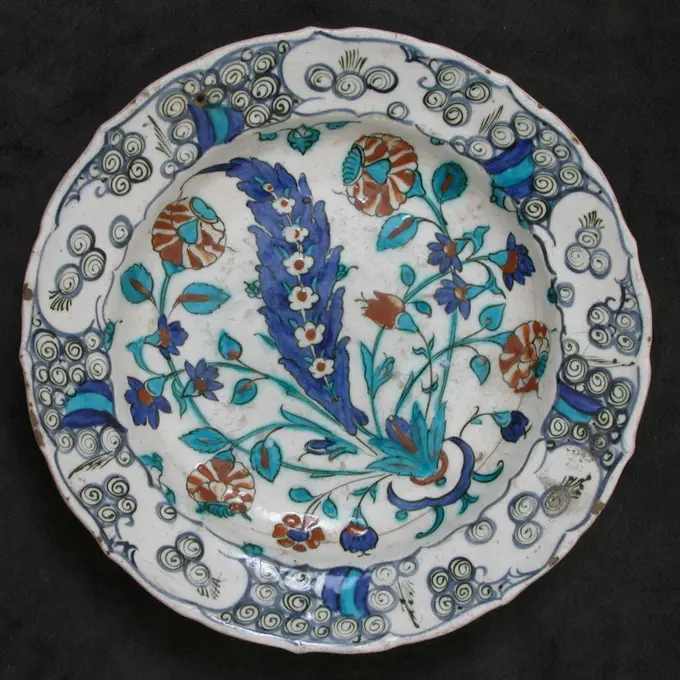
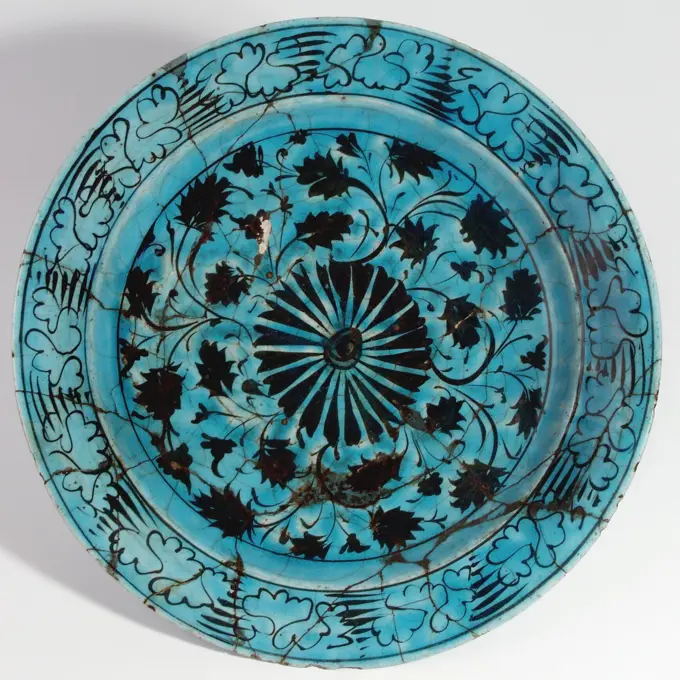
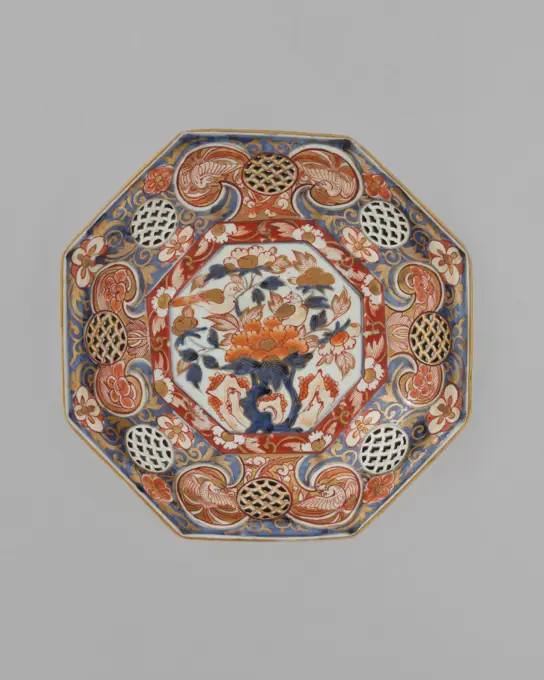
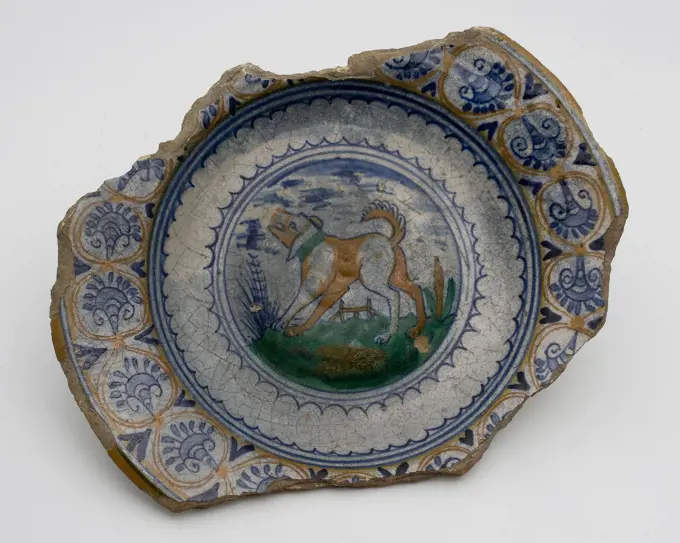
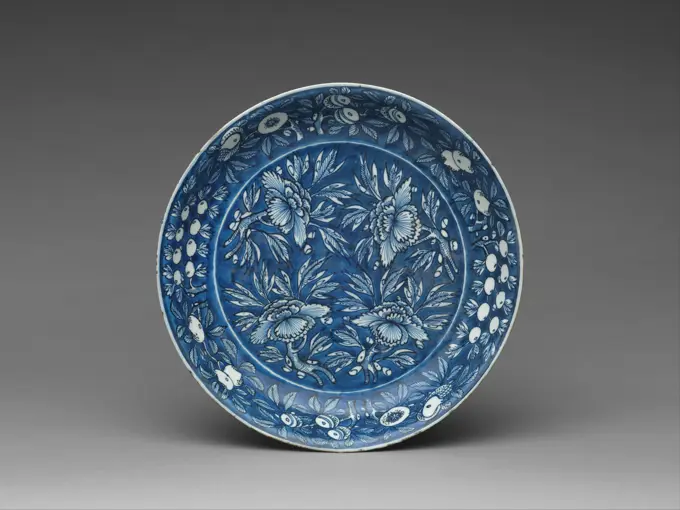
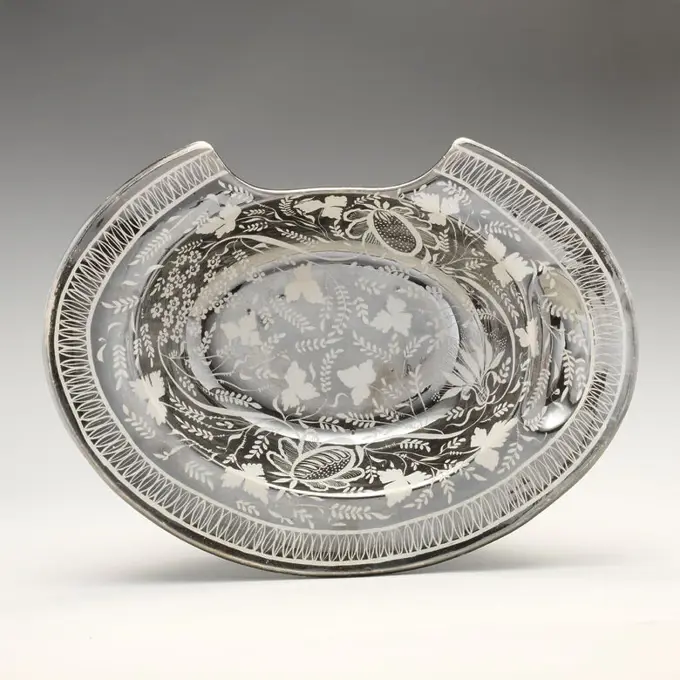
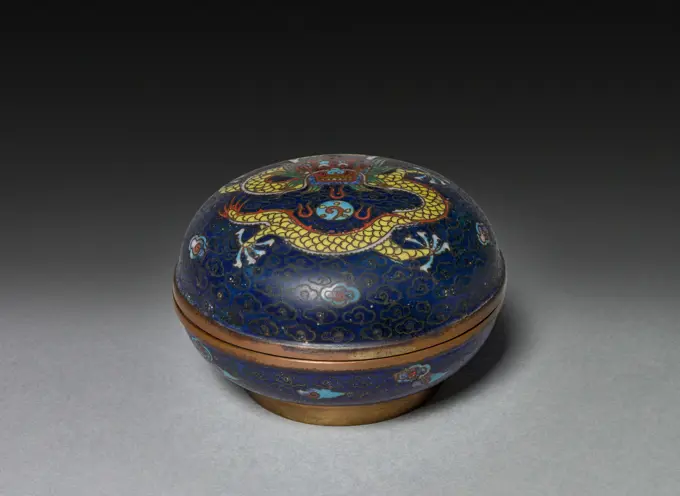
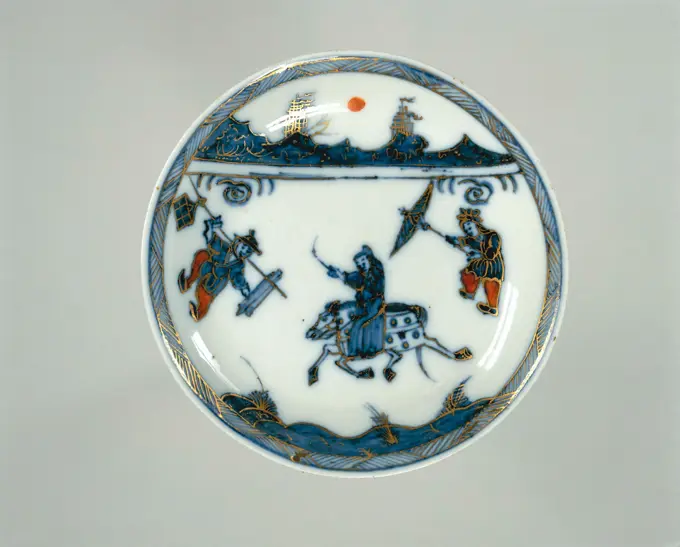
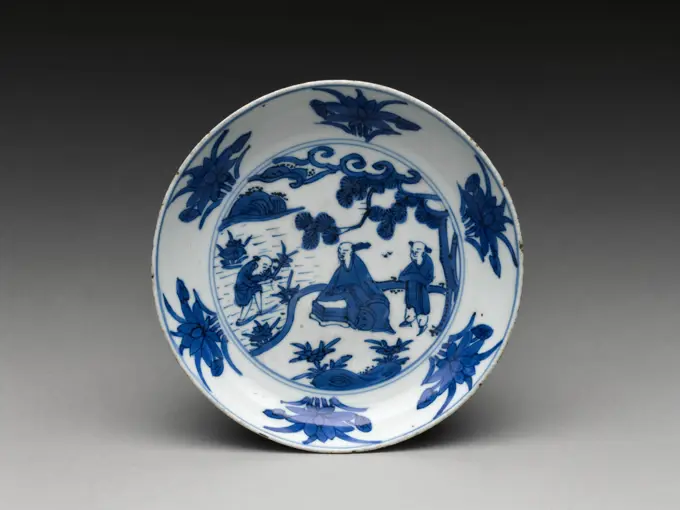
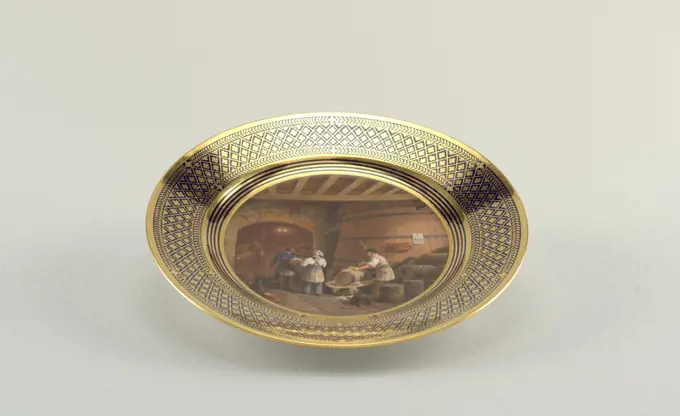
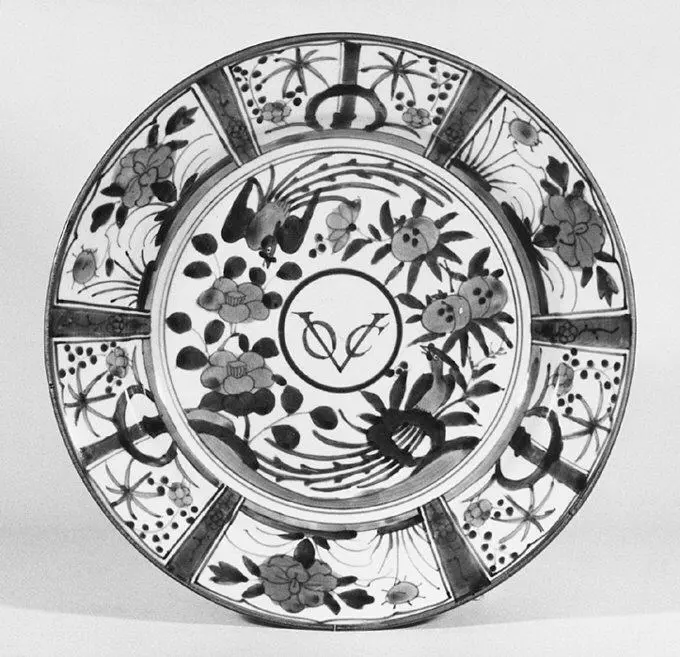
Dish with a Flowerpot and Flowering Plants. Dish of porcelain, painted in underglaze blue. On the flat in a double medallion a vase with different flowers and with a square pot with a plant on either side. The wall and edge with four large flowering plants (Prunus) with two cartouches in between with a spotted flower rosette and leaves and two cartouches with a peach form comprises through leaves. The dish is caught in a metal frame. Arita, blue-white.Charger, anonymous, 1718 Dishes of earthenware with blue painting on tinglaze in Chinese style. On the flat a vase largely filled with flowers. The edge is divided into eight large areas, four of which are decorated with Chinese emblems and four with flower branches and a bird. Delft . Dishes of earthenware with blue painting on tinglaze in Chinese style. On the flat a vase largely filled with flowers. The edge is divided into eight large areas, four of which are decorated with Chinese emblems and four with flower branches and a bird. Delft .Bowl, 1300-1350. Iran, probably Sultanabad. Fritware with underglaze-painted design; diameter: 31.5 cm (12 3/8 in.); overall: 9 cm (3 9/16 in.).Plate -Bord van faience, anonymous, c. 1730 - c. 1780 Fowence board. Blue painted. Delft . Fowence board. Blue painted. Delft .Shaving Bowl with Floral Scrolls and Hoo-Birds and Flower Sprays in panels. Shaving basin of porcelain, painted in underglaze blue and on the glaze red, green, black and gold. On the flat a flower branch; Herely, six radiating compartments, three with a hay bird with a honeycomb pattern and three scalloped compartments with a flower branch. The lower part of the cartouches with a continuous decorative belt with alternating arceing and a honeycomb pattern. On the edge Chrysanthemums on 'Karakusa' tanks. The outer wall with two prunus branches. The edge has been broken; Some chips in the foot ring. Imari.bord, anonymous, c. 1730 - c. 1760 Round plate of multicolored painted faience, with a vase with flowers on the flat for a bowl of flowers in the colors green, red, blue and yellow and around it a ten -angled border in the colors green and red. A Chinese motif is painted on the edge of the board. The board includes two identical signs with invnrs. BK-KOG-2427-A and BK-KOG-2427-C. Delft earthenware. tin glaze. Round plate of multicolored painted faience, with a vase with flowers on the flat for a bowl of flowers in the colors green, red, blue and yellow and around it a ten -angled border in the colors green and red. A Chinese motif is painted on the edge of the board. The board includes two identical signs with invnrs. BK-KOG-2427-A and BK-KOG-2427-C. Delft earthenware. tin glaze.Deep Dish With Flowering Plants Near a Rock and Antiques. Deep dish of porcelain, painted in blue, red, green, yellow, eggplant, black and gold. On the flat flowering plants (peony, chrysanthemum) and a butterfly at a rock. On the wall and the edge six cartouches with varied flowering plants at a rock and antiques (flower vase, tripod, incense burner, Ruyi scepter, books). The outer edge with four times a flower rank; The outer wall is divided into four compartments with a Ruyi motif. Marked on the underside with 'Yù' in a double circle. Famille Verte.Plate of multi -colored Faïence, Anonymous, c. 1700 - c. 1725 Faïence board. Multicolored painted with a Chinese water landscape and lambrequins, in Imari colors. Delft . Faïence board. Multicolored painted with a Chinese water landscape and lambrequins, in Imari colors. Delft .Dish late 17th century possibly German The gift of the Hans Syz Collection in 1995 endowed the Museum with nearly three hundred examples of European and Asian ceramics meticulously acquired by Swiss-born collector Dr. Syz (1894-1991) to chart the migration of models and patterns from East to West. Documenting a continuous process of influence and adaptation, these pieces provide a discriminating review of the nuances of stylistic change resulting from three centuries of trade.. Dish. possibly German. late 17th century. Tin-glazed earthenware. Ceramics-Pottery. Round dish of blue painted faience, with a scalloped edge. On the flat is a bird (heron) Painted between flowers and on the edge of flowers and leaf. The dish is marked: P and P <. The dish was given on the historic museum in Venlo in 1967. Four identical copies with Invnrs are part of the dish. BK-NM-13285-B, BK-NM-13285-C, BK-NM-13285-D and BK-NM-13285-E.. Round plate of multi-colored painted faience, with a vase on the flat with flowers in front of a bowl of flowers in the colors green, red, blue and yellow and around it around a tenno-corner border in the colors green and red. A Chinese motif is painted on the edge of the board. Two identical signs with Invnrs are part of the board. BK-KOG-2427-B and BK-KOG-2427-C.Saucer With Two Ladies in a Fenced Garden and Flower Scrolls. Dish of porcelain with straight wall, painted in underglaze blue and on the glaze blue, red, pink, green, yellow, purple, black and gold. On the flat of the dish a scallop cartouche with two Chinese ladies in a fenced garden at a rock with blooming plants; On the wall flower rans; The inner edge with a bond with geometric motif. Family Rose.Dish on a low foot (Tazza) early 18th century Italian, Deruta. Dish on a low foot (Tazza). Italian, Deruta. early 18th century. Coarse ware, enameled. Ceramics-PotteryPlate. unknown, craftsmanDessert plate - Davenport Davenport. Pottery wall plate, polychrow painted with a bird motif. Suspension holes are in the foot ring. The rear is not glazed, except at the brand. Signature with: w flag g / The Hague and c and arrow, everything in black; Reimburse: +.Bowl 16th-17th century. Bowl 451438Saucer-dish with panel decoration with flower sprays and birds, anonymous, c. 1680 - c. 1720 Scale of porcelain with sloping, octagonal wall, painted in underlaze blue. On the flat a stylized chrysanthemum surrounded by eight radiating courses filled with various flowering plants on a rock with birds; the wall divided into eight compartments with different flower areas on a rock and birds; The edge with a geometric motif. The rear divided into eight compartments with fruit branch and bird. Marked on the bottom with a shell in a double circle. Blue White. China porcelain. glaze. cobalt (mineral) painting / vitrification Scale of porcelain with sloping, octagonal wall, painted in underlaze blue. On the flat a stylized chrysanthemum surrounded by eight radiating courses filled with various flowering plants on a rock with birds; the wall divided into eight compartments with different flower areas on a rock and birds; The edge with a geometric motif. The rear divided into eight compartmentsDish with a stylized flowering plants, anonymous, c. 1540 - c. 1545 Dish of quail fritry with lead decorated with a stylized flowering plant in green, blue and turquoise on white under a transparent glaze. Iznik. Iznik earthenware. glaze painting / vitrification Dish of quail fritry with lead decorated with a stylized flowering plant in green, blue and turquoise on white under a transparent glaze. Iznik. Iznik earthenware. glaze painting / vitrificationPlate of earthenware, with white tinglaze on the top and lead glaze on the bottom and a representation of a landscape with flower edge in blue, damaged, anonymous, 1500 - 1799   earthenware. tin glaze. lead glaze   earthenware. tin glaze. lead glazeDish With Large, Flowering Plants and a Diaper Pattern. Dish of porcelain, painted in underglaze blue and on the glaze red and gold. On the flat different large, blooming plants, the plant group is repeated in four groups on the edge; the wall with a tire napkin with a chrysanthemum, interspersed with an orchid in a cartouche; the same pattern on the edge, but with Swastika rice work; Two prunus branches on the rear. Chinese Imari.. Dish of Faïence, painted multi-colored with water landscapes.Square Plate With a Flower-Shaped Panel With Flowering Plants. Square dish of porcelain with squeezed corners and a round flat, painted in underglaze blue and on the glaze red and gold. On the flat a flower-shaped cartouche with planting plants in every box. On the edge flower drinks. The outer edge with four flower branches (Prunus, peony). Four preen on the bottom. Imari.Plate whose edge is decorated. Round plate of multi-colored painted majolica. The flat is deepened and unforded, the edge is divided into compartments. Geometric tires are painted in two compartments and a palm-like or heart-shaped figure and geometric ornaments in two courses.Dish mid-16th century One of the most spectacular Iznik pieces in the Museums collection, this saucer?shaped dish displays a palette of rich blue and bright turquoise characteristic of early Iznik ceramics. The floral scrolls on the cavetto are inspired by fifteenth-century Chinese celadon ware.. Dish. mid-16th century. Stonepaste; painted in turquoise and two hues of blue under transparent glaze. Made in Turkey, Iznik. Ceramics. Dish with scalloped edge, from faïence and multicolored painted with dragons.Fate SKIEW Ski, TitusDish. Culture: China. Dimensions: H. 1 1/2 in. (3.8 cm); Diam. 9 in. (22.9 cm); Diam. of foot 5 1/2 in. (14 cm). Museum: Metropolitan Museum of Art, New York, USA.Shaving bowl with a flower vase, quails and flower sprays, anonymous, c. 1700 Porcelain shaving basin, painted in undermglaze blue and on the glaze red and gold. On the flat a flower vase with peonies and a flowering branch near a fence. A lotus drink on the vase. The edge is divided into six cartouches with alternating two quail in a flowering plant and chrysanthnums on a floor of underlaze blue. The outer wall with two prunus branches. A proen on the bottom. Imari. Japan porcelain. glaze. cobalt (mineral). gold (metal) painting / gilding / vitrification Porcelain shaving basin, painted in undermglaze blue and on the glaze red and gold. On the flat a flower vase with peonies and a flowering branch near a fence. A lotus drink on the vase. The edge is divided into six cartouches with alternating two quail in a flowering plant and chrysanthnums on a floor of underlaze blue. The outer wall with two prunus branches. A proen on the bottom. Imari. Japan porcelain. glaze. cobalt (mineral). go. Dish with decor of large stylized flower drinks and buttons in blue under transparent alkali acid. On the back a simulation of a Chinese brand (a flower branch) in blue. Around the foot a bond with Ruyi motifs; At the foot a bond with half floral rosettes. The dish is very cracked and glued.Saucer-dish with three women and children with precious objects, anonymous, c. 1740 - c. 1760 Porcelain bowl with round wall, painted on the glaze in blue, red, pink, green, yellow, purple, black and gold. On the front three women with three children with valuables; A woman standing next to a table, a woman sitting next to her a child with skeptic, a child with musical stone on a staff climbs on a stool, a woman with a child on the arm, behind her a high stool with vase; The inner edge with flower vines interspersed with round and whimsically shaped cartouches with flower branches. A chip and a crack in the edge. Famle Rose. China porcelain. glaze. gold (metal) painting / gilding / vitrification Porcelain bowl with round wall, painted on the glaze in blue, red, pink, green, yellow, purple, black and gold. On the front three women with three children with valuables; A woman standing next to a table, a woman sitting next to her a child with skeptic, a child with musical stone on a staff Saucer. Culture: American. Maker: Union Porcelain Works (1863-ca. 1922). Date: ca. 1876. Museum: Metropolitan Museum of Art, New York, USA.Dish with Birds on a Pine ca. 1624-43 Japan. Dish with Birds on a Pine 50183. Plate of Faïence with a flower decoration to example of the Chinese porcelain from the Kangxi periodDish with Roses. China, Yuan dynasty, 1279-1368. Furnishings; Serviceware. Carved red lacquer on wood corePlate, oval with a scumed edge, multi -colored painted with a medallion in which a flower vase between lambrequins, anonymous, c. 1755 - c. 1780 Plate, oval with scalloped edge, multicolored painted with a medallion in which a vase with flowers between lambrequins Delft earthenware Plate, oval with scalloped edge, multicolored painted with a medallion in which a vase with flowers between lambrequins Delft earthenwarePlate with Imari decoration. Porzellanmanufaktur du Paquier (Wiedeń ; 1718-1744), factoryPlate from the V.O.C.-ship the 'Witte Leeuw', anonymous, anonymous, before 1613 plate (dishes) Plate of porcelain from V.O.C. ship the 'Witte Leeuw' with a flat edge and a chopped lip, painted in under-glaze blue. In the flat, a large, square field, surrounded by a accolade -shaped band. In the field a grasshopper from above, sitting on a rock by the water and with plants flowering on either side (aster). In the air an insect (Libelle). Outside the geometric motifs and stylized tifles. On the wall and edge alternating wide and narrow fields with lucky symbols (artemisia leaf, chakre) and flowering plants and fruit branches (peach). 85 present. Crack porcelain in blue and white. China porcelain. bone china (material). glaze. cobalt (mineral) painting / vitrification plants; vegetation Sint-Helena. From its shape and decoration, this dish looks like Chinese porcelain, but it is actually made of tin-glazed earthenware. Chinese porcelain was extremely popular in the Netherlands. When its production in China ceased due to civil war, Delft potters began imitating its style in earthenware.Plate Chinese, for American market ca. 1860-66 View more. Plate. Chinese, for American market. ca. 1860-66. Porcelain. Made in ChinaSaucer With Lady And Boy Near a Pavilion And Panel Decoration With Landscapes. Dish of porcelain with round wall, painted on the glaze with blue, red, pink, green, yellow, black and gold. On the flat a medallion with a woman and child on a terrace for a pavilion; Around the medallion eight compartments with cartouches against different colored soil with napkin: two boxes with pomegranate-shaped cartouche with rooster or bird, four range-shaped cartouches with iekened corners with landscape and flower branch, two peach-shaped cartouches with hare in a landscape. Family Rose.BowlPlate with two schematic figures in a fenced garden, anonymous, c. 1700 - c. 1799 Porcelain plate with a scalloped edge, painted in underlaze blue. On the flat two schematic people in a fenced garden with flowering plants in the background. The edge with a band with flowering plants at rocks. The outer wall with three wavy lines. The underside partly unggestive. Old label on the bottom with 'P 3779/ Japan 18th century/ f. 150 '. Blue White. Japan porcelain. glaze. cobalt (mineral) painting / vitrification Porcelain plate with a scalloped edge, painted in underlaze blue. On the flat two schematic people in a fenced garden with flowering plants in the background. The edge with a band with flowering plants at rocks. The outer wall with three wavy lines. The underside partly unggestive. Old label on the bottom with 'P 3779/ Japan 18th century/ f. 150 '. Blue White. Japan porcelain. glaze. cobalt (mineral) painting / vitrificationBowl with five petaled flower China. Bowl with five petaled flower. China. Earthenware with painted decoration and clear glaze. Tang dynasty (618-907). CeramicsJustino salvolines. The Holy Family with Motels and Escapes Aurial Secretes and Escapes Images between chestnut ant castagnes and foreground Museums des High vineies of Paris, Petit Palais. 27010-17 Coat of arms, Acute Basin, Castel Durante, Ceramic, Decoration, Faience, Brancaleoni family, Grotesque, Italy, Italian Majolique, motifSaucer. Manufacture nationale de porcelaine de Sevres (1756-), factoryHexagonal Floor Tile. Spanish; Valencia (probably Manises). Date: 1401-1500. Dimensions: 10.6 × 19 cm (4 3/16 × 7 5/8 in.). Tin-glazed earthenware. Origin: Spain. Museum: The Chicago Art Institute, USA.Saucer with large floral scrolls, diaper pattern and flower sprays, anonymous, c. 1725 - c. 1749 Porcelain dish, painted on the glaze in blue, red, green, yellow, black and gold. On the flat large flower vines with a flower -shaped medallion with flower branches (peony, aster, balloon bell); On the wall a tire servetwork interspersed with flower branches in a cartouche. Famle Rose. China porcelain. glaze. gold (metal) painting / gilding / vitrification Porcelain dish, painted on the glaze in blue, red, green, yellow, black and gold. On the flat large flower vines with a flower -shaped medallion with flower branches (peony, aster, balloon bell); On the wall a tire servetwork interspersed with flower branches in a cartouche. Famle Rose. China porcelain. glaze. gold (metal) painting / gilding / vitrificationPlatter. unknown, craftsmanNappy - D'après George L. Ashworth & Brothers, 1862-1968Dish 1765-1775 Worcester. Soft-paste porcelain, polychrome enamels and gilding . Worcester Royal Porcelain Company (Manufacturer)basin with polychrome scroll motif on strippled ground. Culture: Mexican. Dimensions: Diam. 18 in. (45.7 cm). Date: First half of the 19th century. Museum: Metropolitan Museum of Art, New York, USA.Plate Plate; Manufactured by Carl Thieme Saxonian Porcelain Company; Germany; porcelain, vitreous enamel, goldSaucer With Stylized Flowers and Precious Objects. Dish of porcelain with lobby edge, painted in underglaze blue. On the flat a rosette with a flower in a circle in the center, from the flower four lines with a flower in reserve at the end, on the circle branches in reserve; Changed with three lines on the edge styled flower drinks; The back with four valuables (pearl, diamond). Marked on the underside with the four-character mark of Emperor Yongzheng () In a double circle. A chip in the edge. Blue White.. Round dish of multicolored faience painted, with a star-shaped ornament on the flat and red with a blue, green, yellow and red spreading flowers. On the back, the plate is marked with a corrugated line.Dish with a flower basket, landscape and floral scrolls, anonymous, c. 1750 - c. 1800 Porcelain saucer, painted in underly glaze blue and on the glaze red and gold. On the flat a flower vase with a chilong (polled dragon) on it and also a chilong on either side of the vase. The wall and edge are divided into six compartments with alternately a landscape with a chicken and a rooster in a fenced garden at a pavilion and flower vines against a blue background. The rear with a tire interrupted by cartouches with flower rosettes and plants; around the band three flower branches (peony, prunus, chrysanthemum). On the bottom a peon branch in a circle. The dish is caught in a metal frame. The underside with proenen. A crack in the edge and wall. Imari. Japan Porcelain. Glaze. Cobalt (Mineral). Gold (Metal). frame: Metal painting / gilding / vitrification Porcelain saucer, painted in underly glaze blue and on the glaze red and gold. On the flat a flower vase with a chilong (polled dragon) on itBowl, 1100s-1200s. Northwest Iran, Aghkand (Azerbaijan area), 12th-13th century. Earthenware with underglaze slip-painted decoration; overall: 9.8 x 31 cm (3 7/8 x 12 3/16 in.).Deep plate from v.o.c.-ship the 'white lion'. Deep plate from v.o.c.-ship the 'white lion', 97%% present.Dish late 16th century. Dish 444890For a long time;  XVII century (1601-00-00-1700-00-00);Leopold and Janina Binnenthal - collection (fl. Ante 1940), ceramics, gift (provenance), platters, Islamic art, Persian artOctagonal Saucer With Flower Scrolls in Panel Decoration. Octagonal dish of porcelain, painted in underglaze blue. On the flat a flower branch in a double medallion; to them eight radiating compartments with stylized flower drinks; The edge with a band with zigzag work. Frame of iron wire. Blue White.Arita (ceramic production center), hollow dish, Imari decor (username). Ceramics, porcelain, polychrome enamels: cobalt blue under cover, red on covered, gilding. Petit Palais, Museum of Fine Arts of the City of Paris.Dish. unknown, craftsmanBowl with Birds 1281-1349 Iran. This bowl belongs a group of ceramics known as Sultanabad wares, named after the city in western Iran. Although these wares were found in Sultanabad, their origins of production are not certain, but their decorative schemes often illustrate the conflation of Chinese and Iranian visual motifs. The phoenix, depicted three times here, is a common motif of Mongol ceramics. Like the lotus flower depicted on another Sultanabad ware, the phoenix was imported from China, although they both lacked imperial associations in their new Ilkhanid context. In medieval Iran, the phoenix was conflated with the mythical figure of the simurgh, a legendary bird from the epic poem, the Shahnameh (Book of Kings). Sultanabad wares are also distinguished by their hemispherical shape, which approximates the shape of Chinese celadon bowls. The muted brown-grey palette of this bowl reflects a color scheme found in many other Sultanabad vessels, but this bowl also shimmers iridescenDish, Lead-glazed earthenware, Oval dish with curving sides, on oval molded foot. In center, oval depressions with four circular depressions tangent at mid-point of sides and ends. Edge of dish and depressions are outlined by raised patterned bands of dark blue. Spandrels between four circular depressions are glazed in red-brown, with relief figures of winged putti bearing military attributes. Mottled glazes in depressions and on reverse., France, late 17th century, ceramics, Decorative Arts, DishPlate with 'Horse Eye' design (or 'Flaming Jewel' design), 18th century, Unknown Japanese, 2 × 10 1/2 × 10 1/2 in. (5.08 × 26.67 × 26.67 cm), Stoneware with underglaze iron oxide, Japan, 18th centuryMajolica dish on stand, polychrome decor, dog in landscape, special rim with palmettes, plate dish crockery holder soil find ceramics pottery glaze tin glaze lead glaze, hand turned fried glazed decorated baked Dish with curved soul Shoulder and slanted flag Orange shard glazed except inside the stand ring Polychrome decor of barking dog in landscape with fence in orange green and blue and ornamental band over the flag of orange circles in which blue floral motifs Bottom of greenish lead glaze Op pruned archaeological indigenous pottery decorate serving serving tableDish with Flowering Branches late 16th-early 17th century China. Dish with Flowering Branches 42535Plate. Octagonal board with a still life in different colors and gold, consisting of a flower vase with prunus and camellia on a layer of pedestal and on a laktbouret, a shell with a so-called hand of the Buddha (citrus medica var sarcodactylis). The back with panels of braid. Golden lacquer inscription on the back.Barber's basin. Culture: British, Staffordshire. Dimensions: Overall: 2 5/8 × 13 7/8 × 9 1/16 in. (6.7 × 35.2 × 23 cm). Date: ca. 1815. Museum: Metropolitan Museum of Art, New York, USA.Square bowl with pattern of hanging vines and fruit, 17th century, Unknown Japanese, 1 3/4 x 9 9/16 x 8 1/2in. (4.4 x 24.3 x 21.6cm), Shino ware; stoneware with underglaze iron, Japan, 17th century, During the sixteenth century, the potters of Mino, near Nagoya, developed a number of new ceramic styles for use in the tea ceremony. Shino ware was characterized by a thick, snowy surface which resulted from a feldspathic glaze fired for an extended period. Shino potters decorated their works by painting simple designs on the surface of the clay with iron-oxide slip prior to glazing. After firing, the resulting patterns shone softly through the milky glaze, producing a pleasingly subtle effect. Bowls such as this would have been used in the formal kaiseki meal as part of an extended tea ceremony.Platter ca. 1860-66 Chinese, for American market. Platter 6586Bord, anonymous, 1500 - 1600 Octagonal plate with a quiner in different colors and gold on a stock of red lacquer, consisting of a flower vase with Prunus and Camellia on a low pedestal and on a Laktabouret placed dish with a so -called Buddha hand (Citrus Medica Var Sarcodactylis). The rear with panels of braid. Gold lacquer inscription at the rear. China wood (plant material). lacquer (coating) Octagonal plate with a quiner in different colors and gold on a stock of red lacquer, consisting of a flower vase with Prunus and Camellia on a low pedestal and on a Laktabouret placed dish with a so -called Buddha hand (Citrus Medica Var Sarcodactylis). The rear with panels of braid. Gold lacquer inscription at the rear. China wood (plant material). lacquer (coating)Saucer-dish with precious objects and antiques. Dish with round wall of porcelain, painted in underglaze blue and on the glaze blue, red, green, yellow, eggplant and black. On the flat Chinese antiques; The bottom with four valuables. Marked on the underside with the four-character mark of Emperor Xuande in a double circle. Chip in the edge; Three cracks in the edge. Famille Verte.Box with Dragon, c 1900- 1925. Japan, Meiji period (1868-1912) or Taishō period (1912-26). Cloisonne enamel; diameter: 2.2 x 5.1 cm (7/8 x 2 in.).. Dish of quartz Fritgoed with lead decorated with a stylized blooming plant in green, red, black, blue and brown on white engobe under transparent tin-lead-alkali acid. On the edge a cloud motif or curl. Iznik.Anonymous. Bleu whipped background. Porcelain. 1st quarter of the 18th century. Museum of Fine Arts of the City of Paris, Petit Palais. 122742-6Salver 1726-1727 London. Silver . John Tuite (Maker)Plate. Worcester Porcelain Factory; Worcester, England, founded 1751. Date: 1765-1775. Dimensions: Diam. 18.9 cm (7 7/16 in.). Soft-paste porcelain, polychrome enamels and gilding. Origin: Worcester. Museum: The Chicago Art Institute, Chicago, USA. Author: Worcester Royal Porcelain Company.Dish from v.O.c.-ship the 'white lion'. Dish from v.O.c.-ship the 'white lion', 80%% present.Dish belonging to head with word souvenir. Dish of porcelain, decorated with colored flowers on dull blue ground. Belongs to header with the word souvenir in cartouche.Kutani-Style Sweets Tray 1820-1830 Japan. Porcelain with underglaze decoration and overglaze enamels .Sharf of yellowish baking earthenware, with white glaze, with a decorative edge at the front and part of a landscape in blue, anonymous, 1600 - 1650  Northern Netherlands earthenware. glaze majolica  Northern Netherlands earthenware. glaze majolicaPlate ca. 1850 Japan. Plate. Japan. ca. 1850. Pottery covered with finely crackled glaze, decorated in polychrome enamels (Hizen ware, Kutani type).. Edo period (1615-1868). CeramicsPlate with stylized decor in blue. Pottery plate with stylized decor in blue, also the back.Plate with a Geometric Interlaced Pattern. Earthenware from the Islamic world was popular in Europe and imported on a large scale. European potters adopted Islamic decorative motifs early on. The Turk’s head knot’ pattern, or interlaced strapwork, on this 16th-century plate from Siena is derived from ornament prints by Leonardo da Vinci or Albrecht Dürer. They too were fascinated by the intricate Islamic decorations.Plate. China, Qing dynasty, Kangxi period, 1662-1722. Furnishings; Serviceware. Porcelain with underglaze blue painted decoration. Round dish of painted porcelain. The painting is in underglazing blue, red and gold and consists of a chinoiserie of two running figures and a rider in a briefed landscape. Along the edge a band runs from shaded fields. The dish has been marked.Dish with scholar by a lotus pond China On this dish, a scholar sits beneath a tree while an attendant picks lotus flowers. The scene recalls a story of the Song-dynasty scholar-official Zhou Dunyi (1017-73), who was known for his fondness of the lotus, a sign of a nature lover.. Dish with scholar by a lotus pond. China. Porcelain painted in underglaze cobalt blue (Jingdezhen ware). Ming dynasty (1368-1644), Wanli mark and period (1573-1620). CeramicsPlate, from the Industrial Arts Dessert Service (Assiette Platte, Service des Arts Industriels), Sèvres Porcelain Manufactory, French, established 1756 to the present, hard paste porcelain, vitreous enamel, gold, Circular plate. In center, a polychromed scene of barrel washing, 'Brasserie' above 'Entonnerie.' beneath, gilt rim with deep blue diaper pattern., France, 1827, ceramics, Decorative Arts, plate, plateDish 1670-1700 Japanese, Arita. Dish 204842Four tiles, Glazed moulded earthenware, Moulded in low relief, with white, blue, green and brown glazed, forming an octagonal motif, with conventionalized floral and foliate forms., Andalusia, Spain, late 16th century, tiles, Decorative Arts, Four tilesSilver plate 1st-2nd century A.D. Roman The plate, originally part of a larger set of silver tableware, was clearly used over a prolonged period, since repeated polishing in antiquity has worn away the details of the rim decoration. On the underside are Latin inscriptions giving the names of two different owners. It was common for Romans to mark their valuable possessions in this way as a precaution against theft. The use of masks, symbols, and animals as decoration seen here was popular throughout the Imperial period.. Silver plate. Roman. 1st-2nd century A.D.. Silver. Imperial. Gold and SilverPlate Plate; Zuid Holland Factory, Gouda; Netherlands; earthenware; 30.5 x 3 cm (12 x 1 3/16 in.)Plate (one of a pair). Culture: British, Worcester. Dimensions: Overall: 1 1/4 × 8 7/16 in. (3.2 × 21.4 cm). Factory: Worcester factory (British, 1751-2008). Date: ca. 1770-80.The term "chinoiserie" refers to an 18th-century European style inspired by the art of China, Japan, and other Asian countries. In Britain, porcelain imported from China and Japan was extremely fashioinable and highly coveted. This caused British factories to imitate Asian wares, both by copying Asian originals, but more often by creating their own imaginative "chinoiserie" designs. The chinoiserie style was at its height in Britain in the 1750s and 1760s. It is related to the rococo style, which was also characterized by asymmetry and an element of fantasy. In British porcelain, it is not uncommon to find objects that combine both aspects of chinoiserie and rococo. Museum: Metropolitan Museum of Art, New York, USA.Dish ca. 1640 Japan. Dish 63590Come from v.o.c.-ship the 'white lion'. Come from v.o.c.-ship the 'white lion', 90%% present.. Plate of faience. Blue painted with a flower decoration.Przeszo Przyszoci unknown