Decorative Ceramic Tiles

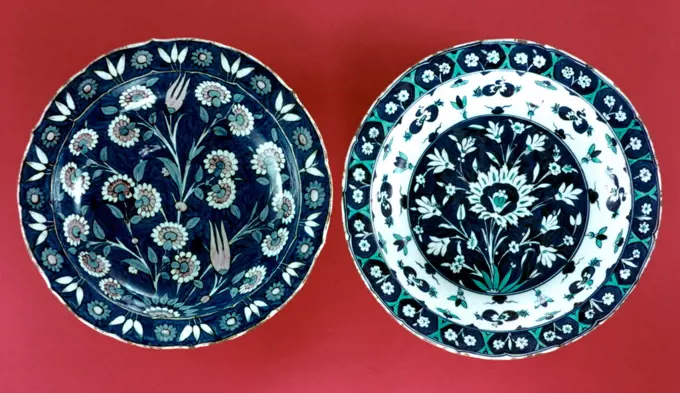
Colorful decorative ceramics with intricate floral and geometric patterns, showcasing historic craftsmanship in earthenware and faïence styles.
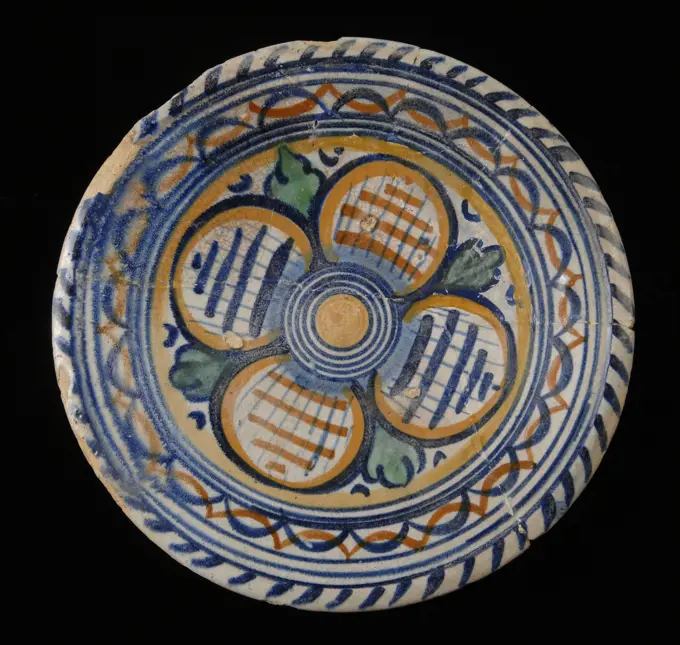
Majolica dish with four-leaved flower in the mirror in blue, orange and green, dish crockery holder soil find ceramic earthenware glaze tin glaze lead glaze, ring 9.5 hand turned baked glazed painted fried Majolica dish on stand. hole in the rope decor stand ring along the dish edge. In the mirror polychrome flower with round heart and four leaves in blue orange and green en Backside lead glaze Along the edge the glaze is lightly arched in one place archeology Valckensteyn Poortugaal Albrandswaard earthenware serve serving food Soil discovery: castle Valckensteyn in Poortugaal now Albrandswaard 1961- 1962.
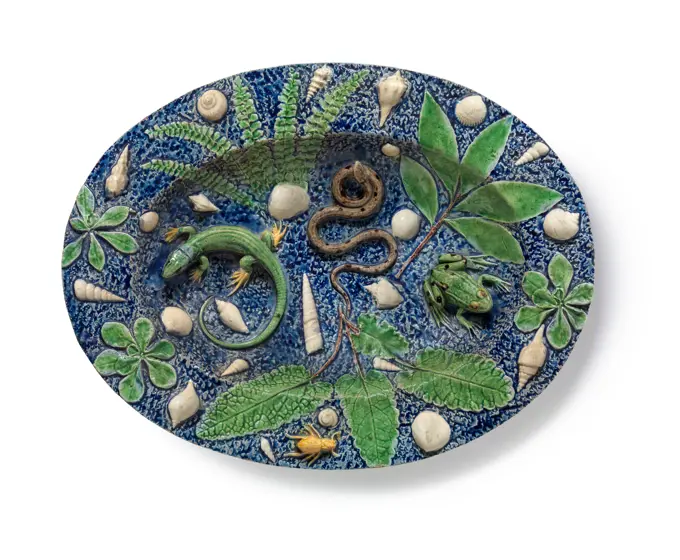
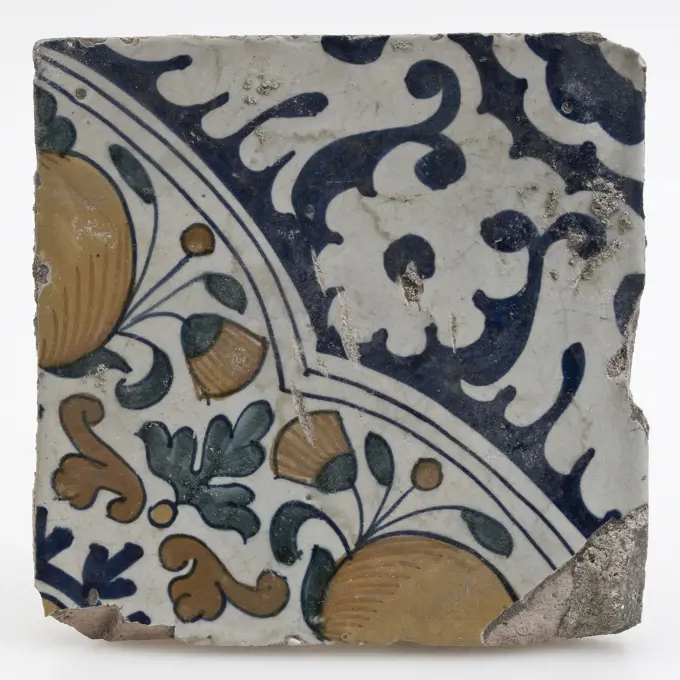
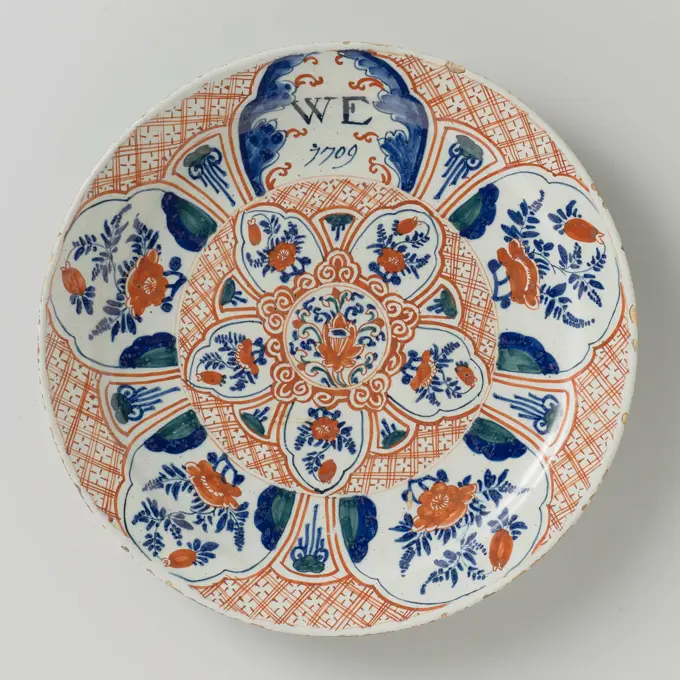
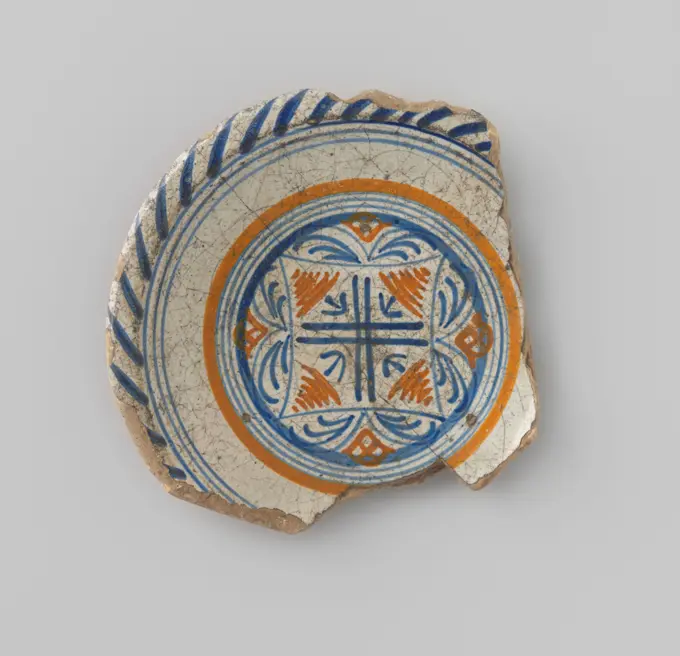
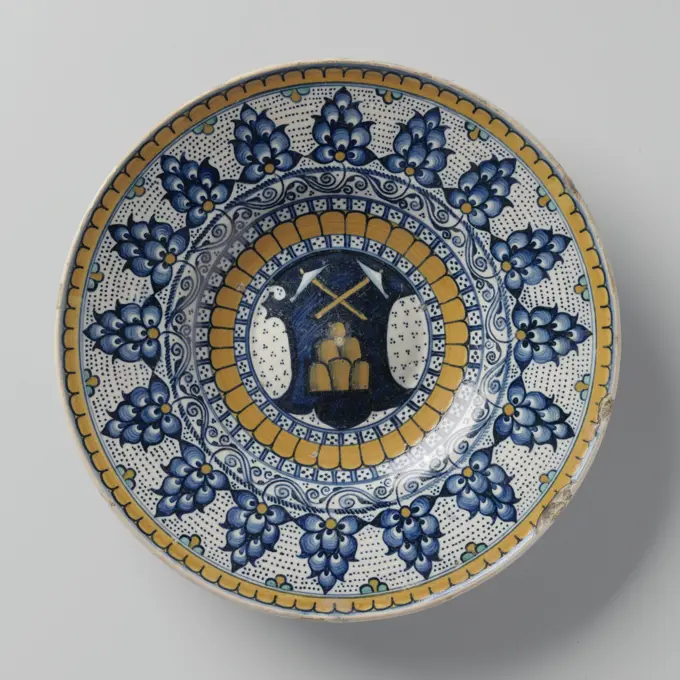
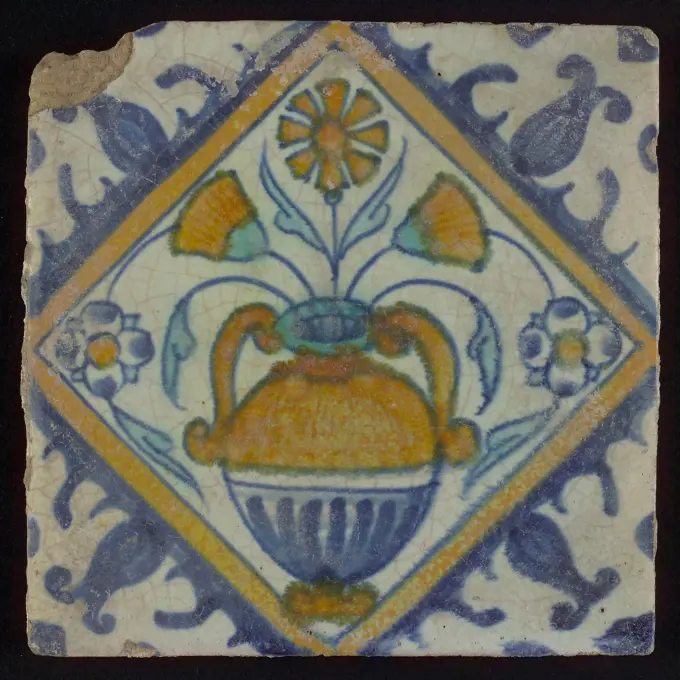
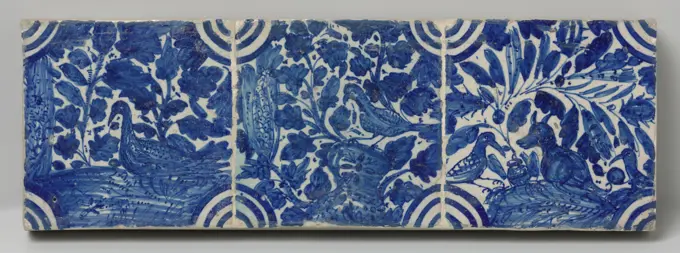
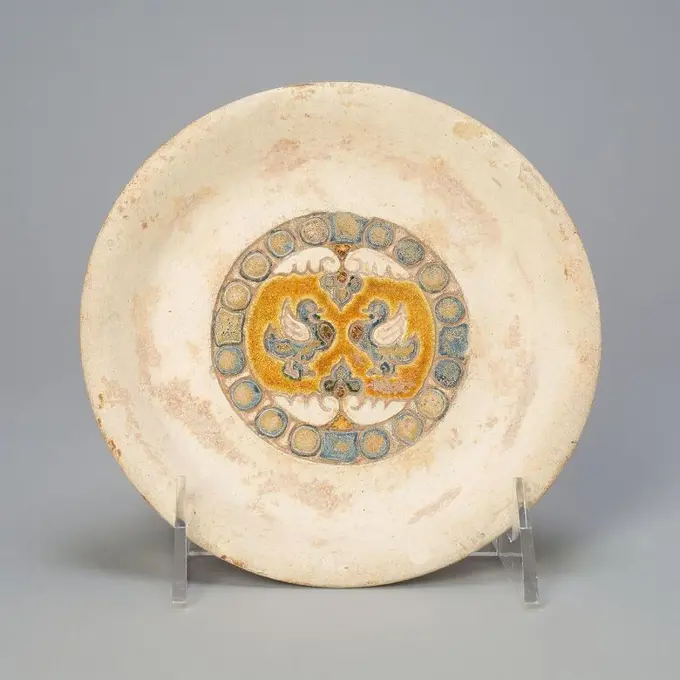
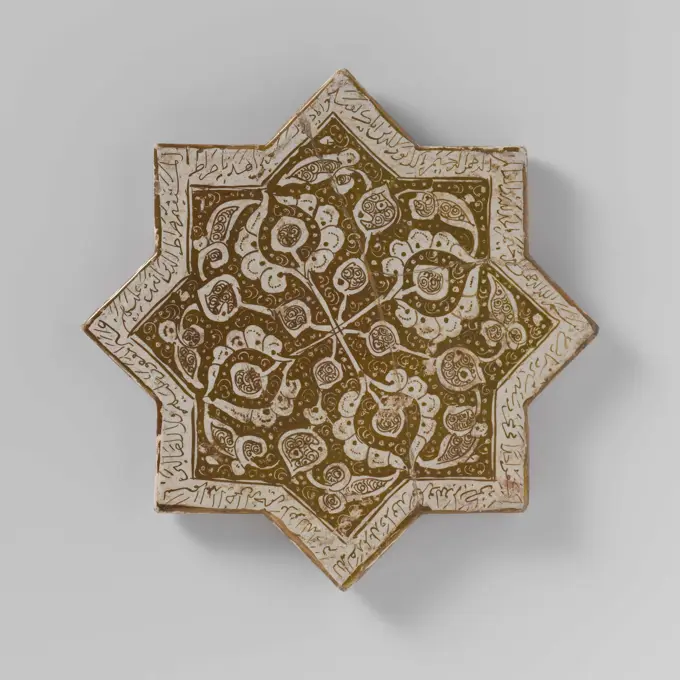
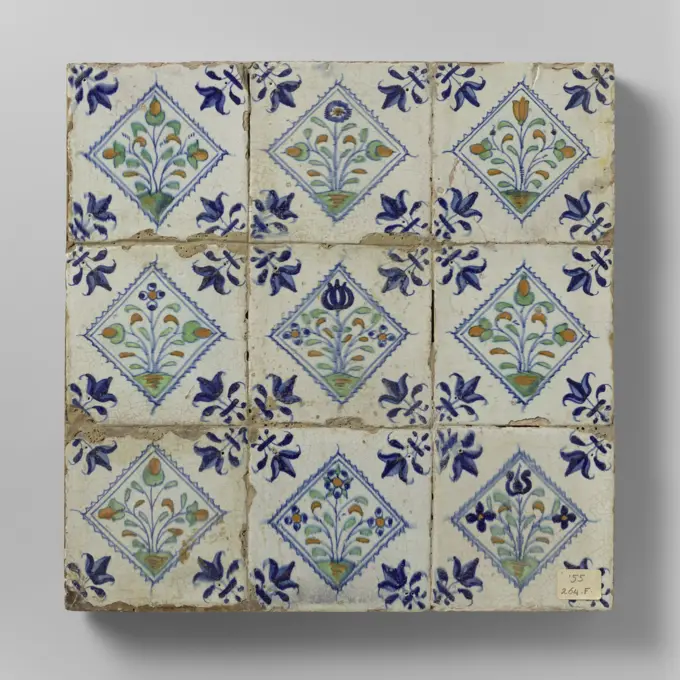
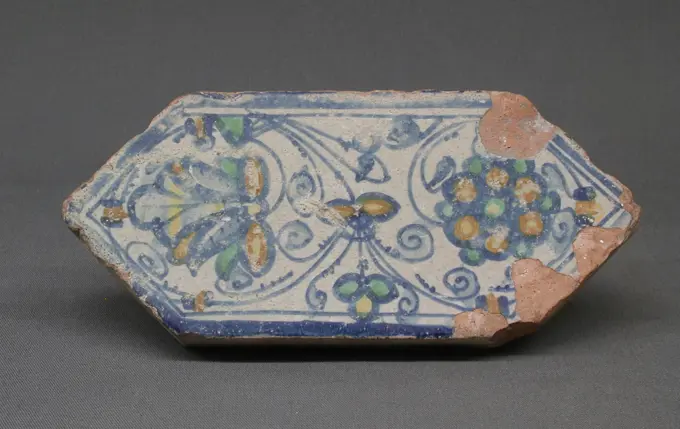
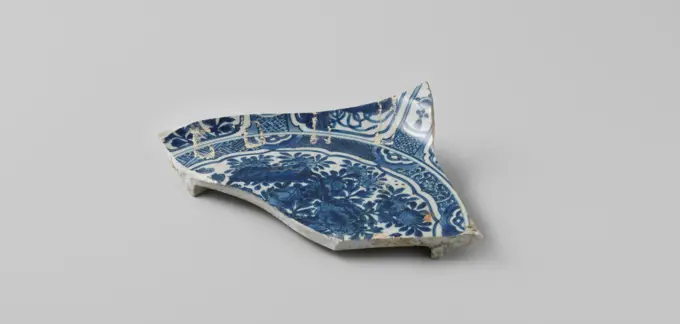
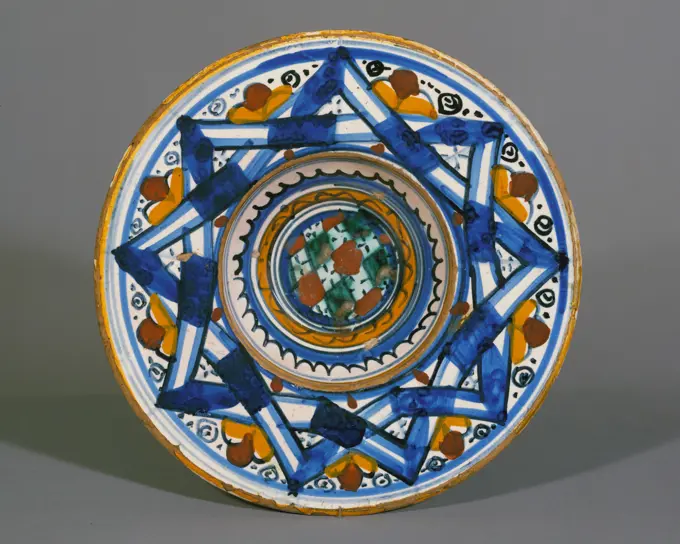
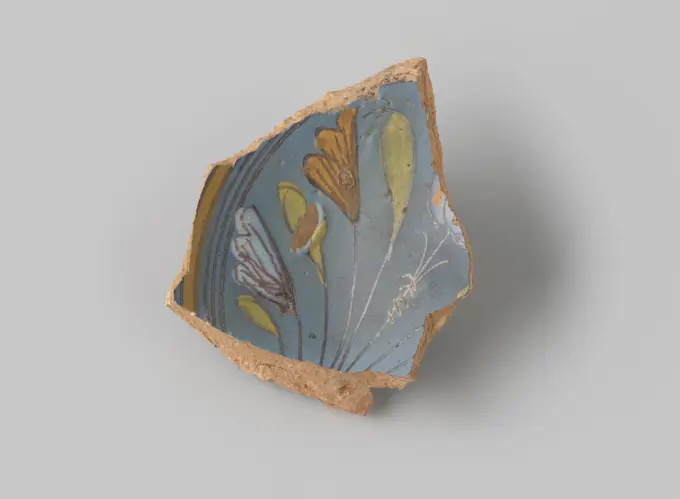
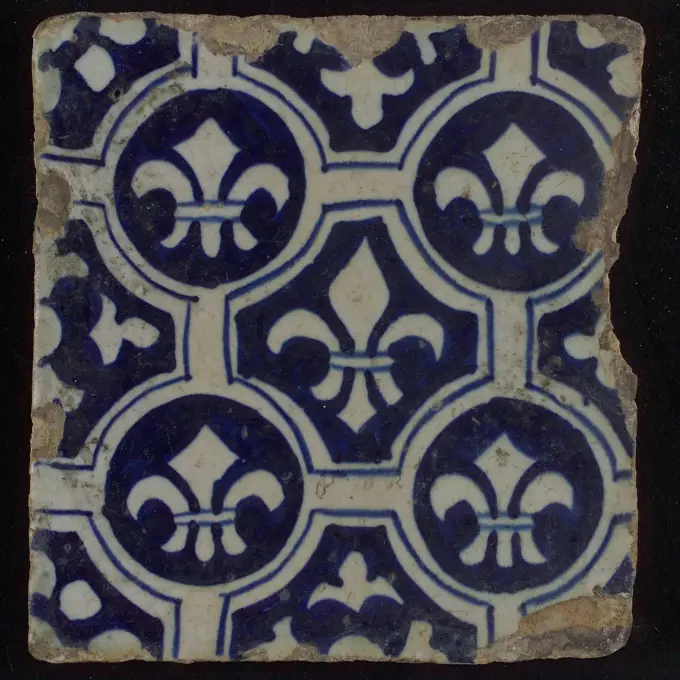
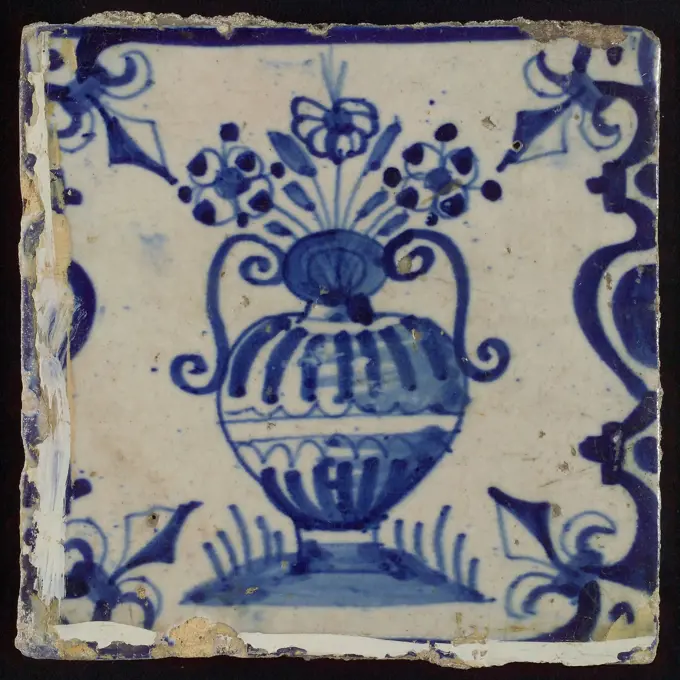
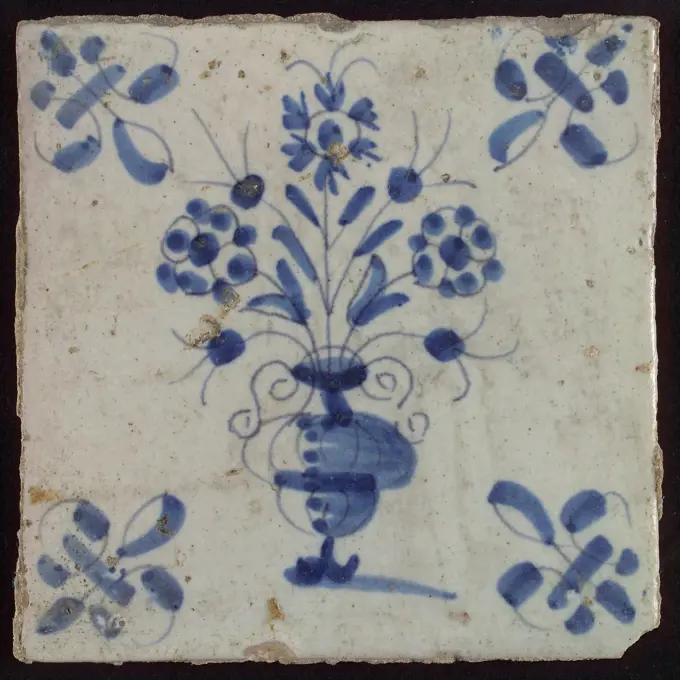
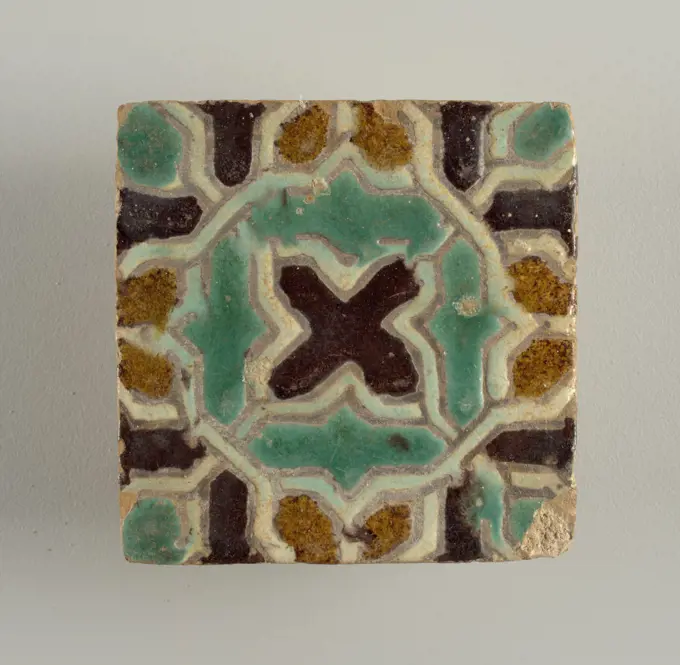
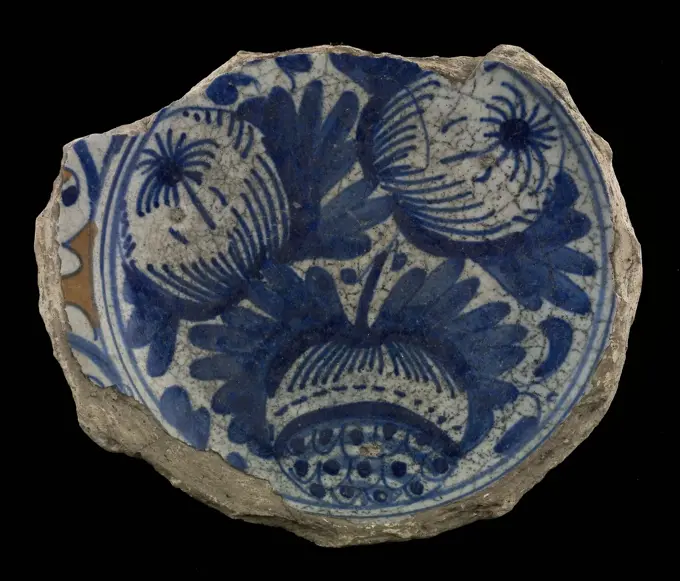
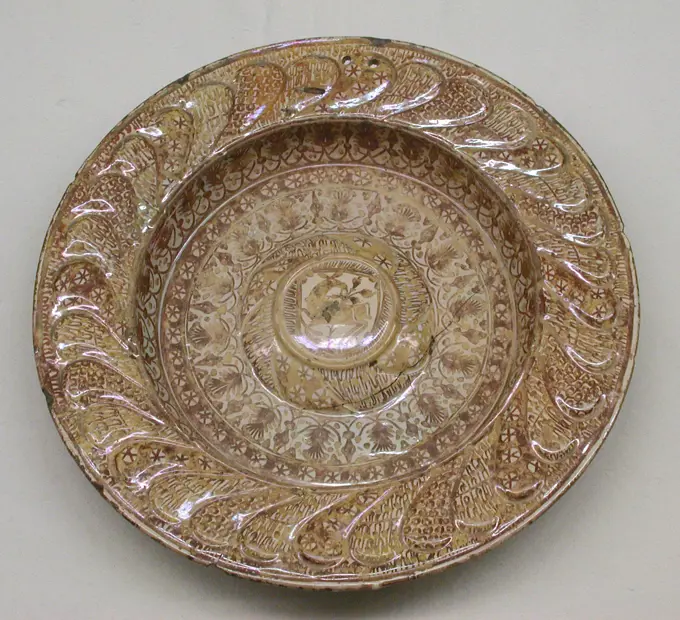
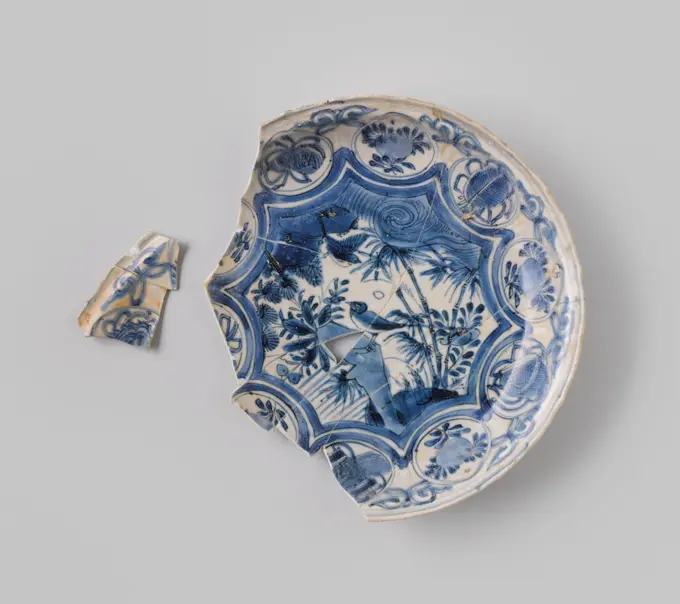
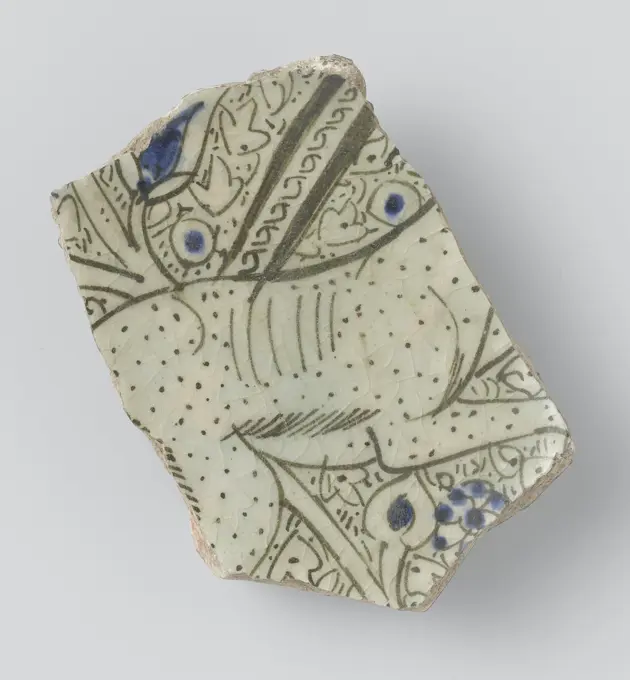
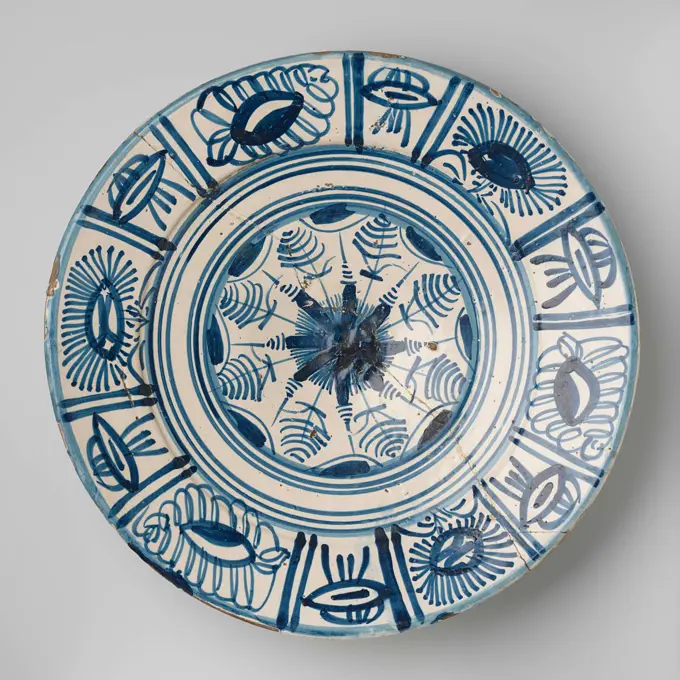
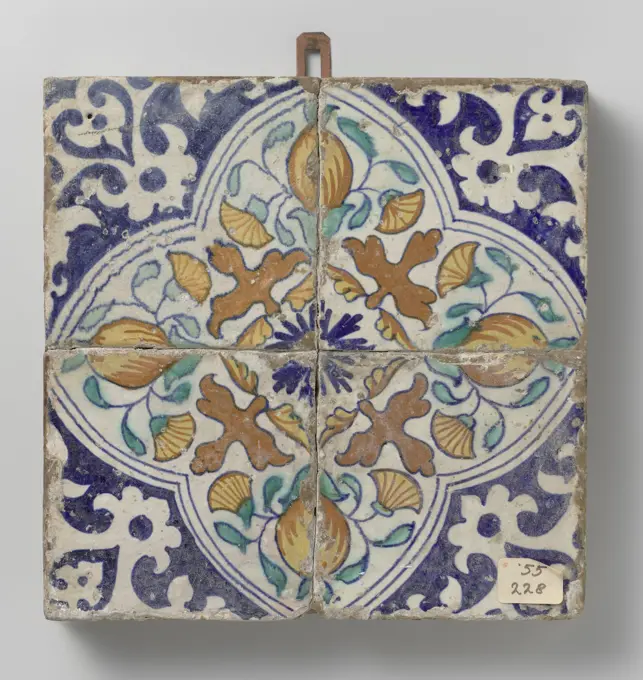
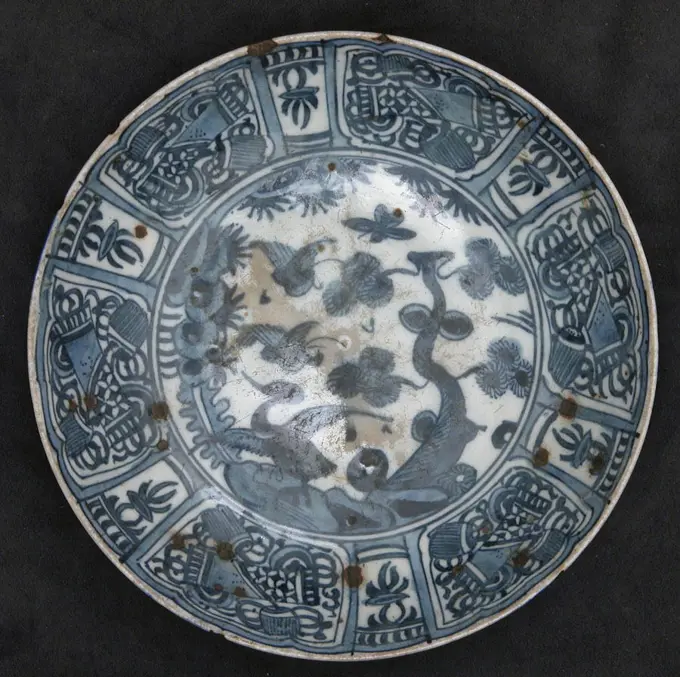
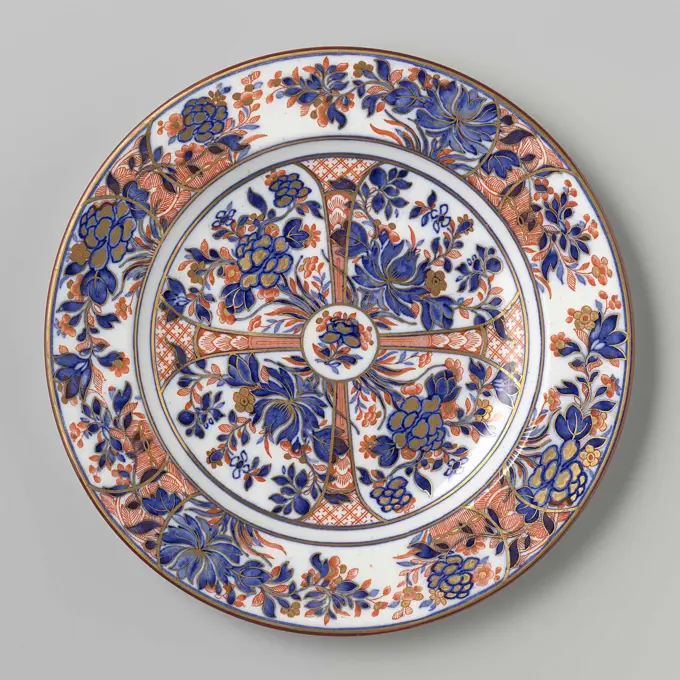
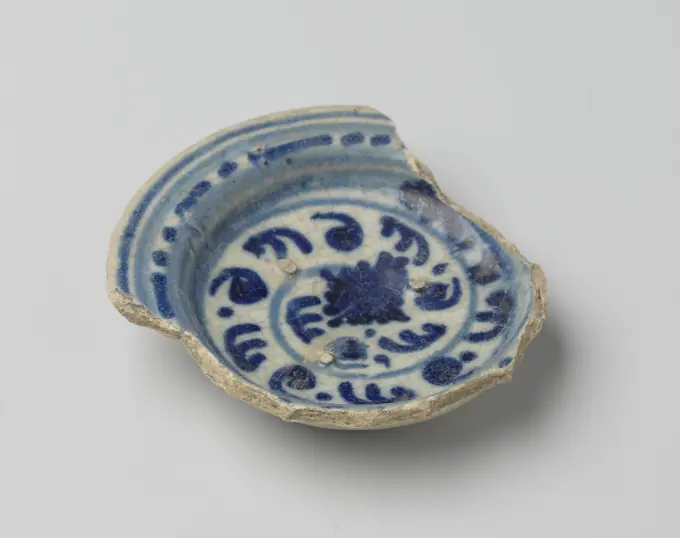
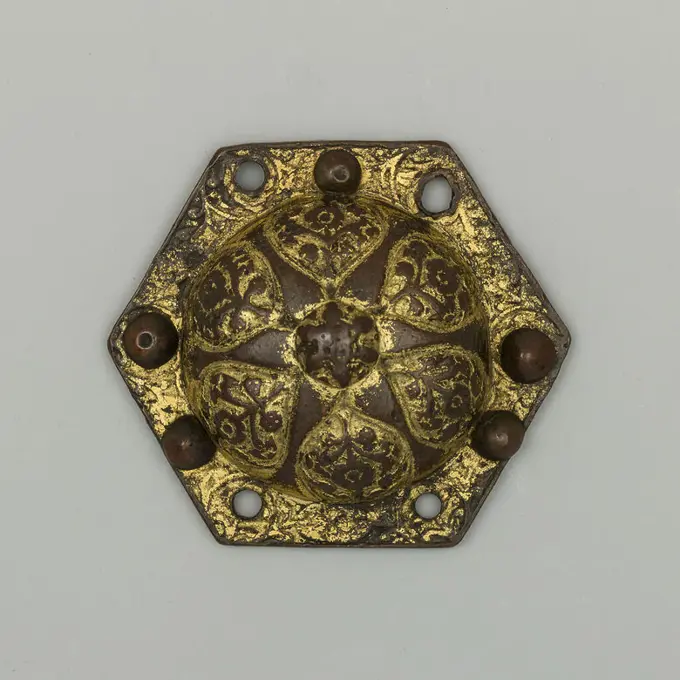
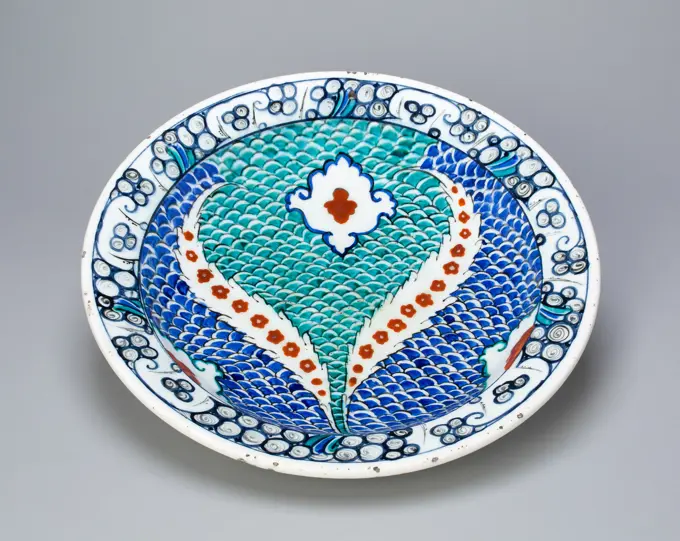
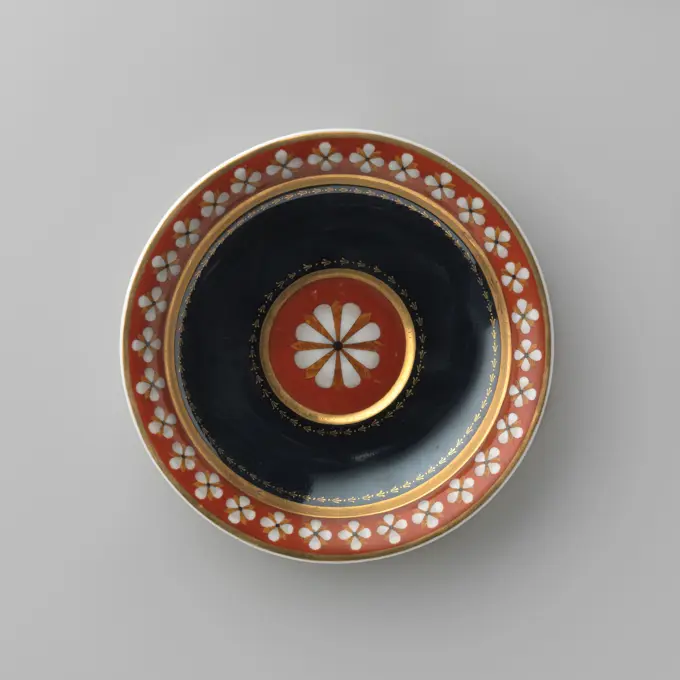
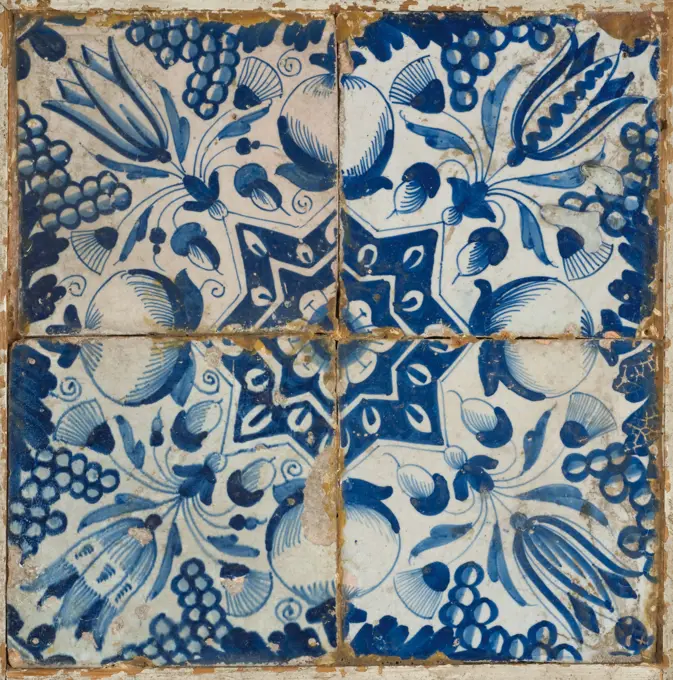
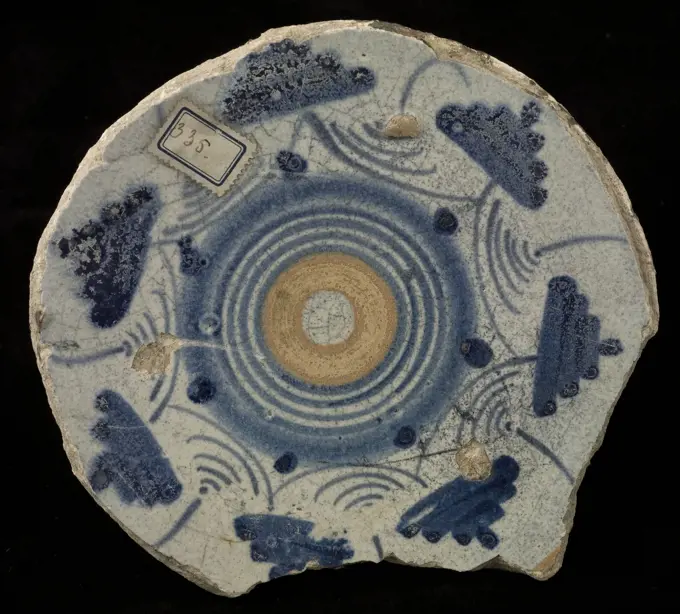
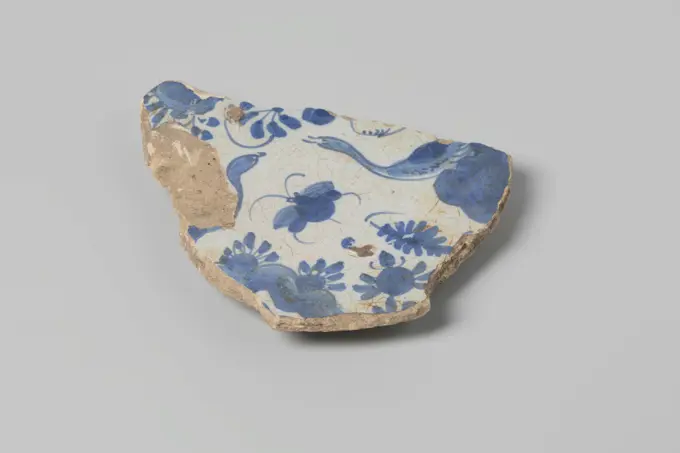
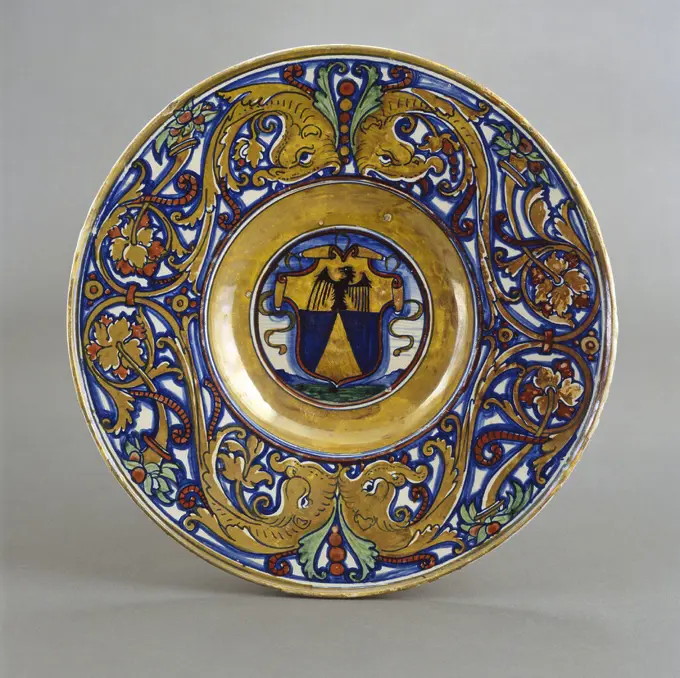
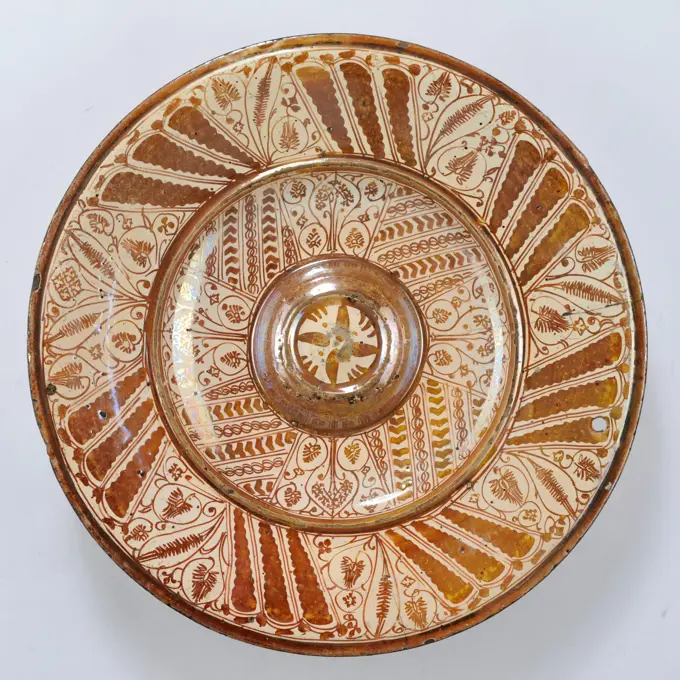
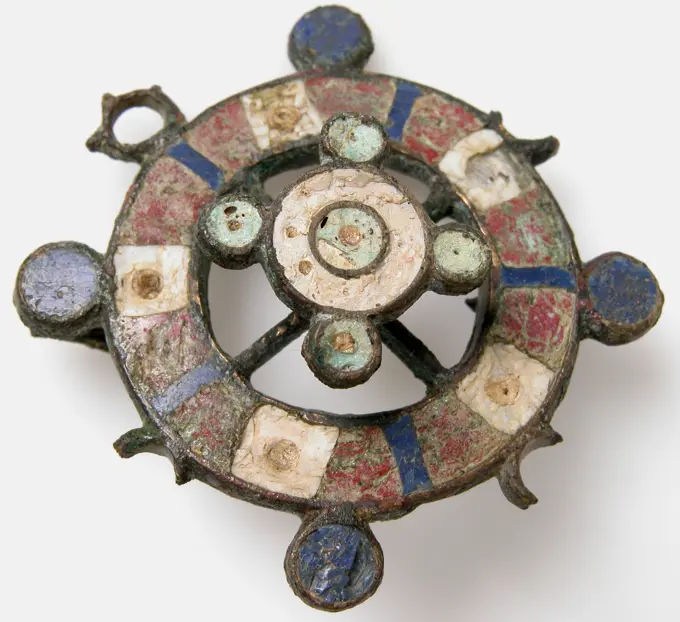
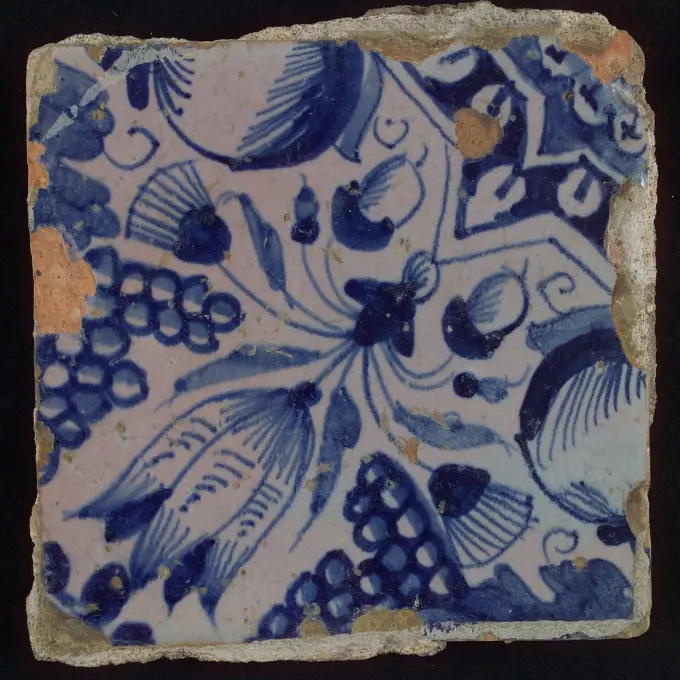
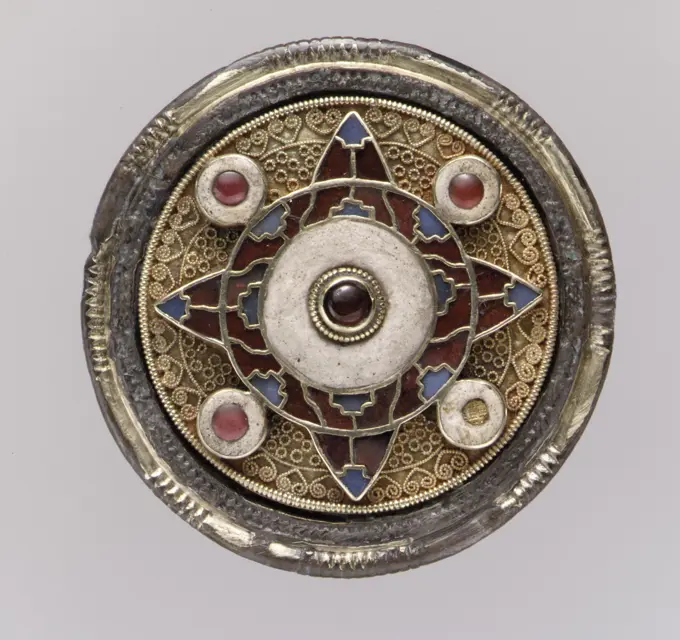
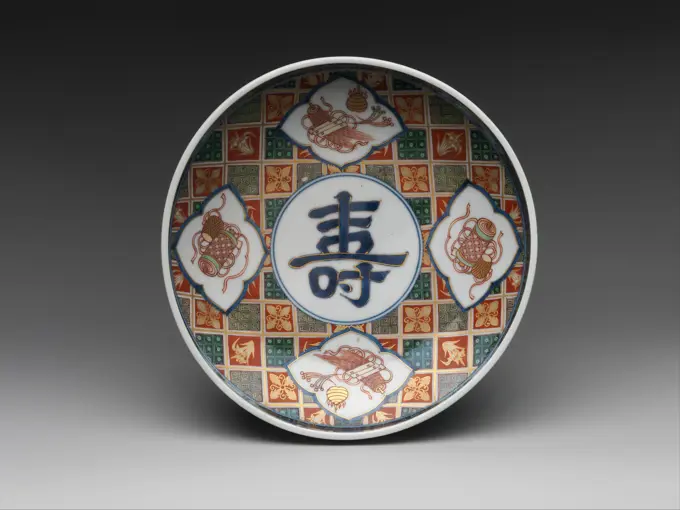
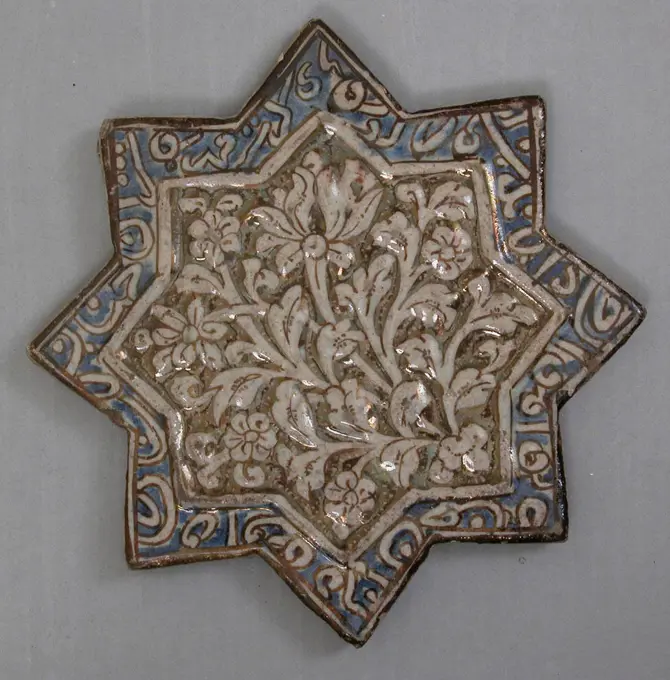
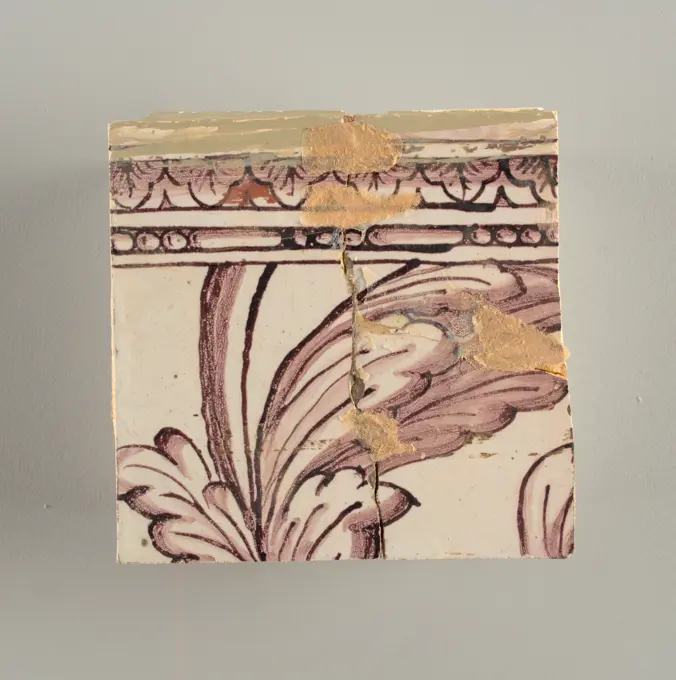
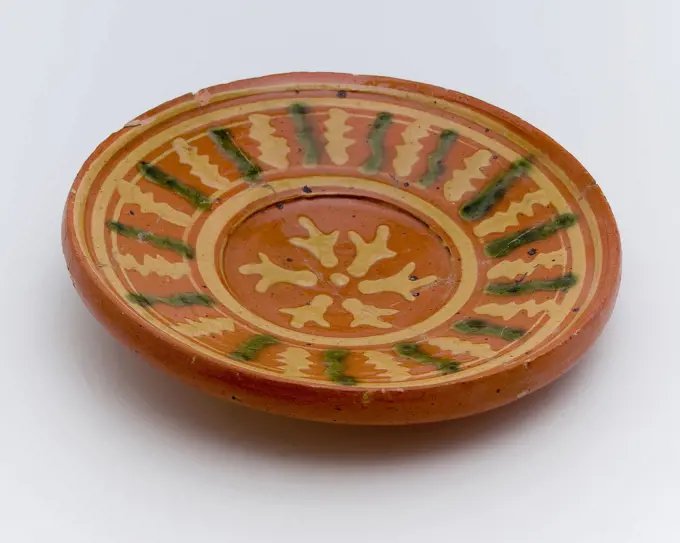
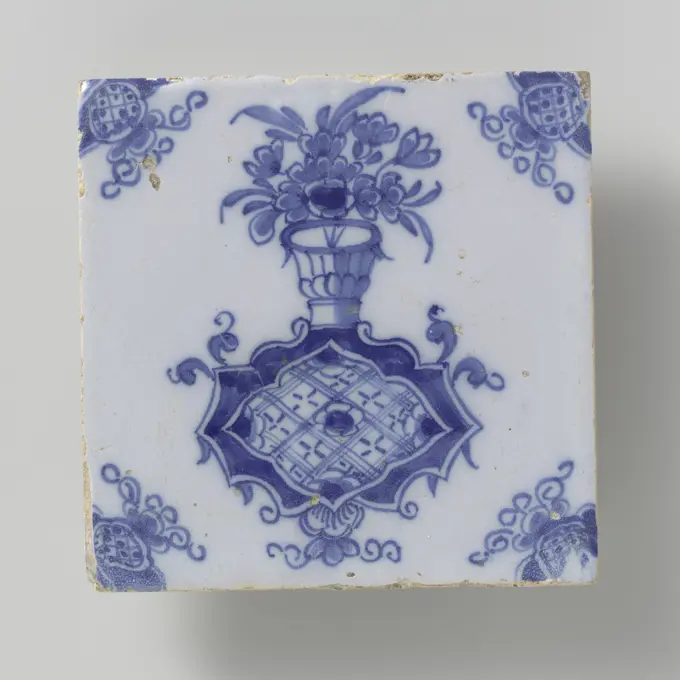
Ornament tile, quarter quadruple with orange apples, polychrome decor on white ground, wall tile tile sculpture ceramic earthenware glaze tin glaze, in form made baked glazed painted baked Wall tile with polychrome decor on white background. Ornament tile quarter quadruple with orange and palm corner in recess technique Orange yellow shard. Scraped earthenware Slightly slanted sides Tile is exceptionally bad in shape or fitted in native earthenware. Plate of Faïence. Painted multi-colored with a vase with flowers. An edge with courses, alternating with flowers and landscapes.Plate of multi -colored Faïence, Anonymous, c. 1700 - c. 1720 Faïence board. Multicolored painted with a vase with flowers. An edge with compartments, alternating with flowers and landscapes. Delft . Faïence board. Multicolored painted with a vase with flowers. An edge with compartments, alternating with flowers and landscapes. Delft .Dish of earthenware, fragment with a star with eight leaf -shaped points, anonymous, 1622 Dish of earthenware, fragment. In the circular center surrounded by concentric blue lines, a star with eight leaf -shaped points between which small leaves, in blue, green and orange yellow. Marked from behind 1622. Dutch work. Holland earthenware Dish of earthenware, fragment. In the circular center surrounded by concentric blue lines, a star with eight leaf -shaped points between which small leaves, in blue, green and orange yellow. Marked from behind 1622. Dutch work. Holland earthenwareOval Rustic Dish with Shells and Reptiles. Palissy (after), Bernard (France, 1509-1590). France, circa 1560-1600. Furnishings; Serviceware. Lead-glazed earthenware, Palissy wareDish 18th century. Dish 444875Majolica dish with four-leaved flower in the mirror in blue, orange and green, dish crockery holder soil find ceramic earthenware glaze tin glaze lead glaze, ring 9.5 hand turned baked glazed painted fried Majolica dish on stand. hole in the rope decor stand ring along the dish edge. In the mirror polychrome flower with round heart and four leaves in blue orange and green en Backside lead glaze Along the edge the glaze is lightly arched in one place archeology Valckensteyn Poortugaal Albrandswaard earthenware serve serving food Soil discovery: castle Valckensteyn in Poortugaal now Albrandswaard 1961- 1962.Earthenware tile in four-step with polychrome representation, wall tile tile sculpture earth discovery ceramic earthenware glaze tin glaze, in form made glazed baked Earthenware tile from quatrefoil with polychrome representation Presentation consists of large palm corner in blue Two half apples or oranges in orange orange flowers and buds. Green leaves The back of the tile was used to practice another representation. Vaguely visible is large diagonal tulip. Archeology Rotterdam City triangle Hofplein Soil discovery: construction site Shellgebouw Hofplein 20 Rotterdam.. Plate of faience, painted multi-colored with a compilation of Chinese motifs, the initials we and the year 1709.Fragment majolica dish, blue on white, Italian-looking tendrils, dish plate crockery holder soil find ceramics pottery glaze, majolica Cooked on prunes. Italian decor archeology Italy serve decorate food. Dish of pottery, decorated with a stylized flower pattern in yellow, brown, black and white on a light blue tinted cream fond, with purple edge. Two holes for confirmation in stand ring.Dish of earthenware, fragment with a window with cross -shaped figure and snake, anonymous, c. 1600 Dish of earthenware, fragment. In the middle, inside concentric lines, a window with cross -shaped figure and hose. Lines in blue and orange yellow. Sluine stripes in blue on the collar. Dutch. Netherlands earthenware Dish of earthenware, fragment. In the middle, inside concentric lines, a window with cross -shaped figure and hose. Lines in blue and orange yellow. Sluine stripes in blue on the collar. Dutch. Netherlands earthenwareTile, orange, brown, green and blue on white, flowerpot in square, corner pattern palm, wall tile tile sculpture ceramic earthenware glaze, baked 2x glazed paintedDish with arched flat on which multicolored painted a coat of arms in which six mountains and two intersecting hammers, anonymous, c. 1490 - c. 1510 Round dish of multi -colored painted majolica. A blue coat of arms has been painted on the curved flat on which six mountains and two intersecting hammers. Concentric piping are painted around the weapon in which lines and dots. On the edge, bunches of peacock -ferry leaves are painted in blue. Blue and red concentric circles are painted on the back. Faenza earthenware. tin glaze. lead glaze majolica Round dish of multi -colored painted majolica. A blue coat of arms has been painted on the curved flat on which six mountains and two intersecting hammers. Concentric piping are painted around the weapon in which lines and dots. On the edge, bunches of peacock -ferry leaves are painted in blue. Blue and red concentric circles are painted on the back. Faenza earthenware. tin glaze. lead glaze majolicaPlate of blue painted faience, anonymous, c. 1710 - c. 1740 Elongated, octagonal plate of blue painted faience. The top edge has a triangular pediment with a bearing eye. Flowers, plants, birds and butterflies are painted in the middle. Flowers are painted on the edge. Delft earthenware. tin glaze. Elongated, octagonal plate of blue painted faience. The top edge has a triangular pediment with a bearing eye. Flowers, plants, birds and butterflies are painted in the middle. Flowers are painted on the edge. Delft earthenware. tin glaze.Tile, orange, brown, green, and blue on white, flowerpot in square, corner pattern palm, wall tile tile sculpture ceramic earthenware glaze, baked 2x glazed paintedDish late 16th century. Dish 444883Fragment sign from V.O.C. ship De 'Witte Leeuw', Anonymous, Before 1613 plate (dishes) Fragment sign from V.O.C. ship De 'Witte Leeuw', 85 present. Fourteen glued together. Jingdezhen bone china (material). glaze   Sint-HelenaFragment of a dish, c. 1600 - c. 1650 Fragment of a dish on a low foot ring. Crème shard covered with ting laze on the front and lead glaze at the rear. Painted in blue, yellow and green with a double blue circle on the crotch on the cross; The edge decorated with a chain motif between double blue lines. Northern Netherlands earthenware. tin glaze. lead glaze majolica Fragment of a dish on a low foot ring. Crème shard covered with ting laze on the front and lead glaze at the rear. Painted in blue, yellow and green with a double blue circle on the crotch on the cross; The edge decorated with a chain motif between double blue lines. Northern Netherlands earthenware. tin glaze. lead glaze majolicaTile, flower on spot in blue, green, orange and purple on white, inside an oval with lilies, corner design, wall tile tile sculpture ceramic earthenware glaze, baked 2x glazed paintedFlower tile, flowerpot in square, corner pattern palmet, wall tile tile sculpture ceramic earthenware glaze, baked 2x glazed painted Yellow shard square two nail holes. Multicolored: orange brown blue green on white fond.Dish 17th century. Dish 453401Field of three tiles, Anonymous, 1620 - 1640 Field of 3 tiles (3 x 1) each with a blue painted Chinese landscape framed by a circle within an Akkolade. In the corners, meander ornament. Netherlands earthenware. tin glaze majolica Field of 3 tiles (3 x 1) each with a blue painted Chinese landscape framed by a circle within an Akkolade. In the corners, meander ornament. Netherlands earthenware. tin glaze majolicaA plate;  End of the 19th century () (1891-00-00-1900-00-00);Four four-quantity tiles with pomegranates and marigolds. Four tiles (2 x 2) each with multi-colored (blue, orange, green and yellow) painted pomegranates and marigolds in a four-pass formed from four tiles. The four-pass is surrounded by ornament in filling technology.Ashtray with medallions with floral motifs unknownDish with Two Birds Encircled by Beaded Roundels. China. Date: 618 AD-907 AD. Dimensions: H. 2.5 cm (1 in.); diam. 14.8 cm (5 13/16 in.). Slip-coated earthenware with cobalt blue and lead amber glazes and underglaze mold-impressed decoration. Origin: China. Museum: The Chicago Art Institute, Chicago, USA.Fragment of a dish with taoistic symbols. Fragment of a saucer on a low foot ring. Light red shard covered with tining acid on the front and lead glaze on the back. Painted in blue, manganese, yellow and green with a tube (), Behind which two times two crosses placed sticks; Overall a pointed leaves. The whole on a light blue fond.Tile, orange, brown, green and blue on white, flowerpot in square, corner pattern palm, wall tile tile sculpture ceramic earthenware glaze, baked 2x glazed painted. Star-shaped tile of quartz frites decorated with corant texts and flower drinks in luster on white background of glaze.Pavement tiles 16th-17th century Spanish, Seville This type of pavement tile, called olambrilla, and made to be used in combination with plain floor tiles.. Pavement tiles 187918 Spanish, Seville, Pavement tiles, 16th17th century, Glazed earthenware, Each tile about: 3-1/8 x 3-1/8 in. (7.9 x 7.9 cm). The Metropolitan Museum of Art, New York. Gift of Henry G. Marquand, 1894 (94.4.430az)Field of nine tiles with flowers, anonymous, c. 1640 - c. 1670 Field of nine tiles (3 x 3) each with a multicolored (blue, green, yellow and orange) painted three -fold flower inside a squared cushion. In the corners, a lily. Netherlands earthenware. tin glaze majolica Field of nine tiles (3 x 3) each with a multicolored (blue, green, yellow and orange) painted three -fold flower inside a squared cushion. In the corners, a lily. Netherlands earthenware. tin glaze majolicaPLATO DE NICOLAS I- FABRICA IMPERIAL DE PORCELANA DE MOSCU DECORADO CON AGUILA IMPERIAL Y GRABADO - SIGLO XIX. Location: SOTHEBY'S. LONDON. ENGLAND.Dish with Peony late 17th-early 18th century This small dish was probably a saucer for a handleless cup, part of a larger tea set. Its green opalescent glass might have been meant to imitate green jade, a popular medium for luxury objects of this period.. Dish with Peony. late 17th-early 18th century. Glass, opalescent green; blown, shaped with mold, enameled, and gilded. Possibly made in India, Deccan, Golconda. GlassFoliate Dish with Banana Leaf, mid-1800s. Japan, Edo period (1615-1868). Porcelain with overglaze enamel decoration; diameter: 28 cm (11 in.).Sharf of white -baking earthenware, with a painting of circles and a flower shape in blue, yellow and orange, c. 1500 - c. 1899 fragment   earthenware. glazePlate ca. 1790-1800 Attributed to John Leidy I. Plate 6136Fragment majolica plate with polychrome leaf motifs and sgraffito in the rim, plate crockery holder soil find ceramic earthenware glaze tin glaze lead glaze, majolica painted baked 2x glazed sgraffito Edge mirror fragment Small shallow plate archeology Rotterdam City center Stadsdriehoek Schielandshuis indigenous pottery food table room serve serving Soil discovery: Schielandshuis during restoration .Tile second half 15th century Flemish, Antwerp. Tile. Flemish, Antwerp. second half 15th century. Maiolica (tin-glazed earthenware). Ceramics-PotteryOrnament tile, diagonally across the tile white braid band motif, corner motif quarter rosette, wall tile tile sculpture ceramic earthenware glaze, baked 2x glazed painted Light yellow shard with fine red dots and square strings. Multicolored: blue (ocher to lemon) yellow and orange on white. Savings technique MoorsPlate of multicolor hard-baked pottery; Staffordshire. Plate of multicolored hard-baked pottery, with a scalloped edge. The edge is embossed with six fields of corrugated railing. The plate is covered with blue gray lead glaze with stains in green, yellow and manganese. The back is dotted in manganese. Four signs belong to the board (BK-1987-41-A to BK-1987-41-E).Tile, orange, brown, green, and blue on white, flowerpot in square, corner pattern palm, wall tile tile sculpture ceramic earthenware glaze, baked 2x glazed paintedPlate. unknown, craftsmanShards of signs from V.O.C. ship De 'Witte Leeuw', Anonymous, Before 1613 plate (dishes) Shards of signs from V.O.C. ship De 'Witte Leeuw'. Jingdezhen bone china (material)   Sint-HelenaPlate (tondino) ca. 1480-1520 Italian, Florence or vicinity. Plate (tondino). Italian, Florence or vicinity. ca. 1480-1520. Maiolica (tin-glazed earthenware). Ceramics-PotterySharp of ross -baking earthenware, with stand ring, at the front with blue glaze, on which a bunch of flowers in yellow, white, blue, green and orange, around it stripes, anonymous, 1600 - 1650  Northern Netherlands earthenware. glaze majolica  Northern Netherlands earthenware. glaze majolicaCERAMICA IRANI-CUENCO DE BARRO ROJIZO S XII. Location: MUSEO ARQUEOLOGICO NACIONAL-COLECCION. MADRID. SPAIN.Bowl;  2 after. 16th century (1595-00-00-1600-00-00);Dishwill of earthenware, with white tinglaze on the top and bottom and a representation with flowers in blue at the top, damaged, anonymous, 1500 - 1799   earthenware. tin glaze   earthenware. tin glazePLATO SERIE DE LA BRIONA-MANISES S XV. Location: MUSEO DE CERAMICA-CERAMICA VALENCIANA. Barcelona. SPAIN.Two-tone tile, blue on white background, four circles with white French lily around central ornament with lily, wall tile tile sculpture ceramic earthenware glaze, baked 2x glazed painted Yellow to reddish shard square reverse with marker L Baanstr. 1940Scherf Majolica with decoration in blue and yellow, anonymous, 1500 - 1699  Majolic screen. Northern Netherlands earthenware. glazeBowl 12th-13th century. Bowl. 12th-13th century. Stonepaste; painted and incised under transparent turquoise glaze. Attributed to Syria, Raqqa. CeramicsFlowerpot, flowerpot between balusters in blue on white, corner pattern french lily, white paint on the tile, wall tile tile sculpture ceramic earthenware glaze, baked 2x glazed painted Square Bellevue Rotterdam Hillegersberg-Schiebroek Hillegersberg Zuid Kleiweg Originating from the former Huize Bellevue Kleiweg 427 Rotterdam.Tile, flowerpot in blue on white, corner motif lily, wall tile tile sculpture ceramic earthenware glaze, baked 2x glazed paintedTile, Glazed earthenware, White, green, light brown and dark brown glazes, in cuerda seca technique. Geometrical design, called Laceria (lacework). Hispano-Moresque style., Spain, 1475-1500, tiles, Decorative Arts, TileBake with pleated edge, painted in blue in the middle with a bird on rock, anonymous, c. 1650 - c. 1670 Baking of blue painted faience, with a pleated edge. A bird is painted on a rock in the middle. The board is marked and is a bottom find. Delft earthenware. tin glaze. Baking of blue painted faience, with a pleated edge. A bird is painted on a rock in the middle. The board is marked and is a bottom find. Delft earthenware. tin glaze.Fragment majolica dish, orange and blue on white, with apples and pomegranates on the mirror, plate dish crockery holder soil find ceramic earthenware glaze, baked underside covered with gray green lead glaze. Polychrome archeology serve to decoratePlateau 16th century Spanish, Valencia Tin-glazed earthenware, of which lusterware is one type, was developed in the Middle East in the ninth and tenth centuries to imitate the porcelains produced in China. The opaque white glaze concealed the clay body, which could range from pale buff to brick red, allowing for brilliant effects created by painting the white surface with metal oxides that fired to a range of colors. This technique, as well as the use of metallic lusteran iridescent, coppery painted glazespread throughout the Muslim world, arriving among the potters of Valencia in the thirteenth century. The so-called Hispano-Moresque lusterware, with its fusion of Islamic and Gothic styles and motifs, often in shaped imitating those of metal vessels, was treasured by the elite in Spain during the fifteenth century and exported to the courts of Europe. The Valencian industry declined in the late sixteenth century, as colorful Italian Renaissance maiolica gained in popularity among tBowl. Iran, late 12th-early 13th century. Ceramics. Fritware, overglaze luster-paintedSign from V.O.C.-ship De 'Witte Leeuw', Anonymous, Before 1613 plate (dishes) Sign from V.O.C. ship De 'Witte Leeuw', 85 present. Jingdezhen bone china (material)   Sint-HelenaDish fragment with an animal among floral scrolls, anonymous, c. 1300 - c. 1399 Fragment of the bottom of a saucer of quartz fritry with greenish white glaze over a translucent black signing, consisting of the hull and parts of legs of an animal between flower vines. Only blue dots. Egypt earthenware. glaze. cobalt (mineral) painting / vitrification Fragment of the bottom of a saucer of quartz fritry with greenish white glaze over a translucent black signing, consisting of the hull and parts of legs of an animal between flower vines. Only blue dots. Egypt earthenware. glaze. cobalt (mineral) painting / vitrificationDish, blue painted: on the flat a starry ornament with concentric circles. Edge with flat distribution in which stylized flowers .. round dish of blue painted majolica. On the flat is a star-shaped ornament painted whaling concentric circles. The edge is divided into compartments in which stylized flowers (to Chinese example).Field of four four -paste tiles with pomegranates and marigolds, anonymous, c. 1580 - c. 1620 Field of four tiles (2 x 2) each with multicolored (blue, orange, green and yellow) painted pomegranates and marigolds in a four -pass formed from four tiles. The four pass is surrounded by ornament in Vultechniek. Netherlands earthenware. tin glaze majolica Field of four tiles (2 x 2) each with multicolored (blue, orange, green and yellow) painted pomegranates and marigolds in a four -pass formed from four tiles. The four pass is surrounded by ornament in Vultechniek. Netherlands earthenware. tin glaze majolicaFor a long time (ôzara);  around 1860-1870 (1860-00-00-1870-00-00);Plate. Culture: Mexican. Dimensions: Diam. 7 1/4 in. (18.4 cm). Date: ca. 1800. Museum: Metropolitan Museum of Art, New York, USA.Tile, Anonymous, 1600 - 1625 Tile with a multicolored (blue, purple, orange and green) tulip placed diagonally. Netherlands earthenware. tin glaze majolica Tile with a multicolored (blue, purple, orange and green) tulip placed diagonally. Netherlands earthenware. tin glaze majolicaBowl. Celadon coverage sandstone. Cernuschi Museum, Asia Museum of Asia in the city of Paris.Blue Glass Dish Or Bowl-Stand, Isaac Jacobs (Templecombe, Somerset, England, 1757 - 1835) 1750 - 1825Bowl 18th century. Bowl 454753Blackboard with a cross surrounded by flowers on the flat. Pottery plate with liquefy and orange transfer decor, painted with orange and gold. The flat is shared through a cross in four and is decorated with flowers. The edge of the board is also decorated with flowers.Dish of earthenware decorated with blue geometric ornaments, anonymous, c. 1525 - c. 1560 Fragment of a dish of blue painted majolica, decorated on the flat with geometric ornaments and concentric circles on the part of the edge. Excavated in London. Italy (possibly) earthenware. tin glaze majolica Fragment of a dish of blue painted majolica, decorated on the flat with geometric ornaments and concentric circles on the part of the edge. Excavated in London. Italy (possibly) earthenware. tin glaze majolicaBoss from a Horse Breast Collar. Culture: Ottoman or Tatar. Dimensions: Diam. 2 1/2 in. (6.4 cm); Wt. 2.7 oz. (77 g). Date: late 17th - 18th century.This boss, decorated all over with flowers and foliage, adorned the cross-section of the three straps of a horse breast collar (straps preventing the saddle from slipping backwards). This example is a simpler version of the luxury bosses attached to some Ottoman deluxe tacks, usually made of silver and gold. Museum: Metropolitan Museum of Art, New York, USA.Tile with crowned double-headed eagle. Tile with a multicolored (blue, orange and green) crowned double-down eagle framed by a scalloped edge with in the corners, a meander ornament.Bowl 12th century. Bowl. 12th century. Stonepaste; underglaze painted. Attributed to Syria, Raqqa. CeramicsDish. unknown, craftsmanDish (Tabaq) with Scale Pattern and Serrated Leaves 1550-1599 Turkey. The central design of this dish features two opposing leaves surrounding a central three-lobed (trefoil) shape, all set against a fish-scale motif in turquoise and blue. The design of the leaves is in the so-called saz (reed) style, referring to the reed pen used by Persian and Turkish artists to create black-ink drawings. Early drawings in this style depict dragons and phoenixes in combat surrounded by blossoms and feather-like leaves. The rim of the vessel contains a classic ìwave and rockî pattern, inspired by Chinese ceramics. At the beginning of Iznik pottery production, Chinese porcelain exerted a large influence on the style and colors of Iznik tiles. However, by the late 16th century, when this dish was created, Iznik potters had developed their own distinctive style of colorful floral and abstract motifs that went beyond their original Chinese influence.. Fritware with underglaze painting in blue, turquoise,Plate with Birds; Attributed to the Heron Class (Etruscan, active 680 - 660 B.C.); Caere, Etruria; 680 - 670 B.C; Terracotta; 28 × 5 cm (11 × 1 15,16 in.)Dish 14th century. Dish 447268Ornament tile, diagonal ornament in quatrefoil with bows in which orange-apples and flowers, palm corner, corner pattern rosette, wall tile tile sculpture ceramic earthenware glaze, baked 2x glazed painted Yellow and reddish shard square two and four nail holes. Multicolored: brown blue green yellow on white ground (variation in light and dark). Saving technique in blue on white.Saucer with roundels and ornamental Borders, royal porcelain manufactory, c. 1870 - c. 1900  Porcelain saucer with spreading edge, painted in underly glaze blue and on the glaze red, yellow, black and gold. On the flat, saved in red, a rosette surrounded by decorative tires, continuously on the wall. The edge with a tire rosettes saved in red. A golden band on the outer edge and the foot; The outer wall with three small stars. Marked on the underside with the scepter, a golden arrow or anchor, and II 4. Berlin porcelain. glaze. gold (metal) painting / gilding / vitrificationCeramic Iznik plates, c16th Century, Ottoman. Benaki Museum, Athens.Tile field, four ornament tiles, diagonal blue on white, star tulip with quarter rosette, tile field wall tile tile images ceramic earthenware metal glaze, baked 2x glazed paintedFragment majolica dish, circles in orange and blue, figures stacked around them in blue, dish plate crockery holder soil find ceramic earthenware glaze, baked underside covered with rather clear lead glaze. Polychrome Highly flourished decor due to high baking material archeology Rotterdam food decorating archaeological find in the soil Rotterdam 1940.Dishwill of earthenware with lead glaze on the back and at the front tinglaze and a decoration of flowers and animals in blue, marked on the bottom, damaged, anonymous, 1500 - 1799   earthenware. tin glaze. lead glaze   earthenware. tin glaze. lead glazeTile, flowerpot in blue on white, corner pattern oxenkop, wall tile tile sculpture ceramic earthenware glaze, baked 2x glazed paintedPlate with border of foliate scrollwork with dolphin heads and cornucopias; in the center, shield of arms of Vigerio of Savona. Dated: 1524. Dimensions: overall (diameter): 36.5 cm (14 3/8 in.). Medium: tin-glazed earthenware (maiolica). Museum: National Gallery of Art, Washington DC. Author: Workshop of Maestro Giorgio Andreoli of Gubbio.Edge tile from a tile tableau. Edge tile of a tile tableau, painted in blue, green, yellow and orange with rollerwork motifs between a pearl table.plant decorations, mirrors, geometric ornamentsBowl. Dimensions: 3 1/2 x 7 15/16 in. (8.9 x 20.2 cm). Date: 13th century. Museum: Metropolitan Museum of Art, New York, USA.Disk Brooch 100-300 Roman Millefiore enameling was widely popular in Gaul, where it was often used to decorate disk brooches and vessels. In this technique, the artist fuses together glass rods of different colors. The multicolored rods are then cut into cross sections, which are placed in a metal base and heated sufficiently for them to adhere. The result is an intricate pattern of flowers and checkerboards.. Disk Brooch 466382Ornament tile, star tulip with half bunch of grapes and half orange apple, corner pattern quartz and quarter rosette, wall tile tile sculpture ceramic earthenware glaze, baked 2x glazed painted Ragged shard square Four nail holes. Two-tone: blue on white Bellevue Rotterdam Hillegersberg-Schiebroek Hillegersberg Zuid Kleiweg Originating from former Huize Bellevue Kleiweg 427 Rotterdam.Disk Brooch early 600s Anglo-Saxon The region of Kent, in southeastern England, was an important center of Anglo-Saxon jewelry production of the type represented by this delicate, brightly colored piece. The interlace patterns created by gold filigree and the polished garnets reflect the high quality of goods worn by individuals in life and later buried with them.. Disk Brooch. Anglo-Saxon. early 600s. Gold with garnets, glass, and niello. Made in Faversham, England. Metalwork-GoldDish with Character for Longevity” (Kotobuki) and Assorted Treasures” Motif 18th century Japan. Dish with Character for Longevity” (Kotobuki) and Assorted Treasures” Motif 63616Template: Ornamental flat filling in a circle, Theo Nieuwenhuis, 1876 - 1951    paper snipping ornaments ~ artStar-Shaped Tile 14th century. Star-Shaped Tile 448201Wall Facing (Holland); tin-glazed earthenware, underglazeSmall earthenware plate with sludge decoration on red background, plate crockery holder soil find ceramic earthenware glaze lead glaze clay, handdrawn decorated glazed fried lemonade Small pottery plate. Sludge decor consisting of alternating yellow and green stripes towards the edge and in the mirror arrow decor. Stand surface coarsely finished with deducting traces archeology Rotterdam underground pit uitheems pottery import serve serving food Soil discovery: metro construction Rotterdam.Floor tile, brown draft, green and yellow on white ground, central green oblique glass in which white flower with yellow heart, half yellow diamonds, half green diamonds, floor tile tile images ceramic earthenware glaze, d 2.3Tile with vase with flowers and in the corners a Régence Ornament., Anonymous, 1720 - 1760 Tile with a blue -painted vase with flowers on a console and in the corners of the ornament. London earthenware. tin glaze majolica Tile with a blue -painted vase with flowers on a console and in the corners of the ornament. London earthenware. tin glaze majolica