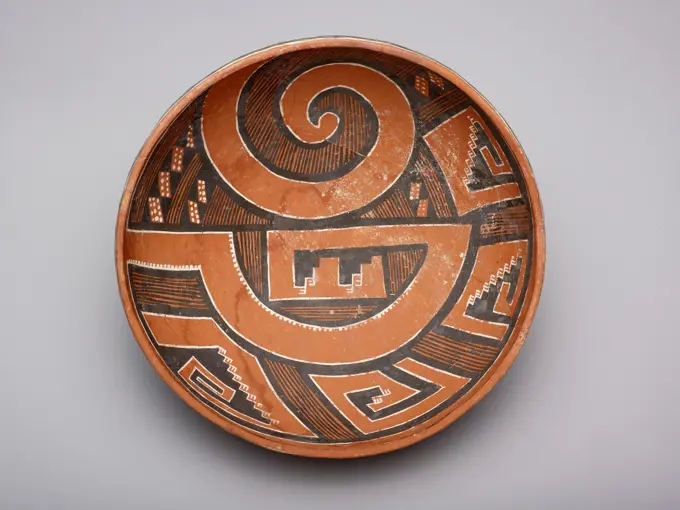
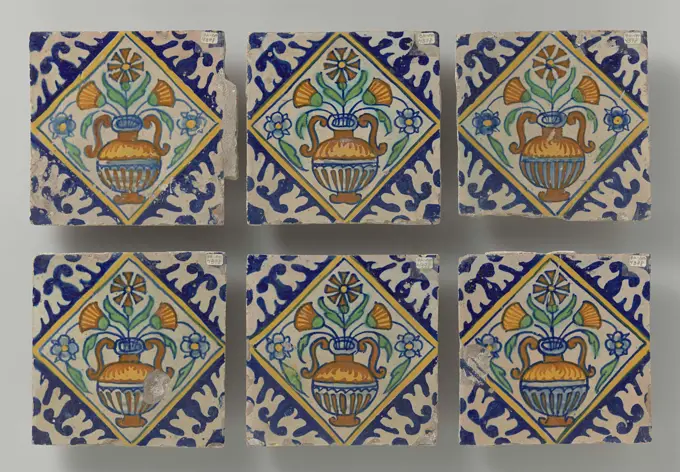
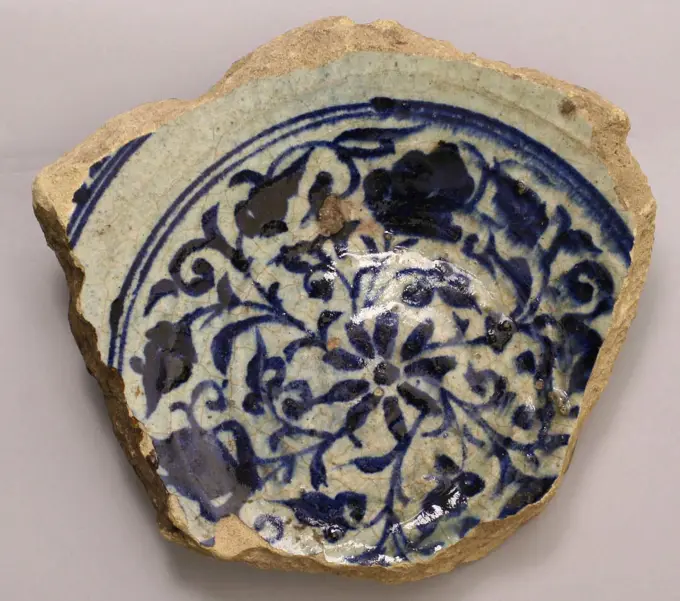
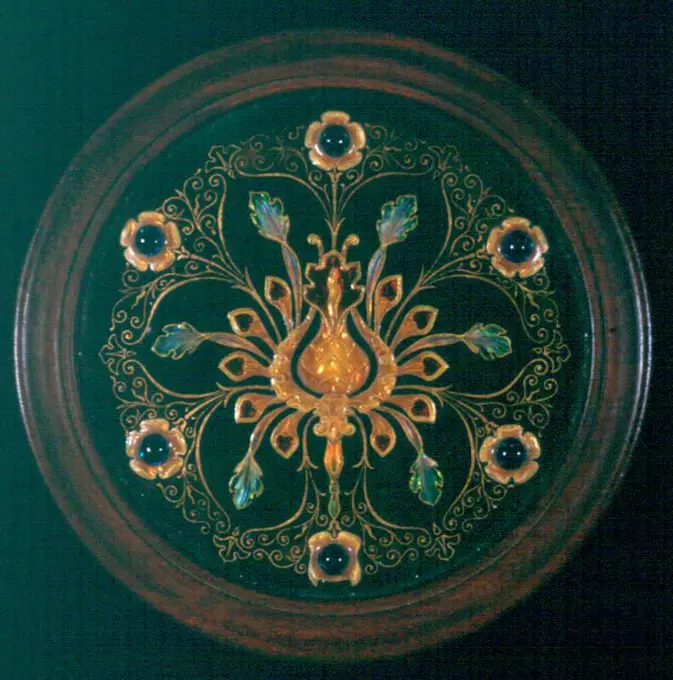
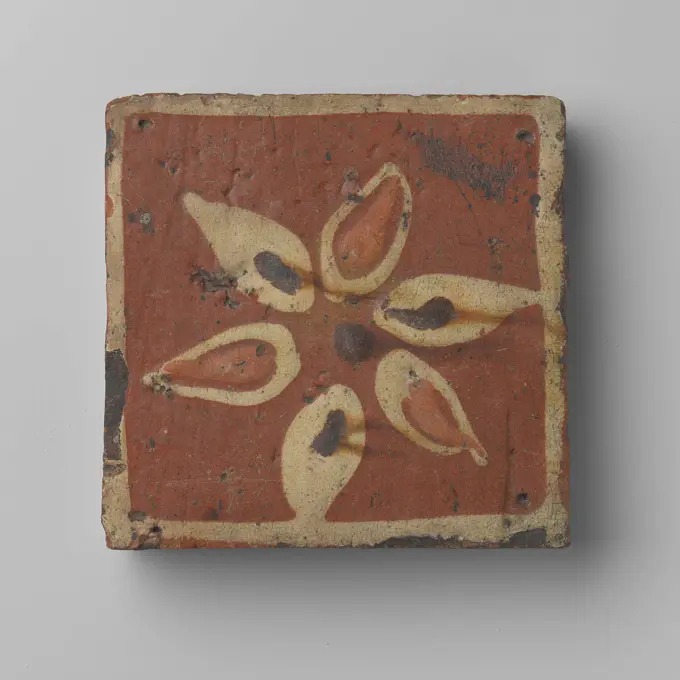
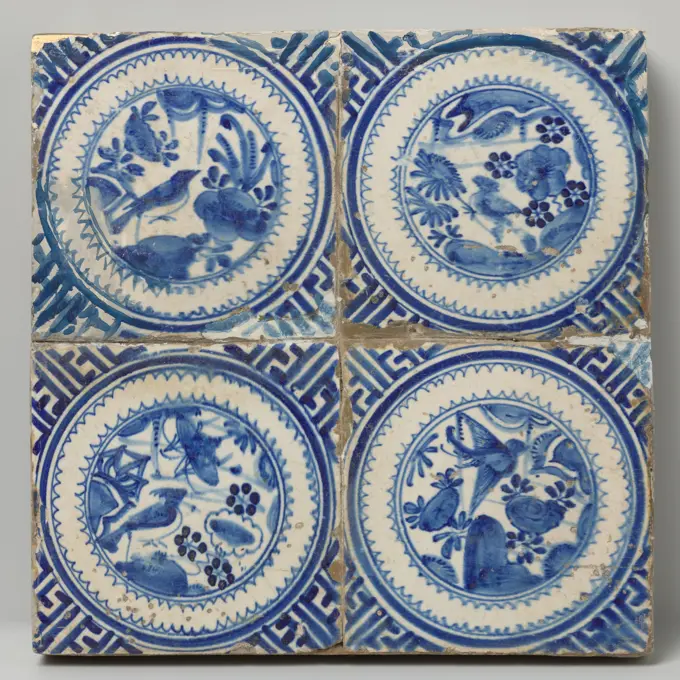
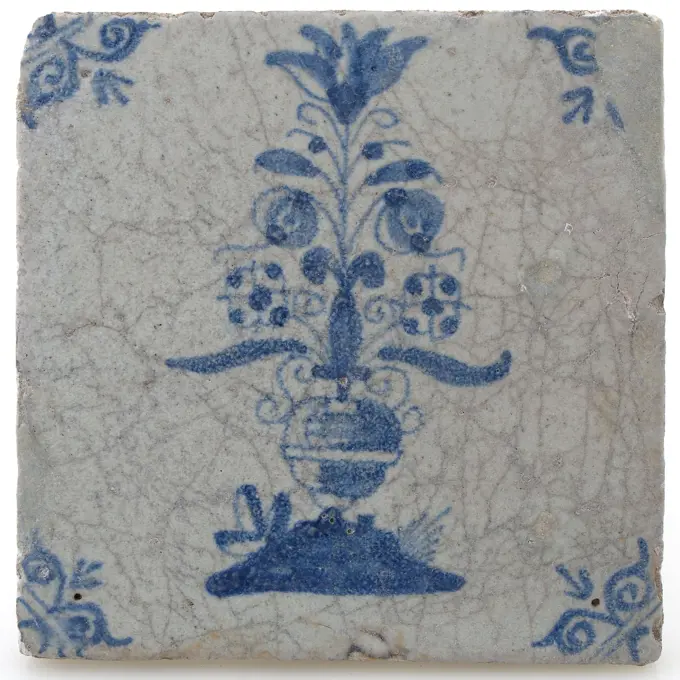
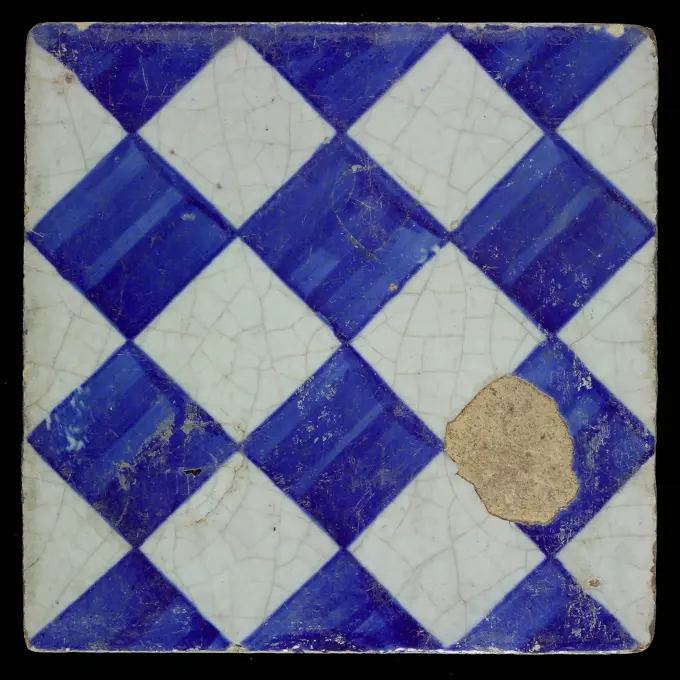
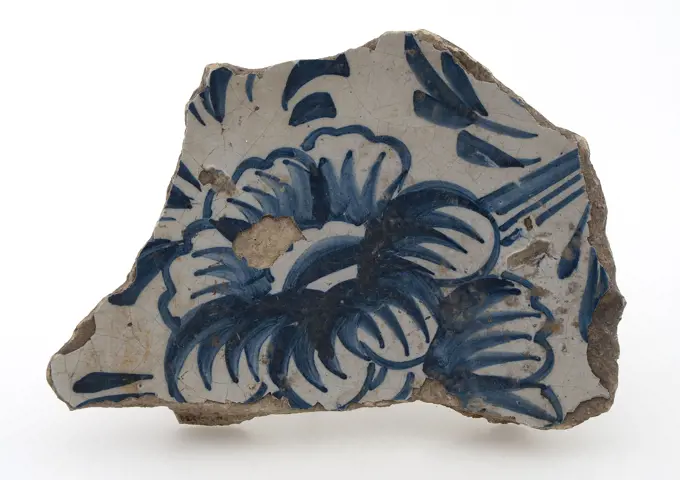
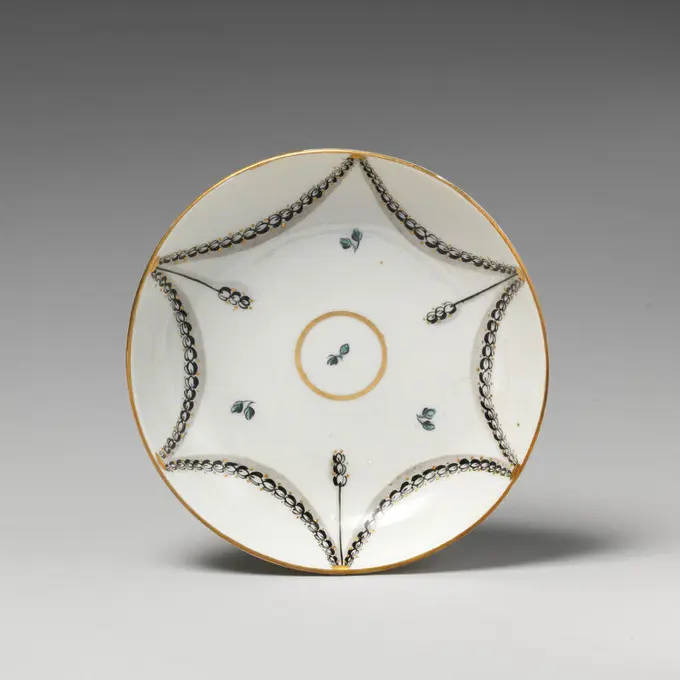
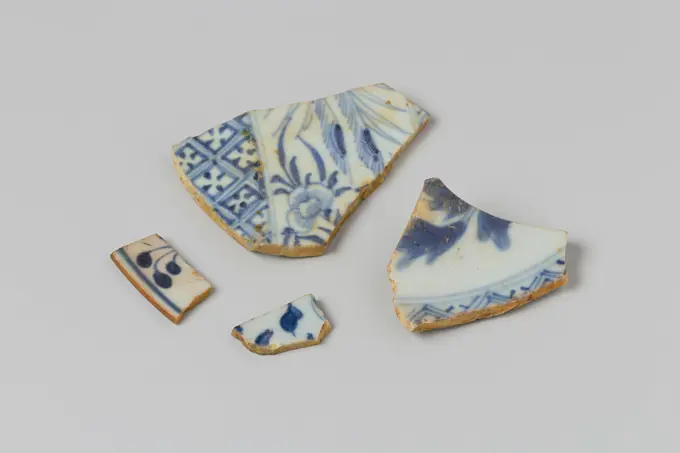
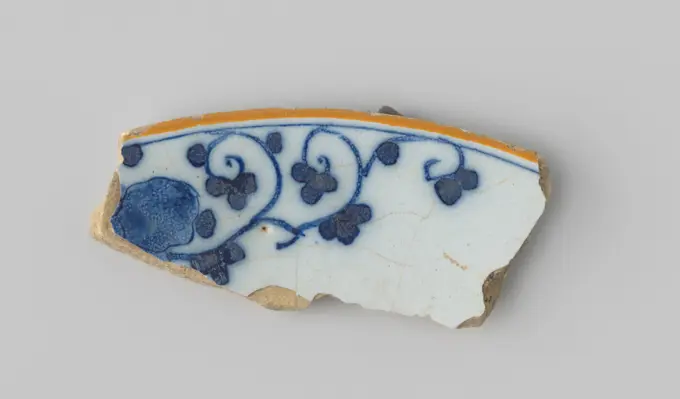
Decorative Ceramic Tiles

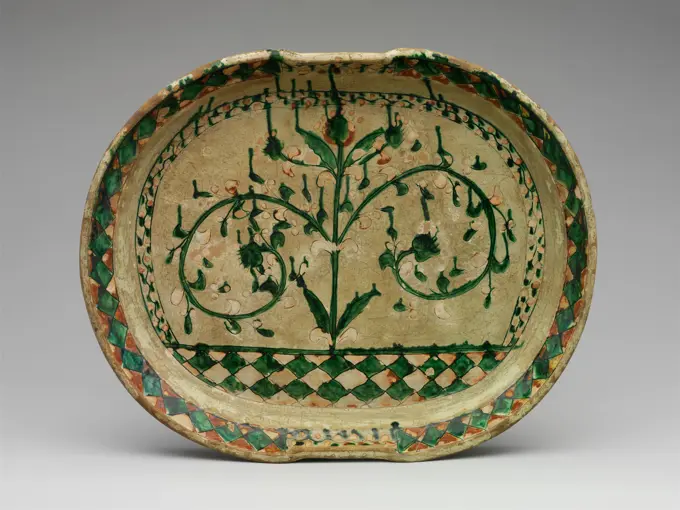
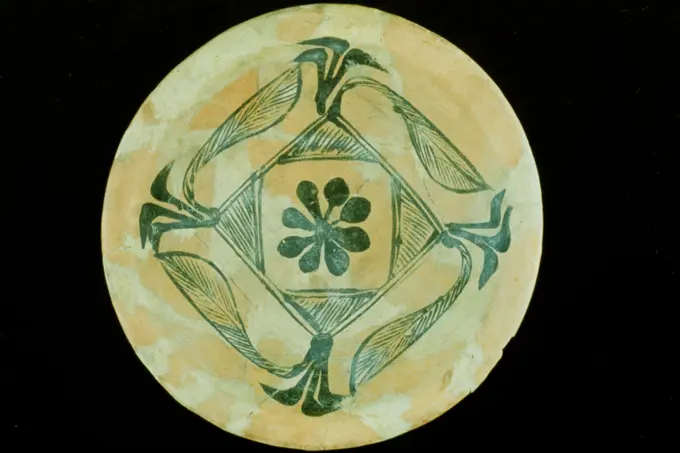
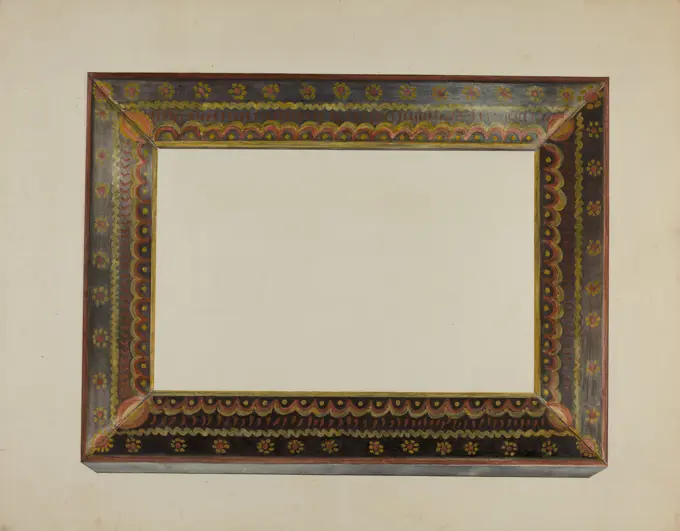
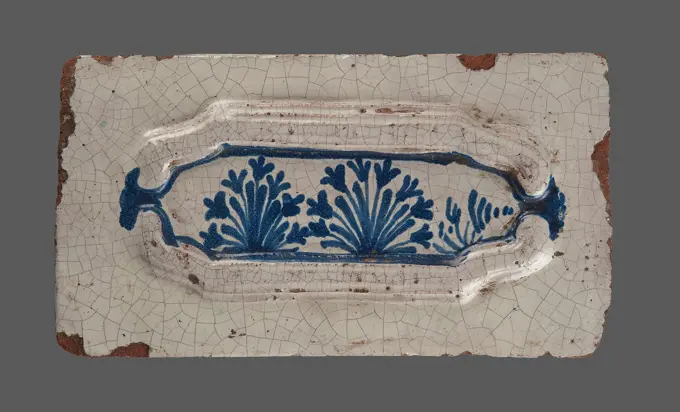
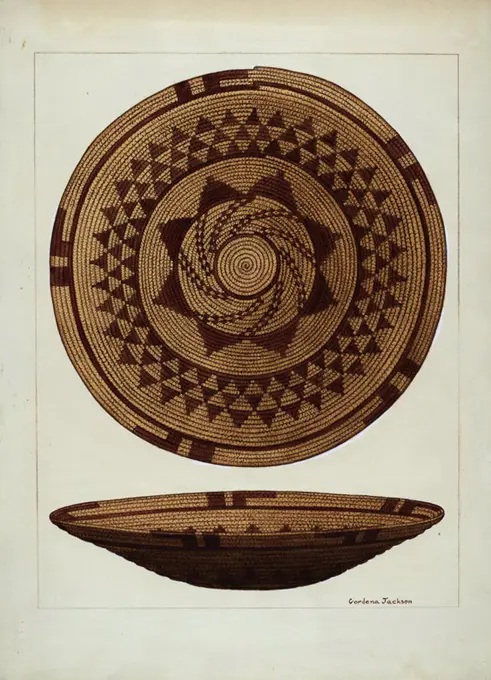
Colorful decorative ceramics with intricate floral and geometric patterns, showcasing historic craftsmanship in earthenware and faïence styles.
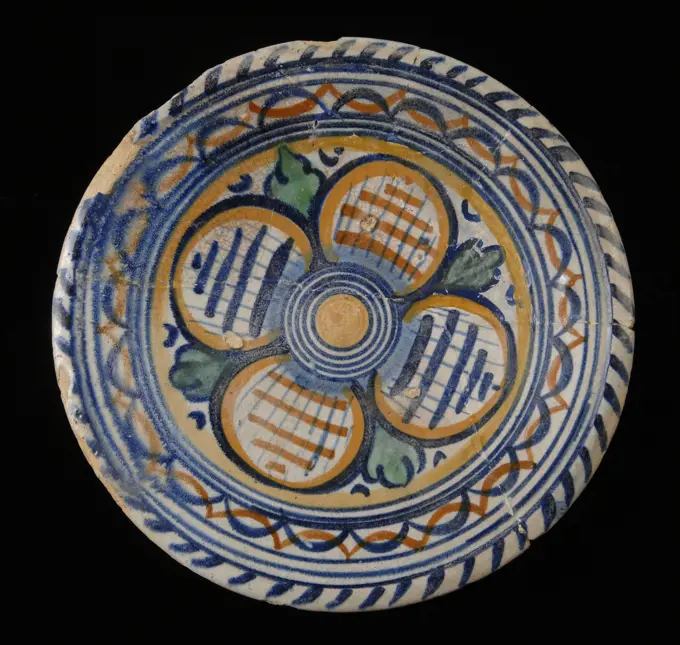
Majolica dish with four-leaved flower in the mirror in blue, orange and green, dish crockery holder soil find ceramic earthenware glaze tin glaze lead glaze, ring 9.5 hand turned baked glazed painted fried Majolica dish on stand. hole in the rope decor stand ring along the dish edge. In the mirror polychrome flower with round heart and four leaves in blue orange and green en Backside lead glaze Along the edge the glaze is lightly arched in one place archeology Valckensteyn Poortugaal Albrandswaard earthenware serve serving food Soil discovery: castle Valckensteyn in Poortugaal now Albrandswaard 1961- 1962.
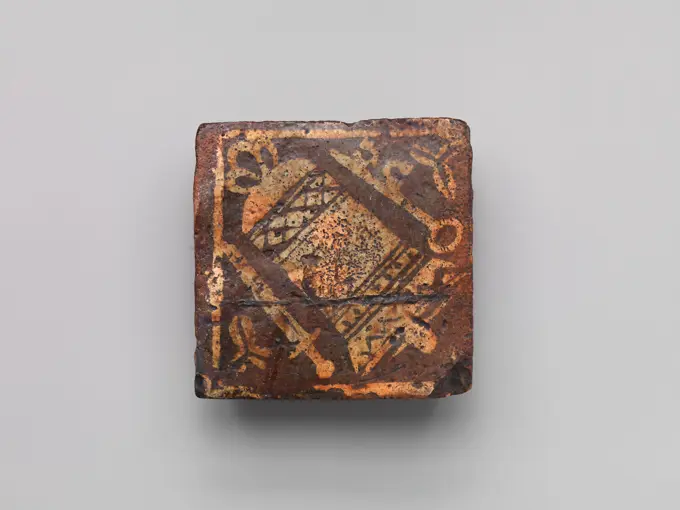
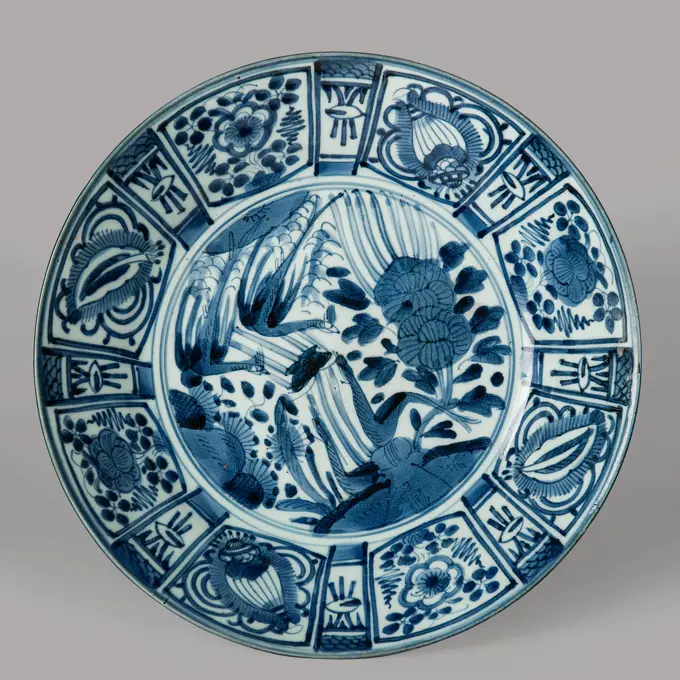
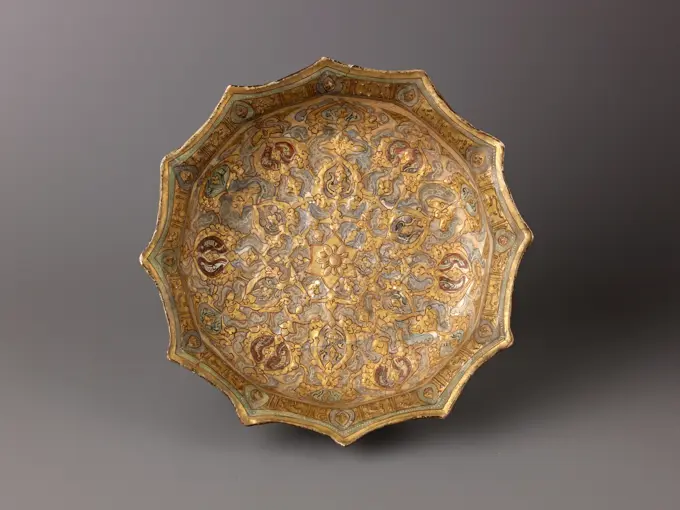
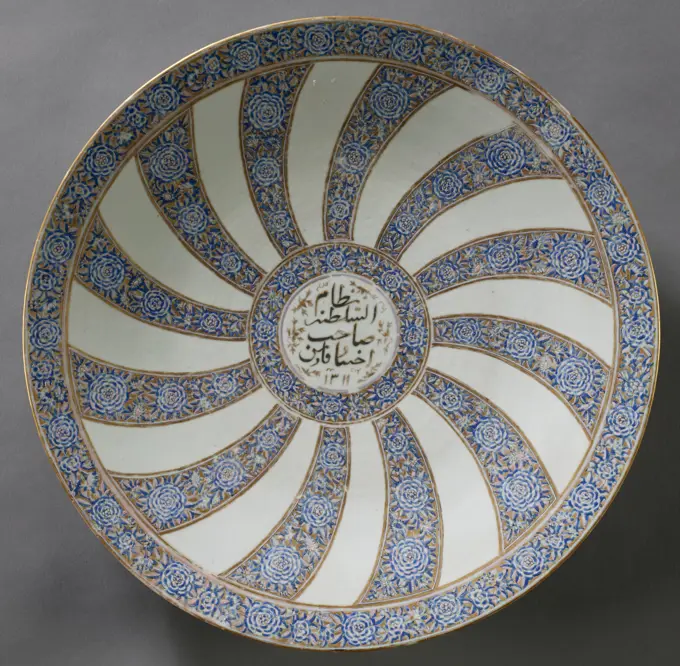
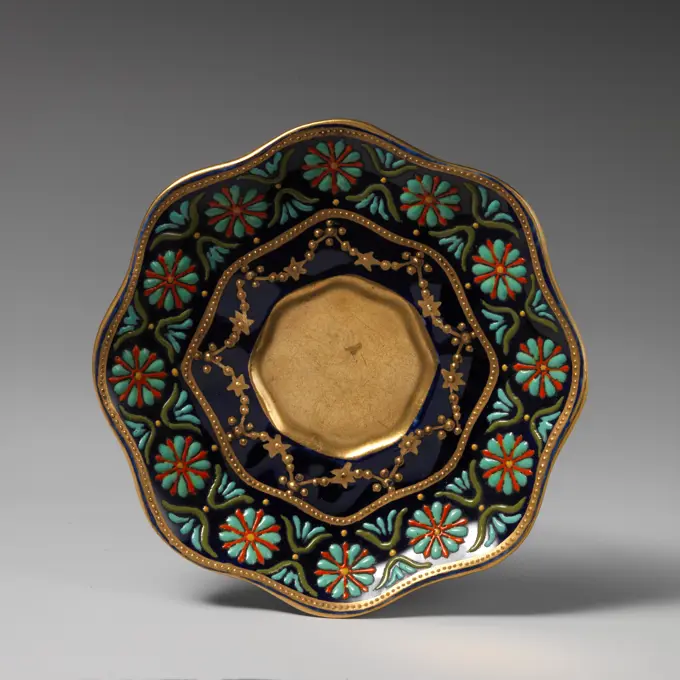
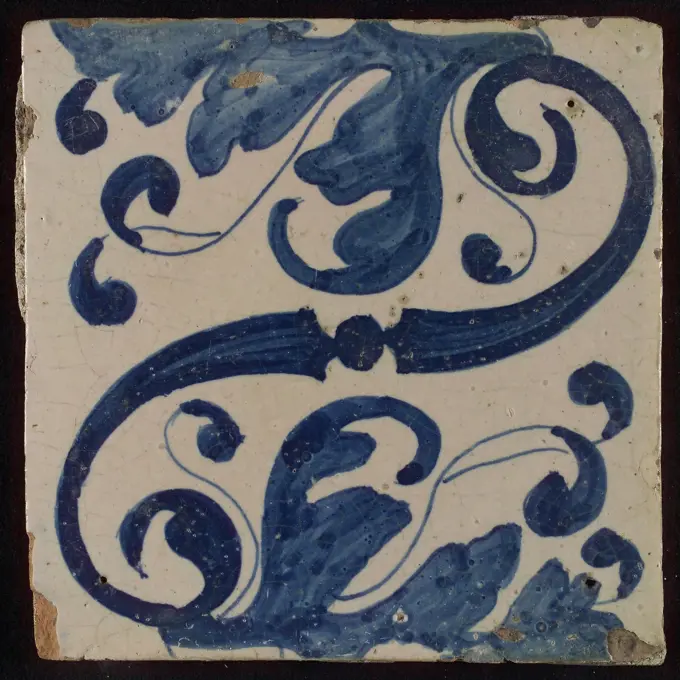
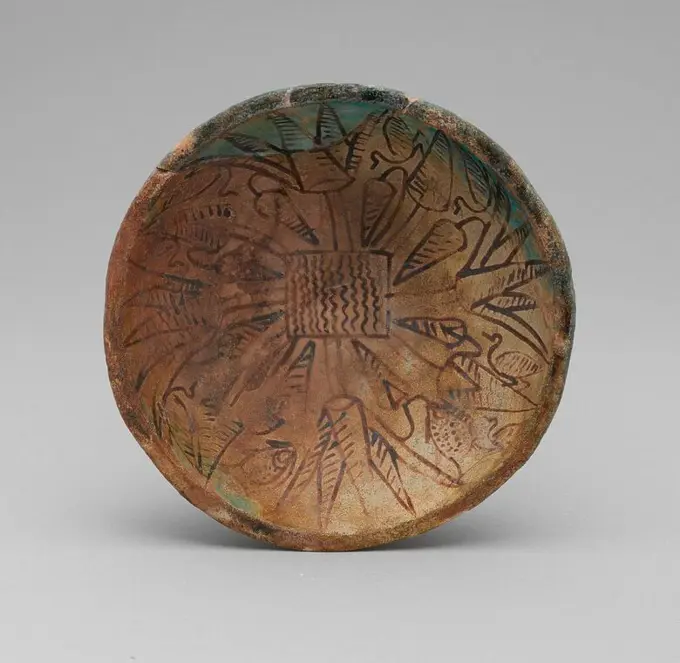
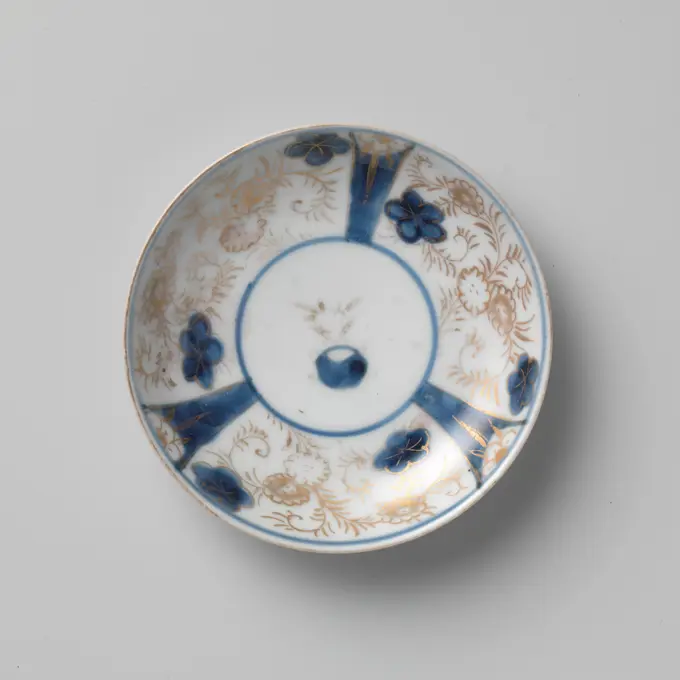
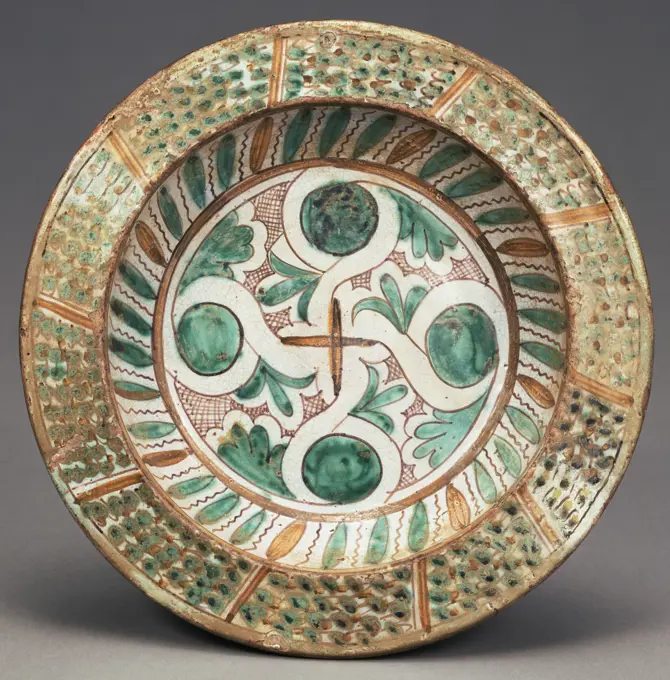
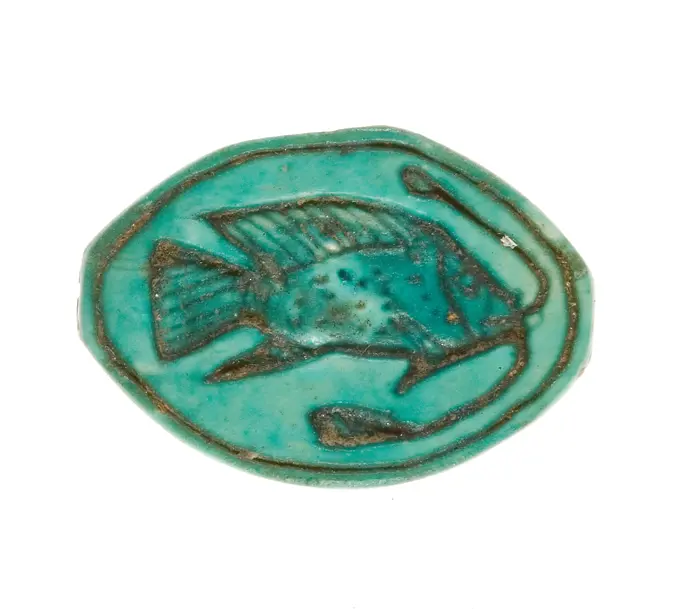
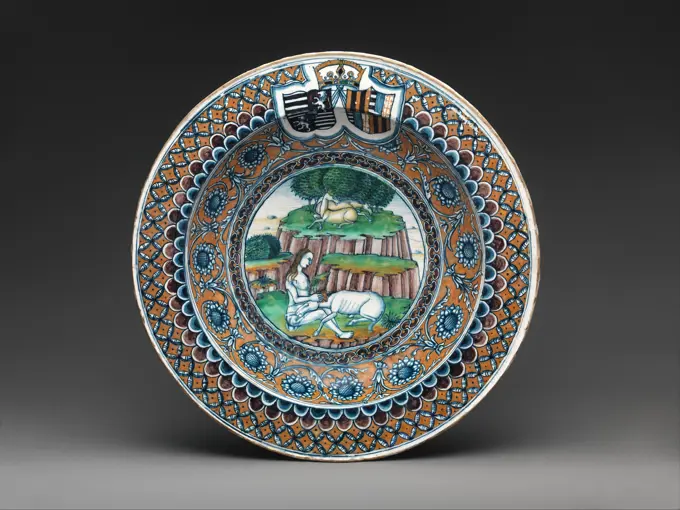
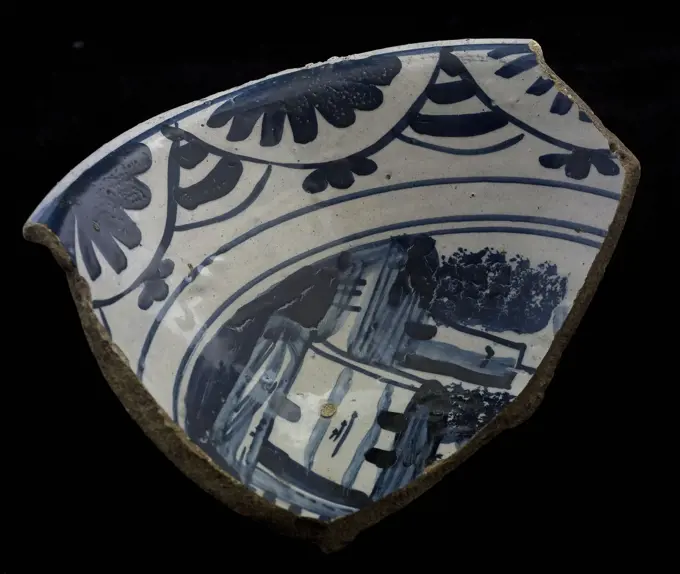
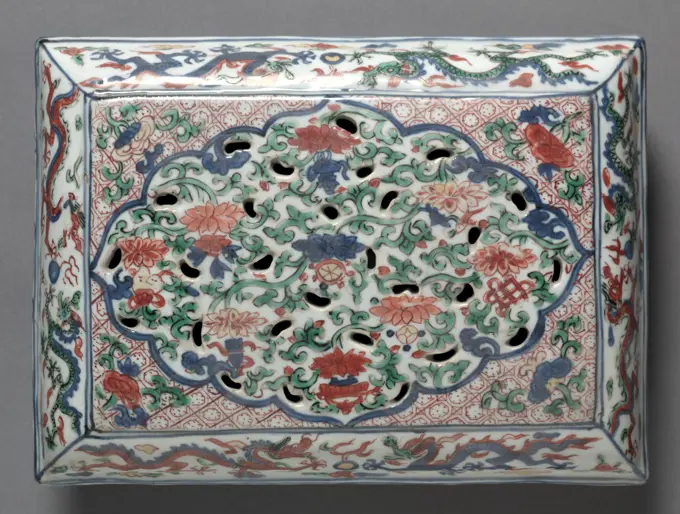
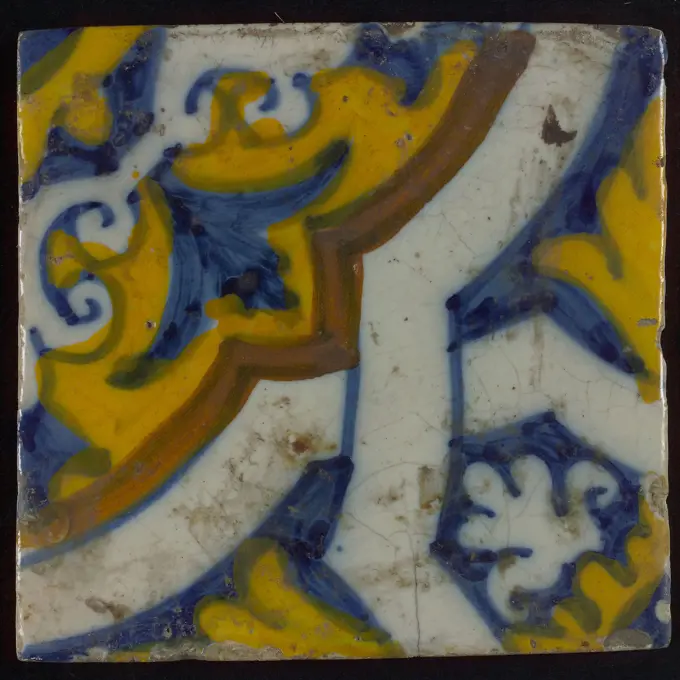
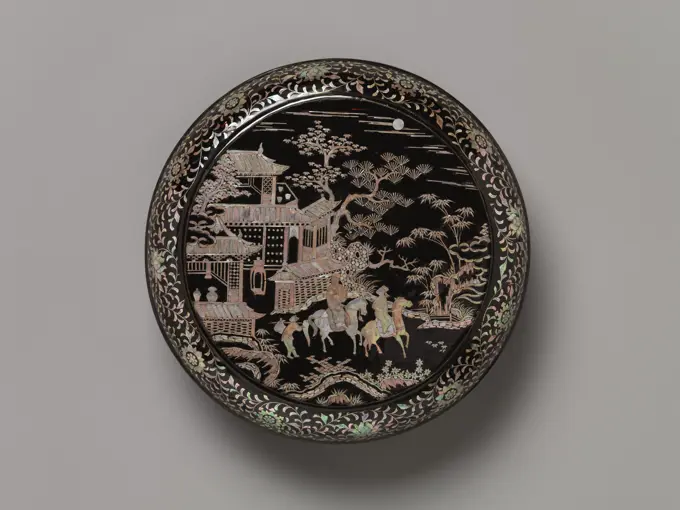
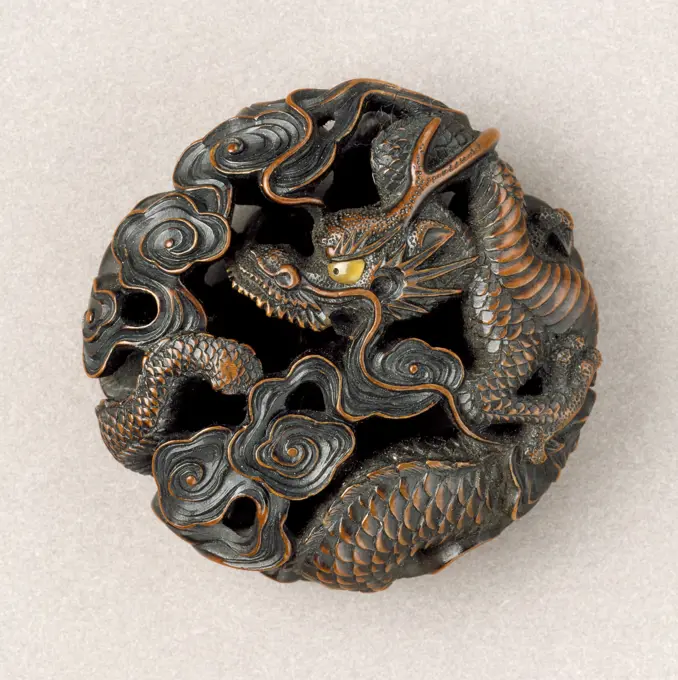
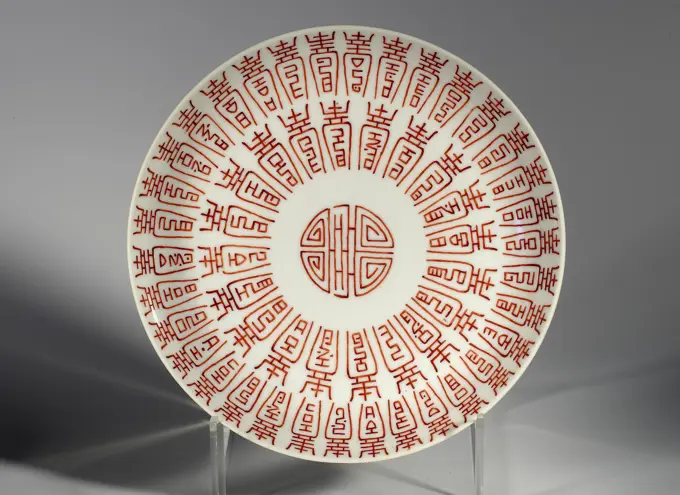
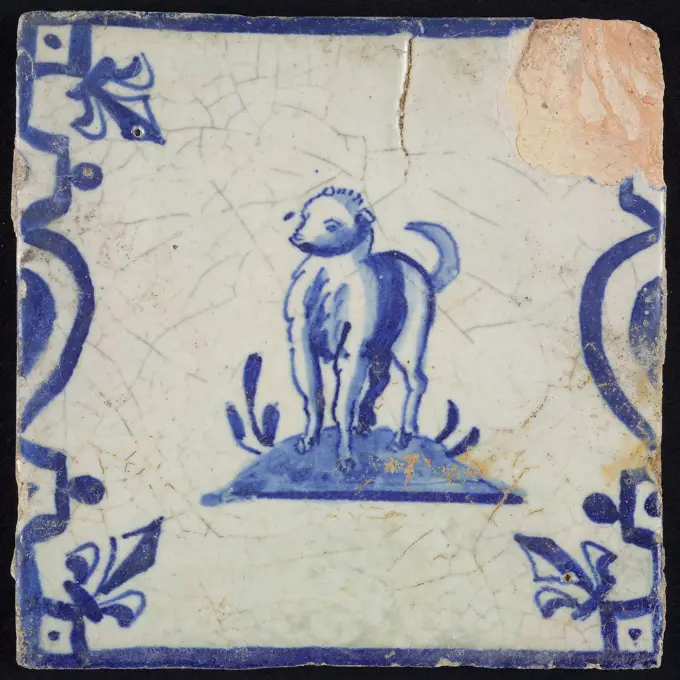
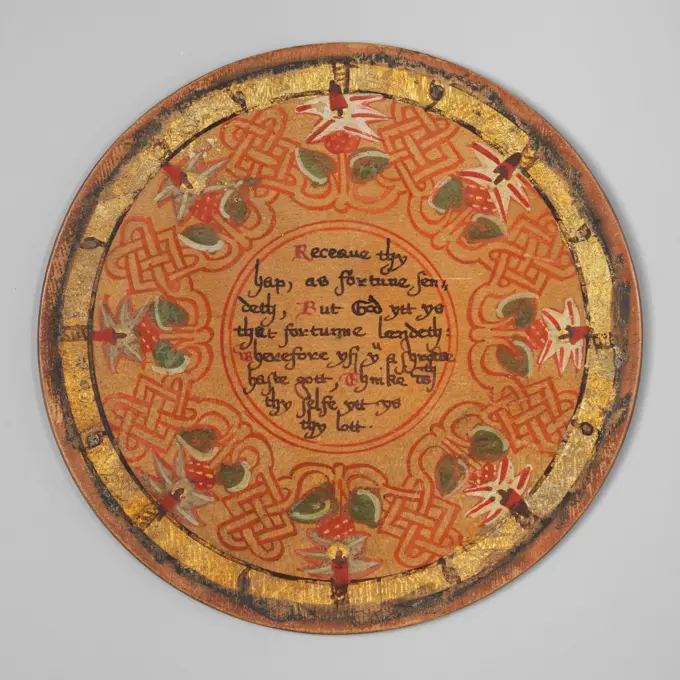
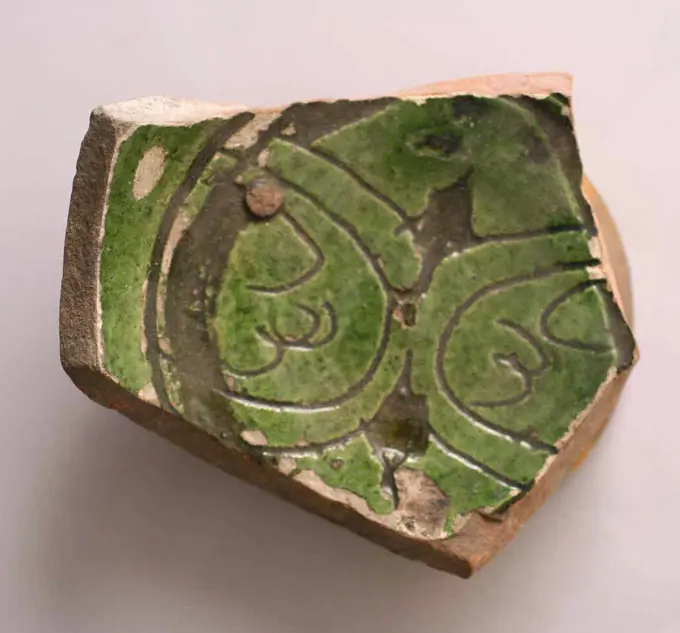
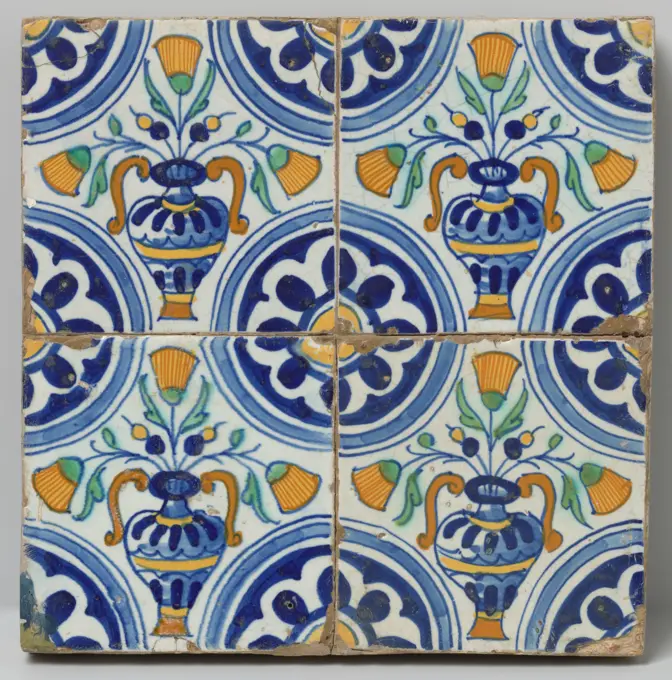
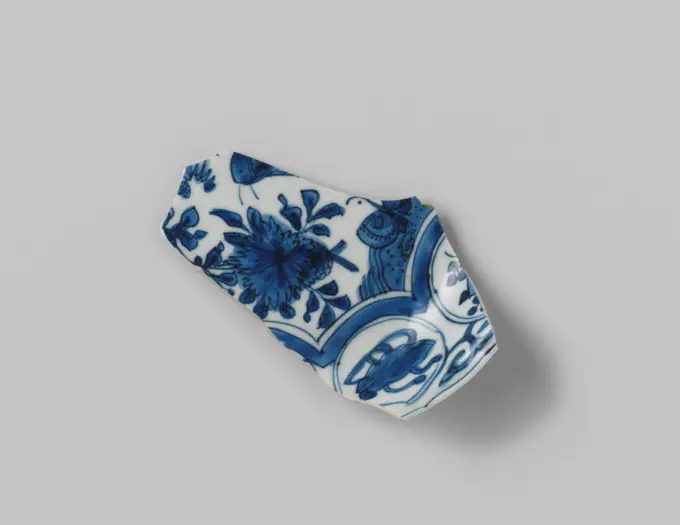
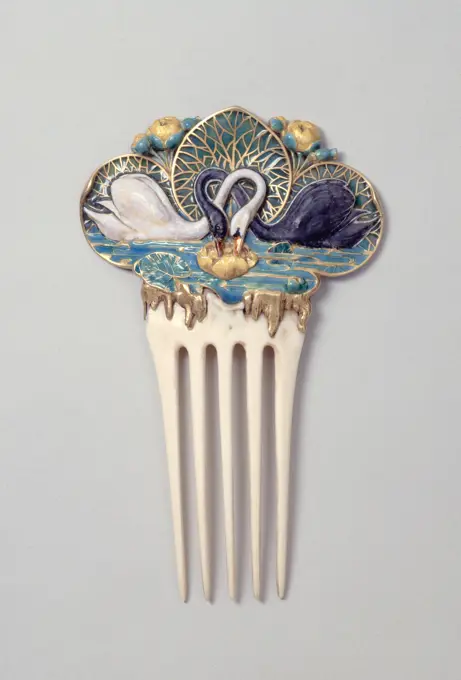
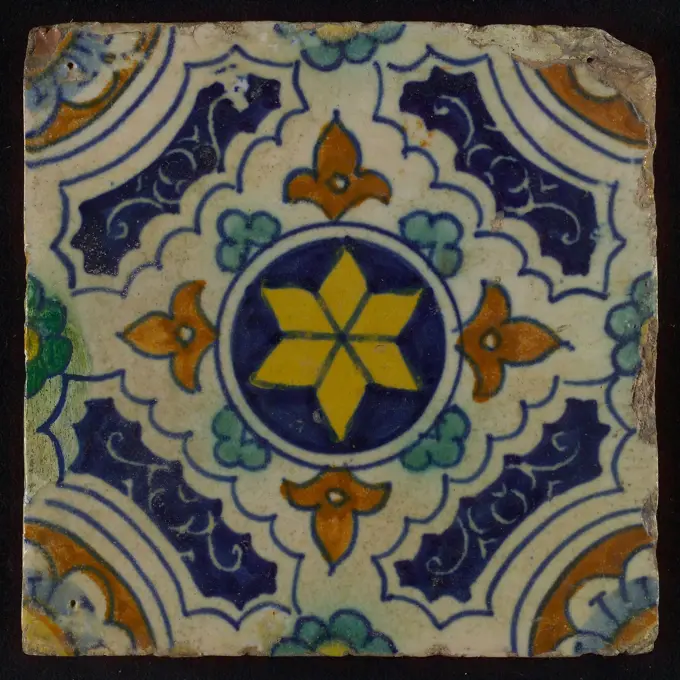
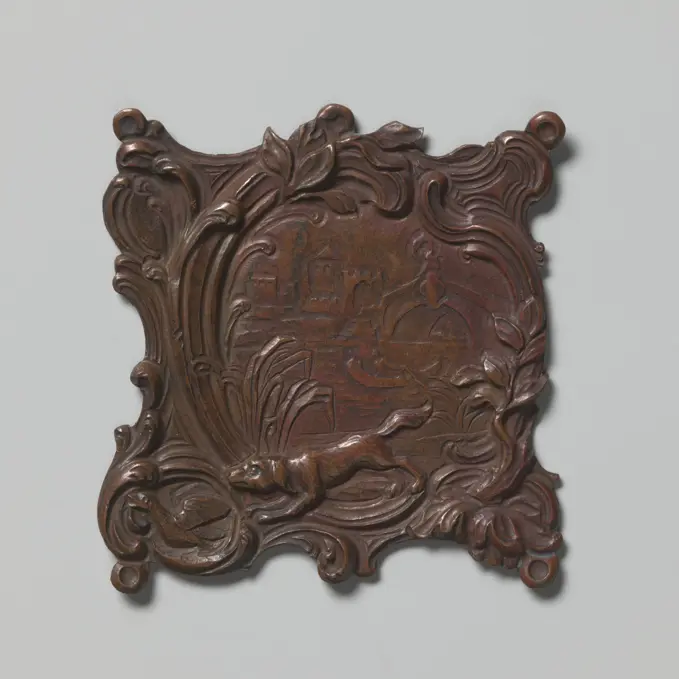
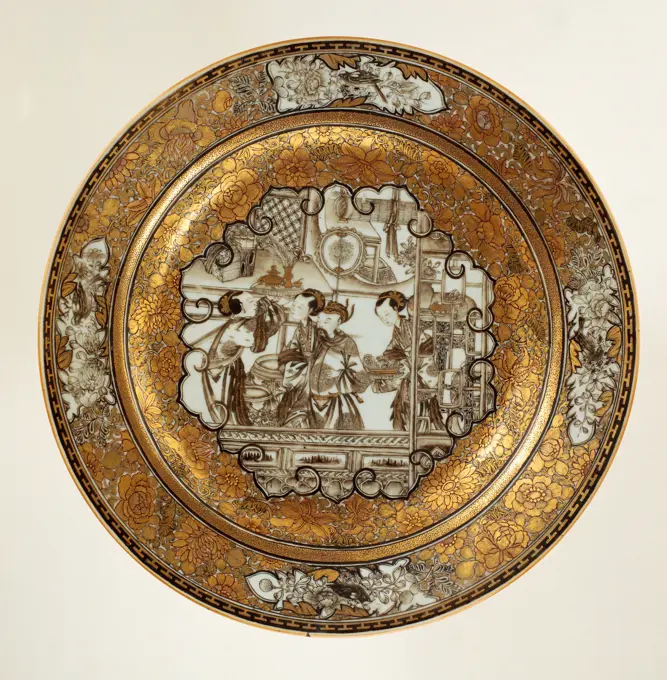
Dish with aman and three women in an interior in a shaped panel surrounded by scrolls, anonymous, c. 1725 - c. 1735 Porcelain dish, painted on the glaze in red, black and gold. On the flat a scalloped cartouche with a man, a high -value leak, with three women in an interior; on the wall flower and leaf vines; On the edge two decorative tires, between which a band with flower vessels interspersed with leaf-shaped cartouches with a bird on a flower or fruit branch. Old label on the bottom with 'H. 158/ F '. Encre de Chine. China porcelain. glaze. gold (metal) painting / gilding / vitrification Porcelain dish, painted on the glaze in red, black and gold. On the flat a scalloped cartouche with a man, a high -value leak, with three women in an interior; on the wall flower and leaf vines; On the edge two decorative tires, between which a band with flower vessels interspersed with leaf-shaped cartouches with a bird on a flower or fruit branch. Old label on the bottom with 'H. 158/ F '. Encre Tray. Dimensions: H. 1 1/8 in. (2.8 cm)Diam. 29 1/4 in. (74 cm). Date: 1250-1300. Museum: Metropolitan Museum of Art, New York, USA.Tile with Bell between a Key and a Sword 14th century British This square tile is decorated in encaustic with a bell flanked by a sword and a key, all on the diagonal, and the whole of the design enclosed with a line border.. Tile with Bell between a Key and a Sword 668682For a long time;  1670-1690 (1670-01-01-1690-12-31);Artemizations, ceramics, gift (provenance), Japanese (culture), Kraak, flowers, shells, porcelain, white-blue porcelain, Japanese art, plates, images of birdsWall Facing (Holland); tin-glazed earthenware, underglaze; 5 tiles tall, various wideFaceted Basin, Mina'i ("enameled") ware early 13th century Iranian. Faceted Basin, Mina'i ("enameled") ware 460367Charger for the Islamic market, 19th century, 2 1/8 x 14 3/4 x 14 3/4 in. (5.4 x 37.47 x 37.47 cm), Porcelain, China, Chinese exportFragment faience dish, blue on white, Chinese decor with Chinese border, dish plate crockery holder earth discovery ceramics earthenware glaze tin glaze, archeology Rotterdam Bombazerkerkhof Ground find: Bombazijnen Kerkhof Rotterdam 1905.Charola ca. 1830 Mexican. Charola 7409Saucer ca. 1881-91 Coalport. Saucer. British, Coalport. ca. 1881-91. Porcelain. Ceramics-PorcelainFragment of a Bowl 14th century. Fragment of a Bowl. 14th century. Stonepaste; painted under transparent glaze. Attributed to Egypt or Syria. CeramicsTile, blue on white, diagonally an S-shaped volute and stylized leaf ornaments, tile picture material fragment ceramic pottery glaze, baked 2x glazed painted Yellow and red shard Leaning edges Square Two three or four nail holes Tile was part of border tile frameMarsh-Bowl of Rennefer. Dimensions: H. 5.6 cm (2 3/16 in.); Diam. of rim 17 cm (6 11/16 in.), Diam. of base 6.5 cm (2 9/16 in.; th. 0.7 cm (1/4 in). Dynasty: Dynasty 18, early. Reign: reign of Thutmose I-early sole Thutmose III. Date: ca. 1504-1447 B.C..The interior of this bowl is decorated with a central pool of water from which lotus blossoms and buds extend. Just below the rim are six water birds and two tilapia fish. The bowl is one of three found in the coffin of Rennofer, wife of Neferkhawt, a royal scribe of the court of Hatshepsut (see also 35.3.77). Museum: Metropolitan Museum of Art, New York, USA.Saucer with a flower basket and floral scrolls, anonymous, c. 1775 - c. 1799 Porcelain saucer, painted in under -glaze blue and on the glaze gold. A flowerpot on the flat in a medallion; The wall is divided into three fan -shaped courses separated by a wide stripe with a flower. In the courses flower vessels. Imari. Japan porcelain. glaze. cobalt (mineral). gold (metal) painting / gilding / vitrification Porcelain saucer, painted in under -glaze blue and on the glaze gold. A flowerpot on the flat in a medallion; The wall is divided into three fan -shaped courses separated by a wide stripe with a flower. In the courses flower vessels. Imari. Japan porcelain. glaze. cobalt (mineral). gold (metal) painting / gilding / vitrificationSharf of ross -baking earthenware, with blue glaze on the front, with white circles on the flat, over which a yellow building, blue leaves, and yellow and yellow spears seem depicted; Flower shapes and windows in blue and white, Anonymous, 1600 - 1650 on the edge of the shards  Northern Netherlands earthenware. glaze majolica  Northern Netherlands earthenware. glaze majolicaGoblet 4th century Coptic. Goblet. Coptic. 4th century. Glass with vitreous paint. Made in Byzantine Egypt. Glass-VesselsScarab ca. 1492-1479 B.C. New Kingdom. Scarab. ca. 1492-1479 B.C.. Glazed steatite. New Kingdom. From Egypt, Upper Egypt, Thebes, Asasif, Tomb CC 37, Burial 59 D, Carnarvon excavations, 1911. Dynasty 18Lice mining of a cradle. Lice line for a cradle, of light blue silkedamast with a pattern of somewhat erratic shaped, embroidered flowers, to the bottom edge with cream-colored tire in a pattern of volutes, trimmed with cream-colored frills.Grisaille Panel ca. 1325 French. Grisaille Panel. French. ca. 1325. Pot-metal glass and vitreous paint. Made in Rouen, Normandy, France. Glass-StainedGreen-Painted Dish with an Interlace Pattern. UnknownA plate Salviati, companion of Venice in MuranoCowroid Seal Amulet Inscribed with a Bolti Fish ca. 1479-1458 B.C. New Kingdom. Cowroid Seal Amulet Inscribed with a Bolti Fish. ca. 1479-1458 B.C.. Steatite (glazed). New Kingdom. From Egypt, Upper Egypt, Thebes, Deir el-Bahri, Temple of Hatshepsut, Foundation Deposit 7 (G), MMA excavations, 1926-27. Dynasty 18, earlyA plateBowl 14th century. Bowl 446918Bowl with The Virgin and the Unicorn and arms of Matthias Corvinus and Beatrice of Aragon probably ca. 1486-88 Italian, Pesaro This large bowl or dish belongs to a set made as a gift for the king and queen of Hungary; their royal arms appear at the top, interrupting the elaborate border. Concentric circles of ribbons, flowers, and geometric designs act as a framing device for the central scene, where the woman and unicorn probably symbolize chastity. Beautiful and functional, a dish like this one might have hung from a wall at times and been used at a table at others.. Bowl with The Virgin and the Unicorn and arms of Matthias Corvinus and Beatrice of Aragon 199737Polychrome Bowl with Abstract Geometric Motifs 1000-1400 Arizona. Ceramic and pigment . CibolaDish of blue painted majolica. Round dish of blue painted majolica. A landscape is painted on the dish with a bell-shaped roof in the middle. Left of this is a cow. Concentric circles have been painted along the edge of the dish.Flower Tile, large flowering plant with two flowers, blue decor on white ground, corner filling spider, wall tile tile sculpture ceramic earthenware enamel tinglage, in shape made baked glazed painted baked Wall tile with blue decor on white background. Flower tile with flowering plant with two flowers. The leaves are very similar to those of the tulip Ground with sprits left and right brown-yellow shard Shredded pottery. Corner filling spins Slightly slanted sides of indigenous potteryEight Pompadour tiles. Eight pompadour tiles with a multi-colored (blue, green, yellow and orange) painted flowerpot within a four-pass. In the corners, ornament in filling technology.Fragment of a Bowl 15th century. Fragment of a Bowl 445178Ornament tile, diagonally across the tile white braid band motif, corner motif quarter rosette, wall tile tile sculpture ceramic earthenware glaze, baked 2x glazed painted Light yellow shard with fine red dots and square squares. Multicolored: blue (ocher to lemon) yellow and orange on white. Savings technique MoorsFragment majolica plate, blue on white, chessplate decor, plate crockery holder soil find ceramic earthenware glaze, baked underside covered with gray-gray lead glaze. Polychrome. Italian Dutch decor. Possible entirely monochrome archeology decorate serving food ItalyTile. Tile, painted in yellow, manganese. Lobby rosette, in which an eight-pointed star. In the corners a quarter octos, with a thin line connected to the rosette.Circular Enamel Plaque, James Cromar Watt (Aberdeen, Scotland, 1862 - 1940) c. 1910Tile with blue flower stalk on hill, tile pilaster footage fragment ceramic earthenware glaze, d 1.1Tile, square, from pottery on the front covered with lead glaze and decorated with a border of white sludge, inside a star of white sludge. Tile, square, of pottery on the front covered with lead glaze and decorated with a border of white sludge, inside a star of white sludge on which red and purple turtles are fitted. Limburg work.Bowl 9th-10th century. Bowl 449613Tile, double flower on ground in orange, green and blue on white, inside serrated square with plume, corner pattern french lily, wall tile tile sculpture ceramic earthenware glaze, baked 2x glazed paintedPlate 1800-1810 Chinese, for Portuguese market. Plate 201255Field of four tiles with birds, anonymous, c. 1620 - c. 1640 Field of four tiles (2 x 2) each with a blue -painted bird in a Chinese garden within a circle with in the corners, meander ornament. Netherlands earthenware. tin glaze majolica Field of four tiles (2 x 2) each with a blue -painted bird in a Chinese garden within a circle with in the corners, meander ornament. Netherlands earthenware. tin glaze majolicaField of sixteen tiles with flowers. Field of sixteen tiles (4 x 4) each with a blue and orange painted flower on sphere inside an oval with lily and in the corners, a quarter rosette.Pottery tile with flower vase and ox head corner decoration in blue on white background, wall tile tile visualization earth discovery ceramics earthenware glaze tin glaze, in shape made glazed baked Earthenware tile with flower vase and ox head corner decoration in blue on off-white ground. Presentation is lightly flowned Decoration consists of flower vase with two large curled ears on field with blades of grass. In the vase bouquet with leaves and five flowers Restoration is partially painted in terms of representation archeology Rotterdam City Center Stadsdriehoek Schiedamsedijk Soil discovery: Schiedamsedijk east side Rotterdam 1939.Ornament tile, checkerplate motif, small windows, floor tile tile images ceramic earthenware glaze, Blue on white with dark blue brushed diamond pattern.ceramics from Muel, Elorrio, Arkeologi Museoa, archaeological museum, Bilbao, Bizkaia, Basque Country, Spain.Paperweight 1843-1860 Saint-Louis. This paperweight uses a traditional glass-making technique called millefiori to great effect. Italian for ìone thousand flowers,î millefiori was first developed in fifteenth-century Venice. In the nineteenth century, French glassmakers revived the technique with a cultural twist. Arranged to evoke traditional French gardens such as the Tuileries in Paris, paperweights like this example brought a little of this landscaping magic indoors.From the late 1840s to early 1860s, French manufacturers of fine glass and crystalósuch as Baccarat (Alsace), Clichy (Paris), and Saint-Louis (Lorraine)ócatered to the vast public enthusiasm for beautiful yet functional desk accessories. Paperweights, which were designed to secure loose papers against drafts, were among their most popular products.. Glass . Compagnie de Saint LouisFloor tile, brown draft, green and yellow on white ground, central green oblique glass in which white flower with yellow heart, half yellow diamonds, half green diamonds, floor tile tile images ceramic earthenware glaze, d 2.3Fragment majolica dish, blue on white, -foglie decor with large flowers, plate crockery holder soil find ceramic earthenware glaze tin glaze lead glaze, hand turned fried glazed painted fried Fragment of majolica dish Faint curved bottom wide stand ring. Decorated with large floral motifs in blue. underside slightly greenish lead glaze. Archeology at Rotterdam, Rotterdam Overschie serve serving decorate table archaeological find in the soil Overschie.Saucer (part of a service). Culture: British, Caughley. Dimensions: Diameter (each): 3 13/16 in. (9.7 cm); Diameter (.375): 3 3/4 in. (9.5 cm). Factory: Caughley Factory (British, ca. 1772-1799). Date: ca. 1780-90. Museum: Metropolitan Museum of Art, New York, USA.Tile Glazed ceramic, 5 11/16 x 5 11/16 x 1 1/8 in. (14.5 x 14.5 x 2.8 cm).   Arts of the Islamic WorldShards of signs from the wreck of the East India Hollandia.Porcelain, Plate, Type 2; Fragm or base and rim, sim. NG 1980-27H507 / 2624H.Sharf of white -baking earthenware, with a painting of flower shapes in blue on a white surface at the top, with an orange border, c. 1500 - c. 1899 fragment   earthenware. glazeSquare Mirror with Wave Design, 2nd-1st century BCE, 5 3/8 x 5 3/8 in. (13.65 x 13.65 cm), Bronze with gold inlay, China, 2nd-1st century BCEFragment Theekom from V.O.C. ship De 'Witte Leeuw', Anonymous, Before 1613  Fragment Theekom from V.O.C. ship De 'Witte Leeuw', 50 present. Jingdezhen porcelain   Sint-HelenaTile, William Frend De Morgan, British, 1839-1917, Sands End Pottery, British, 1888 - 1907, Glazed earthenware, Square tile od white clay with white crackled glaze. Two flowers with twisted stem in relief and painted with yellow lustre. Stamped on back: 'W. De Morgan' in oval., Fulham, England, ca. 1888-89, tiles, Decorative Arts, TileFragment large majolica bowl, blue on white, landscape, bowl bowl tableware holder soil find ceramic pottery enamel, baked underside covered with lead glaze. Monochrome archeology adorn serving foodOrnament tile, checkerplate motif, small windows, floor tile tile sculpture ceramic earthenware glaze, Blue on white with dark blue brushed checkered pattern.Box with Cover (lid), 1573-1620. China, Jiangxi province, Jingdezhen kilns, Ming dynasty (1368-1644), Wanli reign (1572-1620). Porcelain with wucai (five color) overglaze enamel decoration; overall: 9 x 18.4 cm (3 9/16 x 7 1/4 in.).Bread plate Augustus Welby Northmore Pugin British Factory Minton(s) British ca. 1850 This shallow dish raised on a short foot is made in the encaustic process, an "inlay" technique of filling a stamped or recessed design with a contrasting colored clay or slip. The inscription on the rim in pseudo-Gothic lettering reads: "Waste Not Want Not." Pugin made two versions of this tazza, the first with four colors and the second with six. The first version was exhibited at the 1849 Exhibition of British Manufacturers in Birmingham. Pugin believed that objects made with moral intentions would transfer these to the user, thereby promoting a more wholesome existence. The motto also reflected the agricultural and economic problems of England's "hungry forties."Augustus Welby Northmore Pugin (1812-1852) was the first architect/designer to link a specific style to morals, godliness, and social values. He believed that manufacturers should be truthful in their use of materials; that wood should looOrnament tile, diagonally across the tile white braid band motif, corner motif quarter rosette, wall tile tile sculpture ceramic earthenware glaze, baked 2x glazed painted Light yellow shard with fine red dots and square strings. Multicolored: blue (ocher to lemon) yellow and orange on white. Savings technique MoorsBox with Scenes of a Departure late 16th-early 17th century China Images of gentlemen traveling in the evening are common in Chinese pictorial lacquers, and it is possible that pearl shell was understood to be an appropriate medium for the depiction of a moonlit landscape. The vase and other vessels in the pavilion at left illustrate shapes found earlier in ceramics and metalwork and reflect the fascination with elegant living often found in the arts of the late Ming period.. Box with Scenes of a Departure. China. late 16th-early 17th century. Black lacquer with mother-of-pearl inlay; pewter wire. Ming dynasty (1368-1644). LacquerPolychrome tile, orange apples in quarter quad, wall tile tile sculpture ceramics pottery glaze tin glaze lead glaze, in shape made baked glazed painted baked Tile. Orange apples in quarter quad. Diagonally placed decor. Large palm corner in recess technique On the sides two half orange apples.Dragon in Clouds. Naitō Toyomasa (Japan, 1773-1856). Japan, first half of 19th century. Costumes; Accessories. Wood with inlaysDish with peonies 14th century Attributed to Yang Mao The deep carving of the peonies and leaves in this small dish is typical of Chinese lacquerware produced in the first half of the fourteenth century. A similar example dated before 1333 was recovered during the 1976-84 excavation of a famous shipwreck off the Sinan Islands near the southwestern coast of Korea.. Dish with peonies 39680A plate;  19th century (1801-00-00-1900-00-00);Paderewski, Ignacy Jan (1860-1941), Paderewski, Ignacy Jan (1860-1941)-collection, qing (style), ceramics, Chinese (culture), gift (provenance), longness of Shou (iconogr.), Batters (iconogr. ), porcelain, colorful porcelain, Chinese artField of four tiles with French lilies. Four tiles field (2 x 2) each with blue painted French lilies in filling technology.Animal tile, standing dog to the left on plot between balusters, in blue on white, corner pattern French lily, wall tile tile sculpture ceramics pottery glaze, baked 2x glazed painted Square. Blue dog standing on white background. Baluster ornament with french lilies.Lid for an Incense Burner, c. 1893-1914. Seifū Yohei III (Japanese, 1851-1914). Floral openwork silver lid;Bowl 12th century. Bowl 451947Amulet, Egyptian. Artist: UnknownTile, tulip on ground in blue on white, inside serrated square, corner pattern french lily, wall tile tile sculpture ceramic earthenware glaze, baked 2x glazed paintedTrencher (one of a set) late 16th-early 17th century British Banquets usually ended with candied fruits or other sweetmeats served on such decorative "spice dishes" of silver or wood. The gold effects were achieved with yellow varnish over a layer of silver-leaf. The verses were written in Black Letter script, with elaborate capital letters in Lombardic script. The verses, either amusing or moralizing, were shared with the other diners.. Trencher (one of a set). British. late 16th-early 17th century. Oak and sycamore woods, painted, silvered and yellow varnished; inscription: ink (animal or vegetable). Natural SubstancesFragment majolica dish, rosette, in the middle rosette and concentric circles, dish plate tableware holder soil find ceramic earthenware glaze, baked underside covered with fairly clear but boiled lead glaze. Polychrome archeology indigenous pottery food decorate serve pottery bakery Rotterdam City center Stadsdriehoek Delftsevaart Soil discovery: Delftsche Vaart drainage for new lift bridge in 1928.Plate 1760-70 Style of Whieldon type. Plate. probably British, Staffordshire. 1760-70. Earthenware, glazed. Ceramics-PotteryDish. Dimensions: H. ca. 1 in. (ca. 2.5 cm)Diam. 8 7/16 in. (21.5 cm). Date: 10th-11th century. Museum: Metropolitan Museum of Art, New York, USA.Fragment of a Dish 14th-15th century. Fragment of a Dish 446431Field of four tiles with flower pots, anonymous, c. 1610 - c. 1625 Field of four tiles (2 x 2) each with a multicolored (blue, orange, green and yellow) flowerpot with marigolds. In the corners, a quarter rosette. Netherlands earthenware. tin glaze majolica Field of four tiles (2 x 2) each with a multicolored (blue, orange, green and yellow) flowerpot with marigolds. In the corners, a quarter rosette. Netherlands earthenware. tin glaze majolicaFragment sign from V.O.C. ship De 'Witte Leeuw', Anonymous, Before 1613 plate (dishes) Fragment sign from V.O.C. ship De 'Witte Leeuw', 10 present. Jingdezhen bone china (material)   Sint-HelenaOrnament tile, blue on white, with dark blue irregularly sponged diamond pattern as checkerplate, small windows, floor tile tile images ceramic earthenware glaze, d 1.2Bowl with diamond, floral, and vegetal design, 9th century, 2 1/4 x 7 15/16 in. (5.72 x 20.16 cm), Earthenware with painted cobalt-blue designs, Samarra ware, Iraq, Abbasid period (750-1258), These rare bowls typify those that apparently were made primarily in Iraq during the first Abbasid period of the ninth and tenth centuries. They are important early examples of ceramics decorated with cobalt-blue oxide, a Middle Eastern invention. During the period of Mongol rule in the fourteenth century, technically superior Chinese blue-and-white ware began to be exported to the Middle East, where it gained immediate popularity among the Muslim upper classes and influenced Middle Eastern styles for centuries to come.Field of four tiles with stars and leaves. Field of 4 tiles (2 x 2) each with a multicolored (blue, yellow, green and orange) painted star in a circle decorated with leaves surrounded by elongated compartments with tendrils. In the corners, a quarter of rosette.Anonymous Cup (common name), 1255. Black and white covered sandstone. Cernuschi Museum, Asia Museum of Asia in the city of Paris.Tile, flowerpot, blue decor on white ground, corner filler ox head, wall tile tile sculpture ceramic earthenware enamel tinglage, in form made baked glazed painted baked Wall tile with blue decor on white ground Central representation of flower pot. Orange-yellow shard. Shaved pottery. Corner filling large ox head Slightly slanted sides Tile seems to be completely covered with varnish layer, but probably not intentionally applied indigenous potteryA plateRaymond McGough, Pa German Picture Frame, c 1940 Pa. German Picture FrameElongated cornice tile. unknown, manufacturerSyrian golden bowl from the temple of Baal. Artist: UnknownBasket. Dated: c. 1937. Dimensions: overall: 35.2 x 25.5 cm (13 7/8 x 10 1/16 in.) Original IAD Object: 16" in diameter; 2 1/4" deep. Medium: watercolor and graphite on paper. Museum: National Gallery of Art, Washington DC. Author: Gordena Jackson.Tile (USA); Manufactured by J. & J. G. Low Art Tile Works; molded, glazed stoneware; 11 x 11 x .9 cm (4 5/16 x 4 5/16 x 3/8 in. )Henri Vever (1854-1942). Comb decorated with swans and water lilies. Ivory, enamel and gold, around 1900. Museum of Fine Arts of the city of Paris, Petit Palais. 25791-1 Accessory, swan, email, ivory, nenuphar, gold, orna, combTile, J. & J. G. Low Art Tile Works, 1877 - 1883, Glazed stoneware, Square, molded tile made of white clay, Face of tile is decorated with stylized flower having double row of petals; framed in plain border; glazed deep blue., Chelsea, Massachusetts, USA, late 19th century, tiles, Decorative Arts, TileBricks with a palmette motif ca. 6th-4th century B.C. Achaemenid These brick fragments were once part of the extensive polychrome wall decoration of the palace complex at Susa (built ca. 521-ca. 360 B.C.), the ancient city revived in the Achaemenid period. Glazed bricks and tiles with colorful motifs had been widely used at Babylon, the conquered royal city in Mesopotamia, and could have served as a model for the Achaemenids at Susa.. Bricks with a palmette motif. Achaemenid. ca. 6th-4th century B.C.. Ceramic, glaze. Achaemenid. Iran, SusaPaperweight Made 1840-1865 . Technological improvements to optical scientific instruments in the mid-nineteenth century spurred a veritable obsession across Europe with identifying and classifying the natural world. Amateur botanists were eager to collect and preserve floral specimens, which they intently researched and catalogued. In response to this broad appeal, French glassmakers made paperweights that portrayed the very botanical subjects that were so enthusiastically sought. Many weights represented specimens with horticultural correctness, but others were entirely fanciful creations. Paperweights like this example speak to the periodís fascination with taxonomic systems.From the late 1840s to early 1860s, French manufacturers of fine glass and crystalósuch as Baccarat (Alsace), Clichy (Paris), and Saint-Louis (Lorraine)ócatered to the vast public enthusiasm for beautiful yet functional desk accessories. Paperweights, which were designed to secure loose papers against drafts, werFragment of a Bowl 14th-15th century. Fragment of a Bowl. 14th-15th century. Earthenware; incised decoration through white slip and coloring under transparent glaze. Attributed to Egypt. CeramicsPlaque ca. 1760 Style of Whieldon type. Plaque. British, Staffordshire. ca. 1760. Lead-glazed earthenware. Ceramics-PotteryTile, blue, green, brown and yellow on white, central yellow star in circle, sgraffito surfaces, corner motif quarter rosette, wall tile tile sculpture ceramics pottery glaze, baked 2x glazed painted Yellow - pink shard square Two or four nail holes AIb3.Tissue fragment with clavus and orbiculus. Natural linen tissue fragment with woven clavus and sewn orbiculus in dark purple. The Orbiculus centrally has a cikel motif with four vases and leaf drinks, around it a eight-pointed star. Here around a circle and a wider circle with a continuous braid motif. All this in flying wire technique. The whole surrounded by a toothed edge. The clavus has an edge with toothed list within which decoration of flower vases, medallions and leafwork, the details of which are also here in flying wire technology. The orbiculus is finer woven than the clavus.Ornament tile, diagonal ornament in quatrefoil with bows in which orange-apples and flowers, palm corner, corner pattern rosette, wall tile tile sculpture ceramics pottery glaze, baked 2x glazed painted Yellow and reddish shard square two and four nail holes. Multicolored: brown blue green yellow on white ground (variation in light and dark). Saving technique in blue on white.Dish of multicolored painted majolica. Round dish of multicolored painted majolica. On the flat is a landscape painted with a mill and a farm between trees. Concentric cikels were painted on the edge between which a bond with zigzagged curved lines.Blue tile with part of the corinthian column, leaves, upright fan-shaped flower, of pilaster with 13 tiles, tile pilaster footage fragment ceramics pottery glaze, Two consecutive blue tiles on gray with top pillar with wound leaf and flower (1) part corinthian column leaves upright fan-shaped flower (2) of pilaster with 13 tiles.Model for a decorative element of a chatelaine, anonymous, c. 1750 - c. 1775 The square model driven out of plate for a mold is equipped with a river landscape surrounded by rococo ornament and branches with bridge, a hunting dog and a flying duck. Four eyes on the corners. Amsterdam copper (metal) The square model driven out of plate for a mold is equipped with a river landscape surrounded by rococo ornament and branches with bridge, a hunting dog and a flying duck. Four eyes on the corners. Amsterdam copper (metal)