Decorative Ceramic Vessels

Artistic ceramic pieces including intricately designed bowls and lidded containers with floral motifs and gilded accents, reflecting craftsmanship from various historical periods.

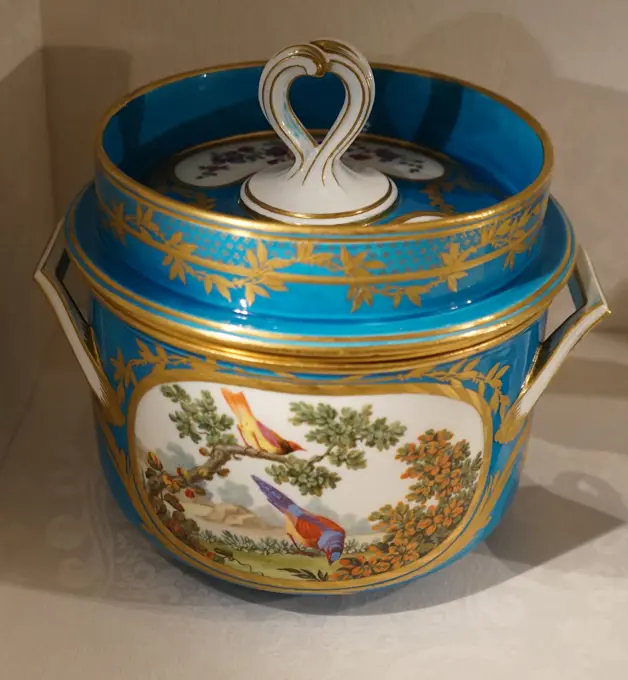
Lid of sugar bowl. Cover of pottery of pottery with lilac transfer decor. The lid has a uivorous button. The button and edge decorated with leaf raft and flowers.
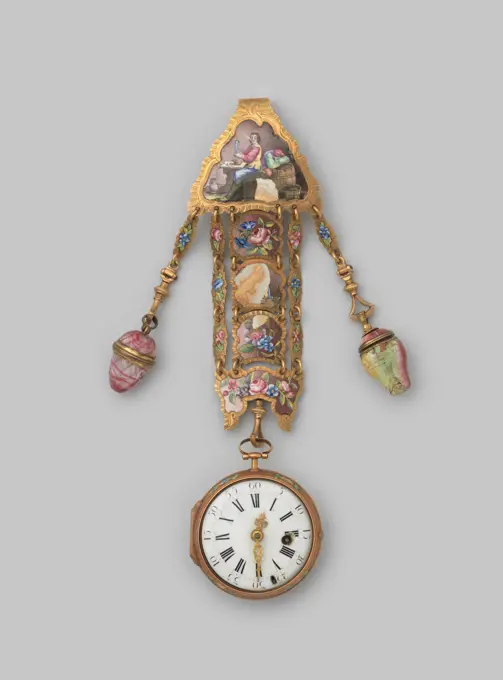
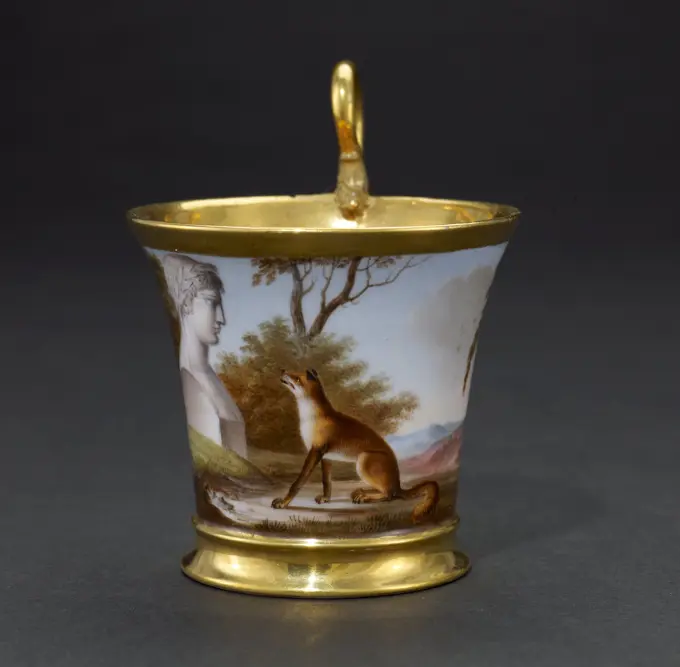
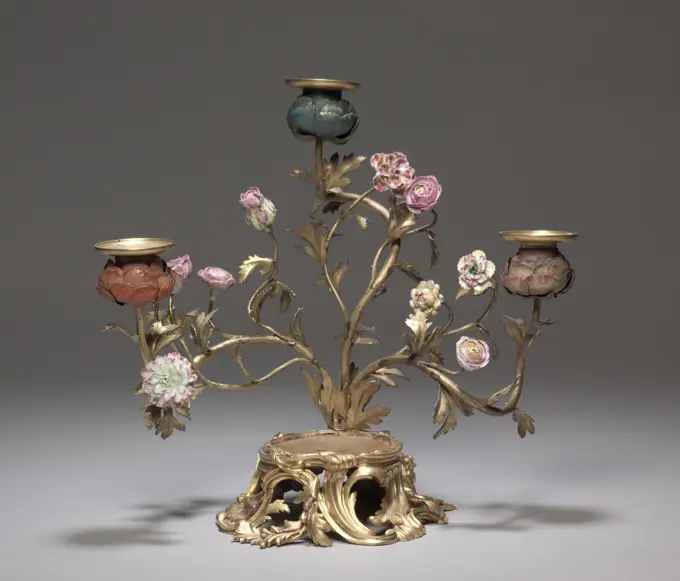
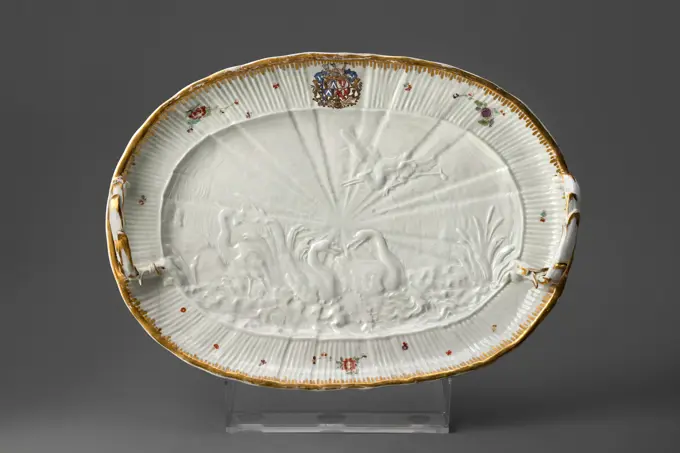
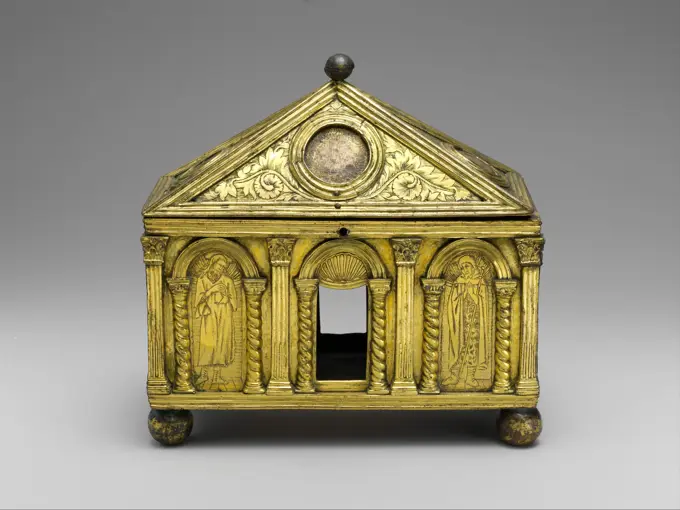
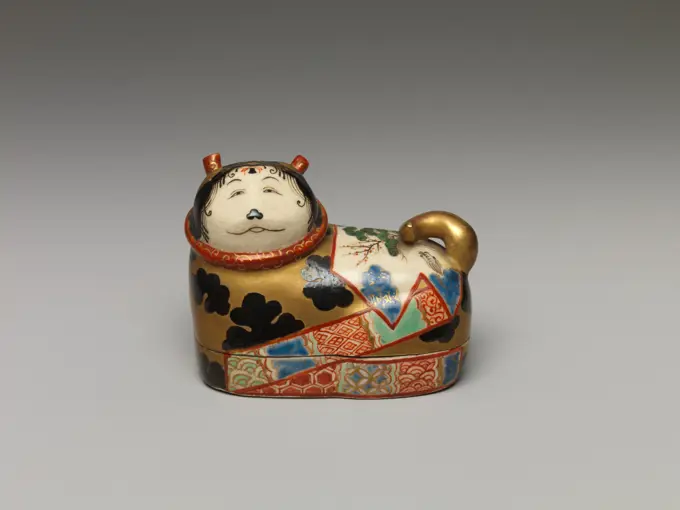
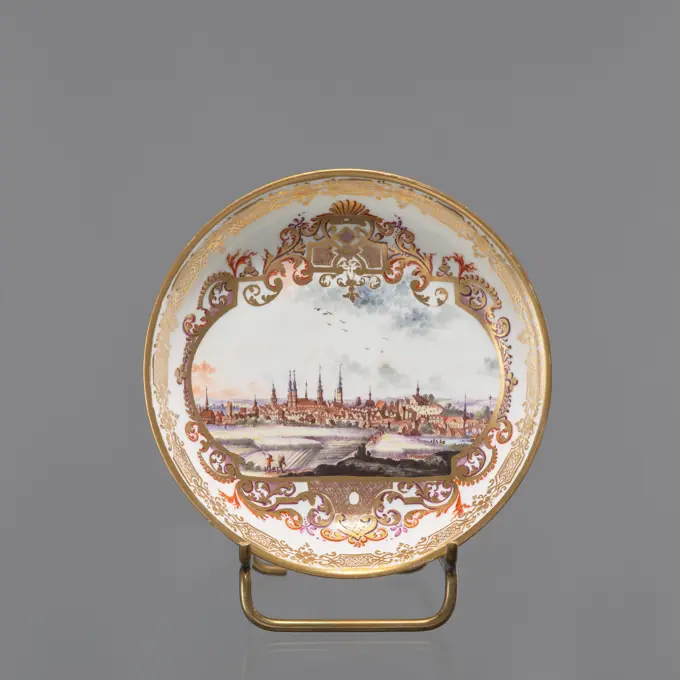
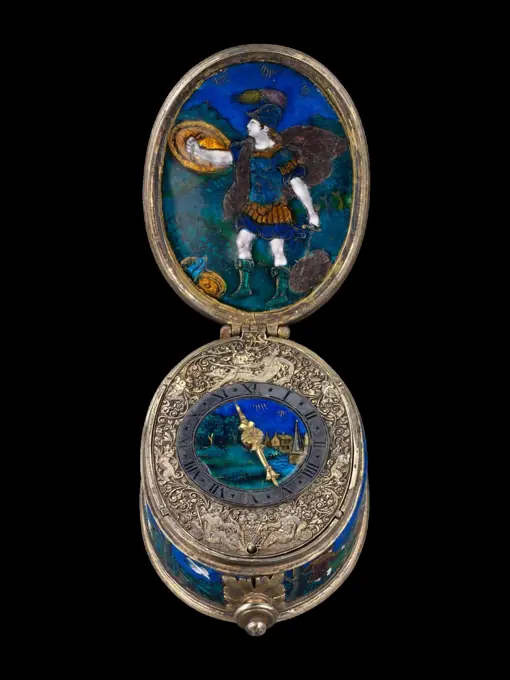
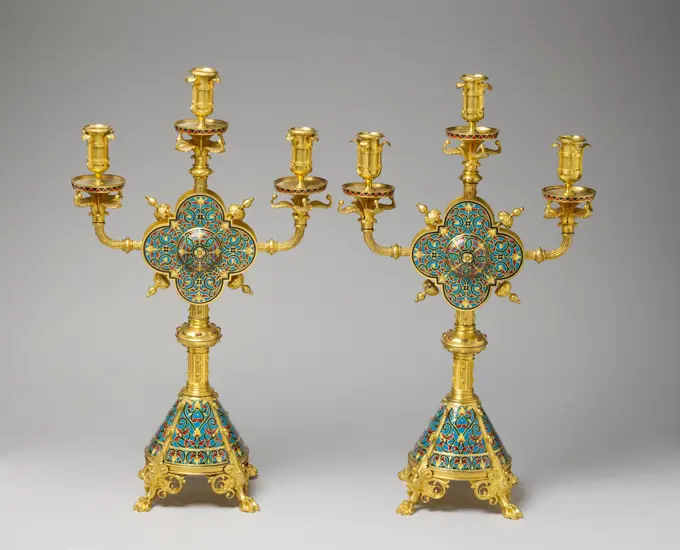
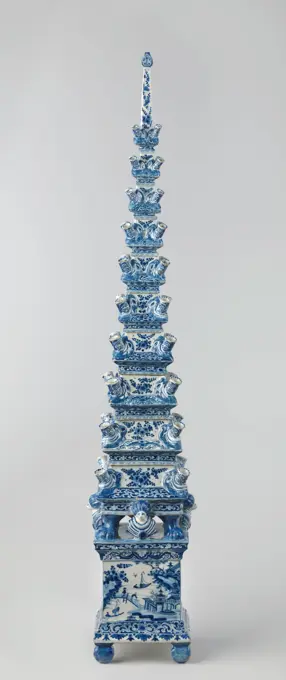
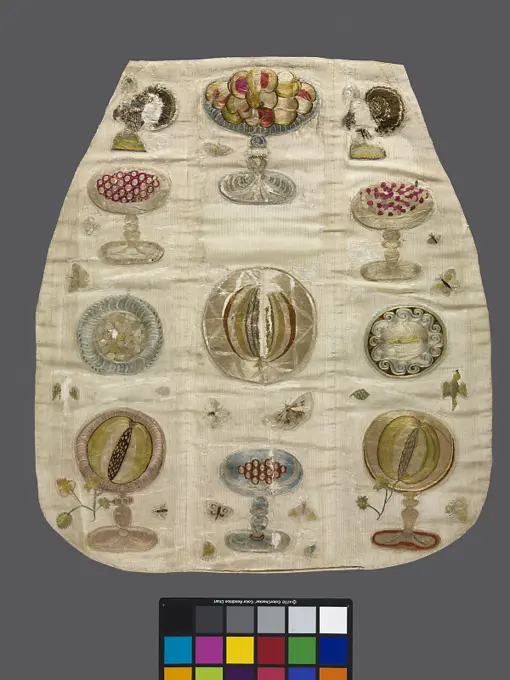
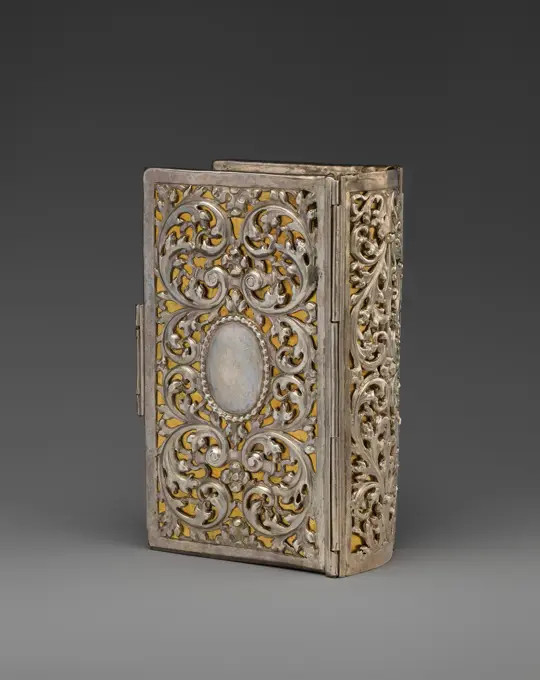
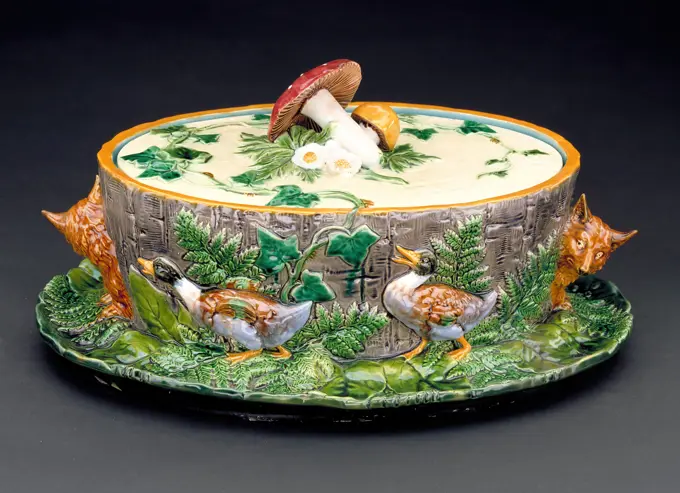
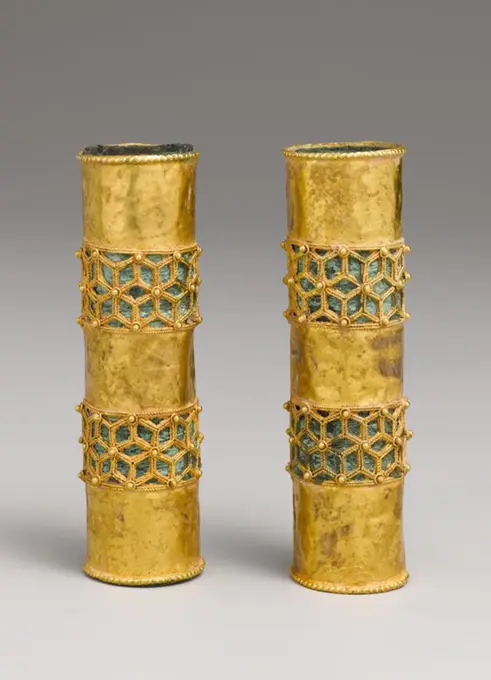
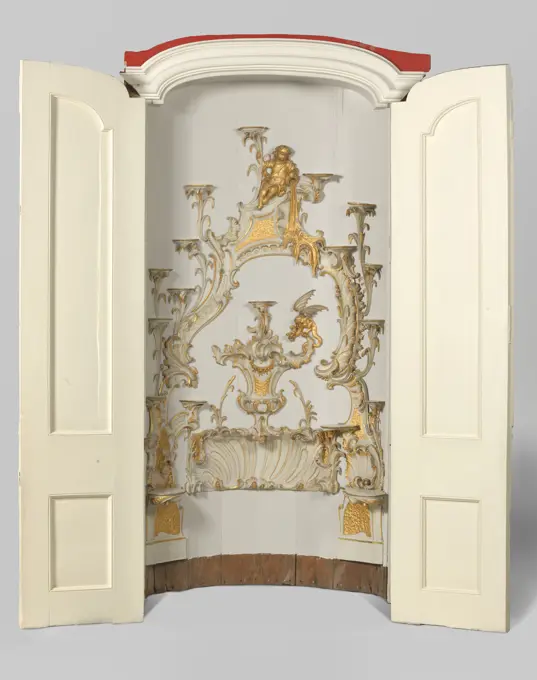
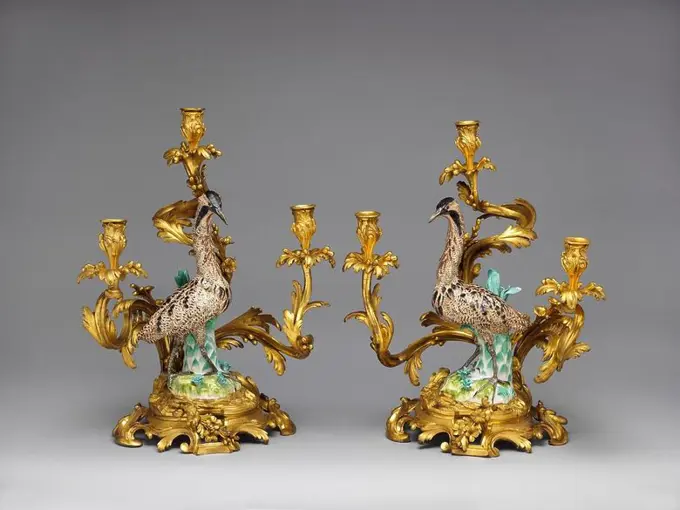
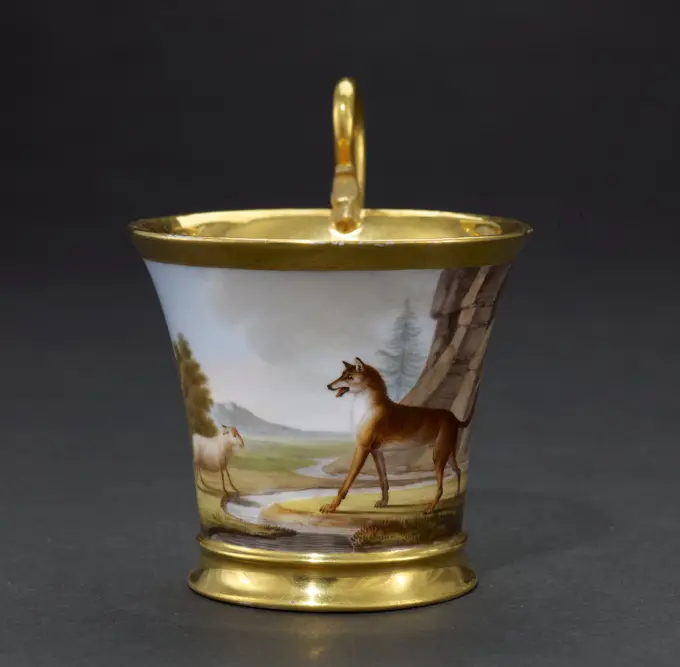
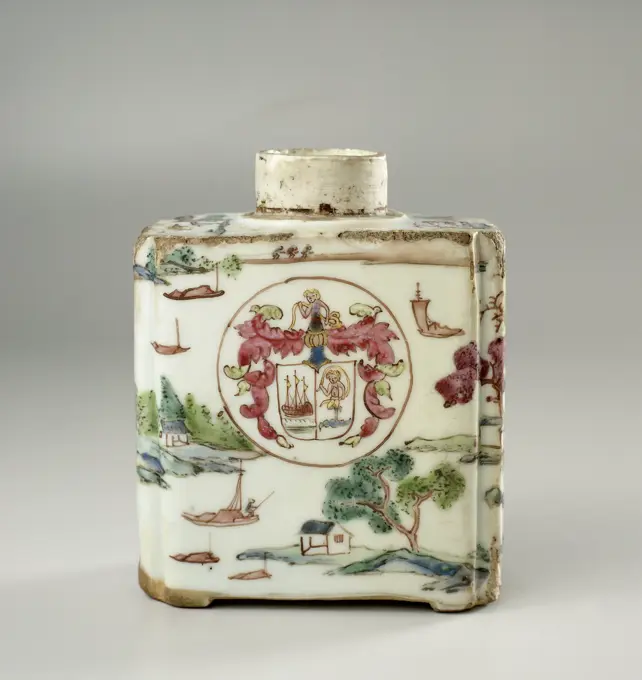
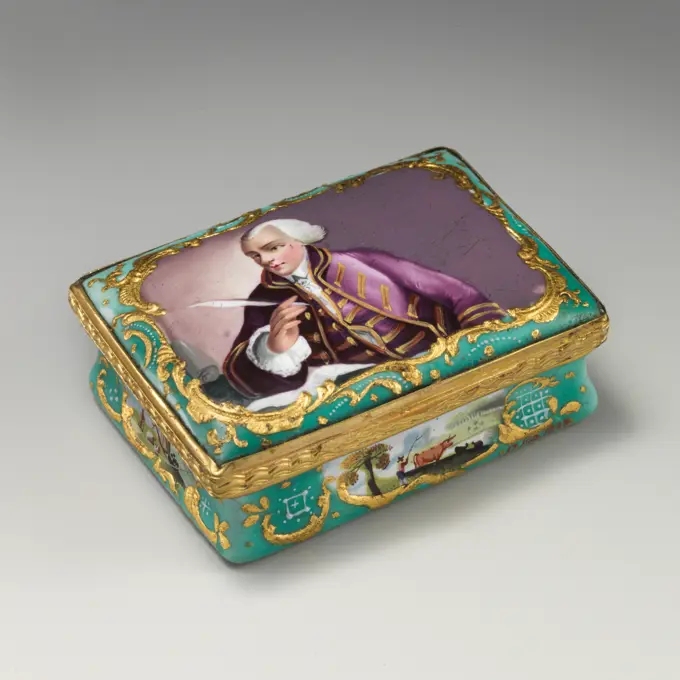
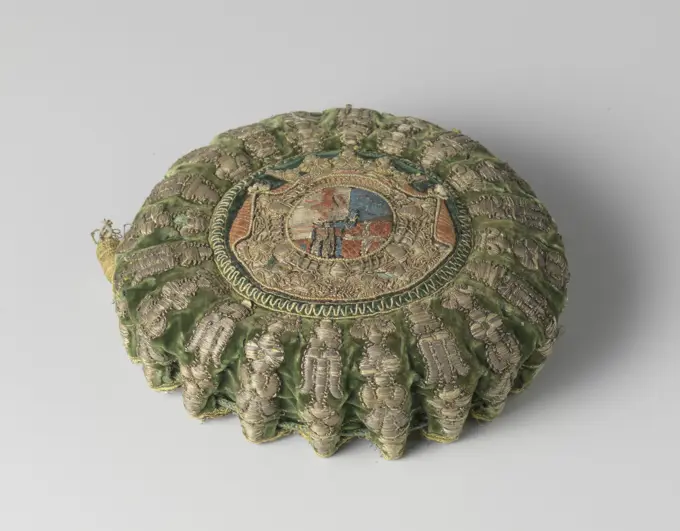
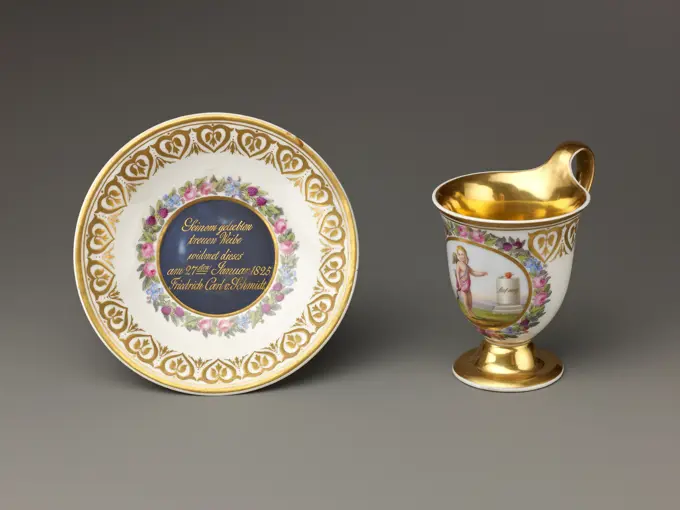
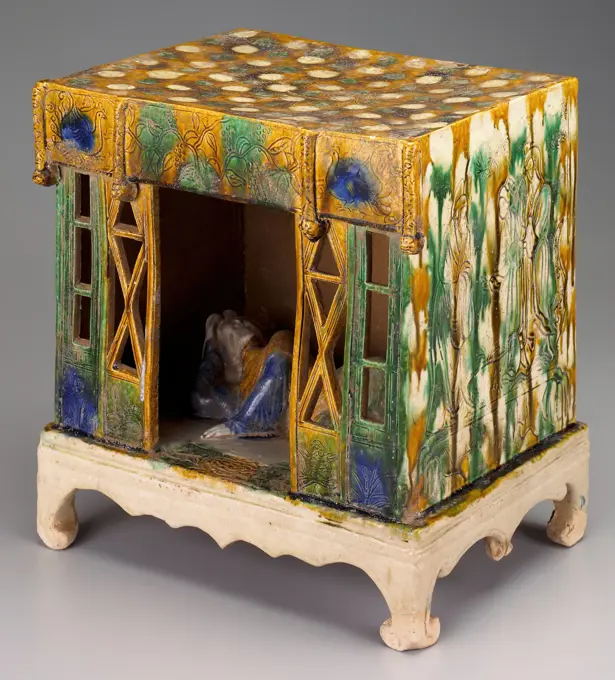
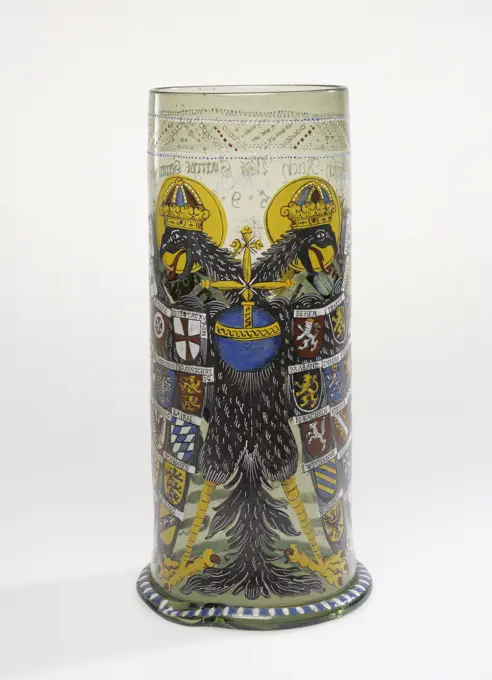
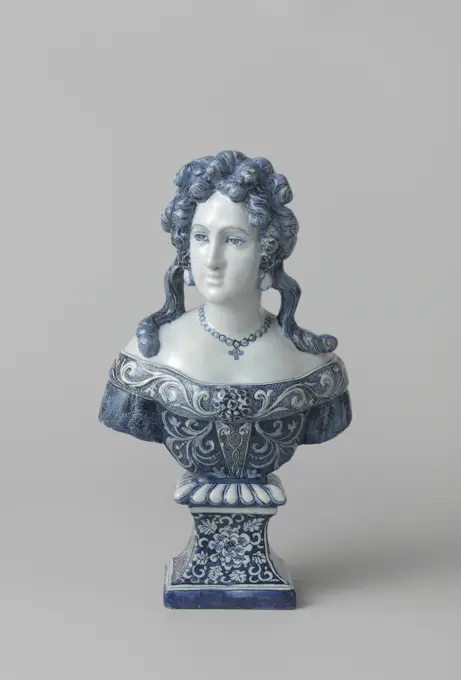
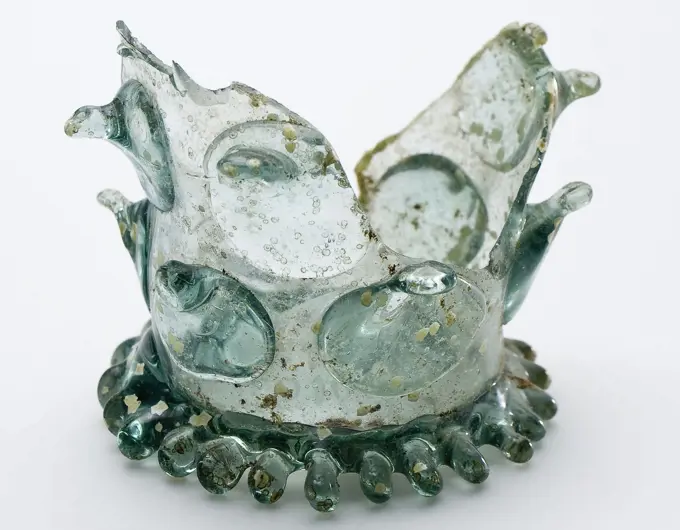
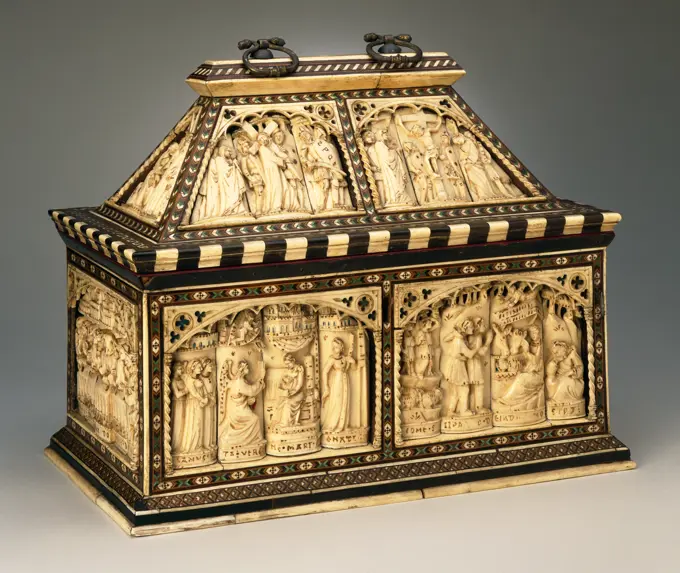
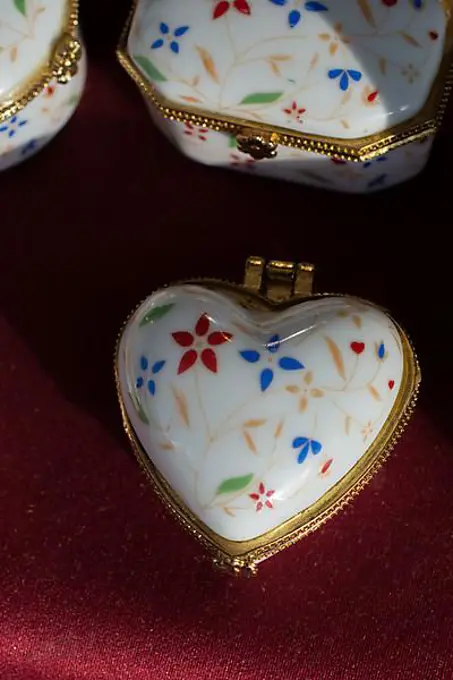
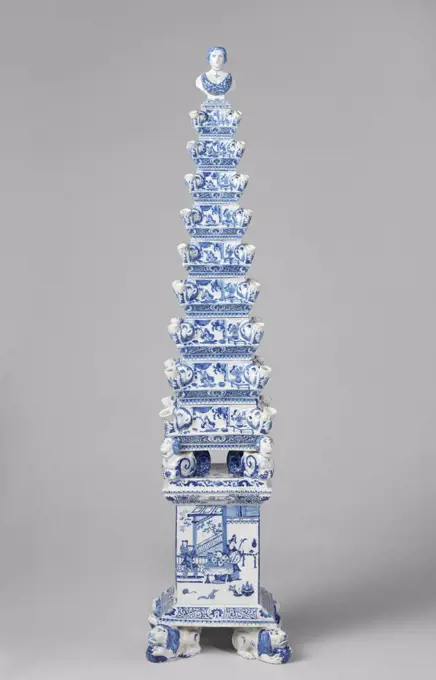
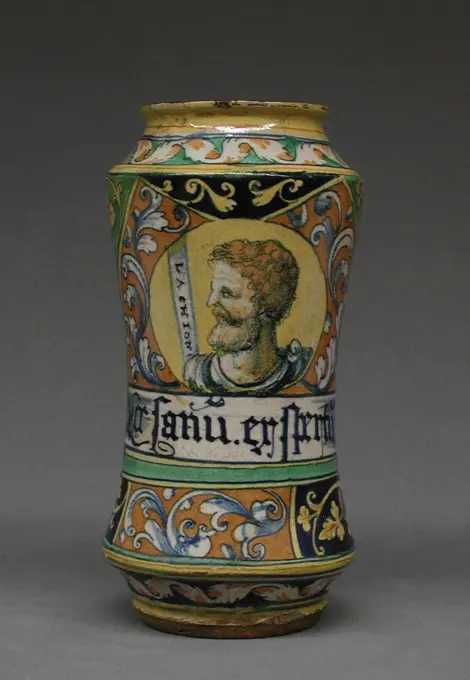
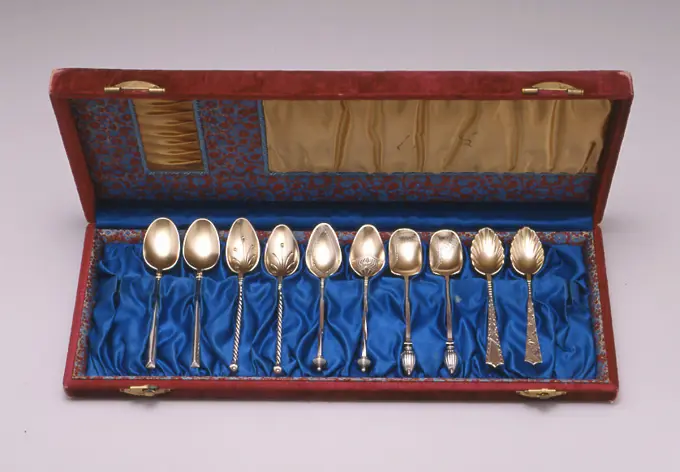
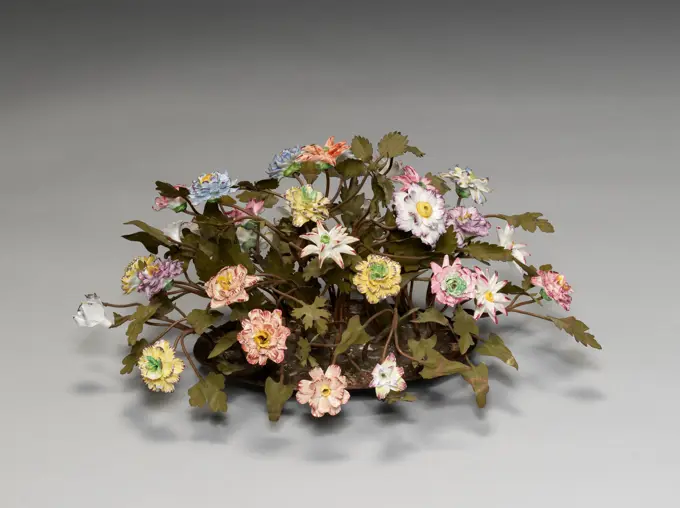
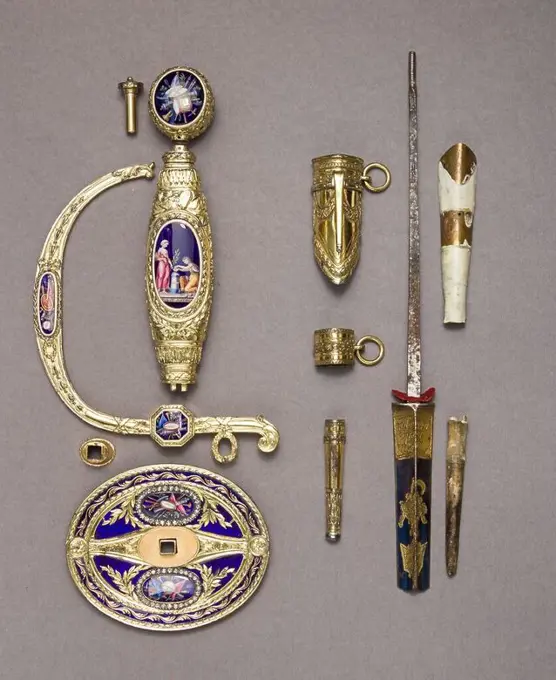
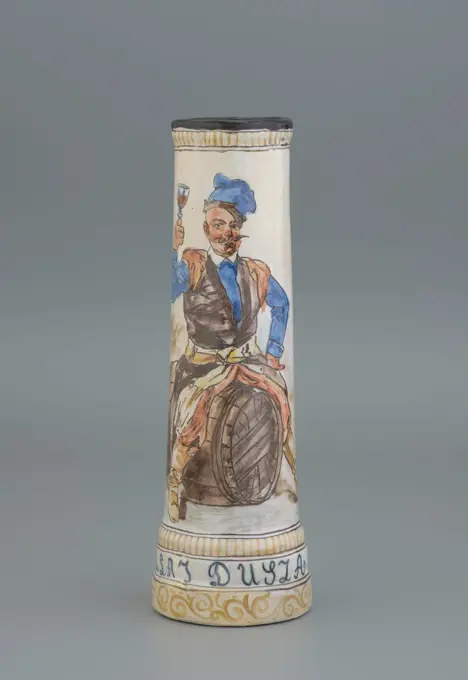
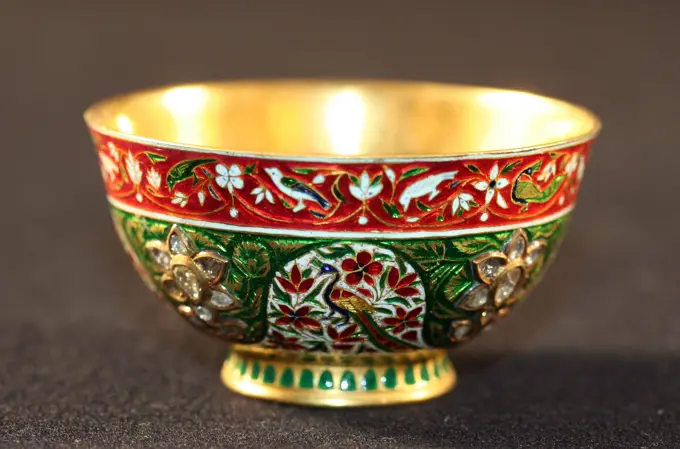
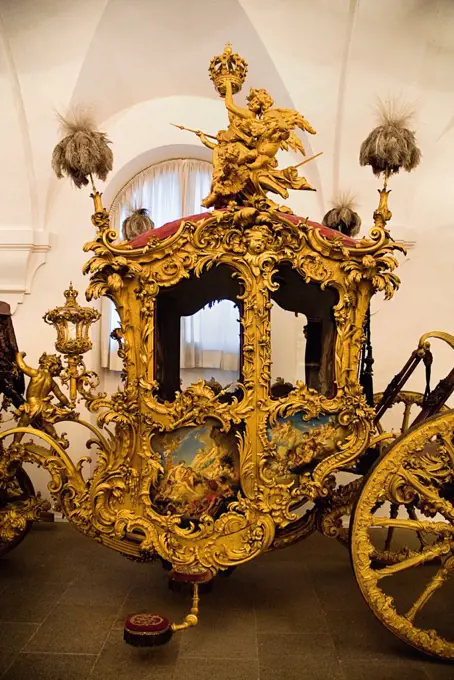
Object from a Dessert Service 'The Razumovsky Service', made from soft-paste porcelain. Dated 18th Century. Candlestick of porcelain with a lobed, round foot, layered handle and cylindrical candle holder, painted in underglaze blue and on the glaze blue, red, pink, green, yellow, brown, black and gold. The candlestick is decorated with a 'Tobacco Leaf' pattern of large leaves, flower branches and birds. European forms with email colors.Saucer with an imitation of red japanware. Kaiserliche Porzellanmanufaktur in Wien (1744-1864), factory. Square bottle of porcelain with a gilt, bronze cap, painted on the glaze in red, green, yellow, purple, black and gold. On the walls twice pavilions on an island with rocks and flowering plants (bamboo), a bird on a branch, and twice a flying bird at a prunus branch and bamboo. On the shoulder a band with prunus branches and a leaf motif; Running around the neck. A meander pattern on the neck. The cap is in the form of a braided ring, ending in a hay-bird head on a flower rosette. The edge has been ground. Arita, decorated in Europe ? In the Japanese Kakiemon style.Watch with enamelled dial on Chatelaine, P. Micau, c. 1760 jewellery Watch with enamelled dial on chatelaine of gold. On the watch a performance of three smoking farmers. Two smokers on the chain. Paris gold (metal).Cup from a tea service for twelve, 1807-08, Christophe-Ferdinand Caron; Manufacturer: Sèvres Porcelain Factory, French (Sèvres), French, 1774-1831, 4 5/16 x 4 1/2 x 3 3/8 in. (10.95 x 11.43 x 8.57 cm), Hardpaste porcelain, gilt, France, 19th centuryBukkoista; Bia A Podlasie (Ceramic family; 1738-1768), Radziwi , Anna Katarzyna (1676-1746); 1738-1768 (1765-00-00-1770-00-00);Strzałecki, Antoni Jan (1844-1934) - collection, bouquets, gift (provenance)Cassolette with cover (one of a pair) ca. 1775 British, South Staffordshire Listen to experts illuminate this artwork's story Listen Play or pause #413. Retail Value. High and Low Supported by Bloomberg Philanthropies We're sorry, the transcript for this audio track is not available at this time. We are working to make it available as soon as possible.. Cassolette with cover (one of a pair). British, South Staffordshire. ca. 1775. Enamel on copper. Enamels-PaintedCandelabrum with Parrot (Candelabrum), c. 1750. France, style of Louis XV, 18th century. Gilt bronze; part 1: 18.9 cm (7 7/16 in.); part 2: 31 x 32.8 cm (12 3/16 x 12 15/16 in.).Foot of Chocolate Cane of Faience. Foot of Chocolate Cane of Faience.Oval platter with handgrips. Eberlein, Johann Friedrich (1695-1749), sculptor, Koenigliche Porcellain Fabrique, Meissen (1710-1763), factory. Image of gold, baroque pearls and precious stones, presenting an armeen on a pearl as chair. A brown monkey keeps him a diamond. The scene is decorated with precious stones on a pedestal.Toilet casket. Culture: French. Dimensions: Overall (confirmed): 5 x 13 1/4 x 10 in. (12.7 x 33.7 x 25.4 cm). Date: 1700-1715.Known in French as a carré de toilette, this rectangular casket has canted corners and is richly decorated in so-called boulle marquetry of brass inlaid with tortoiseshell, mother-of-pearl, and tinted horn (contre partie). Containing ribbons, feathers, or other adornments, boxes like this played a role in the elaborate dressing ritual of the past and would have been placed on the dressing table. Similar caskets are depicted in Jean-Marc Nattier's portrait Madame Marsollier and Her Daughter of 1749. Museum: Metropolitan Museum of Art, New York, USA.Reliquary casket 1446 Circle of Lorenzo Ghiberti Italian The strongly architectural nature of the design suggests that it may have been based on a late antique sarcophagus. The inscription (on the two end panels) may be translated, "Domina Mattea, wife of Renzo, had this work made for the sake of her soul and those of her family, 1446.". Reliquary casket. Circle of Lorenzo Ghiberti (Italian, Florence 1378-1455 Florence). Italian, Florence. 1446. Gilt copper and champlevé enamel. Metalwork-CopperCasket (cassetta). Culture: Italian, Ferrara. Dimensions: 3 1/8 × 4 1/8 × 6 3/8 in. (7.9 × 10.5 × 16.2 cm). Date: late 15th century.Molded pastiglia, a composition consisting of either gesso or pulverized white lead with an egg binder to which musk was added, was applied to the surface of small caskets and deliberately left ungilt and unpainted, so that the relief exuded a musky scent. The technique was introduced to Ferrarese craftsmen at the end of the 1440s by a French immigrant, Carlo di Monlione. Museum: Metropolitan Museum of Art, New York, USA.The Moon Palace 1801-1900 China. Fan (shovel-shaped); ink and colors on silk .Coffret. Dimensions: 6 3/4 x 10 3/4 x 5 1/2 in. (17.1 x 27.3 x 14 cm). Date: ca. 1730-60. Museum: Metropolitan Museum of Art, New York, USA.One of a Pair of Incense Boxes in the Shape of Dog Charms ca. 1840 Japan Pairs of dog-shaped papier-mché figures (inuhariko) were produced from the Heian period on as protective amulets. By the beginning of the Edo period, they were part of the traditional wedding set, used to ensure safe childbirth and also to protect the child's health. Initially, inuhariko pairsmale and femalewere presented at the engagement ceremony; later, they had an important role in the wedding process as wellthey were carried in the wedding palanquin as good luck amulets. Inuhariko can also be found in the shape of cats.. One of a Pair of Incense Boxes in the Shape of Dog Charms 45358Saucer. Koenigliche Porcellain Fabrique, Meissen (1710-1763), factoryAnonymous / 'Octagonal Chinese porcelain platter. Compañía de las Indias'. First half of the XVIII century. Hard-paste porcelain. Museum: Museo del Prado, Madrid, España.Emailleuhr aus dem 17. Jahrhundert von Suzanne de Court - Historischer Zeitmesser Emailleuhr aus dem 17. Jahrhundert von Suzanne de Court - Historischer Zeitmesser LicenseRF Copyright: xZoonar.com/GallóxGusztávx 23397583Pair of candelabra ca. 1865-70 Firm of Ferdinand Barbedienne The decoration was inspired by motifs from Romanesque metalwork, yet the design freely mixes a variety of motifs indicative of their nineteenth-century origin. Barbedienne was one of the leading foundries in France in the second half of the nineteenth century, and its enameled objects won acclaim at the 1862 International Exhibition in London.. Pair of candelabra. French, Paris. ca. 1865-70. Gilt brass, cloisonné enamel. Metalwork-BrassPart Bloempyramid of Delft pottery, Anonymous, c. 1700 Articles of flower pyramid from Faience. Decorated with flower branches and with four streams. Delft . Articles of flower pyramid from Faience. Decorated with flower branches and with four streams. Delft .Fragment ornatu. unknown, author4-white biscuit with Hoeroldtmalerei miniatures; Koenigliche Porcellain Fabrique, Meissen (1710-1763), Hoeroldt, Johann Gregorius (1696-1775); 1730-1750 (1730-00-00-1750-00-00);Watch stand 1800-1820 This ivory stand, made in India or China for export to the Western market, allowed for the upright display of a pocket watchivory. Watch stand. 1800-1820. Ivory. Possibly made in India; Possibly made in ChinaÌjsslee. .Dressed bag. Around 1890. Gal1995.85.7Cup: Armorié shield, Italian majolica of Florence, around 1530 (face). Museum of Fine Arts of the City of Paris, Petit Palais. 27011-16 Coat of arms, ceramic, cut, armoria, faience, Florence, Italy, Italian majolicaBook cover for Pentateuch and Five Scrolls silver: 1721-ca. 1727; book: 1699-1701 and 1700-1701 Tobias Schier Jewish prayer books printed in "Typographical Amsterdam Hebrew Characters" were sought after in the decades around 1700 and well into the eighteenth century in Europe. Treasured and handed down all over Europe for generations by Jewish families, these books represent the learned and sophisticated standing of their owners. The utmost precious protection for the sacred text was a silver book cover. Complete ensembles are extremely rare. The goldsmith Tobias Schier was a specialist for such ostentatiously crafted silver covers. Several examples by Schier have survived and document the masters outstanding abilities to transform the precious metals silver and gold into objects of great elegance and exuberant appearance.. Book cover for Pentateuch and Five Scrolls. German, Breslau (Wroc?aw). silver: 1721-ca. 1727; book: 1699-1701 and 1700-1701. Silver, chased, pierced and embossed aGame pie dish, 1877, Minton's Pottery and Porcelain Factory, British, 7 3/4 x 15 5/8 x 11 3/4 in. (19.69 x 39.69 x 29.85 cm), Lead-glazed earthenware, England, 19th century, This whimsical, decorative serving dish was designed to complement a meal featuring wild game. A staple of Victorian households, this type of ceramic vessel was known as majolica ware, characterized by a dynamic blend of exuberant modeling and rich color glazes. Modeled as the stump of a tree, this game dish features naturalistic ducks and foxes set against leaves and ferns; a mushroom finial completes the playful illusion. Tureens such as these were sold with detachable ceramic liners in which pigeon pie or similar dishes were prepared or cooked. The majolica dishes themselves were intended only as ornamental serving dishes.Hair Ornament. Dimensions: H. 2 7/8 in. (7.3 cm)W. 13/16 in. (2.1 cm). Date: 12th-13th century.Tubular hair ornaments have a deep history in the region of Iran and Central Asia, dating to pre-Islamic times. Worn around a thick lock of hair, this ornament would have created a striking image, especially with a brightly colored cloth slipped between the copper alloy core and the gold of the exterior, where it would have peeked through the geometric patterning of gold wire and granulation. Museum: Metropolitan Museum of Art, New York, USA.Bracelet, ca. 1830; seed pearls, mother-of-pearl, gold, fiber; L x W (approx. a): 17 x 3 cm (6 11/16 x 1 3/16 in.) L x W (approx. b): 16.5 x 3.3 cm (6 1/2 x 1 5/16 in.)Door left, part of a buffetnis, anonymous, c. 1750  Northern Netherlands oak (wood)  Northern Netherlands oak (wood)Three-light candelabra (candélabre or girandole) (one of a pair). Culture: German, Meissen with French, Paris mounts. Dimensions: Height (overall): 23 in. (58.4 cm); Height (bird): 15 in. (38.1 cm). Manufactory: Meissen Manufactory (German, 1710-present). Modeler: Model for bittern attributed to Johann Joachim Kändler (German, Fischbach 1706-1775 Meissen). Date: ca. 1750.Trained as a sculptor, Johann Joachim Kändler joined the porcelain manufactory in Meissen, near Dresden, as a modeler in 1731. A prolific and talented artist, Kändler supplied the workshops there with numerous models, ranging from small figural groups to table services and decorative wares. Among his most celebrated achievements were the animal figures he created for the Japanese Palace in Dresden at the behest of Augustus the Strong, elector of Saxony (1670-1733), which included many native European and exotic birds. These figures were based either on live specimens observed at the royal menagerie at Moritzburg or onCup from a tea service for twelve, 1807-08, Christophe-Ferdinand Caron; Manufacturer: Sèvres Porcelain Factory, French (Sèvres), French, 1774-1831, 4 5/16 x 4 1/2 x 3 3/8 in. (10.95 x 11.43 x 8.57 cm), Hardpaste porcelain, gilt, France, 19th centuryRectangular tea caddy with a water landscape and the arms of the Bollaert family, anonymous, c. 1730 - c. 1735 Rectangular porcelain tea lease with squeezed corners on four low feet, painted on the glaze in blue, red, pink, green, yellow, black and gold. On the wall a river landscape with pavilions and boats. On both wide sides a medallion with the weapon of the Bollaert family. The coat of arms is divided into two fields; A ship and a half naked woman. The helmet sign is a woman surrounded by a cover of leaves. On the shoulder a landscape with mountains and trees. Lid is missing. Weapon porcelain with email colors. China porcelain. glaze. gold (metal) painting / gilding / vitrification Rectangular porcelain tea lease with squeezed corners on four low feet, painted on the glaze in blue, red, pink, green, yellow, black and gold. On the wall a river landscape with pavilions and boats. On both wide sides a medallion with the weapon of the Bollaert family. The coat of arms is divided into Snuffbox ca. 1760-1800 British, Staffordshire. Snuffbox. British, Staffordshire. ca. 1760-1800. Enameled copper. Enamels-PaintedTin MieleówShallow dish ca. 1540-60 "L". Shallow dish. "L". Italian, Urbino. ca. 1540-60. Maiolica (tin-glazed earthenware). Ceramics-PotteryGroen Velvine play fair, embroidered in gold, silver wire and multicolored side with an unidentified (family) Weapon, Anonymous, c. 1680 - c. 1720 Green velvet play fair, embroidered in gold, silver wire and multicolored silk with an unidentified family crest. Model: flat round bottom around which a wavy raised edge with holes with holes, which is a cord of yellow and green braided side - ending in a button with wooden core and wounded with silver thread. Lined with goat leather over which pink silk. Decoration: The 20 bulges or 'ribs' are decorated with alternating, stacked ornaments in silver thread for a core of parchment or paper. In the middle of the four -pass -like flowers a silver lover. A horizontal line of silver thread runs on three -quarters. Along the top the whole is trimmed with an edge of silver thread. The bottom is circled with a double edge within which a zigzag line of silver thread. In it a family crest in relief embroidered in multicolored side surrounded by a curCup and saucer ca. 1825 Royal Porcelain Manufactory (Königliche Porzellan-Manufaktur), Berlin. Cup and saucer 461092UNGÜENTARIO DE PASTA VITREA. PUNICO AJUAR. (DEPOSITO: MUSEO ARQUEOLOGICO NACIONAL).Reclining Figure on a Bed, 13 1/2 x 13 3/8 x 9 1/4 in. (34.29 x 33.97 x 23.5 cm), Glazed ceramic, ChinaImperial Eagle Beaker; Central Germany (possibly), Germany; 1599; Free-blown colorless (greenish-brown) glass with gold leaf and enamel decoration; 29.2 cm (11 1,2 in.)Golden tuber, engraved mother -of -pearl, colored mother -of -pearls, coral and shell, mounted in cage. Decor of Chinese scenes. 1744-1750. Anonymous Parisian. Paris, Cognacq-Jay museum. 35589-4 Shell, Coral, Color, Decor, Montee Cage, mother -of -pearl, gold, Parisian, Chinese scene, smokingInro, early 1800s. Japan, Edo period (1615-1868). Lacquer; overall: 8.9 x 4.2 cm (3 1/2 x 1 5/8 in.).Mousetrap. Elongated mouse trap with movable valuik. The top is edited and the sides consist of bars. In the trap there is a mouse and next to the trap is a cat. The mouse trap has been marked: STK. = Amsterdam and an ax.Personification of Summer 1750-1799 France. Glass; lampwork (verre de Nevers), metal armature .Albarello. Italian, Faenza. Date: 1545-1555. Dimensions: H: 15.6 cm (6 1/8 in.). Tin-glazed earthenware (maiolica). Origin: Urbania. Museum: The Chicago Art Institute, Chicago, USA. Author: Castel Durante Potteries.Tray; Manufacture Nationale de Porcelaine de Sevres (1756-); 19th/20th century (1901-00-00-2000-00-00);Tankierka from Zatyczk;  1929-Beginning 1930 (1801-00-00-1900-00-00);Box ca. 1760-1800 British, Staffordshire. Box. British, Staffordshire. ca. 1760-1800. Enameled copper. Enamels-PaintedHandscreen (one of a pair) mid-19th century British. Handscreen (one of a pair) 209319Flower grid made of cut white paper in a vase under bell jar. By Hendrik van Irkoven., Hendrik van Irkoven, Before 1881 Flower grid made of cut white paper in a vase under bell jar. By Hendrik van Irkoven. The Netherlands. Netherlands paper. glass. wood (plant material) Flower grid made of cut white paper in a vase under bell jar. By Hendrik van Irkoven. The Netherlands. Netherlands paper. glass. wood (plant material)Flower pyramid. Costly cut flowers could be placed in each spout of this flower pyramid, which is built up of separate elements. The model of this tall, stacked flower vase originated at the court of William and Mary, his consort, who was passionately interested in flower arrangement, porcelain and tin-glazed earthenware.Pharmacy jar (albarello) ca. 1540-50 Italian, Castel Durante or Sicily Storage vessels were among the most frequently produced maiolica wares in late medieval and Renaissance Italy. Made in fairly standard shapes, they were designed to fit with dozens of others on a shelf, often in a pharmacy or shop. Their handles therefore tend to fit within the vessels profile, and the cylindrical albarello type is generally narrower at the middle than at the top or bottom, making it easy to grip. Other common features include inscriptions indicating contents and flanged lips to help secure cloth or paper seals. The decoration, usually more elaborate on one side than the other, can sometimes link pieces to a known dispensary or specific workshop or artist.. Pharmacy jar (albarello). Italian, Castel Durante or Sicily. ca. 1540-50. Maiolica (tin-glazed earthenware). Ceramics-PotterySnuffbox with portrait of a woman 1773-74, miniature ca. 1778-80 Joseph Etienne Blerzy French In eighteenth-century Europe, Paris led the production of high-quality luxury goods. Parisian goldsmiths made a wide range of small, personal articles such as snuffboxes; étuis to hold sealing wax, tweezers, or utensils for sewing; souvenirs, which contained thin ivory tablets for note taking; and shuttles for knotting lace. Gold snuffboxes and boxes decorated with portrait miniatures were prized and frequently given as royal gifts, often to ambassadors or members of the court in lieu of cash payments for their services. Coveted and admired, these boxes were produced from a variety of materials. The best were skillfully made of gold and embellished with diamonds, enameled decoration, lacquer, and other luxurious materials. By the middle of the century, the taking of snuff had become an entrenched social ritual, and the snuffbox, too, had become an important social prop. Snuffboxes were consideBust of Mary Stuart, De Grieksche A, c. 1680 - c. 1690 Bust of Faience by Princess Mary Stuart II. Delft . Bust of Faience by Princess Mary Stuart II. Delft .Fragment of soil, base and part of chalice birch in clear light green glass, beaker drinking glass drinking utensils tableware holder soil find glass forest glass h 3.7, hand-blown glass application Fragment of bottom foot edge and part of chalice of berkemeier in clear light green glass (forest glass) Pontil mark under slightly raised soil. On foot continuous imposed pinched glass thread as stand ring foot edge. Hollow trunk decorated with two rows of six enforced thorn buds On transition of trunk and calyx thin imposed glass thread archeology Rotterdam rail tunnel drink Soil discovery: rail tunnel Rotterdam.Casket. Workshop of Baldassare degli Embriachi (Italy, Venice, active circa 1393-1409). Italy, circa 1400. Furnishings; Accessories. Carved bone, stained horn, wood, pigment, gilt metalDish 17th century Italian. Dish. Italian. 17th century. Lead-glazed earthenware. Ceramics-PotteryColorful decorative objects in the shape of a heartThe Handkiss 1737 Meissen Manufactory German. The Handkiss 203063Right part of a showcase with objects of ceramics; Arts and crafts April 1962. Presumably the display case in room is 256 or 257. For left part of the display case HA-0014372.Ladle 1760-1770 Worcester . Worcester Royal Porcelain Company (Manufacturer)Joseph Rothenberg, Bandbox, c 1939 BandboxSmall vase with cover, from a toilette service, 1683, William Fowle, English, 1658-1684, 2 5/8 x 2 5/16 x 2 5/16 in. (6.67 x 5.87 x 5.87 cm), Vermeil (gilt silver), England, 17th centuryInkstand with the coats of arms of Leiden, Delft and William III, anonymous, c. 1670 - c. 1680 Faïence's ink set with the weapons of the city of Leiden, the city of Delft and Stadholder William III and with the inscription Vijva Oranie mounted in silver. Delft silver (metal)   To lead. Delft Faïence's ink set with the weapons of the city of Leiden, the city of Delft and Stadholder William III and with the inscription Vijva Oranie mounted in silver. Delft silver (metal)   To lead. DelftBeaker with St Stephen's Cathedral, Vienna 1825-1835 Vienna. Glass; colorless, blown, cut, transparent enamels and gilding . Anton Kothgasser (Maker)Flower pyramid, attributed to De Metaale Pot, c. 1692 - c. 1700Albarello mid-16th century Italian, Castel Durante or Sicily Storage vessels were among the most frequently produced maiolica wares in late medieval and Renaissance Italy. Made in fairly standard shapes, they were designed to fit with dozens of others on a shelf, often in a pharmacy or shop. Their handles therefore tend to fit within the vessels profile, and the cylindrical albarello type is generally narrower at the middle than at the top or bottom, making it easy to grip. Other common features include inscriptions indicating contents and flanged lips to help secure cloth or paper seals. The decoration, usually more elaborate on one side than the other, can sometimes link pieces to a known dispensary or specific workshop or artist.. Albarello. Italian, Castel Durante or Sicily. mid-16th century. Maiolica (tin-glazed earthenware). Ceramics-PotteryFlower vase under porch dedicated to Louis Napoleon. In a wooden box with decorated and gold-plated frame, behind glass a porch of paperwork for a mirror. A vase with artificial flowers in the porch. Left next to the vase a small paper litter in which some eggs. At the foot of the porch the inscription in golden letters on a blue fond. The outside of the coffin is painted yellow, the inside dark blue. Power over two on the downside. Inscription: Tempted to Zyne Majesty, Louis Napoleon, King of Holland, Connetable of France.Celestial globe;Le Maire;1786Doll mechanically moved  a woman sitting on a horse unknownSpoon (USA), 1880; Manufactured by Gorham Manufacturing Company (United States); silver, gold (gilt); L x W: 12.3 x 2.5 cm (4 13/16 x 1 in.)Signboard with a ship. Shipyards are situated right on the waterfront, but are often hard to spot from the landward side because of the surrounding buildings. Thus in the past, shipyards - like many shops and homes - would display signboards or gable stones. These showed the name of the company, or the work carried out there. Naturally ships often featured on signboards for shipyards.Centerpiece, or Jardinière, c. 1830-1850. France, Paris, 19th century. Gilt bronze with enamel flowers; overall: 36.7 x 31 x 17.5 cm (14 7/16 x 12 3/16 x 6 7/8 in.); with flowers: 51 x 38.2 x 26.4 cm (20 1/16 x 15 1/16 x 10 3/8 in.). Regrettably, a maker's mark does not appear on this piece: thus the factory that made it remains unknown. Nevertheless, its design, castings, and gilding are of fine quality and indicate that it is the product of a group of talented craftsmen who worked in the robust taste of the second quarter of the 19th century.Smallsword Hilt and Scabbard Mounts. Culture: British, London. Dimensions: Hilt: L. 10 1/4 in. (26 cm); W. 4 1/2 in. (11.4 cm); Wt. 10 oz. (283.5 g); scabbard mounts: L. 7 1/8 in. (18.1 cm); W. 1 in. (2.5 cm). Goldsmith: James Morisset (English, London, active 1768-1800). Date: hallmarked for 1797-98.The patriotic and nautical subjects of the decoration suggest that this was made for presentation to a naval hero, as were the similar hilts by Morisset also in the Metropolitan Museum's collection (acc. nos. 26.145.315, 42.50.35). The components of the hilt and scabbard are shown as they would have left the goldsmith's shop prior to being mounted by the cutler or retailer with a blade and a vellum-covered scabbard. Museum: Metropolitan Museum of Art, New York, USA.Mug; Hy Ycka, Jadwiga (1856-1922), Manufaktura Majoliki in Nieborów (Nieborów; label; 1881-1899); 1881-1890 (1801-00-00-1900-00-00);Cup with Blossoms and Peacocks 1701-1800 India. Gold and diamonds inset in the kundan technique, with polychrome enamel (minakari) .. Bell-shaped head of porcelain, painted on the glaze in black and gold. On the outside a medallion with the portrait of Johannes Cocceius with the inscription 'Iohannes Cocceius'; On the outer edge a bond with tendrils in Meissen-style. A crack and two chips in the edge. European performance in Encre de Chine.Germany, Bavaria, Munich, Nymphenburg Palace, Marstall Museum, Coronation coach for King Max 1 Joseph in 1818.Pair of porcelain figure-group candlesticks. Dated 1769Shepherd and Shepherdess. Nevers, France. Date: 1775-1799. Dimensions: H. 10.5 cm (4 1/8 in.). Glass; lampwork (verre de Nevers), metal armature. Origin: France. Museum: The Chicago Art Institute, Chicago, USA.Detail, plate Majesty Queen Elizabeth II, Portobello Road Market, London, England, United Kingdom, Europe'State Bedstead by Georges Jacob', 1938. Creator: Unknown.Dinner in honor of former President Harry S. Truman (HST), 8:00PM. Table with floral arrangement for a dinner in honor of former President Harry S. Truman. Bronze and yellow chrysanthemums, white and yellow carnations, and maple and oak foliage. State Dining Room, White House, Washington, D.C.'Coronet of Viscount and Viscountess', c1911. From "The Coronation Book". Stewart Dawson & Company, Ltd., London