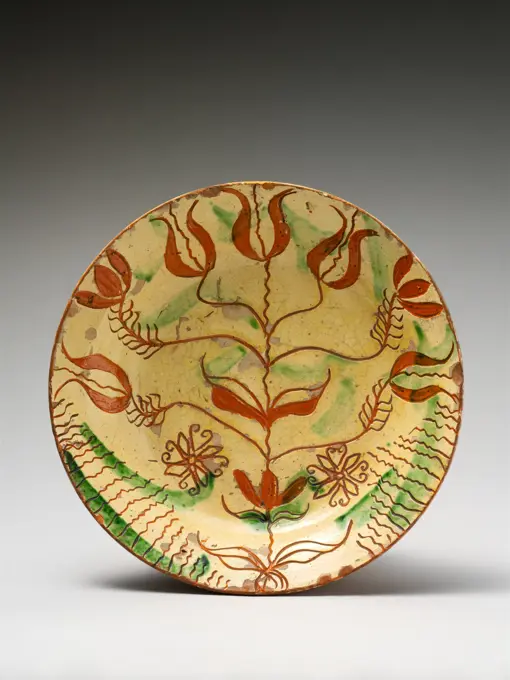
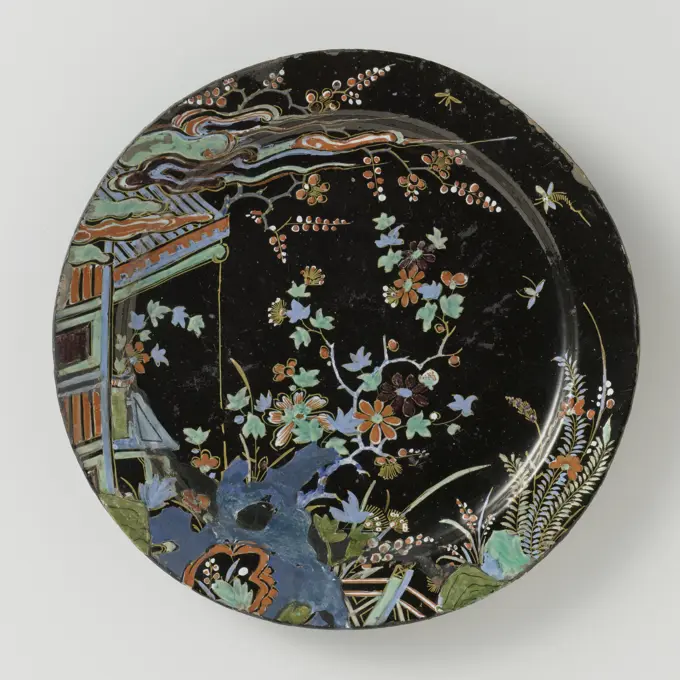
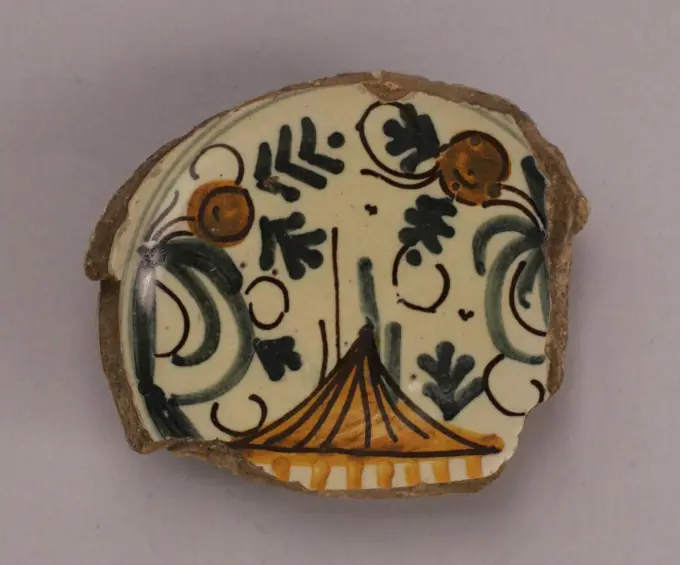
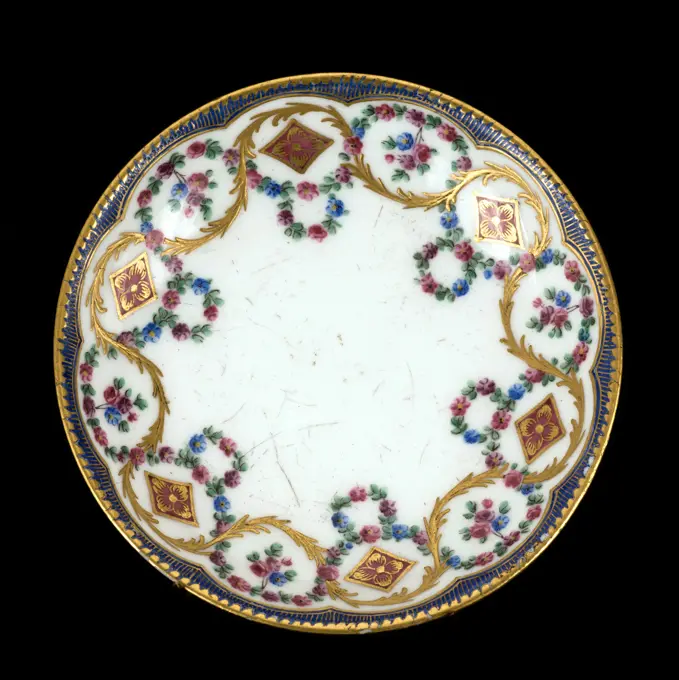
Decorative Ceramics and Dishes

Artful ceramic pieces from different cultures, featuring intricate designs and colors, representing historical craftsmanship and artistry.

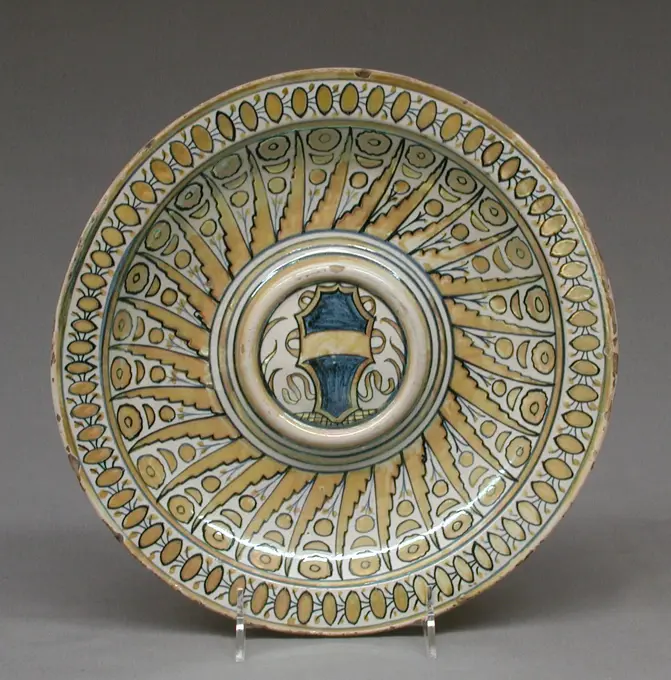
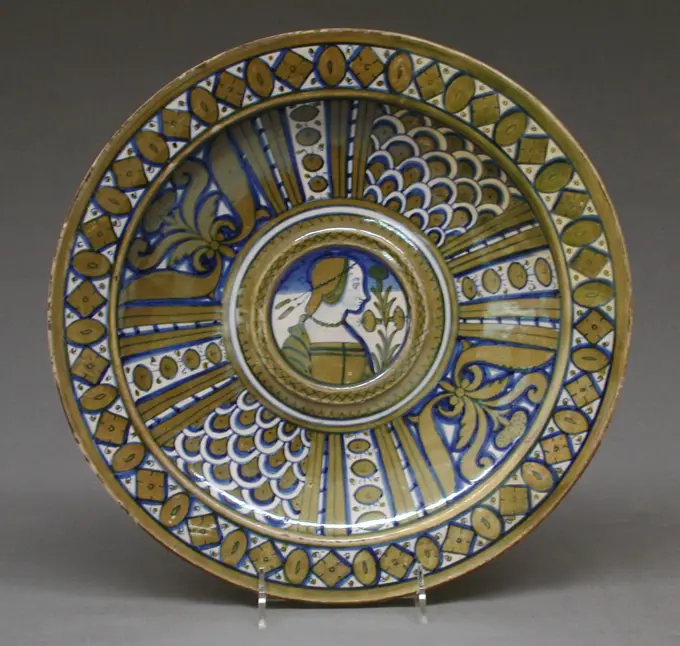
Dish, Tin-glazed earthenware (maiolica), On the raised center, a profile busy of a man dressed as a Roman emperor. The segmented border shows peacock feathers and scale ornaments, the rim shows floral designs in blue and yellow on an orange ground., Faenza or Deruta, Italy, ca. 1505, ceramics, Decorative Arts, Dish
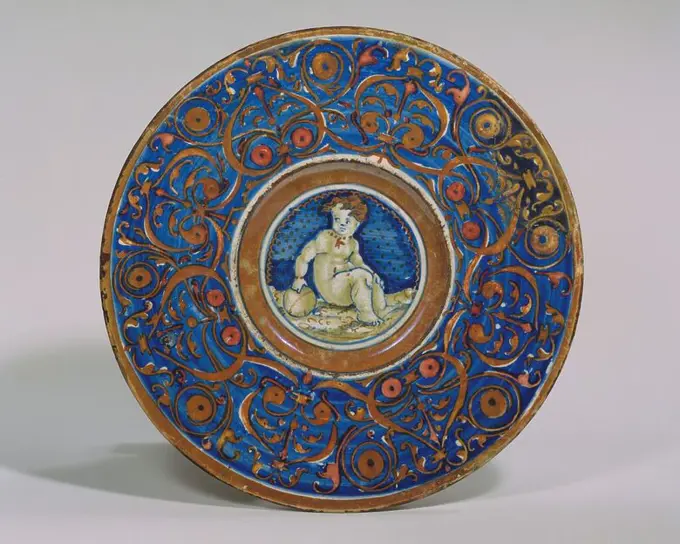
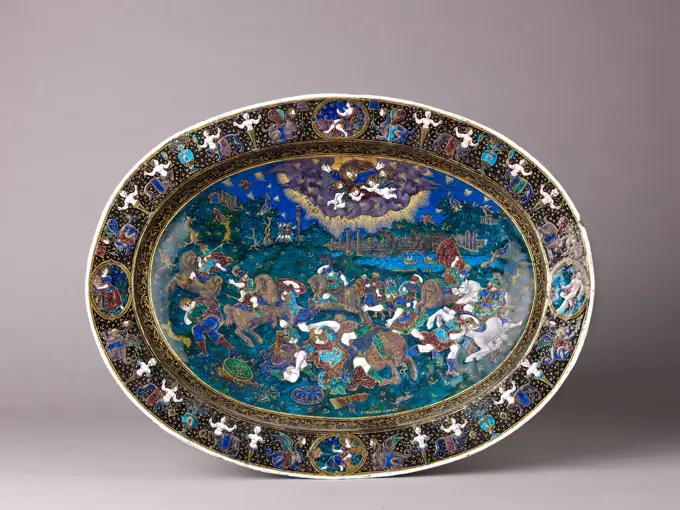
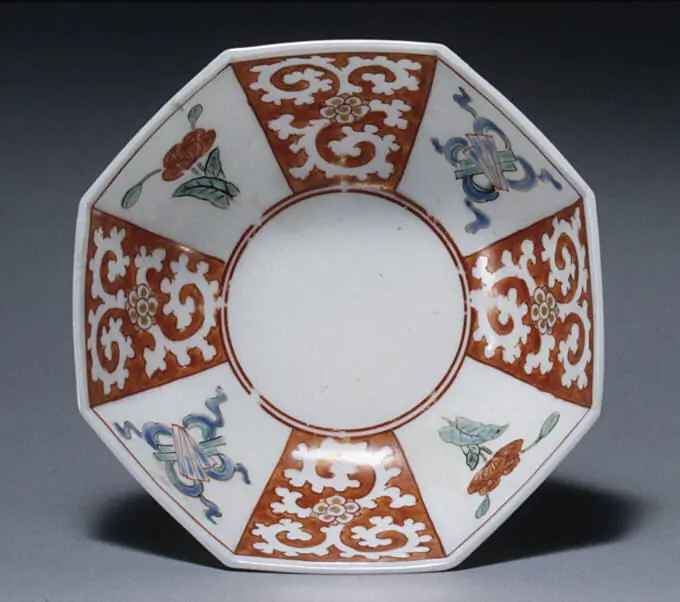
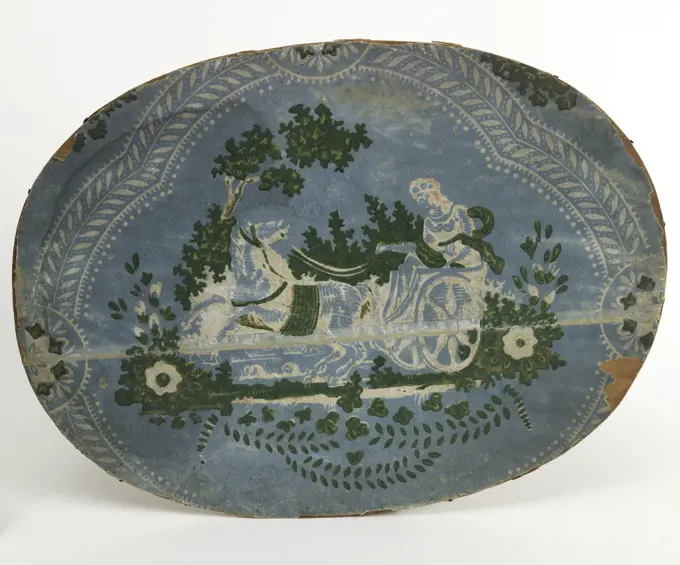
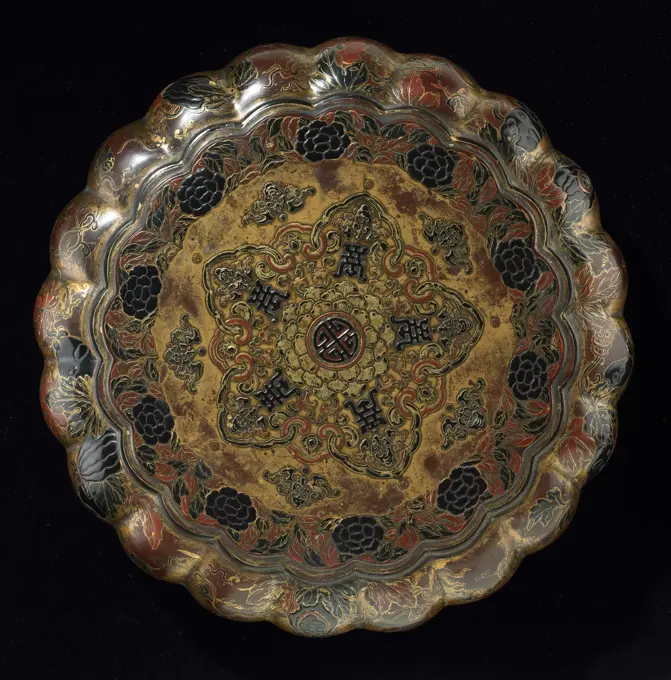
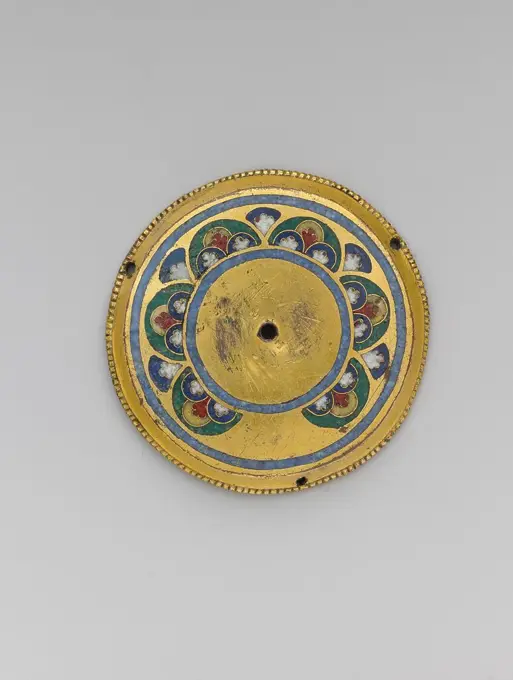
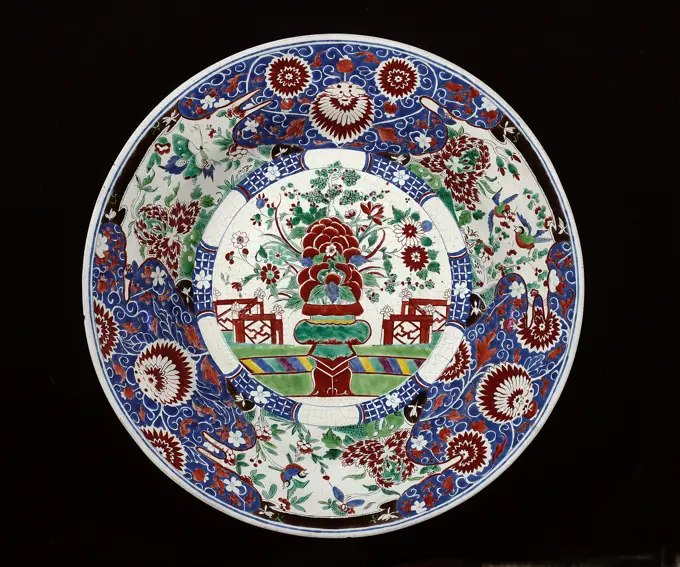
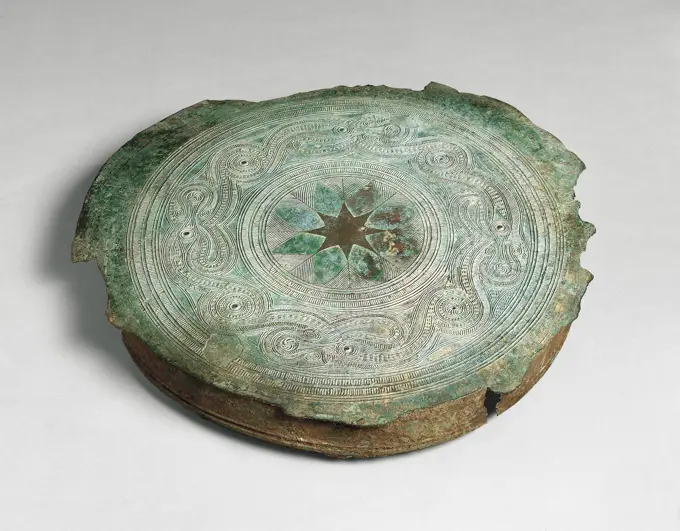
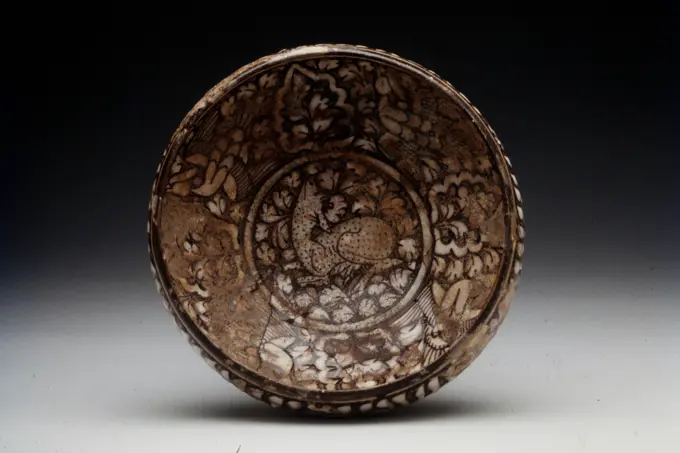
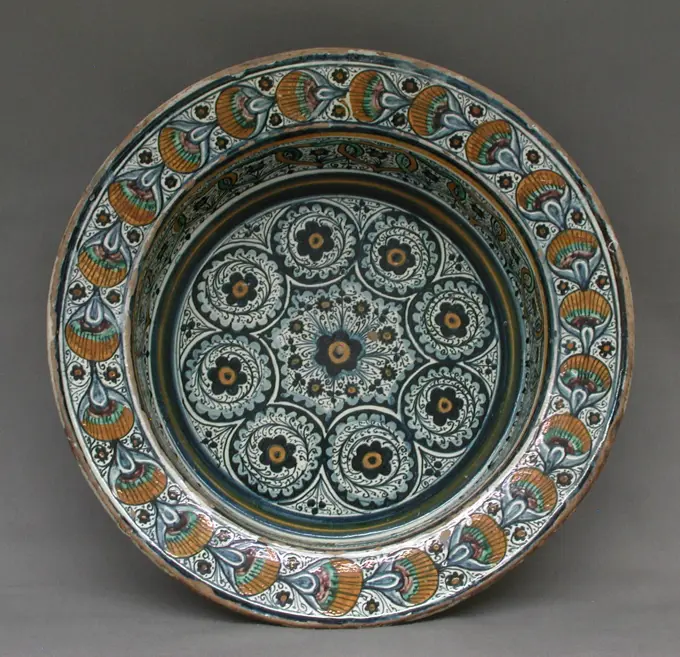
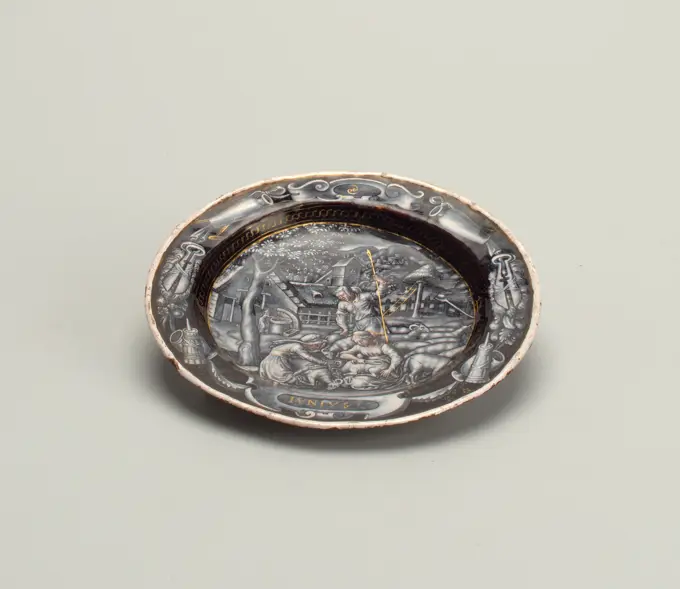
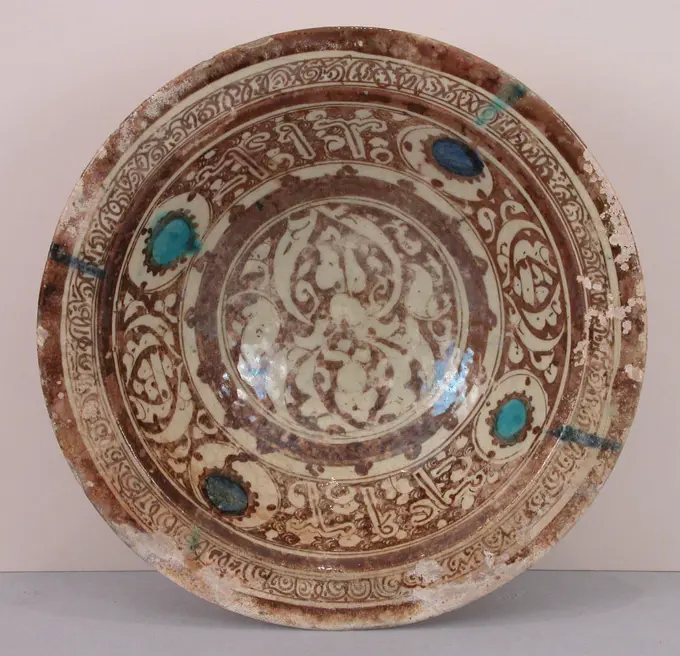
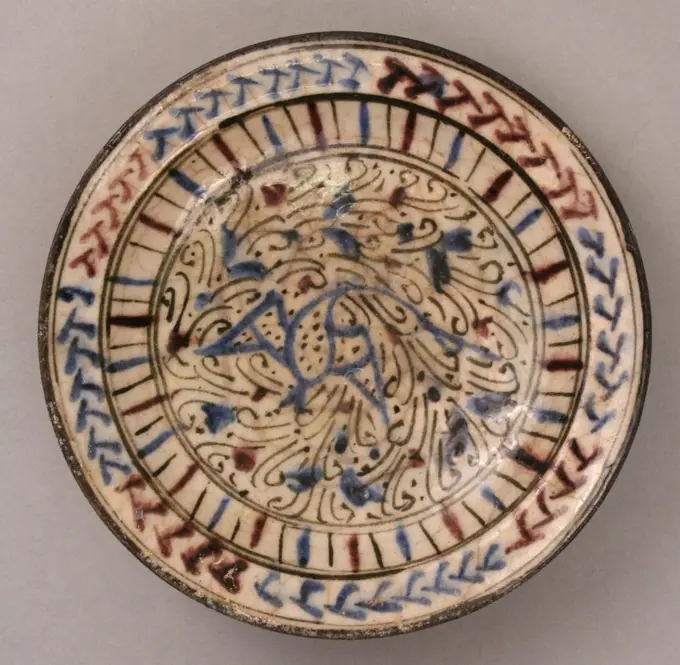
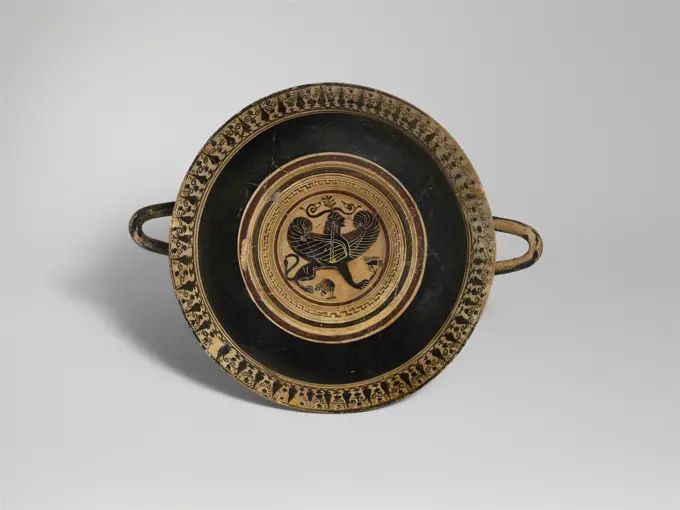
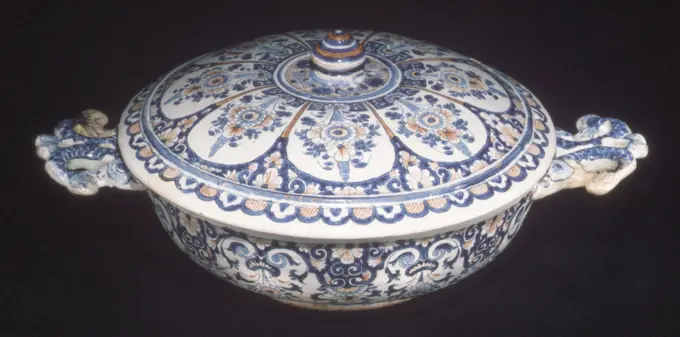
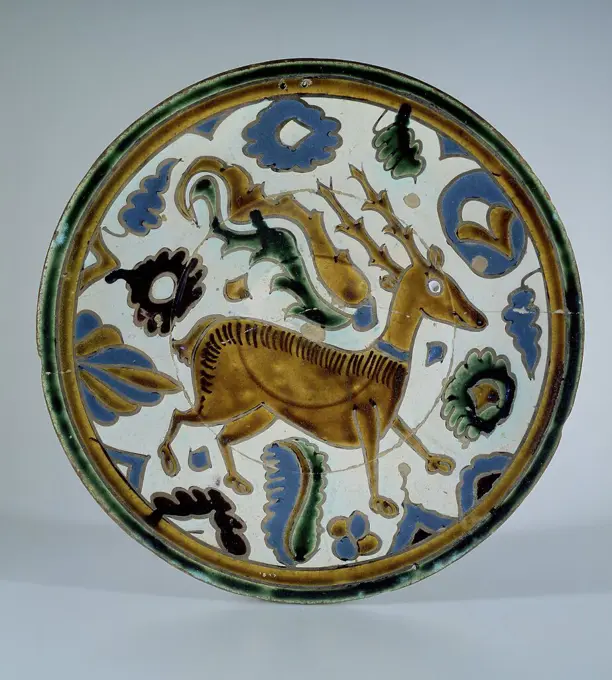
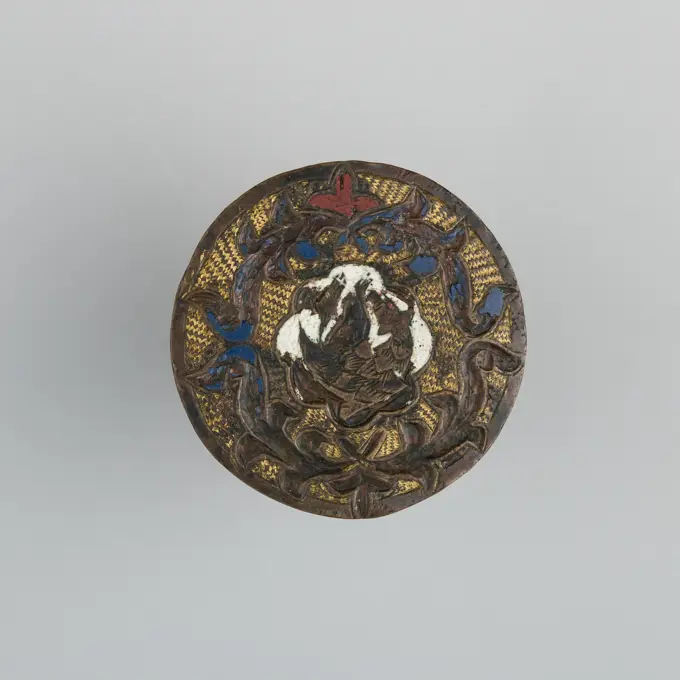
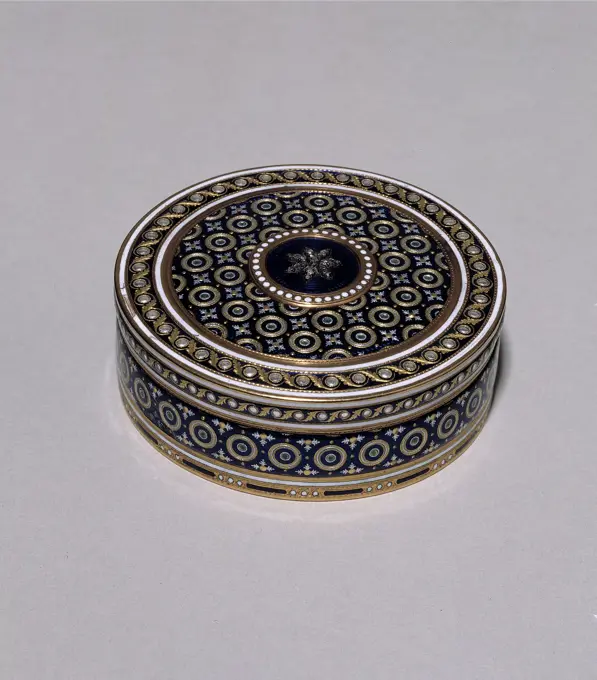
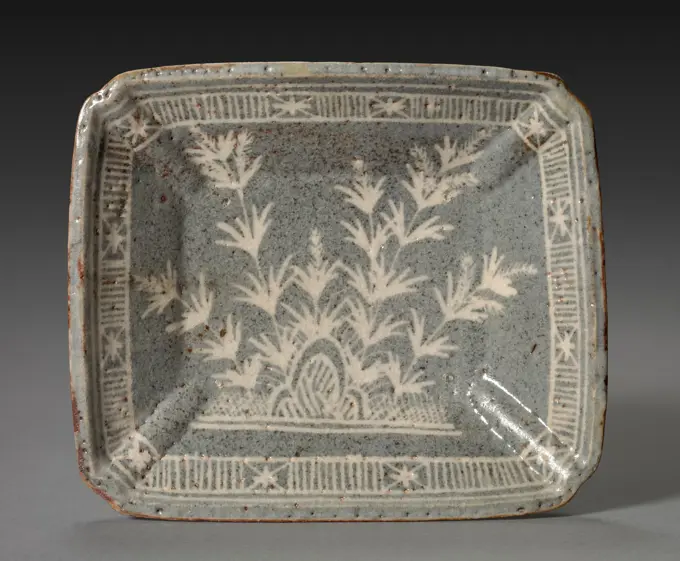
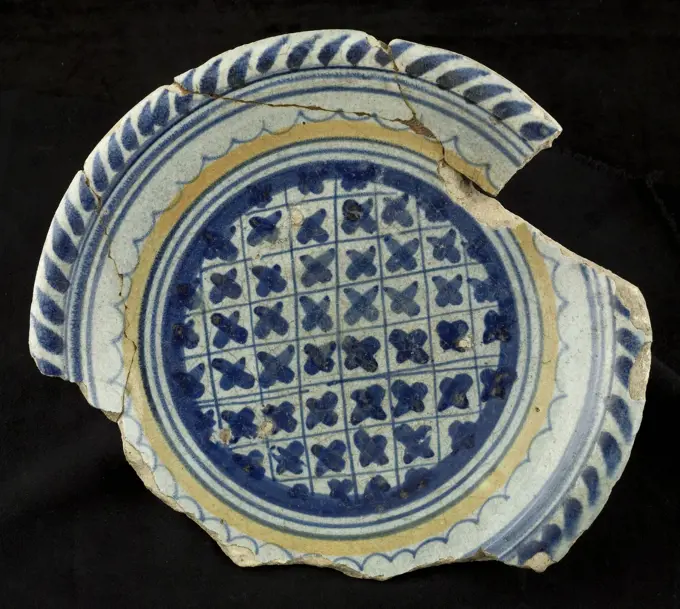
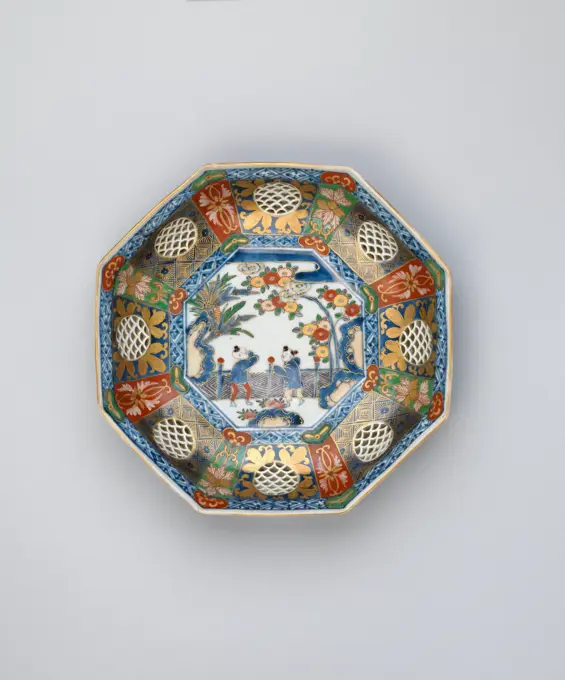
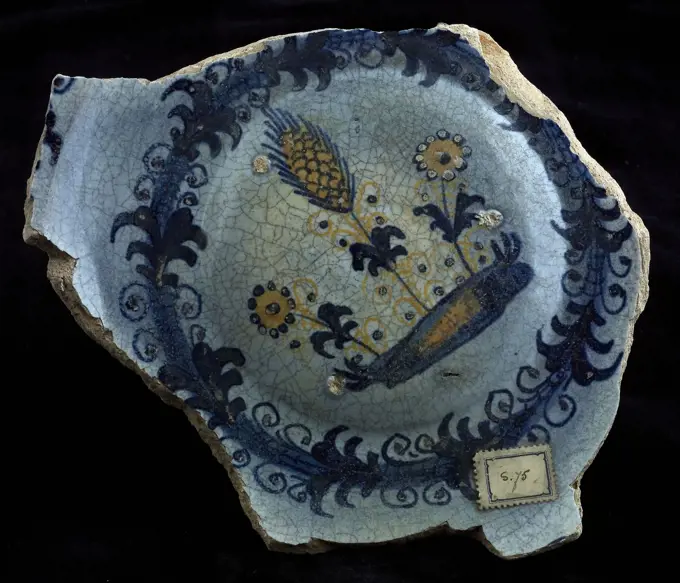
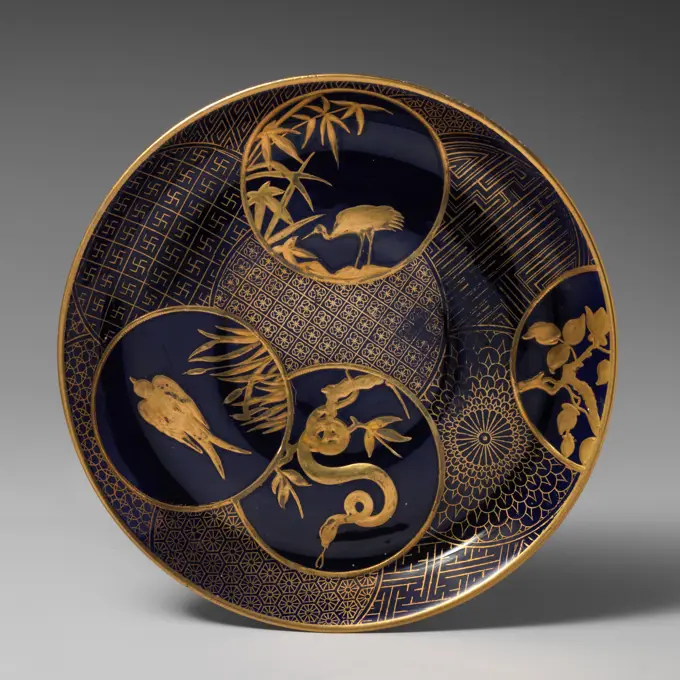
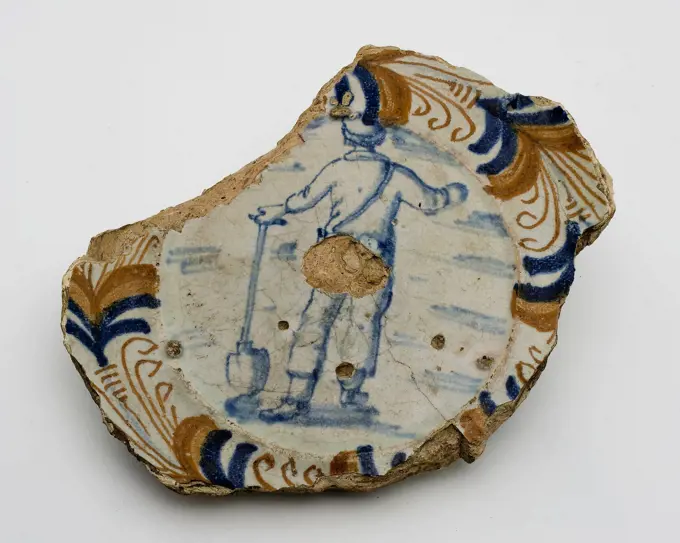
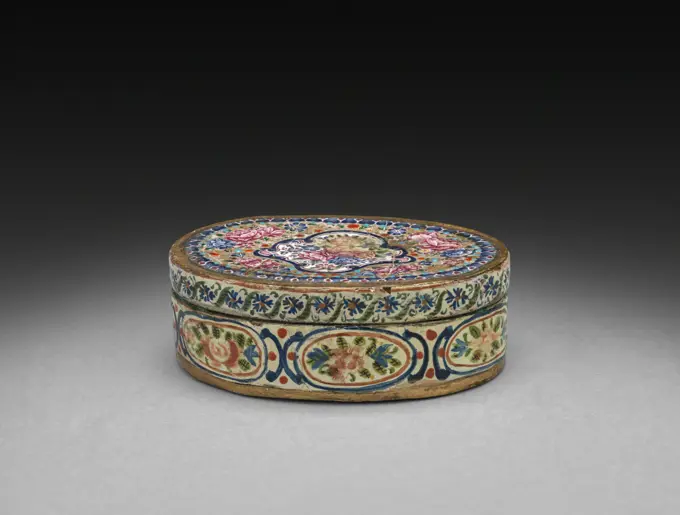
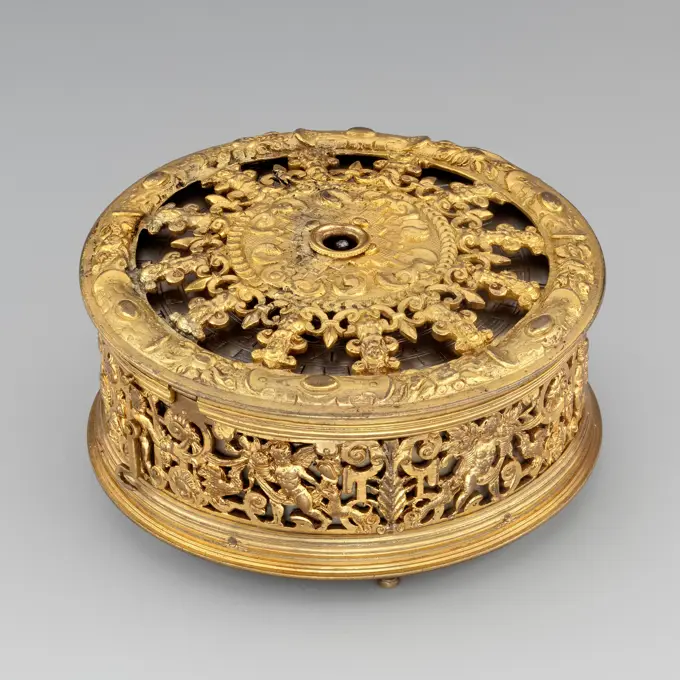
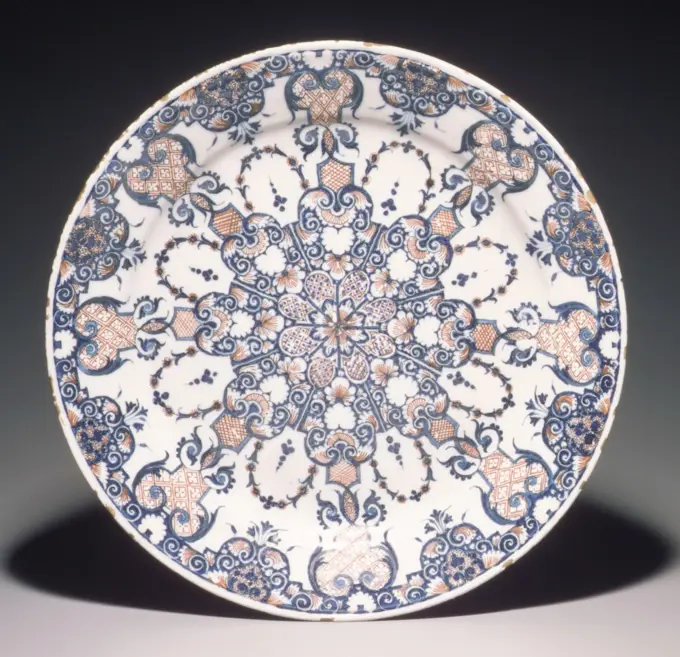
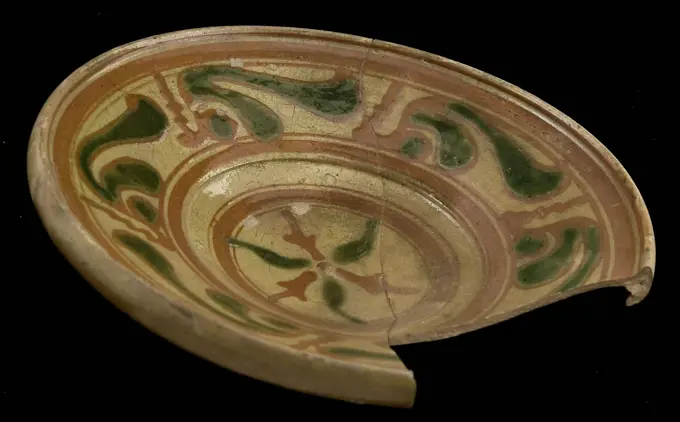
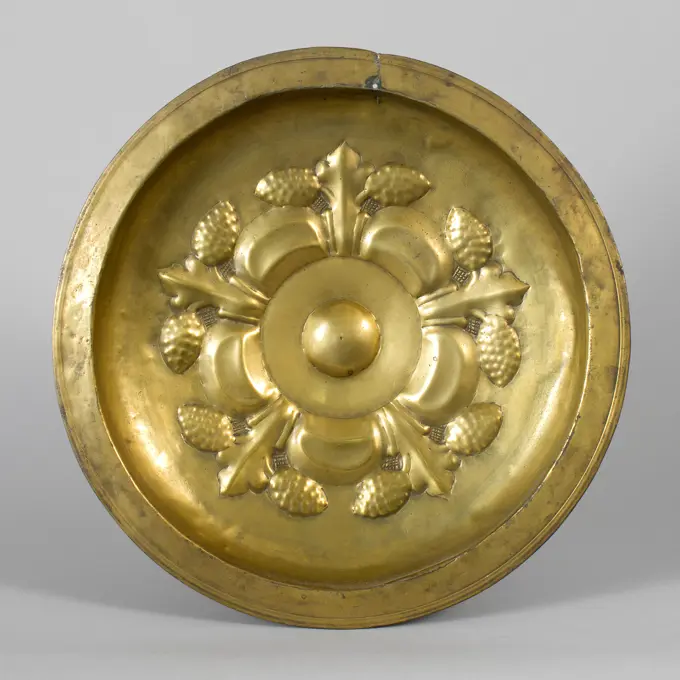
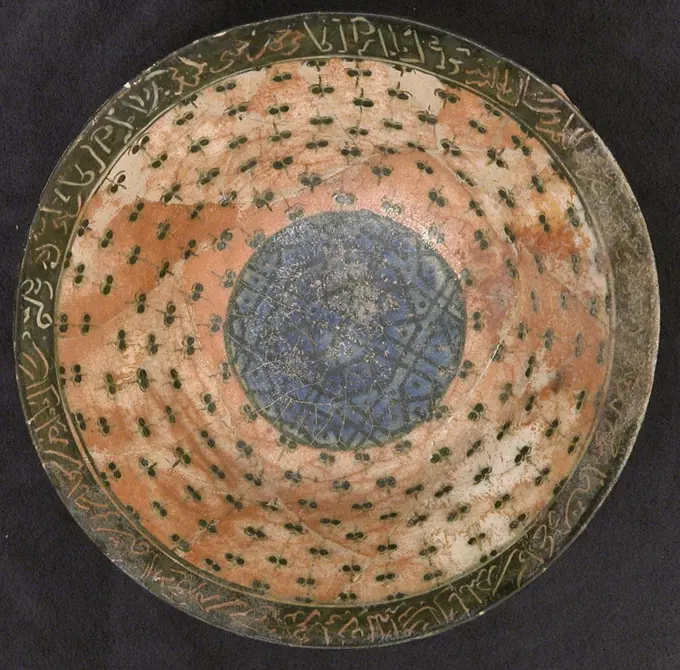
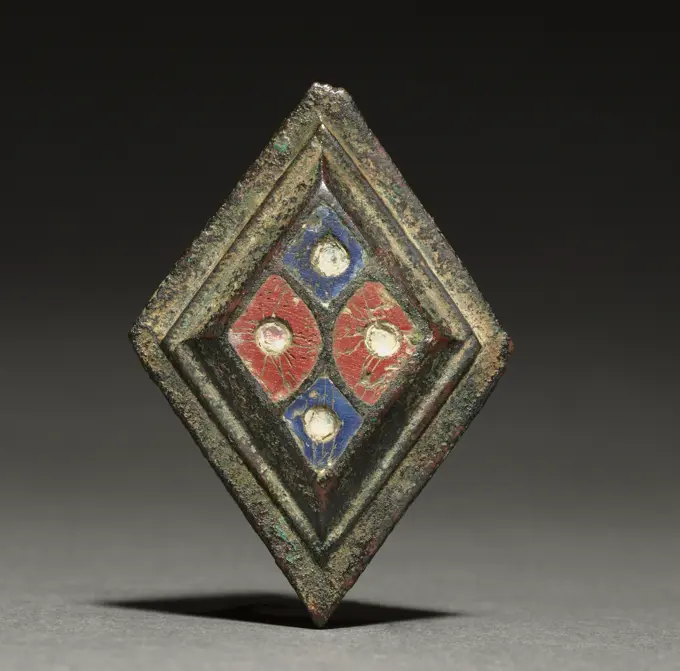
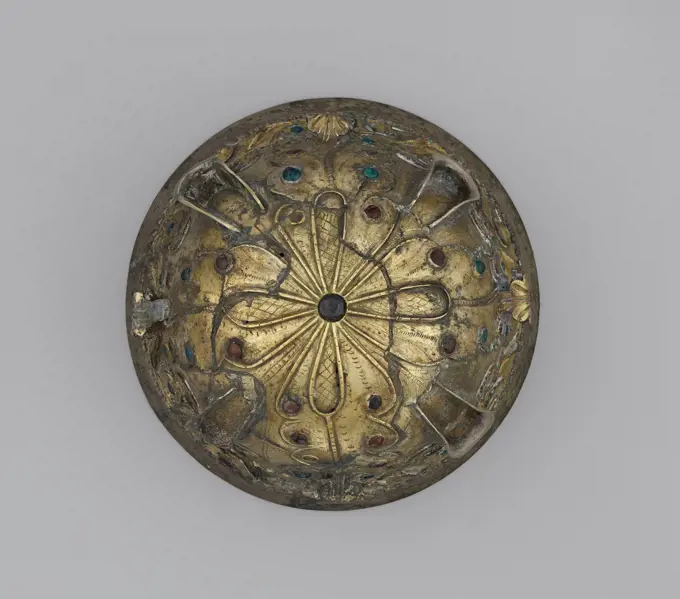
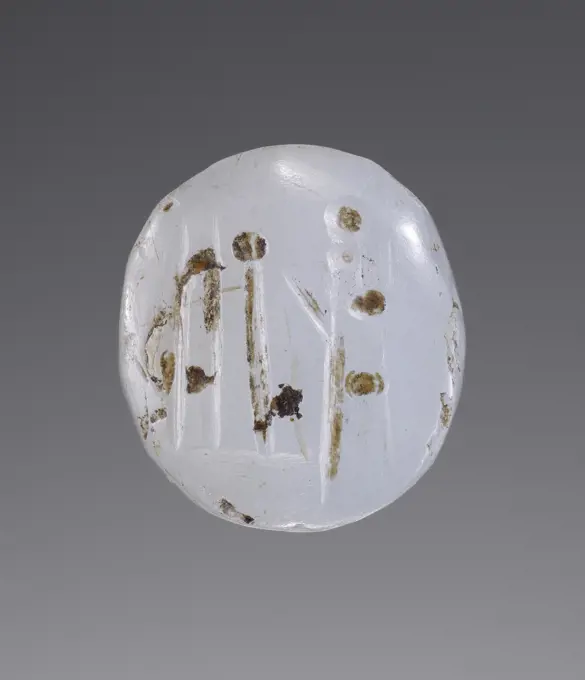
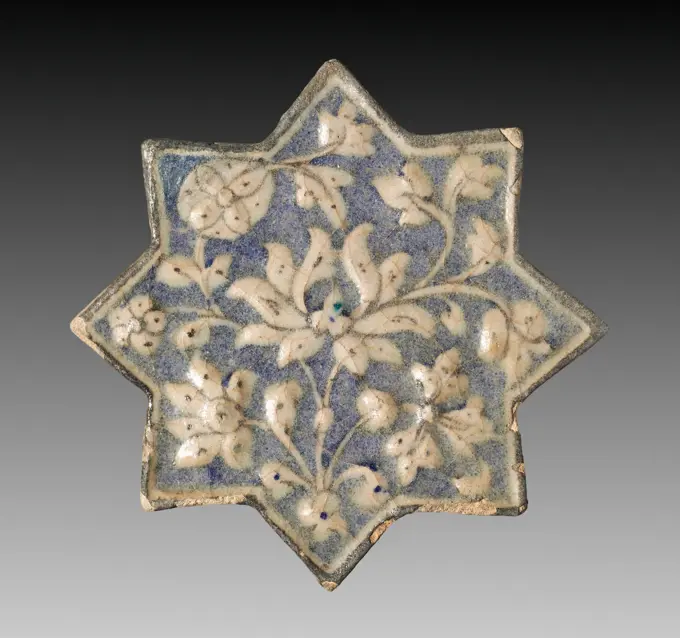
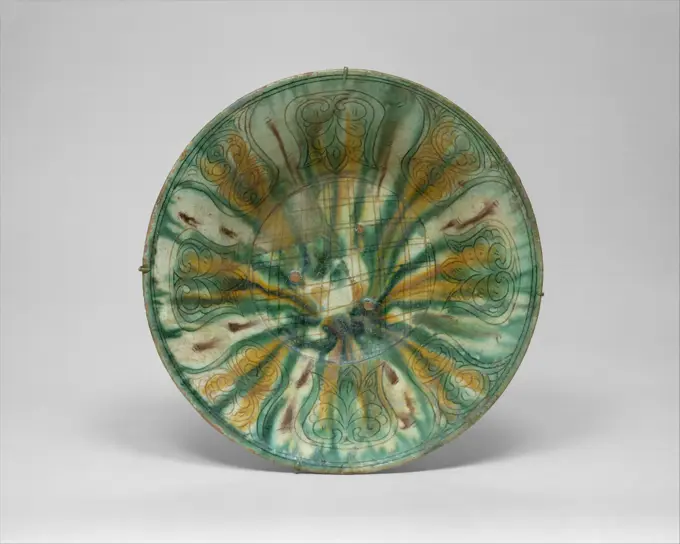
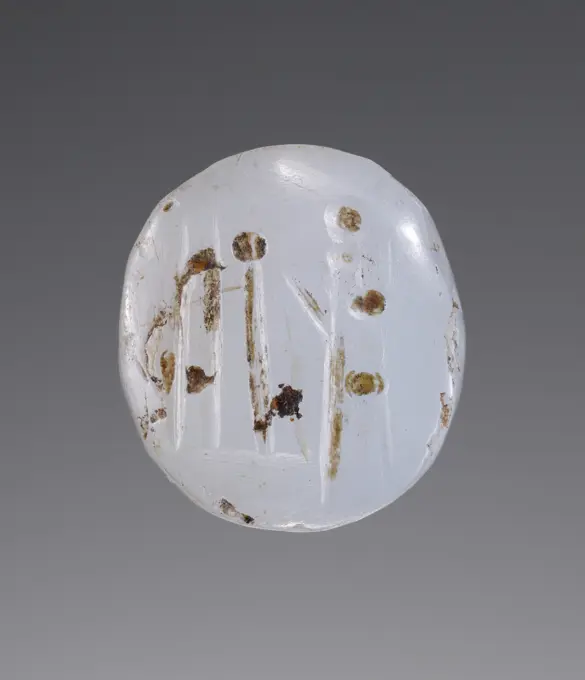
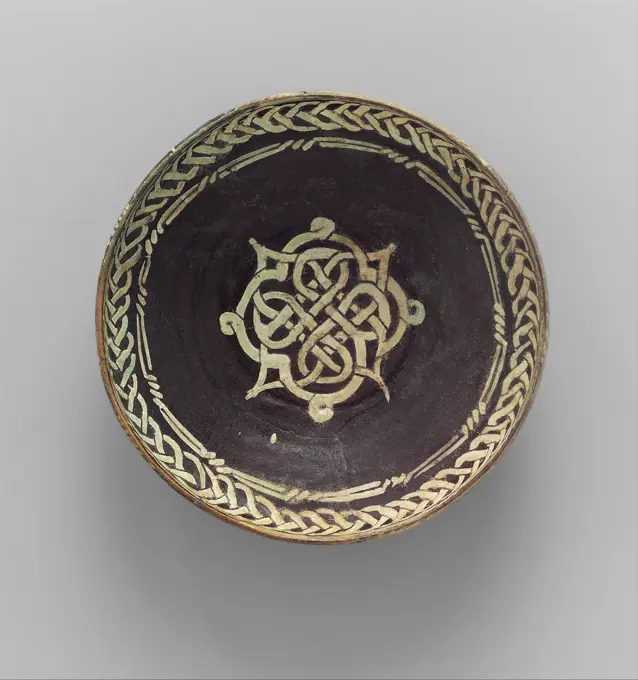
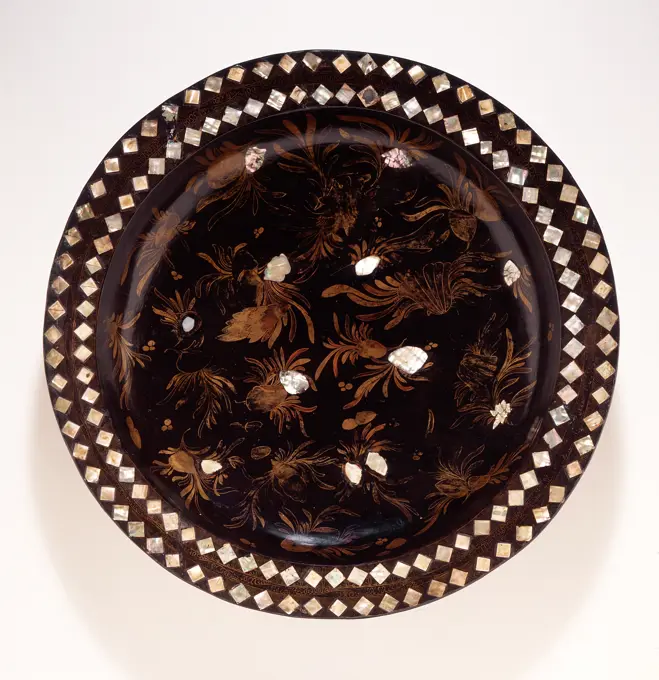
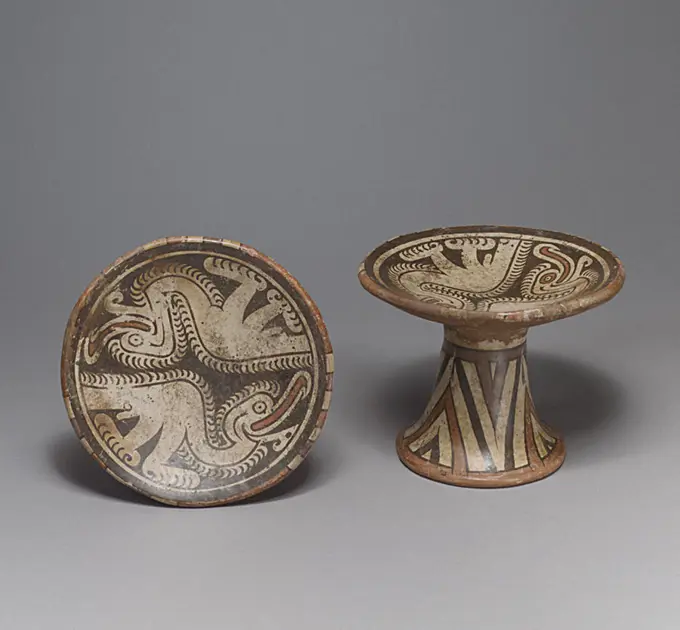
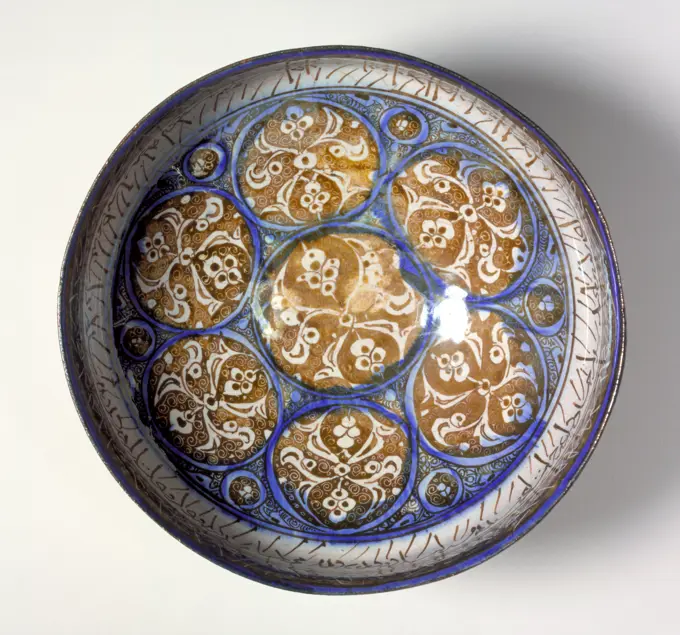
Bowl. Iran, Kashan, late 12th or early 13th century. Ceramics. Fritware, underglaze and overglaze luster-paintedDish with a flower vase, flowering plants and floral scrolls, anonymous, c. 1700 - c. 1750 Porcelain saucer, painted in underly glaze blue and on the glaze red and gold. On the flat a flower vase with chrysanthemums and peonies; On the vase a stylized lotus. The wall and edge are divided into six compartments with alternating flowering plants behind a fence and peony drinks against a blue background. The outer wall with three flower branches. (Chrysanthemum, Prunus, peony). The underside with proenen. The dish is caught in a catal frame. Imari. Japan Porcelain. Porcelain. Cobalt (Mineral). Gold (Metal). frame: Metal painting / gilding / vitrification Porcelain saucer, painted in underly glaze blue and on the glaze red and gold. On the flat a flower vase with chrysanthemums and peonies; On the vase a stylized lotus. The wall and edge are divided into six compartments with alternating flowering plants behind a fence and peony drinks against a blue background. The outer wall with three flShaving bowl with floral scrolls and hoo-birds and flower sprays in panels, anonymous, c. 1675 - c. 1699 Porcelain shaving basin, painted in under -glaze blue and on the glaze red, green, black and gold. A flower branch on the flat; Six radiating courses around it, three of which with a Hoo-Vogel with a honeycomb pattern and three scallops with a flower branch. The lower part of the cartouches with a continuous decorative bond with varied shadowing and a honeycomb pattern. On the edge of chrysanthemums on 'Karakusa' ranks. The outer wall with two prunus branches. The edge has been broken; A few chips in the foot ring. Imari. Japan porcelain. glaze. cobalt (mineral). gold (metal) painting / gilding / vitrification Porcelain shaving basin, painted in under -glaze blue and on the glaze red, green, black and gold. A flower branch on the flat; Six radiating courses around it, three of which with a Hoo-Vogel with a honeycomb pattern and three scallops with a flower branch. The lower part of Dish (England); Produced by Keswick School of Industrial Art; repousséd brassPlate with Arms of the Vitelleschi Family, 1527. Circle of Maestro Giorgio Andreoli (Italian, 1465-1553). Tin-glazed earthenware with gold luster (maiolica); diameter: 26.3 cm (10 3/8 in.).Dish ca. 1510-20 Italian, Deruta. Dish. Italian, Deruta. ca. 1510-20. Maiolica (tin-glazed earthenware), lustered. Ceramics-PotteryDish second half 15th century Spanish. Dish 471779Dish, Tin-glazed earthenware (maiolica), On the raised center, a profile busy of a man dressed as a Roman emperor. The segmented border shows peacock feathers and scale ornaments, the rim shows floral designs in blue and yellow on an orange ground., Faenza or Deruta, Italy, ca. 1505, ceramics, Decorative Arts, DishPlate ca. 1580-1600 Northern Italian, possibly Emilia. Plate. Northern Italian, possibly Emilia. ca. 1580-1600. Lead-glazed earthenware. Ceramics-PotteryBasin for anEwer.   Maker: UnknownPlate (tagliere). Culture: Italian, Gubbio. Dimensions: Diameter: 9 5/8 in. (24.4cm). Date: 1532. Museum: Metropolitan Museum of Art, New York, USA.Conversion St. Paul late 16th to early 17th century Suzanne de Court French. Conversion St. Paul 460805Plate 1800-1850 Puebla. Tin-glazed earthenware . Talavera Poblana (Potter)Bowl with Deer and Phoenix Motifs first half 14th century This bowl is a fine example of the so-called 'Sultanabad' wares which were produced during the Ilkhanid period. This type is characterized by a distinctive glaze, incorporating fine underdrawing in black or grey-green, often combined with cobalt and turquoise accents.. Bowl with Deer and Phoenix Motifs 452078Dish of multicolored painted majolica. Round dish of multicolored painted majolica. The dish is on a foot. On the flat is a man's portrait painted from a man-dependent man. The edge is lobby and corrugated and is painted with boxes within which a leaf or a flower. Concentric circles were painted on the back.Bowl 1720-30 Japanese, for European market The gift of the Hans Syz Collection in 1995 endowed the Museum with nearly three hundred examples of European and Asian ceramics meticulously acquired by Swiss-born collector Dr. Syz (1894-1991) to chart the migration of models and patterns from East to West. Documenting a continuous process of influence and adaptation, these pieces provide a discriminating review of the nuances of stylistic change resulting from three centuries of trade.. Bowl 208368Dish;  beginning of the 18th century (1701-00-00-1710-00-00);Dish 16th-17th century. Dish 448437Bandbox, Hannah Davis, 1784 - 1863, Block-printed paper, wood support, newspaper lining, Blue field; medallion of woman driving a chariot, green and white, with small amount of pink; enframed in white conventional foliage scrolls. Inside of box lined with newpaper dated 1827., Jaffrey, New Hampshire, USA, 1830-40, Wallcoverings, BandboxBox with cover, 18th century, 3 9/16 x 12 1/2 x 12 1/2 in. (9.05 x 31.75 x 31.75 cm), Lacquer, China, 18th centuryEnamel from a Reliquary. Artist: Workshop of the Master of the Virgin Mary's Reliquary Casket (German, Aachen). Culture: German. Dimensions: Overall: 3 1/8 x 5/16 in. (8 x 0.8 cm). Date: early 13th century.These delicately patterned enamels once formed part of a large shrine (perhaps as much as six feet long) to contain the precious remains of Christian saints. The rectangular plaques would have been set horizontally or vertically as border decoration; the medallion served as a decorative halo for a statuette of a saint. The lavish attention given to these small elements is a testament to the importance of the commission and to the skill of the goldsmith. When such shrines were restored in the 19th and early 20th centuries, original plaques were sometimes replaced with modern copies in impeccable condition, and originals like these were sold to collectors. Museum: Metropolitan Museum of Art, New York, USA.Saucer; Bleras et sauvage (couples; Malnia; Ca 1812-1830); 1. W. 19th century (1800-00-00-1820-00-00);Geometric decorations, plant decorations, purchase (provenance)A plate; Valencia (Spain); XVI (1500-00-00-1600-00-00);Platter. Belweder (manufaktura fajansu ; 1770-1780), factoryCharger plate (ôzara). unknown, craftsmanBowl first half 14th century Iranian. Bowl 461074Hispano-Moresque Plate 1500-1650 Spain. Tin-glazed earthenware with copper luster .Platter with iMari decoration; Porzellanmanufaktur du Paquier (Vienna; 1718-1744); around 1730 (1725-00-00-1735-00-00);Ryszard, Stanisław Ryszard (1871-1955) - collection, Far Eastern decorations, iMari (style), Far Eastern flowers, purchase (provenance)Tympanum of a Pejeng-Type Drum ca. 500 B.C.-A.D. 300 Indonesia (Sumba) A distinctive style of drum was made in Indonesia that was hourglass-shaped with separately cast and soldered tympanum that overhang the body. In this fragmentary example, the central star design of the top seems to be bordered by stylized feathers and the large outer band of decoration, comprised of a series of interlocking meanders, probably represents birds.. Tympanum of a Pejeng-Type Drum. Indonesia (Sumba). ca. 500 B.C.-A.D. 300. Bronze. Bronze and Iron Age period. MetalworkBowl, 14th century, 4 1/2 x 8 1/4 in. (11.4 x 20.96 cm), Earthenware, Iran, 14th centuryBasin ca. 1475-90 Italian, Naples. Basin. Italian, Naples. ca. 1475-90. Maiolica (tin-glazed earthenware). Ceramics-PotteryPlate (France); enameled copperFor a long time from the Supply service; Belvedere (faience manufacture; 1770-1780); 1777 (1777-00-00-1777-00-00);Potocki, Paweł, Chinoiserie, Flowers, Sultan service, purchase (provenance)Luster Bowl late 12th-first half 13th century Nineteenth-century antiquarians fascination with The Thousand and One Nights and its 9th-century protagonist, Harun al‑Rashid, provoked interest in the Syrian city of Raqqa, where this Abbasid caliph once resided, and in the ceramics unearthed there. These prized objects date to the Ayyubid period, however, not Haruns time. Recent study confirms that Raqqa was an important ceramics center, especially in the first part of the twelfth century, but other centers produced so‑called Raqqa ware as well. Listen to experts illuminate this artwork's story Listen Play or pause #6715. Overview: Heraldic Lusterware Bowls, Part 1 Play or pause #6715. Overview: Heraldic Lusterware Bowls Supported by Bloomberg Philanthropies We're sorry, the transcript for this audio track is not available at this time. We are working to make it available as soon as possible.. Luster Bowl 450933Bowl 10th century. Bowl 449572Dish for an ewer ca. 1515-25 Italian, Deruta. Dish for an ewer. Italian, Deruta. ca. 1515-25. Maiolica (tin-glazed earthenware), lustered. Ceramics-PotteryDish 14th century. Dish 451942Kutani-Style Sweets Tray. Japan. Date: 1820-1830. Dimensions: Diam. 20.32 cm. Porcelain with underglaze decoration and overglaze enamels. Origin: Japan. Museum: The Chicago Art Institute, Chicago, USA.PlateTerracotta kylix (drinking cup) 6th century B.C. Greek, Laconian Carefully drawn patterns cover the outside and the inner rim of this vase; a sphinx decorates the interior medallion.. Terracotta kylix (drinking cup). Greek, Laconian. 6th century B.C.. Terracotta; black-figure. Archaic. VasesBowl 13th century. Bowl 4466878-stroke platter, with the Shiba Onko motif; Koenigliche Porcellain Fabrique, Meissen (1710-1763); around 1730 (1725-00-00-1730-00-00);Johanneum, Far East -style decorations, Kakiemon (style), stone in the tank -Motyw, numbers, purchase (provenance). Dish of porcelain with scalloped edge, painted on the glaze in blue, red, green, yellow, black and gold. On the Flat the coat of arms of Holland, with the inscription 'Holland', with a flower branch with bird on either side, two insects above the weapon and under the weapon a flower branch; The wall and edge are divided into twelve flower leaf-shaped courses alternately filled with a seated Chinese man in a landscape, a standing Chinese lady in a landscape or flower vases; The edge with napkin. Two flower branches on the rear. Some chips in the edge. Weapon porcelain with email colors.Pennsylvania German Pie Plate. Dated: 1935/1942. Dimensions: overall: 38.5 x 34.1 cm (15 3/16 x 13 7/16 in.) Original IAD Object: 13 3/8" in diameter. Medium: watercolor, gouache, and graphite on paperboard. Museum: National Gallery of Art, Washington DC. Author: Elmer G. Anderson.Epergne. Andreoli, Giorgio (ca 1470-1553), factory, Deruta (ośrodek ceramiczny ; ca 1500- ), factoryCERAMICA POPULAR DE PUENTE DEL ARZOBISPO S XVIII.Bowl with cover ca. 1705-20 French, Rouen Faience, or tin-glazed and enameled earthenware, first emerged in France during the sixteenth century, reaching widespread usage among elite patrons during the seventeenth and early eighteenth centuries, prior to the establishment of soft-paste porcelain factories. Although characterized as more provincial in style than porcelain, French faience was used at the court of Louis XIV as part of elaborate meals and displays, with large-scale vessels incorporated into the Baroque garden designs of Versailles. Earlier examples of French faience attest to the strong influence of maiolica artists from Italy. Later works demonstrate the ways in which cities such as Nevers, Rouen, Lyon, Moustiers, and Marseille developed innovative vessel shapes and decorative motifs prized among collectors throughout Europe. While faience can be created from a wide mixture of clays, it is foremost distinguished by the milky opaque white color achieved by the addition of PLATO DE CUERDA SECA CON UN CIERVO Y MOTIVOS FLORALES FANTASEADOS - 1500. Location: INSTITUTO VALENCIA DE DON JUAN-COLECCION. MADRID. SPAIN.Embroidered tray cover, 1800s. Turkey. Plain weave: linen; embroidery, chain stitch: silk and gilt-metal thread; overall: 148.5 x 157 cm (58 7/16 x 61 13/16 in.).Badge or Harness Pendant Spanish ca. 1400 Heraldry, or coat-of-arms, were vitally important in Europe throughout the Middle Ages and the Renaissance. Heraldic emblems were used to identify noble families, cities, regions, and even countries. In addition to being displayed on shields and flags, heraldry was incorporated into architectural decoration on the interior and the exterior of buildings, on furniture, works of art, clothing, and horse equipment. Harness pendants, like this example, would have been attached to a headstall, bridle, or other straps making up the tack of a horse ridden by a nobleman or noblewoman, or a member of their household. Many harness pendants also have decoration that is simply ornamental, or have symbols that are not specifically heraldic in nature. View more. Badge or Harness Pendant. Spanish. ca. 1400. Copper, gold, enamel. Miscellaneous-BadgesJoseph Etienne Blerzy. "Circular goldening box in gold, white enamel, blue and shiny, decor of circles and flowers (lateral view of the box). Gold and enamel, 1789. Paris, Cognacq-Jay museum. 25925-18 Blue, Drageoir box, Bote, Brilliant, Circle, Circalire, Decor, Email, White Email, Fleurette, Various Object, Gold, lateral viewBowl with A Lover Tied to a Tree Italian, Faenza ca. 1535-40Tray with figures in a landscape 14th century China The two gentlemen on horseback and their attendants are presumably traveling to join the four figures drinking beneath the pine tree at top. The crane standing near the attendants serving wine and the deer resting at right are symbols of immortality. They add an otherworldly element to the scene, which represents either a paradisiacal realm or the retirement villa of a senior official equipped with the trappings of such a magical environment.. Tray with figures in a landscape. China. 14th century. Black lacquer with inlaid mother-of-pearl. Yuan dynasty (1271-1368). LacquerBowl;  19th century (1801-00-00-1900-00-00);Beer protection guild of Amsterdam, Gildepenning van Willem Koenders, Anonymous, c. 1600 - c. 1800 medal Copper oval guild pin. Front: Crowned barrel inside blower. Tours side: inscription Binnenbladerkrans Amsterdam copper (metal) engraving  AmsterdamDish with Autumn Grasses and Rocks, late 1500s-early 1600s. Japan, Momoyama period (1573-1615) to Edo period (1615-1858). Stoneware with underglaze iron oxide slip and incised designs (Mino ware, Shino type); overall: 20 cm (7 7/8 in.). Mino ware is stoneware produced in the Mino area of present-day Gifu Prefecture in central Japan. Works like this piece are called nezumi-shino, or mouse-gray” Shino, after their glazing technique. The gray color and white design of grasses were achieved by applying an iron oxide slip to the surface and carving through it to the white clay, and then covering the whole surface in glaze and firing the object. In its design, this serving dish emulates Chinese ceramic prototypes, but its shape recalls wooden and lacquered trays commonly used in Japan at the time.Majolica plate, yellow and blue on white, simplified chessplate decor in the mirror, plate crockery holder soil find ceramic earthenware glaze, total, baked underside covered with gray lead glaze. Polychrome. Italian Dutch decor. Drawing error in the mirror of the plateel painter archeology adorn food serving craft pottery bakery plateel painter ItalyDish with Chinese boys in a garden, 19th century, Unknown Japanese, 2 1/16 × 9 1/2 × 9 3/8 in. (5.24 × 24.13 × 23.81 cm), Imari ware; porcelain with underglaze cobalt blue, overglaze enamels, and gold, Japan, 19th century, In the center of this dish, two Chinese boys wearing ancient Chinese garb are surrounded by garden rocks, tropical plants, and flowering trees, all depicted in the standard iro-e colorsgreen, red, yellow, and gold over underglaze blue. The fence behind the boys helps identify their location as a palace garden. Pictures of aristocratic ancient Chinese boys in gardens had been introduced by the 1300s from China, where they appeared as good luck motifs on paintings, ceramics, and lacquerware. They remained a popular pictorial motif on Japanese decorative objects through the 1800s.Fragment majolica dish, yellow and blue on white, flowers and ear of corn on piece of land, plate crockery holder soil find ceramic earthenware glaze, Cooked on the underside covered with lead glaze. Polychrome Bolle soul of the pancake dish or salad dish. Aigretterand in the shoulder in blue archeology Rotterdam decorate food Bottomvondst Rotterdam 1941.Box (He) with Pavilions in a Landscape. China, Chinese, Late Ming dynasty, about 1550-1644. Furnishings; Accessories. Carved red lacquer on wood coreSaucer 1876-77 Worcester factory After the end of the Flight, Barr & Barr ownership of the Worcester factory in 1840, the firm went through a succession of owners and mergers before falling under the ownership of Kerr & Binns in 1852. During the partnership, the factory sought to rebuild its former eighteenth-century reputation in porcelain and known for Renaissance-inspired designs. With the establishment of the Royal Worcester Porcelain Company in 1862, the company gradually gained recognition for its Japanese-inspired designs, which formed part of Japonisme, a collective fascination with Japan that took place in Europe and the United States following the opening of Japanese markets to the West by Commodore Perry in 1853.. Saucer. British, Worcester. 1876-77. Bone china. Ceramics-PorcelainFragment dish, polychrome, man leaning on shovel, egret edge, dated, dish plate crockery holder soil find ceramic earthenware glaze, majolica Cooked on prunes. Polychrome underside covered with tin glaze on which simple decor in Chinese style and in the stand ring year. Dated Lightly curved soul date backside: 1624 1627 or 1628 archeology Rotterdam Stadscentrum Stadsdriehoek Haringvliet New harbor decorate serving food plateelbakkerij China Soil discovery New Haven Haringvliet 1941.Box, 1900-1916. China, Qing dynasty (1644-1911) or Republican period (1912-49). Enamel; overall: 5.2 x 7 cm (2 1/16 x 2 3/4 in.).Canned clock;  End of the 16th century (1590-00-00-1600-00-00);Bylewski, Tadeusz (1866-1939) - collection, cupids, mascarons, vegetable wrap, purchase (provenance), animalsPlate ca. 1720-30 French, possibly Lille Faience, or tin-glazed and enameled earthenware, first emerged in France during the sixteenth century, reaching widespread usage among elite patrons during the seventeenth and early eighteenth centuries, prior to the establishment of soft-paste porcelain factories. Although characterized as more provincial in style than porcelain, French faience was used at the court of Louis XIV as part of elaborate meals and displays, with large-scale vessels incorporated into the Baroque garden designs of Versailles. Earlier examples of French faience attest to the strong influence of maiolica artists from Italy. Later works demonstrate the ways in which cities such as Nevers, Rouen, Lyon, Moustiers, and Marseille developed innovative vessel shapes and decorative motifs prized among collectors throughout Europe. While faience can be created from a wide mixture of clays, it is foremost distinguished by the milky opaque white color achieved by the addition of tWaist buckleEarthenware dish with red, yellow and green silt decoration, plate dish crockery holder soil find ceramic earthenware glaze lead glaze clay, hand turned decorated ring glazed glazed fried Deep dish on small stand. Bowl shaped mirror with curved center Wide flag and vertical saucer edge. Stand surface with traces of deduction Decorated in sludge technique Decoration consists of yellow circles green leaf motifs in the flag and wreath of arrowheads in the mirror archeology indigenous pottery import food serve serve table decorateWorkshop of the Miseroni; Jean Royel () / 'Salver of lapis lazuli'. Ca. 1689. Lapis lazuli, Silver-gilt. Museum: Museo del Prado, Madrid, España.Nimbus German 19th century (12th century style)Bowl 14th century. Bowl 447140Unknown, vase cover (common name). Porcelain, polychrome enamels, gilding. Petit Palais, Museum of Fine Arts of the City of Paris.Dish 16th century German. Dish. German. 16th century. Brass. Metalwork-BrassPlate ca. 1800 American. Plate. American. ca. 1800. Earthenware; Redware with sgraffito decoration. Made in Pennsylvania, United StatesPlate, anonymous, c. 1700 - c. 1730 Faïence board. Multicolored painted with a Chinese garden. Delft . Faïence board. Multicolored painted with a Chinese garden. Delft .Dessert Service (Saucer). Flight, Barr & Barr (England, Worcester, 1813-1840). England, 1813. Furnishings; Serviceware. PorcelainPlate. Culture: British, Stoke-on-Trent, Staffordshire. Dimensions: Diameter: 9 9/16 in. (24.3 cm). Factory: Minton(s) (British, Stoke-on-Trent, 1793-present). Date: ca. 1878.This plate was made for the 1878 Exposition Universelle in Paris. Museum: Metropolitan Museum of Art, New York, USA.Fragment 15th century. Fragment. 15th century. Earthenware; glazed. Attributed to Spain. CeramicsPlate 1808 American. Plate 6001Thévenet Père (active from 1741 to 1777). Saucer. Porcelain, 1760. Paris, Cognacq-Jay museum. 79171-6 Threatening art, flower motif, porcelain, saucer, dishes, 18th 18th 18th 18th 18th 18th 18th centuryDish 14th century. Dish. 14th century. Earthenware; underglaze painted. Made in Iran. CeramicsCarnavalet museum, tokens collectionMirror with Four Nipples, Quasi-Dragons, and Birds, late 3rd Century BC - early 1st Century. China, Western Han dynasty (202 BC-AD 9). Bronze; diameter: 8.8 cm (3 7/16 in.); overall: 0.9 cm (3/8 in.); rim: 0.3 cm (1/8 in.).Bowl. Dimensions: H. 2 1/8 in. (5.4 cm)Diam. of rim: 8 1/8 in. (20.6 cm). Date: late 11th-early 12th century.Luster ceramics developed in the medieval period, as artists transformed plain ceramics with the application of metallic-colored paint that emulated precious metalwork. The technique was popular throughout the Islamic world, but it was developed with particular skill in centers in Iraq, Iran, Egypt and Syria. This example demonstrates the shimmering effect of the paint, here forming vinelike patterns around a central triangular design. The bold contrast between the brilliant copper red and the background, in addition to the vitality of the convoluted decoration, place this work among the best of its type. Museum: Metropolitan Museum of Art, New York, USA.Maker: Unknown, Charger, ca.1690-1710, Tin-glazed earthenware, 5.8 × 36 cm (2 5/16 × 143/16in.), Made in Britain, British, 17th-18thcentury, Containers -CeramicsBowl 13th century. Bowl 446196Plate 18th century. Plate 453652Saucer: Qingbai ware, 1200s-1300s. China, Southern Song Dynasty (1127-1279) - Yuan Dynasty (1271-1368). Porcelain with blue and white decoration; diameter: 13.8 cm (5 7/16 in.).Ornamental Brooch, c. 100-300. Gallo-Roman or Romano-British, Migration period, 2nd-3rd century. Bronze and champlevé enamel; overall: 5.4 x 3.8 x 2.4 cm (2 1/8 x 1 1/2 x 15/16 in.).Wine Cup with Floral Decoration; Bactrian Empire; 1st century B.C; Gilt silver, inlaid glass and semiprecious stones; 8.3 × 14 cm (3 1,4 × 5 1,2 in.)Faceted Pendant Stamp; Europe; 20th century; Chalcedony; 2 x 1.4 x 1.5 cm (13,16 x 9,16 x 5,8 in.)Wall Tile with Lotus Blossom, c. 1300-50. Iran, probably Sultanabad, Ilkhanid period (1256-1353). Fritware with molded and underglaze-painted design; overall: 20 x 20 cm (7 7/8 x 7 7/8 in.).Bowl with Green, Yellow, and Brown Splashed Decoration 10th century This bowl is an example of the splashware made throughout Iraq, Iran, and western Central Asia, a type possibly inspired by Tang Chinese wares that were mainly decorated in a combination of green, yellow, and brown glazes. The addition of geometric and floral patterns, scratched into the surface of the bowl before the glazes were applied, is uniquely Iranian, and the vigorous yet refined drawing of the foliate forms makes this one of the finest splashed sgraffito pieces excavated.. Bowl with Green, Yellow, and Brown Splashed Decoration 449348Faceted Pendant Stamp. UnknownBowl with Knotted Medallion 10th century. Bowl with Knotted Medallion 452841Buckle, 1900s. China, 20th century. Silver gilt and jade; overall: 7.4 cm (2 15/16 in.).Nanban Basin with Seashell Design. Anonymous. Japan, Momoyama period, 16th century. Lacquer. Black lacquer with maki-e (sprinkled powder design) and mother-of-pearl inlayDish Manufacturer Belvedere Manufactory Polish 1776-77 This small dish is characteristic of the fine faience ware that was produced by the Belvedere Manufactory. Founded by the Polish King Stanislaw August Poniatowski (1732-1798) on the grounds of his castle in Warsaw, the Manufactory had a short ceramic live from ca. 1770-1780s during which pieces made of faience (tin-glazed earthenware) rather than porcelain were produced. Many were decorated in a colorful style with birds, trees, floral, and architectural motifs imitating early 18th century pieces from China and Japan. At the time East Asian porcelains were preferred collectibles by the Polish and other monarchs including the Ottoman Sultans. This dish was part of a larger set of more than 200 pieces commissioned by King Stanislaw August Poniatowski as a diplomatic gift to present to the Ottoman Sultan Abdul Hamid I (1725-1789) in 1776. Inscribed cartouches include Ottoman inscriptions, which read "Obedience and Fidelity are due to Bord van faience, anonymous, 1770 - 1800 Fowence board. Multicolored painted with a star and decorated edges. Delft . Fowence board. Multicolored painted with a star and decorated edges. Delft .Pedestal Plate 5th-8th century Conte or Coclé (Macaracas) The images on this pedestal plate depict mythical avian or saurian zoomorphs with feathered or scaled backs and chests, and clawed or multi-toed feet. Presented with open beaks and in mid-step, these creatures follow one another around the edge of the plate, head to tail, each occupying roughly half the space of the image field. Painted in brown, cream, plum, and reddish orange, this polychrome plate has a similar but not exact design compared to its mate (1993.307.1). There are variations in the colors of the pedestal pattern and slight differences between the beasts, such as the red-rimmed eyes of those on one plate. This imbues the work with an air of spontaneity within the fixed composition. Pedestal Plate. Conte or Coclé (Macaracas). 5th-8th century. Ceramic. Panama, Cocle Province, Rio Parita region. Ceramics-ContainersFragment sign from V.O.C. ship De 'Witte Leeuw', Anonymous, Before 1613 plate (dishes) Fragment sign from V.O.C. ship De 'Witte Leeuw', 65 present. Shatou porcelain   Sint-Helena