Decorative Ceramics and Dishes

Artful ceramic pieces from different cultures, featuring intricate designs and colors, representing historical craftsmanship and artistry.

Dish, Tin-glazed earthenware (maiolica), On the raised center, a profile busy of a man dressed as a Roman emperor. The segmented border shows peacock feathers and scale ornaments, the rim shows floral designs in blue and yellow on an orange ground., Faenza or Deruta, Italy, ca. 1505, ceramics, Decorative Arts, Dish
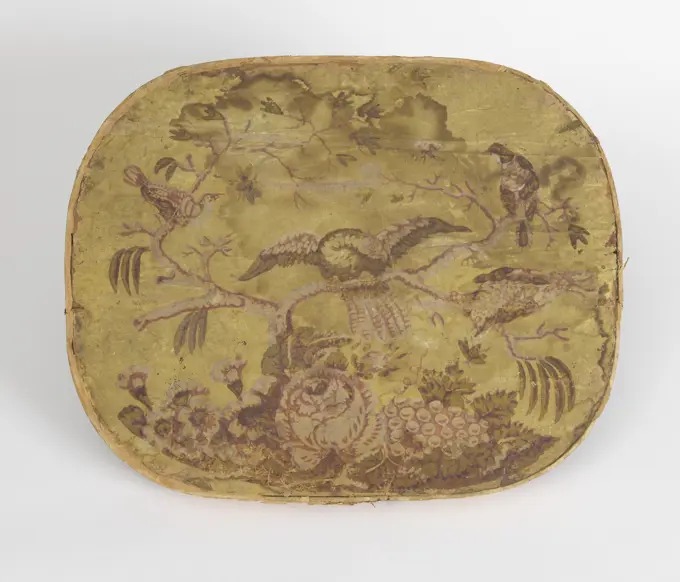
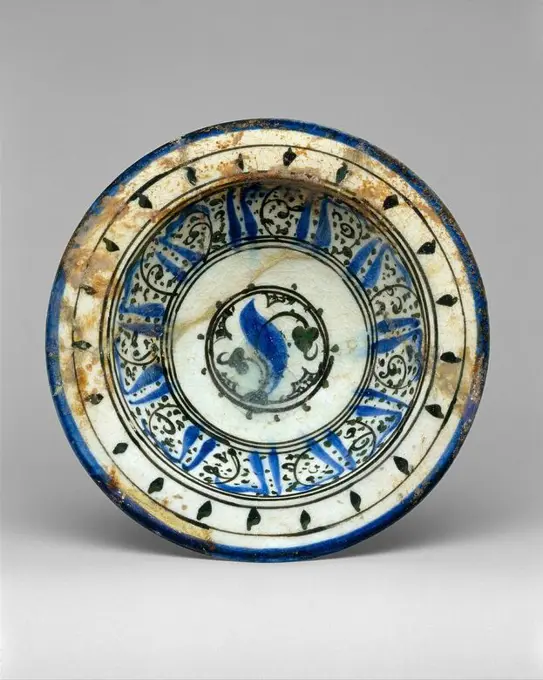
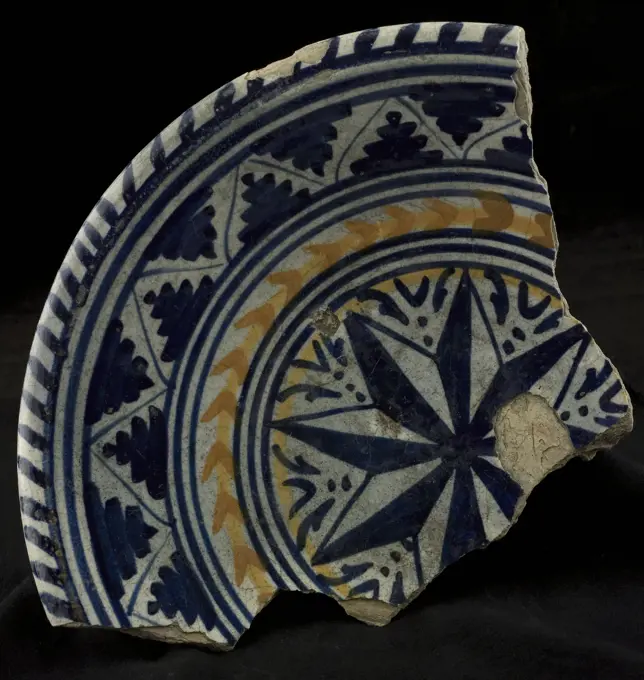
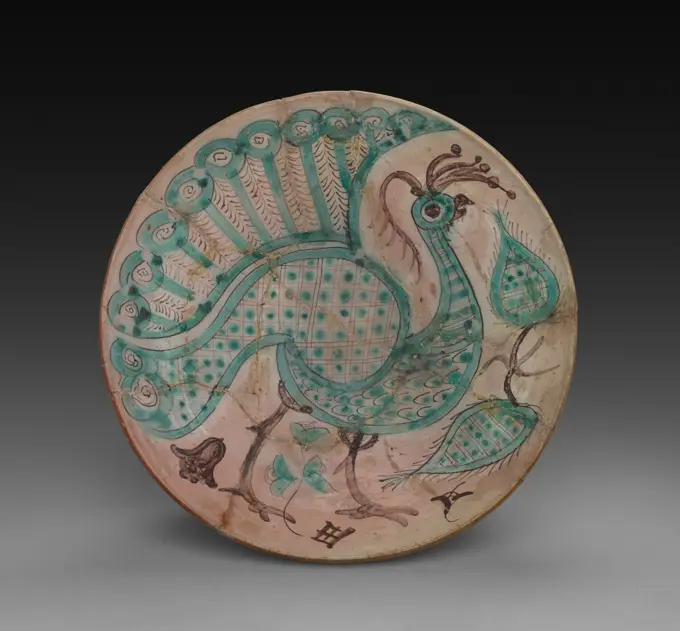
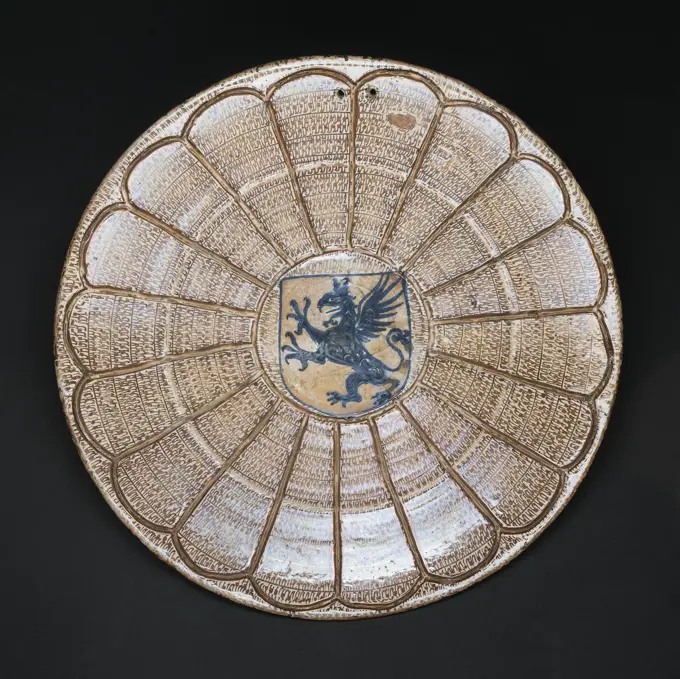
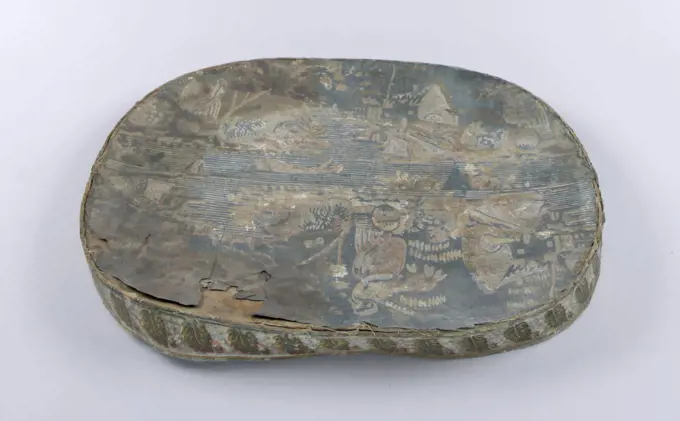
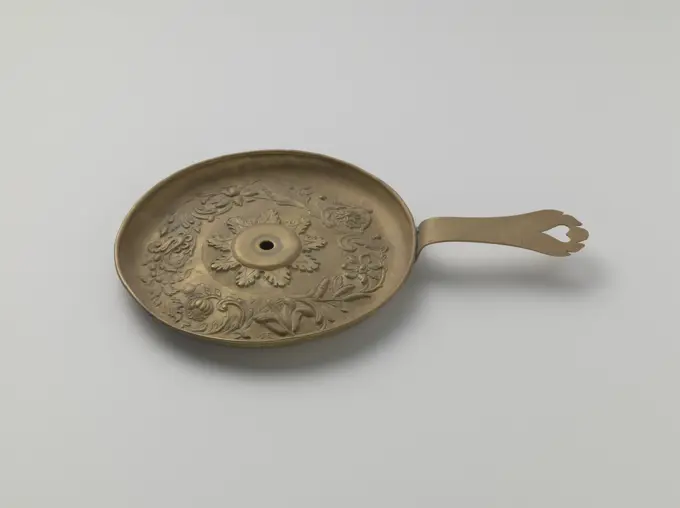
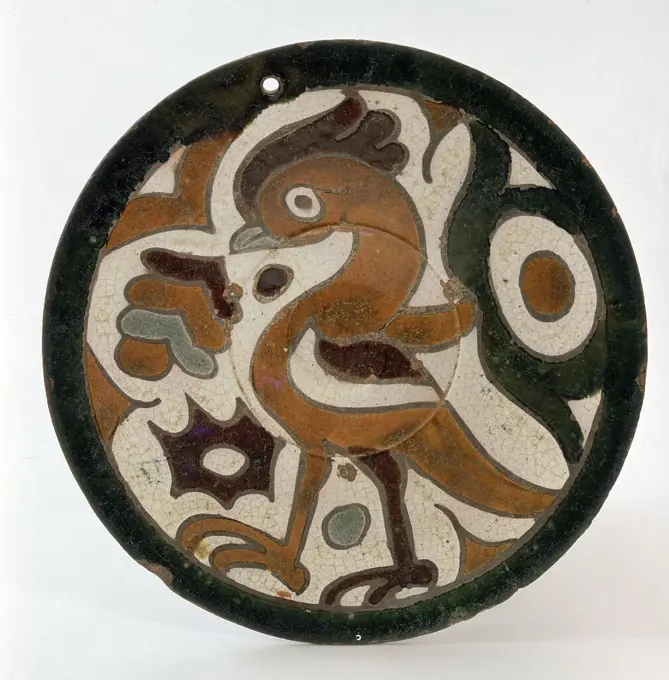
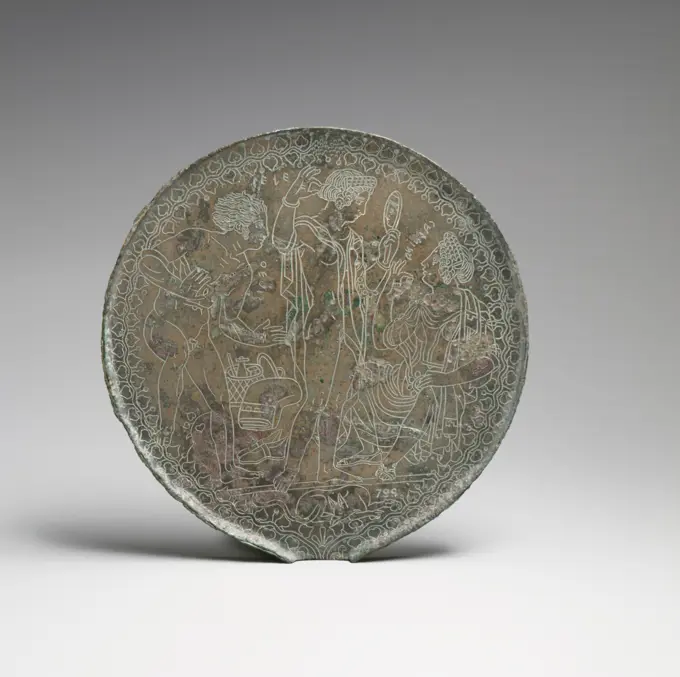
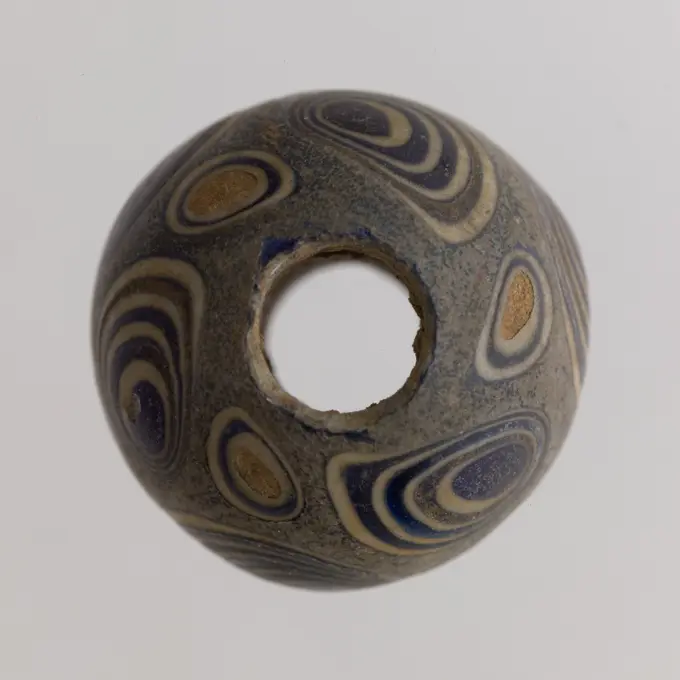
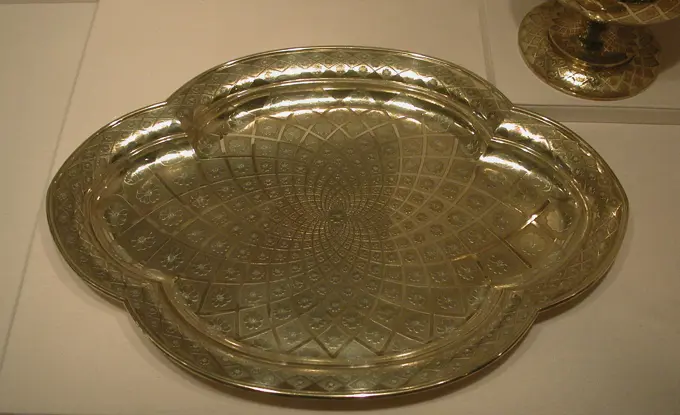
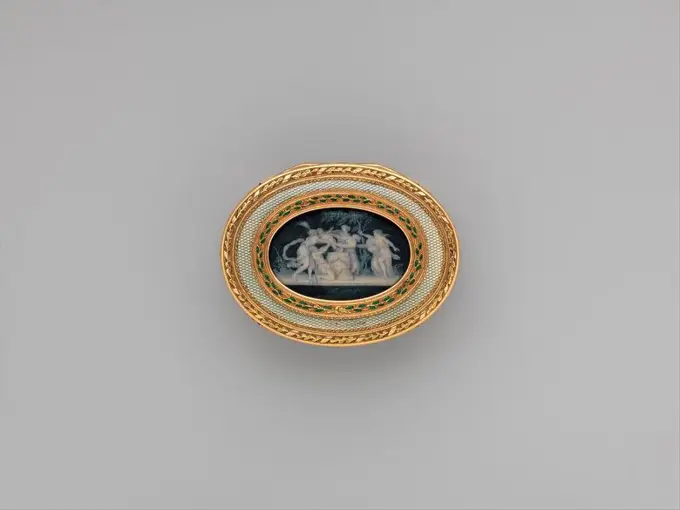
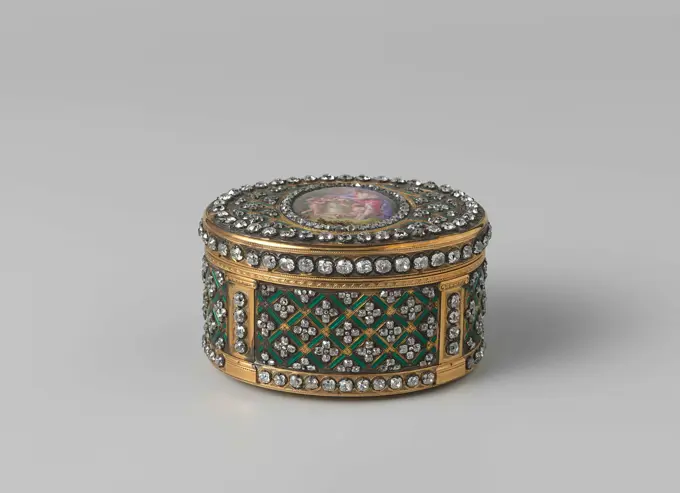
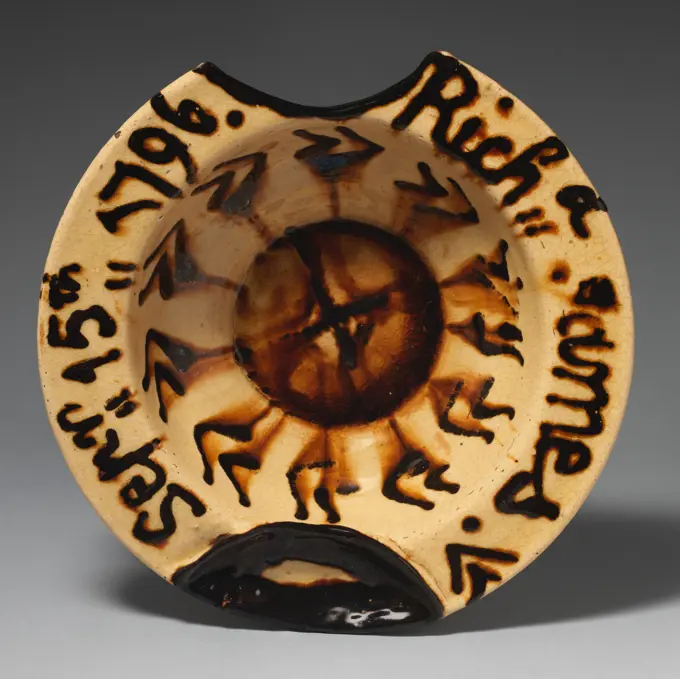
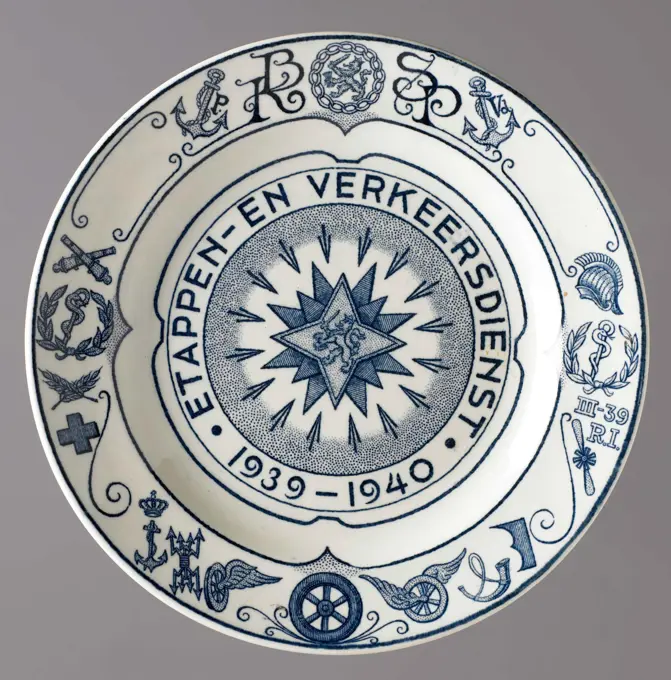
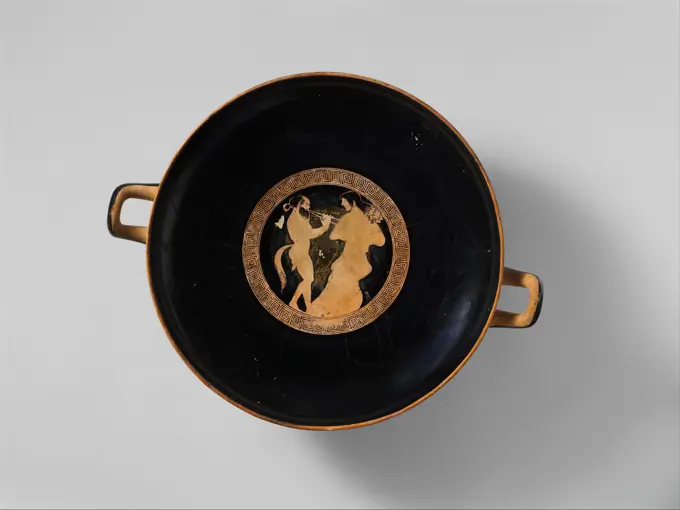
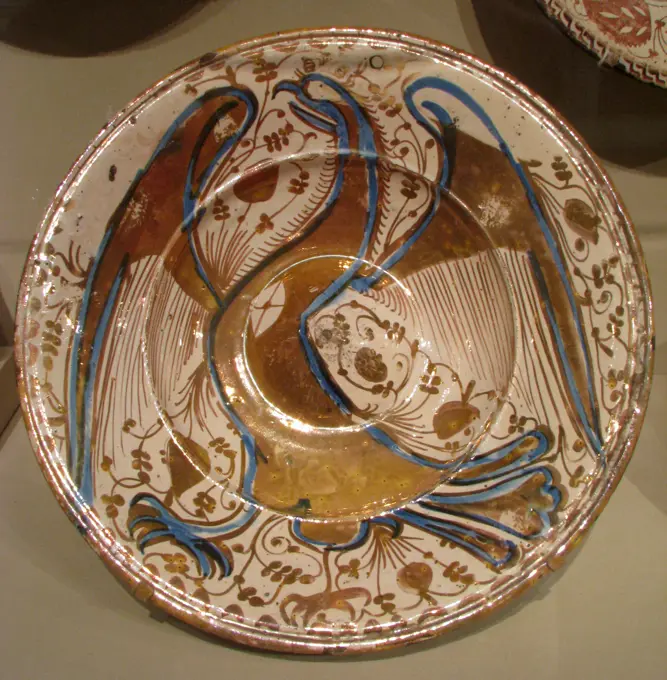
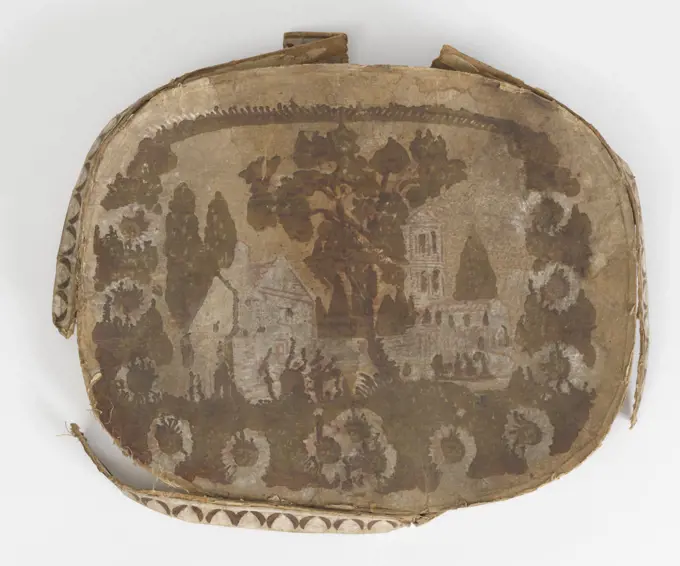
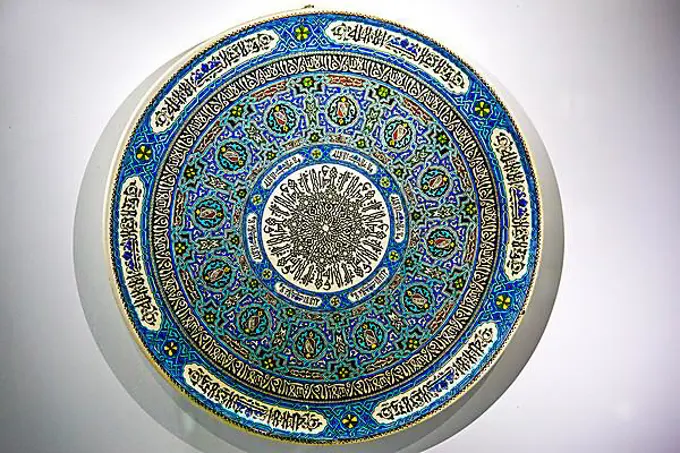
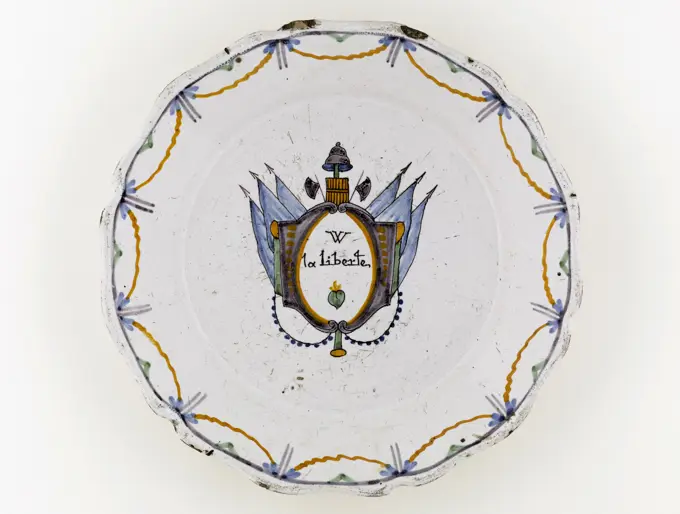
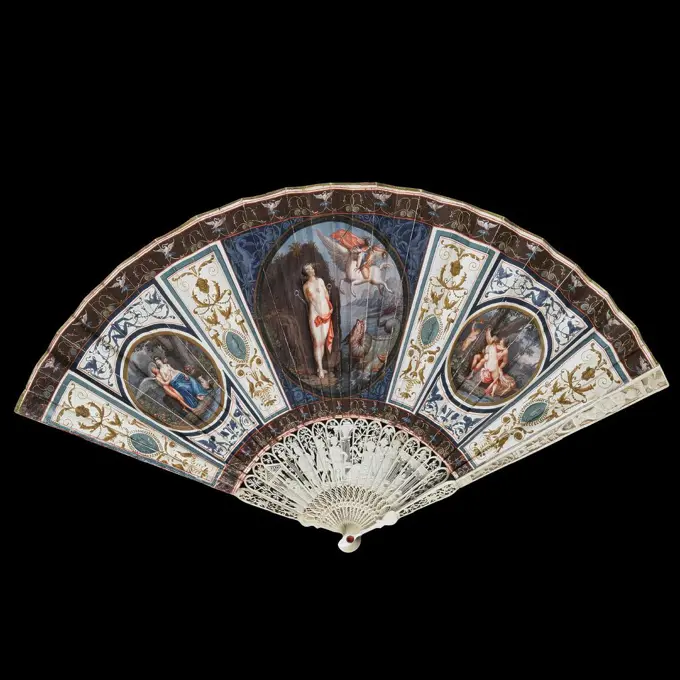
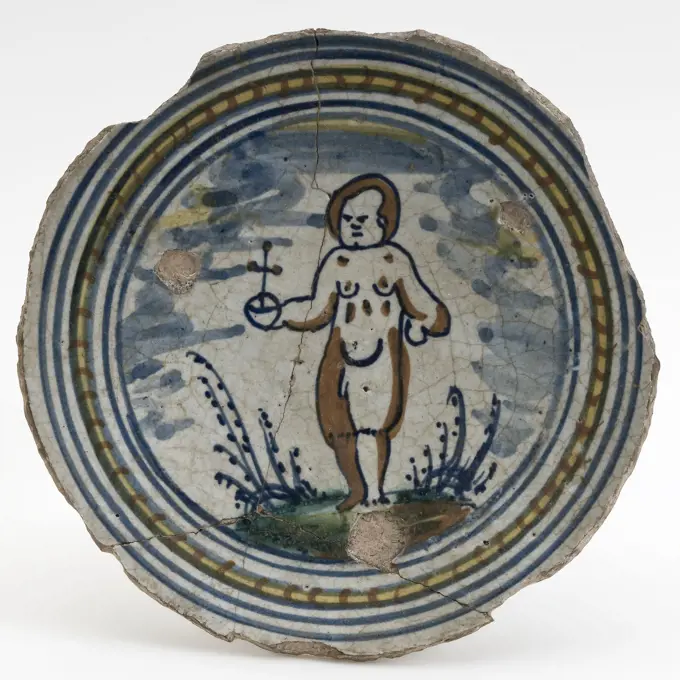
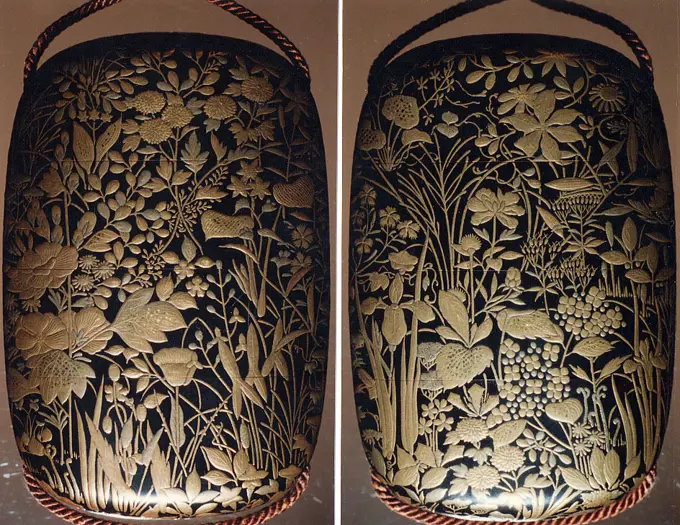
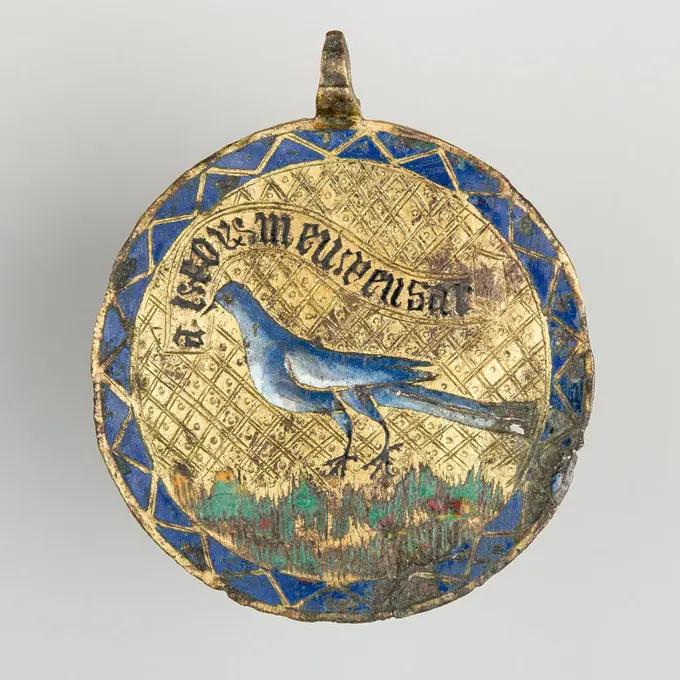
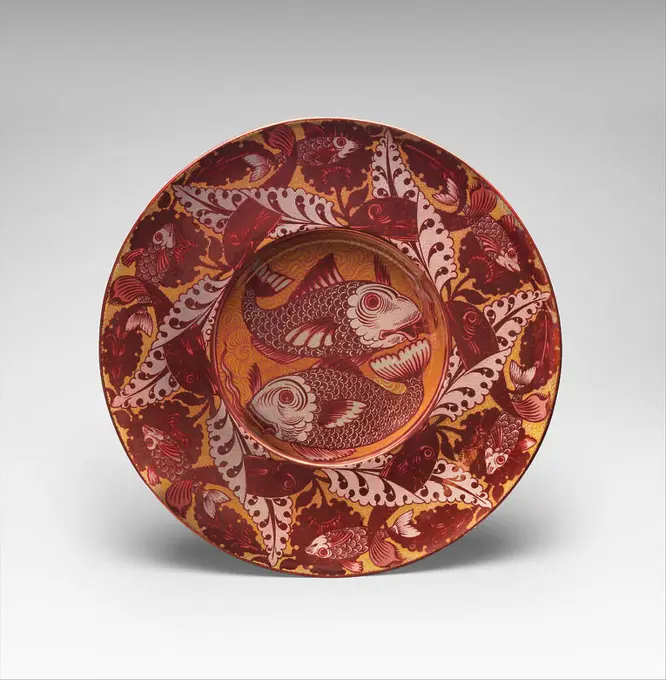
Charger. Artist: Merton Abbey Pottery Works. Designer: William De Morgan (British, London 1839-1917 London). Dimensions: Diameter: 20 1/4 x D. 2 5/8 in. (51.4 x 6.7 cm). Date: 1882-88.In 1869 de Morgan, a painter and stained-glass artist who designed tiles and glass for the William Morris firm, began decorating pottery; by 1873 he was running a highly successful pottery manufacture. He revived the medieval luster technique to decorate ceramics with an iridescent metallic surface, and from about 1875 favored "Persian" colors-pigments made from such metallic oxides as silver, which produces a brassy yellow, and copper, for a rich ruby red. These lusterwares were shown at the 1878 Exposition Universelle in Paris. Museum: Metropolitan Museum of Art, New York, USA.Cask with floral ornaments, anonymous, c. 1700 Vat of Maywijnvat of stoneware in the form of a wooden barrel. In the belly a hole for a stop. Partly covered with cobalt blue and mangangan purple. Alternating tires with profiles and tires on the abdomen with pledged tibs with small printed and imposed medallions with flowers in relief. One side with flower vines, the other side with a painted flowering plant in blue and purple. Westerwald. Westerwald stoneware. glaze. cobalt (mineral). manganese oxide vitrification Vat of Maywijnvat of stoneware in the form of a wooden barrel. In the belly a hole for a stop. Partly covered with cobalt blue and mangangan purple. Alternating tires with profiles and tires on the abdomen with pledged tibs with small printed and imposed medallions with flowers in relief. One side with flower vines, the other side with a painted flowering plant in blue and purple. Westerwald. Westerwald stoneware. glaze. cobalt (mineral). manganese oxide vitrificationBandbox Lid (USA); block-printed on paper, wood support; 48.5 x 39 cm (19 1/8 x 15 3/8 in.)Bowl with Pseudo-inscription. Dimensions: H. 2 13/16 in. (7.1 cm)Diam. 10 1/4 in. (26 cm). Date: 13th century.Typically formatted concentrically, the decoration of Syrian black-and-blue underglaze-painted pieces often features pseudo-inscriptions. Here, the repeated letters, alif-lam, around a circular band against a vegetal scroll, are not merely a decorative device or reflection of a potter's illiteracy. This letter combination held religious significance and appears to have been endowed with magical or talismanic properties. Museum: Metropolitan Museum of Art, New York, USA.Dessert Service (Saucer). Flight, Barr & Barr (England, Worcester, 1813-1840). England, 1813. Furnishings; Serviceware. PorcelainFragment majolica dish, in the middle an eight-pointed star, polychrome, dish crockery holder soil find ceramic earthenware glaze, pt 4.0 baked underside covered with clear lead glaze. Polychrome archeology adorn serving foodBowl with Peacock, 1300s. Spain, Paterna, 14th century. Tin-glazed earthenware (maiolica); diameter: 27.3 cm (10 3/4 in.).Star-shaped tile with floral scrolls, anonymous, c. 1250 - c. 1299 Tile of quartz fritry, star-shaped, with flower vines in Luster. is the earthenware. glaze. cobalt (mineral). luster (textile) painting / vitrification Tile of quartz fritry, star-shaped, with flower vines in Luster. is the earthenware. glaze. cobalt (mineral). luster (textile) painting / vitrificationPlate with Dragon and Ave Maria Inscription 1425-1450 Spanish. Plate with Dragon and Ave Maria Inscription 468519Nicholas I Imperial porcelain dinner-plate. Imperial Porcelain Fact., St. Petersburg, (1825-1855). Enhanced with gilt. 22cm Diam.Box and Cover with Inlaid Phoenix Design, 918-1392. Korea, Goryeo period (918-1392). Earthenware; diameter: 19.4 cm (7 5/8 in.); overall: 12.7 cm (5 in.). Celadons, spoons, seals, and bronze mirrors were the most common burial objects in tombs during the Goryeo period (918-1392). Once used to contain colored powder, rouge, and eyebrow gel for makeup, this small container was one of the standard goods that furnished elites' tombs. Both women and men used the grain powder of rice or millet for whitening their skin, safflower extract for rouge, and plant ash or soot for eyebrow gel. Yet, natural-looking makeup seems to have been the most favorable one in Korea according to the travelogue by Xu Jing (1091-1153), the Chinese diplomat who visited Korea in 1123.Planets-manager. Cornalet Collection Sites 2013-2016. Numismatic.Button (possibly USA); brass, steel beadsJoseph Rothenberg, Bandbox, c 1939 BandboxPair of caskets in the shape of the Ruyi sceptre with lids. unknown, craftsmanFragment of a Bowl 10th century. Fragment of a Bowl. 10th century. Earthenware, luster-painted on opaque white glaze. Found Iraq, Rayy. CeramicsPlate decorated with war elephant figures from Capena, Rome Province, ItalyDish with the school of Athens, Anonymous, c. 1600 - c. 1699  Dish with the school of Athens. On the edge the buses of Poluxena, Zenophia, Sapho and Lucretia. Furthermore, the music, presented by eight women, playing on different instruments. Germany silver (metal)Hispano-Moresque Lusterware Plate with Griffin 1475-1500 Valencia. Tin-glazed earthenware with copper luster . Valencia Potteriesbandbox, Joseph S. Tillinghast, Block-printed paper, pasteboard support, Bandbox lid only, covered with four pieced fragments of a wallpaper: blue background, scene of landscape, around body of water represented by closely spaced horizontal white lines. Boats, trees, mill, distant large building, in browns, beiges (perhaps faded pinks). Rim: blue background, white dot fill, green leaves with yellow and brown veinings. Inside rim: different border pattern-pink and white lines, green and yellow., New Bedford, Massachusetts, USA, 1830-35, Wallcoverings, bandboxMiniature tray ca. 1720 I. M.. Miniature tray. British, London. ca. 1720. Silver. Metalwork-Silver-MiniatureTray (Italy); wood, carved and paintedBlaker van Messing with ranking ornament, anonymous, c. 1600 - c. 1699 The object consists of a round fat catcher with driven turmoil with flowers and fruits, and acanthus leaves around the impetus to the candle holder. The stem has a heart -shaped eye and a toothed end. The candle holder is missing. Mechelen brass (alloy) The object consists of a round fat catcher with driven turmoil with flowers and fruits, and acanthus leaves around the impetus to the candle holder. The stem has a heart -shaped eye and a toothed end. The candle holder is missing. Mechelen brass (alloy)Plate. Culture: Spanish. Dimensions: Overall: 4 1/2 x 19 in. (11.4 x 48.2 cm). Date: late 15th-early 16th century. Museum: Metropolitan Museum of Art, New York, USA.PLATITO DE CUERDA SECA CON GALLINACEA PROCEDENTE DE TOLEDO - 1500. Location: INSTITUTO VALENCIA DE DON JUAN-COLECCION. MADRID. SPAIN.Disk Brooch. Culture: Frankish. Dimensions: Overall: 1 5/8 x 1/2 in. (4.1 x 1.2 cm). Date: 600-700. Museum: Metropolitan Museum of Art, New York, USA.Fragment of a Bowl 14th-15th century. Fragment of a Bowl 445438Bronze mirror ca. 350 B.C. Etruscan Peleus, Thetis, and GalenePele (Greek: Peleus) surprises his bride, Thethis (Greek: Thetis), who is assisted by the nereid Calaina (Greek: Galene) as she gazes into a mirror. Between Peleus and Thetis, who later became the parents of Achilles, is an engraved toiletries box with lid ajar to reveal various toilet items, including a perfume applicator and two perfume vases. The superb quality of the engraving has assured this mirror's fame. Listen to experts illuminate this artwork's story Listen Play or pause #1217. Bronze Mirror Supported by Bloomberg Philanthropies We're sorry, the transcript for this audio track is not available at this time. We are working to make it available as soon as possible.. Bronze mirror. Etruscan. ca. 350 B.C.. Bronze. Late Classical. BronzesPearls. Glare, China, Iv-Iie s. to. J.-C. Par musée musée malée. Beauty, jewel, Asian civilization, Chinese civilization, pearl, glass, veroterieBasin ca. 1850 François-Desiré Froment-Meurice Froment-Meurice, among the most renowned silversmiths of mid-nineteenth-century Paris, was a historicist whose work embraced medieval, Renaissance, and Islamic styles, which he charged with an abundance of sculptural ornament. Here, in a radical departure both from his own manner and from the prevailing taste of the period, he let the suavely curved profiles speak for themselves, emphasizing them through the use of a single all over trellis and flower-head pattern, adjusted in scale and rhythm to each change of surface (see also 1999.217.1). Combining traditional and new techniques, Froment-Meurice introduced both chromatic and textural variety through chasing, engraving, and electroplated gilding in two colorsyellow and greenish white goldon a ground that had been partly polished and partly acid etched. Froment-Meurice frequently repeated his models, and this ensemble is one of three known versions. It was perhaps an experimental designSnuffbox with six allegories of love. Artist: Miniatures by Jacques Joseph de Gault (French, 1738-after 1812). Culture: French, Paris. Dimensions: box: 2-15/16 x 2-1/4 in. (7.5 x 5.7 cm); miniatures: top, oval, 1 1/8 x 1 5/8 in. (28 x 43 mm); bottom, oval, 1 1/8 x 1 5/8 in. (28 x 43 mm); front 1/2 x 1 1/8 in. (11 x 30 mm); back 1/2 x 1 1/8 in. (11 x 30 mm); left side 1/2 x 1 1/8 in. (11 x 30 mm); right side 1/2 x 1 1/8 in. (11 x 30 mm). Date: 1775-76.The sale of cupids was the subject of a famous, much-imitated fresco discovered in 1759 at Stabiae, an ancient Roman town on the Gulf of Naples. The fresco was engraved in 1762. One of the miniatures is signed JJDeGault. The box was made in Paris in 1775-76 by Pierre François Drais. Museum: Metropolitan Museum of Art, New York, USA.The Sacrifice of Isaac ca. 1567 Possibly engraved by P.M. The fine engraving on this set of plates (65.260.1-.12) depicts scenes from the Old Testament. The engraver, who must have been trained on the Continent, based his compositions on illustrations in a Concordance to the Bible, improvising where necessary to fill in the circular frame offered by the plates. The plates and a related piece engraved with a portrait of Queen Elizabeth I must have been made as a gift to or from the queen herself.. The Sacrifice of Isaac 204601Cover for a Vase, c. 1728-30. Meissen Porcelain Factory (German). Porcelain; overall: 37.5 x 23.8 cm (14 3/4 x 9 3/8 in.).Saddle Pommel. Culture: China (Xinjiang Autonomous Region, Central Asia). Dimensions: H. 1 1/2 in. (3.8 cm); L. 11 in. (27.9 cm). Date: 7th-9th century.The nomadic communities of Central Asia used such plaques to embellish clothing and horse trappings. As these nomadic cultures herded animals and were constantly moving, their artistic production was expressed in portable objects that marked the wearer's status and wealth. The outstanding preservation of these fragile ornaments suggests they were used in conjunction with burials, where the body was aggrandized with valuable textiles and augmented with gold. Although it is difficult to date and place these objects geographically, their presence in Central Asia and has a long, established history. Museum: Metropolitan Museum of Art, New York, USA.Tarelka tsaria Alekseia Mikhailovicha. Ris. Akad. F. Solntsev. Khromolitografiia F. Dregera., 1849 - 1853, Solntsev, F. G. (Fedor Grigorʹevich), 1801-1892., 1849 - 1853., Moskva. Publisher, Tip. A. Semena. Art, Russian, Chromolithographs., A chromolithograph depicting a plate belonging to Tsar Alexei Mikhailovich, illustrated by F. Solntsev and produced by F. Dreger in Moscow between 1849 and 1853BANDEJA DE PLATA S XVI. Location: CATEDRAL-INTERIOR. Toledo. SPAIN.Armoironie (I) Royal Supplier Support Armoironie (I), Royal Supplier Supplier; Weapons of the Duchess of Berry.Mirror, mid-late 1500s. France, 16th century. Cloisonné enamel on glass or rock crystal; overall: 8.9 x 6.7 cm (3 1/2 x 2 5/8 in.).Mashiko stylePlate.  Artist, attributed to: Hamada Sh?ji, Japanese, 1894-1978Snuff box of gold, oval and completely occupied with diamonds on a surface of green irmail, a show on the lid. Snuff box of gold, oval, fully occupied with glasses with greeners. On the lid a medallion with a love couple in multi-colored email.Edge fragment majolica dish, polychrome, grapes, egg edge with cable edge, plate crockery holder soil find ceramic earthenware glaze, baked underside covered with lead glaze. Polychrome archeology Rotterdam City center Stadsdriehoek Haringvliet New harbor decorate serving food New Haven Haringvliet Rotterdam.Kobako with cover 17th century Japan. Kobako with cover 57921Barber's basin 1796 British, Staffordshire. Barber's basin. British, Staffordshire. 1796. Slipware. Ceramics-PotteryBadge or Harness Pendant ca. 1300 possibly Spanish Heraldry, or coat-of-arms, were vitally important in Europe throughout the Middle Ages and the Renaissance. Heraldic emblems were used to identify noble families, cities, regions, and even countries. In addition to being displayed on shields and flags, heraldry was incorporated into architectural decoration on the interior and the exterior of buildings, on furniture, works of art, clothing, and horse equipment. Harness pendants, like this example, would have been attached to a headstall, bridle, or other straps making up the tack of a horse ridden by a nobleman or noblewoman, or a member of their household. Many harness pendants also have decoration that is simply ornamental, or have symbols that are not specifically heraldic in nature.. Badge or Harness Pendant. possibly Spanish. ca. 1300. Copper, gold, enamel. Miscellaneous-Badges(Round Fan), 19th century, Unknown Japanese, 11 in. (27.94 cm) (diameter), Silk, ivory, Japan, 19th centuryStepping and traffic service 1939-1940. Memorial sign with sloping rising edge on which all kinds of symbols in dark blue. In the middle of the plane: Dutch lion on four-pointed star. Portion of the brand is behind Sticker with: Board no. 568 and the statement of the distinction signs on the board.Dish of Multicolor painted majolica. Round dish of multicolored painted majolica. A rosette is painted on the flat in concentric circles. On the outer circle, turning impeller-shaped leaf motifs are painted clockwise. On the edge, intersecting blue and orange arches are painted between double blue piping.Terracotta pyxis (box). Culture: Greek, Attic. Dimensions: H. 3 in. (7.6 cm). Date: late 5th century B.C..Women and ErotesThe representation here probably has some relation to rituals for the goddess Aphrodite that took place in an outdoor, garden-like setting. Particularly conspicuous is the woman seated on a rock-like formation and isolated between two vertical foliate bands. The other figures include Erotes, a winged woman resembling Nike, and women with household furnishings such as a casket and kalathos (wool basket). Museum: Metropolitan Museum of Art, New York, USA.Plate, multicolored painted with rounded diamond -shaped courses in which leaf motifs and with inscription: Marta.B., Anonymous, c. 1530 - c. 1540 Round plate of multi -colored painted majolica. A circle is painted in the middle in which the inscription: "marta.b". Round diamond -shaped compartments are painted around the circle within which leaf motifs. Gubbio earthenware. tin glaze. lead glaze majolica Round plate of multi -colored painted majolica. A circle is painted in the middle in which the inscription: "marta.b". Round diamond -shaped compartments are painted around the circle within which leaf motifs. Gubbio earthenware. tin glaze. lead glaze majolicaLIGNUM CRUZIS. Location: MUSEO LAZARO GALDIANO-COLECCION. MADRID. SPANIEN.Feathered Gift Basket Made 1880-1890 California. Plant fibers, red woodpecker and quail feathers, and abalone-shell and clamshell beads . PomoTerracotta kylix (drinking cup) ca. 480 B.C. Signed by Hieron Interior, flute-playing satyr and maenadExterior, obverse and reverse, symposiumThe exterior provides a particularly full illustration of the symposium (drinking party) and, especially, of its paraphernalia: a wreathed column-krater for mixing wine and water, a large skyphos for the relief of a sick symposiast, a lamp stand that also accommodates a ladle and strainer, and krotala (castanets) and a picnic basket suspended from the back wall. Compared with the figures on the outside, the satyr and maenad (followers of the wine god, Dionysos) appear formal indeed.. Terracotta kylix (drinking cup) 250995 : Signed by Hieron, : Attributed to Makron, Terracotta kylix (drinking cup), ca. 480 B.C., Terracotta, H. 5 7/16 in. (13.8 cm) diameter 13 1/16 in. (33.2 cm). The Metropolitan Museum of Art, New York. Rogers Fund, 1920 (20.246)Dish late 16th-early 17th century Spanish, Valencia The free and confident draftsmanship of the eagle as well as the loose style of the leafy tendrils in the background are typical of the late sixteenth century. The edging of arcs around the border belongs to the a l'ungla ("with the fingernail") style.. Dish. Spanish, Valencia. late 16th-early 17th century. Tin-glazed and luster-painted earthenware. Ceramics-PotteryDish of hard baked pottery; Stockton, William Smith (ceramic manufacturer), c. 1830 - c. 1860 Round dish of hard baked pottery. The dish has a black overpressure with flower branches on the edge and a bacchanal party on the flat. In a landscape there is a figure on a deer with an angel on either side. The dish is marked: WS & Co 3 Queensware Stockton 4 and Bacchus Ws Co No 80. Stockton earthenware. lead glaze Round dish of hard baked pottery. The dish has a black overpressure with flower branches on the edge and a bacchanal party on the flat. In a landscape there is a figure on a deer with an angel on either side. The dish is marked: WS & Co 3 Queensware Stockton 4 and Bacchus Ws Co No 80. Stockton earthenware. lead glazeVASO CAMPANIFORME DEL ESTILO DE CIEMPOZUELOS CON DECORACION INCISA RELLENA DE PASTA BLANCA - CALCOLITICO. Location: ACADEMIA DE LA HISTORIA-COLECCION. MADRID. SPAIN.Stylized Cross, late 4th-mid 5th century, 3 3/4 x 35 x 35 in. (9.53 x 88.9 x 88.9 cm), Mosaic, Syria, 4th-5th century, This round mosaic is a segment of a larger pattern composed of intersecting arcs that together formed a series of cross shapes. It represents a variant of the 'Rainbow' style, characterized by vivacious geometric designs executed in multicolored bands. Such carpet-like patterns were commonly used in the pavements of Roman houses and early Christian churches.Castles in Spain, Block-printed paper, pasteboard support, Pasteboard bandbox lid, rim partially attached. 'Castles in Spain' pattern. Buildings, trees, in pink, browns, on yellow background, in enframement of green foliage and white flowers., USA, ca. 1835, Wallcoverings, Bandbox, BandboxLidded container. unknown, craftsmanPysankaFan. unknown, craftsmanBowl with Floral and Checked DesignScalloped-Rim Dish with Confronted Phoenixes and Floral Stamen. China. Date: 1279-1368. Dimensions: H. 1.9 cm (3/4 in.); diam. 13.1 cm (5 3/16 in.). Longquan ware; stoneware with underglaze molded decoration and applied decoration in biscuit reserve. Origin: China. Museum: The Chicago Art Institute, Chicago, USA.Faience, Ottoman period, Museum of Ceramic Works, Great Karatay Medrese, Konya, Turkey, Konya, Turkey, AsiaAnonymous. Plate. Earthenware. Paris, Carnavalet museum. 71680-11 Phrygian cap, decoration, flag, faience, beam, revolutionary period, French revolution, plateLuis Eusebi / 'Wedding fan'. Ca. 1790. Ivory. Museum: Museo del Prado, Madrid, España.Dish with Christ Child with the Rijksappel in the right and on the back under the enamel maker initials, dish crockery holder soil find ceramic earthenware glaze tin glaze lead glaze, hand-turned baked 2x majolica Fragment of majolica dish cream-colored shard polychrome prune prints on the back lead glaze stand ring with hanging hole and under the not entirely covering glaze the pottery with ink plateel painters initials On the back partly visible the brand of the plateel painter (largely covered by the glaze) archeology Steenbergen serve bible religion Jesus Christ archaeological find in the soil Steenbergen 1939Talerz. unknown, craftsmanCase (Inr) with Design of Flowers and Grasses 19th century Japan. Case (Inr) with Design of Flowers and Grasses. Japan. 19th century. Lacquer, roiro, gold and silver hiramakie; Interior: nashiji and fundame. Edo (1615-1868) or Meiji period (1868-1912). InrCast Fragment. UnknownPendant for Horse Trappings. Culture: Portuguese. Dimensions: H. 3 1/2 in. (8.9 cm); W. 3 in. (7.6 cm); Wt. 2 oz. (56.7 g). Date: 15th century.The decoration of this and similar pendants in the Metropolitan Museum's collection (04.3.305, .365, .371, .384, .429, .437) includes heraldic arms, mottoes, and religious expressions. Originally, they were attached to the straps of a horse's bridle, reins, crupper, or saddle. Museum: Metropolitan Museum of Art, New York, USA.Fragment faience plate, blue on white, grand lady in wide skirt with straitjacket and shawl, plate crockery holder earth discovery ceramic earthenware glaze tin glaze, Cookery archeology Rotterdam fashion Soil discovery Rotterdam 1940.Souvenirs, pottery, old town, alley, houses, Tavira, Algarve, Portugal, EuropeFlat Bowl with Eggs probably 1813 Unidentified artist. Flat Bowl with Eggs 55082