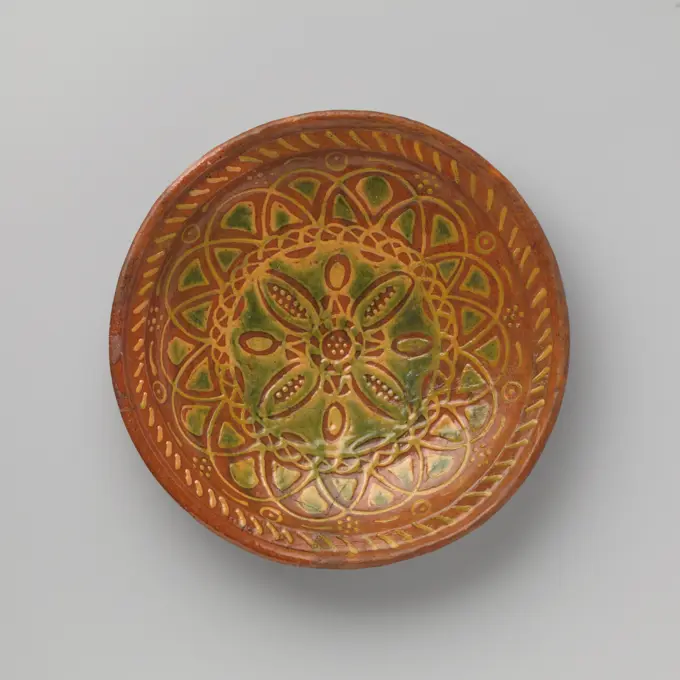
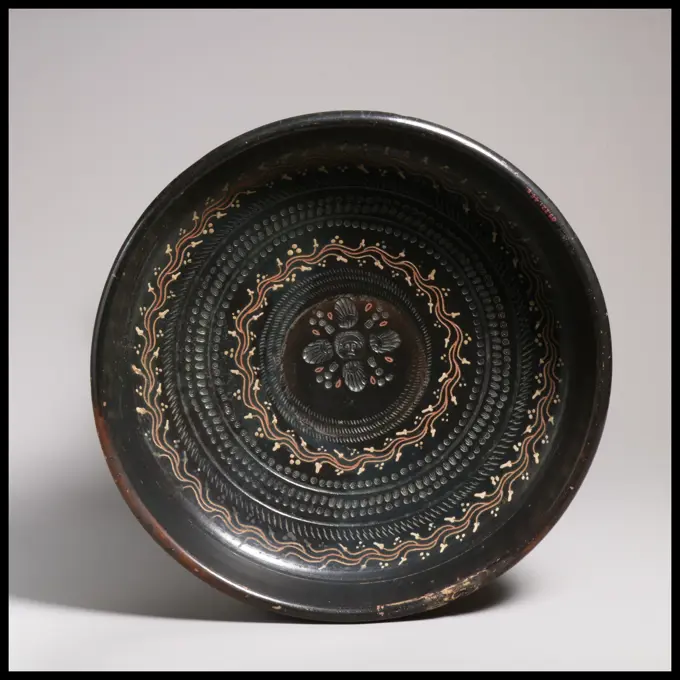
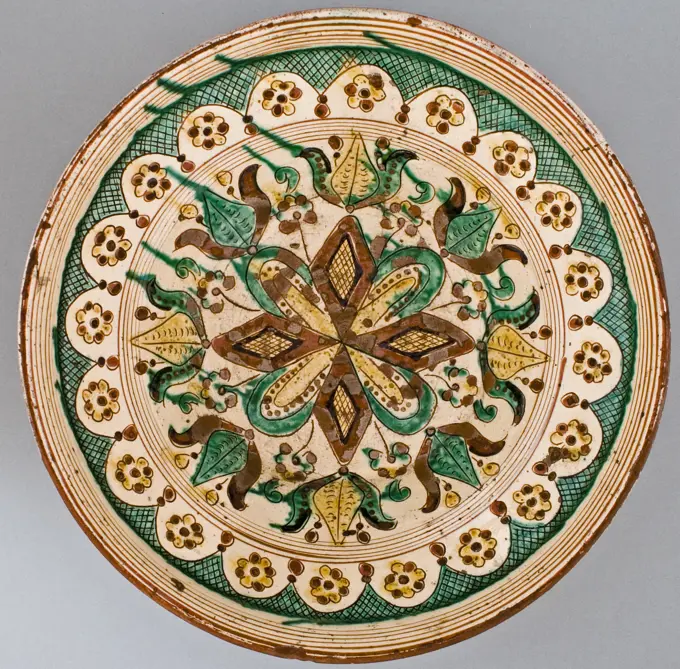
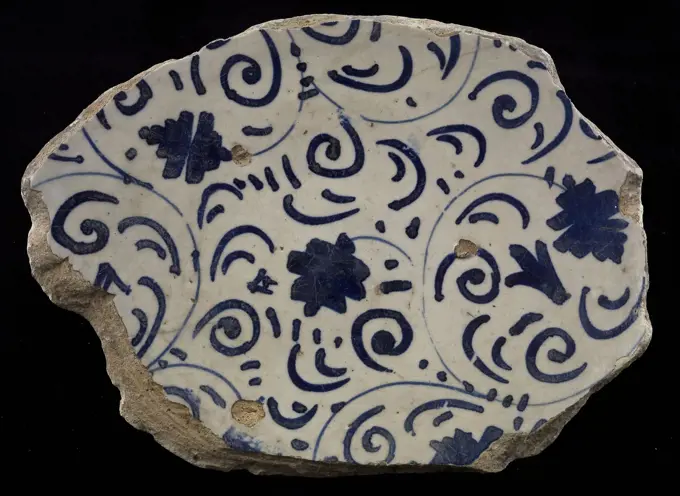
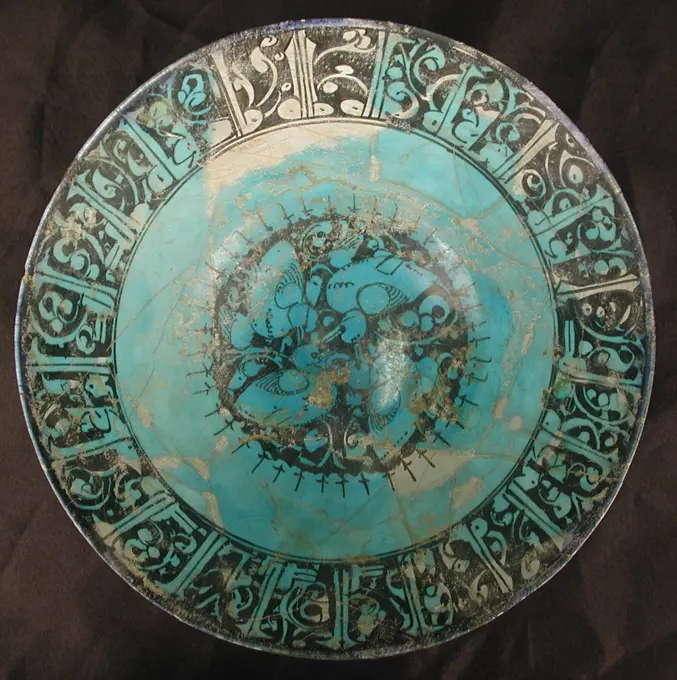
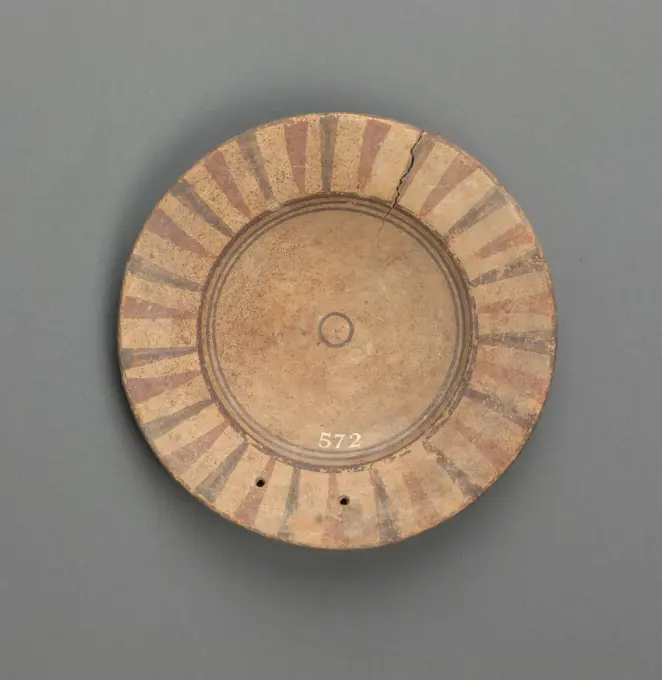
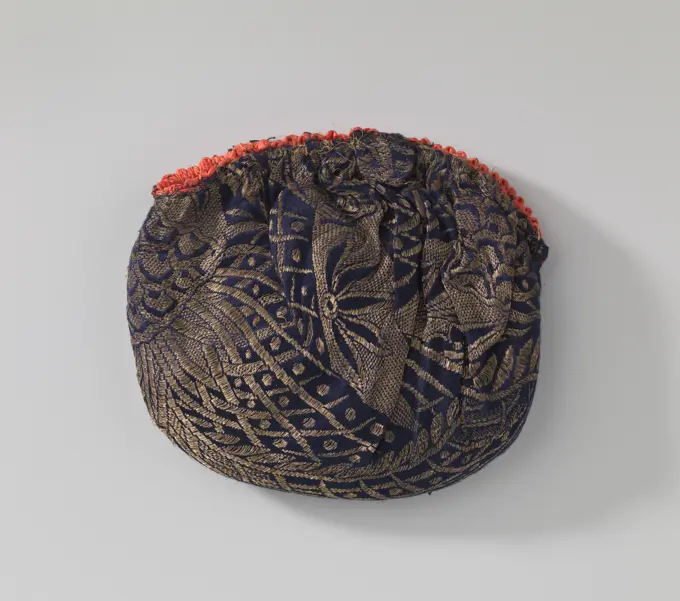
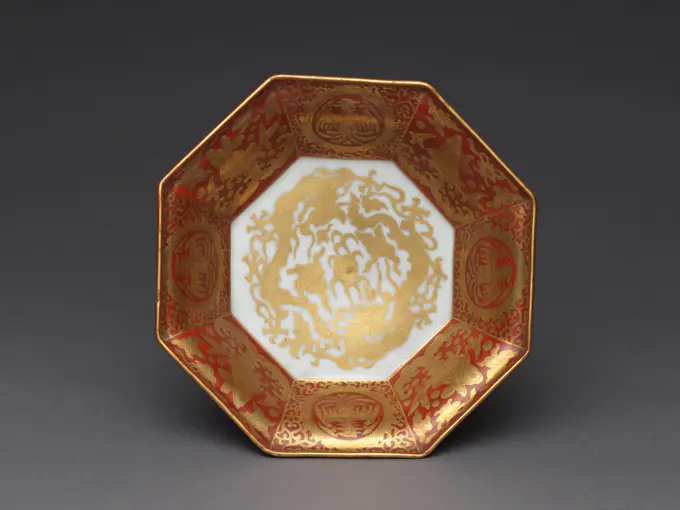
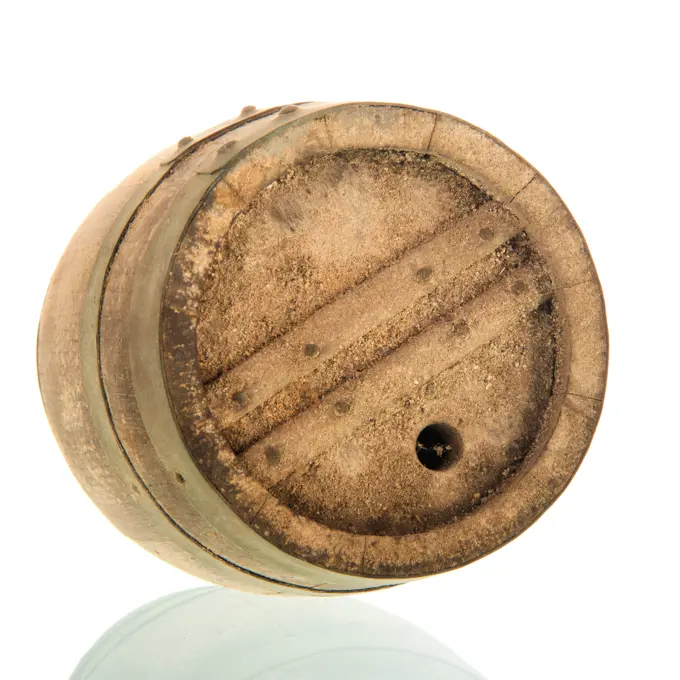
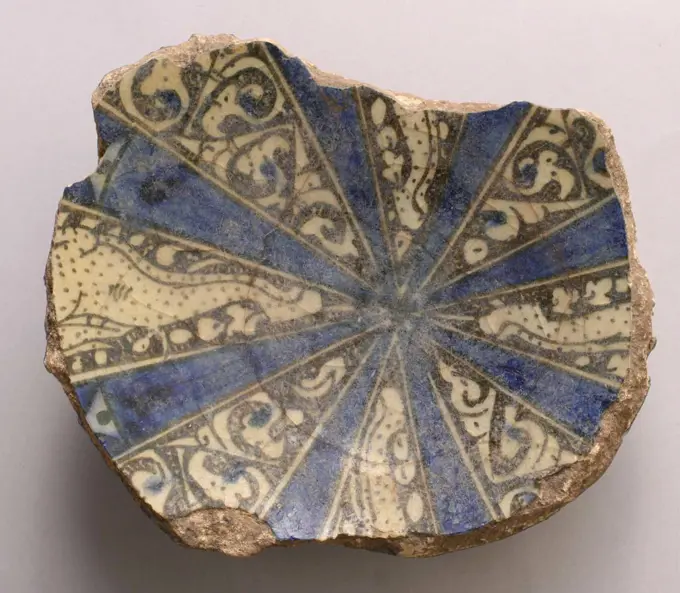
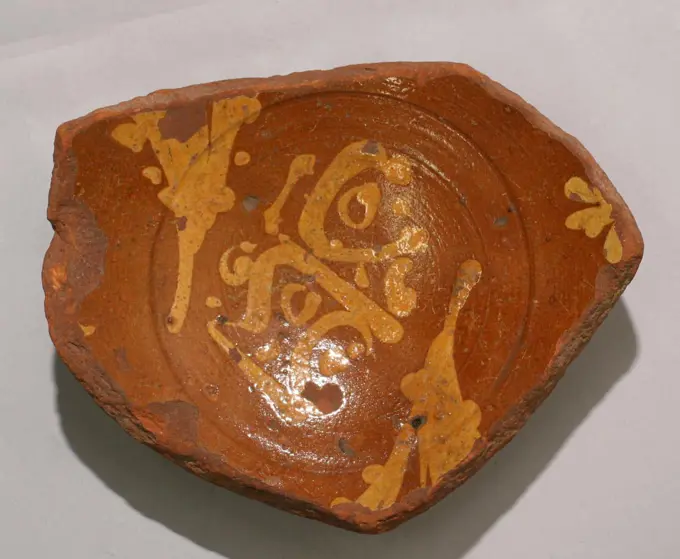
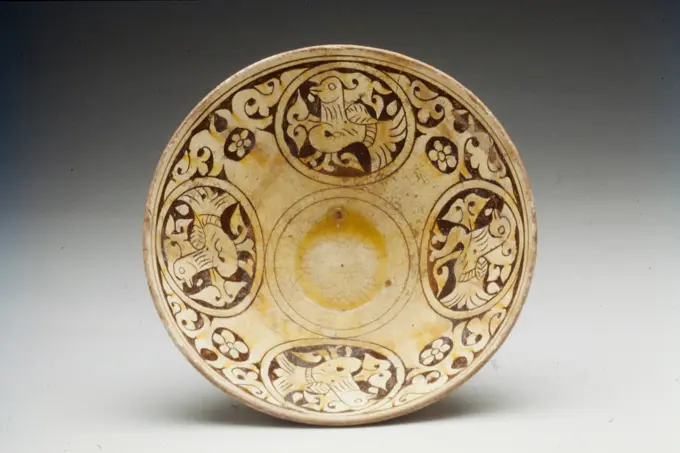
Decorative Ceramics and Shields

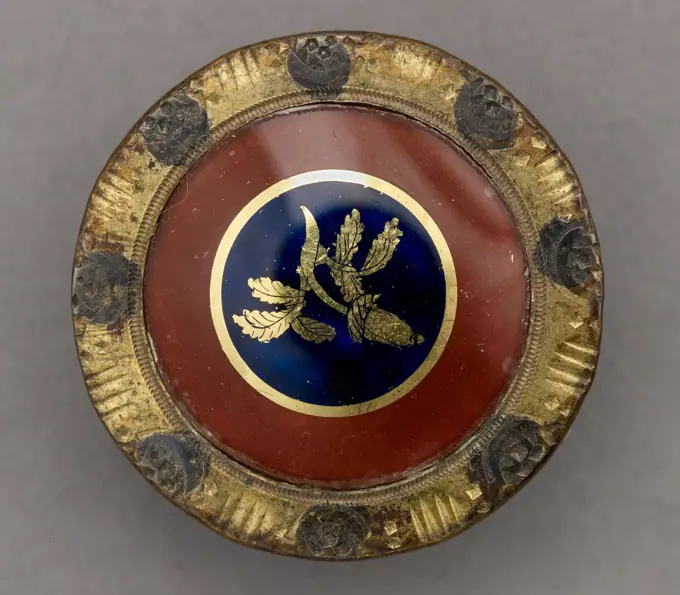
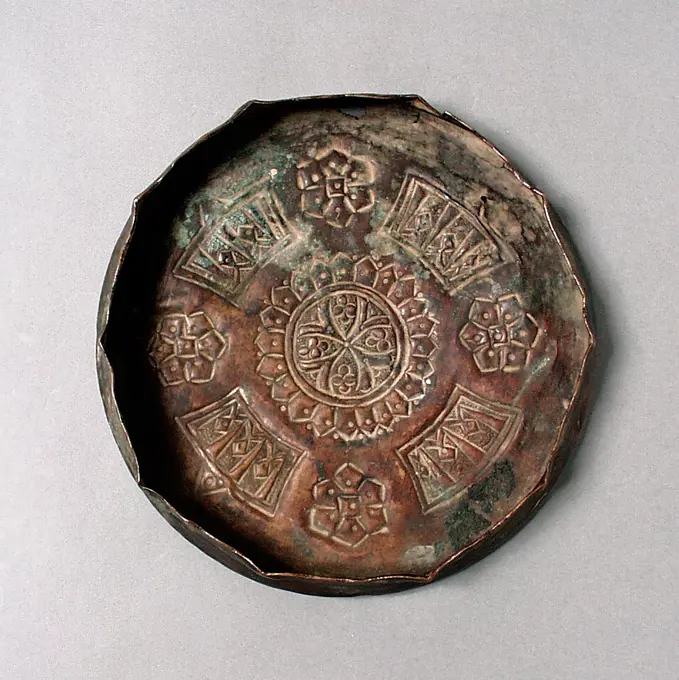
A gallery of ornamental dishes and shields from different cultures, featuring intricate patterns, metals, and designs that reflect historical craftsmanship.

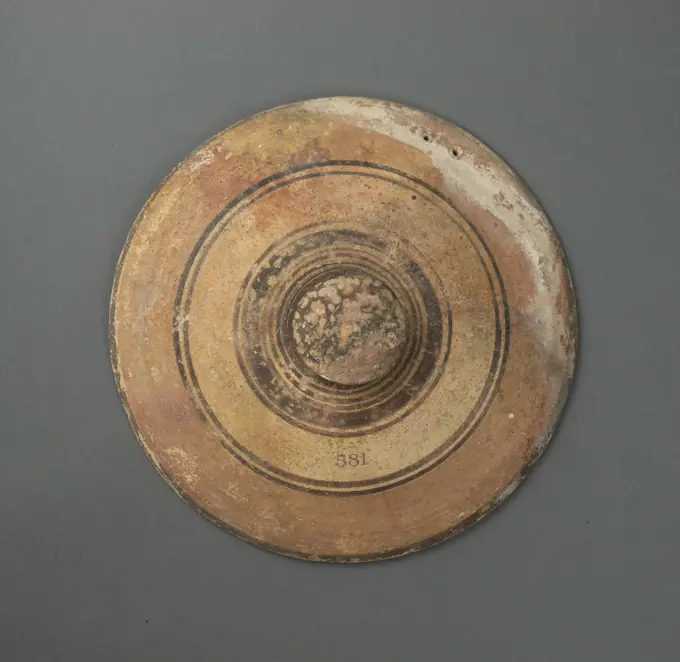
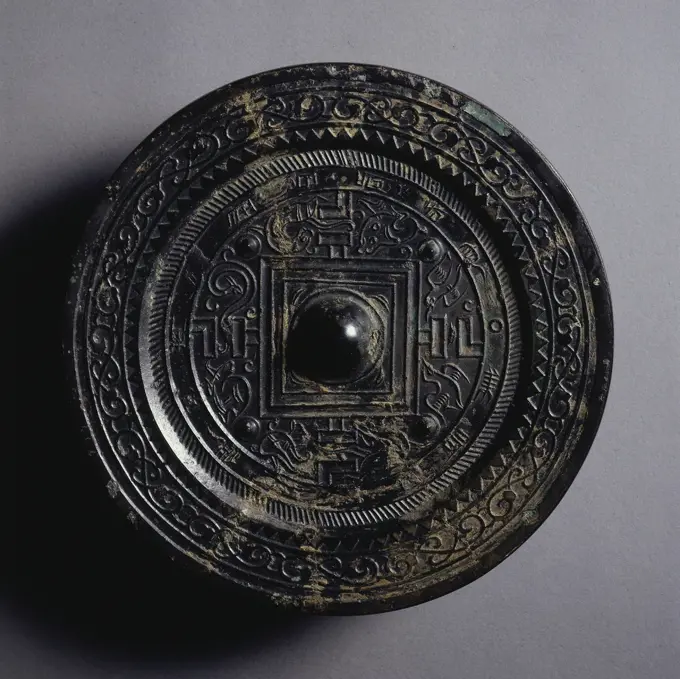
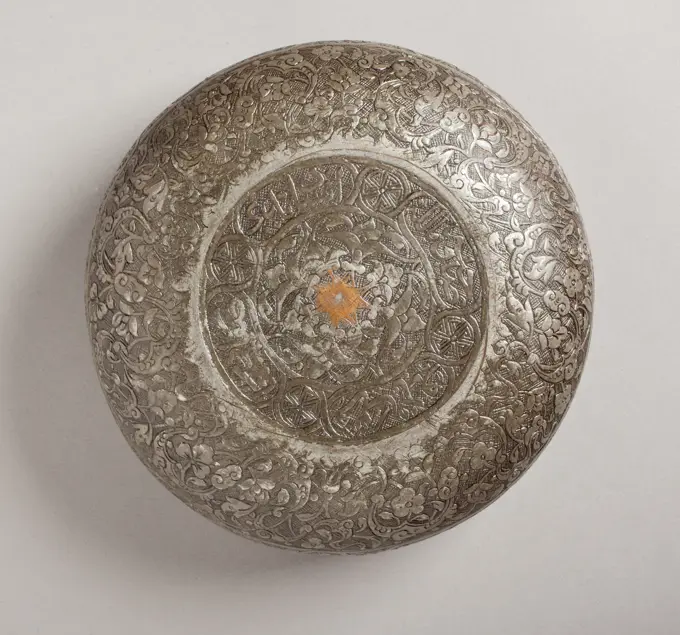
Mirror, 8th century, 8 1/4 in. (20.96 cm), Bronze, China, 8th century
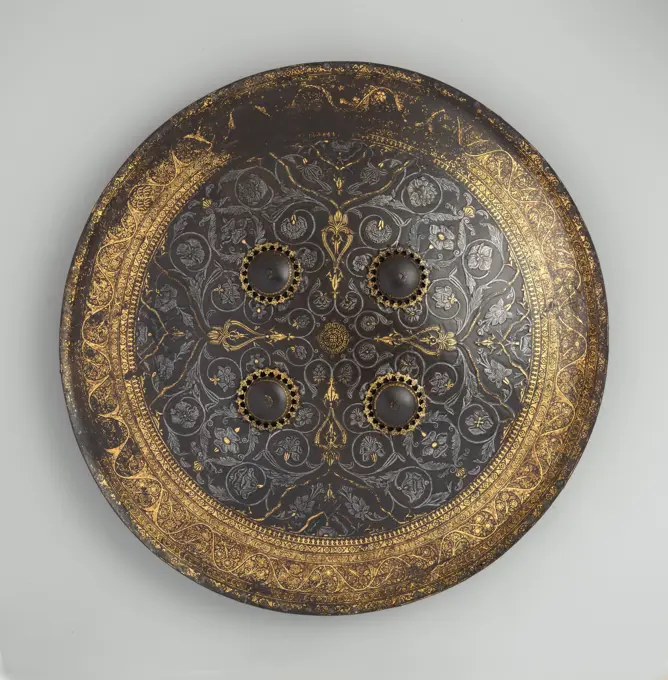
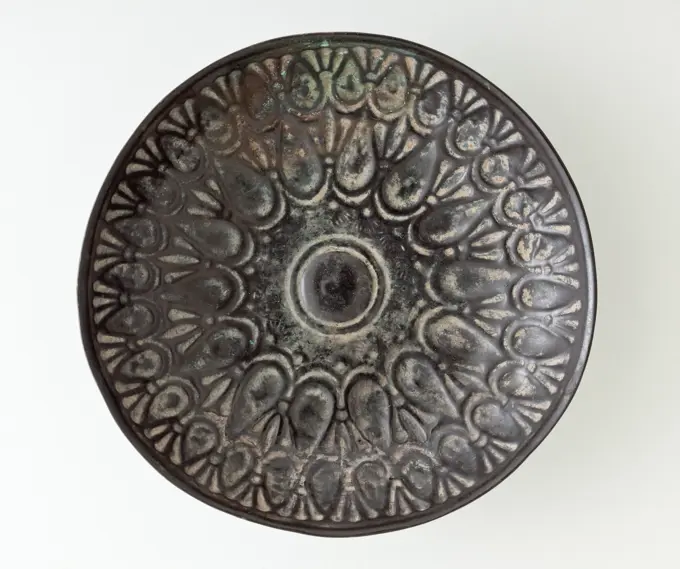
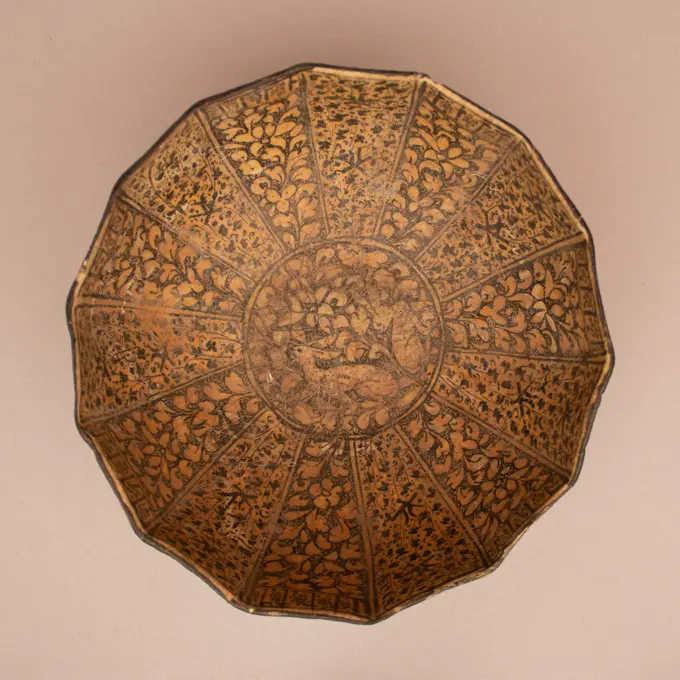
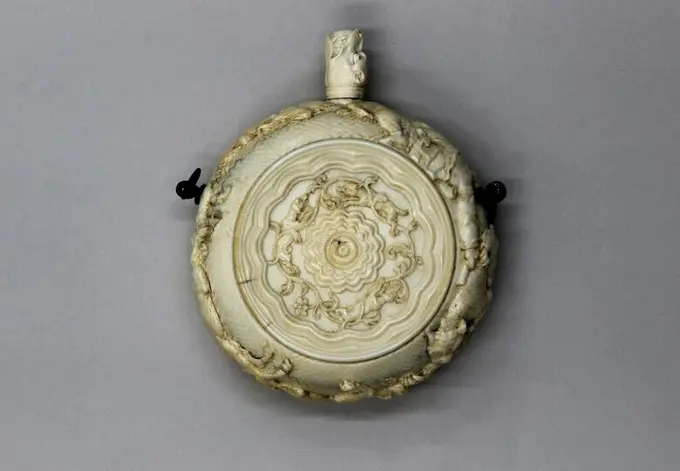
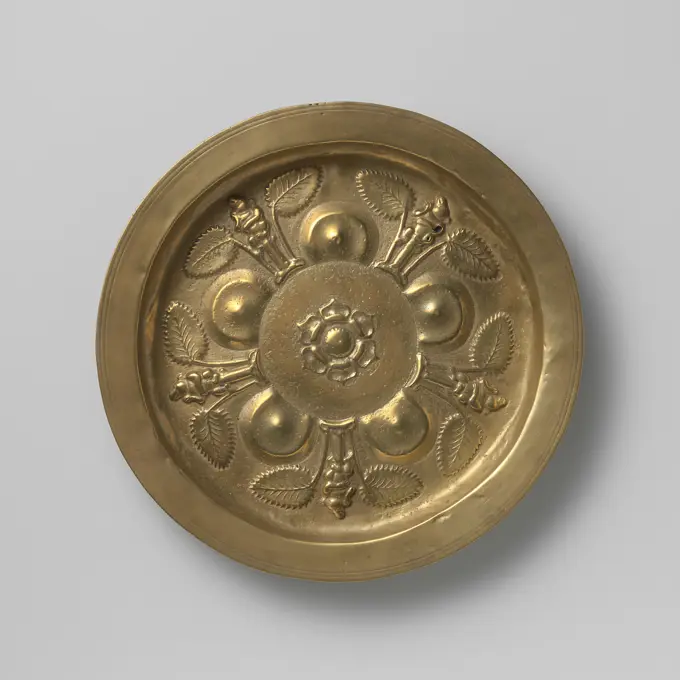
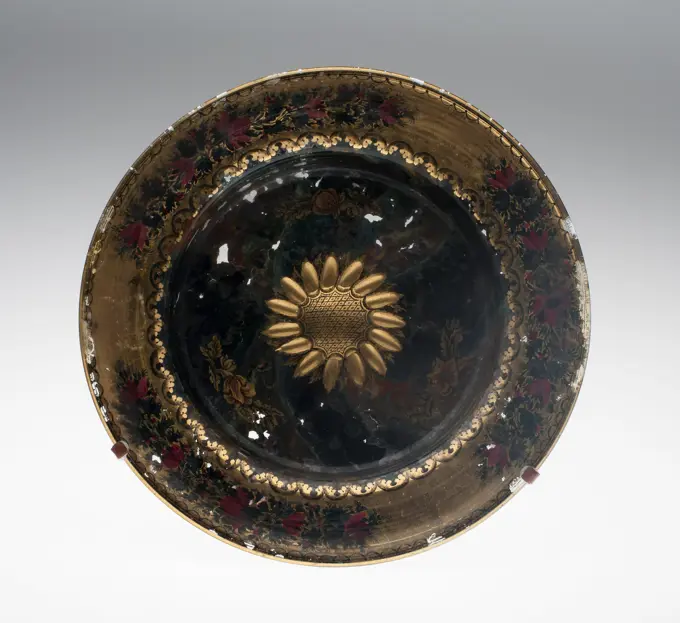
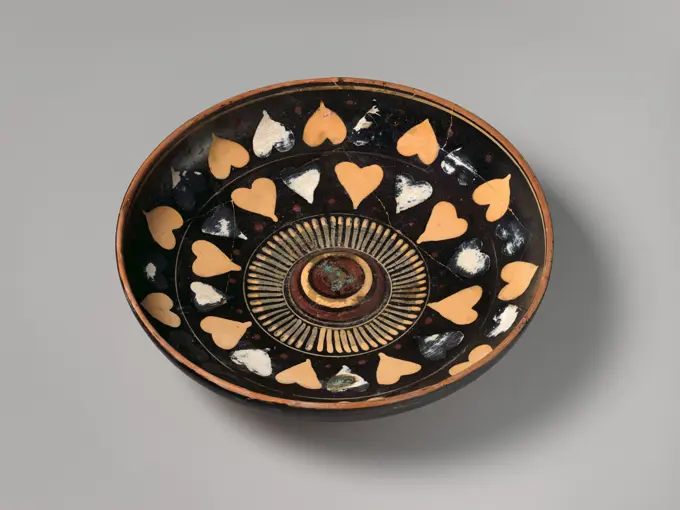
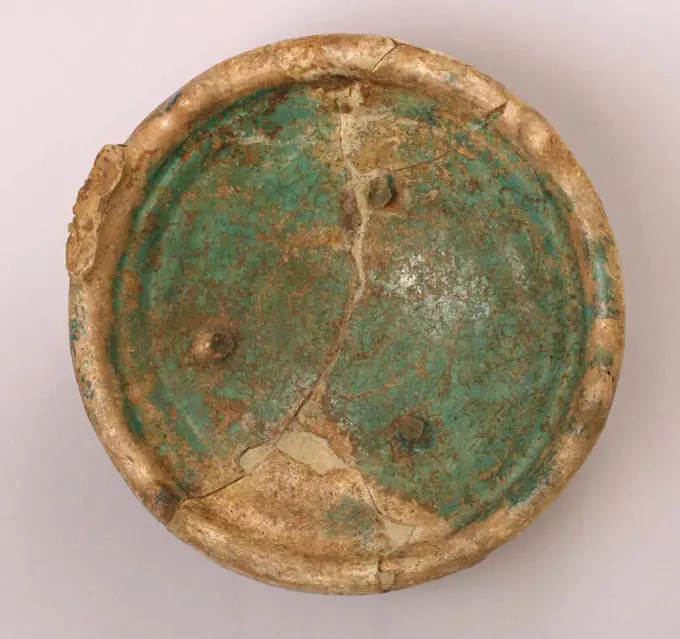
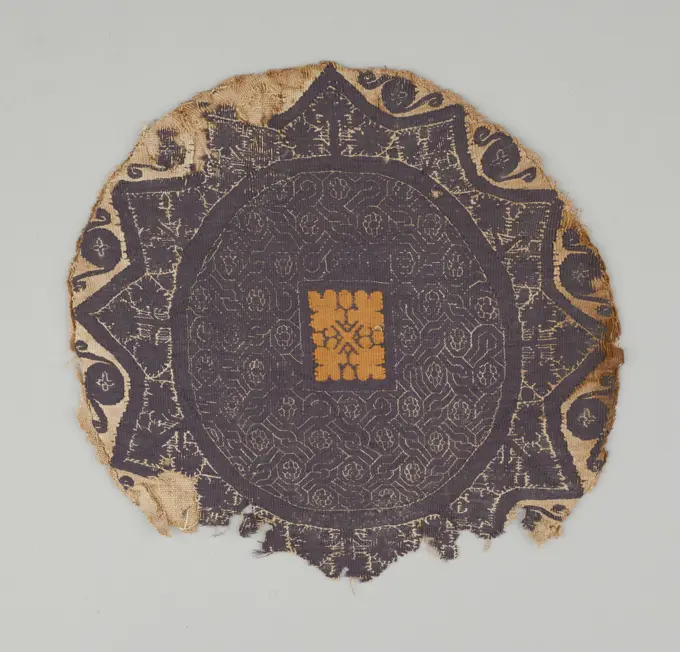
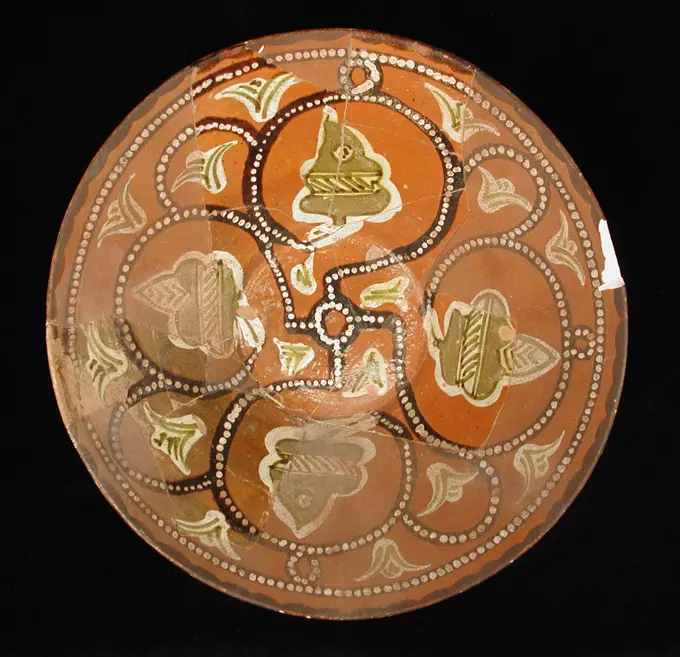
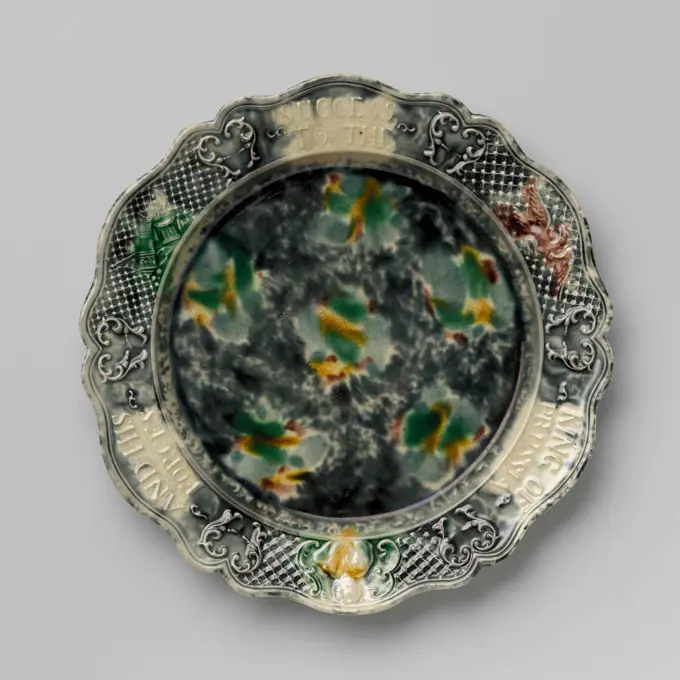
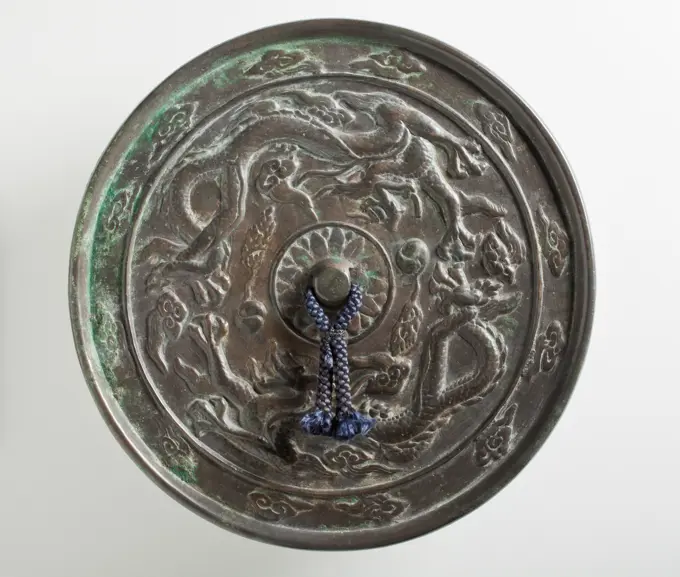
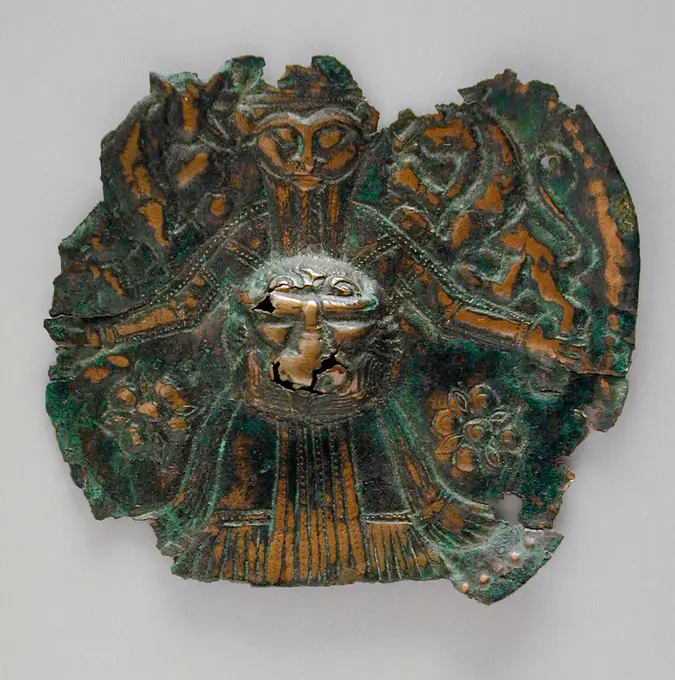
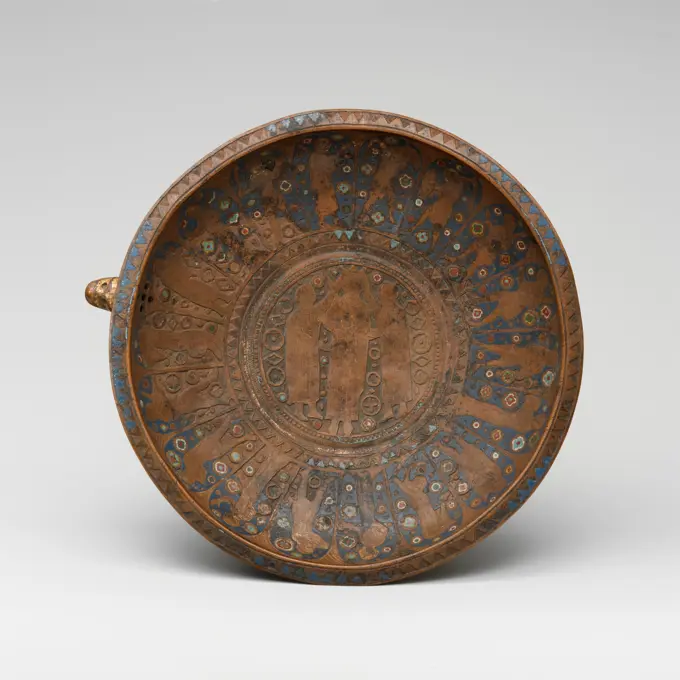
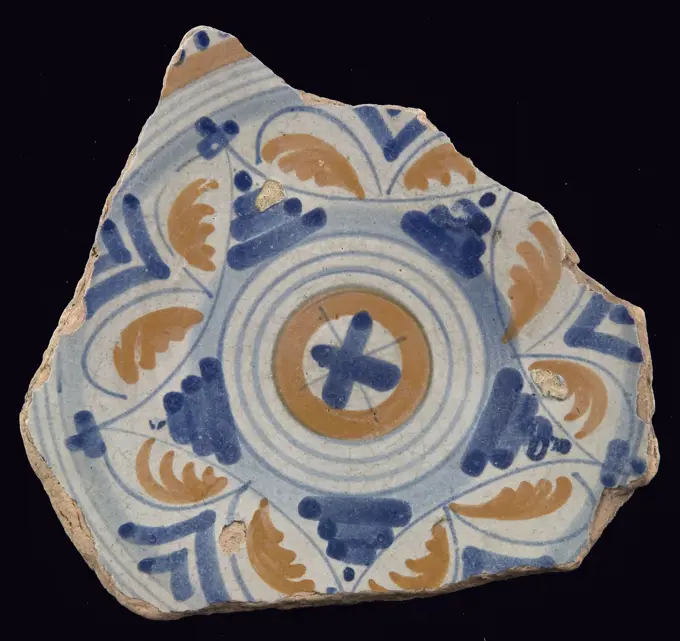
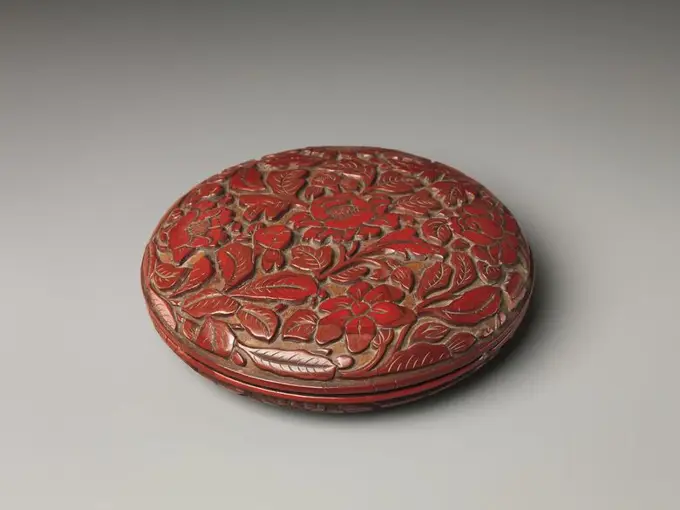
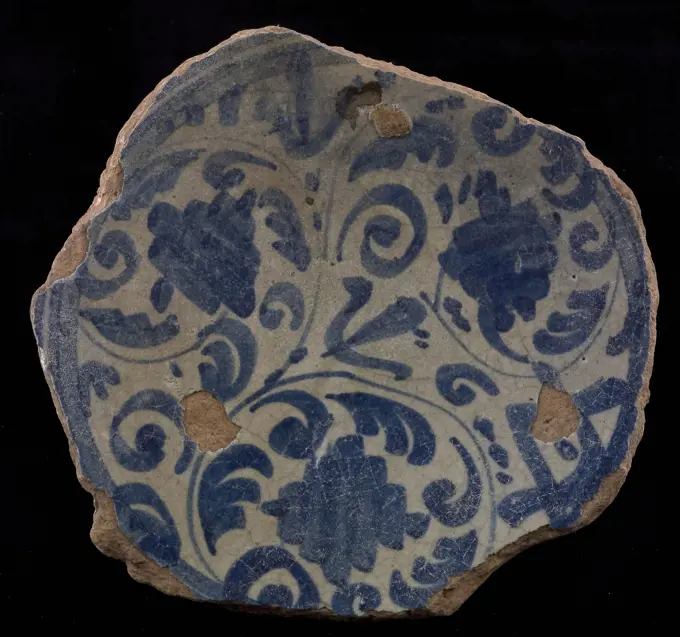
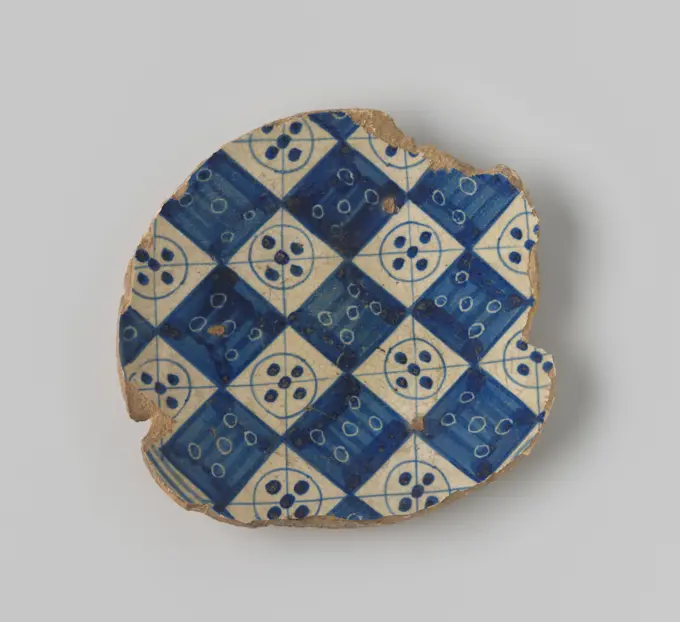
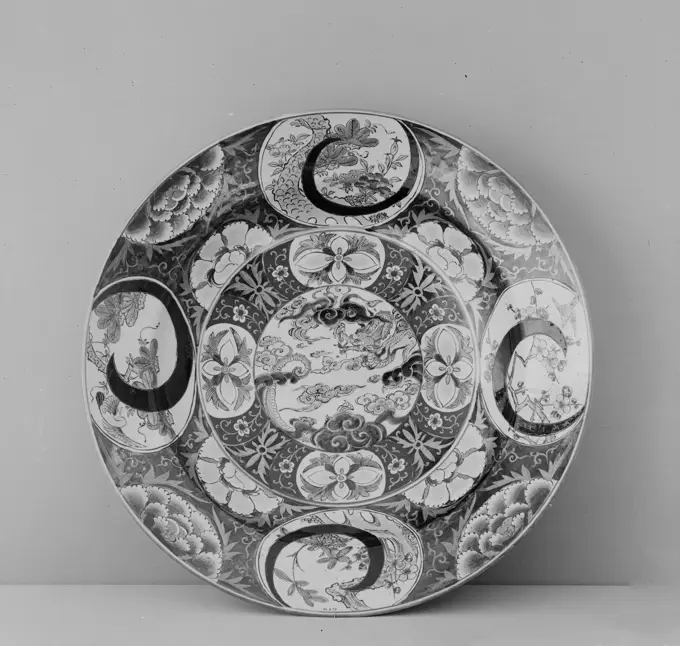
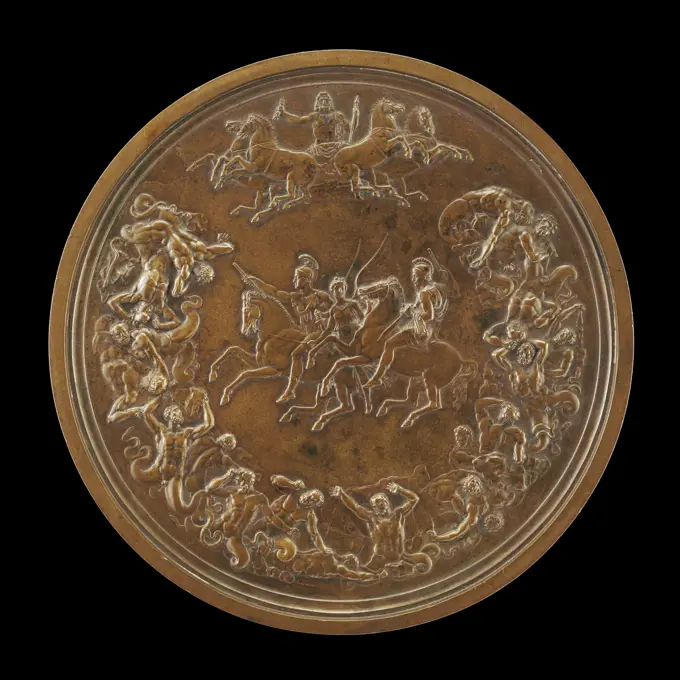
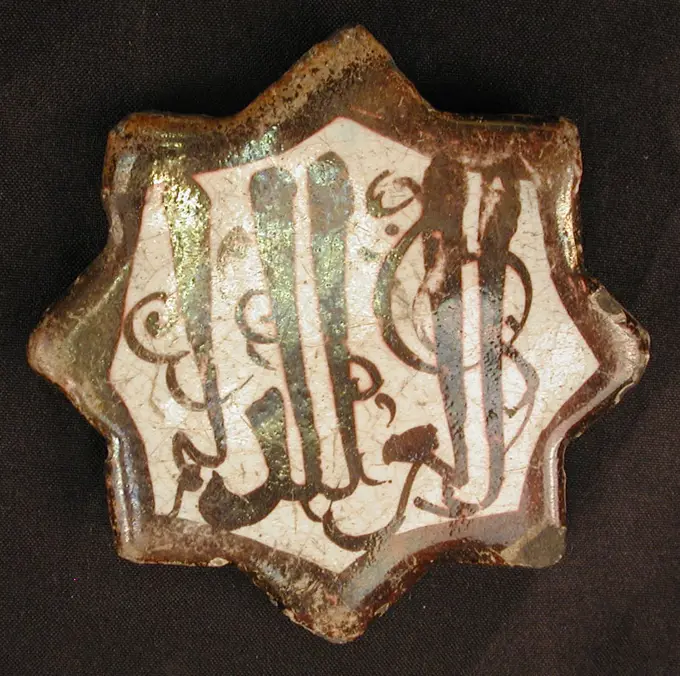
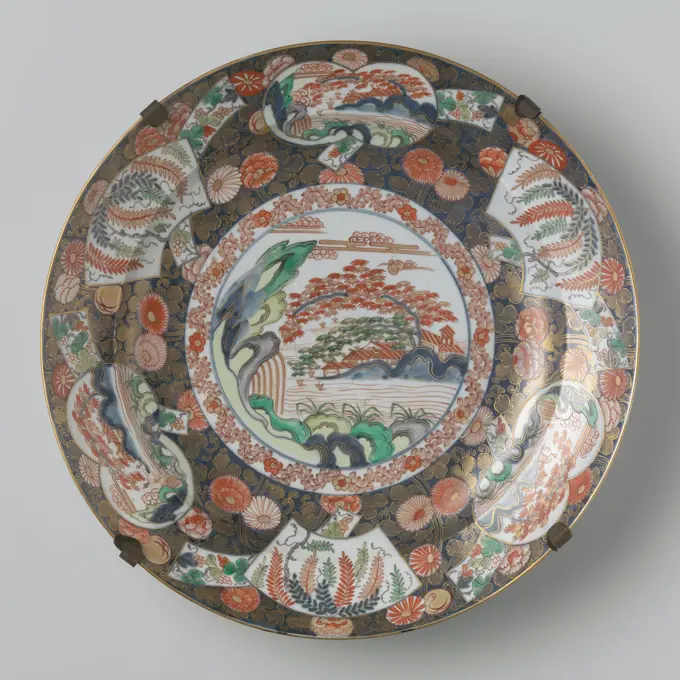
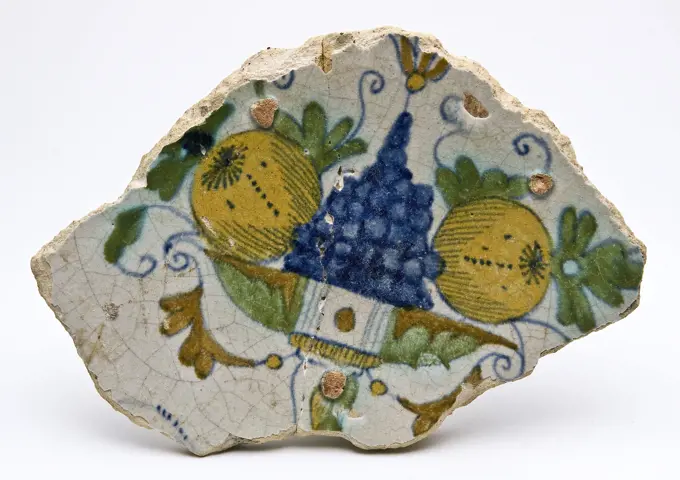
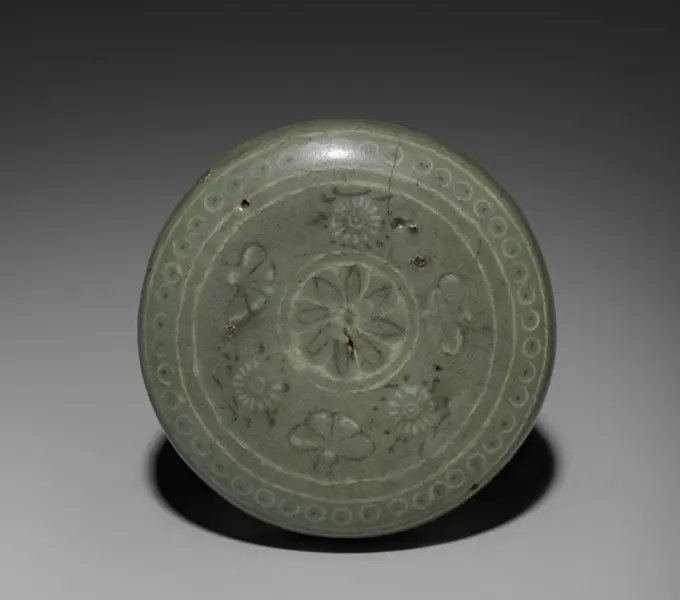
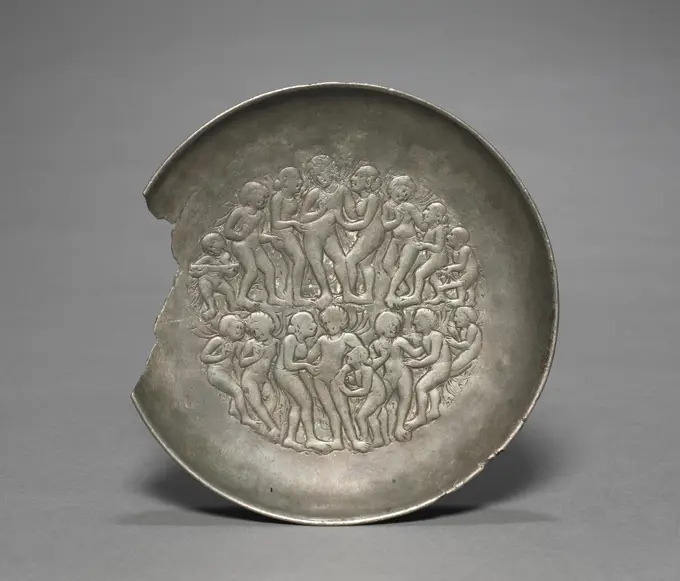
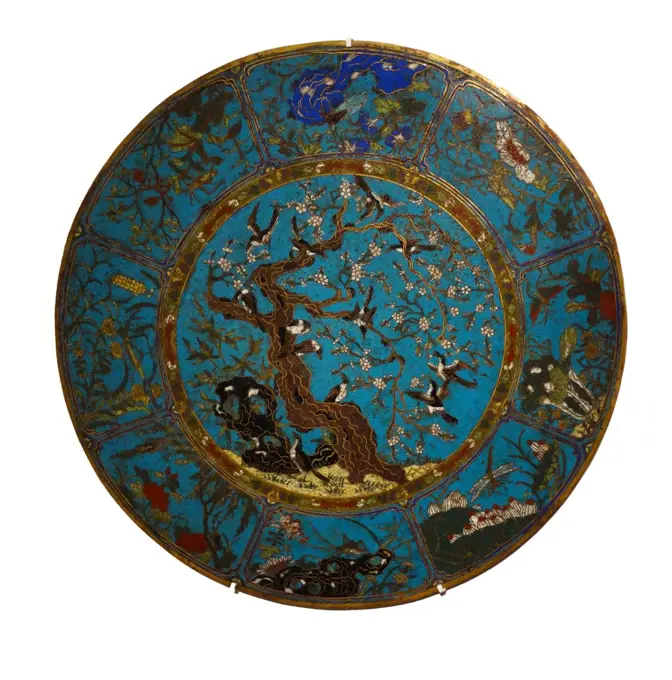
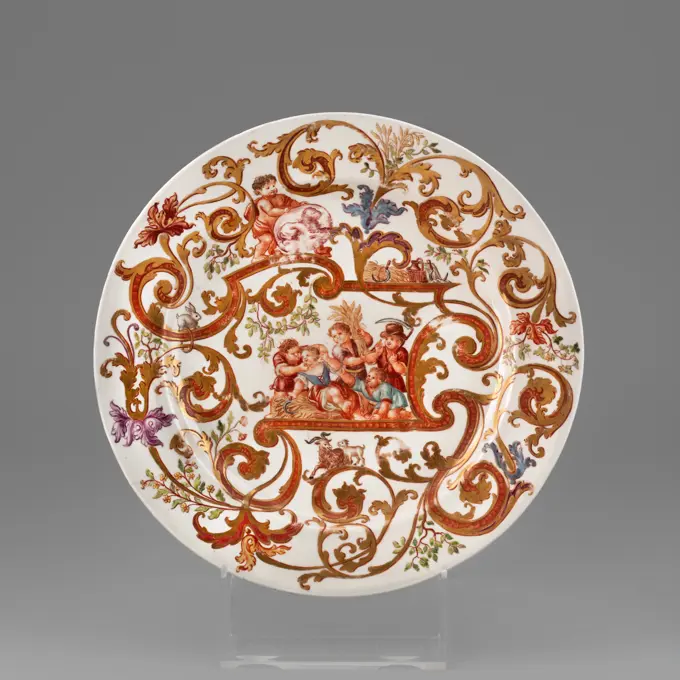
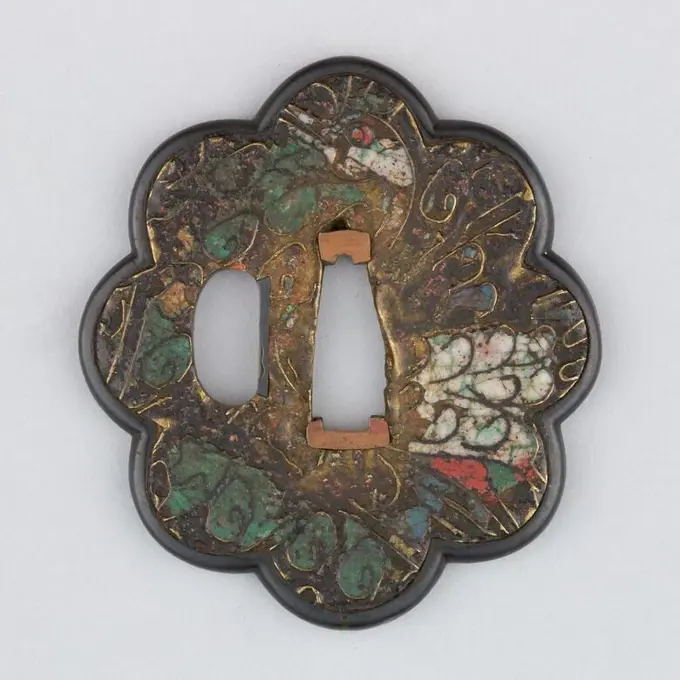
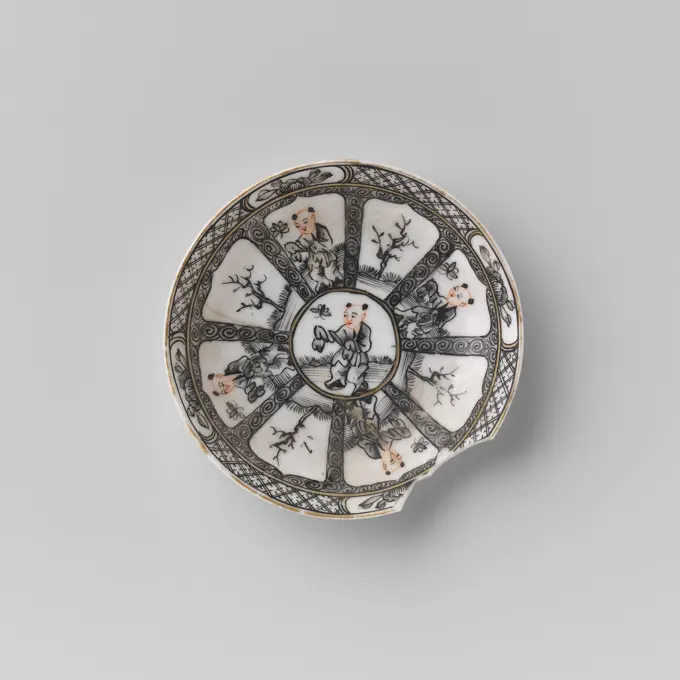
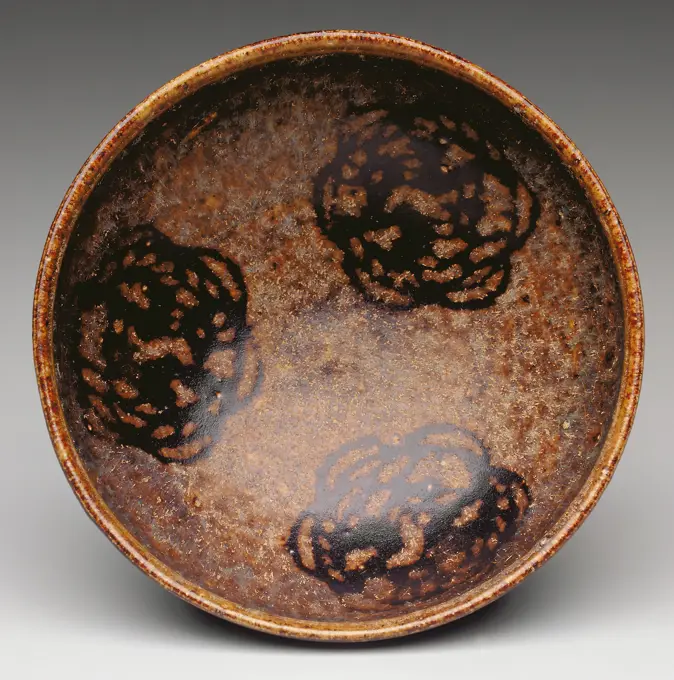
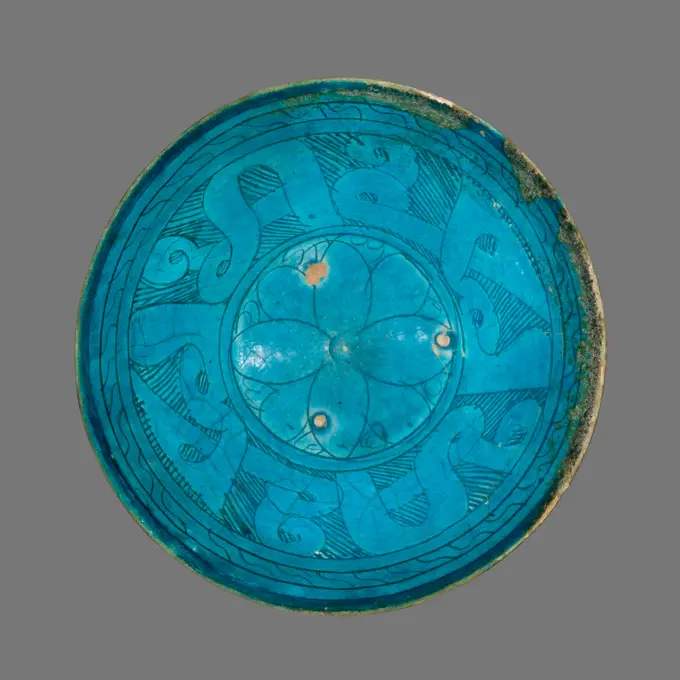
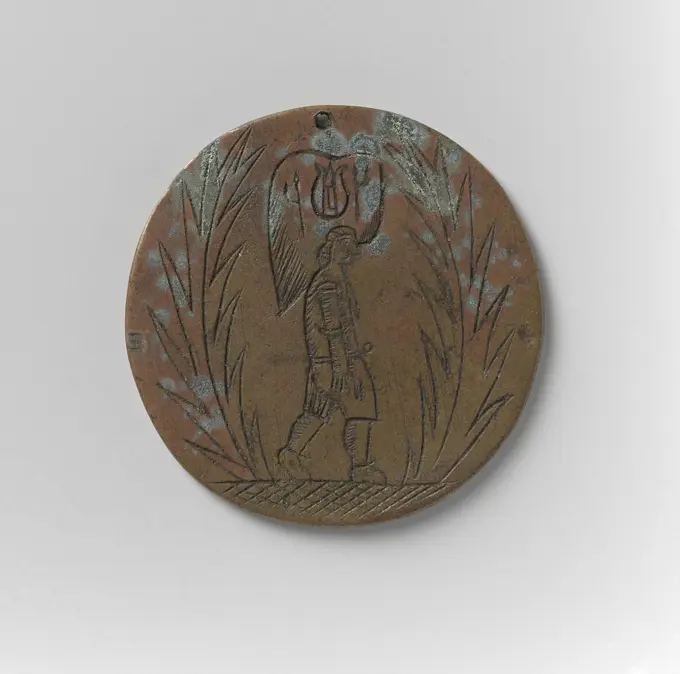
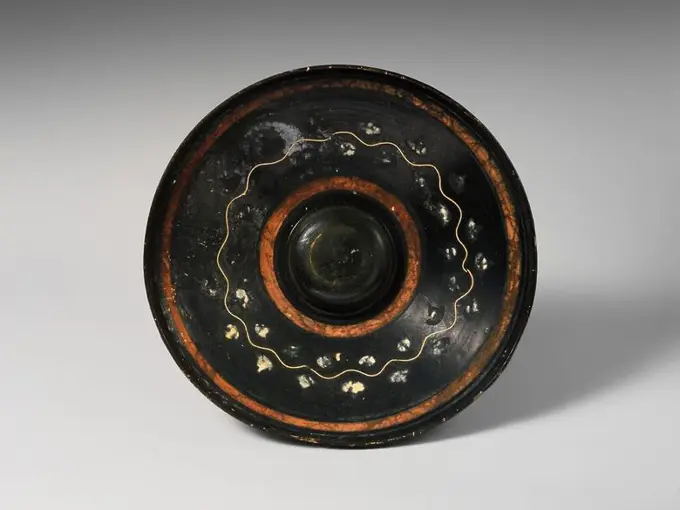
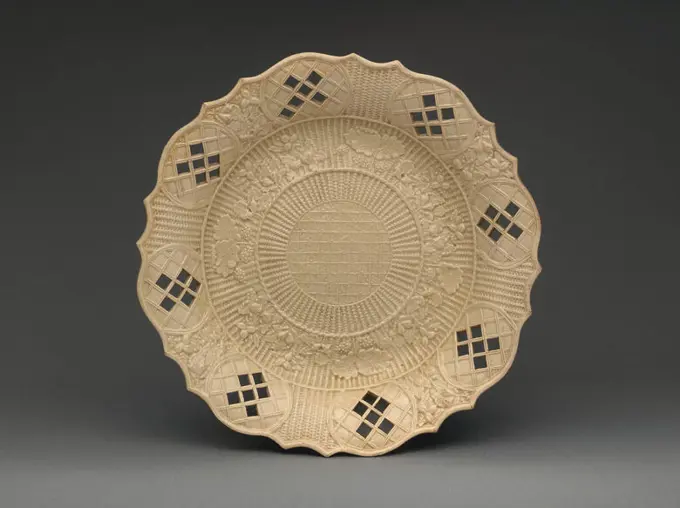
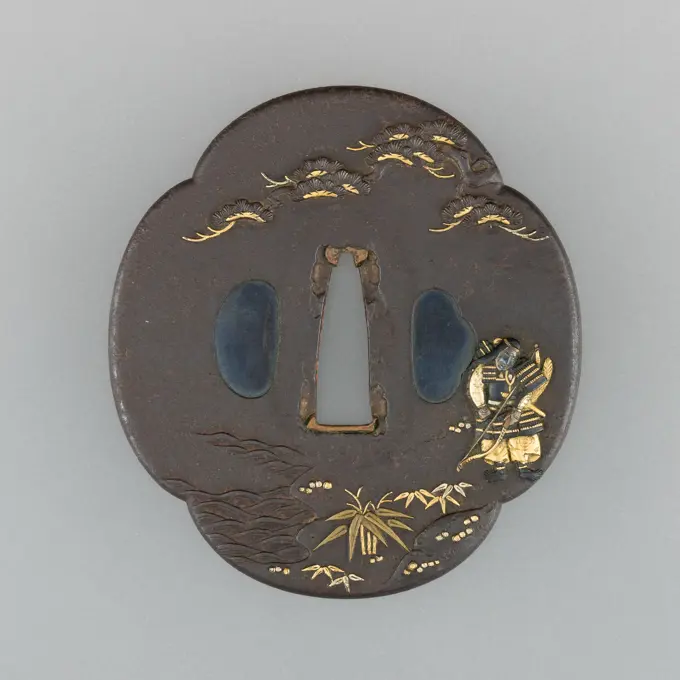
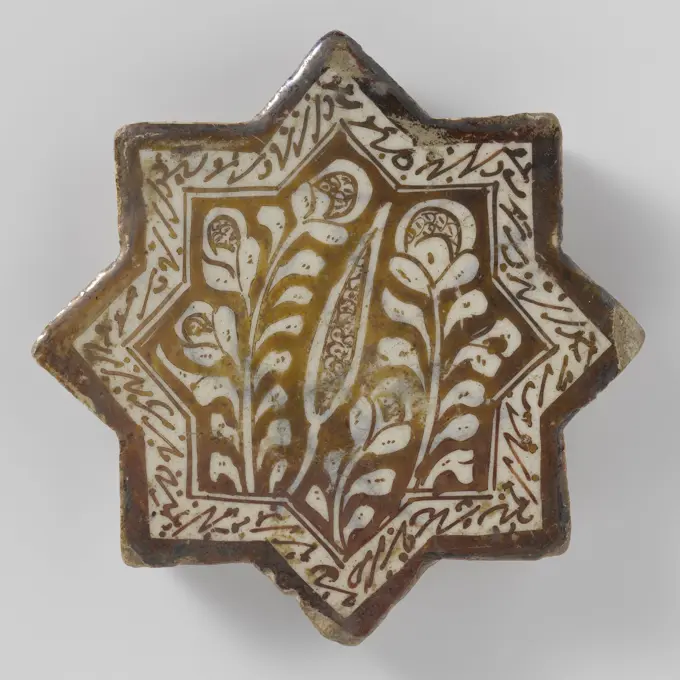
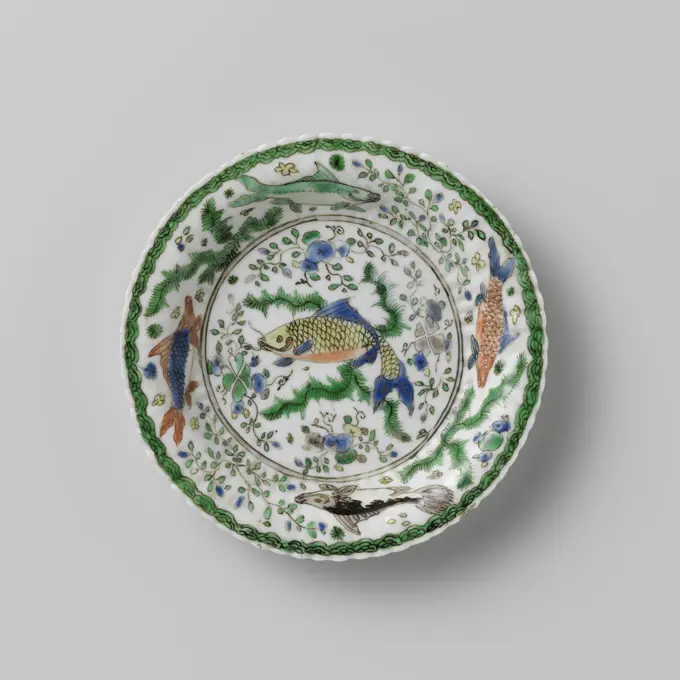
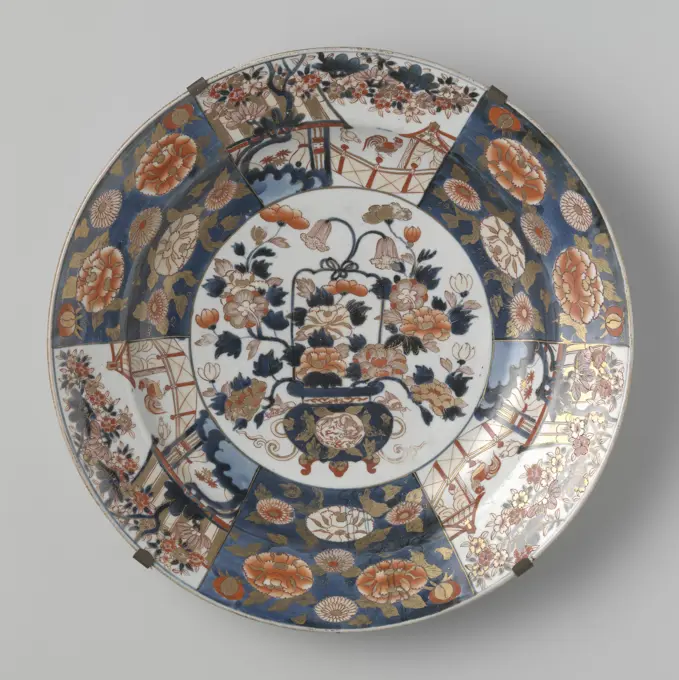
Dish with a flower basket, landscape and floral scrolls, anonymous, c. 1750 - c. 1800 Porcelain saucer, painted in underly glaze blue and on the glaze red and gold. On the flat a flower vase with a chilong (polled dragon) on it and also a chilong on either side of the vase. The wall and edge are divided into six compartments with alternately a landscape with a chicken and a rooster in a fenced garden at a pavilion and flower vines against a blue background. The rear with a tire interrupted by cartouche with flower rosettes and plants; around the band three flower branches (peony, prunus, chrysanthemum). On the bottom a peon branch in a circle. The dish is caught in a metal frame. The underside with proenen. Imari. Japan Porcelain. Glaze. Cobalt (Mineral). Gold (Metal). frame: Metal painting / gilding / vitrification Porcelain saucer, painted in underly glaze blue and on the glaze red and gold. On the flat a flower vase with a chilong (polled dragon) on it and also a chilong on either sAnonymous (n. - d.), Dish (main title). Earthenware, clay earth, stanniferous enamel, metal chandelier. Petit Palais, Museum of Fine Arts of the City of Paris.Shield 17th century Indian Of sturdy construction, and suitable for battle, this is a rare example of a distinctive type of seventeenth-century shield made in Muslim India, possibly the Deccan. In both conception and execution its chiseled and damascened ornamentation compares closely to that of only two other known shields: one in the collection of the Furusiyya Art Foundation (inv. RB-131) and the other formerly in the collection of Prosper Holstein (1843-1926) in Lyons and now probably in the Musée des Beaux-Arts at Chteaudun, France.The state of preservation is noteworthy. Although the gold-damascened ornamentation has become obliterated in some areas, it is very well preserved over the chiseled ornament, in contrast to the two comparable shields, where no such highlights are apparent. The lining on the interior appears to be a variant of that on the shield that was in the Holstein Collection, and may be original.. Shield. Indian. 17th century. Steel, gold, textile. ShieldsMirror, 8th century, 8 1/4 in. (20.96 cm), Bronze, China, 8th centuryBowl. Western Iran, 550-330 B.C.. Furnishings; Serviceware. BronzeDonkeyshoeBowl first half 14th century. Bowl. first half 14th century. Stonepaste; underglaze painted. Attributed to Iran. CeramicsBowl 1260-1400 Sultanabad. Sultanabad wares were known for their distinct style of decoration, namely the loose unconnected foliage used as a background for a central figure rather than a landscape. While this vessel is typical of Sultanabad wares, it also hints at Chinese influences introduced under the Mongols. The lotus flower, a popular symbol in China associated with purity, appears here just above the back of the central animal figure. The lotus was frequently represented in Islamic contexts, though most likely without the rich associations held by Chinese cultures.. Fritware, underglaze-painted decoration . IslamicPowder Flask. Culture: German. Dimensions: H. 4 5/8 in. (11.8 cm); Diam. 4 7/8 in. (12.4 cm). Date: ca. 1670-80.This flask combines several techniques for working ivory. The main surfaces are lathe-turned in concentric circles, the center carved in low relief, and the edges carved in high relief with hunters and their prey. Museum: Metropolitan Museum of Art, New York, USA.Fragment of Dish 14th-15th century. Fragment of Dish 446482Bowl 9th century. Bowl 449443Platter (container), 17th century, Ceramics (earthenware decorated with metallic reflections, central umbo and expanded eagle, surrounded by heart-shaped leaves and ungla valance (nail)), of Manises or Valencia (Valencia), Diameter: 38 cm. Museum: Museo Fundación Francisco Godia, Barcelona, Cataluña, España.Deep Dish. Culture: Spanish. Dimensions: Overall: 3 1/8 × 19 1/8 in. (8 × 48.5 cm). Date: late 15th-early 16th century. Museum: Metropolitan Museum of Art, New York, USA.Dish with bears and leaf motifs. In the flat of the dish, where the center point is visible in the middle, stamp forms are punched: a rosette with six leaves, surrounded by a five-time repeated motif of a bear, which climbed in a strain, with on either side A sheet on a stem, exceeded five times by a round bladder form. Along the edge, two rings in parallel are grooved. The hanging ring on the back is applied in later time.Plate of multicolor painted majolica. Round plate of multi-colored painted majolica. The plate is painted with fruits and leaves inside a double blue circle. Painted in the colors blue, green, orange and yellow.Plate 1715-1735 Schleswig. Glass with gilding .Dish 16th century. Dish 451998Patchbox 1791-1802 Birmingham. Silver .Terracotta phiale (libation bowl) ca. 500 B.C. Greek, Attic Interior, ivy leavesThe phiale was used to pour libations, liquid offerings. Its size fits the hand perfectly with the middle fingers in the central hollow and the thumb at the lip. The decoration here was not executed in the traditional combination of glazed and unglazed areas. Instead, the motifs were applied in added color over the glaze before firing. The technique is named after Jan Six, a modern Dutch scholar who published an early study of it.. Terracotta phiale (libation bowl). Greek, Attic. ca. 500 B.C.. Terracotta; Six's technique. Archaic. VasesBowl 10th century. Bowl 448722Fragment of Coptic fabric unknownPlatter. Nieokreślona manufaktura, factoryBowl 9th century. Bowl 449340Dish on three shell -shaped legs, decorated with large rosette motif of white sludge, local green lead glaze, anonymous, c. 1575 - c. 1625 Dish of lead glaze pottery, on three shell -shaped legs. The dish is decorated in white sludge with a large rosette motif and is covered with a local green -tinted lead glaze. North Holland earthenware. lead glaze Dish of lead glaze pottery, on three shell -shaped legs. The dish is decorated in white sludge with a large rosette motif and is covered with a local green -tinted lead glaze. North Holland earthenware. lead glazeTerracotta dish ca. 330-300 B.C. Greek, South Italian, Campanian, Teano Deep dish with ring base, decorated with ivy vine stamped pattern.. Terracotta dish. Greek, South Italian, Campanian, Teano. ca. 330-300 B.C.. Terracotta; applied color. Hellenistic. VasesArita (ceramic production center), large dish (ozara) (common name), 1640. Porcelain, polychrome decor on the cover. Cernuschi Museum, Asia Museum of Asia in the city of Paris. On the inner side, Camélias decor on a background of plum flowers.Round mirror, 1700. Bronze. Cernuschi Museum, Asia Museum of Asia in the city of Paris.Misa Baranowski, Józef (1863 or 1868 1942)Box, anonymous, 1736 - 1795 Round lacquer box with lid for valuables with the pre -length of the elegie of the red wall. Red lacquer for a lead core. China lacquer (coating). lead (metal) Round lacquer box with lid for valuables with the pre -length of the elegie of the red wall. Red lacquer for a lead core. China lacquer (coating). lead (metal)Textile, Medium: cotton, silk Technique: circular textile, appliqué, Large rounded applique in cream and two shades of blue. Border design includes stylized forms and small discs, one of which retains red color. Center medallion is blue with pattern suggesting leaves or wings reserved in cream ground; plus remains of inserts of white, blue and red silk are visible., Egypt, 9th century, embroidery & stitching, TextileScherf Majolica with decoration in blue, yellow and green, anonymous, 1500 - 1699  Majolic screen. Northern Netherlands earthenware. glazeFragment majolica dish, blue on white, Italian style tendrils on the mirror, plate crockery holder soil find ceramics pottery glaze, majolica Cooked on prunes. Italian decor archeology Italy serve decorate foodRound plate of hard-baked pottery; Staffordshire. Round plate of hard-baked pottery, covered with blue-black lead glazing with stains in light blue, green, tan and manganese. The edge is embossed with fields alternately smooth and filled with grille. On the trap fields alternately an eagle, a trophy and the portrait of Frederik the Great. On the smooth fields the inscriptions success to the King, King of Prussia, and His Forces. The sign belongs to five signs (BK-1987-40-A to BK-1987-40-F).Mirror with Twin Dragons. Korea, Goryeo dynasty, 918-1392. Furnishings; Accessories. Cast bronzePlate 1830 John Monday. Plate 6000Disc - headed Pin Fragment of Umbo. Iran, Luristan, circa 800-650 B.C.. Jewelry and Adornments; pins. Bronze, hammeredGemellion with Coronation Scene ca. 1250-75 French Gemellions, which appeared in the thirteenth century in Limoges, were used for liturgical and secular hand washing. As their name indicates (derived from gemellus, the Latin word for "twin"), these vessels were produced in pairs--one bowl with a small spout to pour water over the hands and the other to serve as a catch basin.. Gemellion with Coronation Scene. French. ca. 1250-75. Copper, wrought, gilt and Champlevé enamel. Made in Limousin, France. Enamels-ChamplevéLid of a bowl with knob 750-480 B.C. Cypriot. Lid of a bowl with knob. Cypriot. 750-480 B.C.. Terracotta. Cypro-Archaic I-II. VasesNapkin;  XIX/XXW. (1891-00-00-1910-00-00);Fragment majolica dish, orange and blue on white, polychrome star-shaped decor, dish crockery holder soil find ceramics pottery glaze, Wines baked archeology decorate servingBox with Camellias. Culture: China. Dimensions: H. 1 1/2 in. (3.8 cm), Diam. 5 in. (12.7 cm). Date: 13th century.Small boxes of this type, which are preserved in Japan in some number, are often identified as incense boxes, for they were used as such during the tea ceremony. It seems likely that boxes of this type were also used in China to hold incense or other powdered substances such as cosmetics. The camellia spray on the cover is set against a plain background, a characteristic of early carved lacquers that would reemerge in the sixteenth century. Museum: Metropolitan Museum of Art, New York, USA.. Talam, sacrifice, copper, decorated with a horizontal horn shell. Green patina.Dish (usual name), 1615. Sandstone coated with polychrome enamels. Cernuschi Museum, Asia Museum of Asia in the city of Paris.Bowl 13th century. Bowl 451700Plate 750-600 B.C. Cypriot Vertical stripes of alternate black and red on lip.. Plate. Cypriot. 750-600 B.C.. Terracotta. Cypro-Archaic I . VasesBowl 12th-13th century. Bowl 448276Bowl 9th century This object was excavated at Nishapur.Nishapur was a vital city in the early and middle Islamic periods, located along one of the main trajectories that connected Iran and West Asia Islamic lands with Central Asia and China. These itineraries are often referred to by the term Silk routes but were in fact crucial to the movement of constellations of materials and objects, as well as people and ideas. The diverse population of Nishapur and its surroundings, from the better-researched elite groups of merchants, land-owning aristocracy, and literates, to the less-known artisans, farmers, miners, and servants, were instrumental in adapting global cultural trends to create their own distinctive visual languages. This is seen in the material remains of everyday life in medieval Nishapur - from pots and pans to lighting devices, inkwells, textiles and trimmings, jewelry, games and toys, talismanic devices, weapons, coins, and architectural fragments.Nishapur lost its politicalLarge BowlBag in a landscape oval model of dark blue gold brookat in large motifs. Pouch of a bracket bag made of dark blue gold breeding. Double beaten dust, set aside, rounded from above and pleated. Bizarre running pattern from through and over each other reedhales, radiating and stopping against triangular fields with different grid patterns; From here extending lancet leaves in gold with saved flowers. Terra satin lining, with small bag in the lining.Octagonal Bowl with Dragons and Auspicious Motifs second half of the 19th century Eiraku Tokuzen. Octagonal Bowl with Dragons and Auspicious Motifs. Eiraku Tokuzen (Japanese, 1853-1909). Japan. second half of the 19th century. Porcelain painted with red and gold over a transparent glaze (Kyoto ware, Eiraku type). Meiji period (1868-1912). CeramicsFragment majolica dish, blue on white, Italian-looking tendrils on the mirror, plate crockery holder soil find ceramic pottery glaze, majolica Cooked on prunes. Italian decor. Red shard archeology Italy Rotterdam serving food decorate archaeological find in the soil Rotterdam 1916.Lamp. UnknownExcerpt in the form of a bottom of a dish, painted with chessboard motif, anonymous, c. 1600 - c. 1650 Excerpt in the form of a bottom of a dish, painted in blue with a chessboard motif: a circle with five points on the white compartments; Five circles on the blue compartments, saved in the stock. North Holland earthenware Excerpt in the form of a bottom of a dish, painted in blue with a chessboard motif: a circle with five points on the white compartments; Five circles on the blue compartments, saved in the stock. North Holland earthenwareLarge Dish 1720 Japan. Large Dish. Japan. 1720. White porcelain decorated with blue under the glaze, polychrome enamels (Arita ware). Edo period (1615-1868). CeramicsBenedetto Pistrucci, The Waterloo Medallion The Victorious Generals Wellington and Blücher, with Jupiter's Conquest of the Giants (reverse), designed 1817 1850, produced 1861 The Waterloo Medallion: The Victorious Generals Wellington and Blücher, with Jupiter's Conquest of the Giants reverseTile first half 13th century. Tile 453460Dish with pommel scrolls second half 14th century China. Dish with pommel scrolls 40184Dish with a water landscape, plants and flower sprays, c. 1875 - c. 1925 Porcelain saucer on a double foot ring, painted in underly glaze blue and on the glaze red, green, eggplant, black and gold. On the flat a river landscape with rocks, trees, boats, pavilions and clouds. On the wall and edge cartouches with a river landscape or plant against a background of chrysanthnums on blue. Three flower branches on the outside wall. The dish has a double foot ring and is caught in a metal frame. A European (French) imitation of the Japanese Imari. Europe porcelain. glaze. cobalt (mineral). gold (metal). montuur: metal. uranium oxide painting / gilding / vitrification Porcelain saucer on a double foot ring, painted in underly glaze blue and on the glaze red, green, eggplant, black and gold. On the flat a river landscape with rocks, trees, boats, pavilions and clouds. On the wall and edge cartouches with a river landscape or plant against a background of chrysanthnums on blue. Three flower branPATENA DEL CALIZ DE S SEGUNDO EN PLATA DORADA S XV. Location: CATEDRAL DE CRISTO SALVADOR-MUSEO. AVILA. SPAIN.Glued soul of majolica dish with polychrome fruit bowl, wall plate dish crockery holder soil find ceramic earthenware glaze lead glaze tin glazing, ring 11.3 majolica glazed baked 2x painted Mirror fragment. en. Hanging hole in stand. Yellow shard of orange layered in the stand ring. Backside pale greenish tinted lead glaze archeology Rotterdam City center Stadsdriehoek Bulgersteyn decorate home interior serving Schielandshuis serve food Soil discovery: Schielandshuis under building left in front Bulgersteyn.Pigment Box (lid), 918-1392. Korea, Goryeo period (918-1392). Inlaid celadon ware; diameter: 9 cm (3 9/16 in.); overall: 3.9 cm (1 9/16 in.). Celadons, spoons, seals, and bronze mirrors were the most common burial objects in tombs during the Goryeo period (918-1392). Once used to contain colored powder, rouge, and eyebrow gel for makeup, this small container was one of the standard goods that furnished elites' tombs. Both women and men used the grain powder of rice or millet for whitening their skin, safflower extract for rouge, and plant ash or soot for eyebrow gel. Yet, natural-looking make-up seems to have been the most favorable one in Korean according to the travelogue by Xu Jing (1091-1153), the Chinese diplomat who visited Korea in 1123.Plate with a Scene of Revelry, AD 400s. Northwestern India, possibly Tanesara Mahadeva, Gupta period (320-647). Silver with alloy of tin and lead with traces of gilding; diameter: 18.7 cm (7 3/8 in.).Chinese plaque depicting Magpies and a blossoming plum tree. Dated 17th CenturyGeorge Lewis, Basket, c. 1700, silver.Plate, from the series: 12 zodiac signs; Bottengruber, Ignaz (Fl. Ca 1720-1736), Porzellanmanufaktur du Paquier (Vienna; 1718-1744); around 1725-1730 (1730-00-00-1735-00-00);Hausmalerei, zodiak (signs), lion, vegetable wage, purchase (provenance), reaperTile. Tile decorated with leaf rights in relief.Large Luster Bowl 1186-1196 Iran. This fragmented bowl combines two different luster styles in a single object. The vessel is primarily decorated in the miniature technique, so-called for its similarities to miniature or manuscript painting. The horizontal bands of the design, the checkerboard trees, and the white background are all hallmarks of this type of decoration. However, some of the figures are painted in reserve, with their forms in white and the surrounding pattern filled in around themóa feature more typical of the monumental style of luster painting.This luster bowl also contains two different bands of inscriptions. An inscription derived from knotted Kufic with dense arabesques surrounds the interior rim and repeats a single word, wealth. The other inscription lines the exterior rim of the bowl and contains the date of creation, an illegible signature, and lines from Persian poetry, which do not relate directly to the imagery of the bowlís decoration. Some of the poetry isSword Guard (Tsuba). Culture: Japanese. Dimensions: H. 2 3/4 in. (7 cm); W. 2 1/2 in. (6.4 cm); thickness 3/16 in. (0.5 cm); Wt. 3.1 oz. (87.9 g). Date: 17th-18th century. Museum: Metropolitan Museum of Art, New York, USA.Pedestaled dish with scalloped rim 13th century China. Pedestaled dish with scalloped rim. China. 13th century. Red and black lacquer with engraved gold decoration (qiangjin). Song (960-1279-Yuan (1271-1368) dynasty. LacquerGilt Button, 1800-1820. Made in Birmingham, maker unknownTrayTLV Mirror, early 1st Century - early 3rd Century. China, Eastern Han dynasty (25-220). Bronze; diameter: 14.2 cm (5 9/16 in.); overall: 1 cm (3/8 in.); rim: 0.6 cm (1/4 in.).Excerpt of a dish with red-baking shard, with white glaze at the front and back, on which the front in Sgrafitto technology with black glaze triangles are applied, anonymous, 1200- 1899  Italy earthenware  Italy earthenwareDish with a Boy and a Butterfly in a Landscape. Dish of porcelain, painted on the glaze in red, black and gold. On the platter of the dish a medallion with a boy and a butterfly in a landscape; to the medallion eight flower leaf-shaped boxes with alternating the boy in the landscape and a tree; between the curlwork boxes; On the edge a band with napkin interspersed with a flower in a cartouche. Dish has been broken. Encre the chine.Tea Bowl, 12th-13th century, 2 x 4 5/8 in. (5.08 x 11.75 cm), Chi-chou ware Stoneware with brown glaze to the exterior with papercut decoration reserved in dark brown against a variegated buff ground on the interior, China, 12th-13th century, A dark-brown glaze with buff-colored tortoiseshell markings covers the exterior of this small tea bowl. Reserved on the interior in reddish-brown glaze are three openwork panels of quatrefoil shapes, perhaps representing peony blossoms, set against a richly variegated buff glaze. The golden buff glaze crawled downward from the lip during firing creating a streaked and mottled effect on the interior. Archaeological evidence shows similar bowls to have been made at the Jizhou kilns at Yonghe in central Jiangxi province.Bowl;  XII-XIII century (1190-00-00-1210-00-00);Ceramics, Persian (culture), Islamic art, purchase (provenance)Bowl with Radiating Panel Design 14th century Panel-style bowls, so called because of the wedge-shaped panels that make up their interior decoration, were typically produced in Kashan, one of the primary ceramic centers in Iran during the fourteenth century. Modeled after Chinese celadon bowls in form, this influence is also present in the highly abstracted lotus petals on this bowls exterior.Corend carriers and depths of Amsterdam, Gildenning of Frans Maas van Haarlem. Brass medal with hole in it; v.z: Returned man with burden on head in a bran wreath. Downside: inscriptionTerracotta phiale mesomphalos (libation bowl). Culture: Etruscan. Dimensions: H.: 2 3/16 x 7 7/8 in. (5.6 x 20 cm). Date: 4th century B.C..The interior of this fine bowl is decorated with an incised vine with painted white leaves connoting the sacred ivy of the wine god Fufluns (Latin: Bacchus). Museum: Metropolitan Museum of Art, New York, USA.Covered Bowl with Painted Decoration (lid), 1400s. Siam, Sawankhalok ware, 15th century. Stoneware; overall: 10.8 cm (4 1/4 in.).Bowl 8th-9th century. Bowl 447362Old wooden barrel Old wooden barrel isolated over white background Copyright: xZoonar.com/IvonnexWierinkx 12928487Fragment 13th-14th century. Fragment 455150Fragment faience plate, blue on white, coat of arms with three French lilies, plate crockery holder earth discovery ceramics pottery glaze tin glaze, Cooked archeology Rotterdam City triangle Haagseveer Target Targets heraldry Soil discovery: found during the construction of the Doelen Rotterdam 1956.Fragment 14th-15th century. Fragment 445480Belt Buckle with Kulans Attacked by Wolves 3rd-2nd century B.C. Southern Siberia. Belt Buckle with Kulans Attacked by Wolves 65285Bowl, 11th-12th century, 3 x 7 1/2 in. (7.62 x 19.05 cm), Earthenware with underglaze decor in brown slip on white engobe, Samarkand ware, Iran, 11th-12th centuryBowl. Afghanistan, probably Herat, Timurid, late 15th century. Metal. Tinned copperRound plate of hard-baked pottery; Staffordshire. Round plate of hard-baked pottery, covered with blue-black lead glazing with stains in light blue, green, tan and manganese. The edge is embossed with fields alternately smooth and filled with grille. On the trap fields alternately an eagle, a trophy and the portrait of Frederik the Great. On the smooth fields the inscriptions success to the King, King of Prussia, and His Forces. The sign belongs to five signs (BK-1987-40-A to BK-1987-40-F).Plate;  19th century (1800-00-00-1900-00-00);Fragment of a Bowl 14th-15th century. Fragment of a Bowl 446390Dish. Culture: British, probably Staffordshire. Dimensions: Overall (confirmed): 1 5/8 × 11 7/8 × 11 7/8 in. (4.1 × 30.2 × 30.2 cm). Date: ca. 1770-80.This creamware dish speaks to the strong place of tradition within the fast changing ceramic technologies of eighteenth-century England. Although the form and decoration of the dish are typical of the salt-glaze stoneware made in the Staffordshire region until the 1760s, this example is made of creamware, a refined white earthenware that only gained popularity in the second half of the eighteenth century. Even as Staffordshire potteries experimented with new ceramic bodies, they continued to adopt older models and decorative motifs well into the nineteenth century. Museum: Metropolitan Museum of Art, New York, USA.Sword Guard (Tsuba) 18th century Japanese A tsuba is a sword guard and part of a sword mounting. It is mounted between the swords blade and grip to protect the users hands.. Sword Guard (Tsuba). Japanese. 18th century. Iron, gold, silver, copper-gold alloy (shakud?), copper, brass. Sword Furniture-TsubaStar-shaped tile with flowering plants and an inscription, anonymous, c. 1275 - c. 1325 Ster-shaped tile of quartz fritry, with a painting in Luster with flowering plants and a bond with a (psuedo) inscription. is the earthenware. glaze. luster (textile) painting / vitrification Ster-shaped tile of quartz fritry, with a painting in Luster with flowering plants and a bond with a (psuedo) inscription. is the earthenware. glaze. luster (textile) painting / vitrificationCup and saucer with fish between water plants, anonymous, c. 1700 - c. 1724 Porcelain's head and saucer with ribbed wall and lobed edge, painted in underly glaze blue and on the glaze blue, red, green, yellow, eggplant, black and gold. The outside of the head with four fish between aquatic plants, the edge with a band Ruyi motif; On the bottom a fish and the inside with four fish in iron red, the edge with a band Ruyi motif. The flat of the dish with a larger fish between aquatic plants, otherwise the same decoration as on the head. Both marked on the bottom with 'yù', Jade, in a double circle. Famle Verte. China porcelain. glaze. cobalt (mineral). gold (metal) painting / gilding / vitrification Porcelain's head and saucer with ribbed wall and lobed edge, painted in underly glaze blue and on the glaze blue, red, green, yellow, eggplant, black and gold. The outside of the head with four fish between aquatic plants, the edge with a band Ruyi motif; On the bottom a fish and the inside witForehead Plaque from a Horse Harness, Ancient Altaian, Pazyryk Burial Mounds  Brown marble ware offering tray from the Early Tang Dynasty. Dated 7th CenturyBowl 9th century. Bowl. 9th century. Earthenware; white slip with polychrome slip decoration under transparent glaze. Excavated in Iran, Nishapur. CeramicsGrahal-Manzara. Carnavalet 2013-2016 collection sites. Numismatics.Fragment of a Dish 14th-15th century. Fragment of a Dish 446406