Decorative Chairs

An assortment of traditional chairs, highlighting craftsmanship and design from various historical periods and styles.

Chair of mahogany, decorated with marquetery of ash wood, the line and back sports have stylized leaf and floral motifs, anonymous, c. 1820 Chair of mahogany (A, B), decorated with marqueterie van Esdoornhout. The round front legs have a twisted section above and below; The part in between shows piping. The hind legs turn backwards and form one whole with the backstyles, which are connected halfway through a sport, and which are crowned by a hold wide, overhanging backrest. The chair rule and the back sports are decorated with stylized leaf and floral motifs; The upper sport ends in rosettes. Loose covered seat. Northern Netherlands (possibly) wood (plant material). mahogany (wood). maple (wood). cotton (textile). ash (wood) Chair of mahogany (A, B), decorated with marqueterie van Esdoornhout. The round front legs have a twisted section above and below; The part in between shows piping. The hind legs turn backwards and form one whole with the backstyles, which are connected halfway thr
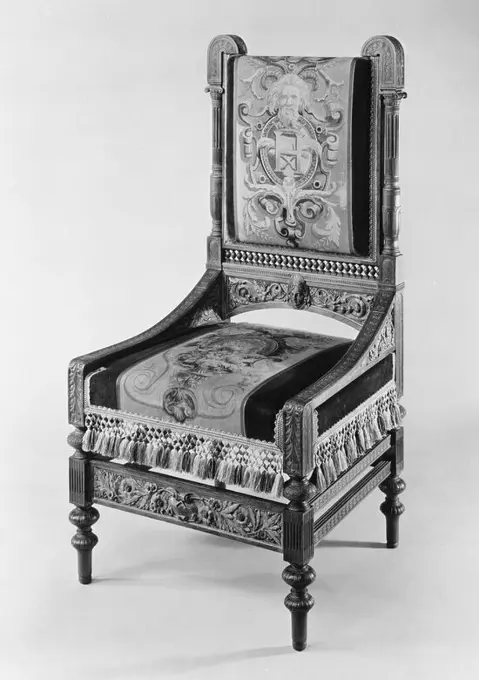
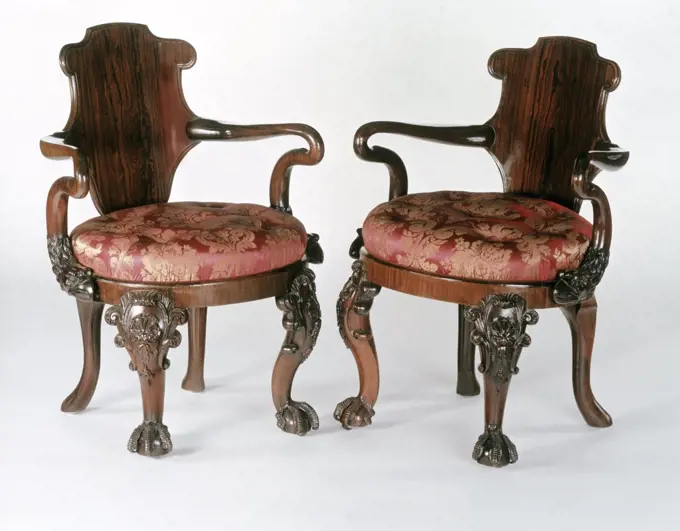
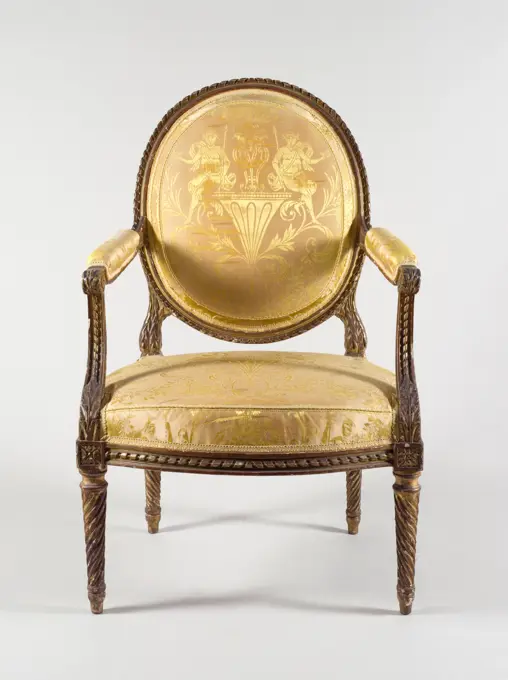
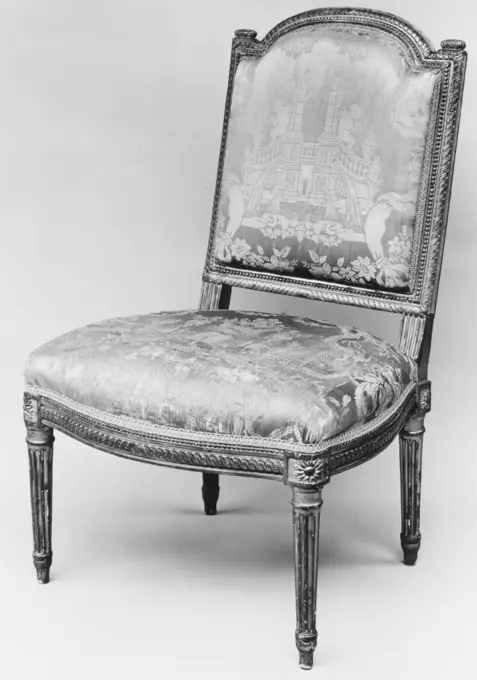
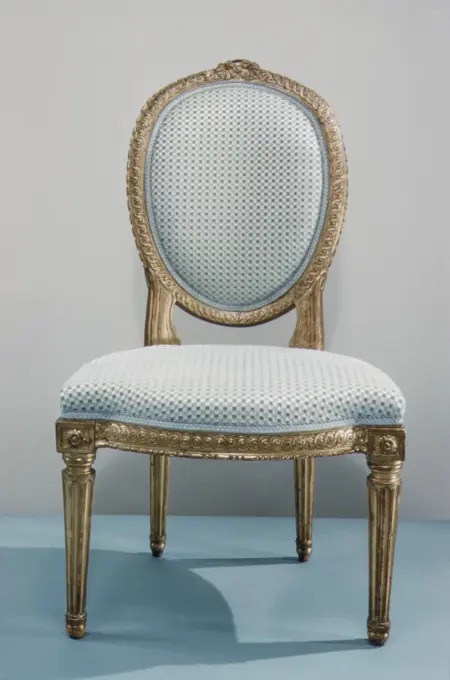
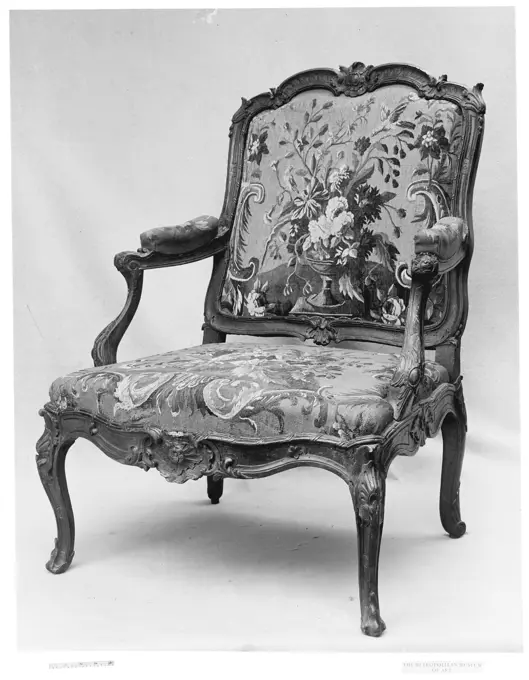
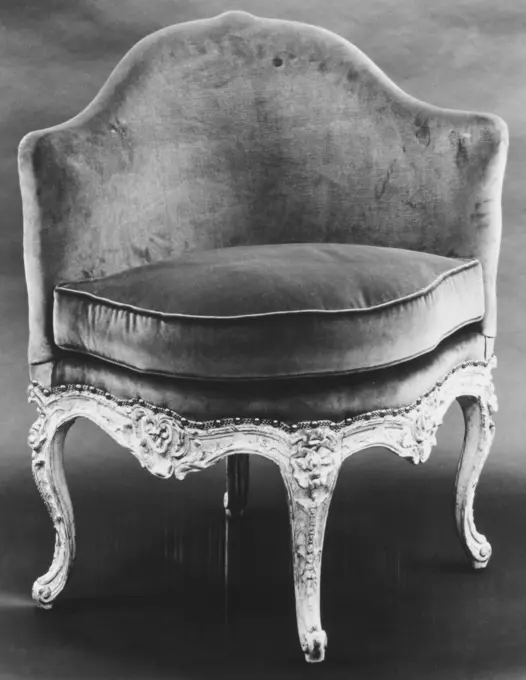
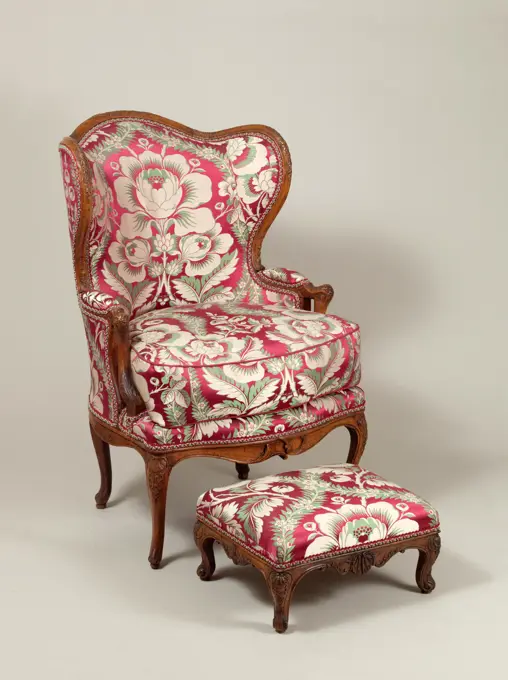
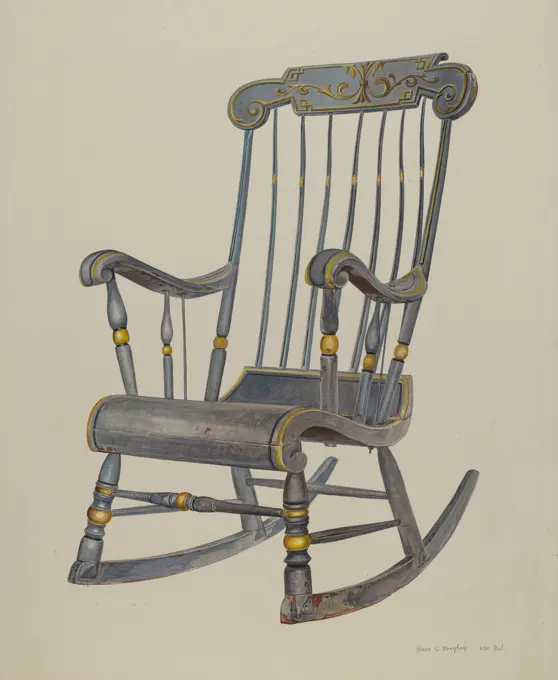
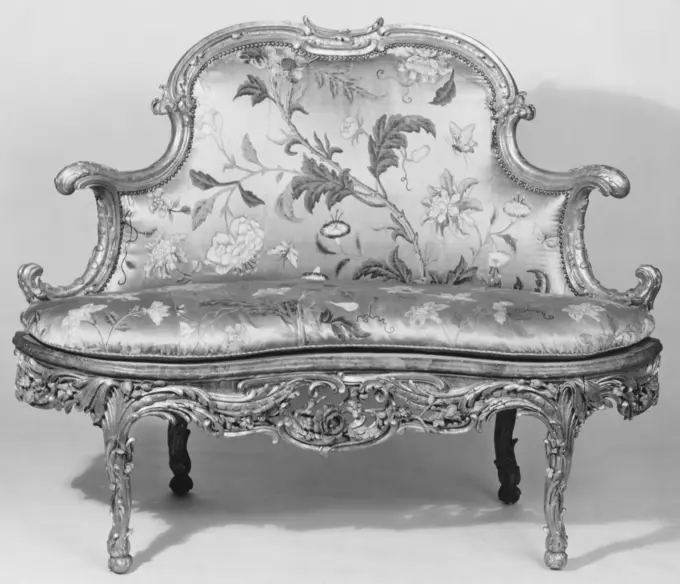
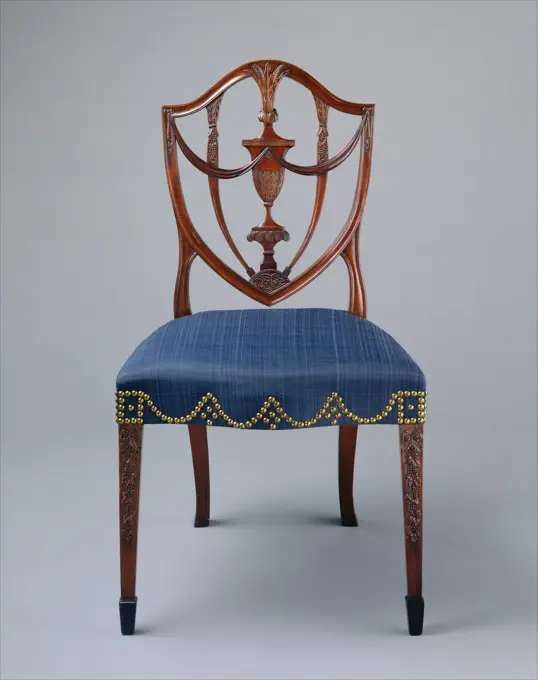
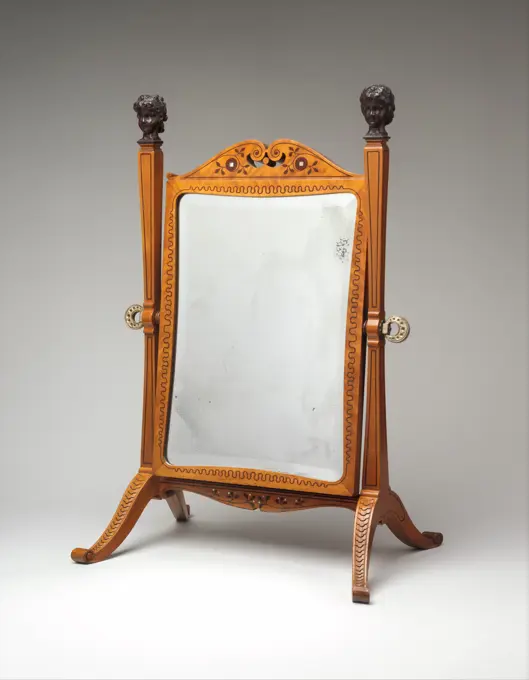
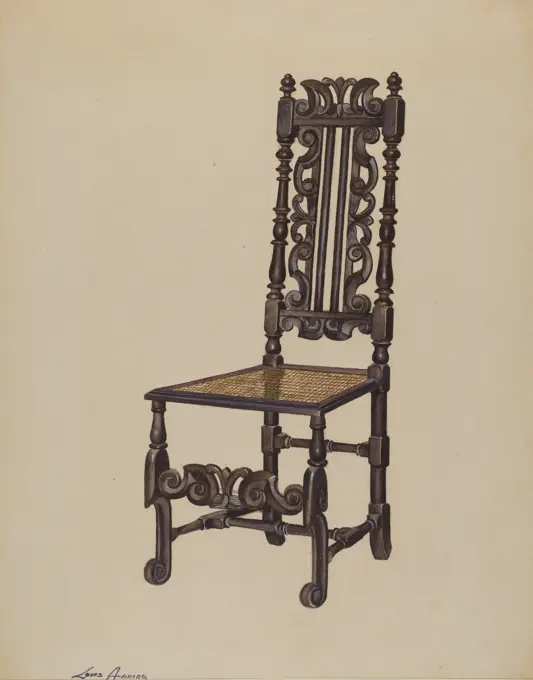
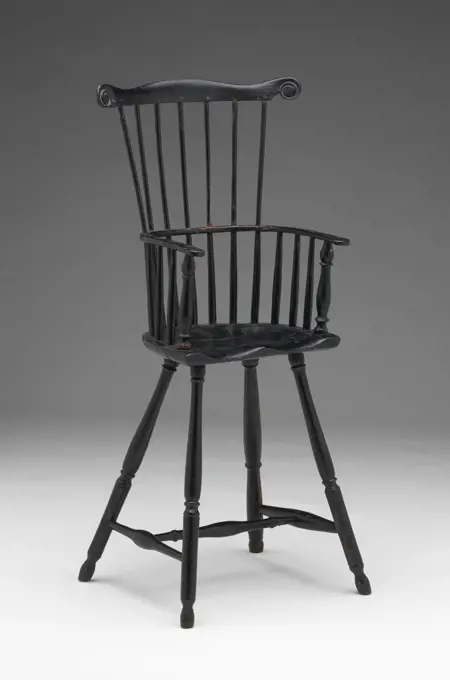
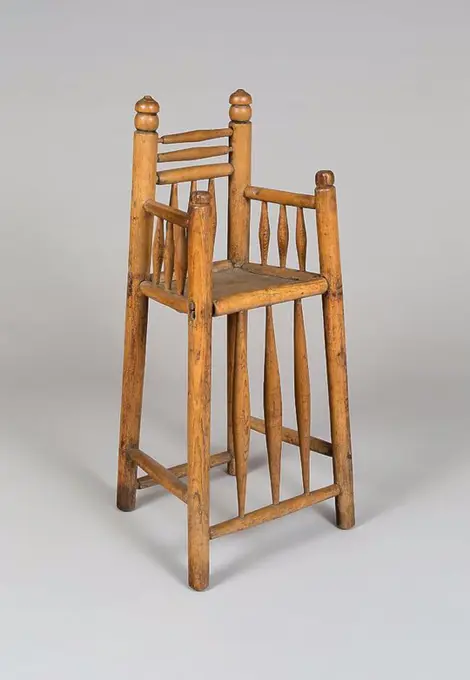
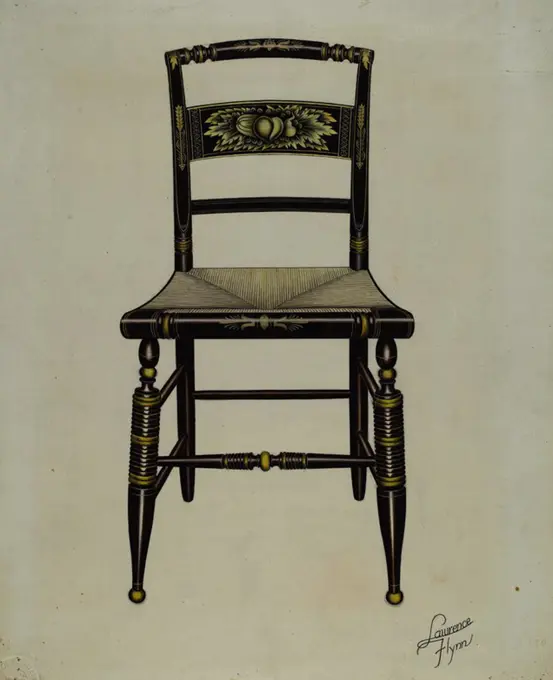
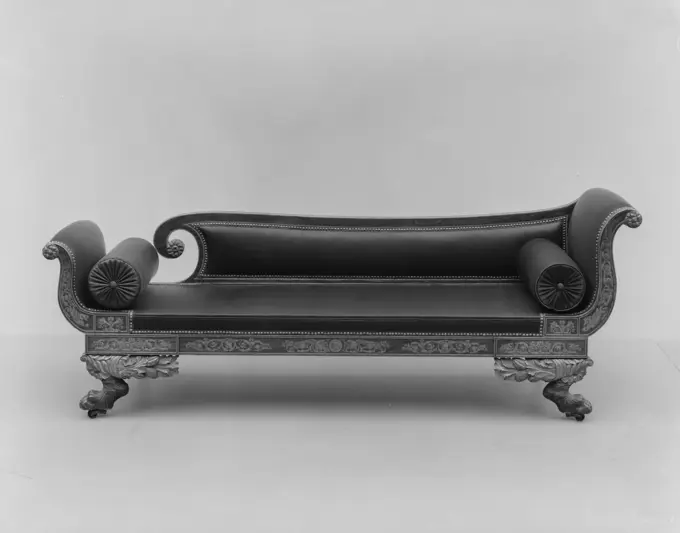
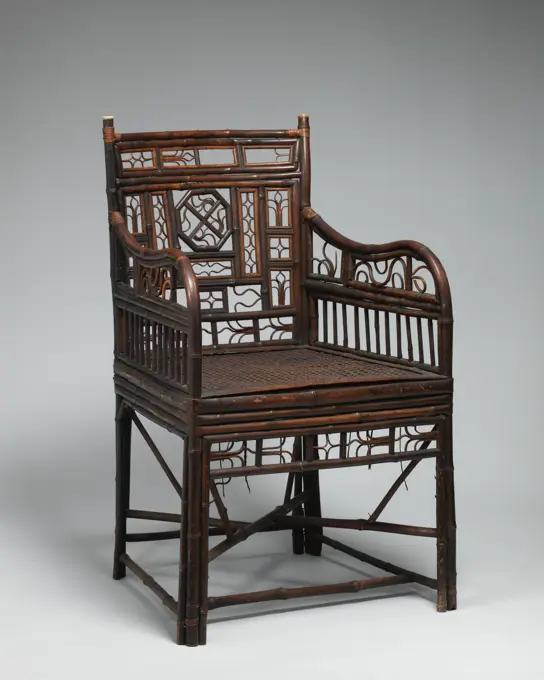
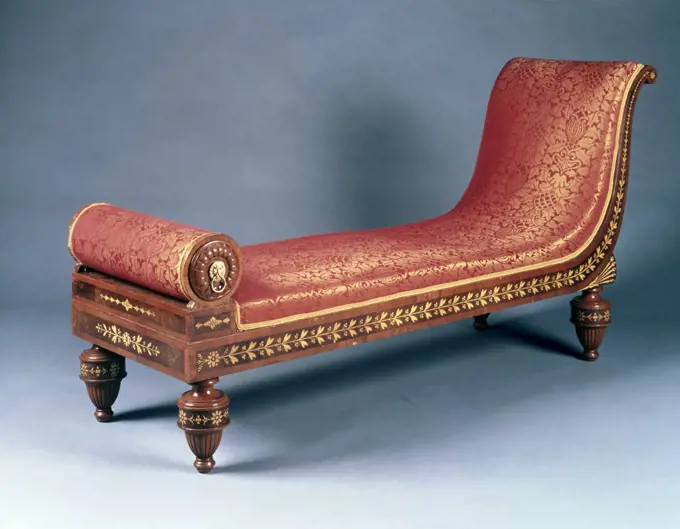
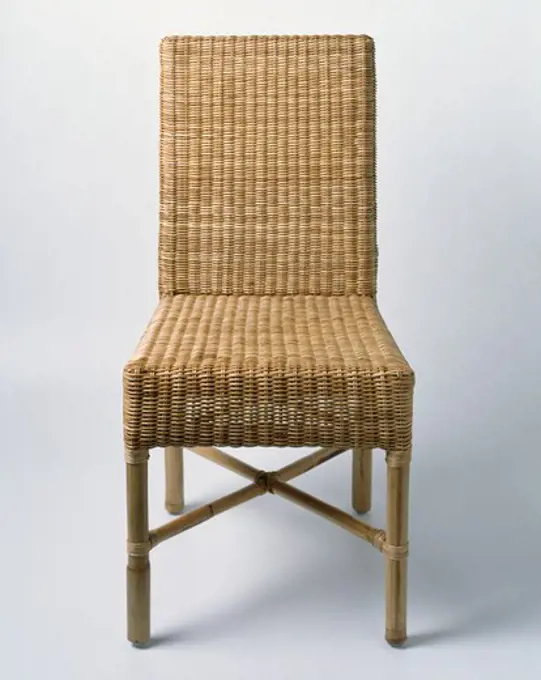
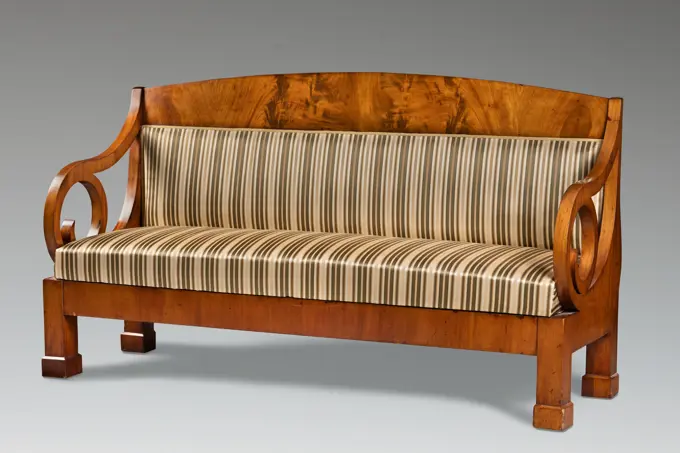
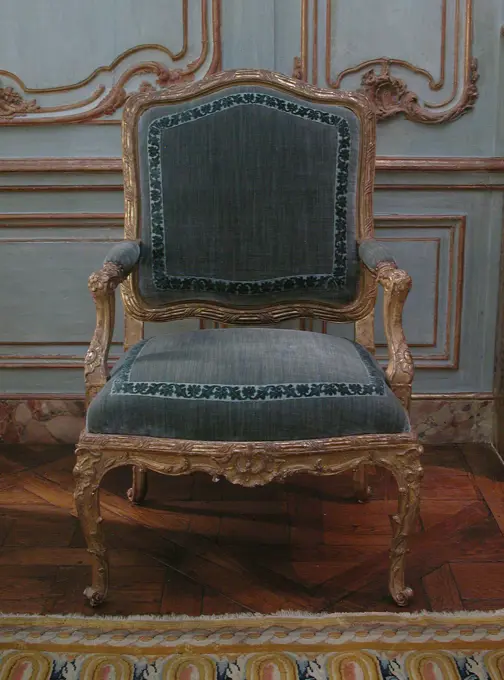
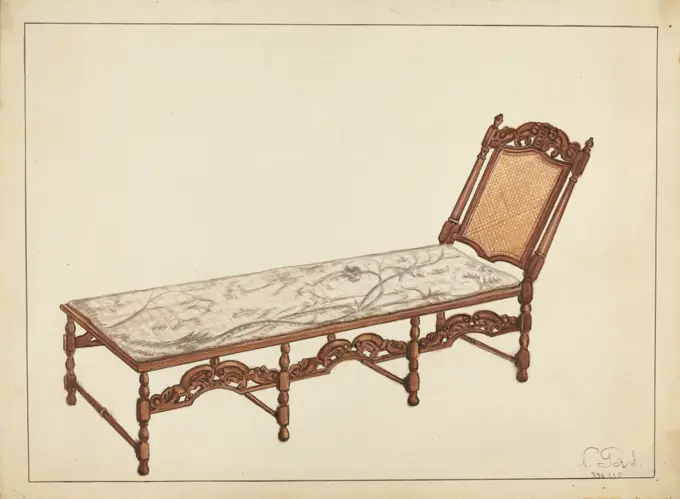
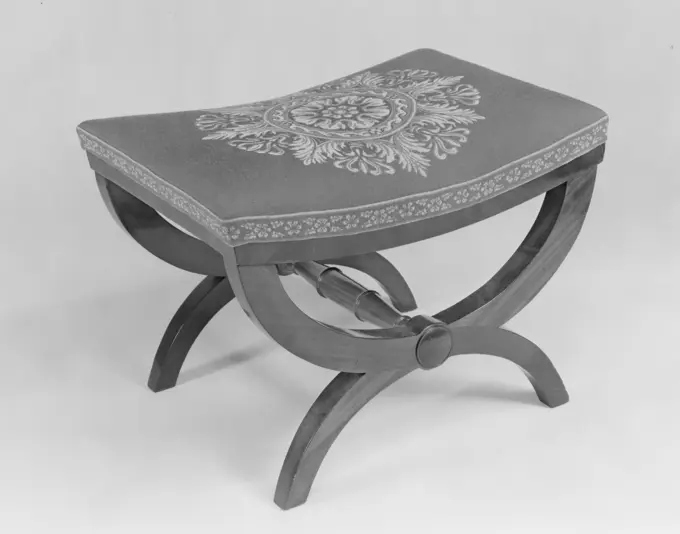
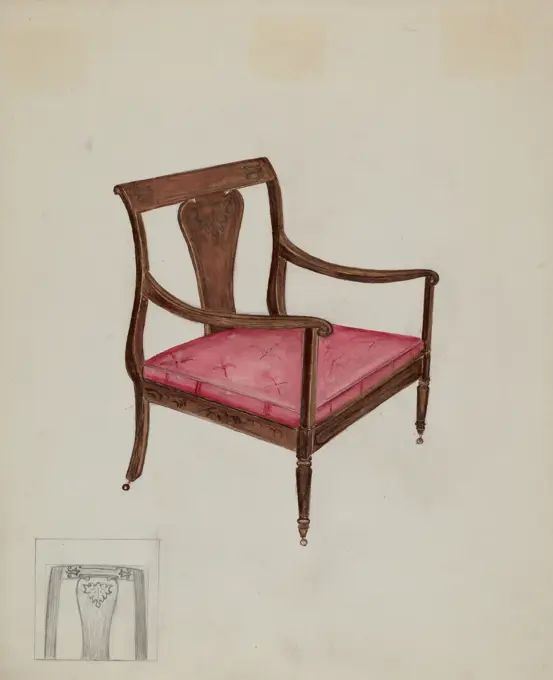
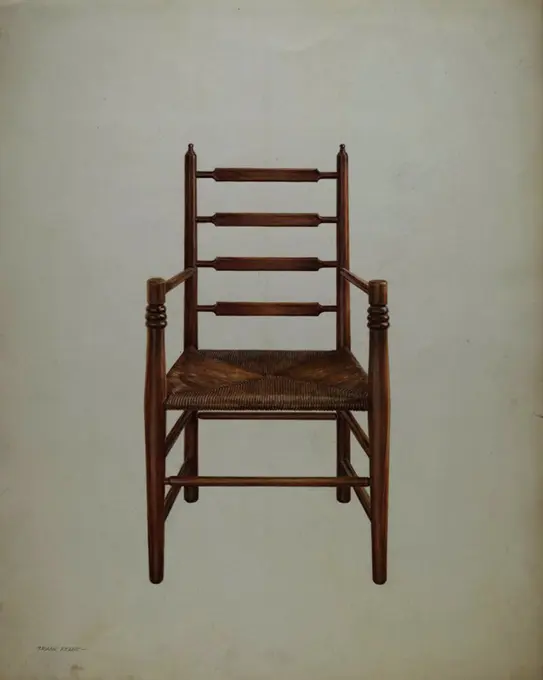
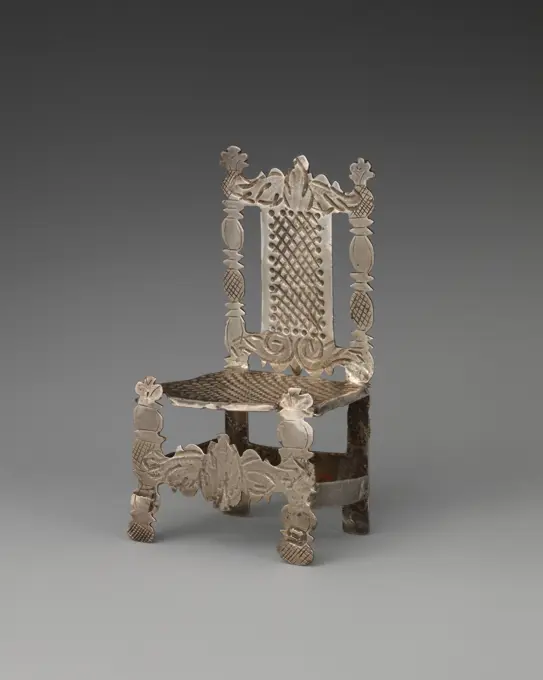
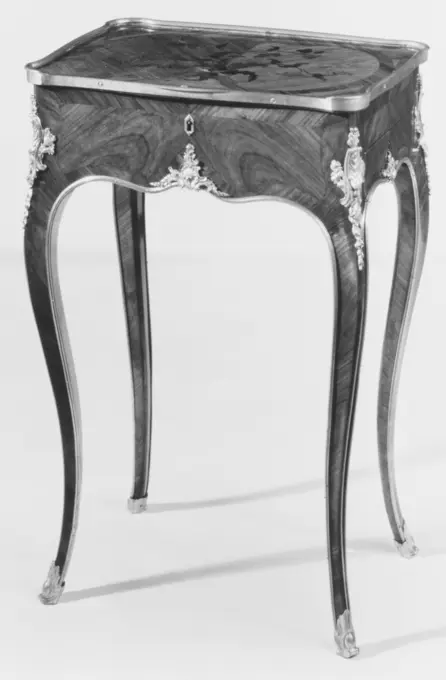
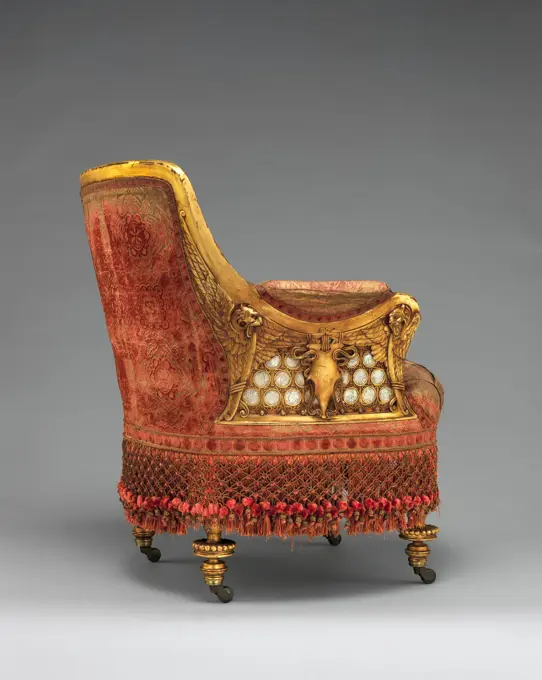
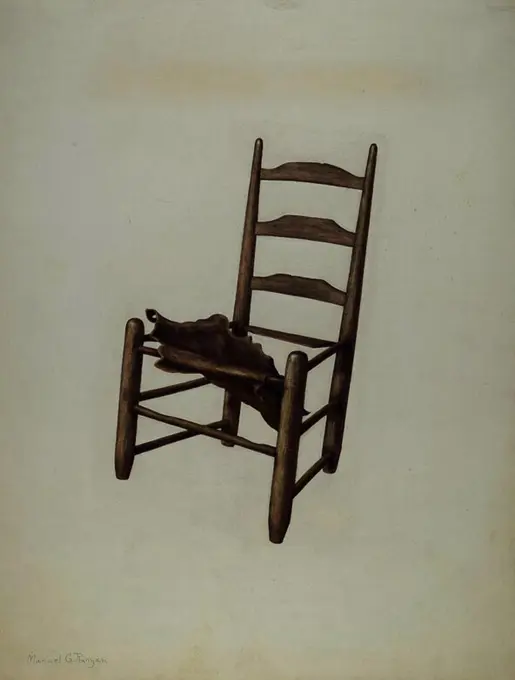
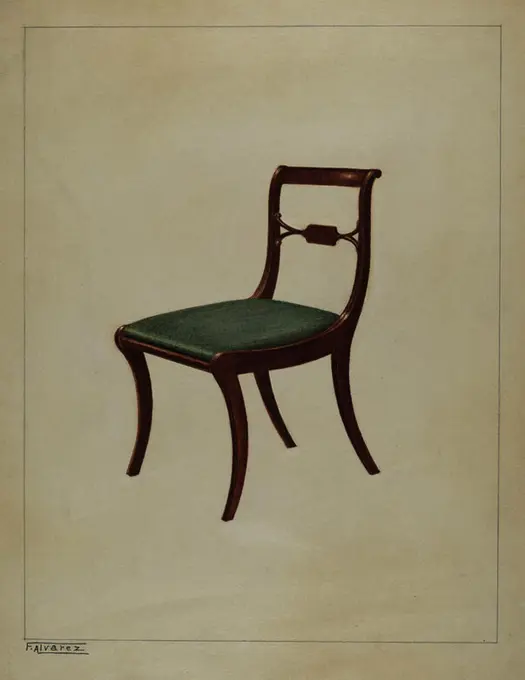
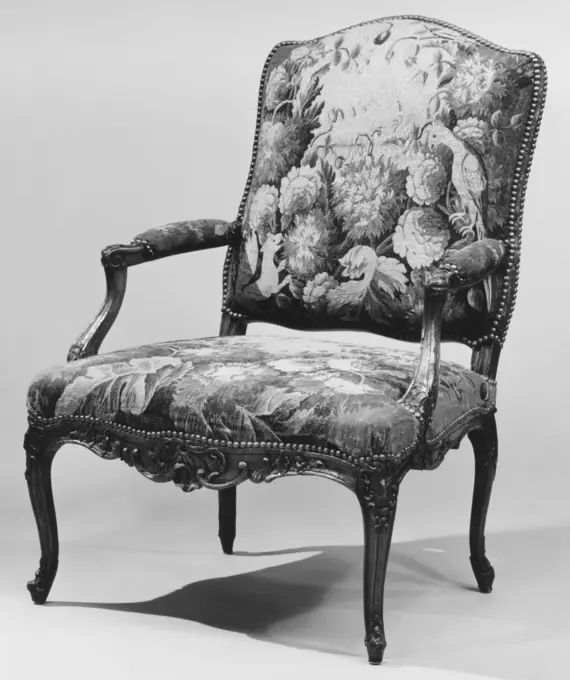
Armchair (one of a set of four) 18th century Tapestry woven at Aubusson. Armchair (one of a set of four) 238005ChairSide chair. Culture: American. Dimensions: 48 3/4 x 25 1/2 x 23 in. (123.8 x 64.8 x 58.4 cm). Maker: Pottier and Stymus Manufacturing Company (active ca. 1859-1910). Date: ca. 1875.This side chair, along with a matching armchair and cabinet, was made for Pottier and Stymus' display at the 1876 Centennial International Exhibition in Philadelphia. This seminal event offered unprecedented exposure to potential patrons and sparked the nation's preference for the Aesthetic style. Founding partner Auguste Pottier then donated the pieces to the Metropolitan Museum as examples of distinguished contemporary craftsmanship.During the late 1870s and early 1880s, New York City emerged as the center for the production of luxury furniture, interior woodwork, and decoration. Companies including George A. Schastey & Co., Herter Brothers, Pottier and Stymus Manufacturing Company, and Herts Brothers flourished during this period of unparalleled financial growth. With showrooms and manufactories locatedNoise (carrier);  16th century (1501-00-00-1600-00-00);Tumors (ornament), renaissance (style), rosettes (ornament), purchase (provenance)Side chair 1775-1800 Marked by Michael Smith. Side chair 1791Furniture, Anonymous, 1700 - 1750 Chair of Notenhout. The sitting window and the back are glued at the front with root nut wood. The sitting window is scalloped and carries a loose -tense pillow with silk upholstery. The chair is on bent legs. The lightly held back is flat and has a symmetrical scalloped circumference. Northern Netherlands wood (plant material). walnut (hardwood). silk Chair of Notenhout. The sitting window and the back are glued at the front with root nut wood. The sitting window is scalloped and carries a loose -tense pillow with silk upholstery. The chair is on bent legs. The lightly held back is flat and has a symmetrical scalloped circumference. Northern Netherlands wood (plant material). walnut (hardwood). silkSide Chair. Dated: 1936. Dimensions: overall: 29.5 x 22.3 cm (11 5/8 x 8 3/4 in.) Original IAD Object: none given. Medium: watercolor, gouache, and graphite on paper. Museum: National Gallery of Art, Washington DC. Author: M. Rosenshield-von-Paulin.Side Chair. Culture: American. Dimensions: 37 x 21 x 18 in. (94 x 53.3 x 45.7 cm). Date: 1795-1810. Museum: Metropolitan Museum of Art, New York, USA.Arm chair, part of a divan de Milieu, Gebroeders Horrix, c. 1852 Arm chair belonging to a set of six arm chairs of mahogany with a triangular base, together forming a round sofa. Blared silk upholstery with passement. The two front legs, the hind legs, rules, struts, armrests and the crowning of the backrest, are bent, profiled and almost all end in a volute. The armresters close the backrest arch -shaped and form a triangular crown that, just like the front line and the swellings of the front legs, exhibits shell -shaped acanthus leaves. The Hague wood (plant material). mahogany (wood). silk Arm chair belonging to a set of six arm chairs of mahogany with a triangular base, together forming a round sofa. Blared silk upholstery with passement. The two front legs, the hind legs, rules, struts, armrests and the crowning of the backrest, are bent, profiled and almost all end in a volute. The armresters close the backrest arch -shaped and form a triangular crown that, just like the front liChairArm chair of walnut with a cladding of gros and petitpoint., Anonymous, c. 1750 - c. 1775 Arm chair (from a pair), with a cladding of gros and petitpoint. The overhoeks placed stretched S-shaped legs end in flat boxing farm and wear decorations of cut acanthus leaf on the swellings. The same motif occurs on the S-shaped bent armrest stars, which support the faintly curved armrests, ending in a volute. Trapezium -shaped sitting window. The upholstery shows birds and a men's and female figure. See: BK-19955-43-B; modern seats; At A: Old also old. Northern NetherlandsNetherlands wood (plant material). walnut (hardwood). textile materials embroidering Arm chair (from a pair), with a cladding of gros and petitpoint. The overhoeks placed stretched S-shaped legs end in flat boxing farm and wear decorations of cut acanthus leaf on the swellings. The same motif occurs on the S-shaped bent armrest stars, which support the faintly curved armrests, ending in a volute. Trapezium -shaped sitting winEarly Victorian Rosewood Open Armchairs Antiques Christie's, London Anonymous, shepherdess to the queen (common name), 1770. carved and painted beech; Garnish: lampas. Carnavalet museum, history of Paris. This shepherdess marks a new step in the evolution of the seat. The still curved feet silhouette is modified by the addition of connection diced in the upper part, arranged at the junction of the lateral and anterior crosspieces. The back -to -back consoles do not yet lead to connection dice. Finally, the measured curve of the support consoles contributes to the general stiffening of the structure, the effect of which is reinforced by the semicircular right file. The whole is decorated with acanthe leaves, ribbons wrapped around a rod and ribbed leaves.Armchair 1750-65 American. Armchair 183Stool;  3. W. 19th century (1850-00-00-1875-00-00);Childs Bow-Back Windsor Side Chair, American hickory, yellow-poplar, maple, 19 3/8 × 10 × 9 3/4 in. (49.2 × 25.4 × 24.8 cm), During the 1780s, when the bow-back Windsor chair was introduced, a change took place in the style of turnings: bamboo turnings replaced the baluster. The turnings of the legs and stretchers of this small Windsor chair reflect the newer style. , Made in United States of America, American, 18th century, FurnitureSofa. Culture: American. Dimensions: 59 x 82 x 34 1/2 in. (149.9 x 208.3 x 87.6 cm). Maker: Julius Dessoir (1801-1884). Date: 1853. Museum: Metropolitan Museum of Art, New York, USA.Jean-Bapiste Lelarge (1743-1802). Archair at the Queen. Beech, around 1780. Paris, Carnavalet museum. This armchair has a sculpted decor on the whole of its structure its torso groove feet are crowned with diced connection with palmette pattern, from which amounts adorned with twisted ribbons and acanthus leaves start; Cuffle cuffs end in scrolls, and the file is supported by two plant patterns; The seat is garnished with a gold color satin with ancient vegetable fountain pattern, on which two male deities rest with a lance and a dove. Armchair at the Queen, Hetre, furniture. Folding the walnut with a leather sitting and back. The easel-shaped legs are connected to the easeless styles by means of a hinge. The legs are on straight, connecting clocks outlined at the bottom ending in lion claws; On the inside they have a sharp-in button at three-quarters of a height. The armrests that pass in the back styles end in volutes with rosettes. At the bottom of the leather back cover silk frills; Leather seat with copper caps.SILLA DE TRES PATAS. Location: UAM / MUSEO ARTES POPULARES. CANTOBLANCO. MADRID. SPAIN.Chair. Culture: American. Dimensions: 37 5/16 x 17 1/16 x 18 1/8 in. (94.8 x 43.3 x 46 cm). Maker: Herter Brothers (German, active New York, 1864-1906). Date: 1877-79.The slender proportions and attenuated stiles of this chair proclaim an awareness of progressive British art furniture, especially that of E. W. Godwin (1833-1886), the British architect and originator of the so-called Anglo-Japanese style. It is often compared with a similar chair designed by H. W. Batley (1846-1932) and displayed by the British firm Collinson & Lock at the Philadelphia Centennial Exhibition of 1876. Herter Brothers' interpretation, with a panel of carved flowers across the back and floating blossoms in marquetry on the crest rail, is distinctly its own, however. Lightweight and linear in conception, ebonized to allude to Japanese lacquer, with ring-turned legs, repeated spindles, and elongated uprights, these chairs abstain from specific European historical references in favor of a new aesthetic deriveSide chair (Chaise à la reine) (part of a set) 1786-87 Jean Baptiste Boulard Various games of cards and chance, such as lansquenet, faro, quadrille, piquet, and cavagnole, had long been popular entertainment at the French court, where the stakes were high and entire fortunes could be won or lost at the gaming table. Reporting to Empress Maria Theresa on March 18, 1777, the Austrian diplomat Florimond-Claude de Mercy-Argenteau declared: "The gambling of the Queen grows more and more unrestrained. The public know that the identical games, strictly prohibited to them by the laws of Paris, are played nightly and to excess by the Queen."1 To accommodate all those who might wish to participate in the play, a large set of furniture consisting of thirty side chairs, six voyeuses, or spectators' chairs, and a fire screen was ordered on August 12, 1786, for Louis XVI's Salon des Jeux (Gaming Room) at the Chateau de Fontainebleau. A label pasted underneath the seats of the Museum's three chairsTwo Armchairs (fauteuills à la reine) and Two Side Chairs (chaises à la reine). UnknownEdna C Rex, Settee  Sofa, c 1937 Settee - SofaSide chair (one of a pair) ca. 1775-80 Jean-Baptiste III Lelarge This side chair with its slightly curved back is known as cabriolets (chaises en cabriolets). Introduced around 1760, their name derives from a newly fashionable light one-horse carriage, called a cabriolet”. The frame of the oval back and seat are carved with interlacing bands or guilloche motifs typical for the neoclassical style. Part of a larger set of seat furniture, these chairs are stamped I.B LELARGE. The menuisier Jean-Baptiste lll Lelarge who became a master in 1775, used the same stamp as his father, Jean-Baptiste ll Lelarge (maitre in 1738) after taking over his workshop in 1771. Jean-Baptiste lll rapidly rose to fame working for patrons in France and abroad.. Side chair (one of a pair) 236122Armchair (Fauteuil) 1700-1735 Aubusson. Armchair (Fauteuil). French. 1700-1735. Carved walnut; Aubusson tapestry upholstery. Aubusson (Manufacture Royale, est. 1665: Manufacture, ca. 1812-present day). Woodwork-FurnitureDesk chair ca. 1740-50 French. Desk chair 206618Anonymous. Confessional chair. Noyer, around 1730. Paris, Carnavalet museum. 50254-13 Confessional, armchair, furniture, floral motif, walnut, furniturePrzeszo Przyszoci unknownAmos C Brinton, Rocking Chair, 1935 1942 Rocking ChairWingChairFurniture set: armchair Wyspiały, Stanis Aw (1869 1907), Sydor, AndrzejUpholstery panels for a settee ca. 1763-64 German, Würzberg Part of a larger set, this remarkable corner settee and its pair, also in the Museum, were commissioned by one of the most powerful figures in eighteenth-century Franconia, Adam Friedrich von Seinsheim (1708-1779). Prince-bishop of Würzburg and, after 1757, also of Bamberg, Seinsheim divided his time between two official residences in those cities and his three summer castles, Veitschöchheim, Werneck, and Seehof.1 Preferring the country to the city, Seinsheim spent about three months a year outside Bamberg, at Seehof, where he enjoyed walking and hunting. He was fond of gardens and did much to embellish the late-seventeenth-century castle and especially its park, where he ordered that a maze, a theater, and a cascade with grotto and trelliswork arcades be constructed.In 1761 he also resumed work on one of the ancillary buildings at Seehof, the Franckenstein Schlösschen. This garden pavilion at the east end of the orangery anSILLA DE ROBLE TALLADO. Author: ANTONIO GAUDI. Location: CASA MUSEO GAUDI. Barcelona. SPAIN.Wooden chair, isolated on white background, with clipping path Wooden chair, isolated on white background, with clipping path Copyright: xZoonar.com/OleksandrxKostiuchenkox 9746988Furniture, Anonymous, c. 1600 - c. 1750 Gildered cut armchair, consisting of Louis-XIV curls and acanthus volutes. The back has one sport and a richly cut upper sill with leaf voltuties. The deeply hold armrests show clock cords. Red satin pillow. Children's toys. Italy (possibly) wood (plant material). linden. gilding (material). satin gilding Gildered cut armchair, consisting of Louis-XIV curls and acanthus volutes. The back has one sport and a richly cut upper sill with leaf voltuties. The deeply hold armrests show clock cords. Red satin pillow. Children's toys. Italy (possibly) wood (plant material). linden. gilding (material). satin gildingArmchair. Dated: c. 1936. Dimensions: overall: 29.3 x 23.1 cm (11 9/16 x 9 1/8 in.) Original IAD Object: none given.. Medium: watercolor and graphite on paperboard. Museum: National Gallery of Art, Washington DC. Author: Agnes Karlin.Armchair; woodOak Cacqueteuse chair, 1904. Artist: Shirley Slocombe.George Loughridge, Chair, Wing, Turned Front Legs, c 1936 Chair, Wing, Turned Front LegsHall Stand (England); Designed by Christopher Dresser (Scottish, 1834 - 1904); Manufactured by Coalbrookdale Company; cast iron, marble, glass, brassSide Chair 1794-99 Attributed to Samuel McIntire This vase-back chair originally was made for the wealthy Salem merchant Elias Hasket Derby. The chair is part of a larger set, two pieces of which are at Bayou Bend (Museum of Fine Arts, Houston), and one in the Karolik Collection (Museum of Fine Arts, Boston). The design of these chairs is an enriched version of plate 2 from George Hepplewhite's "Cabinet-Maker and Upholsterer's Guide" (London, 1788). The carved grape clusters in the lunette at the base of the splat and suspended from bowknots at the top of each leg are a motif traditionally associated with the work of Samuel McIntire, a Salem carver and architect.. Side Chair 1674Dressing glass 1881-82 George A. Schastey & Co. In 1881, Arabella Worsham, then-mistress of railroad magnate Collis P. Huntington, hired George A. Schastey & Co. to decorate her townhouse at 4 West Fifty-Fourth Street in New York City. The resulting artistic interiors would have been considered the height of cosmopolitan style in the early 1880s and were emblematic of Worshams quest to fashion her identity as a wealthy, prominent woman of taste. When Worsham married Huntington in 1884, she sold the house, fully furnished, to John D. and Laura Spelman Rockefeller, who made few subsequent changes to the decorations. Following Mr. Rockefellers death, the house was demolished in 1938, yet some furnishings, large-scale architectural elements, and three interiors were preserved, and the rooms were donated to local museums by John D. Rockefeller Jr. This dressing glass of satinwood and purpleheart is part of the suite (2009.226.1-.4) that furnished Worshams elaborately decorated dressing rRobert WR Taylor, Armchair, 1941 ArmchairSideChairDorothy Johnson, High bottom High back Armchair, c 1939 High-bottom High-back ArmchairSideChairDorothy Johnson, Double Back Chair, c 1939 Double Back ChairSideChairFlorence Choate, Sofa, c 1936 SofaLouis Annino, High Back Side Chair, 1937 High Back Side ChairHigh-Back Windsor HighChair, White oak, sycamore, hickory, 38 3/4 × 14 3/8 × 10 1/4 in. (98.4 × 36.5 × 26 cm), Windsor chairs began to be made in America in the 1740s. They were constructed from a variety of woods, the properties of each suitable for its particular role. Turned members were generally of maple, a hard wood that could be crisply turned. The spindles and crest rails were usually of ash, oak, or hickory—woods with wiry strength that could be easily bent. The seats were most often of pine or yellow poplar—soft woods that could easily be shaped. The chairs were finished with paint to mask the different figures and colors of thewoods. , Made in Pennsylvania, American, 18thcentury, FurnitureHigh Chair. American; Dorchester area, Massachusetts. Date: 1640-1670. Dimensions: 92.7 × 29.5 × 31.1 cm (36 1/2 × 11 5/8 × 12 1/4 in.). Silver maple. Origin: Dorchester. Museum: The Chicago Art Institute, Chicago, USA.Hitchcock Chair. Dated: 1936. Dimensions: overall: 33.6 x 27.1 cm (13 1/4 x 10 11/16 in.) Original IAD Object: none given. Medium: watercolor, gouache, colored pencil, graphite and pen and ink on paper. Museum: National Gallery of Art, Washington DC. Author: Lawrence Flynn.Close-up of a Table psyche, ItalySofa 1810-20 Attributed to the Workshop of Duncan Phyfe Scottish Pieces of sofa-like furniture with scrolled ends, one higher than the other, were called "Grecian couches" in the early nineteenth century, when they were being made. In 1800 the French artist Jacques-Louis David (1748-1825) had painted Mme Récamier reclining on a similar couch; the portrait became so famous that such couches are sometimes called "récamiers" after her. The frame of this example, painted and grained to simulate rosewood, is decorated with freehand gilded designs of eagles, foliate scrolls, and cornucopias, imitative of ormolu mounts.. Sofa. American. 1810-20. Maple. Made in New York, New York, United StatesSide chair ca. 1780-85 Bovo. Side chair 206620Side Chair. Dated: 1935/1942. Medium: watercolor, graphite, and gouache on paperboard. Museum: National Gallery of Art, Washington DC. Author: CARL WEISS.Chair;  around 1725 (1720-00-00-1730-00-00);Armchair late 18th century probably Chinese. Armchair. probably Chinese. late 18th century. Bamboo, rattan, ivory. Woodwork-FurnitureBiedermeier Mahogany, Plum Pudding Mahogany Bird's Eye Maple and Marquetry Day Bed Antiques-Furniture Christie's Images, London, EnglandArmchair. England. Date: 1760-1770. Dimensions: 104.1 × 82.6 × 73.7 cm (41 × 32 1/2 × 29 in.). Gessoed and gilt beechwood, modern upholstery. Origin: England. Museum: The Chicago Art Institute, Chicago, USA.Vintage classical style Chair in white roomSILLON DE TERCIOPELO ROJO. Location: MUSEE D'ARTS DECORATIFS. MADRID. SPANIEN.Close-up of wicker dining-chairOld vintage leather classic armchair isolated on white backgroundUpholsteredarmchairSettee. unknown, authorSide chair, 18th century, 45 3/4 x 23 1/2 x 22 in. (116.21 x 59.69 x 55.88 cm), Pear wood, Italy, 18th centurySofa. unknown, creatorArmchair (one of a pair) ca. 1730 French Carved and gilded frame; flat square back with serpentine sides and slightly arched serpentine top and lower rail, all carved with reeded molding clasped by acanthus leaves; supported above seat rail on short, straight struts pounced with diamond shape; padded arms on serpentine supports set back from fore legs and carved at the top with a floral rosette and at the lower end with a rococo shellwork cartouche; serpentine seat rail carved on upper border with reeded molding clasped by acanthus leaves; shell cartouches carved at center of front and side rails and above the knee of each cabriole fore leg; seat rails and legs pounced with diapered ground and carved with scrolling foliage at edges of rails and fore legs; rear legs carved at top and bottom with acanthus scroll; all four legs terminate in scrolled foot on short circular boss.. Armchair (one of a pair). French. ca. 1730. Gilded beech. Woodwork-FurnitureRockingChairNicholas Gorid, Day Bed, 1935 1942 Day BedTaboret ca. 1837 Attributed to Workshop of Duncan Phyfe Scottish In the early nineteenth century, designers and furniture makers embraced a revival of Classical prototypes from ancient Greek and Roman architecture and decorative arts, like this taboret (or stool). The curule form, or ogee-crossed stretcher base, plays on a Classical folding stool (sella curulis) often used by Roman magistrates which was popularly adapted by nineteenth-century French and English designers. Designs for taborets with curule bases appear in well-known publications from the period like Pierre de La Mésangère's Collection de Meubles et Objets de Goût (1820-1831) and the London fashion journal, Ackermans Repository of Arts.This taboret is part of an expansive suite of seating furniture attributed to the workshop of cabinetmaker Duncan Phyfe (see 66.221.1-.10 and 1972.264.1-.2). It was made to furnish the New York City townhouse, belonging to the lawyer Samuel A. Foot, located at 678 Broadway which had been cHickory Chair. Dated: 1941. Dimensions: overall: 50.9 x 38.1 cm (20 1/16 x 15 in.) Original IAD Object: none given. Medium: watercolor, colored pencil, and graphite on paperboard. Museum: National Gallery of Art, Washington DC. Author: E. J. Reynolds.American 20th Century, Arm Chair, 1935 1942 Arm ChairWalnut chair inlaid with marquetry, 1905. Artist: Shirley Slocombe.Rex F Bush, Early American Chair, c 1936 Early American ChairDrawing, Sofa and Chair in blue fabric; Designed by W. Kimbel; USA; 1984-124-25-124Chair, Pine with Rush Seat. Dated: c. 1939. Dimensions: overall: 50.4 x 40.1 cm (19 13/16 x 15 13/16 in.) Original IAD Object: 39"high, back; 20"wide, front; 18"deep. See data sheet for dets.. Medium: watercolor, gouache, colored pencil, and graphite on paperboard. Museum: National Gallery of Art, Washington DC. Author: Frank M Keane.William Paul Childers, Chair, 1935 1942 ChairMiniature chair (one of four) (part of a set) 1690-91 Probably George Manjoy British. Miniature chair (one of four) (part of a set). British, London. 1690-91. Silver. Metalwork-Silver-MiniatureDesigns for Three Chairs early 19th century Anonymous, British, 19th century British. Designs for Three Chairs 386768Folding armchair (sedia a Savonarola type) 15th century (textile); 19th century (chair, with various earlier parts) Italian. Folding armchair (sedia a Savonarola type) 460823Pair of Low Back Armchairs, late 17th century, 35 x 22 1/2 x 18 in. (88.9 x 57.15 x 45.72 cm), Huang-hua-li hardwood, China, 17th centuryChair. unknown, creatorCharles-François Normand. Voltaire mortuary chair. Beech, around 1775. Paris, Carnavalet museum. On the reverse of tablets, plant decorations and flowers; On their sides, flowery fines. Mortuary armchair, stretch, furniture, 18th century, furnitureWork and writing table ca. 1755-60 Bernard II van Risenburgh This small work and writing table by Bernard II van Risenburgh is made of oak veneered with tulipwood and end-cut kingwood, and mounted with gilt bronze. The hinged top opens to reveal a partitioned recess divided into three sections. A separate drawer opens on the right side of the table, which contains a narrow compartment with a silvered metal inkwell, a trough for a sponge, and a box for sand to blot up excess ink. Although not nearly as ornate as the Asian-style lacquered corner cabinets produced by van Risenburgh in the museums collection (1983.185.2a, b), this piece demonstrates the persistent Rococo aesthetic found throughout the master cabinetmakers work, and his care in coordinating asymmetrical gilt-bronze mounts with the serpentine outline of the small table.. Work and writing table 206603Armchairs with grape harvest tapestry. Boucher, François (French, 1703-1770) (designed after) painter unknown Tapestry Materials/Techniques: unknown Culture: French Weaving Center: Aubusson Ownership History: Jacques Seligmann & Co. purchased from Mme Vermaut, 5/2/1927; sold 7/1930, on their New York premises. Related Works: Panels in set: GCPA 0238830-0238831in  philippines old dirty terrace whith rocking chair empty Three chairs, Anonymous, After Victor Joseph Quétin, 1832 - 1877 print Three seats. Print from 39th Livraison.  paper  seating furnitureChair. Dated: 1941. Dimensions: overall: 35.7 x 26.6 cm (14 1/16 x 10 1/2 in.) Original IAD Object: 38"high; 15"x18"seat. Medium: watercolor, colored pencil, and graphite on paper. Museum: National Gallery of Art, Washington DC. Author: Robert W. R. Taylor.White Vintage retro style Chair with lampArmchair 1881-82 Herter Brothers William H. Vanderbilt, son of Cornelius Commodore” Vanderbilt, inherited a vast fortune and a lucrative transport business, which he expanded exponentially, becoming one of the wealthiest men in America. In 1879, to mark his elevated social and economic status, he built a mansion that spanned an entire city block on Fifth Avenue, between Fifty-First and Fifty-Second Streets. He commissioned Herter Brothers, one of the premier cabinetmaking firms in New York City, to decorate and furnish his home. In devising distinct decorative schemes for each room of the mansion, Herter Brothers drew inspiration from a wide range of historical styles and utilized expensive, exotic materials.The house’s original furnishings were dispersed when the residence was redecorated between 1915 and 1916, and at the time of its demolition in 1946. Many of these items have come to light only in recent years.Perhaps the most remarkable discovery from the drawing room is this ladyHandmade Chair - Rawhide Seat. Dated: c. 1939. Dimensions: overall: 44.6 x 35.2 cm (17 9/16 x 13 7/8 in.) Original IAD Object: Height, back-58"; 19"wide. See data sheet for dets.. Medium: watercolor, colored pencil, and graphite on paper. Museum: National Gallery of Art, Washington DC. Author: Manuel G. Runyan.Side Chair. Dated: c. 1937. Dimensions: overall: 28.9 x 22.3 cm (11 3/8 x 8 3/4 in.) Original IAD Object: none given. Medium: watercolor, colored pencil, graphite and pen and ink on paperboard. Museum: National Gallery of Art, Washington DC. Author: Francisco Alvarez.Main shot of the lit à la polonaise, anonymous, c. 1775 Main shot from bed. France wood (plant material). walnut (hardwood). beech (wood). iron (metal). silk. satin. copper (metal). paint (coating) cutting / damask Main shot from bed. France wood (plant material). walnut (hardwood). beech (wood). iron (metal). silk. satin. copper (metal). paint (coating) cutting / damask"Retombante" Stool. Designer: Émile-Jacques Ruhlmann (French, Paris 1879-1933 Paris). Dimensions: H. 22 1/4, W. 25 1/2, D. 18 3/4 in. (56.5 x 64.8 x 47.5 cm). Date: ca. 1916-18.The model name refers to this stool's unusual shape. Its minimal sloping back support--really just an extension of the unusually deep seat--gives the impression that anyone sitting too far back might easily fall off. The legs lend a somewhat anthropomorphic aspect to the piece, accentuated by the velvet upholstery imitating fur. Museum: Metropolitan Museum of Art, New York, USA.Beautiful wooden stool with leather and rivet supports.Designs for Two Chairs. Artist: Charles Hindley and Sons (British, London 1841-1917 London). Dimensions: sheet: 10 x 14 1/4 in. (25.4 x 36.2 cm). Date: 1841-84. Museum: Metropolitan Museum of Art, New York, USA. Author: Charles Hindley and Sons.