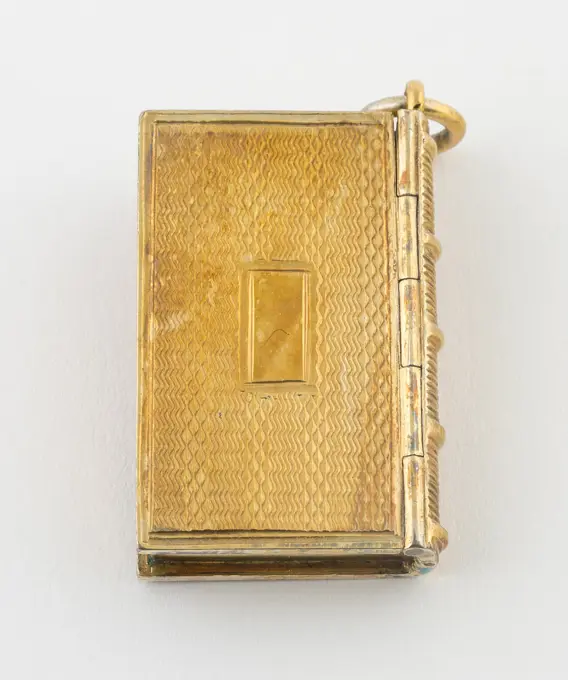
Decorative Chests and Boxes

A variety of intricate chests and boxes, featuring distinctive designs, craftsmanship, and materials, reflecting historical styles from different cultures.
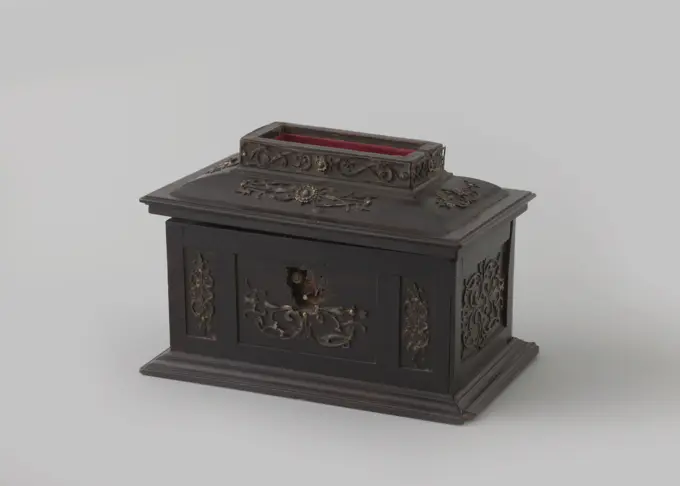
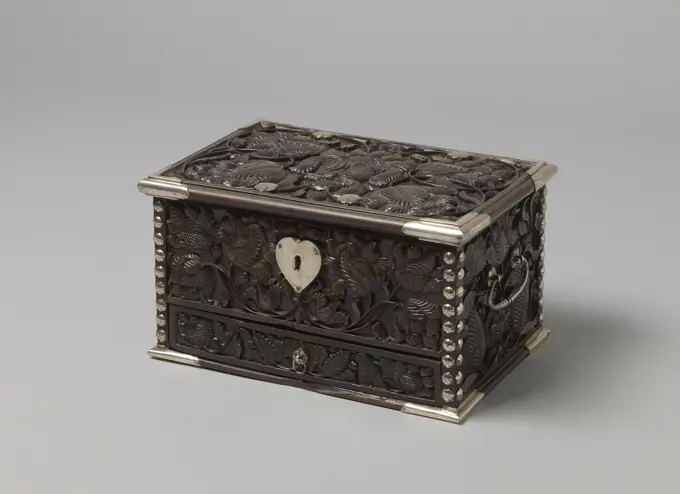
Elongated box of ebony with ornaments of silver, anonymous, 1600 - 1699 Kist, elongated, from ebony with silver ornaments. Key is missing. Netherlands (possibly) ebony (wood). silver (metal) Kist, elongated, from ebony with silver ornaments. Key is missing. Netherlands (possibly) ebony (wood). silver (metal)
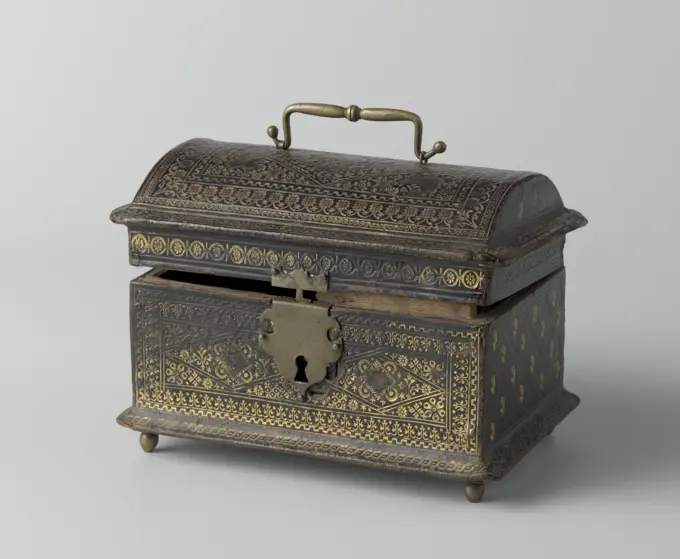
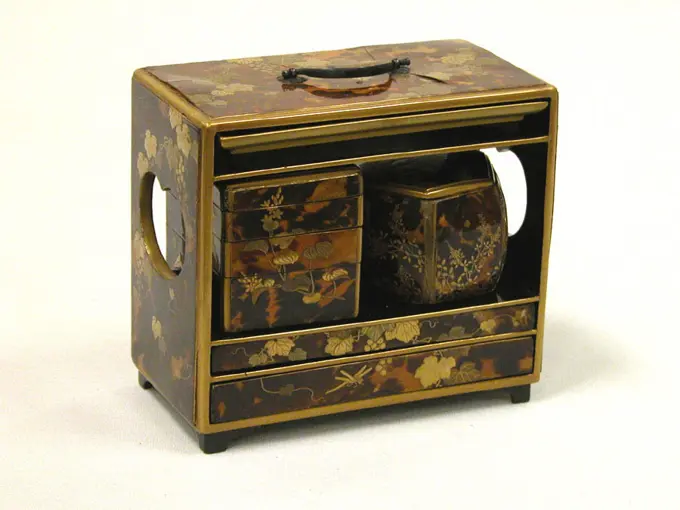
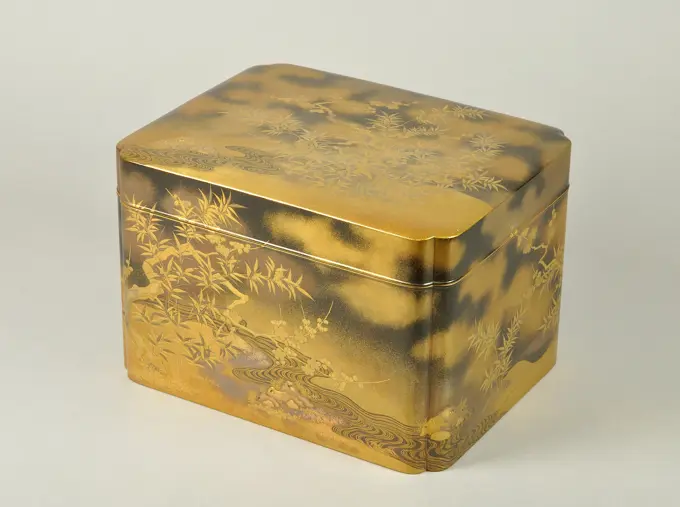
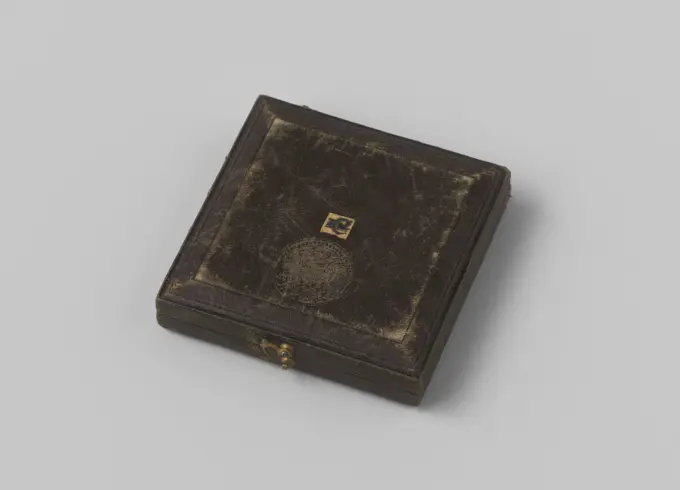
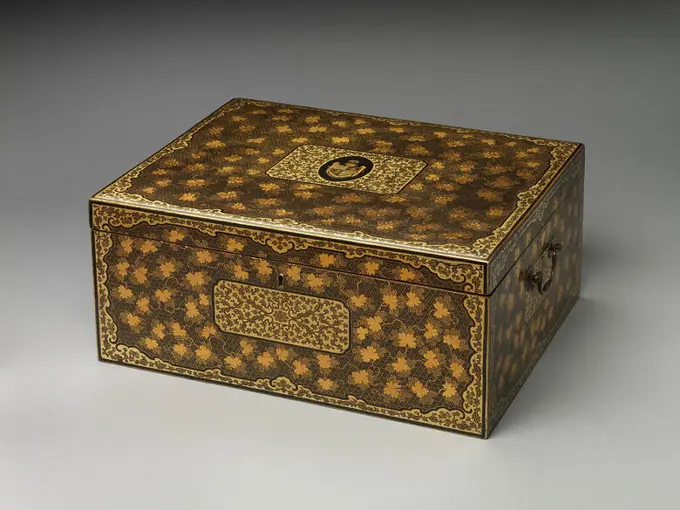
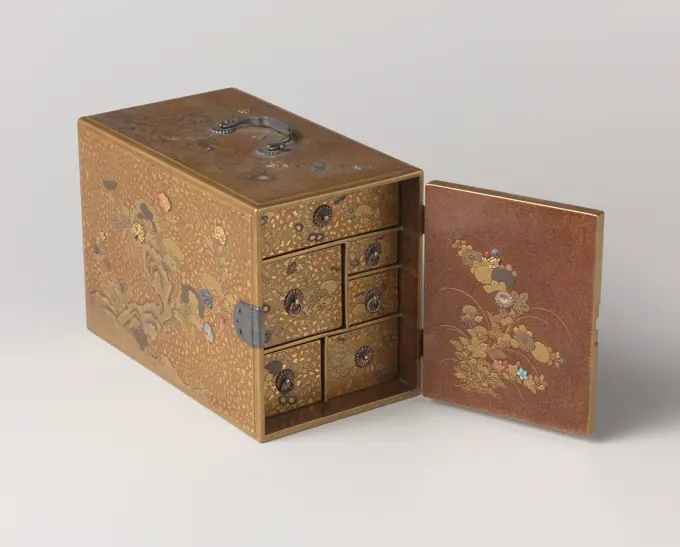
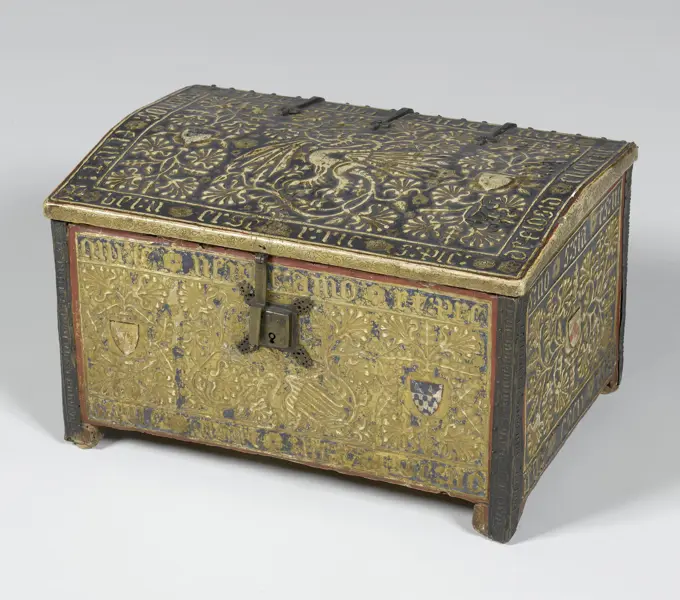
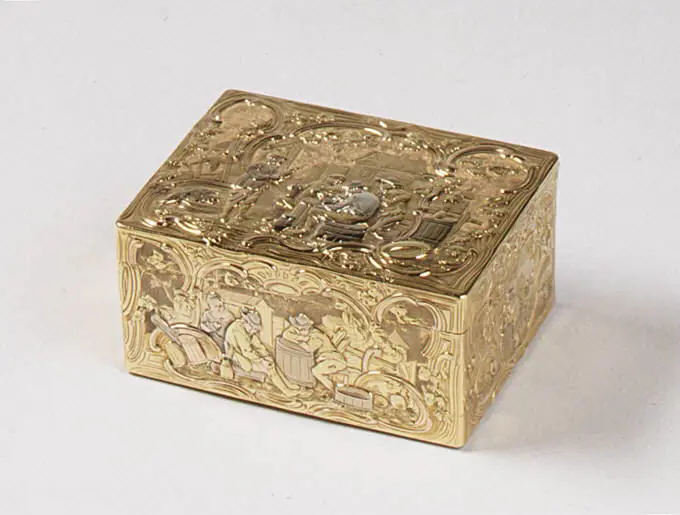
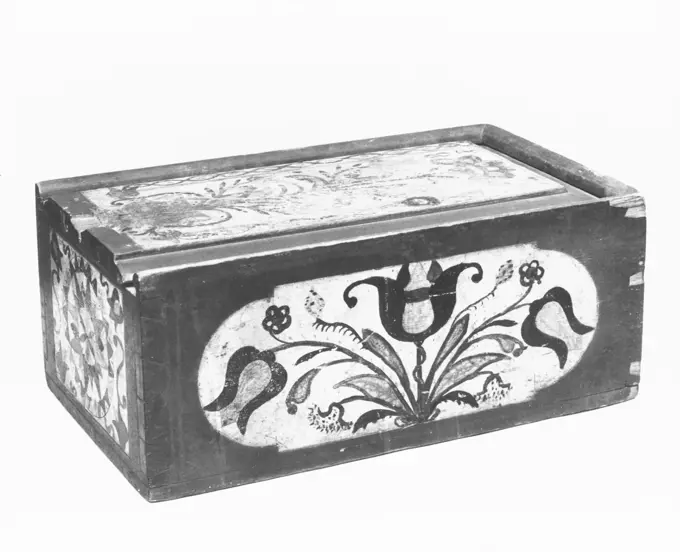
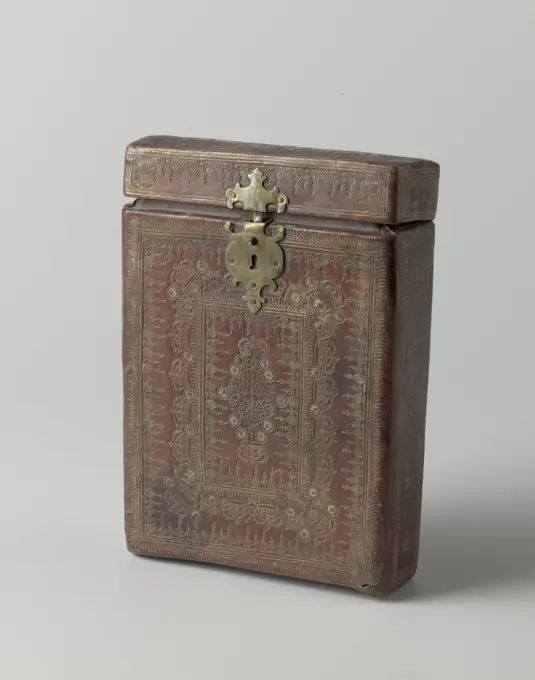
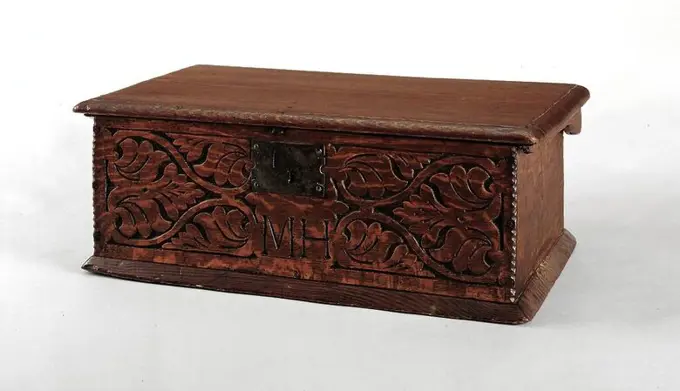
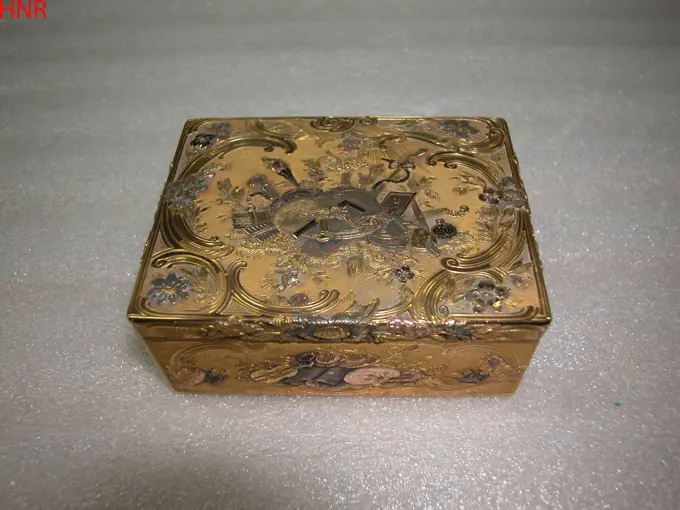
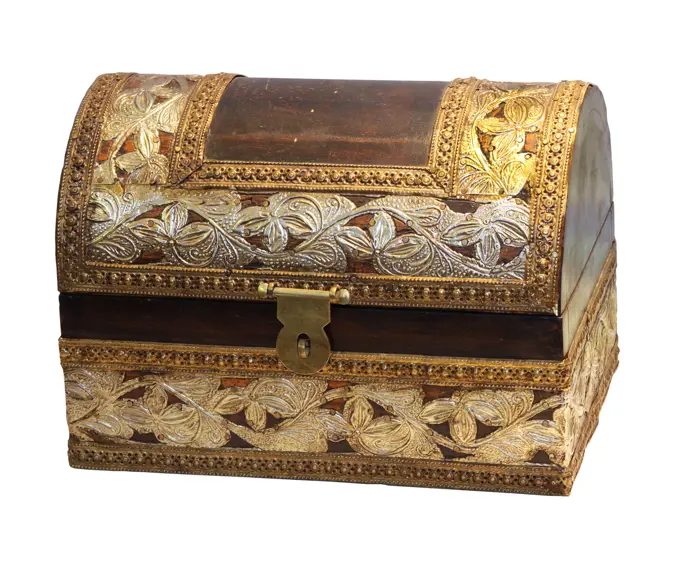
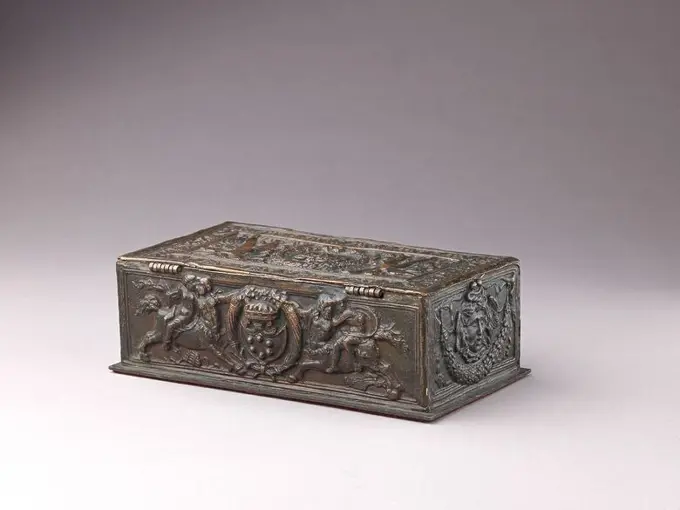
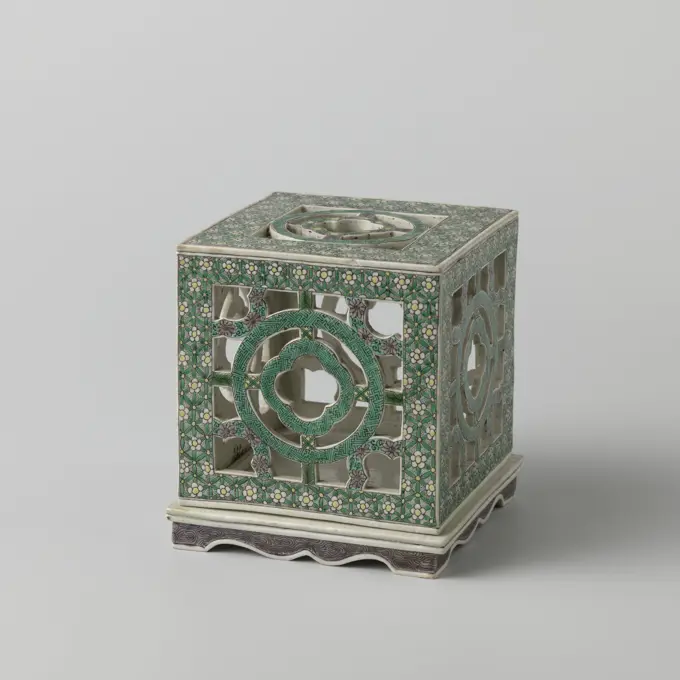
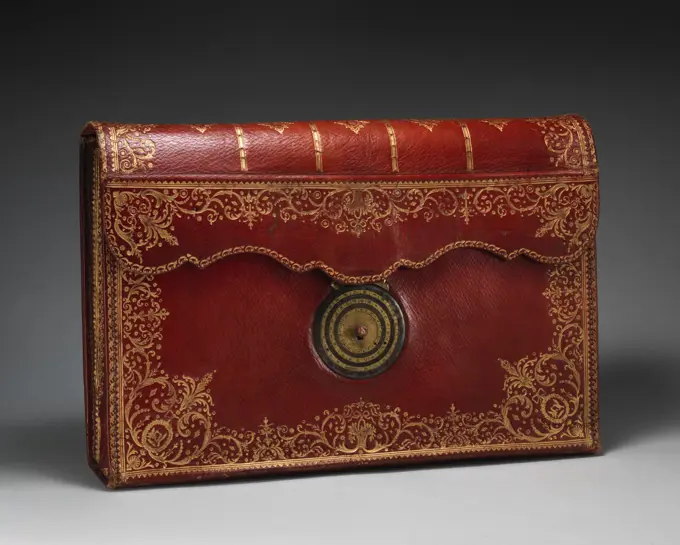
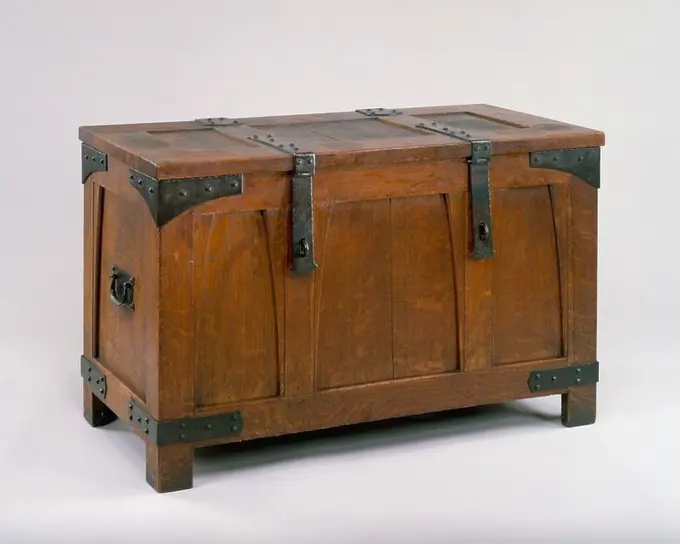
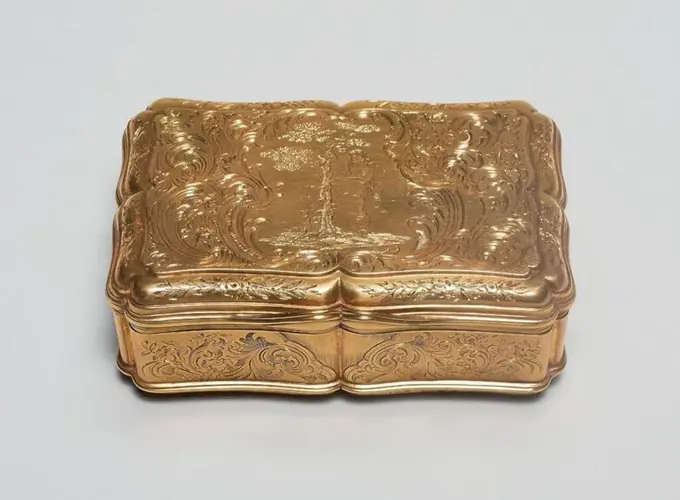
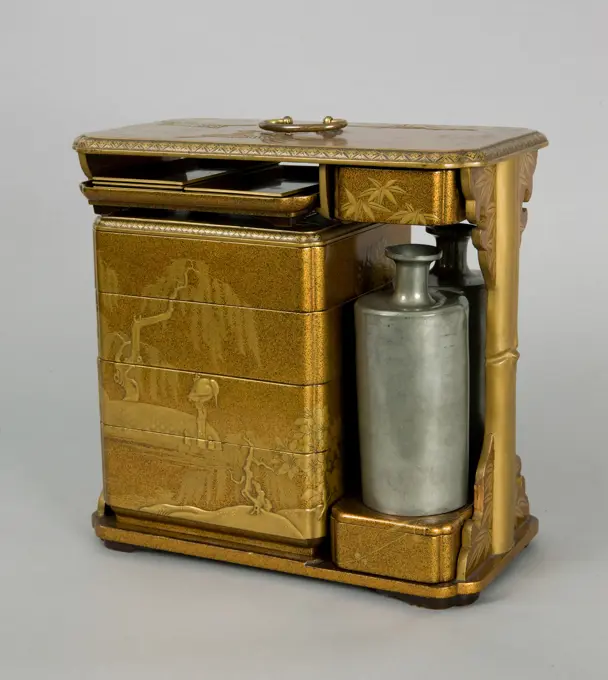
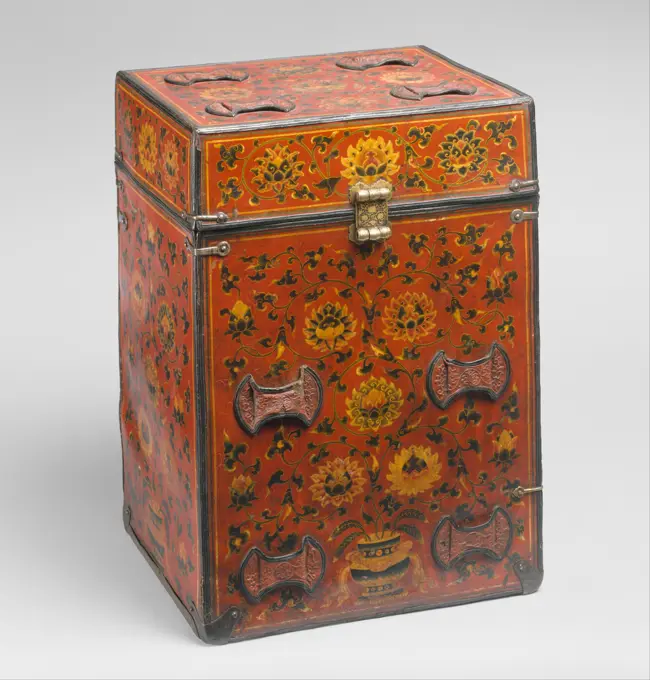
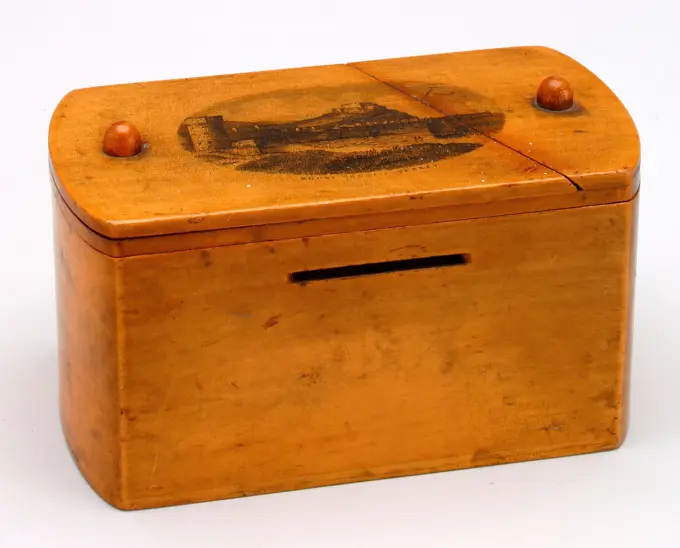
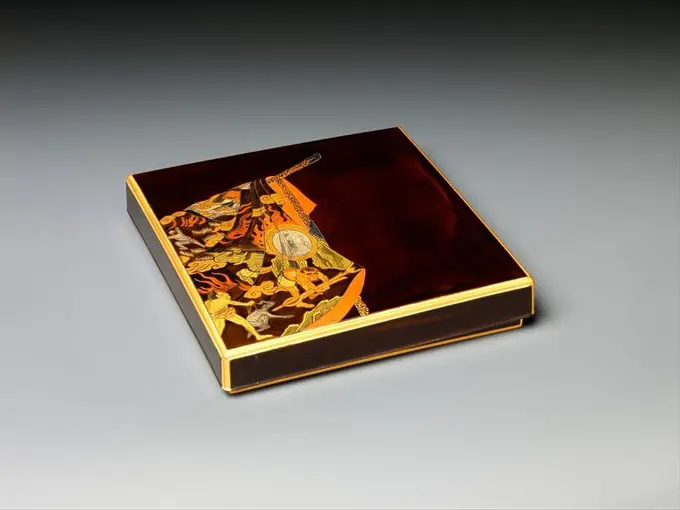
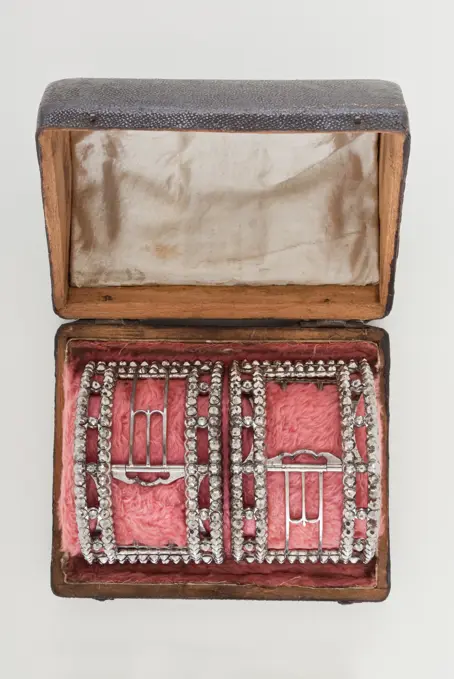
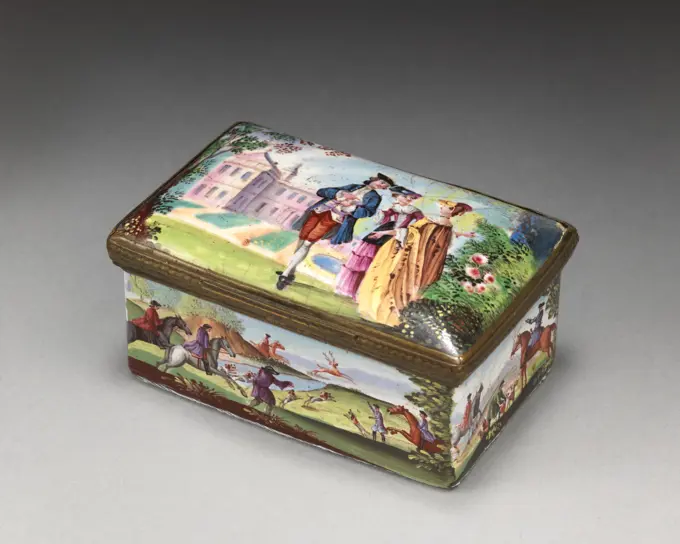
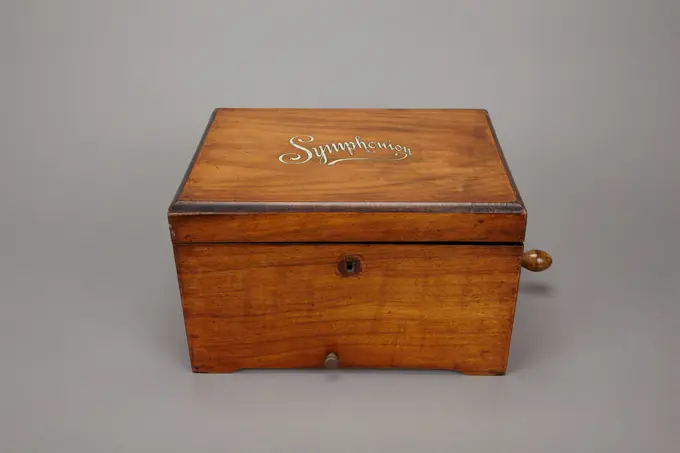
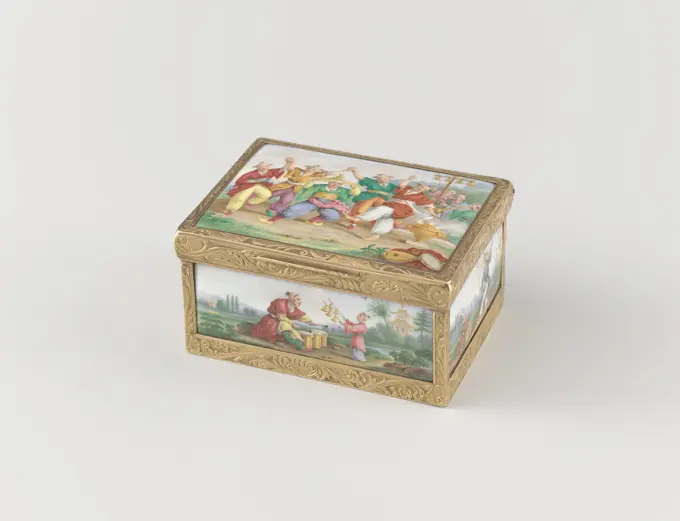
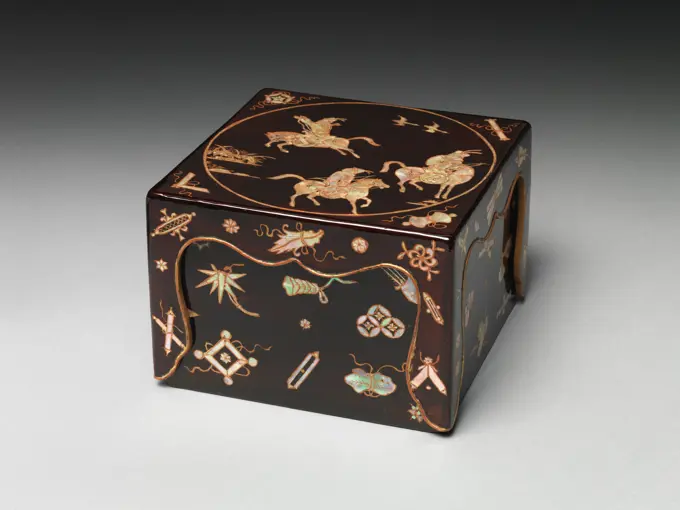
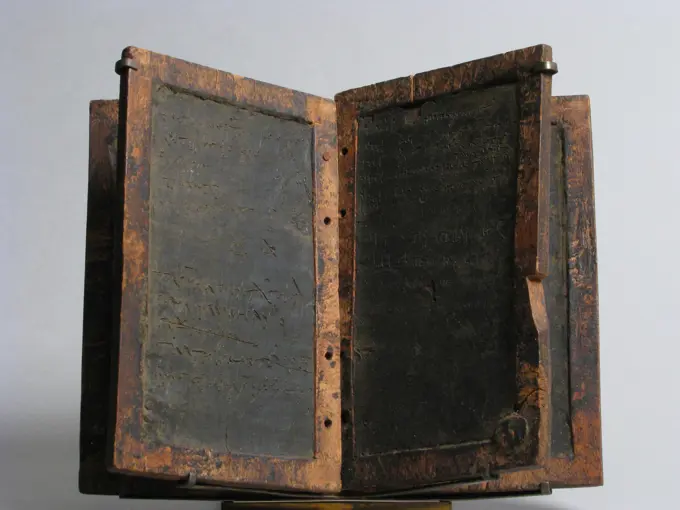
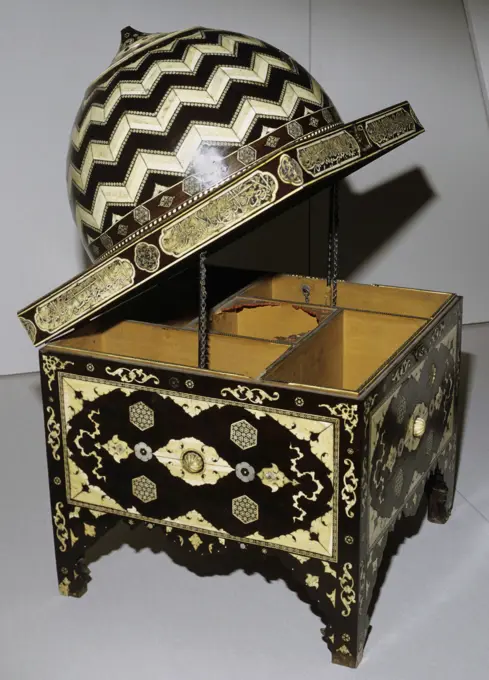
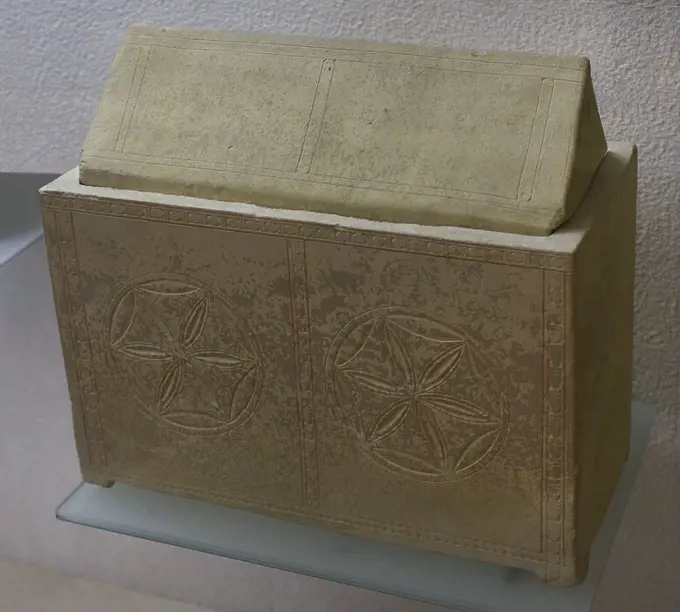
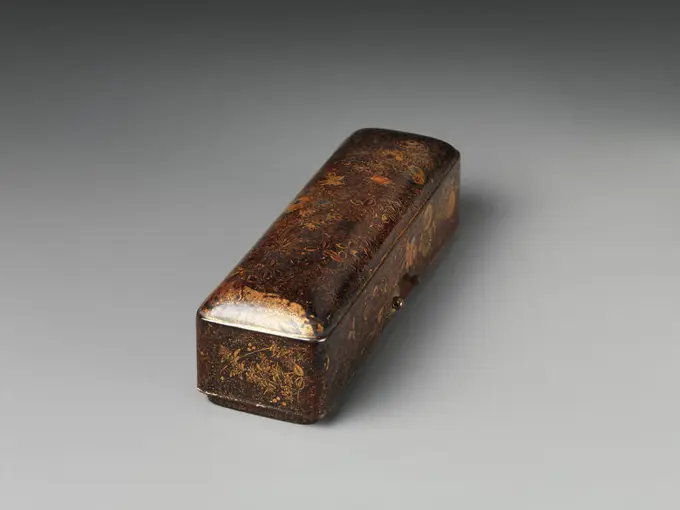
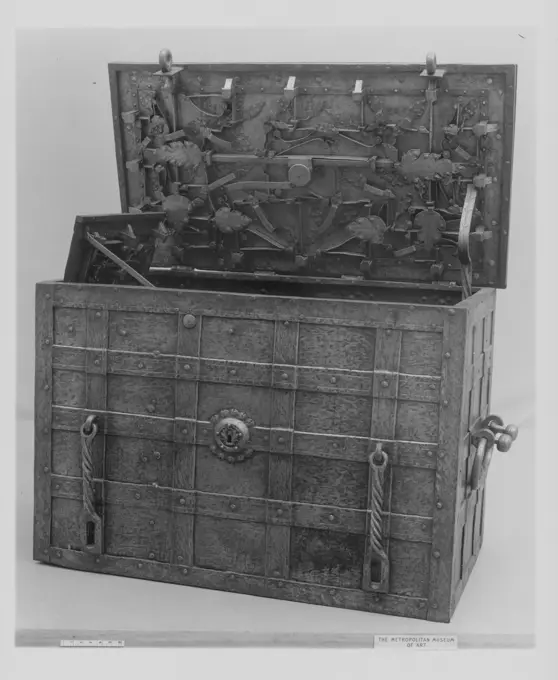
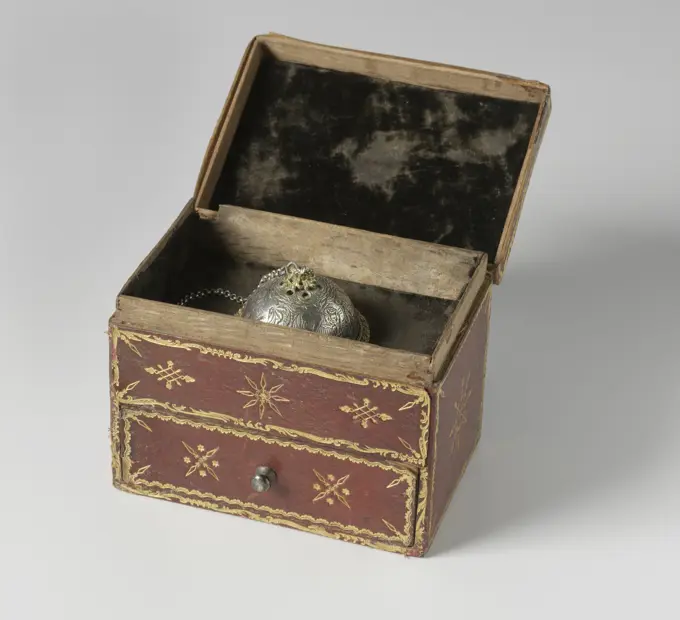
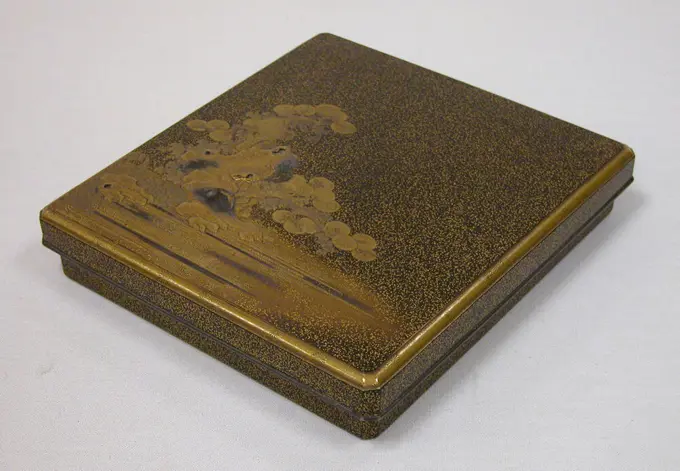
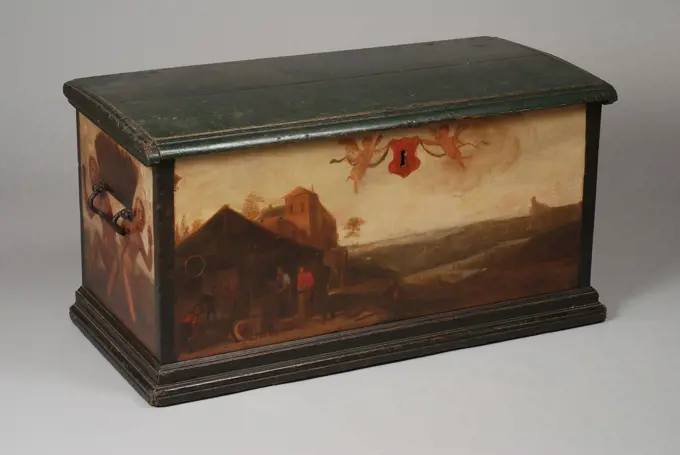
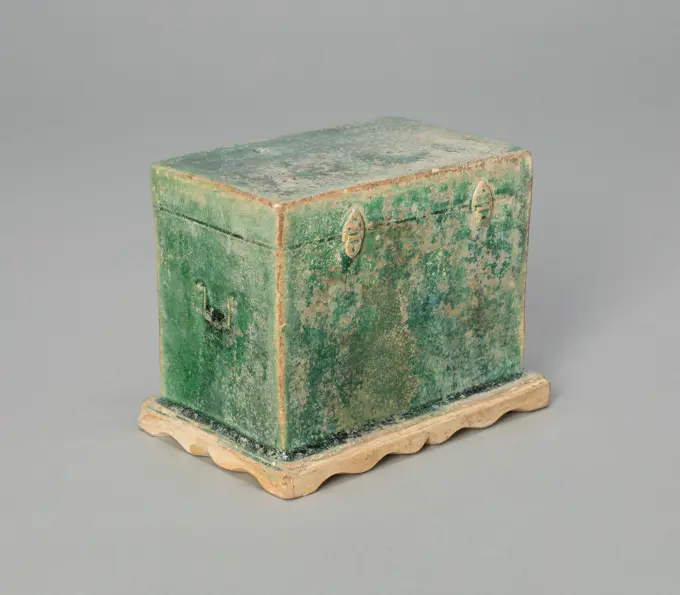
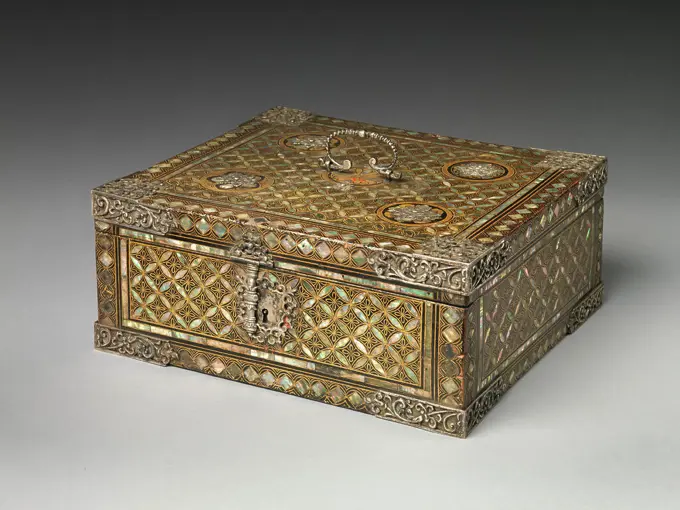
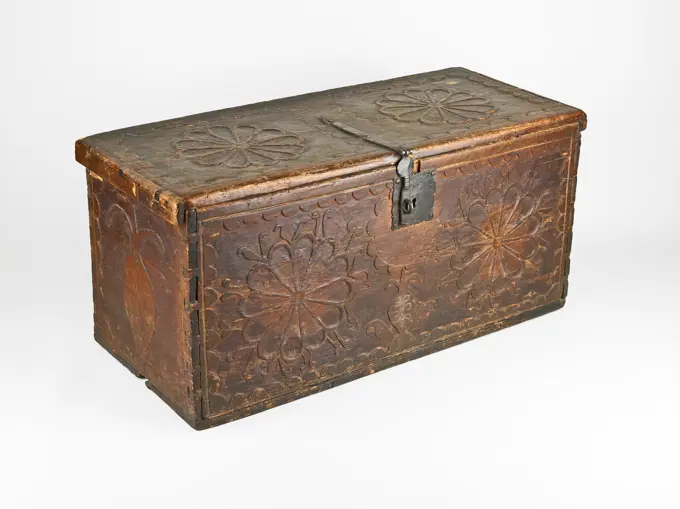
Chest c 1780-1830 New Mexico. Ponderosa pine . Artist unknownLacquer box with inner box and lid, anonymous, 1300 - 1500 Lacquer box with inner box and lid, inlaid with pearl flour motifs. Korea lacquer (coating). mother of pearl Lacquer box with inner box and lid, inlaid with pearl flour motifs. Korea lacquer (coating). mother of pearlBox covered with labeled leather of which with gilded ornaments, anonymous, 1604 Eakhout box covered with stamped leather whose ornaments are gilded. The front shows in -one -slumped hands within windows. On the flooded lid this same motif with dolphins on either side also inside windows. Suggested horses in the swing. On the back and sides a diamond layout within which stylized leaf motif. At the bottom of the coffin also a diamond division with anno 1604 and the letters K.V.P. The box rests on four copper feet and has a copper locking plate with key and a copper handle on the lid. Internally, the box still shows a few remains. Northern Netherlands leather. wood (plant material). oak (wood). gold (metal). brass (alloy) Eakhout box covered with stamped leather whose ornaments are gilded. The front shows in -one -slumped hands within windows. On the flooded lid this same motif with dolphins on either side also inside windows. Suggested horses in the swing. On the back and sides a diamonOld chest isolated on the white backgroundCabinet for Incense, Nest of Boxes, Tray 19th century Japan This personal cabinet for the pastime of comparing fragrances is decorated with motifs that evoke seasonal fragrances. On the nested boxes, the plum blossom evokes the delicate scent that gladdens winter and augurs spring. On the tray, summer pinks and mallow recall sharper fragrances, and the heady perfume of ripening grapes attracts a dragonfly on the outer cabinet, signaling the coming of autumn.. Cabinet for Incense, Nest of Boxes, Tray 45081Box with Sliding Lid c 1800 United States. Maple and paint . Artist unknownBox for Incense Set with Design of Plum and Bamboo 19th century Japan. Box for Incense Set with Design of Plum and Bamboo. Japan. 19th century. Gold maki-e on black lacquer. Edo (1615-1868) or Meiji period (1868-1912). LacquerElongated box of ebony with ornaments of silver, anonymous, 1600 - 1699 Kist, elongated, from ebony with silver ornaments. Key is missing. Netherlands (possibly) ebony (wood). silver (metal) Kist, elongated, from ebony with silver ornaments. Key is missing. Netherlands (possibly) ebony (wood). silver (metal)Box Horning with a bronze medal, Jacob Samuel Cohen Elion, 1883 box Square leather box. The inside is made of green velvet. The box closes with a copper hook. Amsterdam leather. velvet (fabric weave). copper (metal)   AmsterdamTea chest with crest of Alexander Hamilton. Culture: China. Dimensions: H. 8 1/8 in. (20.6 cm); W.12 in (30.5 cm); L.18 3/8 in. (46.7 cm). Date: late 18th century. Museum: Metropolitan Museum of Art, New York, USA.Rectangular lacquer box decorated with flowering plants on rocks, anonymous, c. 1700 Rectangular lacquer box with a door on the short side. Behind direct door six drawers and a leaf. Everything decorated with flowering plants on rocks in relief on gold lacquer fond. The flowers in colored material. Hinges and lock plates and handle of engraved silver. Slot plate on door and two tractors on drawers are missing. From Mrs. H.S.C. von Hemert, born Baroness van Pallandt. Japan wood (plant material). lacquer (coating). silver (metal). bone (material). ivory. horn (animal material). mother of pearl. silver (metal). crystal (lead glass). glass Rectangular lacquer box with a door on the short side. Behind direct door six drawers and a leaf. Everything decorated with flowering plants on rocks in relief on gold lacquer fond. The flowers in colored material. Hinges and lock plates and handle of engraved silver. Slot plate on door and two tractors on drawers are missing. From Mrs. H.S.C. von HemertChest of polychromed wood and decorated with gilded stucco in the form of coats of arms with inscriptions in Latin, Anonymous, c. 1400 - c. 1500 Small chest of polychromed poplar wood, with decorations in gilded stucco consisting of leaf vines with a dragon flanked at the front and on the lid by coats of arms with inscriptions in Latin. At the rear four standing fields with leaf vines, including inscriptions. The batter on the corners formed by thin copper plates also shows inscriptions. The lock and handles are made of copper. The green upholstery inside is partially worn out. Italy wood (plant material). poplar (wood). linden. paint (coating). gilding (material). stucco. copper (metal). textile materials gilding Small chest of polychromed poplar wood, with decorations in gilded stucco consisting of leaf vines with a dragon flanked at the front and on the lid by coats of arms with inscriptions in Latin. At the rear four standing fields with leaf vines, including inscriptions. The battSnuffbox 1757-58 French, Paris In eighteenth-century Europe, Paris led the production of high-quality luxury goods. Parisian goldsmiths made a wide range of small, personal articles such as snuffboxes; étuis to hold sealing wax, tweezers, or utensils for sewing; souvenirs, which contained thin ivory tablets for note taking; and shuttles for knotting lace. Gold snuffboxes and boxes decorated with portrait miniatures were prized and frequently given as royal gifts, often to ambassadors or members of the court in lieu of cash payments for their services. Coveted and admired, these boxes were produced from a variety of materials. The best were skillfully made of gold and embellished with diamonds, enameled decoration, lacquer, and other luxurious materials. By the middle of the century, the taking of snuff had become an entrenched social ritual, and the snuffbox, too, had become an important social prop. Snuffboxes were considered highly fashionable accessories, with some merchants advertiWriting box with Wedgwood abolitionist medallion, c. 1790, William Hackwood; Maker: Wedgwood, British, (Stoke-on-Trent, England), 2 5/16 x 4 5/8 x 2 5/8 in. (5.87 x 11.75 x 6.67 cm), Rolled paper on wood with stoneware (jasper) medallion, England, 18th centuryBox, Cardboard and paper, Rectangular, covered with beige paper printed with blue lines and dots. On cover, romantic scene of 17th-century lovers and troubadour in boat. Cover edged with blue-and-red printed guilloche border, and embossed gold. Inside, lithograph of Chateau Montesquien., 1880-90, Decorative Arts, BoxGame box with four smaller boxes. Amber is fossilized resin, which in Europe is found primarily around the Baltic Sea. Amber from that region is approximately 40 million years old. Works of art in amber were crafted in Danzig (now Gdansk), along the Baltic Sea. This game box was probably a gift from King Frederick William I of Prussia to Prince William IV and Princess Anne of England on the occasion of their wedding in 1734.. Unlike its oblong neighbour with the chrysanthemum motif, this little box was not decorated in relief, but in smoothly finished lacquer. In the 18th and 19th centuries such boxes served as incense containers. However, in the 16th century they were also used to keep make-up.Box 1675-1700 American. Box 935Candle Box 1783 American. Candle Box. American. 1783. Pine. Made in Berks County, Pennsylvania, United StatesBox.Paint box with lid, inlaid with pearly floral motifs.Coffin, glued with carrot nut wood. Octagonal, with curved walls. Coffin of oak, glued with carrot nut wood. Octagonal of shape, bent the walls. Batter and handle of gilded bronze. Inside lined with green velor.Casket with drawer in soil. Coffin, square, from ebony with batter and handles of silver. Flowers and tendrils stabbed in the wood. A slider in the soil; This is closed by a slider on the inside of the upper lock.Etui And Case; leather, tooled and gildedHouts of wood, exaggerated with red leather on which gold ornaments, anonymous, 1640 - 1660 Hout, exaggerated with red leather on which gold ornaments: a repeating pattern of French crowns and crowned dolphins. The lid, on which four crowned dolphins, is connected to the box with two copper hinges. The copper lock plate is also decorated. The Foedraal was probably used for a book or for writing.  wood (plant material). beech (wood). leather. brass (alloy). gilding (material). copper (metal) gilding Hout, exaggerated with red leather on which gold ornaments: a repeating pattern of French crowns and crowned dolphins. The lid, on which four crowned dolphins, is connected to the box with two copper hinges. The copper lock plate is also decorated. The Foedraal was probably used for a book or for writing.  wood (plant material). beech (wood). leather. brass (alloy). gilding (material). copper (metal) gildingBox. Culture: American. Dimensions: 9 1/2 x 26 5/8 x 15 1/2 in. (24.1 x 67.6 x 39.4 cm). Maker: Attributed to John Thurston (1607-1685). Date: 1660-85.Small, rectangular oak boxes with hinged lids were common in seventeenth-century households, where they held important items such as documents, writing implements, books, jewelry, and currency. Like chests with carved decoration, boxes displayed a vocabulary of stylized plant forms and simple geometric shapes. Foliated S-scrolls, as single elements or paired--as on the front of this box and the sides of the cabinet to its right--were widely used. Museum: Metropolitan Museum of Art, New York, USA.Beaded lid box, exaggerated with velvet, anonymous, 1600 - 1699 Chest with bombarded lid, covered with green velvet. The elegant handles, two with lion heads, and the lock plate and the four legs are made of yellow copper. The velvet is deposited with silver -colored passement. The front falls down when opening. The inner -lined inner side consists of the container including a drawer. Netherlands wood (plant material). oak (wood). brass (alloy). textile materials. velvet (fabric weave) Chest with bombarded lid, covered with green velvet. The elegant handles, two with lion heads, and the lock plate and the four legs are made of yellow copper. The velvet is deposited with silver -colored passement. The front falls down when opening. The inner -lined inner side consists of the container including a drawer. Netherlands wood (plant material). oak (wood). brass (alloy). textile materials. velvet (fabric weave)Antique wooden piggy bank brass design fitting, Jodhpur, Rajasthan, India Copyright: xSafatxAli/DinodiaxPhotoxBox for Paper (Ryoshibako) with Decoration of Butterflies and Autumn Grasses. Culture: Japan. Dimensions: H. 2 3/4 in. (7 in.); W. 6 in. (15.2 in.); L. 13 5/8 in. (34.6 cm). Date: second half of the 19th century. Museum: Metropolitan Museum of Art, New York, USA.Iron design fitting on antique wooden box, Jodhpur, Rajasthan, India Copyright: xSafatxAli/DinodiaxPhotoxWriting box decorated with Intarsia in walnut and other types of wood. Writing box decorated with Intarsia in walnut and other types of wood. Resting on a baseboard, awarded with reverse ojy-shaped profile and injured cord list. The coffin is articulated by three profile lists, between the braid band in Intarsia. Right is a drawer in the double bottom. The lid has a weapon on the left in Intarsia and on the inside window braiding and a brand in the shape of a clock.Snuff box of gold, rectangular with scilated relief decoration of seed beads, trophies and all kinds of tools concerning music, painting, science and craft. Rectangular golden snuff box, with vertebrated reliefs. Between RoCencilles trophies of all kinds of music, painting, science and crafts.Sirihkist of amboina root wood with batter of silver. Sirihkist, rectangular, from Amboina-root wood with batter of silver. The coffin has a hinged lid; Lid and bottom have a profiled edge. Inside painted red. On paws of silver. Fittings in flame-like leaf shape on the corners of lid and walls and as back plates of the handles on the sides. The lock plate in the form of a betel or pinang nut, a cartouche in the middle of the lid. Around the lock plate four rosettes, as well as on the lid. Silver key with handle in the shape of a heart. Between two nagas. The hinge plates end in open-shadows. Necklace of silver as a connection between box and lid. Brands: On hinge plate: reverse sword = Batavia; WC = judge; Mt. DB = Daniël Boudewijn Batavia, 18th century.Painting cassetteNotenhout box, front with oval field with electricity god and a najade in Marqueterie, Anonymous, 1550 - 1600 Case of nuthout with inner work of poplar wood. The foot is vaulted and decorated with volute grinding, a maskaron and acanthus leaves. The long walls have flanked an oval field through round fields; The short walls have oval fields. The front wall shows a power god in the oval field and a najade in Marqueterie and at the corners coupled C-curves with cartouche shields. The lid consists of a pillow and a border with pillows and rosettes decorated. Part of cutting work was originally gilded Italy wood (plant material). walnut (hardwood). poplar (wood). gilding (material) gilding Case of nuthout with inner work of poplar wood. The foot is vaulted and decorated with volute grinding, a maskaron and acanthus leaves. The long walls have flanked an oval field through round fields; The short walls have oval fields. The front wall shows a power god in the oval field and a najade in MarqRetro chest Decorative antique chest isolated with clipping path included Copyright: xZoonar.com/Baloncicix 7180068Shrine of The Gospels of Saint Molaise early 20th century (original dated 1001-25) Irish. Shrine of The Gospels of Saint Molaise 463159Antique brass design fitting on wooden box, Jodhpur, Rajasthan, India Copyright: xSafatxAli/DinodiaxPhotoxKist for writing tools, anonymous, 1400 - 1500 Case for Wrout tools of wood with black lacquer fond, inlaid with mother -of -pearl and braided brass wire. The box is equipped with an extendable drawer on the right side. The decoration consists of lotus vrocks. Korea wood (plant material). lacquer (coating). mother of pearl. brass (alloy) Case for Wrout tools of wood with black lacquer fond, inlaid with mother -of -pearl and braided brass wire. The box is equipped with an extendable drawer on the right side. The decoration consists of lotus vrocks. Korea wood (plant material). lacquer (coating). mother of pearl. brass (alloy)Writing Box. Artist: Italian (Manifattura di Signa, Florence) (ca. 1900 after a model attributed to Severo Calzetta da Ravenna (act. by 1496-died before 1543), Padua or Ravenna, ca. 1520). Culture: Italian (Manifattura di Signa, Florence). Dimensions: H. 6.8 cm, L. 20.7 cm, W. 10.9 cm.. Date: ca. 1900.This writing box is decorated with winged putti holding a laurel wreath with a Medusa head, surruonded by a rectangular band of palmettes on the cover. The front and back sides have a pair of centaurs carrying nymphs on their backs (Nessus and Deianeira) and flanking the Medici coat of arms beneath a Tuscan crown on a pelta. This popular type of writing casket exists in various versions and was produced well into the twentieth century. Reproductions were offered by the Manifattura di Signa, Florence, in 1912. This box belongs to that category of late reproductions. Museum: Metropolitan Museum of Art, New York, USA.Square lantern with pierced sides, anonymous, c. 1700 - c. 1724 Square lantern of porcelain with openwork walls, painted on biscuit in blue, green, yellow, eggplant and black. The walls are opened in a medallion in a square decorated with Swastika pattern, servetwork and flower vines. Around the square always loose flowers in a geometric pattern on a speckled soil. The foot with a wood grain pattern. Email sur biscuit with family distance colors. China porcelain. glaze. painting / vitrification Square lantern of porcelain with openwork walls, painted on biscuit in blue, green, yellow, eggplant and black. The walls are opened in a medallion in a square decorated with Swastika pattern, servetwork and flower vines. Around the square always loose flowers in a geometric pattern on a speckled soil. The foot with a wood grain pattern. Email sur biscuit with family distance colors. China porcelain. glaze. painting / vitrificationCAJA DE JUEGOS EN MARFIL - SIGLO XI. Location: CATEDRAL-INTERIOR. Toledo. SPAIN.Coffin with bombed lid, covered with velvet. Coffin with bombed lid, covered with green velvet. The graceful handles, two with lion heads, and the lock plate and the four legs are from yellow copper. The velvet is deposited with silver-colored passing. When opening, the front falls down. The inside lined with red side consists of the container under which a tray.Briefcase (portefeuille or porte documents) third quarter of 18th century French Luxurious briefcases were made for states men and ministers and sometimes have the name of the owner embroidered or struck on to them. The lock would keep the documents inside safe from prying eyes. Such cases were sold by stationers like a certain Jollivet in Paris whose trade card advertised all kind of writing materials as well as Morrocco leather cases in both red and black that could be closed with a key.. Briefcase (portefeuille or porte documents). French. third quarter of 18th century. Gilt-tooled red morocco leather, gilt bronze and metal locking mechanism; lined with blue silk. Natural Substances-LeatherworkKnottekist, anonymous, 1670 Rectangular Knottekist of partially gilded silver. The walls are engraved with performances derived from the Old Testament: Adam and Eva; Jacob and Rachel; Rebecca and Eliezer. The box is on four Bolpoten. Hoorn (North Holland) silver (metal). gilding (material) gilding Rectangular Knottekist of partially gilded silver. The walls are engraved with performances derived from the Old Testament: Adam and Eva; Jacob and Rachel; Rebecca and Eliezer. The box is on four Bolpoten. Hoorn (North Holland) silver (metal). gilding (material) gildingLectern, Folding. Culture: Spanish. Dimensions: 9 3/4 x 14 1/8 x 11 1/2 in. (24.8 x 35.9 x 29.2 cm). Date: 15th century. Museum: Metropolitan Museum of Art, New York, USA.Chest. Culture: American. Dimensions: 25 3/4 x 40 5/8 x 20 3/8 in. (65.4 x 103.2 x 51.8 cm). Maker: Gustav Stickley (American, Osceola, Wisconsin 1858-1942 Syracuse, New York). Date: ca. 1903.In 1899, Gustav Stickley, a leading designer and proselytizer of the American Arts and Crafts movement, founded the Craftsman Workshops (called United Crafts before 1904) to manufacture his line of Craftsman furniture. Simply designed for ease of manufacture, Craftsman furniture was modestly priced to appeal to the average American. Typical of early Stickley furniture, the design of this cedar-lined oak chest depends on the frank expression of the structural framework and panels, with sturdy iron hardware as its only embellishment. A line drawing of this design was published as early as 1901 in Stickley's sales catalogue called "Chips from the Workshops of the Gustave sic Stickley, Syracuse, N. Y., U.S.A." The chest, which bears a decal with an early Stickley mark used in 1902 and 1903, was madBox confectioner; Chromecki, Wincenty (fl. 2nd century XIX W.-1853); 1930s (1830-00-00-1839-00-00);. Box in the shape of two eccentric circles, decorated with hydrangea and a butterfly in different colors. Equipped with a signed seal from Ritsuo.Box. Rawlins &amp; Sumner; London, England, 19th century. Date: 1865. Dimensions: 4 x 10.4 x 6.8 cm (1 9/16 x 4 x 2 11/16 in.). Gold. Origin: London. Museum: The Chicago Art Institute, Chicago, USA.Sageju  a portable set of vessels for a picnic unknownTraveling Box early 15th century China This extraordinary box, most likely made for a Tibetan visitor to the Chinese court, would have been used to carry belongings, both personal goods and gifts such as porcelains and textiles. The large lotus scrolls painted on the sides, and in particular the spiky blossoms, derive from Nepali artistic traditions that were introduced to China in the late thirteenth century. The iron lock for the box is decorated with inlays of gold and silvera technique sometimes known as damascening that was also introduced to China at that time.. Traveling Box 45751Joseph Rothenberg, Desk Box, c 1937 Desk BoxTravel suitcaseMount Orgueil, Jersey (money box)' still bank, c. 1895, 2 1/4 x 4 5/16 x 2 5/8 in. (5.72 x 10.95 x 6.67 cm), Wood (Mauchline ware), pigment, paper, Scotland, 19th-20th centuryWriting Box (Suzuribako) with Hell Courtesan's Robe. Culture: Japan. Dimensions: H. 1 in. (2.5 cm); W. 6 in. (16.2 cm); L. 5 1/2 in. (14 cm). Date: ca. 1850-70.This small writing box merges two popular pictorial subjects: the "Whose Sleeves" (Tagasode) composition and the Hell Courtesan (Jigoku Dayu). On the courtesan's robe draped over a lacquer kimono rack, we see various demons and Emma-O, one of the Ten Kings of Hell, with his scowling red face and bulging eyes. According to local legends, the Hell Courtesan, from the port of Sakai, is said to have attained enlightenment with the help of the Zen monk Ikkyu (1394-1481). Museum: Metropolitan Museum of Art, New York, USA.Pair of Mans Shoe Buckles with Case. France, 1785-1790. Costumes; Accessories. SteelClose-up of an ornate wooden boxTobacco Box 18th-19th century Korea. Tobacco Box. Korea. 18th-19th century. Iron inlaid with silver. Joseon dynasty (1392-1910). MetalworkMilitary hatbox 1864-80 Bent & Bush. Military hatbox 173614Snuffbox ca. 1760 British, Staffordshire. Snuffbox. British, Staffordshire. ca. 1760. Enameled copper. Enamels-PaintedPod box of red leather, anonymous, c. 1800 - c. 1900 box Red Leather Penning box from the 19th century belonging to a silver medal.  wood (plant material). leather. velvet (fabric weave)   Amsterdam. The HagueTookist van Turtpad with three silver rectangular buses, Pieter Bartholomeus van Linden (attributed to), c. 1755 - 1756 The rectangular turtle box on oak, mahogany and violet wood is covered with green velvet on the inside. He has a hinged lid, one interior and a drawer divided into three compartments by means of two slides. He rests on four cast silver legs in the shape of a bird claw on an oval ground. The box has diagonally placed, slightly protruding corner styles and shows, above a low straight-walled base, a hollow curve, a sphere profile and an elongated S-curve. The lid is closed on the underside by a ball profile above which a convex curve, an S-curve and a hollow curve, closed at the top by a ball profile that surrounds the slightly raised, flat top. The drawer is opened by pressing a silver lip on the bottom. The lock and hinges of the lid are made of silver, as well as the cast lock plate, which has the shape of an asymmetrical cartouche of rocailles, and the also cast handSymphonion Disc Music BoxRawhide Chest, with Lock (Inside View). Dated: 1937. Dimensions: overall: 27.9 x 35.4 cm (11 x 13 15/16 in.) Original IAD Object: 11"x6 1/2"x6". Medium: watercolor, colored pencil, and graphite on paper. Museum: National Gallery of Art, Washington DC. Author: Gerald Transpota.Wooden Jewelery box with performances relating to the Gonini expedition, Unknown, in Or Before 1926  Wooden jewelry box covered with paper with wood grain imitation and partly painted in Jugendstil style. The inscription <bijoux> is painted on the lid. The box has three drawers, covered with velvet on the inside, to store jewelry (bijoux). The front of the box can be folded down and is covered on the inside with a piece of side on which the letter C and a few flowers and twigs are embroidered. The jewelry can be placed on this in the condition, before they are stored or put on. The box is covered on three sides with watercolors that depict landscapes in Suriname. The watercolors have a jugendstil style frame. A small book is attached to the back of the box, which can be opened with two brackets. The book consists of six pages with watercolors and (reproductions of) photos. Both the drawings and photos in the booklet in the back and the watercolors on the outside of the box, refer to thGold larnax (funerary casket) from the Macedonian royal tombs at Vergina 350-325 BC. Archaeological Museum of ThessalonikiMolded base mid-17th century Austrian. Molded base 236740Snuffbox 1750-56 Mennecy In eighteenth-century Europe, Paris led the production of high-quality luxury goods. Parisian goldsmiths made a wide range of small, personal articles such as snuffboxes; étuis to hold sealing wax, tweezers, or utensils for sewing; souvenirs, which contained thin ivory tablets for note taking; and shuttles for knotting lace. Gold snuffboxes and boxes decorated with portrait miniatures were prized and frequently given as royal gifts, often to ambassadors or members of the court in lieu of cash payments for their services. Coveted and admired, these boxes were produced from a variety of materials. The best were skillfully made of gold and embellished with diamonds, enameled decoration, lacquer, and other luxurious materials. By the middle of the century, the taking of snuff had become an entrenched social ritual, and the snuffbox, too, had become an important social prop. Snuffboxes were considered highly fashionable accessories, with some merchants advertising nGold snuff box, rectangular with arched lid. Completely enameled and painted with chinoiseries, anonymous, c. 1820 - c. 1840 Gold snuff box, rectangular, with arched lid. Completely enameled and painted with chinoiseries. Paris gold (metal). Gold snuff box, rectangular, with arched lid. Completely enameled and painted with chinoiseries. Paris gold (metal).CaseCharles Henning, Cupboard, c 1938 CupboardSeal Box with Hunters on Horseback 17th-18th century Japan (Ryky Islands) The style of clothing worn by the three equestrian figures on the top of this box identifies them as Mongols, a people who ruled over their vast empire from a capital at Dadu (present-day Beijing) in the thirteenth and fourteenth centuries. The representations of Mongols hunting and the decorative motifs on the sides of this box were once outlined with powdered gold that was sprinkled onto the lacquer base; such a technique was also used in China.. Seal Box with Hunters on Horseback. Japan (Ryky Islands). 17th-18th century. Black lacquer with mother-of-pearl inlay and gold painting. Edo period (1615-1868). LacquerBasket, 20th century, 6 7/8 x 8 1/2 x 6 1/2 in. (17.46 x 21.59 x 16.51 cm), Scraped birchbark, United States, 20th centuryRed covered Foedraal, Jean Baptiste Bonnard, c. 1824 - c. 1829 Fedral for parure consisting of a necklace, two bracelets, a set of earrings, two pins and a brooch. Two drawers and a lid with recess. Front partition half -round with three locks and two bolts. Amsterdam leather. cloth. wood (plant material). gold (metal). amethyst (mineral) Fedral for parure consisting of a necklace, two bracelets, a set of earrings, two pins and a brooch. Two drawers and a lid with recess. Front partition half -round with three locks and two bolts. Amsterdam leather. cloth. wood (plant material). gold (metal). amethyst (mineral)Wooden Writing Tablets 500-700 Coptic The recessed areas of these tablets were filled with wax and employed for writing and record keeping. A stylus, or pointed wooden pen, would have been used to write in the wax. Joined pairs of tablets such as these were made in many materials, including ivory.. Wooden Writing Tablets. Coptic. 500-700. Wood and wax. Made in Byzantine Egypt. Woodwork-MiscellanySquare box, black lacquer with sprinkling flowers in Makie, Anonymous, 1700 - 1800 Square box with convex sides and a somewhat sphere lid; with gold -plated copper on the inner side. On the sides and the lid, three flowers are always painted in gold-made on a black soil; Gold contour lines surround the edges of the sides. Probably intended for incense axis (Ju-Kogo). Japan whole: Wood (plant material). whole: Lacquer (coating). Gold (Metal). Copper (Metal). Gilding (Material) lacquering Square box with convex sides and a somewhat sphere lid; with gold -plated copper on the inner side. On the sides and the lid, three flowers are always painted in gold-made on a black soil; Gold contour lines surround the edges of the sides. Probably intended for incense axis (Ju-Kogo). Japan whole: Wood (plant material). whole: Lacquer (coating). Gold (Metal). Copper (Metal). Gilding (Material) lacquering"Sahifa al-Kamila" (The Complete Pages), Arabic Prayerbook with Persian Translations "Sahifa al-Kamila" (The Complete Pages), Arabic Prayerbook with Persian Translations, A.H. 1150/1738 C.E. Ink, opaque watercolor, and gold on paper; lacquered papier mché binding, 3 11/16 x 2 1/4 x 3/4in. (9.4 x 5.7 x 1.9cm).   Arts of the Islamic World A.H. 1150/1738 C.E.Koran box from Topkapi Palace, decorated in ivory and mother of pearl, 1525, Turkey.Ossuary with lid, 1st century AD. Limestone. From Kidron Valley, Tomb 15. Jerusalem, Israel. Sephardic Museum. Toledo. Castile-La Mancha. Spain.Letter Box with Design of Chrysanthemums and Autumn Grasses. Culture: Japan. Dimensions: L. 8 3/4 in. (22.2 cm); W. 2 7/8 in. (7.3 cm); H. 2 3/4 in. (7 cm). Date: 15th century. Museum: Metropolitan Museum of Art, New York, USA.Strongbox late 16th or early 17th century German, possibly Nuremberg This formidable steel strongbox is reinforced with an armature of the same material. Its elaborate locking mechanism, consisting of nine bolts and various leaf-shaped shields, offered the owner a safe storage place for his valuables. Corresponding to the eyes along the rim of the lid, the two pendant hasps in front allowed the use of additional padlocks. Nuremberg and the neighboring town of Augsburg were major metal-producing centers where armorers, locksmiths, and founders made arms and armor as well as useful wares such as locks, caskets, and strongboxes.. Strongbox 187224 German, possibly Nuremberg, Strongbox, late 16th or early 17th century, Steel, Overall (confirmed): H. 35 3/4 x W. 51 in., 768 lb. (90.8 x 129.5 cm, 348.3625kg). The Metropolitan Museum of Art, New York. Gift of Henry G. Marquand, 1890 (90.13.1)Open old suitcase isolated on white backgroundPrayer nut, Adam Dircksz (workshop of), , c. 1500 - c. 1530 A small prayer snoot-caught noot, consisting of two miniature reliefs of the worship of the kings and the birth of Christ. Both reliefs are made of boxwood wood and mounted in two hinged, silver half balls with closure and a small chain. The silver ball is completely decorated with extremely refined Gothic engraving work: on the one hand animals between leaves (a monkey, a dog, a owl and other birds), on the other hand five figures: Eva, a man who creates in the ground with a kick, a man with with A falcon, a man in the water and a man with a poker and fire. They are representations of the four elements (earth, air, water and fire) and also possible different social positions. The animals represent the 'inverted world' of lust and evil. The silver ball with a twisted thread of pale gold is decorated all around, while on the top and bottom is a golden rosette. With this silver prayer snoot there is an 18th-century, red-covered Writing Box 18th century Japan. Writing Box 57184Oak painted wooden case of the St. Jansgilde, guild chest archival case guild chest casket cabinet furniture furniture interior design wood oak wood paint, Oak wood archive case of the St. Jansgilde the guild of the coopers and wine leavers Exterior painted front left cooperage where some at the right hilly river landscape in the distance city and river On the sides two man figures carrying chest of grapes and at the rear garland of flowers and fruits. In the chest four drawers and storage space Two putti hold coat of arms in which keyhole for key, Rotterdam guilders guild cooperage St. Jansgilde save money store theft prevention hang-and-seal cooper This was the guild chest of the St Jansgilde (Kuipers - and Wijnlatersgilde).Miniature Trunk (Mingqi) 1368-1644 China. Earthenware with green glaze and underglaze molded decoration .Gothic chest with lid, XV century, Palma Cathedral Museum, Majorca, Balearic Islands, Spain.Storage Box in Nanban (Southern Barbarian) Style. Culture: Japan. Dimensions: H. 5 1/2 (14 cm); W. 12 5/8 in. (32.1 cm); D. 11 3/8 in. (28.9 cm). Date: 16th century. Museum: Metropolitan Museum of Art, New York, USA.Toilet Box for holding, powder boxes, mirror and other items. English, 1929, made from walnut an silver and covered with Shageen ( a Leather, mother of pearl substitute.Box Covered with Mother-of-pearl Tiles. Korea, Korea, Early 20th century. Furnishings; Accessories. Crushed mother-of-pearl over fabric on wood coreToilet chair of emperor Franz Joseph I by Anonymous artist, Pocelain, wood, Kammerhofmuseen der Stadt GmundenBox with lid, with a Frisian with Amazons, Ludwig Moser & Söhne, c. 1925 Four ball -shaped legs, flat bottom, low cylindrical body, lid with curved edge. On the body, in oroplastic, a Frisian with Amazons. In the middle of the lid a medallion, on the edge a band with palmets and tendrils. Moser Karlsbad marked on the bottom, on one of the legs the figure 14. Carlsbad glass etching / gilding / glassblowing Four ball -shaped legs, flat bottom, low cylindrical body, lid with curved edge. On the body, in oroplastic, a Frisian with Amazons. In the middle of the lid a medallion, on the edge a band with palmets and tendrils. Moser Karlsbad marked on the bottom, on one of the legs the figure 14. Carlsbad glass etching / gilding / glassblowingSugar bowlBandbox. Dated: c. 1939. Dimensions: overall: 22.3 x 29.2 cm (8 3/4 x 11 1/2 in.) Original IAD Object: 9 1/2" high; 9" long; 12" deep. Medium: watercolor and graphite on paperboard. Museum: National Gallery of Art, Washington DC. Author: Joseph Rothenberg.Document case. Dutch East India Company (VOC) merchants in Asia often kept and carried important documents in decorative cases. This case was made at Vizagapatnam, an area of South India famous for its ivory inlay decoration. The emblem on the lid is the Falck family crest. Several members of the Falck family served in senior positions with the VOC.James Gardiner Collection: Victorian photograph album.Casket Depicting Scenes from the Old Testament Made 1668 England. Silk, warp-float faced satin weave; embroidered with silk floss, silk yarns, and silk-wrapped-metal purl in brick, bullion, Ceylon, chain, knot, lattice filling, overcast, running, satin, Smyrna cross, tent, and a variety of buttonhole stitches; laid work, couching, and padded couching; French and Turkey knots; applied areas of linen, plain weave; seed pearls, coral beads, and mica; and silk, plain weave with ground weft fringe; edged with gilt-metal-strip-wrapped silk and gilt-metal strip, plain weave; silver hardware; wooden frame; lined with marbled paper; silk, plain weave; and silk, plain weave with supplementary pile warps forming cut solid velvet . Rebecca Stonier PlaistedPresentation Box first half of the 17th century China Until recent times, boxes for presenting gifts and documents had been used in China for centuries. In prosperous south China in the early seventeenth century, most of these boxes were of elongated rectangular shape and many were lavishly decorated. The decorations were related to the use of such boxes on various occasions. In the middle of the lid of this example is a scene of a young man drawing a bow to shoot at a target in the form of a screen with a pair of phoenixes, a representation of the betrothal of Lady Douto Li Yuan, later Emperor Gaozu, the founder of the Tang dynasty. Li Yuan was able to hit the eyes of both phoenixes with two arrows, thus winning the hand of Lady Dou. Above is a young man paying respects to an elder, with a page holding a box containing the young man's present. Below is a felicitation scene of a couple seated at a table being toasted by friends and guests. Between the frames bracketing the scenes are aJewel casket; c.1870 England; Birmingham. Attributed to John Hardman & Co.; Gilt; brass and enamel.Book-Shaped Vinaigrette 1835-1836 Birmingham. Silver gilt . Taylor & Perry (firm) (Manufacturer)