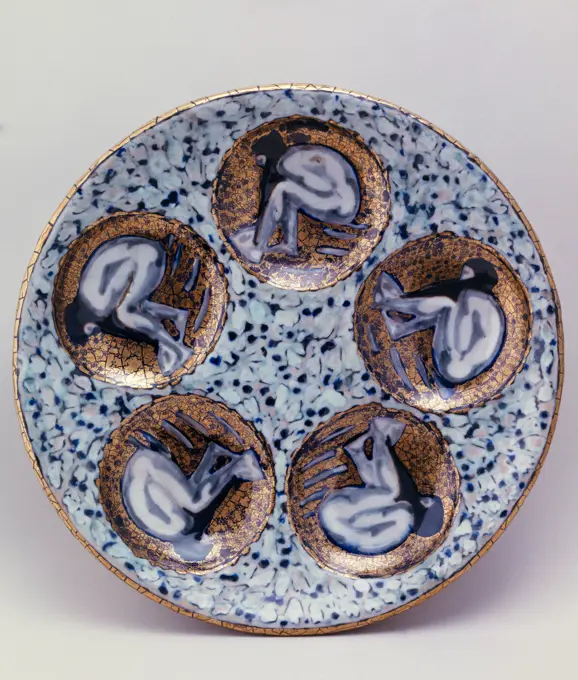
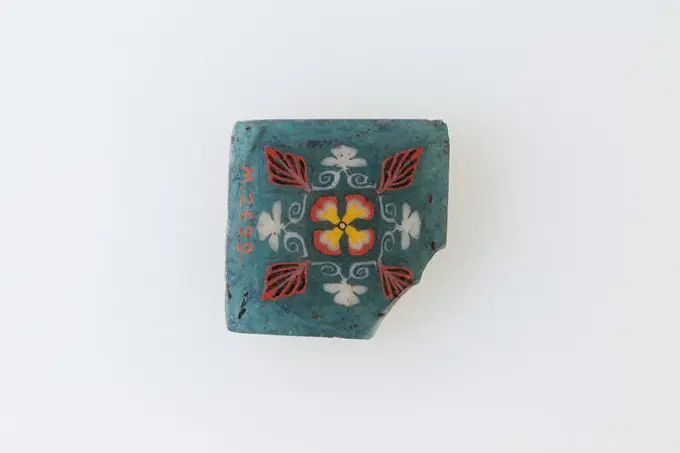
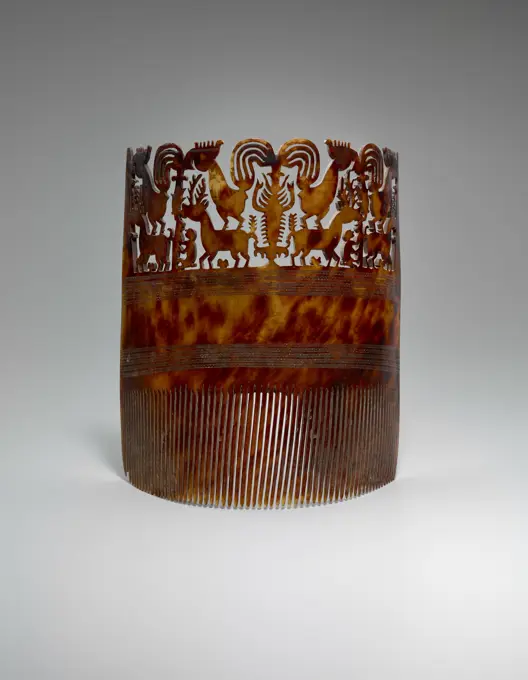
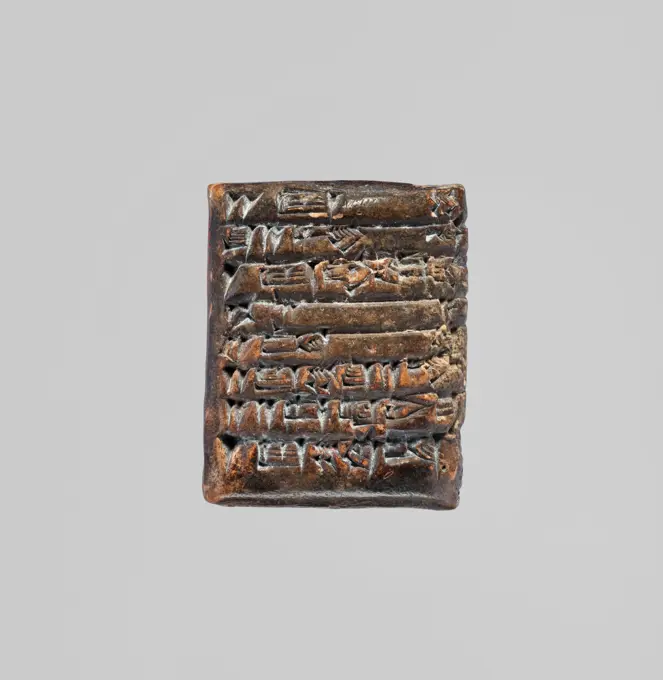
Decorative Earthenware Fragments

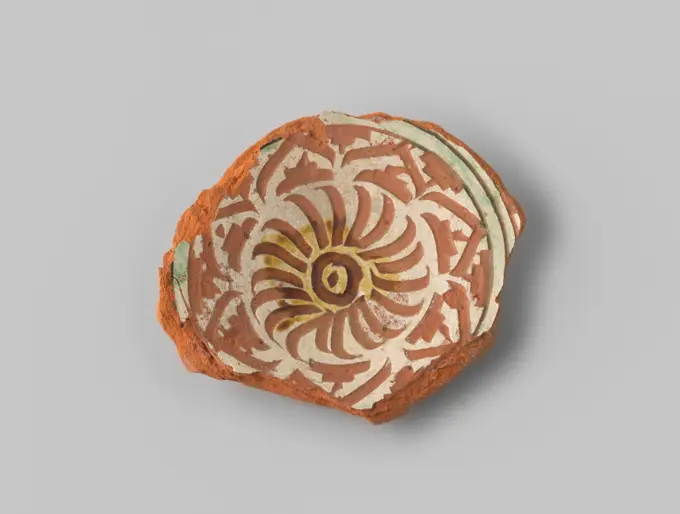
Fragments of decorative earthenware with intricate patterns and colors, revealing historical art styles and techniques through a variety of pieces.

Fragment of a dish of earthenware decorated with geometric ornaments, anonymous, c. 1650 - c. 1725 Fragment of a dish of earthenware, at the top with tinglaze, covered at the rear with lead glaze, decorated with geometric ornaments in blue, purple and green. Excavated in London, Middlesex Street. England (possibly) earthenware. tin glaze majolica Fragment of a dish of earthenware, at the top with tinglaze, covered at the rear with lead glaze, decorated with geometric ornaments in blue, purple and green. Excavated in London, Middlesex Street. England (possibly) earthenware. tin glaze majolica
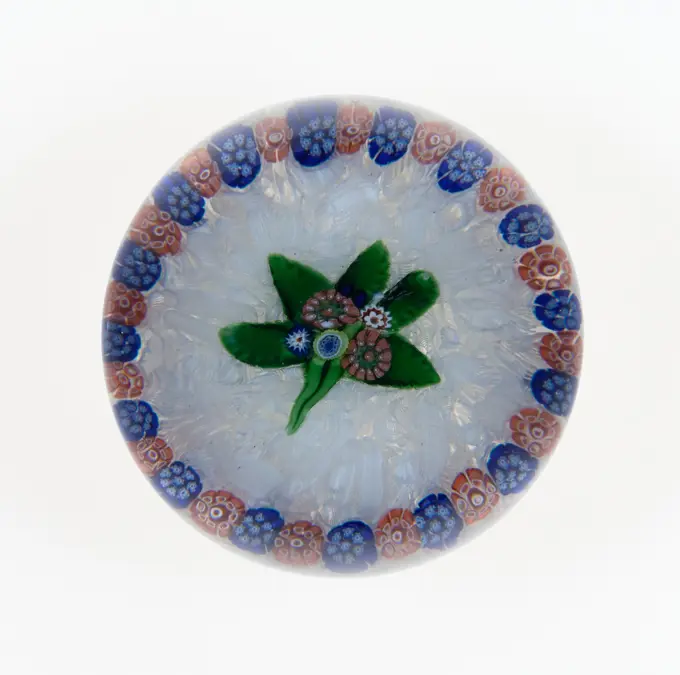
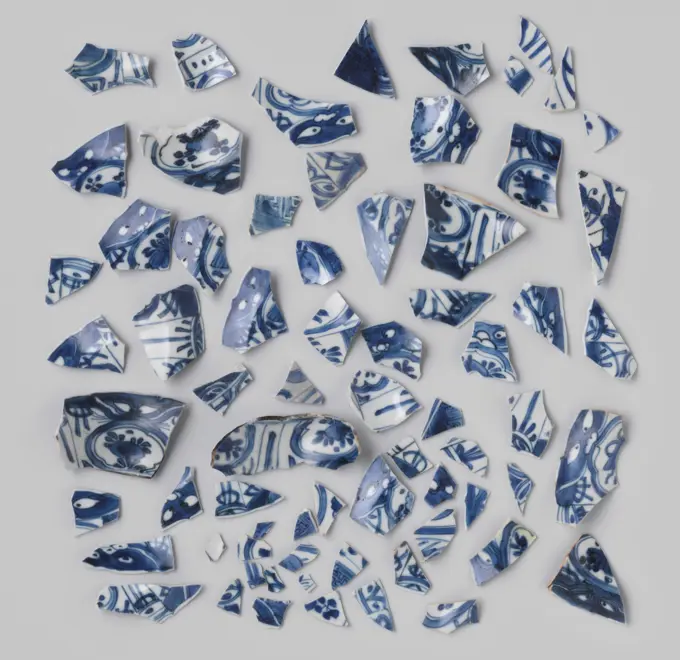
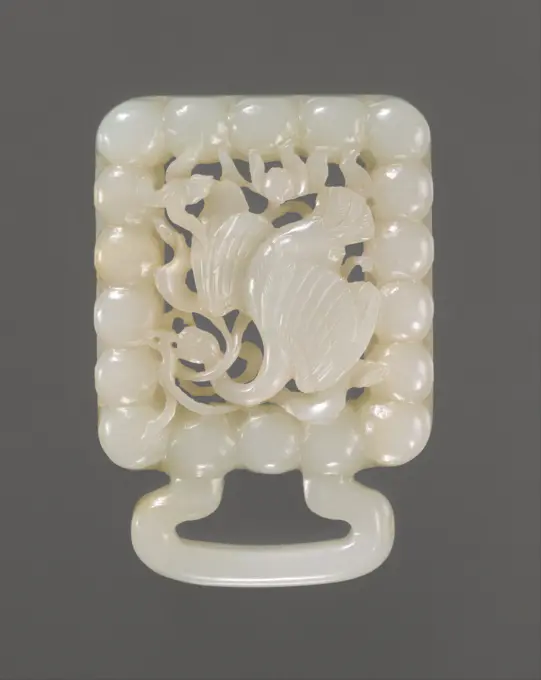
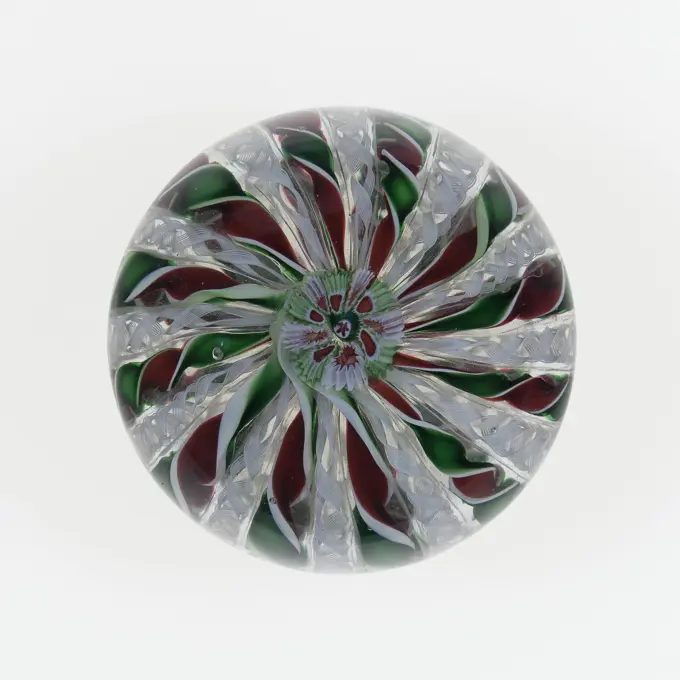
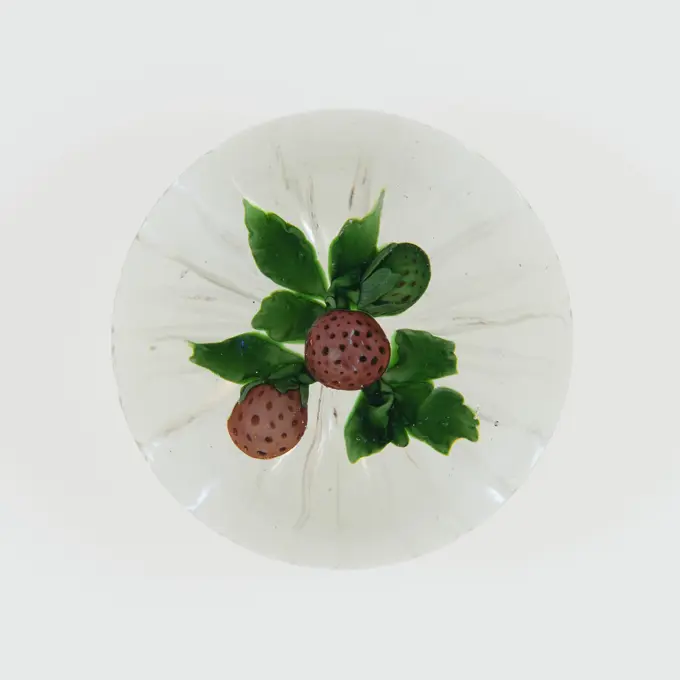
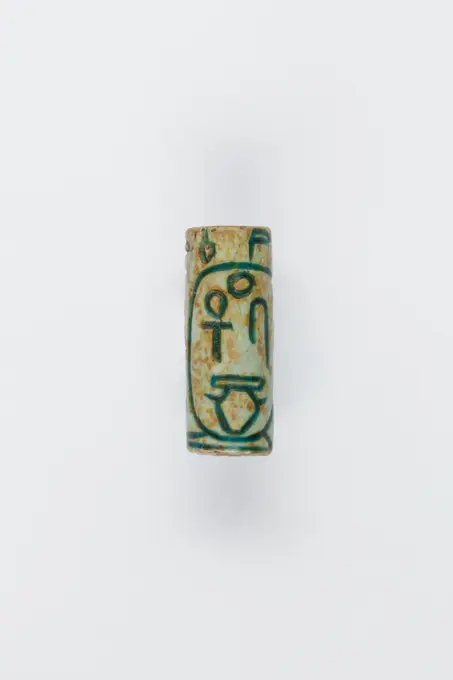
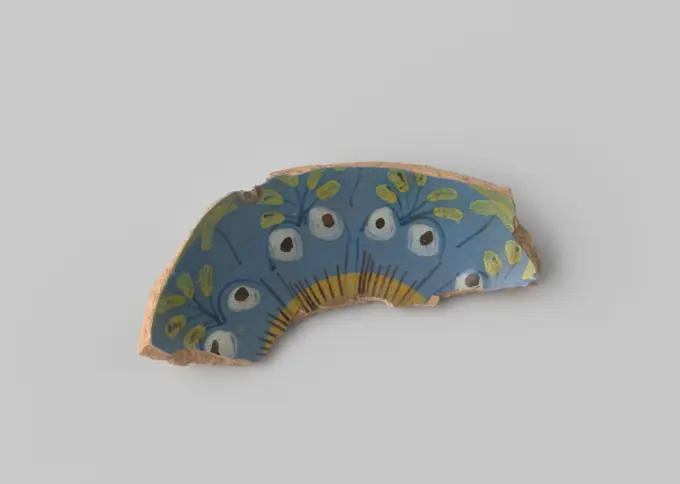
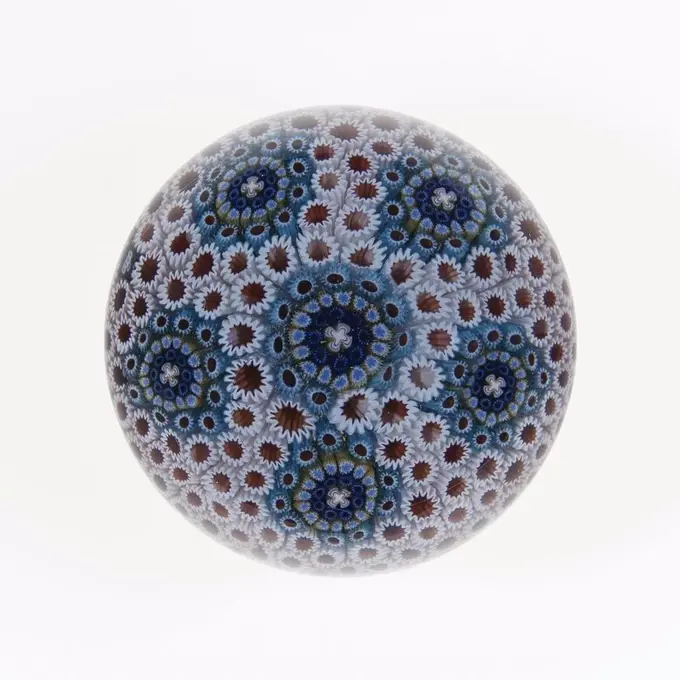
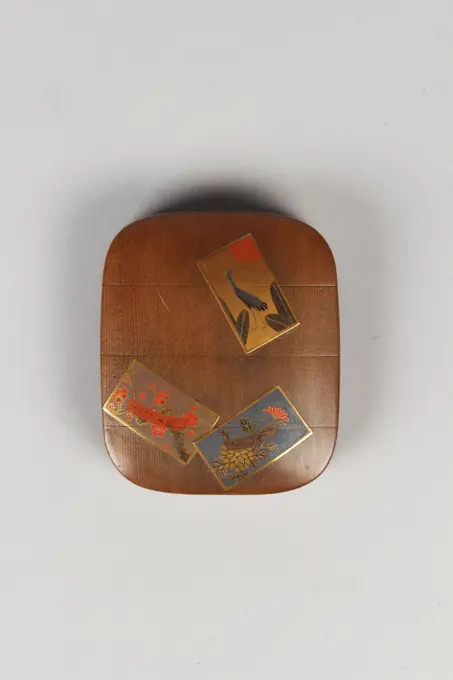
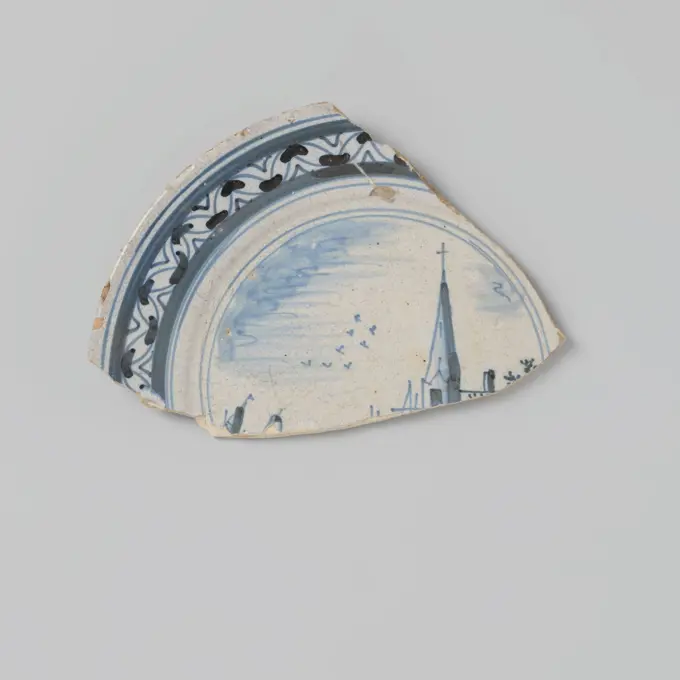
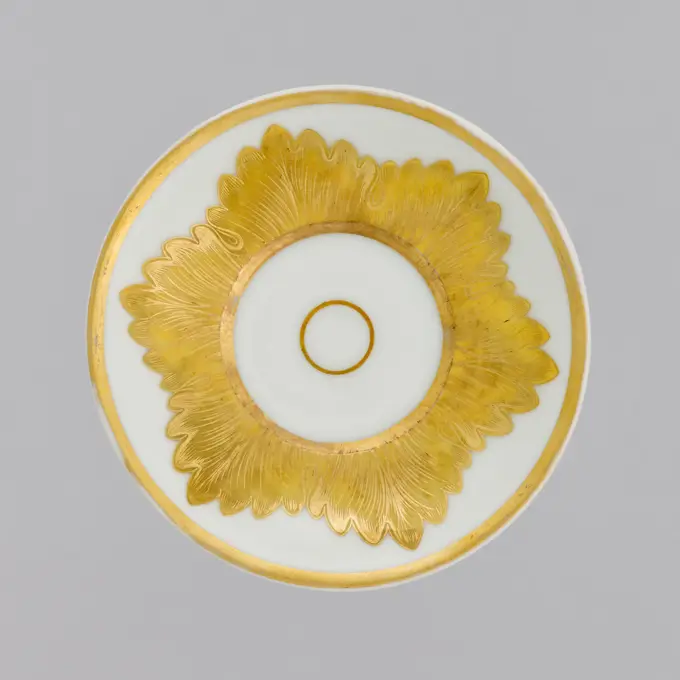
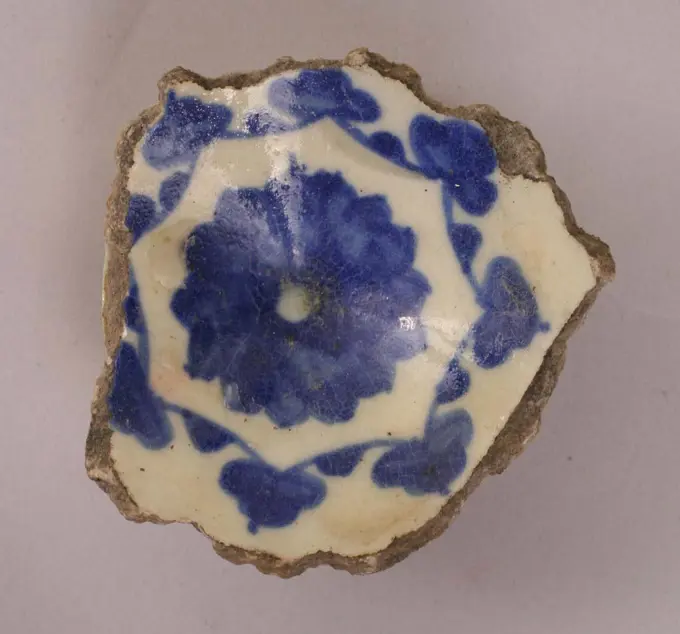
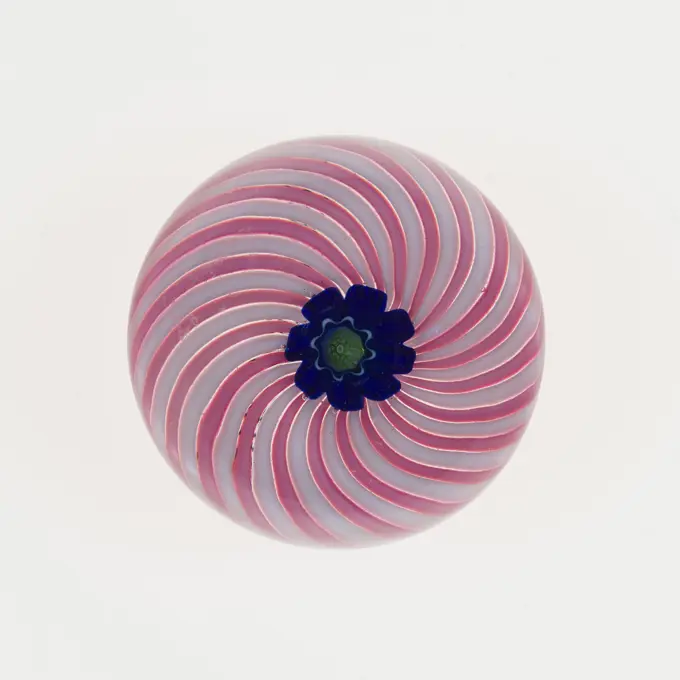
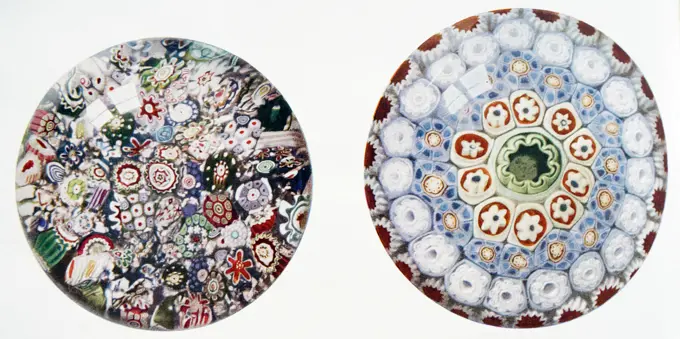
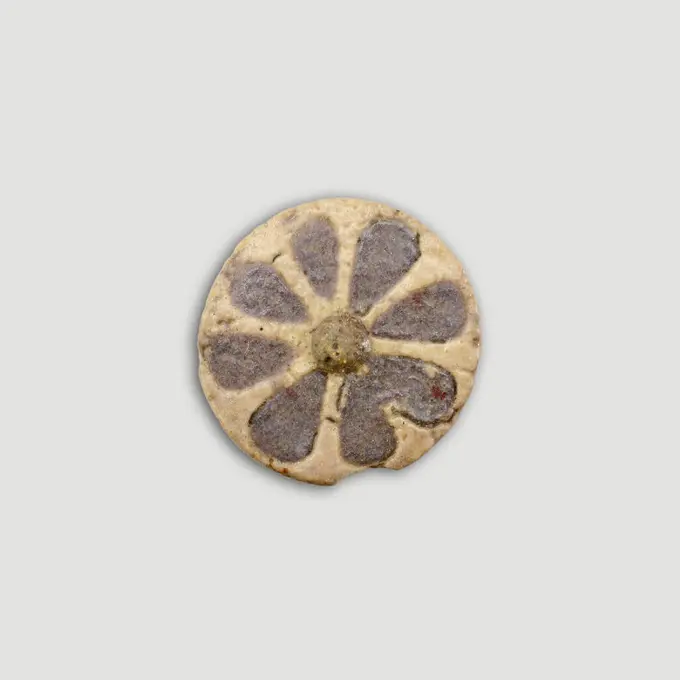
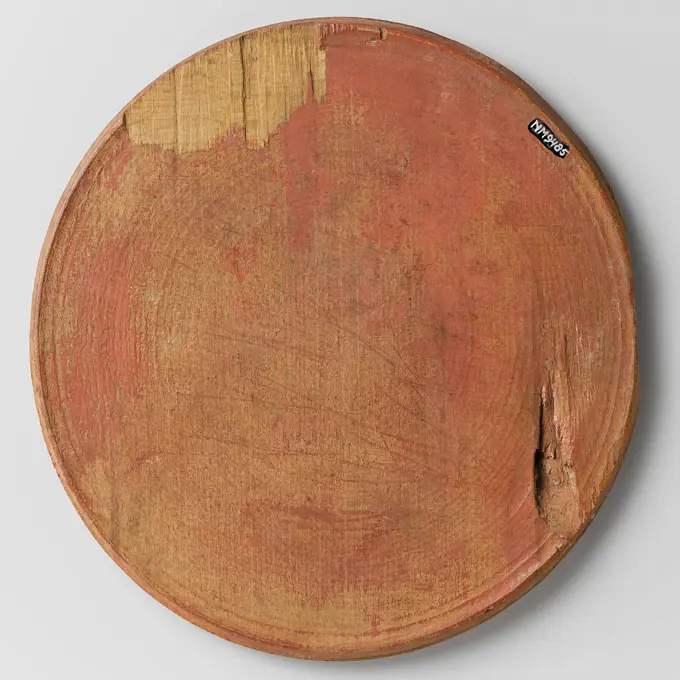
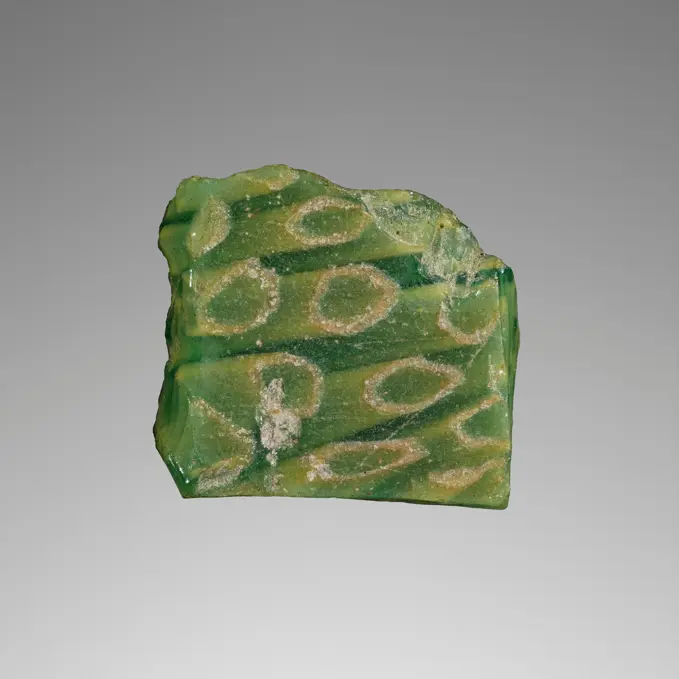
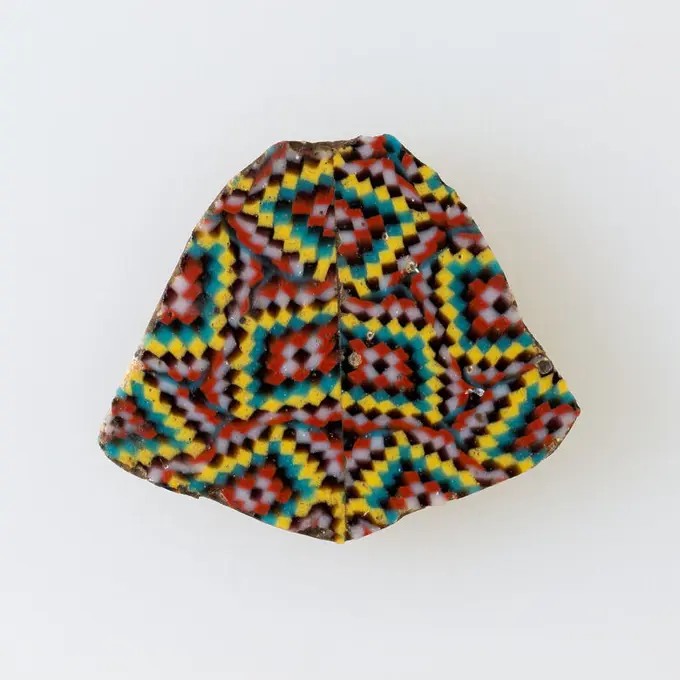
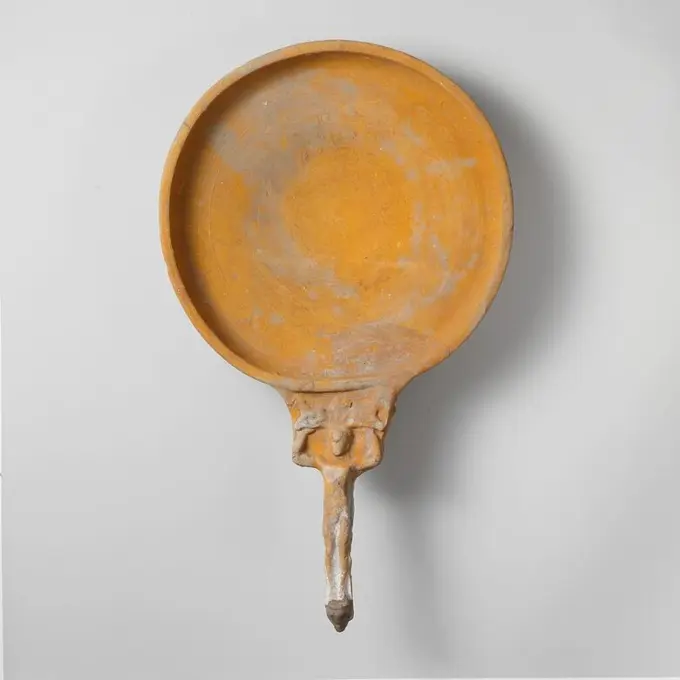
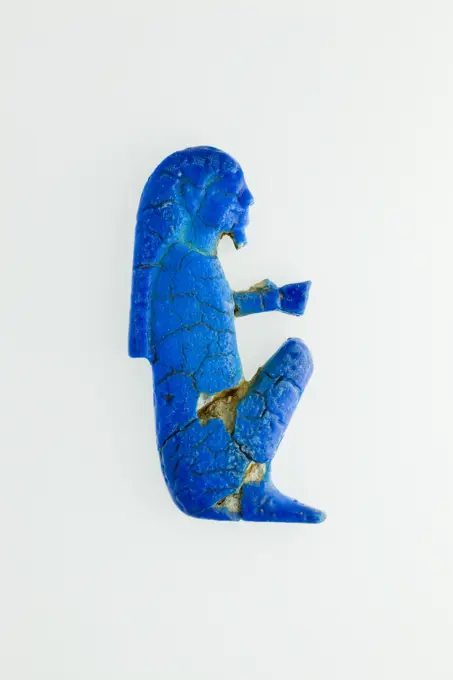
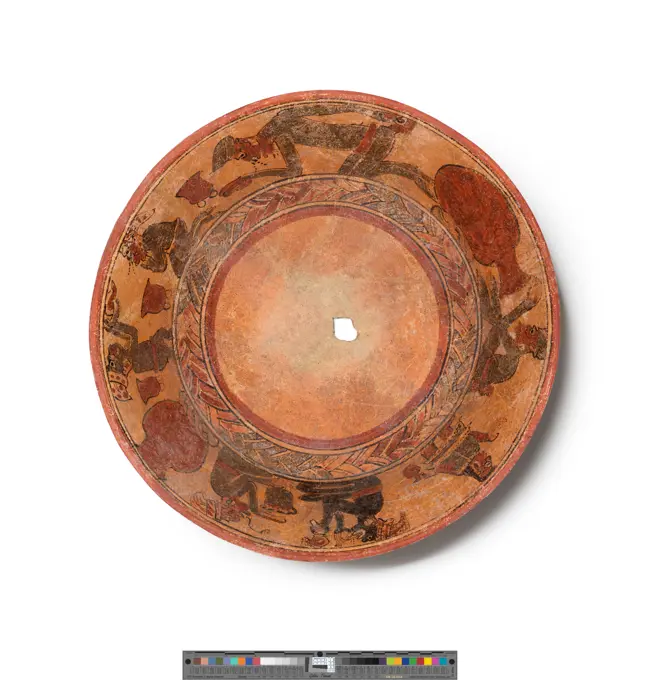
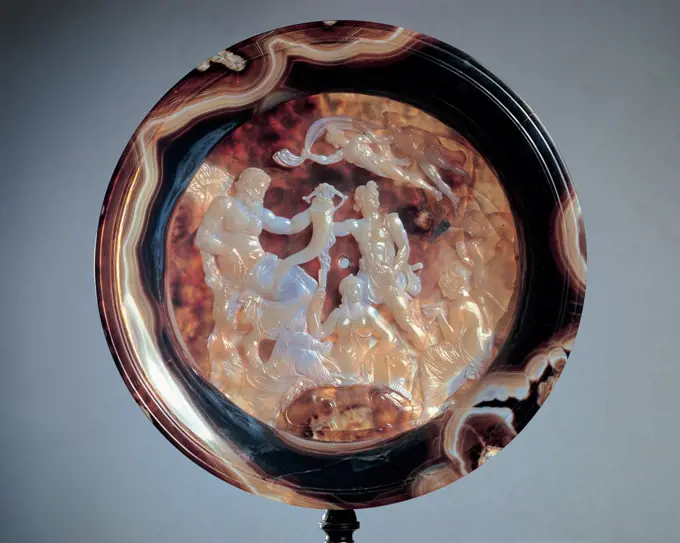
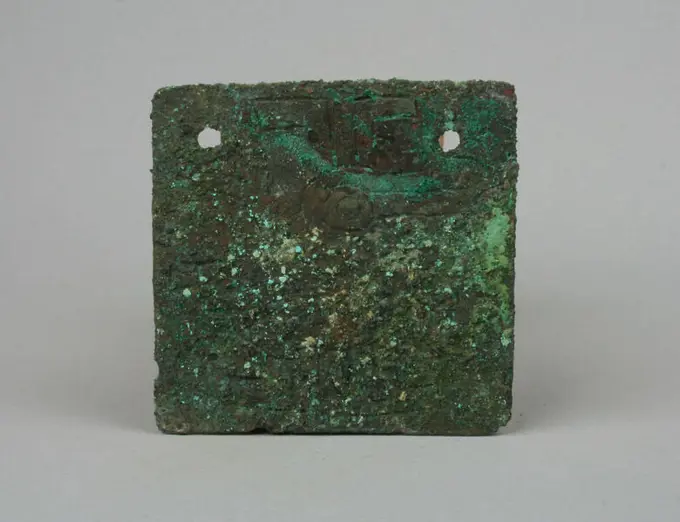
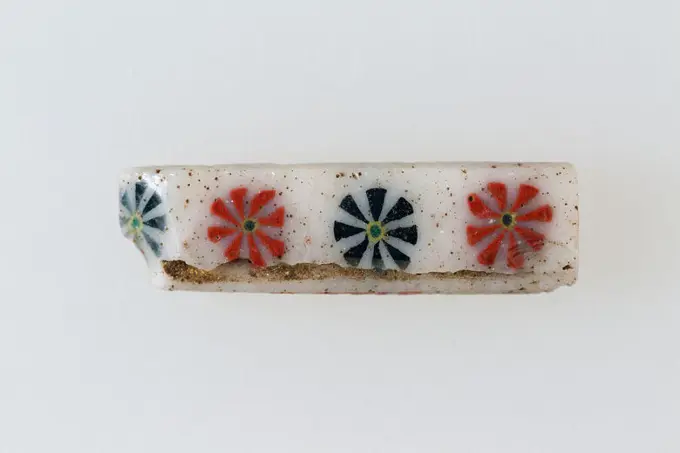
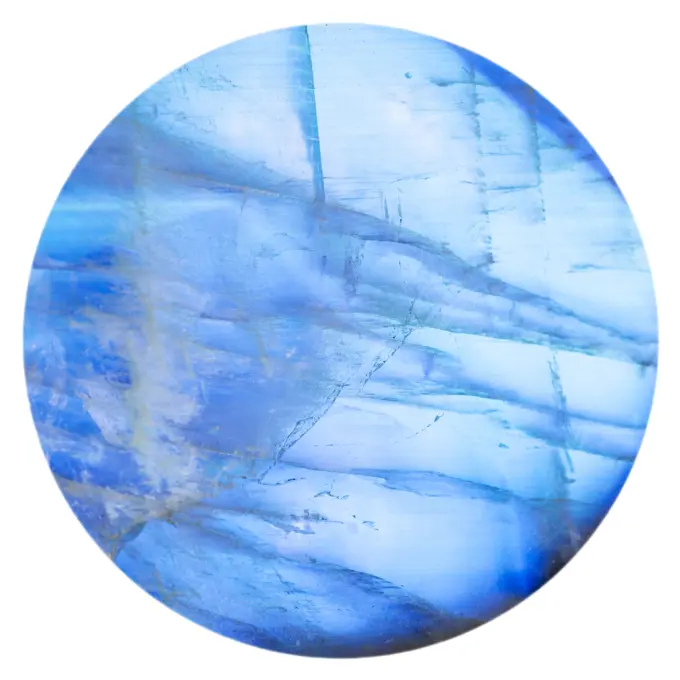
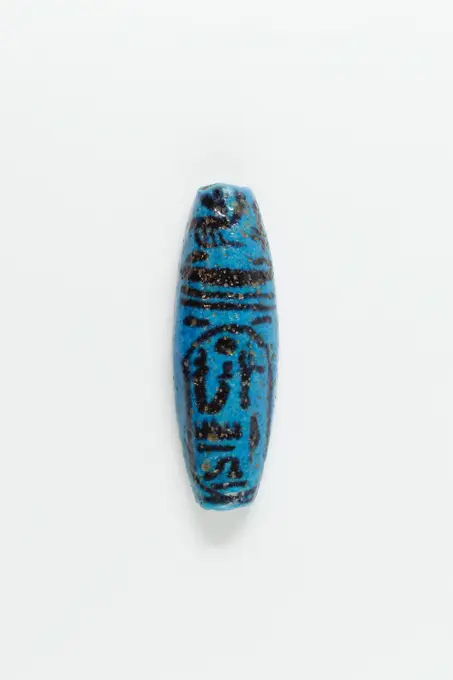
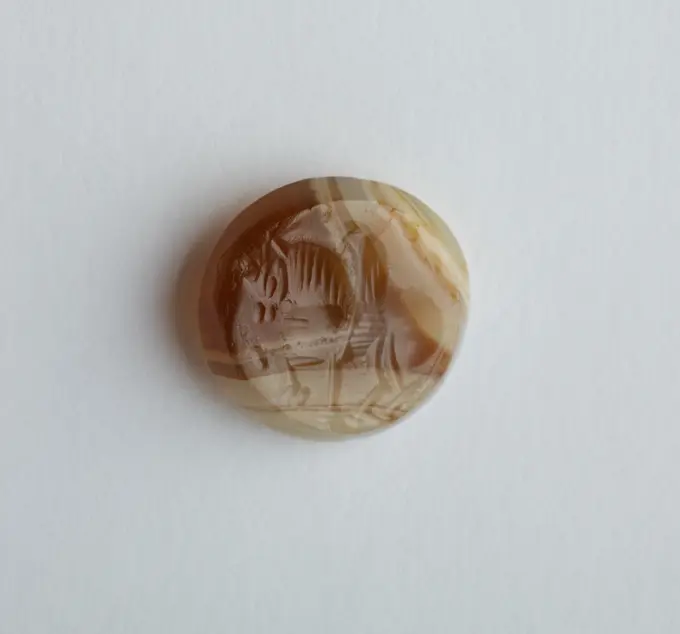
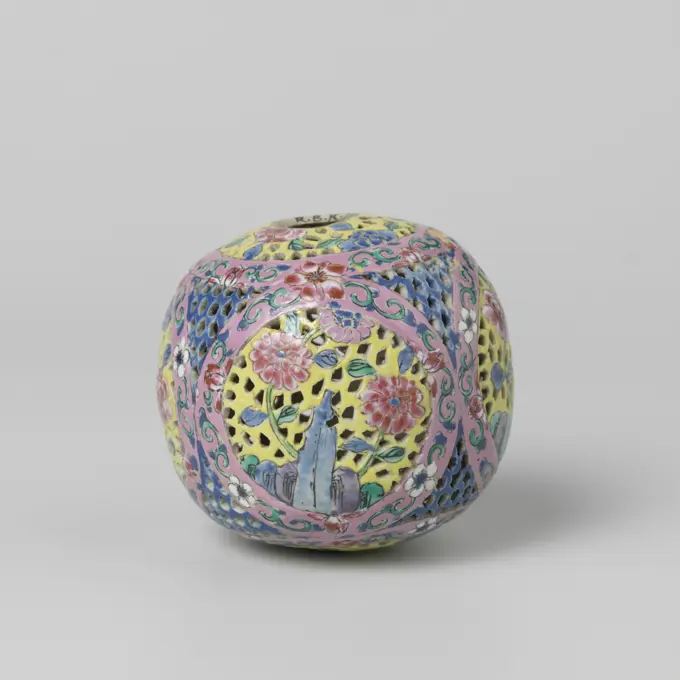
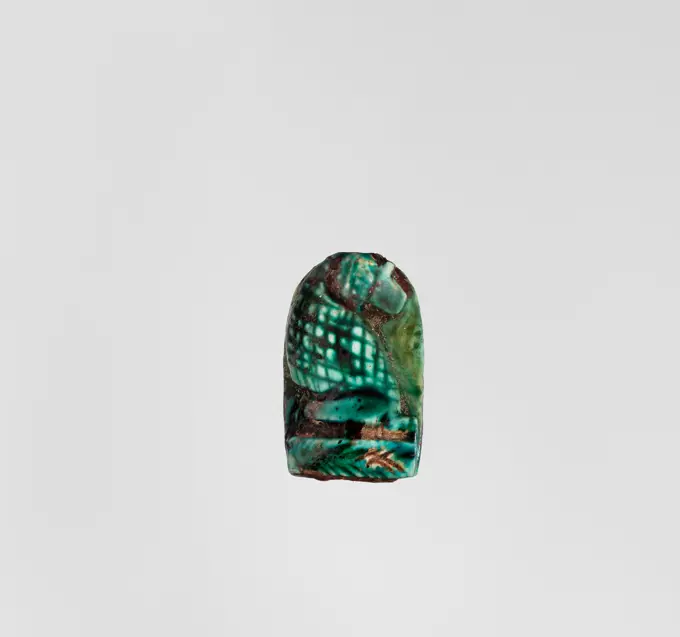
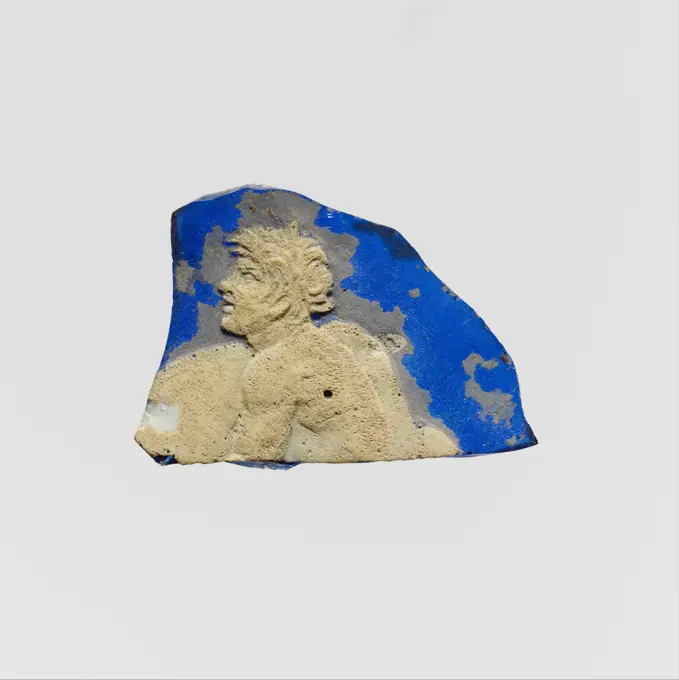
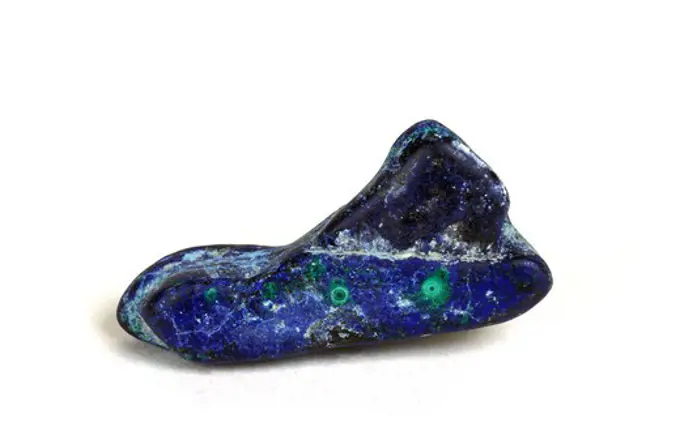
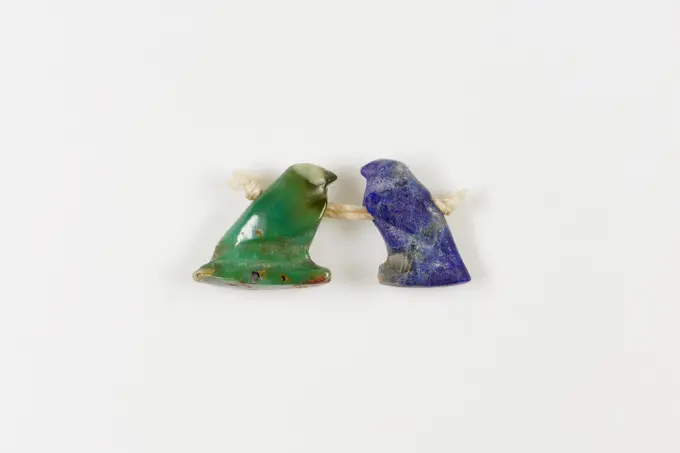
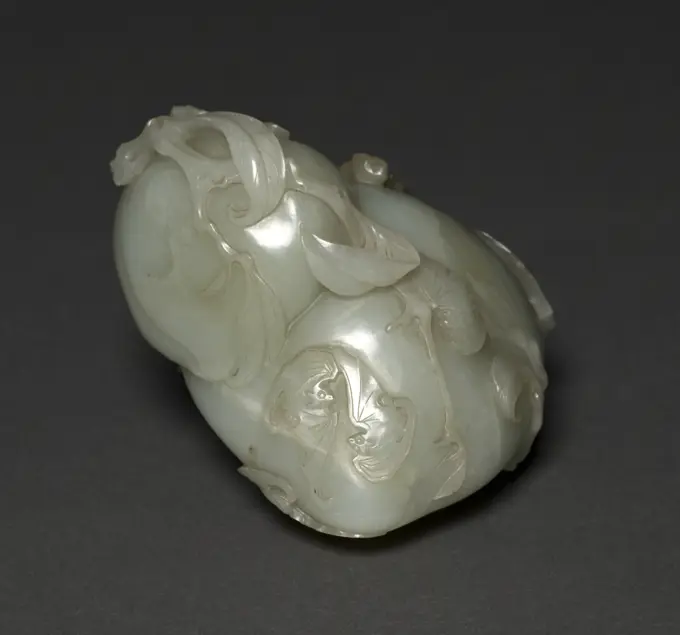
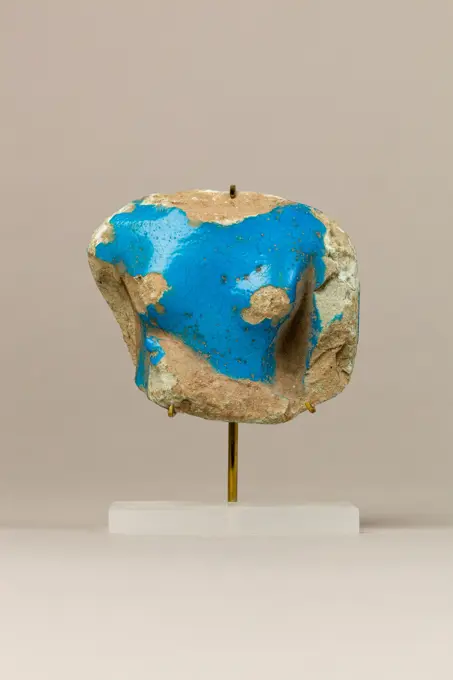
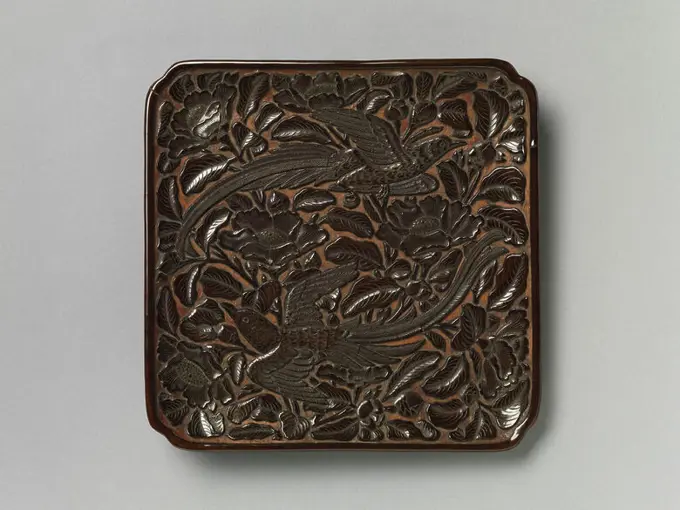
Square dish with long-tailed birds and camellias. Culture: China. Dimensions: H. 1 in. (2.5 cm); W. 7 in. (17.8 cm); L. 7 1/8 in. (18 cm). Date: 14th century.Made in a classic two-bird design, this dish is representative of the style of the early fourteenth century. The lacquer artist achieved a nearly three-dimensional image on a flat surface: deep carving creates the relief effect, and fine incisions for the bird feathers and leaf veins convey texture. The red background is relatively visible compared to examples made later in the century. Museum: Metropolitan Museum of Art, New York, USA.Paperweight 1843-1860 Saint-Louis. Technological improvements to optical scientific instruments in the mid-nineteenth century spurred a veritable obsession across Europe with identifying and classifying the natural world. Amateur botanists were eager to collect and preserve floral specimens, which they intently researched and catalogued. In response to this broad appeal, French glassmakers made paperweights that portrayed the very botanical subjects that were so enthusiastically sought. Many weights represented specimens with horticultural correctness, but others were entirely fanciful creations. Paperweights like this example speak to the periodís fascination with taxonomic systems.From the late 1840s to early 1860s, French manufacturers of fine glass and crystalósuch as Baccarat (Alsace), Clichy (Paris), and Saint-Louis (Lorraine)ócatered to the vast public enthusiasm for beautiful yet functional desk accessories. Paperweights, which were designed to secure loose papers against draftShards of signs from V.O.C. ship De 'Witte Leeuw', Anonymous, Before 1613 plate (dishes) Shards of signs from V.O.C. ship De 'Witte Leeuw'. Jingdezhen bone china (material)   Sint-HelenaWall Facing (Netherlands); tin-glazed earthenware, underglazeBelt slide with a falcon attacking a swan 12th-14th century China This carved jade belt slide shows a small falcon hunting a wild goose amid lotus flowers. The motif symbolizes the spring hunt of the Jurchens, a seminomadic people who lived beyond Chinas Great Wall in the northeast. Known as chunshui (spring water) in historical texts, the hunt was an important annual Jurchen ritual that Mongol and Manchu royalty continued during the later dynasties. The motif appears widely on ceramics, textiles, and other media. Listen to experts illuminate this artwork's story Listen Play or pause #7329. Belt Slide with a Falcon Attacking a Goose Supported by Bloomberg Philanthropies We're sorry, the transcript for this audio track is not available at this time. We are working to make it available as soon as possible.. Belt slide with a falcon attacking a swan 41747Paperweight 1840-1865 France. Glass . Compagnie de Saint LouisMenat Fragment ca. 1479-1458 B.C. New Kingdom. Menat Fragment. ca. 1479-1458 B.C.. Blue faience. New Kingdom. From Egypt, Upper Egypt, Thebes, Deir el-Bahri, Temple of Hatshepsut, Hathor Chapel, Egypt Exploration Fund excavations. Dynasty 18Fragment of a cover for chair sitting, of printed silk. Three covers for seat seats. The covers are made of printed side. Multicolored flower branches are printed on a red soil. The covers have a linen lining.Part of an ear stud ca. 1390-1353 B.C. New Kingdom. Part of an ear stud. ca. 1390-1353 B.C.. Glass. New Kingdom. From Egypt, Upper Egypt, Thebes, Malqata, King's Palace, MMA excavations, 1910-12. Dynasty 18Fragment of a dish, c. 1630 Fragment of a dish on a low foot ring. Crème shard covered with ting laze on the front and lead glaze at the rear. Painted in blue, orange and green with a milkmaid. Northern Netherlands earthenware. tin glaze. lead glaze majolica Fragment of a dish on a low foot ring. Crème shard covered with ting laze on the front and lead glaze at the rear. Painted in blue, orange and green with a milkmaid. Northern Netherlands earthenware. tin glaze. lead glaze majolicaFragment of a Bowl or Cup 13th-16th century. Fragment of a Bowl or Cup 452422Decorative elementBelt Buckle, early 1900s. Japan, Meiji period (1868-1912) or Taishō period (1912-26). Cloisonne enamel; overall: 3.8 cm (1 1/2 in.).Paperweight 1843-1860 Lunéville. Glass . Baccarat GlassworksCylinder Seal of King Seankhibre Amenemhat VI ca. 1787-1784 B.C. Middle Kingdom. Cylinder Seal of King Seankhibre Amenemhat VI. ca. 1787-1784 B.C.. Glazed steatite. Middle Kingdom. From Egypt. Dynasty 13Fragment of a dish, decorated with a floral decoration in yellow, green, white and black on a blue surface, anonymous, c. 1600 - c. 1650 fragment Fragment of a dish, decorated with ships in yellow, orange and blue. Note: Dug up in the Walloon Island in Amsterdam. Northern Netherlands earthenwarePaperweight. Saint-Louis; France, founded 1767. Date: 1848. Dimensions: Diam. 7 cm (2 3/4 in.). Glass. Origin: Saint-Louis. Museum: The Chicago Art Institute, Chicago, USA. Author: Compagnie de Saint Louis.Case (Inr) with Design of Poem Cards with Crane and Pine, Plum, Cherry, Chrysanthemum late 19th century Japan. Case (Inr) with Design of Poem Cards with Crane and Pine, Plum, Cherry, Chrysanthemum. Japan. late 19th century. Wood, polished wood, gold and colored hiramakie, togidashi; Interior: plain. InrCuff with slightly sculpted and potented strip of binchekant, anonymous, c. 1720 - c. 1730 Cuff with slightly sculpted and potentially binchekant strip. The pattern has a flowering slender running over the entire width. Belgium linen (material) Binche Lace Cuff with slightly sculpted and potentially binchekant strip. The pattern has a flowering slender running over the entire width. Belgium linen (material) Binche LaceSketchbook from the Stephen H. Long Expedition to the Rocky Mountains. 20leaves..  Artist: Titian Ramsay Peale, American, 1799-1885Paperweight 1840-1860 Clichy. The colorful geometric clusters embedded in this paperweight reflect the nineteenth-century European fascination with optical effects. Sir David Brewster invented the kaleidoscope in 1815, and its colorful and changing patterns brought great visual entertainment. Paperweights such as this example reformed this childlike pastime for a sophisticated adult audience. Depicted in glass were tiny glittering flowers, small black and blue cameos of figures, and even miniature bottlecaps. These were delicately arranged within the orb for the observant eye to discover.From the late 1840s to early 1860s, French manufacturers of fine glass and crystalósuch as Baccarat (Alsace), Clichy (Paris), and Saint-Louis (Lorraine)ócatered to the vast public enthusiasm for beautiful yet functional desk accessories. Paperweights, which were designed to secure loose papers against drafts, were among their most popular products.. Glass . Clichy GlasshouseFibula 7th-6th century B.C. Possibly Etruscan Fibula.. Fibula. Possibly Etruscan. 7th-6th century B.C.. Amber. Archaic. Miscellaneous-AmberDishwill of earthenware with a drawing of an air with church tower, in underly glaze and upper glaze blue, anonymous, 1500 - 1799   earthenware. glaze   earthenware. glazeWindow with tulip, anonymous, 1550 - 1600 Window with email painting of a tulip in predominantly yellow and red. NOTE: Part of the BK-Clxiii-a to r.  glass. lead (metal). silver stain Window with email painting of a tulip in predominantly yellow and red. NOTE: Part of the BK-Clxiii-a to r.  glass. lead (metal). silver stainTile J. & J. G. Low Art Tile Works (1877-1907). , ca. 1881. Glazed earthenware, 6 1/8 x 6 1/8 x 1/2 in. (15.6 x 15.6 x 1.3 cm).   Decorative Arts ca. 1881Saucer; Baranówka (Porcelain Manufaktura; 1804-2012); 1830 (1830-00-00-1830-00-00);Fragment sign from V.O.C. ship De 'Witte Leeuw', Anonymous, Before 1613 plate (dishes) Fragment sign from V.O.C. ship the 'Witte Leeuw'. Jingdezhen bone china (material)   Sint-HelenaShards Kraakporcelain from V.O.C. ship De 'Witte Leeuw', Anonymous, Before 1613  Shards Kraakporcelain from V.O.C. ship De 'Witte Leeuw'. Jingdezhen bone china (material)   Sint-HelenaScarab: Nefera with Hieroglyphs (kA-signs, xaw). Egyptian. Date: 2055 BC-1550 BC. Dimensions: 1.3 × 0.8 × 0.5 cm (1/2 × 5/16 × 3/16 in.). Glazed steatite. Origin: Egypt. Museum: The Chicago Art Institute, Chicago, USA. Author: Ancient Egyptian.Grahal-Manzara. Carnavalet 2013-2016 collection sites. Numismatics.PlateFragment of a Bowl or Cup 13th-16th century. Fragment of a Bowl or Cup 452424Paperweight 1840-1865 France. Glass . Clichy GlasshouseDish (USA); glass19th century glass paper-weights of high artistic meritTiles and ornaments from the palace of Ramesses II. Dimensions: Diam. 3.4 cm (1 5/16 in.); Th. 0.4 cm (3/16 in.). Dynasty: Dynasty 19. Reign: reign of Ramesses II. Date: ca. 1279-1213 B.C.. Museum: Metropolitan Museum of Art, New York, USA.Pyxis Lid. Unknown 1st century A.D. This mosaic pyxis lid is made of amber-colored and white glass imitating agate. The surface was polished. This lid is in good condition with some iridescence on the inside.Teljoor. Blackboard or teljoor, round and shallow with a narrow-up edge. The board was originally painted red (weapon with French lily) and has turning traces in the plane of which the middle of both sides is finished with a chisel. The sign had to cut to cut fixed food, especially meat. Cutters are visible on the user side. See also NG-NM-7677.Shards of a head from the wreck of the East Indians Hollandia, Anonymous, 1700 - in Or Before 1743  Porcelain, cup, type 3; fragm of body, sim. NG 1980-27H916. Netherlands porcelain   SecondPlate with a figure on a powder blue ground, anonymous, c. 1700 Porcelain plate with a flat edge, painted in underly glaze blue and red. The front is covered with bleu poudré (powder blue) with a saved figure on the flat, possibly a warring monk (monk hua); The back of the edge with three bamboo branches. Marked on the underside with a flower in a double circle. A damage on the edge. On the bottom an old label with: Royal Academy of Art, London/International Exhibition of Chinese Art, 1935-6/SER. Nos. 1061/Owner R. May, Zeist, Holland; A sticker with: Friends of Asian art. Underglaze blue with copper red. China porcelain. glaze. cobalt (mineral). copper (metal) painting / vitrification Porcelain plate with a flat edge, painted in underly glaze blue and red. The front is covered with bleu poudré (powder blue) with a saved figure on the flat, possibly a warring monk (monk hua); The back of the edge with three bamboo branches. Marked on the underside with a flower in a double circle. A daPlate, painted with the Flügelmuster decor. Painted porcelain plate. The plate is painted in green and blue with the flügelmuster. The sign belongs to a tableware (BK-1976-65-1 to BK-1976-65-34) and has been marked.Fragment of a Mosaic Glass Vessel. Unknown 1st century A.D.Glass striped mosaic bowl fragment late 1st century B.C.-early 1st century A.D. Roman Translucent blue and purple, opaque white and yellow, with colorless glass.Convex curving side.Striped mosaic pattern formed from lengths of canes laid side by side in parallel rows and separated from one another by single lengths of a network cane in colorless glass wound spirally with two opaque yellow threads; one cane comprises a length of purple flanked on one side by a length of colorless glass overlaid with white and yellow, and the other comprises a length of blue overlaid with two yellow stripes. Broken on all sides; some pinprick bubbles; slight pitting on polished exterior, creamy white iridescent weathering on interior.. Glass striped mosaic bowl fragment 257164Inlay fragment, small colored squares forming a diamond pattern. Dimensions: H. 3.1 × W. 3.6 cm (1 1/4 × 1 7/16 in.). Date: 100 BC-100 AD.A mosaic glass technique allowed multiples of an image to be created: a figural or design composition was made by bundling colored glass canes, which were then drawn out into a long bar . The bar was then sectioned at right angles, probably by striking the bar with appropriate tools, to produce small inlay tiles. The tile would then be smoothed and polished on the face intended to appear outwards. Museum: Metropolitan Museum of Art, New York, USA.Sauce Dish ca. 1867 Boston & Sandwich Glass Company. Sauce Dish 7147Glass eye bead. Dimensions: L.: 3/8 in. (1 cm)Diam.: 9/16 in. (1.4 cm).Translucent deep blue; trails in opaque yellow.Globular; sides decorated with three opaque yellow eyes with central dot.Intact; some dulling and pitting; slight iridescent weathering. Museum: Metropolitan Museum of Art, New York, USA.Terracotta patera (shallow bowl with handle). Culture: Greek, South Italian, Apulian. Dimensions: Overall: 2 1/2 x 10 3/4in. (6.4 x 27.3cm). Date: late 4th-early 3rd century B.C..Yellow-slipped pottery is unusual in Apulia but typically occurs in pairs of oinochoai and paterae. The jug served to pour liquids, and the patera was one of several shapes used for offerings. The handle of the patera is in the shape of a youth with hands raised; two rams form the transition to the bowl; and a ram's head appears below the youth's feet--a convention for bronze handles since the Archaic period. Museum: Metropolitan Museum of Art, New York, USA.Inlay, hieroglyph 664-610 B.C. Late Period, Saite A quantity of faience hieroglyphs and border elements was found in the tomb or courtyard of Nespekashuty. These are displayed in galleries 127 and 130. They are of similar size and manufacture, so seem to have belonged to a single object, likely of wood. Some of the signs belong to the standard offering formula, others mention Osiris and Anubis, so they certainly suggest an item of funerary furniture - a box, a screen, or a coffin although coffins are not usually inlaid in faience and remnants of Nespekashuty's were painted.Unfortunately, there are no signs indisputably pointing to Nespekashuty's names or titles. Although it seems likely that the fairly elaborate piece of equipment to which they testify belonged to the main burial of this tomb, and not to the Third Intermediate Period burials found in the courtyard or to the material apparently cleared from the Hathor Shrine at Deir el Bahri or to the other sets of late shabtis found in(Small Box with Butterflies), 19th century, Unknown Japanese, 3 x 3 1/16 in. (7.62 x 7.78 cm), Lacquer with sprinkled gold and silver designs, Japan, 19th centuryBowl with Enema Ritual. Guatemala or Honduras, Maya, 300-600 CE. Ceramics. Slip-painted ceramicGlass mosaic fragment. Culture: Roman. Dimensions: 2 1/16 × 7/8 × 1/8 in. (5.2 × 2.2 × 0.3 cm). Date: late 1st century B.C.-early 1st century A.D..Translucent deep purple, opaque white and yellow.Convex-curving side with oblique twist.Composite mosaic pattern formed from large sections of a single cane in a purple ground with a circle of white rods and a central polygonal yellow section outlined in white.Polished on exterior, with pitting of surface bubbles and some black impurities in yellow sections; dulling and pitting on interior with small patches of creamy weathering, and dulling on edges. Museum: Metropolitan Museum of Art, New York, USA.The Farnese Cup, by copy from Lisippo, 2nd Century, engraved sardonyx agate. Italy: Campania: Naples: National Archaeological Museum. Detail. Cup phials/vials plate/dish engraved decoration woman man goddess sitting Isis sphinx god Osiris cornucopia/horn of plenty HarpocratesSlip case for a book, paper, USA, 19th century, Decorative Arts, Case, CaseBird Plaque Ornament. Culture: Vicús. Dimensions: H. 2 x W. 2 in. (5 x 5 cm). Date: 3rd century B.C.-A.D. 2nd century. Museum: Metropolitan Museum of Art, New York, USA.inlay with row of rosettes. Dimensions: H. 0.7 × W. 2.5 cm (1/4 × 1 in.). Date: 200 BC-100 AD.A mosaic glass technique allowed multiples of an image to be created: a figural or design composition was made by bundling colored glass canes, which were then drawn out into a long bar. The bar was then sectioned at right angles, probably by striking the bar with appropriate tools, to produce small inlay tiles. The tile would then be smoothed and polished on the face intended to appear outwards.Such elements could also be used side by side to create repeating patterns. Museum: Metropolitan Museum of Art, New York, USA.Tile with peacock, anonymous, c. 1640 - c. 1660 Tile with a blue painted peacock on a ground and an ox head in the corners. Netherlands earthenware. tin glaze majolica Tile with a blue painted peacock on a ground and an ox head in the corners. Netherlands earthenware. tin glaze majolicabead from blue moonstone adularia mineral gem round bead from blue moonstone adularia natural mineral gem stone isolated on white background Copyright: xZoonar.com/ValeryxVoennyyx 8635706Sword Guard (Tsuba) ca. 1615-1868 Japanese A tsuba is a sword guard and part of a sword mounting. It is mounted between the swords blade and grip to protect the users hands.. Sword Guard (Tsuba) 34448Bead with Royal Name ca. 1153-712 B.C. New Kingdom-Third Intermediate Period An elongated faience bead inscribed with the throne name "King of Upper and Lower Egypt, Lord of the Two Lands, Usermaatre-Setepenre." Ten kings bore this name: Ramesses IV (Dyn. 20); Amenemope (Dyn. 21); Osorkon II, Sheshonq III/IV, and Pami (Dyn. 22); Pedubaste I, Osorkon III, Takelot III, Rudamun, and Iuput II (Dyn. 23).. Bead with Royal Name. ca. 1153-712 B.C.. Faience. New Kingdom-Third Intermediate Period. From EgyptSealing pistonPierced fragrance ball with silk tassel, anonymous, c. 1800 - c. 1900 Open work ball of porcelain, painted on biscuit in blue, pink, green, yellow and eggplant. The walls with ajour work with six medallions; In this flower branches or flower branches at a rock (peony, chrysanthemum), to the medallions a band with flower and lotus drinks. A few cracks in the ball. Email sur biscuit with family rose colors. China porcelain. glaze. silk painting / vitrification Open work ball of porcelain, painted on biscuit in blue, pink, green, yellow and eggplant. The walls with ajour work with six medallions; In this flower branches or flower branches at a rock (peony, chrysanthemum), to the medallions a band with flower and lotus drinks. A few cracks in the ball. Email sur biscuit with family rose colors. China porcelain. glaze. silk painting / vitrificationTile ca. 1882-84 J. and J. G. Low Art Tile Works. Tile 8523Crayfish 6th-7th century Moche (Loma Negra). Crayfish 314476Toy serving plate - Inconnu / UnknownShards of signs from V.O.C. ship De 'Witte Leeuw', Anonymous, Before 1613 plate (dishes) Shards of signs from V.O.C. ship the 'Witte Leeuw' of Kraakporcelain. Jingdezhen bone china (material)   Sint-HelenaAndré Metthey (1871-1920). Plate. Earthenware. Museum of Fine Arts of the City of Paris, Petit Palais. Art Menager, Faience, Crockery, XIXth 19th 19th 19 19th 19th century, plateInlay, floral square. Dimensions: H. 2.6 × W. 2.6 cm (1 × 1 in.). Date: 1st-3rd Century A.D..A mosaic glass technique allowed multiples of an image to be created: a figural or design composition was made by bundling colored glass canes, which were then drawn out into a long bar. The bar was then sectioned at right angles, probably by striking the bar with appropriate tools, to produce small inlay tiles. The tile would then be smoothed and polished on the face intended to appear outwards. Museum: Metropolitan Museum of Art, New York, USA.CombGrahal-Manzara. Carnavalet 2013-2016 collection sites. Numismatics.Tabliczka klinowa z pokwitowaniem przekazania jagniąt na ofiary. nieznany urzędnik sumeryjski, authorFragment Of A Rank Badge (China); silk, metal wrapped silk thread; Warp x Weft: 10.5 x 14 cm (4 1/8 x 5 1/2 in.). Powerboard board, painted with the pattern "loose" in the colors blue, yellow, green, brown, pink and purple. Design Colenbrander. Signature: 27 with part sign including a d.; Factory stamp; "Loose" and v.b.; 27 (reimbursement).Glass mosaic bowl fragment. Culture: Roman. Dimensions: 1 1/4 × 1 13/16 × 1/8 in. (3.1 × 4.6 × 0.3 cm)Estimated diameter: 3 1/8 in. (8 cm). Date: late 1st century B.C.-early 1st century A.D..Translucent cobalt blue, opaque white, and colorless with bluish tinge.Vertical rim with flat lip; almost vertical side, sloping gently inwards, then curved sharply in to bottom.Composite mosaic pattern formed from sections of a single cane in a colorless ground with irregular white rods surrounding a blue circle dotted with white rods. A wide blue network cane would spirally with a white thread is attached as a rim.Polished exterior; pitting of surface bubbles and slight weathering on exterior; creamy brown weathering and iridescence on interior; some iridescent weathering on jagged edges. Museum: Metropolitan Museum of Art, New York, USA.rough amazonite stone on dark background macro shooting of natural mineral rock specimen - rough amazonite stone on dark granite background Copyright: xZoonar.com/ValeryxVoennyyx 11380593Skaraboid z pawianem. unknown, authorCameo glass fragment 1st half of 1st century A.D. Roman Translucent cobalt blue with opaque white overlay.Flat underside; top surface with shallow relief decoration.In relief in white, head and upper torso of a naked youthful satyr, facing left with head in profile and back in three-quarter view, and proper right left dropped before him and head slightly raised; he appears to be lifting a large circular object, part of which survives in front of him to the left.Broken on all sides; dulling, slight pitting, patches of creamy weathering and iridescence.The fragment comes from a flat panel of glass, probably a plaque rather than a vessel.. Cameo glass fragment 252531 Roman, Cameo glass fragment, 1st half of 1st century A.D., Glass, Overall: 1 1/2 x 2 1/16 in. (3.8 x 5.2 cm). The Metropolitan Museum of Art, New York. Fletcher Fund, 1926 (26.60.67)Paperweight 1845-1905 Sandwich. Glass . Boston and Sandwich Glass Companymineral specimen stone rock geology gem crystalFragment of a Bowl 16th-17th century. Fragment of a Bowl 449487An empty plate on a gray concrete background with copy space An empty plate on a gray concrete background with copy space. Home dinner cooking Copyright: xZoonar.com/TetianaxChernykovax 21909338Fragment sign from V.O.C. ship De 'Witte Leeuw', Before 1613 plate (dishes) Fragment sign from V.O.C. ship the 'Witte Leeuw'. Jingdezhen bone china (material)   Sint-Helenaazurite malachite stone against white background Falcon amulet Middle Kingdom ca. 1981-1640 B.C. View more. Falcon amulet. ca. 1981-1640 B.C.. Beryl. Middle Kingdom. From Egypt, Memphite Region, Lisht South, Tomb of Senwosretankh, west outer court, Pit 34, MMA excavations, 1933-34. Dynasty 12-13CDK unknownPeaches and Bats, late 1600s-1700s. China, Qing dynasty (1644-1911). Greenish-white jade; overall: 9.9 x 13.5 x 11.5 cm (3 7/8 x 5 5/16 x 4 1/2 in.).Lazurite. mineralsHigh angle view of flowers floating on water in a bowlMiniature Tunic 12th-13th century Ica. Miniature Tunic 312857Abstract minimal plant cardboard circleShards of signs from V.O.C. ship De 'Witte Leeuw', Anonymous, Before 1613 plate (dishes) Shards of signs from V.O.C. ship De 'Witte Leeuw'. Jingdezhen bone china (material)   Sint-HelenaVotive Fragment, Bust of Hathoritic Figure ca. 1479-1458 B.C. New Kingdom. Votive Fragment, Bust of Hathoritic Figure. ca. 1479-1458 B.C.. Blue faience. New Kingdom. From Egypt, Upper Egypt, Thebes, Deir el-Bahri, Temple of Hatshepsut, Hathor Chapel, Egypt Exploration Fund excavations. Dynasty 18Excerpt (foot) with red shard, with a stylized sun and geometric figures in sgrafitto technology and white glaze on the top, anonymous, 1200 - 1899  Italy earthenware  Italy earthenwarebead from aplite dalmatian jasper mineral stone round bead from aplite dalmatian jasper natural mineral gem stone isolated on white background Copyright: xZoonar.com/ValeryxVoennyyx 8635776Elongated Foliate Dish with Fish and Central Floret 907 CE-1099 China. Slip-coated earthenware with three color (sancai) lead glazes .Paperweight 1840-1865 Baccarat. Technological improvements to optical scientific instruments in the mid-nineteenth century spurred a veritable obsession across Europe with identifying and classifying the natural world. Amateur botanists were eager to collect and preserve floral specimens, which they intently researched and catalogued. In response to this broad appeal, French glassmakers made paperweights that portrayed the very botanical subjects that were so enthusiastically sought. Many weights represented specimens with horticultural correctness, but others were entirely fanciful creations. Paperweights like this example speak to the periodís fascination with taxonomic systems.From the late 1840s to early 1860s, French manufacturers of fine glass and crystalósuch as Baccarat (Alsace), Clichy (Paris), and Saint-Louis (Lorraine)ócatered to the vast public enthusiasm for beautiful yet functional desk accessories. Paperweights, which were designed to secure loose papers against drafts, Seal, amygdaloid. Culture: Minoan, Crete. Dimensions: Other: 1/2 x 11/16 x 5/16 in. (1.3 x 1.7 x 0.7 cm). Date: ca. 1650-1500 B.C.. Museum: Metropolitan Museum of Art, New York, USA.Paperweight 1843-1860 Lunéville. Technological improvements to optical scientific instruments in the mid-nineteenth century spurred a veritable obsession across Europe with identifying and classifying the natural world. Amateur botanists were eager to collect and preserve floral specimens, which they intently researched and catalogued. In response to this broad appeal, French glassmakers made paperweights that portrayed the very botanical subjects that were so enthusiastically sought. Many weights represented specimens with horticultural correctness, but others were entirely fanciful creations. Paperweights like this example speak to the periodís fascination with taxonomic systems.From the late 1840s to early 1860s, French manufacturers of fine glass and crystalósuch as Baccarat (Alsace), Clichy (Paris), and Saint-Louis (Lorraine)ócatered to the vast public enthusiasm for beautiful yet functional desk accessories. Paperweights, which were designed to secure loose papers against drafts,Fragment 14th-15th century. Fragment 445577Dish (one of a pair) 1744-83 Possibly Bow Porcelain Factory British. Dish (one of a pair). British, possibly Bow, London. 1744-83. Soft-paste porcelain. Possibly Bow Porcelain Factory (British, 1747-1776). Ceramics-PorcelainRotten apple in studio