Decorative Earthenware Fragments

Fragments of decorative earthenware with intricate patterns and colors, revealing historical art styles and techniques through a variety of pieces.

Fragment of a dish of earthenware decorated with geometric ornaments, anonymous, c. 1650 - c. 1725 Fragment of a dish of earthenware, at the top with tinglaze, covered at the rear with lead glaze, decorated with geometric ornaments in blue, purple and green. Excavated in London, Middlesex Street. England (possibly) earthenware. tin glaze majolica Fragment of a dish of earthenware, at the top with tinglaze, covered at the rear with lead glaze, decorated with geometric ornaments in blue, purple and green. Excavated in London, Middlesex Street. England (possibly) earthenware. tin glaze majolica
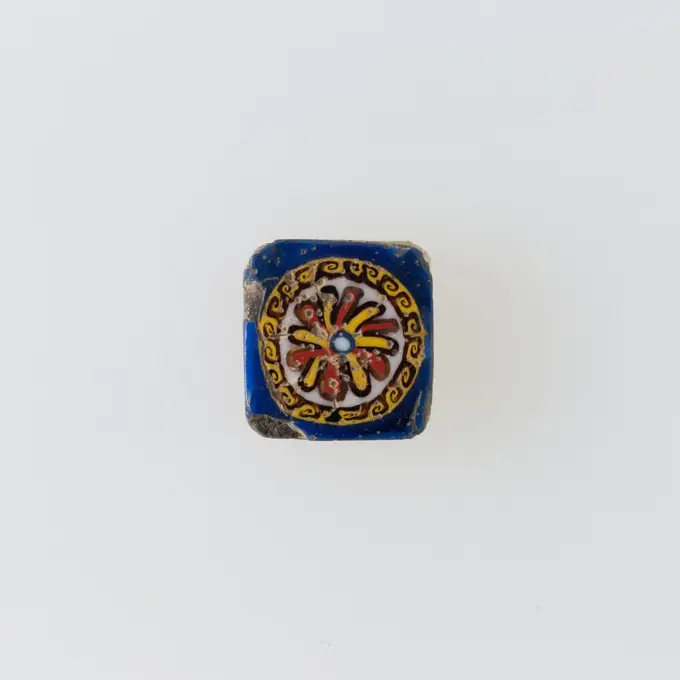
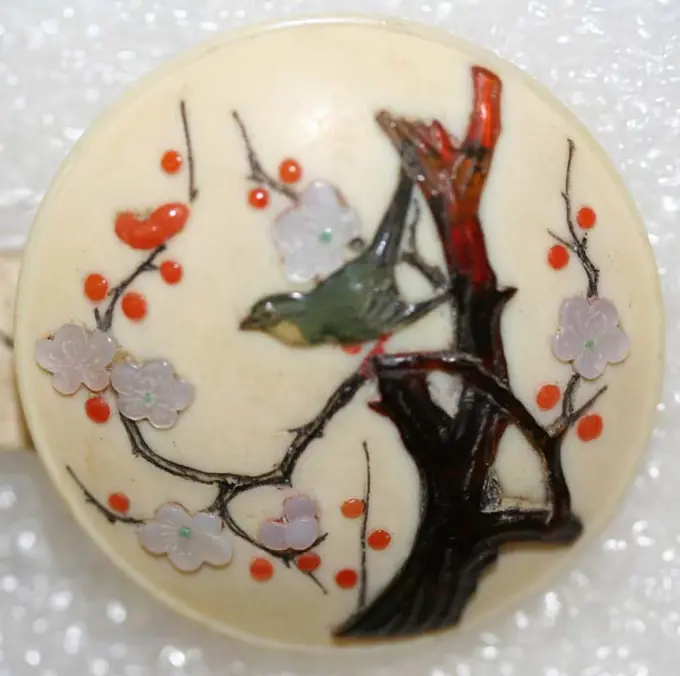
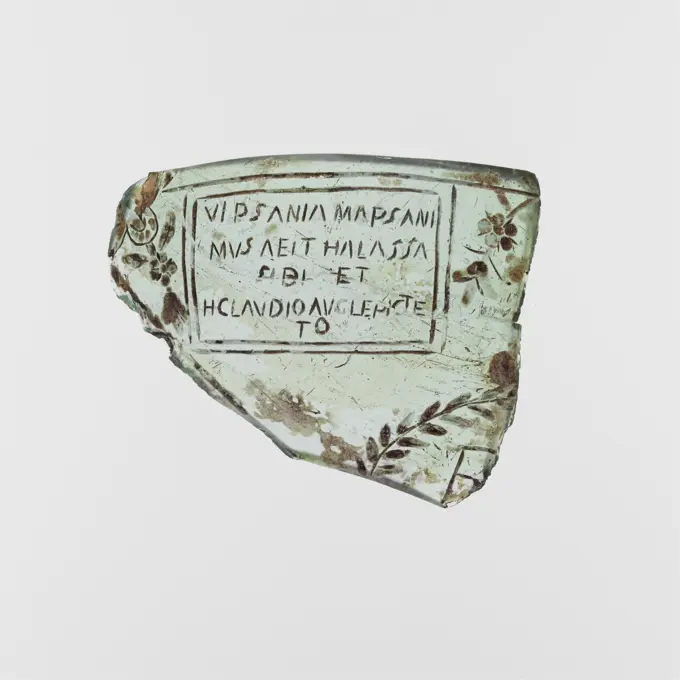
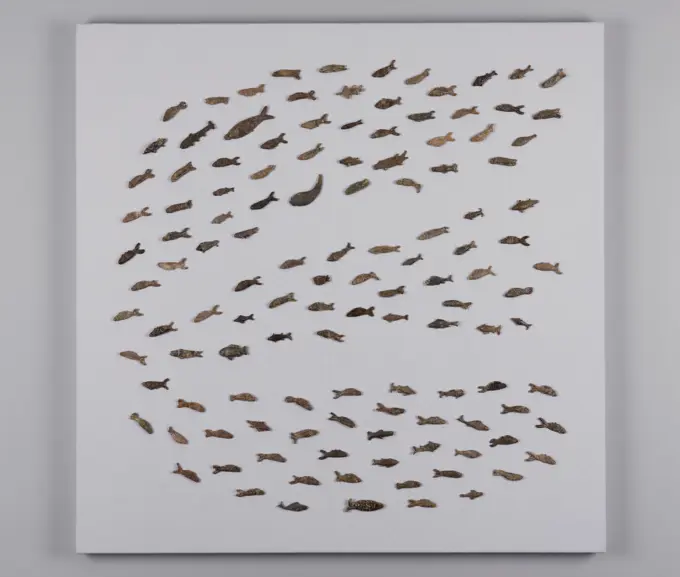
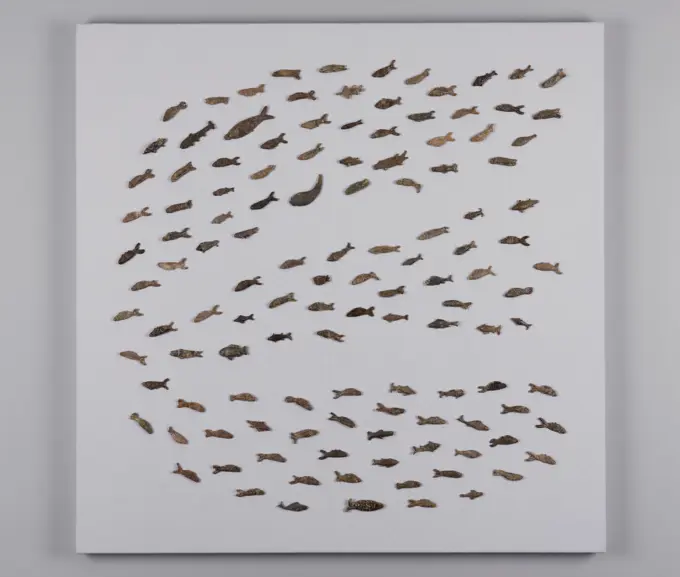
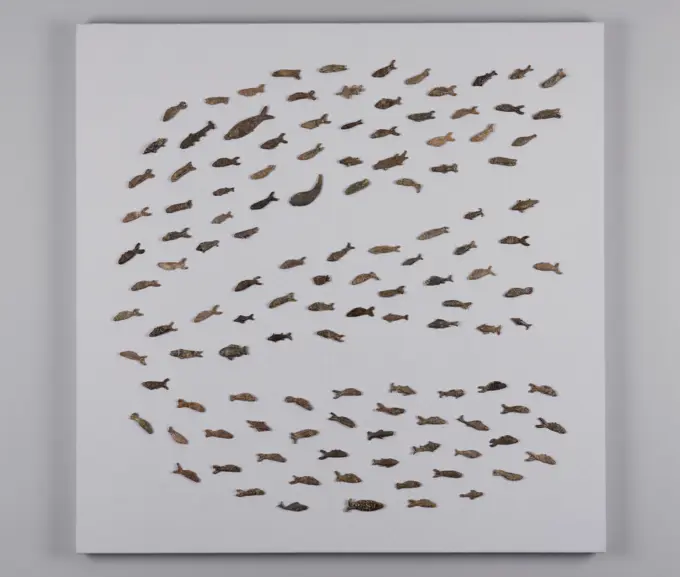
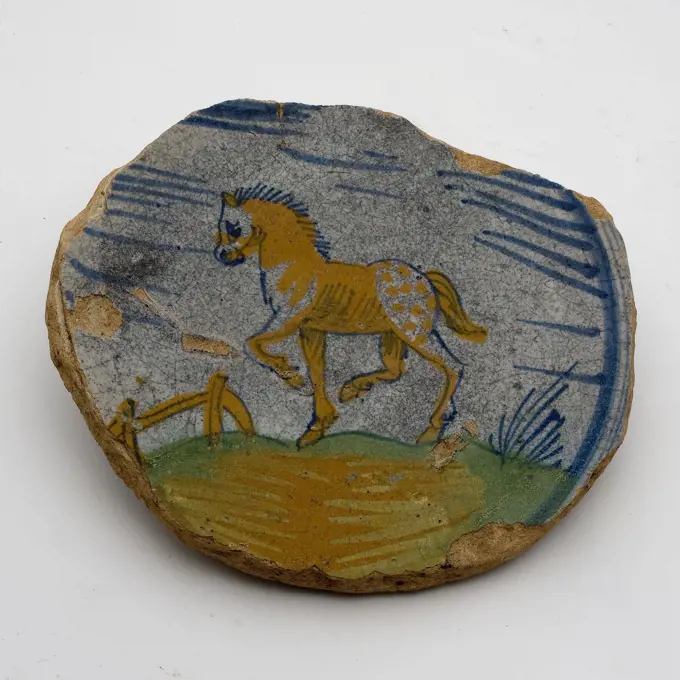
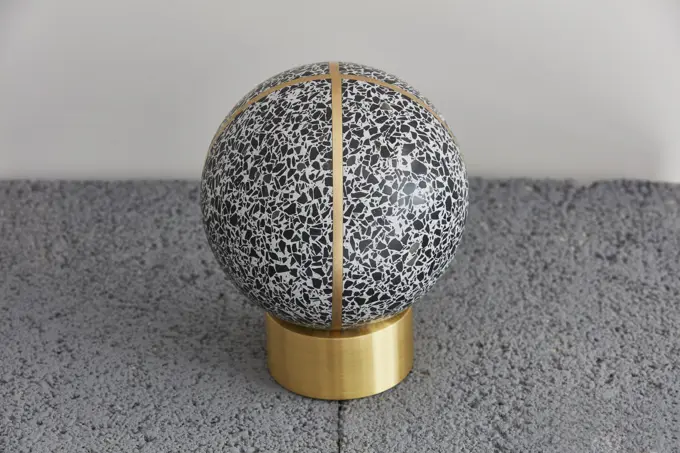
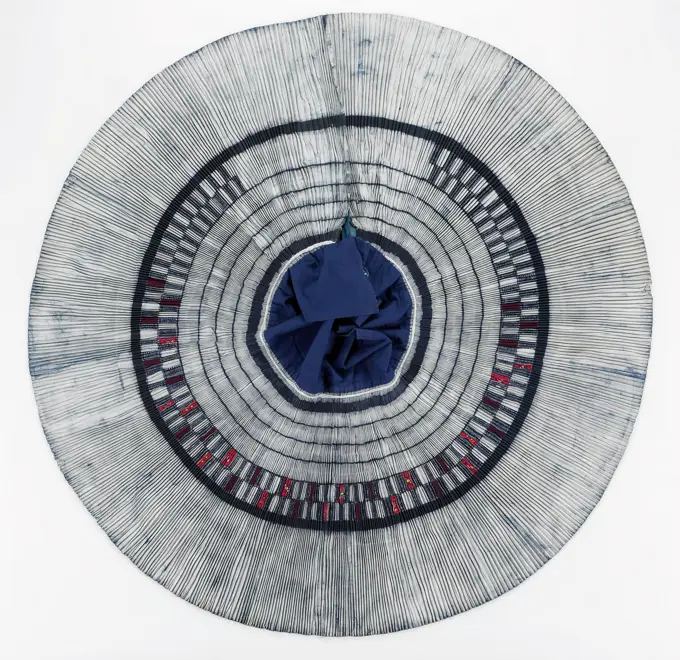
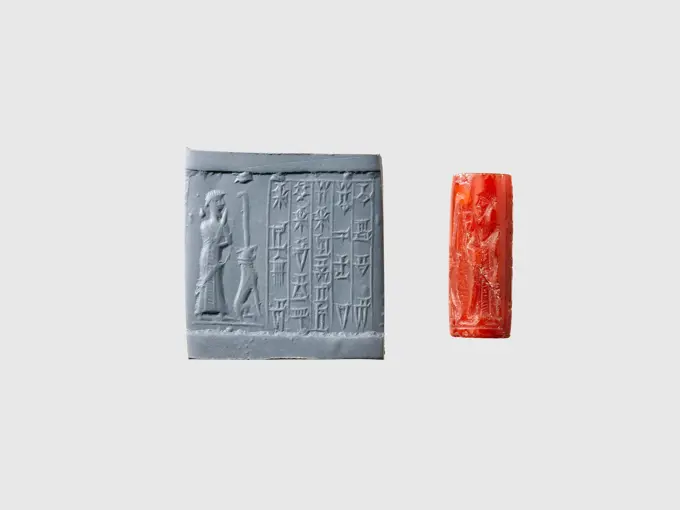
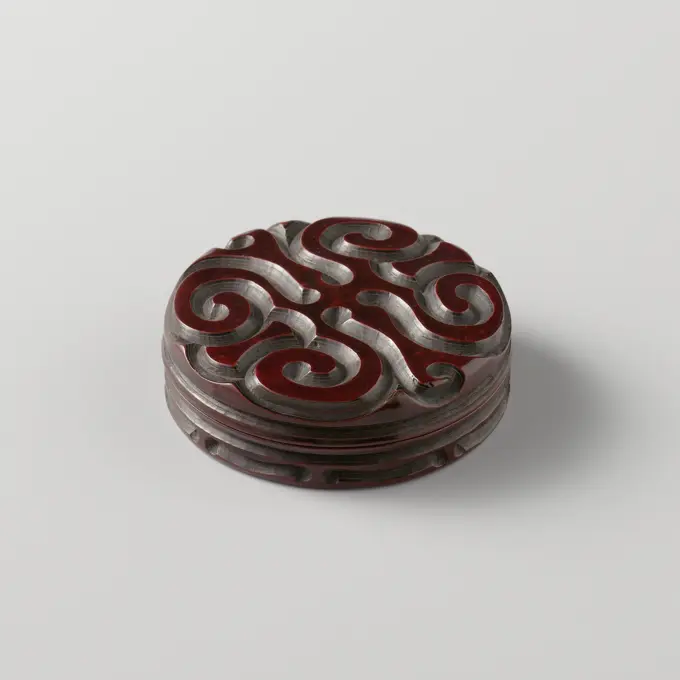
Incense box, Zokoku, 1825 - 1875 Round box with a red -brown surface. Decorated using the Guribori technique, so that different layers of red and black are visible. Inscription on the bottom and signed "Zokoku". Japan wood (plant material). lacquer (coating) Round box with a red -brown surface. Decorated using the Guribori technique, so that different layers of red and black are visible. Inscription on the bottom and signed "Zokoku". Japan wood (plant material). lacquer (coating)Glass mosaic bowl fragment late 1st century B.C.-early 1st century A.D. Roman Thin-walled rim fragment.Translucent purple, cobalt blue, turquoise blue partially appearing green, opaque white and yellow.Vertical, rounded rim; shallow convex curving side, tapering downward.Composite mosaic pattern formed from polygonal sections of three canes: one in a purple ground with a white circle and a central yellow rod surrounded by a yellow circle; another in a blue ground with concentric white circles and a central white rod, and the third in a turquoise blue ground with yellow concentric circles and a central white rod surrounded by purple.Polished exterior; pitting and weathering of surface bubbles on exterior; deep pitting and iridescent weathering on interior and jagged edges, dulling on rim.. Glass mosaic bowl fragment 257295art set of vintage frame lableSword Guard (Tsuba) Japanese ca. 1615-1868 A tsuba is a sword guard and part of a sword mounting. It is mounted between the swords blade and grip to protect the users hands.Inlay, rosette 100 BC-100 AD Ptolemaic Period-Roman Period A mosaic glass technique allowed multiples of an image to be created: a figural or design composition was made by bundling colored glass canes, which were then drawn out into a long bar. The bar was then sectioned at right angles, probably by striking the bar with appropriate tools, to produce small inlay tiles. The tile would then be smoothed and polished on the face intended to appear outwards.. Inlay, rosette. 100 BC-100 AD. Glass. Ptolemaic Period-Roman Period. From EgyptButton ca. 1850 Japanese. Button 114716little green planet with urban houses little planet - little green planet with urban houses in dark blue sky isolated on white background Copyright: xZoonar.com/ValeryxVoennyyx 5712765Glass bowl fragment with later inscription ca. 1st-3rd century A.D. Roman The fragment has been shown by scientific analysis and examination to be ancient. It is probably part of a bowl or globular bottle that was decorated with linear engraving in antiquity. However, the inscription and floral decoration appear to be modern additions. The inscription is copied from a Roman marble cinerary urn that has been known since 1716 and been in the British Museum since 1804. The decoration was therefore added to the fragment in order to enhance its attractiveness and value probably in the 19th century by an astute, well-informed, but unscrupulous person.. Glass bowl fragment with later inscription 250123Votive Fish. UnknownVotive Fish. UnknownVotive Fish. UnknownVotive Fish. UnknownSoul of polychrome majolica dish with stepping horse, signed, dish crockery holder soil find ceramic earthenware glaze tin glaze lead glaze, majolica hand turned painted glazed baked 2x Fragment mirror. en and hole in stand. Light red shard Front tingla glaze back transparent lead glaze with black discoloration Curly letters or signs in black painted inside stand ring: J * archeologie Stadscentrum Stadsdriehoek Rotterdam Town Hall serving serving food decorating Soil discovery: 1914 City Hall.Frédéric Boucheron (1830-1902). Necessary. Gold, silver, ruby. Around 1950. Museum of Fine Arts of the City of Paris, Petit Palais. Fashion accessory, jewelryStatue in showroom. Joyce Wang Showroom, London, United Kingdom. Architect: n/a, 2018.Glass Fragment late 15th century European. Glass Fragment. European. late 15th century. Colorless glass, silver stain. Glass-StainedString of 12 Eyed Beads 7th-10th century Islamic Period. String of 12 Eyed Beads. 7th-10th century. Glass. Islamic Period. From EgyptWall Facing (Holland); tin-glazed earthenware, underglazeFirst Battle: The Australia Five 2006, 2005 - Before 2006 coin Silver coin of five euros. Front: flat silhouette of Queen Beatrix used to the left, in which inscription, placed on a lines of six globes and routes of the VOC. Road side: flat styled Australia with inscription placed on the same lines, with inscription and nominal value. The Dutch Muntmeesterteken (Sailing Sailing) is depicted at the place where 't Duyfken landed. Ride. Mint caught in Perspex. Corresponding wooden box with insert. Netherlandspublisher: Utrecht silver (metal)   Australia. NetherlandsSkirt, 21 1/2 x 40 1/4 in. (54.61 x 102.24 cm) (plus ties), Cotton, ChinaWall Facing (Holland); tin-glazed earthenware, underglaze; 5 tiles tall, various wideMiniature Vase late 19th century China. Miniature Vase. China. late 19th century. Porcelain. Qing dynasty (1644-1911). Snuff BottlesCollar pendants and beads ca. 1353-1336 B.C. New Kingdom, Amarna Period. Collar pendants and beads. ca. 1353-1336 B.C.. Faience. New Kingdom, Amarna Period. From Egypt, Middle Egypt, Amarna (Akhetaten), Egypt Exploration Society excavations, 1928-29, 1930-31. Dynasty 18Wall Facing (Holland); tin-glazed earthenware, underglazeCylinder seal and modern impression: male worshiper, dog surmounted by a standard ca. mid-2nd millennium B.C. Kassite Although engraved stones had been used as early as the seventh millennium B.C. to stamp impressions in clay, the invention in the fourth millennium B.C. of carved cylinders that could be rolled over clay allowed the development of more complex seal designs. These cylinder seals, first used in Mesopotamia, served as a mark of ownership or identification. Seals were either impressed on lumps of clay that were used to close jars, doors, and baskets, or they were rolled onto clay tablets that recorded information about commercial or legal transactions. The seals were often made of precious stones. Protective properties may have been ascribed to both the material itself and the carved designs. Seals are important to the study of ancient Near Eastern art because many examples survive from every period and can, therefore, help to define chronological phases. Often preserving i