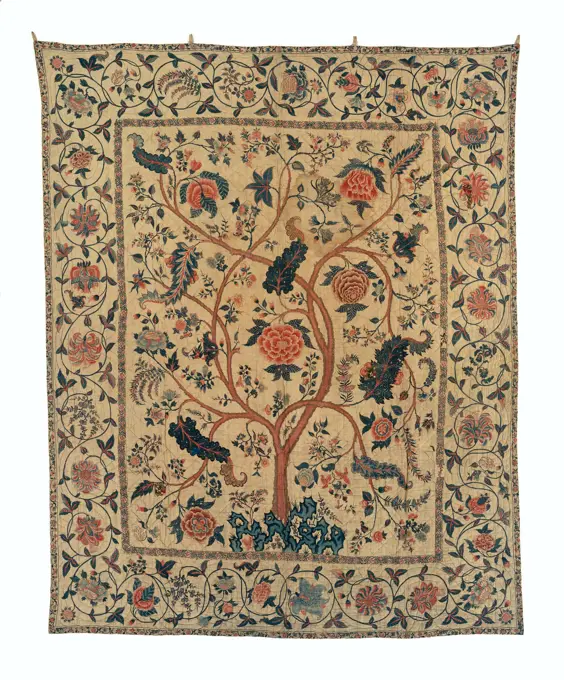
Decorative Fabrics and Carpets

Colorful textiles and carpets from Indonesia and the Caucasus, featuring intricate patterns and luxurious materials used for ceremonial occasions and decoration.

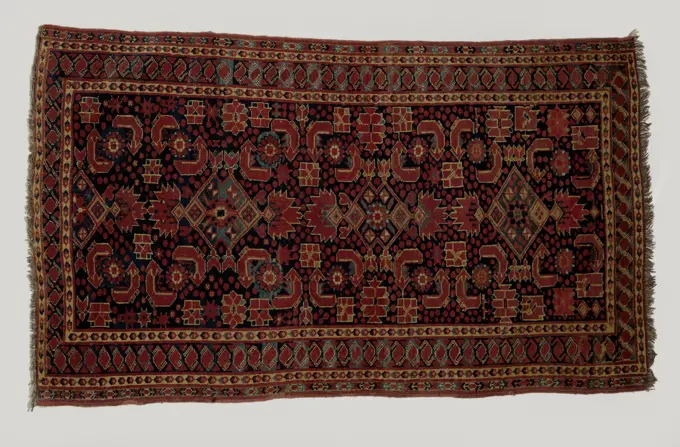
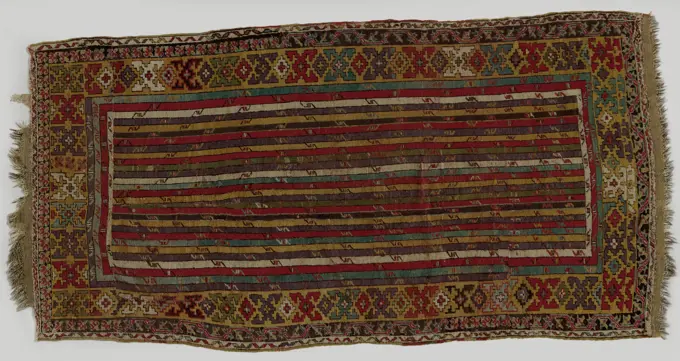
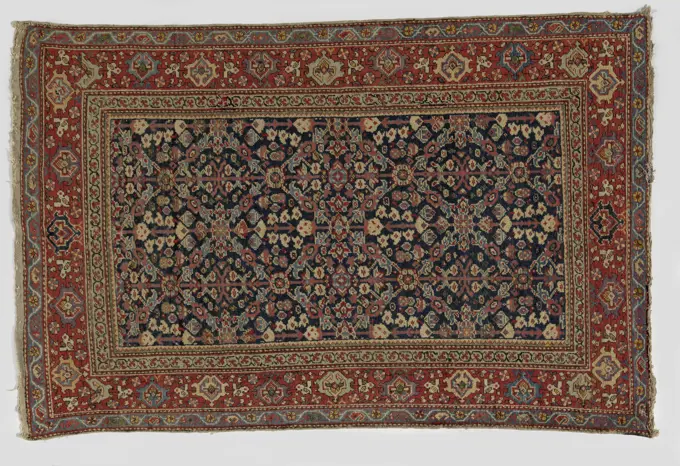
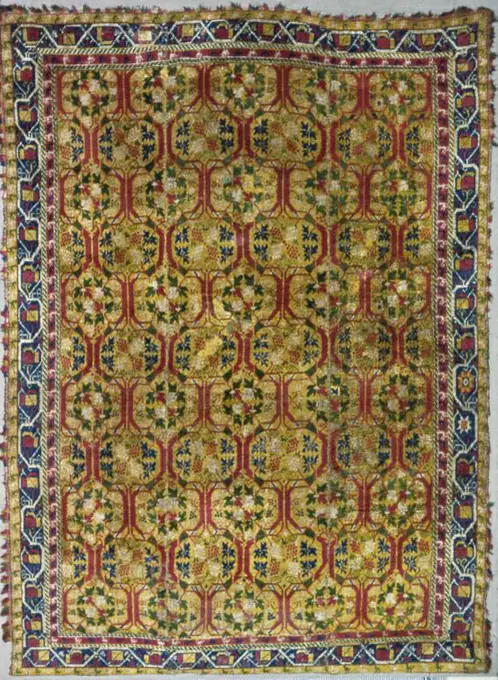
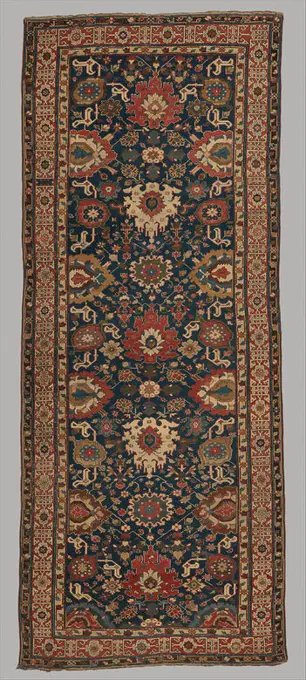
Oriental carpet, Anonymous, 1900 - 1949 Oriental carpet of knotted wool, decorated with rectangular medallions, filled with squares and huge corners. Five edges, the middle of which is decorated with S-shaped motifs. Caucasus wool Oriental carpet of knotted wool, decorated with rectangular medallions, filled with squares and huge corners. Five edges, the middle of which is decorated with S-shaped motifs. Caucasus wool
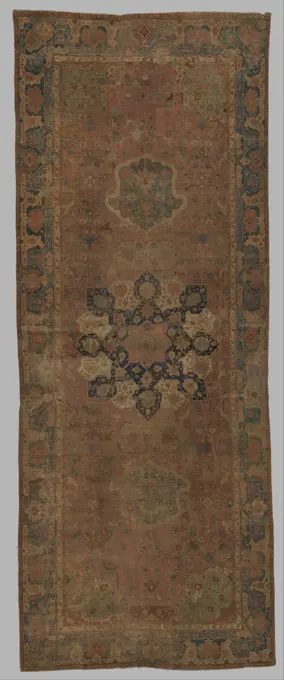
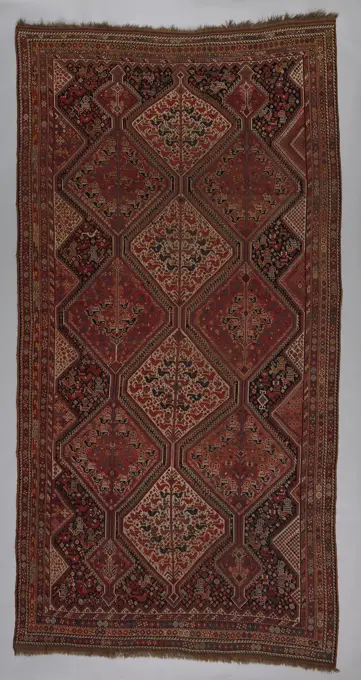
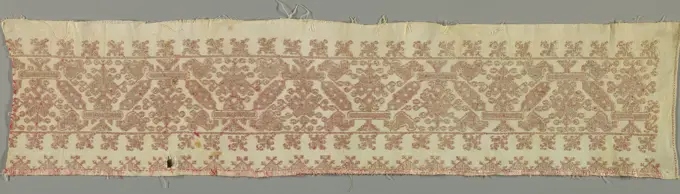
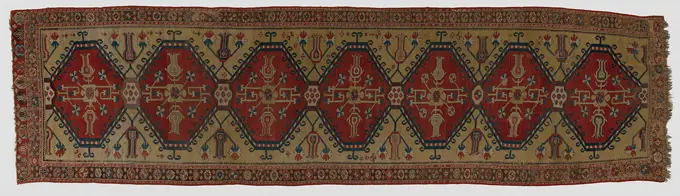
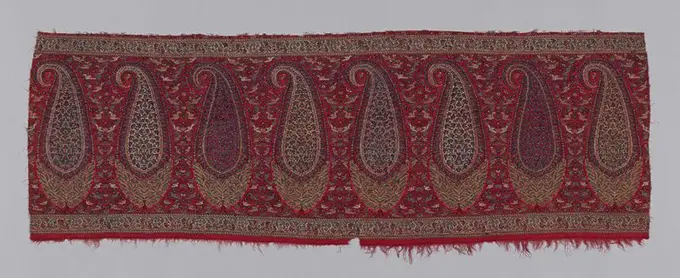
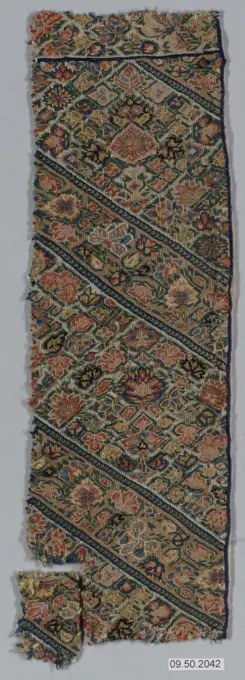
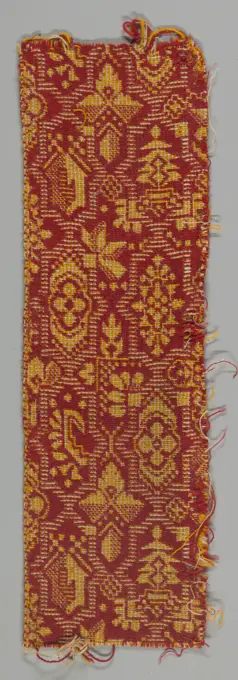
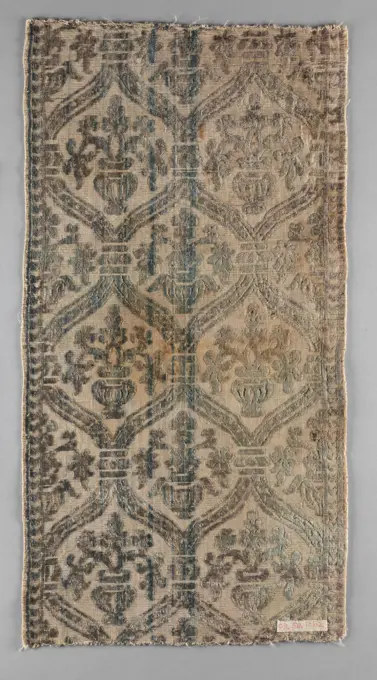
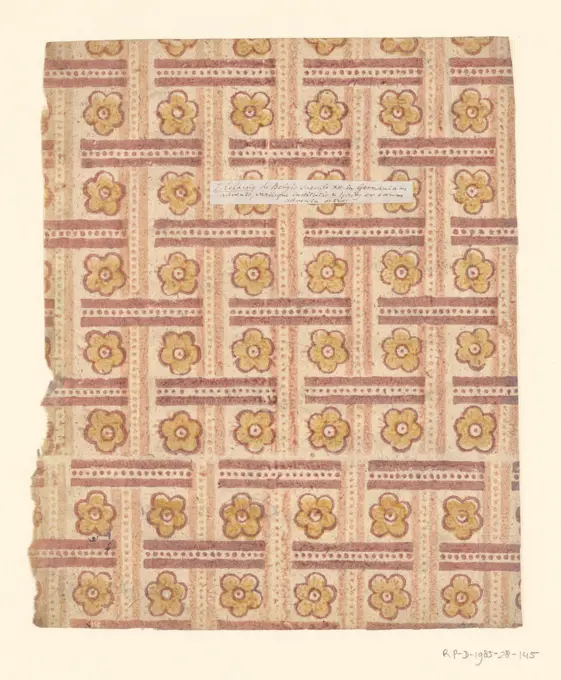
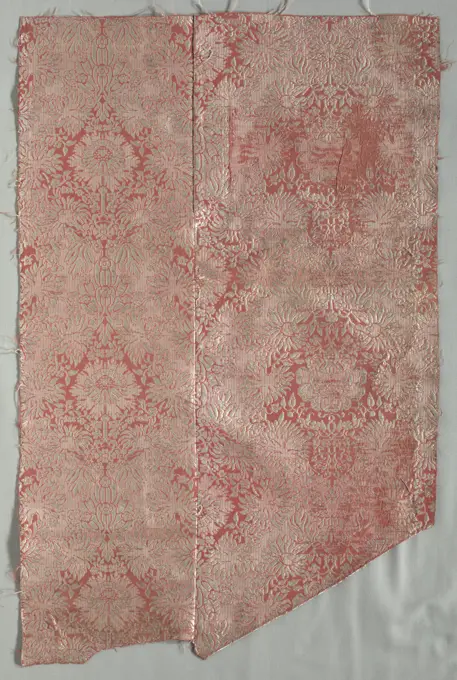
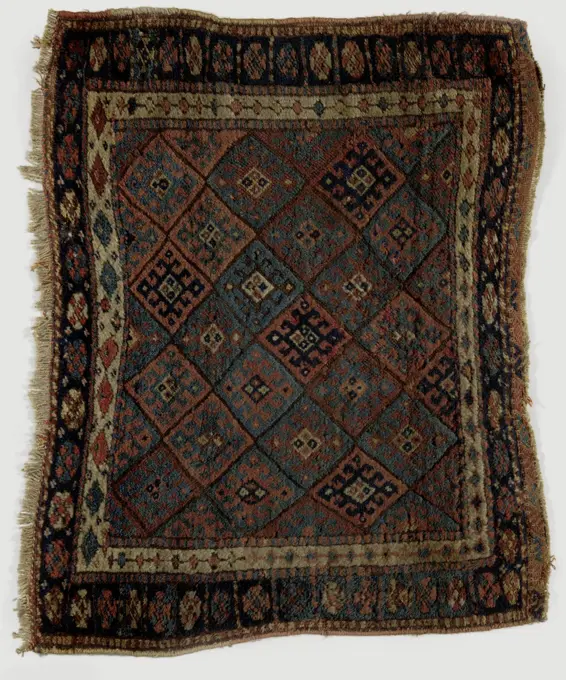
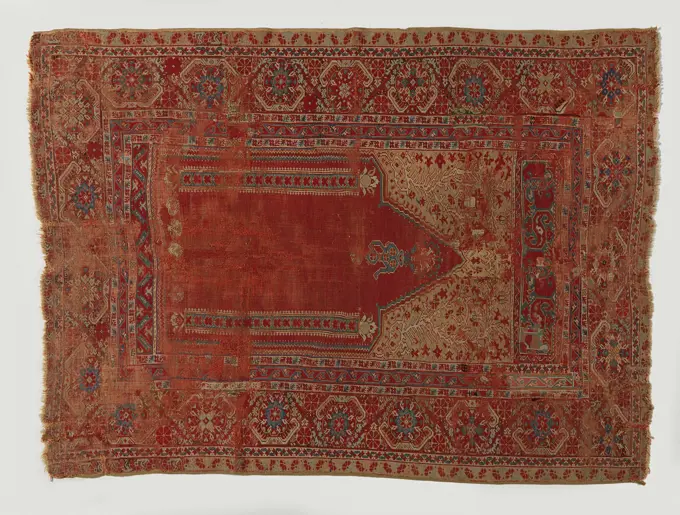
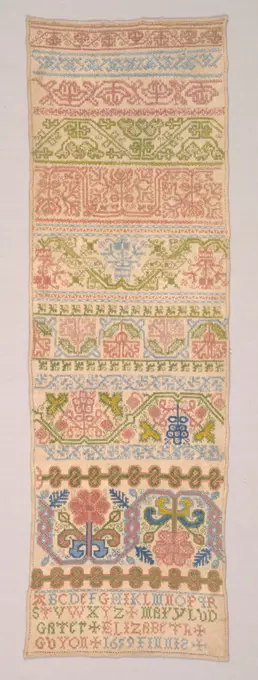
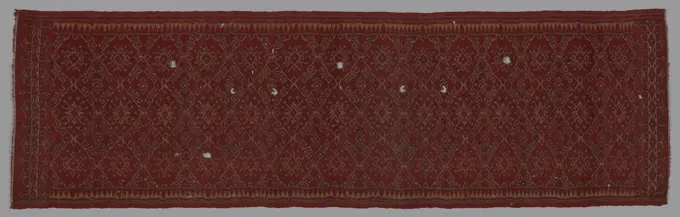
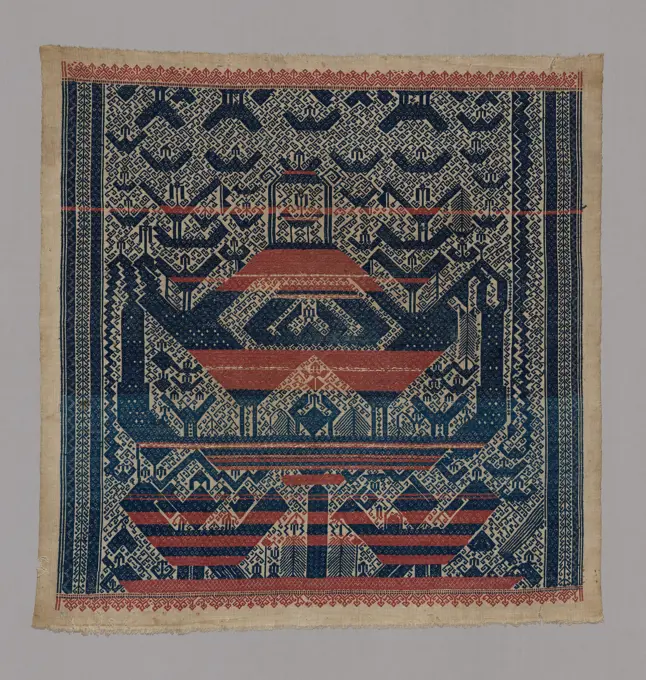
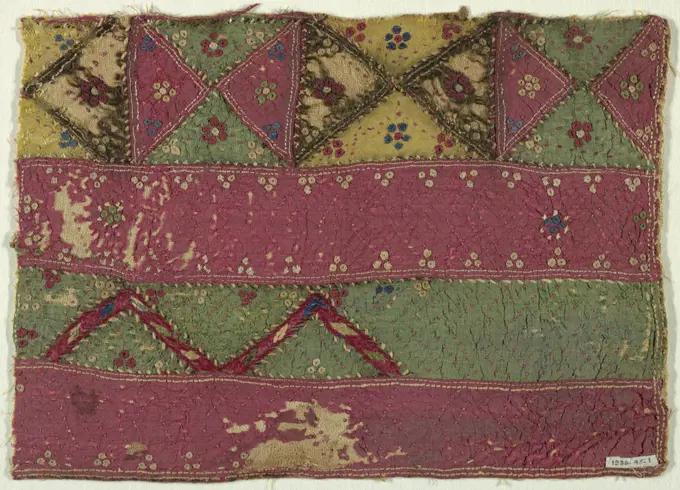
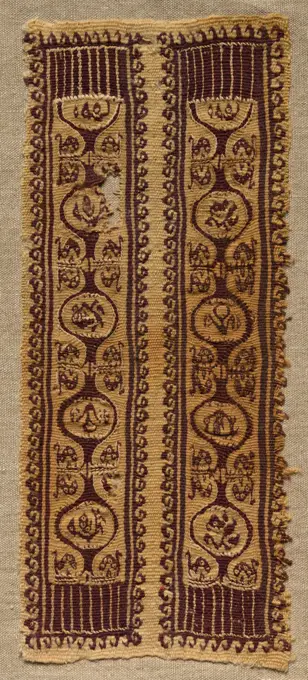
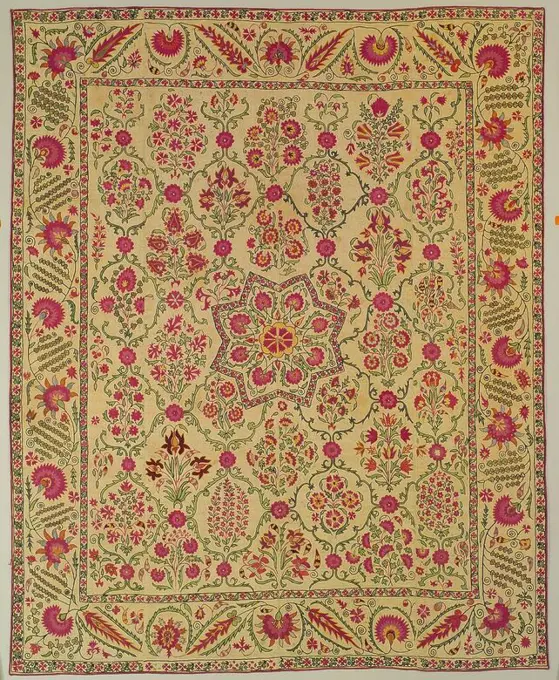
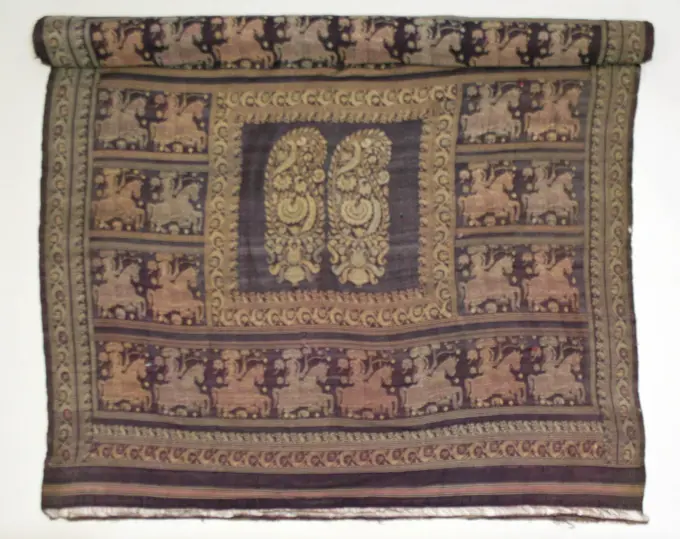
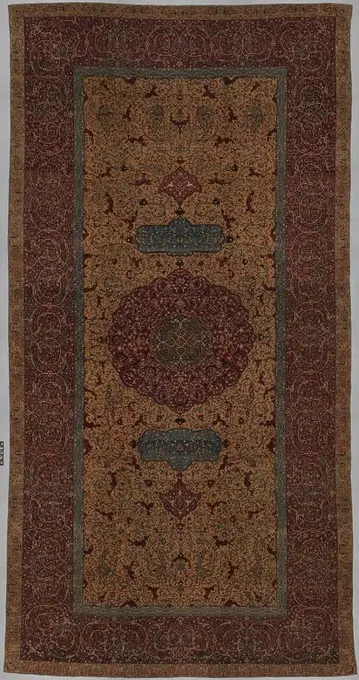
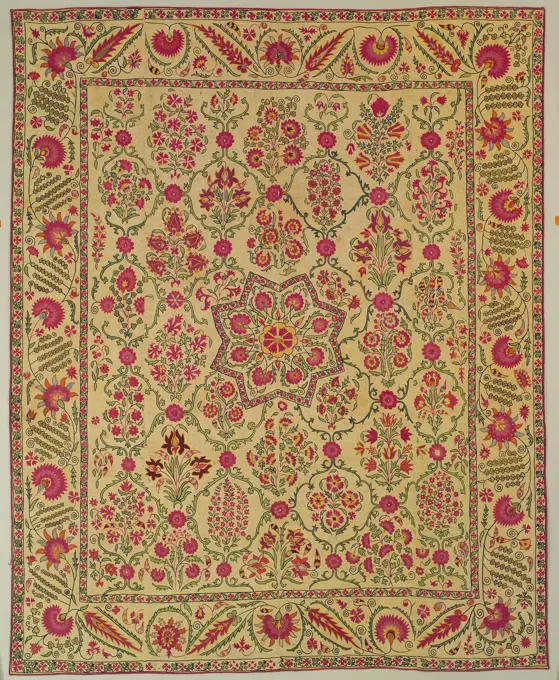
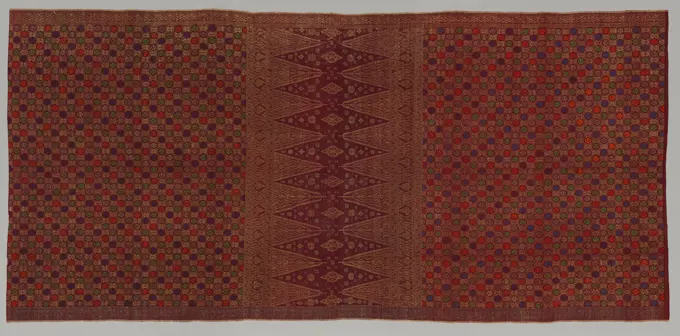
Wearing Cloth, 1900-1950. Indonesia, Sumatra, Palembang, 1st half 20th century. Tabby weave; silk brocaded with silk and metallic threads; overall: 203.2 x 94.6 cm (80 x 37 1/4 in.). The small pattern of rosettes in the main field, the selvage borders, and the tumpal (triangle) border are characteristic of the gold, silver, and red silk cloths woven in the Palembang region. Sumptuous silks of this type were only made in the eastern coastal cities of Sumatra that maintained active trade with China and India. Not only were the silk, gold, and silver threads imported, but the elements of the design were derived from Indian patola (warp and weft ikat) silks. Traditionally, cloths like this were worn for ceremonial occasions and were also used in the exchange of gifts required on the occasion of a wedding.Oriental carpet, Anonymous, 1900 - 1949 Oriental carpet of knotted wool, decorated with rectangular medallions, filled with squares and huge corners. Five edges, the middle of which is decorated with S-shaped motifs. Caucasus wool Oriental carpet of knotted wool, decorated with rectangular medallions, filled with squares and huge corners. Five edges, the middle of which is decorated with S-shaped motifs. Caucasus woolFragment of border from Skoutari” carpet unknownSkoutari” carpet unknownEastern carpet ,, 1800 - 1900 Oriental carpet, prayer rug. In midfield a moss green mihrab Kirsehir wool Oriental carpet, prayer rug. In midfield a moss green mihrab Kirsehir woolShawl(Limar)Carpet 16th century. Carpet. 16th century. Cotton (warp and weft), wool (pile); asymmetrically knotted pile. Attributed to Northern Iran. Textiles-RugsKhamseh Carpet Made 1885-1895 Iran. This rug comes from the Khamseh confederation, a grouping of five separate tribes from the Fars region in southern Iran. A classic example, it features large columns of hexagonal compartments full of stylized chickens and other animals. The chickens may hark back to some ancient tribal tradition, but the large size reflects such 19th-centry cultural changes as settled communities and commercial production.-A Global View Recent Acquisitions of textiles, 2012-2016, April 8-September 5, 2016. Wool, plain weave with supplementary wrapping wefts forming cut pile through a technique known as Turkish (Ghiordes) knots . KhamsehFragment (From a Bolster Cover) Made 1700-1900 Greece. Linen, plain weave; cut and drawn work embroidered with silk in darning and overcast stitches; embroidered in double running and running (pattern darning) stitches .Band; silk on linenMedalleled in loper format. In midfield seven medallions with crochet motifs, rosette, tulips and flour rinks.Oriental carpet in runner format, medallol. In Midfield Seven Medallions With Crochet Motifs. In The Medallions a Rosette, Tulips and Flower Vines. Edge With Rosette Flowers With Star Filling.Fragment, 1600s - 1700s. Iran, 19th c.. Silk taquete; overall: 18.5 x 28 cm (7 5/16 x 11 in.).Shawl Border Fragment. India. Date: 1810-1830. Dimensions: 49.3 x 129.1 cm (19 3/8 x 50 3/4 in.)Weft repeat: 65 cm (25 1/2 in.). Wool, double interlocking 2:2 'S' twill tapestry weave; main warp fringe. Origin: India. Museum: The Chicago Art Institute, Chicago, USA.Fragment from Women's Trousers 18th century. Fragment from Women's Trousers 445876Carpet (USA); woolStrip, c. 1550-99. Macao. Brocaded satin; overall: 68.6 x 52.7 cm (27 x 20 3/4 in.).Shoulder Cloth(Limar)Fragment (From a Border) Made 1601-1700 Italy. linen and silk .Fragment red silk with floral pattern in silver wire, anonymous, c. 1600 - c. 1699 Fragment of a silk tissue; Fond of red satin with Rinceaux from Rips, on which of shots of silver, vertical stripes, which imitate the passement and lines lined with reversed S-shaped curls. Netherlands silk. damask Fragment of a silk tissue; Fond of red satin with Rinceaux from Rips, on which of shots of silver, vertical stripes, which imitate the passement and lines lined with reversed S-shaped curls. Netherlands silk. damaskCloth of Silver, Cut Voided Velvet 17th century Italian Velvets like this were used for clothing, religious vestments, and altar dressings, as well as for wall coverings and cloths of honor. The thick, light-reflecting, tactile pile, which differentiates velvet from other silks, was achieved during the weaving process by using rods or wires to loop up warp threads rather than pull them tight and flat. This sumptuous example, which incorporates glittering strips of silver lamella running from selvedge to selvedge, is of a type popularly described as cloth of silver” from the sixteenth century onward. This cloth of silver was displayed in European Textiles and Costume Figures, on view at the Staten Island Institute of Arts and Sciences (visible at far right in the photograph of 1938), and at Walton High School (visible at center right in the photograph of February 9, 1939).[Elizabeth Cleland, 2020. Cloth of Silver, Cut Voided Velvet. Italian. 17th century. Silk, silver lamella. TextileFragment, Medium; silk Technique: woven, Vase motif and curved leaf forms, India, late 19th century, woven textiles, FragmentSheet with overall lattice pattern with rosettes 19th century Anonymous. Sheet with overall lattice pattern with rosettes. Anonymous , 19th century. 19th century. Relief print (wood or metal). PrintsLeaf with spreading pattern of flower pattern between braided lines, anonymous, 1750 - 1900  Leaf with spreading pattern of floral pattern between braided lines. With label with inscription: 'J. Eelking ... Ordis. ' Half of a cover.  paper. block printing (relief printing process) ornament derived from plant formsFragments, Medium: silk Technique: raised supplementary warp on satin foundation (velvet), Red uncut velvet on white satin ground. Curving lines enclosing vases and bouquets., 17th-18th century, woven textiles, FragmentsFragments (Italy); silk; Bequest of Richard Cranch Greenleaf in memory of his mother, Adeline Emma Greenleaf; 1962-56-116-aLength of block printed linen 16th century Spanish. Length of block printed linen 222997Medaillon suffering with three octagonal medallions against a black stock in midfield ,, 1800 - 1825 Eastern carpet, medailla rug of knotted wool. In midfield three octagonal medallions against a black stock. Light blue rectangles stretched between the medallions. Three narrow edges. Kuba (possibly) wool Eastern carpet, medailla rug of knotted wool. In midfield three octagonal medallions against a black stock. Light blue rectangles stretched between the medallions. Three narrow edges. Kuba (possibly) woolFragment from a Border. Italy. Date: 1601-1700. Dimensions: 29.3 x 7.1 cm (11 1/2 x 2 3/4 in.). Linen, plain weave; embroidered with silk floss in back, hem and running stitches. Origin: Italy. Museum: The Chicago Art Institute, Chicago, USA.Palmetbloemenkleed, z.g. SMYRNA, anonymous, in or after c. 1900 - in or before c. 2000 Palmetbloemen rug, so-called Smyrna, based on a USHAK decor. Midfield: Koren -blue field with infinite report of symmetrical palmets, which are composed of shoveling leaves with three flowers on the center axis. Between each pair of palmets there are four lancet leaves and a rosette in coral red, pink, light blue, ocher and white. Rand: triple. The main edge is red with tendrils and colorful palm flowers and rosette flowers in the aforementioned colors and in eggplant. Inner zoom of yellow and outside of black with a stretched "comma" rank. Asia Minor (Possible) wool Palmetbloemen rug, so-called Smyrna, based on a USHAK decor. Midfield: Koren -blue field with infinite report of symmetrical palmets, which are composed of shoveling leaves with three flowers on the center axis. Between each pair of palmets there are four lancet leaves and a rosette in coral red, pink, light blue, ocher and white. Rand: Panel (Pillow Case ) Made 1775-1825 Greece. Linen, plain weave; embroidered with silk in back, closed herringbone, Cretan, satin, and stem stitches; edged with silk, plain weave with supplementary patterning warps, extended weft cut fringe .Silk Textile, late 1600s. Italy, late 17th century. Plain compound cloth; silk; overall: 66.4 x 43.2 cm (26 1/8 x 17 in.).Covert of saddlebag, decorated with gratons, Jaffi Volk, c. 1900 - c. 1925 Cover of a saddle bag, Jaffi-Kurdistan-Mosul, of which the midfield is divided into windows by a grid. Double edge of which the outer is decorated with rosette flowers. At the top of a small part of an embroidered beard with triangles. Kurdistan Necklace and impact: Wool Cover of a saddle bag, Jaffi-Kurdistan-Mosul, of which the midfield is divided into windows by a grid. Double edge of which the outer is decorated with rosette flowers. At the top of a small part of an embroidered beard with triangles. Kurdistan Necklace and impact: WoolSquare Piece, 18th century, L.21-1/2 x W.20-1/2 in., Satin, silk, metal threads; needlework, Turkey, 18th centuryOriental carpet. Oriental carpet, prayer cloth, of knotted wool. In midfield, a terra-red mihrab with a pointed topped top in which a reverse oil can hangs. Two columns ending in flowers. Around three edges, contains the middle, widest, decorated with lotuses and leaves.Long Sampler, 1659. England, 17th century. Embroidery: silk on linen tabby ground; overall: 49.5 x 16.5 cm (19 1/2 x 6 1/2 in.).Ritual Textile (PuaKumbu)Eastern carpet, Ersari Volk, 1875 - 1925 Eastern carpet, tibar and flower rug. Floral motifs and geometric ornaments stylized in the dark blue midfield. Four -time edge, the widest of which is decorated with hexagons. Turkestan ketting: goat hair Eastern carpet, tibar and flower rug. Floral motifs and geometric ornaments stylized in the dark blue midfield. Four -time edge, the widest of which is decorated with hexagons. Turkestan ketting: goat hairTextile Fragment 18th-19th century. Textile Fragment 445642Fragment; silk; Warp x Weft: 22.2 x 9.2 cm (8 3/4 x 3 5/8 in.); 1896-32-4Fragment of semi silksemi silk fabric unknownBand; silk on linenFragment Made 1875-1900 Japan. .Sampler(Limar)Band, Medium: linen, silk Technique: discontinuous supplementary weft patterning (brocade) in plain weave foundation, Italy, 16th-17th century, woven textiles, BandFragment; silkFragments (Italy); silkCarpet 17th century. Carpet 446632Carpet. Persia, Tabriz. Date: 1601-1625. Dimensions: 990.6 × 434.3 cm (390 × 171 in.). Cotton and wool, plain weave with supplementary wrapping wefts forming cut pile through a technique known as "Sehna knots". Origin: Tabriz. Museum: The Chicago Art Institute, Chicago, USA. Author: Islamic.Ritual Weaving(Cepuk)Stripe rug, Kirshihir ,, 1800 - 1900 Stripe rug, Kirshihir. Field in red, yellow, light blue, purple, green and white. Ocher yellow edge. Kirsehir wool Stripe rug, Kirshihir. Field in red, yellow, light blue, purple, green and white. Ocher yellow edge. Kirsehir woolSilk Brocaded Textile, 1774-1793. France, 18th century, period of Louis XVI (1774-1793). Moiré, brocaded and warp-patterned; silk; overall: 54.6 x 48.3 cm (21 1/2 x 19 in.).Palmet flower rug, Z.G. Smyrna. Palmet flower rug, Z.G. Smyrna, based on a Ushak decor. Midfield: cornflower field with infinite report of symmetrical, in the center axis towards each other palmets composed of docked leaves with three flowers. Between each pair of palmets are four lancet leaves and a rosette in coral red, pink, light blue, ocher and white. Edge: Triple. The main beach is red with tendrils and colorful palmet flowers and rosette flowers in said colors and in eggplant. Indoor zoom of yellow and outdoor zoom of black with a stretched "comma" drink.Welum;  beginning of the 18th century (1701-00-00-1750-00-00);Textile Fragment 19th century. Textile Fragment 445885Textile (Indonesia); cottonBand; silk on linenTampan (Ceremonial Cloth) Made 1801-1900 Indonesia. Cotton and gilt-paper-strip-wrapped linen, plain weave with supplementary patterning wefts . PaminggirCarpet Fragment (England); woolFragment Made 1525-1575 Italy. Silk, satin weave with twill interlacings of secondary binding warps and patterning wefts .Sampler (Spain); Embroidered by Francisca Montero; Student of Maria Coller; silk embroidery on linen foundationEmbroidered tiraz, Medium: linen, silk Technique: embroidered, Four horizontal bands, the lower three in red and green. The top is divided into squares, each square comprised of four triangles in gree, red, yellow and black. Joinings backstitched in white linen thread. Small eyelets embroidered in red, white, green, blue and yellow silk and white linen. In green band, two points in red, green, white, blue and yellow silk. Almost entire piece quilted in zigzags with red silk thread., 12th-13th century, embroidery & stitching, Embroidered tirazOriental carpet. Oriental carpet with stripe decor. In midfield are four brick reds, filled with windows against a white distance. In between a concatenation of double arrows. Narrow pink border with zigzag line. Upper and at the top of a beard. Button: Ghiledes knot.Oriental carpet ,, 1860 - 1880 Eastern carpet. In midfield a diamond -shaped grid pattern filled with stylized flowers and flower bouquets against a dark blue background. Middle edge is decorated with a slender, lotus flowers and rosettes. Middle Persia Ketting an element: Cotton (Textile) Eastern carpet. In midfield a diamond -shaped grid pattern filled with stylized flowers and flower bouquets against a dark blue background. Middle edge is decorated with a slender, lotus flowers and rosettes. Middle Persia Ketting an element: Cotton (Textile)Herat Carpet. Date/Period: 901/1000. Silk, wool and cotton. Width: 150 cm. Height: 200 cm. Author: UNKNOWN.Panel, 19th century, L.34 x W.28-3/4 in., Satin, 19th centuryCarpet Fragment 18th century or earlier. Carpet Fragment. 18th century or earlier. Wool pile on wool foundation. Made in Turkey. Textiles-RugsFragment samiet, anonymous, c. 500 - c. 699 Black and natural silk tissue fragment with a pattern of windows, alternately filled with stylized rosette in window or with triangles that form block pattern. Supplemented with a side drawing on cardboard surface. Egypt Ketting an element: Silk samite Black and natural silk tissue fragment with a pattern of windows, alternately filled with stylized rosette in window or with triangles that form block pattern. Supplemented with a side drawing on cardboard surface. Egypt Ketting an element: Silk samiteSmall Torba Bag ca. 1900-1910. Small Torba Bag. ca. 1900-1910. Wool (warp, weft, and pile); asymmetrically knotted pile (front), brocaded (back). From Iran, Fars. Textiles-Woven-BrocadeCover, Medium: linen, wool Technique: continuous and discontinuous supplementary wefts in a plain weave foundation, Natural linen square with patterned panel using wool filing most of it: diamond lattice enclosing geometric flowers. A small square covers the intersection of crossed diagonal lines. Narrow geometric border on 4 sides. Remains of rope tied to two corners. (MS '77), Egypt, 6th-9th century, woven textiles, CoverFragment of a Band 6th-7th century. Fragment of a Band 445675Fragment of Samiet with star patterns and Kousic writing, Anonymous, 1600 - 1799 Fragment of a tissue of silk with black chain wires and with black, green and yellow impact wires that form a border ornament of black soil placed on yellow soil, with green, with green, 16-angles. In this a star -shaped ornament of intersecting kuffian characters and a yellow star as a heart decoration. Along the sides of the 16-corners are small light green compartments in which black characters. Rand decoration in black, green and yellow. Persia silk samite Fragment of a tissue of silk with black chain wires and with black, green and yellow impact wires that form a border ornament of black soil placed on yellow soil, with green, with green, 16-angles. In this a star -shaped ornament of intersecting kuffian characters and a yellow star as a heart decoration. Along the sides of the 16-corners are small light green compartments in which black characters. Rand decoration in black, green and yellow. Persia sFragment, Medium: silk, wool Technique; plain weave with supplementary wefts, Interlocking squares containing stars in blue on tan., Spain, possibly 13th century, woven textiles, FragmentFragment, Medium: silk, metallic thread Technique: plain compound weave, Sash fragment divided into narrow horizontal stripes. Stripes are alternately gold with blue geometric and linear pattern and green with pink and gold stylized flower and leaf pattern. One edge buttonholed, and the top is bound with magenta taffeta., Iran, 18th century, woven textiles, FragmentTextile (England); cotton; Warp x Weft: 42 x 92 cm (16 9/16 x 36 1/4 in.) Repeat H: 27.9 cm (11 in.) Other (diamond frame) L: 21cm (8 1/4in.)Square Fragment with Animal and Botanical Decoration Coptic. Square Fragment with Animal and Botanical Decoration, 5th-7th century C.E. Wool, 3 1/2 x 4 in. (8.9 x 10.2 cm).   Egyptian, Classical, Ancient Near Eastern Art 5th-7th century C.E.Oriental carpet ,, 1700 - 1900 Eastern carpet, medailla rug. In midfield there are two blue leaf medallions in a dark terracotta fond in which Kannetjew and Carnations. Field filling of rosettes. Triple edge. A angular edge runs on the wide blue headrim on which a triple trump grows. Asial Necklace and impact: Wool Eastern carpet, medailla rug. In midfield there are two blue leaf medallions in a dark terracotta fond in which Kannetjew and Carnations. Field filling of rosettes. Triple edge. A angular edge runs on the wide blue headrim on which a triple trump grows. Asial Necklace and impact: WoolFragment, Sleeve Ornament from a Tunic, 400s - 600s. Egypt, Byzantine period, 5th - 7th century. Tabby weave with inwoven tapestry ornament, linen and wool; overall: 10.8 x 26.7 cm (4 1/4 x 10 1/2 in.).Sutra Cover 17th century or earlier China. Sutra Cover. China. 17th century or earlier. Silk, metallic thread. Textiles-WovenCarpet Made 1701-1800 Spain. Silk, plain weave with supplementary patterning wefts forming uncut pile; selvage edge of plain weave terminating in weft fringe .Hanging. Dimensions: H. 85.5 in. (217.2 cm)W. 67in. (170.2 cm). Date: early 19th century.Nurata is a large village in southern Uzbekistan inhabited by Tajik people. It is known for its exquisite suzanis. These large embroideries are used during wedding ceremonies to decorate interiors, drape the wedding chamber, and divide spaces reserved for guests. Suzanis were an integral element of a dowry and were prepared by the bride and her relatives long before the wedding. A mother who had a daughter would begin making suzanis shortly after the birth of a little girl. Once she reached the age of six, she would learn the art of embroidery.Embroideries from Nurata use a very soft palette of colors. This example, which is characteristic of the type, includes a central medallion surrounded by flowering shrubs and floral sprays. The floral designs of the field have affinities with those found in Mughal textiles. Museum: Metropolitan Museum of Art, New York, USA.Sari 18th century India. Sari 86164Towel (Greece); silk, raw silkCarpet Fragment 16th century This fragment depicts a variety of vegetal forms, including scrolling leaf and vines along the border, as well as a popular blossom or pomegranate-style design inside an alternating pyramidal merlon border.. Carpet Fragment 451462Textile Length. Turkey, Ottoman period, Second half of 16th century. Textiles; textile lengths. Silk satin with silk and metallic thread supplementary weft patterning bound in twill (lampas).Merklap of woolen musseline on which is embroidered with silk in cross stitches Sara van der Heide and Anno 1682, flowers and fruits, Sara van der Heide (Possible), 1682 Layout: In horizontal rows but not completed. Striking is the use of salmon rose silk, a color that was also in fashion for fabrics. The large mid -motif shows four large violet -colored pomegranates, placed against the square. The ripe pomegranate shows many seeds and the fruit therefore became the symbol of fertility. Amsterdam (possibly) Cloth: Wool. Embroidery: Silk embroidering Layout: In horizontal rows but not completed. Striking is the use of salmon rose silk, a color that was also in fashion for fabrics. The large mid -motif shows four large violet -colored pomegranates, placed against the square. The ripe pomegranate shows many seeds and the fruit therefore became the symbol of fertility. Amsterdam (possibly) Cloth: Wool. Embroidery: Silk embroideringThe Anhalt Medallion Carpet. Dimensions: Rug: H. 312 in. (792.5 cm)W. 165 in. (419.1 cm)Wt. on 8" tube - 184 lbs. (83.5 kg). Date: probably first half 16th century.The excellent condition and unusual colors of this carpet make it a unique example of carpet production during the Safavid period in Iran. The yellow field, rarely seen in carpets of this type, renders it an unusual variation of a classic design. The central medallion, scrolling vines (arabesque), and peacocks in the field are all common features of Safavid carpets. The arabesque designs have parallels in sixteenth-century Persian tile revetments, while the central medallion design is similar to contemporary book covers, suggesting that the same court workshop created designs for manuscripts, carpets, and architectural ornamentation. Museum: Metropolitan Museum of Art, New York, USA.Hanging early 19th century Nurata is a large village in southern Uzbekistan inhabited by Tajik people. It is known for its exquisite suzanis. These large embroideries are used during wedding ceremonies to decorate interiors, drape the wedding chamber, and divide spaces reserved for guests. Suzanis were an integral element of a dowry and were prepared by the bride and her relatives long before the wedding. A mother who had a daughter would begin making suzanis shortly after the birth of a little girl. Once she reached the age of six, she would learn the art of embroidery.Embroideries from Nurata use a very soft palette of colors. This example, which is characteristic of the type, includes a central medallion surrounded by flowering shrubs and floral sprays. The floral designs of the field have affinities with those found in Mughal textiles.. Hanging. early 19th century. Silk embroidery on cotton; couching, chain, satin, and buttonhole stitches. Attributed to present-day Uzbekistan, NuraSampler, Sarah Barrett, Medium: silk embroidery, linen foundation Technique: cross, satin, eyelet, double running, chain and couching stitches on plain weave, Cross borders in floral and geometric, alphabet and a signature., England, 1678, embroidery & stitching, SamplerBook Cover (Jain ), 1700s - 1800s. India, Gujarat, 18th-19th century. Embroidery, silk and gold thread on silk satin ground; overall: 26.4 x 13.7 cm (10 3/8 x 5 3/8 in.).Pall, embroidered, white unknownCarpet. Dimensions: H. 155 3/4 in. (395.6 cm)W. 65 in. (165.1 cm). Date: early 19th century. Museum: Metropolitan Museum of Art, New York, USA.Carpet. Designed by Märta Måås-Fjetterström (Swedish, 1873-1941); Executed by Barbro Nilsson (Swedish, 1899-1993) and the Märta Måås-Fjetterström Workshop; Sweden, Båstad. Date: 1944. Dimensions: 261.5 x 197.8 cm (103 x 77 7/8 in.). Linen and wool, plain weave with supplementary wrapping wefts forming cut pile through a technique known as "Ghiordes Knots," knotted warp fringe. Origin: Sweden. Museum: The Chicago Art Institute, USA. Author: Marta Maas-Fjetterstrom.Fragment. Italy. Date: 1601-1625. Dimensions: 31.7 x 19.4 cm (12 1/2 x 7 5/8 in.). Silk, warp-float faced satin weave with supplementary pile warps forming cut, uncut, and voided velvet. Origin: Italy. Museum: The Chicago Art Institute, Chicago, USA.Coverlet ca. 1876 American This red-orange wool and undyed and light blue cotton coverlet is woven in one piece. There is a central star medallion set in a scallop-patterned ground. The wide borders are decorated with deer, partridges, foliage, and a domed building. The work has a natural fringe on the left and right sides and an added fringe along the bottom edge.. Coverlet 13643Fragments, Medium: silk, metallic threads Technique: 2/1 twill patterned with plain weave, Patterned with bands depicting an eagle and broken branch, a swimming swan, sun and foliage, and cascading leaves., Italy, 14th century, woven textiles, Fragments"Star Ushak" Carpet probably 17th century The starlike medallions that give this type of carpet its name were a favored design among commercial weavers in the Ushak district of western Anatolia. The inspiration for the continuous repeating pattern may have its source in other media, such as fifteenth-century architectural tilework. Most Ushak carpets are recognizable by their characteristic color palette of rich red, dark blue, and yellow, often highlighted with touches of bright white and fresh green. Examples woven in Western Anatolia, such as this one, were often exported to Europe.. "Star Ushak" Carpet 447568Fragment (Spain); silkSampler, c 1700s. Morocco, 18th century. Embroidered cotton; overall: 58.4 x 59.1 cm (23 x 23 1/4 in.).. Stitched and quilted slashing blanket or bedspread. In the middle compartment is a tree with winding branches and large flowers, between which small flower branches. The edge has winding tendrils with leaves and flowers.Textile fragment with leaf design, from Gujarat; India. Dated 1600's it is dyed with various rich red colours