Decorative Fabrics and Carpets

Colorful textiles and carpets from Indonesia and the Caucasus, featuring intricate patterns and luxurious materials used for ceremonial occasions and decoration.

Oriental carpet, Anonymous, 1900 - 1949 Oriental carpet of knotted wool, decorated with rectangular medallions, filled with squares and huge corners. Five edges, the middle of which is decorated with S-shaped motifs. Caucasus wool Oriental carpet of knotted wool, decorated with rectangular medallions, filled with squares and huge corners. Five edges, the middle of which is decorated with S-shaped motifs. Caucasus wool
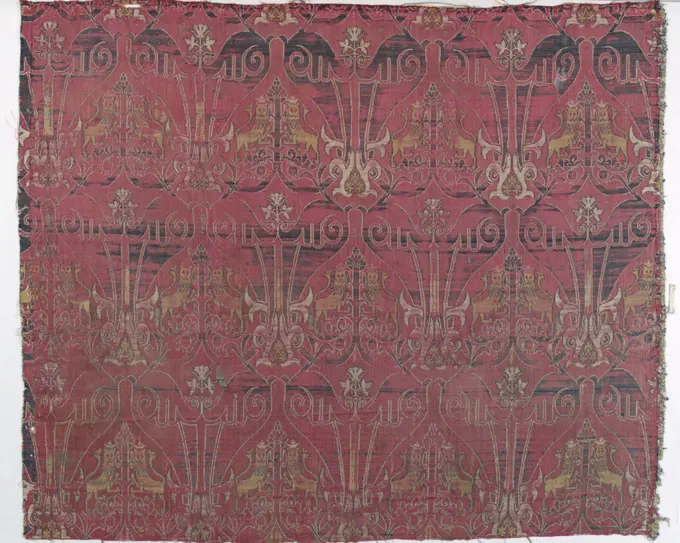
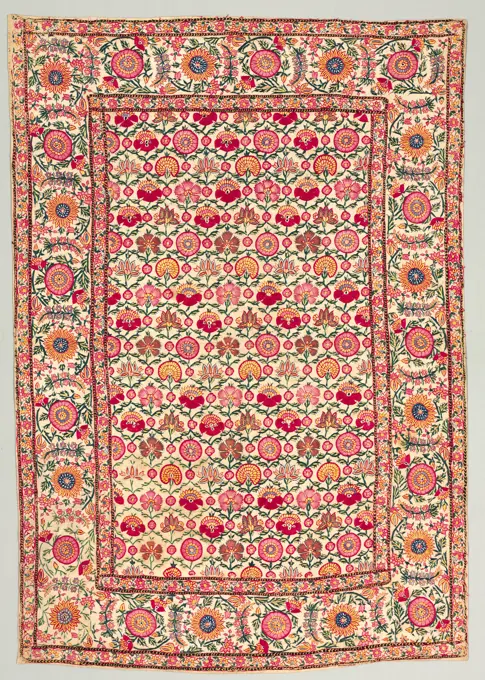
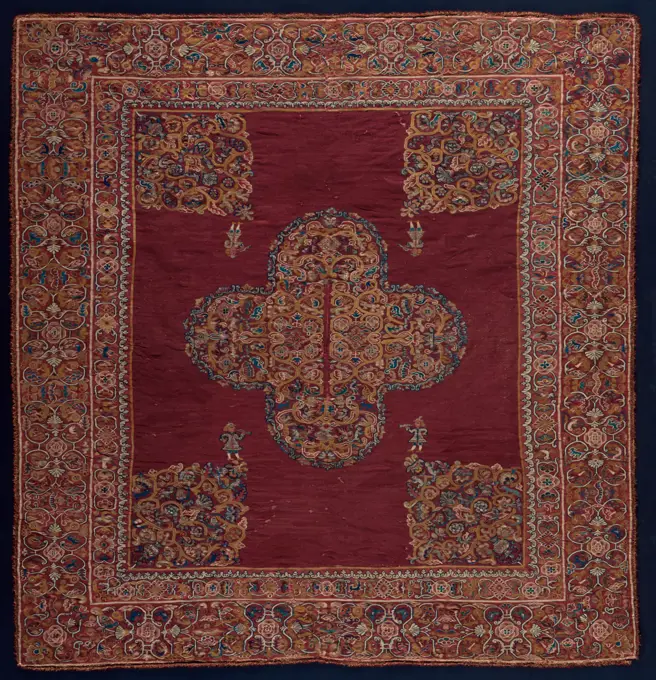
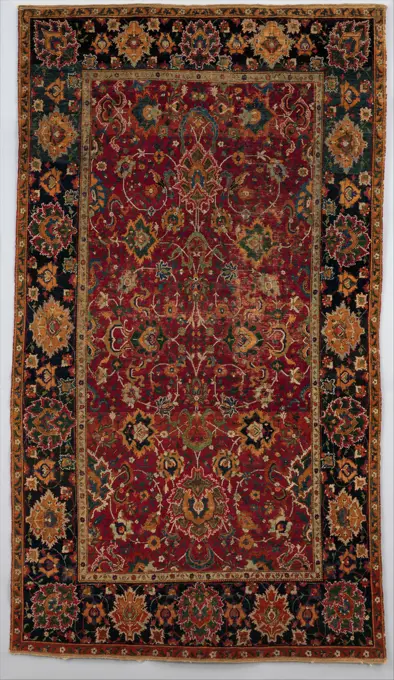
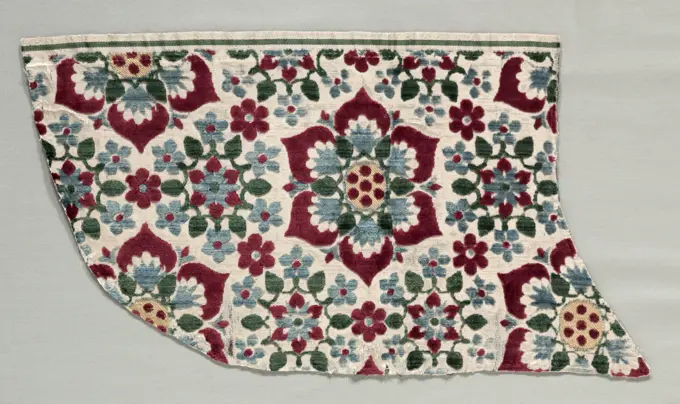
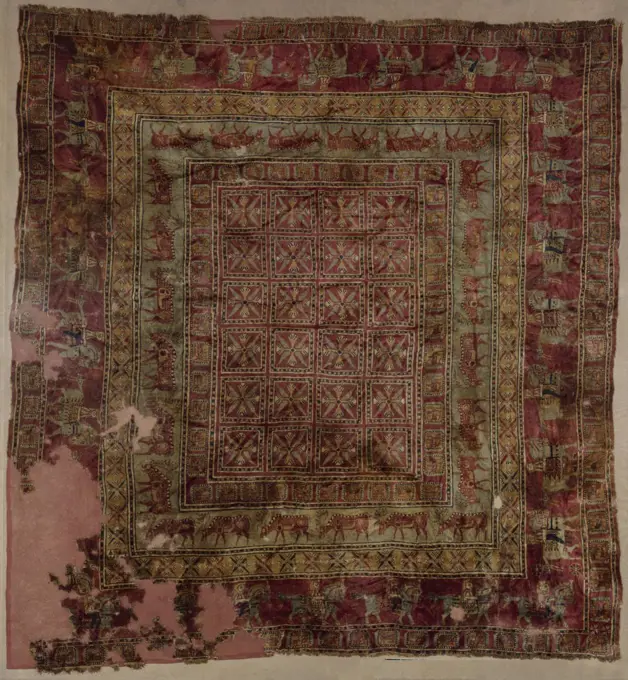
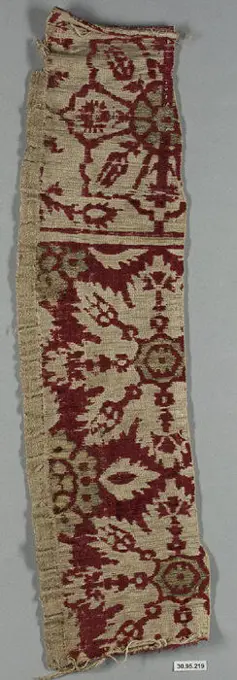
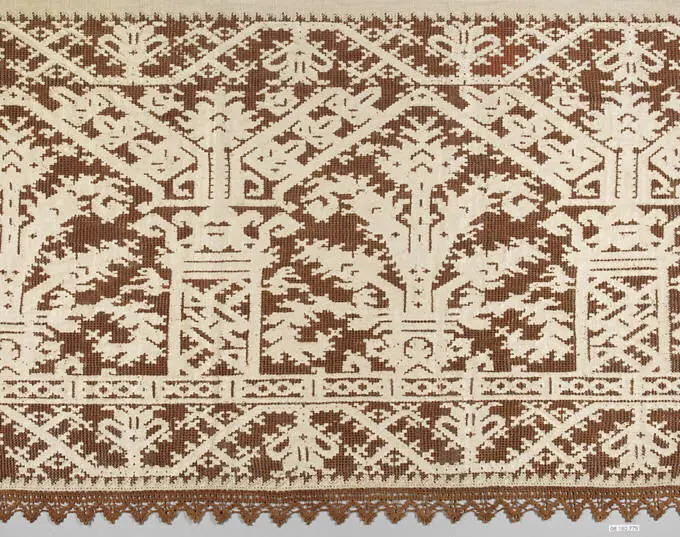
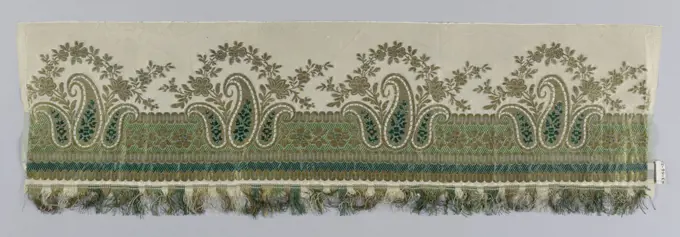
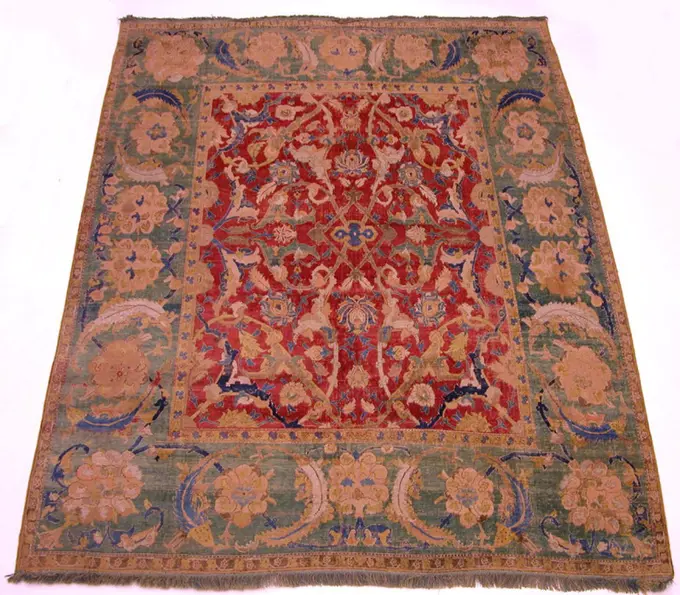
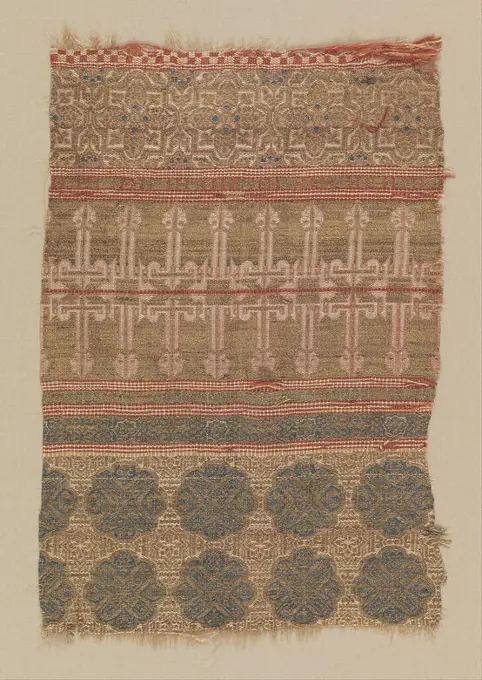
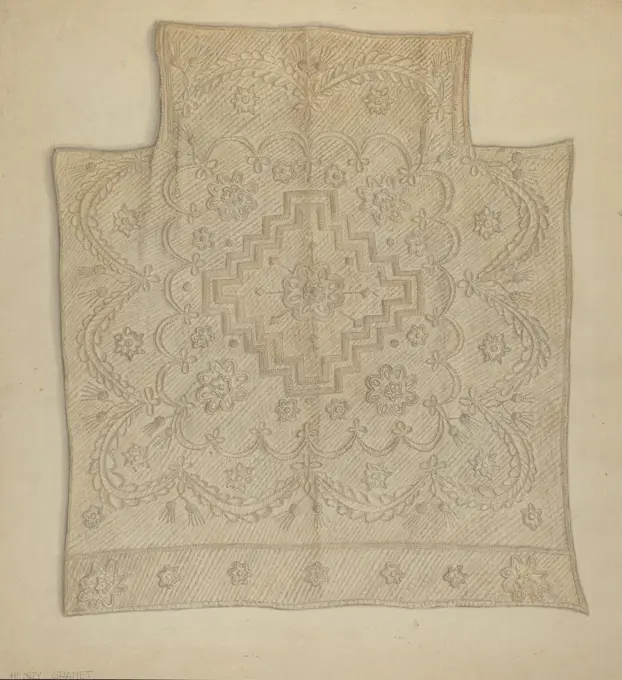
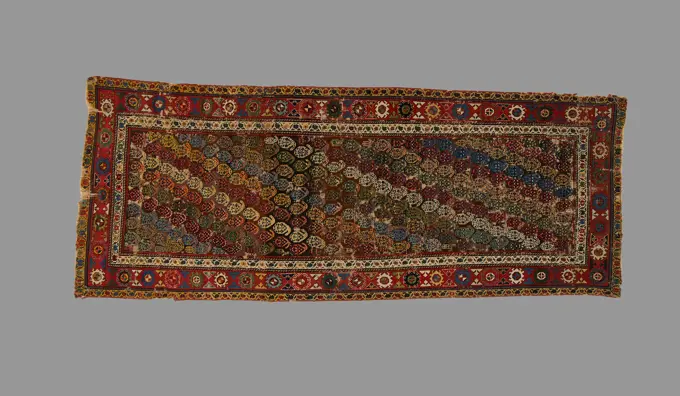
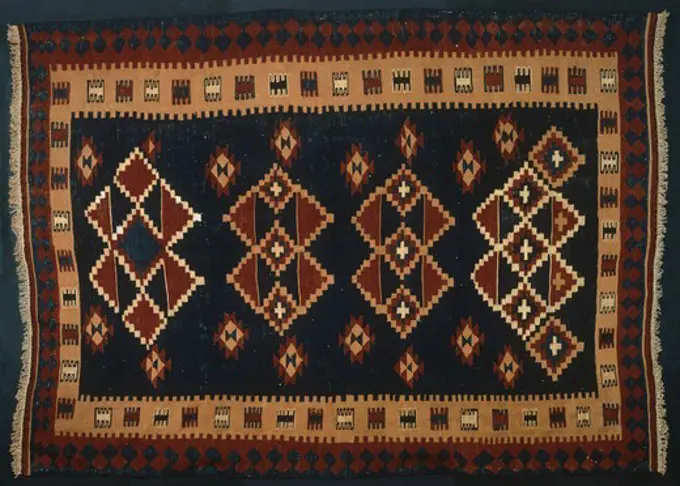
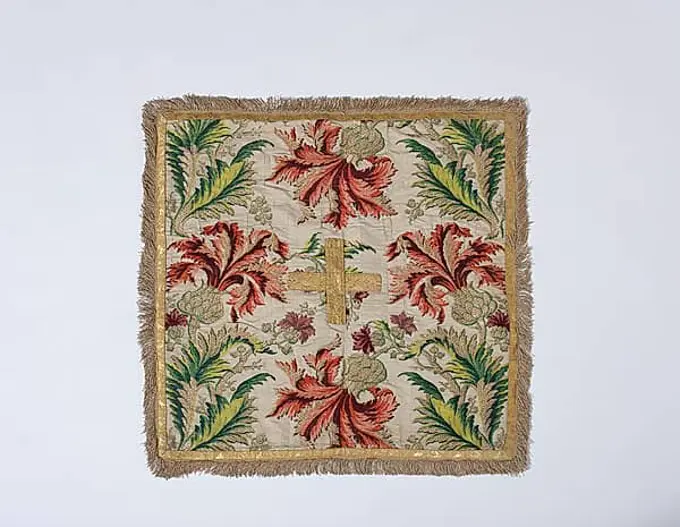
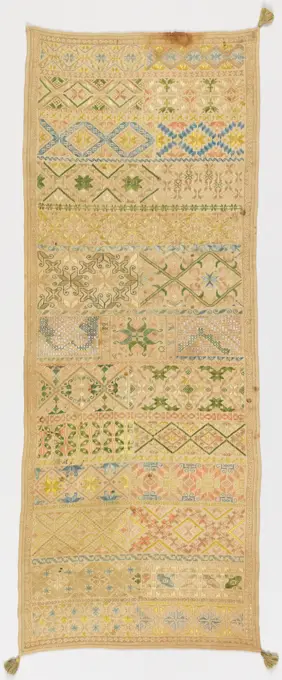
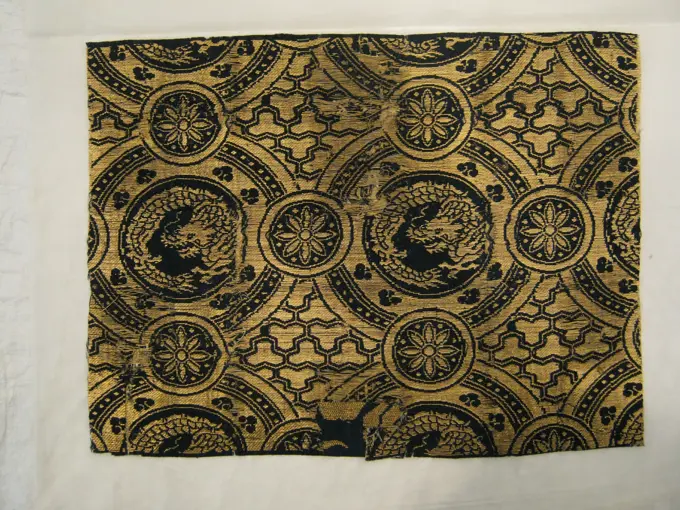
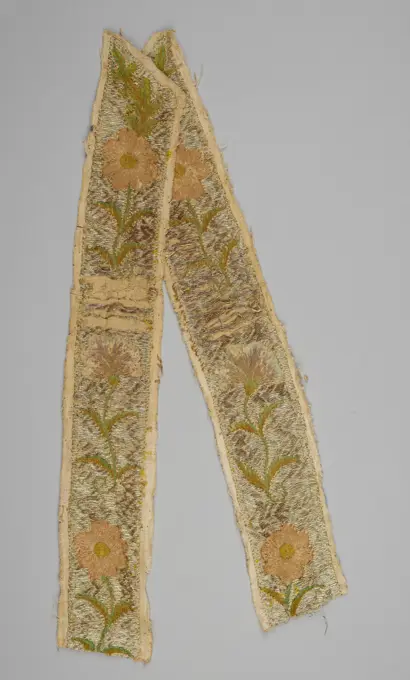
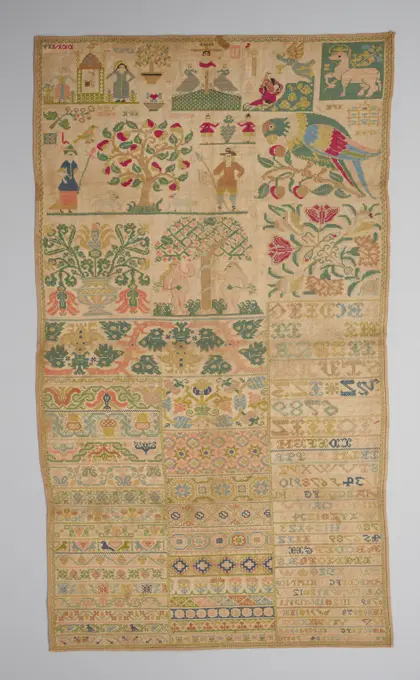
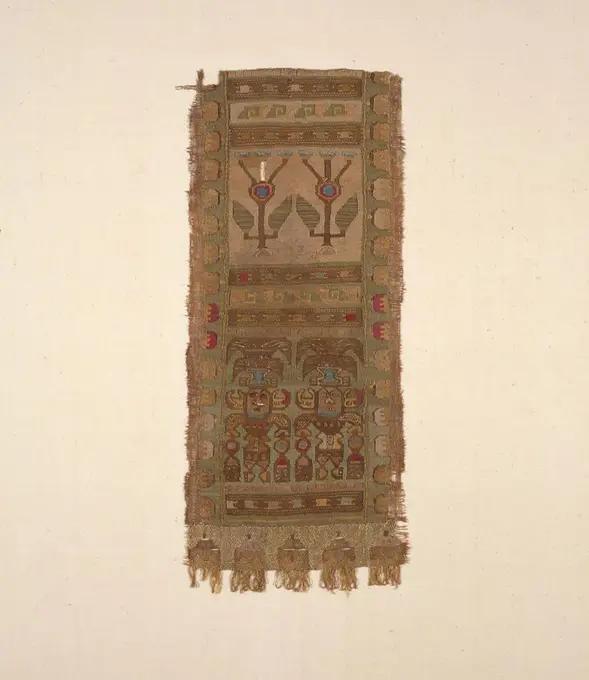
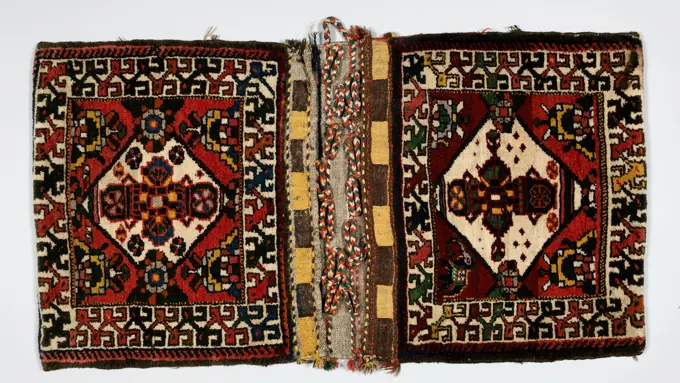
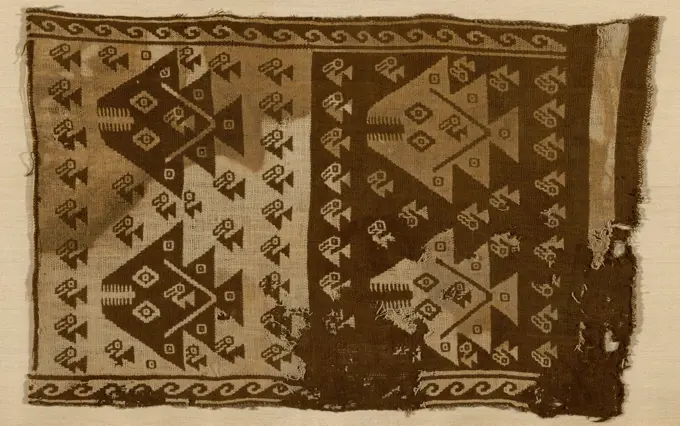
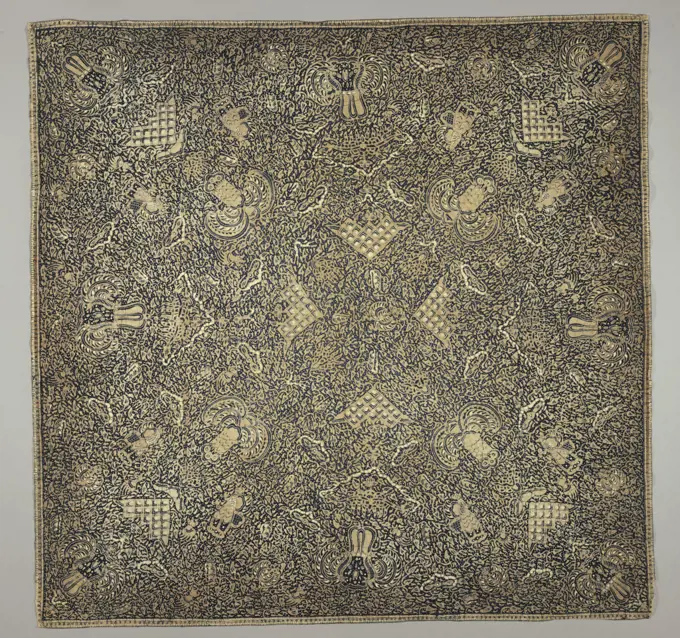
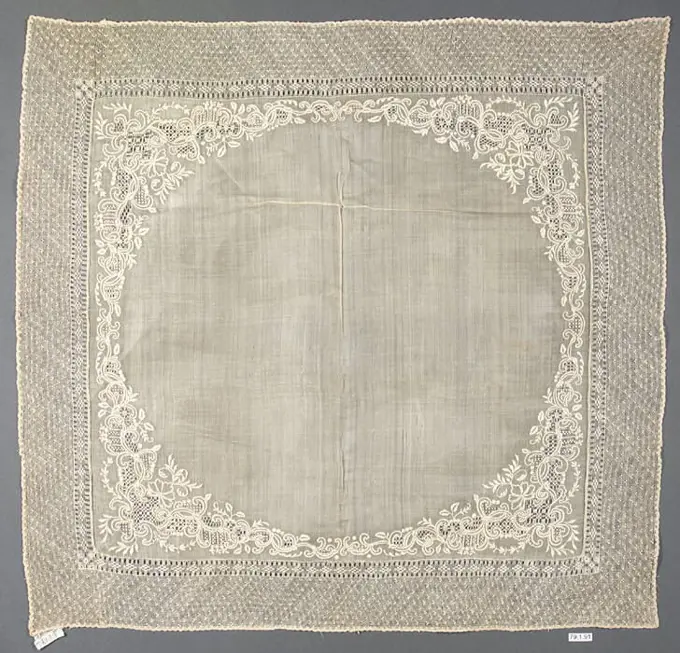
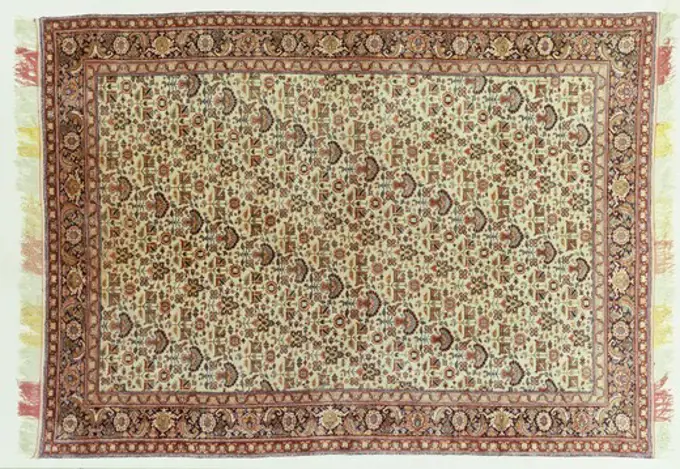
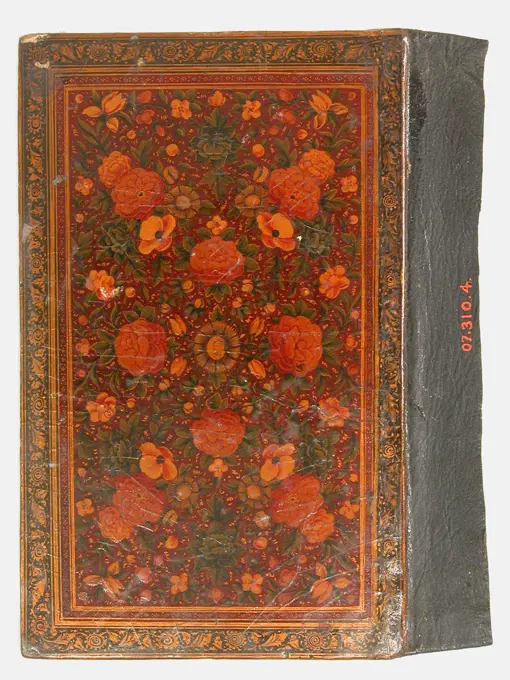
Textile, Medium: silk Technique: plain weave with supplementary weft (), Red plain weave center brocaded in a detached flower design in gold, green, and white silks. Pattern arranged in horizontal rows. Trimmed with a wide band of gray-green silk twill stamped in a diagonal design and brocaded in a small flower pattern in white, rose and green silks. At corners, square insertion of red silk brocaded in small cone design in gold. Trimmed with pink and green piping and lined with pink taffeta., India, 16th-early 17th century, woven textiles, TextileSlendang (Shawl) Made 1801-1900 Java. Cotton, batik dyed .Ceremonial Textile (Tampan). Indonesia, South Sumatra, Lampung, late 19th century. Textiles. Cotton plain weave and supplementary weft patterningPanel, Medium: silk embroidery on linen foundation Technique: embroidered in brick stitch on plain weave with withdrawn element work, Narrow panel, possibly part of a curtain, in dark natural linen, sheer plain weave, embroidered in polychrome silks in blue, red, violet, yellow, light blue and white, with blue and red predominating. Central motif of a palmette with sprays springing from top and sides, flowers and heavy leaf. Narrow border at one end., Turkey, 18th century, embroidery & stitching, PanelTextile Fragment 7th century Coptic. Textile Fragment 475239Fragment, Medium: silk Technique: cut and uncut supplementary warp pile (velvet) on satin ground, Fragment of white cut and uncut velvet on a salmon ground in a floral design., France, 18th century, woven textiles, FragmentFragment, Medium: silk Technique: 4&1 satin patterned with plain weave (lampas), Paired affronted lions within cartouches in green, yellow and white on red., Spain, 15th century, woven textiles, FragmentWoven Bed or Chest Cover, 1700s. Italy, Terra di Lavoro, 18th century. Embroidery; wool on linen; overall: 317.2 x 99.1 cm (124 7/8 x 39 in.).Fragment. Italy. Date: 1325-1375. Dimensions: 35 x 44.1 cm (13 3/4 x 17 3/8 in.)Weft repeat: 13.4 cm (5 1/4 in.). Silk and gilt-animal-substrate-wrapped linen, warp-float faced 3:1 twill weave with supplementary patterning wefts bound by secondary binding warps in (weft-float faced 1:3) twill interlacings (on reverse face secondary binding warps and supplementary wefts form detached interlacing). Origin: Lucca. Museum: The Chicago Art Institute, Chicago, USA.Embroidered Border Fragment 5th-2nd century B.C. Paracas. Embroidered Border Fragment 308052Chair covering of relief velvet with floral pattern in burgundy on natural, anonymous, c. 1650 - c. 1700 Upholstery for a seat of relief velvet with floral pattern. The pattern consists of burgundy acanthus leaves on a natural soil. The edges are decorated with passion with fringes in red.  wool. cotton (textile). silk. velvet (fabric weave) Upholstery for a seat of relief velvet with floral pattern. The pattern consists of burgundy acanthus leaves on a natural soil. The edges are decorated with passion with fringes in red.  wool. cotton (textile). silk. velvet (fabric weave)Embroidered Cover or Hanging, 1600s. India, Delhi, 17th century. Embroidery: silk on linen tabby ground; overall: 121.9 x 85.7 cm (48 x 33 3/4 in.).Eastern carpet ,, 1800 - 1900 Oriental carpet, of which midfield is decorated with diagonal color scheme. Middle edge decorated with 'crab motifs'. Jumper wool Oriental carpet, of which midfield is decorated with diagonal color scheme. Middle edge decorated with 'crab motifs'. Jumper woolTextile (Philippines); piña (pineapple) fiberFlower rug with staggered rows of Botehs against Ceriserode Fond. Rand with rosette flowers., 1850 - 1900 Oriental carpet, flower rug. Rows of Botehs staggered in midfield against a cerisher -red stock. Rand with rosette flowers. Kurdistan Necklace and impact: Wool Oriental carpet, flower rug. Rows of Botehs staggered in midfield against a cerisher -red stock. Rand with rosette flowers. Kurdistan Necklace and impact: WoolPoncho with Musicians. Peru, Southern Andes, late 17th-early 18th century. Costumes; outerwear. Cotton, camelid fiber, and metallic thread tapestry weaveFragment of Sash 18th century. Fragment of Sash 450706Shawl End Made 1800-1815 India. Wool, twill tapestry weave .Fragment Made 1650-1700 Italy. plain compound cloth .Textile Fragment 13th-15th century. Textile Fragment 448121Medaillon suffering with animals, copy, 1900 - 1950 Medailla rug with animals, copy. Central Persia (Possible) wool Medailla rug with animals, copy. Central Persia (Possible) woolFragment Made 1575-1600 Italy. Silk, plain weave with supplementary patterning wefts bound in plain weave by main warps .Band Made 1501-1600 Italy. Linen, embroidered with silk .Tiraz Tapestry Fragments; linen, silk; A/ H x W: 4.5 × 16 cm (1 3/4 × 6 5/16 in.) B/ H x W: 4.5 × 16 cm (1 3/4 × 6 5/16 in.); 1972-81-30-a,b"Floral and Cloudband" Carpet 17th century This type of carpet is characterized by a weft structure with four plies and a dense knot count, which explain the tightness and heaviness of the rug. Common Persian motifs are usually knotted in a rich palette with two to three different tones per color. Starting from the center, cloudbands, peonies, lotuses, and other flowers develop in spiral-like movements and are arranged following vertical and horizontal symmetrical axes. Contrasting ground colorsrich red and dark blueaccentuate the vibrancy of the rug and help distinguishing the border from the field.. "Floral and Cloudband" Carpet 451184Carpet Fragment (USA); woolVelvet Fragment, 1400-1450. Italy, Venice , first half 15th century. Velvet (cut, uncut, voided, brocaded); silk; overall: 38.5 x 24.2 cm (15 3/16 x 9 1/2 in.).Fragment of the index belt;  18th century (1701-00-00-1800-00-00);Piece ca. 1700-1715 Italian. Piece 223203Kontusz sash. Manufaktura Aleksandra Unruga (Kobyłka ; wytwórnia pasów ; 1781-1787), factoryPile Carpet, Ancient Altaian, Pazyryk Burial Mounds  Rug, late 18th century, 149 x 122 in. (378.46 x 309.9 cm), Cotton, Iran, 18th centuryLinnamast piece with lace border and bobbin with geometric motifs with red and golden embroidery, anonymous, c. 1600 - c. 1699 Lap of natural -colored Linnamast with open sewing on one short side - work with pulled threads and work with extended threads - and a scrap of Kloskant: Eastern European side. On the Damask, with a pattern of small diamonds, a wide strip of work with pulled threads and work with pulled out threads is sewn. The four geometric motifs that were created here are partly with red and gold -colored threads with embroidery. On this strip is a narrower linen strip sewn with work with pulled out threads along the long edges. Then the Schulprand van Kloskant was sewn again. The lap is possible a part of a towel. Eastern Europe linen (material) bobbin lace / East European lace Lap of natural -colored Linnamast with open sewing on one short side - work with pulled threads and work with extended threads - and a scrap of Kloskant: Eastern European side. On the Damask, with aFragment, 17th century; silk and metal threadTextile Fragment 17th century. Textile Fragment 448456Square, Medium: cotton Technique: printed on plain weave, Square printed in dark red and black on white with a border of large flowers, and a center filled with leaves and fruit., USA, late 19th century, printed, dyed & painted textiles, SquareCover 17th century Italian. Cover 215130Sampler (Spain); Embroidered by Teresa Alvares; silk embroidery, linen foundation; Warp x Weft: 62 x 61 cm (24 7/16 x 24 in.); Bequest of Mrs. Henry E. Coe; 1941-69-114Laces, 16th century. Fragment of needle lace with a female figure, cm 7,5 high.Silk and Hemp Fragment, 16th century. Spain, 16th century. Plain compound satin: silk and hemp; average: 242.6 x 64.8 cm (95 1/2 x 25 1/2 in.).Kamben Geringsing (ceremonial Cloth) (Indonesia); cottonShawl, 19th century, 68 x 64 in. (172.72 x 162.6 cm), Wool, India, 19th centuryLinen, Fragment, Blue, Anonymous, 1630 Linen, fragment, blue, why silver wire tense and with silk flowers as side with frills of silk. Germany.  linen (material). silver thread. silk Linen, fragment, blue, why silver wire tense and with silk flowers as side with frills of silk. Germany.  linen (material). silver thread. silkSaddle bag or cushion leaf with the main motif: rectangle within which three botas, c. 1850 - c. 1900 Saddle bag or cushion leaf with the main motif a rectangle in which three botas. Rand with tulip -like motifs. Three edges finished with brushes or residues. Three white shells sewn on the short sides. Persia (possibly) wool Saddle bag or cushion leaf with the main motif a rectangle in which three botas. Rand with tulip -like motifs. Three edges finished with brushes or residues. Three white shells sewn on the short sides. Persia (possibly) woolShawl 1800-1810 Indian Empire style favored the cotton or mull dress, often sheer and invariably light in weight. In order for this garment to serve year-round, it had to be modified by layering. The popularity of the Kashmir shawl--and its European and Scottish copies--in the early years of the nineteenth century not only preserved decorum with these delicate dresses, but also protected the wearers from chill weather.. Shawl 84275Saddle bag, cover, anonymous, c. 1800 - c. 1900 Front of a saddle bag. The midfield is decorated with sickle leaves and bruise rosettes against a red stock. Intermediate strip with a celebrated windows. At the bottom of a beard. Turkestan Necklace and impact: Wool Front of a saddle bag. The midfield is decorated with sickle leaves and bruise rosettes against a red stock. Intermediate strip with a celebrated windows. At the bottom of a beard. Turkestan Necklace and impact: WoolTable Cover, 19th century, L.96 x W.67 in., linen; needlework, Pakistan, 19th centurySquare Shawl Made 1870-1879 India. Wool, patchwork of 2 2 'S' twill weaves; embroidered in flat, satin, and stem stitches; laid work and couching; main warp fringe . IslamicSampler (Germany); silk embroidery on linen foundationCoverlet Fragments (USA); cotton, woolFragment seat cover in red and white velvet. Backpiece of a chair covering of velvet velvet.Sampler (Germany); silk embroidery on linen foundationTextile, Medium: silk and metallic threads Technique: plain compound cloth, Woven border with horizontal bands of green and gold ornaments and groups of three Persian cones and flower garlands in two shades of green and gold thread on a white taffeta ground. Bordered with green, white, and gold fringe of the period., France, early 19th century, woven textiles, TextileTextile Fragment early 17th century. Textile Fragment 454581Clavus Band; wool, linenPolonaise Carpet. Dimensions: L. 79.25 x W. 72.50 in. (201.3 x 184.2 cm). Date: 17th century. Museum: Metropolitan Museum of Art, New York, USA.Towel End early 19th century. Towel End. early 19th century. Linen, silk; plain weave, embroidered. Attributed to Turkey. Textiles-EmbroideredFragment. Date/Period: 1250-1274. Fragment. Medium: silk, metallic threads. Technique: plain weave with complementary wefts. Height: 263 mm (10.35 in); Width: 184 mm (7.24 in). Author: UNKNOWN.Henry Granet, Bedspread, 1935 1942 BedspreadWallet. unknown, authorPurse (France); silk, metalBookbinding. Dimensions: H. 15 7/8 in. (40.3 cm)W. 11 1/4 in. (28.6 cm). Date: 17th century. Museum: Metropolitan Museum of Art, New York, USA.Fragment, Medium: wool, linen Technique: tapestry weave, Tapestry woven fragment showing a leaf shape on a dyed brown ground. At center, interlacing lines form a tree shape., Egypt, 200-500, woven textiles, FragmentAnonymous, kazak carpet. Wool. Carnavalet museum, history of Paris.Rugs and Carpets: Iran - Kilim Qashqai carpetTable Square, 1700s. Iran, 18th century. Lampas weave; silk and silver thread; overall: 49.5 x 49 cm (19 1/2 x 19 5/16 in.).Band; warp; s-spun linen. wefts; s-spun linen, s-spun woolGoblet velum after 1750, goldsmithing and textile art from the 16th to the 20th century, St., Sankt, SaintKontusz sash/belt. Pracownia Antoniego Puciłowskiego (Kraków ; wytwórnia pasów ; 1793-1800), atelierSquare ca. 1600 Italian. Square 212292Chalice Veil. England, circa 1600. Textiles; embroidery. Linen plain weave with silk embroidery, metallic-wrapped thread laceIsfahan. Date/Period: End of 16th century. Wool, cotton. Height: 258 mm (10.15 in); Width: 432 mm (17 in). Author: UNKNOWN.Band Fragment (Peru); medium:Sampler (Spain); silk embroidery on linen foundationFragment Made 1775-1800 Japan. Plain compound twill, silk and gilt paper; 3 strips to m.m. .Fragments of embroidery from the chasuble unknownTrimming, Medium: silk, metallic thread Technique: woven, Yellow silk and gilt thread trimming fragment in a design of angular scrolls and leaves within hexagons., Italy, 17th century, trimmings, TrimmingSilk stop patch on linen. ,, 1893 Silk stop patch on linen. The embroidery has a flowerpot, the initials A, CK, all, all and MVA and the dating in 1893. Amsterdam linen (material). silk embroidering Silk stop patch on linen. The embroidery has a flowerpot, the initials A, CK, all, all and MVA and the dating in 1893. Amsterdam linen (material). silk embroideringNeedlework sampler unknownGroom's Wedding Sash, c. 1925-1950, 6 3/4 x 53 in. (17.15 x 134.62 cm), Cotton, silk, mirrors; embroidery, Pakistan, 20th centuryPanel. Lambayeque; Peru, Probably north coast. Date: 1000-1476. Dimensions: 62.6 x 26.7 cm (24 5/8 x 10 1/2 in.). Cotton and wool (camelid), slit tapestry weave with eccentric and wrapping outlining wefts and supplementary weft loop pile; embroidered with wool (camelid) in couching stitches; joined by overcast stitches to cotton and wool (camelid), slit tapestry weave with eccentric wefts, finished with extended weft loop fringe; joined by overcast stitches to cotton, plain weave. Origin: Peru. Museum: The Chicago Art Institute, Chicago, USA.Cover, 19th century, 46 x 46 in. (116.84 x 116.8 cm), Afghanistan, 19th centuryBorder Made 1801-1900 Greece. Cotton, plain weave; embroidered with silk in back, overcast, and satin stitches; edged in buttonhole stitches .Fragment Made 1625-1675 Italy. silk .Fragment; silk, metallic yarns; 1899-17-1-eDouble Saddlebag (Khorjin) ca. 1900 While animals common to local villages or encampments often appear in nomadic works, the elephantan exotic beast for tribes in Iranis a unique addition to this design. Together with the tent motif, it animates this everyday object.The closure is composed of brown-and-yellow bands with slit tapestry on the front and braided loops on the back. The back part of the closure is constructed with a band of twining, which extends into the three-dimensional loops.. Double Saddlebag (Khorjin). ca. 1900. Wool (warp, weft, and pile); symmetrically knotted pile and slit tapestry (kilim) closure (front); weft-faced plain weave with twined and braided loop closures (back). From Western Iran, Bakhtiari tribe. Textiles-WovenBag, before 1957. Turkey. Silk embroidery on cotton; overall: 19.7 x 32.1 cm (7 3/4 x 12 5/8 in.).Fragment Made 1000-1476 Peru. Double weave . ChancayTextile (Italy); silk, metal on silk coreSquare textile, Medium: cotton Technique: wax resist dyeing (batik) on plain weave, Cotton square, possibly a head cloth (kain kepala), in dark blue, light brown, and white. Dark blue ground showing numerous white dots known as 'gabah sinawur' or 'grains of rice'. The 'semen' (curling tendrils and other non-geometric forms) and 'sawat' (wings and tail of Garuda, mount of Vishnu) motifs are also used., Indonesia, 19th century, printed, dyed & painted textiles, Square textileBorder Fragment 10th-15th century Peruvian; central coast (). Border Fragment 307460Handkerchief 19th century Philippine, Manila. Handkerchief 212297Fragment; linenRugs and Carpets: Iran - Kurdistan - 20th century. Silk Senneh carpetApron probably 19th century Romanian. Apron 98435Field of twenty tiles with flower pots, anonymous, c. 1580 - c. 1625 Field of twenty tiles (4 x 5) each with a multicolored (blue, orange, green and yellow) flowerpot within a squared frame. In the corners, ornament in Vultechniek. Netherlands earthenware. tin glaze majolica Field of twenty tiles (4 x 5) each with a multicolored (blue, orange, green and yellow) flowerpot within a squared frame. In the corners, ornament in Vultechniek. Netherlands earthenware. tin glaze majolicaTextile Fragment 4th century. Textile Fragment 443503Bookbinding (Jild-i kitab) 19th century. Bookbinding (Jild-i kitab) 445225Panel Made 1875-1900 United States. Cotton, plain weave; embroidered with wool in tent stitches; beaded with glass and metal beads with cotton; edged with silk, plain weave . Native AmericanRibbon (Italy); silk and metallic thread; Warp x Weft: 29.3 x 9 cm (11 9/16 x 3 9/16 in.)