Decorative Glass Items

A collection of unique glass artifacts including ancient beads, pottery fragments, and decorative cups showcasing intricate designs and historical significance.
Fragment of soil, stand ring and wall of smooth drinking cup, drinking cup drinking utensils holder soil find glass, handblown glass application Fragment of bottom stand ring and setting of wall of drinking cup in clear colorless glass Under raised (2.1 cm) bottom pontilemark As stand ring along bottom bottom all round flattened glass wire with little part missing. Various approaches to ascending wall archeology Rotterdam City Center Stadsdriehoek Oudehaven archaeological find in the soil Oude Haven 1979 - 1980.
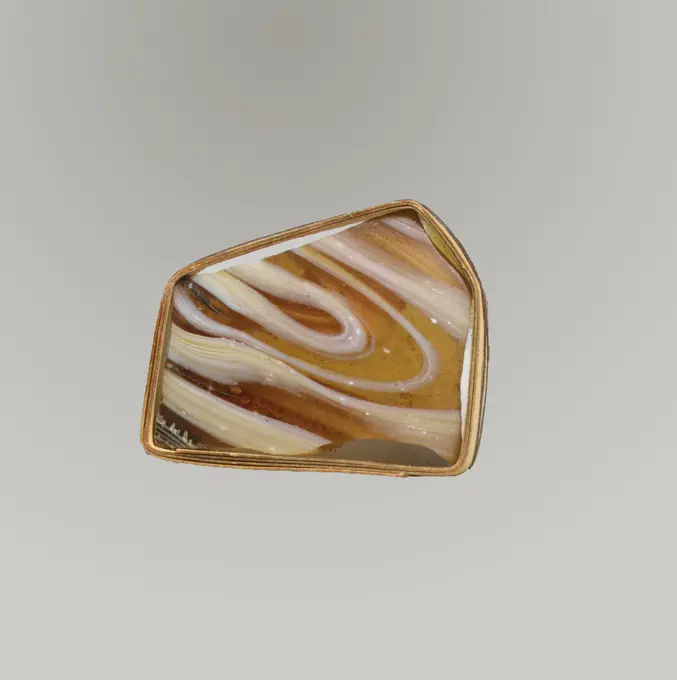
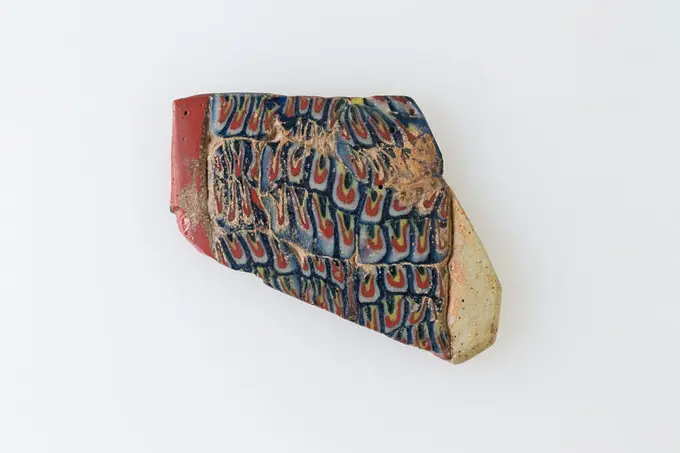
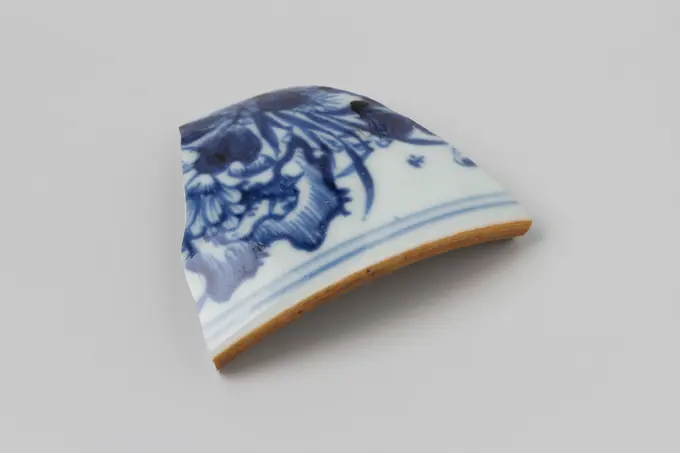
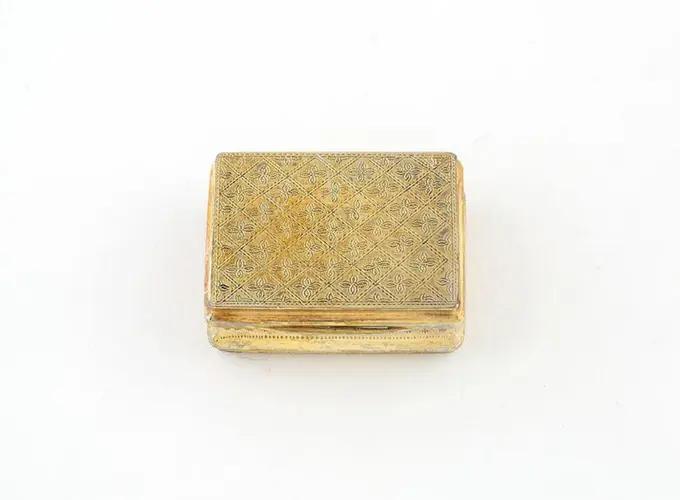
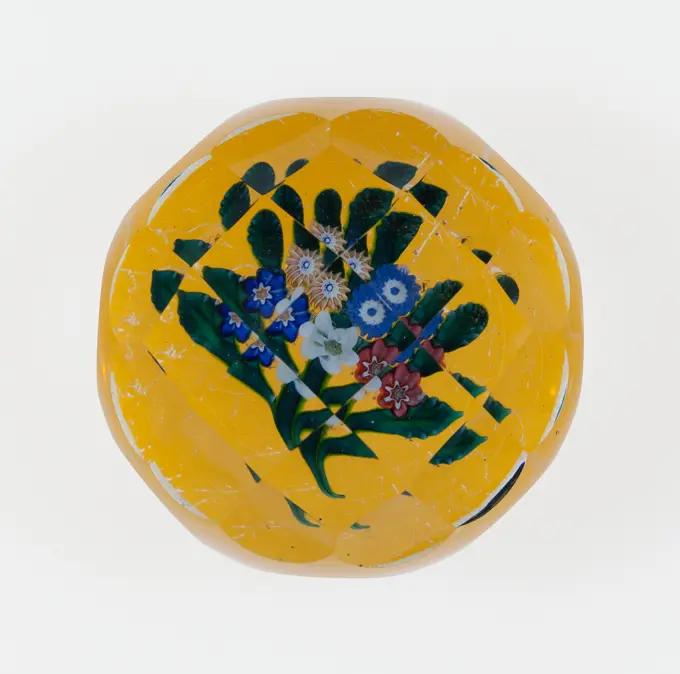
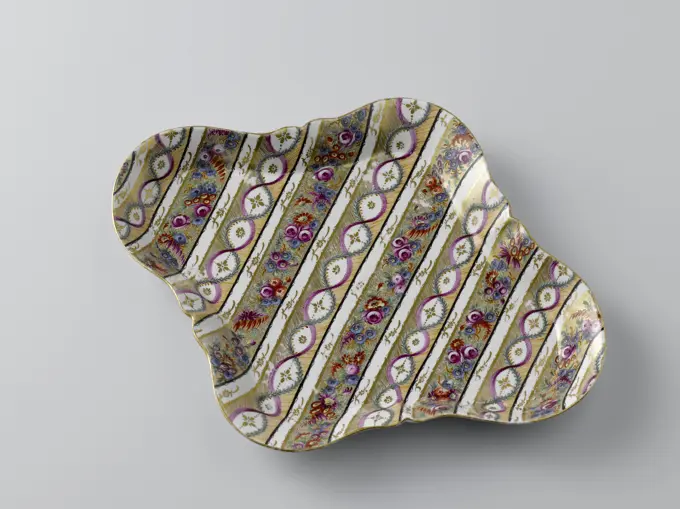
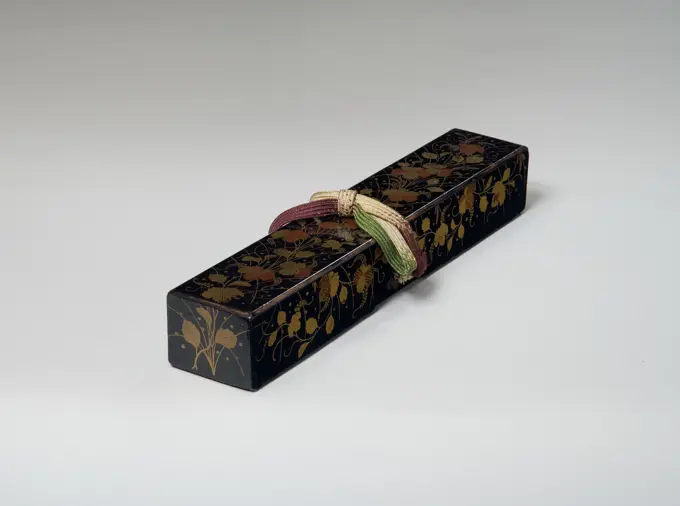
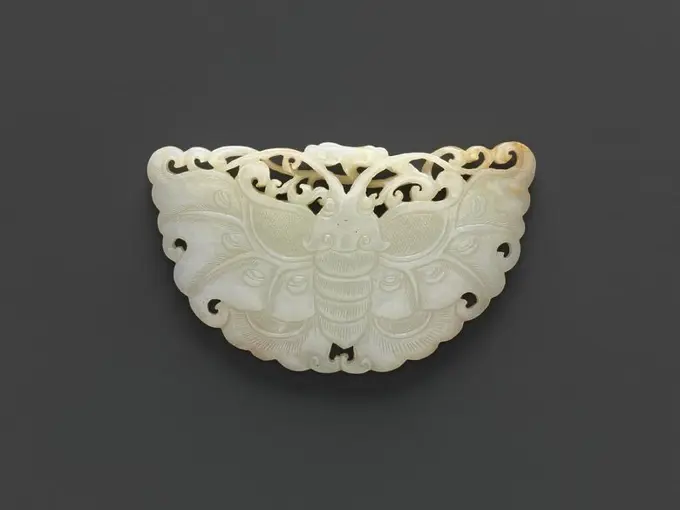
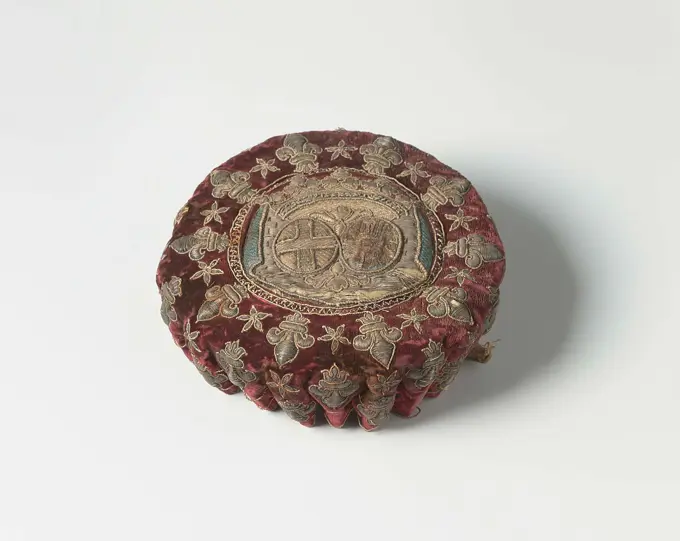
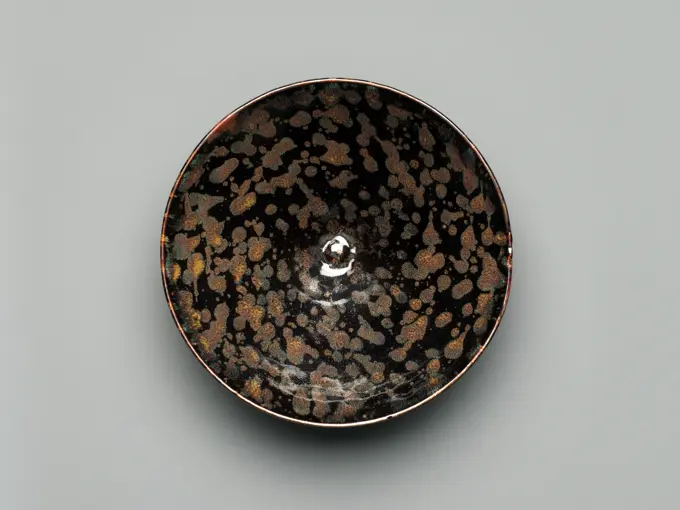
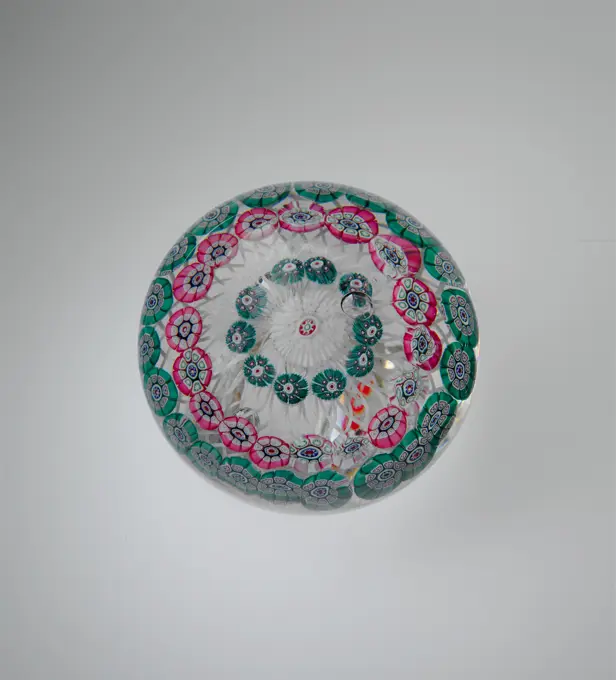
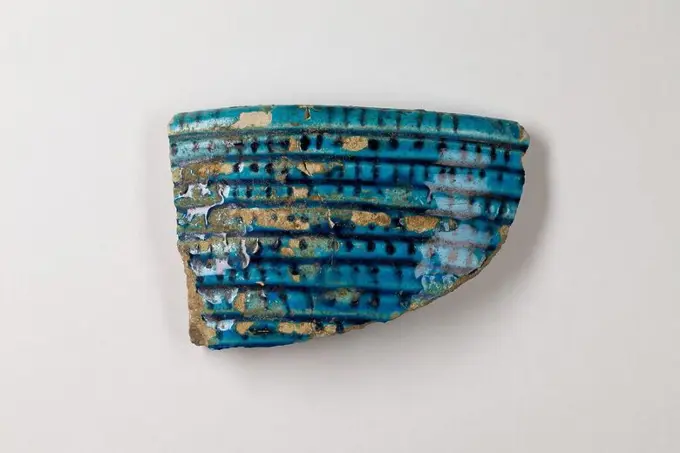
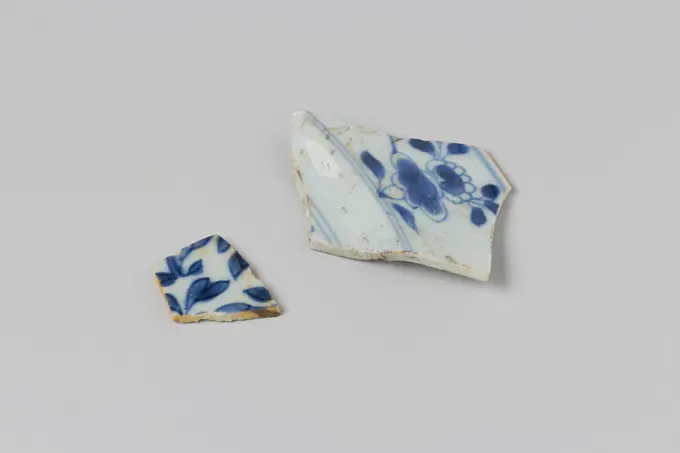
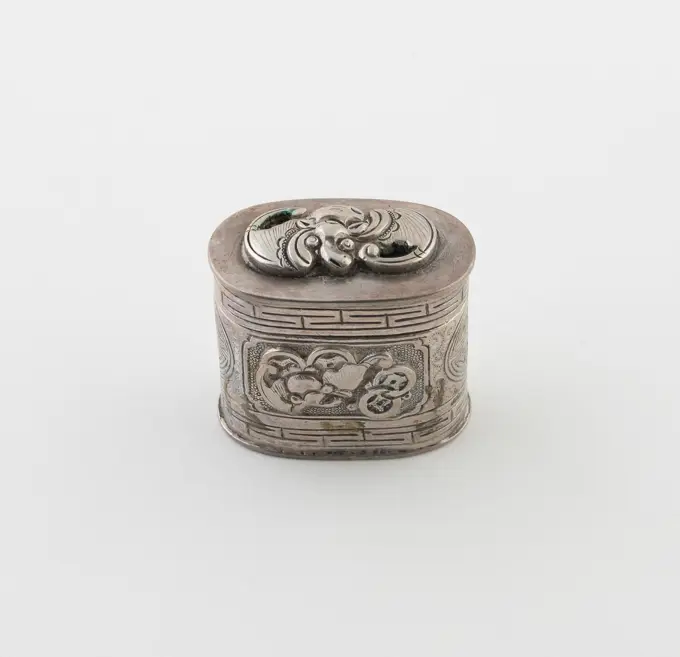
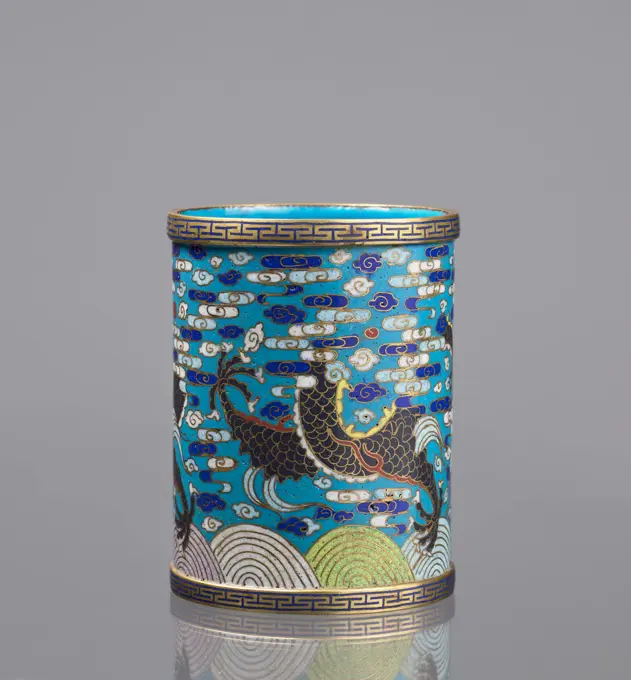
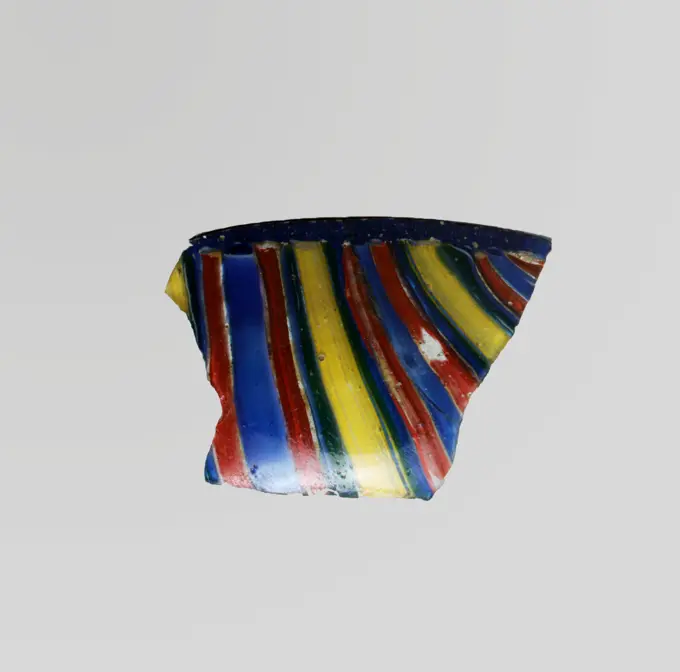
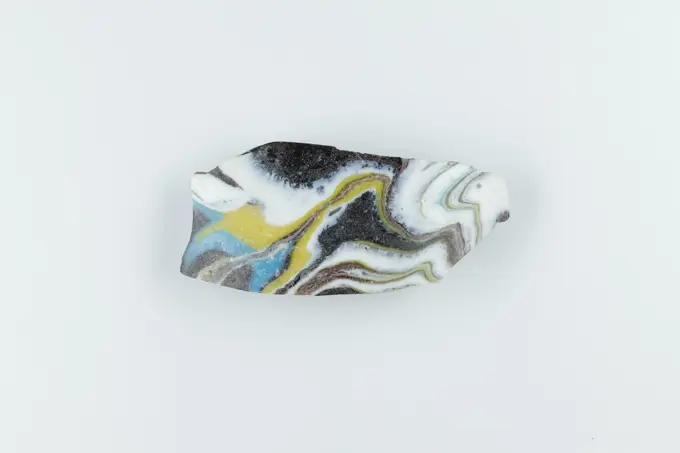
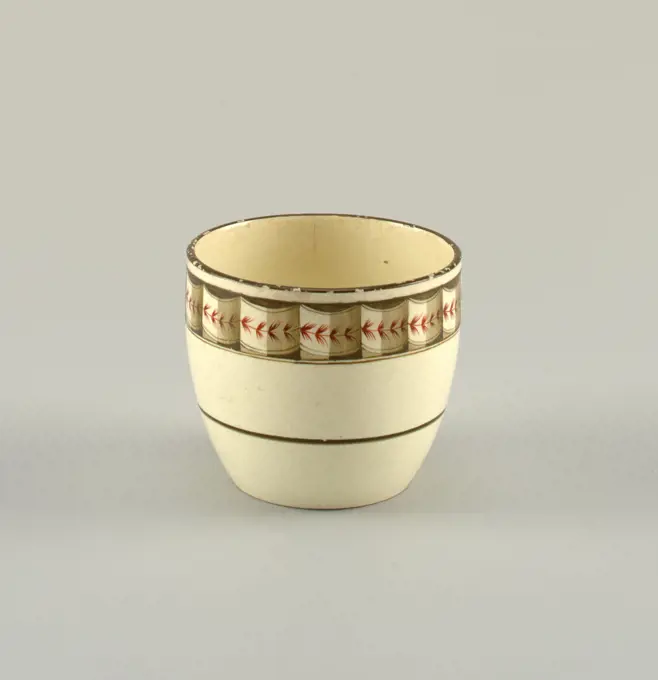
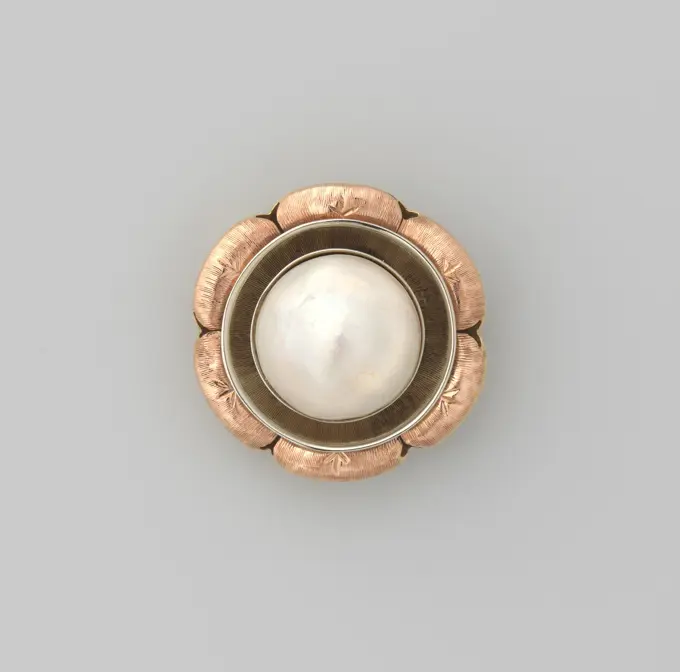
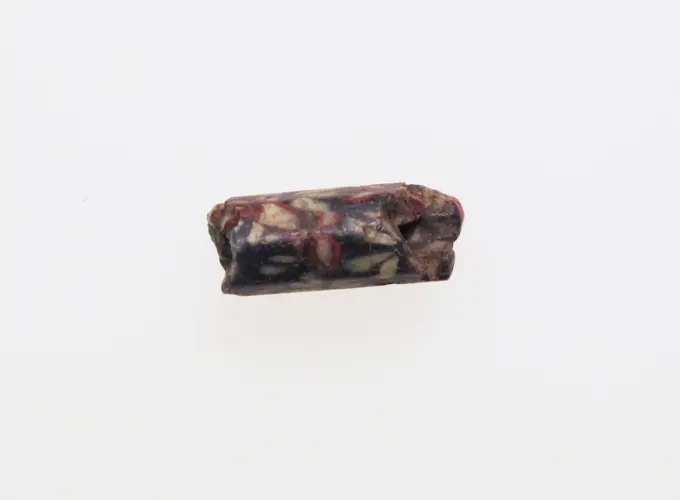
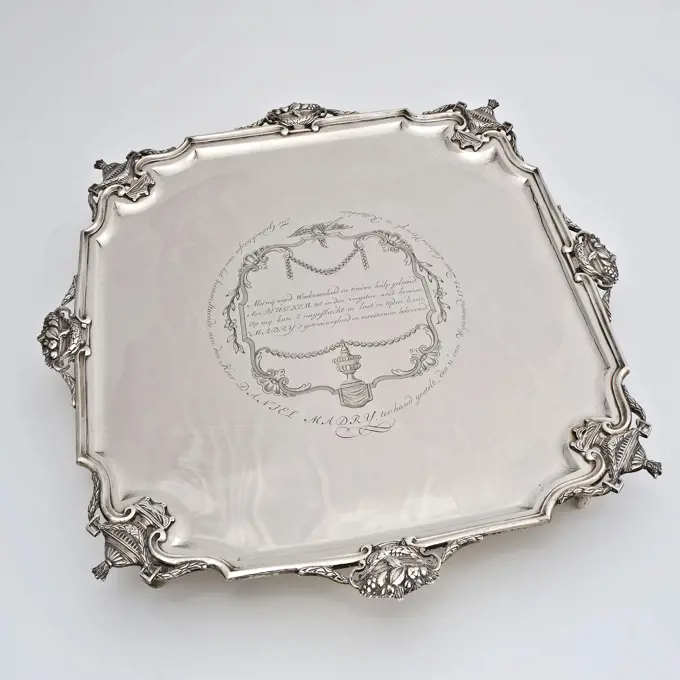
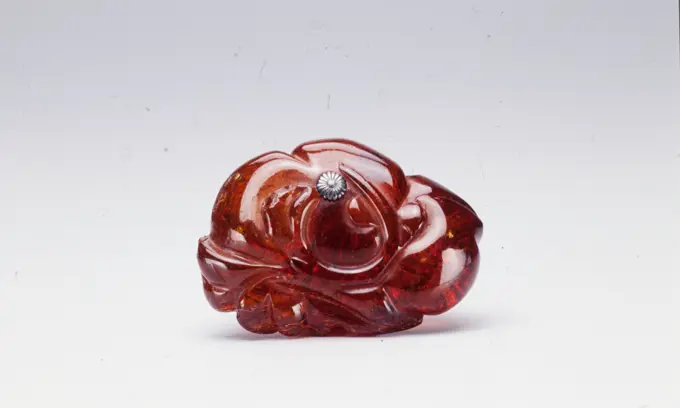
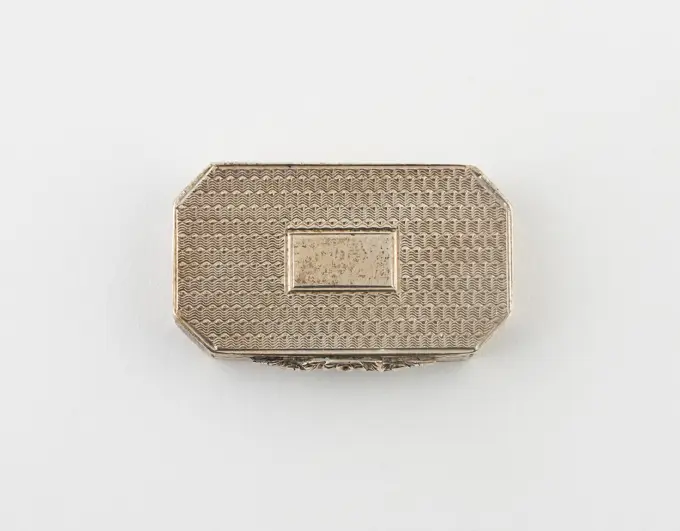
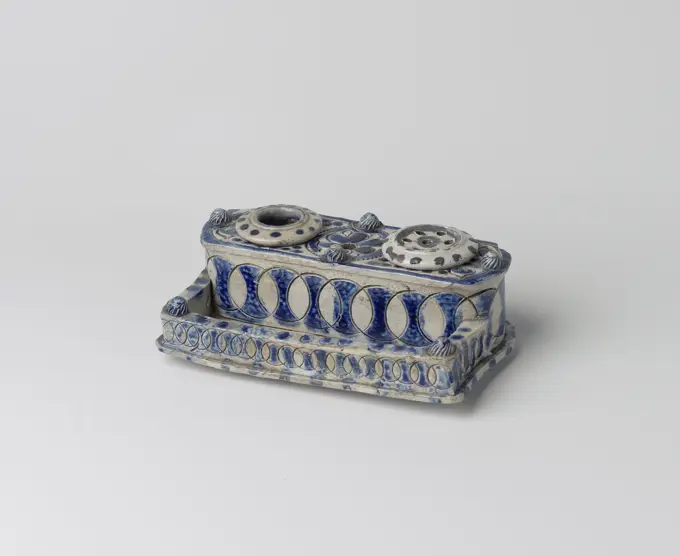
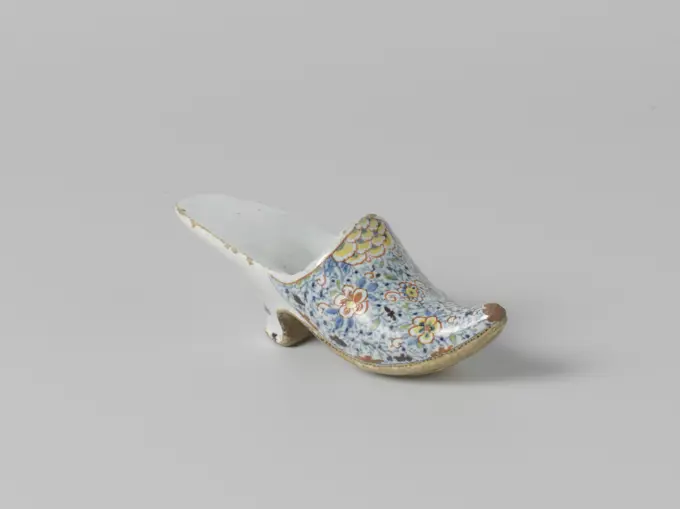
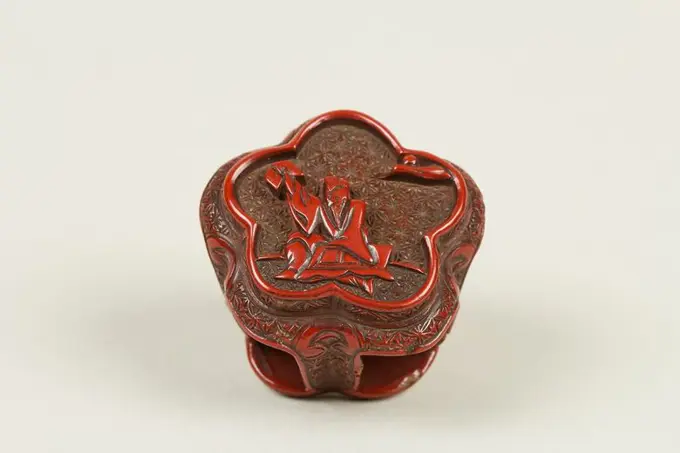
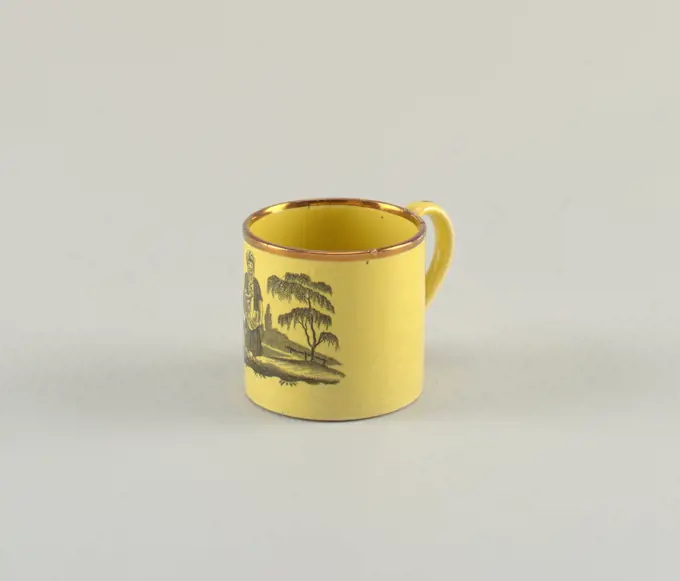
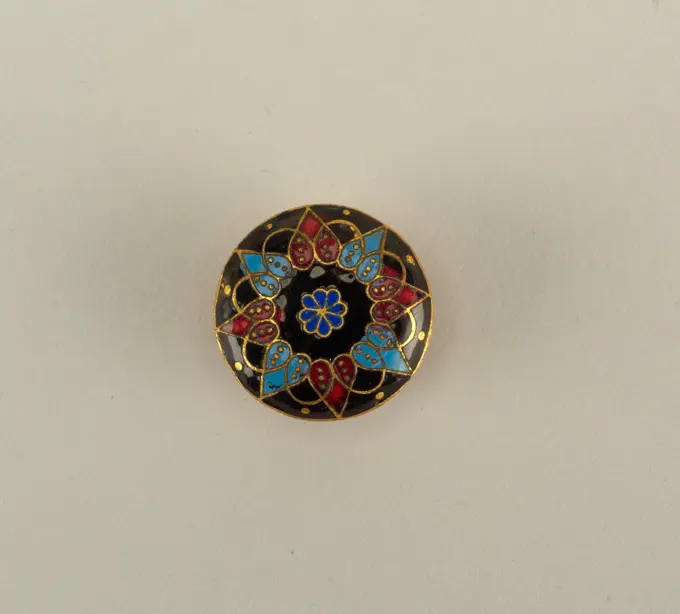
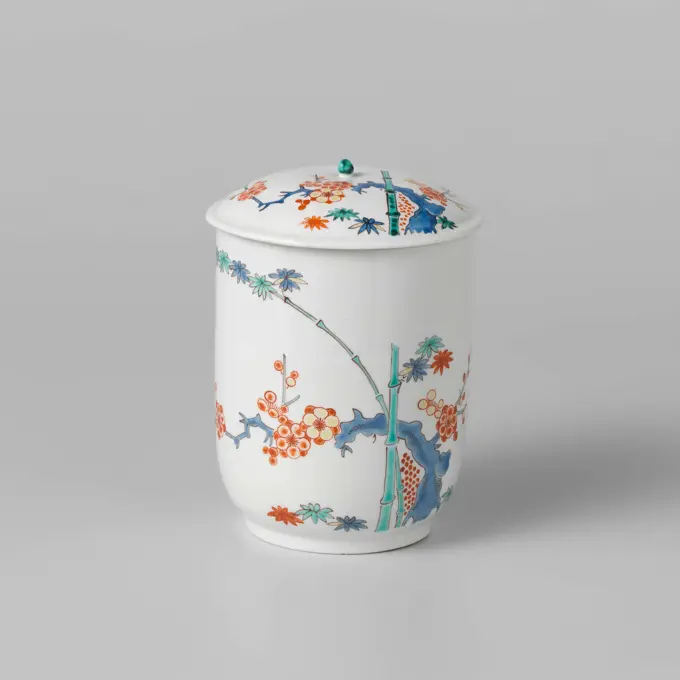
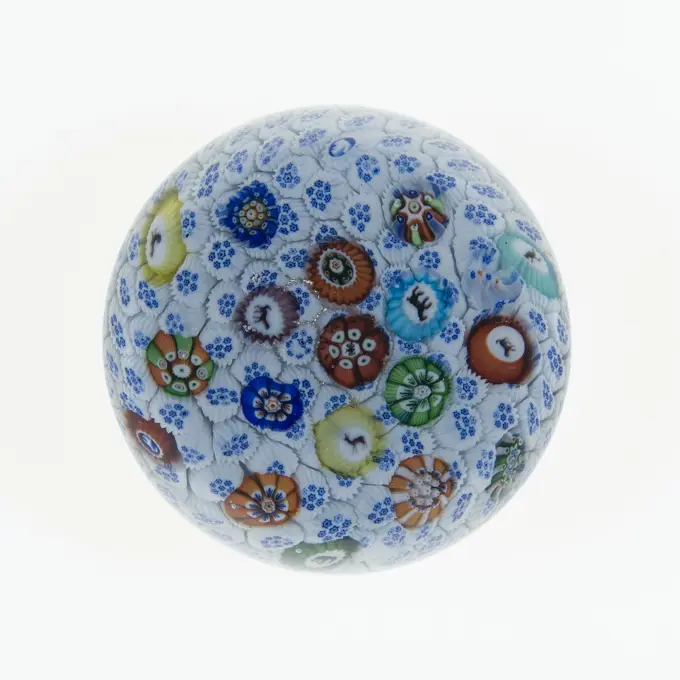
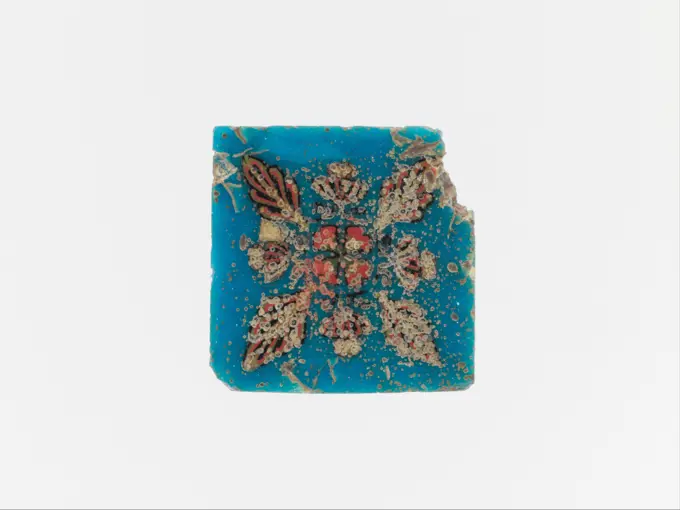
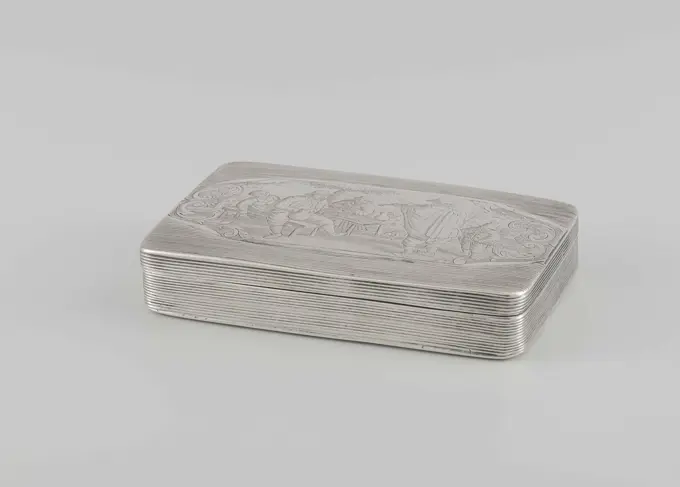
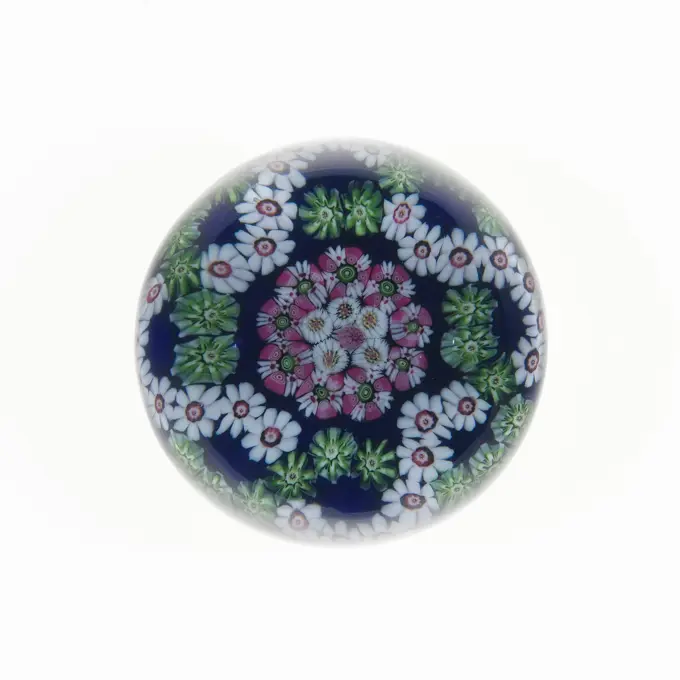
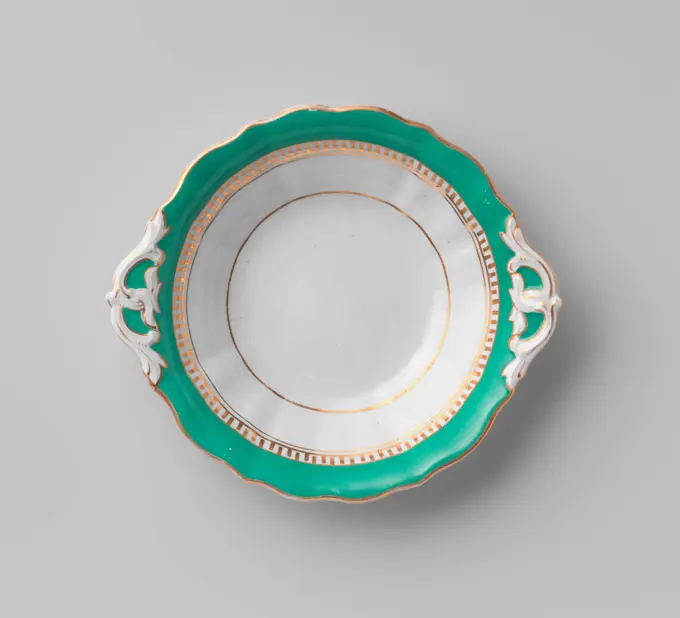
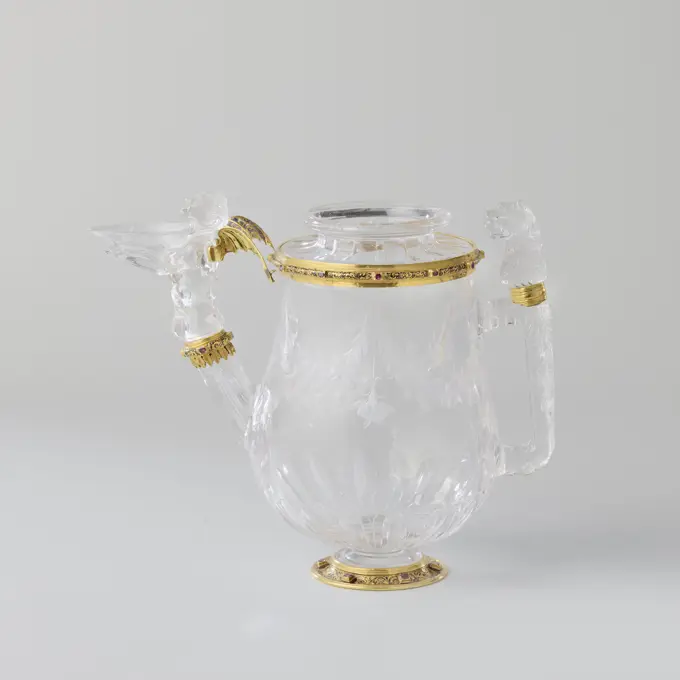
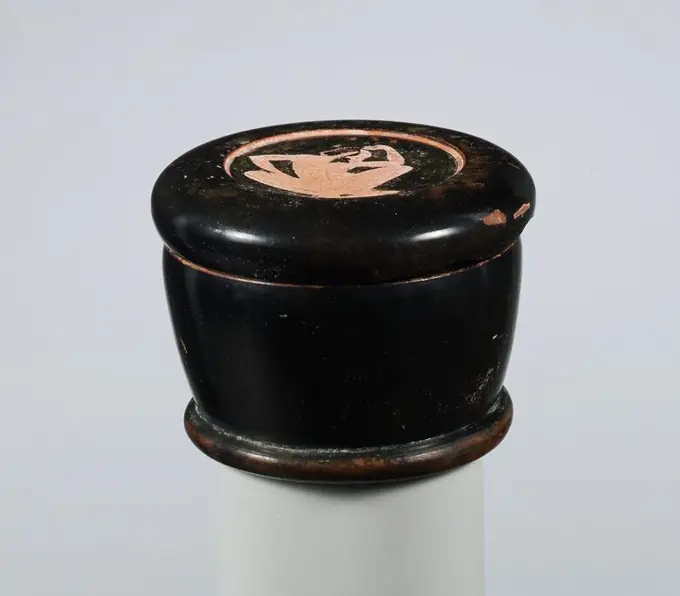
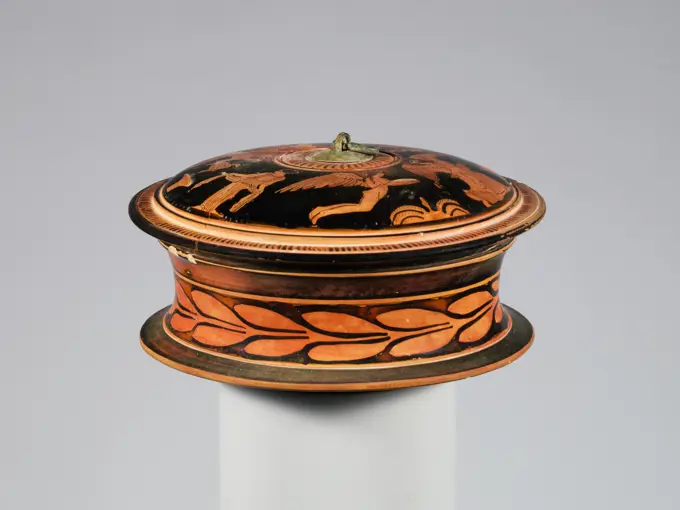
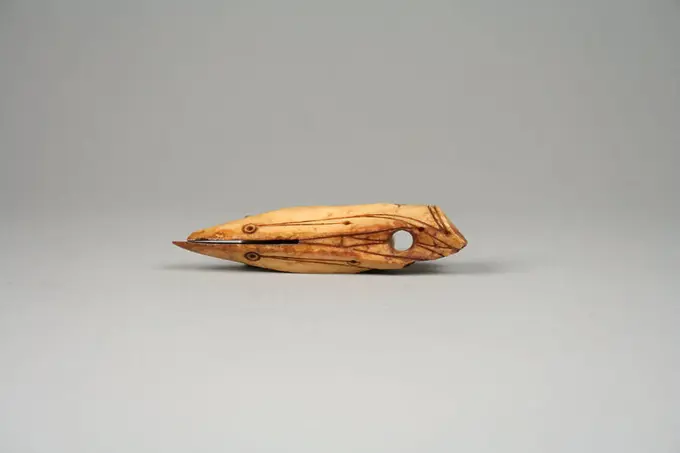
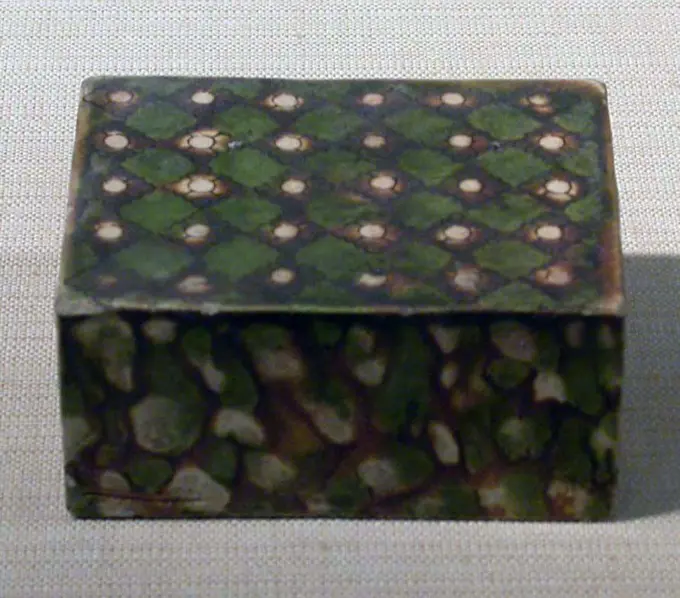
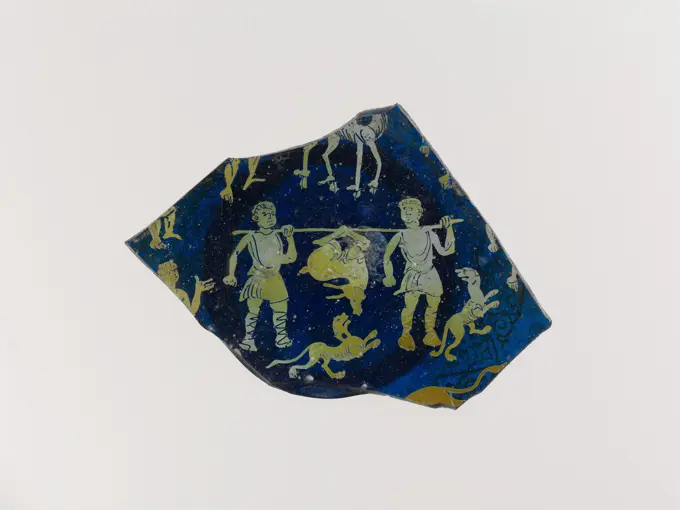
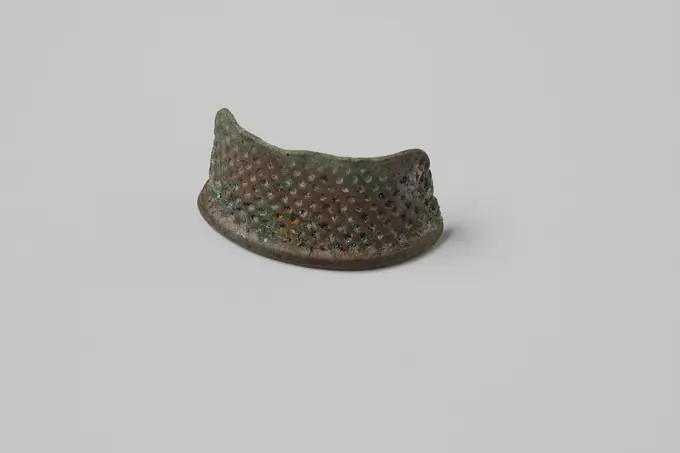
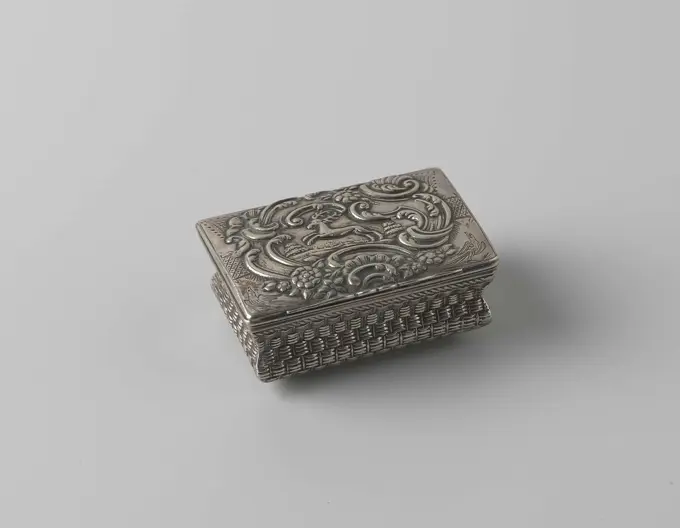
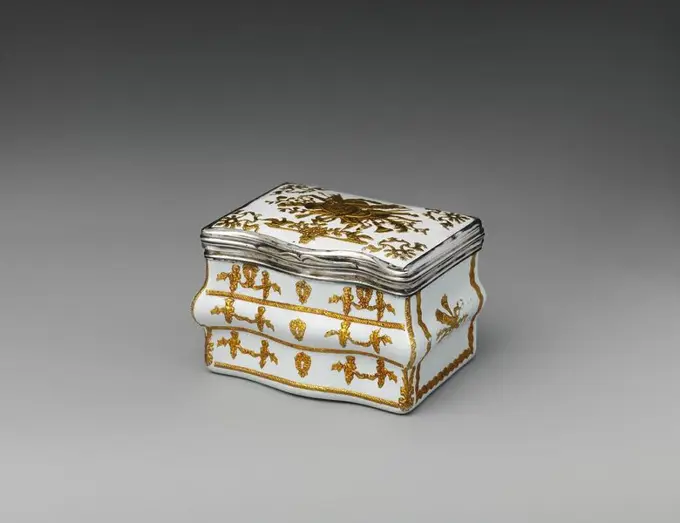
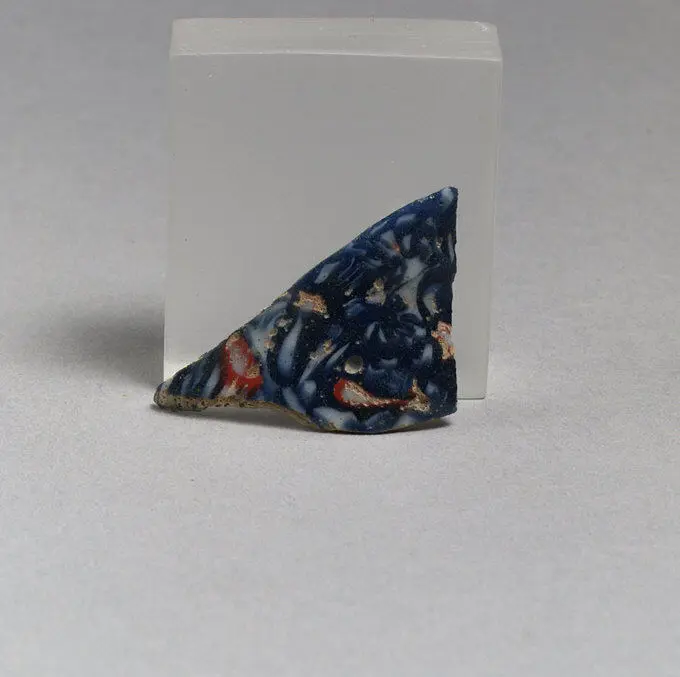
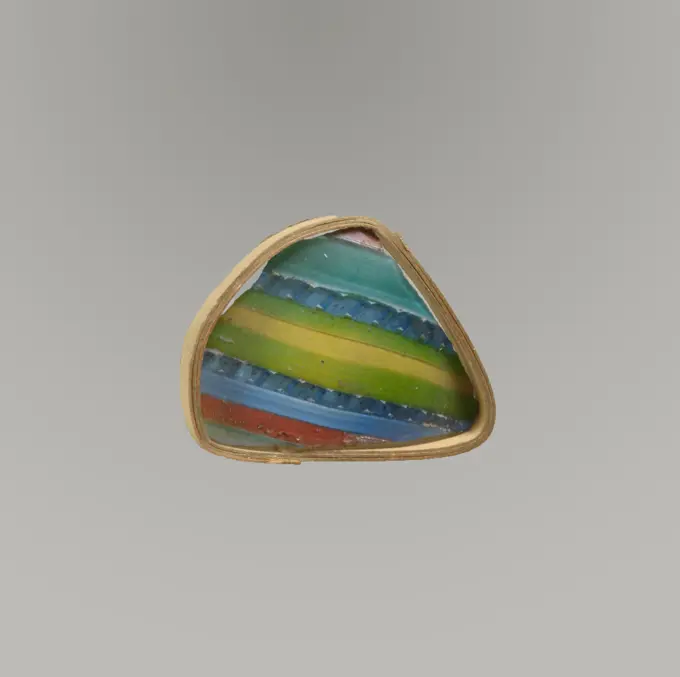
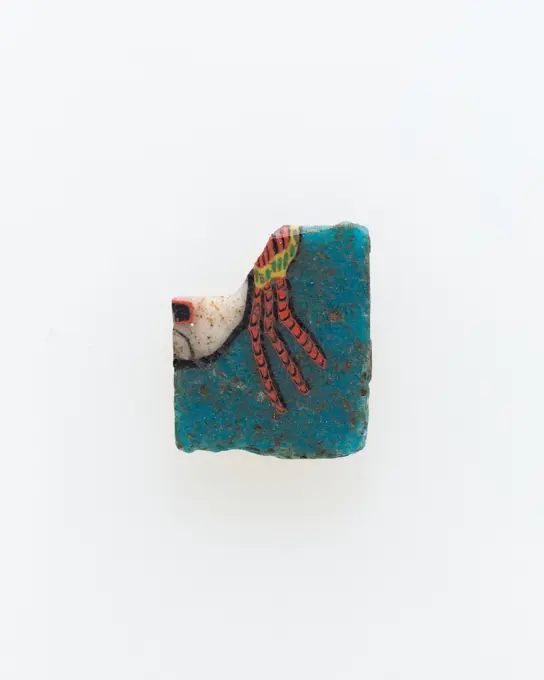
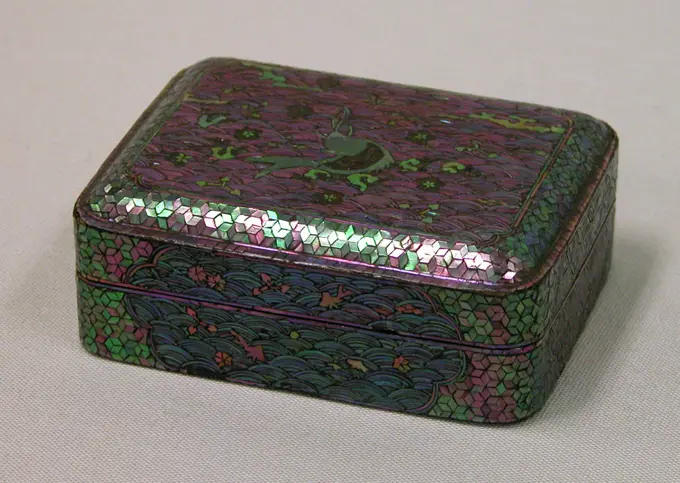
Christmas balls isolated on white background.Glass eye bead ca. 4th century B.C. Greek, Eastern Mediterranean Blue bead covered with blue and white eyes.. Glass eye bead 250031Papier -sherry dishwill with a drawing of a landscape with people, in underly glaze blue, anonymous, 1500 - 1799   earthenware. glaze   earthenware. glazeGlass mosaic fragment late 1st century B.C.-early 1st century A.D. Roman Body fragment.Translucent honey yellow, blue, and opaque white.Convex curving side.Spiral mosaic pattern formed from sections of a single cane in yellow ground with irregular white spiral threads and a second spiral composed of fine parallel blue threads set between white threads.Polished exterior; pitting of surface bubbles on exterior; dulling, iridescence, and patches of thick creamy weathering on exterior and two edges.. Glass mosaic fragment. Roman. late 1st century B.C.-early 1st century A.D.. Glass; cast. Early Imperial. GlassFragment of soil, stand ring and wall of smooth drinking cup, drinking cup drinking utensils holder soil find glass, handblown glass application Fragment of bottom stand ring and setting of wall of drinking cup in clear colorless glass Under raised (2.1 cm) bottom pontilemark As stand ring along bottom bottom all round flattened glass wire with little part missing. Various approaches to ascending wall archeology Rotterdam City Center Stadsdriehoek Oudehaven archaeological find in the soil Oude Haven 1979 - 1980.Paperweight 1843-1860 Münzthal. Technological improvements to optical scientific instruments in the mid-nineteenth century spurred a veritable obsession across Europe with identifying and classifying the natural world. Amateur botanists were eager to collect and preserve floral specimens, which they intently researched and catalogued. In response to this broad appeal, French glassmakers made paperweights that portrayed the very botanical subjects that were so enthusiastically sought. Many weights represented specimens with horticultural correctness, but others were entirely fanciful creations. Paperweights like this example speak to the periodís fascination with taxonomic systems.From the late 1840s to early 1860s, French manufacturers of fine glass and crystalósuch as Baccarat (Alsace), Clichy (Paris), and Saint-Louis (Lorraine)ócatered to the vast public enthusiasm for beautiful yet functional desk accessories. Paperweights, which were designed to secure loose papers against drafts, Inlay fragment, feather() design. Dimensions: H. 5.6 × W. 4.5 cm (2 3/16 × 1 3/4 in.). Date: 1st-3rd Century A.D..A mosaic glass technique allowed multiples of an image to be created: a figural or design composition was made by bundling colored glass canes, which were then drawn out into a long bar. The bar was then sectioned at right angles, probably by striking the bar with appropriate tools, to produce small inlay tiles. The tile would then be smoothed and polished on the face intended to appear outwards. Museum: Metropolitan Museum of Art, New York, USA.Shard from a bowl from the wreck of the East India Flying Heart. One shard from the edge of a porcelain bowl. Delft blue with the drawing from outside. Bowl.Plate, Thomas Wieldon Factory, English, Lead-glazed earthenware, Molded edge; marly decorated with wavy lines enclosing lozenges, in slight relief. Polychrome tortoiseshell” decoration in brown, with green and yellow blotches on upper surface. Glaze crackling., England, ca. 1760, ceramics, Decorative Arts, PlateShards of a plate from the wreck of the East India hollandia. Porcelain, plate, fragment; Fragm of Cavetto, Decorated With Diaper Pattern and Flowers, Set off with a Double band.Plate, Reticulated border, England, 18th-mid-19th century, ceramics, Decorative Arts, PlateVinaigrette. London, England. Date: 1828-1839. Dimensions: 2.3 x 2.9 cm (7/8 x 1 1/8 in.). Silver gilt. Origin: London. Museum: The Chicago Art Institute, Chicago, USA.Pabernacle's saucer with fruit drawing in a vase, in underly glaze blue, anonymous, 1500 - 1799   earthenware. glaze   earthenware. glazePaperweight 1840-1865 France. Technological improvements to optical scientific instruments in the mid-nineteenth century spurred a veritable obsession across Europe with identifying and classifying the natural world. Amateur botanists were eager to collect and preserve floral specimens, which they intently researched and catalogued. In response to this broad appeal, French glassmakers made paperweights that portrayed the very botanical subjects that were so enthusiastically sought. Many weights represented specimens with horticultural correctness, but others were entirely fanciful creations. Paperweights like this example speak to the periodís fascination with taxonomic systems.From the late 1840s to early 1860s, French manufacturers of fine glass and crystalósuch as Baccarat (Alsace), Clichy (Paris), and Saint-Louis (Lorraine)ócatered to the vast public enthusiasm for beautiful yet functional desk accessories. Paperweights, which were designed to secure loose papers against drafts, weBox with Floral Scrolls 18th century China. Box with Floral Scrolls 40789Dish or tray with ornamental borders, 1773 Fourly lobed leaf or dish of porcelain, painted on the glaze in blue, red, pink, green, yellow, black and gold. The front is divided into straight tires alternately filled with flower vines, each other cutting leaves in which a rosette and narrow tires with golden flower branches. Marked on the underside with a shield with m, including a g and ol. 12 Novbr 1773. // J.D.M. ~. Porcelain Company: Höchstschrezheim porcelain. glaze. gold (metal) painting / gilding / vitrification Fourly lobed leaf or dish of porcelain, painted on the glaze in blue, red, pink, green, yellow, black and gold. The front is divided into straight tires alternately filled with flower vines, each other cutting leaves in which a rosette and narrow tires with golden flower branches. Marked on the underside with a shield with m, including a g and ol. 12 Novbr 1773. // J.D.M. ~. Porcelain Company: Höchstschrezheim porcelain. glaze. gold (metal) painting / gilding / vitrificatiScroll Box (Jikumono-bako) with Paulownia and Autumn Grasses early 17th century Japan In the Momoyama period (1573-1615), a new style of lacquer decoration developed in Kyoto. Named after the Kōdaiji Temple, it catered to the tastes of the warlord Toyotomi Hideyoshi (1537-1598) for flamboyant furniture and household items decorated in gold. Using several relatively simple techniques, craftsmen conceived innovative, bold designs that did not require complicated underdrawings and allowed them to cover large surfaces in short amounts of time. The designs on this scroll box are executed in flat gold hiramaki-e with darker pear-skin” hues to create a striking contrast with the black lacquer background.. Scroll Box (Jikumono-bako) with Paulownia and Autumn Grasses 670963Butterfly. Culture: China. Dimensions: H. 2 1/8 in. (5.4 cm); W. 3 9/16 in. (9 cm); D. 1/4 in. (0.7 cm). Date: 17th century.The butterfly is usually associated with joy and weddings, but as its name (hudie) is a pun for "age seventy to eighty," it is also a symbol for longevity. Museum: Metropolitan Museum of Art, New York, USA.Easter egg isolated on the white backgroundDishwith of white -baking earthenware with white glaze on both sides, and a blue stripe, anonymous, 1200 - 1899 on the front  Italy earthenware  Italy earthenwareSpeech fair of wine red velvet, embroidered in gold and silver thread and multicolored silk in an unidentified alliance weapon. Speech fair of wine red velvet, mentured embroidered in gold and silver thread and multicolored silk in an unidentified alliance weapon. Model: flat round bottom where a wavy raised edge is provided with holes through which a drawstring was originally pulled through it. On the edge opposite each other, buttons with a wooden core - are originally wounded with metal wire or silk. Unlined, lining of goat leather and side is missing. Decoration: The 20 bulges or 'ribs' are decorated with a spreamother of French lilies or 'Fleurs de Lys' embossed silver wire interspersed with ditto star-shaped flowers. A double horizontal line of silver thread runs at three-quarters height. The soil is circled with a double edge within which a zizag line of silver wire. In this on a silver-brocade fond, an alliance weapon of a fled flush side and metal wire under a five-pointed croTea Bowl with Tortoiseshell” Design 13th-14th century China. Tea Bowl with Tortoiseshell” Design. China. 13th-14th century. Stoneware with iron glaze splashed with wood-ash solution (Jizhou ware). Southern Song (1127-1279)-Yuan (1271-1368) dynasty. CeramicsPaperweight 1852-80 Boston & Sandwich Glass Company. Paperweight 5521Vase fragment. Dimensions: h. 5.5 cm (2 3/16 in); w. 3.7 cm (1 7/16 in). Dynasty: Dynasty 12-13. Date: ca. 1981-1640 B.C.. Museum: Metropolitan Museum of Art, New York, USA.Shards of plates from the wreck of the East India Hollandia.Porcelain, Plate, Type 3; Fragm or Rim, SIM. Or 1980-27H3203c.Opium Box 1816-1826 China. Silver .Betel Box,, c. 1700 - c. 1799 A sirihpot 'Goela Klapa', part of a pair (A and B) with gilded lid from the 18th century with Louis XVI decoration with brushes and garlands in driven silver. On the golden caps a peacock or bird motif has been applied and not, as would be expected, the motif of a dying gareda. The lid is attached to the pot with a chain. The pot is round and stands on a foot. Indonesia silver (metal). gold (metal) gilding A sirihpot 'Goela Klapa', part of a pair (A and B) with gilded lid from the 18th century with Louis XVI decoration with brushes and garlands in driven silver. On the golden caps a peacock or bird motif has been applied and not, as would be expected, the motif of a dying gareda. The lid is attached to the pot with a chain. The pot is round and stands on a foot. Indonesia silver (metal). gold (metal) gildingVinaigrette 1858-1859 Birmingham. Silver, silver gilt, bloodstone, agate, and other hardstone .Red cosmetic mirror isolated on white background Cover of teapot, painted with a landscape with houses, Royal Porcelain Factory Dommer & Co., c. 1809 - c. 1814 Porcelain teapot lid, painted with a farmer on the land. Nieuwer-Amstel porcelain Porcelain teapot lid, painted with a farmer on the land. Nieuwer-Amstel porcelainCylindrical brush holder. unknown, craftsmanGlass striped mosaic bowl fragment late 1st century B.C.-early 1st century A.D. Roman Rim fragment.Translucent blue, blue layered with yellow appearing dull green, purple appearing opaque streaky brick red, and opaque yellow, with colorless glass.Applied coil rim with rounded, vertical lip; convex curving side, tapering in sharply at bottom. Rim in blue with single white spiral thread; body decorated with vertical bands slanting slightly from top left to bottom right, forming regular pattern, repeated three times in red, blue, red, and green, yellow, green, interspersed with thin lines of colorless glass.Two conjoined fragments; pinprick bubbles; exterior polished, with pitting of surface bubbles; dulling and creamy weathering on interior; some iridescent weathering on jagged edges.. Glass striped mosaic bowl fragment. Roman. late 1st century B.C.-early 1st century A.D.. Glass; cast. Early Imperial. GlassPaperweight, 19th century, Clichy Glass Works, 2 1/4 x 3 3/8 x 3 3/8 in. (5.72 x 8.57 x 8.57 cm), Glass, France, 19th centuryFragment from Thick Walled Marbled Vessel ca. 1427-1400 B.C. New Kingdom. Fragment from Thick Walled Marbled Vessel. ca. 1427-1400 B.C.. Glass. New Kingdom. From Egypt, Upper Egypt, Thebes, Valley of the Kings, Tomb of Amenhotep II (KV 35). Dynasty 18Fish kettle with six fish on the bottom. Fish bucket with handle. On the outer wall of the bucket, flowers are engraved within two zig-saw edges. Six fish are engraved on the bottom on the inside. The bucket is not noticed.Flower pot, Glazed earthenware (creamware) with overglaze decoration, Semi-ovoid, flat bottom with ring base, pierced at centre - greenish black bands and curving band of sprigged decoration in red., England, late 18th century, ceramics, Decorative Arts, Flower potBrooch van Gold with a pearl, anonymous, c. 1920 - c. 1930 Composite brooch of yellow and red gold with a mabe pearl, with cannon closure. The brooch is made of a ring from which the shin has been removed and where a brochure is turned on. No responsibility signs. Netherlands red gold. gold (metal). silver (metal). pearl Composite brooch of yellow and red gold with a mabe pearl, with cannon closure. The brooch is made of a ring from which the shin has been removed and where a brochure is turned on. No responsibility signs. Netherlands red gold. gold (metal). silver (metal). pearlMosaic glass fragment late 1st century B.C.-early 1st century A.D. Roman Thin-walled rim fragment (of a ribbed bowl).Translucent cobalt blue, honey brown, and opaque white.Outsplayed, rounded rim; concave curving neck with side tapering downward.Spiraling mosaic pattern formed from large sections of a single cane in a blue ground with brown and white threads.Polished interior; pitting of surface bubbles on interior; dulling and creamy iridescent weathering on exterior, rim, and jagged edges.. Mosaic glass fragment. Roman. late 1st century B.C.-early 1st century A.D.. Glass; cast. Early Imperial. GlassRound Rode Lakdoos, with Dragon in Gold Lak, Anonymous, 1600 - 1699 Round, red lacquer box, decorated with dragon in gold lacquer. China lacquer (coating). Round, red lacquer box, decorated with dragon in gold lacquer. China lacquer (coating).Glass mosaic dish fragment ca. 2nd century B.C. Greek, Eastern Mediterranean Rim fragment.Translucent deep purple appearing black, deep turquoise blue green, opaque white and yellow.Vertical rim with rounded but tapering edge; short, convex curving side, turned in sharply toward bottom.Mosaic pattern formed from rows of a single cane in a blue green ground with numerous, fine radiating white spokes around a small yellow circle and a central purple rod; a purple cane wound spirally with a thick white thread is attached as a rim.Polished exterior; pitting and slight weathering of surface bubbles on exterior; dulling, pitting, and creamy brown weathering on interior, outer edge of rim, and jagged edges.. Glass mosaic dish fragment. Greek, Eastern Mediterranean. ca. 2nd century B.C.. Glass; cast. Hellenistic. GlassSharp of red -baking earthenware, on the inside and outside with marbled glaze in green, brown, beige and terra, anonymous, 1600 - 1650  Northern Netherlands earthenware. glaze majolica  Northern Netherlands earthenware. glaze majolicaJug for Sake (chôshi) from the cover;  End of the 19th century (1891-00-00-1900-00-00);Duck-Shaped Ewer 1400-1499 China. Slip-coated stoneware painted in underglaze blue .Fragment 12th-14th century French. Fragment. French. 12th-14th century. Pot-metal glass, vitreous paint. Glass-StainedSword-Hilt Collar (Fuchi) ca. 1615-1868 Japanese A fuchi is a collar that is mounted at the base of the grip of a sword hilt, usually made as part of a set with a matching kashira (pommel cap).. Sword-Hilt Collar (Fuchi). Japanese. ca. 1615-1868. Copper-gold alloy (shakud), gold. Sword Furniture-Fuchi-Kashira. Rectangular tobacco box with beveled corners and a hinged lid. On the lid a landscape has been engraved within a frame with two farmers and a farmer's pair of a cow. Against a background of a church and a few houses. On the bottom an engraved medallion with a pastoral scene of a flute shepherd and a half-unchanged woman. Flanked by a pattern of four-leaf flowers connected by tires between the flower-like windows in four. Signature, signed and dated.Glass mosaic bead 3rd-4th century A.D. Roman, Egyptian. Glass mosaic bead. Roman, Egyptian. 3rd-4th century A.D.. Glass. Laste Imperial. GlassSilversmith: Douwe Eysma, Silver tray on legs with inscription, tray leaf holder silver, cast engraved Square leaf with bevelled corners on four smooth legs bottom bottom (smashed) Rotterdam Scheepmakershaven tobacco fire serve remember Louis XVI Louis XVI Louis Seize The magazine was Madry (1752-1808) donated because of the help he gave as 27-year-old servant to tobacco dealer Van Beusekom in the rescue of bales of tobacco during the fire at the Scheepmakershaven on 1011 March 1779.Cluster of peaches, 19th century, Unknown Japanese, 1 1/2 x 1 7/8 x 15/16in. (3.8 x 4.8 x 2.4cm), Amber, silver, Japan, 19th centuryVinaigrette 1831-1842 Birmingham. Silver and silver gilt .Ink stand with circles and a flower roundel, anonymous, c. 1750 - c. 1799 Ink set of stoneware on three low feet, with a pen box and two holders for the ink pot and the sand spreader. Partly covered with cobalt blue. The front and back with a decoration of stamped, connected circles. Circles stamped on the outer wall of the pen box and on the top. A flower rosette between the two holders. On the top four times and on the pen box twice a modeled 'Klinknagel'. Westerwald. Westerwald stoneware. glaze. cobalt (mineral) vitrification Ink set of stoneware on three low feet, with a pen box and two holders for the ink pot and the sand spreader. Partly covered with cobalt blue. The front and back with a decoration of stamped, connected circles. Circles stamped on the outer wall of the pen box and on the top. A flower rosette between the two holders. On the top four times and on the pen box twice a modeled 'Klinknagel'. Westerwald. Westerwald stoneware. glaze. cobalt (mineral) vitrificationPaperweight 1840-1865 France. This paperweight uses a traditional glass-making technique called millefiori to great effect. Italian for ìone thousand flowers,î millefiori was first developed in fifteenth-century Venice. In the nineteenth century, French glassmakers revived the technique with a cultural twist. Arranged to evoke traditional French gardens such as the Tuileries in Paris, paperweights like this example brought a little of this landscaping magic indoors.From the late 1840s to early 1860s, French manufacturers of fine glass and crystalósuch as Baccarat (Alsace), Clichy (Paris), and Saint-Louis (Lorraine)ócatered to the vast public enthusiasm for beautiful yet functional desk accessories. Paperweights, which were designed to secure loose papers against drafts, were among their most popular products.. Glass . Baccarat GlassworksMuiltje van Faïence, Anonymous, c. 1750 - c. 1780 Mile of Faïence. Multicolored painted with flowers. Delft . Mile of Faïence. Multicolored painted with flowers. Delft .Netsuke of Miniature Stand. Culture: Japan. Dimensions: H. 1 in. (2.5 cm); W. 1 1/4 in. (3.2 cm); D. 1 1/4 in. (3.2 cm). Date: 19th century. Museum: Metropolitan Museum of Art, New York, USA.Tile. Culture: American. Dimensions: 4 1/4 x 4 1/4 in. (10.8 x 10.8 cm). Maker: J. and J. G. Low Art Tile Works (1877-1907). Date: ca. 1882-84. Museum: Metropolitan Museum of Art, New York, USA.Mug, Black transfer, England, 18th-mid-19th century, ceramics, Decorative Arts, MugPlejerko with a cover;  around 1912-1926 (1912-00-00-1926-00-00);Button (France); brass, enamel; 1940-25-14. Porcelain lid, painted in blue, red, green, yellow and black with bamboo and prunus and two birds .. Kakiemon decor. With accompanying pot (A)Armband with Spirals 14th-12th century B.C. European Bronze Age. Armband with Spirals. European Bronze Age. 14th-12th century B.C.. Copper alloy. Metalwork-Copper alloyPaperweight 1848 Baccarat. The colorful geometric clusters embedded in this paperweight reflect the nineteenth-century European fascination with optical effects. Sir David Brewster invented the kaleidoscope in 1815, and its colorful and changing patterns brought great visual entertainment. Paperweights such as this example reformed this childlike pastime for a sophisticated adult audience. Depicted in glass were tiny glittering flowers, small black and blue cameos of figures, and even miniature bottlecaps. These were delicately arranged within the orb for the observant eye to discover.From the late 1840s to early 1860s, French manufacturers of fine glass and crystalósuch as Baccarat (Alsace), Clichy (Paris), and Saint-Louis (Lorraine)ócatered to the vast public enthusiasm for beautiful yet functional desk accessories. Paperweights, which were designed to secure loose papers against drafts, were among their most popular products.. Glass . Baccarat GlassworksVinaigrette (England); parcel-gilt silverGlass mosaic inlay late 1st century B.C.-early 1st century A.D. Egyptian, Roman Semi-opaque turquoise blue ground; decoration in opaque yellow and red, and deep purple appearing black.Square plaque, with sharp edges and corners; concave, uneven underside.Symmetrical palmette and lotus bud motif arranged around a central four-petaled rosette, with a tall palmette at each corner.Complete except for chips at two corners; upper side ground and polished; pitted surface bubbles, weathering and slight iridescence on underside and edges.Square blue opaque block, flower pattern in red and black.. Glass mosaic inlay 249629Farmer and farmers under tree. Tobacco box of silver. Engraved with a farmer and farmers sitting under a tree.Persian” ladles in a presentation box. Manufacturer: Tiffany and Company, American, founded 1837 Engraver: Whitehouse Designer Edward C. Moore, American, 1827-1891Paperweight 1840-1865 France. This paperweight uses a traditional glass-making technique called millefiori to great effect. Italian for ìone thousand flowers,î millefiori was first developed in fifteenth-century Venice. In the nineteenth century, French glassmakers revived the technique with a cultural twist. Arranged to evoke traditional French gardens such as the Tuileries in Paris, paperweights like this example brought a little of this landscaping magic indoors.From the late 1840s to early 1860s, French manufacturers of fine glass and crystalósuch as Baccarat (Alsace), Clichy (Paris), and Saint-Louis (Lorraine)ócatered to the vast public enthusiasm for beautiful yet functional desk accessories. Paperweights, which were designed to secure loose papers against drafts, were among their most popular products.. Glass . Clichy GlasshouseVase fragment East Greek/Sardis, Lydian. Vase fragment 252830 East Greek/Sardis, Lydian, Vase fragment, Terracotta, H. 1 15/16 in. (5 cm). The Metropolitan Museum of Art, New York. Gift of The American Society for the Excavation of Sardis, 1926 (26.199.266)Chamber pot lid - W. Taylor W. TaylorScale, round, with a green edge and golden Greek band, Petrus Regout, c. 1865 Scale of earthenware, round, scalloped, with green edge and golden Greek band. The scale has two ears. Maastricht earthenware Scale of earthenware, round, scalloped, with green edge and golden Greek band. The scale has two ears. Maastricht earthenwareBiscuit Tin (England); Manufactured by Huntley, Boorne, & Stevens; Produced by Huntley & Palmers, Ltd. (United Kingdom); offset lithograph on tinBox, Anonymous, 1800 - 1900 High round box with a backdrop of aquatic plants in the most vertical rows in gold, inlaid with mother -of -pearl. Japan wood (plant material). lacquer (coating) High round box with a backdrop of aquatic plants in the most vertical rows in gold, inlaid with mother -of -pearl. Japan wood (plant material). lacquer (coating)Cover (possibly Japan); woodJug, anonymous, c. 1540 - c. 1560 Can of rock crystal with a small rectangular ear, spout and on a low foot. Gold frame with black enamel and rubies. A lion's head is attached to the ear. On the spout a naked semi -figure with a mask. Italy gold (metal).. ruby (mineral) Can of rock crystal with a small rectangular ear, spout and on a low foot. Gold frame with black enamel and rubies. A lion's head is attached to the ear. On the spout a naked semi -figure with a mask. Italy gold (metal).. ruby (mineral)Terracotta pyxis (box). Culture: Greek, Attic. Dimensions: H. of box 1 5/8 in. (4.2 cm); H. with cover 2 1/16 in. (5.2 cm). Date: ca. 510 B.C..On the lid, satyrSatyrs were popular not only because of their connection to Dionysos but also because they provided artists the opportunity to depict the nude male body in a particularly wide variety of poses. This satyr, within a tondo, finds good counterparts on the somewhat later coinage of Naxos on Sicily. The inscription praises the beauty of Lysikles. The box would have contained small personal items probably belonging to a lady. Museum: Metropolitan Museum of Art, New York, USA.Glass in the shape of a hunting horn. Smooth curved tube, flared in a wide sound cup; A tightened nozzle on the narrow side. Around the tube a white wire, the transition from the tube to the sound cup indicated by a corrugated white wire.Paperweight 1840-1860 Clichy. This paperweight uses a traditional glass-making technique called millefiori to great effect. Italian for ìone thousand flowers,î millefiori was first developed in fifteenth-century Venice. In the nineteenth century, French glassmakers revived the technique with a cultural twist. Arranged to evoke traditional French gardens such as the Tuileries in Paris, paperweights like this example brought a little of this landscaping magic indoors.From the late 1840s to early 1860s, French manufacturers of fine glass and crystalósuch as Baccarat (Alsace), Clichy (Paris), and Saint-Louis (Lorraine)ócatered to the vast public enthusiasm for beautiful yet functional desk accessories. Paperweights, which were designed to secure loose papers against drafts, were among their most popular products.. Glass . Clichy GlasshouseTerracotta pyxis (box) late 5th century B.C. Greek, Attic Women and ErotesThe representation here probably has some relation to rituals for the goddess Aphrodite that took place in an outdoor, garden-like setting. Particularly conspicuous is the woman seated on a rock-like formation and isolated between two vertical foliate bands. The other figures include Erotes, a winged woman resembling Nike, and women with household furnishings such as a casket and kalathos (wool basket).. Terracotta pyxis (box) 247286Harpoon Head. Culture: Old Bering Sea (). Dimensions: H. 3/4 x W. 3 1/4 in. (1.9 x 8.3 cm). Date: 3rd-4th century. Museum: Metropolitan Museum of Art, New York, USA.Pillow early 8th century China Listen to experts illuminate this artwork's story Listen Play or pause #8990. Overview: Tang Dynasty - Glazed Pottery Supported by Bloomberg Philanthropies We're sorry, the transcript for this audio track is not available at this time. We are working to make it available as soon as possible.. Pillow. China. early 8th century. Earthenware with three-color (sancai) glaze. Tang dynasty (618-907). CeramicsPlaque fragment. UnknownFragment of a Glass Dish 10th century Byzantine The figures of men returning from a hunt on the bottom of this dish closely resemble ones on ivory and bone caskets of the period.. Fragment of a Glass Dish 467396Fragment of thimble from the wreck of the East India Hollandia. Tools And Instruments, Sewing and Sailmaking, Thimble; Fragm or body, ID. NG 1980-27H234.Paperweight 1840-1865 France. Glass . Compagnie de Saint LouisFurniture Mounts; brassSnuff box with a jumping deer on the lid. Snuff box of silver. Rectangular with braided walls like a basket. A jumping deer between seed beads, volutes and flowers on the lid.Paperweight, 19th century, Saint Louis Glass Works, 2 3/8 x 3 1/8 x 3 1/8 in. (6.03 x 7.94 x 7.94 cm), Glass, France, 19th centurySnuffbox. Culture: probably German, Berlin. Dimensions: H. 2-1/16 in. (5.2 cm); W. 3 in. (7.6 cm); D. 2-1/4 in. (5.7 cm). Maker: Possibly by the Workshop of Charles Fromery (1685-1738). Date: ca. 1744-50.This charming snuffbox may have been created in the Berlin workshop of the Huguenot goldsmith Pierre Fromery (1685-1738), which was known for its enameled boxes. Museum: Metropolitan Museum of Art, New York, USA.Footstool at Stadhoudersstoel, Anonymous, 1768 Footstool, covered with green velvet and belonging to Stadhoudersstoel van Notenhout, gilded and covered with green velvet with silver passement. The chair rests on the cornered S-shaped legs, which turn into the sitting window without interruption. At the foot they are decorated with acanthus leaf, above the swelling with flower branches, as well as the scalloped seating rules. The armrests have pillows, neighborhoods out and end in volutes. The armrest stars are placed backwards, come from the sitting window and cross the armrests. The back window is sculpted on four sides and decorated with flower and leaf branches. Profile lists by small volutes interrupted the furniture in his contour. The chair includes a loose, green velvet cushion with silver passement. The Hague (possibly) wood (plant material). walnut (hardwood). bekleding: velvet (fabric weave). passement: silver thread. gilding (material) gilding Footstool, covered with green vBox and cover, Coromandel-veneered joined wood, lined with silk, gilded and tooled calfskin leather, raised, chased and engraved silver, cut glass, mirrored glass, carved mother-of-pearl (handles), cut and engraved brass (hinges and tools), gilt-metal, forged steel (implements), Rectangular box,lined with purple silk, fitted with leather document holders, and mirror with gold-leaf foliate border, the upper level withy 4 rectangular and 1 central faceted silver-lidded cylindrical cologne jars, 3 silver-lidded glass boxes, 2 silver-lidded glass ink bottles, mother-of-pearl handled sewing implements, tweezers, button hook, pen knife and hole punch or scorer-all in the upper compartment, a secret drawer below fitted with a letter writing slide., 1875-76, containers, Decorative Arts, Box and coverLid of sugar bowl. Lid of sugar bowl. Along the edge a golden flower and leaf drink. The golden bud in the shape of a pine cone.Glass mosaic carinated bowl fragment late 1st century B.C.-early 1st century A.D. Roman Body fragment.Translucent cobalt blue, opaque white and red.Carinated side, with narrow, upright upper convex curve, and deeper lower curve slanting sharply downward.Composite mosaic pattern formed from polygonal sections of one or more canes in a blue ground with white splashes and a red circle around a central white rod; on interior, a single horizontal fine groove at top of lower curve.Polished exterior and part of one edge; deep pitting and weathering of surface bubbles on exterior; dulling, pitting, and creamy weathering on interior and jagged edges.. Glass mosaic carinated bowl fragment 257373Dessert plate - Paragon, 1900- Paragon, 1900-Tile, J. & J. G. Low Art Tile Works, 1877 - 1883, Molded glazed earthenware, Square molded tile made of white clay, Tile face is decorated with stylized dandelions (gone to seed) in an all-over pattern set between plain horizontal borders. Tile is painted deep honey-brown crackle glaze., Chelsea, Massachusetts, USA, 1877-83, tiles, Decorative Arts, TileGlass striped mosaic bowl fragment late 1st century B.C.-early 1st century A.D. Roman Body fragment.Translucent blue, turquoise blue, purple appearing opaque brick red, turquoise blue appearing green, opaque yellow, and white, with colorless glass.Side curving in sharply to flat bottom. Decorated with vertical bands, forming a regular pattern: turquoise blue, red, blue layered with white, blue with single white spiral thread, green, yellow, green, blue with single white spiral thread, blue, red, blue, and turquoise.A few pinprick bubbles; exterior polished, with pitting of surface bubbles; dulling, pitting, iridescence, and creamy weathering on interior; some iridescent weathering on jagged edges.. Glass striped mosaic bowl fragment. Roman. late 1st century B.C.-early 1st century A.D.. Glass; cast. Early Imperial. Glass. Nieuwe Kunst designers had a wide range of interests. Known primarily as a potter, Bert Nienhuis also designed this brooch - as well as the other brooches and necklaces on view here. The jewels are related to his pottery designs. Their forms are clearer, the simplicity underscored by the abstract enamel ornamentation.Vinaigrette 1824-1834 London. Silver, silver gilt, and shagreen .Buckle, Lodewijk Willem van Kooten (II), c. 1908 - c. 1911 Silver buckle, decorated in Niëllo with stylized plant motifs, a cabochon, a cabochon, a small amethyst in each of the corners. Amsterdam silver (metal). amethyst (mineral) Niello (technique) Silver buckle, decorated in Niëllo with stylized plant motifs, a cabochon, a cabochon, a small amethyst in each of the corners. Amsterdam silver (metal). amethyst (mineral) Niello (technique)Paperweight 1840-1865 France. Glass . Compagnie de Saint LouisInlay, fragment, maenad hair 100 BC-100 AD Ptolemaic Period-Roman Period A mosaic glass technique allowed multiples of an image to be created: a figural or design composition was made by bundling colored glass canes, which were then drawn out into a long bar. The bar was then sectioned at right angles, probably by striking the bar with appropriate tools, to produce small inlay tiles. The tile would then be smoothed and polished on the face intended to appear outwards.Such elements could also be used side by side to create repeating patterns. Or if the rod presented one half of an element that was symmetrical, such as a face, a tile and a reversed tile from the same rod could be put together to form a complete whole.. Inlay, fragment, maenad hair. 100 BC-100 AD. Glass. Ptolemaic Period-Roman Period. From EgyptBox 19th century Japan. Box 57781