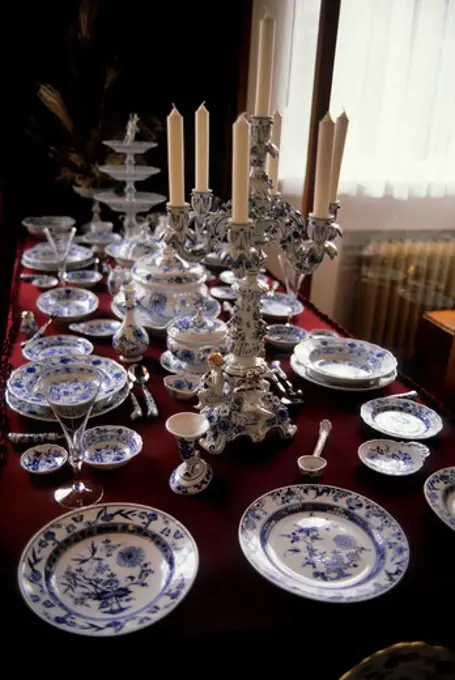
Decorative Glassware

An array of elegant glass containers and ornamental pieces, featuring intricate designs and craftsmanship from different eras.

Lid with a hunting scene, anonymous, c. 1850 - c. 1875 Facet cut, vaulted lid with overhanging edge and a facet cut, baluster -shaped button, ending in a point. On the lid a deer, a stork and a dog between rocaille ornament. The facets on foot, trunk and button with gold. Bohemia glass glassblowing / grinding / gilding Facet cut, vaulted lid with overhanging edge and a facet cut, baluster -shaped button, ending in a point. On the lid a deer, a stork and a dog between rocaille ornament. The facets on foot, trunk and button with gold. Bohemia glass glassblowing / grinding / gilding
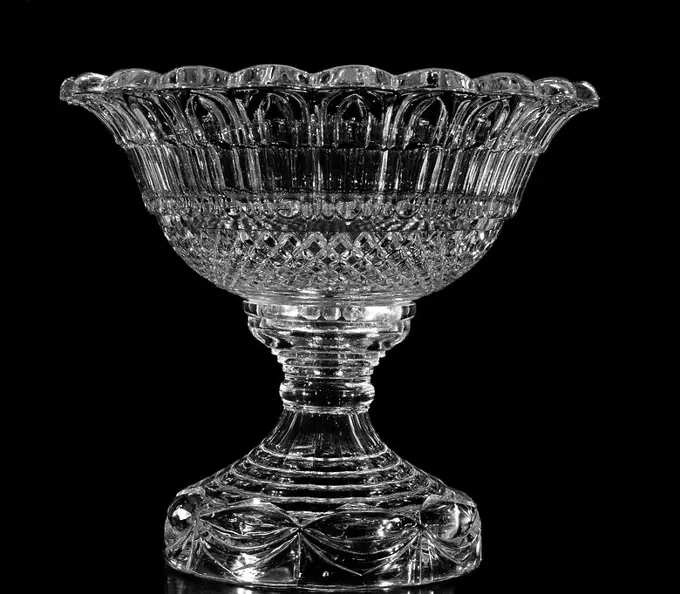
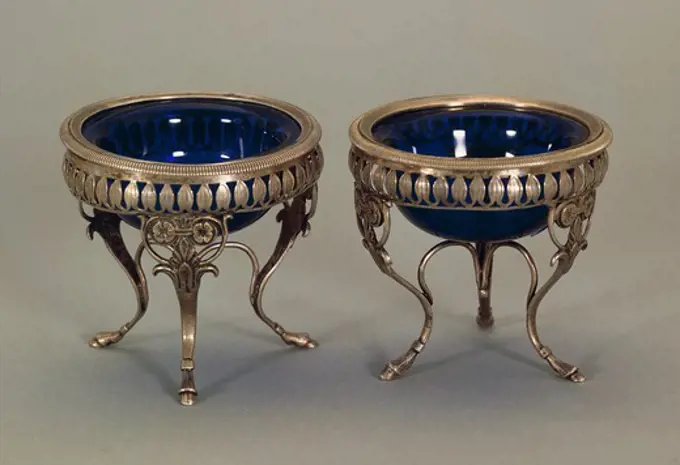
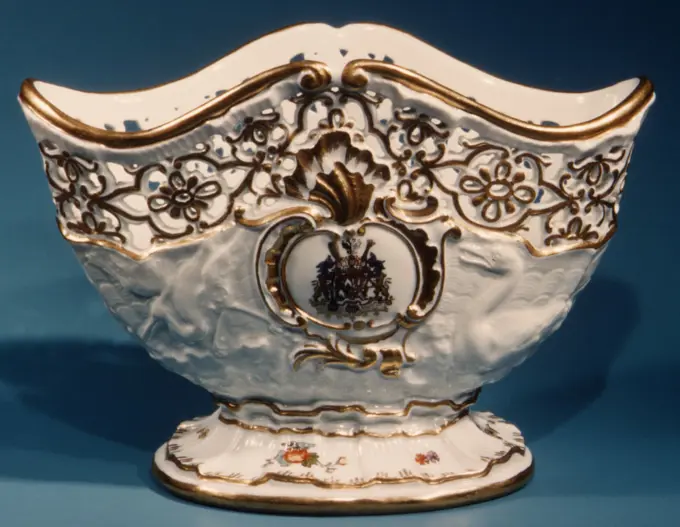
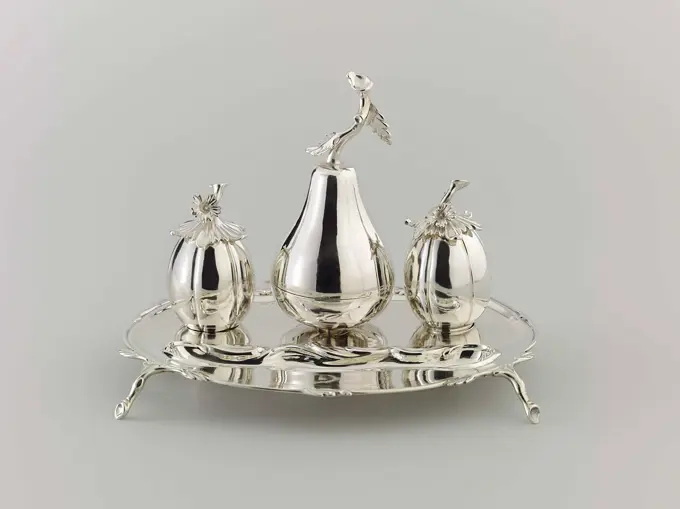
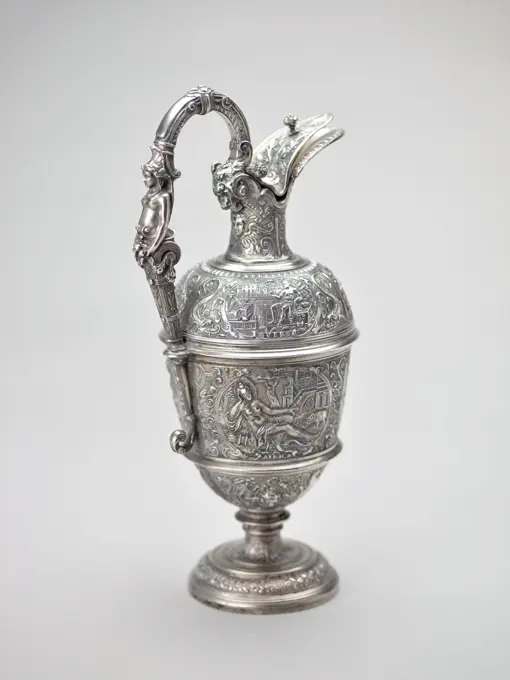
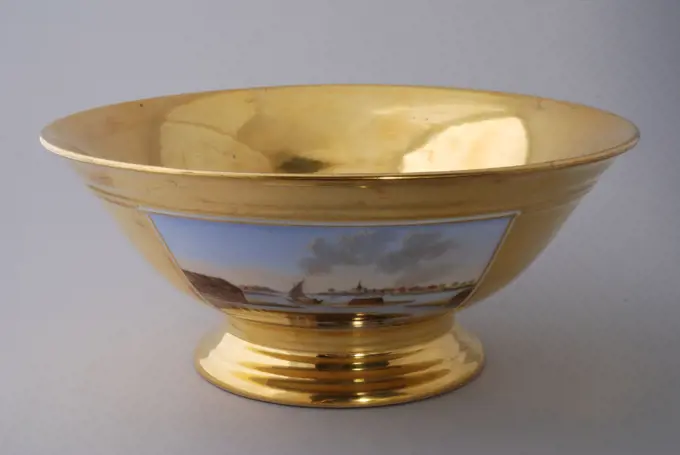
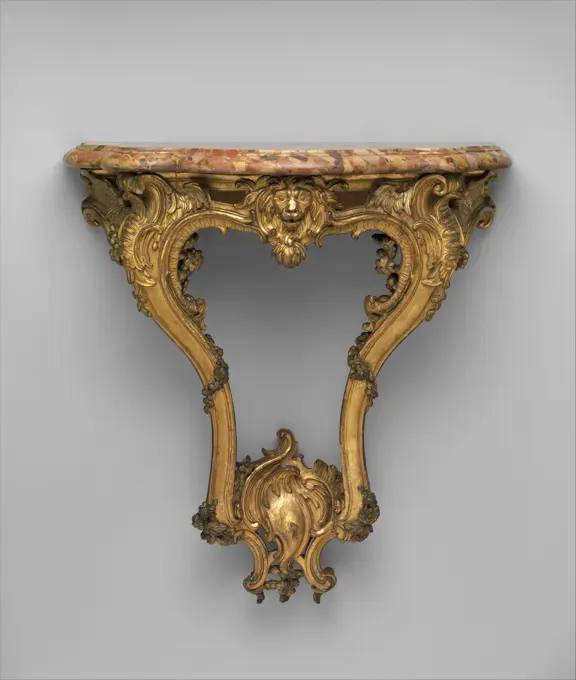
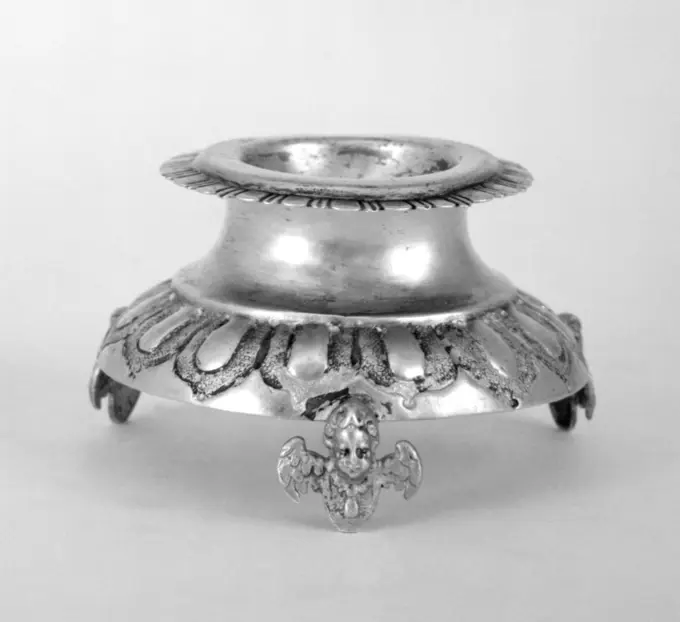
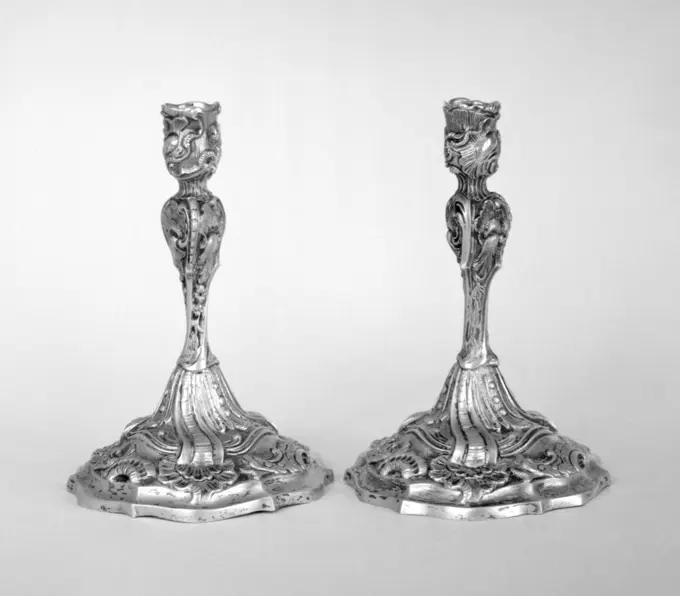
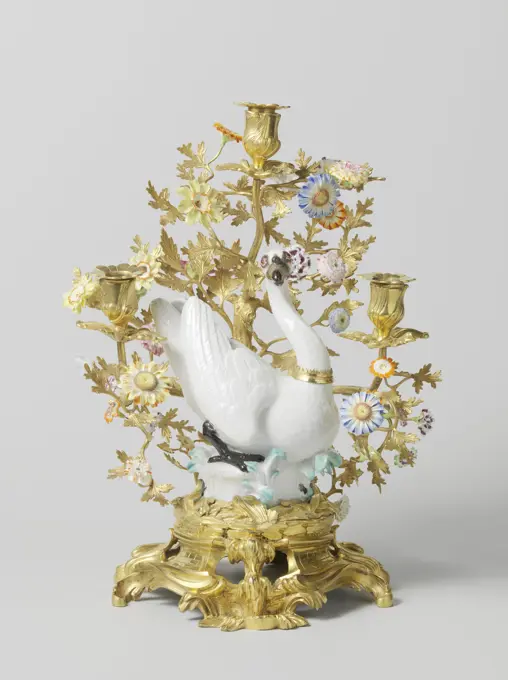
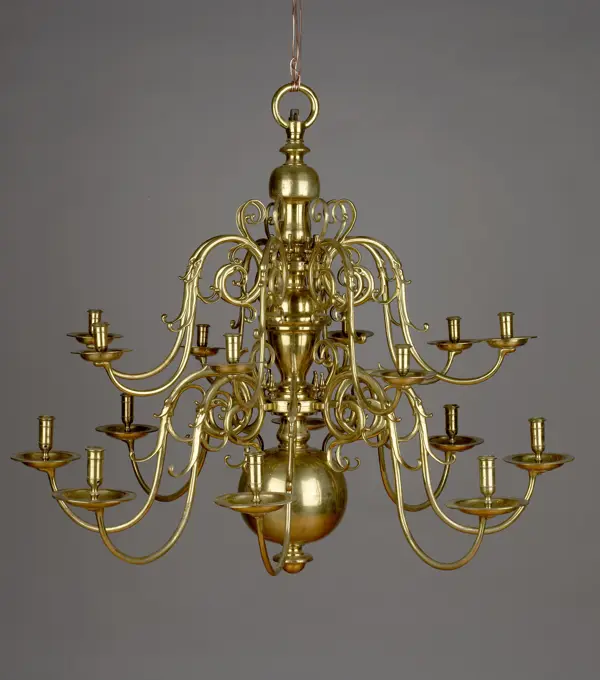
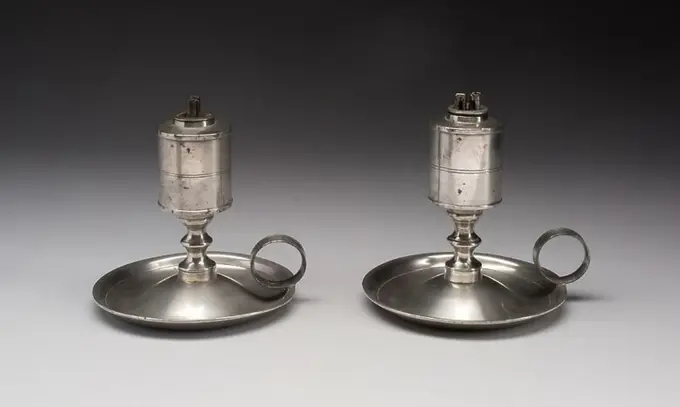
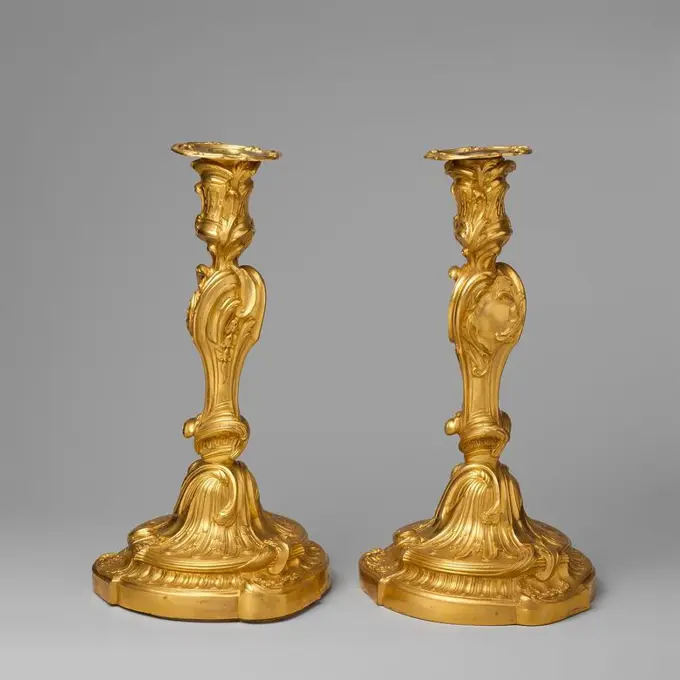
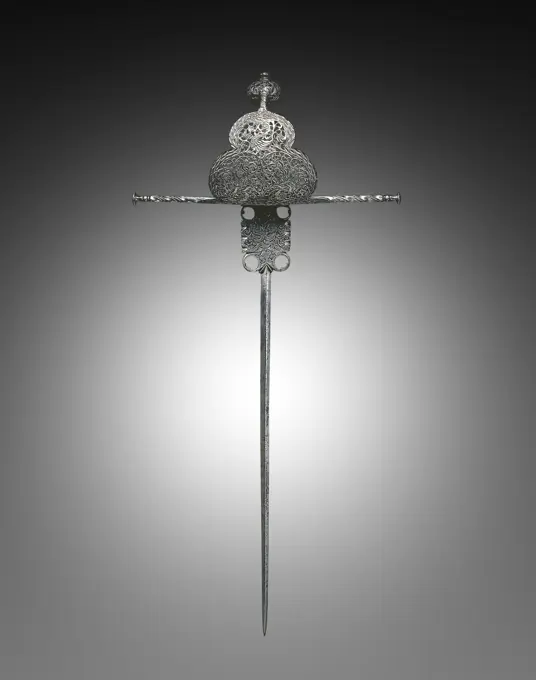
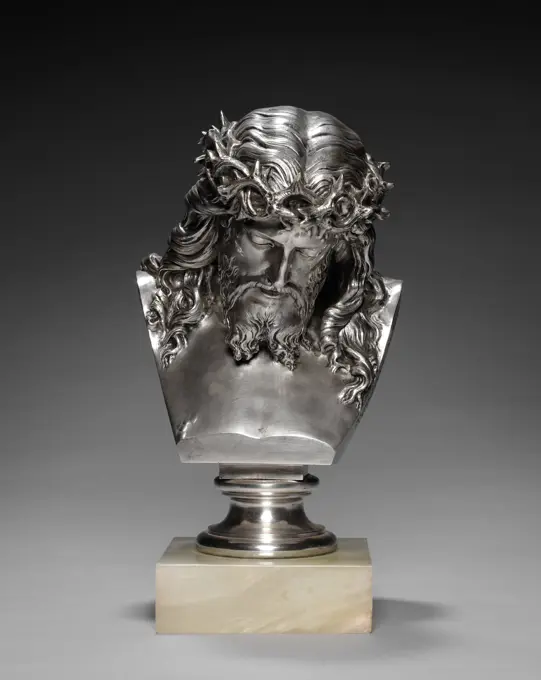
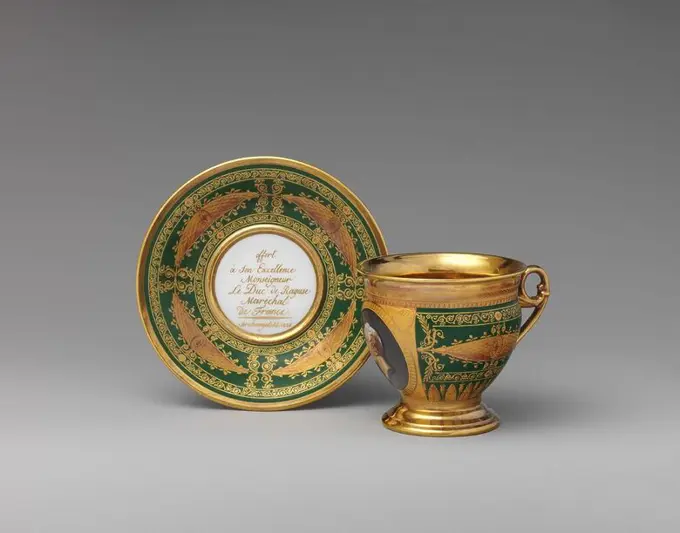
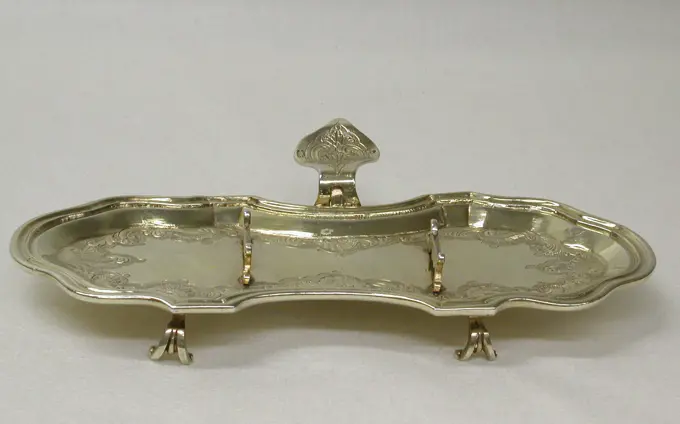
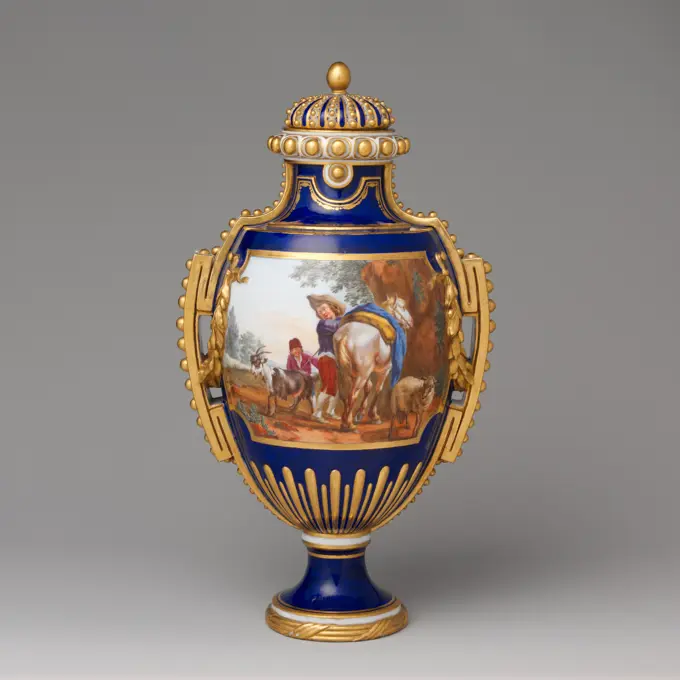
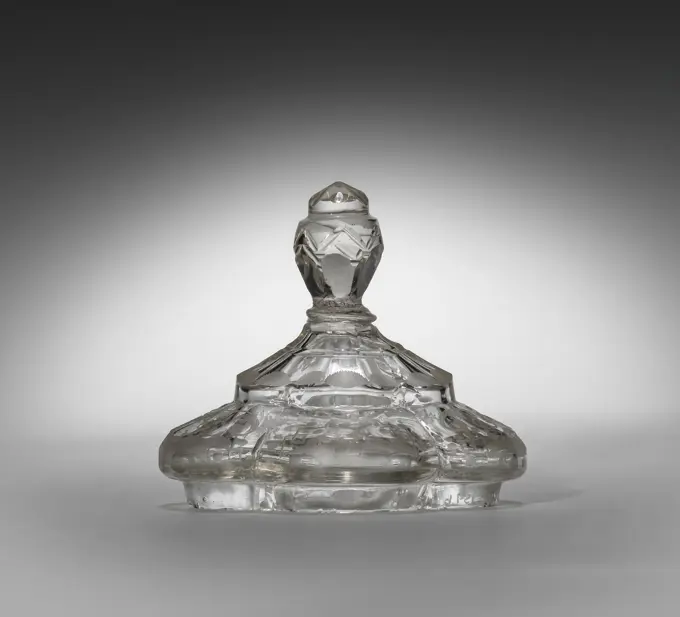
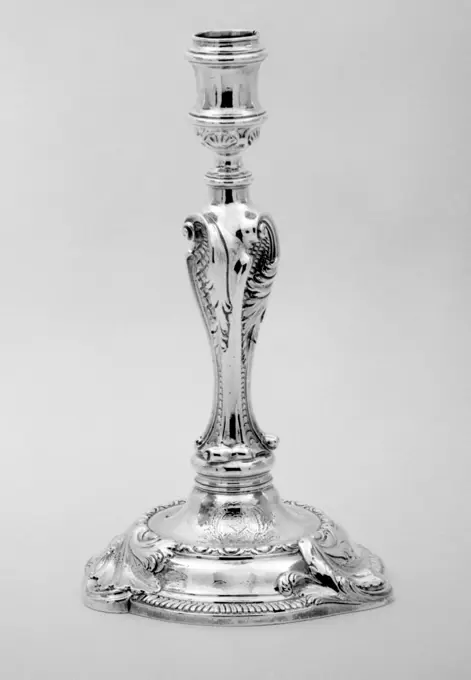
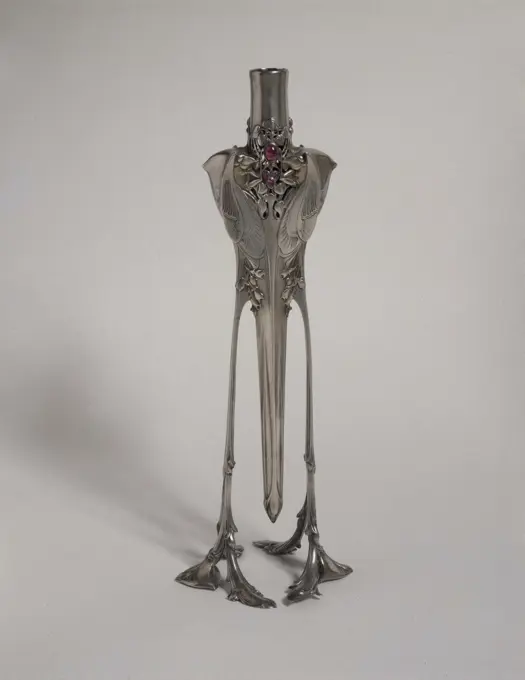
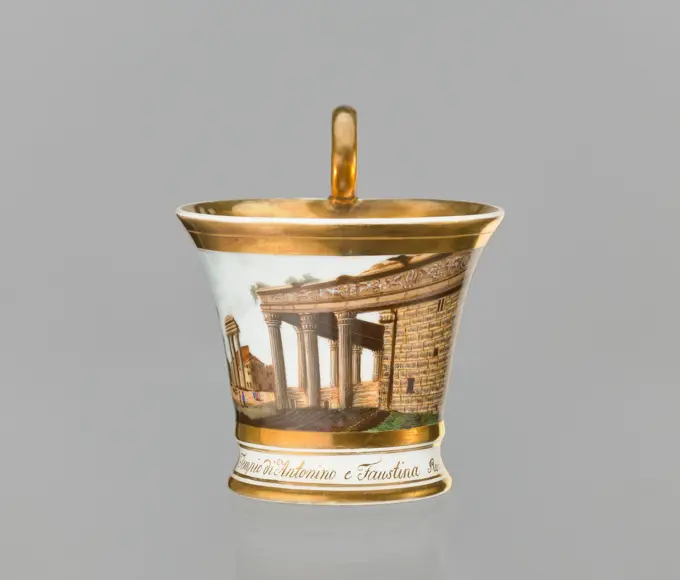
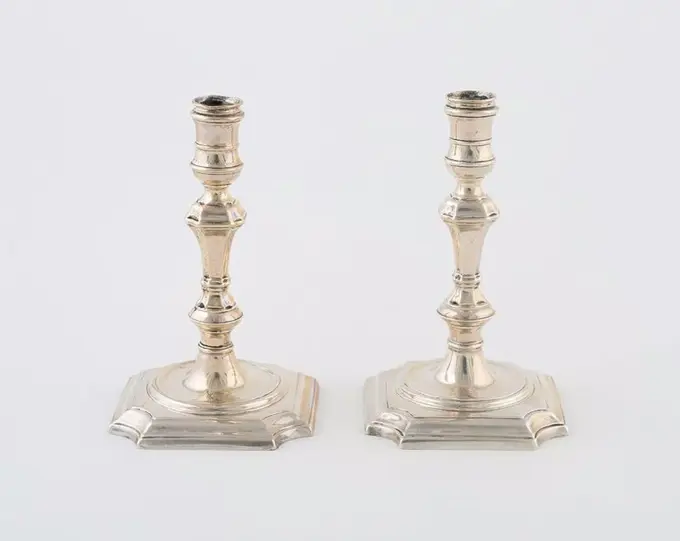
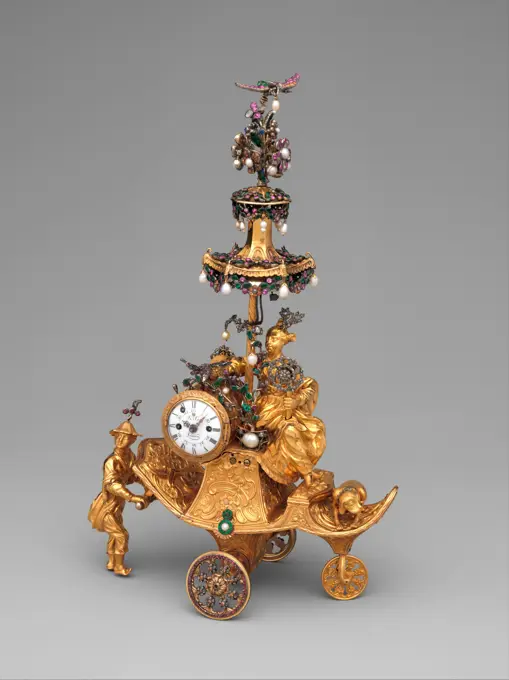
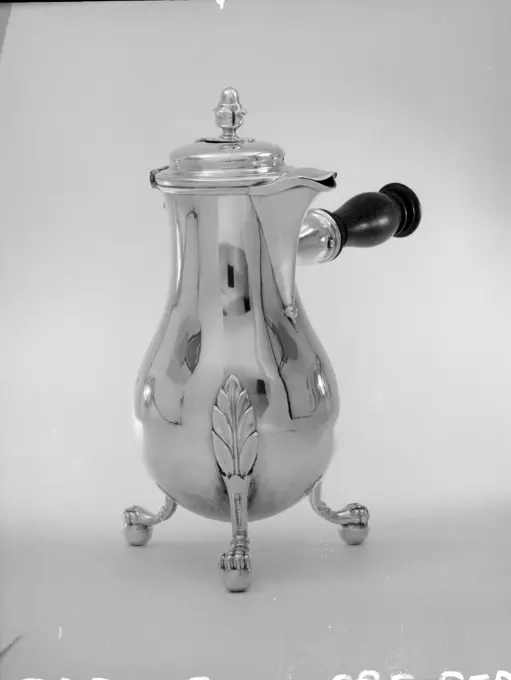
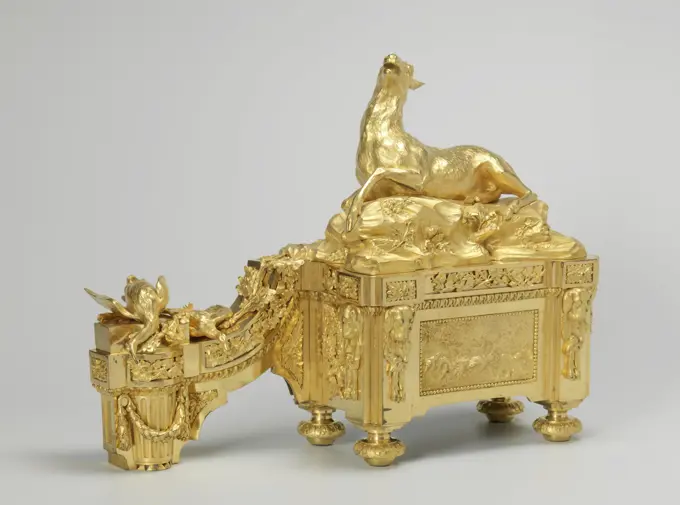
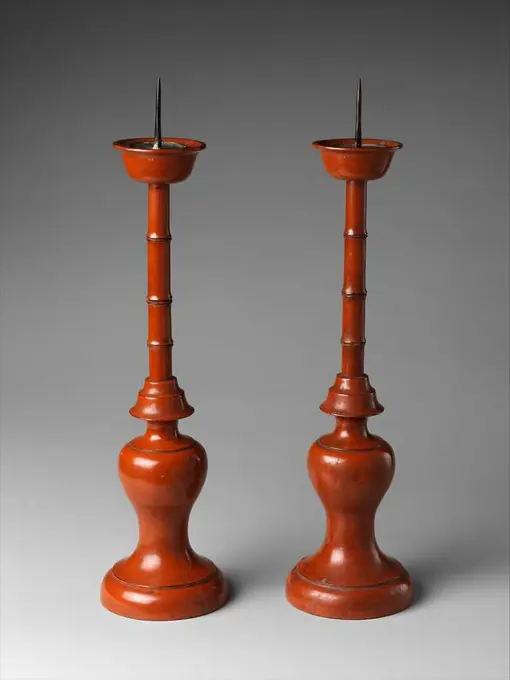
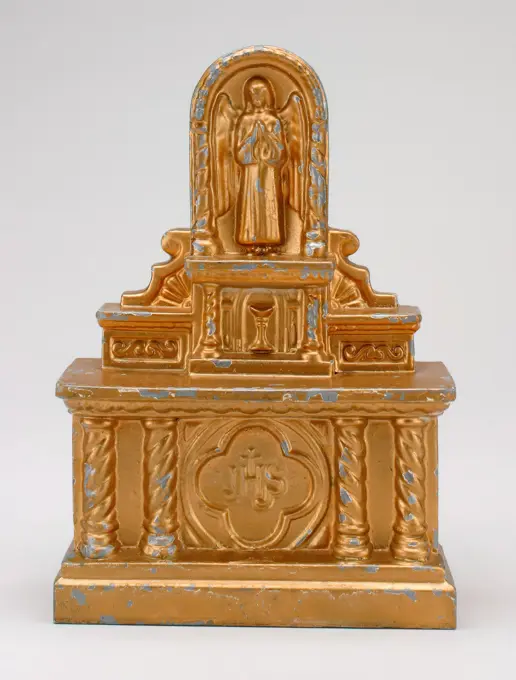
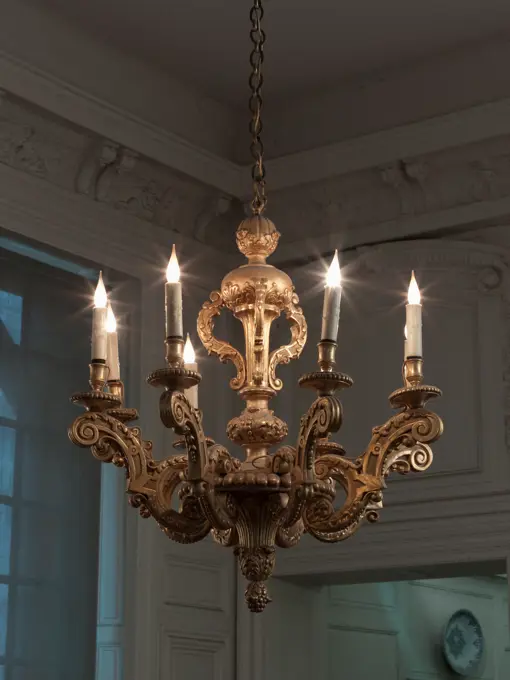
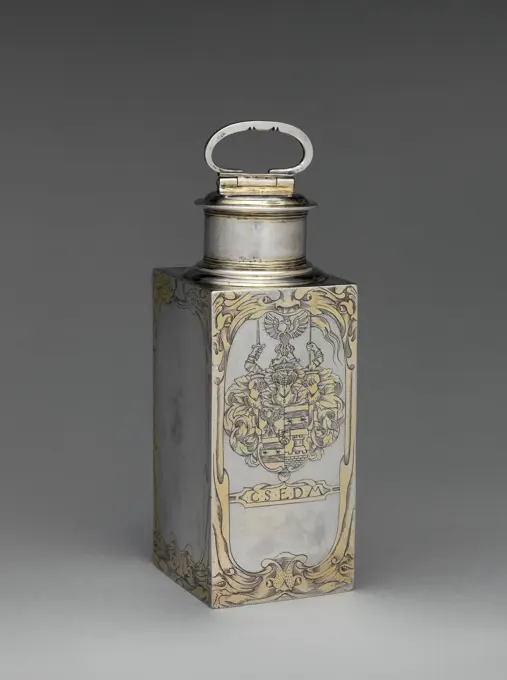
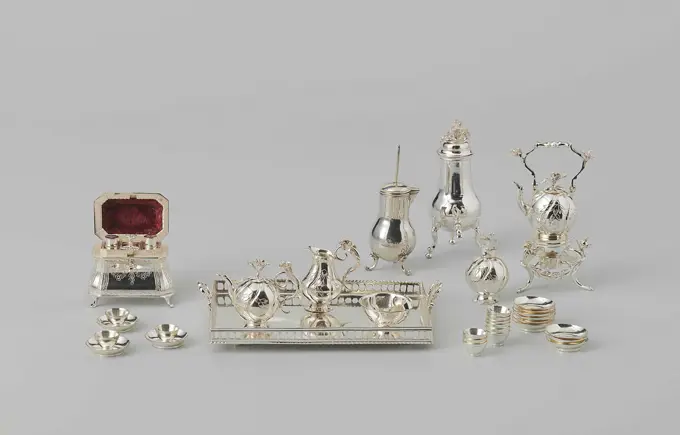
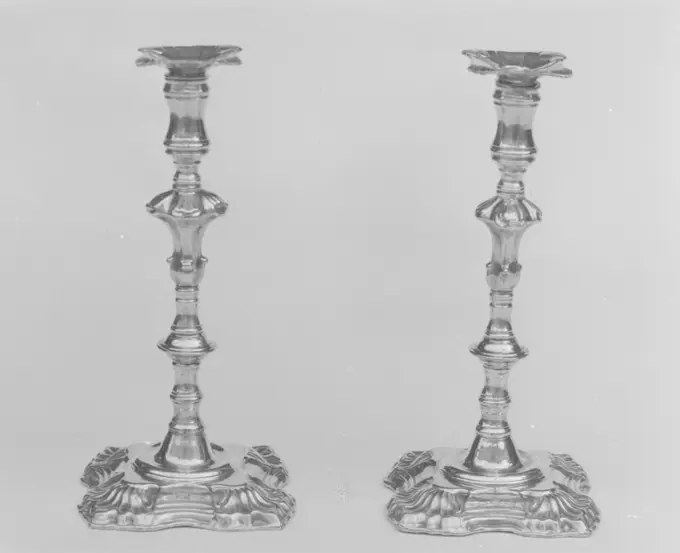
Pair of tapersticks ca. 1835 British, Sheffield. Pair of tapersticks. British, Sheffield. ca. 1835. Sheffield plate. Metalwork-SilverplateUnknown, pair of vases with lid (title of the whole). Porcelain, polychrome enamels, gilding. Petit Palais, Museum of Fine Arts of the City of Paris.FRUTERO DE CRISTAL - FOTOGRAFIA EN BLANCO Y NEGRO - AÑOS 60. Location: PRIVATE COLLECTION.Jar with silver base and glasses of shell, J.M. van Kempen (firm), 1864 Bokaal with silver foot and glasses of shell. Foot completely decorated with motifs that have the sea. The base covered by a belt and a cable is designed as water. This rests the trunk that consists of an anchor around which a water -breathing fish has wrinkled. The glass -matted chalice is formed as a nautilus shell. Voorschoten silver (metal). glass Bokaal with silver foot and glasses of shell. Foot completely decorated with motifs that have the sea. The base covered by a belt and a cable is designed as water. This rests the trunk that consists of an anchor around which a water -breathing fish has wrinkled. The glass -matted chalice is formed as a nautilus shell. Voorschoten silver (metal). glassWineglass probably 17th century European. Wineglass. European. probably 17th century. Glass. GlassSilver box used as Etrog (citron fruit) box, 6 x 8 1/2 x 6 9/16 in. (15.24 x 21.59 x 16.67 cm) (closed), Silver, velvethanger hanging; Crystal and mirror glassworks (Urzecze; 1737-1846); 1764-84 (1764-00-00-1784-00-00);VASIJA DE PORCELANA CON ESCENA ROMANTICA - ESTILO SEVRES - SIGLO XIX. Location: PRIVATE COLLECTION.Pair of incense burners 18th century Chinese with French mounts. Pair of incense burners. Chinese with French mounts. 18th century. Hard-paste porcelain, gilt-bronze mounts. Metalwork-Gilt BronzeCOPA DE VIDRIO DE LA GRANJA. Location: MUSEO DE HISTORIA DE MADRID-CRISTALERIA. MADRID. SPAIN.Silversmith's Art, Italy 19th century. Silver, round saltcellars with punch mark of the goldsmith PC. Milan, approximately 1810.Wine bottle stand (one of a pair) (part of a service) model introduced 1741 Meissen Manufactory German The design of swans swimming amid reeds is based on an etching by Wenceslaus Hollar after Francis Barlow (ca. 1626-1702).. Wine bottle stand (one of a pair) (part of a service). Based on an etching by Wenceslaus Hollar (Bohemian, Prague 1607-1677 London). German, Meissen. model introduced 1741. Hard-paste porcelain. Ceramics-PorcelainTwo Candelabra, company Hoeker & Zoon, 1891 Silver candelabar, part of an ensemble. Amsterdam silver (metal) Silver candelabar, part of an ensemble. Amsterdam silver (metal)Bin belonging to ink set. Silver ink set. The leaf is straight on the back and at the front. The inkwell and sand spreader are melon. The pear-shaped table bubble is applied between the two melons. The bin is below the bell.Cruet Set. Thomas Williamson; Irish, active 1750-70; Dublin, Ireland. Date: 1755-1765. Dimensions: Stand: 8.6 × 16.7 × 11 cm (3 3/8 × 6 9/16 × 4 5/8 in.); Bottles (with caps): 17.5 × 6 cm (6 7/8 × 2 3/8 in.). Silver and glass. Origin: Dublin. Museum: The Chicago Art Institute, Chicago, USA.Copón, siglo XIV, Iglesia de Ulldecona. Museo de Historia de Barcelona.Ewer, 1883. Manufactured by Elkington & CoRinse bowl, part of coffee and tea service with cityscapes, rinse bowl coffee service tea service dinnerware holder ceramic porcelain glaze, baked glazed painted stove enamelled Rinsing bowl Wide bowl on layered stand. Some profile rings under the edge on the outside. Largely gilded white porcelain. Two windows that contain color images. The corresponding captions are located on the bottom of the bottom. Port of Vlissingen and Turfveenderij topography coffee coffee drinking tea tea drinking cityscape Vlissingen peat peatConsole table ca. 1745-50 French The asymmetrical cartouche of this small console, as well as its winged C and inverted C scrolls and use of rocaille decoration reveal quintessential elements of the Rococo style prevalent in Continental Europe from 1730s onward.This console was part of the model collection of woodwork, paneling and seat furniture of Maison Leys, a successful decorating business, located at the Place de la Madeleine in Paris. Since 1885 the business was directed by Georges Hoentschel who installed the collection in 1903 in a museum-like display at Boulevard Flandrin, Paris. Three years later, Hoentschel sold the collection to J. Pierpont Morgan who gave the panels with the rest of the decorators seventeenth and eighteenth century objects to the Metropolitan Museum of Art in 1907.. Console table 189476 French, Console table, 18th century, Carved and gilded wood, marble, Overall: 24 7/8 ? 23 5/8 ? 10 in. (63.2 ? 60 ? 25.4 cm). The Metropolitan Museum of Art, New York. GCircular salt 1610-25 German, Augsburg. Circular salt 206251Candlestick (one of a pair) 1753-55 Emanuel Drentwett. Candlestick (one of a pair) 206202Two candelabra, anonymous, c. 1750 Swan of polychrome porcelain, on pedestal with plastic leaf decoration in blue -green, green and yellow. The swan has a ring of gilded bronze around the neck. The swan is placed in a gilded bronze frame in Rococo style, in the form of a tree on which leaves and flowers of porcelain in blue, orange-red, green, yellow, pink, violet and brown. The swan is marked. maker: Parisporcelain company: MeissenMeissenporcelain company: Vincennes porcelain. bronze (metal). paint (coating). gilding (material) gilding Swan of polychrome porcelain, on pedestal with plastic leaf decoration in blue -green, green and yellow. The swan has a ring of gilded bronze around the neck. The swan is placed in a gilded bronze frame in Rococo style, in the form of a tree on which leaves and flowers of porcelain in blue, orange-red, green, yellow, pink, violet and brown. The swan is marked. maker: Parisporcelain company: MeissenMeissenporcelain company: Vincennes porcelain. bronze (mRobert Stewart, Vase, c 1936 VaseLid of a jar. Vaulted lid with faceted, pear-shaped button on two discs. A engraved flower and leaf garland on the lid.Candle of candle crown, c. 1475 - c. 1485 Candle arm belonging to a candle crown of three heights with Maria Chapel in the middle. The arm is bent twice and has eleven leaves. The fat catcher rests at the end, which has a vertical serrated edge with cruciferous motifs on the underside. The candle holder is six-flagged with a perforated side on the front and back and has a vertical ring-shaped lower piece. This is the fourth arm of the bottom ring (pedestal), numbered with 4 dots. Southern Netherlands brass (alloy) casting Candle arm belonging to a candle crown of three heights with Maria Chapel in the middle. The arm is bent twice and has eleven leaves. The fat catcher rests at the end, which has a vertical serrated edge with cruciferous motifs on the underside. The candle holder is six-flagged with a perforated side on the front and back and has a vertical ring-shaped lower piece. This is the fourth arm of the bottom ring (pedestal), numbered with 4 dots. Southern Netherlands brass (aCandle of candle crown, anonymous, c. 1475 - c. 1485 Candle arm belonging to a candle crown of three heights with Maria Chapel in the middle. The arm is bent twice and has eleven leaves. The fat catcher rests at the end, which has a vertical serrated edge with cruciferous motifs on the underside. The candle holder is six-flagged with a perforated side on the front and back and has a vertical ring-shaped lower piece. This is the sixth arm of the bottom ring (pedestal), numbered with 6 dots. Southern Netherlands brass (alloy) casting Candle arm belonging to a candle crown of three heights with Maria Chapel in the middle. The arm is bent twice and has eleven leaves. The fat catcher rests at the end, which has a vertical serrated edge with cruciferous motifs on the underside. The candle holder is six-flagged with a perforated side on the front and back and has a vertical ring-shaped lower piece. This is the sixth arm of the bottom ring (pedestal), numbered with 6 dots. Southern NetherlandsHandbell, John of Summer Wil (i) (Attributed to), 1758 Bell -shaped table bell with handle. The handle is baluster -shaped. On the bell is halfway through an imposed piping. The table bell is marked: stk. = Amsterdam, Jrl. = Y (1758), Mt. = Attributed to Johannes van Somerwil (I). Amsterdam silver (metal) Bell -shaped table bell with handle. The handle is baluster -shaped. On the bell is halfway through an imposed piping. The table bell is marked: stk. = Amsterdam, Jrl. = Y (1758), Mt. = Attributed to Johannes van Somerwil (I). Amsterdam silver (metal)Chandelier second half of 17th century Netherlandish This chandelier has two series of eight S-shaped branches protruding from grotesque snakes (or dolphins) heads around a baluster shaft resting on a massive globe. The branches and shaft have been correspondingly numbered from one to eight, with the exception of number three, indicated by three small bars, and number five, denoted by a crescent moon or the letter C.. Chandelier 461306Thomas Pitts I, Epergne, 1764/65, silver gilt.Pair of Lamps. Roswell Gleason; American, 1799-1887. Date: 1822-1850. Dimensions: 14.6 × 13.7 × 14.6 cm (5 3/4 × 5 3/8 × 5 3/4 in.). Pewter. Origin: United States. Museum: The Chicago Art Institute, Chicago, USA.Silver ink set. Leaf with bent front; ink pot and sand spreader melon -shaped, table bell pear -shaped, Laurens Potmans, c. 1773 - c. 1782 Silver ink set. The leaf is bent straight and at the front at the front. The ink jar and sand spreader are melon -shaped. The pear -shaped table bell is applied between the two melons. Middelburg silver (metal) Silver ink set. The leaf is bent straight and at the front at the front. The ink jar and sand spreader are melon -shaped. The pear -shaped table bell is applied between the two melons. Middelburg silver (metal)Pair of candlesticks. Culture: French, Paris. Dimensions: Height (each): 11 3/4 in. (29.8 cm); Diam. of base (each): 6 1/2 in. (16.5 cm). Maker: Manner of Juste Aurèle Meissonnier (French, Turin 1695-1750 Paris). Date: 1735-50.These candlesticks are freely adapted from the same design by Meissonnier as the candlestick in front of them. The different surface treatments, however--punched and matted or smooth and burnished--would have resulted in different reflections of light. Museum: Metropolitan Museum of Art, New York, USA.Especially table Paw Wowicz, TeodorThree Part Centerpiece 1855-1875 Lunéville. Glass with bronze mounts . Baccarat GlassworksLeft-Handed Dagger or "Main Gauche", c. 1650. Spain () or Italy, (Neapolitan), 17th century. Steel, pierced and chiseled; overall: 57.2 cm (22 1/2 in.); blade: 44.4 cm (17 1/2 in.); quillions: 25.4 cm (10 in.). For parrying, rapiers were often made with accompanying daggers as a matched set, although the rapier shown here (1916.1810) does not originally belong to this dagger. Daggers such as this one have been misleadingly called "left-handed daggers" even though they could be held in either hand. The guard is richly decorated with chiseled and pierced arabesques, an ornamental design consisting of intertwined flowing lines.Head of Christ, 1867. Jean-Baptiste Clésinger (French, 1814-1883). Silvered bronze, marble base; overall: 38 x 19.2 x 21.9 cm (14 15/16 x 7 9/16 x 8 5/8 in.); without base: 31 cm (12 3/16 in.).Pair of candleholdersAnonymous. Petit Palais, Museum of Fine Arts of the City of Paris.Pair of urns with covers ca. 1775 French Although little is known of their provenance, these breche violette urns reflect the fashion for hardstone objects mounted in gilt bronze which were eagerly collected in France during the last decades of the eighteenth century. One of the best known collectors was Louis-Marie-Augustin, Duke dAumont (1709-82), who directed the Menus-Plaisirs et Affaires de la Chambre du Roi, an administrative body of the kings household that managed the monarchs personal effects and organized his entertainment, creating sets for theatrical productions and significant occasions such as marriages and funerals. At the Menus-Plaisirs, marble, granite and porphyry, jasper and agate, when possible acquired in Italy, were wrought into magnificent decorative objects frequently, mounted in gilt bronze by Pierre Gouthière (1732-1813/14). The Duke dAumont had urns of a similar shape in his collection that were sold off following his death. The gilt-bronze finials, collaPair of chestnut bowls with covers ca. 1785 Chinese, for British market The arms are those of James Peter Fector (1759-1804) and his wife Frances Lane (1765-1851) who were married in 1783.. Pair of chestnut bowls with covers. Chinese, for British market. ca. 1785. Hard-paste porcelain. Ceramics-Porcelain-Exporteurope in the sky of london lantern and abstract illuminationPointer of console clock. Pointer of console clock.Trophy Cup And Case (Germany); Abraham Drentwet (1647 - 1727); parcel gilt silver, painted wood; 1949-131-1-a/dINCENSARIO EN PLATA S XVII. Location: CONVENTO DE SAN CLEMENTE-MUSEO. Toledo. SPAIN.BIRRETE DEL INFANTE FERNANDO DE LA CERDA - ORO PLATA MARFIL CORAL- FONDO DE ALJOFAR - SIGLO XIII. Location: MONASTERIO DE LAS HUELGAS-MUSEO DE RICAS TELAS. BURGOS. SPAIN.Two-light wall bracket after 1799 Indian, Murshidabad The bracket, which depicts a lion triumphant over a tiger, may have been made to commemorate the British victory over Tipu Sultan, the "Tiger of Mysore," in the battle of Srirangapattana in 1799. The Persian emblem overhead was Tipu's motto, "Gift of God," which the British adopted to allude to their victory.. Two-light wall bracket. Indian, Murshidabad. after 1799. Ivory. Natural Substances-IvoryPair of mounted vases ca. 1750 Chinese with French mounts These sky-blue vases of the Chien Lung period were embellished in Paris with scrolled and foliated mounts that were used as bases, handles and rims and adapted them to the European Rococo aesthetic. The mounting of both Asian and European porcelain became a standard and lucrative practice for the Parisian marchands merciers. In this manner they could enhance a mediocre piece of porcelain or preserve a precious but damaged object. These “makers of nothing and sellers of everything” also invented new models for porcelain by giving them pierced mounts and turning them into incense burners or pot pourri holders.. Pair of mounted vases 206600Pair of Wall Lights; Attributed to Burchardt Precht (German, 1651 - 1738); about 1700; Sand-cast bronze with silver plating and mirror glass;Cup and saucer. Culture: Russian, Arkhangelskoye. Dimensions: Cup (.278): 3 7/8 × 4 in. (9.8 × 10.2 cm);Saucer (.279): 1 1/8 × 6 1/4 in. (2.9 × 15.9 cm). Factory: Yusupoff Factory (Russian, 1814-1831). Date: 1826.The portrait is of Czar Nicholas I (1796-1855). The inscription indicates that the cup and saucer were presented to the French ambassador to Saint Petersburg, Auguste-Frédéric Viess de Marmont, duc de Raguse, on the occasion of the czar's coronation. Museum: Metropolitan Museum of Art, New York, USA.Ewer and Basin. Johan Erhard Heuglin II (German, 1687-1757); Germany, Augsburg. Date: 1715-1725. Dimensions: 27.3 × 10.5 × 20.3 cm (10 3/4 × 4 1/8 × 8 in.). Silver gilt. Origin: Augsburg. Museum: The Chicago Art Institute, Chicago, USA.Stand ca. 1743-45 Friedrich Schwestermuller II German. Stand 231571Mantle clock with two candelabra, c. 1900 The cupboard of the pendulum and the candelabers are made of yellow copper plate, which sounded on the corner edges and the horizontal connecting pieces and soldered on the inside. The cupboard has a part that swings out in two feet, a shaft and a timepiece, in which the dial is applied, and to which the window and the door are attached. On the shaft of the clock a rosette is engraved on the front, in which a ruby red semi -precious stone is placed in a frame -equipped frame. On the dial of red copper, the minutes signs are painted blue, those of the hours of white, as well as the hands. A round window of cut glass is caught in a hinged frame. At the back, a round -hinged door makes it possible to get to the unnoticed timepiece. Especially under the door the mark Aho (in one), i.e. Amstelhoek, broke over. The cabinet is also covered at the bottom with sheet metal. Both candelabers are equipped with three round candle holders on round fat catcheVase with cover (vase à panneaux or à perles) (one of a pair) ca. 1766 Sèvres Manufactory French The French names for these vases (see also 58.75.83a-c) "à panneaux" and "à perles" refer to the paneled reserves, here with painted pastoral scenes after compositions by the Dutch painter Nicholaes Berchem, and to the three-dimensional pearl motives on the lid and running down the sides. The plaster model for this type of vase, which was available in two different sizes, has been preserved in the archives of the Sèvres manufactory. The Museum's pair is an example of the smaller size.Jeffrey H. Munger, 2006. Vase with cover (vase à panneaux or à perles) (one of a pair) 202188Arm of a candle crown in two heights, Anonymous, 1630 The S-shaped arm is provided with a ridge on the trunk side with an opening to secure it with a pin in the stand rings. At the trunk the arm is decorated on the end and to the center with two stylized dolphin heads and with three pairs of curls or leaves executed in lobe style. To the outside, the arm ends in a lip, in which a hole provided with a thread is applied, to confirm the candle holder and the fat catcher. The arm is cast using the same model as the other arms of the wreath. The cylindrical candle holder has two profiled ribs, two grooved rings and profiled excellent edge. The fat catcher is deepened twice at the top towards the center. At the bottom it is profiled around the hole on the somewhat spherical middle and ribbed on the edge and with two grooved rings. The fat catcher has been cast using the same model as the other fat catchers of this wreath. The pin is equipped with a vase -shaped button. This is the first arm Cover for a Standing Cup, c. 1725. Germany, Silesia, 18th century. Glass; overall: 27.3 x 7 cm (10 3/4 x 2 3/4 in.); base: 9.3 x 9.8 cm (3 11/16 x 3 7/8 in.).Pair of candlesticks 1745-46 Thomas Gilpin. Pair of candlesticks 205343Amphora for perfume, 19th century toiletries object. Old 19th century engraved illustration from La Ilustración Artística 1882Jules Auguste Habert-Dys (1850-1930). Soliflore vase, 20th century. Museum of Fine Arts of the City of Paris, Petit Palais. 24018-9 Art Nouveau, Bud Vase, Soliflore, VaseBranches; Baranówka (Porcelain Manufaktura; 1804-2012); 1830 (213265-00-00-1830-00-00);Pair of Taper Holders. Matthew Cooper; English, active c. 1700; London, England. Date: 1723-1724. Dimensions: 10.8 × 6.8 cm (4 1/4 × 2 11/16 in.). Silver. Origin: England. Museum: The Chicago Art Institute, Chicago, USA.Large candlestick (one of a pair, part of a set) 1851 Asprey British The set (1982.88.1-.8) was shown at the Crystal Palace exhibition in 1851. Except for the paper knife, each piece is engraved underneath with Asprey's name and address and the words Exhibition 1851. Listen to experts illuminate this artwork's story Listen Play or pause #417. The Great Exhibition Supported by Bloomberg Philanthropies We're sorry, the transcript for this audio track is not available at this time. We are working to make it available as soon as possible.. Large candlestick (one of a pair, part of a set). British, London. 1851. Gilt bronze, malachite. Metalwork-Gilt BronzeKomfoor on Driepoot, Anonymous, c. 1700 Standard on a twisted trunk that runs into a four -leg. Four profiled arms come together on the trunk that support two carrying rings. The standard is marked: Zwijnskop. Netherlands silver (metal) Standard on a twisted trunk that runs into a four -leg. Four profiled arms come together on the trunk that support two carrying rings. The standard is marked: Zwijnskop. Netherlands silver (metal)Designed by one of Louis XVs official architects, this tureen exemplifies the French rococo style, an artistic movement celebrating naturalistic forms that developed in Paris during the early 1700s. In contrast to classical, controlled symmetry, rococo forms morph, twist, and spill into the space around them. Meissonnier embellished this tureen in a picturesque arrangement of vegetables and creatures, transforming a utilitarian object into a decadent display of wealth and abundance. This masterpiece comes from a set of two tureens commissioned by the English Duke of Kingston during an extended stay in Paris in the 1730s. Covered Tureen on Stand (Pot-à-oille), 1735-38. Juste-Aurèle Meissonnier (French, 1695-1750), Pierre-François Bonnestrenne (French), Henry Adnet (French, 1745). Silver; overall: 36.9 x 38.4 x 31.8 cm (14 1/2 x 15 1/8 x 12 1/2 in.); average: 35 x 38.4 x 31.8 cm (13 3/4 x 15 1/8 x 12 1/2 in.).Knife with gun-shaped handle. Knife with gun-shaped blade and gun-shaped handle. The knife has not been marked. The knife is equal to five blades with the Invnrs. BK-NM-11177-237, BK-NM-11177-238, BK-NM-11177-240, BK-NM-11177-241 and BK-NM-11177-242.Automaton in the form of a chariot pushed by a Chinese attendant and set with a clock 1766 James Cox James Cox produced lavishly ornamented articles for trade with Asia. In China, his products were well-received and called toys” or sing-songs.” Originally one of a pair, this automaton was commissioned by the English East India Company for presentation to the emperor of China. The chariot’s wheels are driven by a spring, and tiny levers activate the whirligig held in the lady’s left hand and the wings of the bird in her right.. Automaton in the form of a chariot pushed by a Chinese attendant and set with a clock 207039Double loft. Double loft of bright, colorless glass with red wire decoration in stem and nodi. The foot is trumpet-shaped, the tribe faceted. The chalice runs out of the wider and is decorated with blach cut moips and matted amors, palmets, etc. The lid also has palmets and its red button formed the stem of the upper chalice, which has smaller than the lower, the same shape and decorations, but birds instead of Amors. The curved lid has matte grinding and air bubbles in the button.Chocolate Pot ca. 1825 Stephen Richard. Chocolate Pot. American. ca. 1825. Silver. Made in New York, New York, United StatesFire Bink of Gilded Bronze with rectangular base dog heads, rosettes, grape vines and a hunting scene; a boar and shot game with a hunting horn., Quentin-Claude Pitoin (Possible), c. 1772 - c. 1775 Gilded bronze Vuurbok. The rectangular base shows corner kicks with dog heads, rosettes, grape vines and a performance of a hunting scene in relief. On top of a kind of raised landscape, a boar is placed. A descending connecting piece with grape vines and rosettes leads to a channeled pedestal with garlands, decorated with grape vines. On top of this pedestal is shot wild with a hunting horn. Paris bronze (metal) gilding Gilded bronze Vuurbok. The rectangular base shows corner kicks with dog heads, rosettes, grape vines and a performance of a hunting scene in relief. On top of a kind of raised landscape, a boar is placed. A descending connecting piece with grape vines and rosettes leads to a channeled pedestal with garlands, decorated with grape vines. On top of this pedestal is shot wild wiBrass Candlestick Holder, Golden Candelabra with Candles. 3D rendering Brass Candlestick Holder, Golden Candelabra with Candles. 3D rendering isolated on white background Copyright: xZoonar.com/alexlmxx 21220259Pair of Negoro Lacquer Candlesticks. Culture: Japan. Dimensions: H.16 1/2 in. (41.9 cm). Date: late 16th century. Museum: Metropolitan Museum of Art, New York, USA.Andiron, one of a pair, 18th century, 17 x 10 x 17 1/2in. (43.2 x 25.4 x 44.4cm), Bell metal (brass and copper), United States, 18th centuryCan. Can of silver. Completely driven and made up of lobe ornament. In between medallions with representations from the legend of Marcus Curtius.2007.2833.4.. Osler Catalogue, 1898. Manufacturer: F & C Osler (Ltd).  Hardback catalogue of light fittings printed in colour. Bound with blue fabric with gold lettering on front cover.Lid of a cup, c. 1699 - c. 1799 Lid of a cup with a bent foot edge and a double curve. The double button consists of a bullet and a conical striker. Engraving with vineyards, wine leaves and grape bunches on the first curve and a flower pattern with buttons on the second. Originally does not belong to BK-NM-10987-A.  glass Lid of a cup with a bent foot edge and a double curve. The double button consists of a bullet and a conical striker. Engraving with vineyards, wine leaves and grape bunches on the first curve and a flower pattern with buttons on the second. Originally does not belong to BK-NM-10987-A.  glassPair of Candelabra, c. 1790-95. Russia, Tula. Cut and polished steel with gold and silvered decoration; overall: 40.7 x 24.8 cm (16 x 9 3/4 in.). Founded in 1705 by Peter the Great, the armory at Tula developed steadily over the 18th century to become the center of Russian metalworking, especially in arms manufacturing. In the 1770s and 1780s, Catherine the Great took a keen interest in the work produced there, sending several of the most proficient craftsmen to England to study the decorative application of steel in armories in Sheffield and London. Subsequently, the Tula artisans surpassed the metalworkers in Britain and elsewhere in Europe, producing decorative wares that were as precious and precise as their brilliantly embellished firearms. Empress Catherine was so pleased that she commissioned diplomatic and royal gifts of Tula ware as well as several noted examples of furniture in the distinctive Tula style of cut steel, gilt-bronze, silver, and gold.The most recognizable charaTwo -life fervor;  End of the 19th century (1870-00-00-1900-00-00);Beaker ca. 1825-30 Austrian, Vienna. Beaker 207887Laid table Silver service, with table, miniature. Silver service, with table, miniature.Bord, anonymous, 1782 Round eating plate with scalloped edge. Shiringes are engraved on the edge. A flower is engraved in the center of the board. The board is marked: stk. = Amsterdam, JRL. = X (1782) and Mt. = Foot 430. The board is a copy of a set consisting of 36 identical plates (BK-NM-111177-189 to BK- NM-11177-224). Amsterdam silver (metal) Round eating plate with scalloped edge. Shiringes are engraved on the edge. A flower is engraved in the center of the board. The board is marked: stk. = Amsterdam, JRL. = X (1782) and Mt. = Foot 430. The board is a copy of a set consisting of 36 identical plates (BK-NM-111177-189 to BK- NM-11177-224). Amsterdam silver (metal)Dish with cover (one of a pair) 1778-79 Charles-Louis-Auguste Spriman (or Spriment). Dish with cover (one of a pair) 200261Bronze, partly gold-plated candlestick. The widened base of the cylinder-shaped pedestal is decorated with palmets. Under and above the cylindrical part, stylized flower drinks on pointilled soil, between which four dancing putti with a garland. On top of it is a globe, on which a male winged figure in floating position, dark green patient. In the outer hand, he holds a spring, in the other a candle holder, with five arms in richly decorated floral form and with palmets.Bird ca. 1580, with later renovation German, Nuremberg The coveted qualities of both natural wonder (naturalia) and fine craftsmanship (artificialia) are embodied in this hollow vessel. In the 1500s, rock crystal was priced at its weight in gold. The materials extreme hardness allows it to be worked—cut, carved, or drilled—without shattering, while at its finest, as here, it is luminous and transparent. Through artistry, a pricey mass of heavy pure quartz has here been transformed into a seemingly weightless bird, complete with beady eyes of ruby and a collar and legs of gilded silver.[Elizabeth Cleland, 2017. Bird. German, Nuremberg. ca. 1580, with later renovation. Rock crystal, with gilded silver and rubies. Natural Substances-Rock CrystalChurch Altar' still bank, 20th century, 7 3/16 x 5 x 2 in. (18.26 x 12.7 x 5.08 cm), Iron, pigment, 20th centuryAnonymous. "Chandelier with 8 branches". Golden wood. 1650-1700. Paris, Carnavalet museum. 76109-4 Antiquity, golden wood, chandelier with 8 branches, furniture, ancientCan and scale of Johannes Lutma (i) on room, in the background porch and fronton Huydecoperhuis. .Canister 1633 Erhardus Wüstermann Known in German-speaking areas as "Schraubflasche", or "screw-top bottle", the canister was a favored form in the seventeenth century. They were made in a multitude of shapes using materials ranging from pewter and stoneware and even amber and ivory adorned with metal mounts. Originally, these airtight vessels were used for pharmaceutical purposes to store easily evaporating and costly substances or to transport strong-smelling spices. All four sides of this canister are adorned with gilt frames forming grotesque gilded masks. The arms and abbreviated title letters refer to Count Stephan of Erdődy of Mogyorókerék, a scion of a legendary Hungarian dynasty. A crest on the underside belonged to the then famous physician Samuel Spielberger, who may have received this object as a gift in 1633.LiteratureElemér Kőszeghy. Magyarországi ötvösjegyek a középkortól 1867-ig / Merkzeichen der Goldschmiede Ungarns vom Mittelalter bis 1867. Budapest, 1936, nos. 1139 Marc Augustin Lebrun, Tea Set and Tray, 1809-19, silver gilt.Girl in Looprek, Willem van Strant, 1736 Walking rack on four wheels, four profiled bars and a children's figure in the middle. The children's figure is rotatable. The image is marked: stk. = Amsterdam, Jrl. = B (1736), Mt. = Willem van Strant and twice a crowned O. Amsterdam silver (metal) Walking rack on four wheels, four profiled bars and a children's figure in the middle. The children's figure is rotatable. The image is marked: stk. = Amsterdam, Jrl. = B (1736), Mt. = Willem van Strant and twice a crowned O. Amsterdam silver (metal)Astronomical table clock. Culture: German, Augsburg. Dimensions: Overall: 25 × 10 × 10 in. (63.5 × 25.4 × 25.4 cm). Date: second quarter 17th century.The tower-like case of this clock was a form developed in the sixteenth century when Augsburg clockmakers collaborated with metalworkers to make miniature gilded turrets. Likely a masterpiece clock made for admission into the Augsburg clockmakers' guild, it meets all the specified technical requirements. The architectural structure provides an ideal surface for displaying the dials and features. The obelisk at the top is removable and doubles as a winding key--an inventive example of the marriage between form and function. Museum: Metropolitan Museum of Art, New York, USA.Cup and saucer. Funnel shaped tea cup on a dish. The dish has an upright edge, is unfamiled and marked: mt. = Foot 430. The tea cup has been engraved along the top edge and has not been marked. The head and saucer are stored as part of a tea set (BK-NM-11177-142. The tea service has a total of twelve head and saucers that are equal to this instance.AndironsChalice with a paten. Vermeil. 20th century. Cabot workshop, Barcelona, 1913. Treasure of the Cathedral of Barcelona.E.GERMANY, MEISSEN, PORCELAIN MUSEUM, DISPLAYCAPILLA DE S FROILAN RELICARIO DEL SANTO. Location: CATEDRAL. LUGO. SPAIN.Golden Lantern isolated on White BackgroundOriental perfume bottle exquisitely crafted with intricate patterns with translucent golden hue liquid