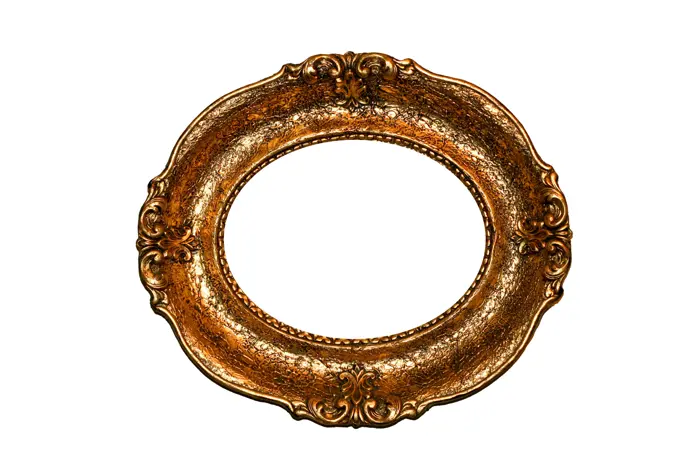
Decorative Hardware Elements

A collection of historically significant decorative hardware including lock plates, door knockers, and tsuba. Features intricate designs and craftsmanship in various metals.

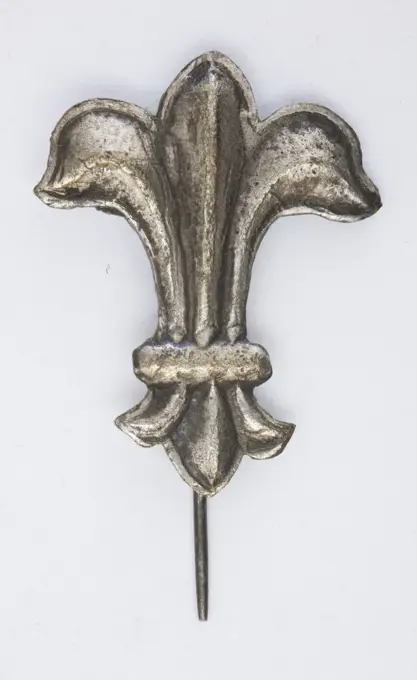
Badge of graduation of the Officers' School of the Union of Active Combat, the so called Umbrella Miciński, W., Tetmajer, Włodzimierz (1861 1923)
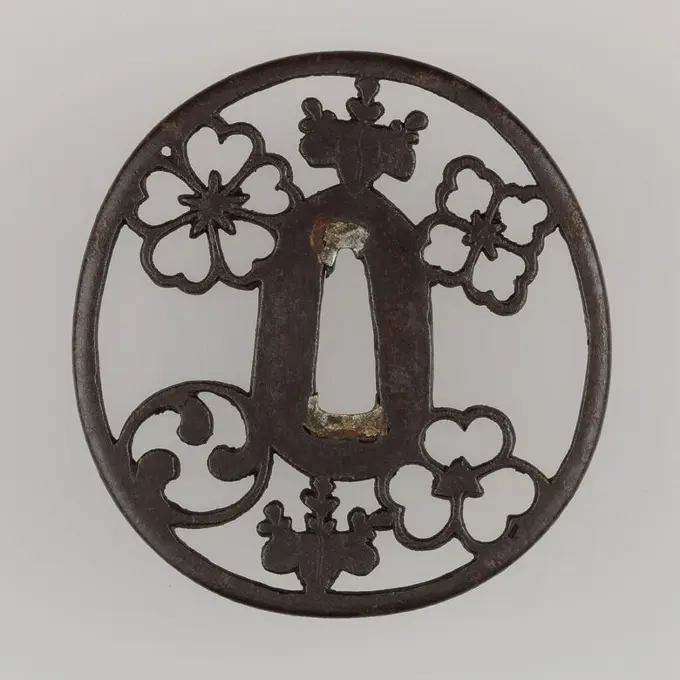
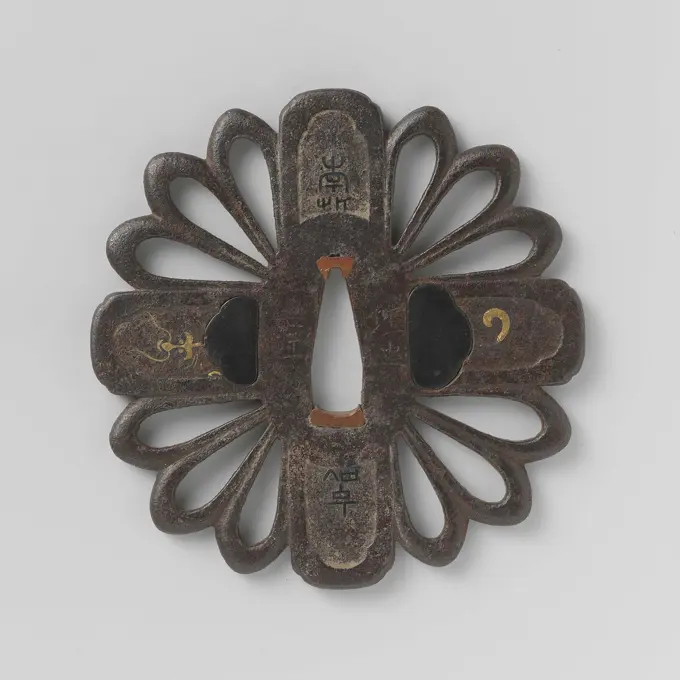
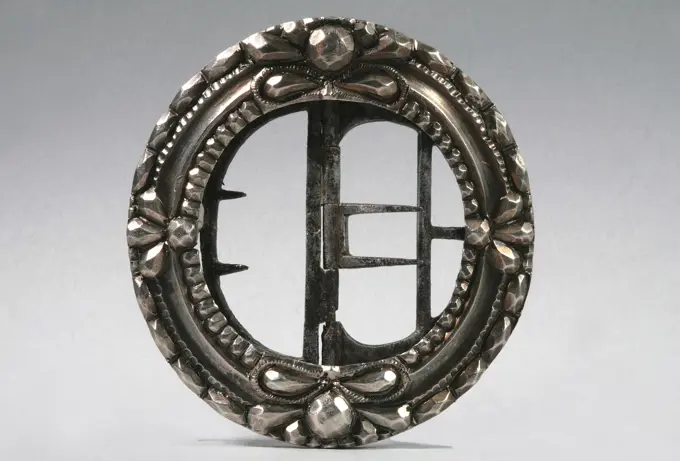
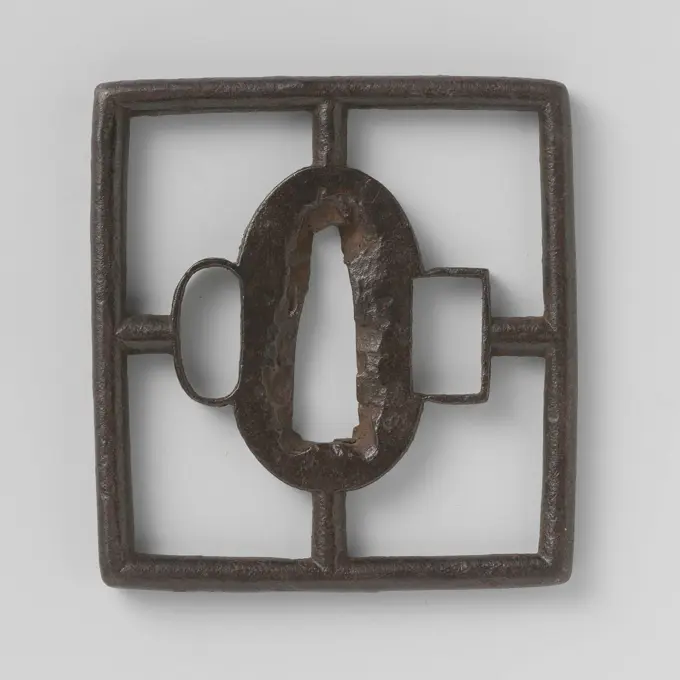
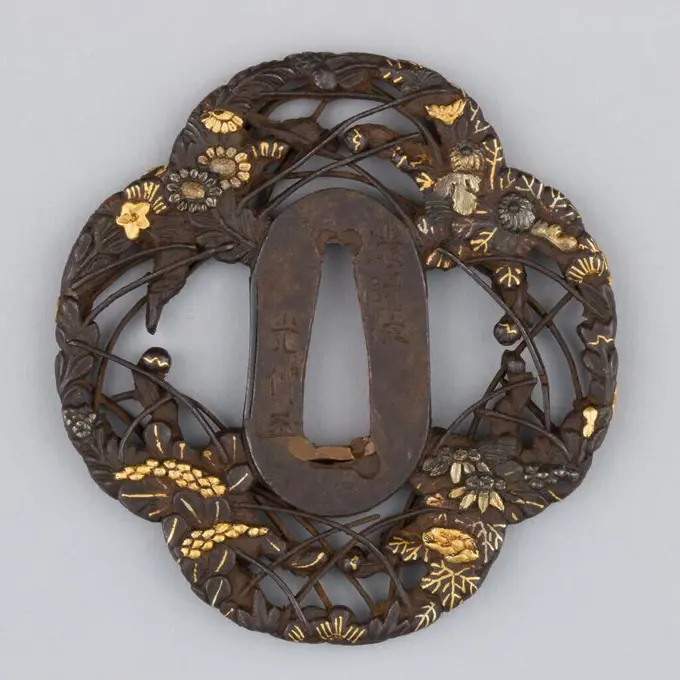
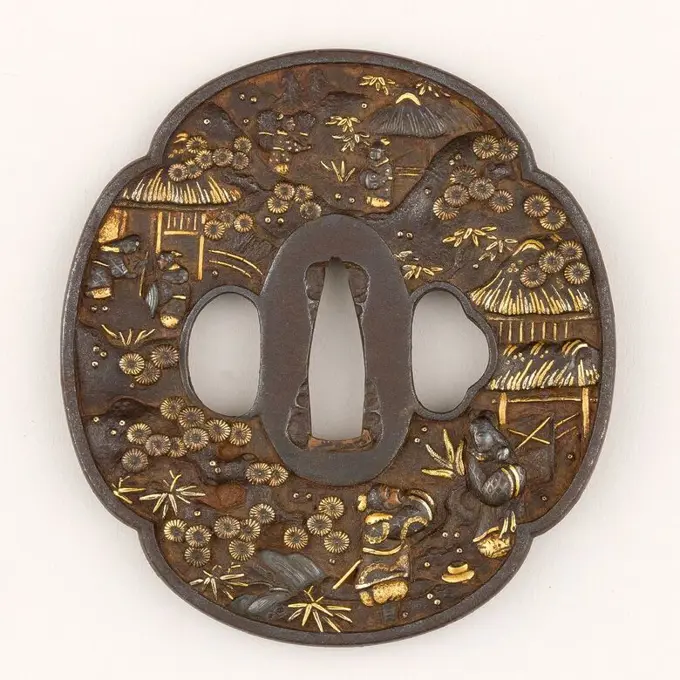
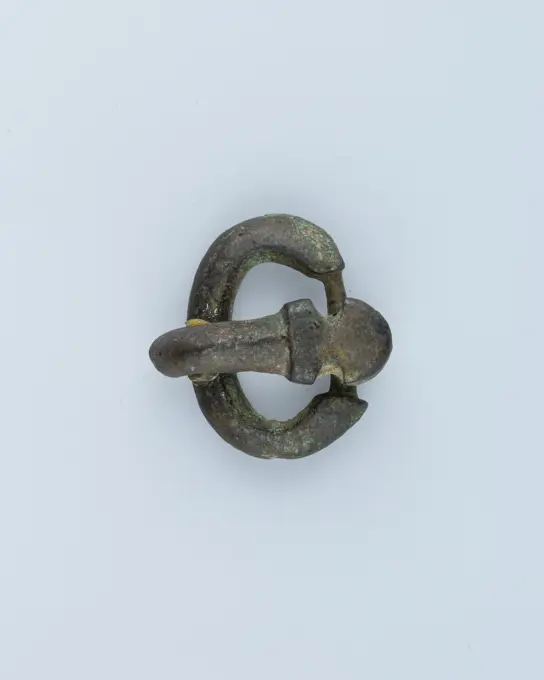
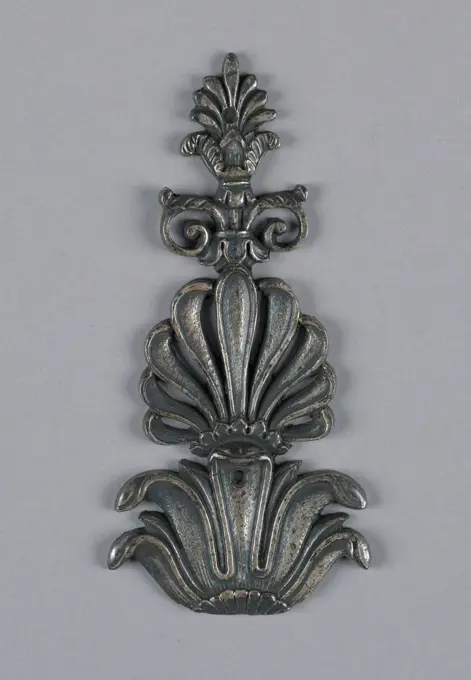
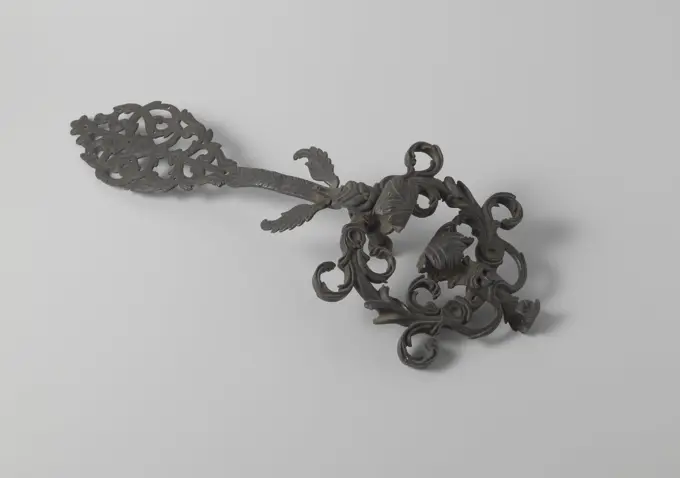
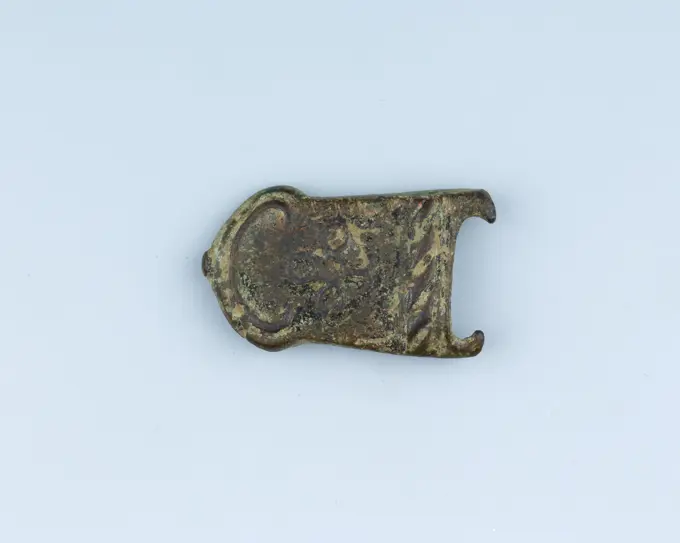
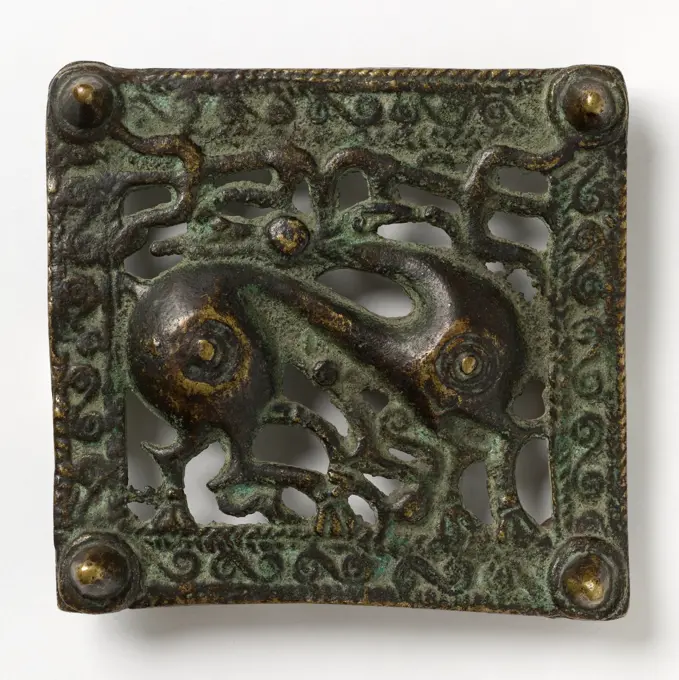
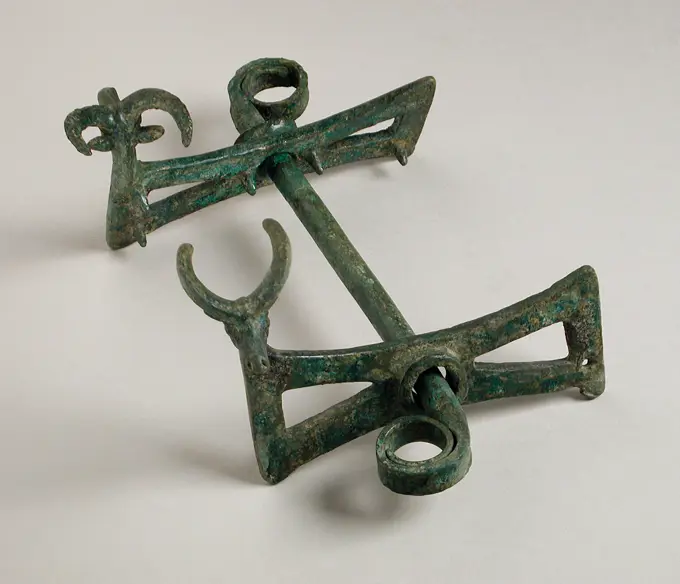
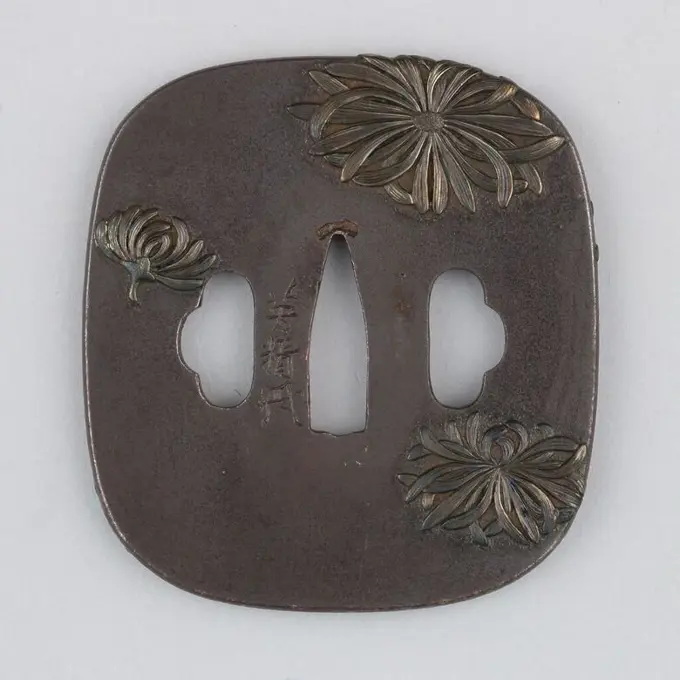
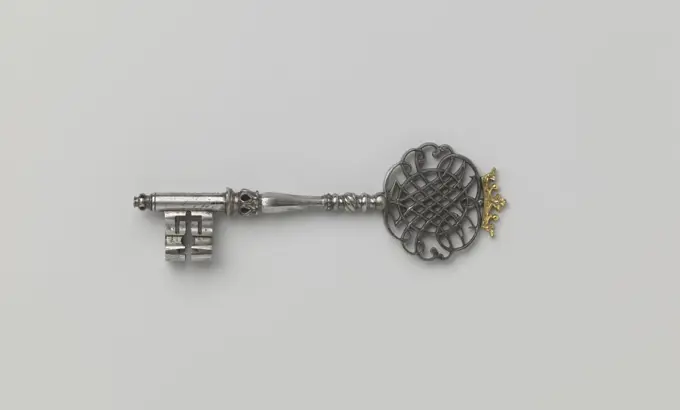
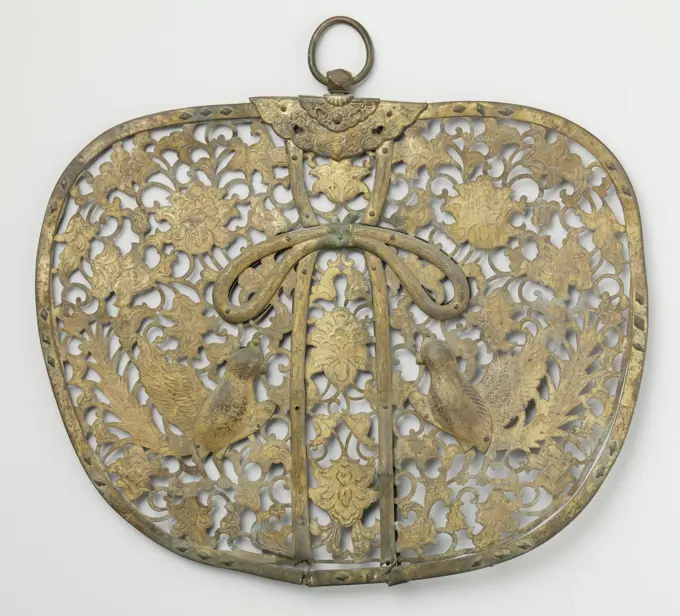
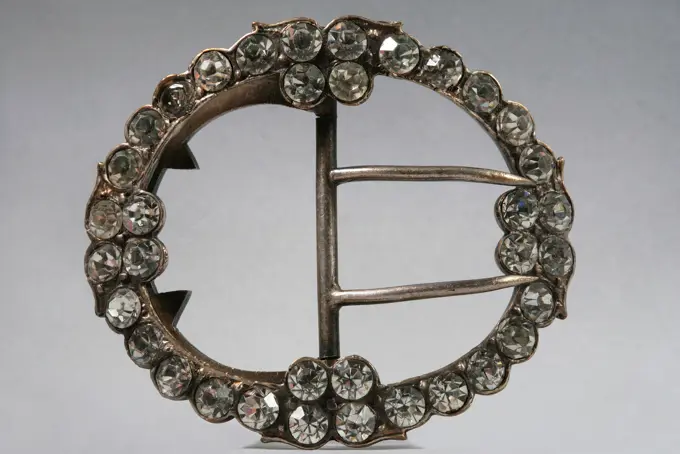
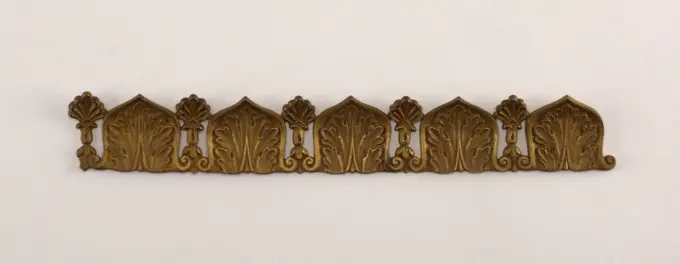
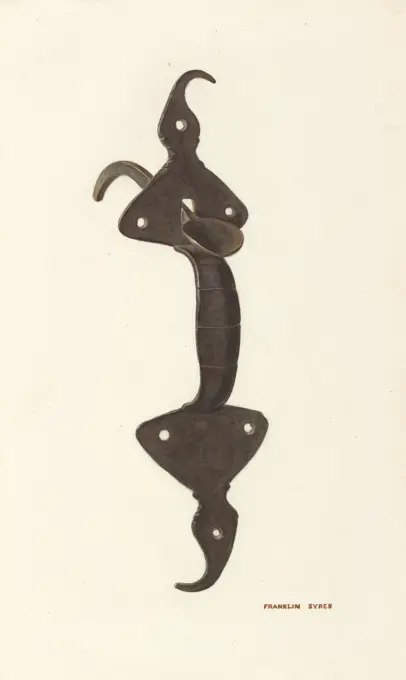
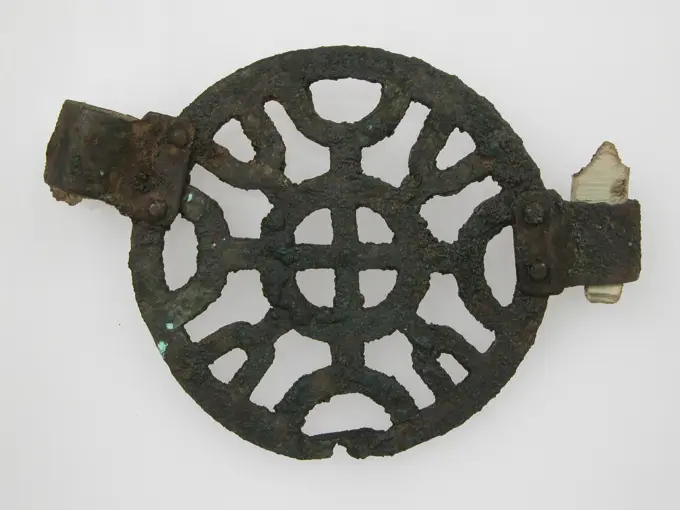
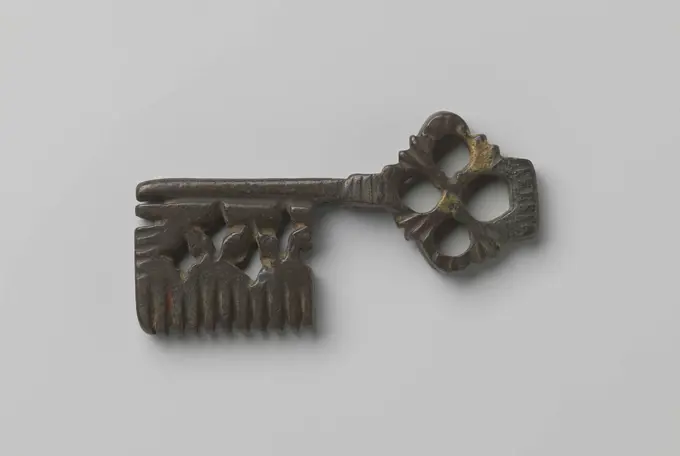
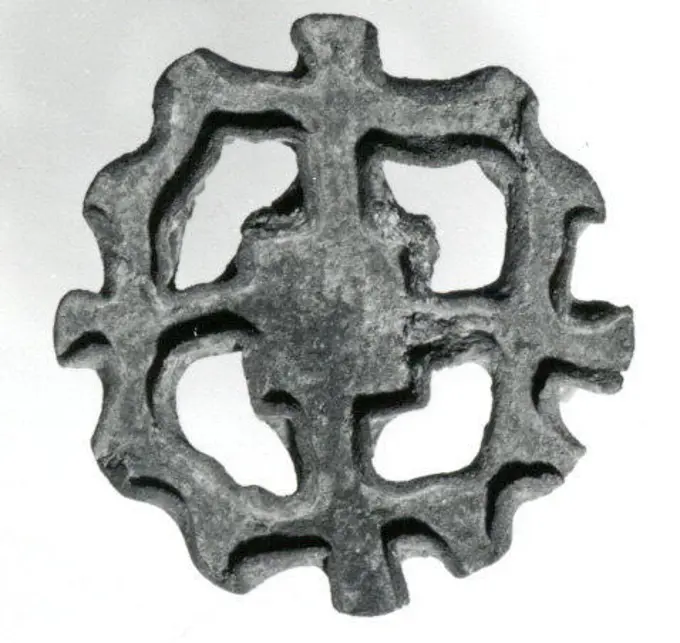
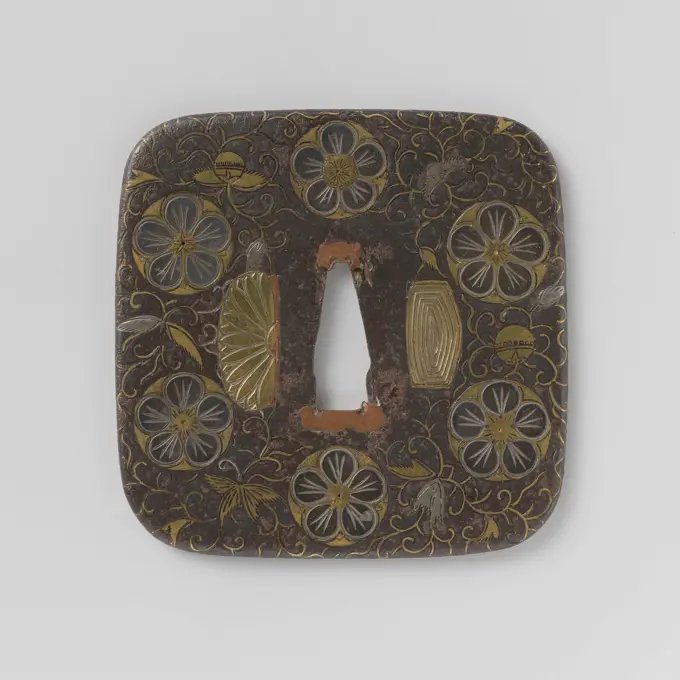
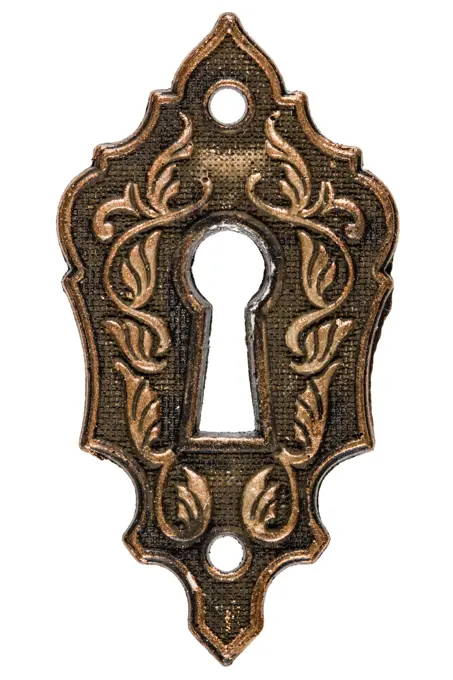
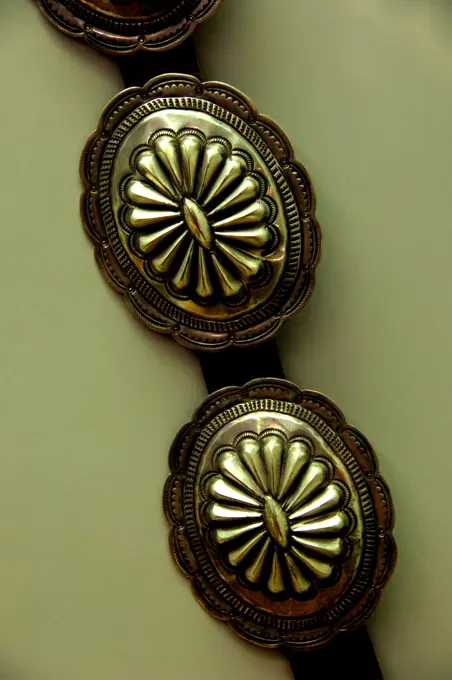
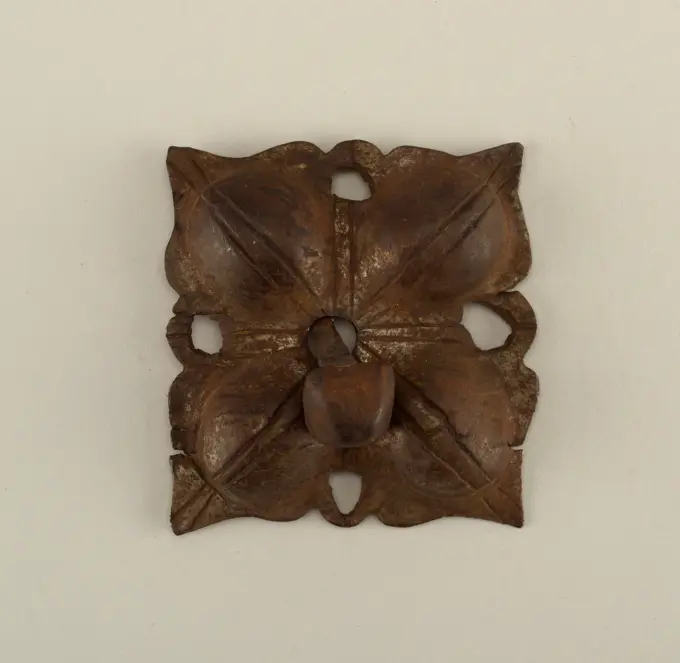
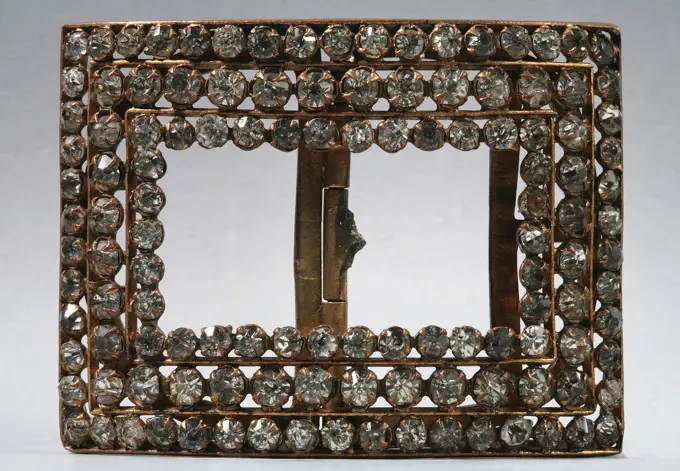
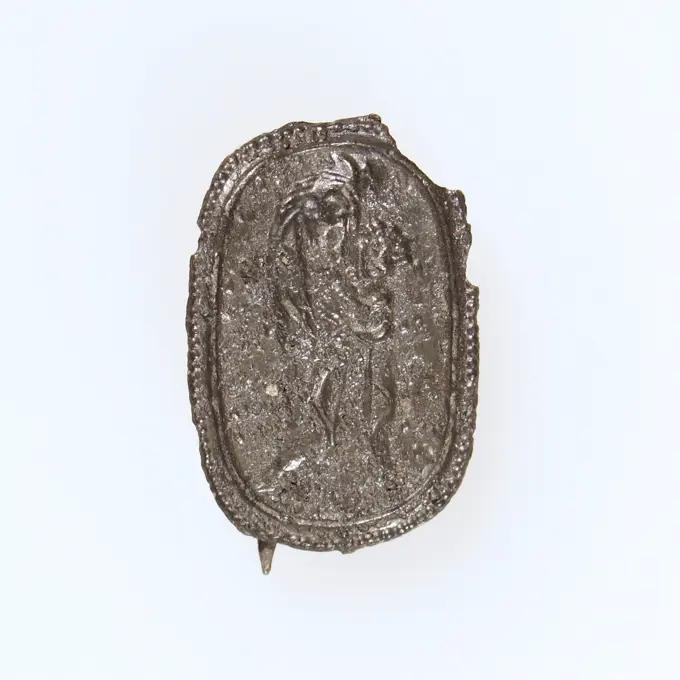
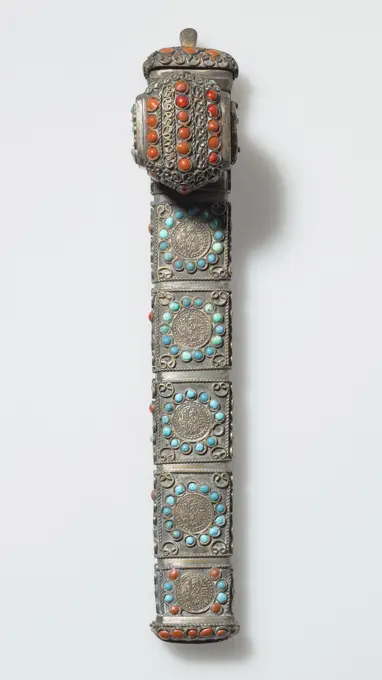
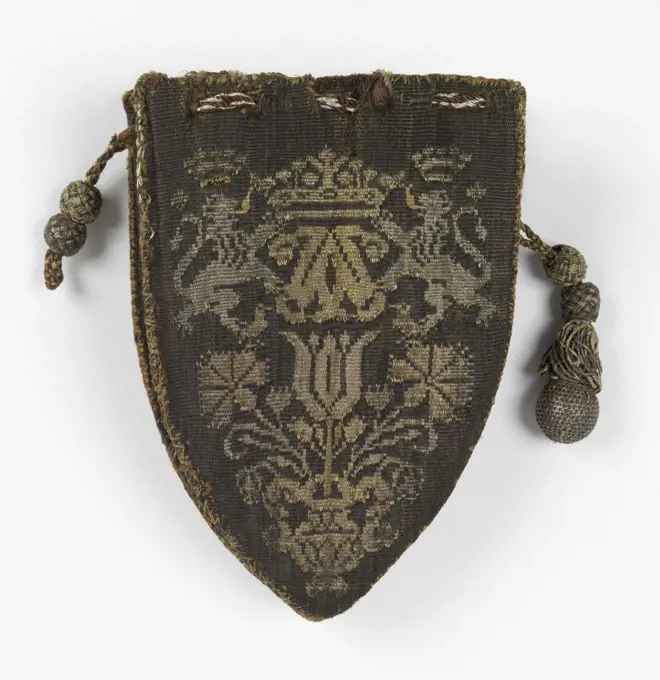
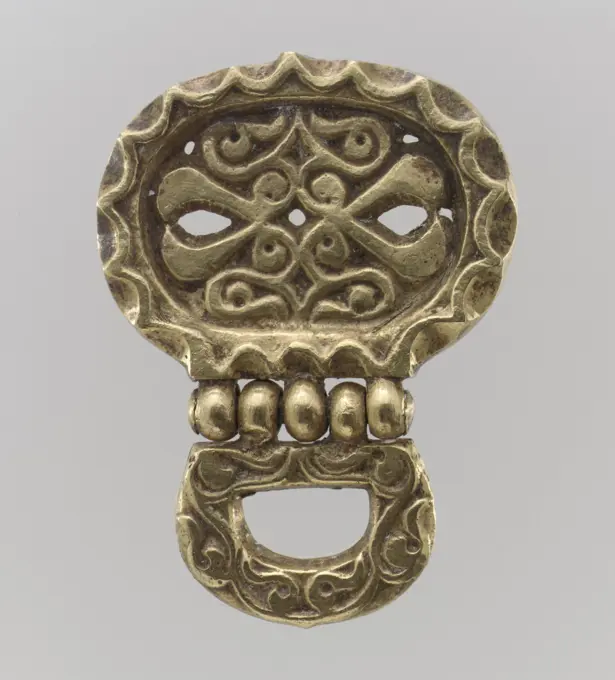
Lock plate decorated with leaf motifs. Openwork lock plate from tinned iron. The underside starts with an inverted three-leaf, which passes into a rigid leaves and a chalice motif, in which the keyhole is applied with an excellent picture below. Above two S-volutes around a leaf with a round opening in the middle. The top is awarded a three-leaf.Door knocker with dragon ornament and two mascarons .. a forged iron door knocker in the shape of a ring; Dragon ornament and two mascarons.Sword Guard (Tsuba). Culture: Japanese. Dimensions: H. 3 1/4 in. (8.3 cm); W. 3 in. (7.6 cm); thickness 3/16 in. (0.5 cm); Wt. 2.9 oz. (82.2 g). Date: late 18th-early 19th century. Museum: Metropolitan Museum of Art, New York, USA.Buckle dated 1650 Italian. Buckle. Italian. dated 1650. Brass. Miscellaneous-Buckles & Ornament. Tsuba in the form of a Greek cross with three openworked flower leaves between the arms; The four arms are decorated on both sides with characters in stamps and symbols in flat inserts; Signed "umetada ko" ().Silver buckle 1st title 950/1000th.. Rectangular tsuba with a horizontal and a vertical crossbar.Badge of graduation of the Officers' School of the Union of Active Combat, the so called Umbrella Miciński, W., Tetmajer, Włodzimierz (1861 1923)Sword Guard (Tsuba). Culture: Japanese. Dimensions: H. 2 3/4 in. (7 cm); W. 2 5/8 in. (6.7 cm); thickness 1/4 in. (0.6 cm); Wt. 2.7 oz. (76.5 g). Date: ca. 1615-1868. Museum: Metropolitan Museum of Art, New York, USA.Sword Guard (Tsuba) 17th century Japanese A tsuba is a sword guard and part of a sword mounting. It is mounted between the swords blade and grip to protect the users hands.. Sword Guard (Tsuba) 29994Pewter tongue with lion head and openwork curls, fitting belt clothing accessory clothing soil find tin metal, archeology Rotterdam City triangle Spaarbankstraat Markt Binnenrotte Soil discovery Inner rift between former Spaarbank and Markthoek Spaarbankstraat.Sword Guard (Tsuba). Culture: Japanese. Dimensions: H. 3 5/16 in. (8.4 cm); W. 3 1/8 in. (7.9 cm); thickness 5/16 in. (0.8 cm); Wt. 5.8 oz. (164.4 g). Date: ca. 1615-1868. Museum: Metropolitan Museum of Art, New York, USA.Buckle ca. 409-711 Visigothic. Buckle. Visigothic. ca. 409-711. Bronze. Miscellaneous-Buckles & OrnamentMountWall Bracket 1765-90 American. Wall Bracket 9608Pair of Bit Bosses. Culture: probably Netherlandish. Dimensions: 42.50.187; Diam. 3 in. (7.6 cm); Wt. 2.2 oz. (62 g); 42.50.188; Diam. 3 1/16 in. (7.8 cm); Wt. 2 oz. (56 g). Date: first half 17th century.Bit bosses were ornamental elements decorating both sides of a horse bit. The center of these bosses is adorned with an openwork fleur-de-lis circled by a wreath, while the rim displays a frieze of pointed lobes.This object belongs to a large group of bosses using a series of rims and centers combined in different ways. The exact center of production of these bosses is still unclear. If the motifs used are Italian, the scale of the production and the process of combining a series of rims and center recalls contemporary German practices. Some of them, however, are identical or very similar to bosses seen in several early 17th-century Netherlandish paintings, a likely origin for the manufacture of these objects. Museum: Metropolitan Museum of Art, New York, USA.Key, Cast bronze, Short bronze key with lozenge-shaped bow with perpendicular hatch marks studding the perimeter. Short shaft topped by circular loop for connection to a keychain. Joined to geometric bit by thick bronze band. Overall the object shows signs of oxidation and patination, with polished bronze intermingling with flat, rust, and green tones., Europe, 14th-15th century, hardware, Decorative Arts, KeyDoor Beater, decorated with men's head and pelican (or eagle), 1550 - 1600 A cast and worked iron door beater. The ring with rich ornaments, leaves of which only form a men's head. The door plate also, ending in a pelican or eagle.  iron (metal) casting A cast and worked iron door beater. The ring with rich ornaments, leaves of which only form a men's head. The door plate also, ending in a pelican or eagle.  iron (metal) castingSilver buckle, Toussaint Brunel, 1783 An oval silver buckle decorated with rocaille ornament of flowers and leaves. Marked. Middelburg silver (metal) An oval silver buckle decorated with rocaille ornament of flowers and leaves. Marked. Middelburg silver (metal)Handle plate, Brass, Elliptical in shape, horizontal. Repoussé molding and concentric concave ellipse., England, ca. 1800, metalwork, Decorative Arts, Handle plateCross-Shaped Hanging Lamp 14th century Byzantine Lamps provided light in churches, especially for the reading of the Gospels, sermons, and select texts and for the display of icons and relics.. Cross-Shaped Hanging Lamp 468700Mordant 15th-17th century European. Mordant. European. 15th-17th century. Bronze. Miscellaneous-Buckles & OrnamentBelt plate. Bronze, Caucasus, modern era. Paris, Cernuschi museum. ANIMAL STYLISE, BELT PLATE, BRONZE, CAUCASE, CAUCASUS, EPOQUE MODERNE, MODERN PERIOD, PLAQUE DE CEINTURE, STYLIZED ANIMALHorse Bit. Iran, Luristan, Luristan bronzes, circa 1000-650 B.C.. Tools and Equipment; horse trappings. Bronze, castDoor Plate 15th-16th century European. Door Plate. European. 15th-16th century. Iron. Metalwork-IronLilijka Polish scoutBuckle with lion and boar 1st-3rd century A.D. Roman Rectangular plaque decorated with a lion attacking a boar.. Buckle with lion and boar 246769Excerpt of shot and lock, c. 1400 - c. 1950  Rome bronze (metal)  Rome bronze (metal)Badge or Harness Pendant ca. 1400 Spanish Heraldry, or coat-of-arms, were vitally important in Europe throughout the Middle Ages and the Renaissance. Heraldic emblems were used to identify noble families, cities, regions, and even countries. In addition to being displayed on shields and flags, heraldry was incorporated into architectural decoration on the interior and the exterior of buildings, on furniture, works of art, clothing, and horse equipment. Harness pendants, like this example, would have been attached to a headstall, bridle, or other straps making up the tack of a horse ridden by a nobleman or noblewoman, or a member of their household. Many harness pendants also have decoration that is simply ornamental, or have symbols that are not specifically heraldic in nature.. Badge or Harness Pendant. Spanish. ca. 1400. Copper, enamel, gold. Miscellaneous-BadgesHarness ring ca. 8th-7th century B.C. Iran. Harness ring 322574Mount with grotesque masks. Culture: Italian, probably Florence. Dimensions: Overall (confirmed): 6 1/16 × 5 1/2 × 3 1/4 in. (15.4 × 14 × 8.3 cm). Date: mid-17th century.This mount may have formed a handle for a vase. Museum: Metropolitan Museum of Art, New York, USA.Silver loop. Garland of flowers and leaves, openwork.Sword Guard (Tsuba). Culture: Japanese. Dimensions: H. 2 9/16 in. (6.5 cm); W. 2 5/8 in. (6.7 cm); thickness 3/16 in. (0.5 cm); Wt. 4.8 oz. (136.1 g). Date: 18th century. Museum: Metropolitan Museum of Art, New York, USA.Torque, 11 1/2 x 11 1/2 x 1 1/8 in. (29.21 x 29.21 x 2.86 cm), Silver, ChinaLoopKey of iron with openwork initials vpao with gilded crown covered ,, 1690 - 1700 Key of iron with openwork initials vpao with gilded crown covered. England (possibly) iron (metal). gilding (material) gilding Key of iron with openwork initials vpao with gilded crown covered. England (possibly) iron (metal). gilding (material) gildingSword pendant;  2nd half 18th century (1750-00-00-1800-00-00);Fittings for a door plate from tinned iron. Fittings for a door plate of tinned iron, with openwork ornaments. Abstracted tendrils and leaves braided by accoladies. Volutes. The top is awarded a French lily. Immediately below it a kind of French lily. At the bottom, an inverted French lily shape can be recognized with a square opening in the middle for a door pin. There are also two square openings on the top corners.Altar pendant, anonymous, c. 1200 - c. 1300 Decoration for hanging in a temple (Keman): Ajour decoration with flowers and plants. Coming from Jogon-In, Azuchimura, Shiga. Japan bronze (metal) Decoration for hanging in a temple (Keman): Ajour decoration with flowers and plants. Coming from Jogon-In, Azuchimura, Shiga. Japan bronze (metal)Statuette of a warrior-11. Culture: Greek, Laconian. Dimensions: Height: 1 1/4 in. (3.2 cm). Museum: Metropolitan Museum of Art, New York, USA.Sword Guard (Tsuba) late 17th century Japanese A tsuba is a sword guard and part of a sword mounting. It is mounted between the swords blade and grip to protect the users hands.. Sword Guard (Tsuba) 30058Plate and Nail. Culture: European. Dimensions: Overall: 2 3/8 in. (6 cm). Date: 15th-16th century. Museum: Metropolitan Museum of Art, New York, USA.Escutcheon, Tin, Pierced and repoussé plate with foliage motifs and scrollwork., France, ca. 1700, metalwork, Decorative Arts, Escutcheonold keyVinaigrette. Marked A&S; Birmingham, England. Date: 1852-1863. Dimensions: 4.5 × 3.8 cm (1 3/4 × 1 1/2 in.). Silver and silver gilt. Origin: Birmingham. Museum: The Chicago Art Institute, Chicago, USA.Loop .Chain China. Chain. China. Nephrite, light sage-green. Ming dynasty (1368-1644). JadeDecorative door boss and nail, Wrought iron, Square quadrant type, pierced, shaped and embossed. Design derived from earlier leaf patterns. Nail head a gadrooned mushroom shape on square shank., Espana, 17th century, metalwork, Decorative Arts, Decorative door boss and nailWatch ca. 1590-1620 German. Watch. German. ca. 1590-1620. Rock crystal, gilt metal, silver. HorologySpring Attachment for Rapier Made 1650-1700 Italy. Iron .Snaffle Bit late 16th century German This kind of bit was used in the German lands for horses carrying litters and pulling sleighs.The snaffle bit is the simplest type of horse bit, and it has an effect on the bars (part of the horses jaw without teeth) and the corners of the lips. The scatches, the flattened triangular elements composing this mouthpiece, were slightly stronger in their effect and more resistant than the traditional conical canons also used at the time. The rings on the sides would serve to hang the bit on the headstall and attach the reins, while the triangular extensions would to help to hold the mouthpiece in place and would press the sides of the mouth when reins are pulled, helping indicating direction to the horse.. Snaffle Bit. German. late 16th century. Iron alloy. Equestrian Equipment-BitsBrooch -Lock;  XVII/18th century (1690-00-00-1750-00-00);Harness RingMountFranklyn Syres, Door Latch, 1935 1942 Door LatchOpenwork Belt Mount 500-700 Frankish. Openwork Belt Mount. Frankish. 500-700. Copper alloy, fragments of wooden handles. Made in Niederbreisig, Rhineland, Germany. Metalwork-Copper alloyMount; 1904-21-33Square Pin. UnknownRosetteConcha Belt, c. 1960, 32 1/2 x 3 in. (82.6 x 7.6 cm), Silver, turquoise, leather, United States, 20th centuryGold and garnet strap diadem with Herakles knot 3rd-2nd century B.C. Greek With oval garnet in the center.. Gold and garnet strap diadem with Herakles knot. Greek. 3rd-2nd century B.C.. Gold, garnet. Hellenistic. Gold and SilverSword Guard (Tsuba) 19th century Japanese A tsuba is a sword guard and part of a sword mounting. It is mounted between the swords blade and grip to protect the users hands.. Sword Guard (Tsuba) 34930EarringSilver buckle. Polybarm.Ring 304-30 B.C. Ptolemaic Period. Ring 552323Key. Key whose handle consists of a four-leafed opened floral pattern and a large beard that exhibits four cross-shaped hacks and ends comfortably.Belt buckle or pendant A.D. 1st millennium (). Belt buckle or pendant 325113. Hexagonal tsuba with a cut-away decoration of fish and dragons in the middle of stylized tendrils, bounded at the bottom by waves, at the top by clouds; Details in gold Nunome-Zogan.Rosette pendant ca. 9th century B.C. Iran This circular shaped pendant is decorated with a repoussé design of a rosette with ten petals and small circles. There is a loop for attachment at the top. It is one of the thousands of artifacts of terracotta, bronze, iron, gold, silver, and ivory which were recovered from monumental buildings at the site of Hasanlu in northwestern Iran. Hasanlu is best known for its early first-millennium B.C. occupation. At that time, it was a major local center of commerce and artistic production with close ties to other political and creative centers of the Near East. In 1957, the University Museum of the University of Pennsylvania initiated large-scale excavations at the site with the Iranian Archaeological Service. The Metropolitan Museum of Art co-sponsored the excavations from 1959 to 1977 and received a share of the finds. Many of these objects are now on display in the Museum. Hasanlu was settled from the sixth millennium B.C. through the Achaemenid Buckle (France); steel, yellow rose-cut pyritesSword Guard (Tsuba) 18th or 19th century Japanese A tsuba is a sword guard and part of a sword mounting. It is mounted between the swords blade and grip to protect the users hands.. Sword Guard (Tsuba) 642493Circle -shaped bulletiny with rosette and eight spokes, anonymous, c. 1900 - c. 1924  Circular openwork rug, possibly an incustation, of natural -colored bobbin. The pattern consists of a rosette that is made up of three concentric circles, with eight spokes. Between the two outer circles, a succession of arcs has been made, as petals of the rosette, where each arch is cut through a spoke. The circles are made in shape with two ribs, the spokes and arches with braids. The braids with which the arcs are made are equipped with picots. Volvic linen (material) bobbin laceCompartmented stamp seal ca. late 3rd-early 2nd millennium B.C. Bactria-Margiana Archaeological Complex. Compartmented stamp seal 326661Pendant 500 B.C.-A.D. 300 Indonesia. Pendant 53888Robert Clark and Stanley Mazur, Trivet, c 1941 TrivetBrooch -Master's loop. Initials PB on both sides of a long beak stung; Unidentified hallmark. Hollow band in the middle, pearl borders, 2 oval flowers pearls high and low, oval pearl in the middle of each side.Case (Inrō) with Design of Crickets 19th century Onko Takanaga (dates unknown) Japanese. Case (Inrō) with Design of Crickets 58913Disk ornament 13th-16th century Colombia. Disk ornament. Colombia. 13th-16th century. Gold. Colombia. Metal-OrnamentsWatch ca. 1840-55 Swiss. Watch 195667Pendant, One of a Pair 18th-19th century. Pendant, One of a Pair. 18th-19th century. Gold, silver. Attributed to India. Jewelry. Rounded square tsuba with plum blossoms styled on both sides in circles (mon) In the middle of tendrils in insertion; The Ryo-Hitsu are filled with bronze with a stylized floral pattern with one stylized floral design and a spiraling line to the other; Signed "Yama- Shiro Kuni Ju Yoshinaga SakuPendant 18th-19th century. Pendant 447021The keyhole, decorative design element, isolated on white background The keyhole, decorative design element, isolated on white background Copyright: xZoonar.com/OleksandrxKostiuchenkox 11583071Pendant 11th century. Pendant 453483North America, USA, Arizona, Navajo Indian Reservation, Chinle, Canyon de Chelly National Monument. South Rim road, Visitor Center. Classic Navajo silver concho belt.Luckenbooth brooch -39 keys from the collection of Emmanuel Vita Israël, anonymous, c. 1800 - c. 1900 Ceremony key with chain. Handle with neo-gothic church window motif. Two flowers sprout on either side of the shaft under the handle. England (possibly) bronze (metal) Ceremony key with chain. Handle with neo-gothic church window motif. Two flowers sprout on either side of the shaft under the handle. England (possibly) bronze (metal)Plates and Nails 15th-16th century European. Plates and Nails. European. 15th-16th century. Iron. Metalwork-IronFob early 19th century European. Fob 122032Frame oval Golden oval frame with luxury engrave work Copyright: xZoonar.com/Baloncicix 14950137Decorative Door Boss And Nail; wrought ironLoop .Pilgrim's Badge 14th-16th century French. Pilgrim's Badge. French. 14th-16th century. Lead. Metalwork-LeadBlack wooden table intended for two portraits. Black wooden table, inside of the edge and to the oval openings simple decoration in relief; In the middle of the back rusty iron eye including four holes (in two piece of metal); Each of the ovals with behind four copper slides (most rightly missing); Horizontal cracks in side of sides and between ovals.Pen box, 19th century, 8 1/2 × 2 × 1 5/8 in. (21.59 × 5.08 × 4.13 cm), Silver alloy, beads, gemstones, Algeria, 19th century, Essential tools of the calligrapher are his pens and ink. This elegant case once held reed pens, and the small attached lidded jar contained ink. The ink was made of soot and gum arabic dissolved in water. In old times, the soot used was scraped from the inside of mosque lamps, thus adding an element of spiritual blessing to the writing. Made of silver alloy, the outside is decorated with beads and stones, and on one side has five silver Algerian coins, minted in the first part of the 1800s. An itinerant Muslim scribe would have worn this kind of pen box under his belt.18th century silver loop.Purse, Medium: horsehair, silk and metal-wrapped silk-core yarn Technique: tapestry woven, Small pouch with drawstring made of four rectangular pieces with pointed curves on the bottom edge. Each panel is identical and has two lions facing a monogram surmounted by a crown above a vase containing a tulip and a carnation., France, 17th century, costume & accessories, PurseGold Belt Mount with Loop 700s Avar The treasure contains an array of belt fittings, some elaborately decorated, some unfinished or defectively cast. Some show no signs of use, while others are quite worn.The AvarsThe Avars were a nomadic tribe of mounted warriors from the Eurasian steppe. The Byzantine emperor Justinian negotiated with them in the sixth century to protect the Empires northern border along the Black Sea. Emboldened by their subjugation of numerous tribes, they unsuccessfully attempted to seize the Empires capital, Constantinople. They remained a scourge of both Byzantium and the Western kingdoms until Charlemagne defeated them through a series of campaigns in the 790s and early 800s.All the money and treasure that the Avars had been years amassing was seized, and no war in which the Franks have ever engaged.. brought them such riches and such booty. Up to that time the Avars had passed for a poor people, but so much gold and silver was found.. that one may well think