Decorative Historical Ceramics

A collection of ornate bowls and plates showcasing intricate luster painting and unique designs, reflecting historical ceramics from various regions.

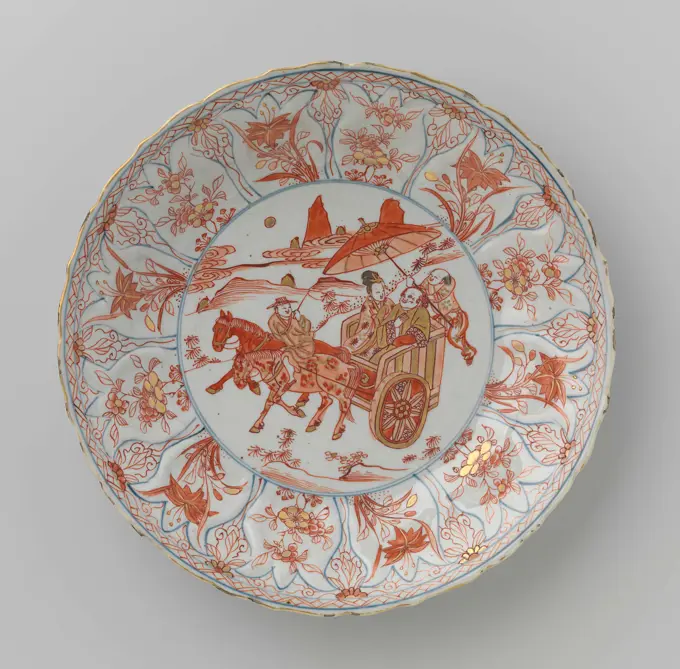
Dish with two shishi in a landscape and squirrels, c. 1875 - c. 1925 Porcelain saucer, painted in under -glaze blue and on the glaze red, green, black and gold. On the flat a scalloped cartouche with two shishi (lion dog) in a landscape with a tree and bamboo; To the cartouche a second whimsically formed cartouche with peon branches. On the wall and edge three cartouches with a squirrel on a grape branch and six cartouches with a grape branch against a background of lotus vrocks on blue. The outer wall with three flower branches. The dish is caught in a metal frame. A chip in the edge. A European (French) Imitation of the Japanese Imari. Europe porcelain. glaze. cobalt (mineral). gold (metal). montuur: metal. uranium oxide painting / gilding / vitrification Porcelain saucer, painted in under -glaze blue and on the glaze red, green, black and gold. On the flat a scalloped cartouche with two shishi (lion dog) in a landscape with a tree and bamboo; To the cartouche a second whimsically fo
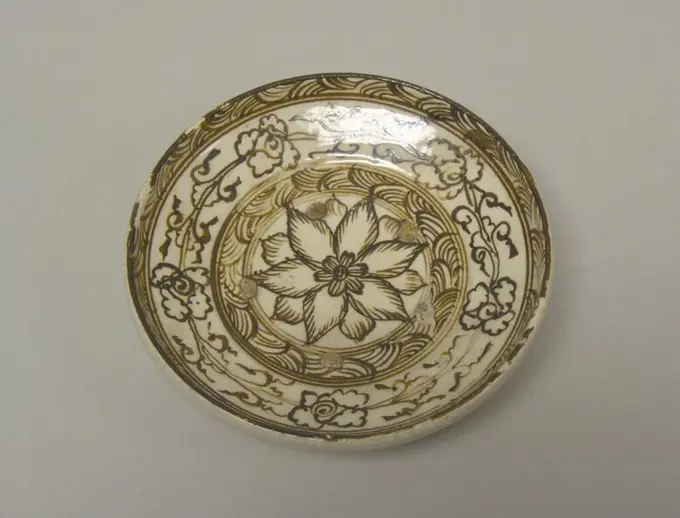
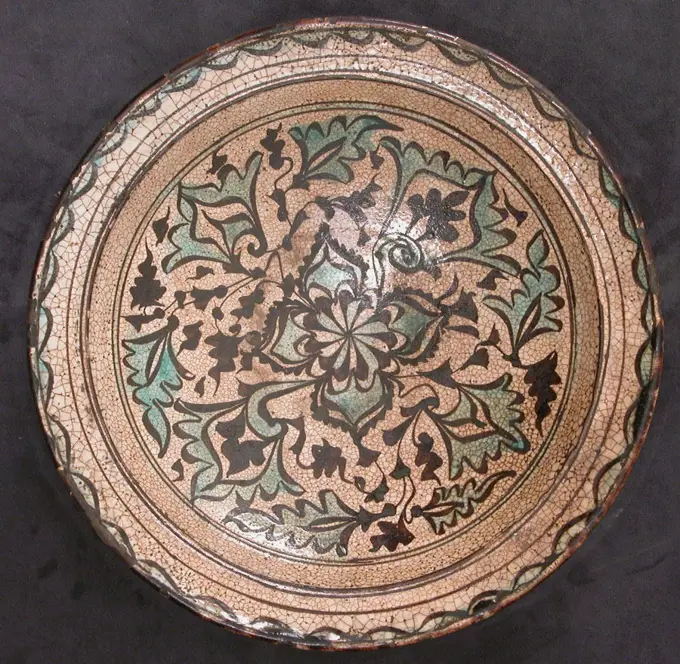
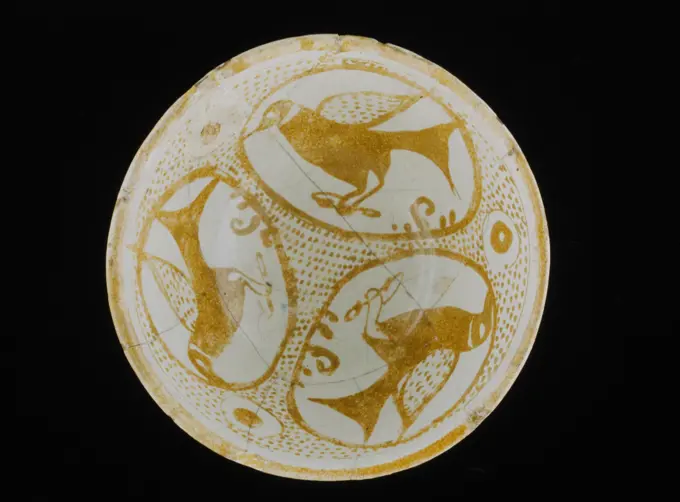
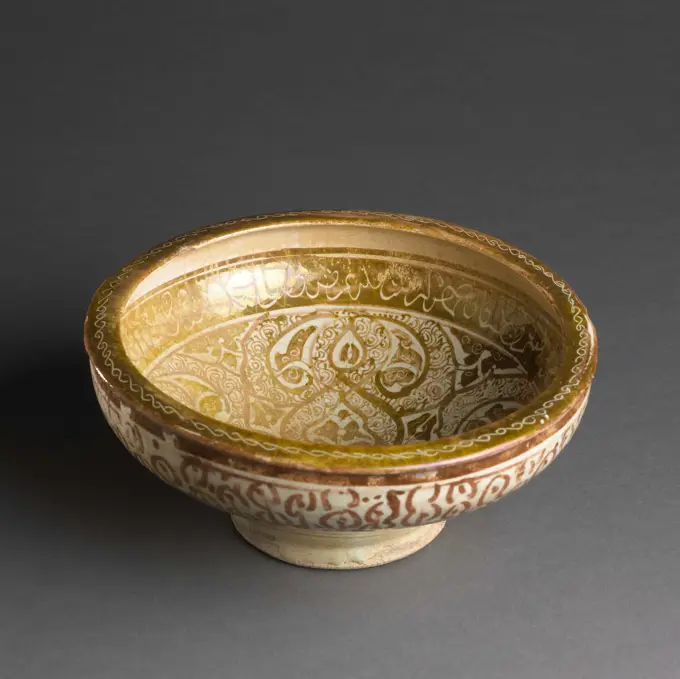
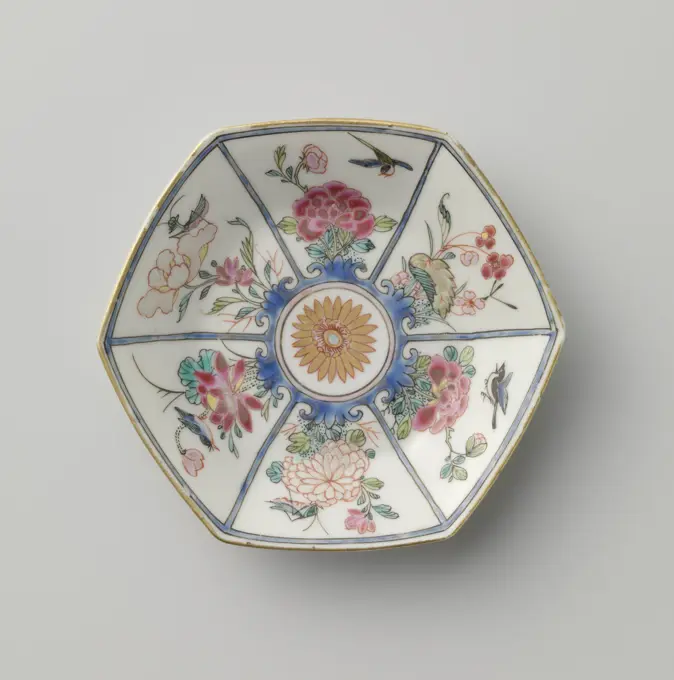
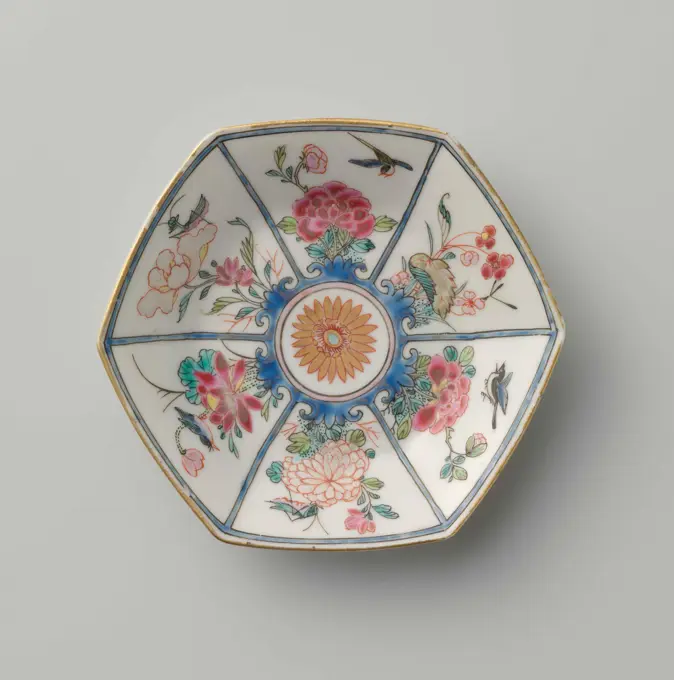
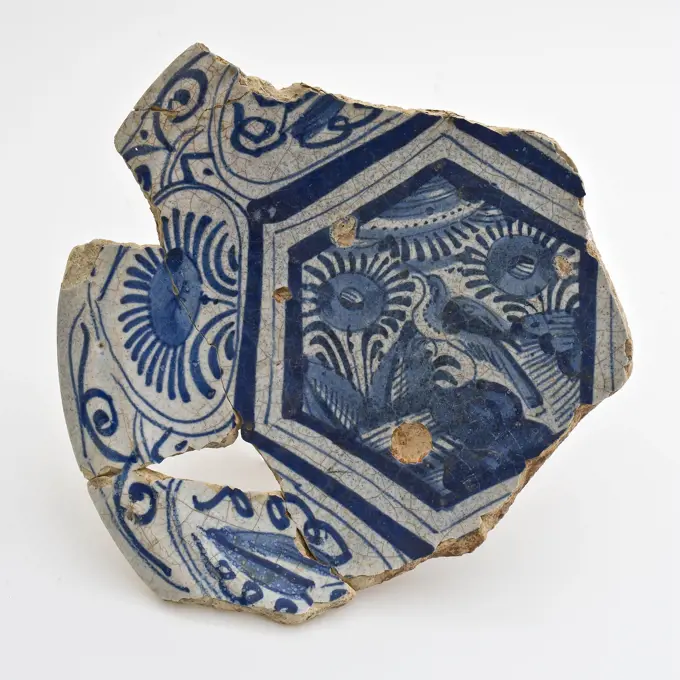
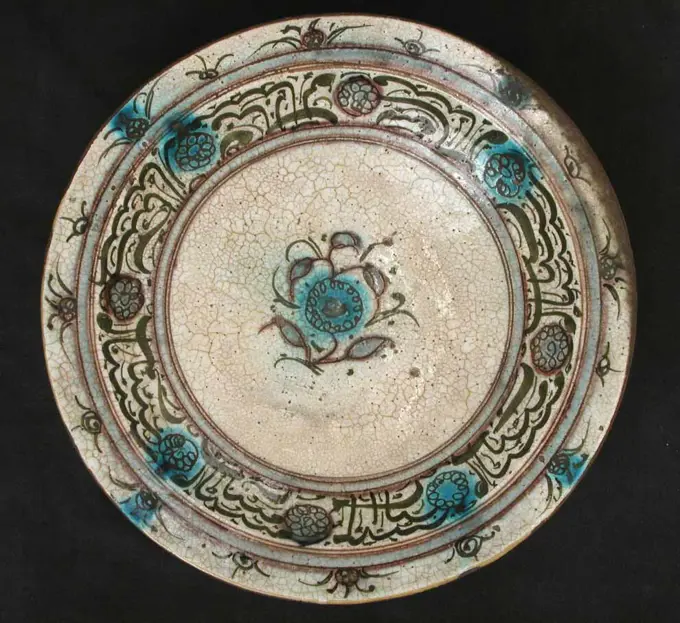
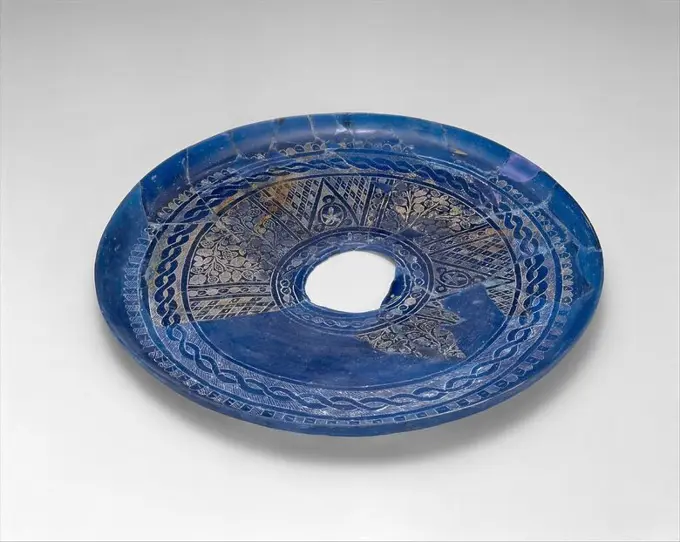
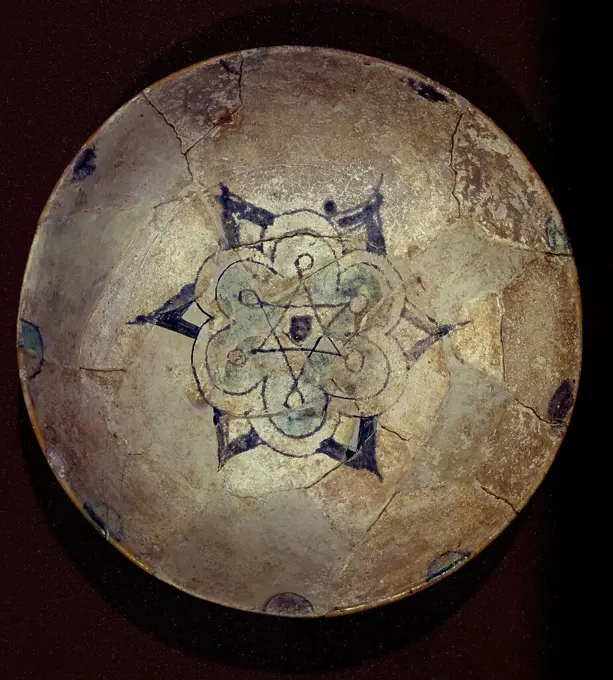
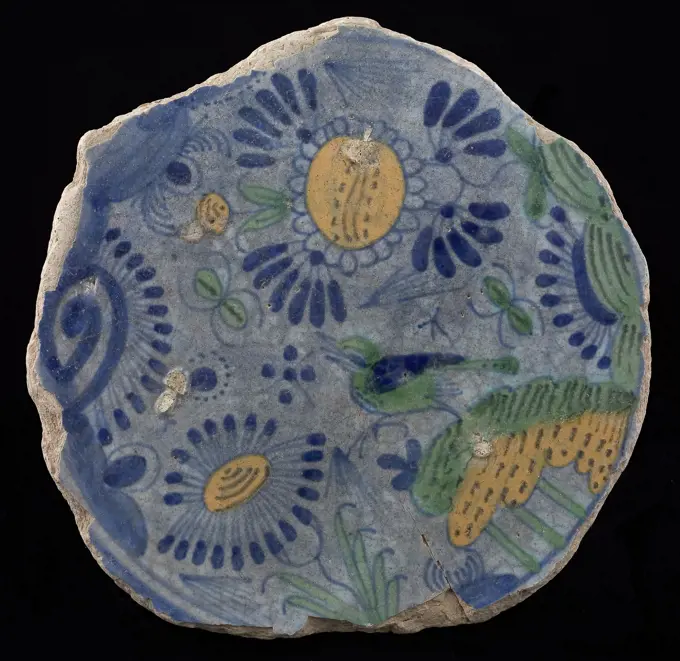
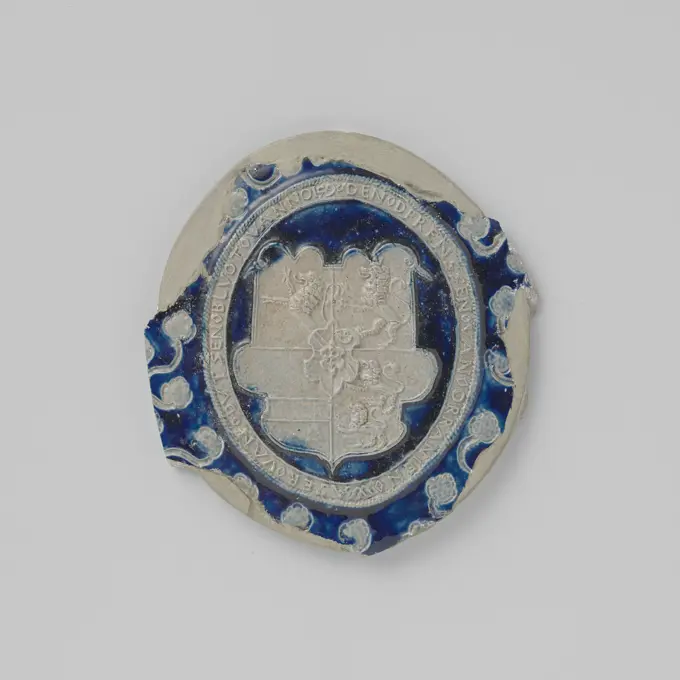
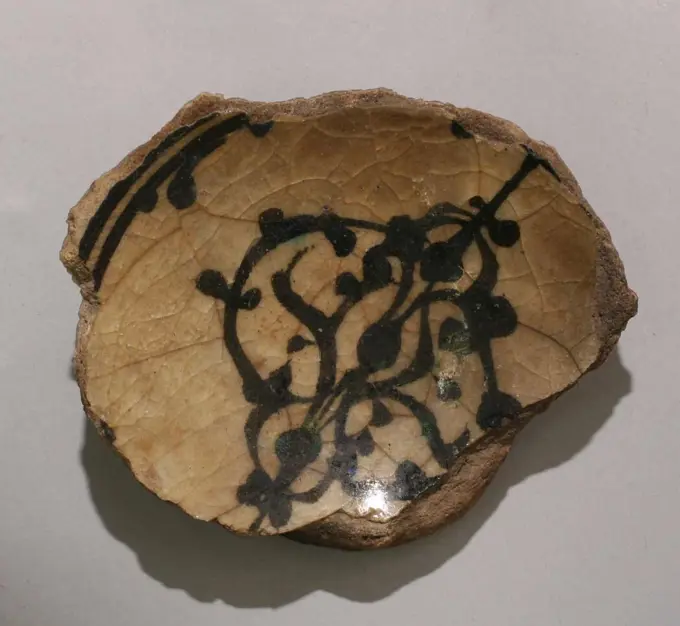
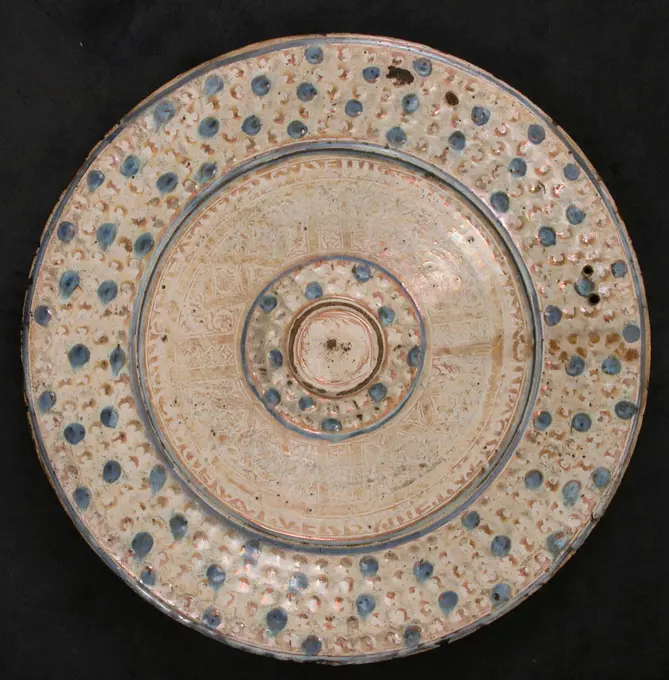
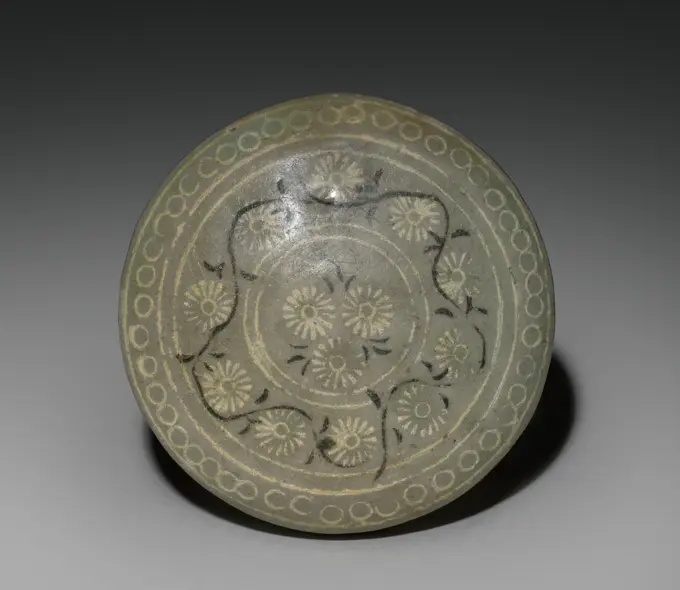
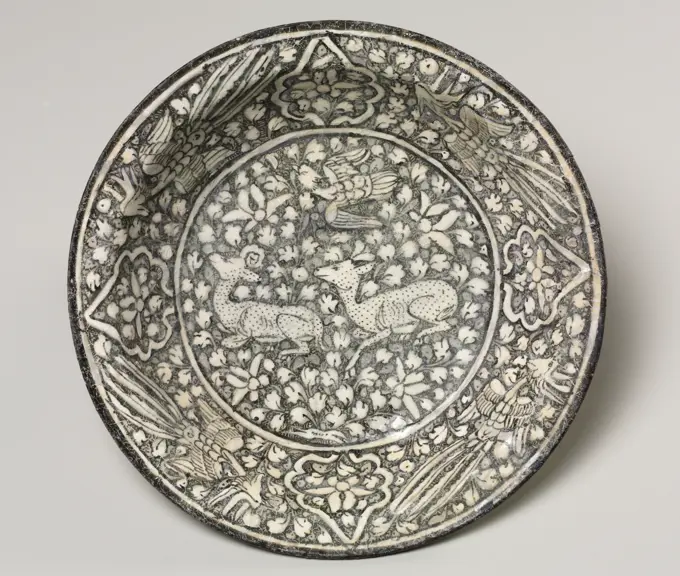
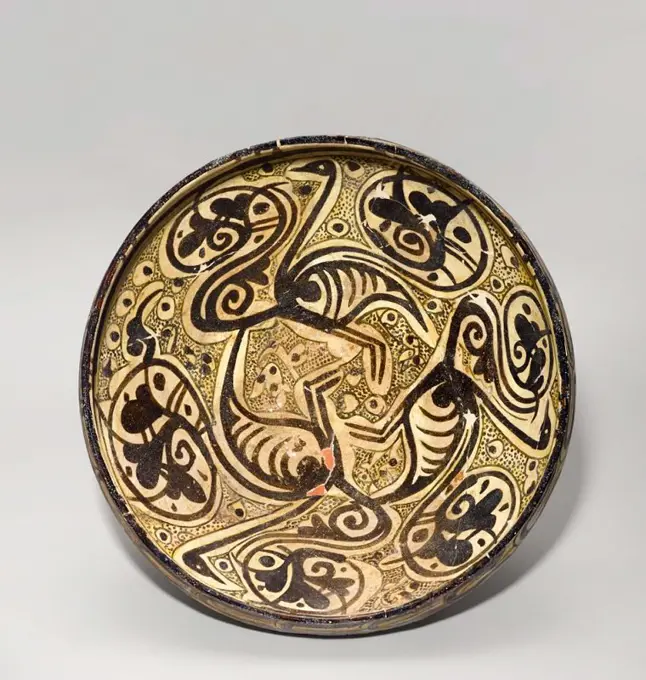
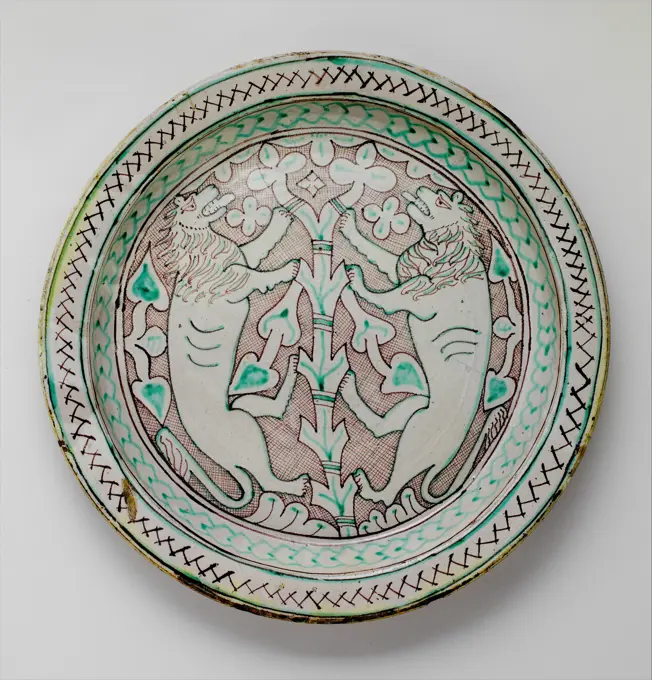
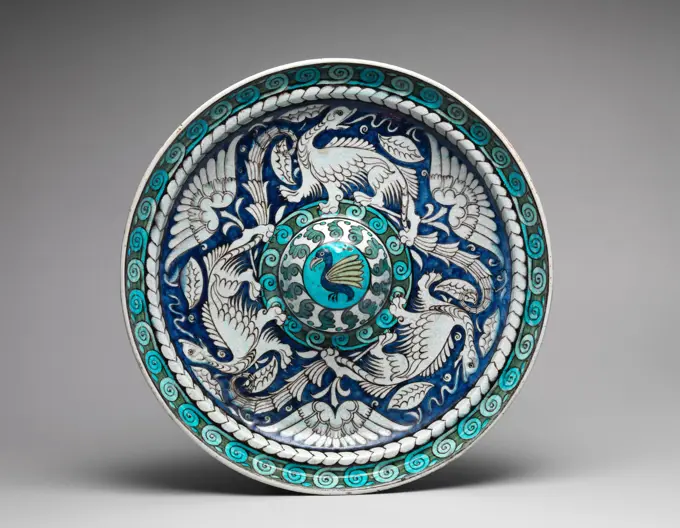
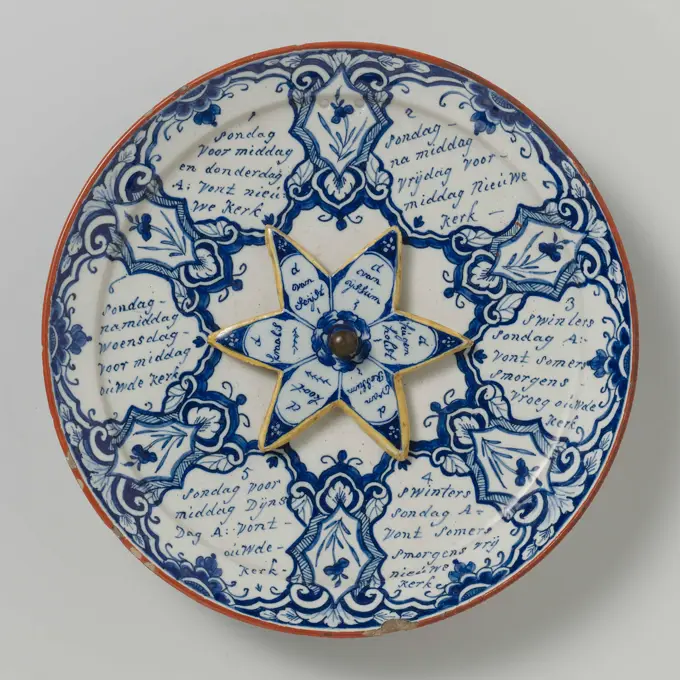
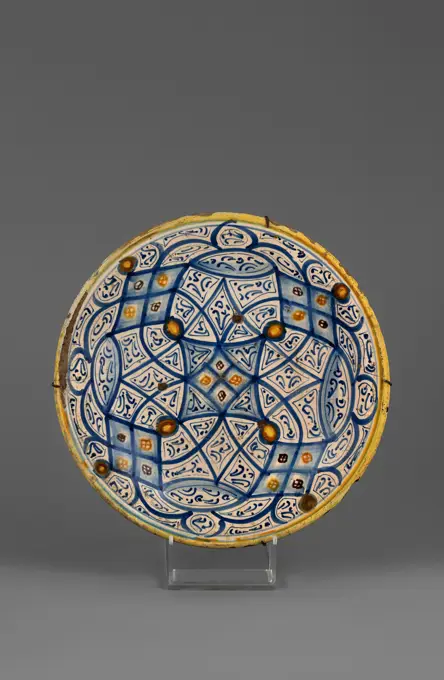
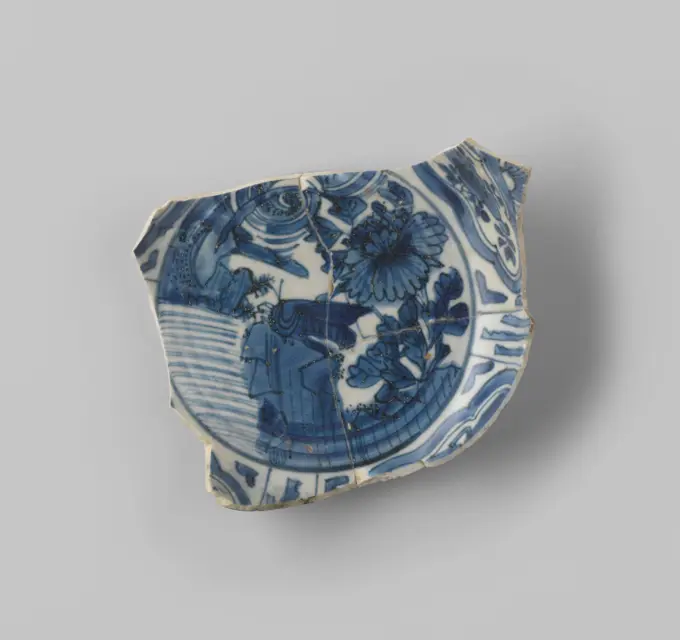
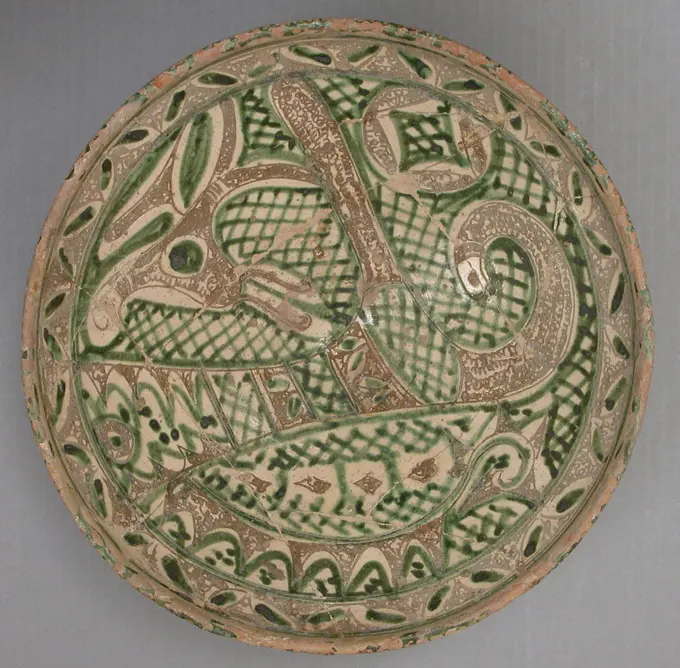
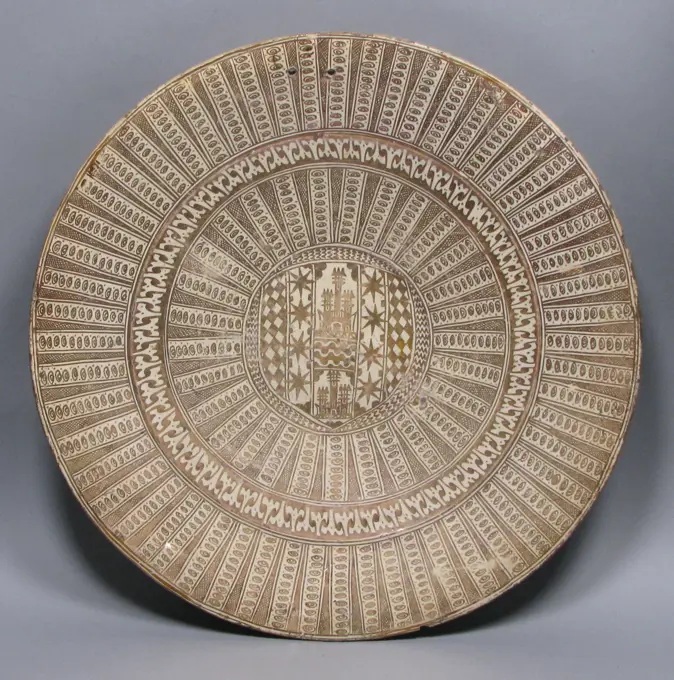
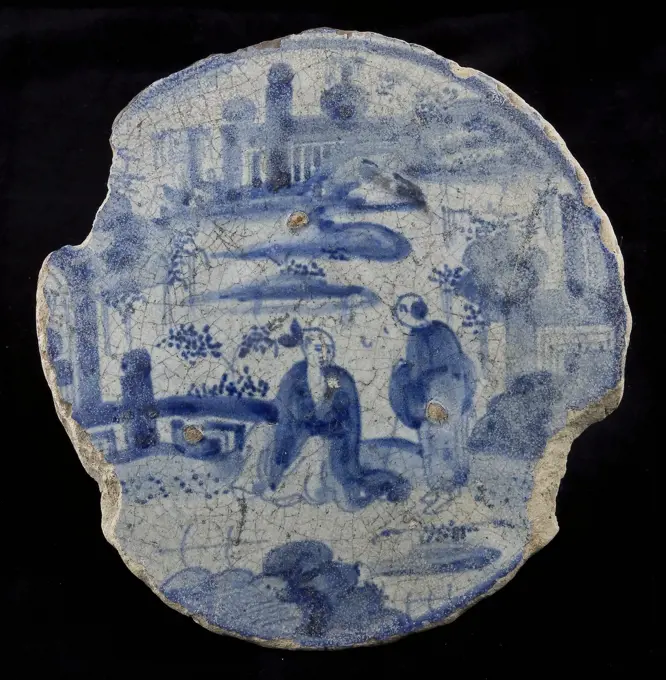
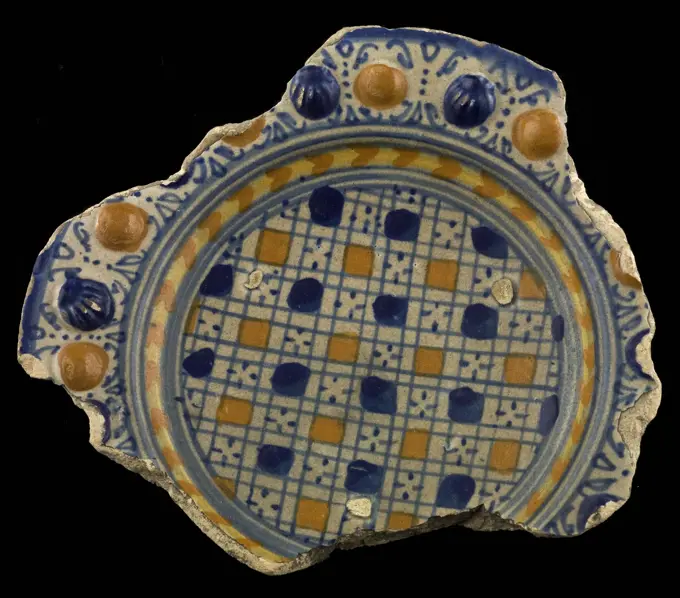
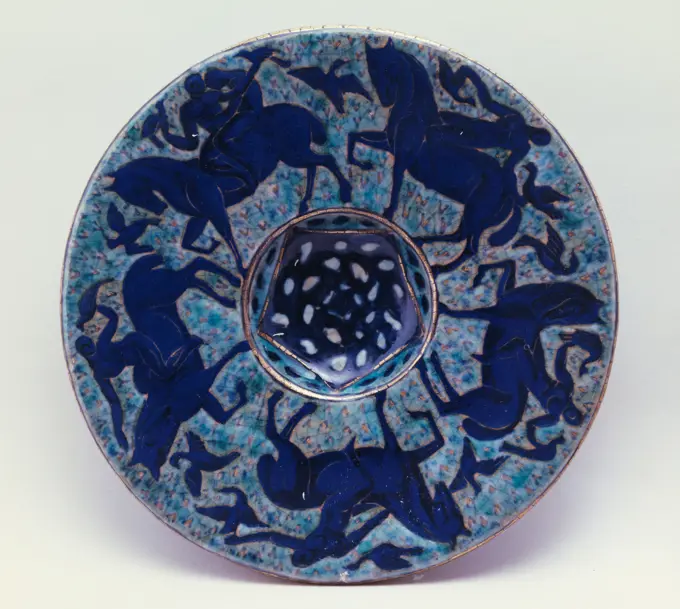
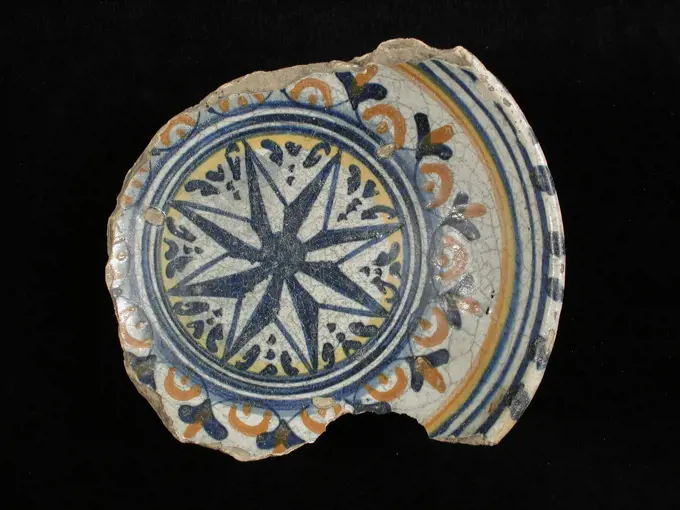
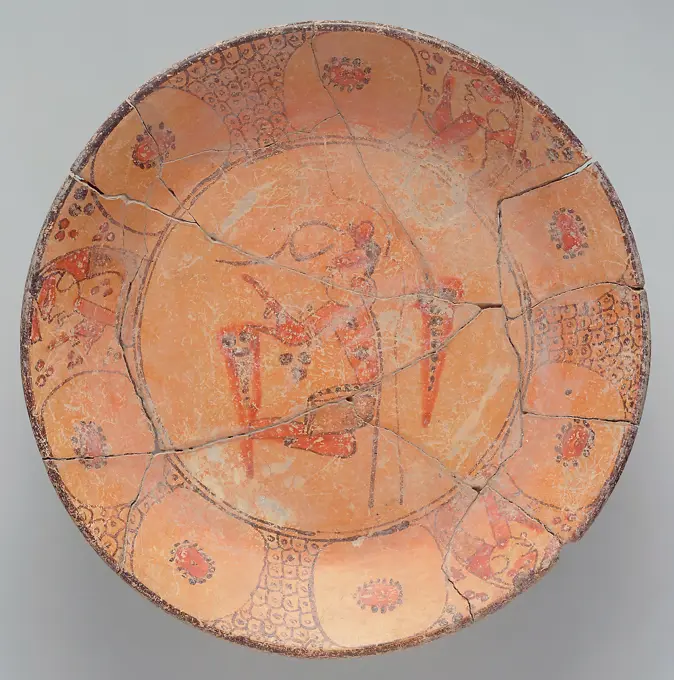
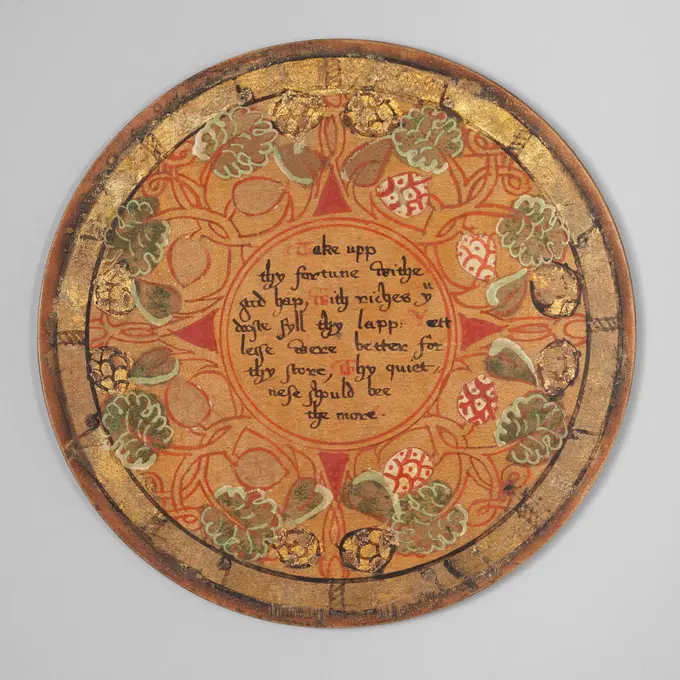
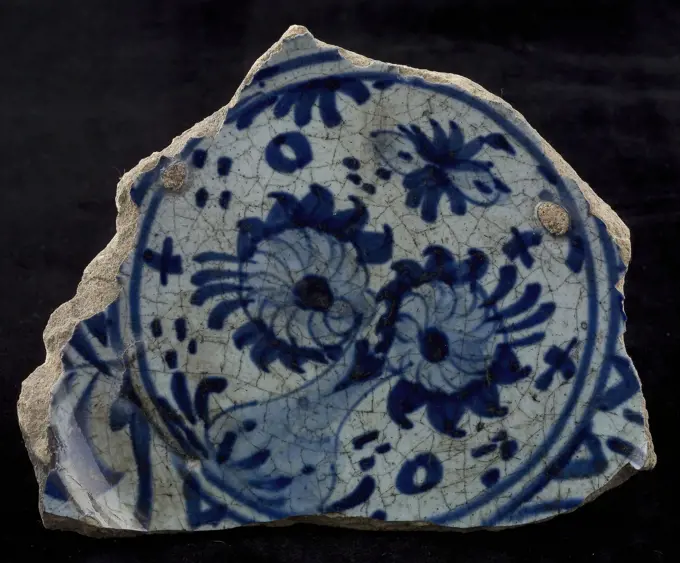
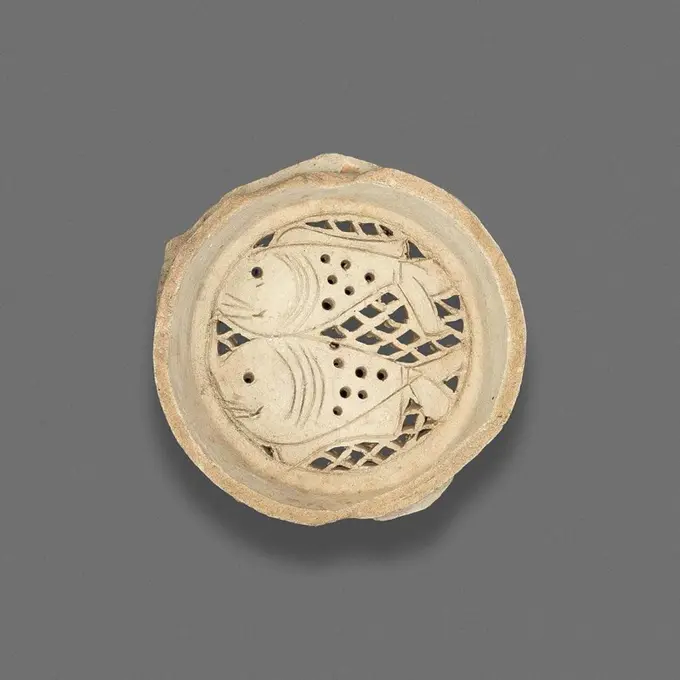
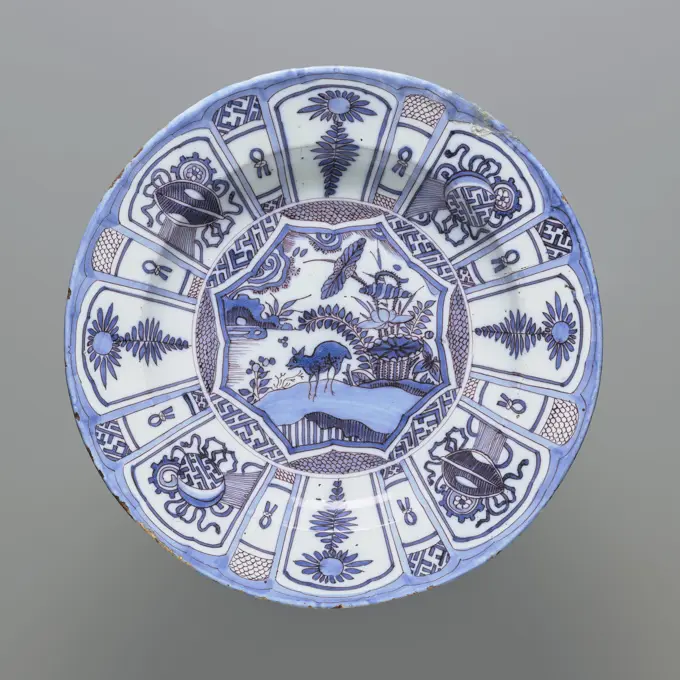
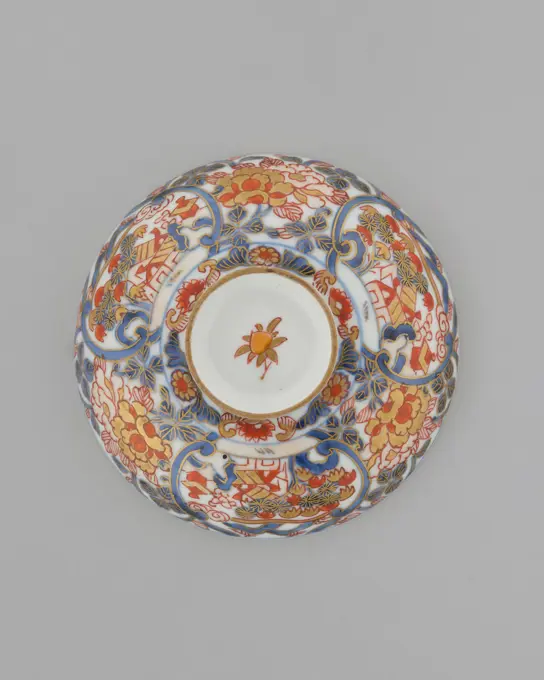
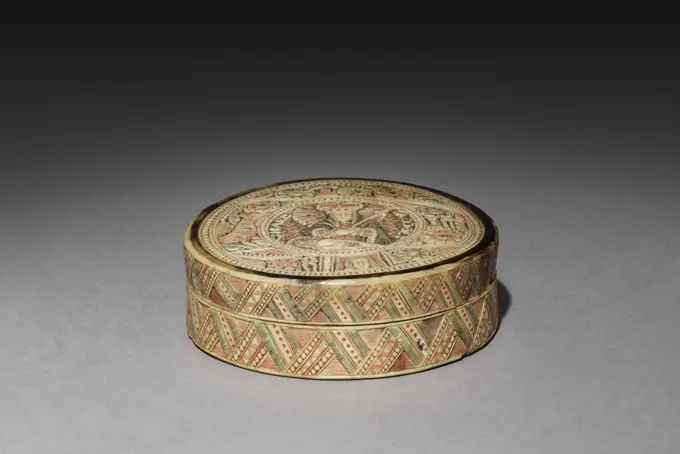
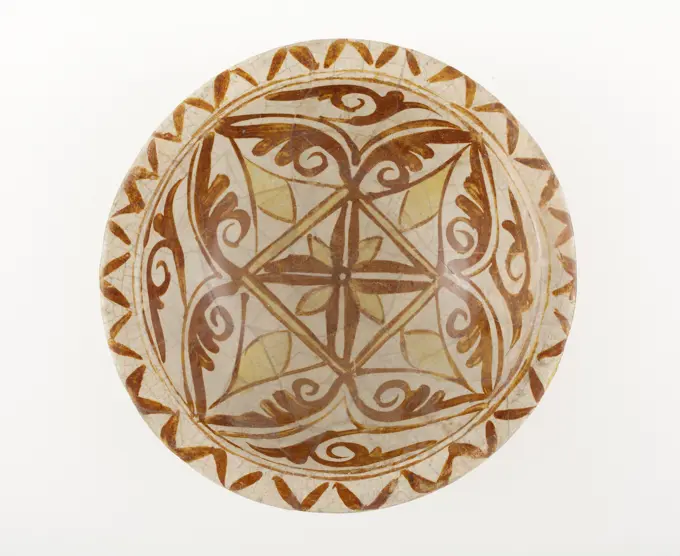
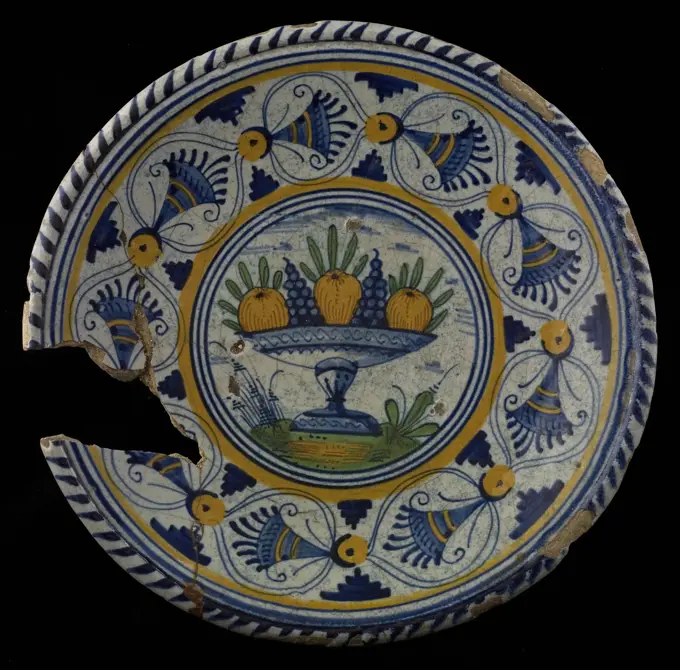
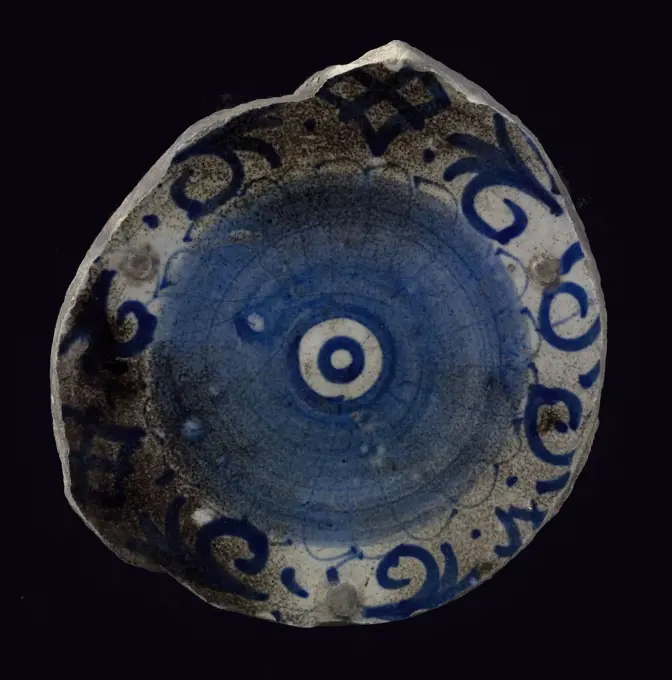
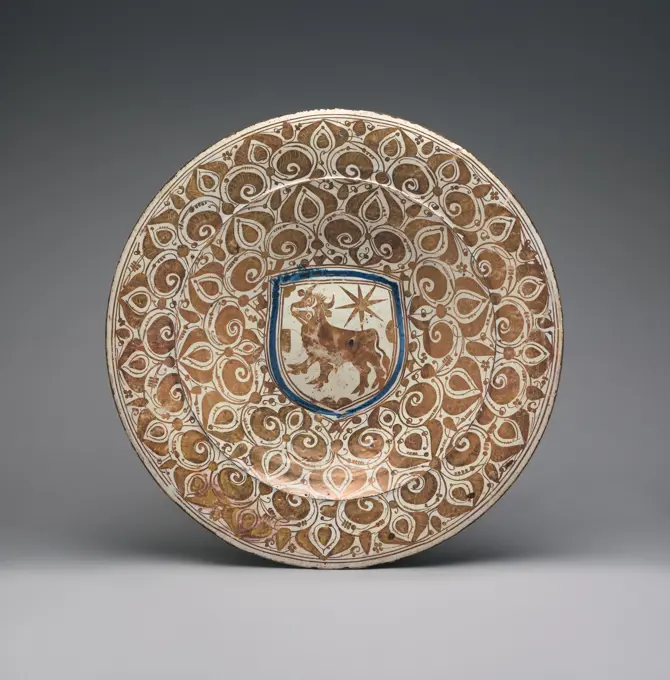
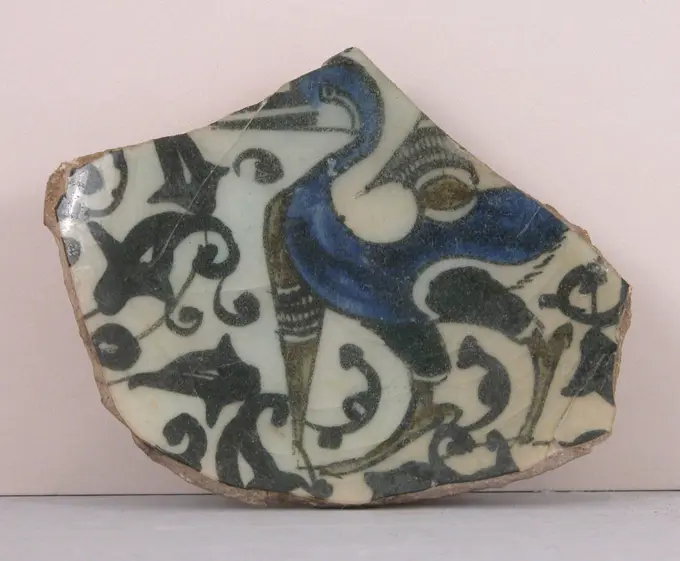
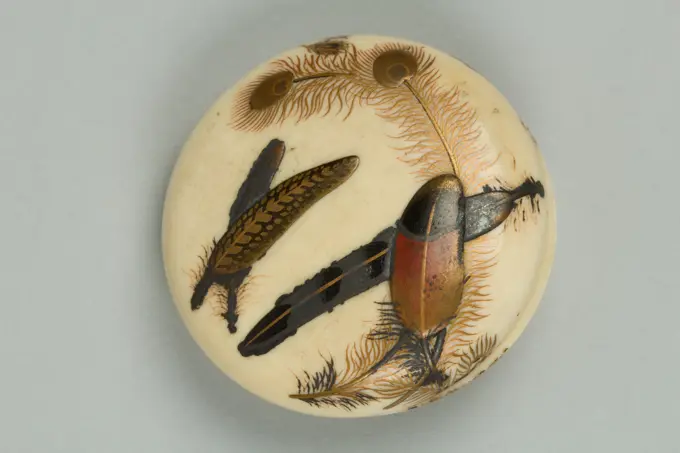
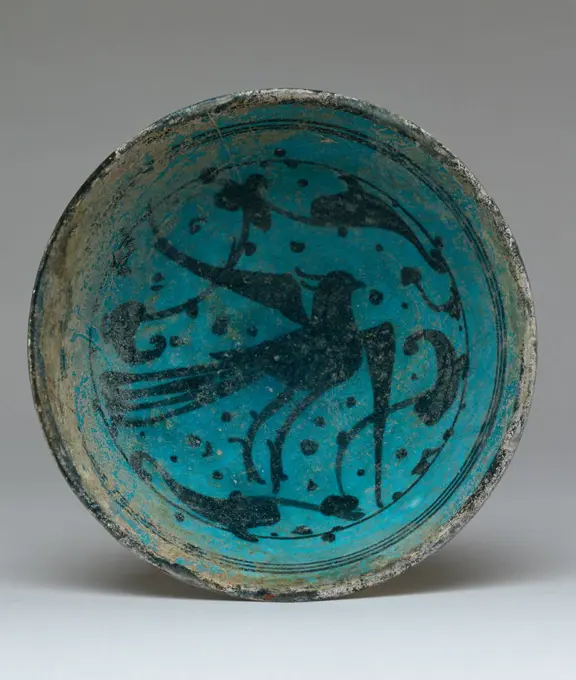
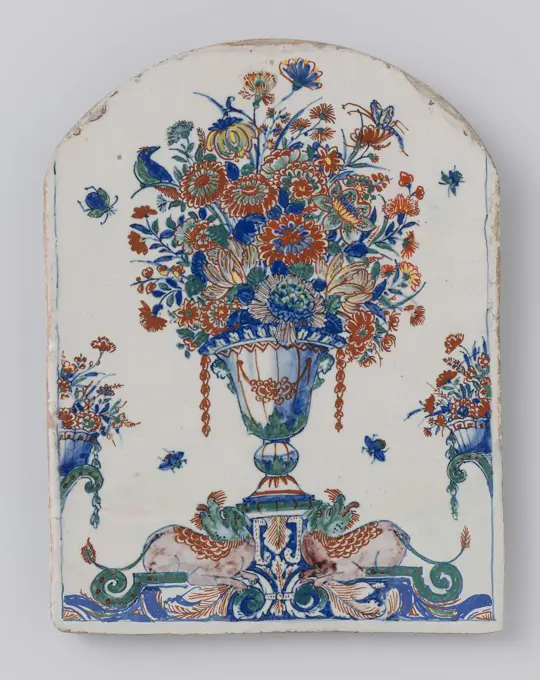
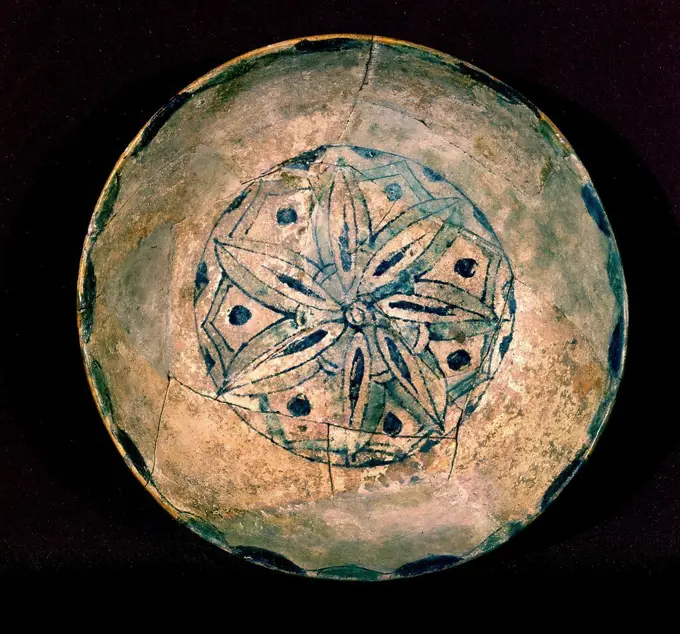
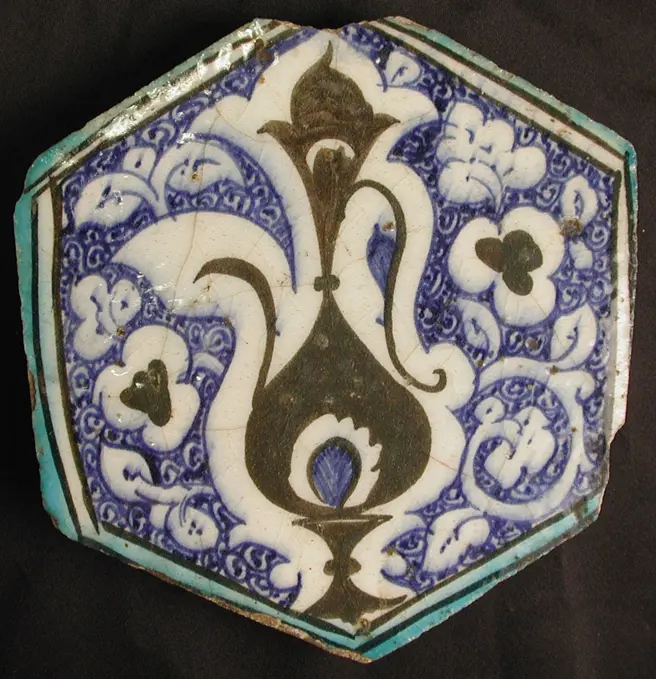
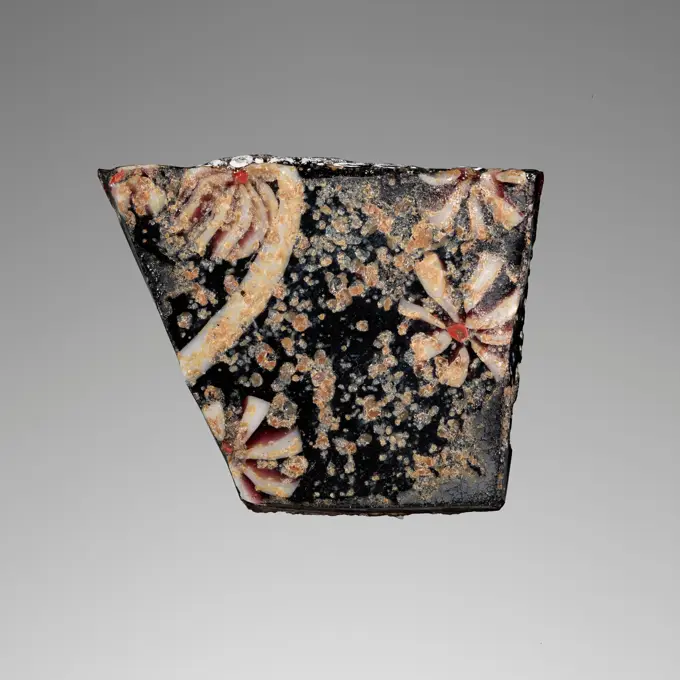
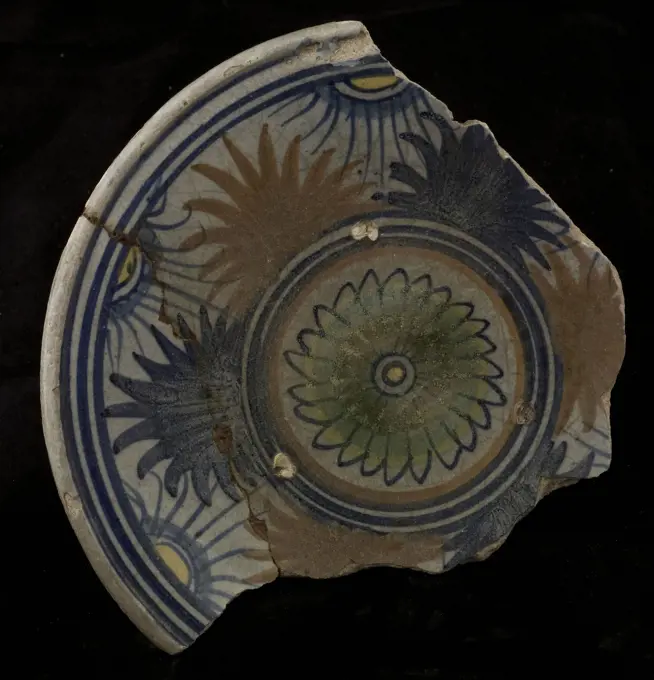
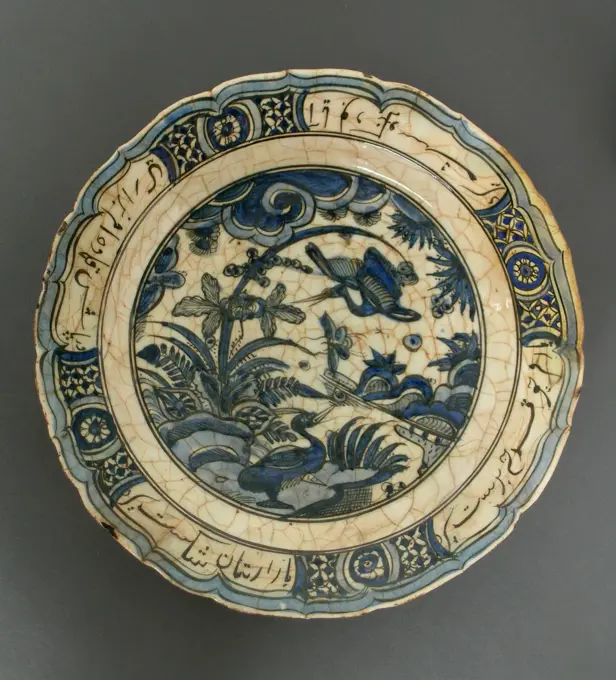
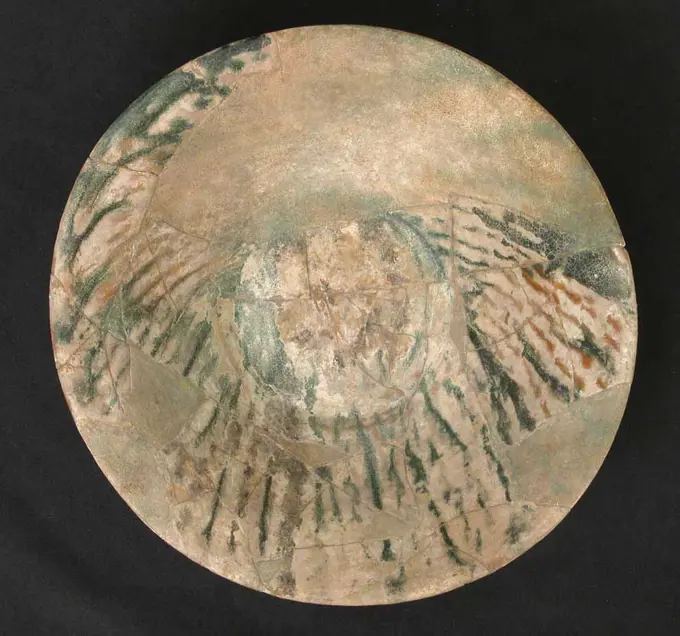
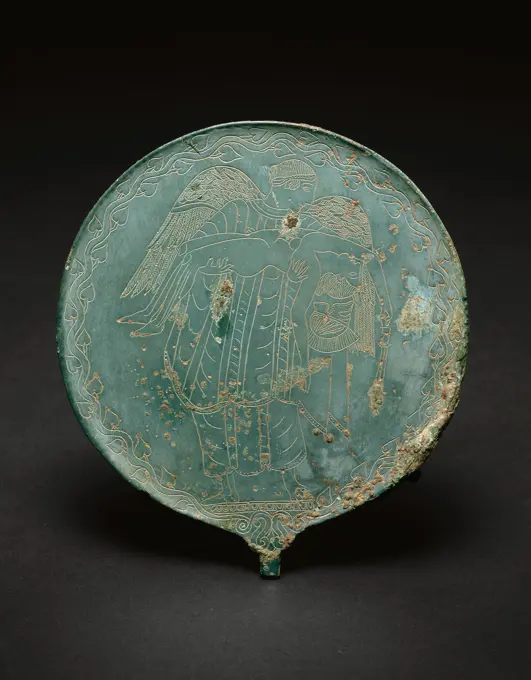
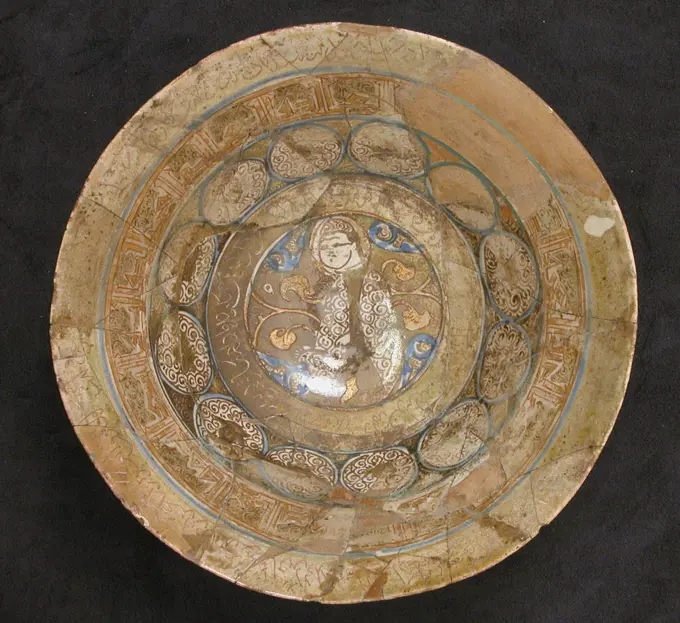
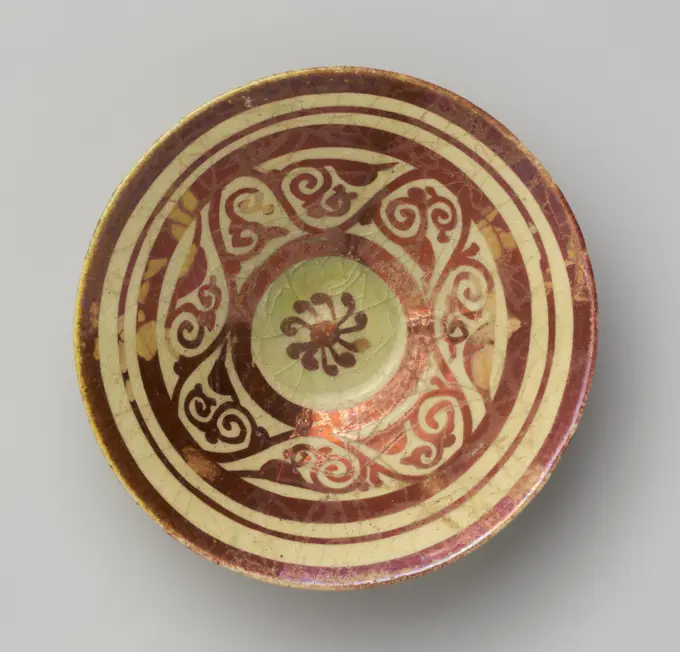
"Tell Minis" Bowl with Vegetal Scroll mid-12th century Around 1075, emigre potters from Egypt introduced stonepaste and overglaze luster painting to Syria, both pivotal for ceramic development in the region. Named after the findspot (Tell Minis) of a cache near Aleppo but produced at unidentified centers, this luster is characterized by a reddish hue because of its low silver content, perhaps due to a silver shortage.. "Tell Minis" Bowl with Vegetal Scroll. mid-12th century. Stonepaste; luster-painted on transparent glaze. Made in Syria. CeramicsPlate 1420-1430 Spanish. Plate. Spanish. 1420-1430. Tin-glazed earthenware. Made in probably Manises, Valencia, Spain. CeramicsBowl.  Artist: UnknownBowl late 12th-first half 13th century. Bowl 452075Round plate of hard-baked pottery; Staffordshire. Round plate of hard-baked pottery, covered with blue-black lead glazing with stains in light blue, green, tan and manganese. The edge is embossed with fields alternately smooth and filled with grille. On the trap fields alternately an eagle, a trophy and the portrait of Frederik the Great. On the smooth fields the inscriptions success to the King, King of Prussia, and His Forces. The sign belongs to five signs (BK-1987-40-A to BK-1987-40-F).Dish 17th century. Dish 446930Dish with two shishi in a landscape and squirrels, c. 1875 - c. 1925 Porcelain saucer, painted in under -glaze blue and on the glaze red, green, black and gold. On the flat a scalloped cartouche with two shishi (lion dog) in a landscape with a tree and bamboo; To the cartouche a second whimsically formed cartouche with peon branches. On the wall and edge three cartouches with a squirrel on a grape branch and six cartouches with a grape branch against a background of lotus vrocks on blue. The outer wall with three flower branches. The dish is caught in a metal frame. A chip in the edge. A European (French) Imitation of the Japanese Imari. Europe porcelain. glaze. cobalt (mineral). gold (metal). montuur: metal. uranium oxide painting / gilding / vitrification Porcelain saucer, painted in under -glaze blue and on the glaze red, green, black and gold. On the flat a scalloped cartouche with two shishi (lion dog) in a landscape with a tree and bamboo; To the cartouche a second whimsically foDish. Culture: China. Dimensions: Diam. 6 3/4 in. (17.1 cm). Museum: Metropolitan Museum of Art, New York, USA.Bowl 13th century. Bowl 447785Majolica Small Basin. Italy, Deruta, 16th century. Tools and Equipment; basins. Tin-glazed earthenware (maiolica)Lustered Plate with a Female Bust. UnknownDish 15th-16th century or later. Dish 453399Bowl with bird motifs, 10th century, Diam.5 x H.2-1/2 in., Earthenware, opaque white glaze, lustre, Iraq, Abbasid period (750-1258 CE)Plate 1450-1500 Spanish. Plate 468986Plate 14th century. Plate 448144. Come with something swing then afterwards beaten edge of rodig gray quartz fritgoed painted on the inside in luster on the glaze with a fine pattern of palmets and curlwork and a band with an ingrangled Arabic / Persian text. Under the decoration a torpedo-shaped blue spot, down dropping down.Saucer with flower sprays, birds and insects, anonymous, c. 1725 - c. 1749 Porcelain dish, painted on the glaze in blue, red, pink, green, yellow, black and gold. On the flat of the dish a flower rosette in a medallion; around six courses with flowering plants (including Lotus, Chrysanthemum, peony) with bird or insect; The back with six times a flower branch. Famle Rose. China porcelain. glaze. gold (metal) painting / gilding / vitrification Porcelain dish, painted on the glaze in blue, red, pink, green, yellow, black and gold. On the flat of the dish a flower rosette in a medallion; around six courses with flowering plants (including Lotus, Chrysanthemum, peony) with bird or insect; The back with six times a flower branch. Famle Rose. China porcelain. glaze. gold (metal) painting / gilding / vitrificationSaucer With Flower Sprays, Birds and Insects. Dish of porcelain, painted on the glaze in blue, red, pink, green, yellow, black and gold. On the flat of the dish a flower rosette in a medallion; around six compartments with flowering plants (O.A. Lotus, chrysanthemum, peony) with bird or insect; The back with a flower branch with six times. Family Rose.Fragment majolica dish with Chinese decor in blue, the Chinese garden in Wanli style, plate crockery holder soil find ceramic earthenware glaze tin glaze lead glaze, ring 8.5 hand turned baked decorated glazed fried Fragment majolica dish on stand Narrow stand ring Bottom lead glaze sparingly applied Decorated with monochrome decor in blue In the mirror the Chinese garden in hexagonal frame with bird rock and plants Along the side wall bastard version of the cassetterand with among others flowers between the fields an ossehorn decor baked archeology Valckensteyn Poortugaal Albrandswaard indigenous pottery serving serve China Soil discovery: castle Valckensteyn in Poortugaal now Albrandswaard 1961-1962.Wall plate with three flower motifs on the Plat, N.V. Haagsche Plateel Factory Rozenburg, 1888 Earthware wall plate, ribs, polychrome painted with three floral motifs on the flat and three larger -ranges of two -turns -turned parts on the edge. Suspension hole in the foot ring. Marked with: W. V with flag G. / The Hague / D, below: Moite and also four points, including a horizontal stripe (everything in black). The Hague earthenware Earthware wall plate, ribs, polychrome painted with three floral motifs on the flat and three larger -ranges of two -turns -turned parts on the edge. Suspension hole in the foot ring. Marked with: W. V with flag G. / The Hague / D, below: Moite and also four points, including a horizontal stripe (everything in black). The Hague earthenwareBowl 18th century. Bowl 446697Fragmentary Plate with Engraved Designs. Dimensions: H. ca. 9/16 in. (ca. 1.5 cm)Diam. 11 in. (28 cm). Date: 9th century.The striking blue color of this plate was achieved by adding cobalt to the glass fabric, and its surface has been engraved with various patterns arranged in concentric registers around a central roundel. The circular hole at the center indicates the place where a foot was once attached. This plate is important evidence of the active glass trade from west to east during the ninth and tenth centuries. Probably made in Syria, it was imported to Nishapur where it was found in the prosperous Tepe Madrasa section of the city. The fact that six dishes of this type were found in the crypt of the Famen Temple in China demonstrates the far eastern reaches of the trade routes that passed through Nishapur. Furthermore, the evidence from this temple, whose crypt was sealed in 874, provides an ante quem date for our plate. Museum: Metropolitan Museum of Art, New York, USA.CUENCO DE CERAMICA VIDRIADA. Location: MUSEO ARQUEOLOGICO NACIONAL-COLECCION. MADRID. SPAIN.Fragment majolica dish, green and blue on white, decor with one pomegranate, plate crockery holder soil find ceramics pottery glaze, baked underside covered with green tinted lead glaze. Polychrome archeology adorn serving foodDish. Culture: Spanish. Dimensions: Overall: 16 in. (40.6 cm). Date: 1430-1460. Museum: Metropolitan Museum of Art, New York, USA.Bowl with an Arabic Inscription andPalmettesFragment majolica plate, polychrome, bird in Chinese garden, plate dish tableware holder majolica soil finding ceramic earthenware glaze, Cooked on prunes. Polychrome. Primitive and some futuristic decor archeology Rotterdam serving food decorate China archaeological find in the soil Rotterdam 1941.Shard of stoneware with arms and peripheral "den Prinssen van Orranien etc". Shard of stoneware with a weapon saved in blue email. Sandwich: den Prinssen van Orranien wa.e. Van Dopens exposed, Anno 1590. According to BK-14712-2 list.Fragment of a Bowl 14th century. Fragment of a Bowl 446466Dish 15th-16th century. Dish 451997Pigment Box (lid), 13th century. Korea, Goryeo period (918-1392). Inlaid celadon ware; diameter: 7.7 cm (3 1/16 in.); overall: 3.9 cm (1 9/16 in.). Celadons, spoons, seals, and bronze mirrors were the most common burial objects in tombs during the Goryeo period (918-1392). Once used to contain colored powder, rouge, and eyebrow gel for makeup, this small container was one of the standard goods that furnished elites' tombs. Both women and men used the grain powder of rice or millet for whitening their skin, safflower extract for rouge, and plant ash or soot for eyebrow gel. Yet, natural-looking makeup seems to have been the most favorable one in Korea according to the travelogue by Xu Jing (1091-1153), the Chinese diplomat who visited Korea in 1123.Plate. unknown, craftsmanCeramic dish with deer, phoenix, and lotus blossoms, 1300-1350. Iran, probably Sultanabad, Ilkhanid period (1256-1353). Fritware with underglaze-painted design, Sultanabad ware; overall: 7 x 32.6 cm (2 3/4 x 12 13/16 in.).Plate 18th century Worcester factory The gift of the Hans Syz Collection in 1995 endowed the Museum with nearly three hundred examples of European and Asian ceramics meticulously acquired by Swiss-born collector Dr. Syz (1894-1991) to chart the migration of models and patterns from East to West. Documenting a continuous process of influence and adaptation, these pieces provide a discriminating review of the nuances of stylistic change resulting from three centuries of trade.. Plate 208256Bowl. unknown, craftsmanDish with Rampant Lions early 15th century Italian. Dish with Rampant Lions 468164Plate ca. 1890-1907 William De Morgan British Known for his "Persian style" blue and turquoise ceramics inspired by Iznik pottery, De Morgan produced glazes with richer, softer colors than his contemporaries. Particularly fond of dragons, he used them, dancing between stylized flowers, to anchor this design. Chief assistant Charles Passenger painted the ornament at Fulham in London, where De Morgan moved his works in 1889 to avoid the long daily commute to Merton Abbey.. Plate. British (London). ca. 1890-1907. Ceramic. Ceramics-PotteryPair of plaques. These plaques, possibly used as table tops, are covered with auspicious symbols: the butterfly represents a long life, and the magpie joy, while the blossoming plum tree and bamboo signify life force. The cloisonné enamel technique flourished in China from the Ming dynasty (1368-1644) onwards. Copper wire soldered onto the copper ground created the outlines of the design; these spaces were then filled with coloured glass paste, which melted and flowed when heated.. Dish of Faïence. Painted blue.Bowl with a Bust of Mucius Scaevola. Italian; Faenza. Date: 1535-1545. Dimensions: Diameter: 25.4 cm (10 in.). Tin-glazed earthenware (maiolica). Origin: Faenza. Museum: The Chicago Art Institute, Chicago, USA. Author: Faenza Potteries.Dish (Pan) with Peony Medallion and Floral Border. China, Late Southern Song dynasty or early Yuan dynasty, about 1200-1300. Furnishings; Serviceware. Carved black lacquer on wood coreTray 1250-1300. Tray 444603Plate of multicolor hard-baked pottery; Staffordshire .. Plate of multicolored hard-baked pottery. The edge is embossed with grille, interspersed with two adjacent symmetrical floral motifs. The scalloped edge is decorated with volutes and leaf motifs on the inside. The plate is covered with a spotted lead glaze in manganese, green, gray and yellow. The back is dotted in manganese and has a foot edge. The sign belongs to five signs (BK-1987-39-A to BK-1987-39-F).Dish early 16th century German. Dish. German. early 16th century. Brass. Metalwork-BrassBowl 1850 Japan. Bowl 46487. Blackboard of white glazed pottery with motif of rotating star, an inscription in blue and other ornaments. So-called preaching board 1788-1805. The names of different pastors are mentioned on the board.Plate. Montelupo (ośrodek ceramiczny ; ca 1400- ), potter's workshopDish with Bird-and-Flower Design early 17th century Japan. Dish with Bird-and-Flower Design 50319Excerpt deep plate from v.o.c.-ship De 'Witte Leeuw', Anonymous, Before 1613 plate (dishes) Fragment deep plate from V.O.C. ship De 'Witte Leeuw', 45 present. Jingdezhen bone china (material)   Sint-HelenaBowl 10th-11th century. Bowl. 10th-11th century. Earthenware; glazed and slip-painted, incised. Found Iran, Amul. CeramicsDish late 15th century Spanish. Dish. Spanish. late 15th century. Tin-glazed earthenware. Made in probably Manises, Valencia, Spain. CeramicsFragment majolica dish, blue on white, Chinese landscape with Chinese, dish plate crockery holder earth discovery ceramics earthenware glaze, Op fried archeology food decorate serving ChinaMajolica plate, polychrome with shell-shaped and smooth knobs, chessplate decor, plate dish tableware holder majolica soil finding ceramic earthenware enamel, baked underside covered with green lead glaze Decor derived from Italian example Polychrome. Scallops in the rim archeology decorate food ItalyAndré Metthey (1871-1920). Plate. Earthenware. Museum of Fine Arts of the City of Paris, Petit Palais. 79583-20 Art Menager, Horse, Faience, Bird, Cat, 19th 19th 19th 19 19th 19th century, plateDG, Fragment majolica bowl, polychrome, in the middle eight-pointed star, signed, bowl tableware holder majolica soil find ceramic pottery glaze, baked underside covered with lead glaze. Polychrome. Signed. Italian Dutch decor marked inside the stand: DG or DC archeology Italy decorate serving food porridgeGold-glass base. From Rome, 4th century.Plate, 600-900, 2 3/16 x 13 9/16 in. (5.56 x 34.45 cm), Glazed pottery, Mexico, 7th-10th centuryFragment of a Bowl 14th-15th century. Fragment of a Bowl 447272Brush holder 18th century Japan. Brush holder. Japan. 18th century. Stoneware with polychrome enamels (Ko-Kiyomizu ware). Edo period (1615-1868). CeramicsTrencher (one of a set). Culture: British. Dimensions: Diameter: 5 in. (12.7 cm). Date: late 16th-early 17th century.Banquets usually ended with candied fruits or other sweetmeats served on such decorative "spice dishes" of silver or wood. The gold effects were achieved with yellow varnish over a layer of silver-leaf. The verses were written in Black Letter script, with elaborate capital letters in Lombardic script. The verses, either amusing or moralizing, were shared with the other diners. Museum: Metropolitan Museum of Art, New York, USA.Fragment of a Bowl 13th century. Fragment of a Bowl 447284Fragment majolica plate, blue on white, with flower vase in Chinese style, plate dish crockery holder soil find ceramic pottery glaze, baked underside covered with clear lead glaze archeology food decorate serving ChinaClay filter with design of fish. Egypt; Fustat. Date: 1000-1200. Dimensions: .75 × 7.3 cm (3/4 × 2 7/8 in.). Earthenware, carved and punched. Origin: Masr al-`Atiqah. Museum: The Chicago Art Institute, Chicago, USA. Author: Islamic.Sword Guard (Tsuba) Japanese possibly 19th century A tsuba is a sword guard and part of a sword mounting. It is mounted between the swords blade and grip to protect the users hands.For a long time;  around 1670-1780 (1755-00-00-1780-00-00);Shard: Foot Ring with Floral Arabesque Design. Egypt, Mamluk, mid-14th century. Ceramics. Fritware with green, white and brown glazeArita (Ceramic Production Center), bowl cover with Imari decor (common name). Ceramics, porcelain, polychrome enamels: cobalt blue under cover, red on covered, gilding. Petit Palais, Museum of Fine Arts of the City of Paris.Bowl with Anchor and Dolphin Medallion; 2nd century B.C; Silver; gilding; 4.3 × 18.5 cm, 0.4078 kg (1 11,16 × 7 5,16 in., 0.899 lb.);Box, 1800s. Spain (colonial ), 19th century. Bone; overall: 2.3 x 6.1 cm (7/8 x 2 3/8 in.).Bowl. Iraq, 9th century. Ceramics. Earthenware, overglaze polychrome luster paintedMajolica dish with polychrome decor, fruit bowl in the mirror, plate crockery holder soil find ceramic earthenware glaze tin glaze lead glaze, hand-turned baked glazed painted baked Majolica dish with fruit plate on stand foot. Orange apples and bunches of grapes. Polychrome decor In the flag wreath of funnel-shaped flowers and double outline Rope decor over the edge. underside covered with lead glaze Cooked on prunes. Stand ring pierced. traces of use archeology decorate serving foodFragment majolica dish, blue on white, rosette, plate crockery holder soil find ceramic earthenware glaze, Cooked on the underside covered with lead glaze. Monochrome archeology Rotterdam decorating food archaeological find in the soil Rotterdam 1940.Plate 1450-1470 Spanish. Plate 468516Fragment of a Bowl probably 13th-16th century. Fragment of a Bowl 452708Netsuke 19th century Japan. Netsuke. Japan. 19th century. Ivory ornamented with lacquer. Edo (1615-1868) or Meiji period (1868-1912). NetsukeBowl late 12th-first half 13th century. Bowl 452031Plate With Panel Decoration With Flower Sprays and Precious Objects. Porcelain plate with raised wall and sloping edge, painted in underglaze blue. On the flat a pointed medallion with flower branches and insect at a rock, half circles around the medallion filled with alternating a scaled motif and Swastika in reserve; the edge with a trade decoration with alternating a flower branch or lucky symbol (parasol) and a three-piece compartment with valuables (pearl, rhombus) above and-under or a schub pattern or a swastika in reserve; The back with a continuous flower branch. Plate has been broken. Blue White.Dish with a flowervase near a fence and panel decoration with landscapes. Dish of porcelain, painted in underglaze blue. On the flat in a double medallion a scaly flower vase with three flowers, large branches and leaves. The vase is on a chassis on a terrace for a fence; behind it. The wall and edge are divided into courses with river landscapes with mountains, trees and a pavilion; Two compartments with a bird on a rock. Between the narrow compartments with a window. Old label on the underside with 'P 3307 / Japan / + - 1700 / Imari / 130-. The edge has been broken; Shard porcelain bags on the outside; a preen on the bottom. Blue White.Plate. Round plate of multi-colored painted majolica. On the flat, the letters IHS are painted in concentric circles (the H forms a cross), surrounded by spirals in blue. A blue bond with comma-like characters is painted on the edge.. Plate with rounded top, from Faïence. Painted multi-colored with a vase with flowers.Bowl. Egypt or Syria, 14th century. Ceramics. Fritware, underglaze-paintedCUENCO DE CERAMICA VIDRIADA. Location: MUSEO ARQUEOLOGICO NACIONAL-COLECCION. MADRID. SPAIN.Hexagonal Tile first half 15th century The background of tightly coiled spirals and the use of black, blue, and turquoise underglaze pigments betray the Syrian provenance of this tile. The lidded ewer on a stand, a form that is still popular in the Middle East, is a recurrent motif based on contemporary metal examples.. Hexagonal Tile 442905Fragment of shabrack, embroidered unknownPlate with a Chinese landscape with buildings on the flat and three figures on a bridge, anonymous, c. 1400 - c. 1950 Plate of pottery with blue transfer decor. On the flat a Chinese landscape with buildings, a boat, three figures on a bridge, and two birds in the air. The edge of the board, among other things, with gridwork.  earthenware Plate of pottery with blue transfer decor. On the flat a Chinese landscape with buildings, a boat, three figures on a bridge, and two birds in the air. The edge of the board, among other things, with gridwork.  earthenwareFragment of a Mosaic Glass Vessel. Unknown 1st century B.C.-1st century A.D. Opaque black with red and white rosettes on the interior.Fragment majolica dish, polychrome, rosette, outside fan-shaped leaf motif, plate crockery holder earth discovery ceramics earthenware glaze, baked underside covered with greenish tinted lead glaze thinly applied archeology Rotterdam food decorate archaeological find in the soil Rotterdam 1941.Handscreen; engraved and painted paper leaf, turned wood handleDish. Iran, 17th century. Ceramics. Fritware, underglaze-paintedBowl 8th-9th century. Bowl. 8th-9th century. Earthenware; glazed. Found/excavated Iran, Qasr-i Abu Nasr. CeramicsHand Mirror 470 BCE-450 BCE Vulci. Found in womenís graves, bronze mirrors were luxurious personal possessions used in life and then buried with the dead for use in the afterlife. One side was highly polished; the other side was usually engraved with a mythic scene, such as this one, which shows the goddess Eos carrying the body of her son, Memnon, who was killed by the hero Achilles. The episode was taken from Homerís The Iliad, the epic poem that narrates the Greek siege and eventual defeat of the city of Troy.. Bronze . Ancient EtruscanNet Pattern Bowl. UnknownSaucer-dish with a Chinese couple in a Cart with two servants. Dish of porcelain, with landscaped tulip motif in the wall and scalloped edge, painted in underglaze blue and on the glaze in red and gold. On the flat a medallion with a landscape in which a Chinese lady and lord drawn in a car by two horses. On the back of the car a servant holding a parasol above their heads; A second servant is on a horse. On the wall tulip-shaped compartments with flour branches, between the frying beads; A decorative band on the edge. Some chips in the edge. Milk and blood.Basin with classicizing head. Culture: Italian, Montelupo. Dimensions: Overall (confirmed): 2 1/4 × 13 1/4 in. (5.7 × 33.7 cm). Date: ca. 1500-1510.As diners ate mainly with their hands during the Renaissance, a ewer and basin were often kept on the sideboard for washing. The companion to this basin has been lost. In its center is a roundel with a raised rim, which would have secured the ewer's hollow foot. The portrait profile modeled after ancient Roman coins becomes visible when the ewer is removed. Museum: Metropolitan Museum of Art, New York, USA.Four Tiles; glazed moulded earthenwareMirror with Deities, Chariot, and the White Tiger, AD 100-200. China, Eastern Han dynasty (25-220). Bronze; diameter: 18.3 cm (7 3/16 in.); overall: 1.7 cm (11/16 in.); rim: 0.9 cm (3/8 in.).Pair of Guéridons, 1700-1725. Oak, ebony, scales, copper, tin, gilded bronze. Salle 21. Paris, Carnavalet museum. Pair of guidus Bronze gilded, oak, copper, ebene, tain, gueridon, furniture, room 21, furnitureBowl 13th century. Bowl 451775Imitation Bichrome Luster Bowl. Dimensions: H. 2 7/16 in. (6.2 cm)Diam. 8 1/8 in. (20.6 cm). Date: 9th century.The decoration of this bowl imitates a type of luster ceramic usually dated to the mid- to late ninth century, characterized by the use of two shades of a brownish-gold glaze. Instead of being made with the metal-based glaze of luster ware, though, this bowl is decorated with brown and yellow glazes made of diluted clay. Its interior is divided into quarters by projecting vertical strokes; each quadrant is decorated with the "peacock-eye" pattern so common on luster wares of this period. Museum: Metropolitan Museum of Art, New York, USA.Armorial bowl 1524 Workshop of Maestro Giorgio Andreoli. Armorial bowl 195773