Decorative Historical Ceramics

A collection of ornate bowls and plates showcasing intricate luster painting and unique designs, reflecting historical ceramics from various regions.

Dish with two shishi in a landscape and squirrels, c. 1875 - c. 1925 Porcelain saucer, painted in under -glaze blue and on the glaze red, green, black and gold. On the flat a scalloped cartouche with two shishi (lion dog) in a landscape with a tree and bamboo; To the cartouche a second whimsically formed cartouche with peon branches. On the wall and edge three cartouches with a squirrel on a grape branch and six cartouches with a grape branch against a background of lotus vrocks on blue. The outer wall with three flower branches. The dish is caught in a metal frame. A chip in the edge. A European (French) Imitation of the Japanese Imari. Europe porcelain. glaze. cobalt (mineral). gold (metal). montuur: metal. uranium oxide painting / gilding / vitrification Porcelain saucer, painted in under -glaze blue and on the glaze red, green, black and gold. On the flat a scalloped cartouche with two shishi (lion dog) in a landscape with a tree and bamboo; To the cartouche a second whimsically fo
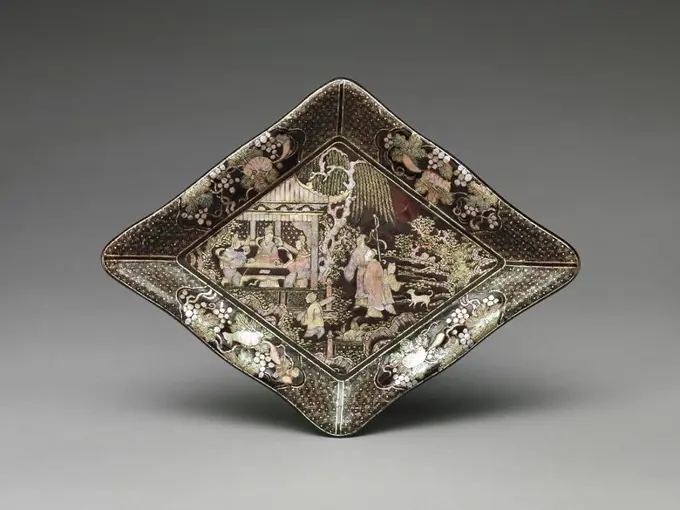
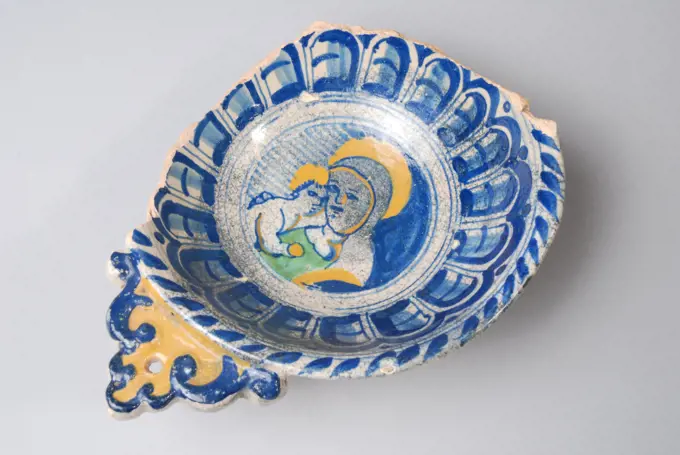
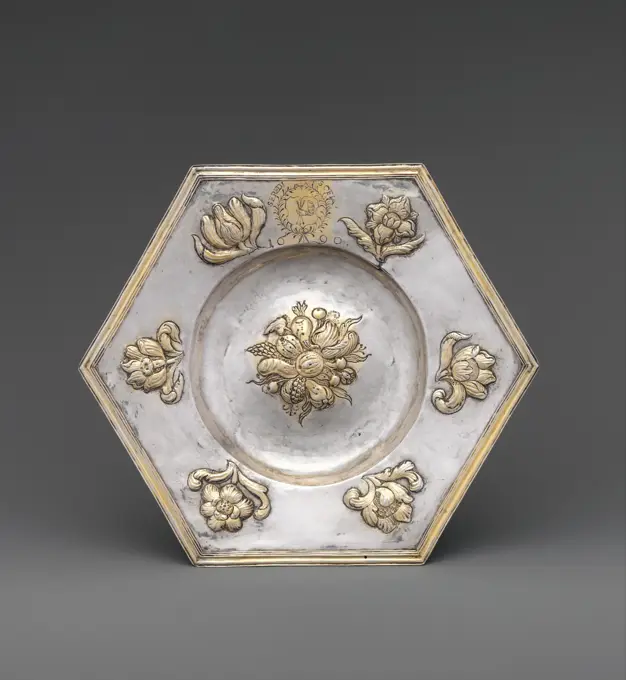
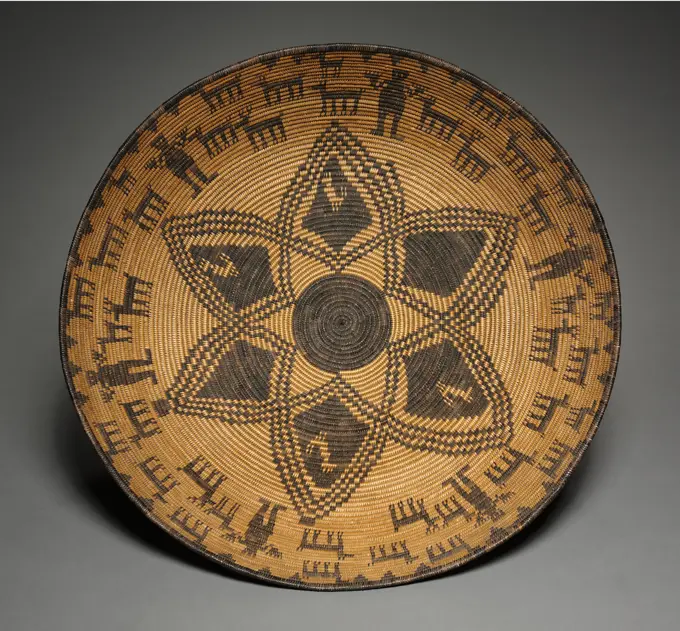
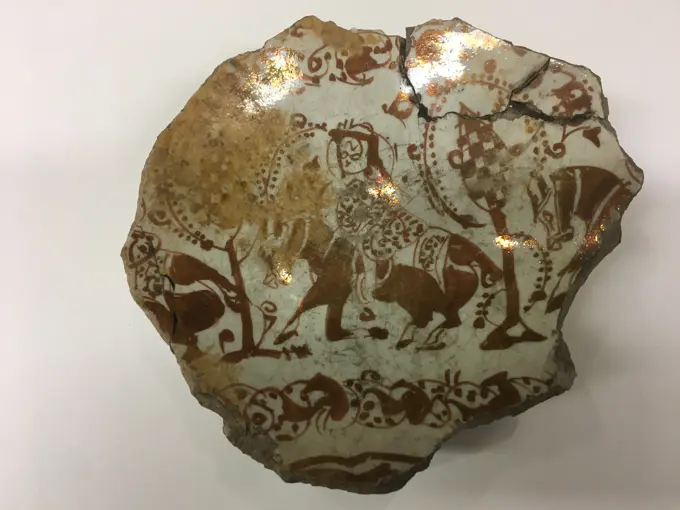
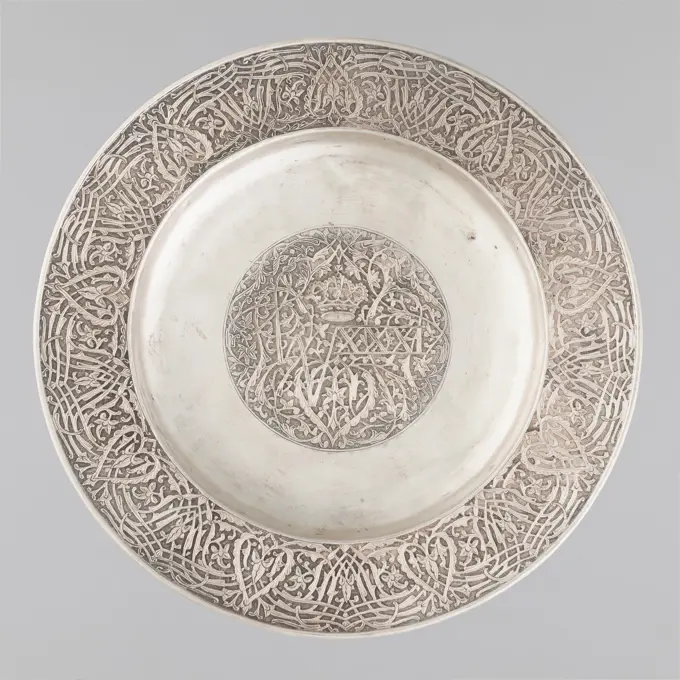
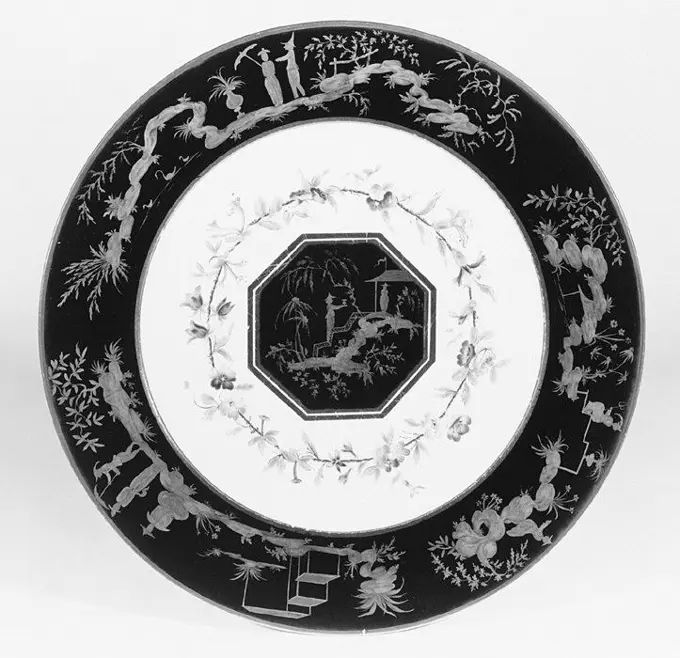
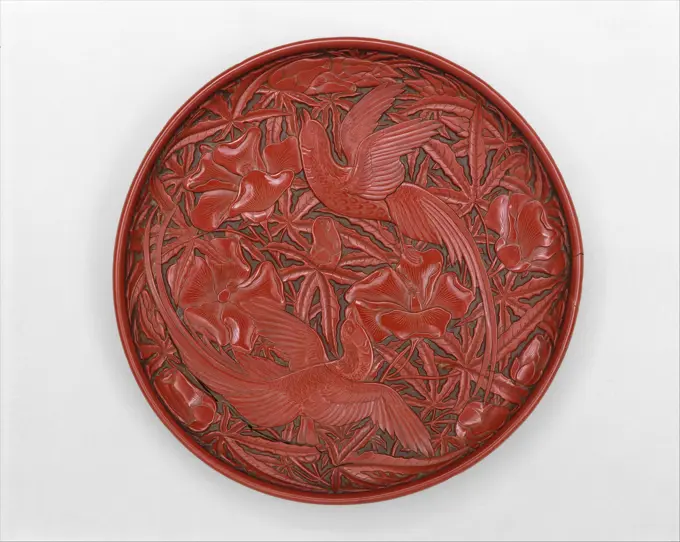
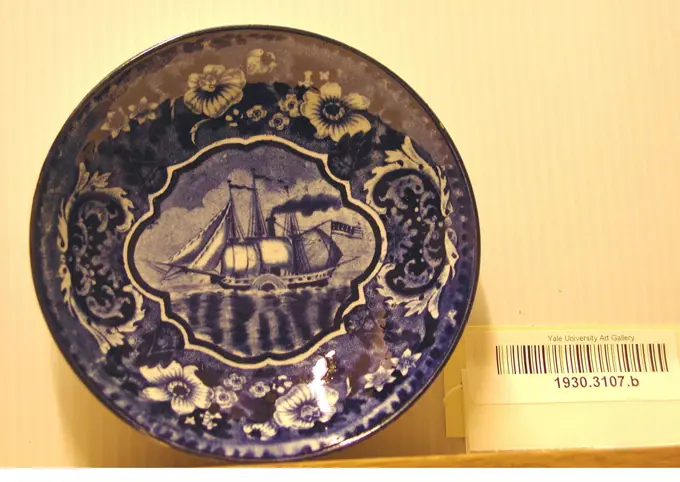
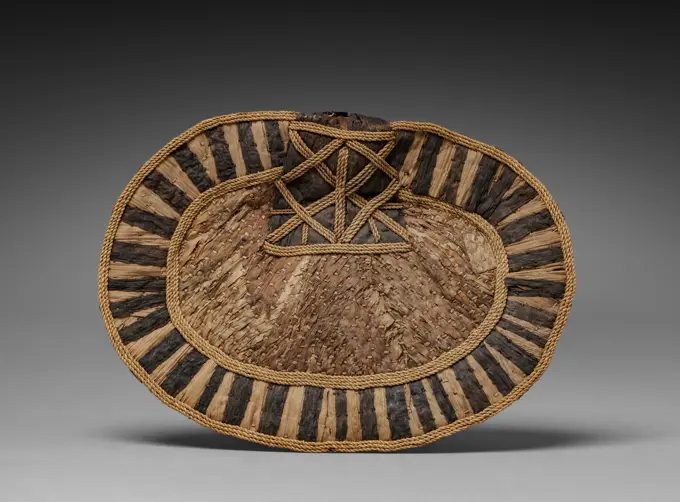
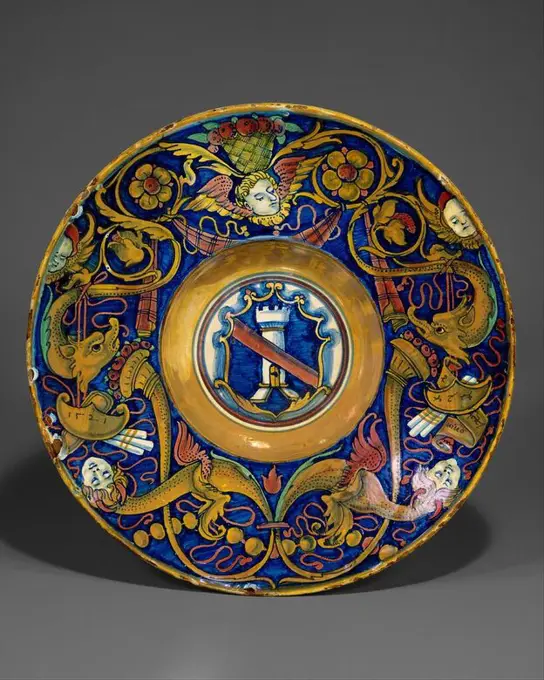
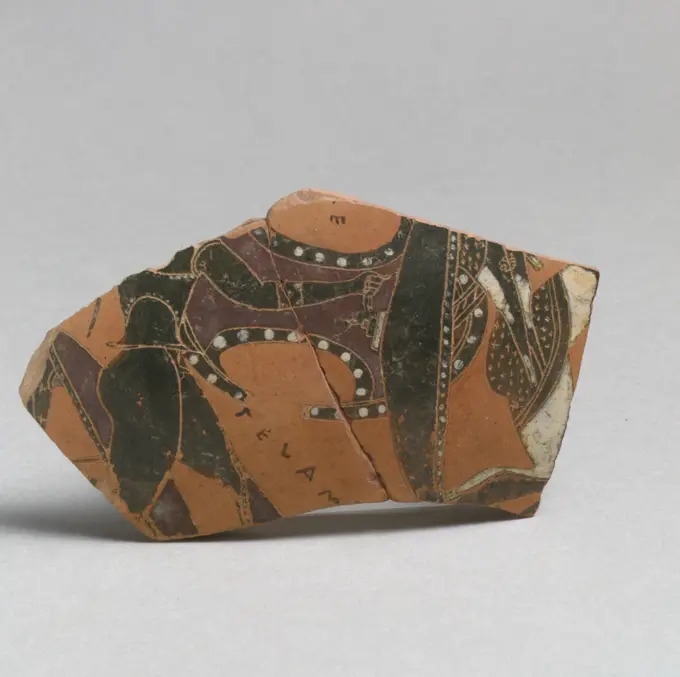
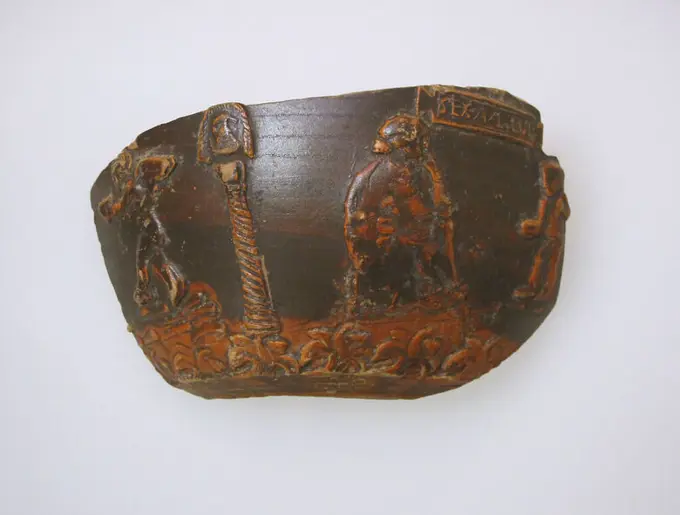
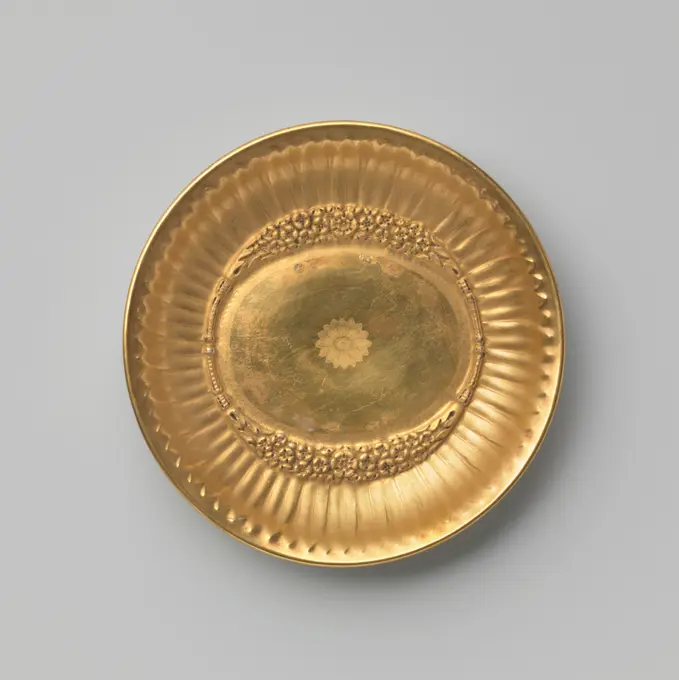
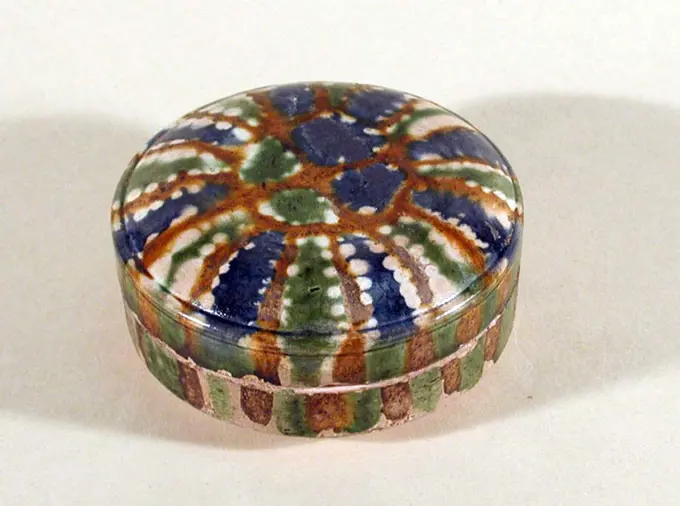
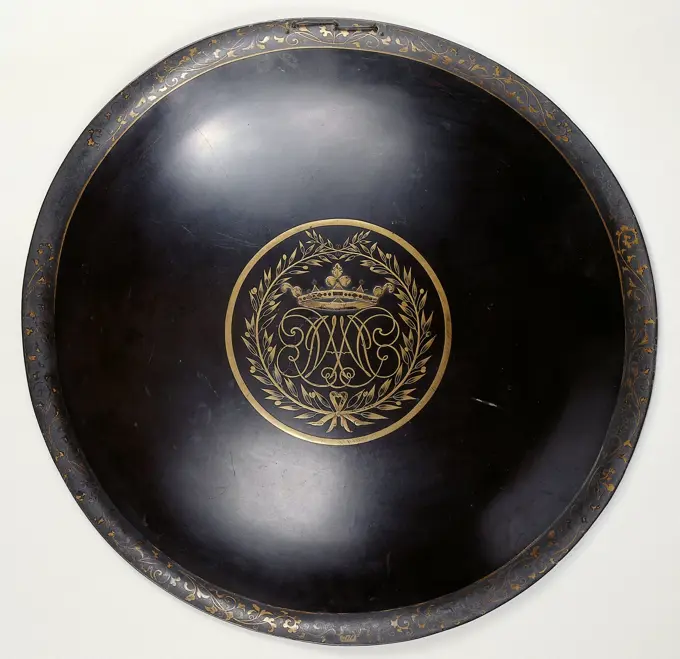
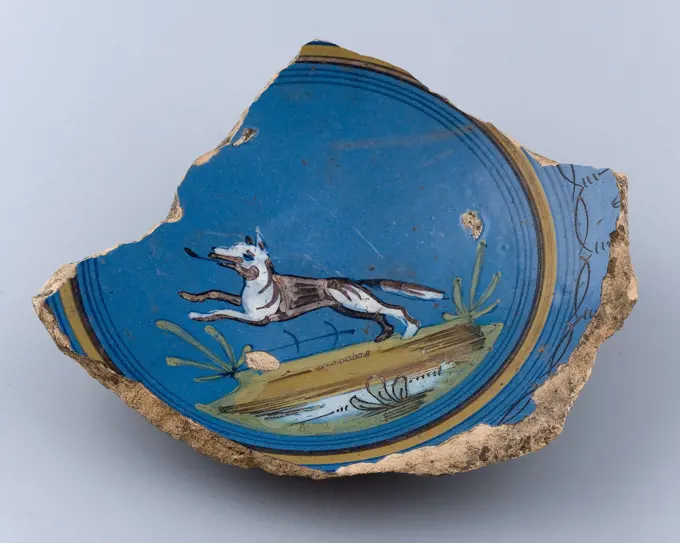
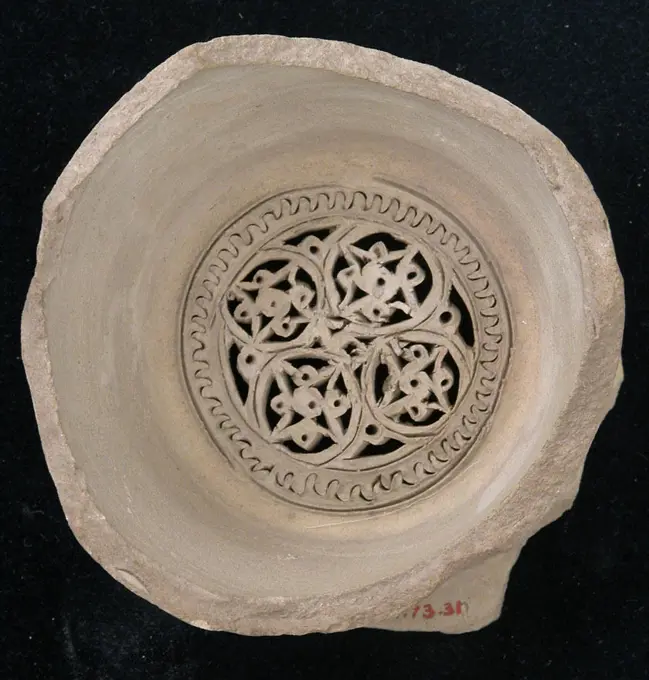
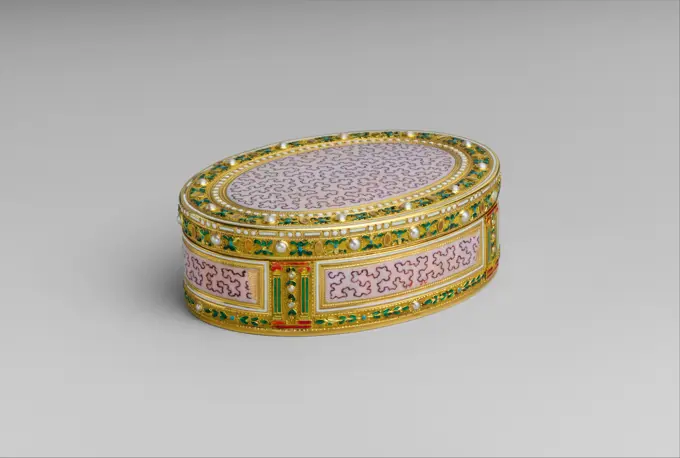
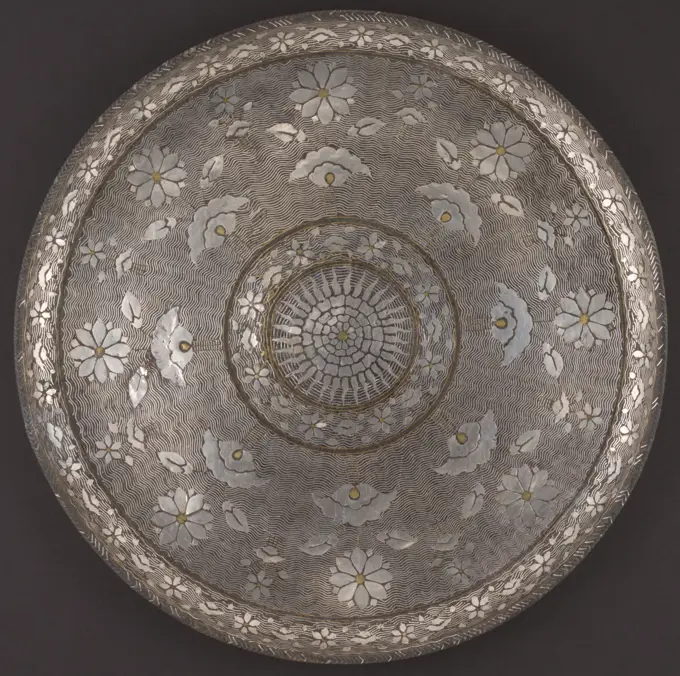
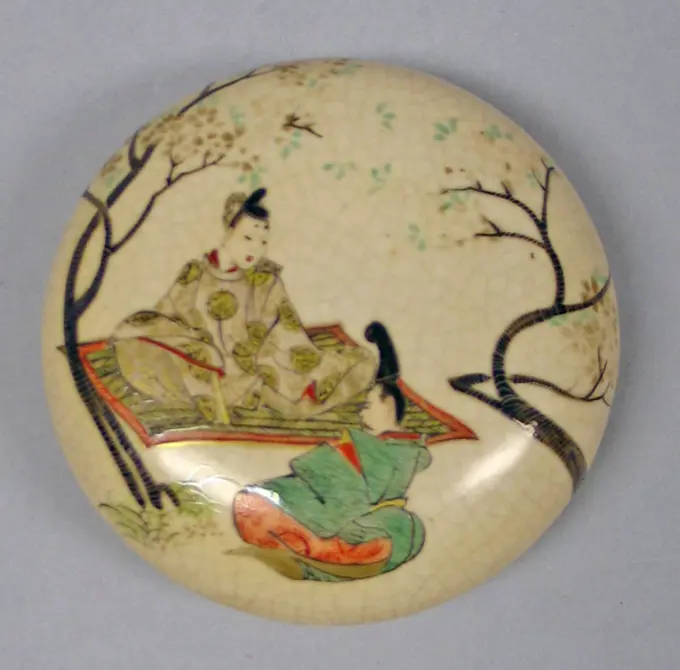
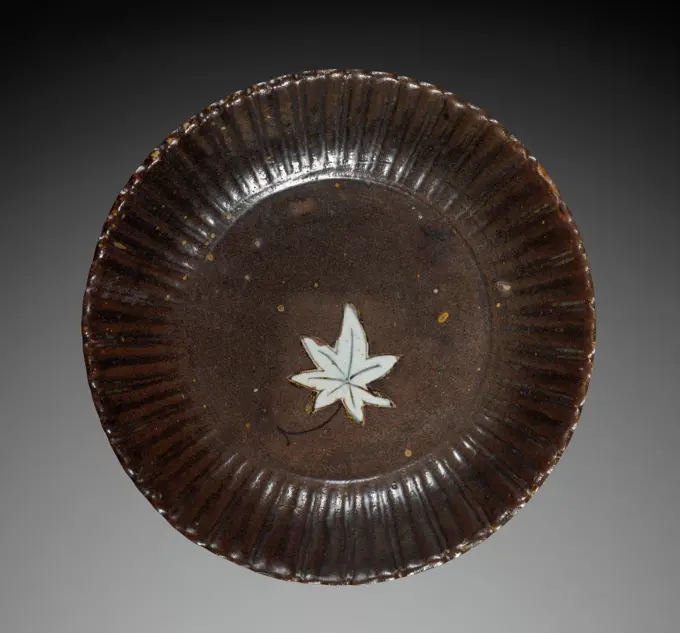
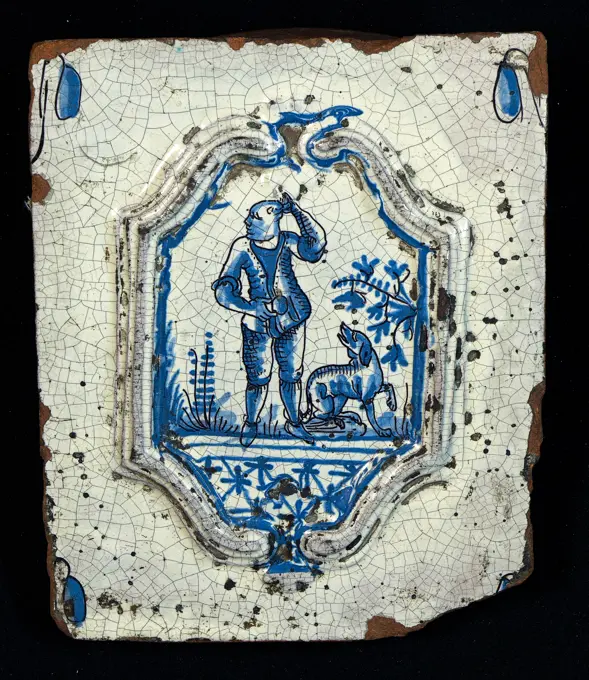
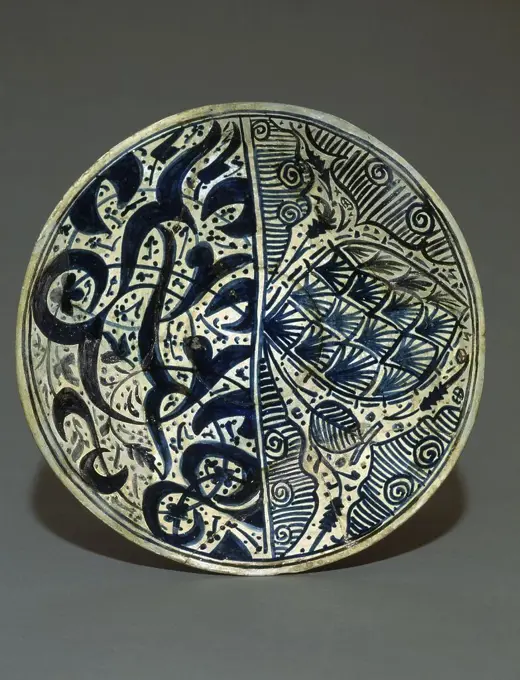
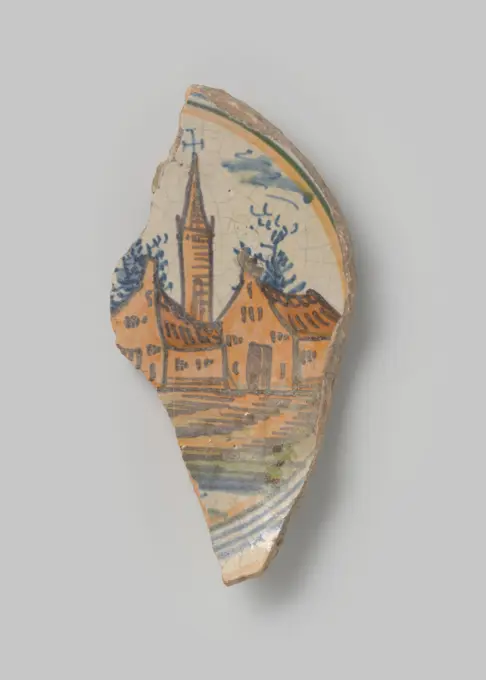
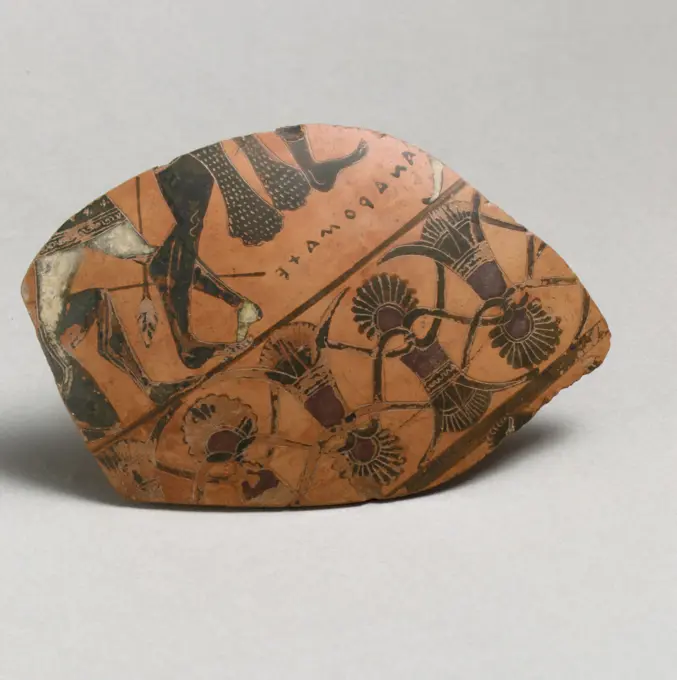
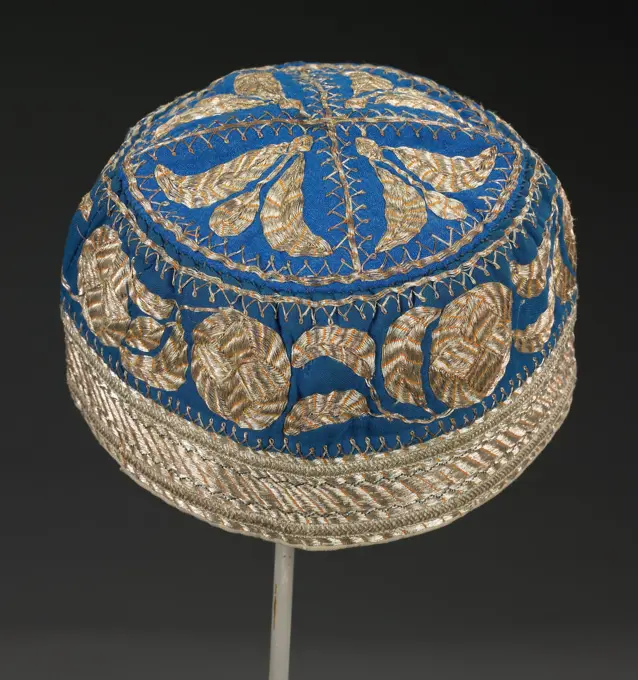
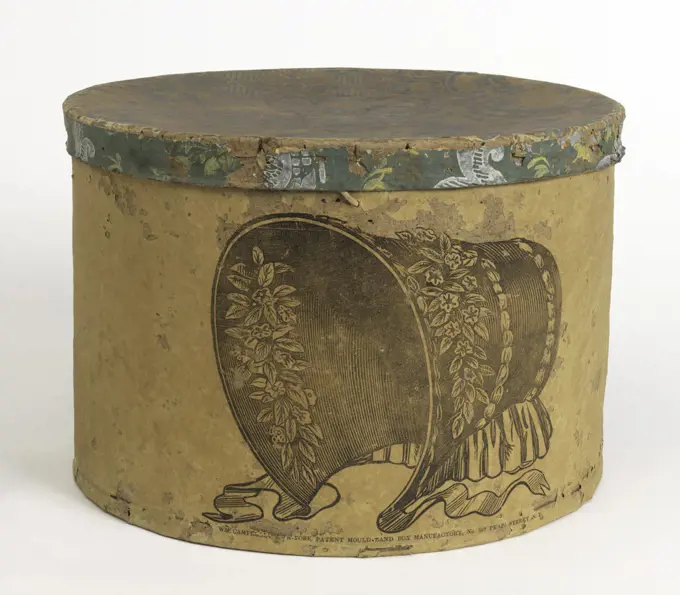
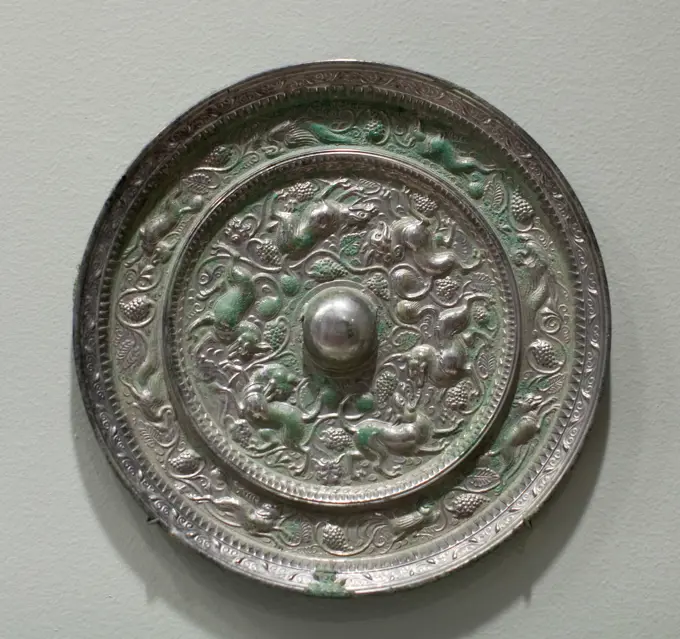
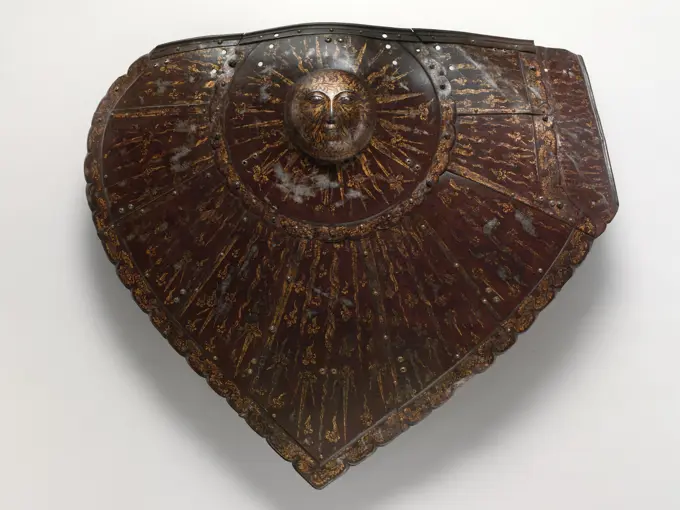
Speelbeurs probably originally of green velvet, embroidered in gold, silver thread and multicolored silk with the city coat of arms of Paris, Anonymous, c. 1670 - c. 1820 Speelbeurs probably originally from green velvet, embroidered in gold, silver thread and multicolored silk with the city coat of arms of Paris. Model: flat round bottom around which a wavy raised edge with holes, so that a cord (missing) could be drawn. On two sides, a button on the edge, with a core of wood and wounded with a vlo side, is sewn. The fabric of the raised edge has disappeared almost everywhere between the forced ornaments. The loose ornaments seem to be sewn again at the bottom with large stitches of black silk. Lined with goat leather. Decoration: The 20 bulges or 'ribs' were decorated with alternating stacked ornaments. A horizontal line of silver wire ran just below edge. Along the top you can only see a small leftover of the passement that originally camouflaged the seam between lining and dust. TheLozenge-Shaped Dish with Garden Scene. Culture: China. Dimensions: H. 1 1/8 in. (2.9 cm); W. 8 1/2 in. (21.6 cm); L. 11 1/4 in. (28.6 cm). Date: late 16th-17th century.The use of an extremely thin piece of shell in combination with gold and silver foil began in second half of the sixteenth century and continued until the eighteenth. The theme of literati gentlemen enjoying a garden, often found in arts of the late Ming period, included groups of stock figures such as those in the pavilion, often based on woodblock prints. Gathered here are musicians playing a mouth organ (sheng), a zither (also sheng but written with a different character), and possibly clappers. One young attendant carries another type of zither (qin), suggesting that the gentlemen will be joining their fellow musicians in the pavilion. Museum: Metropolitan Museum of Art, New York, USA.Dish 1420-1430 Spanish. Dish. Spanish. 1420-1430. Tin-glazed earthenware. Made in probably Manises, Valencia, Spain. CeramicsSmall Dish, late 12th century, H.1-1/8 x Dia.5-1/16 in., Stoneware with incised decor under green, yellow, and aubergine glazes, China, 12th centuryOne of a Pair of Wine Cups (Sakazuki) with Mices Wedding 19th century Japan. One of a Pair of Wine Cups (Sakazuki) with Mices Wedding 57757Commemorative badge of the 54th anniversary of the January Uprising Waldyn, Henryk, Women's League of the Supreme National CommitteeEwer (Suichū) (lid), early 1600s. Japan, Momoyama period (1573-1615). Glazed stoneware with iron oxide underglaze slip (Mino ware, Oribe type); diameter of mouth: 12.7 cm (5 in.); container: 21 cm (8 1/4 in.).Majolica dish with Mary and Christ child, papkom bowl crockery holder earth discovery ceramics earthenware glaze tin glaze lead glaze, hand-turned baked 2x majolica Majolica papkom pink red shard polychrome prints rear dirt gray lead glaze stand ring archeology Rotterdam City Triangle Haringvliet Newport porridge eating bible food serving religion Maria Madonna Jesus Christ Soil discovery: Beer well Nieuwe Haven Haringvliet 1941.Fragment of a Bowl 12th-13th century. Fragment of a Bowl 447200Bowl 10th century. Bowl 453364Dish (one of a pair) mid-17th century Hungarian, possibly Transylvania Gilded flowers and foliage within boldly-conceived rims frame a high-embossed, gilded fruit arrangement in the center of each hexagonal dish. The fact that the engraved coat of arms, with a laurel wreath and an inscription, are squeezed between two of the large flowers indicates that they may have been added at a later date. These dishes were possibly made as stock pieces rather than for a special commission.LiteratureEuropean Silver. Sale cat., Sothebys, Geneva, May 12, 1983, p. 45, no. 105.Judit H. Kolba. Hungarian Silver: The Nicolas M. Salgo Collection. London, 1996, p. 69, no. 47.ExhibitedRégi ezüstkiállításának leíró lajstroma. Exh. cat. by Károly Csányi. Országos Magyar Iparm?vészeti Múzeum. Museum of Applied Arts. Budapest, 1927, p. 16, no. 83.ReferencesFor an example of a hexagonal dish in serpentine, see Gert-Dieter Ulferts, Sächsischer Serpentin: Sammlung Jahn. Berlin, 2000, pp. 58-9, no. 30.[Wolfram KoeSharf of white -baking earthenware, with colorless glaze at the front and back and a decoration in blue glaze, anonymous, 1200 - 1899  Italy earthenware  Italy earthenware. Star-shaped tile from quartz frying, painted in blue and luster with a solid edge and flat in which two birds, leaf motifs and two fish are saved.Fragment tile with brace frame and three-tier, wall tile tile visualization earth discovery ceramics earthenware glaze tin glazing, baked 2x glazed painted archeology Rotterdam railway tunnel Soil discovery: railway tunnel Rotterdam.Plate. Dimensions: H. 1 13/16 in. (4.6 cm)W. 10 1/4 in. (26 cm)D. 7 7/8 in. (20 cm). Date: 10th-11th century. Museum: Metropolitan Museum of Art, New York, USA.Dish 14th century. Dish 448674Fragment sign from V.O.C. ship De 'Witte Leeuw', Before 1613 plate (dishes) Fragment sign from V.O.C. ship the 'Witte Leeuw'. Jingdezhen bone china (material)   Sint-HelenaDish 18th century. Dish 447227Bowl with female busts in medallions. Culture: Sasanian. Dimensions: Diam. 23.6-24.1H. 8.1 thickness: at rim 0.62Weight: 1235 gm.. Date: ca. 3rd-4th century A.D.. Museum: Metropolitan Museum of Art, New York, USA.Fragment majolica dish, blue on white, snow crystal in the mirror, plate dish crockery holder earth discovery ceramics pottery glaze, At prongs fried archeology food serving decorateSharp of ross -baking earthenware, with blue glaze at the top with a border painted with semic circles and dots, brown, orange and white, anonymous, 1600 - 1650  Northern Netherlands earthenware. glaze majolica  Northern Netherlands earthenware. glaze majolicaBowl, Glazed earthenware, On slight foot a slightly curved bowl of coarse whiteish clay, the lower part unglazed. Slight pinkish white glaze on upper outside and on inside; in center a bird painted in red and gold, in two red circles; at edge block script in red and gold. Black scrolls completing decoration; black lines forming arches on outside., Persia, Kashan, ca. 13th-14th century, ceramics, Decorative Arts, BowlBlue plate, 16-17th century.Basin or dish with The Gathering of Manna ca. 1620-45 Probably workshop of Antoine Conrade. Basin or dish with The Gathering of Manna 195763Vase with Cover, Qing dynasty (1644-1911), Kangxi reign (1661-1722). China, Jiangxi province, Jingdezhen kilns, Qing dynasty (1644-1911), Kangxi reign (1661-1722). Porcelain with underglaze blue decoration; overall: 45.6 cm (17 15/16 in.).Tile, Anonymous, 1600 - 1800 Tile, painted in yellow, manganese. Lobbed rosette, in which an eight -pointed star. In the corners of a quarter of huge corners, connected to the rosette with a thin line. Tunisia (Possible) Morocco (Possible) earthenware. tin glaze Tile, painted in yellow, manganese. Lobbed rosette, in which an eight -pointed star. In the corners of a quarter of huge corners, connected to the rosette with a thin line. Tunisia (Possible) Morocco (Possible) earthenware. tin glazeOkręciek Plejerko with the cover;  19th century (1801-00-00-1900-00-00);Paderewski, Ignacy Jan (1860-1941) - collection, cloisonné, gift (provenance), grenades (fruits), bats (iconogr.), Puzdra, Chinese artFragment sign from V.O.C. ship De 'Witte Leeuw', Anonymous, Before 1613 plate (dishes) Fragment sign from V.O.C. ship De 'Witte Leeuw', 40 present. Jingdezhen bone china (material)   Sint-HelenaDish with Floral Scrolls. China. Date: 960 AD-1279. Dimensions: H. 4.3 cm (1 11/16 in.); diam. 17.3 cm (6 13/16 in.). Stoneware with underglaze carved and incised decoration. Origin: China. Museum: The Chicago Art Institute, Chicago, USA.MisaInfant's Cap. France, mid-18th century. Costumes; Accessories. Silk plain weave with silk and metallic-thread supplementary weft patterning and metallic-thread laceTray, early 1900s. Southwest, Apache, Western, early 20th century. Basketry, coiled; overall: 13.3 x 52.4 cm (5 1/4 x 20 5/8 in.).Fragment of a Bowl late 12th century. Fragment of a Bowl 456265Fragment of a Bowl 14th-15th century. Fragment of a Bowl 445415Fragment majolica dish, blue decor, interior in Chinese style, dish plate board plate soil found ceramic earthenware glaze tin glaze lead glaze, ring 11.7 majolica baked 2x painted glazed hand-turned Mirror fragment of majolica dish. Standring. Monochrome decor blue. Scenery with interior or terrace in Chinese style. Monochrome blue Yellow shard scraped pottery underside covered with green tinted lead glaze baked archeology Rotterdam City center Stadsdriehoek Schielandshuis indigenous pottery food serving table room serve China Soil discovery: Schielandshuis during restoration.Plate; Habib Joo & Sons; 1868 (1868-00-00-1868-00-00);Plate 1791 Sèvres Manufactory French Porcelain decorated with a black ground in imitation of Asian lacquer was produced at Sèvres for about a fifteen-year period beginning in 1790. Furniture decorated with imported black lacquer panels saw a resurgence of popularity in the last two decades of the eighteenth century, and the Sèvres factory's efforts to simulate black lacquer on porcelain were probably stimulated by this renewed general interest in lacquer decoration. Black-ground Sèvres porcelain was decorated with chinoiserie scenes executed in gold, which was often applied in subtle tones of yellow, green, and red. Small decorative highlights were often executed in platinum, and the ability to apply platinumfirst mastered by the factory in 1790may have been an impetus to produce these lacquer-inspired pieces.[Jeffrey H. Munger, 2015. Plate. French, Sèvres. 1791. Hard-paste porcelain. Ceramics-PorcelainDish 19th century. Dish 447241Dish with long-tailed birds and hibiscuses mid-14th century Attributed to Zhang Cheng Several features help date this remarkable dish to the fourteenth century. Two birds circle one another playfully in a composition suited to the circular shape. The lush hollyhock blossoms, shown from multiple perspectives, have petals of different sizes that overlap to suggest depth. Long, narrow leaves fill at least three layers of carving, adding to the richness of the surface. The unworked dark background seen here is more commonly found in earlier carved lacquers.. Dish with long-tailed birds and hibiscuses 40211Terracotta plate. Culture: Greek, Corinthian. Dimensions: diameter 3 5/8in. (9.3cm). Date: ca. 595-570 B.C..A man lies in bed, and his lyre hangs above. Museum: Metropolitan Museum of Art, New York, USA.Cup and Saucer with view of Chancellor Livingston” Steamboat.  Manufacturer: Enoch Wood and Sons, British, 1820-1846Honorand: Chancellor Livingston, American, launched 1817, dismantled 1834Honorand: Chancellor Robert R. Livingston, American, 1746-1813Honorand: Robert Fulton, American, 1765-1815Back Skirt/Sitting Pad (negbe), before 1929. Africa, Central Africa, Democratic Republic of Congo, Mangbetu-style makers. Plant fibers and dye; overall: 19.7 x 27.3 x 6.3 cm (7 3/4 x 10 3/4 x 2 1/2 in.). Egbe (singular: negbe) were fashionable and practical garments aristocratic Mangbetu women made for special occasions. Worn over a skirt, it tied onto a girdle along with a frontal apron.” The curved interior piece rested on the lower back. Thickly woven, flexible natural fibers bent with the body, cushioning the wearer’s behind when sitting. When the woman was standing, the decorated flat portion faced outward, showing off bold geometric motifs. Egbe were among items sold to foreigners at the Mangbetu king’s encouragement as the Mangbetu actively constructed their self image for outsiders during the 1920s and 1930s.Dish 1425-1450 Spanish. Dish. Spanish. 1425-1450. Tin-glazed earthenware. Made in probably Manises, Valencia, Spain. CeramicsDish. Dimensions: H. 2 in. (5.1 cm)Diam. 9 1/2 in. (24.1 cm). Date: 9th century. Museum: Metropolitan Museum of Art, New York, USA.Bowl with Three-part Antelope Design. Mimbres branch of the Mogollon, Classic Mimbres Black-on-white; New Mexico, United States. Date: 950 AD-1150. Dimensions: . Ceramic and pigment. Origin: New Mexico. Museum: The Chicago Art Institute, Chicago, USA.Ice CreamPlate.  Manufacturer: Haviland & Co., French, active 1864-1941 Designer Theodore Russell Davis, American, 1840-1894 Artist Painter: Lissac, French, active ca. 1868-85 Artist Etcher: Félix-Henri Bracquemond, French, 1833-1914Fili Anka with imitation Red Laki, a saucer with imitation Red Laki; Kaiserliche Porzellanmanufaktur in Wien (1744-1864); 1800 (1800-00-00-1800-00-00);Edge tile from a tile tableau. Edge tile for a corner of a tile tableau, painted in blue, green, yellow and orange with rollerwork motifs between a pearl table.Speelbeurs van Wijnrood velvet, embroidered in gold and silver thread and multicolored silk in an unidentified alliance weapon, anonymous, c. 1680 - c. 1720 Speelbeurs van Wijnrood velvet, commanded embroidered in gold and silver wire and multicolored silk in an unidentified alliance weapon. Model: flat round bottom around which a wavy raised edge with holes, which originally pulled through a drawstring. On the edge, buttons with a wooden core are sewn in two places opposite each other - originally wounded with metal wire or silk. Unsurbed, lining of goat leather and silk is missing. Decoration: The 20 bulges or 'ribs' are decorated with a scatter motif of French lilies or 'Fleurs de Lys' in relief of silver thread interspersed with ditto star -shaped flowers. A double horizontal line of silver thread runs on three -quarters. The bottom is circled with a double edge within which a Zizaglijn from Zilverdraad. In this, an alliance weapon of faded Vloszijde and metal wire under a five -poDish (tondino). Culture: Italian, Gubbio. Dimensions: Diameter: 10 1/4 in. (26 cm). Date: 1521. Museum: Metropolitan Museum of Art, New York, USA.Bowl 12th-13th century. Bowl 446262Plate with Dragon and Waves. Culture: China. Dimensions: Diam. 19 1/2 in. (49.5 cm). Date: first half of the 18th century.The chaos that marked the transition from the Ming to the Qing dynasty in the mid-seventeenth century spurred European demand for Japanese porcelains, which began to be exported in significant numbers. As production resumed in China, Chinese potters sometimes re-created the Japanese styles--characterized by the dense pattering on the rim--that the European markets desired. Museum: Metropolitan Museum of Art, New York, USA.Square bowl with three figures in a landscape in a medallion, anonymous, c. 1700 Square bowl of porcelain, painted in underly glaze blue. On the bottom a double medallion containing a landscape with mountains, houses and three people: one water carrier, one with a fan and one with a kind of rod. A cloud with Ruyi motif in every corner. Glaze jumped on the edge and the corners. Arita, Blauw-Wit. Japan porcelain. glaze. cobalt (mineral) painting / vitrification Square bowl of porcelain, painted in underly glaze blue. On the bottom a double medallion containing a landscape with mountains, houses and three people: one water carrier, one with a fan and one with a kind of rod. A cloud with Ruyi motif in every corner. Glaze jumped on the edge and the corners. Arita, Blauw-Wit. Japan porcelain. glaze. cobalt (mineral) painting / vitrificationPlate; Kumatani (fl. XIX century); 19th/20th century (1891-00-00-1910-00-00);Fragment faience pleated dish, polychrome vase in mirror, cassetterand in blue, folding dish plate crockery holder soil find ceramics pottery glaze tin glaze, archeologyNeck-amphora, Tyrrhenian fragments ca. 575-550 B.C. Attributed to the Prometheus Painter. Neck-amphora, Tyrrhenian fragments 254854 : Attributed to the Prometheus Painter, Neck-amphora, Tyrrhenian fragments, ca. 575550 B.C., Terracotta, 2 1/4  3 11/16 in. (5.7  9.3 cm). The Metropolitan Museum of Art, New York. Gift of Miss Matilda W. Bruce, 1907 (07.156.7) Gift of Mario Astarita, 1956 (56.128) (56.128)Terracotta bowl fragment. Culture: Roman. Dimensions: width: 4 7/8 in. (12.40 cm.). Date: ca. 10 B.C.-A.D. 20.Arretine ware fragment depicting parts of two scenes with winged cupids and a seated woman, divided by a spiral-fluted column supporting a theatrical mask. Above the figures in one of the scenes is the maker's stamp in the form of a tabula ansata, inscribed SEX·AVLIENI (of Sextus Aulienus). Museum: Metropolitan Museum of Art, New York, USA.Fragment of a dish with a madonna with child on the flat, half leak, anonymous, c. 1600 - c. 1625 Fragment of a dish of earthenware, painted in blue, green and orange on white ting laze with a madonna with child in half. On the back lead glaze. Low foot ring foot ring. Northern Netherlands earthenware. lead glaze. tin glaze Fragment of a dish of earthenware, painted in blue, green and orange on white ting laze with a madonna with child in half. On the back lead glaze. Low foot ring foot ring. Northern Netherlands earthenware. lead glaze. tin glazeSilver round, scalloped pillbox, pill box peppermint box box holder silver, forced insertion Round box refurnished Hinged lid Side walls built into strips Struck: store medicine drugMajolica dish, blue on white ground, monochrome falcon with plumed hood, plate dish crockery holder soil find ceramics pottery glaze tin glaze lead glaze, total, hand turned fried glazed decorated baked Low majolica dish on standring Flat top edge with groove. Yellow shard underside of lead glaze top of tin glaze. Monochrome show hunting falcon with eye cover. Circles in the flag and rope motif along the edge. The bird is set up with thin purple line. On prunes baked archeology indigenous pottery serving decorate food table serving hunting hunting falconFragment of a dish, c. 1500 - c. 1600 Fragment of a dish on a low foot ring. Crème shard covered with ting laze on the front and lead glaze at the rear. Painted in blue and orange with a chessboard pattern inside blue circles. Northern Netherlands earthenware. tin glaze. lead glaze majolica Fragment of a dish on a low foot ring. Crème shard covered with ting laze on the front and lead glaze at the rear. Painted in blue and orange with a chessboard pattern inside blue circles. Northern Netherlands earthenware. tin glaze. lead glaze majolicaSaucer with petals, a roundel and garlands, Limoges (possibly), c. 1800  Porcelain dish, covered with gold. On the flat a rosette ingrift, surrounded by modeled garlands. Around it, on the wall, a strap of petals in relief. The outer wall with a golden line on the foot and the edge. Limoges porcelain. glaze. gold (metal) painting / gilding / vitrificationPanel 13th-14th century. Panel 445044Box 7th-8th century China. Box. China. 7th-8th century. Earthenware with three-color (sancai) glaze. Tang dynasty (618-907). CeramicsLakschild, anonymous, c. 1700 shield Round black lacquered shield with decoration in gilding: flower vessels along the outer edge and crowned initials in a circle in which two branches of branches are tied to each other, tied at the bottom with a bow. Inscription: Midden; I v l (). Japan leather. lacquer (coating). gilding (material) cutting / lacquering / gildingPlate;  2. PO. 19th century (1851-00-00-1900-00-00);Sharf of a plate of white -baking earthenware, with blue glaze on the front with a multicolored representation of a fruit and leaves ,, c. 1500 - c. 1899 fragment   earthenware. glazeDish, the ribs alternately blue and white, separated by golden piping. Saucer, ribbed, the edges serrated. The ribs separated by vertical golden piping. Dark blue caves (Blue du ROI), the ribs white, on which a decoration of leafwork and braid band. The edges gilt, gilt inside serrated. Marked in underglaze blue.Mirror fragment of majolica plate, running dog on blue ground, plate dish crockery holder soil find ceramic earthenware glaze tin glaze lead glaze, ring 10.9 hand turned fried glazed decorated fried Mirror fragment of majolica plate: jumping dog on blue ground; reverse of lead glaze; stand ring with hole. Colors used: green white yellow and purple Imitation of northern Italian berettino archeology Rotterdam railroad tunnel earthenware food serving decorating Soil discovery: soil discovery Railway tunnel route.Bowl 10th century. Bowl. 10th century. Earthenware; white slip with polychrome slip decoration under transparent glaze. Excavated in Iran, Nishapur. CeramicsWater Filter 10th-12th century. Water Filter 447460Snuffbox 1781 Georges-Antoine Croze In eighteenth-century Europe, Paris led the production of high-quality luxury goods. Parisian goldsmiths made a wide range of small, personal articles such as snuffboxes; étuis to hold sealing wax, tweezers, or utensils for sewing; souvenirs, which contained thin ivory tablets for note taking; and shuttles for knotting lace. Gold snuffboxes and boxes decorated with portrait miniatures were prized and frequently given as royal gifts, often to ambassadors or members of the court in lieu of cash payments for their services. Coveted and admired, these boxes were produced from a variety of materials. The best were skillfully made of gold and embellished with diamonds, enameled decoration, lacquer, and other luxurious materials. By the middle of the century, the taking of snuff had become an entrenched social ritual, and the snuffbox, too, had become an important social prop. Snuffboxes were considered highly fashionable accessories, with some merchants adCushion with embroidery, Anonymous, 1736 - 1795 Kisses, embroidered circles with meander and dragon motifs. China satin. silk Kisses, embroidered circles with meander and dragon motifs. China satin. silkTray. India, Karnataka, Bidar, circa 1675-1700. Furnishings; Serviceware. Bidri ware inlaid with silver and brass (tarkashi and tehnishan techniques)Tip. Bronze. China, 12th century. Paris, Cernuschi museum. 74290-27 Asian art, Chinese art, extreme-East art, bronze, metalCovered Incense Box 1670 Nonomura Ninsei Japanese. Covered Incense Box 62795Dish with Maple Leaf, 1650-99. Japan, Edo period (1615-1868). Porcelain with underglaze blue and iron glaze (Hizen ware, Suisaka type); overall: 3.5 x 14.8 cm (1 3/8 x 5 13/16 in.); diameter of base: 8.1 cm (3 3/16 in.).Hand guard, anonymous, 1600 - 1900 Mokko-shaped tsuba with butterflies stylized on both sides amid ranks in email cloisonon. Japan iron (metal). copper (metal). Mokko-shaped tsuba with butterflies stylized on both sides amid ranks in email cloisonon. Japan iron (metal). copper (metal).Rectangular plate tile. unknown, manufacturerFive porcelain shards of a bowl, found at V.O.C. Witte Leeuw, possibly from Zeelelie, Anonymous, 1750 - 1799 dish Five porcelain shards of an elongated bowl, one of which consists of three fragments glued together, and one of two glued together fragments. This object is 18th century and cannot therefore be from the freight of the Witte Leeuw. It is unclear whether the object will come from the site or whether it was mixed later, possibly with material from the Zeelelie.  porcelain. Round plate of blue painted faience. A figure and a lion in a landscape (Holland) is painted on the flat. The plate is a soil find out of Delft.Belt Plaque with Three Ibex 2nd-1st century B.C. Northwest China. Belt Plaque with Three Ibex 65233Empty wooden plate, knife, fork and cutting board Empty wooden plate, knife, fork and cutting board set on textured concrete background Copyright: xZoonar.com/TetianaxChernykovax 21413715CUENCO DE PATERNA CON PIÑA PARALELAS Y ESPIRALES Y PALMETAS DISIMETRICAS - SIGLO XV. Location: MUSEO ARQUEOLOGICO NACIONAL-COLECCION. MADRID. SPAIN.Fragment of a dish, c. 1600 Fragment of a dish, namely part of the flat, on a low foot ring. Red shard covered with ting laze on the front and green lead glaze at the rear. Painted in blue, orange, green and mangan purple with a church tower and two houses within orange and blue circles. Northern Netherlands earthenware. tin glaze. lead glaze majolica Fragment of a dish, namely part of the flat, on a low foot ring. Red shard covered with ting laze on the front and green lead glaze at the rear. Painted in blue, orange, green and mangan purple with a church tower and two houses within orange and blue circles. Northern Netherlands earthenware. tin glaze. lead glaze majolicaBorder fragment Werra plate, mirrored portrait or bust of man, year 1611, pale yellow, brown and green glaze, border decor circles and stripes, plate crockery holder earth discovery ceramic earthenware glaze, Red earthenware with drawing in pale yellow and green glaze part of year on the fragment: ** 11 archeologyMiddle East Turkey and city of Istanbul Arabic writing on stone just inside of the Topkapi PalaceFragment of a terracotta neck-amphora (jar) ca. 575-560 B.C. Attributed to the Prometheus Painter Obverse, Amazonomachy with HeraklesReverse, women, subject unclearOn the largest fragment, from the obverse, the figure of Herakles is clear from his lion skin; he attacks the Amazon Andromache, as indicated by the inscription. Below the palmette-lotus frieze, there was a cavalcade of horsemen.There are four fragments that belong to the piece, 56.128, gift of Mario Astarita, 1956.. Fragment of a terracotta neck-amphora (jar) 247609Drum. Buyer drum with wooden above and bottom edge, red, white and blue dots. With engraved numbers A / 133.. Plate of faïence, diamond shaped with border with four shells. Multicolored painted with a Chinese garden with birds.Netsuke of Hotei with Bag 19th century Japan. Netsuke of Hotei with Bag 60360Scherven from a scale from the wreck of the East Indied's' t flying heart. Six shards of a porcelain dish. Delft blue with drawing on both sides. Bowl.Salver. Tin; engraving. Russia. First quarter of the 18th century. With the eagle at the bottom, inscribed: Beauty of Majesty. The State Hermitage Museum. Saint Petersburg. Russia.Hat, c. 1950, 3 1/2 x 6 1/2 x 6 1/2 in. (8.89 x 16.51 x 16.51 cm) (approximate), Cotton, metallic threads; needlework, Afghanistan, 20th centuryBandbox, William Campbell, Block-printed paper, lithograph, pasteboard support, a) Oval box covered on one side with wallpaper printed in blue with orange outlines, in a bisymmetrical design; on back, a woman's hat printed in black, with legend: Wm Campbell's New York Patent Mould Band Box Manufactory, No. 297 Pearl Street, N.Y.; b) Cover, with matching wallpaper on top, and vari-colored paper on edge., New York, USA, ca. 1830, Wallcoverings, BandboxThe chassis of the Planetarium, Tellurium, Lunarium, Hartog van Laun, c. 1800 - c. 1808  Device with which the movement of sun, earth, moon and planets can be presented in a visible way. The chassis is a table on four short legs with a brass framework under the table top that protrudes a rod on which a crank (-4) can be slid. The table top contains names and symbols of star images and the twelve months. Central a step -by -step tripod. This includes the sun (a gilded sphere: -5). Amsterdam brass (alloy). ivory. rosewood (wood). mahogany (wood). padouk (wood). ebony (wood). maple (wood). oak (wood)   AmsterdamMirror, 8th century, 7 in. (17.78 cm), Bronze, China, 8th centurySpeelbeurs of Orange velvet, embroidered in gold and silver wire and multicolored silk with an unidentified alliance weapon, anonymous, c. 1680 - c. 1720 Speelbeurs of Oranje Velvee, embroidered in gold and silver wire and multicolored silk with an unidentified alliance weapon. Model: flat round bottom around which a wavy raised edge has holes with holes, which draws a cord of floats red silk - ending in a metal wire brush. Lined with goat leather over which green silk. Decoration: The 20 bulges or 'ribs' are decorated with alternating, stacked ornaments in silver thread with lovers of metal and colored foil. A horizontal line of silver thread runs on three -quarters. Along the top the whole was trimmed with a twisted cord of silver thread and a silver passion; Of the latter, only fragments are left. The soil is partially covered with gold brocade - in the form of a lambrequin, Warop in relief two oval coats of arms of an alliance weapon. One on a blue silk stock with silver passement Side Panel of a Flank Defense (Crupper) from a Horse Armor ca. 1490-1500 German or Austrian Once part of a very elaborate horse armor, this crupper panel is one of the few surviving examples from the fifteenth century to retain its original blued and gilt decoration.. Side Panel of a Flank Defense (Crupper) from a Horse Armor 24702Fragment majolica dish, blue on white, on mirror landscape with houses and ruin-tower, dish crockery holder soil find ceramic earthenware glaze, Cooked on underside covered with lead glaze. Monochrome archeology adorn serving food