Decorative Historical Ceramics

A collection of ornate bowls and plates showcasing intricate luster painting and unique designs, reflecting historical ceramics from various regions.

Dish with two shishi in a landscape and squirrels, c. 1875 - c. 1925 Porcelain saucer, painted in under -glaze blue and on the glaze red, green, black and gold. On the flat a scalloped cartouche with two shishi (lion dog) in a landscape with a tree and bamboo; To the cartouche a second whimsically formed cartouche with peon branches. On the wall and edge three cartouches with a squirrel on a grape branch and six cartouches with a grape branch against a background of lotus vrocks on blue. The outer wall with three flower branches. The dish is caught in a metal frame. A chip in the edge. A European (French) Imitation of the Japanese Imari. Europe porcelain. glaze. cobalt (mineral). gold (metal). montuur: metal. uranium oxide painting / gilding / vitrification Porcelain saucer, painted in under -glaze blue and on the glaze red, green, black and gold. On the flat a scalloped cartouche with two shishi (lion dog) in a landscape with a tree and bamboo; To the cartouche a second whimsically fo
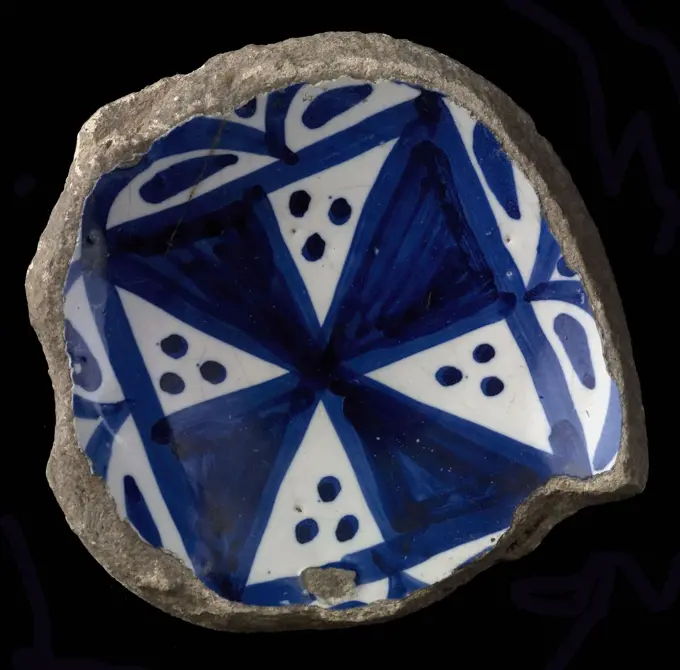
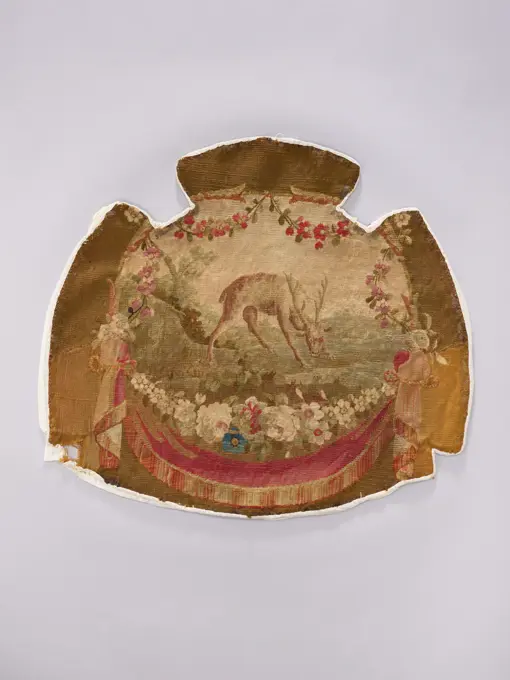
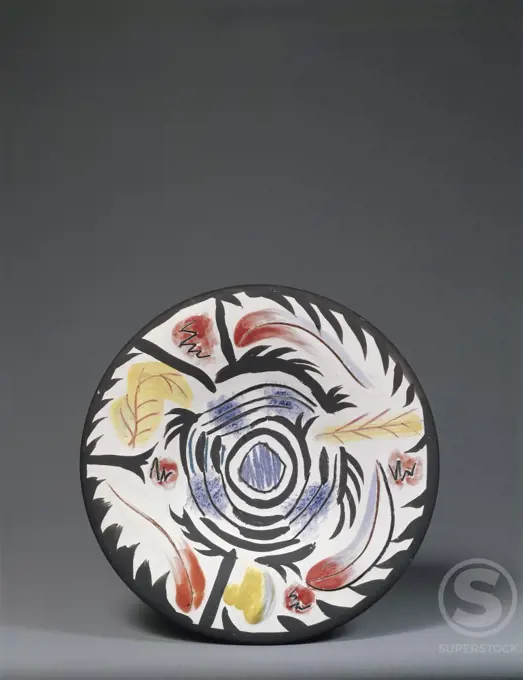
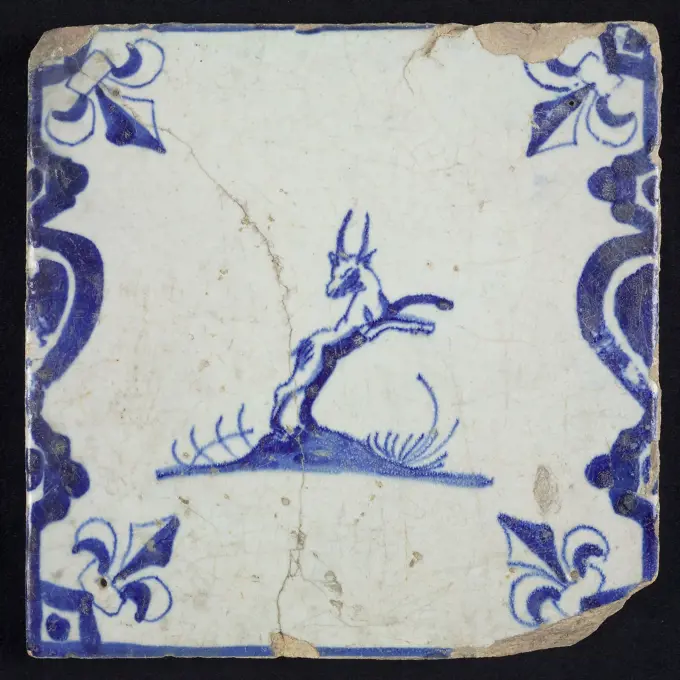
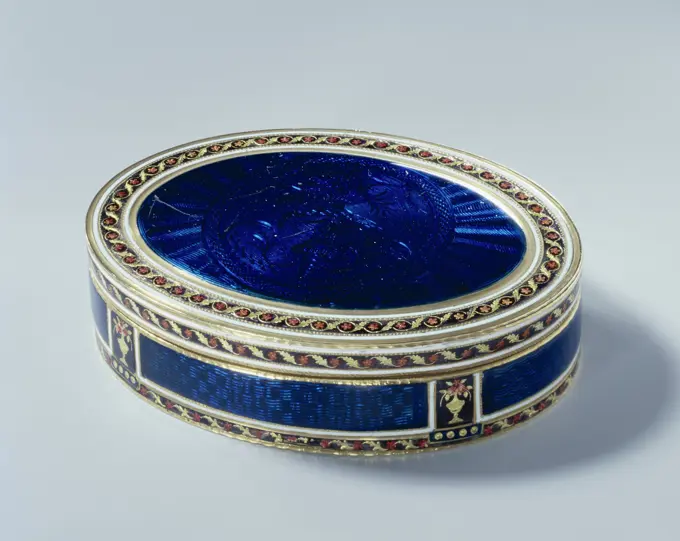
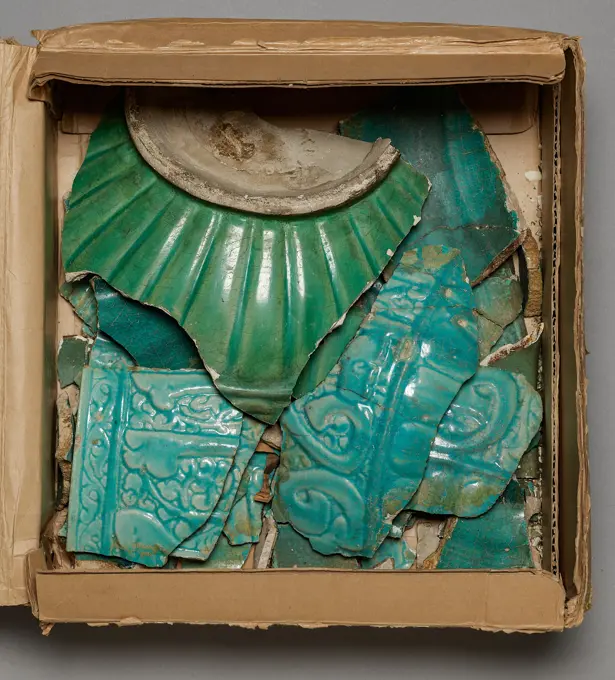
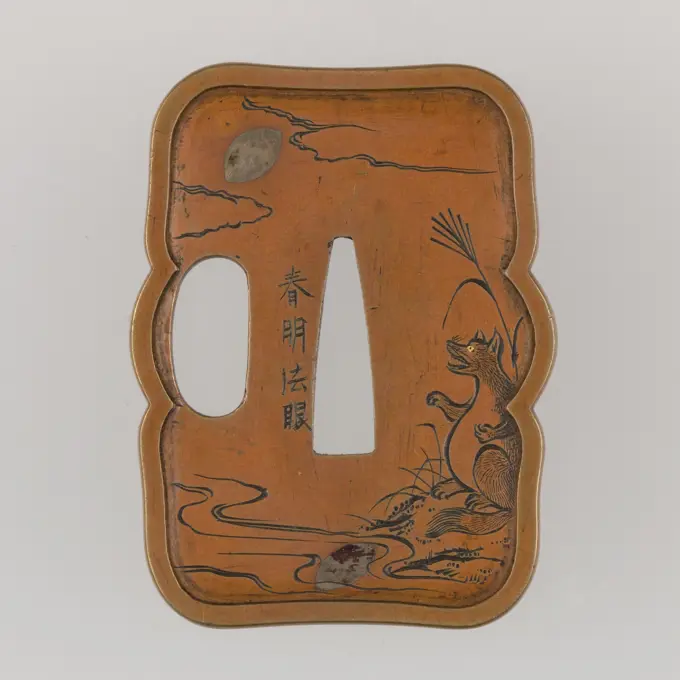
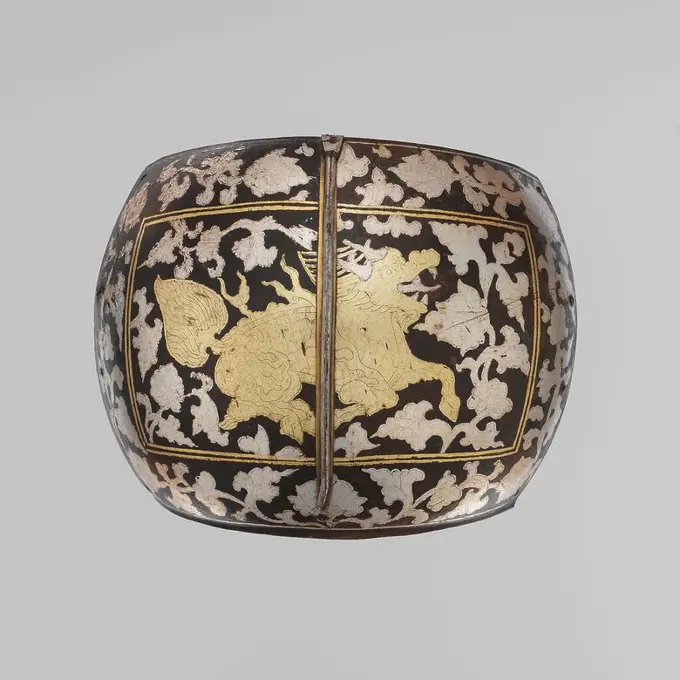
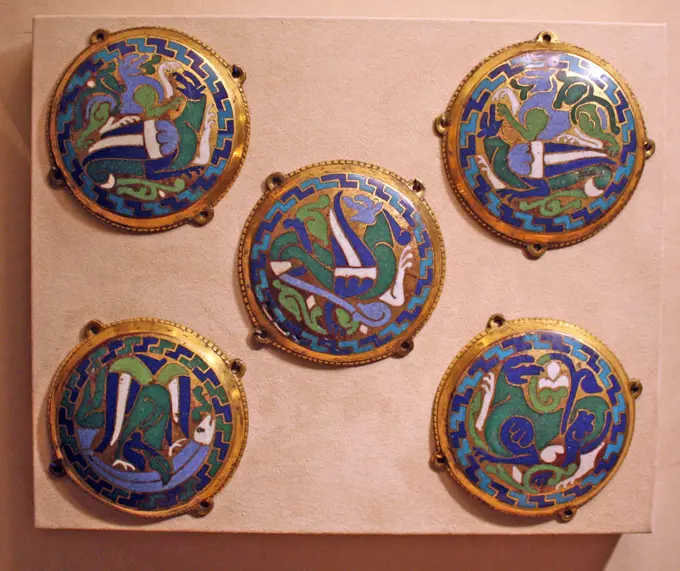
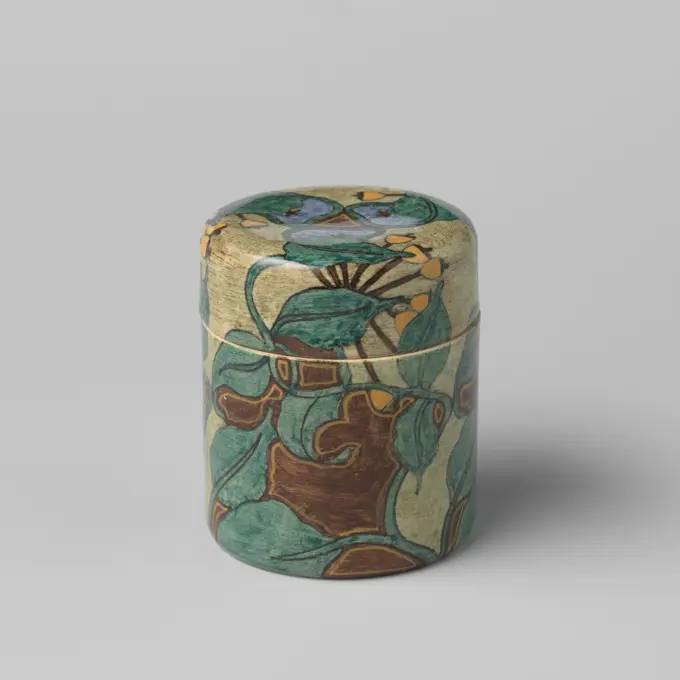
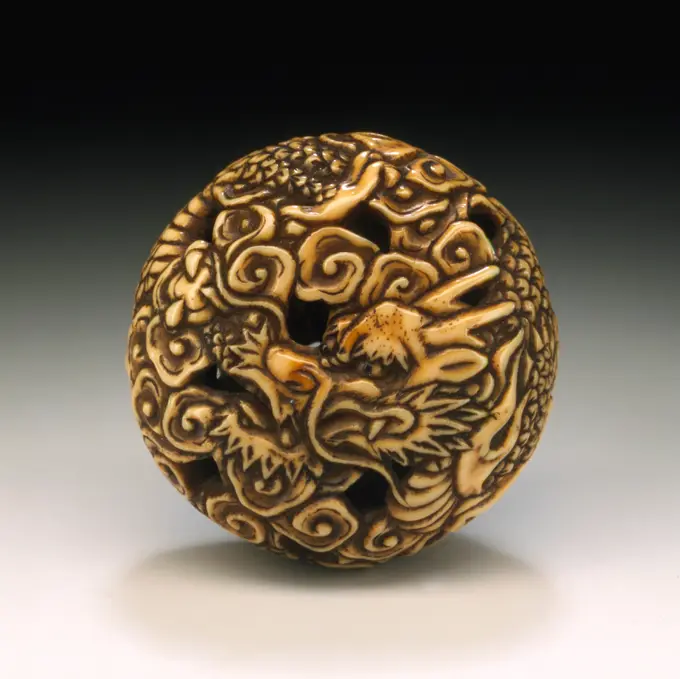
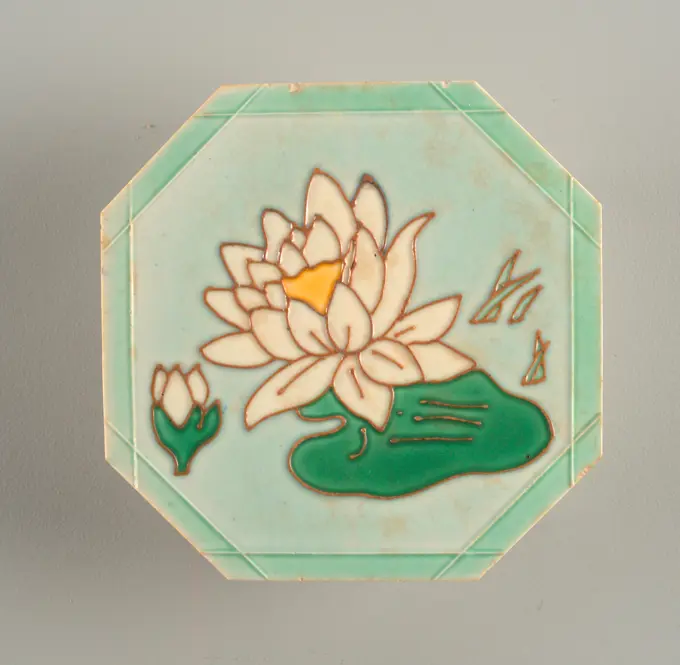
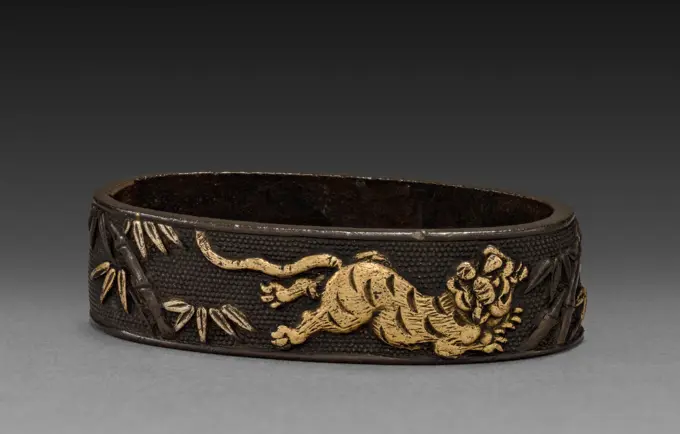
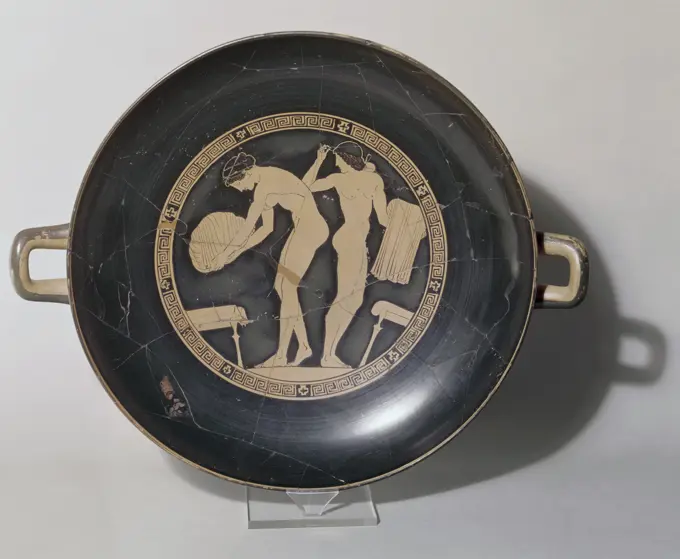
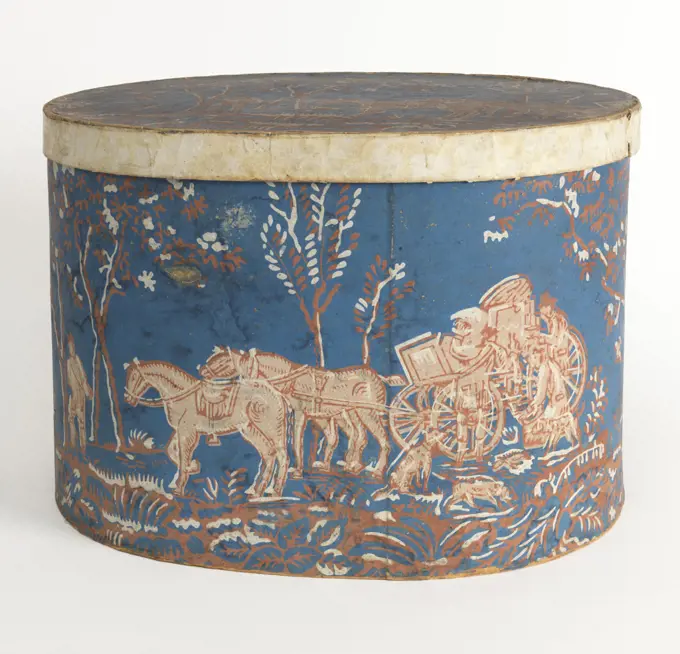
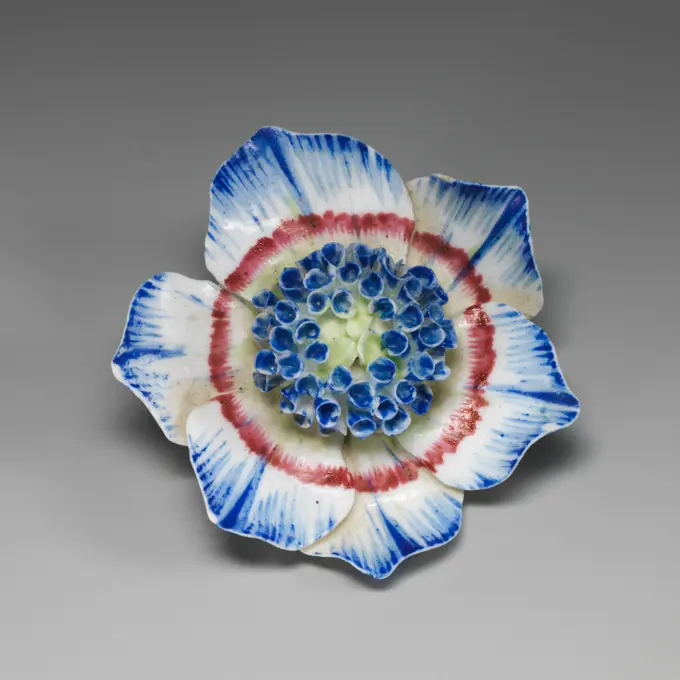
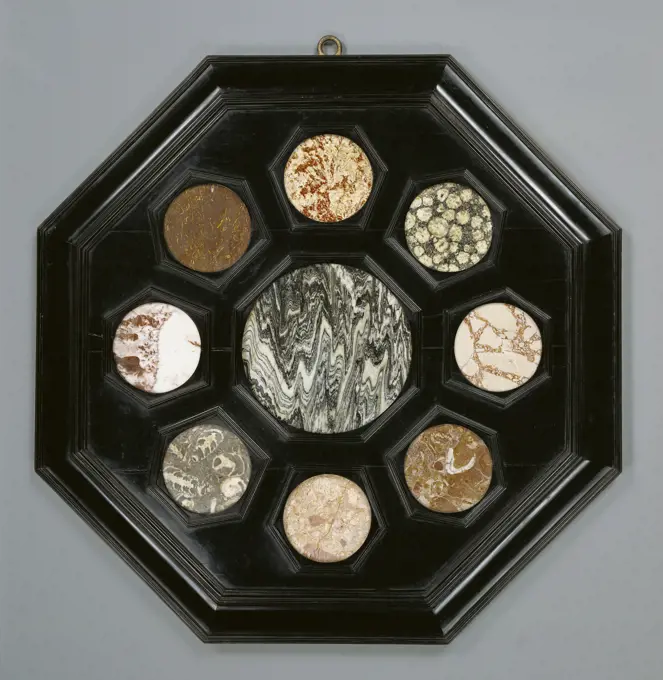
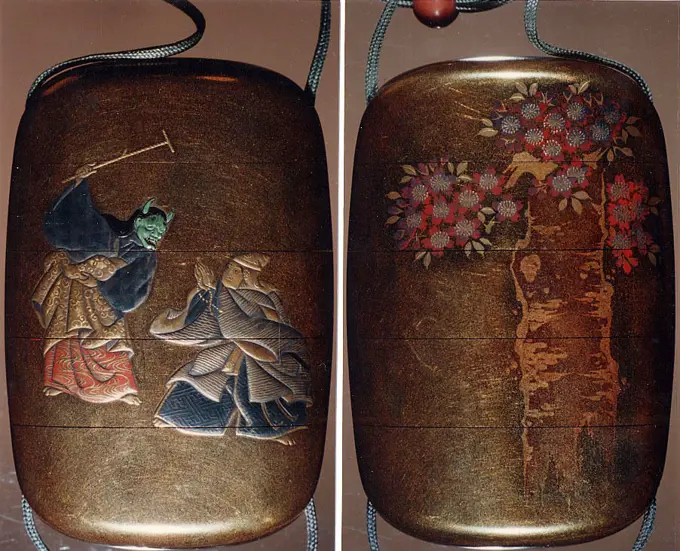
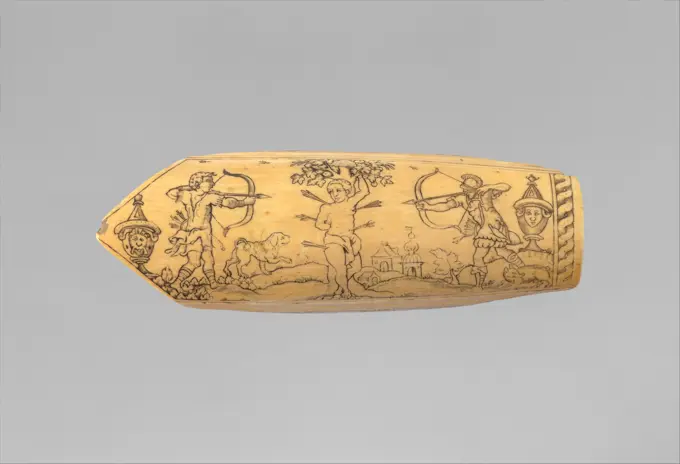
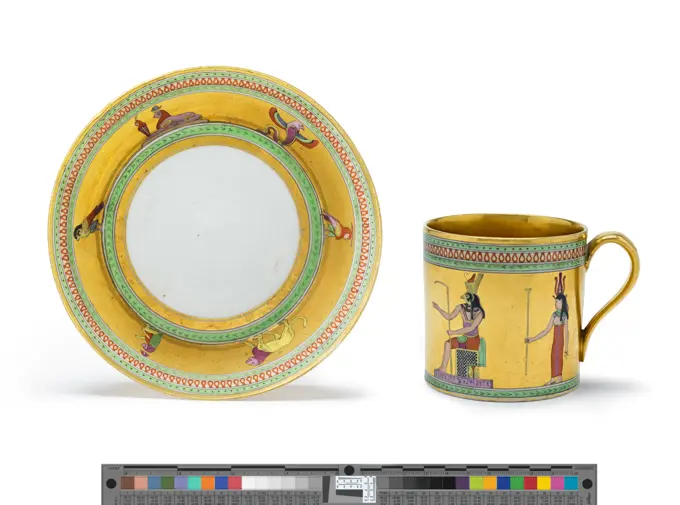
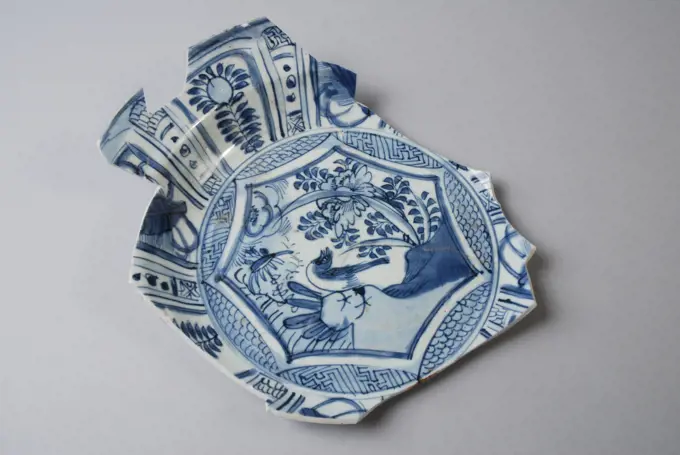
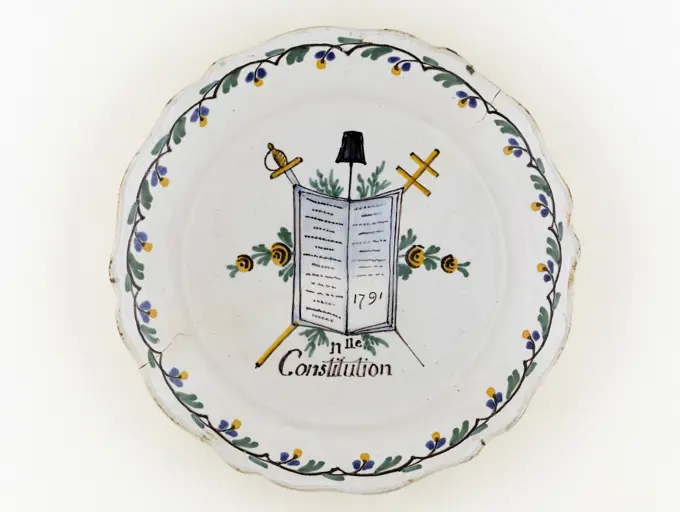
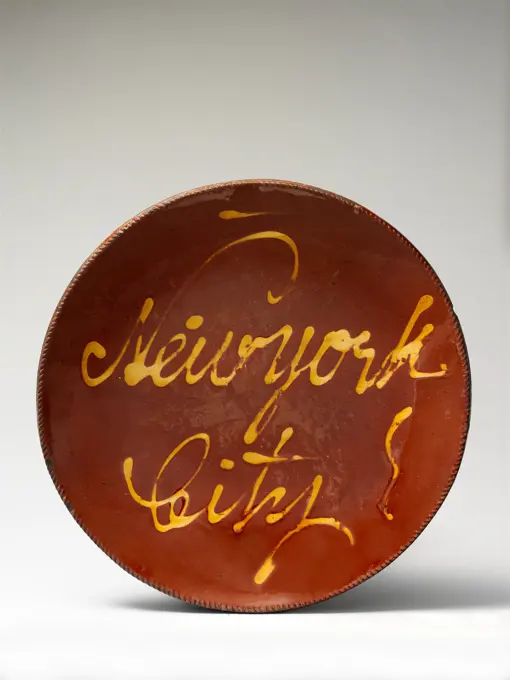
Bowl late 8th-early 9th century. Bowl 449087Chinese dishes, pottery, Chinese ArtArras cover. unknown, authorPlate; Koenigliche Porzellan Manufaktur (KPM; Berlin; 1763-1918); 1870-82 (1823-00-00-1832-00-00);Bowl 12th century. Bowl 447959Vaas lid, anonymous, 1700 - 1800 Square lid, white underlaze with light green leaf-like motifs.  . Square lid, white underlaze with light green leaf-like motifs.  .Ornamental by Pablo Picasso, painted ceramic, 1881-1973Bandbox (USA); block-printed paper, pasteboard support; 59 x 37 x 30 cm (23 1/4 x 14 9/16 x 11 13/16 in.)Soul of majolica dish with dark blue background, jumping dog in the middle, plate dish crockery holder soil find ceramic earthenware glaze tin glaze lead glaze, majolica baked 2x glazed painted Blue fond. Dog jumping on mirror plate on dark blue background by Italian example. Cooked on prunes. Gray-yellow shard scraped pottery. Rear only covered with lead glaze archeology decorate home interior serving serve ItalyAnimal tile, jumping buck to the right on ground between balusters, in blue on white, corner pattern french lily, wall tile tile sculpture ceramics pottery glaze, baked 2x glazed painted Square. Blue jumping in the box. Baluster ornament with french lilies.Plaque. Iran, A.D. 10th-12th century. Sculpture; plaques. Bronze, castGlued soul of polychrome, majolica dish with woman with yoke and two buckets, dish plate crockery holder soil find ceramic earthenware glaze tin glaze lead glaze, majolica baked 2x glazed painted Shard only mirror in the stand ring blurred: 9 archeology serving food serving home interiorFragment of a Bowl 10th century. Fragment of a Bowl. 10th century. Earthenware; red slip, polychrome slip decoration under transparent glaze. Excavated in Iran, Nishapur. CeramicsSnuif box with blue, translucid email, anonymous, c. 1790 - c. 1800 Oval golden snuff box with fields of blue, translucid email, trimmed with continuous golden garlands with red flowers on purple -brown stock. The enamel fields on the wall are separated from each other by vase motifs. Switzerland gold (metal). Oval golden snuff box with fields of blue, translucid email, trimmed with continuous golden garlands with red flowers on purple -brown stock. The enamel fields on the wall are separated from each other by vase motifs. Switzerland gold (metal).Cap (Egypt); silk, metallic threadsBowl, 1200s. Iran, 13th century.Shards of signs from V.O.C. ship De 'Witte Leeuw', Anonymous, Before 1613 plate (dishes) Shards of signs from V.O.C. ship De 'Witte Leeuw'. Jingdezhen bone china (material)   Sint-HelenaSword Guard (Tsuba) 19th century Japanese A tsuba is a sword guard and part of a sword mounting. It is mounted between the swords blade and grip to protect the users hands.. Sword Guard (Tsuba) 26400Model Seive from a Foundation Deposit for Hatshepsut's Temple ca. 1479-1458 B.C. New Kingdom For other objects found in Hatshepsut's temple foundation deposits, see 22.3.245, 25.3.40, 25.3.46a, b, 27.3.198.. Model Seive from a Foundation Deposit for Hatshepsut's Temple 547572Knee or Shoulder Defense. Culture: possibly Mongolian or Chinese. Dimensions: H. 5 1/4 in. (13.3 cm); W. 6 3/4 in. (17.1 cm). Date: 13th-15th century. Museum: Metropolitan Museum of Art, New York, USA.Five Medallions from a Coffret. Champleve enamel on gilded copper. French, Conques. Made about 1110-30 The blue and green beasts, locked in battle and compressed into these circular medallions are emblematic of goldsmiths' work created at Conques under the patronage of Abbot Boniface.Cover of box, cylindrical, painted with flowers and leaves, company Wed. N.S.A. Brantjes and Co., 1895 - 1904 Cover of box (A), cylindrical, painted with flowers and leaves in green, brown, yellow and blue on light green stock. Painting runs uninterrupted from box to lid. Purmerend earthenware Cover of box (A), cylindrical, painted with flowers and leaves in green, brown, yellow and blue on light green stock. Painting runs uninterrupted from box to lid. Purmerend earthenwareCovered Cup and Saucer. Culture: Austrian (Vienna) and probably Bohemian. Dimensions: Cup: h. 9.7 cm; saucer: diam. 13 cm. Date: ca. 1795-1818 and later. Museum: Metropolitan Museum of Art, New York, USA.Dragon and Clouds. Okakoto (Japan, active first half of the 19th century). Japan, first half of 19th century. Costumes; Accessories. Ivory with staining, sumi, inlays; ryūsa typeTile (USA), ca. 1930; painted and glazed stoneware; 15.6 x 15.6 x 1.9 cm (6 1/8 x 6 1/8 x 3/4 in.)Plate Made 1760-1770 Staffordshire. Lead-glazed earthenware (creamware) .Basket with cover, 4 5/8 × 7 5/8 × 7 5/8 in. (11.75 × 19.37 × 19.37 cm), Plant fibers, United StatesSword-Hilt Collar (Fuchi) with Tiger in Bamboo, 1700-1850. Japan, Edo period (1615-1868). Shakudo ; average: 3.9 x 2.3 cm (1 9/16 x 7/8 in.).Wine Cup probably mid-19th century Japan. Wine Cup 57753Red-Figure Kylix Greek Art Metropolitan Museum of Art, New York, USASilk fabric;  before 1795 (1780-00-00-1795-00-00);Bandbox, Block-printed on handmade paper, pasteboard support, Blue field, red and white trees, with figures grouped about a wagon., USA, ca. 1830, Wallcoverings, BandboxPorcelain flower (one of a set of nine) mid-18th century French When the Vincennes manufactory opened around 1740, it specialized in making soft-paste porcelain flowers, many of which would have been combined with Meissen porcelain and pieces exported from China to make unique ornamental wares for the mantel. The luxury sellers known as marchand-merciers helped to market this combinatory aesthetic to elite consumers in eighteenth-century Paris.. Porcelain flower (one of a set of nine). French. mid-18th century. Soft-paste porcelain. Ceramics-PorcelainAnonymous. Plate. Earthenware. Paris, Carnavalet museum. 71478-56 Phrygian cap, cannon, tricolor flag, revolutionary time, faience, mountain, peak, French revolution, dishes, plateHand mirror with decorations in email, anonymous, 1550 - 1600 Oval hand mirror, consisting of two parts that are connected to each other by means of a hinge and can therefore be opened. The actual mirror is at the front of the outside. The copper back is decorated with a representation in email and caught in a silver frame. Several ornamental decorations have been installed against a black background, including birds, butterflies, flowers and draperies. In a square cartouche, a young man (Adonis) Is depicted central, which is bent over a fountain. Limoges silver (metal). copper (metal). glass. amalgam Oval hand mirror, consisting of two parts that are connected to each other by means of a hinge and can therefore be opened. The actual mirror is at the front of the outside. The copper back is decorated with a representation in email and caught in a silver frame. Several ornamental decorations have been installed against a black background, including birds, butterflies, flowers and draperFramed Hardstone Panel; Florence, Tuscany, Italy; about 1970; hardware and ancient stone 17th century; Frames: ebony; Panels: Cipollino marble in the center surrounded by (clockwise from the top) alabaster a pecorelle, granite orbicolare di Corsica or Napoleonico, breccia corallina, occhio di pavone marble (), breccia corallina rosata, lumachellone antico marble, alabaster a pecorelle, and castracane antico marble; 77.5 cm (30 1,2 in.)Fragment majolica plate, blue on white, square divided in eight, alternating blue and white, maltese cross, plate dish crockery holder earth discovery ceramic earthenware glaze, archeology Rotterdam decorate serving food Soil discovery Nieuwe Oogziekenhuis in Rotterdam July 1943.Nishapur glass cup, 9thc AD, Iran, Nishapur glass cup, 9thc AD, Iran.Case (Inrō) with Design of Dōjōji Noh Dance (obverse); Flowering Cherry Tree (reverse) 19th century Japan. Case (Inrō) with Design of Dōjōji Noh Dance (obverse); Flowering Cherry Tree (reverse) 4558718 plates, each decorated with a Netherlandish province. These plates reflect the period when the Netherlands and Belgium together formed the United Kingdom of the Netherlands (1815-1830). The kingdom consisted of 17 provinces plus the grand duchy of Luxembourg. The gold decoration is in the Neoclassical style. On the upperedge are the arms of the kingdom, on the lower border those of each province. Today the Netherlands consists of 12 provinces.Shards of signs from V.O.C. ship De 'Witte Leeuw', Anonymous, Before 1613 plate (dishes) Shards of signs from V.O.C. ship De 'Witte Leeuw'. Jingdezhen bone china (material)   Sint-HelenaBracer (Archer's Arm Guard) late 16th century Dutch. Bracer (Archer's Arm Guard). Dutch. late 16th century. Ivory. Archery EquipmentRussian red traditional tray isolatedCup and Saucer. Thomas Baxter, Jr. (England, London, 1782-1821)Chamberlain's Factory (England, Worcester, 1788-1852). England, 1801. Furnishings; Serviceware. Porcelain, enamels, and gildingPorcelain dish with bird in Chinese garden in Wanli style, dish plate crockery holder soil find ceramic porcelain glaze, ring 15.9 hand-turned baked Porcelain dish depicting bird in Chinese garden in blue on white ground. Midfield is octagonal framed The dish edge is divided into segments with alternately always the same image of leaf and flower in the style of wanli The edge is also divided on the outside in segments with grove circles and streaks Such dishes were often used here to present tobacco and pipes are also considered as tobacco sign archeology Rotterdam Heliport grounds indigenous pottery import food room table serving serve smoking tobacco Soil discovery: Heliport site Rotterdam June 1978.Paper fanAnonymous. Plate to the Constitution of 1791. Faïence. Paris, Carnavalet museum. 71684-42 Clerge, Constitution, Decoration, Epee, Faience, Revolutionary Periode, French Revolution, Third Party, PlatePlate ca. 1825-50 Possibly by Asa Edward Smith Many redware plates embellished withnames or legends such as Apple Pie,”Mary’s Dish,” or, in this case, New York”are attributed to the Smith Pottery of Norwalk.. Plate 6046Pater on the foot; unpredictable Lona Manufaktura; 1606 (1606-00-00-1606-00-00);