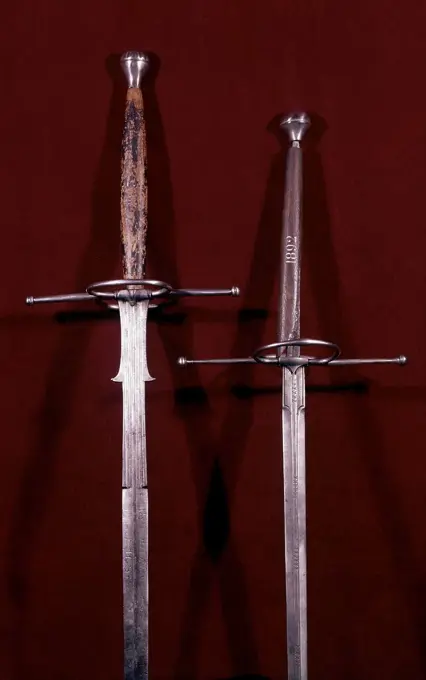
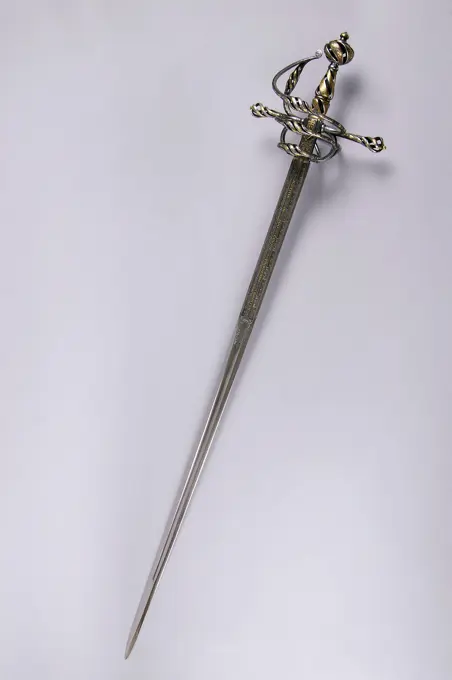
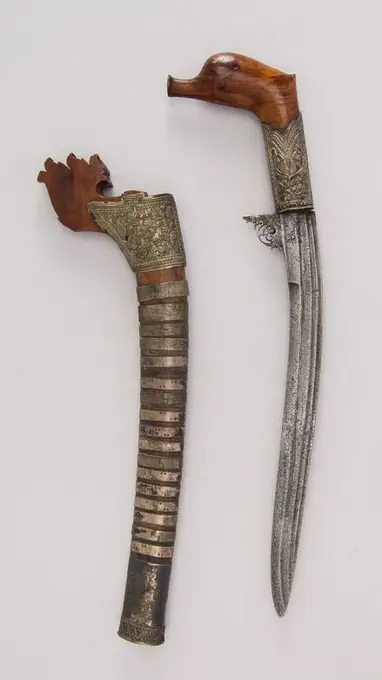
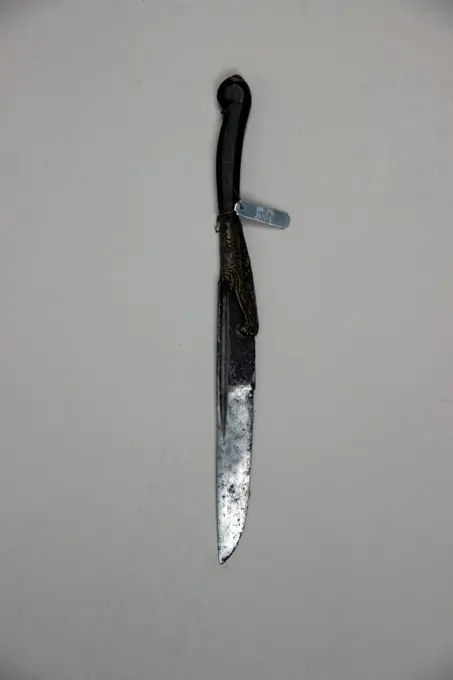
Decorative Historical Weapons

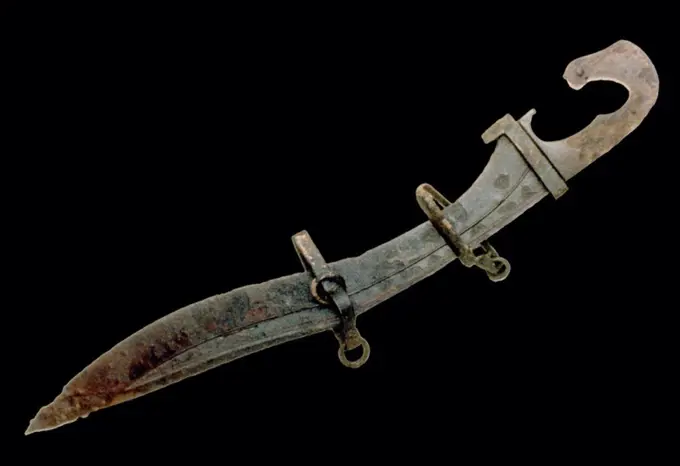
An array of beautifully crafted historical knives and daggers showcasing intricate designs and materials from various cultures and time periods.

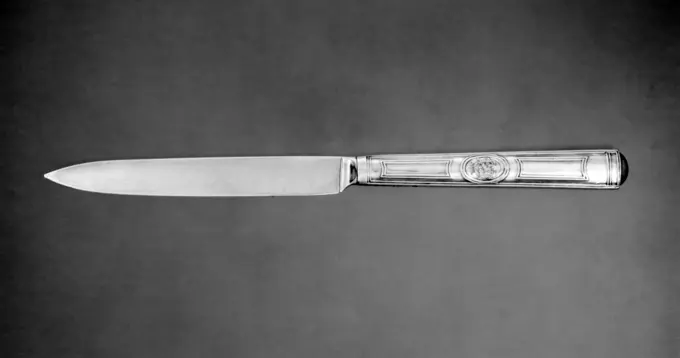
Knife, steel, brass, horn, Stylized leaf corona end. Tapered pointed triangular blade, straight cutting edge; notched upper edge engraved with scrolls on both sides. Brass mantle at bolster engraved with scrolls. Baluster neck, handle of three graduated knops of vertically ribbed horn and brass laminations, separated by deeply cut balusters., possibly Spain, ca. 1700, cutlery, Decorative Arts, Knife
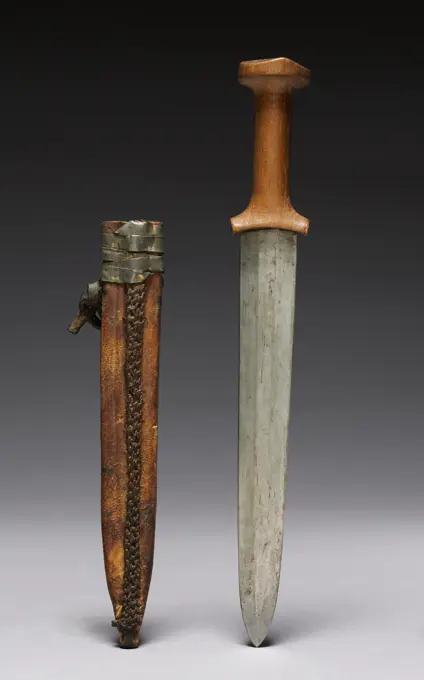
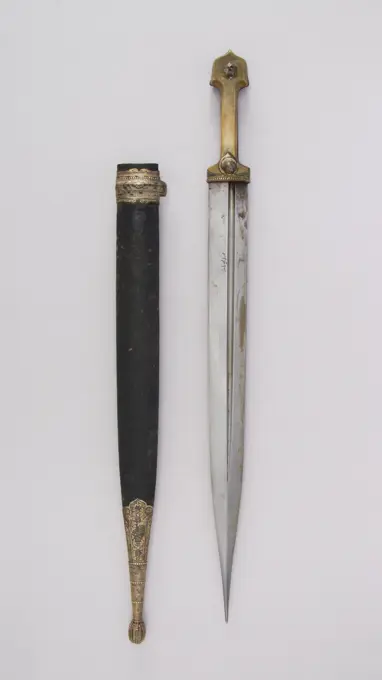
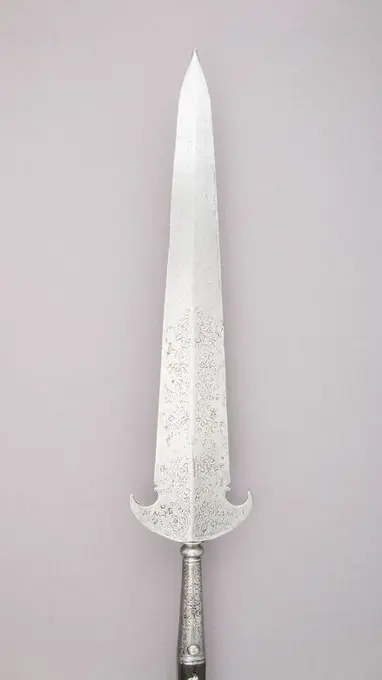
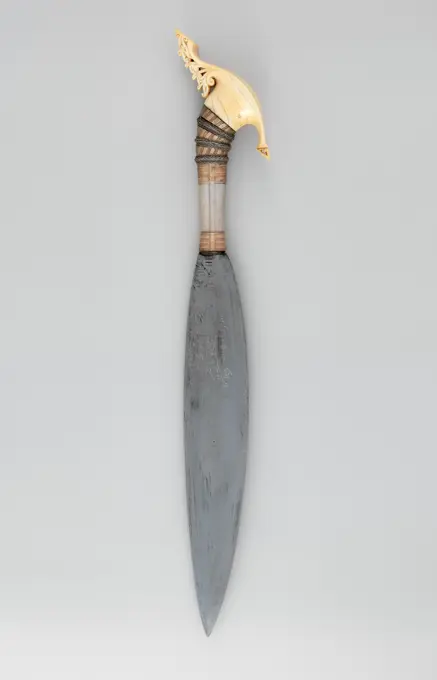
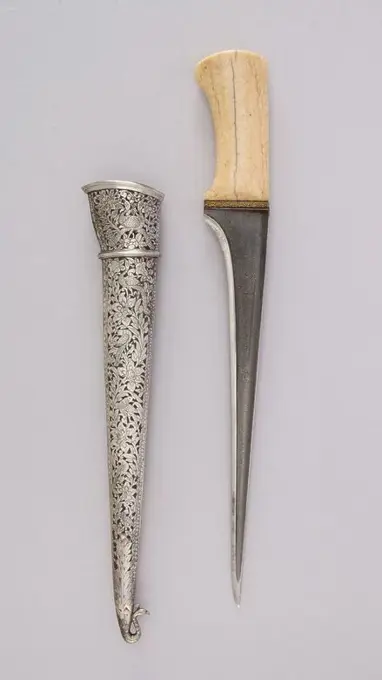
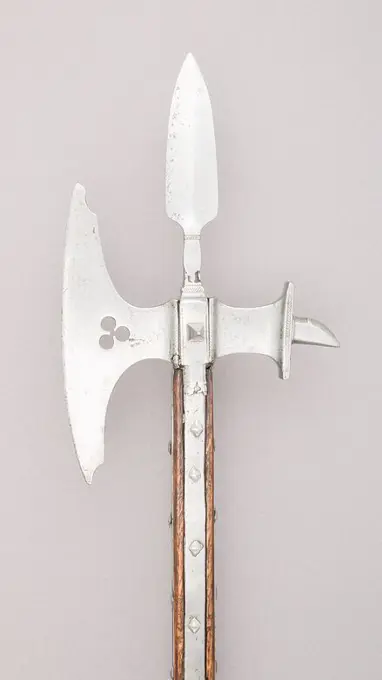
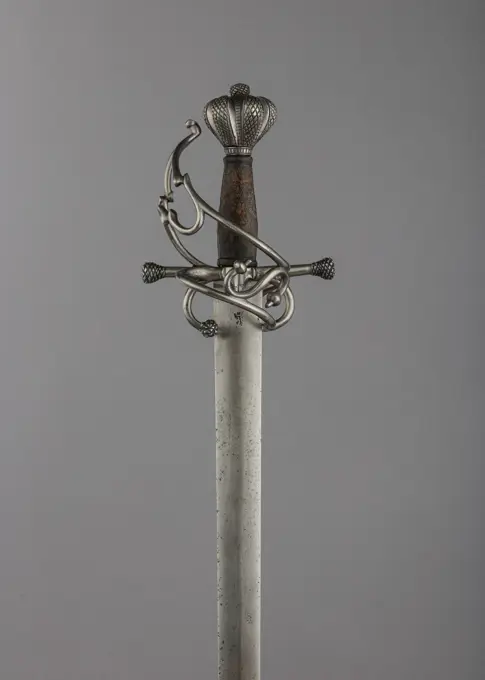
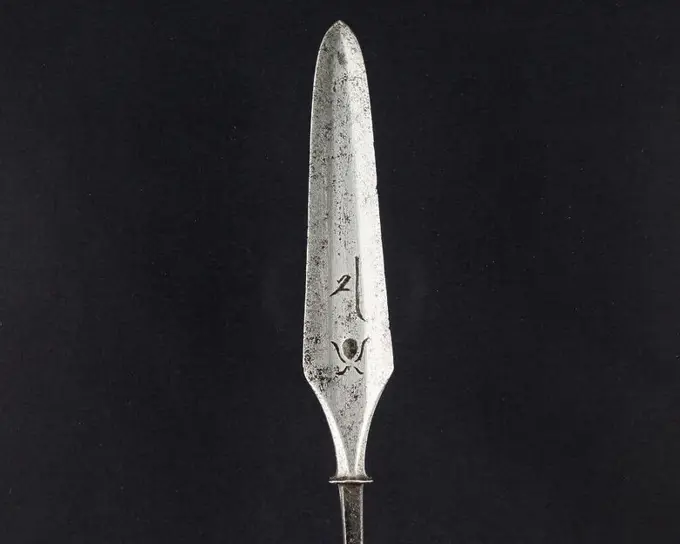
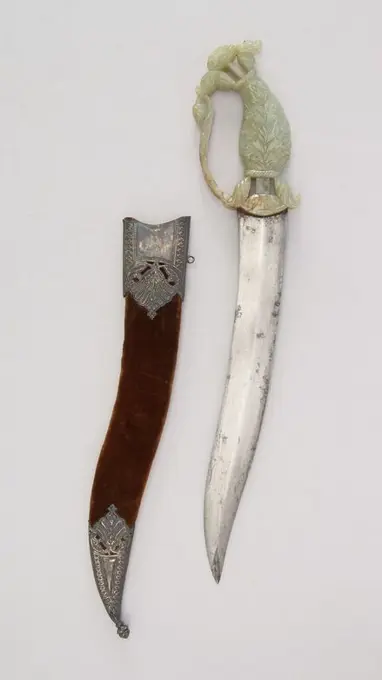
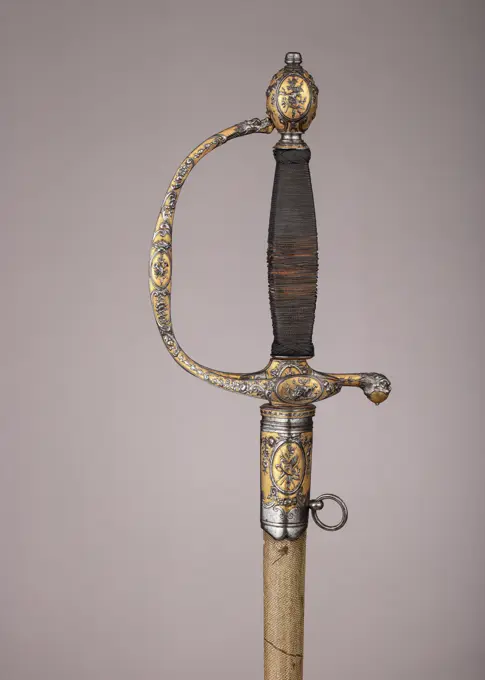
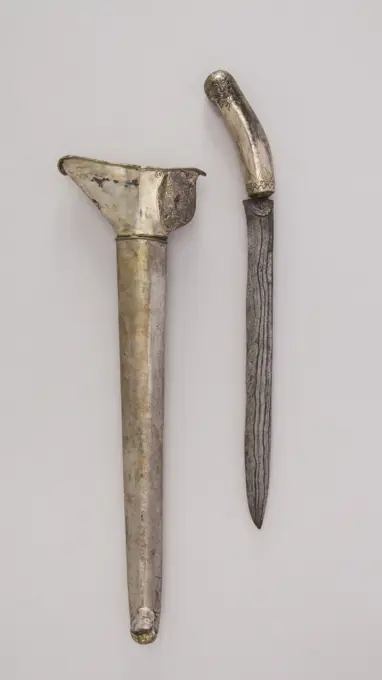
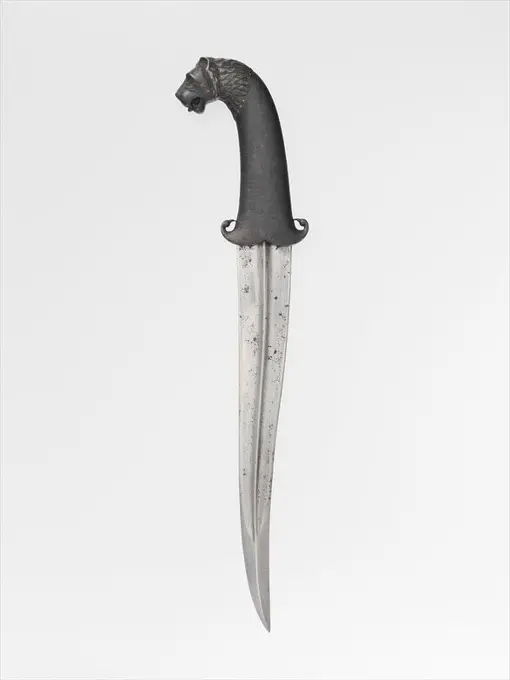
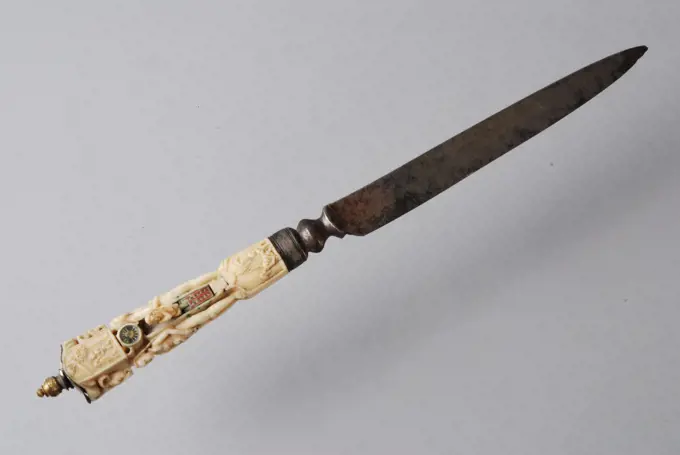
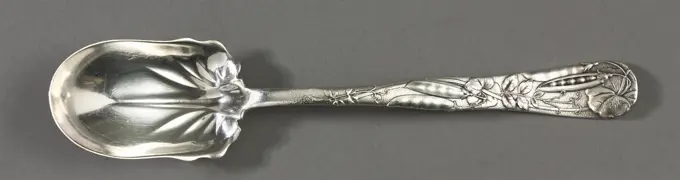
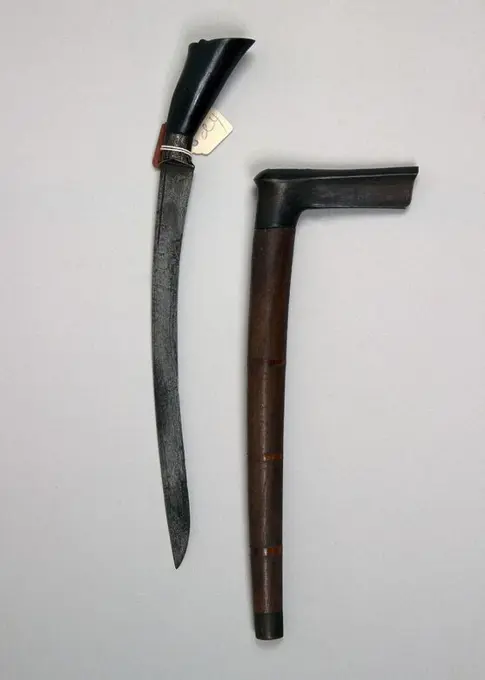
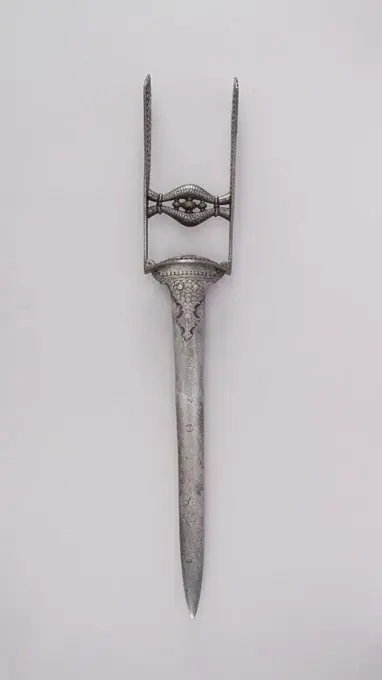
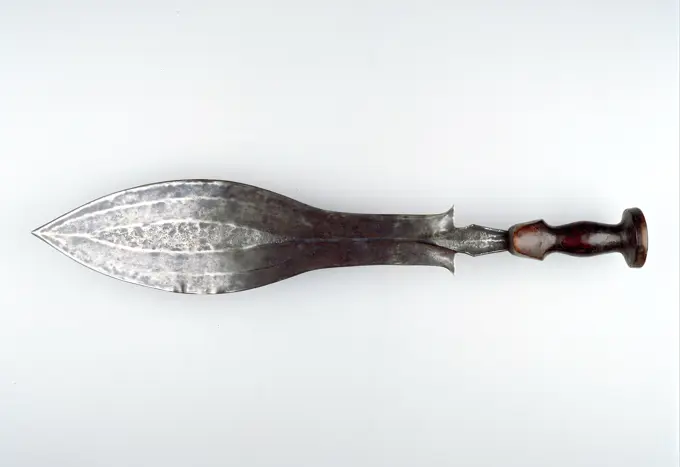
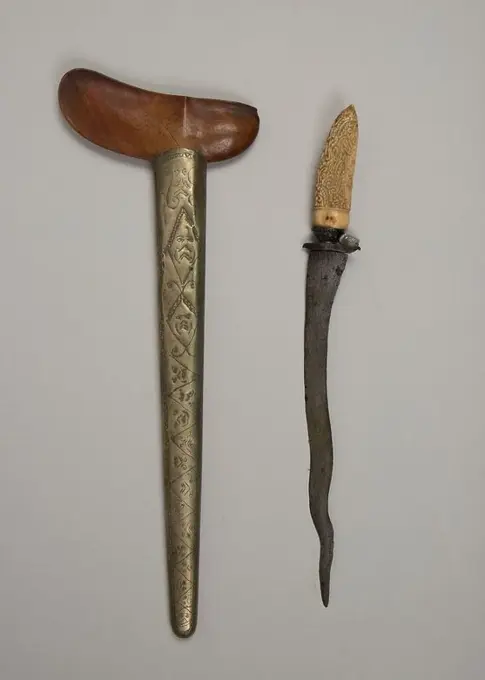
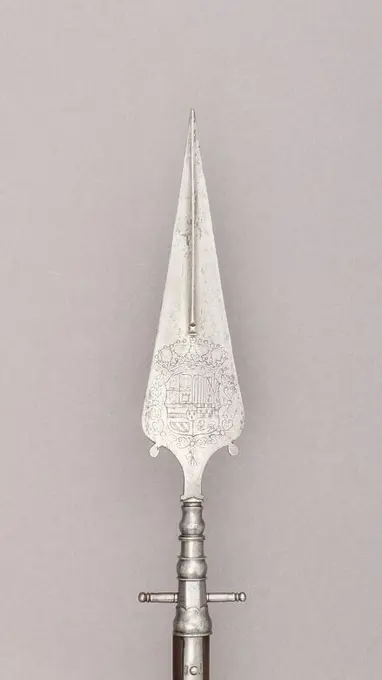
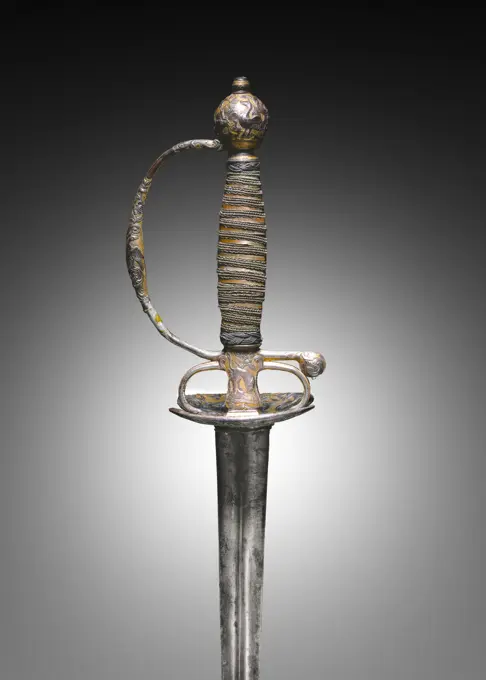
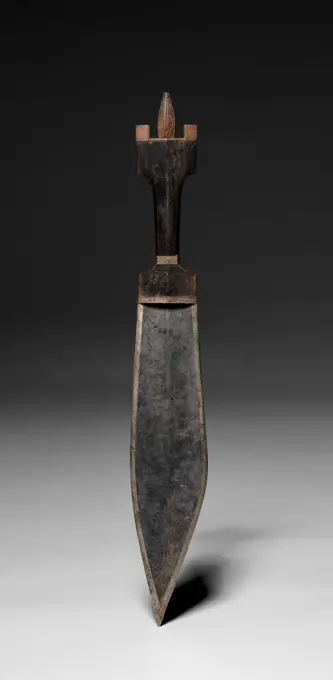
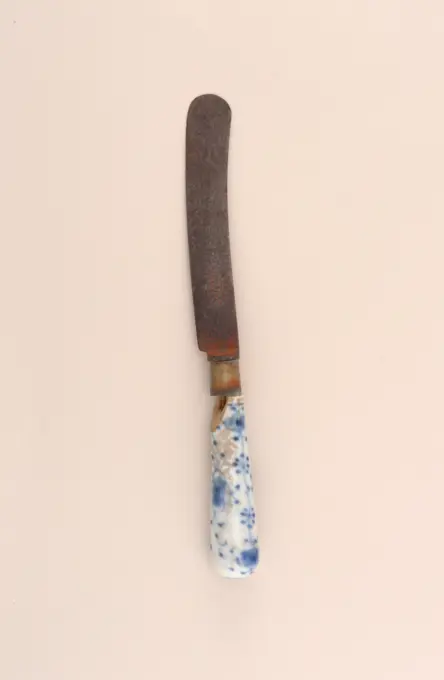
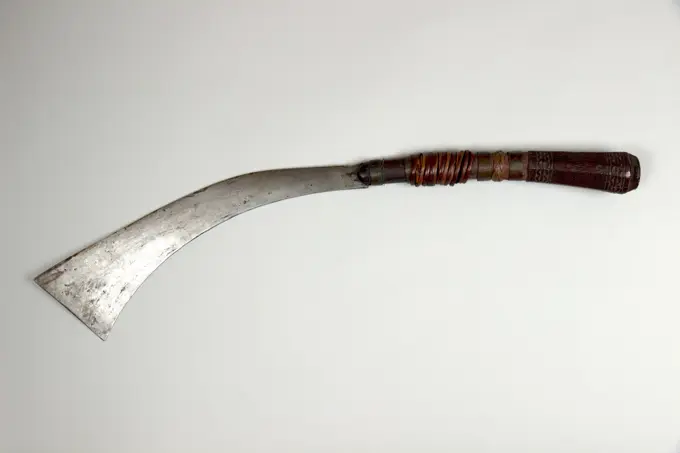
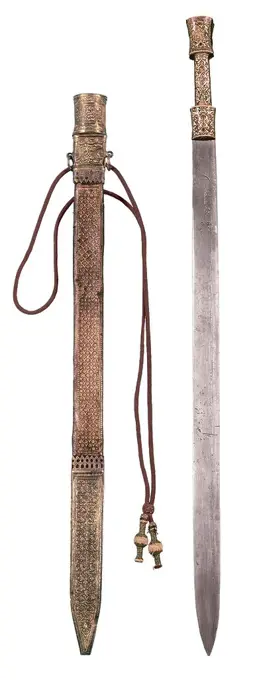
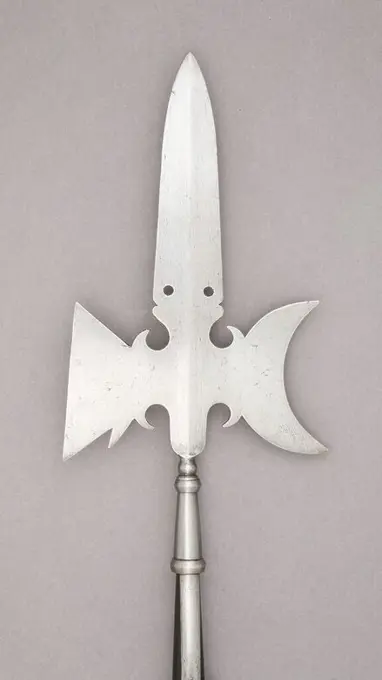
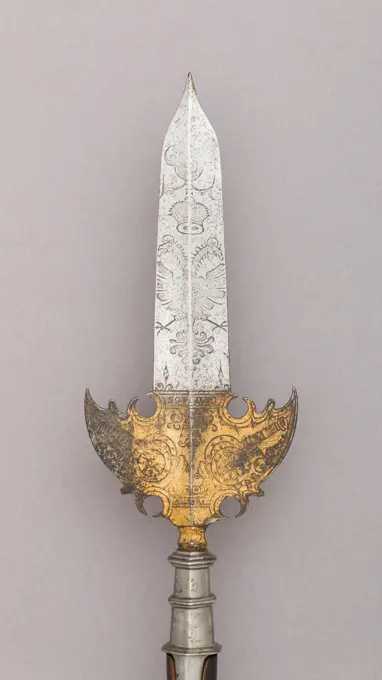
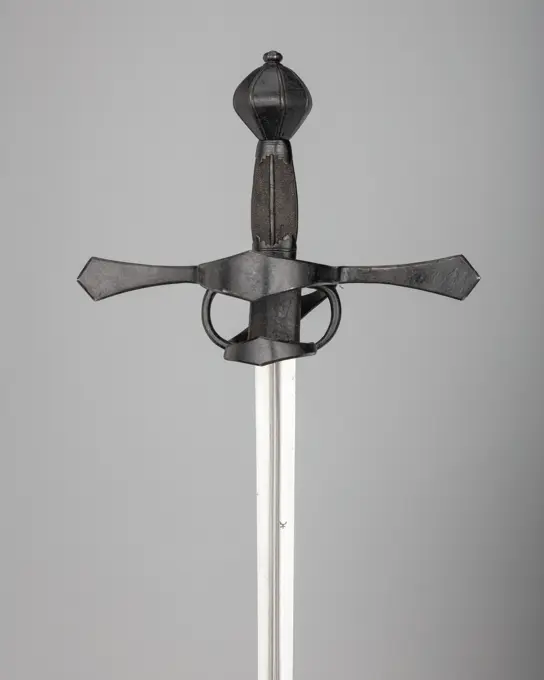
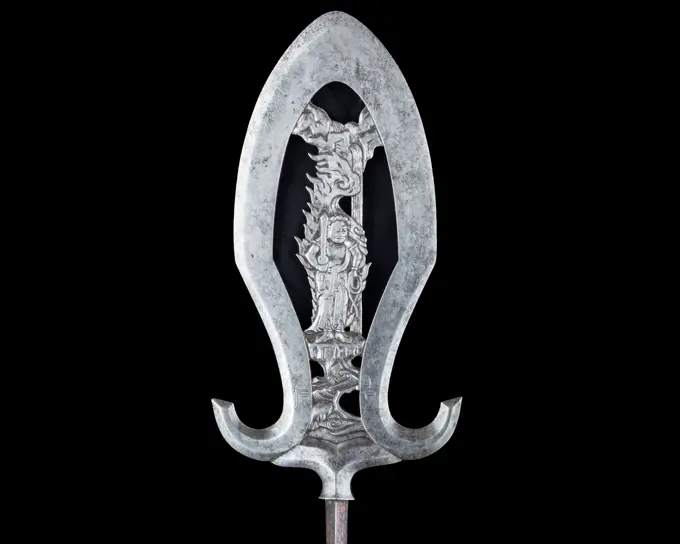
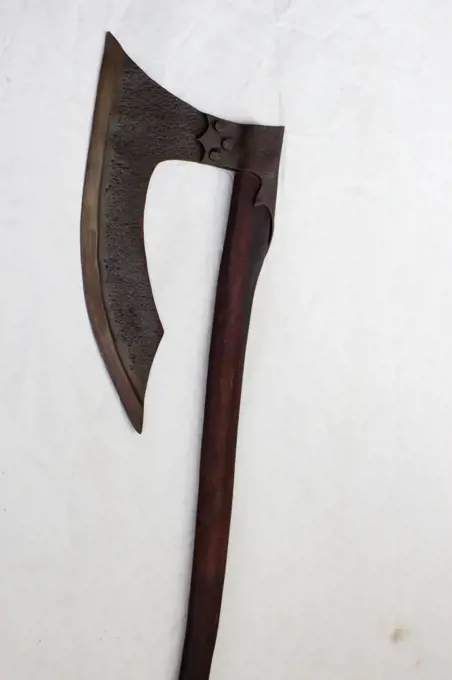
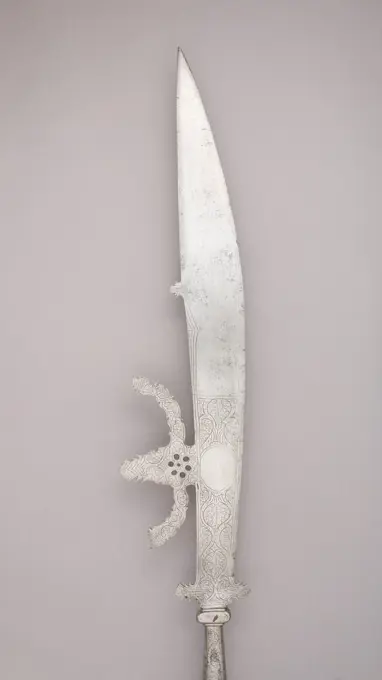
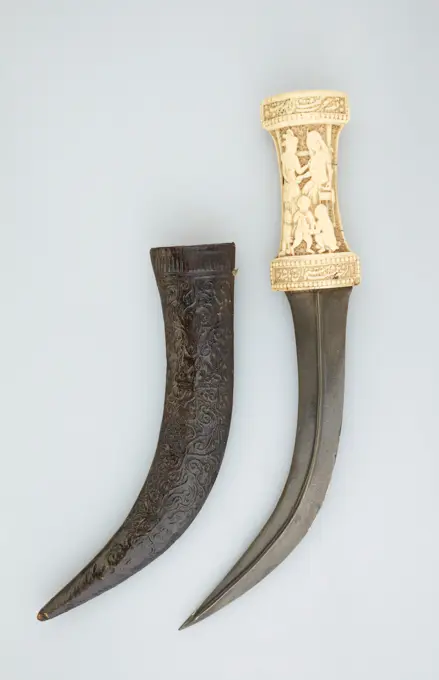
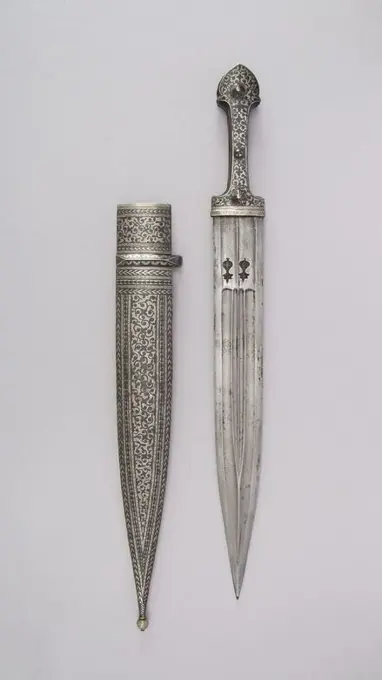
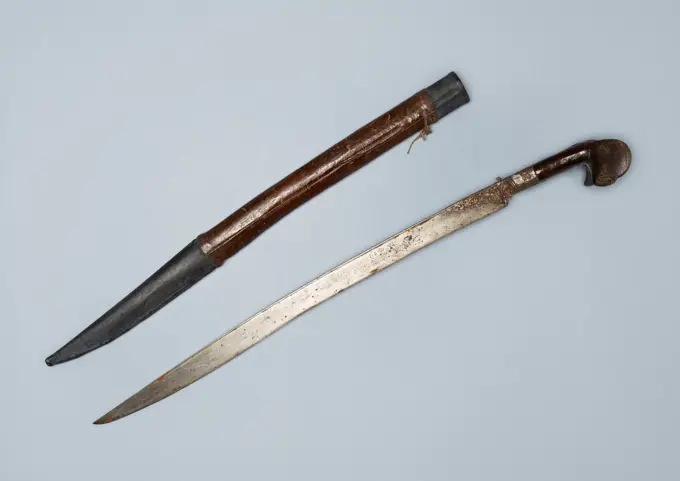
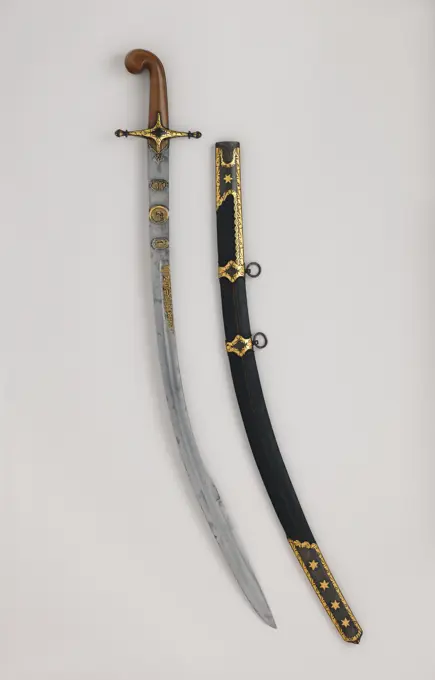
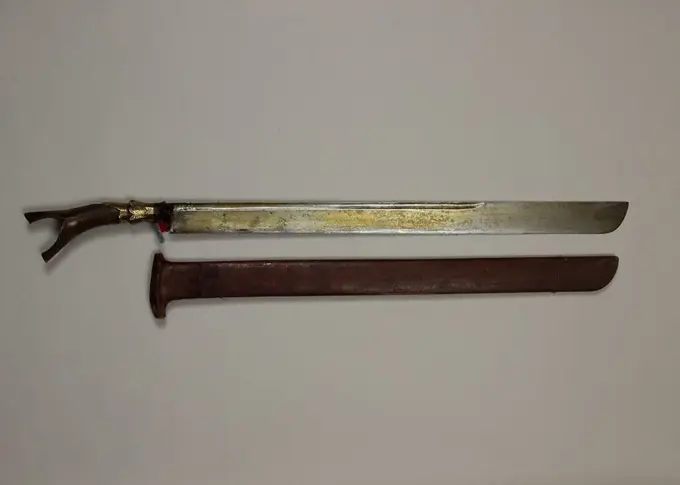
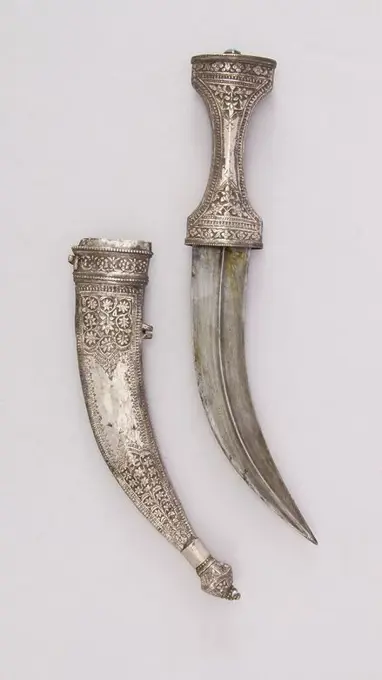
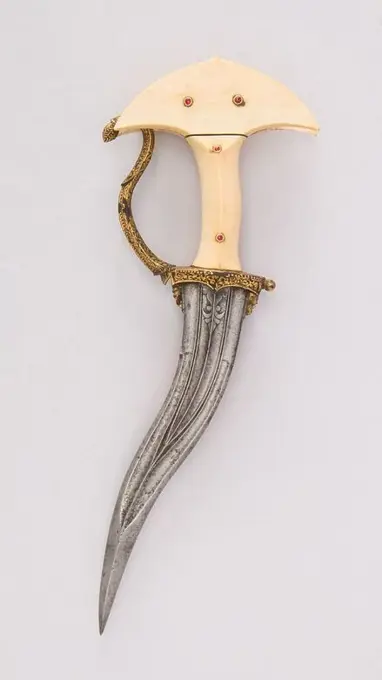
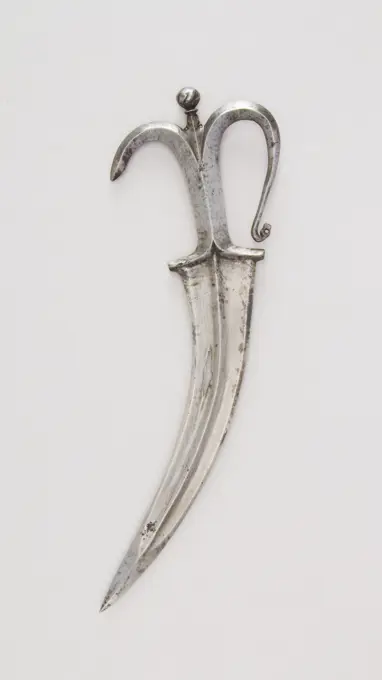
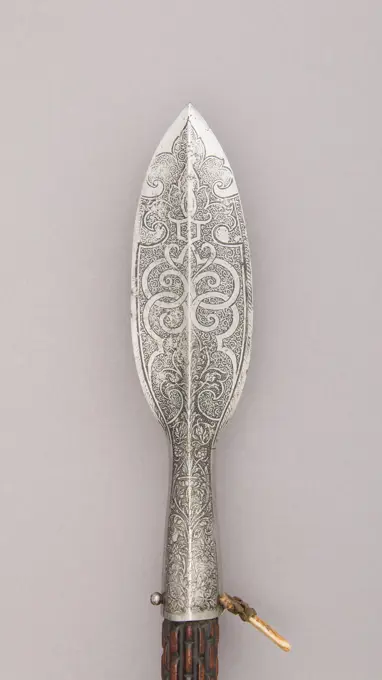
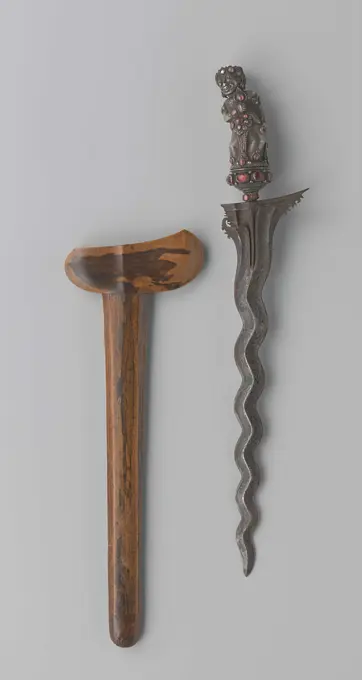
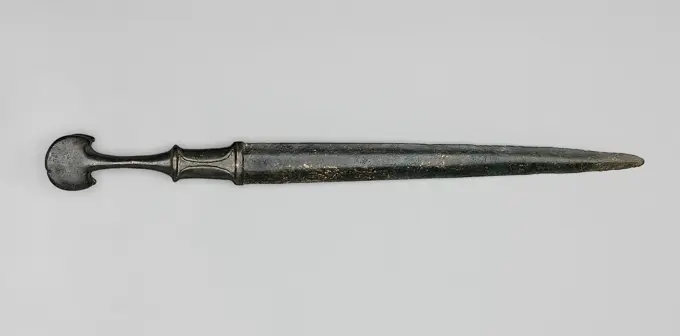
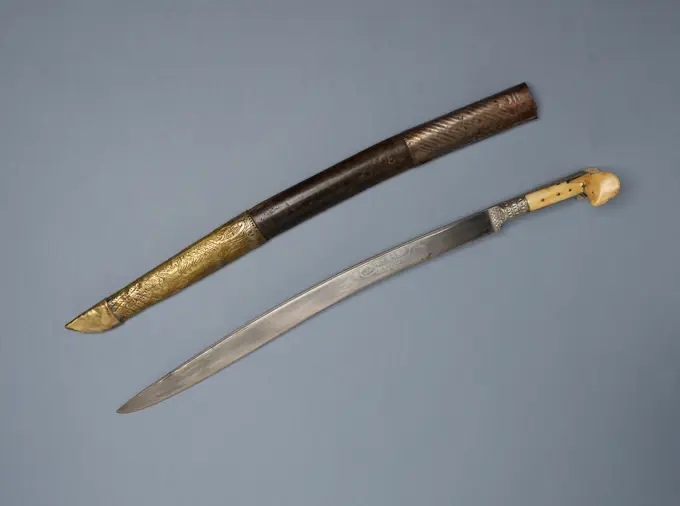
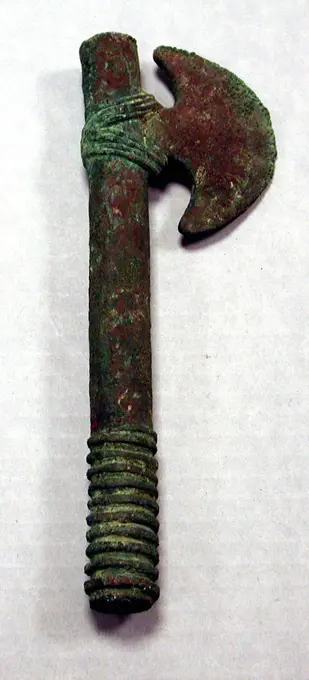
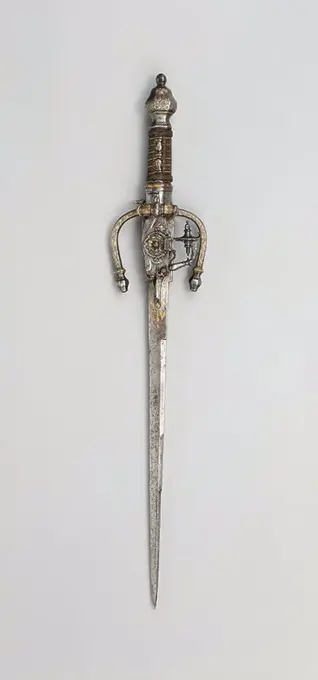
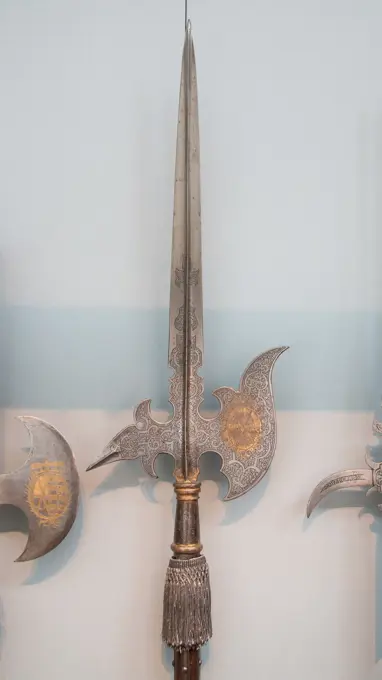
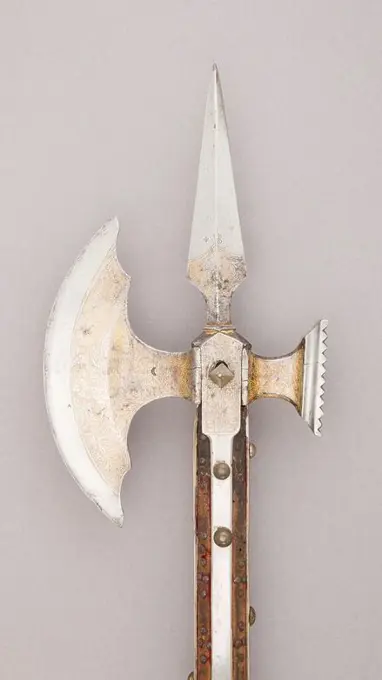
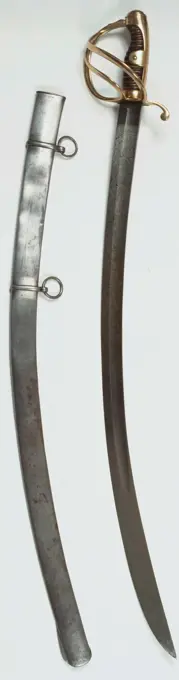
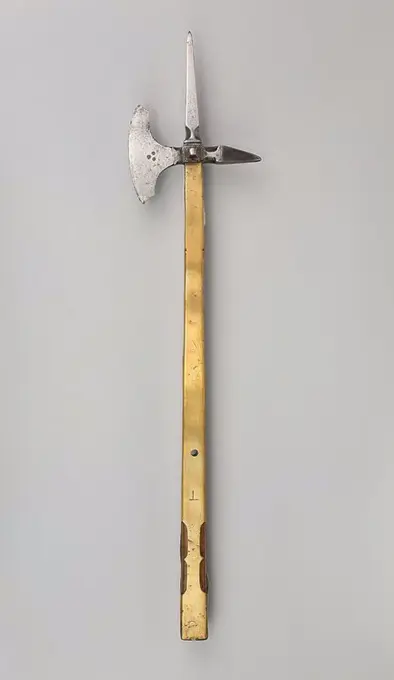
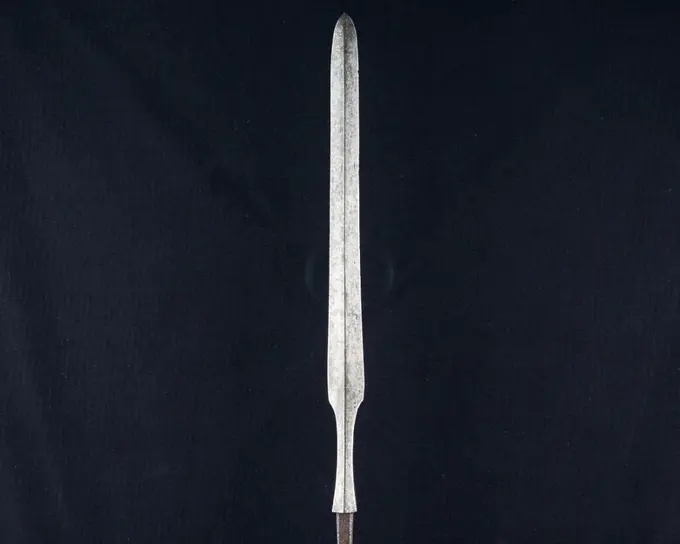
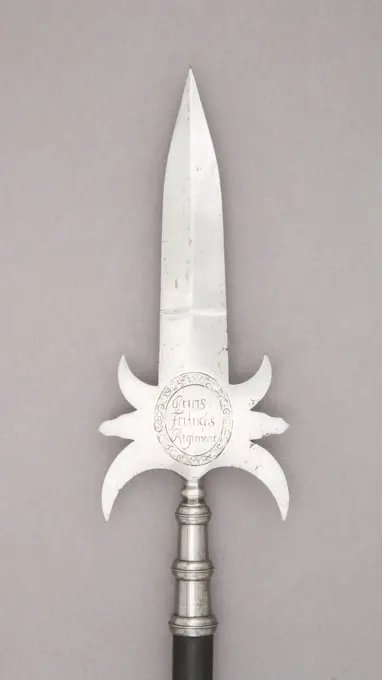
Friuli Spear. Italian. Date: 1540-1560. Dimensions: L. 250.2 cm (98 1/2 in.)Blade L. 59.7 cm (23 1/2 in.)Wt. 3 lb. 8 oz. Steel, velvet covered wood (pine), and brass nails. Origin: Italy. Museum: The Chicago Art Institute, Chicago, USA.Knife (Barong) with Sheath 19th century Philippine, Jolo Island or Zamboanga Peninsula Dh al-fiqr, or the Sword of 'Al, is the key element of the decoration and symbolism of this barong, a single-edged short sword from Jolo Island in the Sulu Archipelago of the southern Philippines. A stylized depiction of Dh al-fiqr, inalid in silver, is shown in the center of the barong blade. It is recognizable by its characteristic forked tip, here rendered as two curved prongs.Also known as the Sword of the Prophet, Dh al-fiqr was originally the name of one of the personal weapons of the Prophet Muammad, which later belonged to his son-in-law, 'Al. Following Muammad's death Dh al-fiqr attained legendary status, its ownership conferring legitimate temporal and spiritual power. Representations of the sword came to symbolize the victory of Islm and to serve as powerful talismans. The forked tip with which Dh al-fiqr is invariably depicted seems to have resulted from interpretations of Dagger (Pesh-kabz) with Sheath. Culture: South Indian. Dimensions: L. with sheath 17 1/4 in. (43.8 cm); L. without sheath 16 in. (40.6 cm); L. of blade 11 3/4 in. (29.8 cm); W. 2 1/8 in. (5.4 cm); Wt. 11.1 oz. (314.7 g); Wt. of sheath 5.6 oz. (158.8 g). Date: 18th-19th century. Museum: Metropolitan Museum of Art, New York, USA.Knife, steel, brass, horn, Stylized leaf corona end. Tapered pointed triangular blade, straight cutting edge; notched upper edge engraved with scrolls on both sides. Brass mantle at bolster engraved with scrolls. Baluster neck, handle of three graduated knops of vertically ribbed horn and brass laminations, separated by deeply cut balusters., possibly Spain, ca. 1700, cutlery, Decorative Arts, KnifeDagger (Pesh-kabz) with Sheath 18th-19th century Indian. Dagger (Pesh-kabz) with Sheath 31463Spear 18th-19th century Bornean. Spear 30646Pollaxe. Culture: French, Burgundy. Dimensions: L. 81 7/8 in. (208 cm); L. of head 12 1/2 in. (31.8 cm); W. 8 1/4 in. (21 cm); Wt. 5 lbs. 7 oz. (2466.4 g). Date: ca. 1450. Museum: Metropolitan Museum of Art, New York, USA.Broadsword German blade, 17th century; hilt, ca. 1540 View more. Broadsword. German. blade, 17th century; hilt, ca. 1540. Steel, wood, shagreen. Potsdam. SwordsArrowhead (Yanone). Culture: Japanese. Dimensions: L. 12 in. (30.5 cm); L. of head 4 7/8 in. (12.4 cm); W. 1 in. (2.5 cm); Wt. 2.1 oz. (59.5 g). Date: 18th century. Museum: Metropolitan Museum of Art, New York, USA.Sacrifical Axe (Matchu) 17th-18th century Indian, Thanjavur. Sacrifical Axe (Matchu) 31290Dagger (Jambiya) with Sheath. Culture: Indian. Dimensions: H. with sheath 16 5/16 in. (41.4 cm); H. without sheath 15 in. (38.1 cm); W. 3 in. (7.6 cm); Wt. 10.2 oz. (289.2 g); Wt. of sheath 3.3 oz. (93.6 g). Date: 18th-19th century. Museum: Metropolitan Museum of Art, New York, USA.Kris with Sheath 16th-19th century Javanese. Kris with Sheath 31274Dagger (Katar). Culture: Indian. Dimensions: H. 15 5/8 in. (39.7 cm); H. of blade 9 1/4 in. (23.5 cm); W. 3 1/4 in. (8.3 cm); D. 1 7/16 in. (3.7 cm); Wt. 27.6 oz. (782.4 g). Date: 18th century. Museum: Metropolitan Museum of Art, New York, USA.Sztylet. nieznany warsztat luristański, workshopDagger (Qama) with sheath 19th century Transcaucasian, Georgian. Dagger (Qama) with sheath. Transcaucasian, Georgian. 19th century. Steel, silver, coral, gold. DaggersSmallsword with Scabbard ca. 1785 French, Paris By the early seventeenth century, the rapier, a long slender thrusting sword, began to dominate as the gentlemans weapon of choice. During the course of the century, however, as civilian fencing techniques became more specialized and refined, the rapier developed into a lighter, trimmed-down weapon known by about 1700 as the smallsword. Smallswords, often richly decorated, remained an integral part of a gentlemans wardrobe until the wearing of swords in civilian settings went out of fashion at the end of the eighteenth century, at which time pistols were replacing swords as arms most frequently used in personal duels. The majority of smallsword hilts are made of silver or steel, but many also employ a wide variety of luxurious materials, such as gold, porcelain, and enamel. At their best, smallswords combine the crafts of swordsmith, cutler, and jeweler to create an elegant weapon that was also a wearable work of art.. Smallsword with SKnife with Sheath 18th-19th century Malayan. Knife with Sheath 31718My Margarita de Weve engraving, Anonymous, c. 1600 - c. 1615 Gold's knife, iron and partially enamel. The handle is enamelled and engraved. The end is open. On the side of the Handle is engraved: Margarita de Weve. Netherlands gold (metal). iron (metal). Gold's knife, iron and partially enamel. The handle is enamelled and engraved. The end is open. On the side of the Handle is engraved: Margarita de Weve. Netherlands gold (metal). iron (metal).Dagger. Culture: Indian, Deccan. Dimensions: H. 14 3/16 in. (36 cm); W. 3 1/4 in. (8.3 cm); Wt. 12.8 oz. (362.9 g). Date: second half 17th century.Animal-head daggers came into fashion at the Mughal court in the second quarter of the seventeenth century. Horses were the most popular subject, followed by nilgai (a large antelope from India), lions, tigers, goats, and camels, usually carved from nephrite jade, serpentine, marble, or ivory. This dagger is exceptional in that its hilt is made entirely of iron. The lion's mane retains traces of silver, and its deep-set eyes were formerly jeweled. Museum: Metropolitan Museum of Art, New York, USA.Dagger (Qama) with Sheath. Culture: Transcaucasian, probably Georgia. Dimensions: L. with sheath 22 7/8 in. (58.1 cm); L. without sheath 22 1/8 in. (56.2 cm); W. 2 1/16 in. (5.2 cm); Wt. 1 lb. 1.6 oz. (499 g); Wt. of sheath 8.1 oz. (229.6 g). Date: 18th-19th century. Museum: Metropolitan Museum of Art, New York, USA.Knife with Sheath. Culture: West Bornean, possibly Kalimantan Barat. Dimensions: L. with sheath 13 9/16 in. (34.4 cm); L. without sheath 10 9/16 in. (26.8 cm); W. 3 1/2 in. (8.9 cm); Wt. 5.4 oz. (153.1 g); Wt. of sheath 2.4 oz. (68 g). Date: 19th century. Museum: Metropolitan Museum of Art, New York, USA.Knife with elaborately decorated ivory handles, including images of Adam and Eve, knife cutlery soil find iron copper silver metal ivory glass, w 1.4 forged cut Table knife with iron blade and carved ivory handle On the handle are four frames with biblical representations: Debossed in the blade: square cross and letter archeology cut prosperity show off religion ivory carver craft bible Jesus Christ Mary Adam Eve Cain Abel Abraham fall victim sacrifice paradiseCombined Wheel-Lock Spanner and Turnscrew 1550-1600 Saxony. Iron .Kris with Sheath 16th-19th century Sumatran. Kris with Sheath 31367Dagger (Chilanum) 17th-18th century South Indian. Dagger (Chilanum) 31734Vine Pattern Salad Spoon and Fork Set, c. 1872-80. Tiffany & Co. (American, New York, est. 1837). Silver;Knife (Bade-bade) with Sheath. Culture: Malayan. Dimensions: L. with sheath 13 in. (33 cm); L. without sheath 11 9/16 in. (29.4 cm); L. of blade 9 in. (22.8 cm); W. 2 3/4 in. (7 cm); Wt. 3.8 oz. (107.7 g); Wt. of sheath 2 oz. (56.7 g). Date: 18th-19th century. Museum: Metropolitan Museum of Art, New York, USA.Dagger (Katar). Culture: Indian, Thanjavur; blade, European. Dimensions: L. 20 in. (50.8 cm); W. 3 7/16 in. (8.7 cm); Wt. 1 lb. 4.8 oz. (589.7 g). Date: 17th century. Museum: Metropolitan Museum of Art, New York, USA.Sword with Scabbard blade 16th century Turkish or Arabian. Sword with Scabbard. Turkish or Arabian. blade 16th century. Steel, horn, silver. SwordsKnife; steel, mother-of-pearl, horn; L x W: 14.7 x 1.1 cm (5 13/16 x 7/16 in.); The Robert L. Metzenberg Collection, gift of Eleanor L. Metzenberg; 1985-103-98Dagger (Katar) 17th century Indian, Thanjavur; blade, Spanish. Dagger (Katar). Indian, Thanjavur; blade, Spanish. 17th century. Steel. Thanjavur, Tamil Nadu. DaggersShort Sword, early 20th century, 23 1/4 x 4 5/16 x 2 1/4 in. (59.06 x 10.95 x 5.72 cm), Metal, wood, Democratic Republic of the Congo, 20th centuryWheel-Lock Spanner and Turnscrew 1630-1670 Germany. Iron, blued, fretted and engraved .Kris with Sheath. Culture: Javanese. Dimensions: L. with sheath 19 3/8 in. (49.2 cm); L. without sheath 14 1/4 in. (36.2 cm); L. of blade 10 1/4 in. (26 cm); W. 1 3/4 in. (4.5 cm); Wt. 4.4 oz. (124.7 g); Wt. of sheath 4.9 oz. (138.9 g). Date: 16th-19th century. Museum: Metropolitan Museum of Art, New York, USA.Scarf Sword. Hilt: northern European (possibly Swedish); Blade: possibly Italian or Spanish. Date: 1650-1660. Dimensions: 92.7 × 7.6 cm (36 1/2 × 3 in.). Steel, brass, silver, gilding, and wood. Origin: Sweden. Museum: The Chicago Art Institute, Chicago, USA.Spontoon. Culture: Spanish. Dimensions: L. 76 3/4 in. (194.9 cm); L. of head 11 5/16 in. (28.7 cm); W. 2 1/4 in. (5.7 cm); Wt. 1 lb. 7.6 oz. (669 g). Date: 18th century. Museum: Metropolitan Museum of Art, New York, USA.Small Sword, c.1750-60. After a design by Jean-Baptiste Oudry (French, 1686-1755). Steel, gilt and russeted, copper, wood; overall: 105.4 cm (41 1/2 in.); blade: 87.9 cm (34 5/8 in.); guard: 7.9 cm (3 1/8 in.). The hilt, pommel, and guard of this sword are richly chiseled in low relief against a stippled gold background with animals (dogs, a stag, ducks) that appear to be adapted from paintings by Jean-Baptiste Oudry (1686-1775). An elegant court sword such as this was an important accessory to a gentleman's attire, yet remained functionalit could be withdrawn for an impromptu duel.Knife, 1900s. Central Africa, Democratic Republic of the Congo, Mangbetu, 20th century. Iron, leather, and wood;Dagger (Kindjal) with Sheath 18th-19th century Caucasian. Dagger (Kindjal) with Sheath 31514Knife, early 1900s. Africa, Somali, 20th century. Iron and horn; scabbard: 7.7 cm (3 1/16 in.); knife including handle: 6.1 cm (2 3/8 in.).Fork and Knife with Porcelain Handles Fork And Knife; Manufactured by Meissen Porcelain Manufactory (Germany); Germany; porcelain, vitreous enamel, nickel, steel; L x W x D (a: knife): 19.7 × 1.9 × 1.9 cm (7 3/4 × 3/4 × 3/4 in.) L x W x D (b: fork): 17.4 × 1.8 × 1.8 cm (6 7/8 × 11/16 × 11/16 in.)Knife, steel, silver, porcelain, Leaf-shaped blade with straight upper edge. Plain bolster. Tapering silver ferrule with traces of gilding. Tapering white porcelain handle with rounded end. Floral decoration, with birds and decorative bands along the sides, top and bottom of the handle in black, green, yellow, red and blue. Small button cap at the end of the handle (Famille Verte)., China, n.d., cutlery, Decorative Arts, KnifeSword (Panabas) 18th-19th century Philippine, Malabang. Sword (Panabas). Philippine, Malabang. 18th-19th century. Steel, wood, cane (rattan). Malabang, Lanao del Sur. SwordsESTOQUE DE BOABDIL O MUHAMMAD V (1459/1528) - ULTIMO REY MORO DE GRANADA. Location: ALCAZAR / MUSEO DEL EJERCITO-COLECCIÓN. Toledo. SPAIN.Halberd. Culture: German. Dimensions: L. 81 1/4 in. (206.4 cm); L. of head 15 in. (38.1 cm); W. 8 in. (20.3 cm); Wt. 2 lbs. 13 oz. (1275.7 g). Date: 1650-1700. Museum: Metropolitan Museum of Art, New York, USA.Partisan-Spontoon 17th century Austrian. Partisan-Spontoon. Austrian. 17th century. Steel, wood, iron, gold. Shafted WeaponsEstoc (Thrusting Sword) late 16th century German, Saxony An estoc, also called a tuck or a panzerstecher (literally, armor piercer), is a type of sword carried by armored cavalrymen in the mid-to late sixteenth century, during the peak period when plate body armor was in use. It is characterized by a long, narrow, acutely pointed blade, usually triangular in cross section. This resulted in a very stiff blade, designed to puncture mail or pierce the gaps in plate armor.. Estoc (Thrusting Sword). German, Saxony. late 16th century. Steel, shagreen, wood. SwordsPlug bayonet - Ross Rifle Co. Ross Rifle Co.DOS MONTANTES. Location: ALCAZAR / MUSEO DEL EJERCITO-COLECCIÓN. Toledo. SPANIEN.Smart sword Smart sword of the knight of the Middle Ages Copyright: xZoonar.com/ValeryxxSibrikovx 2525404ESTOQUE DE ARZON DEL EMPERADOR CARLOS V - SIGLO XVI. Location: PALACIO REAL-REAL ARMERIA DE MADRID. MADRID. SPANIEN.HalabardaKnife (Sekin) with Sheath. Culture: Sumatran. Dimensions: H. with sheath 15 11/16 in. (39.8 cm); H. without sheath 14 5/8 in. (37.1 cm); W. 3 5/16 in. (8.4 cm); Wt. 8.1 oz. (229.6 g); Wt. of sheath 5.8 oz. (164.4 g). Date: 16th-19th century. Museum: Metropolitan Museum of Art, New York, USA.Knife (Phia Kaetta) 18th-19th century Sri Lankan. Knife (Phia Kaetta) 31545Ceremonial Arrowhead (Yanone) 17th century Umetada Yoshinobu Japanese Large arrowheads, pierced and elaborately chiseled with landscapes, birds, flowers, dragons, and Buddhist divinities, were created to be admired for the beauty of their metalwork and design rather than for use in archery. The Metropolitan Museum's collection includes a group of more than thirty similarly signed and dated pieces (including acc. nos. 32.75.321, .327, .330, .334, .337, .339-.340, .398-.399, .403, .406, .409) that may have been made for presentation or as a votive offering to a shrine. This arrowhead, depicting the Buddhist deity Fud My-, is by Umetada Yoshinobu, a member of the Umetada school of swordsmiths, tsuba makers, and iron chiselers.. Ceremonial Arrowhead (Yanone). Japanese. 17th century. Steel. Archery Equipment-ArrowheadsWeapon medieval axe battleaxe on gray backgroundDagger with Sheath 18th-19th century Indian, Sikkim or Bhutanese. Dagger with Sheath 31632Fauchard ca. 1560 Italian. Fauchard 26787Kanjar with a scabbardDagger (Kindjal) with Sheath. Culture: Caucasian. Dimensions: L. with sheath 21 13/16 in. (55.4 cm); L. without sheath 20 1/2 in. (51.4 cm); L. of blade 14 7/8 in. (37.8 cm); W. 2 1/8 in. (5.4 cm); Wt. 15.7 oz. (445.1 g); Wt. of sheath 13.9 oz. (394.1 g). Date: 19th century. Museum: Metropolitan Museum of Art, New York, USA.Yataghan with a scabbardKnife (England); Possibly by Chelsea Porcelain Manufactory (United Kingdom); Probably Bow Porcelain Manufactory (England, GB, United Kingdom); porcelain, steel, silver; L x W: 21 x 2.3 cm (8 1/4 x 7/8 in.); The Robert L. Metzenberg Collection, gift of Eleanor L. Metzenberg; 1985-103-204Saber (Kilij) with Scabbard hilt and scabbard, 19th century; blade, probably late 18th-early 19th century Hilt, Turkish or North African; blade, Iranian This type of Ottoman saber, with its distinctive curled pistol grip” and cruciform guard, was used throughout Turkey and North Africa from the eighteenth century. Following Napoleon’s invasion of Egypt in 1798, the type, widely referred to as a Mamluk” saber, became popular for European and North American officers’ swords and remains in use today. The blade of this example bears the false signature of Haji Sunqur, a legendary swordsmith active in Istanbul in the early sixteenth century.. Saber (Kilij) with Scabbard. Hilt, Turkish or North African; blade, Iranian. hilt and scabbard, 19th century; blade, probably late 18th-early 19th century. Steel, gold, horn (rhinoceros), wood, leather. SwordsKnife with Sheath 18th-19th century Indian, Sikkim or Bhutanese. Knife with Sheath 31637Sword with Scabbard. Culture: Acheen. Dimensions: L. with scabbard 29 1/2 in. (74.9 cm); L. without scabbard 29 1/8 in. (74 cm); L. of blade 21 in. (53.3 cm); W. 3 in. (7.6 cm); Wt. 1 lb. 7.4 oz. (663.4 g); Wt. of scabbard 3.7 oz. (104.9 g). Date: 16th-19th century. Museum: Metropolitan Museum of Art, New York, USA.Hair pin, 8 x 1 3/4 x 1 in. (20.32 x 4.45 x 2.54 cm), Silver, ChinaRapier, rapier sword vest gun iron steel wood metal total, left hand dagger militariaDagger (Jambiya) with Sheath. Culture: Indian. Dimensions: H. with sheath 12 1/4 in. (31.1 cm); H. without sheath 11 1/4 in. (28.6 cm); H. of blade 7 3/8 in. (18.7 cm); W. 1 15/16 in. (4.9 cm); Wt. 5 oz. (141.7 g); Wt. of sheath 2.9 oz. (82.2 g). Date: 19th century. Museum: Metropolitan Museum of Art, New York, USA.Rapier. Southern European. Date: 1610-1640. Dimensions: Overall L. 125.7 cm (49 1/2 in.). Steel. Origin: Europe, southern. Museum: The Chicago Art Institute, Chicago, USA.Sickle knife (trumbash), 1800s. Africa, Central Africa, Democratic Republic of Congo, Mangbetu maker. Iron and wood; overall: 20 cm (7 7/8 in.).Inset bayonet. Inset bayonet or plug bayonet. The long dagger has a grip shaped in such a way that it fits in the course of a gun. The palm wood is rotated in the form of a baluster and has a glass cap; The remainder of the previously plated, selectable batter includes a small pearl rod and a shell-shaped baffle plate. The straight, six-phase blade is etched on both sides with a panel with a signature and a warway, a panel framed by curls and a basket with prainmesh.Dagger (Khanjarli). Culture: South Indian. Dimensions: H. 11 1/2 in. (29.2 cm); L. of blade 7 3/8 in. (18.7 cm); W. 4 1/4 in. (10.8 cm); Wt. 9.4 oz. (266.5 g). Date: 17th-18th century. Museum: Metropolitan Museum of Art, New York, USA.Dagger 16th-17th century Indian. Dagger 31606Boar Spear 16th century German The obtusely pointed oval head is reinforced by a heavy mid-ridge, and almost entirely covered with etched decoration of foliate strapwork. A rivet at the bottom of the socket serves for attaching the toggle, carved from staghorn and tied on with leather straps. The strong wooden shaft is deeply grooved and crosscut, which creates a surface of short lobes for about two-thirds of its length.These spears were specially designed for the hunt of board and bear. The short but wide double-edged blade would inflict a heavily bleeding wound that would quickly disable the animal; the toggle would stop the on-rushing board from impaling himself too deeply and would keep the huntsman at a reasonably safe distance from the slashing tusks. The heavily lobed surface of the shaft allowed the huntsman a firm grip, even if the wood were slippery with rain, dew, or blood. Sometimes ash saplings were selected, and while still alive their bark was nicked repeatedly in order Balische kris met schede.Balic Kris with a corrugated blade (Dapur Luk) and beautiful Pamor. The cries handle is made of silver and inlaid with semi-precious stones and cut glass. Probably the figure on the grabbed the God Bayu. He holds a vase against his chest with amrita moisture that brings man prosperity and happiness. The wooden sheath consists of a narrow tubular sleeve, the gandar, and a wide top, the Wrangka. The two parts are made separately from the so-called 'stain wood' or Kayu Pelet.Dagger; unknown Lurista workshop; IX - VI century BC ; period II (-900-00-00--501-00-00);White weapons, Luristian browns, iron period (approDagger with Sheath 19th century Indian, Mughal; sheath, possibly Tibetan. Dagger with Sheath 31444Lucerne Hammer. Culture: Swiss. Dimensions: L. 94 1/8 in. (139.2 cm); L. of head 18 7/8 in. (48 cm); W. 8 in. (20.4 cm); Wt. 5 lbs. 14 oz. (2664.9 g). Date: ca. 1520. Museum: Metropolitan Museum of Art, New York, USA.Poleaxe 1500 Switzerland. Steel, brass, and wood (oak) .Jatagan with the vaginaBoar Spear. Culture: German. Dimensions: L. 93 5/8 in. (237.8 cm); L. of head 14 1/2 in. (36.8 cm); W. 3 7/16 in. (8.7 cm); Wt. 6 lbs. 0.8 oz. (2744.2 g). Date: 16th century. Museum: Metropolitan Museum of Art, New York, USA.Dagger (Khanjarli) 17th-18th century South Indian. Dagger (Khanjarli) 31589Axe 15th-16th century Inca. Axe 315476Skewer, Silver, Tapering pointing blade or pin; cast terminal embossed with cat-tail topped acanthus fronds below a pair of opposing dolphins centering a trident., France, late 19th century, cutlery, Decorative Arts, SkewerDagger with Wheel-Lock Pistol. Italian. Date: 1601-1633. Dimensions: L. 52 cm (20 1/2 in.) Blade L. 38.7 cm (15 1/4 in.)Wt. 1 lb. 12 oz.Caliber .30. Steel, wood, iron, brass, and copper. Origin: Italy. Museum: The Chicago Art Institute, Chicago, USA.Rapier Italian early 17th century The rapier was the principal civilian sidearm throughout the sixteenth and seventeenth centuries. Designed for cut-and-thrust fencing of progressively complex techniques, the rapier is characterized by a double-edged blade with an acute point and an elaborate guard for the hand. The guards, usually of iron or steel, were subject to a variety of embellishment. They were engraved, chiseled, gilded, damascened, and encrusted in gold and silver in keeping with fashionable styles. Unless otherwise noted, the materials, attributions, and dating given here refer to the hilts. Rapier blades, invariably of steel, bear a variety of makers marks denoting their origin in the two principal centers of blademaking, Toledo in Spain and Solingen in Germany. View more. Rapier. Italian. early 17th century. Iron, steel, brass copper. SwordsKnife (one of a composed set) 1800-1809 Mathieu Carrère. Knife (one of a composed set). French, Paris. 1800-1809. Silver. Metalwork-SilverHalberd of Christian I of Saxony (reigned 1586-91) ca. 1590 German These halberds of characteristic shape, with elegantly S-shaped axe blade, long tapering spike with sharp mid-ridge, and fleur-de-lis shaped beak, were made for the Trabantenleibgarde (palace and bodyguard) of the Prince Elector Christian I of Saxony (1586-91). An especially elaborate specimen--apparently an officer's weapon--bears the name of the Elector Christian and the date 1588 and is preserved in the Historisches Museum Dresden, the former electoral arsenal.The entire surface of these halberd heads, including their conical sockets and the long side straps, is covered with etched scrollwork. On one side of the axe blade is an oval cartouche with the arms of the archmarshalship of the Holy Roman Empire, per fess, sable and argent, two swords gules in saltire overall, and on the other side the arms of the duchy of Saxony, barry of ten, or and sable, a crancelin vert in bend overall (i.e., horizontally striped of goldPollaxe. Culture: Italian, Venice. Dimensions: L. 85 in. (225.9 cm); L. of head 13 in. (33 cm); W. 7 3/4 in. (19.7 cm); Wt. 6 lbs. 7 oz. (2920 g). Date: ca. 1475. Museum: Metropolitan Museum of Art, New York, USA.Sable Officer Light Cavalry Model No. 3, M.1814 with sheath.Sabel with copper basket and black leather handle. With black tarragon and silver brush. With iron sheath with two rings. With a hinged stitch leaf. On the white dammemed knling inscription: Wilkinson. & Son. Gun & Sword Makers Pall Mall London. From c.j.j. Baron de Posson, in 1830-1832 Colonel Commander Regiment Lanciers No. 10.Horseman's Axe. German. Date: 1490-1535. Dimensions: L. 70.5 cm (27 7/8 in.)Wt. 2 lb. 11 oz. Steel, iron, brass, beechwood. Origin: Germany. Museum: The Chicago Art Institute, Chicago, USA.Blade and Mounting for a Short Sword (Wakizashi) Japanese blade and mounting, 19th century; sword guard, 16th century This mounting is distinguished by its silver-clad scabbard with fine striations. The ornament toward the bottom of the scabbard, realistically modelled in repoussé, represents a cicada. Covered in white ray skin, the hilt is wrapped in a black and white cord with a braided design of four-sectioned lozenge crests. It features grip ornaments in the form of ladybugs. The other metal fittings follow a contrasting combination of gold and shakud. With its luxurious decoration and bold yet elegant color scheme, this nineteenth-century mounting revives the flamboyant sword fashion of the Momoyama period (1573-1615). To emphasize that reference, it was paired with a sixteenth-century sword guard whose decoration and choice of metals are in perfect harmony with the other elements of the mounting. View more. Blade and Mounting for a Short Sword (Wakizashi). Japanese. blade and moDagger with Sheath. Culture: Burmese. Dimensions: L. with sheath 13 11/16 in. (34.8 cm); L. without sheath 12 5/16 in. (31.3 cm); L. of blade 7 3/8 in. (18.7 cm); W. 1 3/16 in. (3 cm); D. 1 3/16 in. (3 cm); Wt. 4.9 oz. (139 g); Wt. of sheath 2.4 oz. (68 g). Date: 18th-19th century. Museum: Metropolitan Museum of Art, New York, USA.Arrowhead ca. 1550-1458 B.C. New Kingdom. Arrowhead. ca. 1550-1458 B.C.. Copper alloy. New Kingdom. From Egypt, Upper Egypt, Thebes, Asasif, Courtyard CC 41, Pit 3, Burial D 1, Beside or on inner coffin, MMA excavations, 1915-16. Dynasty 18, earlyArrowhead (Yanone). Culture: Japanese. Dimensions: L. 20 1/2 in. (52 cm); L. of head 9 1/8 in. (23.2 cm); W. 3/4 in. (1.9 cm); Wt. 3.9 oz. (110.6 g). Date: 18th century. Museum: Metropolitan Museum of Art, New York, USA.Spontoon ca. 1735 German. Spontoon 25909Prehistory, Bulgaria, Eneolithic. Gold sceptre. From tomb 36 of Varna excavations.Medieaval swords isolated on the whitePartisan. Culture: Italian. Dimensions: L. 8 ft. 4 3/4 in. (256 cm); L. of head 24 3/8 in. (62 cm); W. 5 in. (12.7 cm); Wt. 4 lbs. 4 oz. (1927.8 g). Date: ca. 1600. Museum: Metropolitan Museum of Art, New York, USA.FALCATA IBERICA PROCEDENTE DE ALMEDINILLA (CORDOBA).