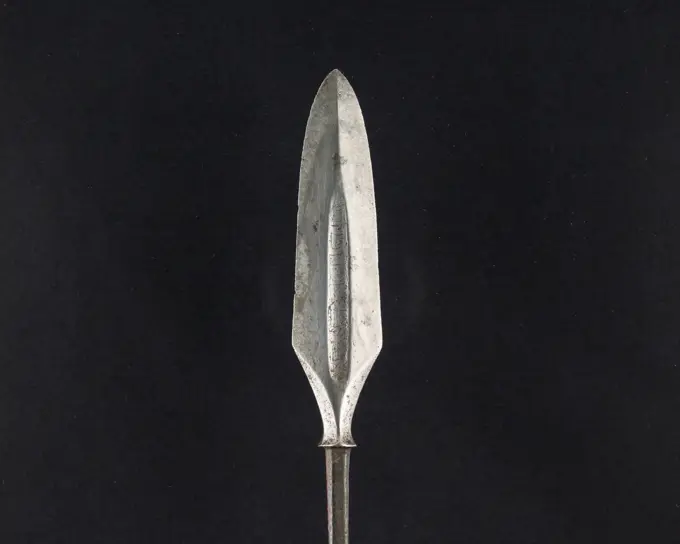
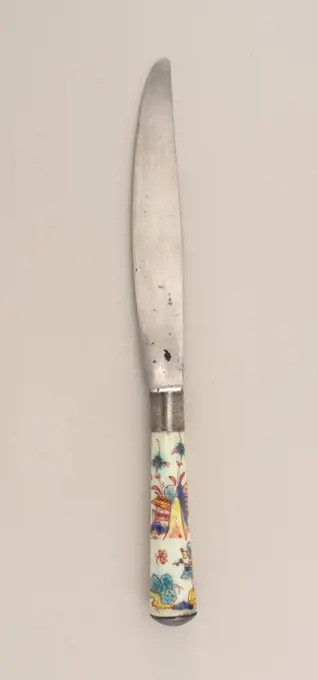
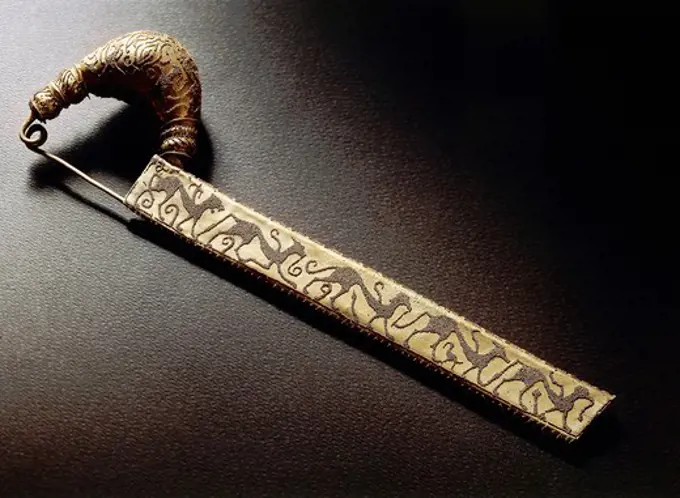
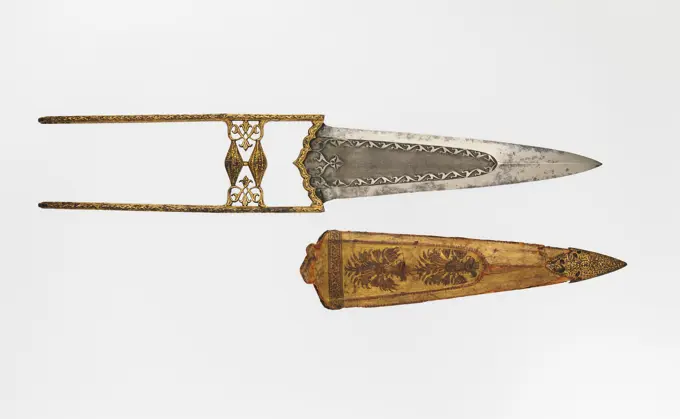
Decorative Historical Weapons

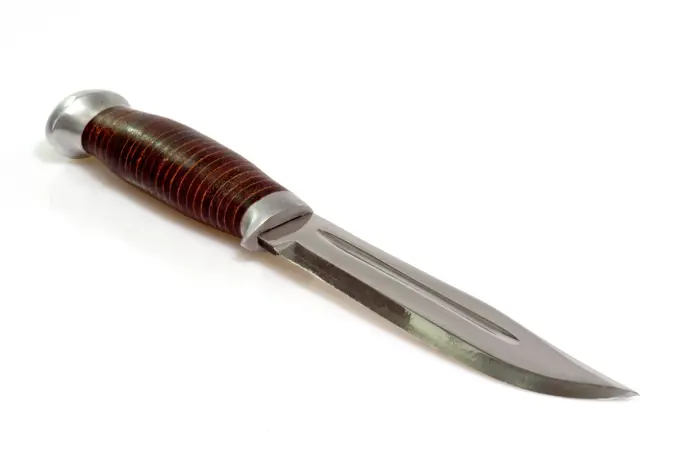
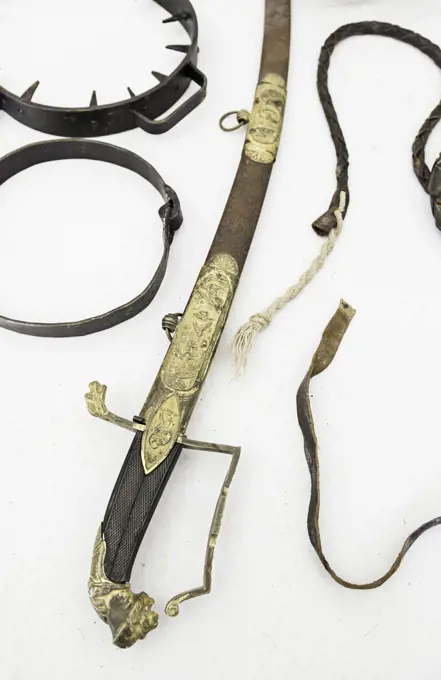
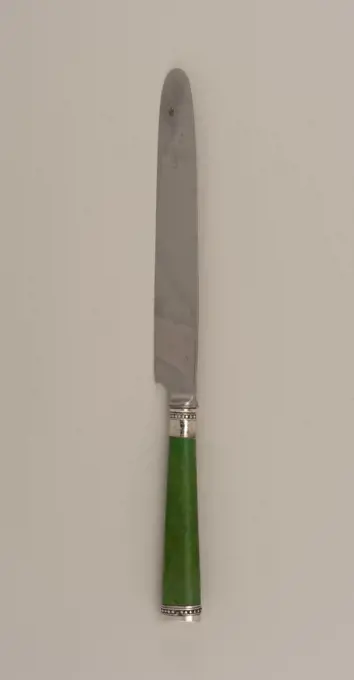
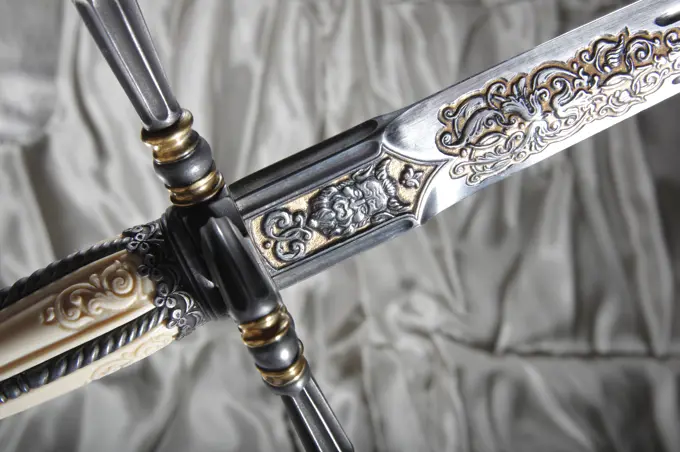
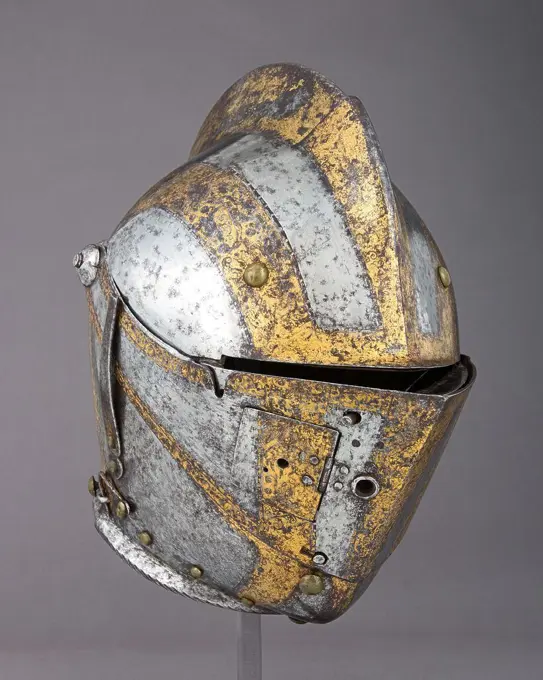
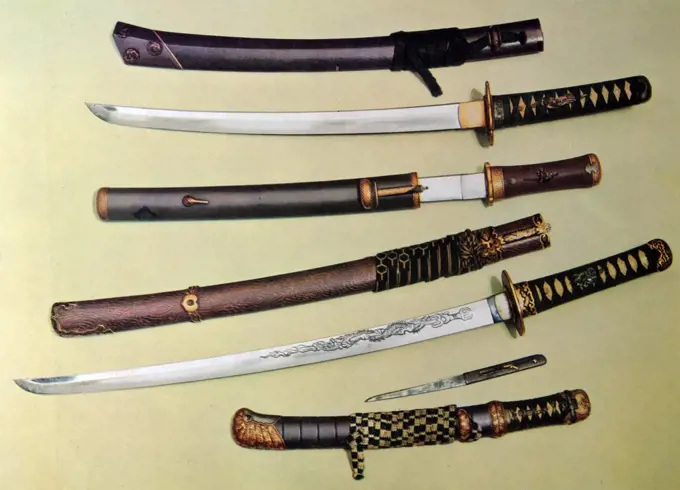
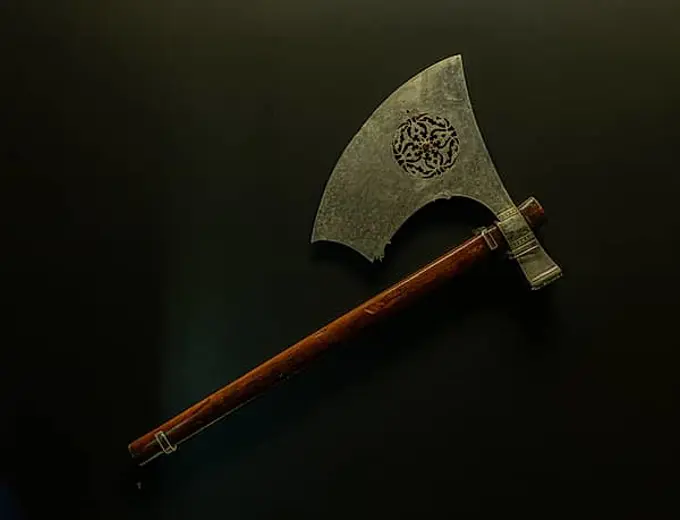
An array of beautifully crafted historical knives and daggers showcasing intricate designs and materials from various cultures and time periods.

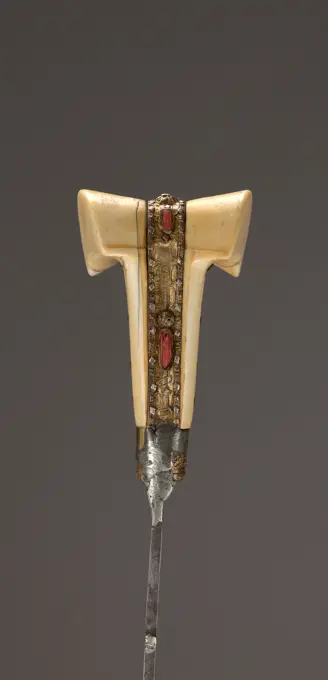
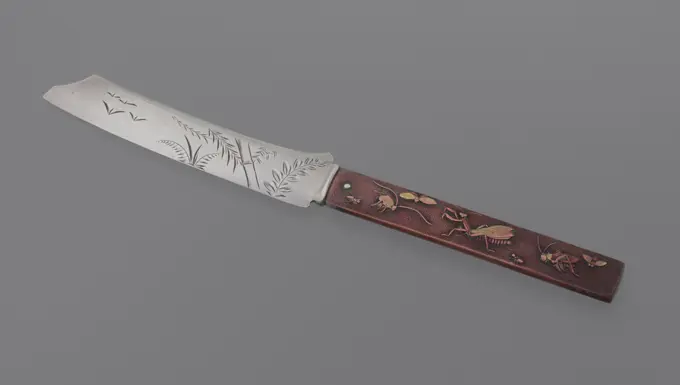
Knife, steel, brass, horn, Stylized leaf corona end. Tapered pointed triangular blade, straight cutting edge; notched upper edge engraved with scrolls on both sides. Brass mantle at bolster engraved with scrolls. Baluster neck, handle of three graduated knops of vertically ribbed horn and brass laminations, separated by deeply cut balusters., possibly Spain, ca. 1700, cutlery, Decorative Arts, Knife
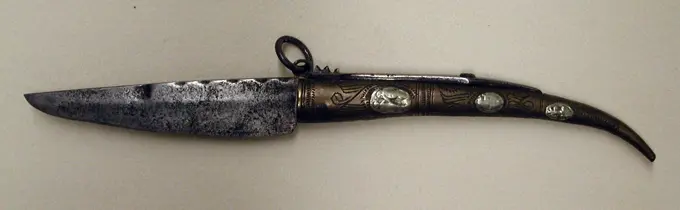
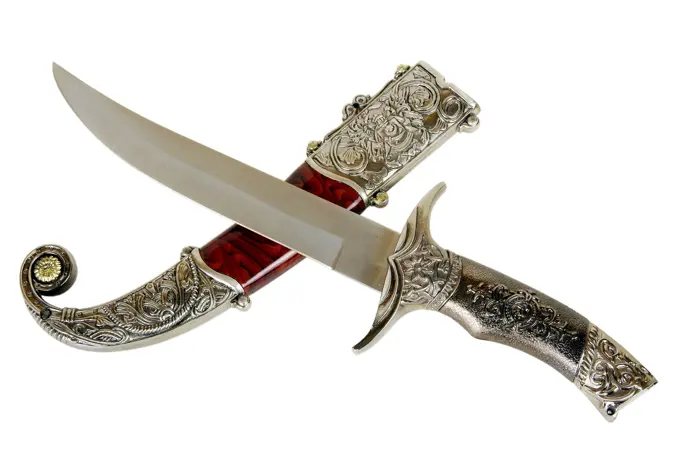
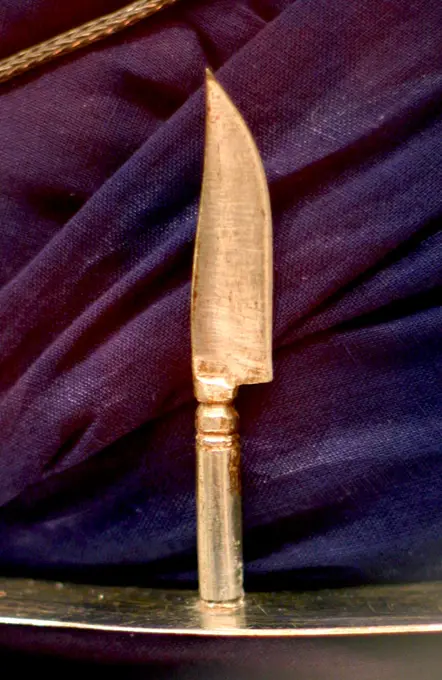
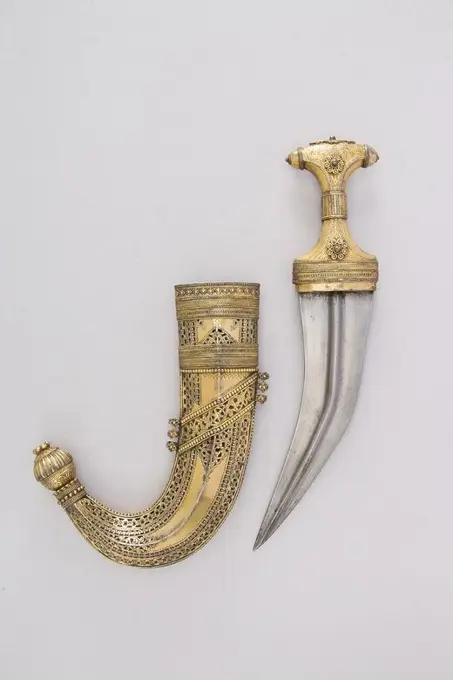
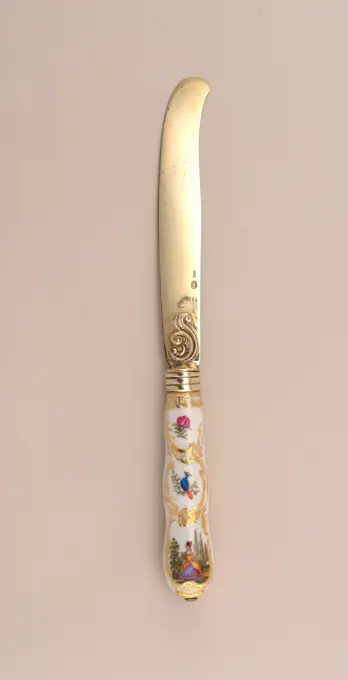
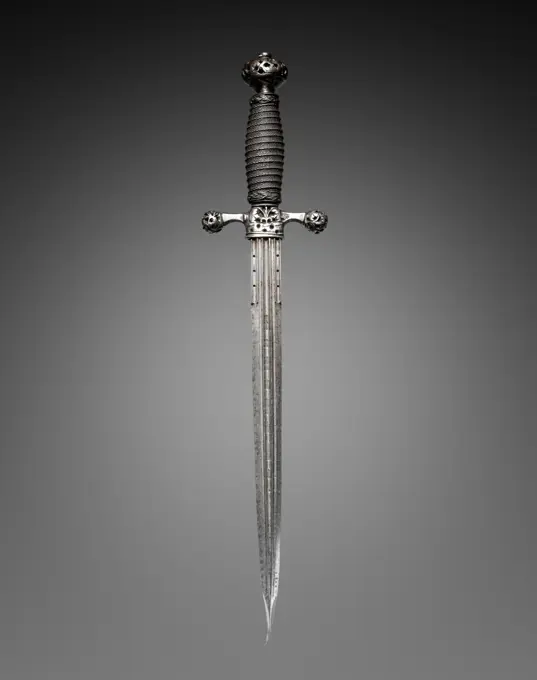
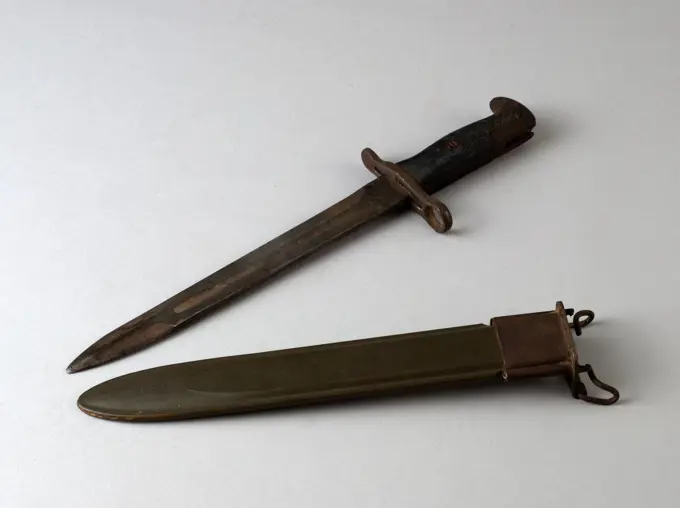
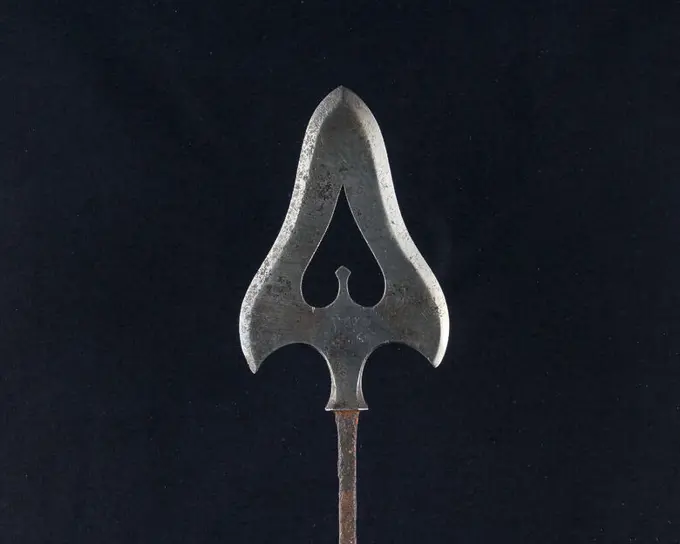
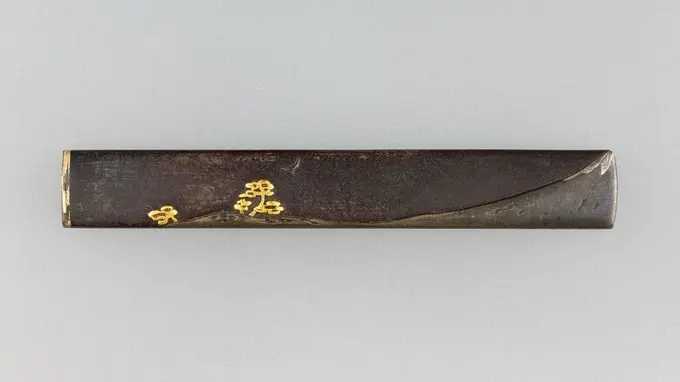
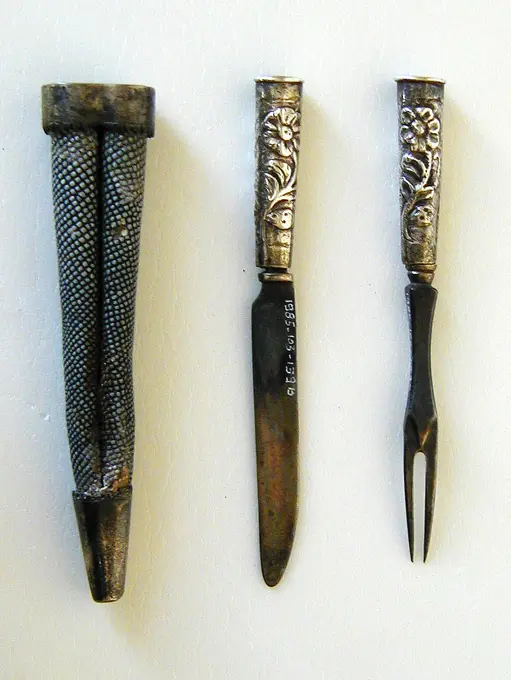
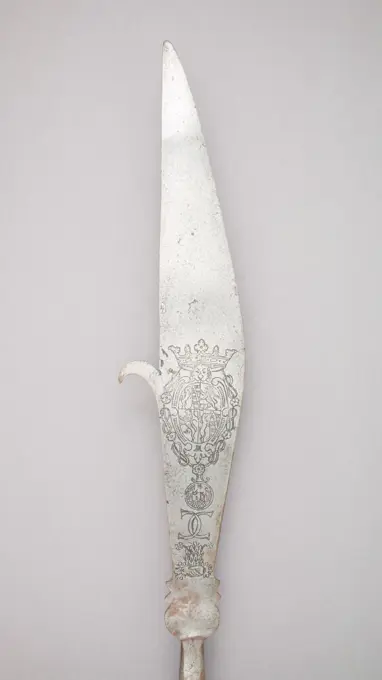
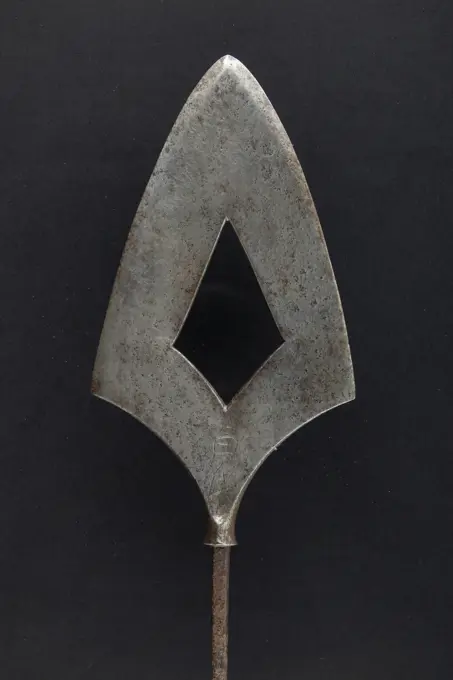
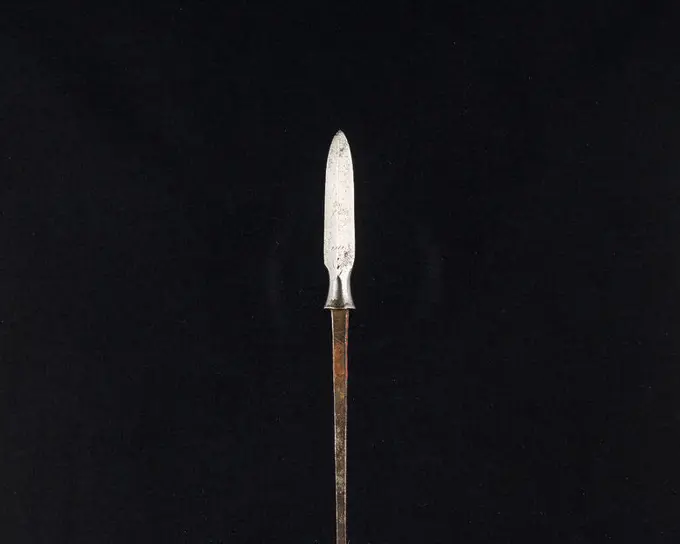
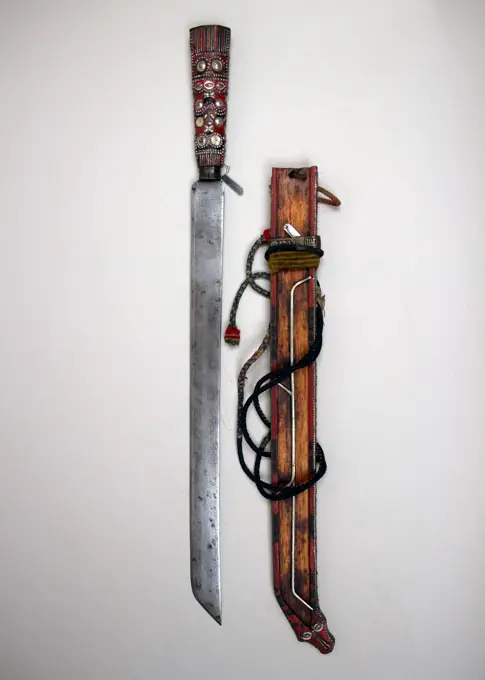
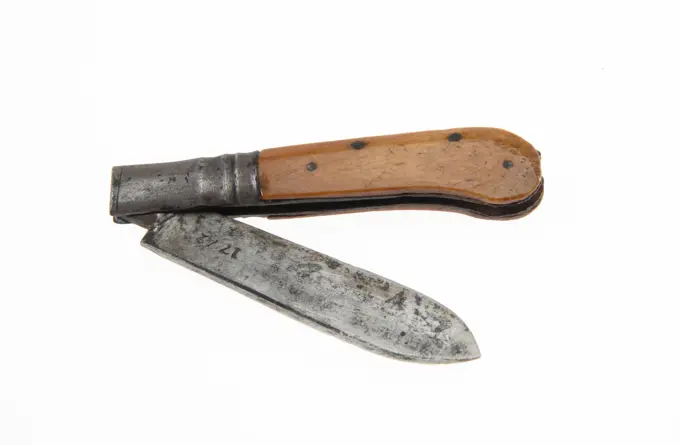
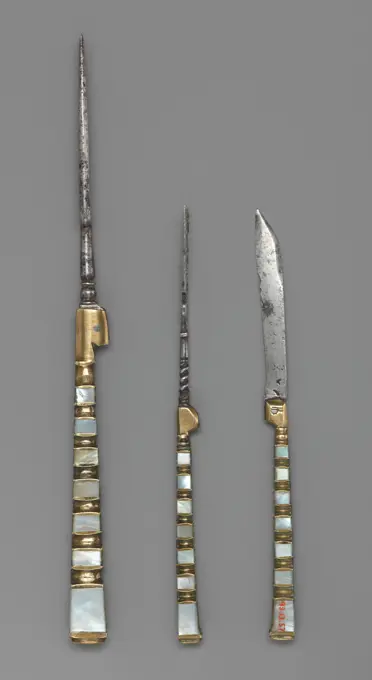
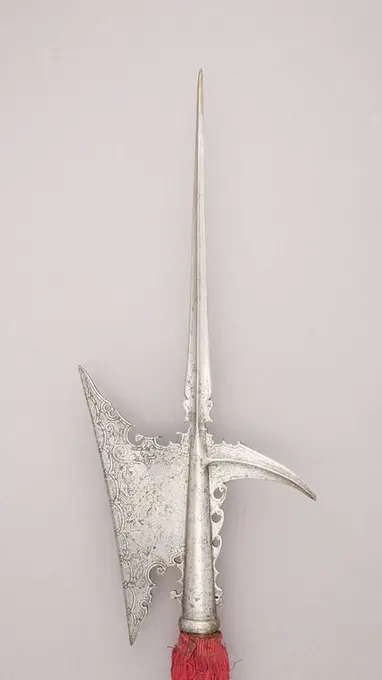
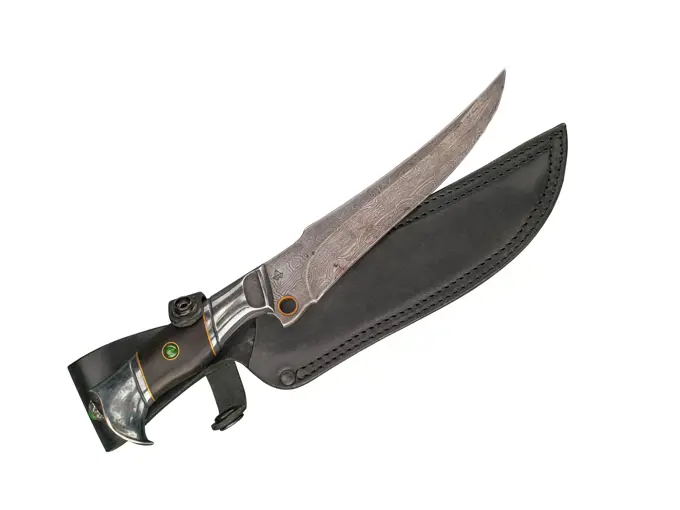
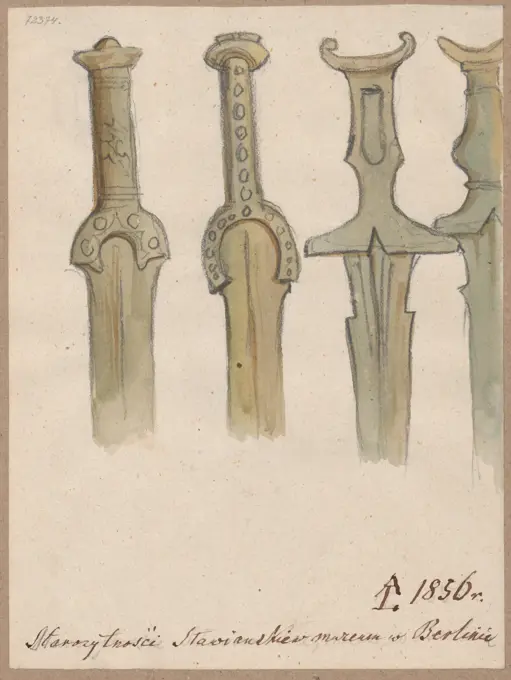
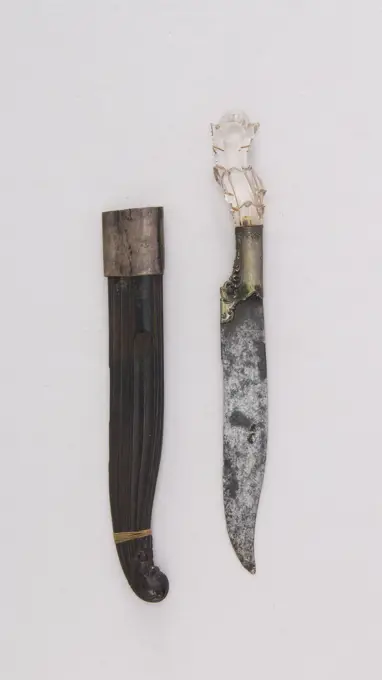
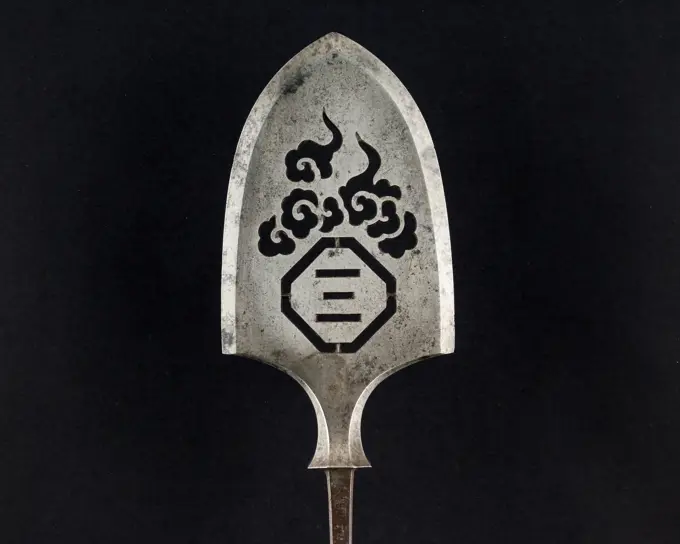
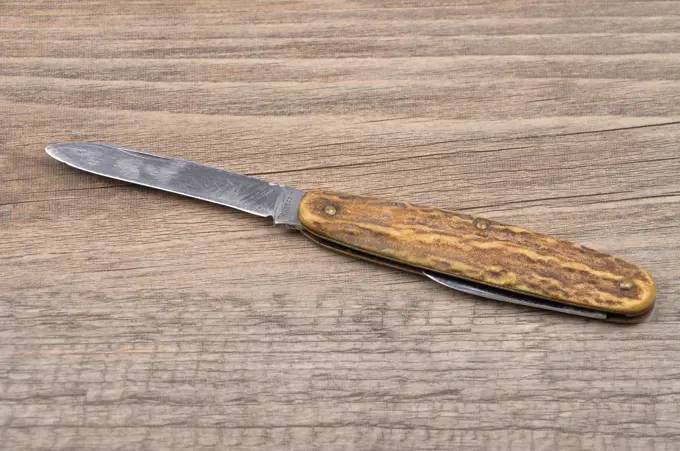
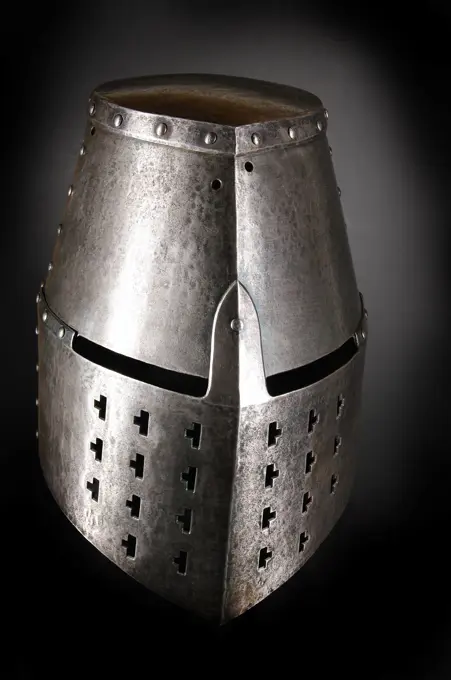
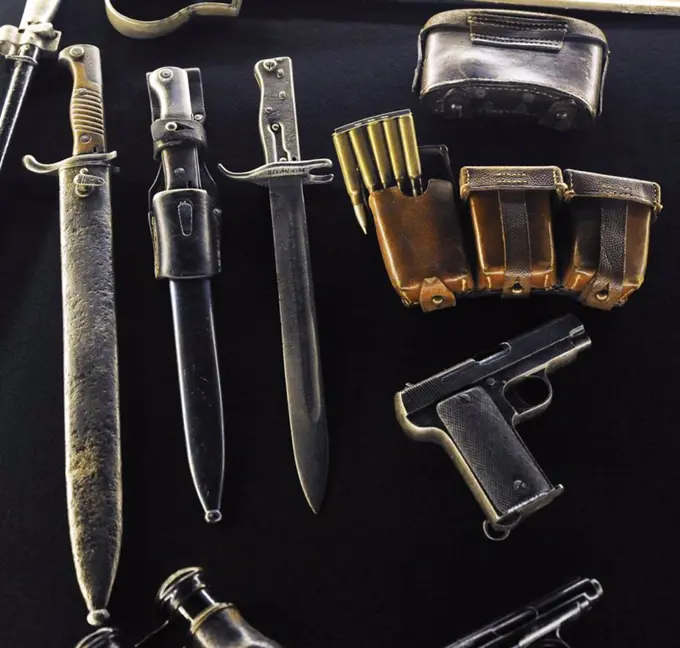
Kindler with the vaginaClasp Knife 18th century Spanish, Catalonia or Balearic Islands. Clasp Knife. Spanish, Catalonia or Balearic Islands. 18th century. Brass, steel, silver. Catalonia or Balaeric Islands. Knivesdagger Souvenir medieval dagger. An exact copy made of modern materials Copyright: xZoonar.com/ValeryxxSibrikovx 2421187Sikh Turban (Dastar or Pagi ), is a mandatory item of headgear for Sikh men. Dastar is very clearly associated with Sikhism and is an important part of the Sikh culture. Among the Sikhs, the turban is an article of faith that represents honour, self-respect, courage, spirituality, and piety. The Khalsa Sikh men, who adorn the Five Ks, wear the turban partly to cover their long, uncut hair (kesh). The turban is embellished by a half moon protection symbol called the Ardh Chand.Dagger (Jambiya) with Sheath. Culture: Arabian. Dimensions: H. with sheath 13 1/4 in. (33.7 cm); H. without sheath 12 7/8 in. (32.7 cm); W. 2 7/8 in. (7.3 cm); Wt. 13.4 oz. (37.9 g); Wt. of sheath 1 lb. 2.6 oz. (527.3 g). Date: 19th century. Museum: Metropolitan Museum of Art, New York, USA.Ciseleerhamer van IJer inlaid with silver and copper, anonymous, 1500 - 1600 Iron ciseleer hammer. The square handle is decorated with araboses and runs flat downwards. A round opening has been applied to the transition from Handing to Kop. The square head in diameter runs on one side in one point, the other side is blunt. At the bottom the head is decorated with Arabaseken and contains three slots for wire drawing at the top. The sides of the head are decorated with pickled triangles, three of silver and two of silver on each side.  iron (metal). copper (metal). silver (metal) engraving / inlay (process) Iron ciseleer hammer. The square handle is decorated with araboses and runs flat downwards. A round opening has been applied to the transition from Handing to Kop. The square head in diameter runs on one side in one point, the other side is blunt. At the bottom the head is decorated with Arabaseken and contains three slots for wire drawing at the top. The sides of the head are decoratKnife with Porcelain Handle Knife; Germany; silver, gold, porcelain, vitreous enamel; L x W: 22.9 x 2.1 cm (9 x 13/16 in.); The Robert L. Metzenberg Collection, gift of Eleanor L. Metzenberg; 1985-103-188Dagger of Suleyman, c. 1520. TURKEY.Dagger (Bichuwa) 17th-18th century Indian, Central Indian. Dagger (Bichuwa) 31722Dagger, c. 1620-50. Netherlands, 17th century. Steel, wire grip, perforated blade; overall: 46 cm (18 1/8 in.); blade: 30.9 cm (12 3/16 in.); quillions: 9.8 cm (3 7/8 in.); grip: 12 cm (4 3/4 in.).Arrowhead (Yanone). Culture: Japanese, Kyoto. Dimensions: L. 22 1/4 in. (56.5 cm); L. of head 7 7/8 in. (20 cm); W. 3 in. (7.6 cm); Wt. 7 oz. (198.4 g). Date: dated 1647. Museum: Metropolitan Museum of Art, New York, USA.Thrusting Sword (Estoc). German. Date: 1515-1550. Dimensions: Overall L. 118.5 cm (46 3/4 in.)Blade L. 96.5 cm (38 in.)Wt. 2 lb. 10 oz. Steel, wood, and leather. Origin: Germany. Museum: The Chicago Art Institute, Chicago, USA.General Leclerc Museum of Hauteclocque and the Liberation of Paris, Jean Moulin Museum. 76525-31 Browst weapon, armament, weapon, dagger, military equipment, war 1939-1945 39-45, object, Second World WarSabel with Schede, Anonymous, c. 1830 - c. 1850 sabre Turkish saber. Hundreds of black ebony or ivory. On the Kling Inscriptions in Lofwerk inlaid, right: J.B. Baron de Salis, Resident Dienergie Rembang, on the left a inscription in Malay (see diary). Shark leather sheath with silver investments.  iron (metal). sharkskin. silver (metal)   NetherlandsHunting cordlas with vaginaArrowhead (Yanone). Culture: Japanese. Dimensions: L. 10 in. (25.4 cm); L. of head 3 1/4 in. (8.3 cm); W. 2 in. (5.1 cm); Wt. 1.8 oz. (51 g). Date: 18th century. Museum: Metropolitan Museum of Art, New York, USA.Knife (France); Manufactured by Chantilly Porcelain Manufactory (France); porcelain, steel, silver; L x W: 21 x 2.1 cm (8 1/4 x 13/16 in.); The Robert L. Metzenberg Collection, gift of Eleanor L. Metzenberg; 1985-103-236Pair of CarvedLegs. Maker, attributed to: John Goddard, American, 1723-1785Knife Handle (Kozuka). Culture: Japanese. Dimensions: L. 3 13/16 in. (9.7 cm); W. 9/16 in. (1.4 cm); thickness 3/16 in. (0.5 cm); Wt. 1 oz. (28.3 g). Date: 18th century. Museum: Metropolitan Museum of Art, New York, USA.Knife (Golok) with Sheath. Culture: Sumatran. Dimensions: L. with sheath 9 1/2 in. (24.1 cm); L. without sheath 8 7/8 in. (22.5 cm); W. 1 5/16 in. (3.3 cm); Wt. 2.2 oz. (62.4 g); Wt. of sheath 1.5 oz. (42.5 g). Date: 18th-19th century. Museum: Metropolitan Museum of Art, New York, USA.Fork (Netherlands), ca. 1730; silver; L x W: 9.8 x 1.1 cm (3 7/8 x 7/16 in.); The Robert L. Metzenberg Collection, gift of Eleanor L. Metzenberg; 1985-103-139-cFork with engraved mythological figures first half 17th century Dutch. Fork with engraved mythological figures. Dutch. first half 17th century. Silver, steel. Metalwork-SilverFauchard 16th century Italian. Fauchard 25091Weapons. Swiss Halberd from 18th century, Swiss halberd from 15th century, German halberd from 16h century, French halberd from 16th century, Venetian halberds from 16th century and spearhead of the 16th century. Colored engraving.Arrowhead (Yanone) 18th century Japanese Although today Japanese warriors are renowned most for their swordsmanship, archery, especially from horseback, has been an essential part of samurai warfare and culture for centuries. Arrows were fitted with heads of varying shape according to their intended use in war, the hunt, or target practice. Arrowheads made for use on the battlefield incorporated different designs intended for specialized purposes such as the piercing of armor or to cause maximum damage to horses and unarmored personnel.Large arrowheads, pierced and elaborately chiseled with landscapes, birds, flowers, dragons, and Buddhist divinities, were created to be admired for the beauty of their metalwork and design rather than for use in archery. Such highly elaborate examples may have been made for presentation or as a votive offerings to a shrine.. Arrowhead (Yanone). Japanese. 18th century. Steel. Archery Equipment-ArrowheadsArrowhead (Yanone) 18th century Japanese Although today Japanese warriors are renowned most for their swordsmanship, archery, especially from horseback, has been an essential part of samurai warfare and culture for centuries. Arrows were fitted with heads of varying shape according to their intended use in war, the hunt, or target practice. Arrowheads made for use on the battlefield incorporated different designs intended for specialized purposes such as the piercing of armor or to cause maximum damage to horses and unarmored personnel.Large arrowheads, pierced and elaborately chiseled with landscapes, birds, flowers, dragons, and Buddhist divinities, were created to be admired for the beauty of their metalwork and design rather than for use in archery. Such highly elaborate examples may have been made for presentation or as a votive offerings to a shrine.. Arrowhead (Yanone). Japanese. 18th century. Steel. Archery Equipment-ArrowheadsKnife with Floral Porcelain Handle, Saint-Cloud Porcelain Manufactory, French, active by 1693 - 1766, porcelain, vitreous enamel, steel, silver, Blade slightly curved upper edge, lower edge tapering towards the point. Plain silver ferrule. Tapering octagonal white porcelain handle decorated with kakiemon design in yellow, blue and green (underglaze) and brown-red (overglaze). Rounded silver cap at the top of the handle., France, 1725-1750, cutlery, Decorative Arts, knife, knifeLeech-shaped gold fibula, from Tomb of Littore, Vetulonia, Tuscany Region, ItalyMichael Rekucki, Dagger and Sheath, c 1941 Dagger and SheathDagger (Katar) and Sheath 17th century Indian, Mughal Daggers of this type, called katars, were designed to be held by the cross bars in a clenched fist. This is one of the few that retains its embossed leather scabbard. Elaborately decorated examples worn thrust through a waist sash, can be seen in many Indian paintings of this period.. Dagger (Katar) and Sheath. Indian, Mughal. 17th century. Steel, leather, gold. DaggersPrzeszo Przyszoci unknownArrowhead (Yanone). Culture: Japanese. Dimensions: L. 6 3/8 in. (16.2 cm); L. of head 1 1/2 in. (3.8 cm); W. 3/8 in. (1 cm); Wt. 0.4 oz. (11.3 g). Date: 18th century. Museum: Metropolitan Museum of Art, New York, USA.Sword with Scabbard 19th century Taiwanese. Sword with Scabbard 31090Clasp knife -Folding fork early 17th century possibly Italian. Folding fork. possibly Italian. early 17th century. Steel, brass, mother-of-pearl. Metalwork-SteelFruit knife, F. Nicoud, French, active 1890, Silver, steel, mother-of-pearl, gilding, One of twelve fruit knives with mother-of-pearl handles and engraved and gilt decoration on blades., ca. 1890, cutlery, Decorative Arts, Fruit knifeHalberd. Culture: Italian. Dimensions: L. 93 3/4 in. (238.1 cm); L. of head 21 1/4 in. (54 cm); W. 9 7/16 in. (24 cm); Wt. 4 lbs. 2.1 oz. (1873.9 g). Date: ca. 1525. Museum: Metropolitan Museum of Art, New York, USA.DETALLE DEL HACHA DE CARLOS V - SIGLO XVI. Location: PALACIO REAL-REAL ARMERIA DE MADRID. MADRID. SPAIN.Price pins of Amsterdam, Anonymous, 1756 pen Ganzeveren pen of silver, with gilded weapon of Amsterdam at the front; Awarded as a prize by the city of Amsterdam, (for students from the Latin school). Dated; front: 1756. Signed; Back: hop. Marked: front: weapon of Amsterdam; Reverse: sword; Three crosses under Kroon, including 'V'. Amsterdam silver (metal). forging / gilding  AmsterdamSpontoon 18th century German. Spontoon 34298Arrowhead (Yanone). Culture: Japanese. Dimensions: L. 11 1/4 in. (28.6 cm); L. of head 2 11/16 in. (6.8 cm); W. 1 3/8 in. (3.5 cm); Wt. 1.2 oz. (34 g). Date: 18th century. Museum: Metropolitan Museum of Art, New York, USA.Old dagger with Scabbard Old iron engraved dagger with his black leather scabbard isolated on white background Copyright: xZoonar.com/AlainxdexMaximyx 8657612Dolch Table Top Copyright: xZoonar.com/Teamarbeitx 109659Sword and instruments of torture, detail of antique weapons, medieval torture of the Inquisitionknife, green-stained ivory, steel, silver, Part of a set of knives and forks ((1959-56-1-a/f), where a/d are knives, and e-f are forks)., Knife (a,b): tapering, stained green ivory handle with beaded silver cap terminal and ferrule and silver blade, England, late 18th century, cutlery, Decorative Arts, knifeRapier Italian ca. 1600 The rapier was the principal civilian sidearm throughout the sixteenth and seventeenth centuries. Designed for cut-and-thrust fencing of progressively complex techniques, the rapier is characterized by a double-edged blade with an acute point and an elaborate guard for the hand. The guards, usually of iron or steel, were subject to a variety of embellishment. They were engraved, chiseled, gilded, damascened, and encrusted in gold and silver in keeping with fashionable styles. Unless otherwise noted, the materials, attributions, and dating given here refer to the hilts. Rapier blades, invariably of steel, bear a variety of makers marks denoting their origin in the two principal centers of blademaking, Toledo in Spain and Solingen in Germany. View more. Rapier. Italian. ca. 1600. Steel. SwordsSmall Sword, c. 1650-60. Hilt: Holland; blade: Spain, 17th century. Blued, gilded, and pierced steel, wood, steel wire, chiseled shell guard, engraved blade; overall: 92.7 cm (36 1/2 in.); blade: 75.9 cm (29 7/8 in.); guard: 7.9 cm (3 1/8 in.).Knife with cut lifts in the form of a nobleman, c. 1600 - c. 1699 Knife with a sliced handle of amber, representing a nobleman. Belongs to BK-NM-568. Germany amber (fossil resin) Knife with a sliced handle of amber, representing a nobleman. Belongs to BK-NM-568. Germany amber (fossil resin)Writing brush with geometric patterns 13th century China This brush handle shows all of the characteristics of early Chinese carved lacquer: the geometric design is not standardized, as it would be in a later piece, and the lacquer clearly shows alternating layers of black and red.. Writing brush with geometric patterns. China. 13th century. Writing brush with geometric patterns. Southern Song dynasty (1127-1279). LacquerWing-armed squid (Stenoteuthis pteropus) - deep sea specimen from South AtlanticArrowhead 2nd-1st millennium B.C. Iran. Arrowhead 325231FruitKnife. Manufacturer: Gorham Manufacturing Company, American, founded 1831Reinforcing Plates of Armor for the Tilt dated 1551 Austrian, Innsbruck For the joust, or tilt, in the Italian fashion, the grandguard protecting the upper left chest and neck was close-fitting in contrast to the German use of a projecting tilt targe (cape-like defense for the left shoulder) screwed directly to the breastplate. The etched decoration, consisting of lush foliate scrolls and dragons on a recessed black ground, is characteristic of Innsbruck armors of the period.. Reinforcing Plates of Armor for the Tilt 35731Slice of air dried turkey meat on the blade of knifevintage baker spatula spreader knife over white, clipping pathRitter Armour of the medieval knight. Metal protection of the soldier against the weapon of the opponent Copyright: xZoonar.com/ValeryxxSibrikovx 3115110The village of the swords of the Square from the collections of the Museum in Berlin; Lesser, Aleksander (1814-1884); 1856 (1856-00-00-1856-00-00);Berlin (Germany), Lesser, Aleksander (1814-1884), Lesser, Aleksander (1814-1884) - collections, Lesser, Emiljan Stanisław (Baron - 1847-1912), Lesser, Emiljan Stanisław (Baron - 1847-1912) - collection , Lesser, Wiktor Stanisław Zygmunt (Baron - 1853-1935), Lesser, Wiktor Stanisław Zygmunt (Baron - 1853-1935) - collection, Slavs, weapons, white weapons, gift (provenance), swords, militaria, crafts, collections, collections museumKnife (Piha Kaetta) with Sheath 18th-19th century Sri Lankan. Knife (Piha Kaetta) with Sheath 31556Small (10 cm / 4 inch) hand operated ice auger used in ice fishingAncient sabre. A smart variant of the fighting weaponpuñal biglobular, Carratiermes, Montejo de Tiermes, siglo II - I a.C, museo Numantino de Soria, Soria, Comunidad Autónoma de Castilla, Spain, Europe.Harpoons made of elk or red deer bone. Maglemosian Culture, 8700-6500 BC. National Museum. Copenhagen. Denmark.Polish sabre from the 17th/ 18th centuries, owned by Zdzisław Wolski ; drawing for the publication: Dominika Jeżewskiego Skarbiec Zabytków Polskich znajdujących się w prywatnych zbiorach Warszawy, malował z natury Władysław Sztolcman od r. 1909` Treasure???????????????????. Sztolcman, Władysław Roman (1873-1950), painterHalberd of Johann Georg, Prince-Elector of Brandenburg (reigned 1571-98) dated 1570 German. Halberd of Johann Georg, Prince-Elector of Brandenburg (reigned 1571-98) 26685Iron helmet Iron helmet of the medieval knight. Very heavy headdress Copyright: xZoonar.com/ValeryxxSibrikovx 5893777Wurfmesser der Mogwandi Throwing knife of the Mogwandi, Middle Congo. African culture and antiquities. Publication of the Meyers encyclopedia, Vol. 7, Leipzig, Germany, 1910. LicenseRF Copyright: xZoonar.com/SergeyxKohlx 23206117Arrowhead (Yanone) 18th century Japanese Although today Japanese warriors are renowned most for their swordsmanship, archery, especially from horseback, has been an essential part of samurai warfare and culture for centuries. Arrows were fitted with heads of varying shape according to their intended use in war, the hunt, or target practice. Arrowheads made for use on the battlefield incorporated different designs intended for specialized purposes such as the piercing of armor or to cause maximum damage to horses and unarmored personnel.Large arrowheads, pierced and elaborately chiseled with landscapes, birds, flowers, dragons, and Buddhist divinities, were created to be admired for the beauty of their metalwork and design rather than for use in archery. Such highly elaborate examples may have been made for presentation or as a votive offerings to a shrine.. Arrowhead (Yanone). Japanese. 18th century. Steel. Archery Equipment-ArrowheadsSmart dagger Smart dagger of the medieval soldier. It was used for hunting Copyright: xZoonar.com/VALERY-SIBRIKOVx 20043131Bronze sickle from the Late Bronze Age. Dated 12th Century BCEarly eskimo scrimshaw on a walrus tusk. The scrimshander has depicted a polar bear, a reindeer, a fish, a snowboot, an eskimo wearing skins, a hooded eskimo and a seabird.Close Helmet for the Tilt. Culture: German, Augsburg. Dimensions: H. 11 3/4 in. (29.8 cm); W. 8 7/8 in. (22.5 cm); D. 11 15/16 in. (30.3 cm); Wt. 6 lb. 13 oz. (3090 g). Date: 1573.The helmet is part of a richly decorated armor made for one of the princes Radziwill of Poland for use in the field and the tournament. The Polish eagle appears in the etched ornament; the date 1573 is etched on another piece from this same armor, which is in the Art Institute of Chicago. Museum: Metropolitan Museum of Art, New York, USA.Collection of 14th Century Japanese Katana, Wakizashi, Tanto, and Samurai swordsA picture of an axe inside the Weapon and Armours room, part of the Topkapi Palace complexShaffron 1800-1900 Italy. Steel .Arrowhead (Yanone) 18th century Japanese Although today Japanese warriors are renowned most for their swordsmanship, archery, especially from horseback, has been an essential part of samurai warfare and culture for centuries. Arrows were fitted with heads of varying shape according to their intended use in war, the hunt, or target practice. Arrowheads made for use on the battlefield incorporated different designs intended for specialized purposes such as the piercing of armor or to cause maximum damage to horses and unarmored personnel.Large arrowheads, pierced and elaborately chiseled with landscapes, birds, flowers, dragons, and Buddhist divinities, were created to be admired for the beauty of their metalwork and design rather than for use in archery. Such highly elaborate examples may have been made for presentation or as a votive offerings to a shrine.. Arrowhead (Yanone). Japanese. 18th century. Steel. Archery Equipment-ArrowheadsWhite feather in the inkwell, burning candle and two paper scroll on dark-green clothKnife (Kukri) with Sheath and Pouch with Two Small Knives. Culture: Indian or Nepalese, Gurkha. Dimensions: H. without sheath 21 3/8 in. (54.3 cm); H. of blade 17 1/2 in. (44.5 cm); W. 3 in. (7.6 cm); Wt. 2 lb. 0.8 oz. (929.9 g); Wt. of sheath 4.6 oz. (130.4 g); small knife (c); L. 5 1/8 in. (13 cm); W. 1 in. (2.5 cm); Wt. 1.4 oz. (39.7 g); sharpener (d); L. 8 3/4 in. (22.2 cm); W. 1 1/2 in. (3.8 cm); Wt. 2.4 oz. (68 g). Date: 19th century. Museum: Metropolitan Museum of Art, New York, USA.Pocket knifeRitter Iron helmet of the medieval knight. Very heavy headdress Copyright: xZoonar.com/ValeryxxSibrikovx 3841493From left to right and from top to bottom: Bayonets for Mauser rifle, model 1898, Germany; Cartridge case for the committee rifle model 1888, Germany; Cartridge case and bullets to the Mauser rifle model 1898, Germany and Zebra pistol model 1916, used during the First World War by the French army and by the insurgents of Silesia, Spain. Silesian Museum. Katowice. Poland.Iron helmet Iron helmet of the medieval knight. Very heavy headdress Copyright: xZoonar.com/ValeryxxSibrikovx 2454305Barbarian civilizations, France, 5th century. Goldsmith's art. Treasure of Pouan, princely burial of a Germanic warrior. Cloisonne' enamel and gold dagger handles and sheaths and clasps.Ancient tip of a spear. Ancient tip of a spear isolated on whiteAmmunition Norman warrior 2nd half of the 11th century. Ammunition Norman warrior 2nd half of the 11th century. Copyright: xZoonar.com/PavelxSytilinxxxxxVolgograd,xRussia.x 22031123Armor for Heavy Cavalry. Culture: French. Dimensions: H. 57 in. (144.8 cm); Wt. 77 lb. 2 oz. (34.98 kg). Date: ca. 1600.One of the best-preserved French armors dating from the reign of Henry IV (1589-1610), this example demonstrates the French preference for completely gilt armors. It retains its original yellow silk helmet lining and red leather straps sewn with metallic thread. Matching this armor are a shaffron (defense for the horse's head), also in the Metropolitan Museum's collection (acc. no. 27.177.2), and a saddle, now in the Musée de l'Armée, Paris.In spite of its rich decoration, this armor was intended for use in battle. It was made at a time when the lance had been abandoned by the heavily armored cavalry in favor of a pair of pistols kept in holsters at the front of the saddle. The presence of hand firearms on the battlefield led to the increasing weight of armors such as this and the gradual discarding of elements like the defenses for the lower legs. Museum: MetropoliOld kitchen tools for the production of meat products, sausagesAsian kitchen chef accessories on black stone table Asian kitchen chef accessories on black stone table Copyright: xZoonar.com/AntonxDobreax 21385432Armor ca. 1500-1510 and later; helmet, ca. 1480 Italian. Armor. Italian. ca. 1500-1510 and later; helmet, ca. 1480. Steel, leather. Armor for Man