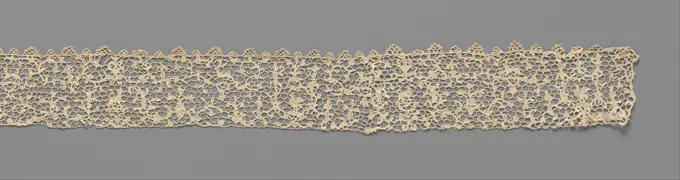
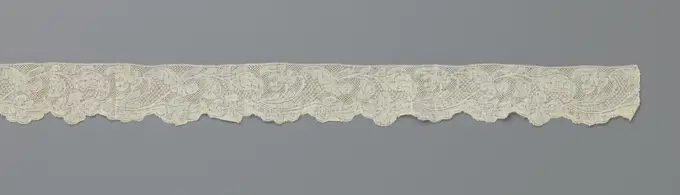
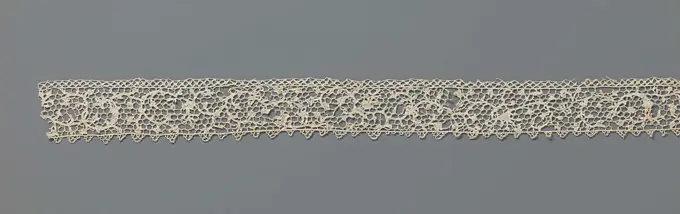
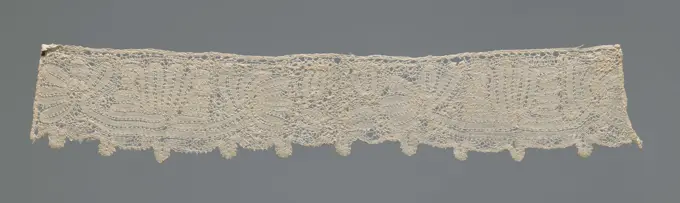
Decorative Lace Borders

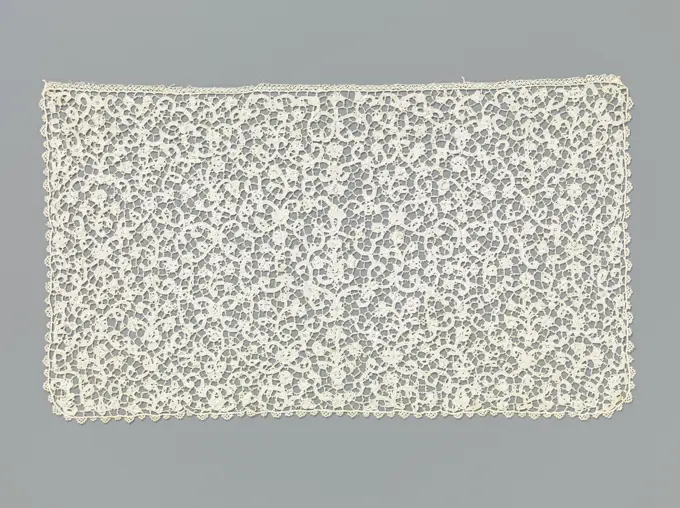
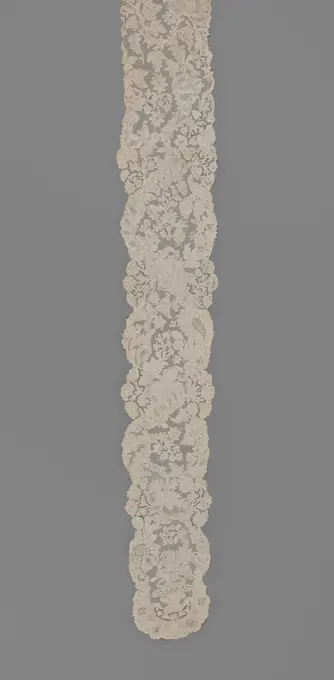
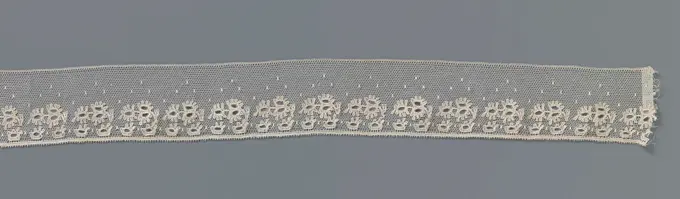
Intricate lace borders made from linen, showcasing various techniques and patterns from historical European lace-making traditions.

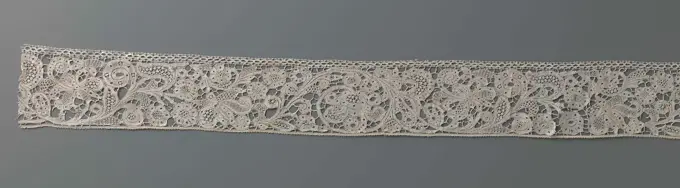
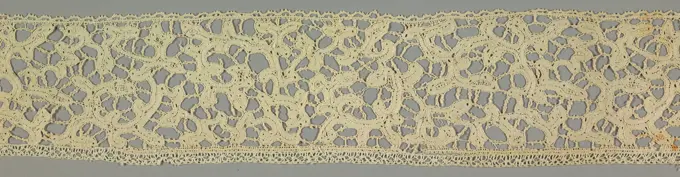
Border, Medium: linen Technique: bobbin lace, Border of Binche bobbin lace in scrolling floral pattern with snowflake ground., Belgium, 18th century, lace, Border
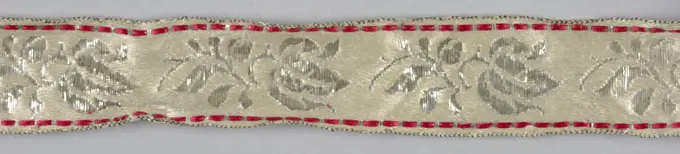
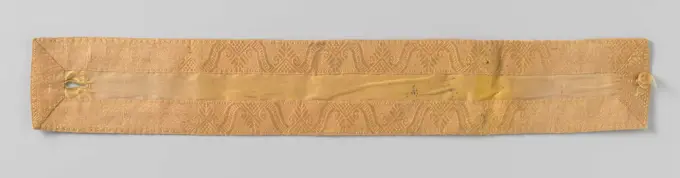
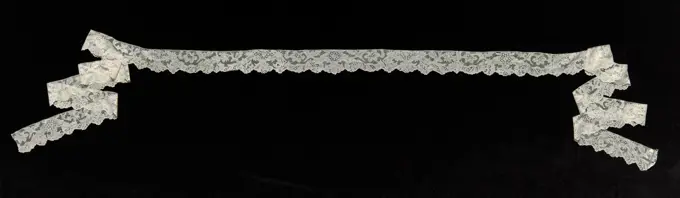
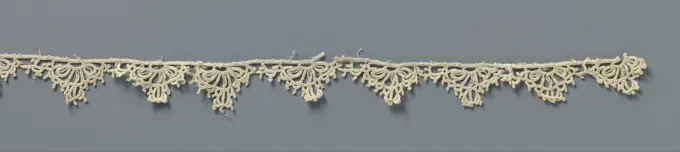
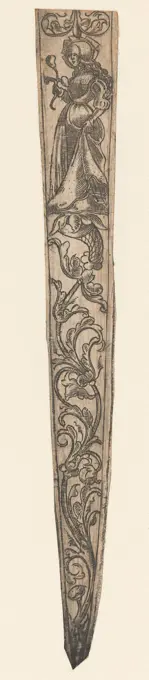
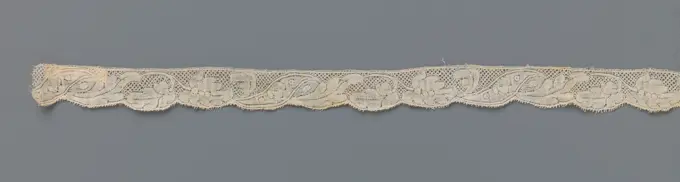
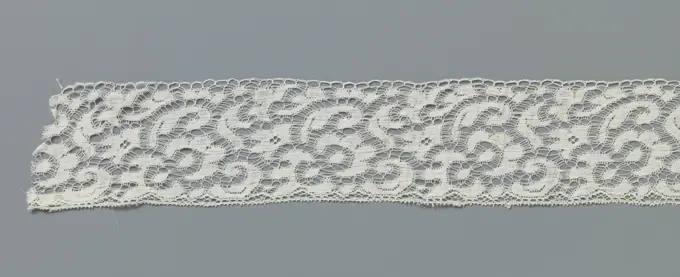
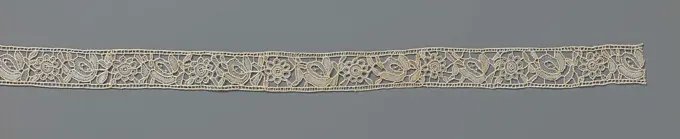
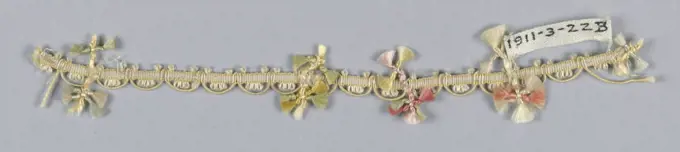
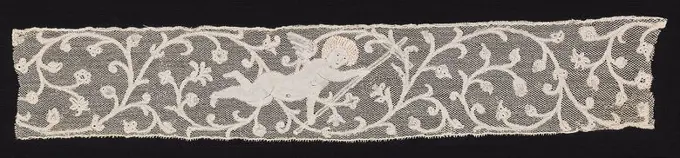
Band, Medium: linen Technique: needle lace, Needlepoint lace border with Venetian Point and curving vine and foliage design., Venice, Italy, late 17th-early 18th century, lace, BandBorder, Medium: linen Technique: bobbin lace, Mechlin style, Mechlin-style border with an elaborate fond interspersed by asymmetric floral garland and ribbons., Belgium, mid-18th century, lace, BorderPiece 18th century Flemish, Brussels. Piece 212515Border, Medium: linen Technique: bobbin lace, Border of Binche bobbin lace in scrolling floral pattern with snowflake ground., Belgium, 18th century, lace, BorderBorder, Medium: linen Technique: raised needle lace, Border of serpentine floral sprays outlined by cordonnet. Pattern connected by brides picotées, outlined by cordonnet and interspersed by portes and gaze quadrillée., Italy, 17th century, lace, BorderBand (Spain); linen; Bequest of Marian Hague; 1971-50-100Tussenzetsel van kloskant met spitsovaaltje in u-vorm.Inserting natural colosside in close-uped linen, ancient side. With small recesses, a repeating pattern can be distinguished from a spindle site surrounded by a more or less u-shaped edge. This pattern is over and upright and upside down. Straight finished and bottom.Strip of bobbin with symmetrical volute drink with lobed flower and two flower buds, anonymous, c. 1650 - c. 1674 Strip of natural-colored bobbin, old-Flemish side. The repeating pattern consists of a symmetrical volute drink with a lobed flower in the middle and at the slightly curling ends of the slender two flower buds. The motifs are connected by a grid, a five -part ground. The motifs are made in linen battle with openwork edges. At the top and bottom are straight finished, with picots at the bottom. Southern Netherlands linen (material) bobbin lace Strip of natural-colored bobbin, old-Flemish side. The repeating pattern consists of a symmetrical volute drink with a lobed flower in the middle and at the slightly curling ends of the slender two flower buds. The motifs are connected by a grid, a five -part ground. The motifs are made in linen battle with openwork edges. At the top and bottom are straight finished, with picots at the bottom. Southern Netherlands linen (material) bobbMutsenstrook van kloskant met zigzag-rivière.Strip natural colored Brussels climbing side. A river in zigzag line is crossed by spiral raft, enclosing impeller-shaped medallions. The motifs are connected by a draft ground. A coarse hexagonal soil has been applied in the Rivieres. On the fields that are bounded by the Rivier are twigs, to which flowers in the form of pomegranates, pears or winged insects. The strip is probably used or made for a hat.Border, Medium: linen Technique: bobbin lace, Brussels style, Border with floral and foliated sprays in allover pattern., Belgium, late 17th century, lace, BorderBorder (Belgium); linenStrip bobbin with continuous slender with a curly rosette flower, anonymous, c. 1650 - c. 1699  Strip of natural -colored bobbin, Old Flemish bobbin with braid soil. The repeating pattern consists of a continuous thin tan, with one always up and one down curly rosette flower and a few leaves, including two strongly curled leaves. The motifs are connected by a braid ground with long braids. The motifs are made in linen battle with openwork edges and some separate recesses. Decorative lands have been used in the leaves and flower hearts, including a snowflake land. The top and bottom are straight, with picots on one side. Antwerp linen (material) bobbin lace / Flemish lace with plaited groundStrip of needle side with numerous four -legged friends and birds, anonymous, c. 1700 - c. 1709 Strip of natural needle side, transition from Venetian side to Point de France. Pattern with numerous animals, birds and four -legged friends (dogs and deer), Processed in a fine pattern of tendrils, flowers and flower vases. Open soil with hexagonal picoted bars. One long side is finished with a picotrand of triangles. Venice (possibly) linen (material) Venetian needlepoint Strip of natural needle side, transition from Venetian side to Point de France. Pattern with numerous animals, birds and four -legged friends (dogs and deer), Processed in a fine pattern of tendrils, flowers and flower vases. Open soil with hexagonal picoted bars. One long side is finished with a picotrand of triangles. Venice (possibly) linen (material) Venetian needlepointHebrew ritual lace (one of four) early 18th century Italian, Burano. Hebrew ritual lace (one of four) 226259Needlepoint Lace Edging, 1715-1774. France, Argentan, 18th century (Louis XV Period, 1715-1774). Lace, needlepoint: linen; average: 7.3 x 58.5 cm (2 7/8 x 23 1/16 in.).Strip bobbin with flour in the middle of a battery tank, anonymous, c. 1700 Strip of natural -colored bobbin, Antwerp side. The repeating pattern consists of a thin tan in the shape of a battery with the curling ends. The accolade is crowned in the middle by a flower. The motifs are connected by a grid, a five -part ground. The motifs are made in linen battle with openwork edges. At the top and bottom are straight finished, with picots along the bottom.  linen (material) bobbin lace / Antwerp lace Strip of natural -colored bobbin, Antwerp side. The repeating pattern consists of a thin tan in the shape of a battery with the curling ends. The accolade is crowned in the middle by a flower. The motifs are connected by a grid, a five -part ground. The motifs are made in linen battle with openwork edges. At the top and bottom are straight finished, with picots along the bottom.  linen (material) bobbin lace / Antwerp lacePiece ca. 1700 Dutch. Piece 212862Strip bobbin with horn with abundance closed by an acanthus leaf, anonymous, c. 1740 - c. 1749 Strip of natural-colored bobbin: binche side. The repeating pattern consists of a horn of abundance, which is closed by an acanthus leaf. Apparently from the edge of the horn a pest glaard from the edge of the horn, which hangs a three -lobby flower from the edge of the horn. These flowers, possibly carnations, form scallops along the underside of the strip. The scrap edge along the underside of the strip is formed between the 'flower abuse' by a leaf that lies under the horn of abundance. The motifs are made in linen battle with openwork edges and recesses. The motifs are connected by a grid, a five -part ground. A few different decorative lands have been applied, including a snowflake land in the horn of abundance and in the field above the hanging flower. The top of the strip is straight finished. The scrap edge is finished with picots. France (possibly) linen (material) Bobbi Lace / BinchFragment 17th-18th century Flemish, Mechlin. Fragment. Flemish, Mechlin. 17th-18th century. Bobbin lace. Textiles-LacesStrip of needle side with berries and circular shapes, anonymous, c. 1775 Strip of natural-colored needle side: men's-Aalençon. Spread motif with two rows of alternating a berry or circle with two leaves underneath and a clover four. The spreading motif is on a fine hexagonal mesh ground. In the berries a nuance by applying a finer hexagonal Maas soil. The pattern on the underside of the strip consists of lying arcs between which and above which larger and smaller circular shapes. From the circular shapes, sprigs with small heart -shaped and oval leaves. Volwerk without recesses in the leaves. Ornamental soil with road picots in the arcs and decorative soil in the smaller circles. Relief with closed feston stitches along all contours. File of scales on the bottom. The top is trimmed with a border bobbin. France linen (material) Alençon Lace Strip of natural-colored needle side: men's-Aalençon. Spread motif with two rows of alternating a berry or circle with two leaves underneath and a Cloth; Risk. Cloth with geometric motifs.Edge (France); linenStrip of needle side with thin slender with small relief flowers, anonymous, c. 1690 - c. 1699 Strip of natural -colored needle side: Venetian rose side. Pattern with a continuous thin slender with curling branches and provided with small leaves and various small relief flowers. The motifs are made with feston stitches with here and there recesses and decorative stitches. The tenders are not equipped with relief contours. The only relief that has been applied consists of the Cordons, decorated with Raderpicots, around the Bloemhartjes. The motifs are connected by a bar soil. The straight top of the strip is finished with a cloaked strap with a pattern made of crosses made with shape strokes. The underside is finished with a bow edge, with arches that are alternately made up of three and six arcs. Venice linen (material) Venetian rose point Strip of natural -colored needle side: Venetian rose side. Pattern with a continuous thin slender with curling branches and provided with small leavStrook naaldkant met c-vormige motieven voor poppenhuiskabinet.Strip natural needle side, point de france. Pattern with narrow c-shaped motifs on an irregular soil with picoted bars. Full work decorated with recesses, no relief. The underside is finished with a straight edge with picoted arcs. The top is trimmed with a border clamping side. The strip belongs to an ebony dollhouse cabinet.Band (Russia); linenGalloon 18th century French. Galloon 214002Textile Fragment 19th century. Textile Fragment 445884Trimming (Italy); silk, metallic threadBorder, Medium: linen Technique: bobbin lace, Mechlin style, Band of Mechlin lace worked with two rows of pomegranate sprays. The ground semé with blossoms. Rococo border forms edge of shallow irregular scallops., N. Europe, 18th century, lace, BorderStrip of needle side with a fine rank ornament, anonymous, c. 1690 - c. 1710 Strip of natural -colored needle side: Point de France. Pattern with a fine rank ornament on a hexagonal bar with picots. The top is trimmed with a border bobbin. The underside is finished with a straight picot edge with arcs. France linen (material) Strip of natural -colored needle side: Point de France. Pattern with a fine rank ornament on a hexagonal bar with picots. The top is trimmed with a border bobbin. The underside is finished with a straight picot edge with arcs. France linen (material)Band, Medium: linen Technique: bobbin made continuous tape with bars added, Narrow band of curving vine with birds and outling of a heavy cord., Italy, 17th century, lace, BandStrip of needle side with wavy brower, anonymous, c. 1770 - c. 1785 Strip of natural-colored needle side: Alençon side. Repetitive, continuous motif with a wavy brower just along the lower edge, on a fine hexagonal Maas soil. Under the slender a finer Maas soil. Above the rank a spreading motif with flower branches. At a regular distance, two shorter and two longer branches always raise from the brower drink that bend in the opposite direction. The longest branch has a broad base with a decorative land in it. In all leaves fullwork with feston stitches without recesses. Faint scalloped edge with delicate picots on the underside, along an elongated spiral drink. The top is trimmed with a border bobbin. Argentan linen (material) Alençon Lace Strip of natural-colored needle side: Alençon side. Repetitive, continuous motif with a wavy brower just along the lower edge, on a fine hexagonal Maas soil. Under the slender a finer Maas soil. Above the rank a spreading motif with flower branches. Fragment late 15th century Italian, Venice. Fragment 230521Pennant, anonymous, c. 1750 - c. 1830 flag Long triangular pennant, blue pants with white double sword, the flight with a white and a red track, slanted so that a truncated triangle is created. Six mounting points for the stick to the pants. Indonesian Archipelago linen (material). cotton (textile)  flag, colours (as symbol of the state, etc.) Dutch East Indies, TheFragment of lace. unknown, authorRibbon, Medium: silk, metal strips Technique: satin with weft patterning, Trimming or ribbon with a flower and leaf motif in silver, repeated at intervals on ground of white silk with red silk borders., Spain, 19th century, trimmings, RibbonStrip 18th century French. Strip 218291Trimming, Grren silk and silver and gilt thread., Design of bird with spread wings alternating with flowering spray; set between narrow borders and edged with picots in silver and gilt thread., Italy, 18th century, trimmings, TrimmingEmbrasse.Yellow silk embrasse hammered with passing with pelmets and a curved ribbon, lined with yellow silk; with a buttonhole and a knot. Horse at Inv.no. BK 1980-776A, B, D.Bobbin Lace Edging, mid 18th century. Belgium, Binche, mid 18th century. Lace, bobbin; average: 5.1 x 78.1 cm (2 x 30 3/4 in.).Needlepoint (Grounded Venetian Point) Lace Edging, early 18th century. Italy, Venice, early 18th century. Lace, needlepoint; average: 8.6 x 442.5 cm (3 3/8 x 174 3/16 in.).Border, Technique: bobbin lace, Bobbin lace border, sparse floral; mid-18th century, Valenciennes, mid-18th century, lace, BorderBorder, Medium: linen Technique: needle lace, Border with twining floral and foliated forms in relief, connected by ornamented bars., Italy or France, 1670-90, lace, BorderBand, Medium: linen Technique: grid of withdrawn element with needle lace, reticella style, Narrow band of reticella.style, Italy, 17th century, lace, BandBorder fragment. unknown c. 1575 Tapestry Dimensions: H 9'8" x W 1'4" Tapestry Materials/Techniques: unknown Culture: Flemish Weaving Center: Brussels Ownership History: French & Co. purchased from Charles & Co. 9/29/1913; Chateauvert repairing borders to be used to make seats for chairs 6/25/1919; French & Co. unable to locate as of 4/1/1922. Inscriptions: City mark on lower guard, left Inscriptions: Inscription identifying figure at top: FIDES Grotesques with allegorical figures, including Faith Fides (top); Fame in chariot with Mars (Ares) standing behind (bottom); vignettes created by miniature architectural frames surrounded by garlands of flowers, fruit & vases Left border from a pair of borders. French & Co. cleaned, repaired & made remaining piece(s) into seats for chairs no stock sheet number given. A notation from 4/1/1922 states: unable to locate. French & Co. stock sheet in archive, 5198Edge, Medium: linen Technique: needle lace with ground of loop & twist with twist return, Burano-style lace worked with a design of three rows of widely-spaced buds above a vine border. Straight edge, Louis XVI style., Italy, 18th century, lace, EdgeBorder (From a Cover) Made 1675-1700 Southern Italy. Linen, plain weave; cut and drawn thread work in overcast stitches .Strip crocheted side with fan -shaped reticella sculptes, anonymous, c. 1890 - c. 1909 Strip of natural -colored Irish crocheted side, inspired by reticella. Crochet wire or line with fan -shaped potented sculptes, made up of loops and arches. Ireland cotton (textile) Strip of natural -colored Irish crocheted side, inspired by reticella. Crochet wire or line with fan -shaped potented sculptes, made up of loops and arches. Ireland cotton (textile)Strook gemengde kant met golvende stengel en verschillende grote bloemen en bladeren.Strip natural-colored mixed side: old Milanese side or old crop side in parts, where the splitting motifs are connected by a needle cobe land from festived bars with picots. The repeating pattern consists of a wavy stem with one wave top and one golf valley and various large flowers and leaves to curling side branches. Between the successive wavy stems there is an exotic flower surrounded by different rosette flowers. The circumference of the motifs are largely made in linen stroke with open editors and large recesses. Within the contours of the flowers and leaves, a wide variety of ornamental grounds is applied. Upstairs and bottom of the strip are finished with straight bands. The upper strap has been split with a chain of openwork ovals. The bottom strap is straight and narrow and made in linen stroke with picots.Slendang (Shawl) Made 1801-1900 Java. Cotton, batik dyed .Sheath with a woman at the top. The lower part is decorated with a winding leaf drink. Above there is a woman with a flower in her hand.Piece 18th century Japan. Piece 71888Vadermoordenaar, anonymous, c. 1850 - c. 1920  Europe cotton (textile)  Europe cotton (textile)Head or Waist Wrapper (Mbesa Tali Tobatu orPewo)Bobbin Lace (Point d'Angleterre ) Edging, 18th century. Belgium, Brussels, 18th century. Lace, bobbin; average: 4.8 x 35.6 cm (1 7/8 x 14 in.).Marie Famularo, Lace Edging, c 1938 Lace EdgingStrip of needle side with flower vines, anonymous, c. 1660 - c. 1675 Strip of natural -colored Venetian needle side "Gros Point". Symmetrical pattern in relation to the central axis with palmets, rosettes, tendrils, leaves and volutes. The motives are connected to each other with an irregular bar of bars. Fullwork with feston stitches decorated with recesses and highly raised Kordons. The top is trimmed with a border bobbin. The bottom is finished with a straight picotrand. Venice . Venetian gros point (heavy raised Venetian lace) Strip of natural -colored Venetian needle side "Gros Point". Symmetrical pattern in relation to the central axis with palmets, rosettes, tendrils, leaves and volutes. The motives are connected to each other with an irregular bar of bars. Fullwork with feston stitches decorated with recesses and highly raised Kordons. The top is trimmed with a border bobbin. The bottom is finished with a straight picotrand. Venice . Venetian gros point (heavy raised Venetian lStrip bobbin with plume flour to bent stem, anonymous, c. 1700 - c. 1799 Strip of natural -colored bobbin, Old Flemish side. The repeating pattern consists of a succession of curved stems with two plume -shaped flowers, which split off in the opposite direction at the end of the stem. The motifs are connected by a grid, a five -part ground. The motifs are made in linen battle with openwork edges and a rush -in -shaped motif is made in netslag. The top is straight. The faintly scalloped underside stems from the pattern and is finished with picots. Flanders linen (material) bobbin lace / old Flemish lace Strip of natural -colored bobbin, Old Flemish side. The repeating pattern consists of a succession of curved stems with two plume -shaped flowers, which split off in the opposite direction at the end of the stem. The motifs are connected by a grid, a five -part ground. The motifs are made in linen battle with openwork edges and a rush -in -shaped motif is made in netslag. The top is straTapes, Medium: linen Technique:, A is a brown tape with stripes of green and yellow. B is a brown tape with stripes of green, blue, yellow and white., USA, mid-19th century, woven textiles, TapesBand, Medium: silk and linen () Technique:, Narrow band with repeating pattern of confronted lions at a fountain and a crenelated tower. In faded red on a cream-colored ground., Italy, 16th century, trimmings, BandWampum belt -Fragment 18th century French, Lille. Fragment 212874Fragment, Medium: linen Technique: grid of withdrawn element with needle lace, reticella style, Panel with a design of four narrow horizontal bands. Two middle bands have an alternating checkerboard and diamond pattern., Italy, 16th century, lace, FragmentPatriottenlint, , 1750 - 1800 ribbon (material) Faded orange ribbon with golden brushes at the ends. At one end, a paper medallion is glued on, which standing freedom with helmet. In her right hand a sealed role, in her left a mask and a spear, an owl at her feet. Traces of gold paint as a frame. Netherlands silk. paper. engravingStrip of mechanical side with whimsical pentagonal flour on a center line between loose leaves and flowers, anonymous, c. 1890 - c. 1914 Strip of natural -colored machine side: Machine Flanders side. The repeating pattern consists of a whimsical pentagonal flower on the center line of the strip with four cut -outs in the center. The flower is surrounded by loose motifs, C-volumetry leaves and two over an oblique line mirrored diadem-shaped flowers. Openwork edges run around the closed motifs. The motifs are connected by a machine soil that suggests a braid ground. Top and bottom of the strip are straight finished, with the bottom with picots. Nottingham (possibly) cotton (textile) Strip of natural -colored machine side: Machine Flanders side. The repeating pattern consists of a whimsical pentagonal flower on the center line of the strip with four cut -outs in the center. The flower is surrounded by loose motifs, C-volumetry leaves and two over an oblique line mirrored diadem-shaped floEdging, Medium: linen Technique: machine made, Edging lace showing a design of bow knots and flowers on diamond mesh; one edge scalloped., France, 19th century, lace, EdgingBand, 16th-17th century, 20 x 4 3/4 in. (50.8 x 12.07 cm), Linen; buratto; lace, Italy, 16th-17th centuryGalloon 17th-18th century Unknown. Galloon 213809Medical Instrument: () Spatula. UnknownBand (Italy); linen; Bequest of Marian Hague; 1971-50-429Belt Fragment (Mexico); wool; Warp x Weft: 73.2 x 6.2 cm (28 13/16 x 2 7/16 in.)Band (Italy); linen, silkBand (Italy); linenFragment, linen bobbin lace, Small oval open-work-filled reserve areas along border. Tiny floral sprays spring from ovals., Lille, France, late 18th century, lace, FragmentFringe (Italy); silkFragment early 19th century British, Buckinghamshire. Fragment 219446Kloskant intermediate mate with zigzag line, anonymous, c. 1875 - c. 1949 Piles of Natural -colored bobbin side: Mechelse side. In the middle of the fine grid, a Mechelen soil (also known as ice soil), an openwork band runs in Zigzaglijn, cut over by two types of rosettes. Belgium linen (material) bobbin lace / Mechlin (lace) Piles of Natural -colored bobbin side: Mechelse side. In the middle of the fine grid, a Mechelen soil (also known as ice soil), an openwork band runs in Zigzaglijn, cut over by two types of rosettes. Belgium linen (material) bobbin lace / Mechlin (lace)Trimming (Italy); silkStrook naaldkant met rozetten en ovaalvormige bloemen.Strip natural-colored coniferous lace that is created or used as an intermediary, Brussels gauze side. Pattern with a repetitive motif over the full width of the strip, of a rosette flower interspersed by an oval shaped flower flanked by two leaves. The pattern parts are connected to each other by a few bars. Within the contours of the flowers and leaves fine Maas soils with decorative stitches. The top and bottom edge are finished with a double straight edge with vertical bars.Bobbin Lace Lappet, late 18th century. France, late 18th century. Lace, bobbin: silk; average: 7.7 x 63.5 cm (3 1/16 x 25 in.).Galloon early 17th century Italian. Galloon. Italian. early 17th century. Metal thread. Textiles-TrimmingsGalloon 18th century Italian. Galloon 213961Dress trimming, Medium: silk Technique: woven, Woven heading with a cord forming scallops on one edge and ornaments of colored silks knotted and fringed on the other., France, 19th century, trimmings, Dress trimmingBands. Date/Period: Early 18th century. Bands. Medium: linen. Technique: bobbin lace, discontinuous tape. Author: UNKNOWN.Piece 18th century China. Piece 71436Blue ribbon (chain) and white (impact) silk; A continuous pattern in white is applied to a blue surface, anonymous, c. 1785 - c. 1800 Blue ribbon (chain) and white (impact) silk. A continuous pattern in white has been applied to a blue surface. There is a card on the ribbon that says: G.W. Jacky and Co. in Zeist ', with the memorandum underneath:' 1860, Poppelintje '. France (possibly) whole: Silk Blue ribbon (chain) and white (impact) silk. A continuous pattern in white has been applied to a blue surface. There is a card on the ribbon that says: G.W. Jacky and Co. in Zeist ', with the memorandum underneath:' 1860, Poppelintje '. France (possibly) whole: SilkSlip of a jabot of needle side, anonymous, c. 1700 Slip of a jabot of natural -colored needle side: flat Venetian side. On either side of a mid-motif of flower vases, curls and flowers is a symmetrical drawing of vases with flowers in a diamond shape of C-curls surrounded by irregular flower branches. The motifs are made with feston stitches, where simple patterns in different flowers and leaves have been realized with recesses. The motifs are connected to each other by a hexagonal potente land. The slips are finished on three sides with a straight edge with picoted arches. One long side is finished with a messing around. Europe linen (material) flat Venetian (needle point) Slip of a jabot of natural -colored needle side: flat Venetian side. On either side of a mid-motif of flower vases, curls and flowers is a symmetrical drawing of vases with flowers in a diamond shape of C-curls surrounded by irregular flower branches. The motifs are made with feston stitches, where simple patterns iMangle-board 18th century Dutch. Mangle-board 191724Piece 18th century possibly French. Piece 225152Edge (Netherlands); linen; Repeat: 4 and 1/2 inches; 1933-1-160Fontange van Vieux Bruxelles Kant; The background is from bobbin, the ornament is from needle side, anonymous, c. 1740 - c. 1750 Fontange van Naald- en Kloskant, consisting of two slippery, between which an extension is sewn. In the middle, the pattern has a palm motif and horns, spring motifs, oblique tifles and various decorative stitches attached to the ground or drochel. A vase with a bouquet has been worked on both ends, while flowers and leaves form the scalloped circumference. Brussels . bobbin lace / Brussels bobbin lace Fontange van Naald- en Kloskant, consisting of two slippery, between which an extension is sewn. In the middle, the pattern has a palm motif and horns, spring motifs, oblique tifles and various decorative stitches attached to the ground or drochel. A vase with a bouquet has been worked on both ends, while flowers and leaves form the scalloped circumference. Brussels . bobbin lace / Brussels bobbin laceBobbin Lace Edging, 18th century. France, Valenciennes or Flanders, 18th century. Lace, bobbin: linen; average: 5.1 x 255.2 cm (2 x 100 1/2 in.).Trimming, Medium: silk Technique: woven, Pink and yellow trimming fragment in a design of an ornamented zigzag band., France, 19th century, trimmings, TrimmingStrook kloskant met zigzag-lijn van moesjes en liggende ovale bloem.Strip natural colosside: Lille side. Under a zigzag line of square moes, the repeating pattern along the lower half of the strip consists of a lying flower stalk with two oval flower leaves and an oval flower, all with a whimsical lobbed edge. Under each flower are two openwork oval motifs, with this edge and separated by a square mole. The motifs are connected by a fine grille, a tulet. The energy-saving fireworks is made in linen stroke, with thicker and shiny contour wires. Upper and bottom are straight finished, with the underside with picots.Border, Medium: linen Technique: grid of laid cords with needle lace (reticella style), Squares filled with an alternating design of human forms and abstract motifs. Pattern interspersed by portes and connected by brides., Italy, ca. 1600, lace, BorderBorder, Block-printed and flocked on machine made paper, Molded bead edgings bracket a wide central design of rococo cartouches with plain diamond diaper centers connected by chains which have a quatrefoil as their center link. Printed in brick-red flocking, grays, white and greens over a pink base coat., H# 188, France, 1835-60, Wallcoverings, BorderEdging, Medium: cotton Technique: machine made, Two pieces of black cotton lace edging formed by sewing two narrow strips together. Chantilly-style conventionalized floral pattern., France, 19th century, lace, EdgingSilk ribbon or garter with Lancé effect; A green course runs over the entire length of the pink ribbon with a grid pattern in which Margrites are incorporated, Anonymous, c. 1700 - c. 1800 Lint or garter from silk with Lancé effect. A green course runs over the entire length of the pink ribbon with a grid pattern in which Margrites are incorporated. West-Europa whole: Silk Lint or garter from silk with Lancé effect. A green course runs over the entire length of the pink ribbon with a grid pattern in which Margrites are incorporated. West-Europa whole: SilkSampler Made 1750-1800 France. Silk, plain gauze weave; embroidered in checker filling, cross, darning, four-sided, herringbone, open buttonhole filling, overcast, satin, and wave stitch ground stitches; darned wheels (lacis) .Panel, 17th century, 38 x 7 1/2 in. (96.52 x 19.05 cm), Linen, silk; embroidery, Portugal, 17th century