Decorative Lace Strips

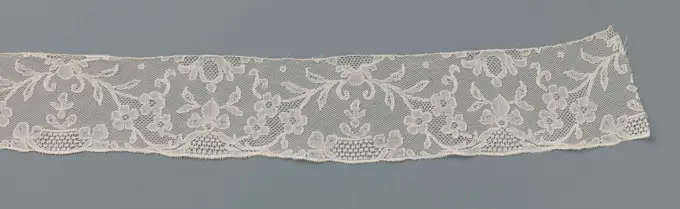
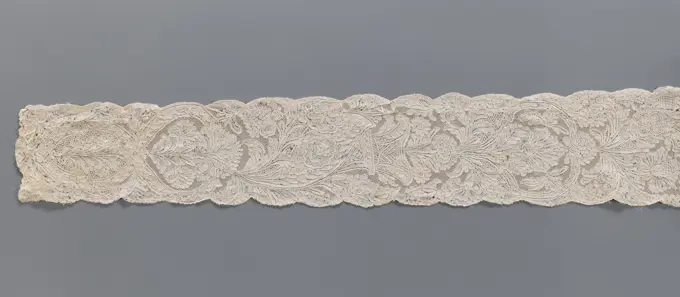
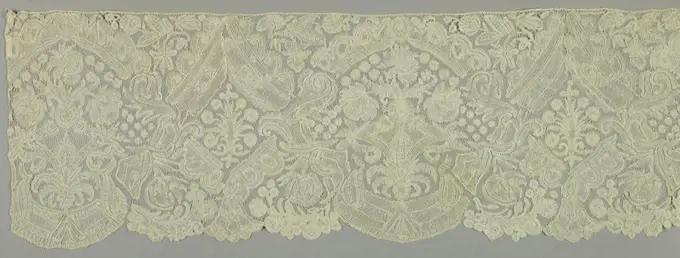
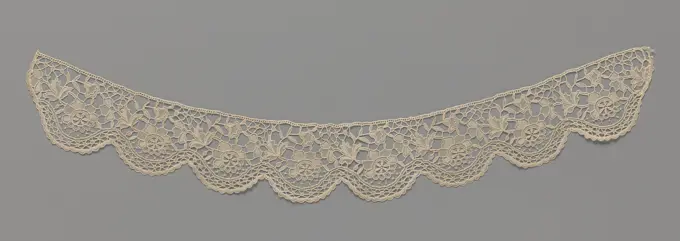
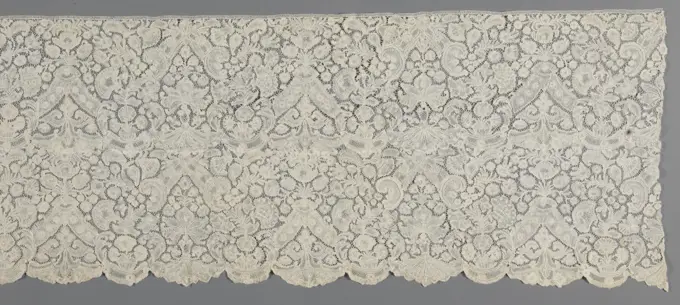
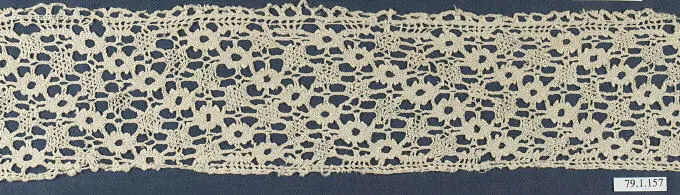
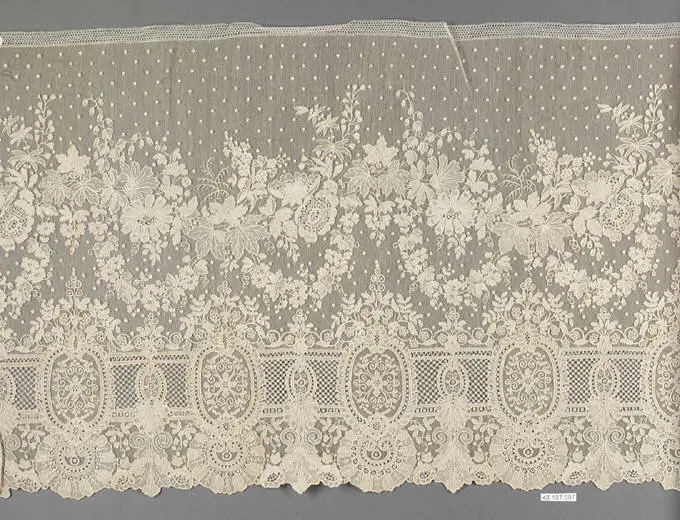
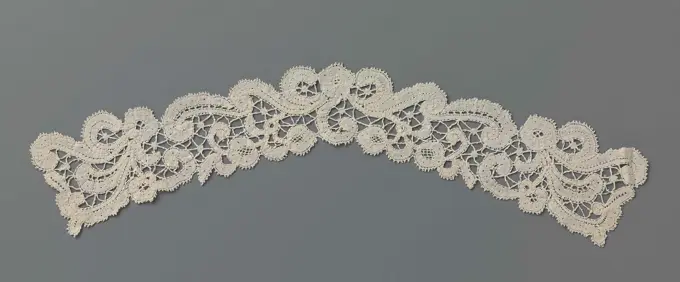
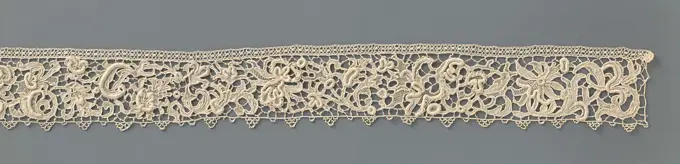
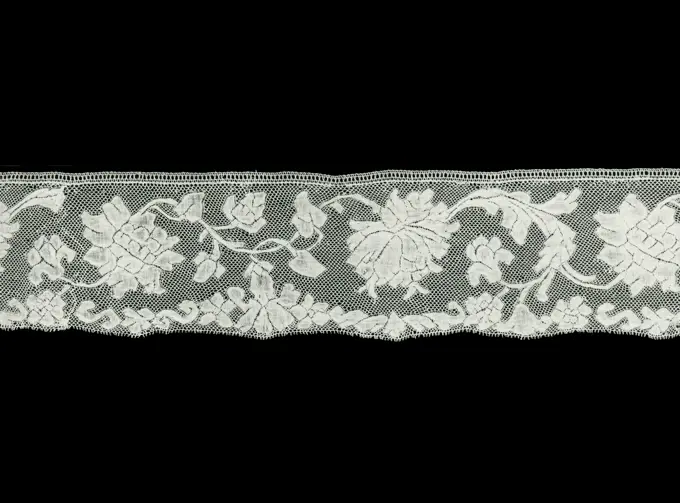
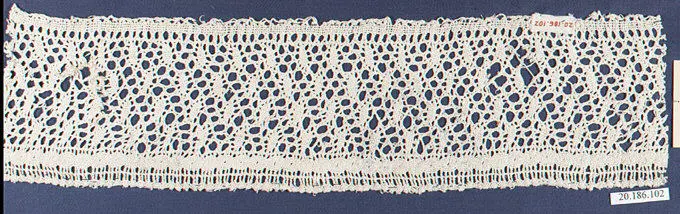
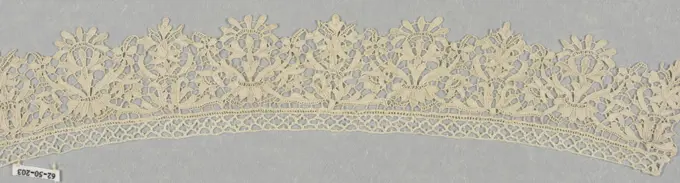
A variety of intricate lace strips from different eras, featuring floral patterns, geometric shapes, and delicate borders, showcasing craftsmanship in textiles.

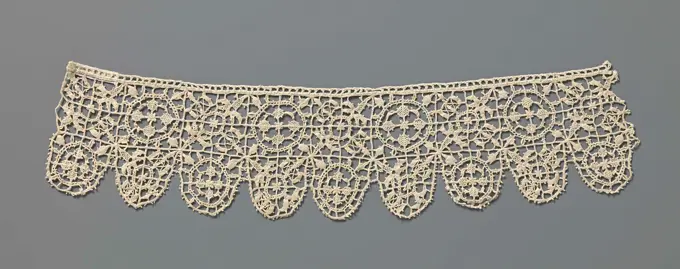
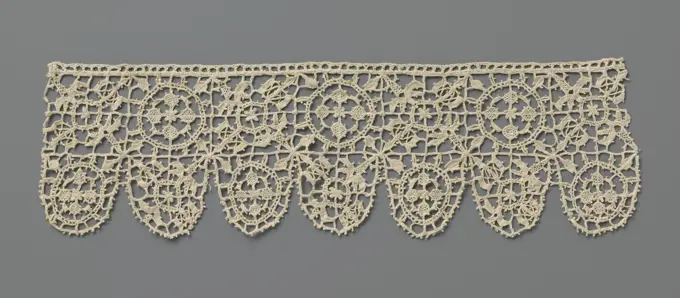
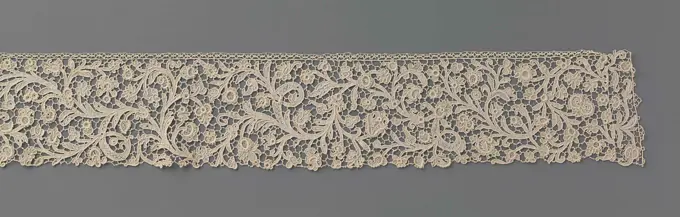
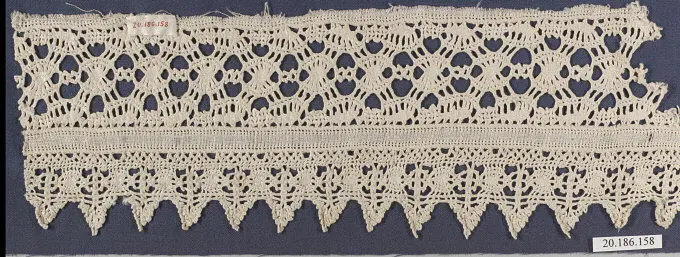
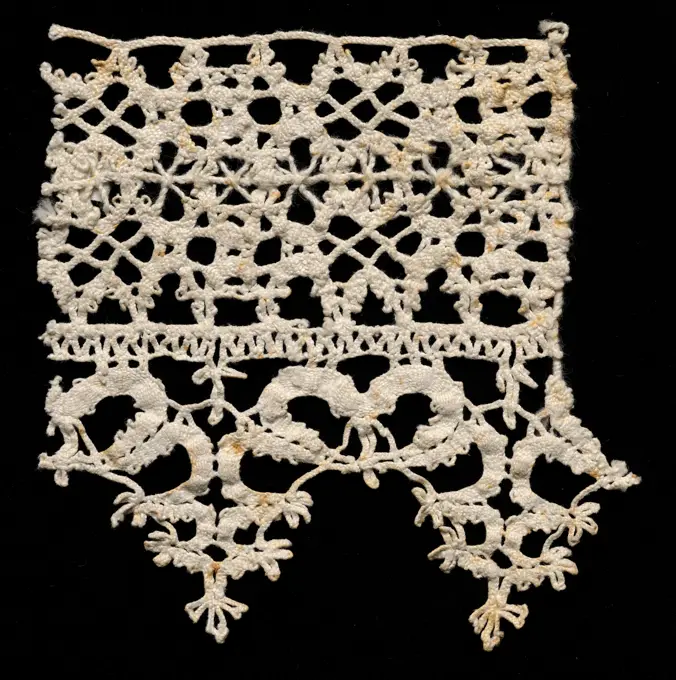
Strip of needle side with diamond and rosette in squares, anonymous, c. 1620 - c. 1630 Strip of natural needle side, reticella. A repeating pattern of a square, alternately with a window or rosette, which is made up of 4x4 small squares. Along the bottom edge under large square a semicircular shell with changing filling between two bell -shaped, hanging flowers. The top is trimmed with a woven edge. Italy linen (material) Strip of natural needle side, reticella. A repeating pattern of a square, alternately with a window or rosette, which is made up of 4x4 small squares. Along the bottom edge under large square a semicircular shell with changing filling between two bell -shaped, hanging flowers. The top is trimmed with a woven edge. Italy linen (material)
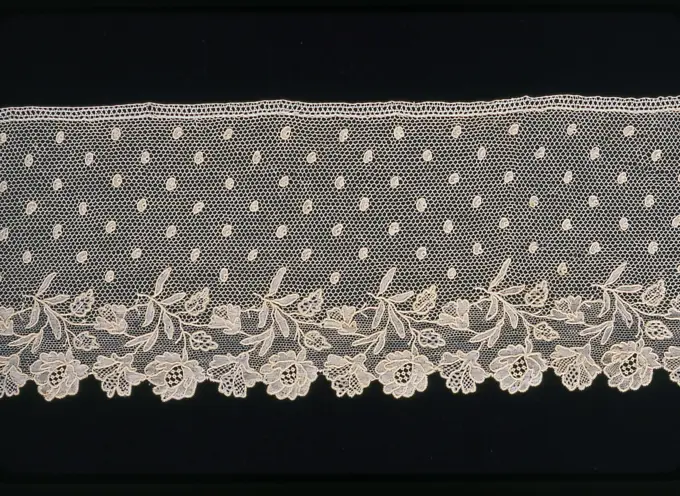
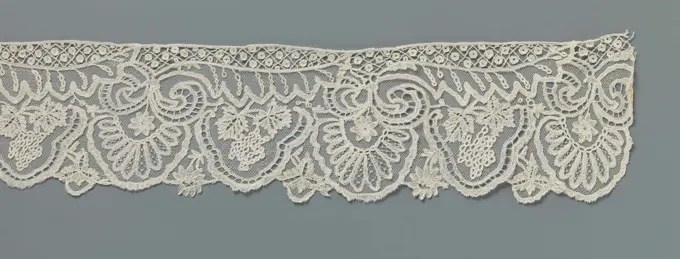
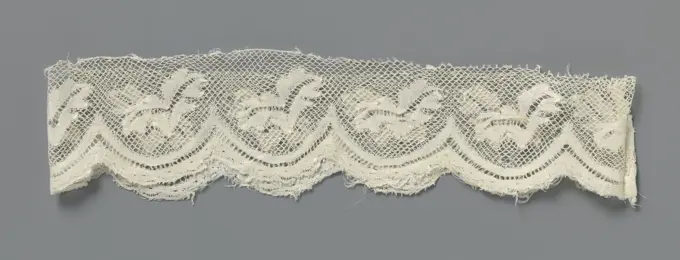
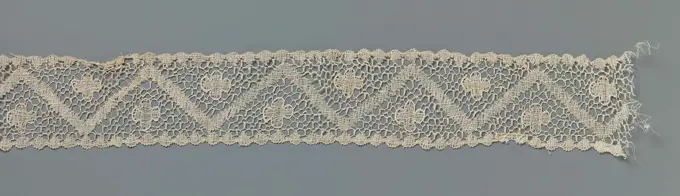
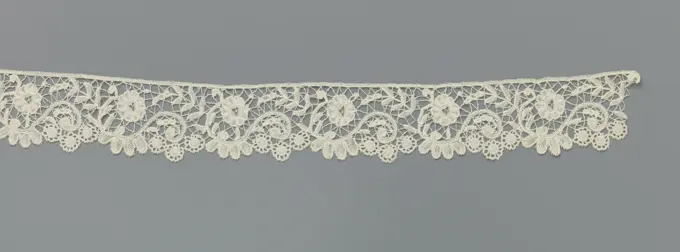
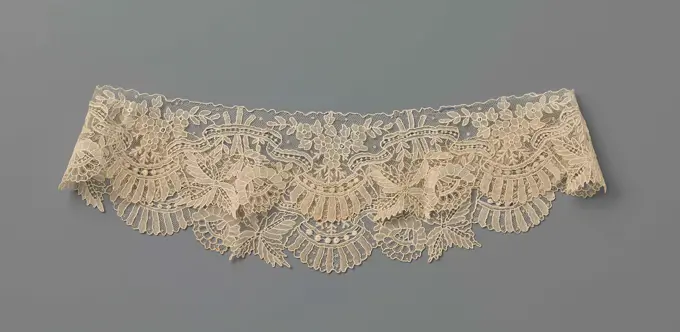
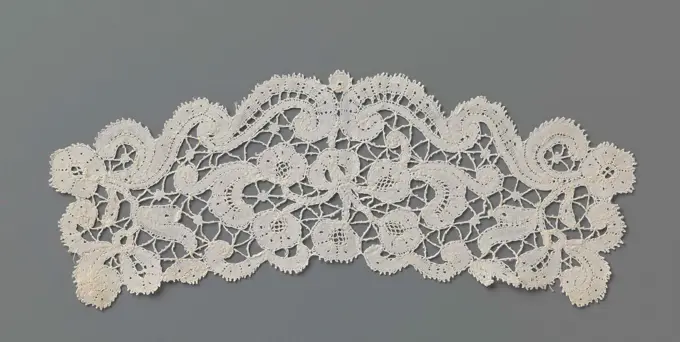
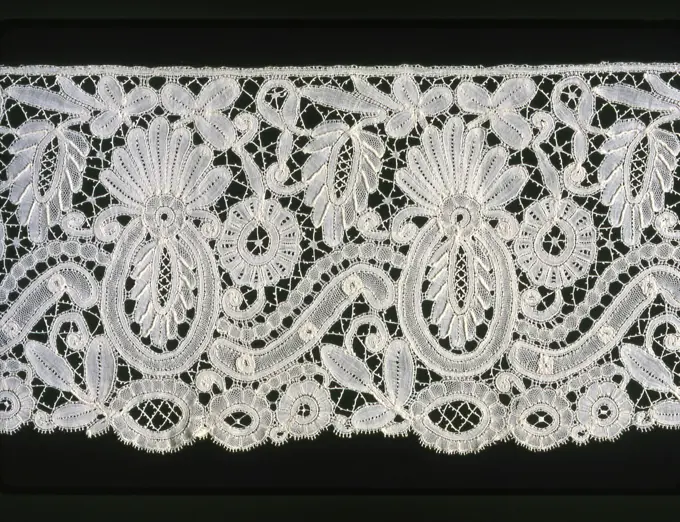
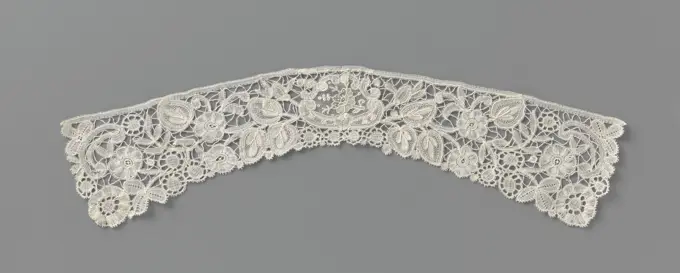
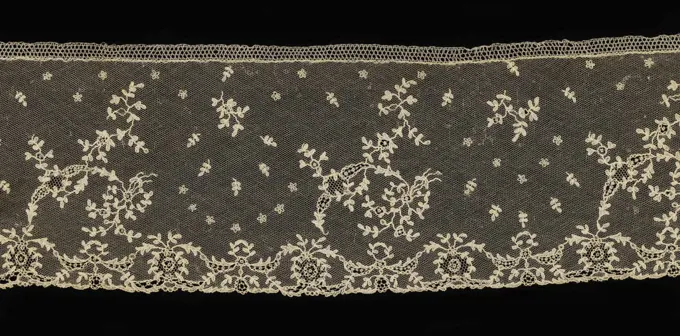
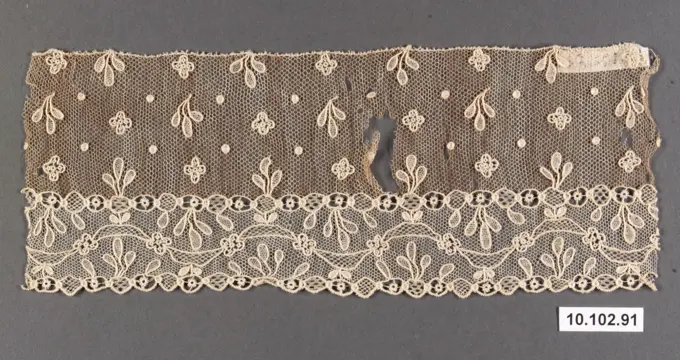
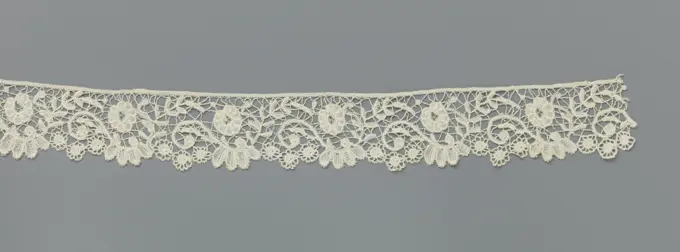
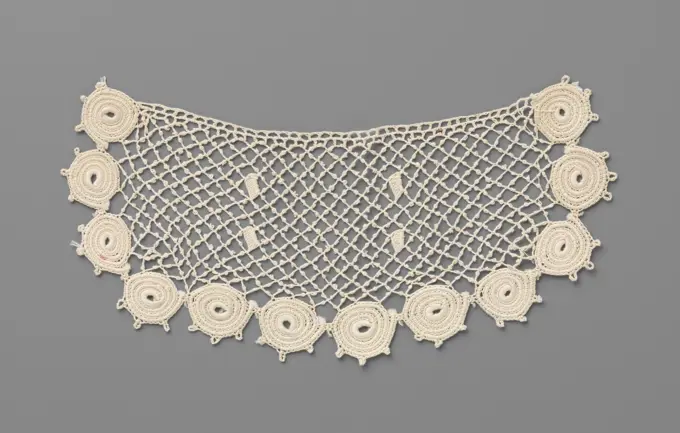
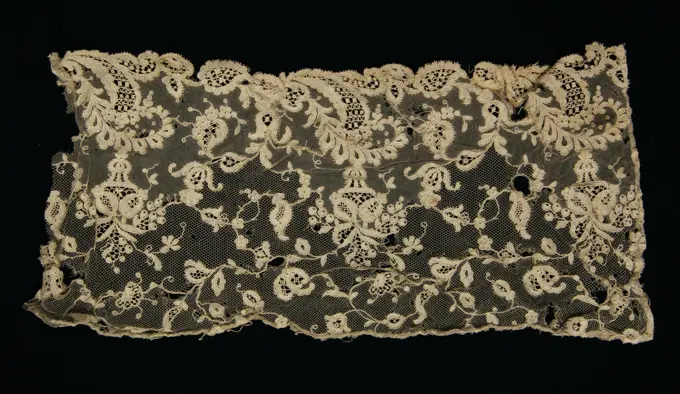
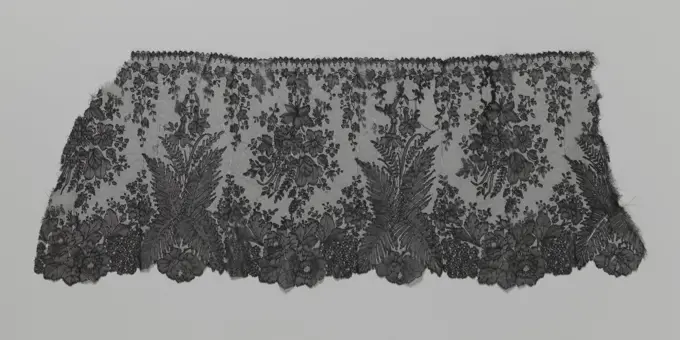
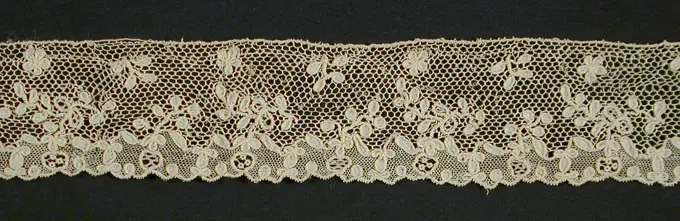
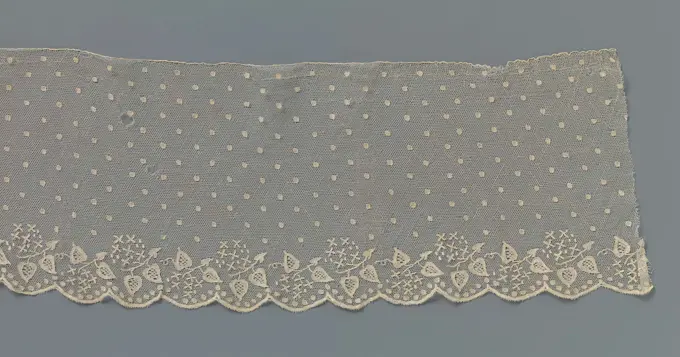
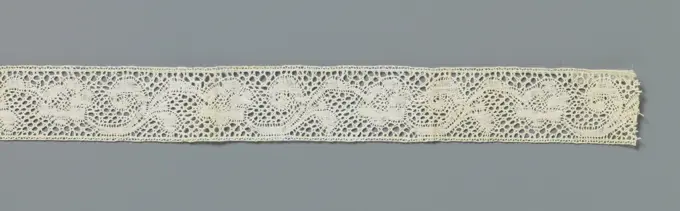
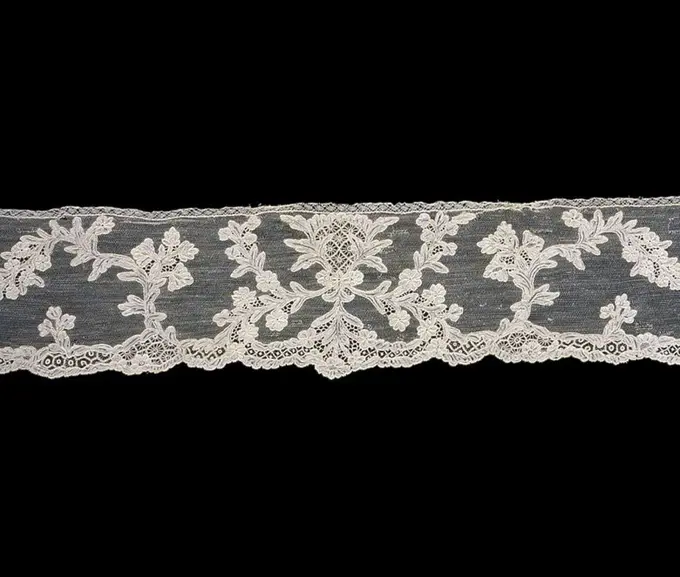
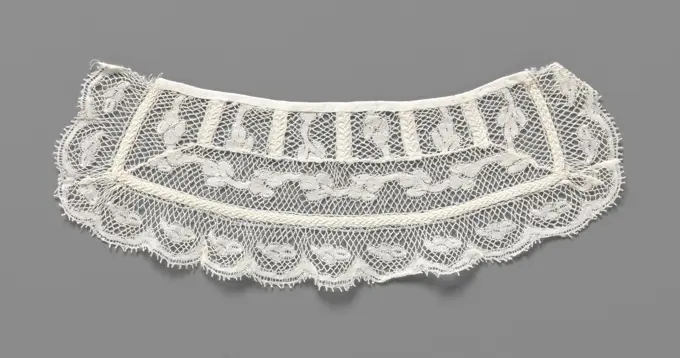
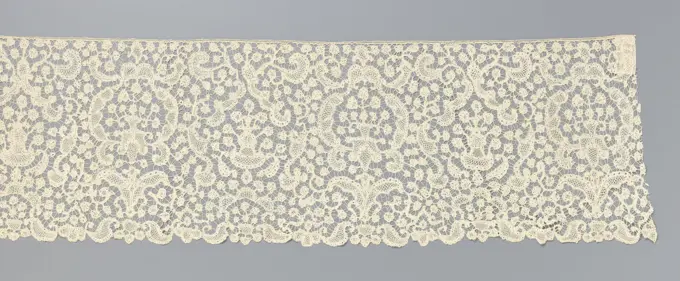
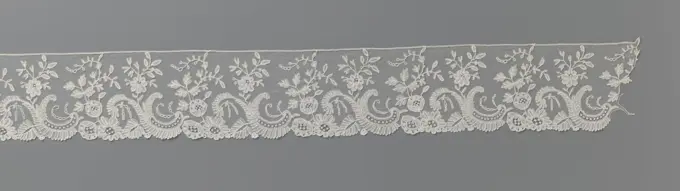
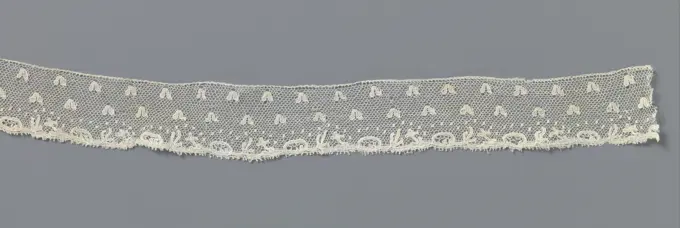
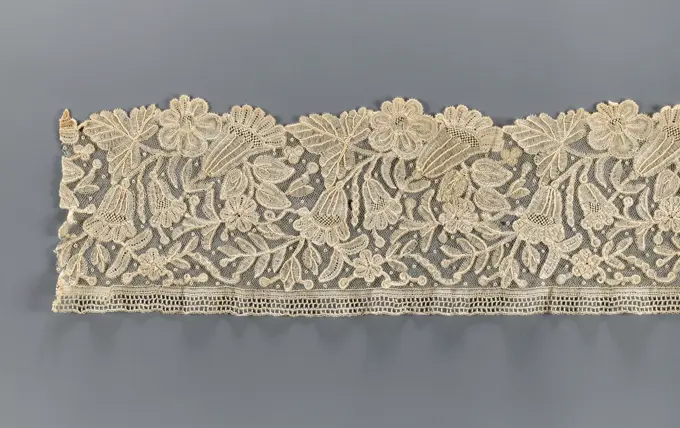
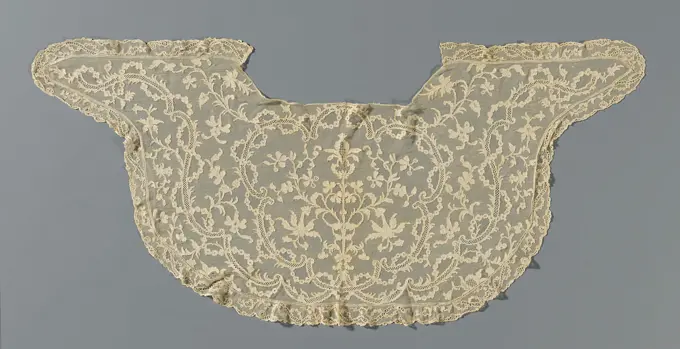
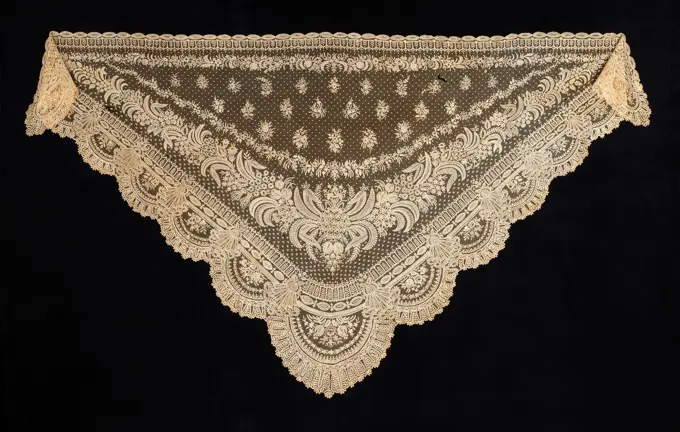
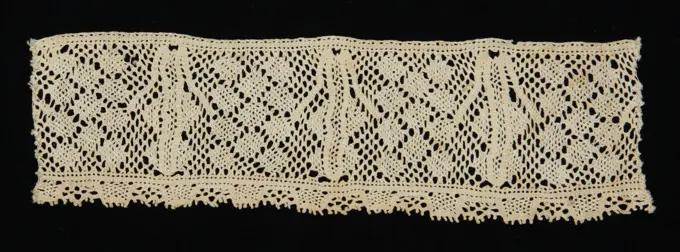
Sash or mechanical side with five oval fields, anonymous, c. 1850  Sash of natural -colored machine side. Elongated rectangular model with rounded ends. The repeating pattern consists of five connected oval fields, with two lying, curling branches in each field. Each oval field is formed by a pendulum of connected oval fields with rosette flowers. This pendulum provides a border with semi -circular shells around the sash. On the center line of the tie, on the switching point between the oval fields, a large flower bends in both fields. This motif of the large flower repeats itself once inside each field on each long side, diagonally opposite each other. The curling branches are in the oval field and spring from a half -striker -shaped cartouche along the long sides. The motifs are connected by a machine tulip with a few mosies. A mechanical decorative land has been used in the heart of the large flowers, a machine snowflake land. In the cartouches along the edges and in the oval fieldsBorder Made 1820-1829 France. Linen and horsehair, needle lace of a type known as Point d'Argentan with a whipped mesh ground .Strook naaldkant met twee soorten rozetten in vierkanten.Strip natural needle side: Reticella. The top of the pattern consists of squares, which are made up of four small squares. In squares around and a small and a large circle. Around the small circle in the corners of flowers. Around the large circle in the corners of leaves. This pattern springs and repeated in the underside of the strip, the squares are here on the side and bottom rounded to semi-circular deep slopes. The sloping edge is finished with picots. The top of the strip is finished with a crochet narrow edge with squares.Strip of needle side with diamond and rosette in squares, anonymous, c. 1620 - c. 1630 Strip of natural needle side, reticella. A repeating pattern of a square, alternately with a window or rosette, which is made up of 4x4 small squares. Along the bottom edge under large square a semicircular shell with changing filling between two bell -shaped, hanging flowers. The top is trimmed with a woven edge. Italy linen (material) Strip of natural needle side, reticella. A repeating pattern of a square, alternately with a window or rosette, which is made up of 4x4 small squares. Along the bottom edge under large square a semicircular shell with changing filling between two bell -shaped, hanging flowers. The top is trimmed with a woven edge. Italy linen (material)Strip bobbin so -called Pottekant, Anonymous, c. 1890 - c. 1910 On a rough grid (a Mechelen soil or ice soil) is a symmetrical pattern of two, hanging tifles, which, in pairs, are now once above a low flowerpot, then touch the straight outdoor edge and include a grid media media there. There are two types of halved crucifixes on the inside. Both the tiflets and the cross flowers surrounded any parties filled with gridwork. Mechelen side. Antwerp linen (material) bobbin lace / pot lace On a rough grid (a Mechelen soil or ice soil) is a symmetrical pattern of two, hanging tifles, which, in pairs, are now once above a low flowerpot, then touch the straight outdoor edge and include a grid media media there. There are two types of halved crucifixes on the inside. Both the tiflets and the cross flowers surrounded any parties filled with gridwork. Mechelen side. Antwerp linen (material) bobbin lace / pot laceStrook applicatiekant met druiventrossen en gehalveerde bladeren.Strip natural colored application side, climbing side applicated on machine tulle. A narrow part, along the inside, exhibits a running pattern of halved, lobed leaves, which accompanies an equally halved medallion with a raster filling. On a wide part with a substrate of tulle, symmetrical, deep slot, which are in turn are filled with a grinding tray and a fan plant.Kloskant cuff with V-shaped leaves in semicircular shell, anonymous, c. 1880 - c. 1910 Cuff made of natural-colored bobbin, Valenciennes side. The repeating pattern consists of a V-shaped leaf in a semicircular shell formed by a double tire. The motifs are connected by a Maas soil, a diamond-shaped Valenciennes ground. The motifs are made in linen battle with recesses and openwork edges. In the recesses and between the double tire along the scallops, a dash of pattern has been realized with braids. The top of the strip is straight finished. The scums along the bottom are finished with picots. Belgium linen (material) Bobbi Lace / Valenciennes Lace Cuff made of natural-colored bobbin, Valenciennes side. The repeating pattern consists of a V-shaped leaf in a semicircular shell formed by a double tire. The motifs are connected by a Maas soil, a diamond-shaped Valenciennes ground. The motifs are made in linen battle with recesses and openwork edges. In the recesses and between the double tFragment, Medium: linen Technique: machine made, Machine-made border of Valenciennes type lace; floral pattern with scallops on one edge., USA, 19th century, lace, FragmentStrook kloskant zogenaamde pottekant.On a coarse grille (a Malinois or ice soil) there is a symmetrical pattern of two distant, hanging towers, which, in purpose, now above a low flower pot, then touch the straight outer edge and emboss a grid work medallion. There are two types of halved cross flowers on the inside. Both the tendrils and the cross flowers surround some parties filled with grid work. Mechelen side.Fragment of the lace;  around 1750 (1740-00-00-1760-00-00);Flounce, Medium: linen Technique: bobbin lace, Brussels style, Flounce worked with a design of floral urns in irregular bands., Belgium, 18th century, lace, FlounceFragment 17th century Italian or French. Fragment 218822Fragment of Lace. Possibly England, mid-19th century. Textiles; fragments. Cotton Lille-type bobbin laceStrip of needle side with fan flower in Bogenslingers, Anonymous, c. 1875 - c. 1899  Strip of natural-colored needle side: Alençon side. Pattern with a repetitive motif from a flower branch and above it three rows of mushes, on a fine hexagonal mesh ground. On the horizontal flower branch, a fan flower downwards and a branch with three rosette flowers. The fan flowers are filled with different decorative grounds, as well as the garlands that forms a regular arched edge on the lower edge. One flower branch in each bow. The top is trimmed with a border bobbin. unknown linen (material) Alençon LaceStrip bobbin with spherical flowerpot and strawberry flour, anonymous, c. 1875 - c. 1899  Strip of natural -colored bobbin: Beverse side. The repeating and symmetrical pattern consists of a spherical flowerpot with two rosette flowers in the middle and in addition on each side a curved branch with a strawberry-shaped flour twisted towards the pot. Between the successive pots there is an oval with a crown along the top and an egg -shaped motif is covered by narrow leaves. The motifs are connected by a fine grid, a tuler land. The motifs are made in linen battle with large recesses and thicker, shiny contour threads. A rose soil has been applied as a decorative land and a decoration has been realized by crossing couples. The top and bottom of the strip are straight.  cotton (textile) bobbin laceCollar of needle side with wavy scrap edge and in every shell a rose, anonymous, c. 1890 - c. 1899 Collar of natural needle side. The upper edge is straight, the lower edge is sculpted. The sculpts each enclose a rose. A wavy pearl edge runs along the scallops. The motifs are made up of feston stitches and equipped with light relief contours. They are connected to each other by an irregular bar of bar between which ovals are processed with decorative stitches. Hirschberg linen (material) Collar of natural needle side. The upper edge is straight, the lower edge is sculpted. The sculpts each enclose a rose. A wavy pearl edge runs along the scallops. The motifs are made up of feston stitches and equipped with light relief contours. They are connected to each other by an irregular bar of bar between which ovals are processed with decorative stitches. Hirschberg linen (material)Strook kloskant met vierlobbig rozet boven en onder een zigzag-band.Strip natural colosside, blonde. The repetitive and continuous pattern consists of a zigzag band, which divided the strip into triangular fields. There is a quadruped rosette in the center of each field. Along the top and bottom of the strip a sculpture runs, which consists of a concatenation of circles. The crafts are finished with picots. The motifs are connected by a coarse mesh soil, strewn with square moes. The zigzag band, rosettes and circles edges are made in linen stroke, whereby the rosettes are equipped with a contour wire.Capslip of application side with three single -flowered branches in the fields between a wavy leaf branch, anonymous, c. 1770 - c. 1780 Heat slip of natural -colored application side: needle side applicated on drochel soil. The pattern has medallions along the edge with different shapes and with various fillings. In midfield a wavy branch with small leaves. There are three loose flower branches in the spaces between the edge and the winding branch, always with one flower per branch. The flowers differ from each other and the flower on the middle branch is greatest. The motifs are made up of feston stitches and equipped with relief contours. They are connected to each other by a fine cracked grid, a drochel soil. The flat scrap edge stems from the pattern with the medallions and is finished with picots. The scrap edge extends in one rounded end. The other end is straightened and unfinished. Brussels linen (material) Heat slip of natural -colored application side: needle side applicated Strip bobbin with S-Ranken, Anonymous, c. 1875 - c. 1899 Strip of natural-colored bobbin: Duchesse side. There is an ongoing pattern on a braid ground. S-ranks with three daisies and a border of Campanes form the scallops and end in a volute with single rose. Netherlands (possibly) linen (material) bobbin lace Strip of natural-colored bobbin: Duchesse side. There is an ongoing pattern on a braid ground. S-ranks with three daisies and a border of Campanes form the scallops and end in a volute with single rose. Netherlands (possibly) linen (material) bobbin laceFragment 18th century () French. Fragment 214573Opstaande halsstrook van naaldkant met slingerend lint.Collar of natural needle side: Brussels mesh edge. Round. Crown-shaped slot upstairs above a swinging ribbon, alternate with a triple branch placed behind the ribbon with rose and leaf. Furthermore, a bunch of bunch of bunches and sole messes.Rochet strip from Kloskant with symmetrical compositions in horseshoe -shaped cartouches, anonymous, c. 1720 - c. 1740 Strip of natural -colored bobbin: old Brabant side. The pattern has two varied symmetrical compositions, each in a horseshoe -shaped cartouche. One composition consists of a palmet under a V-shaped canopy. The other composition consists of a basket with a more or less triangular flower arrangement and above two sloping loose tulips. The motifs are connected by a traly land. The motifs are made in separate netslag and linen battle with recess and openwork edges. Limited decorative lands have been applied. The top is finished with a separate strap. The large scales along the lower edge are formed by the bottom of the horseshoe -shaped cartouches and the large clock flower that always hangs in between. The scums are finished with picots. Southern Netherlands linen (material) bobbin lace / old Brabant lace Strip of natural -colored bobbin: old Brabant side. The pattern hasStrip of needle side with two types of rosettes in squares, anonymous, c. 1600 - c. 1609 Strip of natural needle side: reticella. The top of the pattern consists of squares, which are made up of four small squares. In the squares there are alternately a small and a large circle. There are flowers around the small circle in the corners. There are leaves around the large circle in the corners. This pattern jumps and repeats itself in the bottom of the strip, but the squares are rounded here on the side and bottom to a scrap edge with half -circular deep sculptures. The top of the strip is finished with a narrow straight border with squares. Italy linen (material) Strip of natural needle side: reticella. The top of the pattern consists of squares, which are made up of four small squares. In the squares there are alternately a small and a large circle. There are flowers around the small circle in the corners. There are leaves around the large circle in the corners. This pattern jumps and rManchet van kloskant met hangende tros in symmetrische omlijsting.Cuff from natural colosside: Flemish Guipure. In a symmetrical frame of S volutes, rosettes and C volutes, an asymmetrical bunch with round-shaped fruits or flowers hangs. Braiding ground. Finish on all sides with uneven slot, which arise from the pattern. The cuff is rectangular with a raised center.Flounce (Fragment) Made 1860-1889 Belgium. Cotton, bobbin part lace of a type known as Duchesse de Bruges .Fragment (Three Joined Strips from Small Pillow) Made 1550-1600 Italy. Linen, plain weave; cut and drawn work in overcast stitches with needle lace inserts; embroidered in back, buttonhole, double faggot, double hem, eyelet hem, overcast, and satin stitches .Collar of mixed side with heart -shaped leaves, anonymous, c. 1875 - c. 1899 Collar of natural-colored mixed side: Brussels Duchesse side. Rectangular model with a kink in the middle. A small reserve of C-Voluten, with a rose inside on a fine Maas soil (needle side), stands in the middle of a braid soil, on which branches, including flowers and heart-shaped leaves. Belgium (possibly) linen (material) mixed lace / mixed Brussels Collar of natural-colored mixed side: Brussels Duchesse side. Rectangular model with a kink in the middle. A small reserve of C-Voluten, with a rose inside on a fine Maas soil (needle side), stands in the middle of a braid soil, on which branches, including flowers and heart-shaped leaves. Belgium (possibly) linen (material) mixed lace / mixed BrusselsBorder, Medium: linen Technique: needle lace with bobbin ground, Straight border of floral branches, blossoms and leaves, Belgium, late 18th century, lace, BorderStrip bobbin with flower and leaf motifs above a border with flowers volutes and elongated cartouches, anonymous, c. 1750 - c. 1760 Strip of natural -colored Brussels bobbin. The pattern consists of flower branches, which alternately spring on the top and the bottom of the strip. They are large flowers or flower clusters that all differ from each other. There are rosette flowers, a bunch with compliment -shaped flowers, a large lily and a bunch of flowers with five pointed leaves. Along the bottom the pattern consists of a succession of smaller flowers, in particular rosette flowers, leaves and elongated cartouches and volutes. The motifs are connected by a fine Maas soil, a drachel soil. The fullwork is largely made in linen battle with openwork edges and few recesses and partly in netslag. Most motives are provided with burst relief contours. Different decorative lands have been applied, including picoted braids, a snowflake ground and a decorative soil with a diamond -shaped patternFragment late 18th century French. Fragment. French. late 18th century. Needle lace. Textiles-LacesStrip bobbin with S-Ranken, Anonymous, c. 1875 - c. 1899 Strip of natural-colored bobbin: Duchesse side. There is an ongoing pattern on a braid ground. S-ranks with three daisies and a border of Campanes form the scallops and end in a volute with single rose. Netherlands (possibly) linen (material) bobbin lace Strip of natural-colored bobbin: Duchesse side. There is an ongoing pattern on a braid ground. S-ranks with three daisies and a border of Campanes form the scallops and end in a volute with single rose. Netherlands (possibly) linen (material) bobbin laceStrip of mechanical side with scrap of round roses between mirrored S-shaped lines, anonymous, c. 1850 - c. 1949 Strip of natural -colored machine side. The repeating pattern consists of a round rose with nine petals and a drop -shaped recess as a flower heart along the underside of the strip. The flour is clamped between two mirrored S-shaped lines, which form a reversed heart-shaped field above the flower. The strip is above this repeating pattern, above the center line, filled by straps that form loose motifs: the contours of a drop, a circle, C motifs. The motifs are connected by a machine "braiding ground" with picots. A diamond -shaped ornamental soil decorated with picots is used in the heart -shaped field. The top of the strip is finished with a straight edge on which the remains of another strip or a piece of clothing from Tulle are visible. The short sides and underside of the strip are finished with arcs that seem founded. West-Europa cotton (textile) Strip of natural -colorStrip bobbin with S-Ranken, Anonymous, c. 1875 - c. 1899 Strip of natural-colored bobbin: Duchesse side. There is an ongoing pattern on a braid ground. S-ranks with three daisies and a border of Campanes form the scallops and end in a volute with single rose. Belgium (possibly) linen (material) bobbin lace Strip of natural-colored bobbin: Duchesse side. There is an ongoing pattern on a braid ground. S-ranks with three daisies and a border of Campanes form the scallops and end in a volute with single rose. Belgium (possibly) linen (material) bobbin laceStrook kloskant met klimopblad en gelobde schulpen.A coarse fond of square mesh is filled with a row of ivy leaves, which stands over a wide, lobed scallop. Valenciennes.Cuff from crocheted side with round spiral sculptures, anonymous, c. 1930 - c. 1935 Cuff made of natural Irish crocheted side. Rectangular model with rounded corners. Four Mosjes, slightly curved rectangles, in two rows in a diamond -shaped network with picots. Finished on three sides with a sculpy edge of connected round spiral sculptures, which are formed by a laid and hooked wire bundle. The top is straight. Amsterdam cotton (textile) Cuff made of natural Irish crocheted side. Rectangular model with rounded corners. Four Mosjes, slightly curved rectangles, in two rows in a diamond -shaped network with picots. Finished on three sides with a sculpy edge of connected round spiral sculptures, which are formed by a laid and hooked wire bundle. The top is straight. Amsterdam cotton (textile)Lace, 1800s, maker unknown.Kloskant intermediate mate with zigzag line, anonymous, c. 1875 - c. 1949 Piles of Natural -colored bobbin side: Mechelse side. In the middle of the fine grid, a Mechelen soil (also known as ice soil), an openwork band runs in Zigzaglijn, cut over by two types of rosettes. Belgium linen (material) bobbin lace / Mechlin (lace) Piles of Natural -colored bobbin side: Mechelse side. In the middle of the fine grid, a Mechelen soil (also known as ice soil), an openwork band runs in Zigzaglijn, cut over by two types of rosettes. Belgium linen (material) bobbin lace / Mechlin (lace)Strook kloskant met schulpenrand van margrieten.Strip natural colosside: Lille side. Under a narrow field with sprinkled mates, it consists close-up and repeating pattern from a hanging flower branch, where one large daisy-like flower always forms one achp. The motifs are connected by a fine grille, a tulet. The motifs are made in linen stroke, with thicker and shiny contour wires. An ornamental ground has been applied in the flower hearts of the large flower. The top of the strip is straight finished. The shelters along the underside are finished with picots.Strook kloskant met ruitpatroon en schulpenrand.Strip natural colosside: sloping. The repeating pattern consists of two zigzag tires placed above each other, which form a concatenation of windows. The windows are alternately filled with a spindle and an ornamental ground: a contemporary five-gag soil. The zigzag tires are made in a slurbase, the lower belt ensures a rounded corners at the bottom for a regularly wavy slip edge along the bottom of the strip. Above the zigzag tires, the strip consists of a grille: a steam ground ground. The top of the strip is straight finished. One short side is finished by laying buttons in the wires. No buttons have been laid in the wires on the other short side, they hang loose.Strook naaldkant met gespiegelde s-vormen en bogen.Strip natural needle side: Argentan side. Pattern with mirrored S-shapes with bows in between, on a ground with meshes that are close naid with buttonhole stitches. Spreading dotty with flower branches with oval leaves. The S-shapes are separate from the edges and are decorated with bows, ovals, flowers. The arches come to and from the lower and upper edge. Fig of scaled edges on top and top with a double row of ovals, among other things, a finer Maas soil.Strip bobbin with hanging flowerpot on Garlande along the upper edge, anonymous, c. 1760 - c. 1780 Strip of natural -colored bobbin: Mechelse side. The repeating pattern consists of an inverted flowerpot, which hangs along the top edge on a continuous Garlande. Along the bottom edge, between the flower branches hanging downwards, a row of oval cartouches is alternately formed by leaves and flowers and a reverse flowerpot with a symmetrical bouquet. The motifs are connected by a fine Maas soil. The motifs are made in linen stroke and equipped with thicker and shiny contour threads. Different decorative lands have been used in the flower pots and in the cartouches. The top and bottom are straight, with the bottom with picots. Southern Netherlands linen (material) bobbin lace / Mechlin (lace) Strip of natural -colored bobbin: Mechelse side. The repeating pattern consists of an inverted flowerpot, which hangs along the top edge on a continuous Garlande. Along the bottom edge, between the fKloskant dress strip with ferns, anonymous, c. 1850 - c. 1855 Black bobbin jelly strip: Chantilly side. On an empty mesh stock there is a closed edge with scoops, filled with a garland of flowers and leaves. On the intersections there is a small shell with a hanging rose, above which a striker bouquet rises from four large fern leaves and a flower branch, which extends to the top edge. Here a horizontal climbing window with hanging twigs runs, while on the field above the large shell of this climbing crank a large bouquet depends, among other things with a tulip. France (possibly) silk bobbin lace Black bobbin jelly strip: Chantilly side. On an empty mesh stock there is a closed edge with scoops, filled with a garland of flowers and leaves. On the intersections there is a small shell with a hanging rose, above which a striker bouquet rises from four large fern leaves and a flower branch, which extends to the top edge. Here a horizontal climbing window with hanging twigs runs, while on Border early 18th century Flemish, Brussels. Border 222985Border, Medium: linen Technique: bobbin lace, Mechlin style, Band with birds and branches., Northern Europe, 18th century, lace, BorderFragment of Lace. France, late 18th century. Textiles; fragments. Linen point d'Alençon needle laceStrip of needle side with two curling tendrils and overcuting flowers, anonymous, c. 1925 - c. 1934  Strip of natural -colored needle side: Venetian needle side "gros point". Four flowers transform two curling and overflowing tendrils. The motifs are made with feston stitches with one row of cut -outs in the slender and decorative grounds with cubes in the (flower) leaves. The motifs are accentuated by relief contours, in particular the Bloemharten have an extra thick cordon. Coarse -festonated bar with picots. The top of the strip is straight finished and equipped with two blue -colored metal stamps stating 'Dentelle' and 'Véritable', which can be translated as 'real side'. The flowers and leaves form the scrap edge along the bottom, which is finished with picots. Belgium linen (material) Venetian gros point (heavy raised Venetian lace)Strip application side with rosette flowers in symmetrical leaf branches. Strip natural brussels application side: needle side applicated on machine tulle. Scattering pattern of four rows of leaf packs on a fine hexagonal maas soil. Along the bottom edge a repetitive motif of a symmetrical leafy branch with one rosette flower in the center and one rosette flower in each of the two volutes below. The branch originates from a hanging flower with drip-shaped heart, the petals of which are part of the sloping edge along the bottom. Different ornamental grounds in the motifs and relief contours of thread bundles. The top is trimmed with a border clamping side.Trimming, Medium: linen Technique: needle lace, six-sided reworked grounds, Serpentine floral pattern., France, 18th century, lace, TrimmingStrip of needle side with incised leaves, anonymous, c. 1900 Walking pattern of incised leaves above a rose and a three -leaf, which together form the sharply toothed outside line. Cross-shaped bars with button (soil of long X-shaped bars with a spider). The Remplis consists of buttonholes and a long distance gazé. German side: 'Carlsbader Points'. Karlsbad (Germany) (possibly) linen (material) Walking pattern of incised leaves above a rose and a three -leaf, which together form the sharply toothed outside line. Cross-shaped bars with button (soil of long X-shaped bars with a spider). The Remplis consists of buttonholes and a long distance gazé. German side: 'Carlsbader Points'. Karlsbad (Germany) (possibly) linen (material)Chantilly lace, 1800s, maker unknown. Acquisition history unknown.Strook kloskant met grote ronde moesjes en randpatroon met hartvormige bladeren en sneeuwballen.Strip natural colosside: Lille side. Under a wide job with large round moes, it consists of repeating pattern from twigs with two large heart-shaped leaves and one small heart-shaped leaf, in two variations. A pattern of crosses and square moes is alternately below and above the twigs and possibly presents a snowball (flower). A double edge of a band and loose round mashes run along the semicircular slot. The motifs are connected by a fine grille, a tulet. The motifs are made in linen stroke with thicker, shiny contour wires. One type of ornamental ground is used in the center of the large leaves. The square moes in the snowball are made in shape stroke. The top of the strip is straight finished. The shelters along the underside are finished with picots.Strook naaldkant met gepluimde ranken.Strip natural needle side: Venetian rosion side. On a bars soil with six-sided meshes there are rich branched, left and right swiveling tendrils, sometimes drew, sometimes walking. Veeloertige, carefully detailed knob-shaped flowers grow. Here and there the top of a rank has grown through an opening in the branch. Straight finish of alternation an eye and a triangle.Alstriple of dick side with flowers in pointed arch. Alternate of natural colosside: old Brabantse side. Two almost symmetrical motifs alternate. I. a palmet flower and a fan-shaped leaf rosette are under a high pointed arch. II. A small Fleur de Lys is under a low pointed arch. In the Schulpen, bandwerk for landscape C-Volutes, which always includes a flower basket. From this a large branch with raffled leaves and very large flowers. Little space has been left for narrow strips of an open braid soil between the closed ornament.Edging Italian, probably Burano late 19th centuryNeedlepoint (Punto Avorio or Ivory Stitch) Lace Edging of Points, 17th century. Italy, 17th century. Lace, needlepoint; average: 8 x 24.5 cm (3 1/8 x 9 5/8 in.).Needle's Engageante with an ashymmetrical flower branch in a symmetrical frame, anonymous, c. 1775 Engageante of natural-colored needle side: Argentan side. The pattern consists of an as-symmetrical flower branch in a symmetrical frame. Under the flower branch two long branches that form a V. On either side of the list is an oval medallion with a flower in the center. With the exception of one larger flower in the central flower branch, the other motifs consist of thinly occupied branches, with small leaves, flowers, bunches of berries and 'cords' of openwork and potented circles. The motifs are made up of feston stitches and equipped with relief contours. The motifs are connected by a soil with meshes that are close to Feston stitches, an Argentan ground. Decorative grounds and decorative stitches are used in different leaves, circles and in the flower leaves of the central flower. Along the edges are connected elongated fields filled with a finer Maas soil, the fields are defined by Strip ca. 1600 Italian. Strip 212363Carrickmacross lace, 1900s, maker unknown. Acquisition history unknown.Flounce French late 19th centuryStrook kloskant met driehoekige medaillons.Strip natural-colored old clamp side. At a ground ground, a five-hole ground, a symmetrical pattern of halved diamond forms along the inside and a triangular medal coated in Arabesken with grid work along the fine sculpture.Guimpe van kloskant met symmetrisch voluten patroon.Flumpy of natural colosside: Flemish Guipure. Symmetrical pattern of s vultuts and c-voluten between which in total three round-shaped flowers or fruits and three rosette flowers. Braiding ground. Finish on all sides with uneven slot, which arise from the pattern. The guimpe is bent rectangular.Strip bobbin with flowers under sloping traits in tuler land and rose land, anonymous, c. 1820 - c. 1830 Strip of natural-colored bobbin: blonde technology, but fiddled with cotton wire. Under sloping courses, which alternately pass from a tulip in a rose ground, a repeating pattern with flowers that form the sculptes form along the underside of the strip runs. One flower under each sloping lane. The flowers have the same shape, but the flower hearts are filled with a rose ground and vice versa under the lanes. The petals are partly made in netslag and partly open and are accentuated by contour threads. The top of the strip is straight finished. The scrap edge is finished with picots. Le Puy-en-Velay cotton (textile) bobbin lace / blonde (lace) Strip of natural-colored bobbin: blonde technology, but fiddled with cotton wire. Under sloping courses, which alternately pass from a tulip in a rose ground, a repeating pattern with flowers that form the sculptes form along the underside of thStrip bobbin with flour or star in square with point sculpt, anonymous, c. 1900 - c. 1924  Strip of natural-colored bobbin, cluny side. The repeating pattern consists of an open -worked square, which alternately stands a star or a flower with eight points or eight petals. A triangle hangs under the vertical sides of each square. The consecutive triangles form a sculpy edge, which is finished with drop -shaped lobes made with potented braids. The motifs and lines in the pattern are largely made in form, with two, three or seven ribs. Various connections are made with potented braids. The circular flower heart is made in linen stroke and a decorative land has been used in the center of the star, a twisted cross -stroke soil. The top of the strip is straight finished. Austria linen (material) bobbin lace / Cluny laceStrip bobbin with a row-shaped flower stalks, anonymous, c. 1900 - c. 1909 Strip of natural -colored Dutch bobbin. The repeating pattern consists of a row lying S-shaped flower stalks, with a curling leaf on either side of each stem and a round flower heart with five lobes at the end. The successive flower stems touch each other at the beginning and end and thus form a continuous wavy pattern. The motifs were worked in Linnenlag with openwork edges and are connected by a traly land, a five -part ground. Top and bottom of the strip are straight. Europe (possibly) cotton (textile) bobbin lace Strip of natural -colored Dutch bobbin. The repeating pattern consists of a row lying S-shaped flower stalks, with a curling leaf on either side of each stem and a round flower heart with five lobes at the end. The successive flower stems touch each other at the beginning and end and thus form a continuous wavy pattern. The motifs were worked in Linnenlag with openwork edges and are connected by a tBorder. Italy, Burano. Date: 1760-1769. Dimensions: 9.1 x 269.1 cm (3 5/8 x 106 in.). Linen, needle lace. Origin: Italy. Museum: The Chicago Art Institute, Chicago, USA.Cuff from Kloskant composed of different strips and narrow intermediate sinks of cotton, anonymous, c. 1850 - c. 1899 Cuff made of natural-colored bobbin: Valenciennes side. Lightly curved rectangular model with a scales of scales along three sides. The cuff consists of four short strips that are vertically connected to each other with narrow cotton intermediate sinks. Along sides and underside, a double list runs made of two strips, which are also connected by a narrow cotton intermediate edge. The inner strip is an intermediate creature, the outer strip has a scrap edge and is folded around the two lower corners. Motifs consist of loose or connected oval flowers with simple leaves on stalks. The motifs are connected by a grid, a square Valenciennes ground. The scrap edge is finished with picots. West-Europa linen (material) Bobbi Lace / Valenciennes Lace Cuff made of natural-colored bobbin: Valenciennes side. Lightly curved rectangular model with a scales of scales along three sides.Strip bobbin with symmetrical compositions with flower vases, anonymous, c. 1710 - c. 1730 Strip of natural -colored bobbin, Brussels side. The repetitive pattern consists of two symmetrical compositions with flower vases or flower pots. The irregular braids with picots runs through the motifs in various places. Volwerk in linen stroke with recesses and filling of motifs with decorative land. The top is finished with a straight edge. The underside is finished with a silly outskirts of scales that comes from the pattern. Brussels linen (material) bobbin lace / Flemish lace with plaited ground Strip of natural -colored bobbin, Brussels side. The repetitive pattern consists of two symmetrical compositions with flower vases or flower pots. The irregular braids with picots runs through the motifs in various places. Volwerk in linen stroke with recesses and filling of motifs with decorative land. The top is finished with a straight edge. The underside is finished with a silly outskirts of scStrip of bobbin with hanging flowers in the scrap, anonymous, c. 1830 - c. 1840 Strip of natural -colored bobbin: Mechelse side. Under a stray pattern of flowers is a row of one -sided flower branches, with five small flowers and one large flower. The largest flowers hang down and form the scrap edge for a long time the underside of the strip. The motifs are connected by a grid, a Mechelen soil. The motifs are made in linen battle and thicker contour threads run around the motifs. Two types of decorative grounds have been used and decorations in square forms. The top and one side are finished with a straight edge, the other side is not finished. The top and one side are finished with a straight edge, the other side is not finished. Mechelen linen (material) bobbin lace / Mechlin (lace) Strip of natural -colored bobbin: Mechelse side. Under a stray pattern of flowers is a row of one -sided flower branches, with five small flowers and one large flower. The largest flowers hang down and fNeedlepoint (Punto in aria) Lace Insertion, 16th-17th century. Italy, Venice, 16th-17th century. Lace, needlepoint; overall: 6.3 x 33.7 cm (2 1/2 x 13 1/4 in.).Strip mixed side with S-Voluten, Anonymous, c. 1875 - c. 1899 Strip of natural -colored mixed side: Brussels bobbin side in combination with a needle -seal, a fine mesh side. This type of lace is also known under the name: Point d'Angleterre. The running pattern is thinning of drawing and consists of suitable C and S-Voluten. Large roses, and face and and profil, form deep scumples with a leaf and a C-Volute. Fine leaf branches have turned to the inside. Brussels linen (material) mixed lace / Brussels bobbin lace Strip of natural -colored mixed side: Brussels bobbin side in combination with a needle -seal, a fine mesh side. This type of lace is also known under the name: Point d'Angleterre. The running pattern is thinning of drawing and consists of suitable C and S-Voluten. Large roses, and face and and profil, form deep scumples with a leaf and a C-Volute. Fine leaf branches have turned to the inside. Brussels linen (material) mixed lace / Brussels bobbin laceStrip bobbin with two rows of reversed V-shaped motifs, anonymous, c. 1840 - c. 1849 Strip of natural -colored bobbin: Lille side. The upper half of the pattern consists of two rows of reversed V-shaped motifs and on the bottom of ovals interspersed by two different twigs. A staggered row of square mousjes runs between these two patterns. The motifs are connected by a fine grid, a tuler land. The sparing fullwork is made in linen battle, with thicker and shiny contour threads. One type of decorative land has been used in the ovals. The top is straight. The very faintly scalloped underside is finished with picots. Lille linen (material) bobbin lace / Lille lace Strip of natural -colored bobbin: Lille side. The upper half of the pattern consists of two rows of reversed V-shaped motifs and on the bottom of ovals interspersed by two different twigs. A staggered row of square mousjes runs between these two patterns. The motifs are connected by a fine grid, a tuler land. The sparing fullworkBobbin Lace Lappet, 18th century. Belgium, Mechelen, 18th century. Lace, bobbin: linen; average: 52.1 x 9.6 cm (20 1/2 x 3 3/4 in.).Bobbin Lace (Rose Lace) Insertion, 17th century. Italy, Genoa, 17th century. Lace, bobbin; average: 9 x 21 cm (3 9/16 x 8 1/4 in.).Fragment of lace. unknown, authorFragment of the lace;  XVII century (1601-00-00-1700-00-00);Fragment (Flanders, Belgium); linenFragment, Medium: linen Technique: bobbin lace (Brussels-style), Symmetrical floral design flanked by typical rococo motifs. With star-shaped mesh and scalloped edge., Belgium, mid-18th century, lace, FragmentStrip Application side with rows of clover leaves, anonymous, c. 1800 - c. 1824 Strip of natural -colored application side, bobbin lacquered on mechanical tulle. Spray pattern with four staggered rows of clover leaves. Along the straight potented lower edge a fine, continuous leaf garland. Motives in Linnenlag with burst of relief contours. The top is trimmed with a separate strap. Brussels linen (material) Strip of natural -colored application side, bobbin lacquered on mechanical tulle. Spray pattern with four staggered rows of clover leaves. Along the straight potented lower edge a fine, continuous leaf garland. Motives in Linnenlag with burst of relief contours. The top is trimmed with a separate strap. Brussels linen (material)Volant Van Kloskant with diamond -shaped medallions, anonymous, c. 1870 - c. 1920 Volant of natural -colored bobbin: Parisian side. The soil is divided in two in a Paris soil with clovers at the top and a tuler ground underneath. In the latter is a symmetrical pattern of diamond -shaped openwork medallions with side vines crowned by a flower between two leaves. The leaves, the side ranks and a series of flowers and sling in the scallops are loose on the other in three closed garlands. The motifs are made in linen stroke and provided with contour threads. A rose soil has been applied as a decorative land. The upper edge is shortened and finished with a narrow -sewn -down tire from Kant. A large rectangle has been cut out of the strip, which means that one window -shaped medallion has left in the lower edge. Belgium linen (material) bobbin lace / Paris lace Volant of natural -colored bobbin: Parisian side. The soil is divided in two in a Paris soil with clovers at the top and a tuler groEdging and insertion 16th-17th century Italian, Venice. Edging and insertion 220968Strook naaldkant met spichtige bloemen.Strip natural colored Venetian needle side "Gros Point". On an open bars soil there is a running rank with Veelenooroitge small flowers, which are occupied with a spandy, strongly curved petals. The richly varied leaf volutes, are also strongly curved.Strip bobbin with thistle in flowerpot, anonymous, c. 1700 - c. 1799 Strip of natural -colored bobbin, Old Flemish side. The sculptures from which the strip is built are half -round with whimsically formed edges. The sculptes arise from a repeating symmetrical motif of a flowerpot with a thistle. The flowerpot hangs on the head compared to the straight upper edge. The motifs are made in linen battle with openwork edges. In the recesses, Spitsovaal -shaped leaves are made in form in various places. Flanders linen (material) bobbin lace / old Flemish lace Strip of natural -colored bobbin, Old Flemish side. The sculptures from which the strip is built are half -round with whimsically formed edges. The sculptes arise from a repeating symmetrical motif of a flowerpot with a thistle. The flowerpot hangs on the head compared to the straight upper edge. The motifs are made in linen battle with openwork edges. In the recesses, Spitsovaal -shaped leaves are made in form in various places. FlandeBorder Made 1765-1775 Valenciennes. Linen, bobbin straight lace of a type known as Valenciennes with a square Valenciennes mesh ground .Lace, 1800s , maker unknown. Gift of Mr Salek, 1960.Bobbin Lace Insertion and Edging, 17th-18th century. Italy, Umbria, 17th-18th century. Lace, bobbin; average: 5.5 x 33.1 cm (2 3/16 x 13 1/16 in.).Strip of cotton with English embroidery with a pattern of Margrits, C.I. Bosch Reitz-Teding van Berkhout, c. 1860 Strip natural -colored batist with lace bobbins: English embroidery. The repeating pattern from two rows of consecutive openwork Margrites, the rows of jumps and around the lower flowers have been created, with five embroidered lobes per shell. The strip is cut lengthwise, halfway through the pattern of the upper row of Margrites. The batist is not finished on the long and short sides. Amsterdam cotton (textile). batiste Strip natural -colored batist with lace bobbins: English embroidery. The repeating pattern from two rows of consecutive openwork Margrites, the rows of jumps and around the lower flowers have been created, with five embroidered lobes per shell. The strip is cut lengthwise, halfway through the pattern of the upper row of Margrites. The batist is not finished on the long and short sides. Amsterdam cotton (textile). batisteStrip 16th century Italian. Strip 212339Collar of climbing side with voluntaries. Collar of natural colosside: Duchesse-side. U-shaped neckline with sharp points on the front and sides with corners that lie like points over the shoulders. The symmetrical pattern consists of voluntary drinks, with a flower to each curly end. Some flowers, leaves and berries on side branches provide a slot edge along all sides of the collar. The motifs are largely made in linen battle with openwork edges and fine recesses. Different parts of motifs are made in scroll. The motifs are fitted with thicker and shiny contour wires and here and there from closted relief contours. Various (ornamental) grounds have been applied, including a Paris soil, a rose soil, a soil littered with square shape strokes and also compounds are made with picoted braids between a few motives. Trims have been applied in various ways. The sloping edges are finished with picots. The difference in the collar points at the front is striking, in which a fine ground ground iStrip 16th-17th century Italian, Tuscany. Strip 220912Border, Medium: linen Technique: needle lace (punto in aria), Alternating floral forms in a densely-placed pattern., Italy, late 16th-early 17th century, lace, BorderFragment of the lace;  18th century (1701-00-00-1800-00-00);Strip of needle side with strawberries, anonymous, c. 1760 - c. 1780 Strip of natural-colored needle side: Argentan side. The repeating pattern exists along the bottom half of the strip from a double branch sloping from the underside with a wavy thinner branch at the end on which some flowers and leaves. The upper half of the strip has a pattern of loose, down-hanging flower and leaf branches. Berries or strawberries seem to hang on some twigs. The motifs are made up of feston stitches and equipped with relief contours, which are or not with picots. The motifs are connected by a hexagonal soil with founded meshes. Between the double branches a finer Maas soil has been used as a decorative soil and in various flower branches and decorative grounds have also been used in the fruit. The flat scrap edge stems from many small motifs that lie along the underside of the strip and that are finished with picots. The top is straight finished with a messing strap. Argentan . Argentan Lace Strip oSleeve Ruffle; linenBorder 18th century Flemish. Border 226466Bobbin Lace Insertion with Edging of Points, early 17th century. Italy, Venice, early 17th century. Lace, bobbin; average: 10.8 x 9.6 cm (4 1/4 x 3 3/4 in.).Fichu or pelerine of needle side. Fichu or pelerine of needle side with rounded back. The pattern has a flower branch in a cartouche from C-Volutes on the center axle. There around C-Volutes and flower garlands. The neckerchief is trimmed with an edge that is decorated with wavy paths that run over the width of the edge; These are filled with decorative stitches. The edge is scalloped and trimmed with picots.Shawl 1860-70 Belgian Particularly refined and detailed design, this shawl was donated to the British War Relief Committee during WWI by a member of the royal family.. Shawl 158042Black bobbin jelly strip with three spring -shaped leaves under oval cartouches and roslingers, c. 1860 - c. 1880 Black bobbin jelly strip: Chantilly side. The strip is intended or used for a skirt or dress, the pattern is partly slid away to model the strip. The repeating pattern consists of an oval cartouche around the center line of the strip, crowned by two roses and a few leaf branches. At the bottom of the cartouche, three long spring -shaped leaves are hanging. The underside of these leaves form part of the scrap edge. The successive oval cartouches are connected by a wide V-shaped decorative band. In the field littered with square Mosjes above, there is a bouquet with roses of which side branches touch the roses above the cartouche and thus the top of the pattern with a rose garland. Three garlands hang between the cartouches under the decorative band. From top to bottom: three large roses with leaves in between; a succession of simple rosette flowers; A succession of five hearFichu of mixed side with three spirals, anonymous, c. 1875 - c. 1899 Fichu of natural -colored mixed side: Brussels bobbin side in combination with a needle -sided soil, a fine mesh side. This type of lace is also known under the name: Point d'Angleterre. A wide window -shaped backpiece with a turned point goes fairly suddenly in the pointed ends. The large pattern with relief of a thick thread bundle stands out strongly against the fine Maas soil. There are three large spiral ranks in the heart, including a volute of wheels and spread open grid fillings. Furthermore, large tendrils with multifaceted flowers and leaves, including three heart -shaped leaves. Brussels linen (material) mixed lace / Brussels bobbin lace Fichu of natural -colored mixed side: Brussels bobbin side in combination with a needle -sided soil, a fine mesh side. This type of lace is also known under the name: Point d'Angleterre. A wide window -shaped backpiece with a turned point goes fairly suddenly in the pointedLace, 1800s , Italy, maker unknown. Gift of Mrs G. Acland Allen, 1955.