Decorative Metalwork and Art

Elegant metalwork pieces, including hobs and wood carvings, featuring intricate designs that reflect historical artistry and craftsmanship.

Hob with parrot in ring, cast Rectangular hob with bow In the middle parrot with branch with berries. Around broad border with twisted pilasters between the frame and the pearl necklace. On top of the middle shell flanked by two dolphins Bottom text and frame with year Bottom: HHS and 1665 living environment interior heating
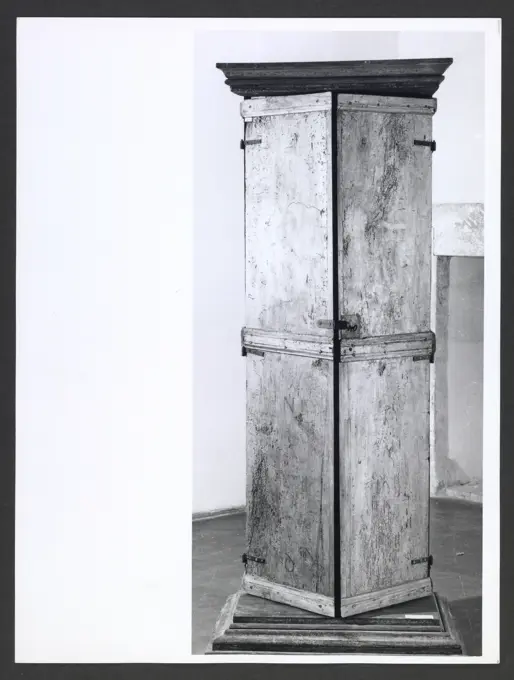
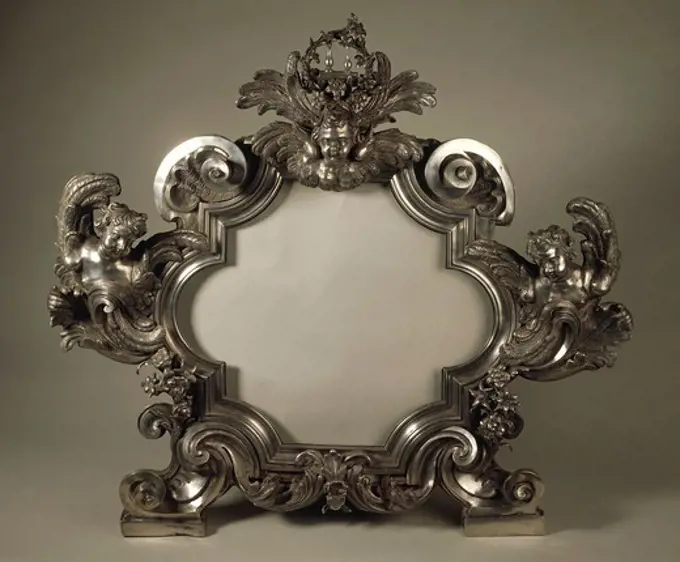
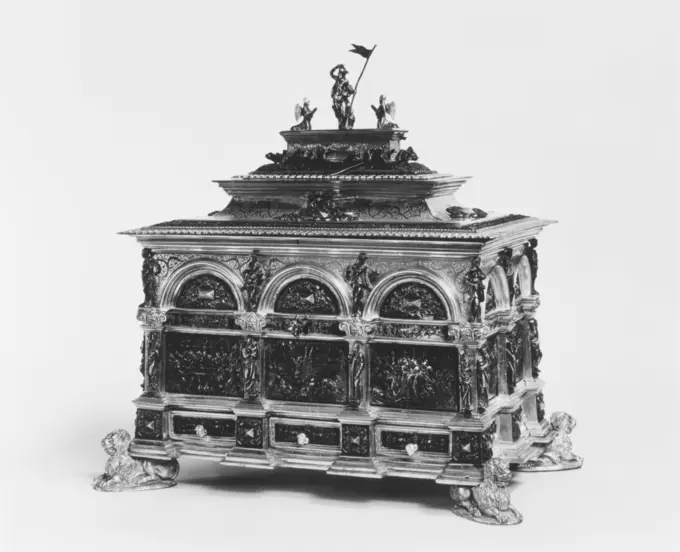
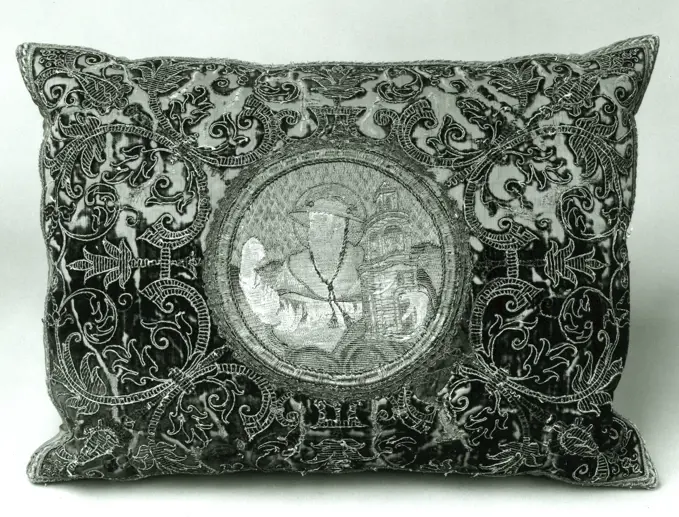
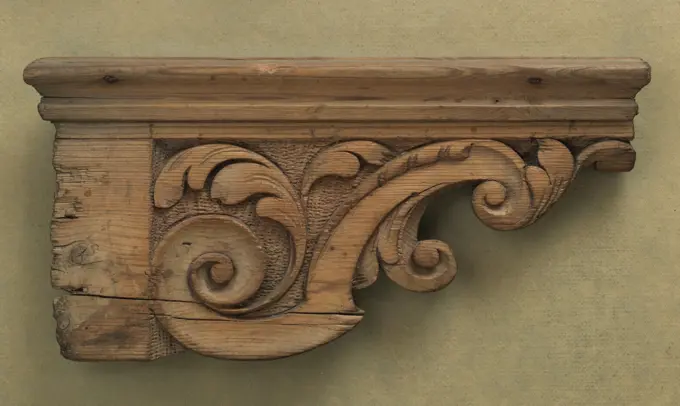
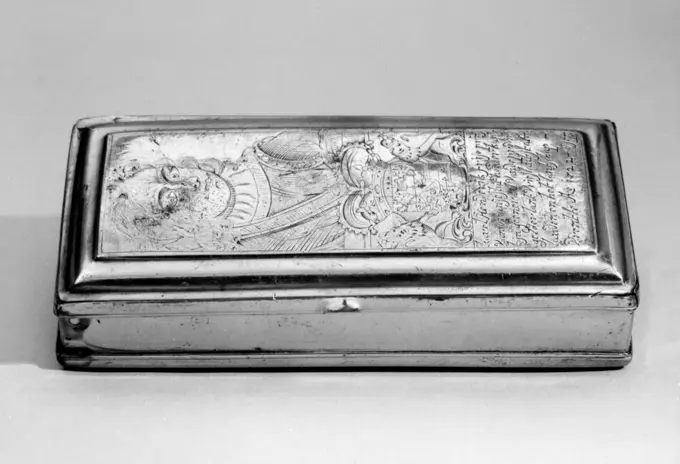
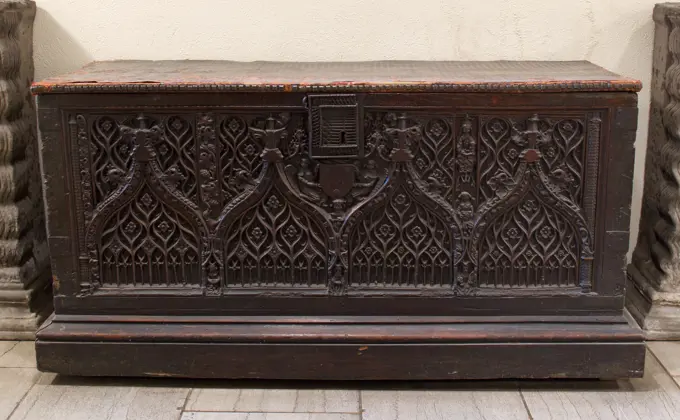
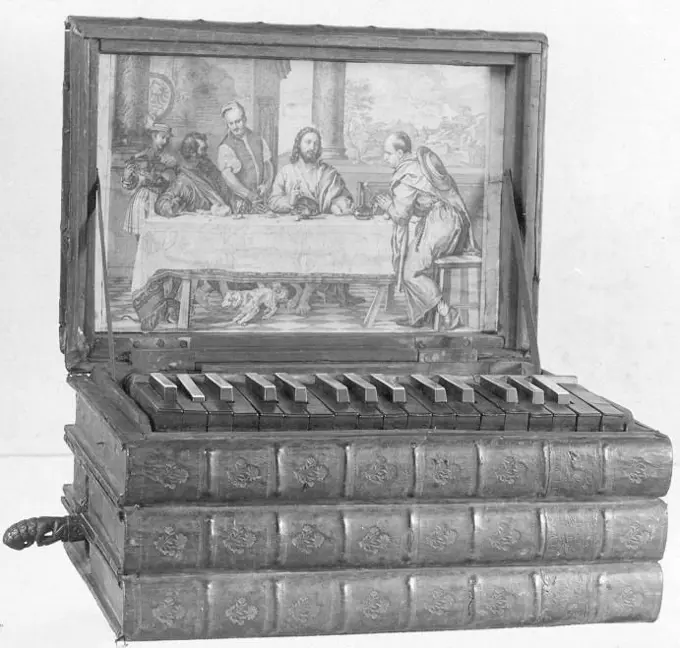
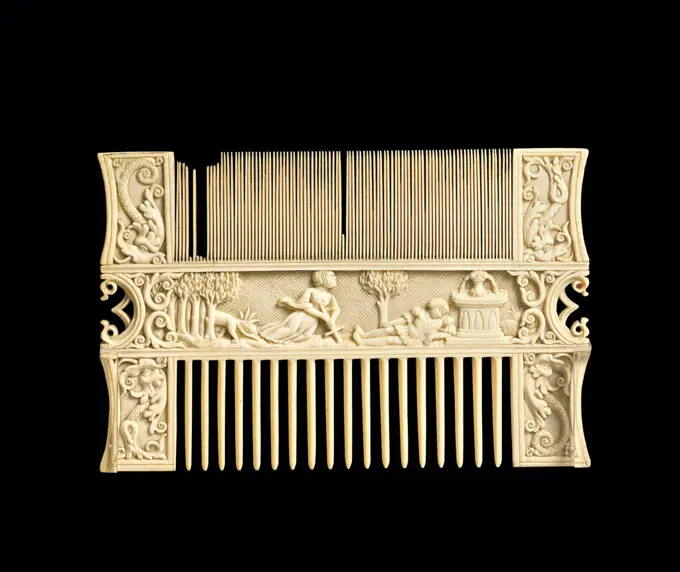
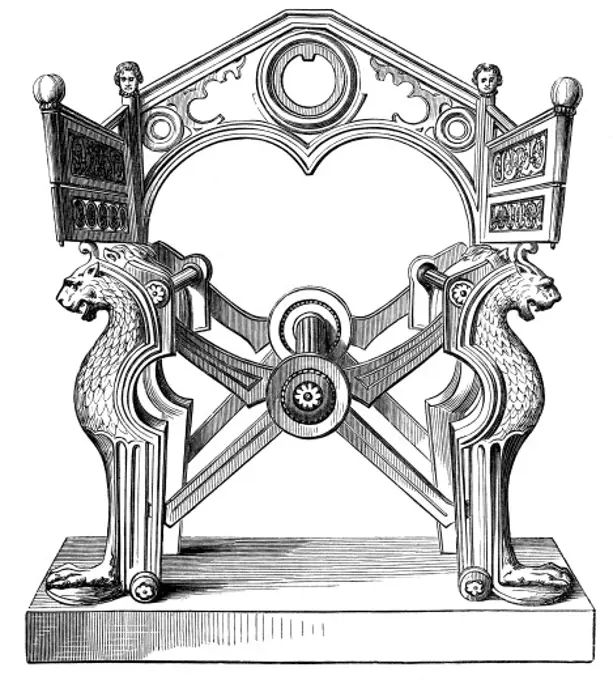
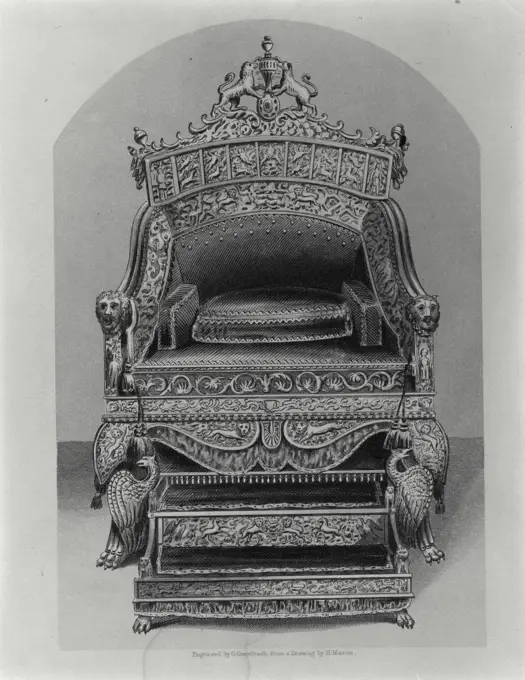
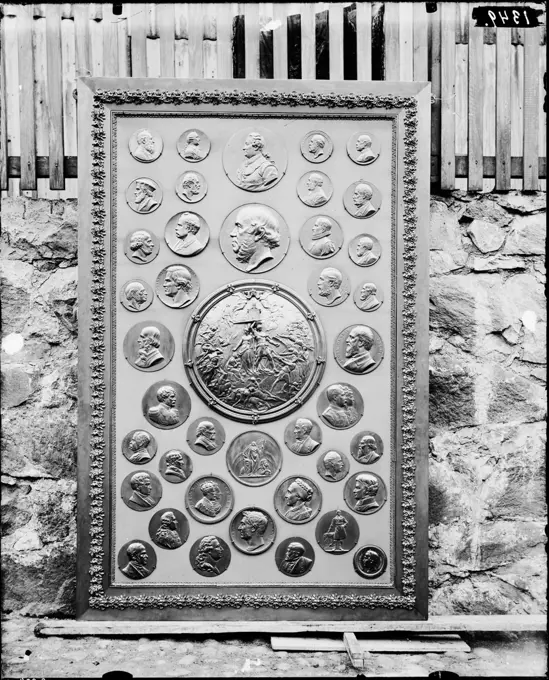
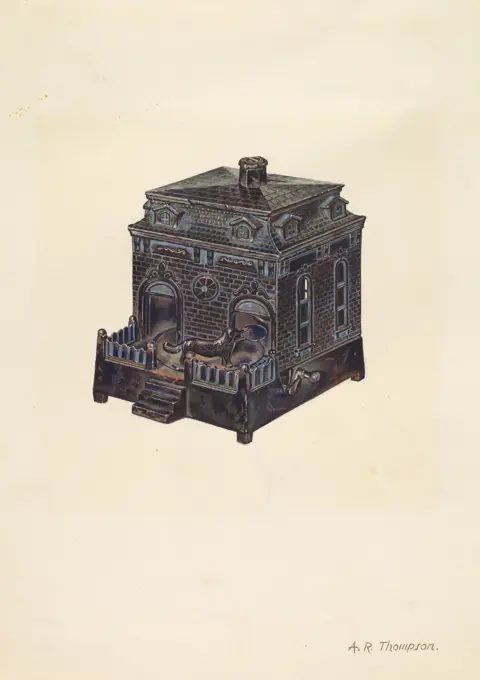
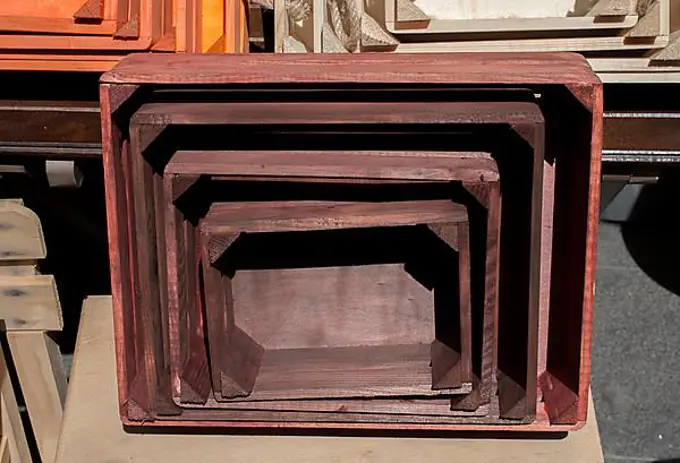
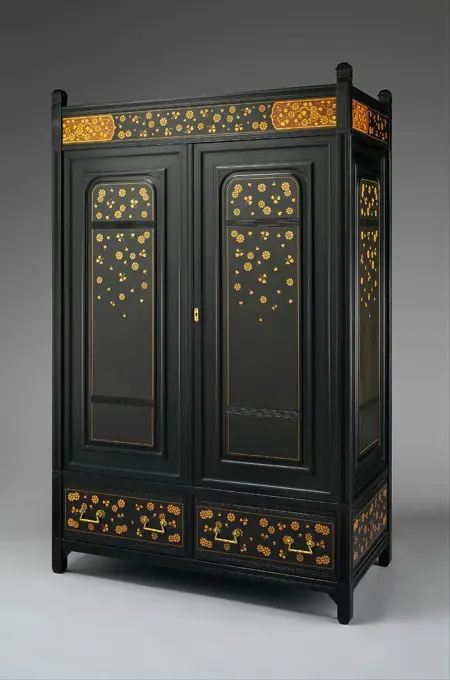
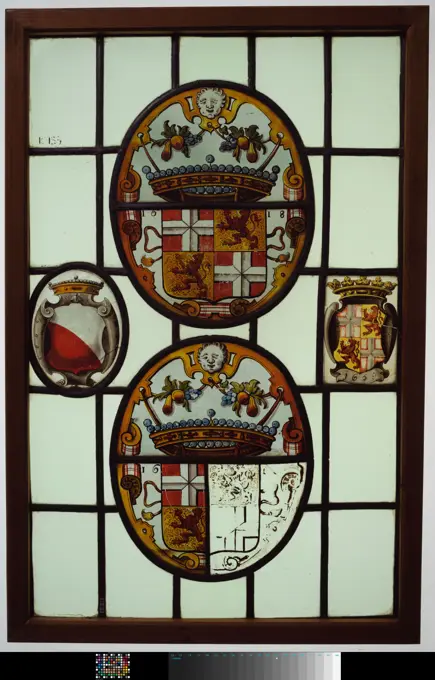
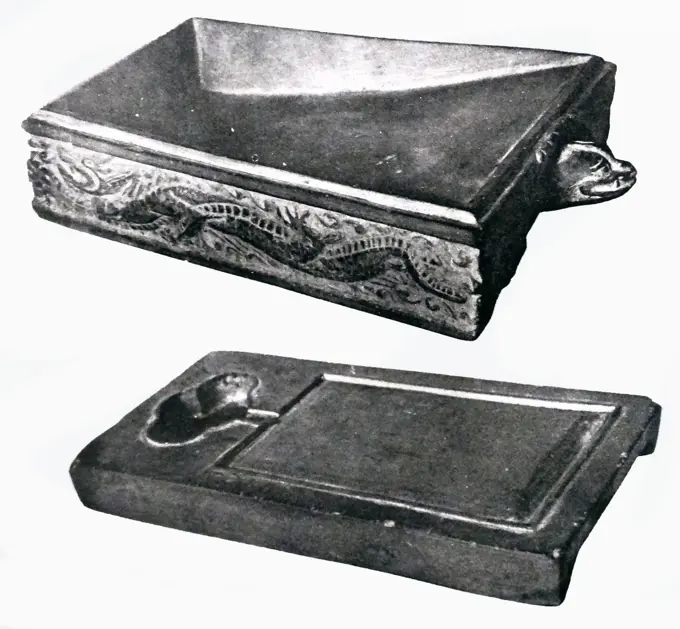
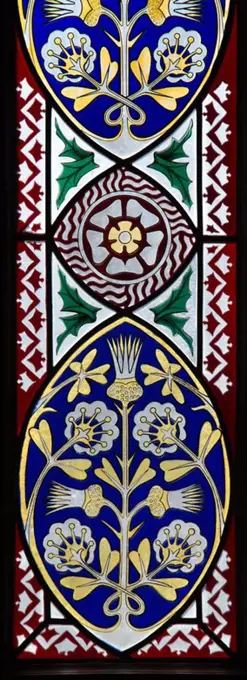
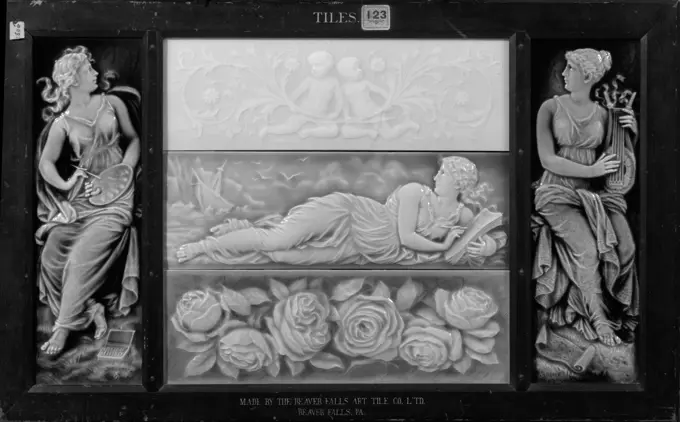
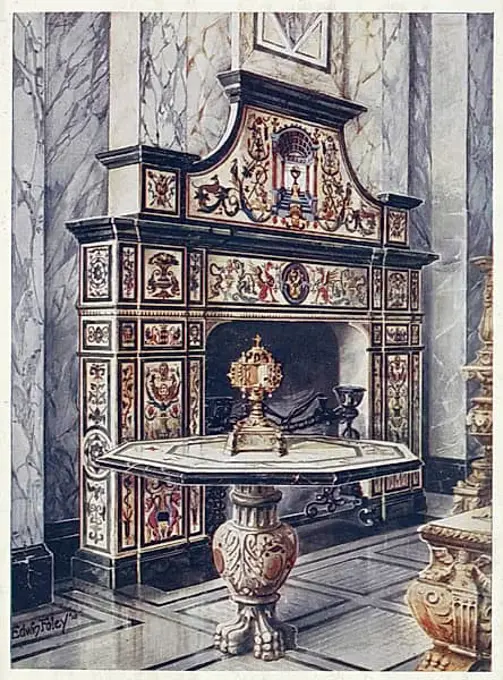
Lock. Culture: European or German (). Dimensions: Overall: 15 1/8 x 12 7/8 in. (38.4 x 32.7 cm). Date: 15th-16th century.The decoration of Gothic iron locks and keys was often elaborate and of the highest standard of workmanship. The motifs were frequently drawn from Gothic architecture, reproducing on a miniature scale complicated tracery patterns and even tiny statuettes. A number of these tiny locks were compound, with some of the mechanisms concealed from view, and required two or even three keys used in sequence to open them. It has been suggested that the greatly expanded use of locks on doors, or coffrets and other types of storage chests was a result of the increasing urbanization of life and the new emphasis on material wealth and private ownership which developed in the late Middle Ages. Museum: Metropolitan Museum of Art, New York, USA.Abruzzo L'Aquila Celano Museum33. Hutzel, Max 1960-1990 Medieval: Manuscripts: Miniature nella Marsica; Trasacco - Antifonario; Tagliacozzo - Messale; Avezzano - L'Ecultet Metalwork--processional crosses Post-medieval: Vestments, metalwork, painting, frescoes, sculpture German-born photographer and scholar Max Hutzel (1911-1988) photographed in Italy from the early 1960s until his death. The result of this project, referred to by Hutzel as Foto Arte Minore, is thorough documentation of art historical development in Italy up to the 18th century, including objects of the Etruscans and the Romans, as well as early Medieval, Romanesque, Gothic, Renaissance and Baroque monuments. Images are organized by geographic region in Italy, then by province, city, site complex and monument.Silversmith's art, 17th century. Gennaro Monte, silver altar card frame for the main altar.Casket late 16th-early 17th century Possibly after a design by Jacob Mores The sides of this casket are divided by rounded arches resting on pilasters, alternating with silver reliefs depicting the Passion of Christ. The figures of the Virgin, Christ, and the twelve apostles are shown against the pilasters. The lid represents the Resurrection. The interior is richly decorated with strapwork and Moresque decoration. This casket or one of the several related examples is recorded in a drawing by the Hamburg goldsmith Jacob Mores (1540-ca. 1612).. Casket 193605Looking glass 1745-80 American or British. Looking glass. American or British. 1745-80. Gilded gesso, red pine, white pine. Possibly made in Philadelphia, Pennsylvania, United States; Possibly made in EnglandRoundel 15th century (roundels) and 17th century (panels) Italian or Spanish This fifteenth-century roundel, together with three others in the Lehman Collection (1975.1.2442, 1975.1.2443, 1975.1.2444), was appliquéd to rectangular panels of dark red velvet embroidered and couched in allover strapwork forming fleur-de-lis and leaf patterns, dating to the seventeenth century. Two of the rectangles, finished with gilt metal tape, were attached directly to an upholstered couch; the other two were made into cushions, no doubt for the same couch. Each of the roundels contains a half-length figure. All four figures hold models of churches, three of them wear bishops' miters and the fourth, a cardinal's hat. The roundels were most likel once part of an orphery band or cross on either a chasuble, or a cope, although they also could have been parts of the border of an antependium or the apparels on a dalmatic.. Roundel 461098Bracket 18th century British. Bracket. British. 18th century. Deal. WoodworkCollar China. Collar 68980Tobacco box ca. 1734 Dutch The box is rectangular. Its lid is engraved with a portrait bust of Prince William IV (1711-51) accompanied by his coat of arms. Inscribed below is: Karel henderik friso prins van oranje stathouder kaptijn geeneraal van de provins gelderlant vrieslant stat en landen en het lantschap drentte Ao 1722-6 sep. (Carl Henry Friso, Prince of Orange, Stadtholder Captain General of the province Gelderland, Friesland, City and Country the former name of the province Groningen and the county Drenthe; Anno I722-Sept. 6). Interestingly enough, his first name, William, is not given in this inscription. A portrait bust of Princess Anne (1709-59), with her coat of arms below, appears on the underside. It is inscribed: Anna van bronswijk linnenburgh kroon prinsesse van groot bretanje etc etc Ao '709 Nov (Anne of Braunschweig Linnenburgh, Crown Princess of Great Britain etc. etc. Anno 1709 Nov.). Princess Anne, the daughter of King George II, was born on November 2, 1709. WilChest early 16th century Northern European. Chest. Northern European. early 16th century. Walnut. Woodwork-FurnitureDetail picture of rails in rail.Book Harmonium 19th century French or German A book organ (or bible regal) was a popular type of small pipe organ that when folded up took the shape of a large book. This instrument takes that much older idea and updates it with a free reed harmonium in the 19th century. Technical description: Softwood case in form of four leather-bound folio size books, the cover and spines stamped with gold floral designs, and labeled on the spines: Traite des Pais Bas Tom I (II, III, IV); volume one hinges upward, revealing an engraving of the Supper at Emmaus glued beneath the lid; inside, a keyboard (oak levers, ebony naturals, ivory accidentals; compass F-c2) is at the front of the compartment, separated by a partition from a leather-covered (painted pink) reservoir behind, the reservoir (compressed by two springs and bearing a safety valve on top) mounted above a single fold feeder operated by a handle extending through the lower left rear side of the case; the boxwood handle terminates in the fApplied garnished with a mirror and an arm of light (dummy title). Carved and golden wood and mirror. House of Victor Hugo - Hauteville House.Comb, by North Italy work, 16th Century, carved ivory with red and gold decorations. Italy: Tuscany: Florence: Bargello Museum: Donazione Carrand 1889 inv. 140 C. Whole artwork. Rectangular comb with double row of teeth intaglio soldier lance/spear three dames/ladies castle knights/horsemen crown garden bushes arabesque motifs red goldRoman civilization, plastic model of monument to mark victory of Roman general Aemilius Paulus over King Perseus at Pydna and conquest of Macedoniafine arts, handicrafts, curule chair, so called chair of Dagobert, 7th century - 12th century, bronze, gilded, Musee des Souverains, Louvre, Paris, wood engraving,Ostensorium, reliquary, 15th century silver reliquary, digitally restored reproduction of a 19th century original, exact date unknownIvory Throne Capital Palace, London World History Great Britian Lithograph Tours, France vase placed in a corridor of the town hall , 1909 - Center of France - Auguste Léon - (June) (French - Tours , France Vase disposé dans un couloir de l' hôtel de ville). Town Hall , Town Hall, Interior view, vase, decorative arts, ceramics, Habitat , Architecture , Art, Indre et LoireStew with two medallions of glass from which one is painted with three women's figures that sit on a meal. Oak stew on legs, with a copper handle and decorated with copper knots. In two of the side walls, glasses have been placed in the medallions, one of which is painted with three women's figures, sat at a meal (this glass is cracked in four pieces).Chrismatory. Paris, France. Date: 1755-1765. Dimensions: 10.2 x 5.4 x 6.4 cm (4 x 2 1/8 x 2 1/2 in.). Pewter. Origin: Paris. Museum: The Chicago Art Institute, Chicago, USA.Folk art wood model with wrap children. This 18th-century wood models served to produce bakery in the form of winding children. After popular customs, they ate them on New Year's Eve or at the New Year morning to assure himself to hoped for fertility for the coming year. The pastry was prepared in particular at weddings. The edible children's linen were decorated on the bridal cake or incorporated directly into the wedding cake. With this gift, the bride was a great children's range as possible.Cinerarium with Lid. UnknownWilliam O Fletcher, Safe Bank, c 1938 Safe BankChest - side view, by Sicily workmanship, 18th Century, Unknow. Italy, Sicily, Palermo, Private Collection. Chest - side view.Pair of panels 18th century French. Pair of panels. French. 18th century. Wood, carved and gilt on a buff ground. WoodworkMEDAL.Archie Thompson, Toy Bank, c 1937 Toy BankChair (one of a pair) 18th century Swiss. Chair (one of a pair). Swiss. 18th century. Wood. Woodwork-FurnitureColorful wooden crate boxes for sale in a marketGlass Fragment 16th century European. Glass Fragment. European. 16th century. Colorless glass. Glass-StainedWardrobe. Culture: American. Dimensions: 78 1/2 x 49 1/2 x 26 in. (199.4 x 125.7 x 66 cm). Maker: Herter Brothers (German, active New York, 1864-1906). Date: 1875-1883.Herter Brothers, the firm of Gustave and Christian Herter, produced furniture and integrated interior designs in a great variety of styles. This wardrobe epitomizes their Anglo-Japanesque style of the 1870s, incorporating many of the design principles that the British critic Charles Locke Eastlake (1793-1865) promoted in the most widely read primer of the Aesthetic movement, his "Hints on Household Taste" (1868), published in America in 1872. The wardrobe is spare, rectilinear, and, as Eastlake espoused, has no "extravagant contour or unnecessary curves." Despite its apparent simplicity, however, the wardrobe is a highly sophisticated object. It references Ming-dynasty cupboards of the seventeenth century that are nearly identical in form, and the marquetry decoration is one of the most remarkable examples in the HerterWindow with four weapons, including the Wapen van Utrecht, Anonymous, 1659 Four colored oval windows of stained glass with the weapons of Utrecht, two of which are large and two small windows.  glass. lead (metal). Four colored oval windows of stained glass with the weapons of Utrecht, two of which are large and two small windows.  glass. lead (metal).Crown of the German Emperor, Historical, digitally restored reproduction of a 19th century originalCAJA FUNERARIA EGIPCIA-XXVI DINASTIA-PROCEDE DE ASSIUT- MADERA POLICROMADA. Location: MUSEO ARQUEOLOGICO NACIONAL-COLECCION. MADRID. SPAIN. HORUS DIOS EGIPCIO.Candelabro en marmol blanco de la Glyphothek de Munich.Oriental Ink stone from Koryo (Goreyo) (Goreyo) dynasty (918-1392).Antoni Gaudí / Detail of colored crystals from the window of the trust room, made by the Peligrí Workshops, on the noble floor of the Güell Palace, 1888, Barcelona, Catalonia, Spain. Museum: Palacio Güell, Barcelona, Cataluña, España.Pocketbook 1790-1800. Pocketbook. 1790-1800. LeatherCandle Bracket, 1700s. Italy, 18th century. Wrought iron; overall: 78.8 x 35.6 cm (31 x 14 in.).Tile Isaac Broome. , ca. 1880. Ceramic  These tiles set in a plain, painted wooden frame were probably arranged in this manner for display in a showroom, as opposed to the more elaborately framed tiles nearby that were intended as decoration for a domestic interior. The tiles illustrate the range of colors and sizes offered by the firm. Decorative Arts ca. 1880Furniture from around the turn of the century 1900, mantelpiece in coloured mosaic. Florentine. Victoria and Albert Museum, South Kensington. Table in coloured mosaic (1910, 1911), Chimneypiece in coloured mosaic. Table in coloured mosaic (1910, 1911) .jpgPair of candlesticks 1771-72 John Carter II. Pair of candlesticks 191530Versailles, France. Palace of Versailles Gilded lamp standCarved cross-light and entitled: The Horse in the Cradle, cutting frame light wood carving sculpture sculpture building part wood pine wood linden wood paint 83,0 w 165,5 THE HORSE IN THE COT Rotterdam City Triangle Zandstraat Zandstraat Quarter Kralingen-Crooswijk Old Crooswijk Left Rottekade wewing beer Heineken Originating from house on the Red SandTwo Scale Balance Beams 9th-11th century Lambayeque (Sicán). Two Scale Balance Beams 315477Croisees No. 27, Interior Design - French DrapesPlaster models of architectural decorations.. 1905. Photographs. New York Public Library Archives. New York Public Library, New York Public Library. Humanities and Social Sciences Library, Library architecture, Architectural decorations & ornamentsBlack marble fireplace with antique clock and matching candleholdersRoman sign at the entrance of the Roman Ruins of Merida, Extremadura. Spain