Decorative Oriental Carpets

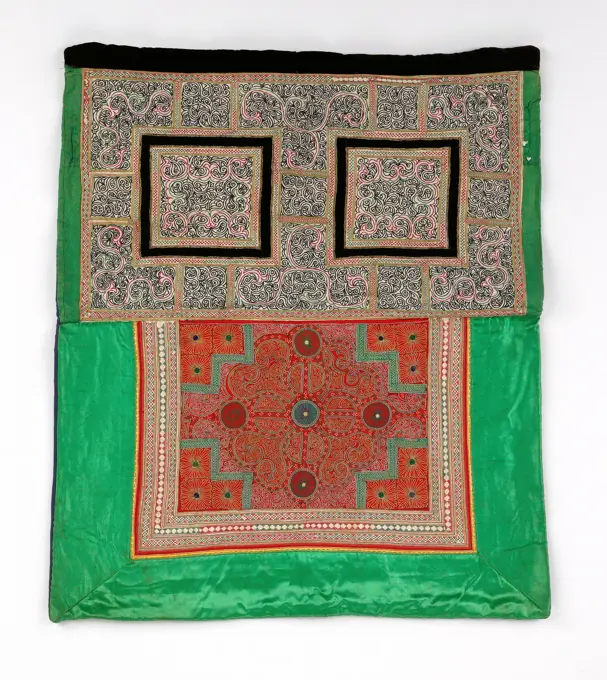
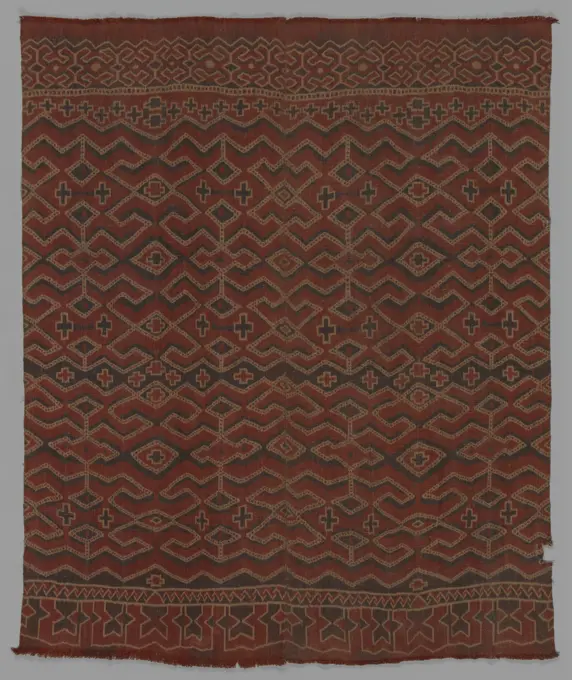
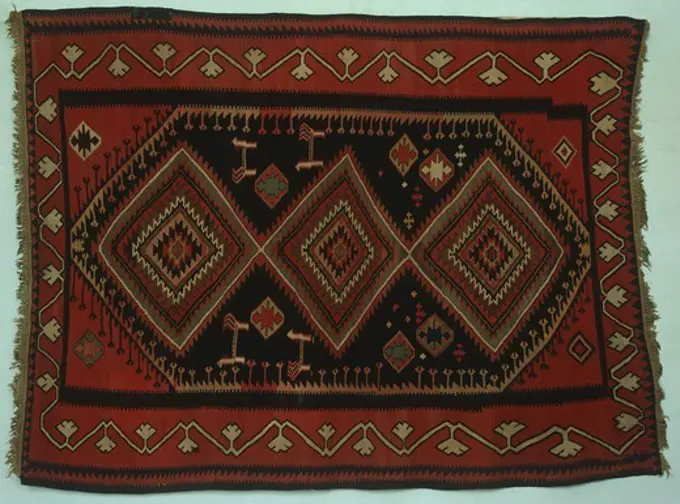
A collection of traditional wool carpets featuring intricate geometric patterns, vibrant colors like red, blue, yellow, and various decorative borders.
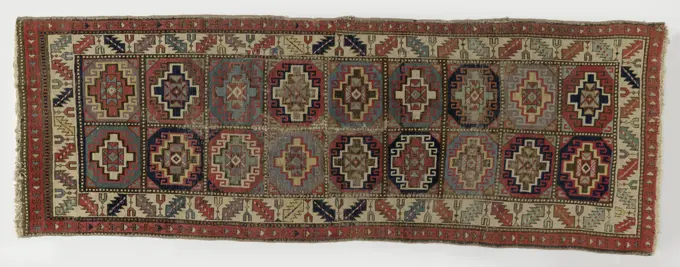
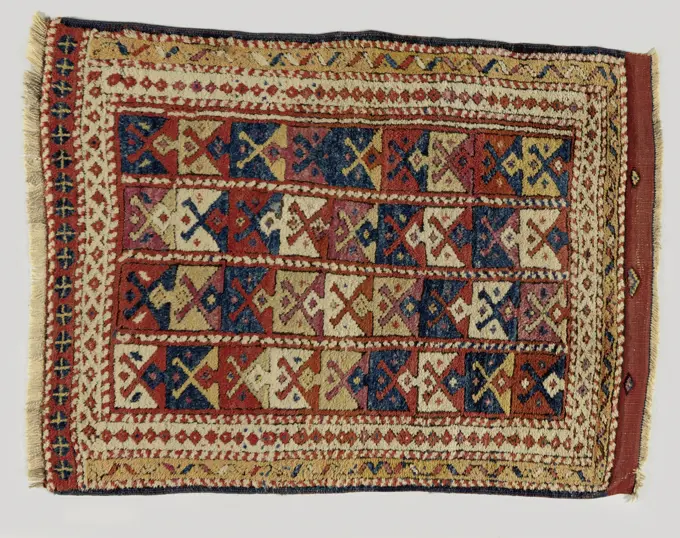
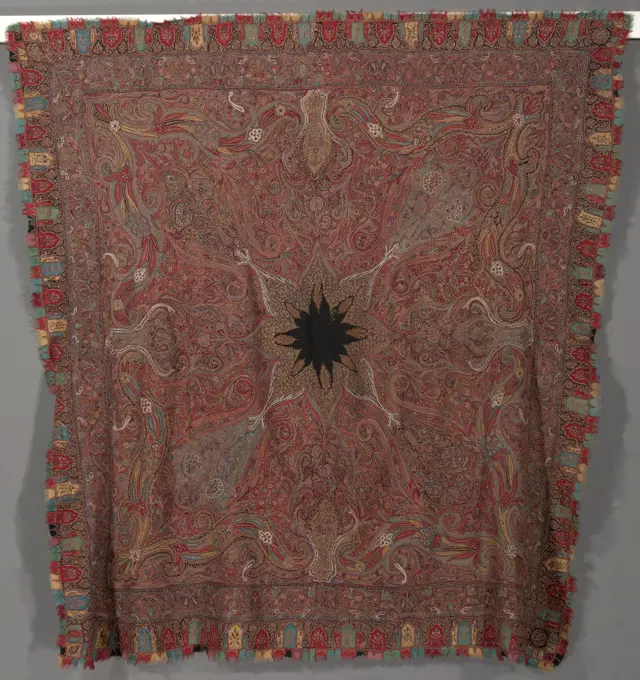
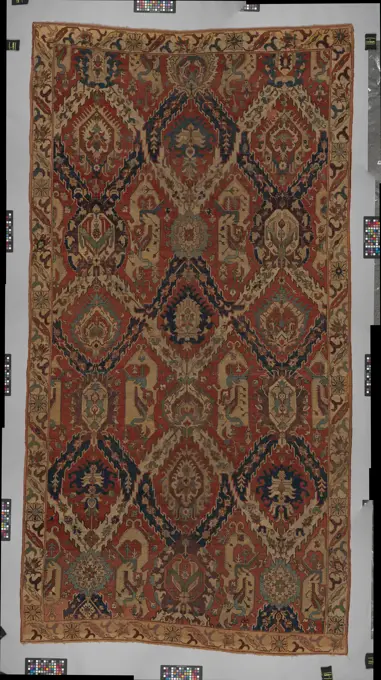
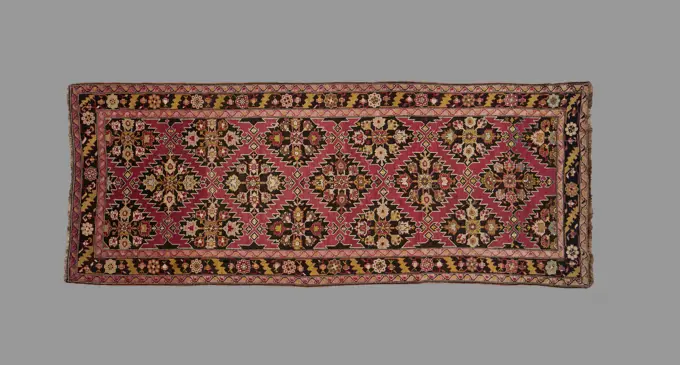
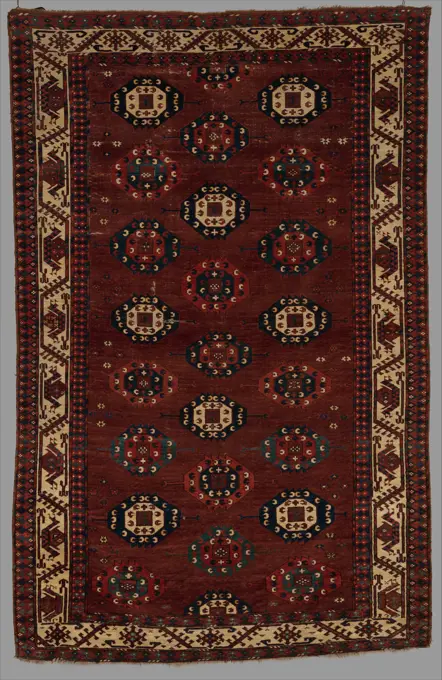
Wool carpet with geometric figures, anonymous, c. 1800 - c. 1899 The middle section is divided into eighteen rectangular compartments, in which geometric figures, surrounded by various edges, the width of which has a beige soil with stylized diagonally placed leaf shapes. Colors: mainly red, otherwise dark and light blue, brown and dull yellow. Caucasus wool The middle section is divided into eighteen rectangular compartments, in which geometric figures, surrounded by various edges, the width of which has a beige soil with stylized diagonally placed leaf shapes. Colors: mainly red, otherwise dark and light blue, brown and dull yellow. Caucasus wool
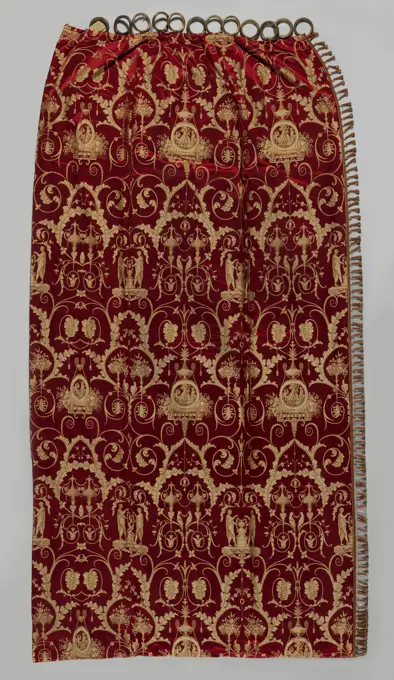
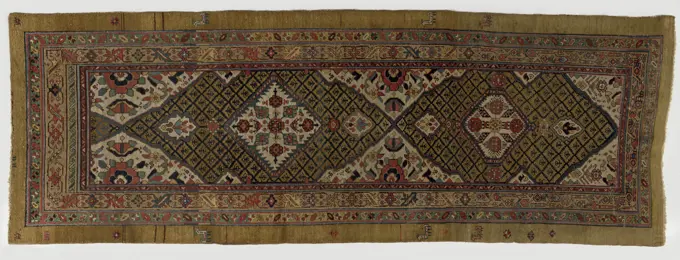
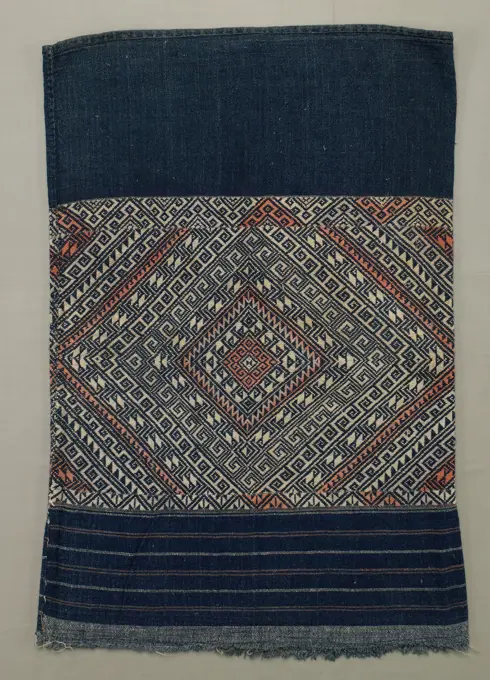
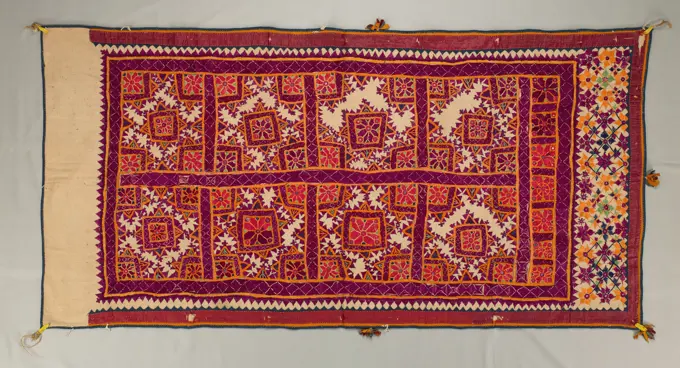
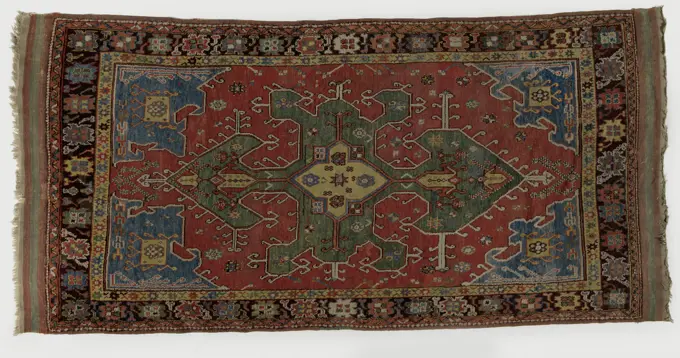
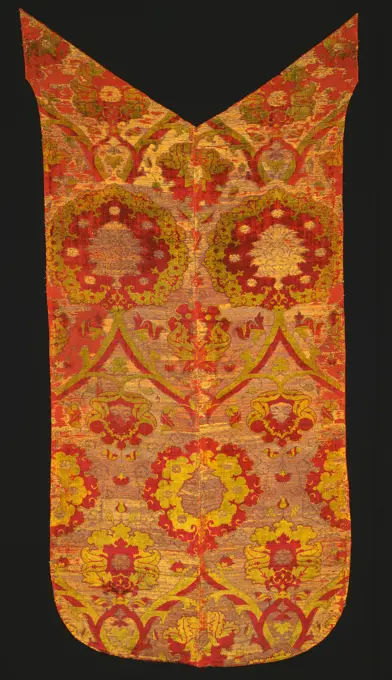
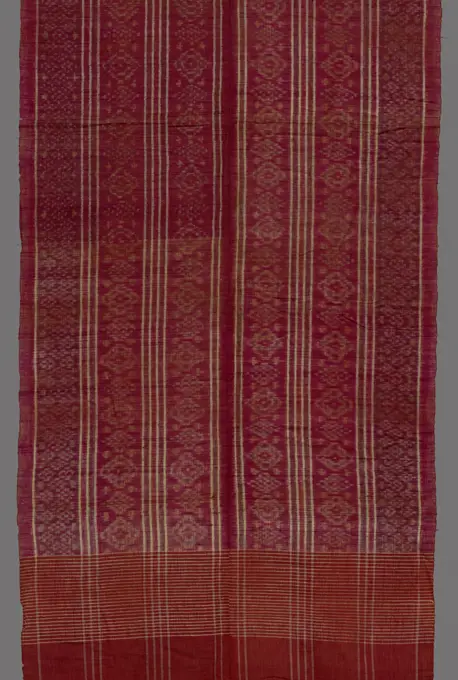
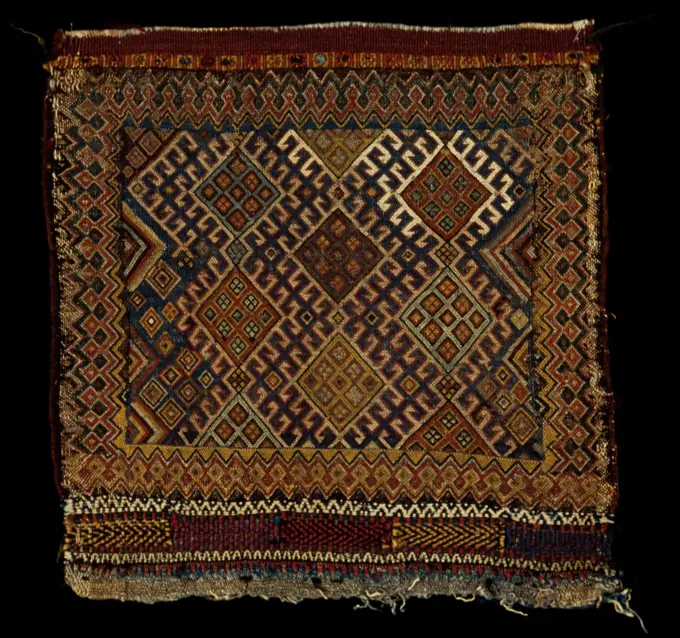
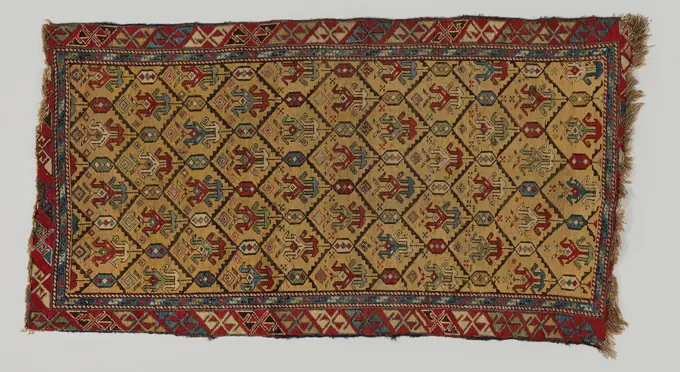
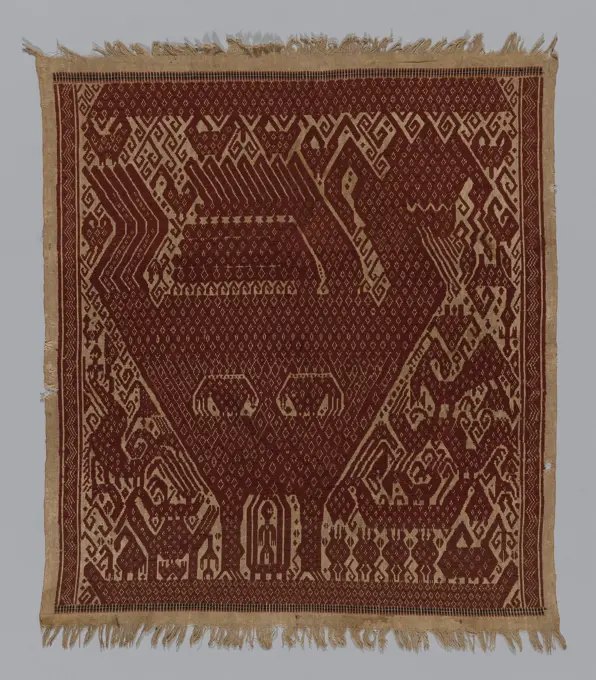
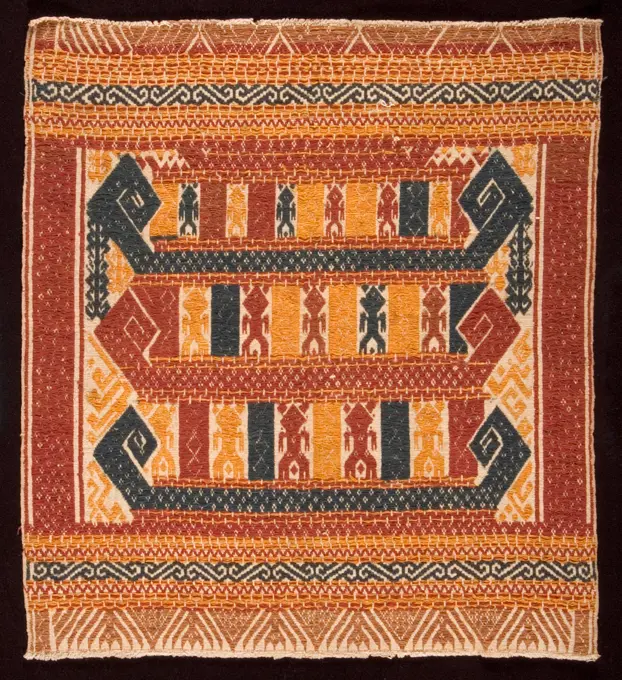
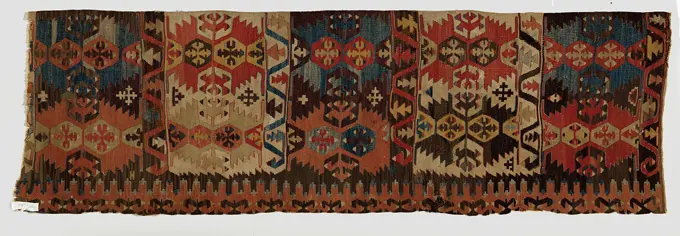
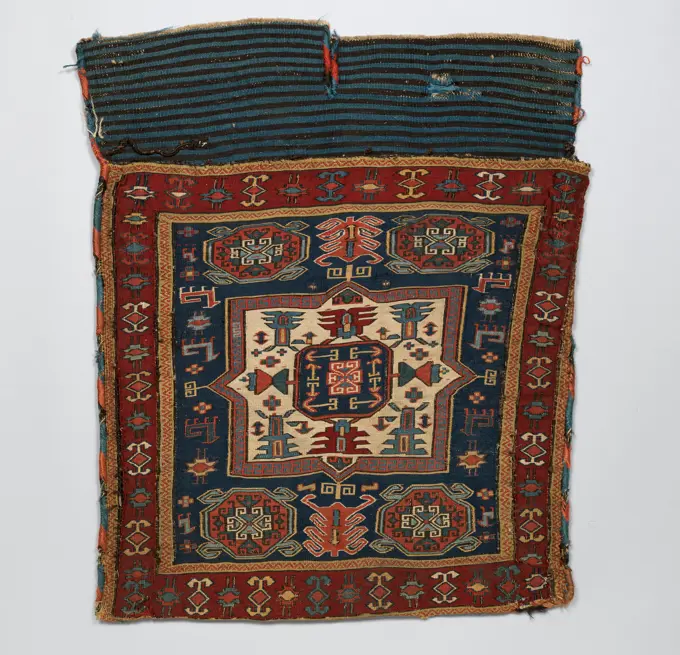
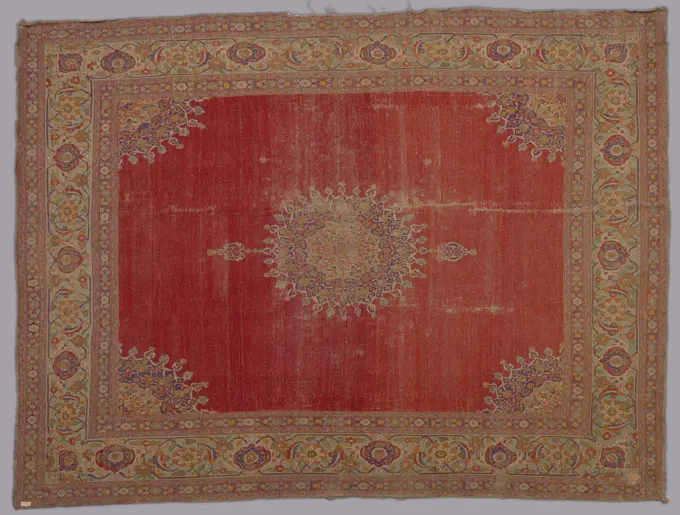
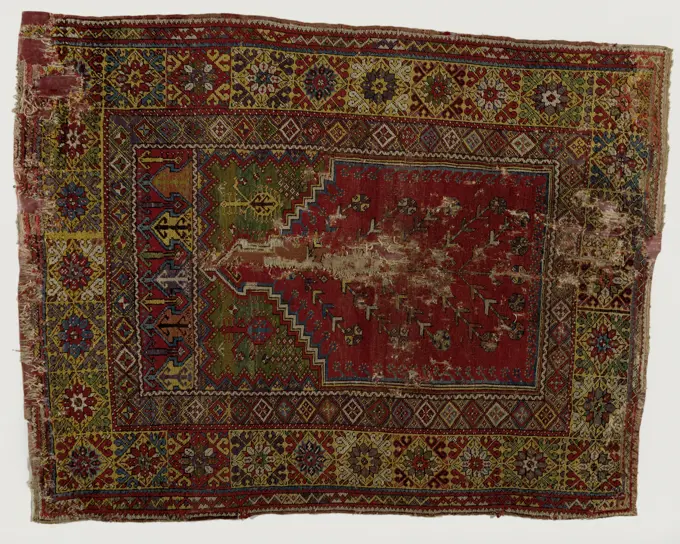
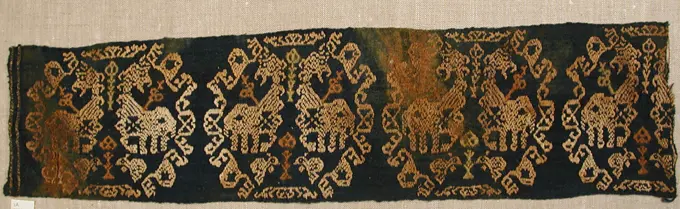
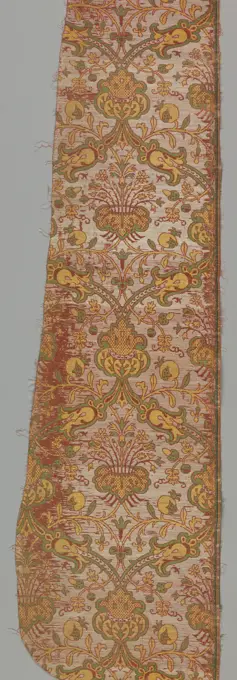
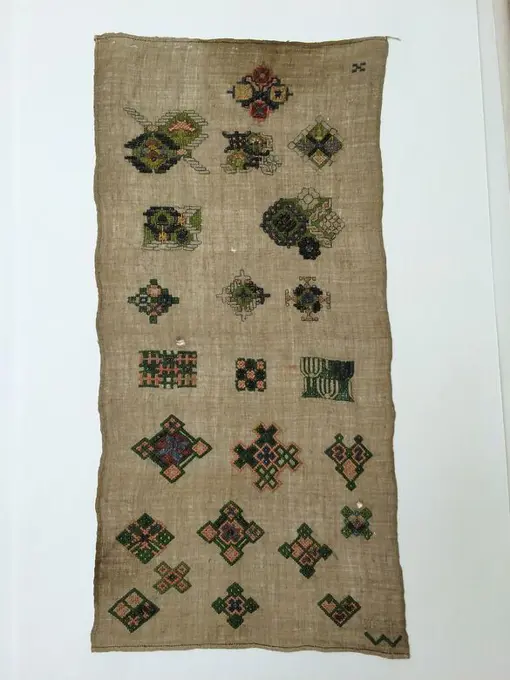
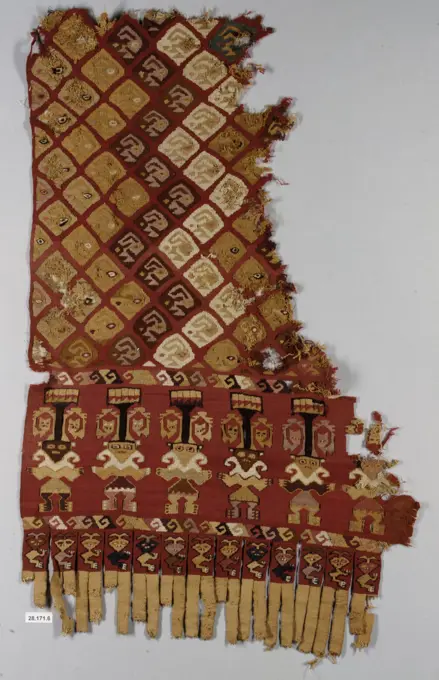
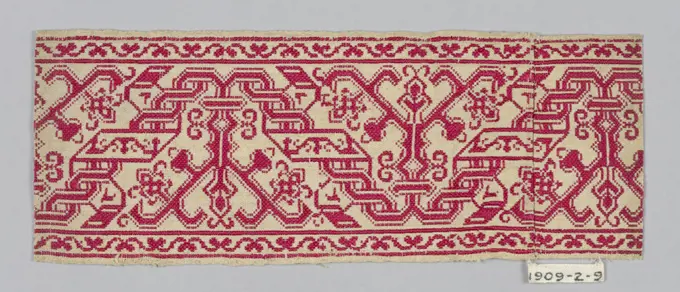
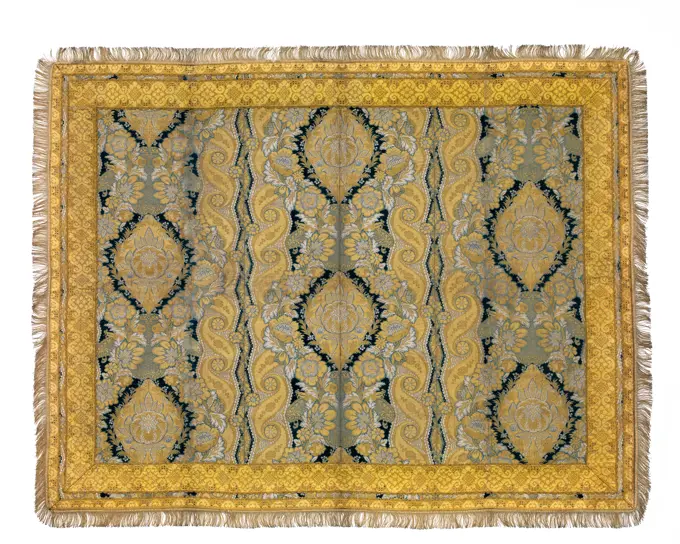
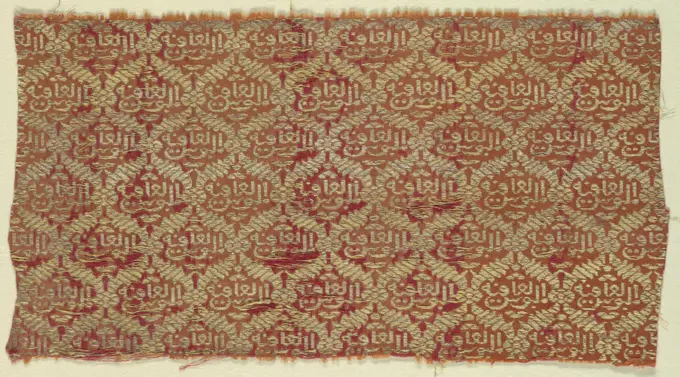
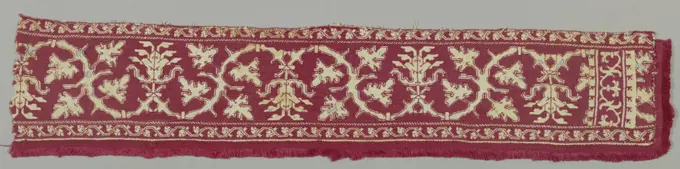
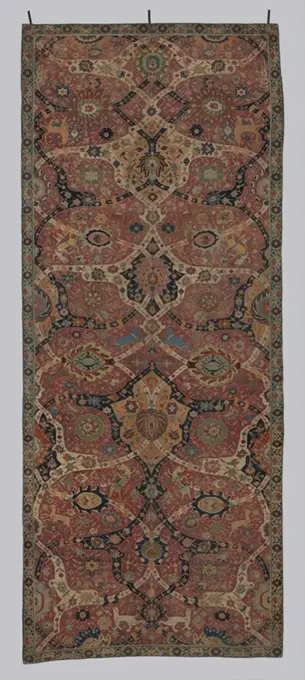
Carpet with infinite report of staggered rows Continuous gul, edge with checkerboard pattern. Oriental carpet in smooth fabric with brochures. In the midfield, rows of contiguous gul with a rectangle in the center. Edges decorated with blocks with diamonds with checkerboard pattern.Oriental carpet. Oriental carpet, rastrover, in runner format. The midfield is decorated with windows, within which a rosette. Widest edge is decorated with Kufiek Script.Wool carpet with geometric ornaments decorated. Wool carpet. In the middle box figures, in which geometric ornaments O.A. cross shapes on red ground. The center compartment is framed by various edges, the widest with eight-pointing stars and various colors on a white ground. Colors: mainly red, furthermore light and dark blue, yellow and green.Wool carpet with geometric figures, anonymous, c. 1800 - c. 1899 The middle section is divided into eighteen rectangular compartments, in which geometric figures, surrounded by various edges, the width of which has a beige soil with stylized diagonally placed leaf shapes. Colors: mainly red, otherwise dark and light blue, brown and dull yellow. Caucasus wool The middle section is divided into eighteen rectangular compartments, in which geometric figures, surrounded by various edges, the width of which has a beige soil with stylized diagonally placed leaf shapes. Colors: mainly red, otherwise dark and light blue, brown and dull yellow. Caucasus woolWool carpet with geometric figures. Wool carpet. In lengths three diamond-shaped frames, in which geometric figures and along which edges of rectangular motifs. As a wide border frame, consisting of other edges of various widths, with squares, six corners. Colors: dull red, dark and light blue, brown and beige.Anonymous, East carpet (dummy title). House of Victor Hugo - Hauteville House.Hexagons rug, karabagh or shirwan, anonymous, 1700 - 1800 Hexagon rug, karabagh or shirwan. Midfield: White center track and side courses, on which hexagons alternate with small windows. The hexagons in turn blue and red, the windows of gold tube, light blue, light yellow and light green. There is a cross -shaped flour within each hexagon. Rand: The center may be the original main edge of the rug, one of which is present, from reciproque tilting in dark bridge and light blue. Karabakh (Possibly) wool Hexagon rug, karabagh or shirwan. Midfield: White center track and side courses, on which hexagons alternate with small windows. The hexagons in turn blue and red, the windows of gold tube, light blue, light yellow and light green. There is a cross -shaped flour within each hexagon. Rand: The center may be the original main edge of the rug, one of which is present, from reciproque tilting in dark bridge and light blue. Karabakh (Possibly) woolVelvet Textile, late 15th century. Spain, late 15th century. Velvet; silk and metallic thread; average: 54 x 21.6 cm (21 1/4 x 8 1/2 in.).Curtain with imitation style directoire, anonymous, c. 1800 - c. 1825 Curtain with grotes' pattern of medallions, portrait busts, vases and volute vines in cream against a satin surface in dark brick red. Neo-Pompeiaan. Red lining. With large, profiled rings and fringes on one side.  satin. silk. ringen: brass (alloy). voering: cotton (textile) Curtain with grotes' pattern of medallions, portrait busts, vases and volute vines in cream against a satin surface in dark brick red. Neo-Pompeiaan. Red lining. With large, profiled rings and fringes on one side.  satin. silk. ringen: brass (alloy). voering: cotton (textile)Sampler, Medium: silk embroidery, wool foundation Technique: cross, long-armed cross, double running, rococo, and chain stitches on plain weave, Four cross borders with floral ornament and 'boxers'; The Lord's Prayer; alphabets, numerals and date., England, 1759, embroidery & stitching, SamplerCover before one animal.Gul motifs in Midfield; The Edge is decorated with geometric motifs.Oriental carpet ,, 1850 - 1900 Eastern medalie or grid rug of knotted wool, carpet format. There are two elongated medallions in midfield and four edges around them. Hamad wool Eastern medalie or grid rug of knotted wool, carpet format. There are two elongated medallions in midfield and four edges around them. Hamad woolSilk Persian Little Person belt unknownTwo Panels (Joined) Made 1801-1900 India. Silk, satin weave; embroidered with silk in chain and closed feather stitches .Fragment, Medium: silk Technique: 4&1 satin plus 17 twill, Quatrefoils containing acorns in red and yellow., Spain, early 17th century, woven textiles, FragmentSkirt, first half 20th century, 21 15/16 x 32 15/16 in. (55.72 x 83.66 cm) (approximate), Cotton; needlework, Thailand, 20th centuryCoverlet ca. 1770-80 Mexican. Coverlet 635404Prayer rug with downwars panel, Ladik ,, c. 1800 Prayer rug with downwars panel, Ladik. Midfield: light blue mihrab with stiff rows of three anjelieren and with three -part facade. Light red swallows with toothed lancet leaves and star flowers. At the bottom of a bilt edge with white "omegalijn", radical in large, dark red cross panel with hanging tulips, alternating in light blue (3) and black (2). Edges: quadruple. The main edge is light red with rosette flowers and sloping lilies on a angular slender. He is caught in wide hems with angular tenders, the inner in brown, the outer in brown -black. The entire midfield is caught in a white list. Ladik wool Prayer rug with downwars panel, Ladik. Midfield: light blue mihrab with stiff rows of three anjelieren and with three -part facade. Light red swallows with toothed lancet leaves and star flowers. At the bottom of a bilt edge with white "omegalijn", radical in large, dark red cross panel with hanging tulips, alternating in light blue (3Rabari quilt cover, 20th century, 74 x 36 1/4 in. (187.96 x 92.08 cm), Cotton; Rati embroidery, India, 20th centuryCarpet with three medallions filled with geometric figures on red soil. Three edges; Middle Diagonals divided into green and blue triangles., Anonymous, 1900 - 1944 Eastern carpet with three medallions filled with geometric figures in the middle on a red soil. Three edges of which the middle one is divided into green and blue triangles by diagonals. Jumper wool Eastern carpet with three medallions filled with geometric figures in the middle on a red soil. Three edges of which the middle one is divided into green and blue triangles by diagonals. Jumper woolStermedaillonlaed ,, 1850 - 1900 Stermedailla rug. Midfield: Terracotta fond with a large, pale green with two palmets equipped star medallion with white hook contours and a yellow cross. In the corners of Koblat blue quarter medallions with yellow blocks. Field filling of stars and flower stems. Rand: triple. The middle one is brown-purple and black with naturalistic rosette flowers in Mauve, old pink, green, red, yellow, white and light blue. The inner hem of yellow with stars. The outside zoom of old pink with zigzag lines in many colors. Beard: At the bottom a 13 cm wide beard in red, green and white stripes, at the top 14 cm wide. Little Asia wool Stermedailla rug. Midfield: Terracotta fond with a large, pale green with two palmets equipped star medallion with white hook contours and a yellow cross. In the corners of Koblat blue quarter medallions with yellow blocks. Field filling of stars and flower stems. Rand: triple. The middle one is brown-purple and black with naturalistic rChasuble Back Made 1451-1500 Italy. Silk, gilt-metal-strip-wrapped silk, warp-float faced 4 1 satin weave with supplementary brocading wefts bound by main warp in weft-float faced 1 4 'S' twill interlacings and with two-color supplementary pile warps forming cut voided velvet .Tapestry Fragment 12th-15th century Chimú. Tapestry Fragment 313237IkatClothCarpet 16th century. Carpet 450393Saddle bag, 19th century, L.17 x W.16 in., wool, Turkey, 19th centuryShawl (), 1700s - 1800s. India, 18th-19th century. Embroidery on wool ground; overall: 189.9 x 111.8 cm (74 3/4 x 44 in.).Floral rug, daghestan or shirwan. Floral rug, daghestan or shirwan. Midfield: Goudoker Fond with an infinite grid of brown-black trashed diagonals that mesh shapes shocking bowl flowers in blue, bleu, red, green and white. There are henguns in green, red, white and ocher on the raster nodes. Borders: two-fold. The outer is red with sloping S-SEN in the aforementioned colors. The indoor zoom is light blue with sloping s-yes.Fragment (Iran); silk, metallicTampan (Ceremonial Cloth) Made 1801-1900 Indonesia. Cotton, plain weave with supplementary patterning wefts . PaminggirMedalleled, decorated with BOTEHS against blue fond and geometric motifs and animal figures. Cherry rode border with S-shaped tendrils and rosettes .. Oriental carpet, medallology felt. In midfield a medallion and Botehs against a dark blue fond. Geometric motifs and animal figures fill the rest of the field. A cherry red border with S-shaped tendrils and rosettes. Originally this carpet has probably been a larger runner.Headcloth 1805-10 Belgian. Headcloth 168432Rug, 19th century, L.58 x W.40 in., wool, cotton, 19th centurySampler, Abigail Freeman, Medium: silk and linen embroidery, linen foundation Techniques: satin, stem, eyelet, cross, montenegrin cross, chain, roumanian, double running, and detached looping stitches on plain weave, England, 1697, embroidery & stitching, SamplerFragment rode zijdedamast, anonymous, c. 1500 - c. 1599 Fragment red silk with pattern in yellow of pomegranates and lilies stuffed pointed so that are formed by tire work with winding motif. Italy silk damask Fragment red silk with pattern in yellow of pomegranates and lilies stuffed pointed so that are formed by tire work with winding motif. Italy silk damaskOriental carpet, Anonymous, 1685 - 1715 Oriental carpet, prayer rug, knotted wool, decorated with a faded ocher yellow mihrab, shouldered and with a toothed top, in which a flower hangs. The niche is littered with red carnations. Swing with flower branches. Around the midfield three edges and four toothed intermediaries. Ghiordes (possibly) wool Oriental carpet, prayer rug, knotted wool, decorated with a faded ocher yellow mihrab, shouldered and with a toothed top, in which a flower hangs. The niche is littered with red carnations. Swing with flower branches. Around the midfield three edges and four toothed intermediaries. Ghiordes (possibly) woolBands, Medium: silk on linen; trimmed with linen lace Technique: embroidered, Cover is made up of old pieces; three strips of embroidered linen (animals and angular designs on red ground); two strips of needle lace with border of bobbin lace on two sides and on others, silk fringe in red and white., Europe, 17th century, embroidery & stitching, BandsFragment (India); silk, mirrored glassOriental carpet ,, 1775 - 1900 Eastern carpet with striped decor. In midfield there are four brick -red lanes against a white stock, filled with windows. In between each time a succession of double arrows. Narrow pink edge with zigzag line. A beard bottom and top. Button: Ghiordes Knoop. Central Klein-Asiabergama Necklace and impact: Wool Eastern carpet with striped decor. In midfield there are four brick -red lanes against a white stock, filled with windows. In between each time a succession of double arrows. Narrow pink edge with zigzag line. A beard bottom and top. Button: Ghiordes Knoop. Central Klein-Asiabergama Necklace and impact: WoolFragment, Velvet, Italy, 16th-17th century, woven textiles, FragmentOriental carpet, Anonymous, 1850 - 1900 Oriental carpet of knotted wool, decorated with Afshan motifs against a dark blue background and numerous additives such as stylized floral ornaments and animal figures. The field is framed by a red border with kufic ornaments. Kaukasus (possibly) wool Oriental carpet of knotted wool, decorated with Afshan motifs against a dark blue background and numerous additives such as stylized floral ornaments and animal figures. The field is framed by a red border with kufic ornaments. Kaukasus (possibly) woolCeremonial Textile (Tampan). Indonesia, South Sumatra, Lampung, late 19th century. Textiles. Cotton plain weave, silk supplementary weft patterningSampler(Limar)Conciliate belt; Jakub Piotrowicz's workshop (Constantinople; Pasów Factory; Ca 1700-1750); 1. PO. 18th century (1701-00-00-1750-00-00);Krzeszowice, collection, index beltsCeremonial Textile (PuaKumbu)Textile panel, 14th-15th century, 76 3/4 × 33 1/16 in. (195 × 84 cm) (approx.), Cotton, India, 14th-15th century, This cloth is radiocarbon dated to 1347-1467; it was created in Gujarat on handwoven cotton and features two bands of block-printed flowering trees and bushes, further hand-drawn, resist and mordant dyed, and the background over-dyed with red and indigo for a lush, purple ground. The cloth was manufactured for export, primarily to the Toraja region of Sulawesi where the flower design was called daun bolu, referencing the leaf of sirih plant, a key ingredient in chewing betel. There, it would have been used as a ceremonial banner, displayed at auspicious occasions and otherwise kept with a familys pusaka, or sacred heirlooms cloth (radiocarbon dated 1340+/-40 years) was recovered from burial sites in Fustat, just south of the trading crossroads of Cairo.Squre Pieced Shawl with Vase Corners, 1867-1875. India, Kashmir, 19th century. 2/2 twill tapestry (S), double interlocked, pieced; wool; overall: 195.6 x 185.4 cm (77 x 73 in.).Embroidery; wool on linen foundationDragon Carpet 17th century This rug represents the village carpet-weaving tradition of the Caucasus that was contemporaneously with court production in Ottoman Turkey and Safavid Iran. While rugs produced in royal workshops had flowing, floral patterns, those from provincial weaving centers retained a strongly geometric character. The motif of highly stylized dragons, which are depicted here, gave the name "Dragon Carpet" to this type of rug which was produced in Trans-Caucasia.. Dragon Carpet 447580Carpet ca. 1700. Carpet 452373Barred, Z.G. Kumurcu-Kula, D.I. Steenkolenkula. Barred, Z.G. Kumurcu-Kula, D.I. Steenkolenkula. Midfield: Double Mihrab in dark terracotta to purple grain has a vase motif in each of the stepped caps and symmetrically made small flowers in light blue and red in the middle. There is a light blue rosette in each of the navy blue swing. Edges: Triple. The middle is ocher yellow with angular rank indony terracotta with alternating a triple flower in terra; The outside zoom is cobalt blue with angular rank.Tekke Main Carpet. Dimensions: L. 101 in. x W. 72 in. Date: probably early-mid-19th century. Museum: Metropolitan Museum of Art, New York, USA.Gallon;  2. PO. 18th century (1751-00-00-1800-00-00);Long Shawl. Europe. Date: 1820-1825. Dimensions: 264.2 × 124.2 cm (104 × 48 7/8 in.)Center repeat: 12.7 × 14.5 cm (5 × 5 3/4 in.). Silk, cotton, and wool, warp-float faced 3:1 'S' twill weave with supplementary patterning wefts bound in weft-float faced 1:3 'S' twill interlacings; attached side borders of 2:2, 2:2, 1:3, 2:2...'Z' composite twill weaves with supplementary patterning wefts bound in weft-float faced 1:3 'Z' twill interlacings; main warp fringe; woven on loom with Jacquard attachment. Origin: Europe. Museum: The Chicago Art Institute, Chicago, USA.Fragment gefigureerd weefsel in linnen en wol.Fragment with a stylized pattern of leaves, trees and pairs of each other on blue fond. Birds and fleurons. Some red and green flowers.Ritual Cloth with Prancing Horses (Tampan) 1801-1900 Indonesia. Lower portion Cotton, silk, linen gold-leaf-over-lacquered-paper strip wrapped silk, plain weave with supplementary patterning, and brocading wefts with supplementary two-stand weft twiningC.I.E.T.A. Toile lancÈ, brochÈUpper portion Cotton (handspun), silk, gold-leaf-over-lacquered-paper strip wrapped , plain weave with supplementary patterning weftsC.I.E.T.A. Toile lancÈ . PaminggirFragment, Medium: silk, metallic Technique: brocaded damasée (7&1 satin plus plain weave with supplementary wefts), Gold and silver metallic sprigs on deep red ground. Selvage at one side., 17th century, woven textiles, FragmentBand Made 1875-1900 China. Forty-four pairs and eight odd pieces of embroidered sleeve, ankle bands, etc. on gauze. . Han-ChineseChalice Cover (Italy); silk on linenBaby Carrier, 25 1/2 x 22 1/4 in. (64.77 x 56.52 cm), Cotton, silk; needlework, ChinaClose-up of a carpet, Agra, Uttar Pradesh, IndiaBorder (Italy); silk on linen; Bequest of Marian Hague; 1971-50-90Curtain for a conservatory in black mesh tissue, pattern "madras" ,, c. 1920 - c. 1930 Curtain for a Madras conservatory in black mesh tissue with green vertical stripes and leaf vines in oval shape. At the bottom of the same motive. Within a list ornament, a wide and a narrow strip of green roses and rose flowers between a diamond -shaped pattern with leaf vines. Ten suspension rings attached at the top. Brussels (possibly)Ghent (possibly) . Curtain for a Madras conservatory in black mesh tissue with green vertical stripes and leaf vines in oval shape. At the bottom of the same motive. Within a list ornament, a wide and a narrow strip of green roses and rose flowers between a diamond -shaped pattern with leaf vines. Ten suspension rings attached at the top. Brussels (possibly)Ghent (possibly) .Shawl; Hi'i worstes; Selimut. Shawl with floral motifs.Ceremonial Cloth (Papori ToNoling)Two Textile Fragments 18th century. Two Textile Fragments. 18th century. Silk and metallic thread; brocaded. Made in India. Textiles-BrocadesRugs and Carpets: Russia - Dagestan - 20th century. Woollen Kilim carpet with a big hexagon and three internal rhombsSarong (sarong limar) Made 1801-1900 Indonesia. Silk and gold-leaf-over-lacquered-paper-strip-wrapped silk, weft resist dyed (weft ikat), plain weave with supplementary brocading wefts; attached waistband of cotton, warp-stripe plain weave .Sampler. Mexico. Date: 1849. Dimensions: 29.9 x 42.6 cm (11 3/4 x 16 3/4 in.). Cotton, plain weave; cut and drawn work embroidered with silk in overcast stitches; embroidered in double running and long-armed cross stitches; beaded with glass beads. Origin: Mexico. Museum: The Chicago Art Institute, Chicago, USA.Piece 18th-19th century Japan. Piece. Japan. 18th-19th century. Silk. Textiles-WovenFragment van een kelim.Fragment of a stripes rug in Kelim technology. Midfield is decorated with wide and narrow stripes. There are hexagons on the wide, on the narrow tendrils.Wedding veil (Odhani), 20th century, 56 x 79 in. (142.24 x 200.66 cm), Cotton; embroidery, India, 20th centuryFace of Half a Double Saddlebag (Khorjin) ca. 1850 This face, together with # 2015.490.37, once formed a double saddlebag of the Shahsevan tribe, whose name means "those who love the king." The historical migratory range of these Turkic nomads reaches from the southwest shores of the Caspian Sea to the southern part of Transcaucasia. Art historians have identified Shahsevan weavings, including a variety of small-format bags, only in the past half century. Many Shahsevan weavings from the nineteenth and twentieth centuries, especially those with centralized geometric designs - such as seen here - show a striking relationship with Anatolian carpets from the fifteenth and sixteenth centuries. Often compositions are dominated by an octagonal star-like central medallion. Many of the motifs found on Shahsevan textiles are thought to be centuries-old tribal emblems, a symbolic language that today we are frequently unable to decipher.. Face of Half a Double Saddlebag (Khorjin). ca. 1850. Wool Carpet;  around 1900 (1896-00-00-1905-00-00);Altar Frontal, 18th century. Russia, 18th century. Brocade; silk and metal; overall: 106.7 x 193 cm (42 x 76 in.).Eastern carpet ,, 1800 - 1900 Oriental carpet, prayer rug. Midfield with red mihrab with stepped gable and flower stems. An oil lamp in the corner pieces. Widest edge decorated with windows in which eight -pointed star. Mudjur wool Oriental carpet, prayer rug. Midfield with red mihrab with stepped gable and flower stems. An oil lamp in the corner pieces. Widest edge decorated with windows in which eight -pointed star. Mudjur woolWindow rug. Midfield with grid work in which cross -shaped geometric ornaments. Blue edge with eight -pointed stars and volute rosettes., Jaffi Volk, 1800 - 1900 Oriental carpet, windscreen rug. In midfield a diamond -shaped grid with cross -shaped geometric ornaments. The blue edge is decorated with eight -pointed stars and volute rosettes. Kurdistan Necklace and impact: Wool Oriental carpet, windscreen rug. In midfield a diamond -shaped grid with cross -shaped geometric ornaments. The blue edge is decorated with eight -pointed stars and volute rosettes. Kurdistan Necklace and impact: WoolCarpet with Coat of Arms 15th century Spanish. Carpet with Coat of Arms. Spanish. 15th century. Wool. Textiles-RugsTextile Fragment 7th-9th century Byzantine. Textile Fragment 474231Food Offering Cover (Kain TutupDulang)Leaf with windscreen pattern with flowers and fruits, anonymous, c. 1725 - c. 1765 brocade paper Leaf with windscreen pattern with the field filling ornaments with flowers and fruits. Used as a cover for a publication from 1744.  paper. relief printing ornament derived from plant formsFragments; silk, linenEmbroidered spot sampler. Culture: British. Dimensions: 21 1/8 × 10 3/8 in. (53.7 × 26.4 cm). Date: first half 17th century.Spot samplers feature motifs that are scattered in a seemingly random fashion over the surface of the foundation fabric, usually linen. These samplers are rarely signed or dated, and often include motifs that are only partially worked, leading to the conclusion that this type of sampler was made as a personal stitch reference for its maker, and not for display, as band samplers were signed by student embroiderers. The sampler features geometric spots, many of which are worked as diaper patterns (a pattern that has a regular repeat in all directions). The spots are stitched primarily of green and metal threads. Museum: Metropolitan Museum of Art, New York, USA.Carpet. Dimensions: Rug: L. 136 in. (345.4 cm)W. 113 1/2 in. (288.3 cm). Date: 17th century. Museum: Metropolitan Museum of Art, New York, USA.Velvet brokaat with pomegranate pattern of blue and gold, anonymous, c. 1475 - c. 1500 Velvet brokaat with pomegranate pattern of blue and gold. Texture: The velor was cut through the gold thread in two heights. Pattern: The asymmetrical pattern shows above each other set seven -lobe leaves in blue, in turn left and right -wing trunk in blue. The inner drawing of gold shows a spiral -wise stem, to which a large pomegranate grows in palmettes frame. The seven -lobe leaf is surrounded by flower rosettes in a blue contour line. The main stem is crossed by a wavy richly branched thin stem, in a blue contour line, bearing a pineapple-shaped pomegranate, surrounded by sawded leaves of blue. Mounting: The piece is composed of three dust widths. North-Italy velvet (fabric weave) Velvet brokaat with pomegranate pattern of blue and gold. Texture: The velor was cut through the gold thread in two heights. Pattern: The asymmetrical pattern shows above each other set seven -lobe leaves in blue, in tHead Cloth (AngkinanSulam)Slashes spread with a brim of garlands. Slashes spread with a rectangular midfield filled with flower branches. Along the midfield is an edge that is filled with a contiguous pendulum garlandes between which red bows. The arches are filled with flowers. The bedspread is lined with a red turf. Oriental textile.Fragment 12th-14th century Chancay. Fragment 307943Anonymous, karabagh carpet. Wool. Carnavalet museum, history of Paris.Trimming, Medium: silk, Trimming fragment in a design of conventionalized flowers with interlacing stems. In red on a white ground., Spain, 16th century, trimmings, TrimmingCover. Russia, early 18th century. Textiles; covers. Silk satin with silk and metallic thread supplementary-weft patterning bound in twill (lampas) and silk (chenille) and metallic thread discontinuous supplementary weft patterning (brocade) with metallic thread passementiere.Fragment, Medium: silk, cotton, metallic thread Technique: 4&1 satin with continuous supplementary weft, Red-orange ground with small lattice pattern in gold, enclosing Kufic inscription: 'garment of health.' Warps of red-orange silk covering surface except where red weft, of cotton, shows through worn parts. Extra weft of gold, wound on a silk core, forms pattern and floats on back as in brocading., Turkey, 15th-16th century, woven textiles, FragmentBand, Medium: silk on linen Technique: embroidered, Band with attached fringe showing a symmetrical, curving vine. In red silk on linen ground., Italy, late 16th-17th century, embroidery & stitching, BandFragments from a Bedcover made of Petticoat Borders Made 1775-1800 France .Yomut Main Carpet probably late 18th century This carpet was likely woven by a member of the Yomut tribe of Central Asia. The staggered motifs seen in the carpets field are known as guls (flowers); the nomadic textiles and carpets of Central Asia often display guls that are unique to a particular tribal group. The guls seen here take the form of octagons with serrated edges, each of which encloses a smaller octagon with a small central floral motif; it is the particular design of this gul that makes it attributable to the Yomut Turkmen nomads. Listen to experts illuminate this artwork's story Listen Play or pause #6646. Overview: Turkman Carpets Supported by Bloomberg Philanthropies We're sorry, the transcript for this audio track is not available at this time. We are working to make it available as soon as possible.. Yomut Main Carpet 452596Cloth; PUA. Cloth with grasshopper motif.Table Cover (Spain); linen, silkCarpet. Dimensions: Rug: L. 241 in. (612.1 cm)W. 98 1/4 in. (249.6 cm). Date: early 17th century.From the sixteenth century on, court and travelers' accounts mention the city of Kirman as a production and export center of high-quality carpets, known for their rich color palette and sturdy structure. Bold interlaced arabesque bands in blue and white and dense floral patterns add to a field containing stylized dragonlike creatures, deer, and lions. Museum: Metropolitan Museum of Art, New York, USA.Carpet Made 1875-1900 Iran. Cotton and wool, plain weave variation with supplementary wrapping wefts forming cut solid pile through a technique known as Sehna knots .Border; linen, silk